
- HOME
- LIFE·CULTURE
-

Train fare fully refunded, deep discounts on offer: Ministry launches 'Travel This Autumn' campaign
The Ministry of Culture, Sports and Tourism and the Korea Tourism Organization launch the "2026 Travel This Autumn" campaign running Oct. 1 through Nov. 30, with transportation discounts, accommodation coupons and refunds for visits to depopulated regions The government and public institutions are rolling out a shared-growth policy to redirect autumn travel demand toward non-metropolitan and depopulated regions, aiming to revive sluggish local economies. The initiative is designed to ease the cost burden on travelers while injecting economic vitality into regional communities through increased consumer spending. The Ministry of Culture, Sports and Tourism, together with the Korea Tourism Organization, is launching the "2026 Travel This Autumn" campaign to encourage domestic travel and build a virtuous cycle of regional economic revitalization. The campaign runs from Oct. 1 through Nov. 30. The ministry and the Korea Tourism Organization will hold a launch ceremony Tuesday afternoon at KT&G Sangsang Planet in Seongdong-gu, Seoul, to mark the campaign's start and introduce its various benefits. The campaign has adopted the slogan "Autumn deep, travel light," reflecting its aim to reduce the financial burden of travel. Road trippers can earn points through the T-map navigation app for visiting depopulated regions. Travelers who pledge eco-friendly and safe travel practices and drive at least 30 kilometers from their starting point to reach a depopulated area will receive a digital stamp and points for each local municipality visited. Points are capped at 30,000, with additional bonuses of 2,000 points for electric vehicle drivers, 5,000 points for using a digital tourism resident card and 2,000 points for posting a video review. Train fare discounts continue into autumn. Travelers who visit and verify a stay at one of 41 designated tourist sites in depopulated regions covered under an agreement with Korail can receive a discount voucher equivalent to 100 percent of their train fare. Theme trains on five routes offer a 50 percent discount, and the "Naeilro Pass" is discounted by 20,000 won ($15). Domestic round-trip airfare purchases made through Naver's flight booking service come with bonus Naver Pay points — 10,000 won per person for inland routes and 5,000 won per person for Jeju routes. The benefit applies to up to four passengers per booking, for a maximum of 40,000 won on inland routes and 20,000 won on Jeju routes. Rental car discounts are also available. For rentals of 24 hours or more in 64 coastal cities and counties outside the greater Seoul area, travelers receive a 10,000 won discount; rentals of 48 hours or more qualify for a 20,000 won discount. In Jeju, the discounts are 5,000 won and 10,000 won respectively. The offer applies only to hybrid, electric and LPG vehicles, and discount vouchers are valid from Oct. 1 through Oct. 31. A "2026 Second-Half Accommodation Sale Festa" will also be held to ease lodging costs. Around 80,000 discount vouchers for accommodations outside the greater Seoul area will be distributed on a first-come, first-served basis — one per person — starting at 10 a.m. on Sept. 22 through online travel agency channels. The vouchers are valid through Nov. 8. Island-region discount vouchers, introduced for the first time this year, offer 50,000 won off accommodation products priced at 70,000 won or more, and 30,000 won off products priced below 70,000 won. A total of 10,000 island-region vouchers and 70,000 non-metropolitan and multi-night stay vouchers will be distributed. Details on participating regions and available quantities can be found on the official website of the "2026 Korea Accommodation Sale Festa" or through its call center. Campers can also benefit from a 10,000 won discount voucher for campsite bookings. The vouchers are available through online reservation platforms from Tuesday through Nov. 28 and can be used at registered campsites from Oct. 1 through Nov. 30. A "Regional Love Vacation Support" program will refund 50 percent of travel expenses in the form of mobile regional gift certificates. Visitors to designated second-half program destinations can receive up to 100,000 won per person — or up to 140,000 won for youth travelers — as a refund on half their expenses. Applicants must submit a travel plan in advance, obtain approval from the relevant local government and then provide proof of actual expenditure to initiate the refund. Eligible destinations include Hwacheon-gun in Gangwon Province; Goseong-gun, Sancheong-gun, Hamyang-gun, Miryang and Geochang-gun in South Gyeongsang Province; Andong and Yeongcheon in North Gyeongsang Province; Seocheon-gun and Taean-gun in South Chungcheong Province; and Jangheung-gun, Yeonggwang-gun and Wando-gun in South Jeolla Province. To support tourism recovery in Geoje and Tongyeong, which suffered flood damage, the campaign will promote local tourism content and travel products in those areas and hold discount, visitor-attraction and check-in verification events in conjunction with the "Travel This Autumn" initiative. Starting Monday, Gmarket's travel product sale will offer discounts of up to 50 percent, capped at 50,000 won, on domestic travel products. The products are valid for use from Oct. 1 through Nov. 30. Participants in the "Worker Vacation Support" program can also receive discounts of up to 50 percent, capped at 50,000 won, on accommodation, admission tickets and transportation through the Vacation Shop platform. "5 People, 5 Colors, Taste Travel," a public participation program, will operate across 25 regions nationwide under five themes. The official website listing more than 10,000 regional tourist attractions selected by experts and the public — the 100×100 project — is also recommended as a reference for choosing travel destinations. The "2026 Korea Grand Festival," a national-scale discount event, runs from Oct. 29 through Nov. 15. It will offer discounts on digital Onnuri gift certificates and regional gift certificates, and the ministry will distribute accommodation discount vouchers ahead of the festival. Related government ministries and business organizations will also participate in regional tourism promotion and collaborative programs. Local governments and institutions are adding their own discounts. Daegu will cut fares on its downtown tourism loop route by 30 percent, and the Korean Buddhist Cultural Projects Organization will discount temple stay costs by up to 50 percent in November. Korea Rural Community Corporation will offer up to 40 percent off its rural tour pass, and the National Sejong Arboretum will halve admission prices for Friday and Saturday evening openings in October. Full details on the campaign are available on the official "Travel Month" website.
Sept. 15, 2026
-

Jung Chae-yeon cast as lead in 'M: Reboot,' reviving legendary drama after 33 years
Jung Chae-yeon says she will show 'a new and grown side' of herself "M" (1994), the MBC drama series starring Shim Eun-ha that shook South Korea with its bold genre and subject matter, is set to return after 33 years. The revival comes in the form of "M: Reboot," a Tving original series slated for release in 2027. "M: Reboot" is a horror thriller following a mysterious personality called "M" that awakens inside the body of a promising ballerina named Mari, and a detective named Jiseok who chases a lingering green afterimage as the two become entangled in a series of strange incidents. Jung Chae-yeon has been cast as the new face of "M." She takes on her first triple role, playing Mari — a promising high school ballerina — as well as Jennie, a brilliant surgeon, and the enigmatic personality "M." Mari is a rising ballet talent at an arts high school whose life is turned upside down when the mysterious personality "M" awakens inside her just as she prepares for an audition at a top global ballet school. Jennie, the other character Jung portrays, is a brilliant surgeon from the United States shrouded in mystery. "It is truly an honor to be part of such a wonderful project," Jung said. "This is a new challenge for me, and I believe it is a work through which I can study, gain experience and grow. I was curious myself about what new sides of me might emerge, and I am excited and happy that I will be able to show that through this project." Actor Jung Geon-ju will play Jiseok, the detective pursuing the truth behind the mysterious incidents surrounding Jennie. A trusted ace on his team, Jiseok cuts to the heart of cases with sharp instincts and relentless investigative skill. As unexplained events pile up following Jennie's arrival — each accompanied by an unidentified green light — Jiseok finds himself confronting memories of a night 10 years ago. "Since this is my first time taking on a detective role, I am preparing hard," Jung Geon-ju said. "I am doing my best to show up in good form, so please look forward to it." The production has also drawn attention for bringing together a creative team with deep roots in the horror thriller genre. Director Lim Dae-woong, known for "Cheongdam International High School 2," "It Became Night," "Bloody Reunion" and "Horror Stories," will helm the series, joined by screenwriters Hong Eun-mi, whose credits include the films "Hidden Face" and "Missing: The Other Woman," and emerging writer Lee Jeong-eun.
Sept. 15, 2026
-
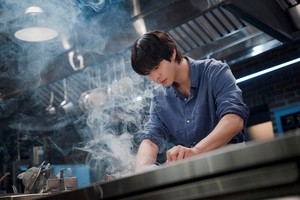
An Hyo-seop trades New York for a cooking survival show in 'Final Table'
JTBC's 'Final Table' premieres Oct. 24 Actor An Hyo-seop is returning to the small screen — this time as a chef. An is set to appear in "Final Table," a new JTBC Saturday-Sunday drama series premiering Oct. 24, playing Kang Han, an overseas-trained Korean chef with exceptional culinary talent and a refined aesthetic sensibility. The series centers on Korean chefs from around the world who converge for "The Table: K-Chef 2026," a competition to crown the best Korean cook, weaving together dazzling food and compelling personal stories. Kang Han is introduced as a restless free spirit who, rather than settling down, moves to a different restaurant in a different country every year — a wanderer driven by an incurable case of wanderlust. Having already signed a contract with a well-known New York restaurant, Kang Han briefly returns to Korea to enjoy a quieter life. One day, a visit to Familia — a restaurant tied to cherished memories of his father — leads him, for reasons yet to be revealed, to become its head chef and enter the cooking survival competition. Photos released Tuesday show Kang Han cooking outdoors and tracing his path to becoming head chef at Familia. Scenes of him scouring a traditional market for ingredients, holding a hunting rifle for reasons unknown, and standing in focused concentration before the competition have drawn attention. Meanwhile, "Final Table" marks An Hyo-seop's first foray into a chef role, following a career that has taken him across Sageuk dramas, romance series and animation for global audiences. In a recent interview, An described the project through a food metaphor, calling it "a work that feels like a warm home-cooked meal — freshly steamed rice and the kind of spread only a mother makes."
Sept. 15, 2026
-

Escaping the heat: Taebaek's 'Heavenly Forest' on track to double last year's visitors
A forest recreation facility on Maebongsan in Taebaek, Gangwon Province, is on pace to more than double its visitor count from last year, driven by a surge in popularity this summer as heat-weary travelers sought refuge in the cool highland air. The Gangwon Forest Science Research Institute said Monday that 5,234 people visited the site during the peak months of July and August alone, pushing the cumulative visitor count since March to 10,298 — a milestone reached in just six months. Known as "Maebongsan Heavenly Forest," the facility sits at an elevation of more than 1,000 meters above sea level and operates a forest campground and a healing forest. In addition to camping and lodging, it offers a range of forest welfare services, including guided forest walks, forest therapy sessions and nature-craft workshops. Even in August, when heat waves gripped much of the country, visitors kept coming to Taebaek — long known for its cool summers. The facility's overall occupancy rate for camping and lodging reached 78 percent, while its most popular accommodation, the "Forest House," hit 94 percent. The institute expanded its programming from June onward — adding forest therapy sessions, guided forest interpretation walks and outdoor forest concerts — a move analysts cite as a key driver of the surge. Bookings for September and October, which benefit from the Chuseok holiday and fall foliage season, are tracking at a pace similar to the summer peak. If the trend holds, the institute projects the site will draw about 2.4 times as many visitors as it did last year. Maebongsan is also known as "Wind Hill." Starting this month, the facility has opened an additional minimal-gear campsite for travelers who prefer a lighter camping setup. It also plans to select standout visitor reviews from its website and award winners with Gangwon Province specialty products, in a bid to further boost visitor numbers. Park Myeong-hui, director of the Gangwon Special Self-Governing Province Forest Science Research Institute, said the facility aims to "provide differentiated forest welfare services to attract more visitors and contribute to revitalizing tourism in the region transitioning away from the coal industry."
Sept. 15, 2026
-

IU to meet fans at CGV on her 18th debut anniversary
IU will meet Uaena — the name of her fandom — in person at a cinema to mark her 18th debut anniversary and celebrate the re-openings of two concert films. According to CGV on Tuesday, IU will hold a stage greeting at CGV Yongsan iPark Mall on Sunday to promote "IU Concert: The Golden Hour," which reopened Wednesday, and "IU Concert: The Winning," set to reopen Wednesday. The stage greeting will span six showings in total — two for "The Golden Hour" and four for "The Winning." Ticket reservations open Tuesday at 6 p.m. through CGV. Special "Aic" screenings will also be held, allowing fans to wave IU's official light stick — called the "Aic" — and enjoy the films as if attending a live concert. Lyrics subtitles will be displayed during screenings so audiences can sing along to IU's music. The Aic screenings for both "The Golden Hour" and "The Winning" will run for three days from Friday through Sunday, coinciding with IU's debut anniversary on Sept. 18. Reservations open Tuesday at 5 p.m. through CGV. "IU Concert: The Golden Hour" is IU's first concert film, while "IU Concert: The Winning" captures the final chapter of her first world tour — both bringing the large-scale stage production and the emotion of her live performances to the screen. Following "The Golden Hour," which was screened in IMAX, "The Winning" will be available not only in standard 2D but also in ScreenX, 4DX, and a combined ScreenX-4DX format.
Sept. 15, 2026
-

Bruno Mars to perform 6 shows in Goyang on first Korea visit in 4 years
Pop star Bruno Mars is returning to South Korea for the first time in four years, expanding what was originally a four-show run by two additional dates to meet overwhelming fan demand. According to Live Nation Korea, Mars will take the stage at Goyang Stadium on May 21-22, Sept. 25-26 and Sept. 29-30 next year. The visit marks his first return to Korea in roughly four years since drawing more than 100,000 fans at Jamsil Olympic Stadium in 2023. The tour was initially planned as a four-show engagement, but Mars' team added two more dates in response to an unprecedented surge in ticket demand. According to Live Nation, the waiting queue exploded the moment tickets went on sale, and all four shows sold out almost immediately. A fifth show on Sept. 29 was hastily added, but when general ticketing for that date also sold out on Monday, a sixth and final show on Sept. 30 was confirmed. Mars currently stands as one of the most commercially dominant forces in global pop. This year he topped the Billboard 200 with "The Romantic," his fourth solo album and first in 10 years since "24K Magic," while the lead single "I Just Might" debuted at No. 1 on the Billboard Hot 100. A string of blockbuster collaborations has further fueled the frenzy. His track "APT." with Blackpink member Rosé set the record for the world's best-selling single of 2025 according to the International Federation of the Phonographic Industry, while his duet with Lady Gaga, "Die With A Smile," became the fastest song in Spotify history to reach 1 billion streams. Korean American musician Anderson .Paak — a nine-time Grammy winner and Mars' partner in the duo Silk Sonic — will join the Goyang shows as a special guest performing under the DJ name DJ Pee .Wee.
Sept. 15, 2026
-
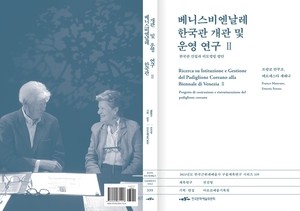
Voices of the last surviving architect restore 30 years of Korea's Venice Biennale pavilion
The Korean Pavilion opened in Castello Park at the Venice Biennale in 1995 as the 26th national pavilion and the last permanent exhibition space to be built there. Its completion required fierce collaboration and diplomatic negotiation between architects from South Korea and Italy, who together broke through strict local building regulations and bureaucratic barriers. Three decades on, the records of that "architectural diplomacy" have resurfaced as a key historical source attesting to the cultural bonds between the two countries. According to Arts Council Korea on Monday, an oral history collection on Franco Mancuso — published by the Arko Arts Record Center — was spotlighted as a symbolic achievement of bilateral cultural exchange at a book talk titled "Italy? Books! — Italy as Encountered by Koreans," hosted by the Italian Embassy in Seoul on Friday. Jeon Jin-young, professor emeritus in the Department of Architecture at Myongji University, who led the oral history research, drew out the testimony of Mancuso (born 1937) — who co-designed the Korean Pavilion alongside the late architect Kim Seok-chul (1943–2016) — and placed it in scholarly and historical context. Mancuso is the sole surviving architect who can bear witness to the near-impossible construction of the pavilion in the early 1990s. The Arko Arts Record Center compiled his on-site records and experiences into a 2025 publication, "Research on the Establishment and Operation of the Korean Pavilion at the Venice Biennale II: Construction and Remodeling Plans." The book talk also reaffirmed ties with the Italian Embassy in Seoul, which had championed the pavilion project by helping persuade authorities back in Italy of its merits during the planning stage. Italian Ambassador to South Korea Emilia Gatto, who personally wrote the foreword to the oral history collection, said at the event that Arko's work restoring the history of the pavilion's construction and operation "carries exceptional weight as a historical record," adding that it "will serve as a new bridge between the two countries by passing on the memory of our cultural cooperation to future generations." A companion exhibition visually reconstructs the origins of the Korean Pavilion and the spatial struggles involved in building it. Running through Nov. 30 at the Arko Arts Record Center in Seocho-dong, Seoul, the show — titled "One Table: 7. Paper to Space, Korean Pavilion" — brings together materials donated by Mancuso and holdings from the center's own collection. Visitors can trace the full arc of the project, from the behind-the-scenes diplomatic negotiations between the two countries to the design battles waged on paper to overcome the constraints of a limited site. Lee Beom-heon, chairman of Arts Council Korea, said it was meaningful to see the Mancuso oral history collection recognized as a leading achievement of cultural exchange between the two countries, and said the council would "continue to pursue wide-ranging international cooperation projects that go beyond preserving archival assets and use them as a medium for connection."
Sept. 14, 2026
-

Singer Sung Si-kyung says jokbal is 'mostly collagen' — but does eating it really firm your skin?
Behind every public figure's appearance lies a personal health and beauty regimen. This series examines the diets, exercise habits, procedures, and fashion choices of notable figures as practical lifestyle information. Singer Sung Si-kyung, 47, recently praised jokbal — braised pig's trotters — for its collagen content. While the dish does contain significant amounts of collagen, eating it does not send that collagen directly to the skin to smooth wrinkles or boost elasticity. Sung visited a jokbal restaurant in Busan's Haeundae district on his YouTube channel, where he tasted the dish and remarked, "It's almost entirely skin and collagen. People who love collagen are really going to enjoy this." Collagen is a well-known structural protein associated with skin elasticity. However, collagen consumed through food and collagen found in the skin are not connected in a simple one-to-one relationship. Does jokbal collagen go straight to your skin? It gets digested like everything else Collagen is a structural protein that makes up connective tissue throughout the body — including skin, bone, cartilage and tendons. In the skin, it is a key component of the dermis, maintaining the skin's shape and elasticity. Animal skin and connective tissue are also rich in collagen, which is why pig skin is commonly used as a raw material for commercial collagen and gelatin products. Jokbal, which combines pig skin with tendons and connective tissue, is similarly a source of dietary collagen. That said, the collagen in jokbal does not bypass digestion and arrive intact at the skin. Like all proteins, collagen is broken down by digestive enzymes in the stomach and small intestine into amino acids and small peptides. These are then absorbed through the intestinal wall, enter the bloodstream, and serve as raw materials for building various proteins throughout the body — not just in the skin, but also in muscles, organs and enzymes. It is therefore difficult to say that eating jokbal sends its collagen directly to the facial skin. The body reassembles absorbed protein building blocks wherever they are needed. Some of the collagen in jokbal converts to gelatin during cooking due to heat. This is still different, however, from the hydrolyzed collagen supplements sold commercially. Collagen peptide products are made by breaking collagen down into smaller molecular fragments using enzymes or other methods. Comparing the form and quantity of collagen in a plate of jokbal with that in a supplement designed to deliver a precise daily dose is not straightforward. Do collagen supplements actually work? A body of research exists on hydrolyzed collagen peptides and their effects on skin health. A systematic review published in the international journal Nutrients analyzed data from 1,721 participants across 26 controlled trials. Groups that consumed hydrolyzed collagen tended to show greater improvements in skin moisture and elasticity compared with those who took a placebo. These findings cannot be taken to mean that eating large amounts of jokbal or pig skin would produce the same effect. The studies involved participants consuming collagen peptides in fixed forms and quantities over set periods. Skin condition is not determined by collagen intake alone. A range of factors — including age, genetics, UV exposure, smoking, nutritional status and sleep — all influence skin elasticity and the rate of aging. To protect skin collagen, what matters more than 'collagen foods' Maintaining healthy skin depends less on loading up on collagen-rich foods and more on supporting the body's own collagen synthesis while limiting the breakdown of existing collagen. Adequate protein intake is a good starting point. A varied diet that includes meat, fish, eggs, dairy and legumes can supply the amino acids the body needs to produce collagen. Vitamin C is also essential. It plays a necessary role in the body's collagen synthesis process. Eating plenty of vegetables and fruit provides the nutrients needed to maintain skin tissue alongside adequate protein. Among lifestyle factors, UV protection is particularly important. Repeated sun exposure accelerates the breakdown of collagen in the skin, hastening the loss of elasticity and the formation of wrinkles. Consistently applying sunscreen when going outdoors helps slow skin aging. Smoking is another enemy of skin health. The harmful compounds in cigarette smoke raise oxidative stress and can accelerate damage to both collagen and elastin in the skin.
Sept. 14, 2026
-
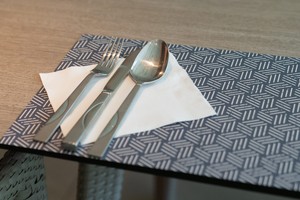
Don't use decorative napkins to rest your utensils — some contain carcinogens
Many diners place a napkin on the restaurant table and rest their utensils on top, treating it as a small act of hygiene etiquette. But researchers are warning that some napkins require caution. A study published in the 2026 edition of the Korean Journal of Food and Health Safety by researchers at the Seoul Metropolitan Government's Institute of Public Health and Environment found that carcinogenic substances were repeatedly detected in some commercially available paper napkins. The researchers tested 105 types of napkins in total — 21 types of domestically distributed disposable paper napkins classified as hygiene products, and 84 types of imported decorative napkins classified as general consumer goods — checking for harmful substances including formaldehyde, optical brightening agents and benzophenone. The results differed sharply by product category. The 21 types of domestic disposable napkins, regulated as hygiene products, showed no detectable levels of any of the three substances. By contrast, among the 84 types of imported decorative napkins classified as general consumer goods, formaldehyde was detected in eight types, optical brightening agents in 14 types, and benzophenone in 23 types. Benzophenone, a carcinogenic substance that can remain in printing ink, was found in 23 products at levels ranging from 0.003 to 0.022 mg/L. Formaldehyde — classified as a Group 1 carcinogen by the International Agency for Research on Cancer — was detected in eight products at levels between 0.053 and 0.162 mg/L. Optical brightening agents are used to make paper appear whiter. Direct skin contact can cause itching, allergic reactions and respiratory irritation, and prolonged accumulation in large amounts may lead to gastrointestinal disorders. What matters most, however, is the actual level of exposure. When the researchers assessed risk based on a scenario of using one napkin per day from the product with the highest benzophenone detection, estimated exposure came to about 0.31 percent of the tolerable daily intake. Under a scenario assuming direct food contact — similar to food packaging — the figure dropped to about 0.01 percent. Plain disposable paper napkins commonly provided at restaurants in South Korea are regulated as hygiene products and subject to self-quality inspections and regular testing. For hygiene products such as tissue paper, formaldehyde levels must remain below 4 parts per million; for children's diapers, the limit is 20 ppm. Decorative napkins classified as general consumer goods, however, are subject to no such standards. For that reason, the Seoul Metropolitan Government's Institute of Public Health and Environment recommended that decorative napkins not be used to wipe the mouth or hands, or placed in direct contact with food. In addition, using a regulated disposable napkin or a dedicated utensil rest can help keep cutlery off the table surface. More important still is washing hands before eating. Even if the table and utensils look clean, microorganisms on the hands can transfer to the mouth during a meal.
Sept. 14, 2026
-
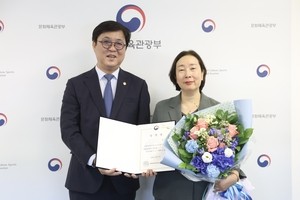
Theater community demands withdrawal of first artistic director appointment at National Children and Youth Theater
Ministry of Culture appoints former Gwangmyeong Culture Foundation head 332 entities, including Assitej Korea, push back collectively '15-year history ignored … artistic expertise must be upheld' The Ministry of Culture, Sports and Tourism has appointed Eo Yeon-seon, former head of the Gwangmyeong Culture Foundation, as the inaugural director of the newly established National Children and Youth Theater, drawing fierce backlash from the performing arts community, which is demanding the appointment be rescinded. Critics say the selection ignores 15 years of accumulated field experience and the genre's distinct characteristics, calling it an "appointment devoid of expertise." Eight major performing arts associations — including Assitej Korea (the Korean branch of the International Association of Theatre for Children and Young People), the Korea Puppet Theater Association and the Korea Playwrights Association — along with 332 individual artists and organizations (200 individuals and 132 groups) issued a joint statement Monday calling for the "immediate withdrawal of the appointment of the inaugural director and artistic director of the National Children and Youth Theater." The Ministry of Culture, Sports and Tourism had announced Friday that it was appointing Eo to the three-year post of inaugural director and artistic director, describing her as "a theater director and arts administration specialist with both field experience and administrative capability." Practitioners in the field disagreed. They said Eo's career shows no expertise in performing arts for children and young people. The position, they argued, requires a deep understanding of the developmental stages, sensory needs and emotional viewing environments of audiences ranging from infants and toddlers to children, teenagers and children with disabilities — yet the ministry had entrusted a national arts organization to someone whose background is centered on general administration. "An artistic director is not simply an organizational manager — it is a role that determines the aesthetic direction of a national arts organization, selects works and creators, and charts a vision for the future," the groups said in their statement. "General administrative expertise cannot take precedence over, or substitute for, the aesthetic expertise unique to performing arts for children and young people." The theater community also expressed dismay over what it described as a disregard for the organization's history. The National Theater Company of Korea's Children and Youth Theater Research Institute — the predecessor of the new company — spent roughly 15 years after its founding in 2011 conducting research, developing original works and building audiences for children's and youth theater. That work formed the basis for the organization's separation into an independent national arts body in 2025, but practitioners said the appointment of an unproven figure to the symbolic inaugural post had rendered those years of effort meaningless. There are also concerns about damage to South Korea's international standing. The country is set to host the 22nd Assitej World Congress and Children's and Youth Performing Arts Festival in Suwon in July 2027, one of the most prestigious gatherings of performing arts professionals for young audiences worldwide. "It is deeply disheartening that at this decisive moment — when we must demonstrate to the world the achievements of Korean children's and youth performing arts — we find ourselves having to explain and argue, once again, why the artistic director of the national theater company must have expertise in this field," the theater community said. The controversy has grown beyond a dispute over a single appointment into a broader question of whether the state genuinely recognizes children and young people as subjects of cultural rights. Assitej Korea and the other signatories said they would pursue a range of actions — including a public petition drive — until the ministry withdraws the appointment and reselects a candidate with the expertise and artistic vision to satisfy the field, through a process the community can accept.
Sept. 14, 2026
-
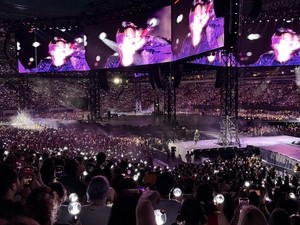
BTS world tour security staff accused of invasive searches, rights violations
Allegations of excessive pat-downs, confiscated memory cards spread on social media Security staff at BTS world tour venues have been accused of conducting invasive searches, including touching concertgoers in sensitive areas of their bodies. A statement titled "Our position on excessive responses and human rights violations at BTS overseas tour venues" has been circulating on social media and online communities since Sunday. A person identified only as A, who said they attended multiple BTS overseas tour performances, said in a statement Thursday that they had "repeatedly experienced excessive responses — beyond simply being stopped from filming or being removed — at several venues on this BTS overseas tour." They said the incidents were not limited to a single venue or individual, adding, "Because this was not something that happened to just one person at one venue, I decided I could no longer treat it as a personal experience and chose to speak out." The person acknowledged violating venue rules, saying they were aware that using professional camera equipment at performances could breach regulations. "Even when I was stopped from filming, I did not resist — I handed over my camera and memory card and cooperated with being removed," they said. They then alleged that on mere suspicion of concealing additional memory cards, they were subjected to a thorough search of all their belongings. "Even my sanitary pads — personal hygiene products — were torn open and inspected one by one," they said. They further alleged that a security guard reached inside their trouser pocket and ran a hand along their groin, touching sensitive areas of their body. "A flash was repeatedly shone directly in my face, close enough to make it hard to keep my eyes open, while photos were taken of me," the person said. "I was not even permitted to seek help from anyone outside." They said security staff forced them to unlock their phone and directly accessed and photographed personal and identity information, including wallet apps. "The identity information photographed during this process was shared with on-site staff without my consent, and in some cases that information was used to block entry at the following day's performance," they said. They added that personal memory cards worth hundreds of dollars each were confiscated and never returned in some cases. "Some security staff repeatedly threatened us, saying things like 'We can arrest you,' 'We'll send you to jail,' and 'We'll have you deported from this country,'" they said. They also asked "whether these excessive responses are not being carried out far more readily against Asian female fans in particular." BTS has been touring under the Arirang banner since kicking off in Goyang, Gyeonggi Province, in April, with stops across the United States, Mexico, Canada and five European countries. The most recent performance took place in Los Angeles on Sept. 6 (local time).
Sept. 14, 2026
-
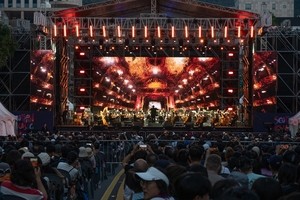
Seocho-gu to hold Seoripul Music Festival this weekend on Banpo-daero
LA Philharmonic string quartet to perform Saturday Crying Nut, Jaurim headline Sunday's K-pop night About 1,300 safety personnel to be deployed across venue Festival has drawn 1.34 million visitors since 2015 launch A 10-lane stretch of Banpo-daero will be transformed into a sprawling outdoor music venue this weekend as Seoul's Seocho-gu hosts the 2026 Seoripul Music Festival. The district announced Monday that the festival will run Saturday and Sunday along an approximately 900-meter section of Banpo-daero between Seocho Station and the Seocho 3-dong intersection. Organized by Seocho-gu and run by the Seocho Cultural Foundation, the Seoripul Music Festival is an annual urban music festival held each September. Since its debut in 2015, it has drawn a cumulative 1.34 million visitors through 2025. Festival General Director Song Seung-eun said last year's edition attracted 260,000 visitors, with a satisfaction rating of 90.7 percent. "We also achieved about 1.55 million SNS impressions and collaborated with 69 nearby businesses," Song said. Now in its 11th year, the festival is themed "Seocho is the Music" and spans genres from classical and jazz to K-pop, with performances, hands-on activities and participatory programs throughout the two days. A pre-festival event will kick things off Friday evening at the Seoul Arts Center's Music Plaza, where Seocho-gu, the Seoul Arts Center and modeling agency Esteem will co-host a special opening night. The plaza will serve as an outdoor runway, combining a fashion performance by Esteem with a live concert by the Seocho Symphony Orchestra under conductor Bae Jong-hun. On Saturday, the main festival opens at 1 p.m. with an opening parade along Banpo-daero. At 1:30 p.m., one of the festival's most popular recurring programs — "The World's Biggest Sketchbook" — takes over the road. The full width of the 10-lane boulevard, spanning about 2,610 square meters, becomes a giant canvas where children and adults alike draw freely using more than 100,000 colored chalk sticks. The highlight of Saturday evening is "Classical Night," beginning at 6:30 p.m. The Seocho Symphony Orchestra, led by conductor Bae, will share the stage with singer Son Tae-jin, soprano Hwang Su-mi, mezzo-soprano Bang Sin-je, tenor Kim Yo-han, baritone Kim Ji-hun and the Yang Seung-hee Gayageum Ensemble. This year's edition features a special appearance by a string quartet drawn from members of the LA Philharmonic, one of the world's leading orchestras. On Sunday, the children's program "Flying Symphony" — designed to introduce classical music to young audiences in an accessible and entertaining way — opens at 11 a.m. From noon, "Seoripul Local Live" fills Banpo-daero with performances by Seocho-based musicians and arts institutions, including Baekseok Arts University, the Shinjung Orchestra, the Hyundai Motor Group Philharmonic Orchestra, the National Gugak Center's Creative Music Orchestra and the Korea National University of Arts. The lineup spans classical, traditional Korean music and popular genres. At 7 p.m., "K-Pop Night" closes out the festival with performances by Crying Nut, Jaurim and Lee Seung-yoon. After all performances conclude, a group of residents recruited through a public application process will join district environmental workers to clean up the festival grounds and take part in a closing parade, serving as what organizers call "ending fairies" to wrap up the event. Organizers have also expanded visitor conveniences this year. Advance online reservations for the three main programs — Classical Night, K-Pop Night and Flying Symphony — open Tuesday. Food trucks will adopt QR-code ordering and payment with pickup notification alerts, allowing festivalgoers to order from their phones while watching performances and collect their food when it is ready. With large crowds expected, the district has put extensive crowd, traffic and safety management measures in place. Seocho-gu worked with police, fire and other agencies ahead of the festival to establish a safety management framework, and about 1,300 safety personnel — drawn from the district office, police, fire department, civic groups and volunteers — will be stationed throughout the venue each day. Seocho-gu District Mayor Jeon Seong-su encouraged residents to attend. "This is a festival created together by Seocho's musicians and residents," he said. "I hope everyone comes out to Banpo-daero with family, friends and neighbors to enjoy music and art to the fullest and make special autumn memories."
Sept. 14, 2026
-
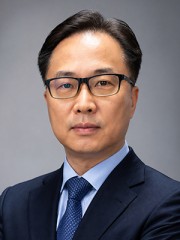
Lee Seong-ju named new MBC president
Shareholder vote approves appointment Monday; first selection under revised broadcasting law Lee Seong-ju, a former managing director at iMBC, has been officially named the new president of MBC. MBC held a shareholder meeting Monday and approved Lee's appointment as its new president. His term will run for three years. Lee joined MBC as a reporter in 1995 and has since served as chairman of the MBC chapter of the National Union of Media Workers, head of the media planning division, and managing director of iMBC. Earlier, the Foundation for Broadcast Culture — MBC's largest shareholder and regulatory oversight body — convened an emergency board meeting Sunday and selected Lee from two candidates, the other being Jeon Dong-geon, former president of Ulsan MBC. Lee is the first MBC president chosen under the revised Broadcasting Act. Under the new process, a 150-member Citizens' Presidential Candidate Recommendation Committee reviewed candidates through policy presentations and deliberative discussions before narrowing the field, after which the Foundation for Broadcast Culture conducted final interviews and voted to confirm the appointment. The MBC chapter of the National Union of Media Workers issued a statement Monday calling on Lee to "show leadership built on trust and inclusiveness — one that earns the consent of staff members through reasonable persuasion and transparent procedures."
Sept. 14, 2026
-
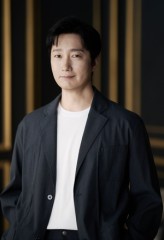
Park Hae-il: 'I feel a real sense of urgency now — I can't keep working this slowly'
Returns to the screen after four years in 'The Assassin' Plays a veteran reporter chasing truth and press freedom 'I'd never seen a film that follows a journalist from start to finish' "The Assassin" opens with a jarring image: journalists crammed into the back of a truck, hauled off to somewhere unknown. One of them is Jae-hwan, a section editor at the fictional Dongseong Ilbo newspaper, played by Park Hae-il. Tossed around like cargo, the men seethe at the absurdity of state censorship — their battered bodies a testament to those who fought with pens against bayonets in the 1970s. Set against the backdrop of a real assassination attempt on the first lady on Liberation Day in 1974, the film follows Jae-hwan as he pursues truth — and the press freedom needed to share it with the world — without a moment's hesitation. A veteran reporter with sharp instincts and a cool analytical mind, he pieces together the puzzle of a shocking incident alongside key figures including police officer Cheol-gu, played by Yoo Hae-jin, and Yeong-il, played by Lee Min-ho. Jae-hwan embodies the film's very identity: a man who refuses to bend under the weight of power and chases the truth to the end. Ahead of the film's opening, Park sat down for an interview at a cafe in Jongno-gu, Seoul. "The Assassin" marks his return to the big screen four years after "Hansan: Rising Dragon" (2022), and reunites him with director Heo Jin-ho a decade after "The Last Princess" (2016). "After reading the script, I thought, 'Is this what I've been waiting four years to do?' — the character sparked that much curiosity in me," Park said to open the conversation. "I debuted in 2000, so I've been meeting journalists at least once a year for a long time. And yet I'd never thought about a work that follows this profession from start to finish, in one breath. So when Director Heo suggested the character of Jae-hwan, I think that's why I felt, 'I have to do this.' It was fascinating, and I really wanted to do it justice." In the film, Jae-hwan exists purely as a journalist — nothing more, nothing less. The story offers no glimpse into his past or his family. Yet the question of what drives him so fiercely is not hard to answer. It is written in the clarity of his unwavering gaze, in the precision and composure of his every expression and movement. The smallest details of Park's portrayal speak for themselves. "At first I asked myself all sorts of questions — does Jae-hwan have a family, is he married? But as I talked with the director, I came to feel he should be a character who focuses solely on the case, with no distractions. He's someone who calculates a great deal, so he has to be quick to read a room, and at the same time, his wealth of experience means he grasps context fast. I think I just acted out what the director planted in me, piece by piece." "The Assassin" meticulously recreates the atmosphere of the 1970s — an era of simultaneous growth and repression — through detailed production design. Even on days when he had no scenes to shoot, Park frequently visited the set to calibrate his character's tone to the period. He was there, for instance, when Lee Min-ho filmed the scene in which Yeong-il calls his superior Jae-hwan from a payphone to report the shooting. At an earlier press conference, Lee laughed about it: "From the very first day of filming, I heard that sunbae Park Hae-il was going to come by — I was both nervous and a little intimidated." "I tend to visit the set a bit early. I think it helps with the performance. The newsroom, for instance — the main space where Jae-hwan appears — particularly captures the air of the 1970s. To keep up with the fast-paced narrative, you need to get familiar with the space beforehand. I tried to understand it by going in, sitting down, even typing at the desks." The further Jae-hwan pursues the truth, the more brutally power moves to block his path. Those who had freely slashed his articles with red pens eventually strip him of his livelihood, and when the newspaper refuses to abandon its commitment to honest reporting, they storm the building with clubs. But Jae-hwan and his colleagues at Dongseong Ilbo refuse to break. Even in the face of terrifying, merciless violence, they declare their resolve not to surrender as a free press. In a newsroom charged with solemnity, Jae-hwan reads aloud a declaration of press freedom — and in that moment, as power and journalism collide in raw confrontation, the film reaches its climax. "Inside the newsroom there are so many actors — seniors and juniors alike — including Ryu Hye-young, Kim Dae-myung and Bae Sung-woo, along with a great many supporting actors. Because we were always together in that editorial room, a natural solidarity formed among us. When we reached the climax and cried out the declaration, there were no words needed — just this heat that came from that solidarity. It wasn't something that melted together slowly; it felt like a bond forged over a long time." Park, long known as an actor who does not take on many projects, is back on screen after an extended absence. Finding even one of his works in a given year is a rare thing, yet he consistently receives more offers from the industry than almost any other actor, across both film and drama series. Offering something of a self-deprecating explanation, he said he is "not an actor with a lot to draw from, so it's hard to jump straight into another project after finishing one." But he added that getting older has given him a new sense of urgency, and that he intends to pick up the pace going forward. "When I go into a character or a project, I've always needed time to come back out of it. But I started thinking that if I keep doing this, I really won't be able to make many more works. So I'm trying to shift the way I channel my energy — changing my mindset to just try everything I can while I still can." Park closed the interview by reflecting on his renewed collaboration with director Heo Jin-ho. In his own words, Heo is the only director working today who could have created a character like Jae-hwan. Park expressed his gratitude to a filmmaker who believed in him again and drew out the best he had to offer. "Director Heo carries himself like a true elder on set. His attitude of wanting to share the filmmaking process with his actors makes you think, 'Ah, this person trusts me' — and you just let your guard down completely. I performed with a desire to challenge myself, and I think I acted as freely as I possibly could. The reason I have no regrets about those choices is Director Heo — he was always careful not to use his actors in ways that were careless or unproductive."
Sept. 14, 2026
-
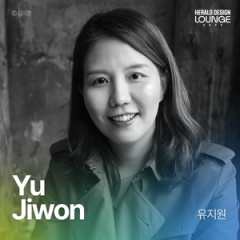
'I'm in Gungseo mode' — 'A typeface is an accent for the eyes'
Typographer Yu Ji-won, director of the Geulmunhwa Research Institute, joins the Herald Design Lounge 2026 panel. She sees letterforms as music heard through the eyes — and says convention must be broken. How far can design go? Design no longer stops at creating visible beauty. In an era when AI, data and interactive technology are reshaping everyday life and creative practice, design is expanding into a domain that shapes emotion, experience and meaning. Herald Design Lounge 2026, themed "Beyond Visuals," brings together creators from graphic design and typography to media art, architecture and content to explore what design can become next — asking what it means to connect human senses, lives, technology and society beyond what the eye can see. "I'm in Gungseo mode right now." Gungseo for sincerity, Myeongjo for formality, Gothic for anger — typefaces breathe vivid emotion into otherwise flat text. The same logic explains the acute cognitive dissonance people feel when a celebrity's handwritten apology is printed in a rounded Gulim font, or a resignation letter arrives in a cute handwriting style. When a letterform "betrays" the weight of the words it carries, the rhythm falls apart. In an age when conversation has migrated to mobile messengers and SNS, type does more than record language — it conveys a person's intonation, expression and emotional temperature. "A medical drama series, even with the same title, reads as a human-interest story if you use a soft font, but signals a tense, high-stakes clinical setting if you use a sharp one," she said. "Just as the same words carry different nuances depending on how they're said, the same content leaves a different impression depending on which font you use." Yu Ji-won, director of the Geulmunhwa Research Institute and a panelist at the Herald Design Lounge panel talk on the theme "Beyond Design" on Oct. 2, said in a written interview that "a font is an accent for the eyes — a nonverbal message." Yu studied visual design at Seoul National University before pursuing typography at the Leipzig Academy of Visual Arts in Germany. She went on to work as a book designer at Minumsa and as a senior researcher at Sandoll before founding the Geulmunhwa Research Institute. Within the worlds of spoken and written language, typography is the discipline of "shape." For Yu, letterforms are music heard through the eyes. "Just as music is made of timbres arranged into sequences of notes, typography weaves together hangul's 24 basic letters to create every linguistic and nonlinguistic meaning in the world," she said. Most people think of a typographer's work as making things look pretty, but for Yu, designing letters is a humanistic and scientific inquiry into human life and the body. "I think constantly about what human beings truly need. People often cannot precisely identify what their bodies and minds really want. The same is true in letterform design. I use 'what do people truly need and want through type' as my North Star." Yu sees letterforms as living, evolving organisms — their shapes, she argues, have always "reflected locality and the spirit of the age." As aging and individualization accelerate, typography is stretching beyond aesthetics to become a social responsibility that sustains the lives of those with physical limitations. In a digital environment that enables small-batch, high-variety production, she has been developing fonts for older adults and people with low vision who live with conditions such as presbyopia and glaucoma. "When you combine ophthalmology and cognitive science to study how the eye functions at a given age, the font enters the realm of vision rather than aesthetics," she said. "If you focus only on function, you end up viewing human beings too mechanically — the emotional lives of older adults deserve as much respect as their functional needs. Working through visual research has led me to think deeply about the human dignity that letterforms must protect." Preserving hangul's identity in a multilingual typographic environment where the world's scripts converge is, for Yu, an extension of that same responsibility. "Hangul is a vast and subtle ecological network that has evolved over a long time through the intricate interplay of the Korean language, the Korean environment and the physical characteristics of Korean people," she said. "Because it cannot be fully reduced to a Western-centric framework, the final authority over the formal and cultural direction of hangul design must remain with native designers who have internalized hangul as their mother tongue." In an era when AI generates new typefaces from vast datasets, where does the human creator stand? Yu argues that what AI-era creators need is "the ability to step outside existing conventions, reframe the design question and define the problem anew." "AI carries the risk of reinforcing individual biases, and humans must not lose the capacity to endure friction with one another," she said. "Amid the dizzying gap between the individual and vast systems, we need to rebuild human-scale communities that we can actually see and grasp. Above all, taking responsibility for one's actions and decisions — that is the domain only humans can occupy."
Sept. 14, 2026
-

China's top travel agencies explore regional airports as gateways beyond Seoul
112 representatives from China's top 100 travel agencies visit South Korea Six-day tour covers regional cities via local international airports Initiative aims to develop differentiated tourism products outside Greater Seoul An initiative to draw international tourists beyond the Greater Seoul area and spread their itineraries across the country is moving into full swing, with plans to commercialize regionally linked tourism products based on on-site visits and industry exchanges. The Ministry of Culture, Sports and Tourism and the Korea Tourism Organization announced Monday they are running a mega familiarization tour for representatives of China's top 100 travel agencies through Tuesday, with the goal of developing six regional international airports into hubs for local tourism. The tour, which began last Tuesday, drew a total of 112 participants — including travel agency officials and journalists — from across China, including Beijing, Shanghai, Guangzhou, Shenyang and Chengdu. Divided into six teams, participants followed actual arrival and departure routes through regional airports, visiting major cities in each zone: Gyeongju, Gimhae, Daejeon, Samcheok, Jeju and Cheonan. They also experienced local tourism resources firsthand to assess the distinctive character of regional travel tied to each airport. On Saturday, the group visited Hahoe Village in Andong to watch the traditional "Seonyu Julbul Nori" fire-on-water performance, exploring the area's unique cultural heritage. A representative from a travel agency in China's Huadong region who took part in the tour said the itinerary — entering the country directly through regional airports and experiencing local cuisine, nature and traditional culture without passing through the capital area — would offer a highly differentiated appeal to Chinese consumers. "We will quickly launch new South Korea travel products that translate the original regional content we discovered on this tour into real bookings," the representative said. The Korea Tourism Organization plans to develop more than 100 new group tour products linked to regional airports off the back of the familiarization tour. It will also secure promotional content and regional tourism interpreters for six airports — Gimhae, Daegu, Muan, Yangyang, Jeju and Cheongju — to support local travel agencies in commercializing their products. In addition, a business-to-business travel mart held Friday at the Andong International Convention Center brought together seven South Korean local governments and Chinese industry players for about 700 consultations, resulting in 79 on-site contracts. Korea Tourism Organization President Park Seong-hyeok said regional airports are "a new gateway for international tourists to discover the diverse charms of every corner of South Korea." He added that the organization would actively work to ensure the exchange does not remain a one-off event but leads to the development of high-quality, extended-stay regional tourism products routed through regional airports.
Sept. 14, 2026
-

Celine Dion returns to stage after stiff-person syndrome battle: 'I held on to a ray of light'
First concert since revealing illness in 2022 Michelle Obama among 30,000 at sold-out show All 26 dates sold out; a miraculous 140 minutes The queen of pop broke down in tears as she reclaimed the microphone after battling a rare, incurable disease. Canadian diva Celine Dion, who has fought stiff-person syndrome — a neurological condition that progressively stiffens the body's muscles — ended six years of silence with a triumphant solo comeback. Dion performed her comeback concert Saturday (local time) at the Plenitude Arena in Nanterre, on the outskirts of Paris, drawing a crowd of about 30,000. It was her first solo concert since she halted her world tour in March 2020 due to the COVID-19 pandemic — a gap of six years — and her first performance since publicly revealing her illness in 2022. Dion opened the show with "On ne change pas," her celebrated 1998 French-language hit. The moment she sang the first line, the audience leapt to its feet in a thunderous standing ovation. Unable to hold back her emotions, Dion's eyes welled with tears. Composing herself, she told the crowd, "I am indescribably happy to be facing you again," adding, "These are not tears of sadness — they are tears of pure joy." She also spoke quietly about the long ordeal of her illness. "I had promised my fans I would come back to the stage," Dion said. "In my darkest moments, I desperately held on to a single ray of light shining faintly from deep in the mountains far away." She then told the audience, "Tonight I sing for you, for myself, and for life itself," drawing a hush of reverence over the arena. Over the course of a two-hour-and-20-minute main set, Dion delivered an explosive vocal performance with precise control that belied the years her neurological condition had tightened its grip on her voice. Having offered a preview of her recovery with a single song — Edith Piaf's "Hymne à l'amour" — from the Eiffel Tower at the opening ceremony of the 2024 Paris Olympics, she finally powered through a full set of about 20 songs. Among the audience was Michelle Obama, wife of former US President Barack Obama, along with other global luminaries who witnessed Dion's triumph. Public demand has been overwhelming: what was originally planned as 10 shows of 30,000 seats each was expanded to 26 dates running through May next year, after a waiting list of more than 9 million people flooded the ticketing system — and every single show has sold out.
Sept. 14, 2026
-

Actor Ahn Eun-jin reveals facial paralysis diagnosis during filming of 'The Good Bad Mother'
Behind every public figure's appearance lies a personal health and wellness routine. This series explores the diets, exercise habits, procedures, and beauty and fashion choices of notable figures as practical lifestyle information. Actor Ahn Eun-jin has opened up about being diagnosed with facial paralysis while filming a drama series, saying the first sign something was wrong was water leaking from one side of her mouth while brushing her teeth. A video featuring Ahn as a guest on the YouTube channel "Yojeong Jaehyeong" was released Sunday. Ahn said she developed facial paralysis — known in Korean as "guanwasa" — while filming the JTBC drama series "The Good Bad Mother," recalling that she first noticed something unusual during her morning routine. "I was washing my face and brushing my teeth when water started leaking from one side of my mouth," she said. Not realizing it was a symptom of facial paralysis, she went to the set as usual. As the day went on, she grew increasingly aware that her face was not moving normally. "The more I was on set, the more I thought something was off, so I told the director and went to the hospital," she said. "And the hospital told me it was facial paralysis." She initially expected a few days of rest would resolve the problem, but the symptoms worsened. The production ultimately had to adjust its filming schedule. "We shot the scenes involving Miju only through that day and then stopped everything," Ahn said. "Because my face was moving with a time lag, they could only film my side profile." Water leaking from one side of the mouth: warning signs of facial nerve damage The condition commonly called "guanwasa" refers to facial paralysis in which one side of the face droops or the eyes and mouth become asymmetrical. The muscles responsible for facial expressions are controlled by the facial nerve, the seventh cranial nerve. When this nerve is damaged, moving the muscles around the forehead, eyes and mouth becomes difficult. One corner of the mouth may droop, making the face appear asymmetrical when smiling. As Ahn experienced, water can leak from one side of the mouth while brushing teeth or drinking. Food may collect on one side of the mouth while chewing, and speech can become unclear. Difficulty fully closing the eye or forming forehead wrinkles is also common. Some patients experience excessive tearing, hypersensitivity to sound or changes in taste. Notably, even when the face feels numb or swollen, skin sensation itself is often normal — because the nerve controlling facial muscle movement and the nerve responsible for skin sensation are separate. Sudden facial drooping: rule out stroke first When facial paralysis occurs, the most important step is determining whether the cause is peripheral — a problem with the facial nerve itself — or central, meaning a problem in the brain. Bell's palsy, the most widely known form, is an acute peripheral facial nerve paralysis with no clearly identified cause. Brain conditions such as cerebral infarction or cerebral hemorrhage, however, can also cause one-sided facial paralysis. In peripheral facial paralysis, the forehead, eye and mouth on one side typically all lose movement together. The person may struggle to form forehead wrinkles or close the eye tightly. In some cases of central facial paralysis, forehead movement is relatively preserved while the area around the mouth droops. Even so, it is dangerous for a non-medical person to try to determine the cause from facial expressions alone. Particularly when sudden facial drooping is accompanied by weakness or sensory abnormalities in one arm or leg, stroke should be the first possibility considered. Slurred speech, difficulty understanding others, severe dizziness or loss of balance, double vision, or trouble swallowing are also signs that require immediate emergency care. Steroid treatment and Bell's palsy: why early intervention matters Ahn said she underwent several treatments after her diagnosis. "I went to both Western and traditional Korean medicine clinics, got acupuncture and received strong steroid injections," she said. "That bought me about a month." The steroid treatment brought its own difficulties, particularly swelling. "Even after a short walk, my face and knees would be swollen, and it was hard to stay positive," she said. "I kept getting more swollen as the drama went on and finished that way. I had no choice because I had to keep filming." Treatment for facial paralysis depends on the underlying cause. When a specific cause is identified — such as stroke, middle ear infection or trauma — treating that condition takes priority. For Bell's palsy, where no clear cause can be found, early steroid treatment plays a key role in improving the chances of recovery. According to the KDCA's National Health Information Portal, starting treatment as quickly as possible after symptoms begin — particularly within 72 hours — is most effective. When one side of the face suddenly stops moving, seeking medical attention early to identify the cause is far more important than waiting a few days to see whether the symptoms improve on their own. If blisters and severe pain appear around or inside the ear alongside facial paralysis, Ramsay Hunt syndrome — in which the varicella-zoster virus attacks the facial nerve — should also be considered. In that case, treatment combining steroids with antiviral medication may be warranted. Eye care during facial paralysis: preventing corneal damage When facial paralysis sets in, protecting the eye is just as important as addressing movement around the mouth and jaw. If the eyelid cannot close fully, the surface of the eye is continuously exposed to air, which can worsen dry eye significantly. Under normal circumstances, blinking spreads tears across the entire cornea to protect its surface; when paralysis reduces eyelid movement, that protective function deteriorates. In severe cases, the cornea can develop abrasions or inflammation, making active eye protection essential throughout the recovery period. Artificial tears or eye ointment may be needed, and if the eyelid does not close completely during sleep, a doctor can advise on appropriate protective measures. Severe redness, pain or visual disturbances in the eye also warrant an ophthalmology consultation. Even when symptoms begin as subtly as Ahn's — just a slight awkwardness around the mouth — facial paralysis can progress. When one side of the face suddenly stops moving, the right response is not to wait and assume it is fatigue, but to first rule out emergencies such as stroke and, if peripheral facial nerve paralysis is confirmed, to begin treatment without delay.
Sept. 14, 2026
-
!['Layeon' chef Cha Do-young: 'Hansik needs ramyun and tteokbokki to go global' [Travel ON]](https://wimg.heraldcorp.com/news/cms/2026/09/14/news-a.v1.20260914.a056c4f1d473449780a3f6e29265fdca_T1.jpg?type=h&h=240)
'Layeon' chef Cha Do-young: 'Hansik needs ramyun and tteokbokki to go global' [Travel ON]
Street food must grow alongside fine dining for hansik to reach the world 'Food tourism' makes gastronomy the destination, not just a stop along the way Authenticity must be preserved, but service needs to catch up "For hansik to firmly establish itself as a mainstream force in the global fine-dining market, high-end fine dining and accessible street food must expand together as two wings." Cha Do-young, head chef of Layeon, the Korean restaurant at Hotel Shilla, made the remarks Tuesday at the 2027 Global Fine Dining Awards, hosted by Trip.com at Resorts World Sentosa in Singapore. Cha said the success or failure of hansik's globalization hinges on whether it remains the preserve of a select few or broadens its popular base. "Japanese cuisine quickly became a global mainstream in part because fine dining spread alongside everyday, accessible dishes — sushi, udon, tonkatsu, ramen," Cha said. "If hansik similarly grows its popular offerings — bibimbap, bulgogi, K-chicken, tteokbokki, ramyun — alongside fine dining, it can firmly anchor itself as one of the pillars of world gastronomy." Cha identified "authenticity-based modern service" as the key to drawing foreign visitors to Korea. As food tourism — where the culinary experience itself becomes the purpose of travel, not merely a sightseeing add-on — continues to spread, he said restaurants must preserve the essence of their ingredients and cooking methods while refining the service and details that shape the overall dining experience. "In the traditional Korean table setting, all dishes arrive at once and cool quickly, so we shifted to a sequential course format," Cha said. "We focus on managing the flow and temperature so that customers can enjoy the meal comfortably, while keeping the roots of tradition intact." Foreign visitors have shown a clear preference for menus rooted in authentic food culture over fusion adaptations. In response, Layeon runs a monthly class in which the chef personally demonstrates the history and preparation of gujeolpan — a traditional nine-sectioned dish — and invites foreign guests to try making it themselves. Global platforms are also proving effective at drawing overseas visitors to Korea. As culinary guides such as the Michelin Guide and TripGourmet serve as key gateways for international travelers, Layeon has seen a growing share of reservations from Chinese-speaking markets — including China, Taiwan and Singapore — through platforms such as Trip.com. "When we convey our unique food culture in a systematic way, hansik can transcend a passing trend and settle in as its own distinct culinary genre," Cha said. "I want to help elevate hansik's standing in the global market by carrying our ancestors' food culture forward in a modern way."
Sept. 14, 2026
-

Food is the destination: travelers now plan trips around a single meal
Travel shifts from sightseeing to gastronomy Trip.Gourmet unveils 744 fine-dining picks for 2027 14 Korean restaurants make the global list, including Layon and Kwonsooksoo Platform bets on culinary 'lock-in' to keep users engaged "Gastronomy has now become the core engine driving the entire journey." Sunny Sun, CEO of Trip.Gourmet under the global travel platform Trip.com Group, made the remark Tuesday at the Trip.Gourmet 10th Anniversary and 2027 Global Fine Dining Awards, held at Resorts World Sentosa in Singapore. The event, attended by culinary industry figures from around the world, was designed to examine the present and future of the global fine-dining sector and to share shifting traveler spending patterns. Marking its 10th anniversary this year, Trip.Gourmet is a comprehensive dining guide that integrates restaurant rankings, local food information and real-time reservation services across 462 destinations in 66 countries and regions. Sun said an analysis of the platform's own data showed a clear trend toward "gastronomy-led travel" in major markets worldwide. "It goes beyond simply tasting local food," she said. "A specific restaurant or culinary experience itself is increasingly becoming the deciding factor in where people travel and when they visit." 14 Korean restaurants make the global list The event also saw the unveiling of Trip.Gourmet's flagship content, the 2027 Fine Dining List. This year's edition selected 744 restaurants across 105 cities in 40 countries and regions. Of those, 14 were Korean restaurants, accounting for 1.88 percent of the total. While the share remains modest, the selection was seen as a testament to the global competitiveness of Korean fine dining, which has drawn international attention for spanning everything from traditional hansik, or Korean cuisine, to modern dining. The Korean restaurants selected were Kwonsooksoo, La Maison Cicheti, Layon, Mosu Seoul, Mingles, Born and Bred, Bichaena, Seventh Door, Swaniye, Alla Prima, Onjium, Itanic Garden, Jungsik and Cornerstone. The breadth of the selections — from traditional hansik to inventive modern dining — put Korean fine dining back in the spotlight. According to Trip.com's analysis, South Korea ranks among the countries with the highest preference for high-end culinary travel in the global market. The platform's Travel Gourmet Index for South Korea stood at 3.9, roughly four times the global traveler average of 1.0. The event also served as a moment to take stock of hansik's rising global profile. Cha Do-young, head chef of Hotel Shilla's Korean restaurant Layon, which received a Platinum rating, said he feels the growing popularity of hansik firsthand. "Customers who visit our restaurant now want to experience Korean food culture and its stories, not just the cooking techniques," he said. Dining moves to the center of travel planning Food has moved well beyond a secondary element of travel — it now shapes the purpose and itinerary of a trip itself. According to Trip.com, food-related searches on the platform jumped 45 percent over the past eight months. The number of specific search terms rose 46 percent, restaurant interest climbed 68 percent, and cafe and dessert searches increased 67 percent. Searches for local specialty foods jumped 725 percent. The share of users who search for or ask about restaurant information before a trip was also 1.25 times higher than in January 2025. Users who browsed restaurant lists or asked dining-related questions within 30 days of departure spent 2.6 times more at their destinations than other users. As the importance of culinary travel has grown, so has demand for authoritative, trustworthy information in unfamiliar destinations. Yet the reliability of such information has declined amid a flood of advertising and algorithm-driven viral content. In response, Trip.Gourmet has built a multi-layered evaluation system that combines quantitative data with on-site verification to provide travelers with credible dining information. Trip.Gourmet's fine-dining ratings operate on a three-tier system named after gemstones. The top tier, Black Diamond, designates flagship restaurants with a distinctive culinary philosophy and world-class service and ambiance; 60 of the 744 restaurants this year received the designation. Diamond goes to high-end restaurants that deliver strong culinary execution and a consistent experience, with 160 restaurants earning the rating. Platinum recognizes restaurants offering refined tasting menus and excellent hospitality, and 524 restaurants were selected in that category. Unlike conventional dining guides that focus primarily on taste, the evaluation weighs both flavor and practicality. It combines undercover inspections by professional evaluators with big data covering reservation convenience, proximity to tourist attractions, views and actual visitor reviews. This year's assessment incorporated 1,500 pieces of feedback from a global advisory panel of more than 3,000 people, as well as real visit data from high-engagement members with a strong interest in dining. Recommended restaurants can be found in the TripBest section of the Trip.com app. The platform integrates hotel and attraction information with restaurant listings and reservation functions tailored to a traveler's itinerary, allowing users to plan a trip and book a table in one place. A Trip.com spokesperson said selected restaurants receive a verified badge within the app that remains for one year. "We are helping travelers easily find where to go and what to do within the Trip.com app, without having to search other channels," the spokesperson said. A growing reservation network expands global dining reach Trip.Gourmet's fine-dining curation is backed by a reservation infrastructure that enhances its practical value. The platform operates a booking network spanning more than 43,600 restaurants worldwide. Smaller restaurants with limited marketing reach, in particular, can use a global platform like Trip.com to connect with food-focused travelers from abroad. Ryu Tae-hyuk, the chef behind NABI, a Korean fine-dining restaurant in Shanghai, said that for a small-seating restaurant, meeting customers who understand its philosophy is paramount. "Partnering with a global reservation platform gives us a way to connect with more international culinary travelers beyond the constraints of our existing booking channels," he said. Trip.com plans to combine its accumulated user review data with local dining infrastructure to respond to shifting culinary demand and expand its role as a platform that bridges tourism and dining. Sun said Trip.Gourmet's mission is to help travelers discover restaurants worth visiting and book them with confidence. "We will continue to refine our data and deepen cooperation with local dining infrastructure to build a global culinary tourism ecosystem where travelers and restaurants are connected across borders," she said.
Sept. 14, 2026
MOST READ
- 1KAIST develops high-performance bio-based adhesive using E. coli instead of petroleum
- 2Pope Leo XIV declines French honors and banquet, accepts only private meeting with Macron
- 3Daimler Truck unveils next-generation transport solutions at IAA 2026
- 4What was Rachmaninoff's performance fee? A 1928 price list tells all
- 5Samsung Biologics union's show of force backfires at the bargaining table
- 6APR says hair-loss treatment research published in international journal
-
WORLD

US warns of punishment for anyone enabling Iran's Strait of Hormuz toll scheme
-
INDUSTRY

Toyota union puts productivity first; Hyundai Motor union demands bigger share of profits
-
FINANCE

National Growth Fund to invest $531M in FuriosaAI, which rebuffed Meta's $800M takeover bid
-
INDUSTRY

Korea Shipowners' Association holds amateur baduk tournament for Maritime Day