Editor's note
We tell stories through paintings — the issues embedded in brushstrokes, the histories soaked into masterworks, the human longing and desire that art holds. We begin with a single canvas and step out into the world beyond the frame.
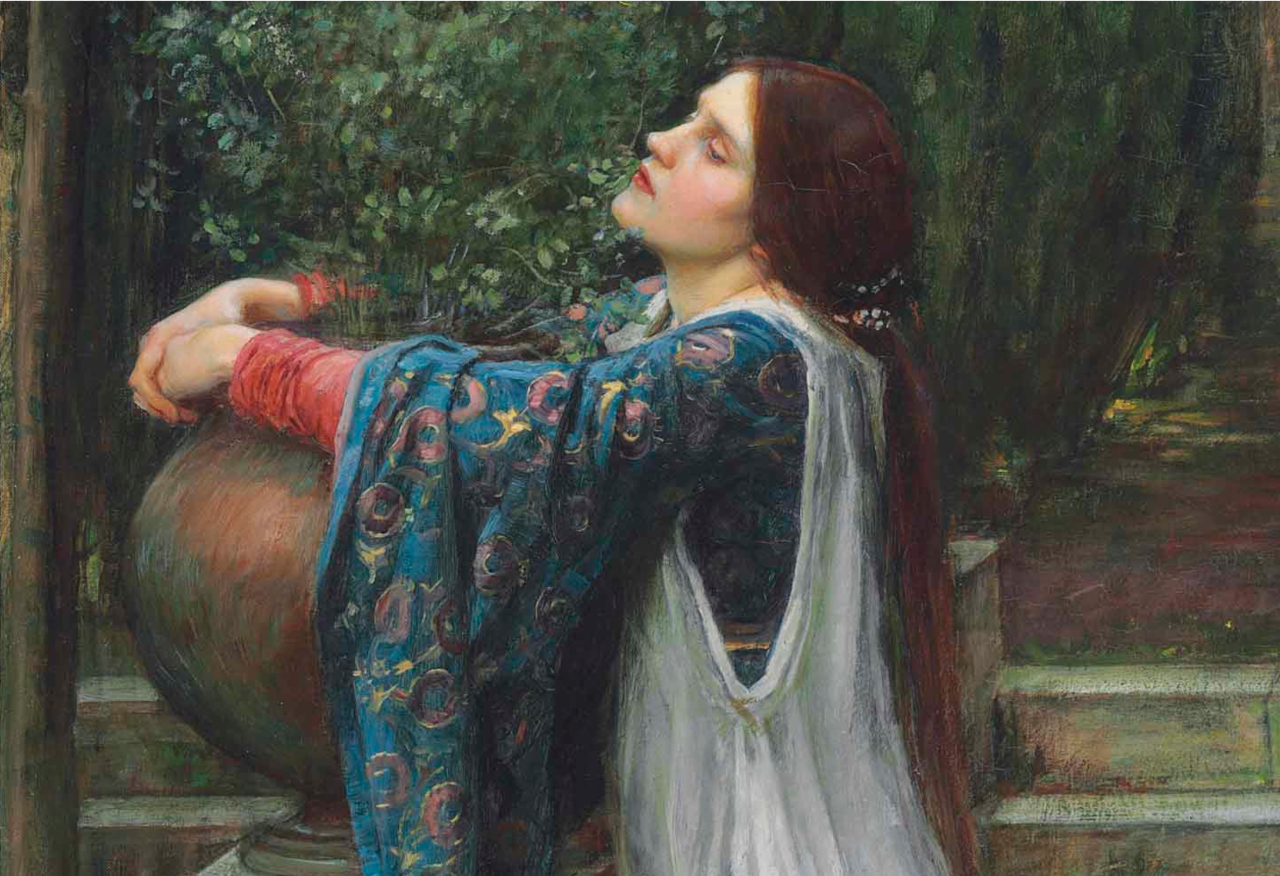
A woman pulls a flower pot close and holds it tight.
Her face is hollow. The hands clasped around it have no strength. Her auburn hair cascades like a waterfall. Her fallen knees, the colorfully embroidered medieval sleeves, the white hem of her dress pooling against the ground — all of it flows downward, like tears. Her body is here, but her mind has long since drifted to some distant past, or future, or world of fantasy.
What blooms from the pot is basil.
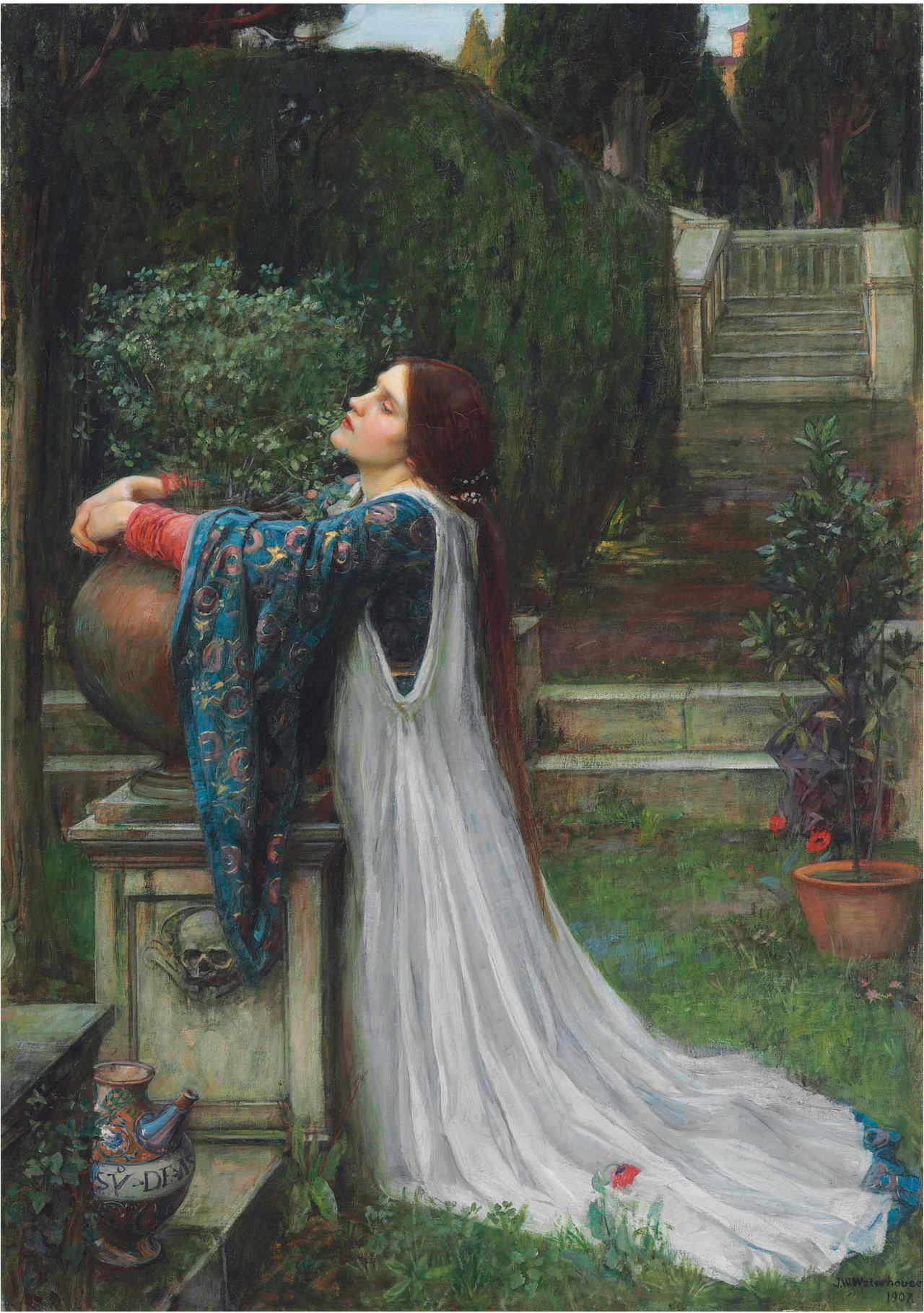
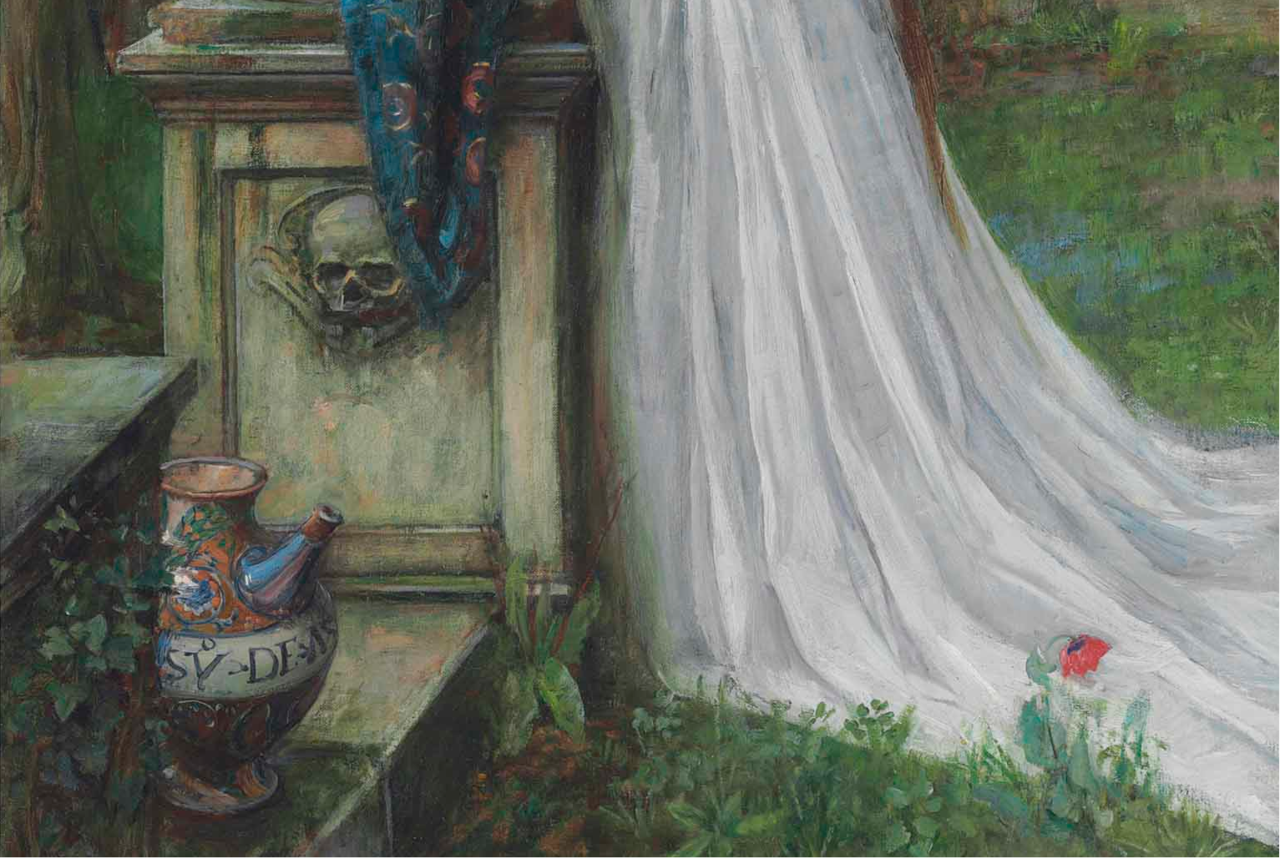
Lush, dense and green. She leans in again, eyes vacant, and breathes in its scent. She pressed her face to it yesterday, drew in its air today, and on Friday she will do the same again. She will never leave this secret garden in Florence, not until the day she dies. That is a vow she could swear a thousand times over — against the red poppies growing nearby, against the skull carved clearly into the base of the pot.
She cherishes what she holds with every part of herself. More precisely, she loves the head of her dead lover buried in that soil. "My love is here," she could whisper, endlessly.
This is John William Waterhouse's haunting and beautiful painting, "Isabella and the Pot of Basil."
The English poet John Keats told the love story of Lorenzo and Isabella in his poem "Isabella; or, The Pot of Basil: A Story from Boccaccio."
As the title suggests, Keats drew on a tale from "The Decameron," written by the 14th-century Italian author Giovanni Boccaccio, and retold it in his own voice.
Isabella, as she appears in the poem, is a beautiful young woman from a wealthy merchant family.
Love came to her suddenly, in the form of Lorenzo — a man employed by her two brothers. "With every morn their love grew tenderer, with every eve deeper and tenderer still," as the poem goes. Neither doubted what they felt for the other, yet they could not express it in words or gesture — because of the brothers.
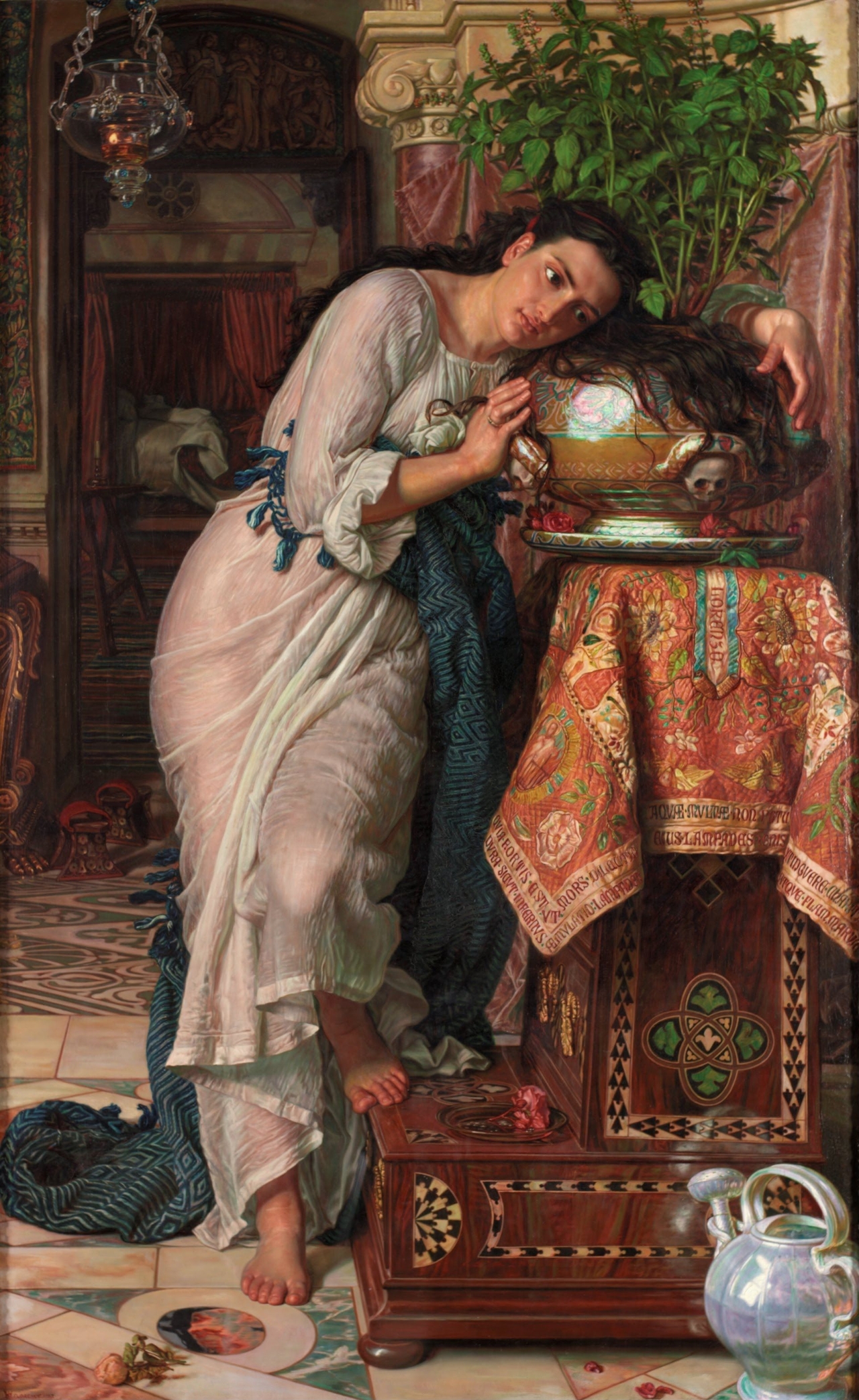
The brothers had plans for Isabella — to marry her off to a wealthy nobleman, using their beautiful sister as a stepping stone to higher social standing and a handsome sum of money. Lorenzo was never going to be acceptable to them. They turned over in their minds how to separate a pair joined, as the poem puts it, "like a pair of roses from the same green stem." No clean solution presented itself. So they chose the most extreme one: murder.
The two brothers lured Lorenzo into a forest and cut his throat from behind. They buried the body hastily in the earth.
Isabella believed their story — that Lorenzo had gone abroad on urgent business — and waited for him without end. Then one night, Lorenzo appeared to her in a dream: his hair matted with dirt, his body trembling with cold, he revealed what had been done to him.
Isabella went to the forest with her old nurse and dug up the ground. She pulled up the body of the man she had longed so desperately to see. It was heavy — caked with soil and sand, wet with her tears. There was nothing else to be done. She cut off the head and carried it home in her arms.
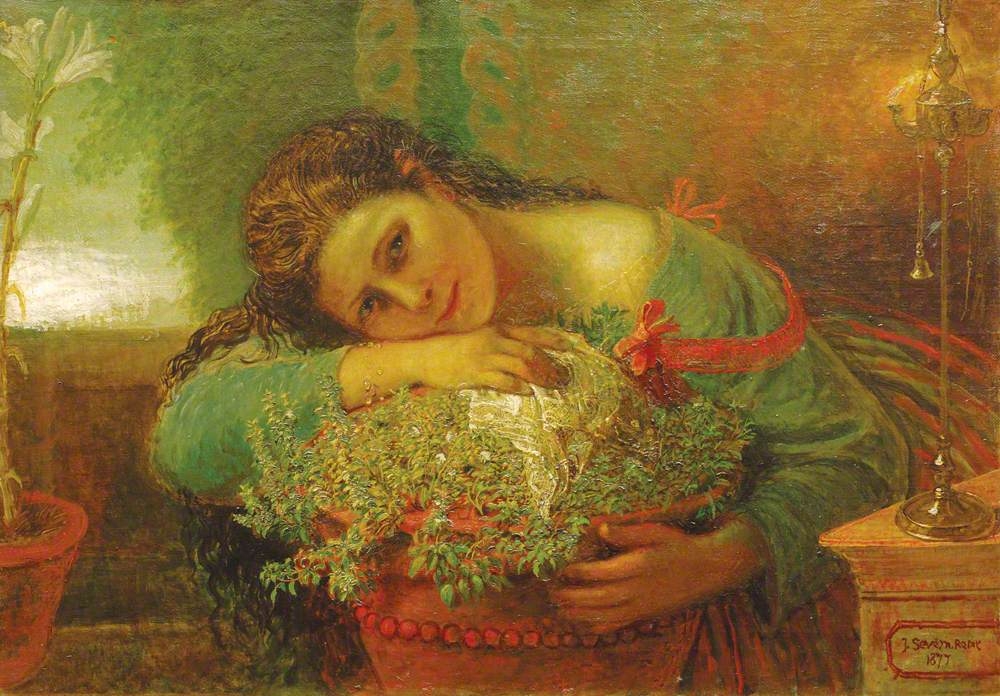
Isabella washed Lorenzo's severed head with water. She combed it with a golden comb and trimmed the eyelashes. She wrapped it in a scarf soaked in fragrant oil and placed it in a pot.
Then she planted basil over it.
The basil drew its nourishment from Lorenzo's head. It quenched its thirst on the tears Isabella shed day and night.
The basil pot had become Lorenzo to her. As Keats wrote, she "forgot the stars, the moon, and sun, and she forgot the blue above the trees" — and just as Waterhouse's painting shows, Isabella was always at the pot's side. She skipped meals. She rarely went to chapel. Even when she had no choice but to go out, the first thing she did on returning was pull the pot into her arms.
So how does the story end?
Waterhouse planted clues in the painting — the poppies and the skull mentioned earlier. Red poppies are a symbol of fleeting love. The skull, of course, speaks of death and severance.
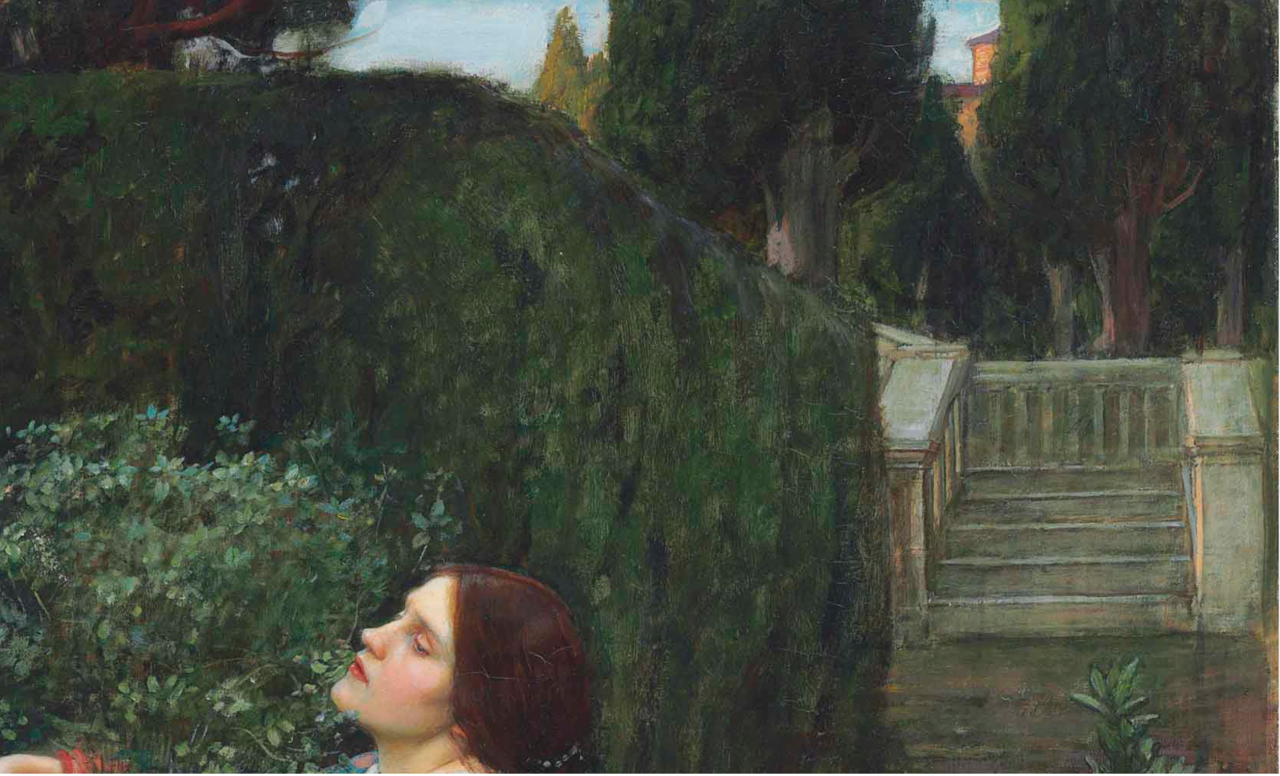
One imagines the brothers creeping down the staircase at the upper right, late one night.
They would have reached into the suspicious pot with their hands and a spade. Lorenzo's head, tumbling free and rolling across the floor — the sight would have been enough to bring them to their knees.
Terrified of being caught as murderers, the two brothers fled Florence at once and never returned.
As for Isabella — when she discovered that the pot, and with it Lorenzo's head, was gone, she was devastated. She grabbed at the arms of passing strangers and wanderers, asking after the pot, but found not a trace of it.
Her body and spirit gave way, like the trailing hem of her dress in the painting. The ending was never in doubt. It was death. With that same vacant gaze, that same desolate look, she closed her eyes and let go. Keats gave her final moments in the poem these lines:
And so the ballad was born from this sad tale
and passed from mouth to mouth across the land.
Its refrain is sung to this day:
"Oh, what a cruel thing was done to me,
to steal away my basil pot!"
yul@heraldcorp.com