Lee Chang-dong returns after eight years with 'Possible Love'
Director and four lead actors speak on becoming their characters
The most-heard phrase on set: 'Stop acting'
The same moon for everyone — but its meaning differs for each
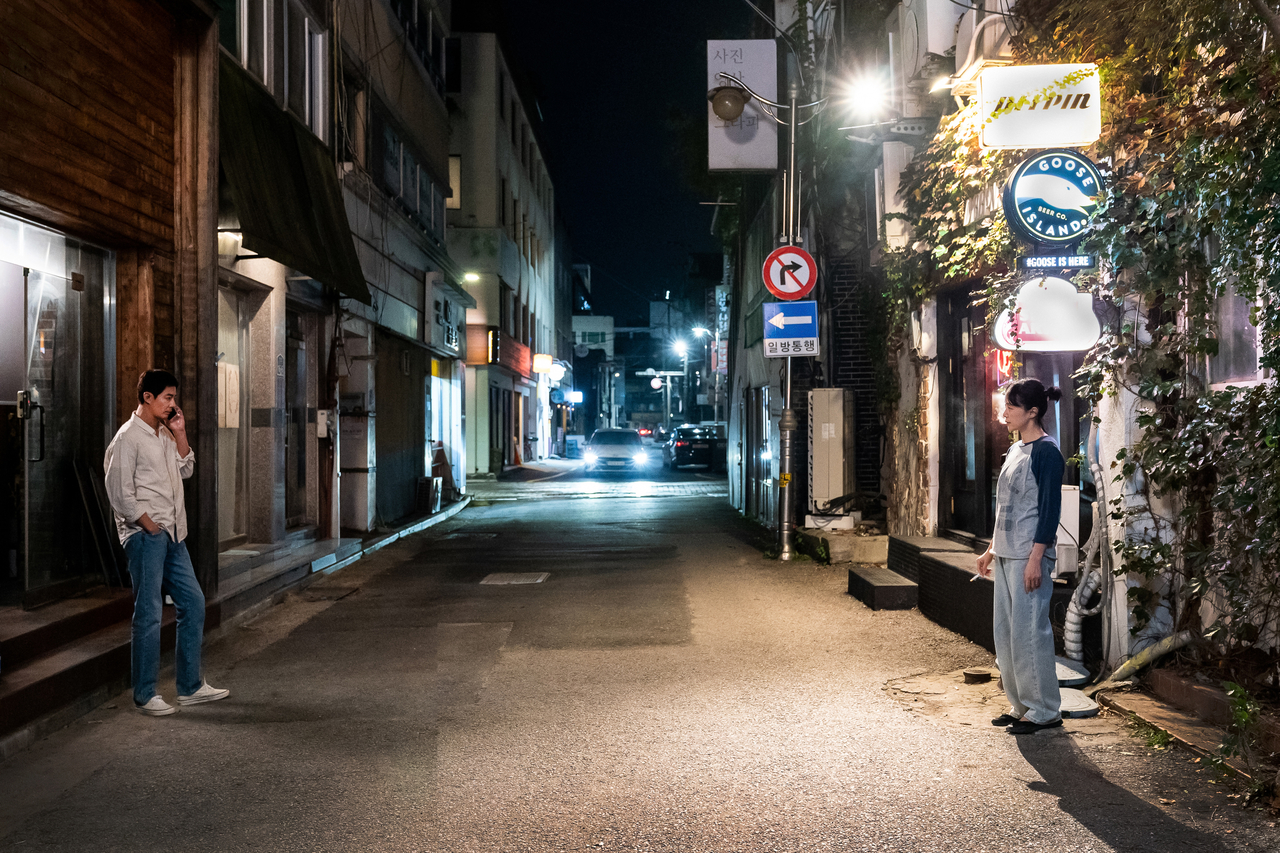
Their first meeting, after Mi-ok has agreed to be filmed for a documentary. Sitting across from each other at a café, Ye-ji (played by Jo Yeo-jeong) steps away briefly, saying she will go get her camera. Mi-ok (Jeon Do-yeon), wife of a laid-off worker, seizes the moment — she photographs Ye-ji's bag and searches the price on her phone. It is a Loro Piana "Extra Pocket": 5.63 million won ($4,210). Ye-ji's husband Sang-u (Jo In-sung) drives a white Porsche Panamera. Mi-ok has sensed it from the outset: between herself and Ho-seok (Sul Kyung-gu) on one side, and Ye-ji and Sang-u on the other, there is an abyss that cannot easily be crossed.
Running beneath every frame of director Lee Chang-dong's film "Possible Love" is a cold, persistent tension — a sense of irreconcilable difference. Ye-ji wants to make a documentary about the lives of a laid-off couple; Sang-u was born into everything. The worker and his wife, meanwhile, have not yet escaped the wounds of a brutal past. Ye-ji sincerely believes she loves them both, but Mi-ok feels, apart from all that goodwill, that Ye-ji stands on an entirely different class foundation. Even in moments where sincerity and kindness intersect, the gap carved by capital and class refuses to close.
It is precisely this question that Lee has pursued for more than a decade: is it ethically justifiable for an outsider — one who has traveled a wholly different path — to point a camera at the life of a worker still bound by a painful past? Can the sheer will to understand and love another person bridge that vast distance? The film's four lead actors each gave nuanced expression to these weighty questions through their characters. Ahead of the film's Netflix release, the cast — Jeon Do-yeon, Sul Kyung-gu, Jo In-sung and Jo Yeo-jeong — along with director Lee, sat down separately to talk about "Possible Love."
Four faces — divergent desires, an unbridgeable gap
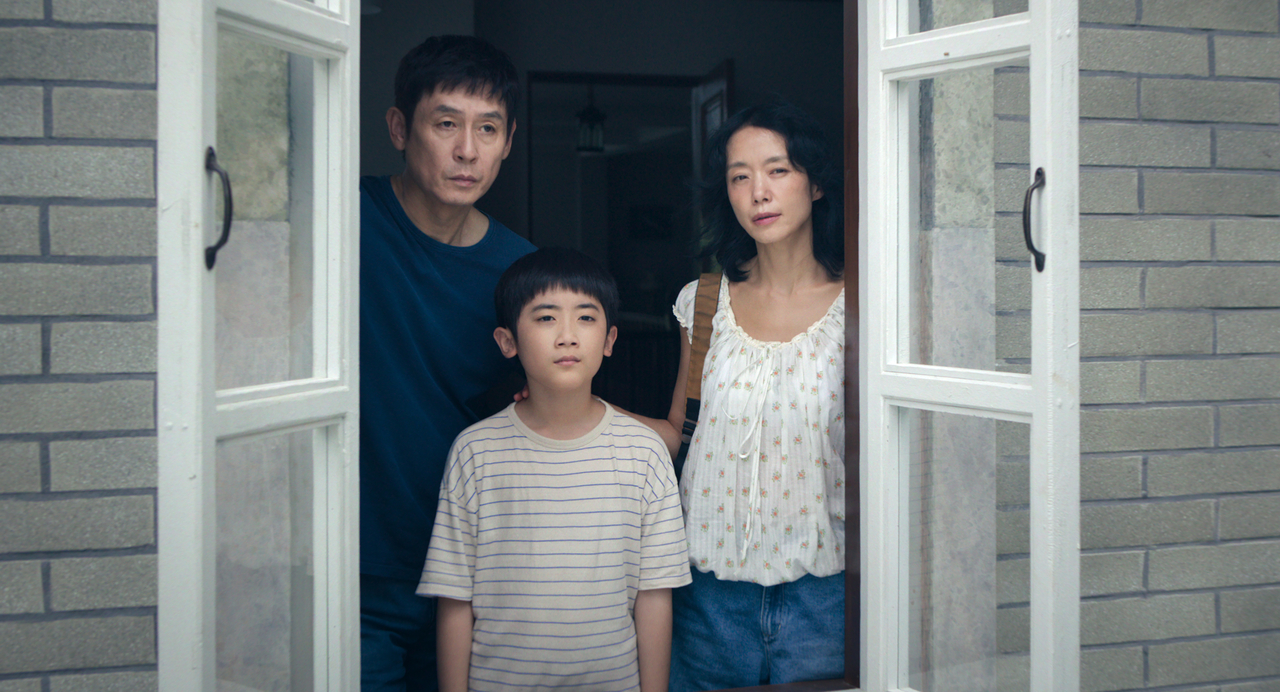
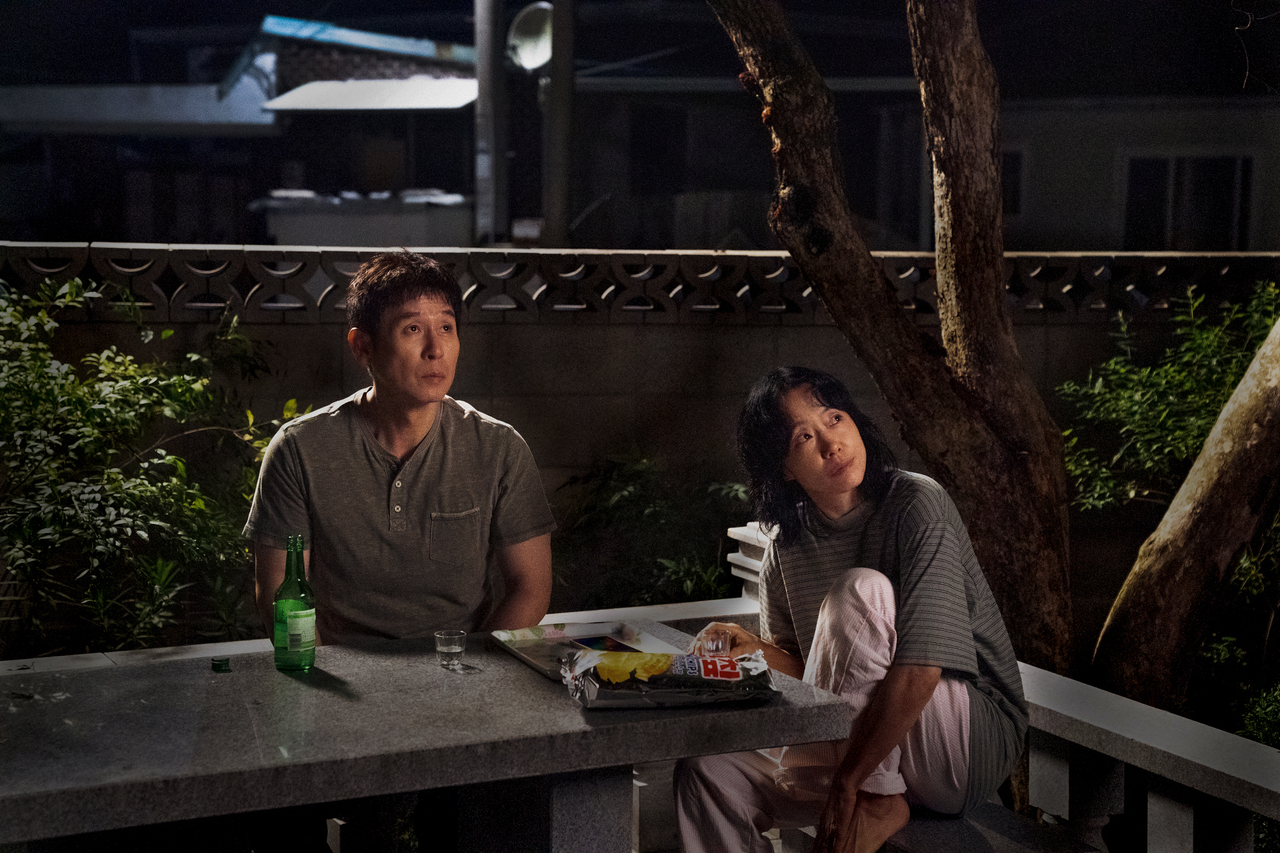
Sul Kyung-gu's Ho-seok is a man who suppresses his emotions deep within. In a world where colleagues who kept their jobs are called "the living" and those pushed out are "the dead," Ho-seok has lost both his daily life and his dignity as a worker. Sul recalled that early on he understood Ho-seok only as "a worker who was laid off and hurt by his colleagues." As filming progressed, he came to see that "the emotions were so complex and tangled that words couldn't carry the weight of them — so the body becomes the language." For Sul, Ho-seok was "a character who speaks through his body."
The moment Ho-seok finally releases the emotions he has long suppressed — in front of a camera — is the film's most powerful. "There's nothing inside me. It's completely empty. … I'm so terrified my family will find out what kind of person I really am." Sul identified Ye-ji's gaze as the force that unlocked that sealed mouth. His view was that "drawing out what's inside someone and letting them tell their own story are two different things" — meaning Ye-ji drew out words that Ho-seok unconsciously knew he needed to speak to survive, yet had never been able to say.
The Mi-ok that Jeon Do-yeon constructed embodies the human vulnerability of wanting to appear fine at all costs. "Even when no one is watching, it's about saying 'we're okay' — trying to look like ordinary people," Jeon said, adding that she interpreted Mi-ok's habit of photographing food as "a way of hiding anxiety and appearing normal." For Mi-ok, Ye-ji represented a breakthrough that could sever the chain of her family's hardships, while Sang-u was "someone like Steve Jobs — a person she admired so much she would have wept when he died." Jeon said Mi-ok would have felt "curiosity and admiration" at having someone like Jobs appear before her, and would have believed that becoming friends with them meant she could assimilate into their world. After Mi-ok finally confronts the painful reality of the gap between them, Jeon said, she would have been engulfed in a sense of loss — "as if her whole world were collapsing."
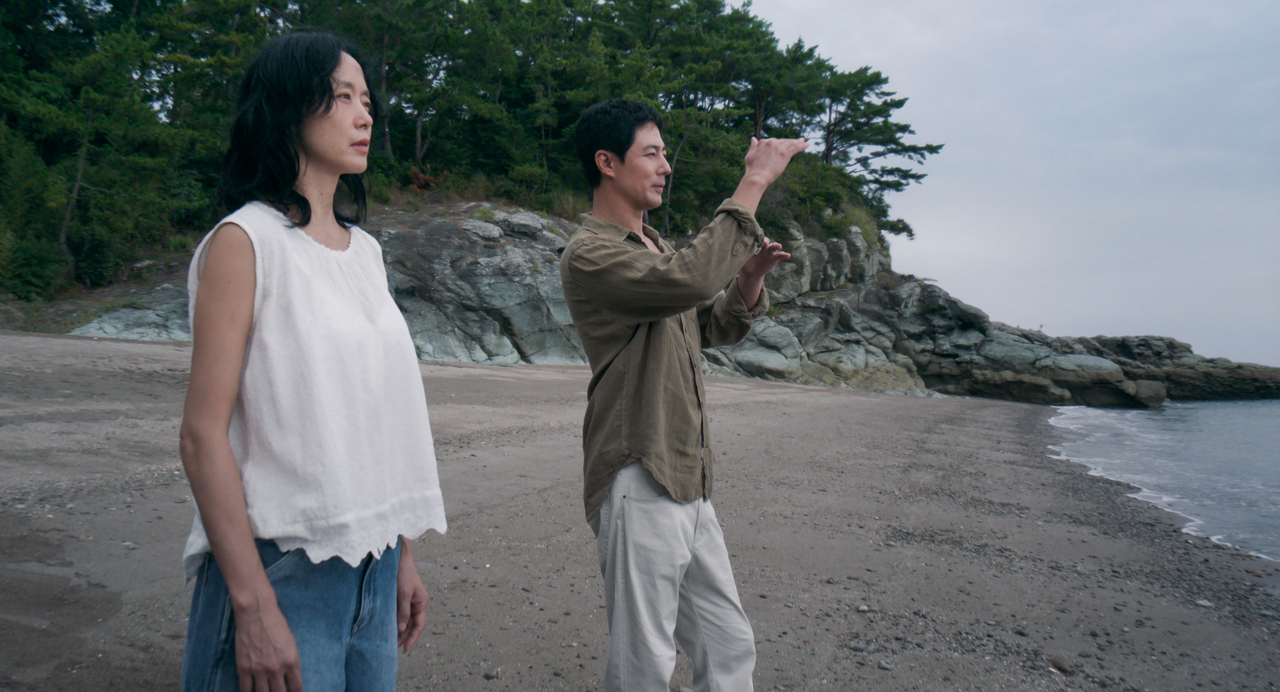
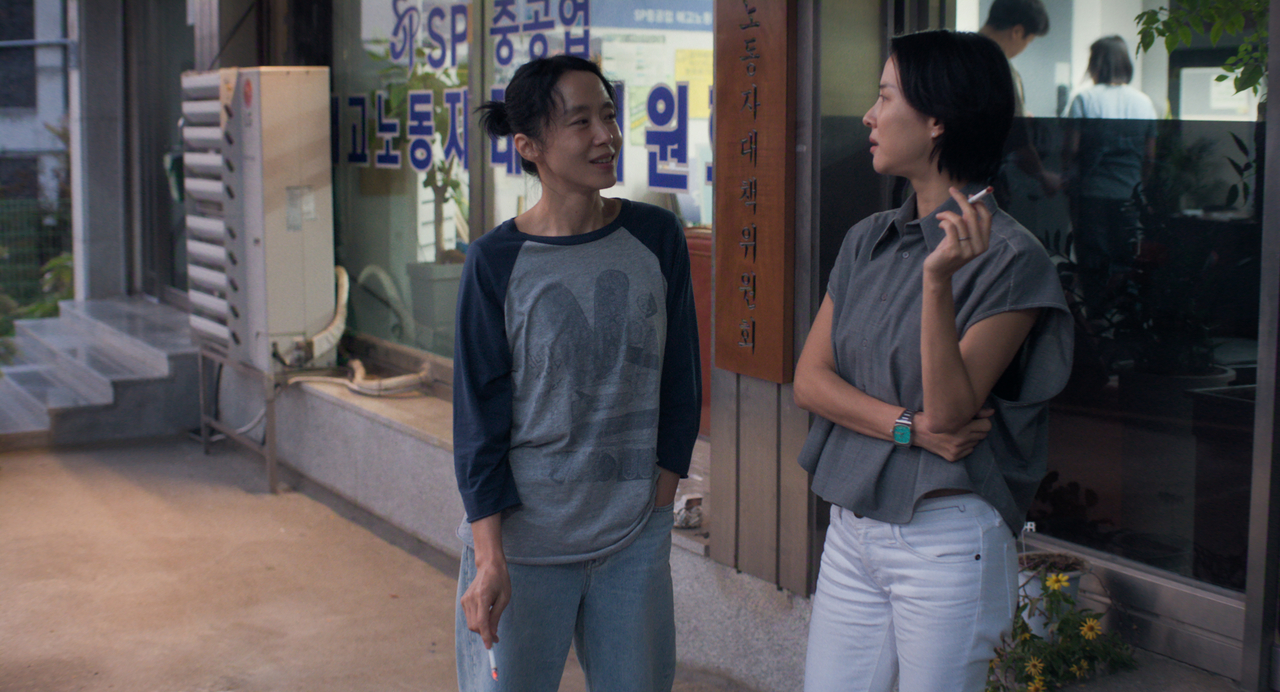
Ye-ji is a documentary filmmaker who believes "the power of a documentary comes from its people." Born the daughter of a dry-cleaning shop owner, she was beloved by everyone from her school days, and even with a husband whose family has accumulated wealth across generations, she makes films about "independence from capital." She convinces herself that her decision to draw close to Mi-ok and Ho-seok while making a documentary about laid-off workers is simply "trying to love those people." Director Lee said, "Ye-ji is a character who touches on my own identity."
Jo Yeo-jeong, however, did not see Ye-ji merely as the director's alter ego. Under the premise that "Ye-ji is Ye-ji," Jo built her as an independent universe — grounded in the upbringing written into the script, the husband beside her, and the environment she inhabits. Jo refused to divide Ye-ji's sincerity and professional ambition into neat opposites, instead defending the complexity of a human interior and simply existing as Ye-ji. "In human relationships, you can't divide up what percentage of your feelings is this and what percentage is that," Jo said. "Many different feelings are all in there together."
Jo In-sung's Sang-u stands out even within this ensemble. Every scene featuring him begins with the Porsche Panamera — entirely by design. Director Lee described Sang-u as "the personification of capital." Jo did not define Sang-u as a straightforward villain. "In Director Lee's work, there are no bad people whose malice is on open display," Jo said. "But if you watch this character and feel something is wrong, that's because the audience has caught a glimpse of something that pricks their own conscience."
The Sang-u Jo saw is a "contradictory subject" — a manifestation of capital who is nonetheless never free from capital's grip. Jo analyzed Sang-u's decision to marry against his parents' wishes, and his move to hand the family business over to a professional manager, as extensions of a struggle for recognition — a desire "to prove himself." A scene in which the two men emerge from the below-ground noraebang at the villa and stand side by side at a bathtub to urinate lays bare the violence of capital in stark visual terms. Ho-seok's stream scatters feebly; Sang-u, with a tipsy smile, seems to receive even that with open arms. Sang-u's guileless kindness — which inflicts humiliation — shows how even the benign goodwill of the privileged can become a razor-sharp act of violence, depending on the position of the person on the receiving end.
Four actors — stripping away artifice, proving existence as subject
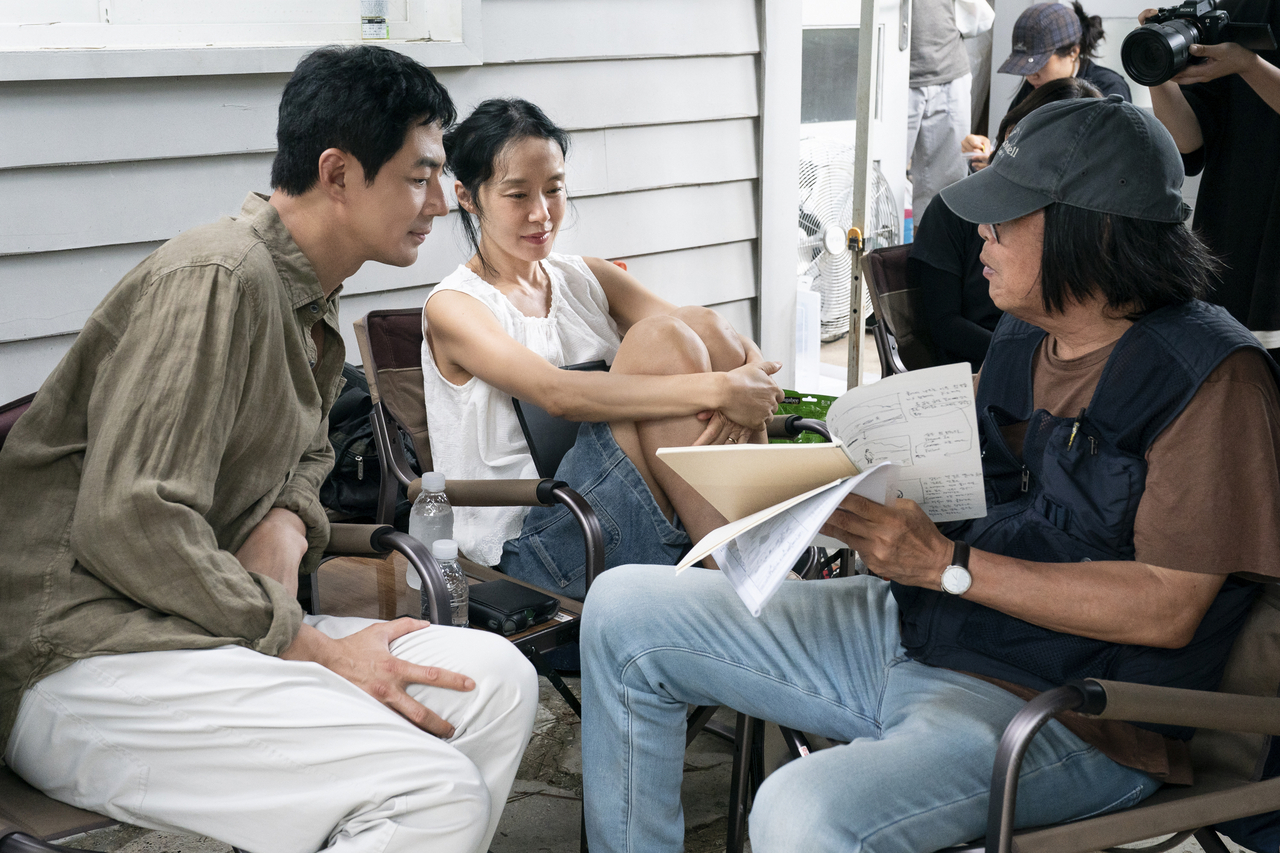
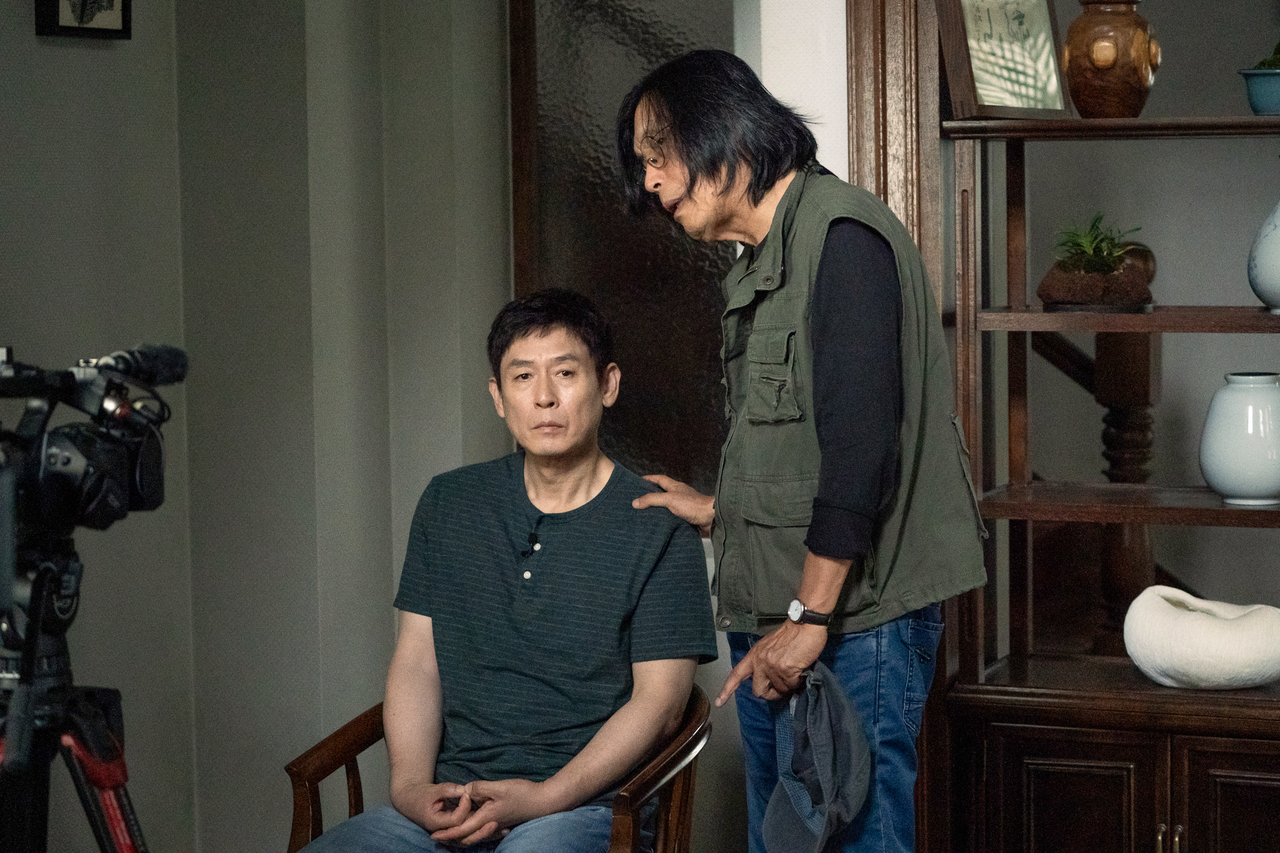
On Lee's set, there is no "OK" sign. His thinking is that "the answer belongs to the actor, not the director." The only direction that ran through the entire shoot was: "Don't try to express — feel completely." The actors heard Lee tell them to stop acting countless times. After a cut, the exchange between Sul and the director was usually just three lines: "Did you feel it?" "Yes." "Then that's enough." Sul did not misread this minimal instruction as an abandonment of craft. "If you look at just one scene, it seems like nothing is happening — but it's about accumulating things in tiny increments," he said, arguing for the essence of restrained performance: "Each layer builds up and seeps in, and that's what leaves an aftertaste."
Even for the "Queen of Cannes," Lee's abstract instructions caused intense confusion. "In words it sounds simple — 'just feel it' — but in front of the camera it's disorienting," Jeon said. Lee was particularly insistent that actors deliver lines they had memorized hundreds of times "as if saying them for the very first time." For Jeon, the hardest task was exactly that: "speaking words I had said countless times as though I were saying them for the first time."
She arrived on set having internalized every line perfectly in order to overcome that anxiety — yet in front of the lens she felt she had "done nothing," simply melting into the character with all tension released. When the Venice International Film Festival produced the praise that her performance was "one that comes along once in a hundred years," Jeon asked Lee directly: "Did I really do that well?" He replied, "You did. Watch the film again later" — a quiet, weighty vote of confidence. "It was strange," Jeon admitted, "because it wasn't the kind of work where I was straining to perform emotions or manufacture something in order to become Mi-ok."
Jo In-sung identified the preconditions that make restrained performance possible. "If you're going to avoid expressing, you need perfect direction and a good script," he said. "Choosing not to express is ultimately proof that you trust this screenplay." Jo Yeo-jeong, for her part, researched the work of legendary American documentary filmmaker Frederick Wiseman before deliberately stopping, fearing she would become too immersed. On set, she trained herself in the recorder's gaze by directly observing crew members through the lens. "Acting is supposed to mean delivering every line as if for the first time — that's the standard," she said. "On set you say the same lines over and over, and doing that as if it's the first time is genuinely hard. That's why the director reminds you, one scene at a time."
On the set of "Possible Love," the four were not actors — they were Mi-ok, Ho-seok, Ye-ji and Sang-u in full. Jo Yeo-jeong described one particular day of filming: "All the distracting thoughts disappeared and it felt like I was really talking to Ho-seok. It was as if the camera beside me wasn't even there. Those moments don't come easily — actors are human too, and everything around you registers in your consciousness. Even the act of trying registers. So that one instant was truly precious." Of the time and space in which the four actors breathed as their characters, Lee said: "Honestly, I had almost nothing to do. Rather than thinking they were acting well, I kept thinking, 'They're really living well.'"
A gaze fixed on the right to judge another's pain
The film took root in the barren soil of workers laid off in the wake of the 2009 KGM automotive crisis. Lee conceived the story more than a decade ago but set it aside, stalled by what he called an "ethical dilemma" — his own lack of standing as an outsider to that experience. The dormant text finally found its momentum when screenwriter Oh Jeong-mi proposed introducing the perspective of an observing "documentary filmmaker couple," opening a path forward. That framing allowed the film to fold the ethical duplicity of the camera-holding creator into the narrative itself.
Lee described the doubt over how honestly one can represent another person's arduous life as "a question I must carry for the rest of my life." A documentary filmmaker controls what falls inside and outside the frame. Such a filmmaker brings another's suffering into public view, demanding that audiences confront it, yet simultaneously risks appropriating that misery as a tool for personal aesthetic achievement. Ye-ji holds a firm self-conviction that she genuinely loves Ho-seok and Mi-ok. But between the crushing weight of the life they have endured and the ease Ye-ji has long enjoyed, there is an undeniable hierarchy. Sul did not condemn Ye-ji as a hypocrite. "I think a documentary filmmaker cannot put someone in front of the camera without loving them," Sul said. "Even if it is a love that carries a purpose, I believe that sincerity was conveyed to Ho-seok" — and Sul affirmed the warmth in that.
Yet the transmission of goodwill does not erase objective distance. Ye-ji's invitation to the villa — offered as a gesture of kindness — translates for Ho-seok and Mi-ok into unbearable alienation and shame. They ultimately flee the villa, refusing to remain subjects of the camera. It is the moment when the quiet privilege Mi-ok sensed in Ye-ji calling her husband by his first name, and the class barrier she had intuited the day she searched the price of that bag, collide with her in full. The one who articulates that contradiction most coldly is Sang-u: "You're doing method acting right now. You're different from those people. But you believe you're the same." Yet his sharp perception of class difference does not elevate Sang-u into someone who stands in solidarity with another's pain.
The film holds several moons, each shaped by a different layer of time. There is the hopeful moon that Mi-ok and Ho-seok, young and in love, gazed up at together at Wolmido while she was working at a garment factory in Dongdaemun. And there is the precarious moon that a 23-year-old Ye-ji, studying abroad, leaned on while grinding through low-wage work in Chicago. Ye-ji insists the two moons are "the same celestial body" orbiting the same path — but the stains that life left beneath that moonlight were nothing alike.
In the film's ending, Ho-seok and Mi-ok sit down on the wooden platform in their yard — a space they had never once offered to anyone else. Sul called it "a place of failure and betrayal," and reflected: "The full moon at Wolmido was full of hope, bursting with feeling — but the moon at that final platform was empty, and it felt lonely." Of this desolate close, Lee said: "People who have become family to the point where you don't even need to ask whether you love each other — reconfirming each other again. That kind of love can also be a possible love." Jeon's response to the same round moon carried a different texture: "Looking at a moon that is fair to everyone, I found myself wondering what people watching our film think when they see the moon." Jo Yeo-jeong offered her own quiet admission: "It made me realize why the director placed such importance on the moon."
"Possible Love" resists the cheap romanticism that love, as an idea, can neutralize the distance created by capital. Mi-ok looked unflinchingly at an abyss that Ye-ji's sincerity alone could not fill; Ho-seok finally gave voice to his wounds, yet cannot rest easy knowing that pain was fully received by another. The film does not force that gap shut. Instead, it holds its gaze on the four characters as they silently bear witness to one another's existence. Is love possible? The answer the film's closing credits offer is not an arrogant declaration — it lies in the precarious, wondrous instant when people rooted in irreconcilably different worlds finally meet each other's eyes.
shee@heraldcorp.com