Sociologist Eva Illouz's 'The Emotions of Populism'
Political contradictions stem from 'emotional politics'
Fear, hatred, ressentiment and love used as tools of manipulation

When the polling firm Realmeter released its regular survey of then-President Moon Jae-in's approval rating in December 2018, the political world was stunned. Support among men in their 20s had collapsed to 29.4 percent — lower even than among voters in their 60s and older, a demographic traditionally seen as a conservative stronghold. The result upended the prevailing political narrative that younger generations, with their weaker social and economic footing, naturally gravitate toward progressive forces. It was also the opening act for the emergence of "20-something men" as a distinct political identity willing to make their leanings known.
Irrational political choices by the public are hardly a uniquely Korean phenomenon. Donald Trump's support base has been low-educated blue-collar white men and Hispanic voters, while the far-right parties sweeping Europe in recent years have drawn their strength from low-income workers. Eva Illouz, a distinguished professor of sociology at the Hebrew University of Jerusalem, argues in her new book "The Emotions of Populism" that such political contradictions arise not from public ignorance but from the deliberate weaponization of deep-seated emotions by those in power — a practice she calls "emotional politics."
Tracing Israel's political crisis and the rise of right-wing populism, Illouz examines how political leaders paralyze rational judgment, legitimize hostility and hatred toward the other, and steer people toward choices that work against their own interests. Israel, too, has seen phenomena that mainstream political theory cannot explain: the conservative Likud party and Prime Minister Benjamin Netanyahu deepened social inequality through tax cuts for the wealthy, cuts to public spending and soaring real estate prices — yet continued to enjoy steady support from the very working-class voters who bore the brunt of those policies.
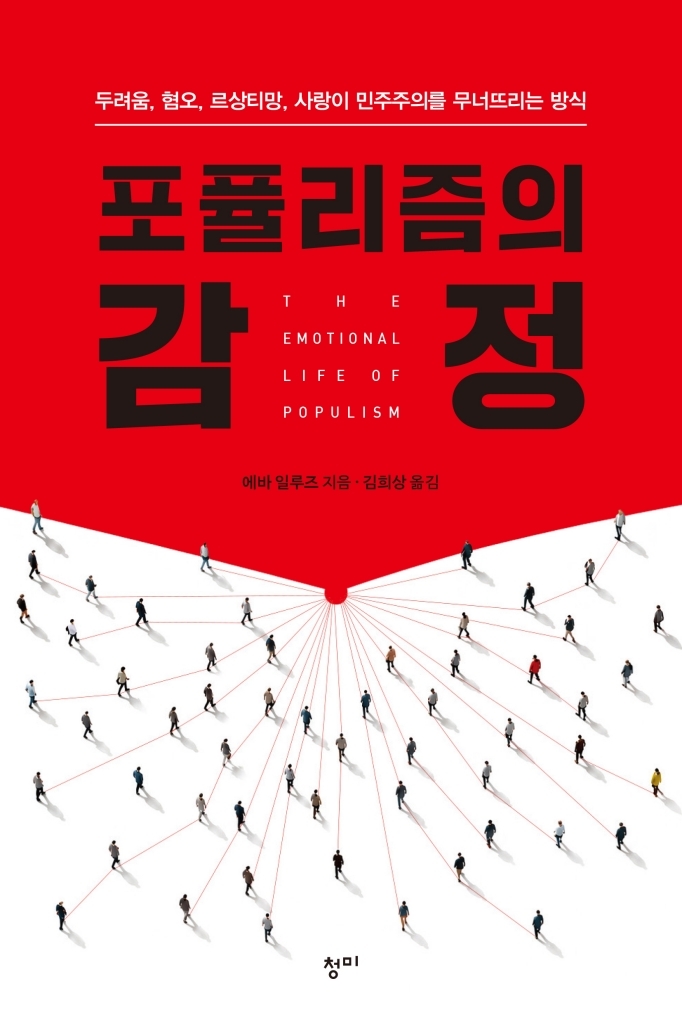
According to Illouz, these contradictions reveal the strong appeal of the populism Netanyahu has chosen as his instrument of political survival — a hold so strong that supporters keep backing him even as his policies undermine their own economic interests. Her argument is that populism succeeds not as a one-off rallying cry but by skillfully combining four emotions lodged deep in the public psyche — fear, hatred, ressentiment (resentment) and love — into a form of political manipulation that blinds people to what is happening.
Populism begins by stoking fear: it warns that the balance of power between majority and minority groups — defined by race, ethnicity or religion — is on the verge of collapse, and that the very existence of the nation is under threat. It then foments disgust toward minorities, branding them as dirty or unclean, before justifying that hostility by casting the aggressors as victims who have no choice but to harbor grievances. That resentment, Illouz argues, feeds an exclusive form of patriotism and nurtures fantasies of revenge. As populism comes to embody a "discourse of rebellion," the left loses its place at the center of resistance — and the right steps in to claim it.
To move beyond the politics of division and hatred that populism uses to undermine democracy, Illouz argues that the spirit of "fraternity" is essential. Unlike solidarity, which rests on consensus or sentiment, fraternity follows a principled commitment to what is morally and justly right within a political community. Universal fraternity — one that draws no line between "us" and "them" — is indispensable for inoculating democracy against the temptations of populism. "Even if universalism is not a perfect safeguard against the failures of democracy," she writes, "it is clearly one of the most powerful buffers against the nativist nationalism of populism."
"The Emotions of Populism" by Eva Illouz, translated by Kim Hee-sang, published by Cheongmi.
carrier@heraldcorp.com