
- HOME
- REAL ESTATE
Rent arrears at LH public housing near 180,000 households
Cumulative unpaid rent reaches 127.73 billion won Long-term delinquencies top 46,000 households LH faces dual challenge of housing stability and debt management The number of households behind on rent at Korea Land and Housing Corporation public rental units is approaching 180,000, with cumulative arrears surpassing 127.73 billion won ($96 million) and one in four delinquent households having gone more than a year without paying. As the public rental supply continues to grow, LH faces a dual challenge: supporting housing stability for vulnerable residents while tightening its arrears management system. Data obtained from LH by Democratic Party of Korea lawmaker Jeong Jun-ho of Gwangju's Buk-gu Gap constituency showed that the number of households in arrears across LH's construction, purchase and jeonse rental programs stood at 179,063 as of the end of September — with purchase rentals measured as of the end of October. The figure has risen steadily, climbing from 160,080 at the end of 2024 to 172,050 at the end of 2025 and continuing to increase this year. Cumulative unpaid rent has followed the same upward trajectory, rising from 95.69 billion won in 2024 to 112.05 billion won in 2025 and reaching 127.73 billion won this year. By housing type, construction rentals accounted for the largest share of delinquent households at 96,409, followed by jeonse rentals at 54,258 and purchase rentals at 30,196. The number of long-term delinquent households — those that have gone more than a year without paying rent — rose across all three categories, reaching a combined 46,096. For construction rentals, long-term delinquencies increased from 5,887 households in 2024 to 6,646 in 2025 and 7,125 this year. Purchase rental long-term delinquencies rose from 3,373 in 2024 to 3,807 in 2025 and 4,936 this year, while jeonse rental delinquencies climbed from 25,342 in 2024 to 31,031 in 2025 and 34,035 this year. Under LH policy, households in public rental units that fail to pay rent or maintenance fees for three or more months are subject to eviction notices and legal proceedings. Cases where tenants have missed the deadline set in a final eviction ruling are reviewed for potential forced eviction. The process from the onset of arrears to a final court ruling on eviction typically takes more than 18 months, meaning the rise in long-term delinquencies points to a growing number of vulnerable households pushed to the financial edge. "For cases involving vulnerable groups or those whose living conditions have deteriorated sharply, we are supporting arrears resolution through a review body that includes outside experts, and we are holding off on forced evictions," an LH official said. "We will minimize the occurrence and prolongation of arrears through systematic management procedures and improvements to our IT systems." The concern is that LH's arrears management burden will grow as the public housing supply expands. With the government pushing to deliver about 1.19 million public housing units by 2030, prolonged rent delinquencies could add to LH's financial strain. The corporation's debt already exceeded 185 trillion won in the first half of this year, an increase of more than 20 trillion won in a single year. Alongside expanding the public rental supply, LH must also improve its management systems to ensure housing stability for existing tenants and the long-term viability of its rental operations, observers note. "As public rental housing expands, the number of delinquent households will inevitably grow," Jeong said. "Public rental housing serves as a housing ladder for ordinary people, so careful management is essential."
Seo Jung-eun Nov. 22, 2026
-
'How much, and when?' — reconstruction levy reshapes Seoul apartment investment calculus
Reconstruction excess profit recapture levy now certain to be imposed this year Buyers must weigh levy exposure before entering market Additional contributions, financial costs and taxes add to burden The confirmation that reconstruction excess profit recapture levies will be imposed on Seoul apartment complexes before year-end has complicated the investment calculus for prospective buyers. Experts are advising buyers — particularly those eyeing Gangnam-area reconstruction complexes — to carefully account for growing post-purchase costs, including property holding taxes, additional unit contributions and the recapture levy. After the Ministry of Land, Infrastructure and Transport ruled Thursday that no extension of the levy imposition deadline would be granted, the barrier to entry is expected to rise for reconstruction complexes subject to the charge, starting with Banpo Hyundai — now known as Banpo Centrevill Asterium — in Seocho-gu, Seoul. By fixing the imposition window at five years from five months after the completion approval date, the ruling means complexes already completed and occupied will also be unable to escape the levy. Don't snap up a distressed listing — check these factors before buying Buyers should verify the completion approval date of any complex they are considering, the earliest date on which the levy can be imposed, the projected levy amount and whether an actual charge has been confirmed. Experts stress that when purchasing a unit from a union member at one of these complexes, the contract must clearly specify who bears the reconstruction excess profit recapture levy and set out the settlement method in detail. In principle, the primary obligation to pay the levy falls on the project operator — the reconstruction union, a trust company or a residents' agreement body. If the union is dissolved or lacks sufficient assets, a secondary payment obligation falls on union members at the time the levy period closes. Ham Young-jin, head of the real estate research lab at Woori Bank, said buyers must distinguish between the timing of the transaction, the point at which the levy arises and is finalized, and the basis on which it is apportioned among union members. "The projected amount notified to the union differs from the final levy," Ham said. "The actual charge is determined by factors including the property value at the end of the levy period, the value at the start, the normal rate of housing price appreciation and development costs." How to judge a fair purchase price — tally the costs you'll carry after buying For complexes still in the early stages of development, industry advisers say investors need to calculate total returns by factoring in not only the recapture levy but also rising project costs and additional unit contributions. Kim Hyo-seon, a senior real estate specialist at KB Kookmin Bank, said determining a fair purchase price for a reconstruction complex requires comparing nearby new-build market prices against the total costs to be incurred through completion. "Buyers must consider the additional contributions and levies they will pay going forward, as well as financing costs and relocation expenses caused by project delays," Kim said. "The wider the gap between the expected move-in date and the final cost burden, the harder it will be to close a deal." Industry analysts say the ministry's decision will prompt a reassessment of project viability on a complex-by-complex basis. Ham said comprehensive calculations are now essential, covering whether the recapture levy applies, the stage of project progress, construction costs, additional contributions and the profitability of general pre-sales. "A complex's appeal will be determined less by its location and age than by how predictably and how quickly it can be turned into a new building," Ham said. Around complexes where the levy has been confirmed, discounted distressed listings are emerging, creating a two-tier pricing phenomenon within the same complex for units of identical size. At Raemian Trinione, a complex subject to the recapture levy, two listings with the same view and floor area were priced differently as of Friday depending on who bears the levy — 5.5 billion won ($4.14 million) for a unit where the seller absorbs the charge, and 4.5 billion won for one where the buyer does. Kim said disputes over the reconstruction levy will persist even at newly completed complexes that have gone through the reconstruction process. "Listings where the seller agrees to bear the future recapture levy will become increasingly common," Kim said.
Nov. 21, 2026
-

'4 hours a day commuting from Incheon': How one couple built a PowerPoint to settle a debate — and ended up in Seoul
Scouting Seoul for fun: Gangdong, Mapo and Dongjak on the shortlist Couple builds a PowerPoint deck to settle their upgrade debate Incheon deposit gap becomes a stumbling block This article is part of The Herald Business series on how ordinary Korean workers have managed to buy homes in Seoul. Names and some details have been changed to protect the subjects' identities. The parking garage was as spacious and spotless as a department store floor. There were smart-home systems, a full suite of community amenities — the first home Lee Su-yeon (a pseudonym) ever owned was perfect. More precisely, it was perfect on weekends. On workdays, Lee spent four hours a day — 20 hours a week — on the subway. The more worn down Lee became, the sharper the goal of upgrading grew. Settling was not an option if Seoul was the target within two years, and building up assets now would mean more choices when the moment came. ► Missed Part 1 of Lee's journey into the Han River belt? Read it here. Spend less, scout more: 'We just went to Seoul whenever we were bored' The couple canceled their credit cards the moment they got married. "My husband was the one who pushed hard for us to stop using credit cards altogether," Lee said. "Before I was married I racked up quite a bill every month. Now we only use a card enough to qualify for the preferential loan rate." They managed their living expenses by keeping their account balance deliberately tight. Depositing a full month's budget at once, Lee reasoned, only invited overspending. Instead, they transferred 100,000 won ($75) into their household account every week, adding more only in a pinch. There were times Lee did not realize the week's allowance was gone until already at the checkout. Once the inconvenience became habit, overspending felt foreign to them. Every won that flowed in and out was recorded in what the couple called a household balance sheet — tracking debt and equity the way a company would, steadily logging the state of their finances. "Home prices were rising, so our assets were growing fast too. My husband was excited, but we did not let it go to our heads. We had already seen how dangerous easy money could be. We kept telling ourselves: don't get complacent, just keep going in the right direction." Even as their assets grew, the couple kept moving. From early 2024, their hobby was scouting apartments in Seoul. They had no immediate plan to buy, but this time they wanted to learn by walking the streets rather than reading books. Whenever a complex worth upgrading to caught their eye, they saved it and dropped by a real estate agency whenever they had time. "The first filter was always price — something we could actually reach," Lee said. "Selling our Incheon place would not be enough for a new Seoul apartment, so we focused on older buildings in good locations." 'Mapo for schools vs. Dongjak for redevelopment': the first time the couple disagreed That process narrowed the field to three districts: Gangdong-gu, Mapo-gu and Dongjak-gu. Once the areas were set, the couple toured complex after complex, checking nearby development plans, school catchments and commute times. Three finalists emerged: Dunchon Shinsung Misozium in Gangdong-gu, Mapo Taeyoung (also known as Daeheung Taeyoung) in Mapo-gu, and Complex A in Dongjak-gu, where they now live. "We found Complex A by accident. We were scouting somewhere else when I looked out the window and saw a neighborhood packed with apartments and great infrastructure. I opened a real estate app on the spot and marked it as our next stop." In early 2024, all three complexes were trading in the low 1 billion won range. A 59-square-meter unit at Mapo Taeyoung changed hands in January on the 12th floor for 1 billion won, while an 84-square-meter unit at Dunchon Shinsung Misozium sold in March for 1.025 billion won. An 84-square-meter unit at Complex A also traded at 1 billion won in January. Beyond the shared trait of being more than 20 years old, each complex had its own distinct pros and cons. Dunchon Shinsung Misozium sits adjacent to Olympic Park Foreon, a development of about 12,000 units, giving residents access to convenient transport links and a thriving commercial district. The complex itself, however, has fewer than 500 units — a drawback for a couple who preferred large-scale developments, and it slipped down their list accordingly. That left Mapo and Dongjak. For the first time, the couple who had always moved as one found themselves on opposite sides. "Honestly, I was firmly in the Mapo camp. The biggest reason was Yeomni Elementary School right next to the complex — it has a strong academic reputation. Even if prices fell, I thought I could happily raise children there for 10 or 15 years." While Lee was focused on the neighborhood, her husband zeroed in on the units themselves. Staying within budget in Mapo-gu meant settling for a relatively small unit of about 66 square meters, and the corridor-style layout of the building also gave him pause — he worried about rain and wind blowing in during heavy storms, and about insects getting inside. Her husband pinned his hopes on the future value of Dongjak-gu, home to the Noryangjin New Town project. The Noryangjin New Town, covering the Noryangjin-dong and Daebang-dong areas of Dongjak-gu, was designated a second-round redevelopment zone in November 2003. Eight sub-zones were designated between 2009 and 2010, and a redevelopment project covering roughly 9,300 units is now under way. With both complexes on the final shortlist, the couple entered an intense round of persuasion. They rarely clashed over financial decisions, but Lee treated this one like a work project — building a full PowerPoint presentation. "I was so desperate that I made a slide deck titled 'Upgrade Project,'" Lee said. "I put in a map showing where National Assembly members live and argued hard: 'Why do you think all these people choose Mapo?'" Then, in December 2024, the couple flew abroad to mark their first wedding anniversary. On that trip, Lee — who had already planned to move as soon as the two-year residency required for a capital gains tax exemption was complete — began to feel the move needed to happen sooner. "Right up to the end I was still torn between the two complexes, but then Mapo prices suddenly surged and moved out of reach," Lee said. "The destination chose itself." By early 2025, a 59-square-meter unit at Mapo Taeyoung was trading in the low-to-mid 1.2 billion won range — about 100 million won more than an 84-square-meter unit at Complex A. The couple listed their Incheon apartment the moment they landed back in Korea. They also sold a Dongtan apartment in Hwaseong that her husband had bought before the marriage as a gap investment. The Incheon unit found a buyer within a week, netting a profit of 50 million to 60 million won — but a separate problem was waiting. They called it "fund Tetris." "The interim payment amount is something the buyer and seller can negotiate, but back then apartments in Incheon and Gyeonggi Province were priced in the 500 million to 600 million won range, so interim payments were at most around 100 million won. There was not even a clear convention around them — most sellers just did not ask for one." That was why Lee and her husband barely gave it a second thought when the newlywed buyers who came to see their Incheon apartment said they could not afford an interim payment. What they did not expect was that every seller they met the following week at real estate agencies in Dongjak-gu was asking for 200 million to 300 million won as an interim payment. "Our plan was to combine the roughly 500 million won from selling the Incheon and Dongtan properties with a 600 million won loan, but the timing of when the Incheon sale proceeds would arrive and when we needed to pay the deposit and interim payment to the seller started to fall out of sync," Lee said. "Our financing plan suddenly fell apart, and we had to go hunting for a seller who could give us more flexibility on the interim payment schedule." Another frantic week passed. The couple, anxious not to lose the home they had spent a year finding on foot, finally exhaled once they worked out a payment schedule with the seller. The very week after selling their Incheon home, they signed the purchase contract for Complex A in Dongjak-gu — just two weeks after their vacation had ended. But making it into the Han River belt was not Lee's final destination. The next installment features Lee's hands-on investment advice after achieving the dream of owning a home in Seoul — including clear-cut answers whenever friends come with real estate questions. What are the investment principles built up over six years, from pre-sale rights to upgrading into Seoul?
Nov. 21, 2026
-
Gangnam reconstruction apartments see asking prices fall as excess-profit levy looms
A 73-square-meter unit at Gaepo Jugong 7 is listed at 2.7 billion won, down 1.05 billion won from its record high Signs of a price correction are emerging in the reconstruction apartment market in Gaepo-dong, Gangnam-gu, as distressed listings multiply across Seoul's Gangnam area. The trend is being driven by growing anxiety over the government's reconstruction excess profit recapture levy, which is expected to be imposed in earnest. Asking prices are sliding, with units that had settled firmly in the 3 billion won ($2.25 million) range last year now appearing on the market in the 2 billion won range. According to real estate agencies in Gangnam-gu, asking prices for 60-square-meter units at Gaepo Jugong Complex 6 start at 2.85 billion won. That is 170 million won below the most recent transaction price for the same floor area — 3.02 billion won recorded in October on the third floor. Compared with the complex's record high of 3.37 billion won set in January on the second floor, the asking price has fallen 420 million won. The last time a unit of that size traded in the 2 billion won range was 18 months ago, in May last year, when a seventh-floor unit changed hands for 2.68 billion won. The listing entitles the holder to a 59-square-meter unit after reconstruction and comes with a relocation loan of 600 million won that the buyer must assume. It is being offered at the same price as a 53-square-meter unit in the same complex. Sellers are cutting prices as tightening tax measures targeting high-end Gangnam apartments compound the burden of the reconstruction excess profit recapture levy. "Prices surged sharply last year, but this year a string of developments — tighter lending rules, the designation of regulated zones and discussions over tax reform — has spread a wait-and-see mood among buyers across Gangnam," a licensed real estate agent near Gaepo-dong said. "As reconstruction relocation draws closer, older union members worried about additional contribution costs and the excess-profit levy are also starting to put their units up for sale." A similar pattern is playing out at Gaepo Jugong Complex 7. A 73-square-meter unit — which entitles the holder to a 59-square-meter apartment after reconstruction — has been listed at 2.7 billion won. That is 400 million won below the most recent transaction price of 3.1 billion won recorded in September on the seventh floor, and 1.05 billion won below the complex's record high of 3.75 billion won set in April on the fifth floor. Market observers say the price declines also reflect growing clarity around when the reconstruction excess profit recapture levy will be imposed. Gaepo Jugong complexes 6 and 7, which are slated to be redeveloped into a combined residential complex of 2,698 units, recently received approval for their management and disposal plan, accelerating the project's progress. Relocation is scheduled to begin next February, with construction set to break ground in 2028. The Ministry of Land, Infrastructure and Transport has set the deadline for imposing the reconstruction excess profit recapture levy at within five years of receiving final completion approval, with the clock starting after five months have elapsed. As a result, Gaepo Jugong complexes 6 and 7 are widely regarded as prime candidates for the levy. The faster the project advances, the more likely the recapture burden becomes a reality. Among reconstruction union members in Gangnam, there is growing criticism that the levy is an excessive burden. They argue it is unreasonable to impose charges on profits that have not yet been realized, and that the levy, stacked on top of existing real estate taxes, amounts to double taxation in effect. At Eunma Apartment in Daechi-dong, Gangnam-gu, a union member holding an exclusive-use 84-square-meter unit who wishes to receive the same floor area after reconstruction would need to pay an additional contribution of about 430 million won. Adding the average per-person reconstruction excess profit recapture levy of 463.34 million won notified by Gangnam-gu, the combined burden reaches roughly 900 million won. The figure has prompted some union members to say, half in jest, that they would be better off simply buying a newly built apartment. "Now that the levy deadline has been clarified, project uncertainty will ease — but the risk from levies will vary by complex, and price differentiation will continue," said Ham Young-jin, head of the real estate research lab at Woori Bank.
Nov. 21, 2026
-
[Obituary] Father of Shim Won-bo, PR and IR team leader at Kumho Engineering & Construction
Shim Jae-bok, 80, passed away. Shim is survived by his wife Seong Won-ja; children Shim Won-bo (PR and IR team leader at Kumho Engineering & Construction) and Shim Eun-jeong; children-in-law Ju Ye-ri and Park Tae-gyun; and grandchildren Shim Su-yeon, Shim Jun-yeong, Park Hyeon-yun and Park Hyeon-jin. The body is laid out in Room Special 2 at Seoul Red Cross Hospital funeral home. A funeral service will be held Saturday at 9 a.m., with burial at a family plot in Gunpo, Gyeonggi Province. Tel. 02-2002-8444
Nov. 20, 2026
-

Busan Sinhang Complex 6 Buyoung Sarangeuro daycare center wins Minister of Education Award
Facility recognized at 2026 part-time childcare project performance review Buyoung Group announced Friday that its Busan Sinhang Complex 6 Buyoung Sarangeuro daycare center has won the Ministry of Education minister award in the daycare center category at the 2026 Part-Time Childcare Project Performance Review, hosted by the Korea Institute of Child Care and Education. The center draws on its director's 17 years of childcare management experience and a sense of responsibility as a public-type daycare facility to offer professional part-time childcare services and a wide range of childcare programs. Through active communication with parents and attentive feedback, it fulfills its role as a specialized part-time childcare institution that helps reduce gaps in parental care. The center previously received a governor's award in 2024 and was selected as a hub daycare facility under the Changwon City Comprehensive Childcare Support Center as part of the Ministry of Education's "2026 Parenting Pause" project. "This Ministry of Education minister award is the result of dedicated efforts on the ground — providing attentive care for each child and easing the burden on parents," Buyoung Group's childcare support team said. "We will continue to create a childcare environment where children can grow up healthy and safe, and spare no effort in providing quality childcare services that parents can trust." The Buyoung Sarangeuro daycare centers operate rent-free within Buyoung apartment complexes across the country, with the group directing the waived rental income toward event and educational material costs for the children. Buyoung Group has also donated a cumulative total of more than 1.22 trillion won ($917 million) through various social contribution activities, including history preservation, veterans' support and scholarship programs.
Nov. 20, 2026
-
Next year's apartment listed price ratio frozen at 69% for 5th consecutive year
Standard detached homes at 53.6%, standard land at 65.5% unchanged Some properties with low ratios to be gradually corrected The target market-price reflection rate for next year's officially listed apartment prices has been set at 69 percent, unchanged from this year — marking the fifth consecutive year the rate has been frozen since 2023. The government said it plans to selectively and gradually adjust properties where the reflection rate varies significantly by region and price bracket within the same property type. The Ministry of Land, Infrastructure and Transport said Friday it convened the Central Real Estate Price Disclosure Committee and deliberated and approved the "2027 Real Estate Price Disclosure Implementation Plan." The plan was drawn up after three rounds of expert advisory meetings, consultations with relevant agencies and a public hearing. Under the plan, next year's target market-price reflection rates will remain the same as this year: 69.0 percent for apartments, 53.6 percent for standard detached homes and 65.5 percent for standard land. By price bracket for apartments, the rate is 68.1 percent for units priced below 900 million won ($676,000), 69.2 percent for those between 900 million and 1.5 billion won, and 75.3 percent for those priced at 1.5 billion won or above. The ministry said it made the decision after comprehensively weighing this year's real estate market conditions, the Aug. 3 tax reform package and public acceptance of listed prices. The method for calculating listed prices will also remain unchanged under the current framework set out in the Real Estate Disclosure Act. Listed prices are calculated by multiplying the market price as of Jan. 1 of the relevant year by the market-price reflection rate. Listed prices are real estate valuations that the government surveys, calculates and announces each year based on Jan. 1 market prices. They serve as the basis for 79 systems including taxes such as property tax and the comprehensive real estate holding tax, as well as welfare programs. The market-price reflection rate refers to the ratio of the listed price to the actual market price. The government also plans to improve the consistency of listed prices. It intends to selectively identify and gradually correct properties with low market-price reflection rates, focusing on regions where greater balance is needed. Target regions will be selected using uniformity and equity assessment indicators provided by the International Association of Assessing Officers. The ministry will also strengthen the survey and verification system to improve the accuracy and objectivity of market price assessments. It plans to expand provincial and municipal listed-price verification support centers to increase local government participation, and will set up a permanent public feedback channel on the Real Estate Listed Price Information portal to gather on-the-ground opinions. AI-generated price estimates will be provided as a reference, and geographic information system technology will be used to extract property characteristics such as floor area and road access conditions. Dedicated teams will be assigned to conduct intensive reviews of high-end and ultra-high-end homes, as well as high-value land owned by major companies. The 2027 listed prices calculated under this plan are scheduled to be determined and announced sequentially in the first half of next year. Land, Infrastructure and Transport Minister Hong Ji-sun said listed prices are an important benchmark closely tied to people's daily lives, making it crucial to operate the system in a stable manner by comprehensively considering real estate market conditions and public acceptance. "We will maintain the target market-price reflection rate at its current level while gradually correcting imbalances by property type, region and price bracket, and strengthen the survey and verification system to build a listed-price regime that the public can trust," Hong said.
Nov. 20, 2026
-

Korea Construction Management Association holds 19th Construction Technology R&D Awards
18 cases selected across civil engineering, architecture, convergence, and safety and environment The Korea Construction Management Association held its 19th Construction Technology R&D Awards ceremony Friday at the Korea Press Center in Jung-gu, Seoul. The ceremony was organized to share outstanding construction technologies developed by major domestic construction companies and to strengthen the industry's technological competitiveness and R&D capabilities. The event recognized one recipient of the Construction Technology R&D Management Award and honored 18 outstanding R&D cases selected across four categories: civil engineering, architecture, convergence, and safety and environment. The 18 winning cases comprised four in civil engineering, four in architecture, five in convergence, and five in safety and environment. Recipients received awards from the minister of land, infrastructure and transport; the chairman of the National Assembly's Land, Infrastructure and Transport Committee; the president of the Korea Institute of Civil Engineering and Building Technology; and the chairman of the Korea Construction Management Association. The Minister of Land, Infrastructure and Transport Award went to Hyundai Engineering & Construction for its deep learning-based underwater monitoring technology for maritime construction (civil engineering); Posco E&C for its technology to reduce floor impact noise and improve ceiling height and workability in thin slabs during apartment remodeling (architecture); Kolon Global for its advanced on-site safety compliance system using sensor measurements and AI-based safety monitoring (safety and environment); and Posco E&C for its IoT- and AI-based real-time smart quality management technology for ready-mixed concrete (convergence). The National Assembly Land, Infrastructure and Transport Committee Chairman Award went to Posco E&C for its construction-specialized welding collaborative robot technology and gang form anchor bolt removal and installation robot technology, and to Lotte Engineering & Construction for its flexible composite panel technology to reduce blast damage to urban structures and its BIM- and drone-integrated construction and safety management technology for highway sites. Other technologies recognized as outstanding cases included automated production processes for concrete components, floor impact noise reduction, ground-based tower crane operation, AI-based building energy management, and drone-assisted earthwork volume management. The National Assembly Speaker Award in the Construction Technology R&D Management category went to Oh Il-geun, CEO of Lotte Engineering & Construction, in recognition of sustained commitment to research, development and investment to enhance the global competitiveness of the construction industry and promote technological research. The association solicited R&D case submissions from member companies between July and August, conducted an expert review in September and selected 18 cases. A presentation event was then held at the North Gyeongsang Province government building on Oct. 16, where a panel of judges comprising university professors and experts from national research institutions conducted the final review. About 200 people attended, including representatives from construction companies in North Gyeongsang Province, local governments, public institution procurement offices, and construction-related associations and academia. The association said it plans to share the R&D achievements of large construction companies with regional firms to raise the overall technological competitiveness of the construction industry and expand cooperation among companies. All 18 winning cases are available on the Korea Construction Management Association's website.
Nov. 20, 2026
-
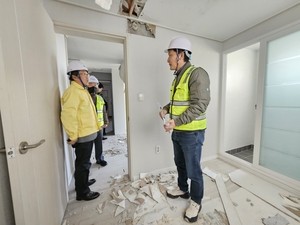
HUG acting chief inspects Deundeun jeonse housing sites, vows to accelerate supply
Agency moves to stabilize jeonse and monthly rent markets and expand public rental housing The Korea Housing and Urban Guarantee Corporation said Acting President Choi Jong-won visited a Deundeun jeonse housing site in Hwagok-dong, Gangseo-gu, Seoul on Friday to inspect housing supply conditions and unit quality. The visit was organized in response to recent shifts in the jeonse and monthly rent market, with the aim of supporting the government's public rental housing supply expansion policy without disruption and delivering homes purchased by HUG to low-income households without homes of their own as quickly as possible. The Deundeun jeonse housing program involves HUG directly purchasing homes whose jeonse deposits it had previously repaid on behalf of defaulting landlords, then leasing them as public rental housing to households without homes of their own. Because HUG serves as the landlord, tenants face no risk of deposit non-return and can live stably for up to eight years at deposits set at roughly 90 percent or less of the surrounding market price. The program has drawn strong interest from young people and newlywed couples without homes of their own. To meet that demand and help stabilize the Greater Seoul jeonse and monthly rent market, HUG plans to keep expanding the program's supply volume — targeting 3,600 units by year-end, double the previous year's figure. Since April, the agency has also broadened its purchase criteria to include apartment complexes with 150 or more units. During the inspection, officials reviewed the repair status of individual units — including wallpaper, flooring and fixtures — before and after defect remediation, as well as overall safety management, and discussed ways to deliver quality public rental housing more quickly. HUG said it plans to speed up every stage of the process, from property acquisition and renovation to rental supply, while maintaining rigorous quality control through a dedicated defect-repair system to ensure tenants can live comfortably and safely. Units ready for occupancy will be offered to prospective tenants on a rolling basis. In addition, HUG said it would consider establishing a dedicated TF to clear supply bottlenecks and outsourcing some work to external specialist firms. "We will review the entire process from start to finish so that Deundeun jeonse homes purchased by HUG can reach the public as quickly as possible," Choi said. "We will also manage quality rigorously so that the push to accelerate supply does not come at the expense of housing standards, and we will take the lead in easing the jeonse and monthly rent shortage in the Greater Seoul area."
Nov. 20, 2026
-
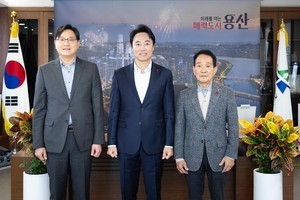
IPARK Hyundai Development holds winter donation ceremony at Yongsan-gu office
'We will continue sharing to be a source of strength for our neighbors' IPARK Hyundai Development announced Friday that it held a winter donation ceremony at the Seoul Yongsan-gu District Office. Yongsan-gu District Mayor Kim Kyung-dae, IPARK Hyundai Development Division Head Yun Woo-jin and Yongsan Welfare Foundation Secretary General Hwang In-gyu attended the ceremony. Following the event, the parties gathered for a tea meeting at the district mayor's office to discuss community-linked corporate social responsibility initiatives. "We are deeply honored to be able to share warmth with neighbors in need in our community as the cold winter approaches," an IPARK Hyundai Development official said. "We will continue to communicate closely with the local community and consistently carry out meaningful sharing activities that provide real support to those who need it." IPARK Hyundai Development has been conducting a range of social contribution activities in partnership with Yongsan-gu and surrounding communities, including support for vulnerable residents, housing environment improvements and employee volunteer programs. Meanwhile, IPARK Hyundai Development recently announced it is raising its annual contract target from 6 trillion won ($4.51 billion) to 10 trillion won, an increase of 4 trillion won, on the back of strong urban redevelopment results. The company has been building momentum since July, securing contracts including the Seongnam Taepyeong District 3 public-participation redevelopment project worth 585.2 billion won, followed by the Uijeongbu Jangam District 2 project (900.2 billion won), the Busan Yeonsan District 13 project (281.2 billion won) and the Gyeonggi Province Gunpo Geumjeong transit-oriented area District 1 project (448.2 billion won).
Nov. 20, 2026
-
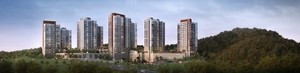
IPark Hyundai Development to launch first-ever IPark complex in Suncheon in December
683-unit, 11-building complex planned for Jorye-dong, Suncheon IPark Hyundai Development announced Friday that it plans to launch pre-sales for IPark Suncheon Central in December. The complex will rise in Jorye-dong, Suncheon, South Jeolla Province, with 11 buildings ranging from four below-ground to 22 above-ground floors, totaling 683 units. The units break down by exclusive use area into 491 units at 84 square meters, 144 units at 117 square meters and 48 units at 145 square meters, with no small-format floor plans in the lineup. Strong interest is expected given that no new apartment pre-sales took place in Suncheon last year. Jorye-dong is one of the city's most sought-after residential neighborhoods and, together with the adjacent Wangji-dong, is home to a concentration of brand-name apartment complexes from major construction companies. Shopping options near the complex include Homeplus, NC department store and Nonghyup Farmers Market, while Suncheon Jeil Hospital and other medical facilities, restaurants and cafes are also easily accessible. Wangji Elementary School and Wangui Middle School are within walking distance of the complex, and Palma Middle School, Geumdang High School and Bokseong High School are nearby. The Jorye-dong and Wangji-dong hagwon district and Suncheon City Yeonhyang Library offer convenient access to educational facilities, and a medical school and university hospital affiliated with Sunchon National University are in the works. Major arterial roads — Baekgang-ro and Jibong-ro — connect residents to key areas across the city, while Sungwang-ro, the Suncheon IC and the Dong-Suncheon IC provide easy access to neighboring cities including Gwangyang and Yeosu. Suncheon Station, where KTX high-speed rail service is available, is about a 10-minute drive away. IPark Hyundai Development said it designed the complex as a landmark development that maximizes its locational strengths, befitting the IPark brand's debut in Suncheon. "As the first IPark in Suncheon, we put a great deal of effort into raising the overall quality of the product — from architectural design and landscaping to interior layouts and community amenities," a pre-sales official said. Meanwhile, IPark Hyundai Development said it is raising its annual contract target from 6 trillion won ($4.51 billion) to 10 trillion won, an increase of 4 trillion won, on the back of recent urban renewal project wins. Since July, the company has secured a series of contracts: the Seongnam Taepyeong District 3 public-participation redevelopment project worth 585.2 billion won, followed by the Uijeongbu Jangam District 2 project (900.2 billion won), the Busan Yeonsan District 13 project (281.2 billion won) and the Gyeonggi Province Gunpo Geumjeong transit-oriented area District 1 project (448.2 billion won).
Nov. 20, 2026
-
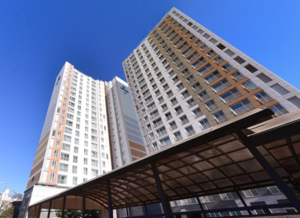
Reconstruction levy becomes 'luck of the draw' as deadline gaps spark fairness debate
Doosan Yeollip levy halved after decade of litigation Munjeong-dong faces 50.5 billion won vs. zero won gap — mass lawsuits feared 'Differing assessment standards reduce predictability,' expert warns With the government ruling out any extension of the deadline for imposing reconstruction excess profit recapture levies, the fate of complexes that completed reconstruction around the same period now hinges on differences of just a month or two. There are also concerns that some complexes may have lost their levy imposition rights entirely after the government and local authorities delayed the process past the statutory deadline. Add to that cases where levies were imposed but went uncollected for years, or were slashed by more than half through litigation, and critics say the reconstruction excess profit recapture regime has effectively become a lottery. According to the redevelopment industry on Friday, the Yeonhui Villa reconstruction project in Gusan-dong, Eunpyeong-gu, Seoul — now known as Eunpyeong Seohaegrangbl — received its completion approval on May 18, 2021. Under the legal interpretation the Ministry of Land, Infrastructure and Transport announced Thursday, the five-year imposition exclusion period, calculated from five months after the completion approval date, is estimated to have expired on Oct. 18. Yeonhui Villa was notified by Eunpyeong-gu in July 2018 of a preliminary reconstruction levy totaling 560 million won ($421,000), or about 7.7 million won per member. The Ministry of Land, Infrastructure and Transport concluded Thursday that the imposition exclusion period for reconstruction levies cannot be extended. The ministry determined that the special provisions of the revised Reconstruction Profit Recapture Act, which took effect in March 2024, merely set a deadline for processing levy imposition under the revised law — they did not extend or newly establish the exclusion period itself. The ruling makes clear that once five years have passed from five months after the completion approval date, no levy may be imposed. During a national audit in October 2022, the Seoul Metropolitan Government disclosed that Eunpyeong-gu and Seocho-gu had each suspended levy imposition procedures — for Yeonhui Villa and Banpo Hyundai in Seocho-gu (now Banpo Centrevill Asterium), respectively — following requests from the associations to delay and after consultations with the Ministry of Land, Infrastructure and Transport. At the time, the Seoul Metropolitan Government said it planned to apply the ministry's announced reconstruction levy relief measures to both projects, and that it would support the district offices in carrying out levy imposition and collection once the assessment criteria were finalized after the legislative revision. However, as the legislative revision and levy calculation dragged on, Yeonhui Villa's association completed dissolution and liquidation proceedings. According to the Seoul Metropolitan Government's redevelopment project information portal, the association completed its dissolution registration on Dec. 1, 2023, and its liquidation registration on June 16, 2024. By contrast, Banpo Hyundai in Seocho-gu, which received its completion approval on July 30 of the same year, is now facing imminent levy imposition. Seocho-gu served the association with advance notice Thursday of a preliminary levy totaling 17.9 billion won. With 80 association members, that works out to an average of 223.75 million won per person. Under the ministry's legal interpretation, Seocho-gu must impose the final levy by Dec. 30. There are also cases where levies were imposed but collection was delayed by litigation or the amounts changed significantly. Doosan Yeollip in Cheongdam-dong, Gangnam-gu, Seoul — now Cheongdam Daelim e-Pyeonhansesang 4cha — was assessed a levy of 431.17 million won in December 2014, but after a decade of litigation the amount was reduced to 208.27 million won in December 2024. A key factor in the reduction was the court's recognition of approximately 1.6 billion won in land value for a pedestrian path on the complex's perimeter as a development cost — something that had not been accepted when the levy was originally calculated. The case illustrates how the same project can yield vastly different levy amounts depending on what development costs are recognized. As reconstruction levies are imposed in earnest going forward, litigation-driven delays are likely to recur. The project at 136 Munjeong-dong, Songpa-gu — now Hillstate e-Pyeonhansesang Munjeong — is locked in a dispute with Songpa-gu over the levy calculation. The preliminary levy amount Songpa-gu notified the association of in 2018 was 50.5 billion won, but the association's own estimate last year came to zero won — a stark divergence. The central dispute between the two sides is the assessed value of housing at the end of the reconstruction period. The association's own estimate puts the figure at around 870 billion won, while the Korea Real Estate Board's calculation stands at around 1.04 trillion won — a gap of roughly 170 billion won. The association has raised objections over the difference in public price realization rates between the original single-family homes and the newly built apartments, as well as whether the area of commercially liquidated retail units should be included in the calculation. The association has already retained legal counsel and says it will pursue administrative litigation if its demands are not met. A Ministry of Land, Infrastructure and Transport official, asked about projects where levies have been imposed but not collected, said, "There are complexes with ongoing litigation," adding, "Because the actual amount collected can vary depending on the outcome of the lawsuits, we have to wait until the litigation concludes." Seo Jin-hyung, a professor in the real estate law department at Kwangwoon University, said that if levy amounts can vary by hundreds of millions of won for identical reconstruction projects depending on the assessment method and the judgment of administrative agencies, guaranteeing fairness in the system becomes very difficult. "A system where people cannot predict how much they will owe or when a levy will be imposed will struggle to earn public trust," he said. He added that without clear and consistent assessment standards from the government, lawsuits will repeat every time a levy is imposed, and the resulting social costs will snowball.
Nov. 20, 2026
-
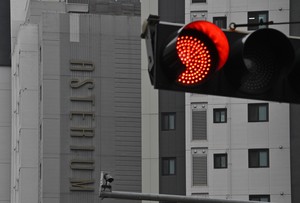
Seoul reconstruction levy clouds housing supply timeline
Early-stage projects face hurdles in securing consent for association formation Ongoing projects also face variables in general meetings, management and disposal plans, and relocations Outer northern Seoul districts may revisit project viability amid rising additional contributions Attention is turning to Seoul's housing supply pipeline as a reconstruction levy on the Banpo Centrevill Asterium complex in Seocho-gu — formerly Banpo Hyundai — draws closer. With construction and financing costs already elevated, the prospect of reconstruction levies becoming a concrete financial burden on association members could make it harder for early-stage projects to gather the consent needed to form associations, while projects already underway may push back management and disposal plans or relocation schedules. Industry officials warn that such delays, compounding across multiple sites, could ultimately affect the timing of groundbreaking and move-in dates for new apartments in central Seoul. According to the redevelopment industry, the Ministry of Land, Infrastructure and Transport issued a legal interpretation Thursday saying the deadline for imposing reconstruction levies cannot be extended. The industry expects that once the levy on Banpo Centrevill Asterium is finalized, association members at other reconstruction projects will begin calculating their own projected levies and enter into discussions about the pace of their projects. From association formation to management plans — variables at every stage At the early stages of a project, securing the owner consent required to establish a reconstruction association is the critical hurdle. When members must factor in reconstruction levies on top of project costs and individual contribution estimates that are already difficult to pin down, decision-making can slow considerably. If some owners hold off on giving consent until they have a clearer picture of expected costs, association formation itself could be delayed. Smaller complexes with weaker project economics may also begin weighing a switch to remodeling, further complicating discussions about how to proceed. Park Hap-su, an adjunct professor at Konkuk University's Graduate School of Real Estate, said the reconstruction levy is "a future invoice" for early-stage projects, but one that can weigh heavily on individual members psychologically and financially. "The interests of single-home owners who want levy reductions for long-term holding and multi-home owners can diverge, and conflicts among association members could intensify," Park said. There are already precedents in the Gangnam area where levy concerns derailed project momentum. The Daechi KGM 1 complex in Gangnam-gu received project implementation approval in October 2018, but progress stalled for an extended period the following year amid disagreements over the levy and a change in association leadership. At the Daechi KGM 2 complex, growing member anxiety over the levy that same year also put the brakes on the project. For projects already in progress, the general meeting that votes on the management and disposal plan is the pivotal moment. If reconstruction levies are anticipated on top of already-rising additional member contributions driven by higher construction costs, members may raise objections to project budgets or cost-sharing arrangements. Delays in general meeting votes or regulatory approvals would then push back relocation, demolition and groundbreaking schedules in sequence. "Once levies are finalized for certain complexes, associations will start calculating their own projected amounts, and a mood of 'let's slow down' or 'let's wait for the law to change before pushing ahead' could spread among owners," an industry official said. "Particularly for reconstruction associations in the three Gangnam districts and Yongsan-gu, where pre-sale price caps limit how much they can earn from general pre-sales, the calculations will become even more complicated." Delays compound financing costs; outer northern Seoul faces viability pressure Project delays can themselves feed back into higher costs. A longer project timeline means greater financing expenses, and renegotiating construction costs along the way can push individual member contributions even higher. Ham Young-jin, head of Woori Bank's Real Estate Research Lab, said that "with construction costs, financing expenses and member contributions already piling up, having to factor in reconstruction levies on top of that could dampen the drive to push projects forward." Industry observers note that complexes with thin project economics in outer northern Seoul districts could be particularly exposed. Song Seung-hyun, chief executive of Urban and Economy, said that even where reconstruction levies are relatively modest outside Gangnam, weak project fundamentals and additional contribution issues mean the industry as a whole will feel the impact. "This has provided a catalyst for a fundamental shift in the expectation that reconstruction will push up home prices," Song said. The implication is that the more a project relies on revenue from general pre-sales to cover costs, the more the additional burden on association members becomes the deciding factor in whether to proceed. Kim Hyo-seon, a senior real estate specialist at KB Kookmin Bank, added that "reconstruction purchases proceed on the belief that a safety margin above the purchase price will be secured, but if existing owners are frightened by the levy and refuse to move forward, it will ultimately translate into a supply delay." Delays in association formation at early-stage projects could affect medium- to long-term supply schedules, while setbacks in management and disposal plans or relocations at projects already underway could push back planned groundbreaking and move-in dates. Analysts also expect home price trends within reconstruction complexes to diverge depending on whether a levy applies and how large it is. Kim Je-gyeong, director of Tumi Real Estate Consulting, said that "major reconstruction complexes facing large contributions and levies will see transaction activity cool, slowing turnover and sapping overall momentum." Kim added that because reconstruction associations — or project operators — are the primary levy obligors, with association members as secondary obligors, "the conflict between associations and their members will be no small matter." Ham said that "since the reconstruction levy is a critical cost that determines a project's profitability, a gap in investment appeal is inevitable between complexes where the levy risk has disappeared and those where it still remains," adding that "price differentiation between complexes will become increasingly pronounced as a result."
Nov. 20, 2026
-

LH aims to bring modular housing costs down to reinforced-concrete levels
Forum held to build a stable ecosystem for modular housing Korea Land and Housing Corporation said Thursday it held a forum on building a stable modular housing ecosystem at its Seoul regional headquarters. The forum was a follow-up to a meeting with modular housing manufacturers held Nov. 3, aimed at accelerating the government's Aug. 13 rapid housing supply plan and quickly resolving technical and institutional challenges through public-private-academic cooperation. LH President Lee Sung-hoon, the head of the public housing division and other LH officials attended, along with industry and academic experts from Samsung C&T, GS Engineering & Construction, NRB and Ewha Womans University. Discussions focused on ways to cut construction costs in tandem with expanding modular housing order volumes, strategies to maximize reductions in construction time, and measures to support private-sector investment in equipment and technology development. LH announced plans to order 2,200 modular housing units this year and a total of 18,000 by 2030, with a medium- to long-term order schedule to be announced in advance. The aim is to create a predictable business environment that allows private companies to secure factory break-even utilization rates and invest in research and development as well as automated equipment, fostering growth across the industry ecosystem. A cost-reduction roadmap built around an enhanced volume-to-unit-price linkage system was also closely examined. Beyond existing cost-cutting targets, participants discussed reducing construction costs to reinforced-concrete levels when orders are placed in integrated packages of 3,000 or more units, or 5,000 or more units. To accelerate housing supply, the forum also explored ways to speed up demonstration projects for high-rise modular buildings and to maximize overall construction time savings by shifting building cores — previously cast on-site — to dry construction methods. Industry and academic experts said large-scale integrated orders and a medium- to long-term supply roadmap would serve as a catalyst for construction companies and modular specialists to invest in automated mass-production lines and bring high-rise and dry-construction technologies to commercial use, and expressed strong willingness to cooperate. Lee Jun-sung, a professor at Ewha Womans University, said creating a predictable business environment and maintaining steady communication with the industry are paramount for the sustained growth of the modular housing sector. "I hope this forum will lead to more active cooperation and communication among the public, private and academic sectors, and ultimately strengthen the competitiveness of the industry as a whole," Lee said. LH President Lee said the role of modular housing has grown more important for rapidly expanding housing supply, and that stable growth in the related industry will directly translate into greater housing supply capacity. "We will bring together the strengths of the public, private and academic sectors to remove obstacles to industry growth and actively support efforts to deliver tangible supply results," he said. Meanwhile, LH plans to hold contractor bidding for 555 units in the Namyangju Wangsuk 2 A10 district and 668 units in the Goyang Changneung A3 district, both part of the third-generation new towns.
Nov. 20, 2026
-
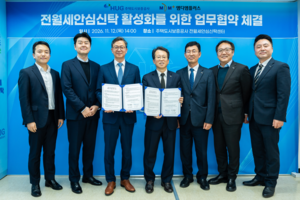
HUG signs MOU with Hana Asset Trust to boost jeonse and monthly rent safety trust
Expansion of private real estate sector participation The Korea Housing and Urban Guarantee Corporation announced Friday that it signed a memorandum of understanding with Hana Asset Trust on Thursday to promote its jeonse and monthly rent safety trust program. The jeonse and monthly rent safety trust is a new lease model in which tenants deposit their jeonse funds with HUG, which then manages the funds and pays landlords a monthly return in the form of rent. Tenants benefit by living under a jeonse arrangement — which carries a relatively lighter financial burden than monthly rent — while having their deposits managed by HUG, eliminating the risk of jeonse fraud. Landlords, meanwhile, can receive stable monthly income generated from the invested deposit. HUG and Hana Asset Trust agreed to broaden private-sector participation in the program and build a cooperative framework to promote it, including information sharing and joint marketing efforts. Through the agreement, HUG received applications from Hana Asset Trust covering 850 housing units for enrollment in the program and plans to approve them in stages through the first half of next year. Hana Asset Trust said it expects to secure stable cash flow by receiving fixed monthly returns under the program, along with benefits such as reduced lease guarantee fees, and plans to expand its participation going forward. Regarding the MOUs with both companies, Acting President Choi Jong-won said, "It is highly meaningful that we have broadened the private-sector base for the jeonse and monthly rent safety trust through partnerships with leading companies in the domestic real estate industry." He added, "We expect the MOUs to attract new participants from companies interested in the program, giving fresh momentum to landlord recruitment." HUG also signed a separate MOU with MDM Plus, a real estate development, finance and leasing company, on Nov. 12 to promote the program, receiving initial applications covering 20 housing units, with plans to expand the volume in stages. HUG began recruiting its first landlords for the jeonse and monthly rent safety trust on Nov. 4. The contracted annual return rate for landlords was set at 4.35 percent before tax.
Nov. 20, 2026
-
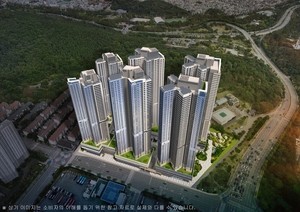
GS Engineering & Construction opens officetel model home for 370-unit Armuze Xi in Ansan
No resale or re-winning restrictions; deposit fixed at 10 million won Four bedrooms, two bathrooms, balcony and 1.3 parking spaces per unit GS Engineering & Construction opened a model home Friday for the officetel units at its Armuze Xi development in Seongpo-dong, Sangnok-gu, Ansan, Gyeonggi Province, launching pre-sales for the residential component. The officetel launch follows the opening of the apartment model home on Nov. 12. Armuze Xi spans six buildings with 6 below-ground and 49 above-ground floors, comprising 1,354 units in total — 984 apartments and 370 officetels. The officetel portion covers two buildings and consists entirely of 84-square-meter units across three types: 148 units of type 84OA, 74 units of type 84OB and 148 units of type 84OC. Subscriptions open Tuesday through the Korea Real Estate Board's Cheongyanghome portal. Winners will be announced Dec. 1, and contracts will be signed Dec. 4-5. Anyone aged 19 or older may apply regardless of place of residence or home-ownership status, with no housing subscription account required. Applicants may submit up to three subscriptions — one per unit type. There are no re-winning or resale restrictions, meaning buyers may transfer their pre-sale rights immediately after signing. The initial deposit is a flat 10 million won ($7,510), with installment payments deferred until later. Every unit type features four bedrooms, two bathrooms, a walk-in closet and a utility room. The 84OA is designed as a three-sided open flat-slab layout, the 84OB as a tower-type structure and the 84OC as a four-bay flat-slab layout, giving buyers a choice to suit their preferences. Despite being classified as an officetel, the units include balconies fitted with movable partition walls between the balcony and the interior. Opening the partition extends the living space into the balcony; closing it creates a separate enclosed area. Underfloor heating is also installed, bringing the living conditions close to those of a standard apartment. The complex provides 483 parking spaces in total, roughly 1.3 spaces per unit. The complex sits at the intersection of the Seongpo-dong and Jungangdong lifestyle districts and is close to Jungang Station, served by both subway Line 4 and the Suin-Bundang Line. Once the Sinansan Line opens — connecting the southwestern Gyeonggi Province cities of Ansan and Siheung to Yeouido via Gwangmyeong Station — commuters will have significantly easier access to major Seoul business districts such as Guro Digital Complex and Yeouido. The GTX-C line, which stops at Sangnoksu Station, broke ground in September, and an Incheon-originating KTX service stopping at Choji Station is also in the works. Nearby amenities include Lotte Department Store, Lotte Mart, NC Department Store, CGV and Korea University Ansan Hospital. Green spaces such as Nojeokbong Park and Seongho Park, as well as cultural facilities including the Kim Hong-do Art Museum and Seongpo Arts Plaza, are also within easy reach. "This product lets residents enjoy apartment-level living conditions, with a four-bedroom, two-bathroom floor plan, balcony design, underfloor heating and roughly 1.3 parking spaces per unit," a GS Engineering & Construction pre-sales official said. "Given that subscriptions require no housing subscription account and resale is possible immediately after signing, we expect strong interest." Meanwhile, the Armuze Xi apartment units, whose model home opened Nov. 12, begin their subscription process Monday with special-supply applications, followed by first-priority subscriptions Tuesday and second-priority subscriptions Wednesday. The apartment supply by unit type is as follows: 180 units of 84㎡A, 88 units of 84㎡B, 90 units of 84㎡C, 180 units of 99㎡A, 272 units of 99㎡B and 174 units of 104㎡A.
Nov. 20, 2026
-
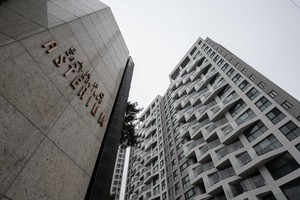
Gangnam reconstruction associations gear up for decade-long legal battle over excess profit levy
National association to hold press conference in front of Cheong Wa Dae on Dec. 16 Associations plan to file cancellation suits immediately upon levy imposition, up to Supreme Court Disputes over per-member profit allocation expected even after total levy is confirmed Most associations in the Seocho-gu area had already been preparing lawsuits — from older completed complexes to newly built ones. If the reconstruction excess profit recapture cases go to court, they could drag on for up to 10 years, and the thinking is that policy direction could change in the meantime, so the mood is to hold out. 서울 서초구 정비업계 관계자 With the Ministry of Land, Infrastructure and Transport ruling out any extension of the levy imposition deadline, reconstruction associations in the Gangnam area are mounting a collective response as the reconstruction excess profit recapture regime moves toward actual enforcement. The associations argue that on top of soaring construction costs that have already inflated their individual contribution burdens, adding a reconstruction levy amounts to double taxation. They plan to contest the legality of the levy through prolonged litigation, factoring in the possibility of a policy shift down the road. According to industry sources Friday, 25 association heads affiliated with the National Reconstruction and Redevelopment Project Association Solidarity — an umbrella body representing 82 reconstruction associations nationwide — met Thursday in Seocho-gu to discuss their response to the reconstruction excess profit recapture regime. They plan to hold a press conference in front of Cheong Wa Dae on Dec. 16 to demand abolition of the system and submit a petition calling for its repeal. Legal action is also being prepared. Major reconstruction associations in the Gangnam area have been holding a series of meetings with large law firms. Because lawsuits can only be filed after an administrative disposition is issued, the associations say they will move immediately once levies are imposed. "We discussed proceeding with a cancellation suit against the levy disposition after filing an objection once the levy is confirmed," a spokesperson for the association said, adding that the process would take considerable time since a final ruling requires going all the way to the Supreme Court. Administrative suits to cancel a levy disposition must pass through the administrative court and the high court before the Supreme Court issues a final ruling on the levy's legality. The government had earlier eased some of the burden when it revised the law in March 2024, raising the exemption threshold from 30 million won ($22,500) to 80 million won in excess profit. But associations continue to demand abolition of the system, arguing that it taxes unrealized gains on homes that have not been sold, and that contribution burdens have ballooned due to surging construction costs. The Ministry of Land, Infrastructure and Transport has identified 58 complexes nationwide expected to be subject to the levy. With the imposition deadline now settled, levy procedures are expected to proceed complex by complex in quick succession, and legal battles over the reconstruction excess profit recapture regime are set to intensify. The Banpo Hyundai complex — now known as Banpo Centrevill Asterium — is the most likely candidate to be the first to go to court. The ministry ruled Thursday that Seocho-gu's interpretation of the levy imposition exclusion period — five years starting five months after the date of completion approval — was valid, and notified local governments accordingly. It rejected the interpretation that the 2024 revised law's supplementary provisions could extend the imposition deadline to 2029. As a result, Banpo Hyundai, which received completion approval in July 2021, must be levied by Dec. 30 of this year. Seocho-gu had pre-notified the Banpo Hyundai association on Nov. 9 of a projected total levy of 17.9 billion won, averaging about 220 million won per member. The final levy is expected to be imposed around the end of next month after a 50-day period for submitting opinions. The associations' preference for prolonged litigation reflects a calculation that policy direction could shift with a change in administration while the legal clock runs. Legal battles over the reconstruction excess profit recapture regime have in fact stretched close to a decade in past cases. The Hannam Yeonlib complex in Yongsan-gu, Seoul, was levied in 2012 and spent roughly seven years fighting through administrative litigation and a constitutional complaint before the Constitutional Court upheld the system's constitutionality in December 2019. The Doosan Yeonlib complex in Cheongdam-dong, Gangnam-gu — now known as Cheongdam e-Pyeonhansesang 4cha — was levied 431.17 million won in December 2014, prompting the association to file a cancellation suit. After nearly a decade of litigation, the levy was reduced by half to 208.27 million won in December 2024. Some observers expect the litigation to extend beyond the association level to individual members. Kim Hyo-seon, a senior real estate advisor at NH NongHyup Bank, said the ministry's ruling had settled the question of the levy imposition deadline, but that disputes over how the levy is calculated would be protracted. "In the case of the Banpo Hyundai association, there are plans to challenge the calculation of the standard housing price increase, which affects the total levy amount, and within the association, the calculation of individual net profit could become another point of contention," Kim said. Kim added that because the enforcement decree requires the levy to be divided among members according to each member's net profit ratio but does not specify the detailed formula for calculating net profit, disputes over per-member allocation could drag on even after the total levy imposed on the association is confirmed. "The items to be considered — such as the housing price at the start of the project, the estimated housing price at the end, and the settlement amount under the management and disposal plan — are defined, but the detailed formula for converting these into individual net profit figures is not spelled out, and that part needs to be clarified," Kim said.
Nov. 20, 2026
-
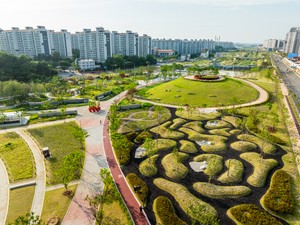
LH Garden wins top prize at 2026 Asian Townscape Awards
Top honor among entries from 6 Asian nations First garden created at Paju Unjeong 3 central park in 2024 Korea Land and Housing Corporation said its urban garden project LH Garden has won the top prize at the 2026 Asian Townscape Awards. The Asian Townscape Awards is an international prize given to outstanding projects that enhance urban landscapes and improve living environments across Asia. Five organizations, including the Asia Habitat Association, administer the award. This year, six Asian countries participated, including South Korea, Japan and China. LH Garden is the corporation's flagship urban garden initiative, aimed at building distinctive garden cities in new towns by creating gardens, holding garden festivals and organizing cultural events. LH launched the first project under the initiative in 2024 — "Paju Garden: Dressing the Park in Gardens" — at Unjeong Central Park in the Paju Unjeong 3 district. The project sought to create a park where everyday life and gardens coexist. The park features five themed gardens, including a residents-and-students participation garden and a signature garden, along with anchor facilities designed to highlight the gardens' colors while providing spaces for rest. A public festival and garden culture experience programs were held to mark the opening. The project has been recognized as setting itself apart from conventional parks, particularly for developing its garden model in collaboration with local governments and residents. "We will continue to create differentiated urban gardens that reflect local characteristics and the needs of residents," an LH official said. "We will develop distinctive parks and green spaces where nature, daily life and culture come together, building premium cities where the city itself becomes a garden." Meanwhile, Barangol Neuti Park in the Hwaseong Dongtan 2 district, also developed by LH, recently won the Prime Minister's Award at the 16th Korea Landscape Architecture Awards.
Nov. 20, 2026
-
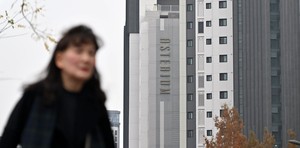
Seoul reconstruction levy countdown puts 22,000 homes at risk of supply delays
Banpo Hyundai complex set to be first hit under revised law 46 Seoul sites face combined levy of 2.12 trillion won 32 sites yet to complete construction, covering 21,927 units The Banpo Centreville Asterium complex in Seocho-gu — the reconstruction of the former Banpo Hyundai apartment — is expected to become the first site hit with a reconstruction excess profit recapture levy, known as "jaechohwan," by year's end. The levy follows the revised Reconstruction Profit Recapture Act, which took effect in March 2024. Forty-six reconstruction sites across Seoul are expected to face charges under the law, and 32 of them have yet to complete construction. With construction and financing costs already elevated, concerns are mounting that the added levy burden could push roughly 22,000 units into a holding pattern, delaying their supply to the market. Levies begin at completed sites — Banpo Centreville Asterium faces 17.9 billion won charge According to a list of sites expected to face reconstruction excess profit recapture levies that the Seoul Metropolitan Government submitted to the office of People Power Party lawmaker Jo Eun-hee on Friday, a total of 46 complexes across Seoul are projected to be subject to the levy. The combined preliminary levy amount across those sites reaches 2.12 trillion won ($1.59 billion). Fourteen of the 46 sites have already been completed and occupied. They include Banpo Centreville Asterium, which is expected to be the first site charged under the revised law, as well as Dogok World Meridian Rosheim (formerly Yeoksam Art Villa), Bangbae Centreville in the Forest (formerly Sungshin Villa), Hillstate e-Pyeonhansesang Munjeong (Munjeong-dong Block 136), e-Pyeonhansesang Gangdong Prestige One (Cheonho Zone 3), Otiere Banpo (formerly Sinbanpo 21st), The Sharp Songpa Lumistar (formerly Garak Hyundai 5th), Otiere Sinbanpo (formerly Sinbanpo 18th, Building 337), Raemian Trinione (Banpo Zone 3) and Raemian Leventus (formerly Dogok Samho Apartments). Sites north of the Han River are also among those expected to face levies. They include Saejeol Station Doosan We've Trezium, built on the former Sinsa Zone 1 in Eunpyeong-gu; Ujangsan Sup I'Park in Hwagok Zone 1, Gangseo-gu; Hoban Summit Gaebong in Gaebong Zone 5, Guro-gu; and Hongik University Station Central Arte Haemoro, developed on the former Girin Dongsan site in Mapo-gu. On Thursday, the Ministry of Land, Infrastructure and Transport clarified that the deadline for imposing the reconstruction excess profit recapture levy is within five years of the completion approval. The revised Reconstruction Profit Recapture Act, which took effect in March 2024, includes a supplementary provision allowing levies to be determined and imposed within five months of the law's effective date for sites completed before the revision. A key legal question had been whether the starting point for calculating the levy deadline could be reset for those pre-revision sites. The ministry reviewed whether different levy deadlines could apply to sites completed before and after the revision. It concluded that levies must be imposed within five years from the date five months after completion approval — in effect closing off any further extension of the deadline. Under that ruling, the 108-unit Banpo Centreville Asterium complex is expected to receive its levy notice by Dec. 30. The complex was completed in July 2021, and Seocho-gu notified the reconstruction association on Nov. 9 of a preliminary levy of 17.9 billion won. Based on 80 association members, that works out to an average of around 220 million won per person. Seocho-gu will accept objections for 50 days before making a final determination on whether to impose the levy and in what amount. Other complexes face their own approaching deadlines. Ujangsan Sup I'Park, completed in December 2022, must be assessed by May 2028; Dogok World Meridian Rosheim by January 2029; Bangbae Centreville in the Forest by November 2029. The deadline for Hillstate e-Pyeonhansesang Munjeong in Songpa-gu runs to January 2030. Supply of 20,000 Seoul units at risk as associations push back against levy The more pressing concern involves sites that have not yet been completed. As the scale and timing of reconstruction excess profit recapture levies become clearer, worries about deteriorating project viability are growing. Association members are already shouldering heavier cost-sharing burdens due to rising construction and financing costs, and adding the recapture levy on top could sap the momentum needed to push projects forward. Of the 46 sites on the Seoul Metropolitan Government's list, 32 have yet to receive completion approval. Together, they account for a projected supply of 21,927 units. If the levy becomes an additional variable complicating project progress, the supply schedules for those homes could face serious disruption. The roughly 22,000 units include some of the most significant projects across Seoul. In Gangnam-gu, sites such as Ilwon-Gaepo Hanshin, Gaepo Jugong 5th, Dogok-Gaepo Hanshin and Gaepo Jugong 6th and 7th complexes are among the key projects expected to address the urgent housing shortage in the Gangnam area. In Seocho-gu, Bangbae Samik Apartments, and in Songpa-gu, Garak Samik Mansion, Samhwan Garak and Garak Plaza are also on the list. Additional sites where the levy could hamper housing supply include Duam Villa and Oryu-dong Hyundai Row Houses in Guro-gu, Sinsaeng Veterans Housing in Gangdong-gu, Yuwon Jeil 1st and Singil Zone 10 in Yeongdeungpo-gu, Jegi Zone 1 in Dongdaemun-gu, Hongjae Zone 3 in Seodaemun-gu, and Han River Samik Apartments and Han River Mansion in Yongsan-gu. Because a substantial share of Seoul's housing supply comes through urban renewal projects such as reconstruction and redevelopment, there are concerns that if the recapture levy erodes project viability and triggers supply delays, it could weigh on the city's medium- to long-term housing pipeline. A reconstruction association head in Seocho-gu criticized the move, saying the current government's stated policy had been to push housing supply aggressively. "Reconstruction is an essential urban renewal project for improving deteriorated and substandard residential environments, restoring urban functions and delivering quality housing," the association head said. "Pressing ahead with the recapture levy right now runs directly counter to the government's own policy direction." The government, however, maintains that the levy's impact on supply will be limited, since it targets only excess profits that have actually been realized. A Ministry of Land, Infrastructure and Transport official said during the legal review of levy deadlines for completed sites that "the reconstruction excess profit recapture system is designed to claw back profits only when actual excess gains have been made through reconstruction," adding that "its direct connection to project viability is not significant."
Nov. 20, 2026
-
Three Mok-dong complexes clear Seoul review, paving way for 11,863-unit reconstruction
Height limits eased for low- and mid-rise zones; open-plan layouts planned Tower and slab buildings to be mixed; pilotis to be applied across all blocks Complexes 5, 12 and 14 of the Mok-dong Sinsigage apartment development in Yangcheon-gu, Seoul, are set to be rebuilt into a combined 11,863-unit residential district. All three complexes have cleared the Seoul Metropolitan Government's integrated review for urban renewal projects, accelerating their path to construction. Seoul city officials announced Friday that the city held its 23rd Integrated Review Committee for Urban Renewal Projects on Thursday, conditionally approving integrated review plans covering seven areas — architecture, landscape, education, traffic, disaster prevention, environment and parks — for the reconstruction of Mok-dong Complexes 5, 12 and 14. Complex 5 will be rebuilt on a 204,003.2-square-meter site at 913 Mok-dong, Yangcheon-gu, rising to a maximum of 49 above-ground floors across 30 buildings with 3,930 units. The floor-area ratio is set at 299.98 percent and the building coverage ratio at 17.96 percent. The complex sits adjacent to Paris Park, the Mok-dong central district, Mok-dong Sports Complex, Anyangcheon and the National Assembly Boulevard. Neighborhood retail space will be placed along Mok-dong-dongno, which borders the Mok-dong central district. A 15-meter-wide public pedestrian path will be built on the western side of the complex, linking the Mok-dong central district to Anyangcheon and connecting nearby Yangjeong Middle and High School and Gyeongin Elementary School to improve the commuting environment for students. Complex 12 will be rebuilt on a 127,339.5-square-meter site at 326 Sinjeong-dong, with a floor-area ratio of 299.95 percent, rising to a maximum of 41 above-ground floors across 20 buildings with 2,810 units. Located near Yangcheon-gu Office Station on subway Line 2, the complex is adjacent to Sintree Park and Gyenam Elementary School. Neighborhood retail space will be placed along Mok-dong-dongno to create a commercial streetscape, and rooftop greenery will be added to improve the visual environment along the street. Complex 14 will be developed into a large-scale complex on a 250,722.1-square-meter site at 329 Sinjeong-dong, rising to a maximum of 49 above-ground floors across 35 buildings with 5,123 units. The floor-area ratio is 299.66 percent, and the total floor area after reconstruction will reach 1,088,299 square meters. Yangcheon Neighborhood Park lies to the north of the complex and Haenuri Sports Park and Anyangcheon to the south, while Sinmok Elementary School sits within the complex. Neighborhood retail space will be placed at the center of the complex, and a pedestrian environment connecting Yangcheon Neighborhood Park and Anyangcheon via Mok-dong-dongno 8-gil will be created. The architectural plans for all three complexes reflect a shared design direction that takes into account the overall streetscape of all 14 Mok-dong Sinsigage complexes. Earlier, on Aug. 25, the city convened a subcommittee of the Integrated Review Committee for Urban Renewal Projects and called for easing height restrictions in zones designated for low- and mid-rise buildings, as well as diversifying building heights. Through designation as special architecture zones, each complex will secure a sense of openness and form a skyline coordinated with neighboring complexes. All three complexes will feature a mix of tower-type and slab-type buildings, with pilotis applied across all residential blocks. Sunken spaces — open underground areas — and communal resident facilities will be placed along street-facing edges. In high-pedestrian areas such as outer sidewalks, bus stop vicinities and public walkways, trees will be planted in double rows and shade structures and rest facilities will be installed. The Integrated Review Committee also called for additional open space to be secured at the entrances to public pedestrian paths. With this review, six of the 14 Mok-dong Sinsigage complexes — Complexes 5, 6, 9, 12, 13 and 14 — have now completed the integrated review process. Complex 6, which is furthest along, began a public notice period Thursday for approval of its project implementation plan. Complex 14, which cleared the integrated review this time, currently has 3,100 units — the largest household count among the 14 complexes. Contractor selections are also moving ahead in quick succession. Following Complex 6's selection of DL E&C in June, Complexes 10 and 13 have confirmed Hyundai Engineering & Construction (Hyundai E&C) and Samsung C&T as their respective contractors. The construction cost for Complex 6 is approximately 1.29 trillion won ($967 million), while Complex 10's stands at approximately 2.61 trillion won. Complex 12 has designated GS Engineering & Construction as its preferred negotiating partner and will hold a contractor selection general meeting Sunday. Complex 8 has also named Daewoo Engineering & Construction (Daewoo E&C) as its preferred negotiating partner and plans to hold its contractor selection general meeting on Dec. 12. "We expect the reconstruction of Mok-dong Complexes 5, 12 and 14 to harmonize with other reconstruction projects in Yangcheon-gu, creating a cohesive skyline," said Myeong No-jun, head of the Seoul Metropolitan Government's Housing Bureau. "We will continue to do our utmost to improve the residential environment of aging apartment complexes in the southwestern part of the city and to invigorate the supply of housing that residents want."
Nov. 20, 2026
MOST READ
- 1AI singer tops Melon chart for first time with 'Did You Become the Adult You Dreamed Of?'
- 2Trump floods Truth Social with China visit photos, calls himself 'GOAT' and touts 'great powers'
- 3Seoul subway work-to-rule action causes 17-minute delay on Line 2 on first day
- 4SoftBank's Son explored $1tr bid for SK hynix, but deal no longer under active review
- 5Malaysia's BE International brings 1,500-strong incentive tour to Korea, bypassing Turkey
- 6Seatmate stunned as Mexican president flies economy for 21-hour trip to China
-
WORLD

US warns of punishment for anyone enabling Iran's Strait of Hormuz toll scheme
-
INDUSTRY
Toyota union puts productivity first; Hyundai Motor union demands bigger share of profits
-
FINANCE
National Growth Fund to invest $531M in FuriosaAI, which rebuffed Meta's $800M takeover bid
-
INDUSTRY
Korea Shipowners' Association holds amateur baduk tournament for Maritime Day