
- HOME
- LIFE·CULTURE
-

Sunflower waves in Yangyang could dazzle even van Gogh
Even Vincent van Gogh, who once painted sunflowers as a brilliant emblem of hope, would likely be struck by the sight. Sunflowers blanket 8,000 square meters of open land in Yangyang-gun, Gangwon Province. A smaller sunflower field also exists in southwestern Jeju, but the one in Yangyang dwarfs it. In the area around 87 Juchang-ri, Ganghyeon-myeon, rows of sunflowers stand tall and dense across a sweeping field. The site is a designated "landscape crop cultivation complex." Yangyang-gun sowed sunflowers across roughly 8,000 square meters in the Juchang-ri area in July to promote landscape farming. Under the clear autumn sky, the sunflowers of Juchang-ri stretch out endlessly, offering visitors unforgettable memories and a soothing dose of golden-hued comfort. Yangyang-gun carefully designed the flower field with walking paths woven through the blooms, allowing visitors to stroll freely and take photos. In May, a canola field in Gapyeong-ri drew an enthusiastic response from spring visitors. Landscape farming has become a strategic policy for Yangyang-gun. By cultivating landscape crops twice a year, in spring and fall, across the Gapyeong-ri and Juchang-ri areas, the county aims to boost rural tourism and draw more visitors. This is expected to inject vitality into the local economy. A Yangyang-gun official said, "We hope this carefully tended sunflower field gives visitors weary from daily life a warm sense of comfort and a chance to fully enjoy the mood of autumn." The official added, "In addition, we will do our best to manage the canola sown in Gapyeong-ri in September so that it blooms beautifully next spring."
Sept. 9, 2026
-
![Seo Jung-hee: 'I fainted in a half-body bath and cracked a tooth'... What is the vagus nerve she and Lee Sang-soon both cited? [Their Health Aesthetics]](https://wimg.heraldcorp.com/news/cms/2026/09/09/news-p.v1.20260909.e45662c846c347309e5369d7cb2b6421_T1.jpg?type=h&h=240)
Seo Jung-hee: 'I fainted in a half-body bath and cracked a tooth'... What is the vagus nerve she and Lee Sang-soon both cited? [Their Health Aesthetics]
Behind the beauty of those in the public eye lies a unique regimen. [Their Health Aesthetics] looks at the diets, exercise routines, treatments, and beauty and fashion choices of newsmakers as everyday lifestyle information. Broadcaster Seo Jung-hee said she has experienced repeated fainting spells for about 50 years without knowing the cause. She began suddenly losing consciousness and collapsing as a middle school student, and once fainted while taking a half-body bath, cracking a tooth in the fall. She said she now believes her symptoms are linked to "vagus nerve dysfunction" and copes by lying down immediately whenever she senses warning signs. Seo recently wrote on her SNS, "It took 50 years to learn the name. For 50 years, my body had no name." She said that as a middle schooler she often collapsed on her way to school due to anemia, but even after the anemia resolved, unexplained fainting continued once or twice a year. She said she would lose a minute or two of memory each time she fainted, and would come to find herself lying on the floor. She once fainted while taking a half-body bath and cracked a tooth in the incident. After looking into the circumstances and warning signs surrounding her fainting episodes with her daughter Seo Dong-joo, she came across the term "vagus nerve dysfunction" while researching the condition. Singer and guitarist Lee Sang-soon also recently paused his radio hosting duties after doctors advised he needed rest for "vagus nerve dysfunction." Hot places, long standing, dehydration: Sudden blood pressure drops can trigger fainting One common cause of recurring fainting is "vasovagal syncope," often also called "vagal syncope." It occurs when the autonomic nervous system overreacts to a specific trigger, causing blood pressure to drop or the heart rate to slow, which momentarily reduces blood flow to the brain and leads to a loss of consciousness. Common triggers include standing for long periods, intense heat, dehydration, fatigue, pain, fear and tension. Some people faint at the moment of a blood draw or injection, or after standing for a long time in a crowded place. The "fainting during a half-body bath" that Seo described is worth noting as well. Staying in hot water for a long time can dilate blood vessels in the skin and lower blood pressure. If this is compounded by dehydration from heavy sweating, or if a person stands up suddenly from the tub, blood flow to the brain can briefly drop. This raises the likelihood of dizziness or fainting. For this reason, those who have fainted before should be cautious about long baths in very hot water or sauna use. When getting out of the tub, moving slowly rather than standing up abruptly, and drinking enough water to avoid dehydration, can help. When determining the cause of fainting, the circumstances under which a person collapsed are crucial. Medical institutions may check the situation right before the episode, any warning signs, how long it lasted and the recovery process. They may also conduct blood pressure and pulse measurements along with an electrocardiogram. If needed, a tilt-table test may also be used. It monitors changes in heart rate and blood pressure as a patient is moved from lying down to an upright position. Cold sweat, nausea, blurred vision: Lie down at the first warning sign, do not push through While vasovagal syncope can strike without warning, in many cases the body signals trouble before a person actually collapses. Common warning signs include nausea, cold sweats, and the body feeling hot or turning pale. Vision may blur or narrow, the ears may feel muffled, and the whole body can feel drained of strength. Seo described her own coping method: "If my vision blurs, I stop walking. If I break into a sweat, I stop what I'm doing. If I feel nauseated and my strength drains away, I lie down no matter what." In practice, once warning signs appear, trying to "just hold on a little longer" while remaining standing can be the most dangerous choice. If a person loses consciousness while still on their feet, they can fall and hit their head or face on the floor or furniture. This can result in secondary injuries such as fractures or lacerations. The first step is to lie down in a safe spot and, if possible, raise the legs above the level of the heart, which can help increase blood flow back to the brain. If lying down is not immediately possible, sitting and lowering the head is another option. If there is enough time before losing consciousness and the person can still move, physical counterpressure maneuvers can help. These include crossing the legs and tensing the thigh and buttock muscles, clasping the hands together and pulling against each other, or clenching the fists tightly. Contracting large muscle groups can temporarily raise blood pressure, helping to avoid fainting or at least buying time to lie down safely. It is also important to identify the circumstances under which symptoms typically occur. If episodes repeat in hot environments or after prolonged standing, avoiding those situations and drinking enough fluids can help. However, sharply increasing salt intake on one's own can be problematic for people with high blood pressure or heart or kidney disease, so this should be discussed with a doctor first. Collapsed suddenly during exercise or while lying down? Rule out cardiac syncope However, it is important not to simply assume, after a single collapse, that it must be vasovagal syncope. Fainting can stem from many causes besides vasovagal syncope, including orthostatic hypotension, dehydration, medication side effects, arrhythmias and structural heart disease. Cardiac syncope in particular, though rare, can signal an underlying condition tied to a risk of sudden death, so it must be distinguished from other causes. A key warning situation is suddenly collapsing during exercise. Simple vasovagal syncope may appear right after stopping exercise. But if a person actually loses consciousness while still exercising, cardiac causes such as arrhythmia or a structural heart abnormality need to be checked first. The same applies to collapsing suddenly with no warning signs such as cold sweat or dizziness, or experiencing severe palpitations or chest pain right before fainting. A medical evaluation is also needed for fainting while lying down, having an existing heart condition, or having a family history of unexplained sudden death at a young age. Even for those who have fainted before, if the frequency has suddenly increased or the pattern has changed, the cause should be reassessed. Immediate medical attention is also needed if consciousness does not return quickly after fainting, or if neurological symptoms appear, such as slurred speech or weakness in one arm or leg. If someone nearby suddenly collapses, the first step is to check for responsiveness and normal breathing. If the person does not quickly regain consciousness or is breathing abnormally, call 119. If there is no breathing, perform CPR immediately and use an automated external defibrillator, if one is available nearby, following its instructions.
Sept. 9, 2026
-

Court sentences netizen to prison for spreading fake videos of IVE's Jang Won-young
A court has sentenced a netizen to prison for repeatedly producing and spreading maliciously fabricated videos targeting Jang Won-young, a member of the girl group IVE. Starship Entertainment said Wednesday that a court had recently sentenced the defendant to prison. The case involved charges of distributing fabricated videos targeting the agency's artist, and Starship pursued it through its legal representative, Kim & Chang. "We responded strictly throughout the investigation and trial process, and we will continue to hold offenders legally accountable to the end under a zero-tolerance policy against serious violations of our artists' rights," the agency said. Starship has been collecting evidence against some YouTube channels and "cyber wreckers" that have repeatedly created malicious content targeting Jang. The agency has also gathered evidence against individuals who posted malicious content across various online communities. Following this legal victory, the agency said it plans to move quickly on further action. "This round of legal action covers the repeated posting and spreading of false claims about Jang Won-young, including distorting parts of filmed footage or adding fabricated details to spread false claims about the artist's character and attitude, as well as sustained malicious slander and personal attacks," the agency said. "Regardless of whether accounts are anonymous, use pseudonyms, or operate on overseas platforms, we will pursue all necessary legal procedures across domestic and international platforms to identify the authors and distributors and hold them accountable to the end," it added. Earlier, Starship and Jang won both civil and criminal lawsuits against the operator of the cyber wrecker channel "Taldeok Suyongso," identified as A. Between October 2021 and June 2023, A produced and distributed videos spreading false rumors about K-pop artists including Jang, Exo, BTS members V and Jungkook, and Kang Daniel. The videos earned A about 250 million won ($186,000) in illicit profits.
Sept. 9, 2026
-

KBS opens search for new president despite Park Jang-beom's injunction bid
The Korean Broadcasting System's board of directors is publicly recruiting candidates for its 28th president. President Park Jang-beom has filed an injunction to halt the selection process, arguing that the board's current composition is improper. Still, the board is pressing ahead with the recruitment as scheduled. The KBS board held an emergency meeting Wednesday and approved a recruitment notice for the appointment of the network's 28th president. The recruitment is open to applicants who meet the qualifications set out under the revised Broadcasting Act and related laws. Applications will be accepted from 10 a.m. Sept. 17 through 6 p.m. Sept. 28. Applicants may submit the required documents in person at the KBS board's secretariat office or by registered mail. The board will screen the applications, narrow the field to five or six candidates, and refer them to the Public Recommendation Committee for President Candidates. The committee will evaluate the candidates through management plan presentations, interviews and deliberative discussions before recommending three finalists for interviews. The board will then hold final interviews with those three to select the ultimate nominee. The incoming KBS president will serve a three-year term, renewable once. Once the board formally nominates its choice, the candidate must go through a confirmation hearing at the National Assembly. However, Park's injunction request could delay the timeline for selecting a new president. That day, the Seoul Southern District Court held a hearing on Park's request to halt the board's selection process for a new president. Earlier, the KBS board, reconstituted under the revised Broadcasting Act, unanimously approved the procedures and methods for nominating a new president on Aug. 26. Park has argued that the vote was legally and procedurally improper. He noted that the board, which has 15 seats when full, was operating with only eight members at the time. Seven board seats remain unfilled. They include two reserved for members recommended by the People Power Party, two for members recommended by the KBS Viewers' Committee, and three for members recommended by KBS staff. At the hearing, Park's legal representative argued, "It was wrong for the board to approve a procedure that effectively determines the appointment of the president with only eight members, falling short of the quorum required for a board resolution." The representative added, "There are also problems with new board members approving the presidential selection procedure at a point when it remains unclear whether the terms of the previous board members ended before the Broadcasting Act was revised." In response, KBS rebuffed the claim, saying, "The terms of the previous board members ended when the Broadcasting Act was revised, and the current board has eight members, more than half of its full capacity. With no disqualifying issues, the board is entitled to carry out its duties."
Sept. 9, 2026
-

Seoul to host BBQ festival at Nanji Camping Site in October
Global K-BBQ food tourism festival set for Oct. 24-25 28,000 attended last year, with 93 percent saying they would return 'Self BBQ Zone' lets visitors grill and eat Korean beef and pork themselves Star chefs and Seoul's top restaurants to take part A "K-BBQ" festival aimed at winning over global palates will unfold in downtown Seoul this fall. The Seoul Metropolitan Government said Wednesday it will hold the Seoul Barbecue Festival, a global food tourism event combining K-BBQ with urban camping and picnicking, around the Nanji Camping Site from Oct. 24 to Oct. 25. Last year's edition, held under the name Seoul Barbecue Festa around the Noeul Park camping site, drew about 28,000 visitors over two days. Overall satisfaction stood at 86.5 percent, and 93.1 percent of visitors said they would attend again. Among foreign tourists, that figure reached 98.1 percent. This year's festival will expand the K-BBQ experience further. It will feature a Self BBQ Zone where visitors can grill their own meat, a Barbecue Masters program with star chefs, and a Barbecue Village showcasing some of Seoul's top meat restaurants, giving residents and tourists alike a chance to experience the city's food and culture together. The Self BBQ Zone, the festival's flagship program for letting citizens enjoy K-BBQ hands-on, will allow visitors to grill their own barbecue in a camping setting without bringing any equipment of their own. The first round of reservations for the Self BBQ Zone opens at 6 p.m. on Sept. 16 through Naver Reservation. Also on offer is the Barbecue Masters program, where visitors can watch up close as star chefs from Culinary Class Wars put on flashy barbecue performances. The festival will also run a cooperative event with a nearby traditional market. Visitors who bring a receipt from Mangwon Market will receive a discount on meat purchased at the festival grounds. The Seoul Metropolitan Government asked visitors to use public transportation, citing expected traffic congestion in the area during the festival. "Last year's Seoul Barbecue Festival showed that K-BBQ can be an attractive way for both residents and foreign tourists to experience Seoul," said Cho Sung-ho, director general of the Seoul Metropolitan Government's Tourism and Sports Bureau. "We will continue to link Seoul's food content, including K-BBQ, with tourism, developing differentiated tourism content that can only be experienced in Seoul and enhancing the city's appeal as a global tourism destination."
Sept. 9, 2026
-
![T-Series VP: 'Can Indians make delicious hansik? K-pop should stay Korean' [Interview]](https://wimg.heraldcorp.com/news/cms/2026/09/09/news-p.v1.20260909.851abcc8bd7741209ba0a46cb4ad1bc9_T1.jpg?type=h&h=240)
T-Series VP: 'Can Indians make delicious hansik? K-pop should stay Korean' [Interview]
Vice president of T-Series, India's largest entertainment company 15 million of India's 1.4 billion population consume K-pop K-pop's '360-degree artists' a huge strength 'Can't focus only on Gen Z, localization is essential' "What's the most popular overseas singer in India? BTS and BLACKPINK. But … " It is a vast continent where, as the saying goes, every household has its own musician. Into this uncharted land, K-pop's territorial expansion is only beginning. Pooja Singh Guzral, vice president of India's largest entertainment company, T-Series, said K-pop is "doing well" but still has "a long way to go" in India. Over the past few years, India has become new territory for the K-pop market. Indian members have joined K-pop groups — such as Sriya of Blackswan — and Hybe has begun training idols locally through Hybe India. A South Korean-American joint girl group also includes a member of Indian descent, in Katseye. Guzral, who recently visited Korea to take part in the Korea Creative Content Agency's MU:CON event, noted that "about 15 million people in India consume K-pop and K-content, but India is a continent of 1.4 billion people." A sizable K-pop fan base exists, she said, but it remains relatively small measured against the market's overall scale — a sign that K-pop has yet to penetrate deeply into India or become widely known there. 80% listen to music an hour daily, heartbreak songs endure India is a fast-changing market. Guzral, who has spent more than 18 years at the forefront of India's media industry overseeing creative development and content production for Bollywood films and music, said the country's music market has undergone enormous structural shifts in recent years. Once confined to traditional channels — radio, television, Billboard charts and print media — the market has diversified rapidly in both audience size and taste as mobile infrastructure spread and digital streaming platforms took hold. Today, 96 percent of India's population uses smartphones, and 80 percent listen to music for at least an hour every day, reflecting the country's deep mobile penetration. "Compared with 20 years ago, the reach and penetration of music have fundamentally changed," Guzral said. "In the past, physical limitations meant music reached only a few regions of the world. Now it reaches a single person on the other side of the planet in real time. The market has grown and consumers have multiplied, but the way audiences consume music has also become far more sophisticated." The shift to digital has also broken down regional barriers within India. In the past, Hindi music spread most widely, but regional music is now rising quickly on the back of technological advances. "India has 22 languages," Guzral said. "Aside from Hindi, the language with the biggest reach is Punjabi — artists like Diljit Dosanjh are shaking up the mainstream with Punjabi music. Tamil and Telugu follow close behind. Lately, independent music in Haryanvi and Bhojpuri has been climbing the streaming viral charts." According to T-Series, 57 percent of India's music consumption comes from Bollywood music, with the remaining 43 percent coming from indie, regional and other-language music. "Bollywood music is still bigger than indie music," Guzral said, "but at the same time, a significant share of the whole is created and consumed outside of film." Today's Indian music market is as diverse as its enormous population, and listener tastes are only getting more specific. Still, there is a common denominator: music that reaches "mainstream" status in India succeeds through emotional connection built on lyrics and situational context. "In the past, music was broadly divided into melody and dance," Guzral explained. "Now it's segmented by emotion and situation — heartbreak, romance, celebration and so on." Songs even cater to specific occasions such as birthdays and weddings, she said, as digital technology has reshaped not only how music is distributed but how listeners find and consume it. Lyrics carry particular weight. "The meaning of the lyrics matters a great deal," Guzral said. "India is a society that values culture and tradition, so lyrics need to carry messages that respect people and culture. Content that demeans women or undermines cultural values is not tolerated." The most popular genre in the local market is the breakup song. "Dance tracks are popular for a while, but their life cycle ends quickly — they mostly get pulled out for parties," she said. "Heartbreak songs, though, keep playing for years and hold their place on the charts. The most popular and enduring by far is the plaintive breakup song, followed by melody-driven romantic love songs." The process of creating a hit is not so different from Korea. "There's no fixed formula," Guzral said flatly. Rather than elaborate marketing strategy, she said, "rediscovery" through social media and trends born of chance carry powerful influence. "Some songs explode in popularity overnight, while others that went unnoticed at release three or four years ago suddenly boom much later. It's common for a song to catch on again after a Bollywood actor or other celebrity uses it as background music for an Instagram Reel or YouTube Short. In the end, it comes down to a mix of trends, algorithms, chance and luck." 360-degree all-round artists, K-pop's huge appeal Even in such a complicated market, K-pop stands out as a genre of choice — it offers qualities that Indian audiences find compelling. Guzral cited the artists themselves as K-pop's biggest strength. "K-pop artists are 360-degree artists," she said. "Being able to talk about fashion, looks, dance, creativity and talent all at once is a huge advantage." It is another way of describing what is called, in Korean terms, a "hexagonal artist" or a "multi-tainer." "India has plenty of singers who sing well, look great or dance well. But artists who combine all of those elements in one person are relatively rare. Many Indian music videos are story-driven and demand acting ability as well, so a K-pop artist who packs singing, performance, fashion, visuals, acting and creativity into a single star has a real competitive edge." Fashion, too, is a huge opportunity. Many K-pop group members serve as ambassadors for global high-end brands, and their airport looks and off-duty style are constantly on display on social media. "India is a country hungry for fashion," Guzral said. "K-pop artists' fashion and style can appeal strongly to Indian consumers." As a genre, K-pop's strength lies in its "new sound." When this sound — distinct from Indian music — combines with India's diverse musical traditions, it can open up new possibilities. But the biggest hurdle K-pop must clear now is K-pop itself. Guzral pointed to what she called an oversupply of K-pop. "When BTS and BLACKPINK were first introduced to India, they were something completely new," she said. "But now there's simply too much Korean content. If a cosmetics store carries three sunscreen brands, choosing is easy. If it carries 200, it becomes hard to decide which one to pick." "Things are different now from when five Korean songs came in, compared with 500 coming in today. Indians carry the music they grew up with in their blood. New music doesn't stay relevant just because it's new." The illusion of a 1.4 billion market: K-pop must reach beyond Gen Z to millennials The powerful lure of a population as vast as 1.47 billion — a "dream number" — breeds all sorts of misconceptions about the Indian market. Guzral pointed to the generational and geographic biases she sees among leading Korean entertainment companies regarding India. "A common misconception among Korean entertainment companies is that only young people listen to music in India. Right now, everything is focused on K-pop's fandom and Gen Z. But Gen Z isn't as large a segment in India as people assume. The market is really shaped by millennials — roughly ages 24 to their mid-40s — who hold the real economic and cultural spending power." Because the target age group has been narrowed to Gen Z, K-pop fails to appeal to a broader range of ages, she said. "Even millennials are aware of K-pop, but they don't listen to it regularly," Guzral said. "If you can't widen the target, you can't expand your reach." Region matters just as much. Many foreign agencies entering India see only the glamour of first-tier cities like Mumbai and Delhi, but Guzral said "real consumption potential comes from smaller cities. Companies need to go beyond the big cities and dig into local communities." Winning a place in this complicated market requires a careful strategy. Guzral pointed to three keys: collaboration, connecting with fans, and localization. The safest and surest way to break into the local market is to collaborate with Indian artists who already have loyal fan bases. "A collaboration between an Indian artist and a K-pop artist creates a '1+1' effect, winning over both artists' fan bases at once," Guzral said. "An organic marriage of Indian and Korean music can create new experiences in both markets." Building connections with local creators and celebrities is another good strategy. If a creator or actor with a large following in India publicly expresses fondness for K-pop, their fans may be prompted to check it out — leveraging the trust built with an existing fan base to spark discovery of new music. Collaboration between industries, not just individuals, is another niche strategy. "Bollywood is an enormous industry," she said. "In the past, foreign artists gave songs to major Bollywood films and scored mega hits. Given the current fandom and skill level of K-content, now is the right time to move into Bollywood and television." Guzral is skeptical of the recent trend, led mainly by major Korean agencies, of exporting the K-pop system overseas or training idols locally in India. "Recruiting and training local talent is merely an agency's strategy — it's far from what the Indian public actually wants," she said. "It's the same logic as authentic hansik made by Koreans having the deepest flavor and succeeding. Even if Indians try to make hansik themselves, it's hard to match the original in authenticity and originality. Consumers, too, would rather choose the real original. If Indian talent were trained through the K-pop system, it might draw attention and do reasonably well, but I believe collaborating with genuine Korean artists who have their own distinct identity would produce far better results in the market." Increasing contact with local fans matters too — meeting them directly through concerts, fan meetings and meet-and-greets, and having artists actually travel to India. "BTS, with its enormous global fandom, still hasn't held a concert in India. Local fans can feel left out whenever India is missing from a world tour announcement," Guzral said. "A country that gives so much love deserves different treatment. Indian audiences value emotional bonds above all else." India, often symbolized by its "enormous scale" and "massive capital," is not a market that opens its doors simply because someone knocks. Guzral stressed that localization is the single most important factor — market acceptance, she said, can only follow once localization is in place. "India is not what you see on social media. People say 'namaste' is India's universal greeting, but less than half the population actually uses that word. Each of the 28 states has its own language, culture and even its own traditional footwear. Companies shouldn't cling to a homogenized, North-India-centric stereotype. Above all, there needs to be deep observation and genuine sincerity behind the question of why you want to enter India in the first place."
Sept. 9, 2026
-

Maeng Seung-ji denies face-contouring surgery, credits 'ear filler' for slimmer look
Behind the beauty of public figures lies a distinct routine of self-care. [Their Health Aesthetics] looks at the diet, exercise, treatments, beauty and fashion of newsmakers as everyday lifestyle information. Comedian Maeng Seung-ji has credited an "ear filler" procedure for changing the shape of her face. Rather than undergoing bone-shaving facial contouring surgery, she said altering the shape and projection of her ears created the illusion of a slimmer face. The procedure, recently drawing attention under the name "fairy ear filler," still involves a region where blood vessels and nerves run in complex patterns, experts caution. It should not be treated as a simple injection. In a recent post on her SNS, Maeng shared her method for managing her face shape, saying, "My boyfriend's friends ask if I have gotten contouring surgery — I get misunderstood a lot. I never had surgery that touches the bone." She added, "My cheekbones look like they've gone in too, visually. Since I got the ear filler, people really do tell me, 'Your face is going to disappear.'" Ears look more prominent, face looks smaller? It's an optical illusion, not bone change The so-called "fairy ear filler" procedure typically involves injecting hyaluronic acid filler into the ear to make the auricle protrude slightly more when viewed from the front, or to change the angle and shape of the ear. More recently, the procedure has also been used to non-surgically correct "lying ear," where the ear sits flat against the head. A small 2025 study injected hyaluronic acid filler into 30 people with a small angle between the ear and head, and found that the ear's protrusion angle increased on average two months later. However, the study had a small sample size, and researchers said further research is needed on long-term effects and complications. When the ear appears slightly more prominent from the side, it does not actually reduce the bone or cheekbones of the face itself, but the proportion of the outline surrounding the face can change, making the central part of the face look relatively smaller. Maeng's remark that her cheekbones "look like they've gone in" can also be explained by this kind of visual shift. However, ear filler is not a procedure that actually reduces face size or corrects cheekbones. How much smaller the face appears also varies greatly depending on the ear's original position and size, the width of the face, and the hairstyle. The idea that showing more of the ear automatically makes a person look younger is also not medically established. The ratio between the ear and the face can influence overall impression, but a youthful look is determined by a combination of factors, including skin condition, facial fat distribution, bone structure, and the proportions of the eyes, nose and mouth. No incision, but not a simple procedure — cases of vascular occlusion, vision loss reported Unlike contouring surgery that removes bone or ear reshaping surgery, ear filler involves no incision and comes with a relatively lighter recovery burden. When hyaluronic acid filler is used, it can also be dissolved if necessary using an enzyme called hyaluronidase. But as ear filler procedures have become more common, research on the vascular structure around the ear and related complications has also emerged. Researchers who conducted cadaver dissections and imaging studies in 2025 said multiple blood vessels run in complex patterns around the ear, with considerable individual anatomical variation, and warned that the risk of vascular damage or occlusion must be carefully considered when performing ear filler procedures. If filler enters a blood vessel or compresses a nearby vessel, it can cause vascular occlusion, blocking blood flow. Vascular occlusion caused by filler is rare, but when it occurs, it can lead to serious complications such as skin ischemia, necrosis and scarring. For vascular occlusion caused by hyaluronic acid filler, quickly recognizing the symptoms and starting treatment is critical to minimizing tissue damage. Cases of vision damage following ear filler procedures have in fact been reported in medical literature. Researchers believe filler migrated toward blood vessels connected to the eye, due to anatomical connections or variations between vessels around the ear and those leading to the eyeball. In 2024, a case was reported in which the ophthalmic artery became blocked immediately after an ear filler procedure, causing vision damage, and additional cases of permanent vision loss following ear filler have since been reported. It is an extremely rare complication, but it is one reason ear filler should not be regarded simply as a light injection suited to the ear. There have also been cases of localized hair loss occurring alongside vascular complications from filler. A study analyzing related literature said filler can disrupt blood flow in the area and affect hair follicles, leading to localized hair loss, though this is not a common side effect. Other relatively common side effects include swelling and bruising at the injection site, tenderness, left-right asymmetry, infection and nodules. Severe pain or skin discoloration after the procedure warrants immediate check Anyone considering ear filler should check the practitioner's anatomical knowledge and ability to respond to complications. Because blood vessels and nerves run through the ear's limited space, simply injecting a large volume to make the ear protrude more may not be appropriate. Researchers who analyzed cases of vision damage following ear filler also said that injecting a large amount of hyaluronic acid into such a narrow area could compress blood vessels and nerves, and called for a cautious approach. They said that because long-term safety data remain insufficient, there is still limited evidence to regard ear filler as a general alternative to surgery for correcting lying ear. After the procedure, it is best to avoid pressing or rubbing the ear firmly for the period recommended by medical staff. In the early period, it may also be worth taking care with consistently pressing one ear while sleeping, or wearing tight headphones or headbands, since excessive pressure while the filler settles can affect its shape. In particular, it is important to distinguish ordinary bruising or swelling from signs of a vascular problem. If pain more severe than expected appears during or after the procedure, or if the skin turns pale or bluish, or shows a mottled, net-like discoloration, the possibility of vascular occlusion should be checked. For vascular occlusion caused by hyaluronic acid filler, rapid recognition and treatment using agents such as hyaluronidase are critical to reducing tissue necrosis. If sudden blurred vision, decreased eyesight or eye pain occurs, immediate emergency evaluation is needed. More important than the visual benefit of ear filler — a face that looks smaller — is checking whether the procedure is actually necessary for one's own ear shape, what product is used and how much, and whether the medical institution can respond immediately to any vascular complications. Weighing safety alongside effectiveness is also essential for healthy management of non-surgical procedures.
Sept. 9, 2026
-

Chef mourns death of 'Peter Pan dad': 'I wish I could feed him galbi'
Chef Yoon Nam-no expressed condolences over the death of the late writer Jeon Kyung-cheol, known as the "Peter Pan dad," who raised a son with severe autism. On Monday, Yoon shared a video on social media showing Jeon, who died Saturday, spending time with his son, who has severe autism. "I wish I could marinate some sweet galbi and feed it to him," Yoon wrote, expressing his sorrow. For more than two decades, Jeon raised his son alone. Though his son is 27 years old, his mental age is estimated at 2 to 3. After being diagnosed with terminal liver cancer, Jeon worried about what would happen to his son once he was gone. For more than a year, he visited some 1,000 facilities across the country, searching for a stable place where his son could live after his death. Last month, Jeon appeared on the talk show "You Quiz on the Block," where he shared his own story and that of his son. At the time, Jeon said, "I want to tell him to forget about his father and live happily, but honestly, I do not want to be completely forgotten. I hope he remembers me only faintly, as an old man who looked at him warmly." He added, "I will surely be holding in my arms the handsome baby who gave me happiness for 27 years," moving many who heard it. Jeon, who had been working to establish the Peter Pan Foundation for people with developmental disabilities and build a community village for them, died Saturday at age 63.
Sept. 9, 2026
-
![Seo In-young hid her panic disorder, too: telling heart-racing, breathlessness apart from workout symptoms [Their Health Aesthetics]](https://wimg.heraldcorp.com/news/cms/2026/09/09/news-p.v1.20260909.be6b80f51e204129aed18c8ab4cc979b_T1.jpg?type=h&h=240)
Seo In-young hid her panic disorder, too: telling heart-racing, breathlessness apart from workout symptoms [Their Health Aesthetics]
Behind the beauty of those in the public eye lies a unique regimen. [Their Health Aesthetics] looks at the diets, exercise routines, treatments, and beauty and fashion habits of newsmakers as everyday health information. Singer Seo In-young has revealed that she hid the fact that she had panic disorder while undergoing intense military training for a past reality show. Panic attacks come with strong physical symptoms — a racing heart, shortness of breath and dizziness — that can be mistaken for the effects of intense exercise or other medical conditions. If someone actually collapses during exercise, this should not automatically be attributed to panic disorder without first ruling out other physical causes. On her YouTube channel Gaegwacheonseon Seo In-young ("Turning Over a New Leaf"), Seo recently recalled appearing on a naval petty officer special for the reality show Jinjja Sanai ("Real Men"). The program put celebrities through military training. Seo, who collapsed after completing a morning run and was taken to the medical unit at the time, said, "I really collapsed. I'm only talking about it now, but I really did collapse and was carried out on a stretcher. They gave me an emergency IV with fluids and sugar, and I suddenly came around a bit." "That's when I first told the production staff that I have panic disorder," she added, revealing the circumstances only now. "I hadn't said anything before because I was afraid they wouldn't let me take part if they knew." Racing heart, breathlessness, dizziness: panic attacks can hit the body first A panic attack is a sudden surge of intense fear or discomfort that can strike even without any clear danger present. According to the US National Institute of Mental Health (NIMH), symptoms can include a racing or pounding heart, sweating, trembling, difficulty breathing, chest pain, nausea, dizziness and tingling in the hands or feet. It can also come with an overwhelming fear of dying or losing control. Most panic attacks intensify rapidly, peaking within minutes to dozens of minutes. Because the symptoms themselves are so severe, people experiencing one for the first time often mistake it for a heart or respiratory condition. These symptoms overlap with the physical changes that occur during exercise. Running or intense training naturally speeds up the heart rate and breathing, and sweating and a rise in body temperature are normal responses. For someone with panic disorder, however, these very sensations can trigger memories of past panic attacks and heighten anxiety. In fact, cognitive behavioral therapy, or CBT, a treatment used for panic disorder, sometimes includes interoceptive exposure — deliberately inducing physical sensations such as a racing heart or dizziness so patients learn that the feeling itself is not dangerous. However, this does not mean intense exercise will necessarily trigger a panic attack. Regular exercise can, in fact, help reduce stress and tension. What matters is starting at an intensity suited to one's condition and understanding one's own symptom patterns before working out. Actually collapsed while running? Don't just blame it on panic Seo said she actually lost consciousness after finishing the run. However, the information disclosed so far is not enough to attribute her fainting to panic disorder. Dizziness or a feeling of being about to collapse can occur during a panic attack. But actual fainting during exercise can stem from a range of causes — dehydration, blood pressure changes, low blood sugar or heart problems — and needs to be evaluated separately. Losing consciousness during exercise, in particular, calls for more careful evaluation. Britain's National Health Service advises that fainting during exercise, fainting accompanied by chest pain or heart palpitations, or a failure to quickly regain consciousness all warrant emergency assessment. That is also why heart palpitations, breathlessness and dizziness should not automatically be assumed to be a panic attack. The NIMH likewise notes that diagnosing panic disorder involves ruling out other physical conditions that can cause similar symptoms. Running for a long time in hot conditions, or exercising intensely without eating properly beforehand, can also bring on dehydration and energy depletion. That is why even someone previously diagnosed with panic disorder should not dismiss unusual chest pain, fainting or severe breathlessness during exercise simply as "the panic disorder acting up again." Exercise is possible even with panic disorder — treatment and safety come first, not secrecy Having panic disorder does not mean one must avoid all daily activities or exercise. With appropriate treatment, most people can manage their symptoms and continue with everyday life. The main treatments are cognitive behavioral therapy and medication. The NIMH describes CBT as a well-studied treatment for panic disorder. It can involve changing how a patient responds to the thoughts and physical sensations that arise during panic, and gradually exposing them to situations they had been avoiding. Medications can include antidepressants such as selective serotonin reuptake inhibitors (SSRIs) and serotonin-norepinephrine reuptake inhibitors (SNRIs). Benzodiazepines can quickly ease symptoms but carry risks of tolerance and dependence, so doctors generally prescribe them only for short-term use. Knowing one's own condition also matters when exercising. Before undertaking activities that are hard to pause midway, such as long-distance running or extreme-environment training, it helps to discuss current symptoms, treatment status and medications with a doctor. For programs that require preparation for emergencies, informing medical staff or safety personnel about one's medical history can also help ensure safety. Avoiding exercise entirely out of fear of a panic attack whenever the heart rate rises even slightly can gradually shrink one's range of activity. On the other hand, ignoring symptoms and pushing through excessively high intensity is not advisable either. It is best to raise intensity gradually, in line with one's fitness and condition. Seo's confession stands out less for the fact that she has panic disorder than for her admission that she stayed silent for fear of being excluded. Panic disorder is not a weakness to hide but a condition that can be treated and managed. Especially in environments expected to demand extreme physical exertion, it is more important to accurately understand one's own condition and find a way to participate safely than to conceal symptoms and simply push through.
Sept. 9, 2026
-

Gangwon to modernize seafood direct-sale markets in Donghae, Samcheok, Sokcho and Yangyang, taking cues from Sydney
The list of Sydney's three most iconic downtown attractions has changed. Alongside the Sydney Opera House and Bondi Beach now stands the Sydney Fish Market, which reopened after a remodeling earlier this year. The market's new exterior features a wave-shaped roof and a building frame modeled after a fish, giving it an artistic look, while the overall space has doubled in size. The auction hall now uses high-tech equipment to improve transparency and accuracy. Inside, a seafood food court as spacious as the fish stalls themselves has been added, and the area near the main entrance has been redesigned into a tiered rest space. Through the market's transparent walls, visitors can watch freshly caught seafood being unloaded and brought in. Sydney tourism and fisheries authorities expect about 6 million visitors a year at the market alone, and eight months after its grand opening, reports suggest it is on track to easily surpass that target. Gangwon Province plans a large-scale overhaul of its own seafood direct-sale markets in Donghae, Samcheok, Sokcho and Yangyang, following Sydney's example. The province said it would invest 20.2 billion won ($15 million) across six projects to expand production-site direct-sale facilities and otherwise modernize the markets. The plan aims to raise fishers' real incomes and sharply strengthen the competitiveness of seafood distribution. The province will spend 600 million won upgrading two aging facilities in Donghae. It will also build new seafood direct-sale markets in Samcheok, Sokcho and two locations in Yangyang by 2028, at a cost of 19.6 billion won. The project is designed to dramatically simplify the complex distribution chain for seafood from production sites, laying the groundwork for fishers to sell their catch directly to consumers. It also aims to preemptively renovate aging facilities to maximize visitor convenience and create a new tourist attraction along the east coast. Gangwon Province plans to swiftly carry out a total of six direct-sale and distribution facility projects centered on major ports and fisheries cooperatives. To start, the province will renovate aging facilities to improve visitor convenience and boost sales competitiveness. It will repair the live fish sales center at Mukho Port (250 million won) and the fresh fish sales center at Mukho Port (350 million won). The province will also add a substantial amount of new infrastructure to boost direct sales from production sites and strengthen distribution functions. The province will build a seafood direct-sale market for the Samcheok Fisheries Cooperative (2 billion won), meant to serve as a distribution hub for local specialty seafood. It will also build a seafood distribution facility for the Sokcho Fisheries Cooperative (3.5 billion won), serving the same purpose. In Yangyang, the province will build a comprehensive seafood sales center at Mulchi Port (10 billion won) and a seafood direct-sale market at Namae Port (4.1 billion won). The two projects are expected to energize the local fishing economy. Beyond expanding facilities, Gangwon Province will also run a support program to boost sales channels for seafood. The program aims to raise the profile of the province's specialty seafood and encourage broader consumption. The province will support promotional and sales events (180 million won) in seven cities and counties — Gangneung, Donghae, Sokcho, Samcheok, Hoengseong, Goseong and Yangyang. These events will be held by local fisheries cooperatives and seafood associations. The goal is to ensure that savings from reduced distribution fees go directly to fishers and consumers. "Once the modernized direct-sale facilities for local specialty seafood are expanded, fishers' incomes will genuinely improve as the distribution process is simplified," said Gangwon Province Governor Woo Sang-ho. "We will expand seafood consumption through pleasant facilities and comprehensive promotional marketing, and use that to actively revitalize the local economy."
Sept. 9, 2026
-
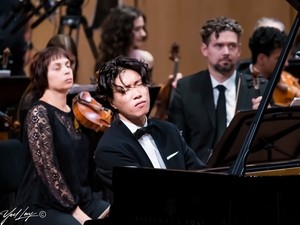
Pianist Park Jin-hyung ties for runner-up at Rubinstein competition, best-ever finish for a Korean
Pianist Park Jin-hyung, 30, tied for runner-up at the Arthur Rubinstein International Piano Master Competition -- the best result ever achieved by a Korean participant. According to the competition organizers and the Kumho Cultural Foundation on Wednesday, Park shared second place with Belarusian pianist Uladzislau Khandohi at the 18th Arthur Rubinstein International Piano Master Competition, held in Tel Aviv, Israel. Russian pianist Dmitry Yudin took first place, while Ukrainian pianist Roman Fediurko placed third. Park said, through the Kumho Cultural Foundation, "I am happy to have achieved a good result in a competition that lasted longer than usual," adding, "I also feel a sense of liberation at having completed a roughly five-month journey." Park will receive $20,000 in prize money. The competition is open to pianists between 18 and 32 years old. The final round had originally been scheduled for May but was postponed to September because of the war in the Middle East. This year's jury included 12 world-renowned pianists, among them Jury Chair Arie Vardi and South Korea's Shin Su-jung, alongside Martha Argerich, Daniel Barenboim, Pavel Gililov and Yefim Bronfman. The competition, launched in 1974 to honor the musical legacy of Arthur Rubinstein (1887-1982), one of the 20th century's greatest pianists, is held once every three years. Past participants have included Emanuel Ax, Kirill Gerstein, Igor Levit, Khatia Buniatishvili and Daniil Trifonov, as well as several of Korea's star pianists. Park Jong-kyung placed third in 1998, Son Yeol-eum placed third in 2005, and Cho Seong-jin placed third in 2014. Park, who became the first Korean to win first place in piano at the 2016 Prague Spring International Music Competition, has since competed in numerous prestigious competitions at home and abroad. He made his debut in 2009 at a Kumho young talent concert and has since performed for audiences on a variety of stages. He studied under Yu Young-wook at Yewon School, Seoul Arts High School and Yonsei University, and later completed his master's degree under Arie Vardi at the Hanover University of Music, Drama and Media.
Sept. 9, 2026
-
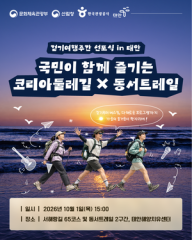
Korea Trail and East-West Trail converge in Taean for '2026 Walking Travel Week' launch
Declaration ceremony held in Taean First 500 applicants to be accepted 10,000-won marine healing program Events to run nationwide through October The Korea Trail, which links South Korea's coastlines and border areas, meets the East-West Trail, which cuts across the peninsula from east to west, in Taean, South Chungcheong Province. The Ministry of Culture, Sports and Tourism and the Korea Tourism Organization, together with the Korea Forest Service, will hold a declaration ceremony for the "2026 Korea Trail x East-West Trail Walking Travel Week" at the Taean Marine Healing Center on Oct. 1, marking the start of the autumn walking season. The ceremony will take place near Mongsanpo Beach in Taean, where Course 65 of the Korea Trail's Seohaerang-gil and Section 2 of the East-West Trail intersect. Officials from the ministry, the Korea Forest Service, the tourism organization and local governments, along with members of the public, will attend the event, which is meant to promote cooperation between the two trails and encourage more people to take up walking. The Korea Trail is a roughly 4,500-kilometer walking route linking the east, west and south coasts along with border areas. The ministry began building it in 2016 together with related ministries and local governments and completed the entire route in 2024. The East-West Trail is an approximately 850-kilometer forest path running from Taean, South Chungcheong Province, to Uljin, North Gyeongsang Province. The Korea Forest Service has overseen its construction since 2023 and plans to open the full route in the second half of 2027. Applications for the declaration ceremony will be accepted from Sept. 9 to Sept. 20, on a first-come, first-served basis for 500 participants, through the walking travel app Durunubi and the official website. After the ceremony, participants will walk together for about 3 kilometers from the Taean Marine Healing Center to Mongsanpo Beach as part of the event. Those who complete the course will receive a medal. Detailed schedules are available on Durunubi. The ceremony will also include an awards presentation honoring those who have contributed to promoting walking. Street performances will take place along the walking route, followed by wellness programs afterward. Participants who register in advance when applying for the walking event can take part in yoga and singing bowl sound therapy sessions at the Taean Marine Healing Center. The sessions will run twice at sunset, starting at 5 p.m. in 30-minute intervals, with 30 participants per session for a total of 120 people. The participation fee has been reduced to 10,000 won from the regular price of 24,000 won ($18). Nationwide participatory events will continue after the declaration ceremony through Oct. 11, when Walking Travel Week ends. These include an online quiz titled "Find It, Kodul Detective!" — Kodul being a nickname for the Korea Trail — in which participants guess the names of the trail's signature courses from AI-generated landscape images, and the "Kodul Stamp Challenge," which lets participants use the recording feature in the Durunubi app to enter for prizes. Organizers are also running programs that link walking with local visits and spending. For a total of six days — Oct. 3-5 and Oct. 9-11 — participants who complete a designated Korea Trail course can take part in the "Walk and Have a Cup of Coffee" event, receiving a drink at a nearby cafe. Local experience programs will also run at Korea Trail rest stops nationwide, including the Oryukdo Safety Walking Road in Nam-gu, Busan; the Haeparang Rest Stop Experience in Dong-gu, Ulsan; and the Naturalist Road in Goseong, South Gyeongsang Province. Details are available on the Durunubi website. "The Korea Trail and the East-West Trail are the flagship walking routes where people can fully enjoy every corner of South Korea on foot," said Kang Jeong-won, director general of the Tourism Policy Bureau at the Ministry of Culture, Sports and Tourism. "The ministry will keep expanding content that helps people discover the charms of local areas across the various Korea Trail courses, so that walking travel can help boost regional tourism and local economies."
Sept. 9, 2026
-

RESCENE's 'love attack' on Donghae: idols shout out Mukho, Mangsang on a 'field trip'
Donghae field trip trilogy: Part 1 nears 2.3 million views Curiosity builds over the activity that reportedly made a scouting writer cry RESCENE, the resilient idol group behind one of the biggest chart turnarounds in recent memory, has launched a "love attack" on Donghae, Gangwon Province. RESCENE members have previously visited leader Won-yi's hometown of Geoje, Gyeongju — the hometown of Jena, nicknamed the "Silla princess" — and Minami's hometown of Chiba, Japan. This time, they made a rather sudden trip to Donghae. Starting at Mangsang Beach and the Mangsang hanok and auto-camping resort, they explored every corner of the city, from Mukho to sweeping views of the East Sea at Dojaebigol. They also tried a luge and sky glider experience at Mureung Byeolyucheonji. The first episode of the three-part YouTube series "Donghae Field Trip," which captures the trip, has drawn nationwide attention, nearing 2.3 million views just three days after its release. Known in the south for its ties to Geoje, RESCENE has now also earned a reputation as an idol group of the East Sea. "We are grateful to and proud of the RESCENE members for visiting Donghae's tourist attractions and enjoying various experiences themselves, which let us convey the city's charm in a more vivid and approachable way," said Lee Jin-hwa, head of Donghae's tourism division. "We will continue to pursue tourism marketing that makes young travelers want to visit Donghae in person, through YouTube, social media and other media content." The content was produced as a travel-variety-style YouTube series built around a "field trip" concept. In it, the members visit Donghae's major tourist attractions and hands-on facilities to complete missions, play games and take part in various experiences. The RESCENE members took in the Mukho area, which has recently drawn attention as an atmospheric travel spot. They enjoyed sweeping views of the East Sea from the Haerang Observatory at Dojaebigol, then kept the trip's mood going by staying at the Mangsang auto-camping resort. At Mureung Byeolyucheonji, Donghae's signature hands-on attraction, the members tried off-road luge and a sky glider against a backdrop of scenic nature. This showcased the kind of dynamic tourism content that can only be experienced in Donghae. In the first episode, the members are shown intensely curious about an activity that reportedly made the program's writer cry during a location-scouting visit. Leader Won-yi said she would try it, but Reve — known as the group's top comedian despite her outstanding dancing skills — backed out. "I should be taking photos of the members," she said. What the activity actually is has not yet been revealed, but it is believed to be the sky glider at Mureung Byeolyucheonji. The ride is said to have been the first of its kind in Asia when it was introduced. For the filming, the city of Donghae actively supported RESCENE and the production crew. It helped coordinate access to tourist sites and hands-on facilities and arranged filming locations so the group could smoothly capture the city's various charms. The video departs from conventional attraction-focused promotion, instead naturally showing a popular artist traveling and experiencing Donghae firsthand. The approach is expected to make the city's tourist attractions feel more familiar to the MZ generation and K-pop fans at home and abroad. RESCENE previously drew considerable attention with its "Geoje Yeehaw" content, which naturally introduced the region's name and tourism appeal. Donghae hopes its "Donghae Field Trip" series will likewise boost tourism promotion for the city.
Sept. 9, 2026
-
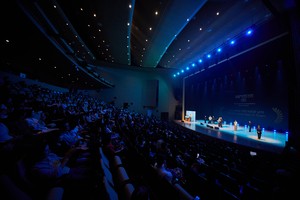
Jecheon music film festival wraps 22nd edition, honors composers Kim Joon-seok, Cho Eun
The 22nd Jecheon International Music & Film Festival wrapped up its six-day run. JIMFF, built around the theme of music meeting film, is Korea's only international film festival dedicated to music, held every summer in Jecheon, North Chungcheong Province. The closing ceremony was held Tuesday at the Jecheon Arts Center, hosted by broadcaster Song Eun-i and actor Han Ye-ri. Organizers announced the winners of the International Music Film Competition and International Competition. They also revealed the winners of Music Insight, the competition for Korean feature film composers, and New Talent, the competition for rookie film composers. The International Music Film Competition's grand prize went to "The Loneliest Man in the City," directed by Tizza Covi and Rainer Frimmel. The jury called it "a melancholic yet warm and restrained work that speaks of one man's unwavering conviction to hold onto dreams, hope, modernity and a world that is inevitably fading away." Director Frimmel, referring to tenor Choi Seung-won's rendition of "My Way" during the opening performance that day, said, "Two unexpected things happened to me here in Jecheon. One is winning this award, and the other is hearing the best 'My Way' since Frank Sinatra." The International Competition's grand prize went to "Gilgamesh's Dream," directed by Mohamed Al-Daradji. The jury said the film is "a work that contemplates life from the point closest to death, and asks what must be preserved to the very end to remain human." "We wanted to dedicate this film to those who lost their lives to war, and to all the children of the world," said Ali Al-Daradji, who produced the film. The Music Insight award, for Korean feature film composers, went to music director Kim Joon-seok, who scored director Kang Hyung-chul's "Hi-Five." Judges praised how the music and songs built an imaginative world and brought out the personalities and appeal of the film's characters. The New Talent Showbox Award, for rookie film composers, was given to music director Cho Eun for the score of director Yoo So-young's documentary "Gongsuni." Cho said, "I see this award as encouragement and love sent to rookie music directors, and I will keep growing as a film composer." Alongside this, the jury's special mention went to music director Choi So-ri for director Park Jung-soo's short film, "Seoreul Damgo." The 22nd JIMFF ran for six days, from Thursday to Tuesday, across Jecheon. This year's festival brought audiences 189 films from 51 countries and performances by 37 teams. It also featured a range of programs, including screenings, concerts, talks, exhibitions, the Jecheon Film Music Academy and the Jecheon Music Film Market. Amid a large turnout of filmmakers from Korea and abroad, director Park Chan-wook drew attention at the opening ceremony by appearing as a presenter of the Jecheon Film Music Award.
Sept. 9, 2026
-
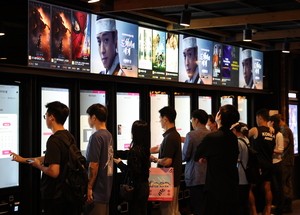
Film holdback deal draws collusion complaint, FTC review sought
The debate over "holdback" -- the waiting period before a theatrical release becomes available on OTT platforms or IPTV -- is showing signs of escalating into an antitrust issue. On Tuesday, the Citizens Coalition for Consumer Sovereignty submitted a formal inquiry to the Korea Fair Trade Commission, questioning whether a voluntary holdback agreement among industry players restricts competition and could harm consumers. The group's core argument is that even though the holdback deal is a nonbinding "voluntary agreement" without legal force, businesses jointly setting a fixed period can, in effect, create an industry standard that limits both the timing of film releases and competition among platforms. In May, the government formed a public-private council bringing together film production, distribution and exhibition companies along with IPTV and major OTT platforms to discuss the holdback issue and other pending matters. The tentative "Voluntary Holdback Agreement for Win-Win Growth in Korean Film" was originally slated for announcement last month. It reportedly sets a holdback period of 120 to 150 days, with exceptions for individual titles. However, the issue remains unresolved as stakeholders have failed to narrow their differences. Article 40 of the Monopoly Regulation and Fair Trade Act defines the act of two or more businesses jointly setting trading conditions or timing as "unfair collaborative conduct." The Citizens Coalition for Consumer Sovereignty argues that production costs, break-even points and licensing terms vary from film to film. Yet having the entire industry share the same supply-timing standard could be read not as individual business judgment but as a joint restriction on trade. "If the industry limits only the timing of OTT and IPTV availability without addressing structural problems such as high ticket prices, content shortages and screen concentration, the cost and inconvenience could simply be passed on to consumers," the group said. "Applying a uniform holdback even to films that failed to secure adequate theatrical screening opportunities could further limit the ability of small and independent films to reach audiences and recoup revenue." This concern echoes a joint news conference held late last month by the Committee on Public Livelihood and Economy of Lawyers for a Democratic Society, the Ansan Consumer Organizations Council and the People's Solidarity for Participatory Democracy, which said, "While the industry is moving quickly on a holdback agreement that restricts consumer choice, long-standing concerns over settlement transparency remain unresolved." The Citizens Coalition for Consumer Sovereignty also noted that the government mediated the agreement through the Ministry of Culture, Sports and Tourism and the Korean Film Council, among other bodies. It said that mediation does not exempt the deal from review by the Fair Trade Commission. The inquiry asked, "Even if the government leads an agreement among businesses on holdback for policy purposes, is it the Fair Trade Commission's position that the deal can still be reviewed under the Fair Trade Act if it produces anti-competitive effects?" Earlier, Democratic Party of Korea Lawmaker Lim Oh-kyung sponsored a proposed amendment to the Motion Pictures and Video Products Act that would mandate a six-month holdback period. While the bill was under review by a National Assembly standing committee, the Fair Trade Commission urged caution, saying a uniform mandate could hurt OTT competition and consumer welfare. "Whether businesses in competition with each other can jointly set the same distribution timing under the Fair Trade Act is a question that has never been fully tested," an industry official said. "A clear ruling from the Fair Trade Commission needs to come before any agreement is signed."
Sept. 9, 2026
-
![Jang Young-ran pairs burger with W35m Chanel ring [Their Health Aesthetics]](https://wimg.heraldcorp.com/news/cms/2026/09/08/news-p.v1.20260908.42681eaf0fef4c649cc49e2d3103a69e_T1.jpg?type=h&h=240)
Jang Young-ran pairs burger with W35m Chanel ring [Their Health Aesthetics]
The beauty of those in the public eye often hides a distinct routine behind it. [Their Health Aesthetics] looks at the diets, workouts, treatments, and beauty and fashion choices of newsmakers as everyday lifestyle information. Broadcaster Jang Young-ran is drawing attention for pairing everyday casual looks with glamorous fine jewelry. Even while casually enjoying a hamburger and fries, she wore a Chanel diamond ring in the 30-million-won range ($22,300) on her finger. The look let the accessory — rather than the outfit — do the talking. Jang recently shared photos on her SNS showing her spending some relaxed time. In the pictures, she wore a casual outfit while holding a hamburger, but the ring on her finger stood out. The ring belongs to Chanel's signature fine jewelry line, the Coco Crush collection. The piece Jang wore was identified as the small model crafted from 18K white gold and diamonds, reference J12093. According to Chanel's official website, the recommended retail price in South Korea currently stands at 35.3 million won. 120 diamonds, 1.73 carats total: quilting etched onto a ring The design is as elaborate as the price tag. According to Chanel, the Coco Crush ring is set with 120 brilliant-cut diamonds totaling 1.73 carats, crafted from 18K white gold. The diamonds densely cover the ring's surface in a style inspired by the snow-setting technique, so the sparkle of light catches the eye before the metal itself does. What defines Coco Crush is Chanel's signature quilting motif. Chanel reinterpreted the quilted pattern that has represented the house since 1955 into fine jewelry, launching the Coco Crush collection in 2015. The line has since expanded beyond rings to bracelets, earrings and necklaces, using materials ranging from white and yellow gold to Chanel's signature beige gold. It is not a flat, direct imprint of the diamond-shaped quilting seen on Chanel's handbags. Chanel describes Coco Crush's design code as a curved, square-based pattern drawn from quilting, combined with cut details that run across the gold surface, soft edges and a rounded silhouette. As a result, the basic version without diamonds looks relatively minimal, but when pave diamonds cover the surface — as in the model Jang wore — the same quilted pattern appears far more dazzling. W35m ring with casual look: how to layer it like Jang What stands out about Jang's styling is that she does not reserve high-end jewelry for special occasions alone. She wears Coco Crush even in everyday moments, like eating a hamburger or dressing casually in a cap. She actively layers her accessories — stacking several rings on one hand or adding bracelets and watches. Pave diamond rings typically make a strong statement even worn alone, but a simple band-shaped design like Coco Crush is relatively easy to stack with other rings. Chanel in fact promotes Coco Crush as a collection meant to be freely mixed, matched and layered with other pieces. When wearing a striking ring like Jang's, matching metal tones to some degree makes it easier to create overall cohesion. Pairing it with white gold, platinum or silver-toned watches naturally complements the diamond's cool shine. On the other hand, choosing large, ornate designs for every accessory can scatter the eye's focus. Designating one diamond ring as the centerpiece and mixing in thinner or less stone-heavy pieces for the rest allows for layering while still letting the main jewelry stand out. Keeping the outfit simple is another approach. Adding one statement piece of jewelry to basic items like T-shirts, shirts, knits or denim can shift the overall mood of a look without appearing overdone. This is much like how Jang naturally mixes high-end jewelry into her relaxed everyday wardrobe. Chanel bag quilting, on a finger: flagship line over a decade in the making Coco Crush is a relatively recent collection, but its motif is deeply tied to Chanel's history. Chanel has used quilting as a signature design element since 1955, and reinterpreted it into fine jewelry with the launch of Coco Crush in 2015. The collection has since expanded from plain gold rings to diamond-set pieces, bracelets and earrings. Versions with diamonds densely set across the entire surface, like the piece Jang wore, show off both Coco Crush's distinctive quilted lines and diamond sparkle at once. Unlike a solitaire design that simply places one large stone at the center, the entire pattern of the ring itself becomes the decorative element. As a piece of fine jewelry, it requires proper care. While the diamonds themselves are hard, the 18K gold surface can pick up everyday scratches, and stacking multiple rings together can cause friction between the metals. It is best to store each piece separately when not in use and avoid repeated exposure to strong impact or chemical products.
Sept. 8, 2026
-
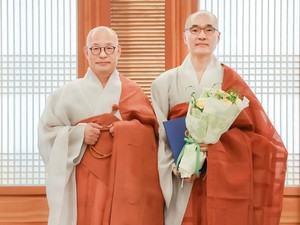
Jogye Order names Ven. Ingwang abbot of Woljeongsa Temple
Ven. Jinwoo, head of the Jogye Order of Korean Buddhism, named Ven. Ingwang as abbot of Woljeongsa Temple, the head temple of the fourth parish, on Tuesday. Ven. Ingwang received the "sami" precepts, or novice ordination, in 1993 under the guidance of Ven. Jeongnyeom, the former abbot of Woljeongsa Temple. He has since served as superintendent of Sangwonsa Temple and abbot of Gukhyeongsa Temple and Hwaeomseonsa Temple. The abbot post at Woljeongsa Temple had been vacant since Ven. Jeongnyeom, who had held the position for more than 20 years since 2004, submitted his resignation in July. He stepped down to prepare for a run in the election for head of the order. "Woljeongsa Temple has carried out many Buddhist projects over a long period and has well-maintained facilities for protecting the temple grounds," Ven. Jinwoo said. "I hope you will continue to lead its work in propagating the dharma and fostering harmony among the congregation, as the temple has done so far." In response, Ven. Ingwang said, "I will do my best to learn how the order operates, achieve stability and help make this an exemplary parish."
Sept. 8, 2026
-

Big Bang vs. RESCENE vs. BTS: who rules Korea, China and Japan's K-pop charts?
Melon's Global K-Chart compares rankings by country Analysis of July-August monthly charts and the latest September rankings RESCENE's comeback surge dominates in Korea BTS reigns in Japan, while China's top spot changes weekly In Korea, it was RESCENE. In China, EXO. In Japan, BTS. So who tops the charts when all three countries are combined? Even within K-pop, each country has its own favorite groups and songs. While the genre is beloved across borders, a look inside the playlists of Korean, Japanese and Chinese fans reveals sharply different tastes. Melon released its Global K-Chart on Tuesday, combining data from Melon in Korea, Tencent Music in China and Line Music in Japan. Big Bang topped the latest weekly chart, covering Aug. 31 to Sept. 6. Earlier, BTS ranked first on the July monthly chart, and aespa took the top spot on the August monthly chart. The details compiled over roughly three months since the chart's launch are even more revealing. Making the top 10 in all three countries' charts simultaneously proved as difficult as threading a needle. Only three acts managed it: Big Bang, BTS and aespa. The country-by-country No. 1 picture looks nothing like the global chart. On Melon, girl group RESCENE — a comeback-surge icon — held the top spot for two consecutive months in July and August. On Japan's Line Music, BTS has held the throne for four straight months, from May through August. On China's Tencent Music, i-dle led in July, aespa took over in August, and EXO surged to the top of the September weekly chart. Tencent's rankings show the throne changing hands with nearly every comeback cycle. In Korea, comeback-surge icon RESCENE dominates Korea's chart is, in short, a melting pot of mass appeal and viral momentum. No matter how massive a fandom is, holding the top spot is difficult without capturing the broader public's ear — and even a little-known rookie can pull off a miracle comeback surge if they catch fire on TikTok or YouTube Shorts. RESCENE's Cinderella story is the prime example. A "Love Attack" challenge craze sparked by YouTube video content swept through Melon's daily and weekly charts before ultimately pulling off the coup of topping Melon's August monthly chart. The group also landed "Pretty Girl" and its previous track "Deja Vu" on the charts at the same time, putting three songs in the monthly top 10 — a remarkable feat. RESCENE also held on to the No. 1 spot in Korea on the September weekly chart, followed by Big Bang at No. 2, Hearts2Hearts at No. 3, BTS at No. 4 and aespa at No. 5. But RESCENE stumbled abroad, ranking 78th on China's Tencent chart and 39th on Japan's Line chart, leaving its overall global ranking at just 17th. An industry insider said, "The short-form video craze swept through Korea, but there is also an emotional factor at play among RESCENE's fans — the group's roots at a small or midsize agency — which created a gap compared to fans overseas." Big Bang, often called the last of Korea's national groups, proved to be a rare cross-generational icon this time around. Korean listeners opened their ears just as enthusiastically to a familiar legend as they do to the latest trends. Big Bang, returning as a full group for the first time in four years and four months with its new song "BiiiG," saw its artist ranking on Melon leap from 21st to second the moment the track dropped, and the song shot straight to No. 1 on the top 100 chart. Beyond breathless streaming from teenage fans, the sheer force of nostalgia — striking a chord with listeners in their 20s and 30s as well as their 40s — shook up the chart. IU, often called the queen of Korean music, holds eighth place in Korea even without any new release. However, she ranks 38th in China and 45th in Japan. Hearts2Hearts, too, sits at third in Korea but 46th in China and 21st in Japan. A high ranking in Korea does not necessarily translate into global success. In China, chart leaders turn over fast with every K-pop comeback China's chart tells yet another story — an endless firepower battle marked by whirlwind turnover. An official at a major domestic agency said, "Because physical album retail is difficult in China, fans there tend to pour all their energy into digital album downloads and streaming on Tencent platforms such as QQ Music." The official added, "In a way, the chart shifts every time because Chinese fans react so quickly to each K-pop group's comeback." The latest Tencent Music top 10 lists EXO at No. 1, i-dle at No. 2, aespa at No. 3, Big Bang at No. 5, NCT 127 at No. 6, BTS at No. 7, G-Dragon at No. 8 and Seventeen at No. 10. What is notable is that i-dle, which released the mini album "We Made" in July, jumped a staggering 26 spots in one leap. The group claimed the top spot in China, fifth globally. In August, aespa snatched the crown with a digital single, and in the first week of September, EXO — the local fandom's "eternal first love" — took over at No. 1. With turnover moving so fast, the throne changes hands almost without pause each time a new song drops. China's market has its own peculiar formula for success. Industry insiders agree on one point: an overwhelming preference for members of Chinese descent. Looking at the first week of September's chart, i-dle member Yuqi ranked just 56th globally but placed fourth on the Chinese chart as a solo entry. Seventeen's The8, too, ranked 75th globally but soared to ninth on the Chinese chart — outperforming his own group's overall ranking of 10th in China. Japan's steadfast loyalty: rock-solid 'concrete' fandoms Once Japanese fans commit, they stay committed. Japan's fandom culture is a sanctuary for loyalty untouched by passing trends. "Japan's music market values the emotional bond built steadily with an artist over time more than any single flashy hit," a domestic agency official said. BTS's record is nothing short of astonishing. Despite the group's members serving in the military, BTS swept the monthly No. 1 spot for four straight months — May, June, July and August — and is still holding first place on the September weekly chart. A "concrete core" fandom that keeps streaming even older songs in everyday life — rather than relying on short-term promotional events — is driving this lock-in effect. Groups with such a solid loyalty infrastructure — one strong enough to sustain large-scale offline tours — enjoy virtually unbeatable staying power on Japan's chart. Stray Kids far outpaced their standing in Korea (56th) and China (14th) by landing at No. 2 in Japan, driving their global ranking to 12th. TWICE, which has established itself as a national girl group in Japan, ranks 62nd in Korea but continues to show strength with 11th in China and third in Japan. Seventeen, which fills dome arenas on tour, shows similarly steady numbers — 42nd in Korea, 10th in China and 10th in Japan. What is notable is that fourth- and fifth-generation girl groups also stand out in Japan — groups with Japanese members, similar to TWICE's Momo, Sana and Mina. ILLIT, whose members include Moka and Iroha, climbed as high as fourth in Japan, while sitting at just 18th in Korea and 58th in China. BABYMONSTER, too, shows exceptional firepower in Japan, ranking seventh there against 73rd in Korea and 63rd in China — a group that is particularly strong in the Japanese archipelago. BABYMONSTER counts Japanese members Ruka and Asa among its lineup. Le Sserafim, which includes Sakura and Kazuha, ranks ninth in Japan, and 44th in both Korea and China. How Big Bang, BTS and aespa — the only three — conquered all three countries With tastes and consumption habits diverging so sharply among the three countries, simultaneously ranking in the top 10 of all three is akin to reaching for the stars. That becomes clearer when looking at the country-by-country rankings of groups other than Big Bang, BTS and aespa, which managed to conquer the top 10 in all three. IVE, which ranked fourth overall globally, placed ninth in Korea, 15th in China and 11th in Japan. Tomorrow X Together, which came in sixth globally, ranked just 34th in Korea but rose to 12th in China and eighth in Japan. Even top-tier idols run into barriers with fandoms abroad, or hit the wall of mass appeal at home. Big Bang, meanwhile, topped the latest global chart while ranking second in Korea, fifth in China and sixth in Japan. The group's weapon is the aura of a "living legend" that unites generations. In Korea, its comeback drove nationwide streaming instantly, while its overwhelming recognition among Chinese audiences — built up steadily since the second-generation hallyu era — secured fifth place on Tencent. G-Dragon also became the only Korean solo act to make China's top 10, ranking eighth. On top of that, the group rallied Japanese fans seasoned by countless dome tours. BTS is a global super IP, or intellectual property, that settled at fourth in Korea, seventh in China and first in Japan. Having held the No. 1 spot on Japan's Line Music for four straight months, BTS maintained balanced rankings across all three countries, demonstrating the safety net of a massive fandom. The group ranks second on the latest global chart. Aespa ranked fifth in Korea, third in China and fifth in Japan, putting it third overall globally. The secret was an aggressive comeback strategy. After releasing its full-length album "LEMONADE" in Korea in May, the group followed with its Japanese debut single "KISS N TELL" in July, then a concert and the unit digital single "SYNK: aeXIS LINE" in August — pouring out new music and visuals every month. In particular, member Ningning's popularity in China and aespa's intense fictional universe helped propel the group to third place there. Its official debut promotion in Japan pushed it to fifth on Line, and it also held fifth place on Melon. The group's savvy planning — precisely staggering different comeback timelines across the three countries — stands out. This tri-country chart points to K-pop's new formula for success: expanding territory in each market requires a distinct strategy. In Korea, groups need short-form challenges and witty web variety content to stimulate the public's dopamine. In China, they need concepts and visuals that grab attention instantly, along with an intimacy with fans that rivals what local members provide. In Japan, the odds of "conquering" the market rise with consistent offline connection — from high-touch events to dome tours. An industry insider said, "It is not easy for a group to emerge with the power to work simultaneously across such different markets, the way Big Bang and BTS have," adding, "Groups need to build more careful, sophisticated strategies tailored to each country and region."
Sept. 8, 2026
-
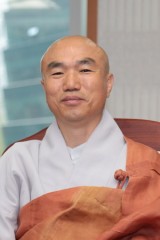
Jogye Order names Ven. Ilgam future headquarters secretary-general
Ven. Hyomyeong appointed president of Buddhist Newspaper Ven. Jinwoo, head of the Jogye Order of Korean Buddhism, appointed Ven. Ilgam as secretary-general of the Future Headquarters at the order's executive headquarters on Tuesday. Ven. Ilgam entered monastic life under his mentor, Ven. Wonyung, and received the novice monk precepts in 1990. He has served as abbot of Borisa, Ongnyeonam, Okcheonam and Yonggulam temples and as a member of the 16th and 17th Central Councils. He also served as secretary-general of the executive headquarters' Resolution Promotion Headquarters, as director of the Finance Department and as director of the Planning Office. He previously served as director of the Secretariat Office and as secretary-general of the Future Headquarters, and currently serves as a member of the 18th Central Council. Ven. Jinwoo also appointed Ven. Ilgyu as director of the Media and Public Relations Office, Ven. Seonghaeng as head of the National Community Promotion Headquarters, and Ven. Deokyu as secretary-general of the National Community Promotion Headquarters. He also named Ven. Hyomyeong as president of Buddhist Newspaper, Ven. Sangwon as secretary-general of the Korean Buddhism Cultural Affairs Corps, and Ven. Deokwoon as head of the administration office of the Social Welfare Foundation. Ven. Jinwoo won reelection in the Jogye Order's 38th head-of-order election held Thursday. Ven. Jinwoo garnered 183 of 321 votes cast by the electoral college, a 57 percent share, and will begin his second four-year term on Sept. 28.
Sept. 8, 2026
-
![[Review] 'Intern' offers a gentle nod to Korea's tireless office workers](https://wimg.heraldcorp.com/news/cms/2026/09/08/news-p.v1.20260908.176aa1f7fbc64759aac19e23556ed2cb_T1.jpg?type=h&h=240)
[Review] 'Intern' offers a gentle nod to Korea's tireless office workers
Director Kim Do-young's 'Intern,' starring Choi Min-sik and Han So-hee Blends the original's warmth with Korean office sensibilities In an age of speed, revisiting the value of people Gi-ho (Choi Min-sik), who spent 37 years at a map publishing company, now lives out a quiet second act after retirement. His days are simple. He arranges an armful of the flowers his late wife once loved in front of her photo, and he sits at a cafe, watching the world's busyness pass by for a while. One day, indistinguishable from the last, Gi-ho comes across a job posting from the fashion brand Wootootoo (WOO22) seeking a "silver intern." As if drawn by something in the ad, he applies without hesitation. "My strength is that I have a lot of experience, and my weakness is that I am also old." His unusual preparedness and clean, no-nonsense answers carry him smoothly through the interview, and he lands the silver internship. Dressed in a well-worn but neatly kept suit and carrying a bag that has seen years of use, Gi-ho leaves home to step in as an "intern" at Wootootoo, a promising fashion company that reached sales in the 10-billion-won range ($7.4 million) just three years after its founding. In the ceaselessly busy office, no one moves faster than the CEO, Sun-woo (Han So-hee). Living by a schedule broken down to the minute, she is the one who turned Wootootoo into a dark horse of the fashion industry. Gi-ho, the oldest but lowest-ranking intern at the company, is assigned as her direct assistant. But Sun-woo, who has never grown close to any older adult, finds his presence simply uncomfortable. The diligence Gi-ho built up over a lifetime of work shows in every corner of his day. Even though there seems to be little for him to do, he wakes on time, leaves home at a set hour, and is always the first to switch on the office lights. Yet neither Sun-woo nor his direct supervisor, Min-a (Ryu Hye-young), seems inclined to give him any work. Gi-ho spends days sitting in front of a messenger app that never pings. Rather than let his diligence and years of experience go to waste at an empty desk, he uses the free time no one else in the office has. He attends to corners that have been neglected while everyone else races ahead. Gi-ho restores a chaotic pile of samples and a long-abandoned storage room to order, and watching him, Sun-woo slowly begins to open up. A man who has passed through the hottest days of his life and a woman sprinting endlessly toward limitless possibility gradually close the distance between them. They exchange different perspectives and experiences. This is "Intern," set to open Sept. 16. Directed by Kim Do-young, known for "Kim Ji-young: Born 1982" and "Manyage Uri," and starring Choi Min-sik and Han So-hee, "Intern" reimagines the 2015 Hollywood film "The Intern" for a Korean audience. Ben and Jules, once played by Robert De Niro and Anne Hathaway, return to the screen under new names — Gi-ho and Sun-woo — carrying the sensibilities of 2026 Korea. Having passed through an era when online shopping felt cutting-edge and arrived in the age of AI, "Intern" returns to us with an unchanging message. It asks what we must seek out and protect amid relentless change. The film fully inherits the humane "office comedy" spirit of the original while carefully weaving in the particular sensibilities of Korean office culture. At Wootootoo, a company filled with so-called MZ (Millennial and Gen Z) employees, an older intern's mere presence feels unfamiliar and awkward. But rather than turning this into conflict, the film frames it as an opening for two different generations to sit down and begin talking to each other. The same holds true as Gi-ho tidies every corner of the office and restores the neglected storage room. The film swaps out the original's cluttered desk for a couch buried under clothes. Gi-ho revives the organization's sole space for rest, long buried beneath a relentless chase for speed and efficiency. The breathing room he creates in an office packed with work becomes, once again, a place where employees can rest, opening up space for relaxation and connection. Amid Wootootoo's breakneck pace, time seems to slow down only around Gi-ho. The biggest departure from the original lies in perspective. Where the original film centered on the relationship between Ben and Jules and the deep experience and burning passion within it, director Kim Do-young's version of "Intern" widens that lens to take in the whole of Wootootoo. As Sun-woo trusts her own instincts and pours everything into running the company, the film never loses sight of the people behind her who are doing their best just the same. In that widened view lies the quiet grief of an office worker who has credit stolen by a team leader and cannot even properly vent about it. That worker is simply swept back under a mountain of work. There is also the all-too-familiar heart of the "Korean office worker" who wants to quit everything one moment, only to soften instantly at a single word of praise from a boss. Ours are ordinary, repetitive lives, enduring rough days while earning recognition for our own worth. The film quietly reflects that back at us, and somehow it brings comfort. It is people, not AI, who kindle passion, who keep trying without giving up, and who, even amid hardship, ultimately get the job done. The chemistry between Choi Min-sik and Han So-hee exceeds expectations. Returning with a rare "comfortable" look, Choi naturally embodies Gi-ho, living up to his nickname as "Korea's De Niro." From the arm sleeves he wears without a second thought to the puffed rice snack he shyly sets on his desk, every carefully chosen detail blends together as he paints a perfect portrait of a "Korean-style ajeossi." He radiates a warmth that feels familiar yet distinct from Ben's. Han So-hee is equally effective at capturing Sun-woo, a character in whom cool charisma and warmth coexist. It is her understated gaze and timing that reveal the anxiety and weariness hidden beneath a seemingly flawless success story. Recalling the cast of a genre film, the two actors use their newly built characters to create a quiet but solid rhythm that crosses both generation and gender. The message about the value of "experience" and seasoned wisdom in a rapidly changing era, carried over from the original, remains just as relevant in this film. At a time when AI is quickly taking over roles once held by people, the film quietly revisits the value of human relationships that speed and efficiency alone cannot fill. It also reflects on the weight of trust that different generations build together. There is a "sunbae," a senior in life, who willingly unpacks a lifetime's worth of hard-earned experience for the next generation to use. There is a junior who does not take that effort for granted. And there is the warmth both of them show in truly listening to each other's stories. Without any flashy twist or dramatic turn, each word Gi-ho speaks, seasoned by time, offers a small comfort to those of us who must keep living into tomorrow. An impression that lingers without ever being flashy — that is the strength "Intern" leaves with its audience. It opens Sept. 16.
Sept. 8, 2026
MOST READ
- 1KAIST develops high-performance bio-based adhesive using E. coli instead of petroleum
- 2Pope Leo XIV declines French honors and banquet, accepts only private meeting with Macron
- 3Daimler Truck unveils next-generation transport solutions at IAA 2026
- 4What was Rachmaninoff's performance fee? A 1928 price list tells all
- 5Samsung Biologics union's show of force backfires at the bargaining table
- 6APR says hair-loss treatment research published in international journal
-
WORLD

US warns of punishment for anyone enabling Iran's Strait of Hormuz toll scheme
-
INDUSTRY

Toyota union puts productivity first; Hyundai Motor union demands bigger share of profits
-
FINANCE

National Growth Fund to invest $531M in FuriosaAI, which rebuffed Meta's $800M takeover bid
-
INDUSTRY

Korea Shipowners' Association holds amateur baduk tournament for Maritime Day