
- HOME
- WORLD

Oil tankers struck by unknown projectiles near Strait of Hormuz in third attack in two days
Two vessels hit near Oman's Khasab in stern and engine room strikes Fire breaks out on tanker Friday after port-bow hit; no casualties reported Reports of oil tankers being struck by unknown projectiles in the Strait of Hormuz continued to mount Saturday, a day after a similar attack set a tanker ablaze in the waterway, underscoring rising tensions in the area. The United Kingdom Maritime Trade Operations (UKMTO) said Saturday (local time) that it received a report of an oil tanker exiting the strait being struck in the stern by an unknown projectile at around 9 a.m. Oman time, at a location approximately 11 nautical miles north of Khasab, Oman. Fifty minutes later, UKMTO received an additional report that an oil tanker's engine room had been hit by an unknown projectile about 17 nautical miles east of Khasab. It was not immediately confirmed whether the two reports concerned the same vessel. No casualties were reported in either incident, and the impact on the marine environment had yet to be assessed. On Friday at around 7 p.m., a tanker attempting to exit the strait was also struck by an unknown projectile on its port bow about 8 nautical miles north of Khasab, sparking a fire on board. Khasab is a port city on Oman's Musandam Peninsula, situated at the entrance to the Strait of Hormuz. UKMTO did not identify the party responsible for the attacks or disclose the flags of the vessels struck. Bloomberg earlier reported that Iranian attacks on oil tankers in the Strait of Hormuz were intensifying, with vessels being targeted at an average rate of roughly one per day this month, even as international crude oil prices were trending lower.
Shin Hea-won Nov. 21, 2026
-
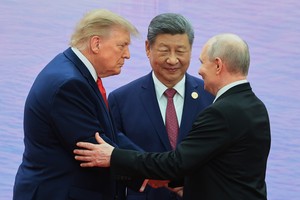
Nuclear, peace, oil — the one thing Trump, Xi and Putin actually agreed on
A scene Donald Trump had long dreamed of finally became reality. The leaders of the world's three great powers sat down together at one table, with no one else in the room. For Trump, at least, it must have looked like a grand tableau. The trouble is back home. While Trump was projecting strength in China, Democrats swept both chambers of Congress in this month's midterm elections. He may cut an imposing figure abroad, but at home he faces the threat of a lame-duck presidency. The New York Times reported Thursday (local time) that Trump appeared to be in high spirits at the trilateral summit with Chinese President Xi Jinping and Russian President Vladimir Putin in Shenzhen, declaring "We are really making history." Trump nodded to Xi and said "it's an honor to be with you," then turned and said the same to Putin. Cameras caught it all — the hugs, the shoulder pats, the broad smiles. But the substance was thin. The working-level coordination that typically precedes a summit had not been properly carried out. A joint statement covering energy development and nuclear risk reduction was issued, though whether follow-up discussions will materialize remains unclear. The contrast at home is striking. Senate Floor Leader Chuck Schumer and House Floor Leader Hakeem Jeffries have yet to receive a White House invitation, even well after the midterm results came in. The same Trump who was so warm toward Xi and Putin has not met with the leaders of the domestic opposition. The atmosphere is turning hostile. The administration has threatened to open criminal investigations into Democratic figures who plan to ramp up oversight starting next year. White House Counsel Will Sharp recently sent a letter to Democratic lawmakers warning that attempts to investigate the administration could be construed as intimidation and could "cross the line into clear criminal conduct." Trump himself, in a CBS interview on election day, said: "The presidency is considered a powerful position. You can do a lot." He went further in a Fox News interview in Shenzhen. "They can pass whatever bills they want. I'll just veto, and veto, and keep vetoing." It amounted to a declaration of all-out confrontation with the incoming Congress. It is common for a president whose approval rating has hit a low and who has lost Congress to turn to foreign policy — but that does not mean it goes as planned. The Iran war has been deadlocked for nine months, leaving him with less room to maneuver than before. Foreign leaders, moreover, are well aware that Trump is a lame-duck president who will leave the White House in just over two years. Even so, The New York Times noted, the summit must have offered Trump a welcome release. He has long expressed admiration for authoritarian leaders like Putin and Xi — frequently calling them "strong" and on multiple occasions voicing envy at their ability to push through whatever they want without worrying about Congress or the courts. After the summit, Putin told reporters that the two men share similar views on "civilizational values." When asked about democracy, he shot back, "What is democracy, exactly?" — then suggested it had become, in effect, a liberal attempt to monopolize power, what he called "liberal dictatorship." Trump's view of power traces back to his days as a businessman. At the Trump Organization, a family company, there was no board to report to and no outside shareholders to answer to. His word was the final word. When he began his first term in 2017, he was reportedly shocked to discover the government does not run like a company. In a New York Times interview in January, when asked whether there were any limits on his power, Trump answered: "Yes. One thing. My own morality. My own thinking. That's the only thing that can stop me." The people around Trump are cut from the same cloth. The clearest example is Steven Miller, whom Trump installed as chief of staff immediately after the midterm defeat. Miller has long argued that presidential authority should be expanded to its maximum. In January, while explaining the Greenland initiative, he dismissed any discussion of international law, saying: "The real world we live in is one governed by strength, governed by physical force, governed by power." Even among Trump's own aides, there were concerns that Miller was going too far. Secretary of State Marco Rubio, in a speech to the Federalist Society, invoked the words of the ancient Roman general Pompey to take aim at the International Criminal Court: "Do not quote the law to men who carry swords." Rubio himself acknowledged it was "not a politically correct thing to say." Defense Secretary Pete Hegseth posted the clip online, capitalizing "Men Who Carry Swords" for emphasis. Even on the right, there was pushback. Justin Amash, a former congressman who left the Republican Party, fired back: "This is ultimately just an argument that might makes right." As it turned out, the one point on which all three leaders at the Shenzhen summit clearly found common ground was something else entirely. The joint statement included language declaring that immunity for heads of state is "of paramount importance." Putin is the subject of an ICC arrest warrant. Not energy, not nuclear weapons — on this one point, the United States, China and Russia were in full agreement.
Nov. 21, 2026
-

62% of Japanese feel affinity for South Korea, a record high; 93% say ties with China are poor
The share of Japanese people who feel affinity toward South Korea has surged to its highest level since the current survey methodology was introduced in 2020, with more than six in 10 expressing favorable views. At the same time, 93 percent of respondents said relations with China were poor — a reflection, analysts say, of the improving trajectory in South Korea-Japan ties and the prolonged friction between Japan and China over Taiwan and other issues. The findings come from a diplomatic opinion poll released Friday by Japan's Cabinet Office. The share of Japanese respondents who said they feel close to South Korea reached 61.8 percent, up 7.1 percentage points from last year's survey and the highest since the postal survey format was adopted in 2020. Assessments of the bilateral relationship also improved sharply. The proportion saying South Korea-Japan relations are good rose 9.7 percentage points year on year to 58.9 percent, likewise a record under the current methodology. Some 80 percent said the future development of South Korea-Japan ties is important. The survey was conducted by mail between Sept. 17 and Oct. 25, drawing responses from 1,424 people. Japan's government has carried out diplomatic opinion polls almost every year since 1975, switching from in-person to postal surveys in 2020. The parallel rise in affinity toward South Korea and positive assessments of bilateral relations reflects the recent improvement in ties between the two countries. Japanese public sentiment appears to be tracking both a growing sense of closeness toward South Korea and a broader recognition of the importance of the relationship. Japanese views of China stood in sharp contrast. The share of respondents who said they do not feel close to China rose 2.9 percentage points from last year to 86.4 percent, the second highest since the current survey format was introduced in 2020. The proportion saying Japan-China relations are poor climbed 6.6 percentage points to 93.0 percent — the highest since the question was first included in the survey in 1986. That figure surpasses the 92.8 percent recorded in 2012, when relations deteriorated sharply over a territorial dispute involving the Senkaku Islands, known in China as the Diaoyu Islands. Japan's nationalization of the islands that year drew a fierce backlash from Beijing, heightening diplomatic tensions and souring Japanese public opinion toward China. The survey methodology differed between 2012 and the present. Japan-China relations have remained strained more recently over the Taiwan issue. Prime Minister Sanae Takaichi said in the National Assembly last year that an armed conflict over Taiwan could constitute an "existential crisis situation" for Japan, potentially triggering the exercise of collective self-defense rights. Takaichi said at the time that a scenario in which China deployed warships and used force could threaten Japan's survival. China demanded that the remarks be retracted, calling them undue interference in the Taiwan issue, and the dispute spread from diplomacy into the economic sphere. China restricted exports of dual-use materials that could serve military purposes, advised its citizens to avoid travel to Japan, and raised supply concerns over rare earths and other critical minerals — all of which have become major flashpoints between the two countries. The prolonged chill in Japan-China relations has driven the rise in negative public sentiment. Only 6.7 percent of respondents said relations with China are good. Despite the bleak assessments, a majority of Japanese still see value in improving ties. Some 70.4 percent said the future development of Japan-China relations is important — a sign that even amid deep skepticism toward China, considerable support remains for maintaining and improving the bilateral relationship.
Nov. 21, 2026
-
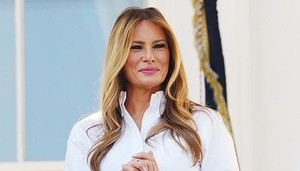
Melania says too many 'yes-men' surround Trump, defends speaking hard truths
Melania Trump said there are far too many "yes-men" around her husband, US President Donald Trump, and defended her reputation as a demanding spouse by saying she simply tells him the truth. Melania made the remarks in a two-part documentary series, "Melania: The Series," released Friday (local time) on Amazon Prime Video, according to Britain's The Telegraph and other outlets. "Sometimes I feel there are too many yes-men around him. That is not healthy," she said, adding that it was important to speak her mind directly. When asked about Trump's characterization of her as overly demanding, she said: "I am telling him the truth." The documentary features both Trump and Melania speaking together about their marriage and each other's personalities. Trump described himself as far easier to deal with than his public image suggests, saying Melania could actually be the more demanding of the two. Melania said her husband's assessment reflects the fact that she is candid with him, and that telling the truth matters more than offering empty agreement. She also said she weighs in on Trump's public behavior, citing his habit of dancing at campaign rallies as one example. "Sometimes when he dances at rallies, Melania doesn't seem to love it," Trump said. "But the people loved it — they went wild." Melania said there were times she felt it was "not a good day to dance." Trump's rally dancing drew wide attention during the 2024 presidential campaign, particularly his signature arm movements to the Village People's "Y.M.C.A.," which became one of the defining images of his campaign trail. Melania said she wants her husband to carry himself with dignity as president. On abortion rights, Melania said she maintains views independent of her husband's. Ahead of the 2024 presidential election, she publicly backed abortion rights, breaking with the conservative Republican position. At the time, she said women have the right to make decisions about their own bodies — a statement that drew considerable attention coming just weeks before the election. In the documentary, she reiterated that stance. "I have my beliefs," she said, adding that her judgment deserves respect and that it is natural for a couple to hold different views. Trump also recalled the moment his wife went public with her position on abortion. "I wasn't sure what kind of reaction it would get," he said, "but people respected Melania's views." Melania also disclosed that Trump's political career has cost her in both personal relationships and business. She said that after leaving the White House in 2021, banks refused to do business with her when she pursued investment-related work, and she attributed that to her husband's political standing. Trump said Melania had lost many friends since he entered politics. Melania said she finds it difficult to trust people in political circles and is careful about whom she keeps close. The couple, who married in 2005, are in their 21st year of marriage. Melania said the key to their long union is accepting each other as they are. "You cannot change a person," she said, describing disagreements between spouses as natural. She said she lets Trump live the life he wants, and that he in turn respects her independence. She added that personal time is important to her. Melania said she enjoys solitude and does not feel the need to always be around others, describing adequate sleep, rest and a quiet environment as essential to her lifestyle. The documentary is a follow-up to "Melania," a film released in January, and covers her daily life and family relationships around the time of Trump's second inauguration. It was directed by Brett Ratner, known for the "Rush Hour" film series, and features more personal stories about Trump, their son Barron and other family members than its predecessor. The production has also drawn controversy. Amazon MGM Studios reportedly acquired the rights to "Melania" for about $40 million and spent an additional roughly $35 million on promotion. Some in political circles have questioned whether Amazon's large investment was intended to curry favor with the Trump administration, allegations that Amazon founder Jeff Bezos denied.
Nov. 21, 2026
-

Taiwan tightens short-selling rules for third time this month after index plunges 6%
Five measures announced after pan-government meeting; short-selling margin requirements raised Taiwan's government escalated its market intervention with a fresh round of short-selling restrictions as the island's stock market continued to slide — the third such set of curbs this month alone. The Taiex index tumbled more than 6% on Friday, hitting its lowest level in seven months. Taiwan's Financial Supervisory Commission announced five measures on its website Saturday to maintain market order and stability, citing "continued large-scale volatility in Taiwan's stock market in recent days." The measures take effect Monday, when markets reopen. Under the new rules, short sellers will be barred from placing orders below the previous trading day's closing price, though securities and futures firms conducting short sales for hedging purposes are exempt. The minimum margin requirement for short selling of listed and over-the-counter securities will rise from the current 130 percent to 150 percent. The commission will also suspend the acceptance of new put-warrant applications from securities firms — instruments that give holders the right to sell a specific asset at a predetermined price at a set time. Stock lending will also be curtailed. The commission said it will encourage financial institutions and other stock lenders to temporarily halt external lending, and will recommend that already-lent shares be recalled early or not re-lent upon maturity. Listed companies will be encouraged to actively pursue share buybacks. "We will continue to monitor changes in international financial conditions and domestic capital market conditions, and will adjust the above stabilization measures in a timely manner," the commission said, urging investors to "respond prudently and rationally in accordance with their own investment strategies." The measures followed an emergency meeting of Taiwan's top government officials. According to Taiwan's Central News Agency, Premier Cho Jung-tai convened a special meeting attended by Executive Yuan Deputy Premier Cheng Li-chiun, Secretary-General Chang Tun-han, Finance Minister Chuang Tsui-yun, Economy Minister Kung Ming-hsin, Financial Supervisory Commission Chairman Peng Chin-lung, Central Bank Governor Yang Chin-lung and Taiwan Stock Exchange Chairman Lin Hsiu-ming to receive a briefing on market conditions. The Executive Yuan said Cho ordered the Finance Ministry to strengthen corporate financing support, credit lending assistance and deployment of the National Stabilization Fund, and directed the commission to prepare market-stabilization measures. This is not the first time Taiwanese authorities have stepped in. On Nov. 6, they rolled out a 10th-ever market stabilization package that included five short-selling restriction measures, and announced a second round of short-selling curbs on Thursday. Even so, markets failed to calm. The Taiex closed Friday down 6.23 percent at 36,033.29, its lowest close in seven months. The decline stood out as one of the steepest among major Asian indexes.
Nov. 21, 2026
-

MBK Partners seeks to acquire Japan's Wacom for W1.16tr
Tender offer set at 1,030 yen per share, a 55% premium over closing price Samsung Electronics to reinvest in acquiring company, remain minority shareholder South Korean private equity fund manager MBK Partners is moving to acquire Wacom, a Japanese digital pen manufacturer, for about 1.16 trillion won ($872 million). Samsung Electronics, a key customer and strategic shareholder of Wacom, is expected to reinvest in the acquiring company and remain a minority shareholder. According to a Tokyo Stock Exchange disclosure and the Nikkei newspaper, Wacom announced it plans to go private through a management buyout. Wacom President Ide Nobutaka will partner with MBK Partners to launch a tender offer for the company's shares. The deal is valued at approximately 136.6 billion yen ($856 million). The tender offer price is set at 1,030 yen per share, roughly 55 percent above the closing price of 665 yen the previous day. The minimum number of shares targeted in the tender offer is 88,349,600, representing about 67 percent of total issued shares excluding treasury stock. Wacom said it supports the management buyout and has recommended that shareholders tender their shares. Samsung Electronics is also participating in the transaction. As a major customer and strategic shareholder of Wacom, Samsung Electronics plans to reinvest in the acquiring company and hold a 6.3 percent stake on a voting-rights basis as a minority shareholder. Founded in 1983, Wacom is a leading company in the digital pen space, producing devices that allow users to draw or write on tablet and laptop screens. The company also supplies core technology for the S Pen used in Samsung Electronics' Galaxy series. However, intensifying competition from Chinese manufacturers has made securing profitability a pressing challenge. Wacom plans to use the going-private process to restructure its management framework and pursue device upgrades and production cost reductions, the Nikkei reported. MBK Partners plans to launch the tender offer in mid-February next year, pending regulatory approvals in Japan and other jurisdictions. Once the tender offer is completed, Wacom is expected to pursue delisting.
Nov. 21, 2026
-

French actress alleges gang rape by Gérard Depardieu and Michel Houellebecq during 2018 film shoot
Allegations stem from filming of black-comedy movie in 2018; police open investigation French police have opened an investigation into allegations that celebrated actor Gérard Depardieu and novelist Michel Houellebecq gang-raped an actress during a film shoot. AFP reported Friday (local time), citing French prosecutors and sources, that the two are under investigation on suspicion of gang-raping an actress during the production of a film. Both appeared under their real names in "Thalasso," a 2018 black comedy directed by Guillaume Nicloux. The actress was allegedly assaulted while cast for a nude scene in the film. In an interview with investigative outlet Mediapart, which first reported the case, the actress said Depardieu performed sexual acts on her without her consent and that Houellebecq also forced her into similar acts. She said the scenes were not in the script at all, and that she felt "extreme humiliation and unspeakable shame." Nicloux, who has been charged with complicity in the alleged assault, told Mediapart that the scenes were filmed spontaneously and that he did not intervene because he observed no "verbal or physical resistance or discomfort" from the actress. The actress told Mediapart that she had spoken about the incident to friends and her agent who were involved in the production at the time, but that she filed her own complaint only after other women accused Depardieu of sexual misconduct. Depardieu has appeared in more than 200 films and television series and is one of France's most celebrated actors. He won the best actor award at the Cannes Film Festival in 1990 and at the César Awards in 1991 for his role in "Cyrano de Bergerac." Houellebecq is one of the most widely translated French authors. He gained international recognition in 1998 with "The Elementary Particles," a novel exploring sexual freedom, the breakdown of the family and modern isolation. In 2010, he won the Prix Goncourt — France's most prestigious literary prize — for "The Map and the Territory," a satirical work on art and contemporary society.
Nov. 21, 2026
-
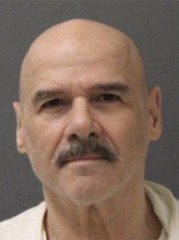
'This is torture': Texas execution drags on for over an hour, sparking human rights debate
A Texas execution that lasted more than an hour has reignited a human rights debate over capital punishment in the United States, amid growing scrutiny of cases in which condemned inmates have survived or suffered prolonged agony during lethal injections. The New York Times and the Associated Press reported Thursday (local time) that the execution of death row inmate Reynaldo Denny, 70, at a prison in Huntsville, Texas, took over an hour after officials struggled to insert an intravenous line to administer the lethal drug pentobarbital. Denny was strapped to the execution table at 6:04 p.m. Repeated attempts to insert an IV needle into his hands and arms failed, and needles were not successfully placed until 6:20 p.m. — in the left side of his neck — and again at 6:38 p.m. in his foot. He was pronounced dead at 7:08 p.m. During the procedure, Denny was reported to have cried out "God, take me" and to have expressed intense pain. The Rev. Jeff Hood, a minister who witnessed the execution, said he had placed his hand on Denny's shoulder and felt convulsions traveling up his own arm. "Denny was in extreme pain," Hood said, calling the execution tantamount to torture. The Texas Department of Criminal Justice said the execution was carried out successfully, adding that "doing it right is more important than how quickly it is done." The agency said it does not plan to conduct any further investigation into the matter. Denny had been sentenced to death for murdering a diamond broker and stealing jewelry in 1996. The debate over capital punishment gained renewed attention after death row inmate Christa Pike, 50, survived two doses of pentobarbital at a Nashville, Tennessee, prison on Sept. 30. After regaining consciousness, Pike said she had felt "extreme pain throughout her entire body, her hands and her throat." In 2025, it also emerged that an inmate executed by nitrogen gas in Alabama had writhed in agony for more than 20 minutes during the procedure.
Nov. 21, 2026
-
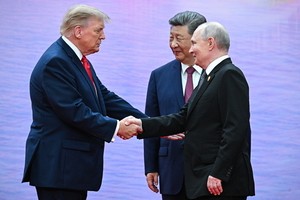
Trump sets Jan. 3 deadline for Ukraine ceasefire deal, drawing pushback from Europe
Deal sought before new Democratic-majority Congress takes over Ukraine warns it could be forced to accept Russia-friendly terms Donald Trump wants to reach a ceasefire agreement in the Ukraine war before the Democratic Party takes control of the US Congress in January, but concerns are mounting in Europe and Ukraine that Washington's urgency could push Kyiv into an unfavorable deal. The Financial Times reported Friday (local time), citing four people familiar with the matter, that the Trump administration has told European and Ukrainian officials it wants to wrap up ceasefire negotiations before Jan. 3 next year. That date marks the start of the new Congress, when Democrats — who won the midterm elections — will assume their majority in the legislature. US special envoy Steve Witkoff and Trump's son-in-law Jared Kushner have recently shuttled between Moscow, Dublin and Berlin to meet senior Russian, Ukrainian and European officials, stressing the urgency of reaching a deal, sources said. A European official who met with the US envoys said Washington is "pushing hard" and expressed concern that Ukraine "may have to make significant concessions to get closer to a deal." Another European official highlighted the gap between the parties, saying, "The Americans are in a hurry, but Putin is not." A senior Ukrainian official also voiced concern that the US-imposed deadline could pressure Kyiv into accepting terms set by Moscow. "Trump likes Putin and wants everything finished by January," the official said. "If they try to get a deal before then, Russia can secure better terms." The White House did not respond to requests for comment. The Financial Times said Trump currently has broad authority to broker a ceasefire, but that could change once Democrats control Congress. The party is said to be planning to use its legislative powers to strengthen support for Ukraine and tighten sanctions on Russia, while scrutinizing Trump's foreign policy and the business interests of Witkoff and Kushner. US officials also raised the possibility that Trump could discuss ceasefire options with European leaders on the sidelines of the G20 summit, to be held in Miami, Florida, next month. However, a senior French official said Europe would not use the G20 to conduct negotiations on Ukraine given that President Volodymyr Zelensky has not been invited. Trump has invited Russian President Vladimir Putin to the summit. Observers say Russia is unlikely to agree to a quick ceasefire deal. Two sources said Moscow may resist an early agreement, as it is seeking to strengthen its negotiating position through sustained airstrikes. Meanwhile, Witkoff and Kushner met in Berlin on Thursday with senior Qatari officials who are mediating the resumption of talks between the United States and Iran, according to US online outlet Axios. Qatari Prime Minister Sheikh Mohammed bin Abdulrahman Al Thani was said to have attended the meeting along with the envoys, though the White House declined to confirm the report. Speaking at a White House press conference that day, Trump said, "Iran wants a deal, but not a deal that I can accept."
Nov. 21, 2026
-
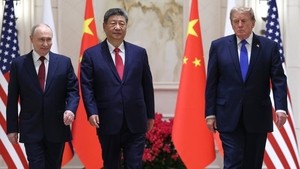
'A second Yalta?' Middle powers push back as US, China and Russia huddle
Historic three-way summit raises fears of great-power carve-up; South Korea, Canada and Australia assert independent voices Lee Jae-myung warns of economic fragmentation; Carney calls for trade diversification; Albanese tells Putin to end war now Critical minerals and energy supply chains emerge as new arena of competition among middle powers Unlike 1945 Yalta, tangled interests limit what the big three can decide alone The world's attention turned to Shenzhen, China, on Thursday (local time) as the leaders of the United States, China and Russia gathered for what became the first-ever trilateral summit among the three powers — a meeting that drew immediate comparisons to the 1945 Yalta Conference, where the great powers carved up the postwar world order. Yet on the same sidelines, middle powers including South Korea, Canada and Australia made their own voices heard, pushing back against the prospect of a great-power-dominated reshaping of the international order and moving to diversify their economic partnerships and supply chains. Bloomberg assessed the Asia-Pacific Economic Cooperation summit in Shenzhen on Thursday (local time), concluding that while the US-China-Russia trilateral meeting carried powerful symbolism, its tangible results were limited. Ahead of the meeting, concerns had mounted across Europe and Asia that the three leaders might settle major issues — Ukraine, Taiwan and others — without adequate participation from the parties directly involved. Many observers feared it could amount to a "second Yalta," with Washington, Beijing and Moscow dividing the world into their respective spheres of influence. Xi said at the summit that the three countries bear a "special responsibility" in the world. Putin also invoked the shared legacy of victory in World War II and the founding of the UN, emphasizing the trio's responsibility for maintaining international peace and security. The outcome, however, remained at the level of broad principles. The three leaders reached agreement on UN reform, questions over the jurisdiction of the International Criminal Court, continued discussions on nuclear weapons, and expanding energy supply — but offered no concrete implementation plans. Bloomberg noted that even the pledge to expand global fuel supplies drew little reaction from international energy markets. While the great powers debated the direction of the world order, middle powers — South Korea, Canada and Australia among them — each laid out their own response strategies. President Lee Jae-myung warned at the APEC CEO Summit on Wednesday (local time) that the global economy was growing increasingly fragmented under the pressures of spreading protectionism and geopolitical conflict. Lee urged coordinated action to ensure stable supplies of critical minerals and energy. South Korea relies on advanced manufacturing — semiconductors, automobiles and batteries — as its primary growth engines. Securing the raw materials and energy those industries require means reducing dependence on any single country and diversifying supply chains. Lee held a separate bilateral summit with Canadian Prime Minister Mark Carney on Thursday (local time), with the two sides agreeing to cooperate on building a stable and mutually beneficial energy supply chain. Canada, too, stressed economic autonomy. Prime Minister Carney said the country must strengthen its domestic industrial capacity while building cooperative ties with a wider range of overseas partners. He pointed to new trade agreements, critical minerals cooperation and expanded engagement with Asian nations as concrete steps forward. Canada's push to broaden its reach into Asia — despite its deep economic integration with the United States — is widely read as an effort to reduce dependence on any single market and build resilience against external shocks. Australia placed greater weight on international security than on economic cooperation. Prime Minister Anthony Albanese, speaking at the APEC plenary session on Thursday (local time), identified the wars in Ukraine and Iran as major factors disrupting global trade. Albanese directed his remarks pointedly at Putin, who was present in the room. "End the war. End it now," he said. The public rebuke came as the US, Chinese and Russian leaders were holding their own separate discussions on international security — making Australia's opposition to Russia's continued war all the more conspicuous. Australia maintains close trade ties with China while deepening security cooperation with the United States, a balancing act that grows more demanding as US-China tensions intensify and economic interests increasingly collide with security imperatives. The APEC summit illustrated how middle powers are navigating economic and security challenges according to their own interests. South Korea focused on stabilizing critical mineral and energy supply chains; Canada on trade diversification; Australia on international security. These moves came as the US, China and Russia sought to expand their influence over major international issues. Analysts note that advanced-industry supply chains — spanning critical minerals, semiconductors and batteries — stretch across too many countries to be restructured by great-power agreement alone. Cooperation that links South Korea's advanced manufacturing capabilities with Canada's and Australia's resource-supply strengths has been cited as one way to improve supply chain resilience. However, analysts also caution that differences in each country's economic relationships with Washington and Beijing, as well as diverging security interests, place real limits on how far joint action can go. Meanwhile, Xi said the summit underscored the need to institutionalize regular consultations among the leaders of the three powers. Wu Xinbo, director of the Center for American Studies at Fudan University in Shanghai, said the interaction among the three countries serves their national interests regardless of who leads the US or Russia. "This will not be the last time," Wu said. Bloomberg said the most enduring image from the summit would be the sight of the three leaders standing side by side. Yet with the great powers failing to reach concrete agreements on core issues, South Korea, Canada and Australia used the gathering to assert independent positions on supply chain cooperation, trade diversification and international security — signaling their wariness of a world order remade on great-power terms alone.
Nov. 21, 2026
-
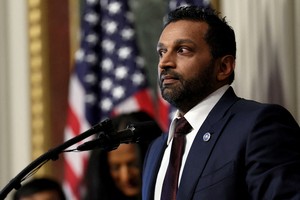
FBI's key crime database suspected of being hacked, investigation underway
NCIC shares arrest warrant and background check data across US law enforcement CNN: signs of unauthorized access detected, hackers suspected The FBI has launched an investigation after signs of an external breach were detected in one of its core criminal intelligence databases. According to CNN, the FBI recently detected indications of unauthorized access to the National Crime Information Center (NCIC), a nationwide criminal intelligence database, and has begun an investigation. Two officials briefed on the matter told CNN they suspect the incident was the work of hackers. The NCIC is a critical system used by federal, state and local law enforcement agencies across the United States to share information on arrest warrants and background checks. The suspected breach comes amid a string of major IT failures in the country, including a recent outage at the Federal Aviation Administration's air traffic control systems, raising concerns that a key database used in criminal investigations may have been exposed to outside attack. Adding to the concern, the FBI's director was publicly promoting the bureau's cybersecurity achievements on television around the same time. FBI Director Kash Patel appeared on Fox News on Thursday to highlight Operation Winter Shield, an initiative aimed at encouraging businesses to strengthen their security, and touted the Donald Trump administration's record on protecting critical national infrastructure. "Previous administrations could have improved the systems but chose not to," Patel said. "We are staying ahead of the changes and making up for lost time." CNN said, however, that Patel's television appearance came after the FBI had already become aware of the potential security breach, and that the cybersecurity operation he promoted had concluded months earlier. This is not the first time the FBI has been targeted by hackers. In September, the hacking group Shiny Hunters launched an attack through the FBI's job recruitment website in an attempt to steal sensitive personal information belonging to employees. Some employees were reportedly not properly notified of whether their data had been compromised. In 2023, a computer system used by the FBI's New York field office to investigate child sexual exploitation cases was also hacked. According to CNN, the compromised system included one used to store investigative images related to the case of Jeffrey Epstein, the billionaire convicted of sex crimes.
Nov. 21, 2026
-
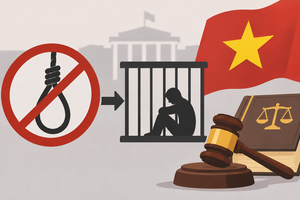
Vietnam abolishes death penalty for drug trafficking, commutes existing sentences
Capital offenses reduced from 10 to 4 Takes effect early March; unexecuted death row inmates to have sentences commuted Vietnam has decided to reduce the maximum penalty for six crimes — including drug trafficking — from death to life imprisonment, cutting the number of capital offenses from 10 to four. According to Vietnamese media outlets including VnExpress, the National Assembly passed an amendment to the penal code on Friday (local time) that lowers the maximum sentence for drug trafficking, anti-government terrorism, rioting, crimes against humanity, war crimes and sexual assault of children under 16 to life imprisonment. The amended law takes effect in early March next year. Inmates already sentenced to death for those offenses who have not yet been executed will have their sentences commuted to life imprisonment. Following the revision, only four crimes will remain punishable by death in Vietnam: treason, murder, terrorism and drug manufacturing. The government said the amendment was intended to uphold humanitarian values and align the country's penal system with international trends. Officials said punishments should be proportionate to the severity of offenses and the degree of criminal responsibility, and that life imprisonment alone is sufficient as a penalty for the six crimes in question. The revision did not pass without dissent, however. Some lawmakers voiced opposition during deliberations over abolishing the death penalty for drug trafficking. In response, Minister of Public Security Luong Tam Quang said some drug traffickers had been drawn into their crimes through enticement, deception or coercion. "They can still change through rehabilitation and education, and be given the opportunity to atone for their actions," the minister said. Vietnam has been steadily narrowing the scope of capital punishment in recent years. Last July, it reduced capital offenses from 18 to 10 by lowering the maximum penalty for eight crimes — including drug possession, embezzlement and subversion — from death to life imprisonment. That revision also led to the commutation of the death sentence handed to Truong My Lan, 70, chairperson of real estate developer Van Thinh Phat Holdings, who had been convicted of large-scale embezzlement. Lan was sentenced to death in 2024 after being found guilty of embezzling about 304 trillion dong ($11.9 billion). The number of capital offenses in Vietnam has fallen consistently since 1985, when 44 crimes carried the death penalty. That figure dropped to 29 in 1999, 22 in 2009 and 18 in 2015. Once the latest amendment takes effect, the number will stand at four — a reduction of 40 offenses over 41 years. The method of execution has also changed. Vietnam abolished death by firing squad in 2011 and has since carried out all executions by lethal injection. The Vietnamese government classifies the size of its death row population and the number of executions carried out as state secrets and does not disclose them publicly. Amnesty International estimated, however, that as of late 2023, approximately 1,200 people were on death row in Vietnam.
Nov. 21, 2026
-
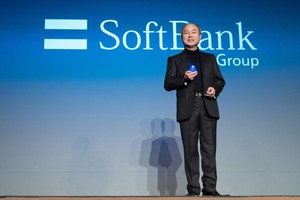
SoftBank's Son explored $1tr bid for SK hynix, but deal no longer under active review
Proposed price would exceed SK hynix's market cap by about 570 trillion won SoftBank says deal not currently being pursued SoftBank Group Chairman Son Masayoshi explored financing options with Wall Street institutions for a roughly $1 trillion acquisition of SK hynix, according to a media report. SoftBank, however, said the deal is no longer under active consideration. Reuters reported Friday (local time), citing The Information, that Son had recently approached Wall Street financial institutions to inquire about the feasibility of financing a takeover of SK hynix. The acquisition price Son was considering stood at approximately $1 trillion. SK hynix currently has a market capitalization of about 777 trillion won ($584 billion), meaning the proposed price would exceed that figure by roughly 570 trillion won. A SoftBank Group spokesperson told The Information, however, that "SoftBank reviews a variety of opportunities, and this transaction is no longer under active consideration." Reuters said it contacted SoftBank Group and SK hynix for comment but did not receive an immediate response.
Nov. 21, 2026
-
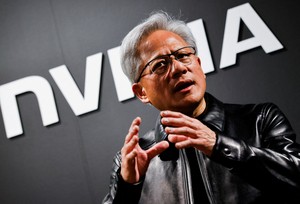
Jensen Huang's ouster was about lying, not the affair — and now abuse allegations emerge
Wired: Board lost trust over 'lack of honesty' NYT: Verbal abuse complaints were buried by company Reports are emerging that former Nvidia CEO Jensen Huang repeatedly misled the company's board of directors in the weeks before his resignation and routinely subjected employees to verbal abuse and humiliation throughout his tenure. Wired, a US IT publication, reported Friday, citing multiple sources, that the core reason Nvidia's board accepted Huang's resignation was not the extramarital affair itself but rather his "lack of honesty" and outright lying. The board had been pressing Huang about his relationship with Alice Huang — a Chinese national also known as Huang Le — an executive at Singapore-based Megaspeed, after The New York Times last year reported on alleged business dealings between Nvidia and the firm. Huang denied any improper relationship for roughly a year, sources said. When the extramarital relationship with Alice Huang was eventually confirmed, and additional allegations surfaced involving other employees at the company, the board lost confidence in Huang entirely. Harvey Jones, chairman of Nvidia's board, told a companywide meeting Wednesday that "accepting the resignation was not an easy decision," adding that "the disclosure of personal conduct and a lack of candor inconsistent with the company's code of conduct, standards and values made that decision unavoidable." Separately, witnesses have come forward saying Huang routinely ran the company through verbal abuse and humiliation directed at employees. The New York Times reported Friday that Huang used humiliation as a tool to drive greater performance from staff. He was said to have regularly expressed the view that money alone cannot motivate employees and that humiliation was a way to raise performance. Anonymous sources told the outlet that Huang made remarks to employees such as "your mother should have aborted you" and "I will urinate on your brain." Huang himself was said to have described the treatment as "torturing" employees so they could become great. The verbal abuse prompted a series of complaints to the company's human resources department, but allegations have emerged that the company either ignored those complaints or quietly settled them through nondisclosure agreements. Michael Winston, a former Nvidia vice president who once oversaw the company's human resources division, was said to have been preparing a lawsuit claiming he was fired for opposing Huang's abusive behavior, before eventually reaching a settlement with the company. Winston, who died earlier this year, left behind notebooks in which he wrote that he had been "forced to helplessly watch employees being publicly humiliated and tortured by this madman for a long time," The New York Times reported. However, representatives for Huang denied Winston's claims. Witnesses also said Madison Huang, Huang's daughter and a senior director at the company, displayed similarly aggressive behavior — including shouting at executives during internal meetings. Meanwhile, Huang stepped down as CEO and as a board member on Nov. 12 after the extramarital affair and related controversies came to light. Nvidia's board has since said it has no plans to bring him back.
Nov. 21, 2026
-
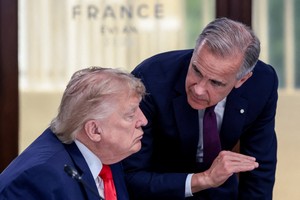
US restricts defense cooperation with Canada amid deepening tensions
Hegseth issues new guidelines through classified memo Claims emerge that intelligence sharing with allies has declined Cracks are emerging in the long-standing defense partnership between the United States and Canada as tensions between the two countries continue to deepen. Defense Secretary Pete Hegseth imposed new restrictions on US-Canada defense cooperation through a classified memo distributed last week, the Washington Post reported Friday (local time). US officials familiar with the matter said the specific contents of the memo could not be confirmed, but that the move could be seen as a significant affront to Canada. Pentagon spokesperson Sean Parnell told the Post in response to a query that the Defense Department was "taking steps to ensure that cooperation with Canada advances America's real defense objectives and ultimately supports the revitalization of the defense relationship between our two countries." However, Parnell said the new guidelines would not affect defense intelligence sharing between the two countries or military cooperation through NATO and the North American Aerospace Defense Command (NORAD). Even so, claims have emerged that the volume of intelligence the United States shares with its allies has in practice declined. An official from the Five Eyes intelligence-sharing alliance — which includes the United States, Canada, the United Kingdom, Australia and New Zealand — told the Post that the amount of information the US has provided to allies through various channels has decreased over the past year. The United States and Canada share a border stretching roughly 8,892 kilometers and are both founding members of NATO, having maintained close military and security ties for decades. Relations between the two countries have grown increasingly strained over trade and security issues since Donald Trump began his second term in January last year. Trump has criticized Canada since his first term for relying too heavily on the United States for its own security, and has repeatedly suggested that Canada should become the 51st US state. Trade tensions escalated in earnest after Trump imposed tariffs on Canadian steel, aluminum and other goods following the start of his second term, prompting Canada to retaliate with its own tariffs. Trump publicly voiced his frustration at the White House on Friday, saying Canada had not agreed to a trade deal on terms the United States wants. "For some reason they've gotten confident," he said. "We can't let them feel that way anymore."
Nov. 21, 2026
-

NSA's internal network down for three days after software patch to fix AI-discovered vulnerability
No signs of external cyberattack The National Security Agency's core internal communications network suffered an outage lasting more than three days, disrupting work for employees across the agency. The problem is believed to have stemmed from a software update rather than an external cyberattack. According to CNN, the outage affecting NSANet — the NSA's internal network — was resolved Friday (local time). Sources familiar with the matter and a voicemail recording left for employees at NSA headquarters in Maryland said the agency, immediately after restoring the network, directed staff to stagger their login times to prevent the system from being overwhelmed by simultaneous connections. NSANet serves in effect as the NSA's classified internal email system. The outage prevented employees from accessing the network, causing significant disruption to day-to-day operations. One source said there were multiple instances of employees coming in under the staggered schedule only to find they could not log into the system at all and had to return home. The NSA is an intelligence agency under the US Department of Defense responsible for foreign signals intelligence collection and analysis, cryptanalysis, and cybersecurity. A senior US administration official said the software patching required to resolve the outage took longer than expected. Current and former officials said NSANet has experienced outages before, but that one lasting this long and causing this level of operational disruption was unusual. However, the NSA's core intelligence-collection functions remained intact throughout the outage. Multiple officials said the most sensitive collection systems continued normal operation during the disruption, and that backup systems and workarounds were in place to substitute for the classified email network. The outage was not the result of an external cyberattack, officials said. Multiple current US officials said the problem may have arisen during a software update intended to address a security vulnerability in PHP, a programming language widely used across websites around the world. The vulnerability was reportedly discovered and disclosed last month by private security researchers using AI tools. The NSA had earlier advised agencies to apply the relevant software security patch.
Nov. 21, 2026
-

Anthropic researcher claims Claude cracked 167-year-old Riemann Hypothesis
Experts say verification would mark watershed moment for math and AI A researcher at AI company Anthropic says the firm's chatbot Claude helped crack one of mathematics' greatest unsolved problems: the Riemann Hypothesis, which has resisted proof for more than 160 years. The claim has not yet been independently verified. Levent Alpoge, an Anthropic researcher and mathematician, published a four-page document on his personal website Friday (local time) stating that he "believes" he and Claude have found a proof of the Riemann Hypothesis, according to AFP and the Financial Times. The Riemann Hypothesis was first posed in 1859 by German mathematician Bernhard Riemann. Despite efforts by countless mathematicians over 167 years, it has never been formally proved. Alpoge released proof materials written in Lean, a programming language used to verify mathematical arguments by computer. He said the work resolves not only the Riemann Hypothesis but also its broader extension, the Generalized Riemann Hypothesis. The claim has not yet been subjected to rigorous peer review. Even so, mathematicians say that if the proof holds up, it would represent a historic achievement. Brian Conrey, a leading authority on Riemann Hypothesis research, told AFP the development would be "a monumental moment in human history" and "the biggest thing that has happened in the history of mathematics." He noted, however, that he had not yet seen the paper itself and had only read what Alpoge posted on his website. Kit Yates, a professor at the University of Bath in the United Kingdom, said the proof "will be subject to intense scrutiny" and that if it passes, it "will have enormous ramifications for both our understanding of mathematics and the capabilities of AI." A central point of interest in the announcement is the role AI played in the proof. Alpoge said his collaboration with Claude produced more than 250,000 pages of work, and that in the later stages of the research, the AI surpassed his own understanding. "Near the finish line, Claude flew and danced and sparkled far ahead of me," Alpoge said, adding that he found himself in the unusual position of "putting a complete argument into the world without fully understanding the surrounding mathematical background." Alpoge said he announced the findings after consulting with Anthropic CEO Dario Amodei. He also acknowledged that the timing — coming the day after Anthropic's record-setting initial public offering on US stock markets — could invite skepticism. AI companies have recently been locked in a race to solve long-standing mathematical problems. OpenAI announced in September that its AI model had developed a solution to the Navier-Stokes problem, another of the Millennium Prize Problems. Alpoge, who had been conducting related research at the time, raised the possibility that OpenAI had used his data, a claim OpenAI CEO Sam Altman rebuffed as baseless plagiarism. Hundreds of mathematical papers OpenAI released last month also drew mixed assessments from experts, who said the results contained a blend of meaningful findings and errors. Nestor Guillen, a visiting professor of mathematics at New York University, said he viewed it as a positive sign that Alpoge openly admitted he did not fully understand the proof, and expressed the view that AI can function as a tool to support research rather than a replacement for human researchers. The Riemann Hypothesis plays a central role in explaining how prime numbers are distributed among the natural numbers. At its core, the hypothesis holds that all nontrivial zeros of the Riemann zeta function lie on a line in the complex plane where the real part equals one-half. The Clay Mathematics Institute designated the Riemann Hypothesis as one of seven Millennium Prize Problems in 2000, offering $1 million for each solution. To be officially recognized, a proof must be published in a peer-reviewed journal and then withstand at least two years of scrutiny and broad acceptance within the mathematical community.
Nov. 21, 2026
-
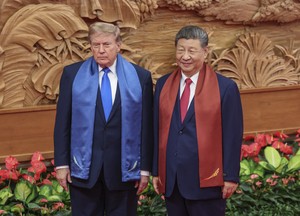
'Putin and Xi are both my friends': Trump touts Asia trip results
First US-China-Russia trilateral peace declaration highlighted 'More than $17 billion in commercial contracts secured' US President Donald Trump held a press conference Friday (local time), the day after returning from his Asia trip, declaring that the tour had produced "remarkable results." Trump highlighted diplomatic achievements — including a trilateral summit with China and Russia — along with major trade deals, in what appeared to be an effort to recover political standing at home following a bruising midterm election defeat. Speaking at the White House for roughly an hour and a half, Trump outlined the outcomes of the Association of Southeast Asian Nations summit in Manila, the Philippines, and the Asia-Pacific Economic Cooperation summit in Shenzhen, China. He said the four-day trip yielded meetings with more than 20 world leaders, two new trade agreements secured, and roughly 10 additional deals expected soon. Trump said he attended four major international summits, reaffirmed US alliances across the region and advanced the cause of peace and security around the world. He singled out the trilateral summit with Chinese President Xi Jinping and Russian President Vladimir Putin as the trip's signature achievement. Trump called the three-way meeting "the most consequential international summit in recent years," adding that its outcome was "the first-ever trilateral peace declaration in history." The four-point joint declaration issued after the US-China-Russia summit in Shenzhen on Thursday affirmed that a nuclear war cannot be won and must never be fought, and pledged dialogue on reducing nuclear risks and preventing proliferation. It did not, however, include any specific agreement on ending the war in Ukraine. Asked why he refers to Putin and Xi as friends, Trump said he has "a fantastic relationship with Putin" and "a fantastic relationship" with Xi as well, and went on to say that "because of that, our country is safe." Trump also described the substance of his bilateral talks with Xi, saying the Chinese president told him, "I thought your country was dead" and "I can't believe what you've done." Trump noted that Xi personally greeted him on the tarmac, saying, "He wasn't greeting me — he was greeting our country in front of the plane." He added that "Sleepy Joe," a reference to former President Joe Biden, "was never greeted in front of the plane." On his bilateral talks with Putin, Trump said he asked the Russian president whether he would have invaded Ukraine if Trump had been president, and that Putin replied, "No. That never would have happened." Trump also devoted considerable time to laying out the economic gains he said the trip had produced. He said the ASEAN and APEC summits yielded more than $17 billion in commercial contracts with key countries. Among the specifics, Trump said Philippine Airlines agreed to purchase 20 Boeing aircraft, and that the Philippines would shift its agricultural and energy purchases toward American suppliers. On Thailand, he said the country agreed to eliminate tariff and non-tariff barriers on US products and to buy $2.6 billion worth of American agricultural goods annually. Analysts say Trump's emphasis on diplomatic and trade achievements is not unrelated to his weakened domestic political standing following the Republican Party's heavy losses in the recent midterm elections. On the midterm results, Trump said, "If my name had been on the ballot, it would have been a completely different outcome — but I wasn't on the ballot." The remark was widely read as an attempt to distance himself from the party's defeat. Meanwhile, Trump repeatedly highlighted that the trip was made aboard a newly refitted Air Force One — a plane converted from an aircraft donated to the United States by the Qatari royal family. He boasted that the return flight was "the longest flight Air Force One has ever made," praising the aircraft's speed and range for completing the journey without a refueling stop.
Nov. 21, 2026
-

Unidentified object falls in eastern Poland; defense minister suspects Russian Kh-101 cruise missile
Object lands on farmland in Lipowiec, Lublin province, about 60 km from Ukrainian border; 11 objects threaten Polish airspace, 3 breach it Polish authorities announced Friday (local time) that an object believed to be a Russian missile had fallen in eastern Poland near the Ukrainian border. According to Reuters and other foreign media, Poland's Military Operations Command said that morning that "an unidentified flying object is suspected of violating Polish airspace." The command dispatched search teams to the southeastern Lublin province. Lublin provincial authorities said the object landed on farmland in Lipowiec, about 60 kilometers from the Ukrainian border, sparking a fire. They added that it had not yet been confirmed whether the object was a missile or a drone. Interior Minister Marcin Kierwiński wrote on X, formerly Twitter, that operations were underway at three locations — Rudnik nad Sanem, Młodycze and Lipowiec — in connection with the airspace violation. Military authorities counted 11 flying objects that threatened Polish airspace that morning, three of which were determined to have actually crossed into it. Defense Minister Władysław Kosiniak-Kamysz said the fallen object was likely a Russian-made Kh-101 cruise missile. He said he did not consider it a coincidence that the incident occurred immediately after a meeting of the Coalition of the Willing, a grouping of Ukraine's supporter nations, held Thursday, and characterized it as Russian provocation. In Nowa Dęba in eastern Poland, about 2,800 troops from 11 European countries participating in the Coalition of the Willing have been conducting joint military exercises since Nov. 9. Missiles and drones have occasionally fallen in eastern Poland as Russia and Ukraine exchange airstrikes. A Kh-101 missile struck farmland in Lublin province last July. In November 2022, a Ukrainian air-defense missile that went astray hit Przewodów, killing two civilians.
Nov. 20, 2026
-

'Dumbphones' are back — and Generation Z can't get enough
As more people grow weary of the relentless connectivity of smartphones, a major Japanese carrier is bringing a "dumbphone" to market. KDDI, one of Japan's leading telecommunications companies, announced it will begin selling a handset stripped down to calls and text messaging next month, NHK reported Wednesday. The device revives the design of mobile phones popular in the 2000s. Its camera resolution has been deliberately lowered to produce retro-style photos, and the phone cannot connect to the internet or download applications. The move appears aimed at tapping demand fueled by the growing popularity of simplified dumbphones among younger consumers in Western countries. KDDI is importing handsets from manufacturers in the United States and Switzerland. The backlash against always-on smartphones is a global phenomenon. The Guardian has reported that Generation Z is turning to stripped-down devices — dubbed "The Boring Phone" — to escape constant notifications and social media fatigue. A collaboration between beer brand Heineken and creative company Bodega drew wide attention for their jointly released device, and a broader revival of old-style flip phones has since driven sales jumps at HMD, the Finnish maker of Nokia feature phones, and Swiss minimalist phone brand Punkt. Market research firm Mintel said basic phones remain a niche product, but noted that shifting usage habits are evident: three in five Generation Z consumers say they want to feel less connected to the digital world. However, with smartphone-based infrastructure — from mobile banking to QR-code ordering — now embedded in daily life, industry observers expect demand to center less on abandoning smartphones altogether and more on finding a healthier balance with digital devices by cutting unnecessary notifications and apps.
Nov. 20, 2026
MOST READ
- 1AI singer tops Melon chart for first time with 'Did You Become the Adult You Dreamed Of?'
- 2Park Ji-yun speaks out on divorce ruling, alleges Choi Dong-seok tried to bribe daughter to drop appeal
- 3Malaysia's BE International brings 1,500-strong incentive tour to Korea, bypassing Turkey
- 4SoftBank's Son explored $1tr bid for SK hynix, but deal no longer under active review
- 5Girl group VIVIZ wins exclusive contract lawsuit against Big Planet Made Entertainment
- 6Man beat live-in girlfriend 514 times over 3 hours, killing her; forensic expert says footage was too disturbing to watch
-
WORLD
US warns of punishment for anyone enabling Iran's Strait of Hormuz toll scheme
-
INDUSTRY
Toyota union puts productivity first; Hyundai Motor union demands bigger share of profits
-
FINANCE

National Growth Fund to invest $531M in FuriosaAI, which rebuffed Meta's $800M takeover bid
-
INDUSTRY

Korea Shipowners' Association holds amateur baduk tournament for Maritime Day