
- HOME
- LIFE·CULTURE

'The Solitary Gourmet' star to spotlight South Jeolla Province's food culture in Japan
Matsushige Yutaka, the lead actor of the popular Japanese drama series "The Solitary Gourmet," will introduce South Jeolla Province's food and culinary culture to Japanese audiences. The Gwangju-Jeonnam integrated special city said Tuesday it will produce a special documentary featuring Matsushige to attract Japanese tourists, spotlighting the region's traditional markets, long-established restaurants and culinary masters. According to the city, the documentary was conceived as part of a project titled "2026 Myeongga·Myeongin-linked Namdo Hansang Commercialization," one of the southern regional tourism development initiatives. The production goes beyond visits to well-known restaurants, focusing instead on seasonal ingredients and the food philosophy of South Jeolla Province's culinary masters as expressed through traditional full-course spreads. Filming runs for one week through Dec. 16. Camera crews will capture the region's food culture at traditional markets reflecting everyday local life, historic long-standing eateries and the workspaces of traditional culinary masters. Key filming locations include Naju's Moksa Goeul Market and the cities and counties of Damyang, Gangjin, Haenam, Yeongam and Muan. Featured foods and artisans include gomtang (beef bone soup) from Naju's Moksa Goeul Market; Damyang's Ki Sun-do traditional fermented sauces, Yang Tae-su traditional liquor and An Bok-ja traditional confectionery masters; Gangjin's Dalbich Hanok Village; Haenam sweet potato bread; Yeongam Dokcheon octopus; and Muan straw-fire grilled dishes. The documentary is set to air as a one-hour special on Japan's RKB Mainichi Broadcasting on Dec. 16. The city plans to leverage Matsushige's appearance to raise awareness of South Jeolla Province's cuisine and regional tourism resources in Japan, with the aim of drawing more overseas visitors to the area.
Chae Sang-woo Nov. 17, 2026
-

Lee Jung-jae says skin condition forced him off set for a year — what to know about cosmetic irritation
Behind every public figure's appearance lies a personal health and beauty regimen. This series examines the diets, workouts, treatments, and fashion and lifestyle choices of people in the spotlight. Actor Lee Jung-jae, 53, has revealed that a serious skin condition forced him to step away from filming for about a year. When skin becomes sensitive, even products used without issue for years can cause irritation, and extra caution is needed. Reaching for additional functional products to try to improve the situation can, in fact, make things worse. In a video posted to his Instagram, Lee said his skin had deteriorated so severely starting last fall that he was in no condition to film. "Things got pretty serious — I simply couldn't shoot," he said, adding that the situation effectively gave him a forced year off. He also said he had participated in developing a cosmetics line for people dealing with similar concerns, with a launch coming soon. Skin can deteriorate suddenly for many reasons. Among the most common in everyday life are a breakdown in the skin barrier and irritation from cosmetic ingredients. Understanding how changes in skin condition relate to cosmetics use habits can help reduce unnecessary irritation. When familiar products start to sting — what's happening to your skin barrier The outermost layer of the skin is the stratum corneum, which blocks external irritants and retains moisture. It is made up of corneocytes and the lipids — ceramides, cholesterol and fatty acids — that fill the spaces between them. This structure, commonly called the skin barrier, prevents excessive water loss from inside the skin and limits the penetration of external substances. Problems arise when the stratum corneum is weakened by cleansing, friction or a dry environment. Transepidermal water loss, or TEWL, increases, leaving skin feeling rough and tight. At the same time, sensitivity to external irritants rises, and products that once caused no reaction can begin to produce stinging, burning or itching. The link between the skin barrier and moisturization has been confirmed in clinical research. A 2022 study published in the British Journal of Dermatology compared the effects of different moisturizers over four weeks in 34 adults with dry, eczema-prone skin. Areas treated with a test moisturizer containing ceramides and cholesterol showed greater improvements in moisture retention and barrier function than areas treated with a comparator moisturizer, and skin reactivity to irritants also decreased. This underscores why moisturization and skin barrier care matter when skin becomes sensitive. However, the effectiveness of a moisturizer can vary depending on its ingredients, formulation and an individual's skin condition, so finding the right product requires some trial. The cosmetics meant to help can trigger inflammation — watch out for contact dermatitis When skin worsens, many people add calming serums, exfoliating products or high-performance creams to their routine. But using multiple products at once repeatedly exposes the skin to a wide range of ingredients, increasing the risk of irritation. This is particularly true for skin that is already inflamed or has a compromised barrier — reactions following cosmetics use should be monitored carefully. Contact dermatitis is one of the most common conditions that can result. It falls into two main categories: irritant contact dermatitis, caused by direct skin damage from cleansers or chemical ingredients, and allergic contact dermatitis, triggered when the immune system reacts to a specific substance. Both can cause itching, redness and dryness, but they differ in their underlying mechanisms and in how the causative substance is identified. Research suggests that fragrances, preservatives and some plant extracts in cosmetics can cause allergic contact dermatitis. A 2025 paper in Current Allergy and Asthma Reports identified fragrance as a leading cosmetic allergen and noted that allergic reactions can also occur with certain preservatives, UV-filtering ingredients and naturally derived substances. Ingredients that promote exfoliation — such as retinol and glycolic acid — also require careful use when skin is in a sensitive state. Depending on concentration, frequency of use and how well the skin has adapted, these ingredients can cause stinging or dryness. Regardless of a product's claimed benefits, the skin's current tolerance must be taken into account. When skin flares up, reduce irritation rather than adding more products If sudden stinging or redness appears, the first step is to check any products recently introduced to the routine. The American Academy of Dermatology recommends discontinuing a product suspected of causing a skin rash and monitoring the skin's response. If multiple products are in use, noting which ones were started and when can help identify the cause. Cleansing habits also matter. Washing with hot water for extended periods or scrubbing the skin vigorously can worsen dryness and irritation. Lukewarm water and a gentle cleanser are recommended, and applying a moisturizer while the skin is still slightly damp right after cleansing is advised. When choosing a moisturizer, opt for products with fewer potentially irritating ingredients such as fragrances. The UK's National Health Service emphasizes avoiding irritants and using moisturizers as key steps in managing contact dermatitis. While moisturizers help reduce water loss by forming a protective layer on the skin's surface, people sensitive to certain ingredients may find that even a moisturizer causes irritation. When trying a new cosmetic product, testing it on a small area before applying it to the entire face can be helpful. The American Academy of Dermatology advises patch-testing a product on a small area — such as the inside of the arm — for seven to 10 days to check for redness, itching or swelling. However, if the skin is already severely damaged, managing existing symptoms takes priority over testing new products. If redness and itching recur, or if oozing, swelling or severe inflammation develops, a dermatologist should be consulted to identify the cause. When allergic contact dermatitis is suspected, a patch test performed at a dermatology clinic can help pinpoint the responsible substance. When skin becomes sensitive, the priority is not adding more products but identifying sources of irritation and creating conditions that allow the skin to recover.
Nov. 17, 2026
-

Sejong Center for the Performing Arts transforms back garden into winter market
Arts Garden to host market from Tuesday through Jan. 3 Winter snacks, handmade crafts and Christmas gifts on offer Autumn season drew strong visitor numbers and high satisfaction scores The Curtain Call Garden — a nighttime cultural garden tucked behind the Sejong Center for the Performing Arts in central Seoul — is reinventing itself as a winter market selling warm snacks, mulled wine and handmade goods. Sejong Center for the Performing Arts said Tuesday it had launched the winter edition of the Curtain Call Garden. The outdoor cultural space first opened last month as part of the Seoul Metropolitan Government's nighttime economy initiative, a flagship policy of the city's ninth elected administration. The winter season runs daily from 11 a.m. to 9 p.m. in the Arts Garden behind the center through Jan. 3. The center plans to fill the space with winter street food, year-end gifts and Christmas decorations. Among the vendors, Haengbokhanjingeobbang will serve classic winter snacks — fish-shaped pastries, hotteok pancakes, roasted sweet potatoes and fish cake skewers — while Chanamuvangso will offer warm mulled wine and highballs. A rotating winter market will also run throughout the garden, with 10 to 20 vendors participating each week. Offerings will range from knitted scarves, handmade jewelry and ceramics to yakgwa traditional sweets and Dubai Chewy Cookies, with the vendor lineup changing weekly so visitors can discover new year-end gift options on each visit. A 5-meter-tall Santa Claus sculpture will serve as a photo spot, and visitors who make purchases at the market will be eligible for a prize giveaway. Outdoor tents and portable heaters will be set up around the garden to keep visitors warm. Admission is free and no reservation is required. The autumn season, which ran from Oct. 15 through Nov. 8, drew 11,050 visitors over 18 operating days, excluding rain closures and scheduled rest days. Cultural performances proved a strong driver of foot traffic and spending. On days when free jazz concerts were held, the average daily visitor count reached 661 — 2.1 times the 320 recorded on non-performance days. Average daily sales among participating food and beverage vendors were also 2.2 times higher on concert days. Visitor satisfaction was equally strong. A survey of 105 visitors conducted from Nov. 4 to 8 gave the overall experience a score of 9.83 out of 10. Satisfaction with the jazz performances — their content and programming — ranked highest at 9.92. Building on those results, Sejong Center for the Performing Arts said it plans to continue running the space with distinct seasonal programming to sustain the nighttime economy around Gwanghwamun. "We hope the cultural experiences woven into citizens' daily lives will bring new energy to Gwanghwamun in the heart of Seoul," said Ahn Ho-sang, president of Sejong Center for the Performing Arts.
Nov. 17, 2026
-
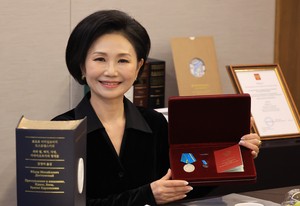
Pushkin Medal recipient Kim Jeong-a: 'A single book can make strangers laugh and cry together'
"His language builds no walls. It builds bridges — from language to language, from culture to culture, and from heart to heart." Kim Jeong-a, 57, who received the Pushkin Medal for her complete solo translation of the four major novels of Russian literary giant Fyodor Dostoevsky (1821–1881), made the remarks Tuesday at a press conference at the Korea Press Center in Jung-gu, Seoul. "In a world where walls between nations grow higher and differing beliefs drive people apart, we need literature now more than ever," she said. Kim received the medal from Russian President Vladimir Putin at the Yekaterina Hall of the Moscow Kremlin on Nov. 4 (local time), in recognition of her achievement as the first Korean to produce a complete solo translation of Dostoevsky's four major novels: "Crime and Punishment," "The Idiot," "Demons" and "The Brothers Karamazov." Established in 1999, the Pushkin Medal is a state decoration awarded to individuals who have made outstanding contributions to the promotion of Russian culture, the arts and the humanities, as well as to cultural exchange between nations. It is considered highly unusual for a national of a country designated by Russia as "unfriendly" — or adversarial — to receive the Pushkin Medal. Kim graduated from the Department of Russian Language and Literature at Seoul National University and its graduate school, then earned a doctorate in Slavic languages and literature from the University of Illinois. Kim also serves as the head of fashion label Space Null. She devoted a full decade to translating the four novels, producing more than 6,700 pages of translated text. Kim also shared behind-the-scenes details of the award ceremony. "About a week before the ceremony, at around 10:45 on a Friday night, I got a call telling me to buy a plane ticket to Russia," she said, describing the event as having unfolded "like a scene from a spy thriller." The secrecy was due to assassination threats against Putin stemming from the Russia-Ukraine war. Kim smiled as she described Putin, who personally presented her with the medal and shook her hand, as "just a warm-handed ajeossi" — an ordinary, friendly older man. Kim also said she had sent Putin a combined Korean-language edition of the four novels through the embassy in advance, and that she received a reply saying it was "a great honor to have such a beautiful book made in Korea." She added that reactions in Russia to her translation had been striking. "Many people were amazed that someone who had never lived in Russia could capture 19th-century Russia with such delicacy," she said. Kim also acknowledged that the award had at times made her feel personally threatened. "A far-right Ukrainian extremist group registered me as a 'pro-Russia figure' because of the Pushkin Medal, so now I cannot even travel to Ukraine," she said, drawing a clear line between her literary work and any political affiliation. "I simply love Dostoevsky. I am not a politician — I am just a humanities scholar." Reflecting on the significance of the award, Kim said she felt it may have been Russia's way of reaching out. "In a place where political dialogue between Russia and Korea has broken down and economic exchange has come to a halt, I thought perhaps this was a friendly gesture — a signal that cultural exchange is still something they want," she said. In her acceptance remarks, Kim said she was certain that "translation is the most peaceful form of diplomacy." She added: "A single book crosses a border, a writer's soul is reborn in a foreign language, and people who have never met in their lives can laugh and cry together over the same sentence. That, to me, is the miracle of literature." Kim said her favorite among the four novels is "The Idiot," citing its emphasis on the importance of compassion. She said the novel's two greatest propositions are "Beauty will save the world" and "Compassion is the only law of human existence." Kim explained that "beauty" in this context refers to Jesus Christ in his most perfect form, and that Christ, through compassion for humanity, was crucified as an act of atonement. "To say that beauty will save the world is to say that compassion will save the world," Kim said. "Without compassion, one is not truly human. A humanity without compassion can only move toward extinction."
Nov. 17, 2026
-

Korean visits to Israel's safe zones up 43%, with direct flights resuming in 2027
Israel Tourism Office respects South Korean government travel advisories Visitors urged to check latest local conditions before travel El Al Israel Airlines to launch direct service in March 2027 The number of South Koreans traveling to safe zones in Israel, including Jerusalem pilgrimages, rose 43 percent compared with the same period last year, according to new figures released Tuesday. The Israel Tourism Office held its "2026 Israel Partner Year-End Gathering" on Tuesday at the Bellevue Suite on the 36th floor of The Grand Lotte Seoul in Sogong-dong, Seoul. The office announced that approximately 6,700 South Koreans visited Israel from January through October this year — a 42.6 percent increase over the same period last year — signaling a recovery in visitor numbers. It used the occasion to thank its travel agency, airline and media partners and to unveil its 2027 marketing plans for the South Korean market. The office said the launch of El Al Israel Airlines' direct Incheon–Tel Aviv service on March 27, 2027 — operating three times a week based on Tel Aviv departure dates, subject to change depending on airline circumstances — will end a gap in direct flights that has persisted since October 2023. Under its "Experience Now – Travel Later" strategy — aimed at letting potential visitors experience Israel before they can travel there — the tourism office outlined plans to steadily develop the faith travel market while targeting the MICE and luxury segments as growth drivers and the MZ generation as an emerging market. It said it would expand Korean-language content and broaden partnerships with social media platforms and specialist religious and travel media. The support package for travel agencies is notably bold. With traveler safety as the top priority, the office said it had entered into marketing agreements under which promotional costs and risks would be shared. The office added that it is designing an online tour-guide training program, an Israel Specialist course and an "Israel Partner Certification" scheme. As a starting point for product planning, the office proposed three recommended itineraries: a classic seven-day trip, a 10-day holy land pilgrimage and an eight-day culinary tour. The Israel Tourism Office said it would respect South Korean government travel advisories and guide prospective visitors to check the latest local conditions before traveling. "I am deeply grateful to all our partners who have worked so hard to promote Israeli tourism during these difficult times," said Jo Yu-na, director of the Israel Tourism Office Korea. "I hope that the situation in Israel will stabilize further next year, allowing Korean travelers to experience the renewed appeal of Israel more deeply, and we will work closely with our partners to make that happen." The event also featured a firsthand account by Pyo Hyeon-mo, deputy editor of the Christian Press of Korea, who participated in the "Way to Jerusalem" (W2J) pilgrimage route hosted by Israel's Ministry of Tourism in late October, as well as remarks on the latest developments in Israel by Karni Sagi, Israel's ambassador-designate to South Korea. El Al Israel Airlines, Etihad Airways and LOT Polish Airlines also presented their route offerings ahead of the new Incheon–Tel Aviv service set to launch in March 2027. Attendees continued B2B networking in a year-end atmosphere, and the event closed with a presentation of appreciation plaques to industry partners who have contributed to promoting Israeli tourism.
Nov. 17, 2026
-
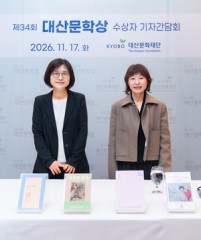
Eun Hee-kyung, Lee Su-myung, Kim Ju-yeon among winners of 34th Daesan Literary Awards
Han Yu-mi, Hervé Péjaudier win translation prize Each laureate to receive 50 million won Novelist Eun Hee-kyung, 67, poet Lee Su-myung, 61, literary critic Kim Ju-yeon, 85, and translators Han Yu-mi, 57, and Hervé Péjaudier, 69, have been named winners of the Daesan Literary Awards. The Daesan Cultural Foundation announced Tuesday that it had selected Eun's novel "Siganui Gamchok" (The Touch of Time), Lee's poetry collection "Jeongo-ui Chonghwan" (Bullet at Noon), Kim's critical work "Poseutyumaengwa Munhak" (Posthumanism and Literature), and Han and Péjaudier's French translation "Chunhyangga" as the recipients of the 34th Daesan Literary Awards. Eun made her literary debut through the Dong-A Ilbo's New Year Literary Contest in 1995 and has since published novels including "Siganui Gamchok," "Bicci Gwaeo," "Sonyeoneul Wirohaejwo," "Taeyeonhan Insaeng," "Majimak Chumeun Nawa Hamkke," "Bimil-gwa Geojinmal" and "Saeui Seonmul," as well as short story collections "Areumdaumi Nareul Myeolsihanda" and "Tainege Mal Geolgi," and the linked story collection "Jangmiui Ireumeun Jangmi." Judges praised Eun's novel, saying it "brilliantly constructs the entirety of a life — something only a full-length novel can achieve — through two characters whose trajectories diverge." Lee debuted in 1994 through the Jakgasegye New Writer Award and has published poetry collections including "Jeongo-ui Chonghwan," "Dosigaseu," "Eonjena Neomu Manheun Bidul," "Bulgeun Damjangui Keobeu" and "Saeroun Odogi Georireul Meowotda," as well as the prose collection "Naega Eomneun Sseugi." Lee's collection "Jeongo-ui Chonghwan" was praised for representing "a blossoming of Lee Su-myung's poetic world, which has consistently sought to innovate the language of poetry from her earliest work." Each winner will receive 50 million won ($37,500) and a bronze sculpture titled "Pine Tree" by sculptor Yang Hwa-seon. The winning works in the poetry and fiction categories are set to be introduced abroad through the foundation's 2027 translation support program. The awards ceremony will be held Dec. 1 at the Korea Press Center in Jung-gu, Seoul.
Nov. 17, 2026
-
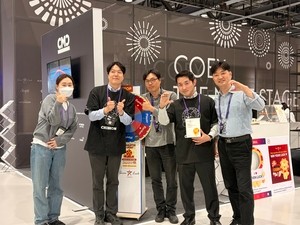
GKL joins MICE expo to promote Seven Luck Casino to overseas buyers
GKL participates in 2026 KME Seven Luck Casino promotional space in operation Expo runs through Thursday at COEX Magok Grand Korea Leisure has stepped up its push to attract foreign tourists, planning to bundle its casino, aquarium and convention assets under a joint booth to promote Seoul's urban tourism infrastructure to overseas markets. Grand Korea Leisure (GKL), the quasi-market public enterprise that operates the foreigners-only Seven Luck Casino, announced Tuesday it is participating in the 2026 Korea MICE Expo (KME) as a member of the COEX MICE Cluster (CMC). The expo runs through Thursday at the COEX Magok Convention Center. The Korea MICE Expo is organized by the Korea MICE Association and sponsored by the Ministry of Culture, Sports and Tourism, the Korea Tourism Organization and the Seoul Metropolitan Government. The event is a specialized trade fair for the meetings, incentives, conventions and exhibitions industry, bringing together domestic and international MICE professionals, companies and local governments for networking and business consultations. During the expo, GKL is operating a Seven Luck Casino promotional space within the CMC booth, introducing the casino to inbound tourism companies and overseas buyers while running interactive on-site events. The participation is part of an MOU GKL signed with COEX. Also at the CMC booth are fellow cluster members SEA LIFE COEX Aquarium and Hanmu Convention, conducting joint marketing activities. "We will work to ensure that strategic cooperation among COEX MICE Cluster members generates synergy," GKL President Yoon Du-hyeon said. "GKL will grow into Asia's leading urban tourism platform company through convergence marketing that effectively links surrounding tourism infrastructure." In September, GKL and COEX signed an MOU on attracting foreign tourists and revitalizing the tourism and cultural industries, aimed at offering visitors a wider range of tourism experiences by combining both companies' MICE infrastructure and networks and contributing to the tourism industry and local economy in the COEX area.
Nov. 17, 2026
-

Three public institutions join forces to prevent serious accidents with AI, big data audits
Kangwon Land signs safety audit agreement Pact includes Korea Mine Rehabilitation and Mineral Resources Corp. and Korea Occupational Safety and Health Agency Partnership aims to strengthen audit capabilities to prevent serious workplace accidents Three public institutions have agreed to build a cooperative audit framework to prevent serious workplace accidents and strengthen safety management capabilities, combining their respective audit expertise and on-site management experience to tighten safety oversight across their facilities. The Kangwon Land Audit Committee signed a safety audit cooperation agreement Tuesday with Korea Mine Rehabilitation and Mineral Resources Corp. and Korea Occupational Safety and Health Agency at the Kangwon Land Grand Hotel. The signing ceremony was attended by Standing Audit Committee Member Jang Gyeong-ryeol of Kangwon Land, Standing Audit Committee Member Kim Jun-seop of Korea Mine Rehabilitation and Mineral Resources Corp. and Standing Auditor Jeong Hye-seon of Korea Occupational Safety and Health Agency, along with other officials from the three institutions, who reaffirmed their commitment to strengthening audit capabilities for accident prevention. Under the agreement, the three institutions will enhance preventive auditing in the safety sector and share AI- and big data-based audit techniques. They also plan to exchange best practices in risk management for vulnerable areas of internal control, and will hold regular joint workshops and inspections to build audit capacity. As a public enterprise operating a complex resort with extensive infrastructure, Kangwon Land plans to use the agreement to strengthen prevention-focused professional safety audits and work toward creating an accident-free workplace for both the public and its employees. "I hope this agreement serves as an advanced cooperation model for sharing safety expertise and audit know-how among the three institutions, and becomes an opportunity to establish a thorough safety culture across the public sector," Jang said. "We will continue to do our utmost to create a safe resort environment where the public can visit with peace of mind."
Nov. 17, 2026
-

Son Suk-ku returns with director Han Jun-hee in Netflix's 'The Blue Road'
From 'D.P.' captain to 2002 detective Netflix's 'The Blue Road' press showcase Korean and Japanese detectives chase a serial killer across borders "I was thinking today about why I seem so calm at this press showcase. I think it's because I'm confident." The captain from "D.P." has become a detective with the Seoul Metropolitan Police Agency's mobile investigation unit — set in 2002. Reuniting with director Han Jun-hee, Son Suk-ku transformed his appearance, voice and manner of speech to reveal a side of himself audiences have never seen. Standing on stage Tuesday with quiet composure rather than pre-release excitement, Son said his calm came from conviction in the work. "Around the time I came across 'The Blue Road,' I felt I had hit a wall as an actor," Son said at the Netflix series showcase held at JW Marriott Dongdaemun Square Seoul in Jongno-gu. "It was like being a 100-meter sprinter who couldn't break the dreaded 13-second barrier." "The Blue Road" follows a Korean and a Japanese detective who chase a serial killer operating across borders, using a body with twisted limbs and a cryptic message as their only clues. Set around the time of the 2002 FIFA World Cup co-hosted by South Korea and Japan, the story moves across Seoul, Tokyo, Hong Kong and Central Asia. Based on the manhwa "The Blue Road," the series marks director Han's return to the director's chair three years after "D.P." season 2. Son plays Kim Seok, a detective with the Seoul Metropolitan Police Agency's mobile investigation unit, while Japanese actor Nagayama Eita plays Inose Hiroshi, a detective with the Tokyo Metropolitan Police Department's First Investigative Division. Supporting characters include Ri Yun-ok (Kim Sin-rok), a Korean-Japanese businessperson; Yun Su-gyeong (Choi Seong-eun), a government agent; and Seo Hyeon-tae (Jeong Jae-yeong), a powerful figure in the Japanese underworld. The eight-episode series premieres on Netflix on Friday. 'A director who hates repetition' — Son overhauled his look, voice and delivery Kim Seok, as Son plays him, digs into cases with cold-headed judgment and relentless tenacity. Son described Kim Seok as "a detective with many secrets," adding that director Han had asked him to "portray the fathers of our generation." "I was drawn less to the professional appeal of a detective and more to the human side — someone trying to overcome something deep within himself," Son said. Son first worked with Han in 2021, playing military police investigator Captain Lim Ji-seop in "D.P." The collaboration reminded him once again of the director's instincts. "What I felt working with director Han Jun-hee was that he genuinely dislikes doing the same thing twice," Son said. "I believed that working with him I could break through that wall and reach the next level — so I poured out far more ideas than I normally would." Han's insistence pushed Son into unfamiliar territory. "I made changes to my appearance, my voice and my way of speaking," Son said. "I went to places I had previously thought there was no need to go." "The Blue Road" marks the first Korean project for Nagayama Eita, who has built a career moving between Japanese film and television. Nagayama described Inose as "a character who is ostracized even among Japanese detectives because of his passionate personality," adding that he is "a sharp detective who never misses even the smallest clue when on a case." Nagayama's decision to join the project also came down to Han. "When director Han and I first met, he told me, 'There is probably no director in South Korea who loves Japanese film and drama as much as I do,' and that 'there is no one but you to play the role of Inose,'" Nagayama said. "I was truly moved, and I genuinely wanted to take on this challenge." Han put considerable thought into reshaping the dynamic between the two detectives. Rather than the familiar buddy-film setup where one character supports the other, he said he wanted to explore "what happens when two characters who could each be the lead actually meet." Of the cold-blooded Kim Seok and the hot-blooded Inose, Han said: "They seem like opposites, but they actually share certain similarities. The difference between cold and hot is there, but from the midpoint onward they blend together in a way that is almost confusing — and that's part of the appeal." 7 km across Rainbow Bridge — a Korean-Japanese duo that broke the language barrier In the series, the Korean detective speaks Japanese and the Japanese detective speaks Korean. The two actors met outside the set to practice together repeatedly. "Because it wasn't my own language, there were difficult passages I had to memorize the way you memorize music," Son said. Even so, he said his focus was not simply on reciting lines but on using them as a vehicle for conveying his own will and intentions. Time spent in Tokyo forged a close bond between the two. Son recalled visiting Nagayama's home and being taken to a favorite curry restaurant. "When Eita walks in, they clear the place out for him," Son said with a laugh. The two practiced Japanese together in a park, then walked across Rainbow Bridge after visiting a Gundam exhibit in Odaiba. "It was seven or eight kilometers, but it was so beautiful we walked it every day," Son said. Nagayama reflected on his first meeting with Son. "The moment we met, I felt he was someone with the same sensibility as me. I had an instinct that we could communicate beyond the barriers of language and borders," he said. "I don't find it appealing to repeat the same performance and I value spontaneity on set — Son is also the type who watches the other person's reaction on the day rather than deciding his performance in advance, so we clicked immediately," Nagayama added. The camera follows the story from Tokyo and Nagoya to Gwangju, Gunsan, Busan and Hong Kong, and all the way to Kazakhstan. Son, who said he had "long dreamed of filming abroad," joked that he remembers the sightseeing more than the actual shooting. He also singled out a sky packed wall to wall with stars as one of the images that stayed with him longest. The other cast members on stage also shared how they shaped their characters. Kim Sin-rok said that in playing Ri Yun-ok, "rather than following a stereotype, I thought I needed to use the kind of language that Ri Yun-ok herself would use." Choi Seong-eun, who plays agent Yun Su-gyeong — a character who has been chasing the case for years — said she "spent a long time reading the script over and over to keep the full picture of the case in my head." With three days to go until the release, Han offered a final word. "Everyone is still working hard to complete the series," he said. "We cannot know the outcome, but we gave everything we had — enough that I think we could never do it this way again."
Nov. 17, 2026
-

Pyeongchang highland kimchi-making festival posts 20% growth, draws visitors from 15 countries
Around 80,000 visitors from 15 countries; more than 1,900 jobs created The Pyeongchang Highland Kimjang Festival wrapped up another record-setting year, making a significant contribution to the global spread of kimjang culture — a UNESCO Intangible Cultural Heritage of Humanity. Standout services included a transportation program run by the heads of 38 villages in Jinbu-myeon and a kimchi-making assistance program staffed by local volunteers, both of which drew praise for their warmth and hospitality. A visitor survey conducted during the festival found that about 90 percent of respondents said they would return, reflecting high overall satisfaction. According to the festival committee Tuesday, the ninth Pyeongchang Highland Kimjang Festival ran for 13 days from Nov. 4 to Monday at Jinbu-myeon Community Sports Park in Pyeongchang-gun, Gangwon Province, drawing around 80,000 domestic and international visitors from 15 countries and driving the consumption of more than 400 tons of locally grown produce. Running under the slogan "Kimjang culture as a tourism resource, the kimchi industry as a regional growth engine," this year's festival grew roughly 20 percent compared with the previous year. It expanded local agricultural consumption, created jobs for residents and attracted foreign tourists. Key produce consumed during the festival totaled more than 400 tons — including 281 tons of salted napa cabbage, 62 tons of radish, 46 tons of salted young radish and 17.5 tons of chili pepper — with consumption by category rising roughly 17 to 22 percent from last year. The committee secures kimchi ingredients through contract farming with local agricultural households every year starting in July, providing stable sales channels for farmers even when produce prices fall and helping to stabilize farm incomes. The festival also generated significant off-season employment for local residents. More than 140 operations staff and volunteers from civic organizations in Jinbu-myeon took part, and the cumulative number of jobs created — including the preparation period — was estimated at more than 1,900. Residents' involvement in processing kimchi ingredients and running hands-on activity areas also helped boost winter incomes. The committee expanded facilities and improved services to accommodate the growing number of visitors. In September, it built a new 495-square-meter kimchi seasoning preparation space capable of producing about 14 tons per day. It also separated the hands-on activity area from the dining area, created a dedicated space for selling local specialty products and improved the overall layout of the festival grounds for greater convenience. New efforts to expand sales channels for local agricultural products also paid off. The "Pyeongchang Highland Apple Special Promotion," organized by the Pyeongchang Apple Research Association and held for the first time this year, raised awareness of the quality of highland apples and confirmed the potential for expanding sales of a new income crop. A local produce market featuring 14 farming households saw increased sales after access was improved, and sales of handmade mandu soup — a traditional Jinbu-area dish — more than doubled compared with last year. The festival also demonstrated the potential of kimjang culture as a tourism draw. Through a Gangwon Province Tourism Association support program, more than 90 foreign visitors from 15 countries took part in kimchi-making activities. Participants experienced Korean food and traditional culture through the hands-on kimjang session, tastings of local dishes including mandu soup and mountain vegetable bibimbap, and a tea ceremony program at Woljeongsa Temple. The festival's newly introduced mascots, "Chuchu" and "Mumu," also drew attention from visitors. The committee plans to refine the characters through next year and develop a range of cultural merchandise featuring them. Festival Chairman Jang Dong-sik credited the event's continued growth to the dedication of farmers, operations staff and civic volunteers from Jinbu-myeon. "The festival has grown 20 to 30 percent every year, and this year was no different thanks to the commitment of everyone involved," he said. "The greatest competitive strength of this festival is what we call 'Jinbu-ness' — the spirit of residents coming together with one heart to welcome visitors warmly and raise the quality of everything we do." Jang added that the foreign kimchi-making experience exceeded its targets and drew an enthusiastic response. "Going forward, we will further expand local produce consumption and farm incomes, and develop this into a tourism festival where people from around the world can experience Korea's kimjang culture firsthand," he said.
Nov. 17, 2026
-

Surge in foreign tourists sparks calls to ease urban home-stay rules
'2026 Seoul Tourism Competitiveness Forum' Urban housing eyed to ease accommodation crunch Resident-consent requirement seen as barrier to entry Calls for unified standards across Seoul's autonomous districts With the number of foreign tourists visiting South Korea surpassing 20 million for the first time in history this year, experts are calling for lower barriers to entry for urban home-stay businesses to head off an accommodation crunch as the country eyes a 30-million-visitor era. The push centers on activating the urban home-stay sector — which converts existing residential properties into short-term lodging — as a fast and practical way to expand accommodation supply in city centers. The Korea Tourism Academic Society and the Seoul Tourism Foundation jointly hosted the 2026 Seoul Tourism Competitiveness Forum on Friday at Seoul Tourism Plaza, announcing Tuesday that the event focused on strategies to strengthen Seoul's accommodation capacity ahead of the anticipated 30-million-tourist era. Shim Seong-woo, a professor at Baekseok Arts University who presented at the session, said tourism demand is growing rapidly while accommodation supply is lagging behind. Shim said urban home-stay businesses for foreign tourists offer a realistic alternative: they can expand supply quickly by using existing housing stock without new construction, and they are concentrated in high-demand central districts such as Mapo-gu, Yongsan-gu and Jongno-gu. However, Shim said resident-consent requirements are in effect acting as a gatekeeping mechanism that determines market entry. According to the presentation, 18 of the 19 Seoul districts surveyed require applicants to submit a resident-consent form. The requirement has no basis in law yet has become standard practice in district offices, and in some areas it is even applied to single-family and multi-unit homes that have no homeowners' association or governing body — a situation flagged as particularly problematic. Shim said the intent behind resident consent is to protect neighbors, but that obtaining a one-time upfront signature does little to protect them in practice. As an alternative, Shim proposed a pilot program called "Seoul Stay Neighborhood Coexistence," which would replace the one-off consent form with a notification and signage system — informing residents of the accommodation's details and the operator's contact information — and a complaint-handling mechanism to address grievances quickly during operations. Shim said the pilot program would allow residents to immediately verify whether a nearby property is a licensed accommodation and know who to contact with complaints, enabling problems to be resolved early. Shim added that having operators handle complaints as a first line of response would reduce the administrative burden on local governments, and that the pilot's results could serve as grounds for revising related guidelines or enforcement rules. The subsequent panel discussion brought together Park Gyeong-yeon, a professor at Hanyang Women's University; Chae Bo-young, chairman of the Korea Home-Stay Industry Association; Jang Deok-sang, director of the Future Urban Management Research Institute; and Kim Hong-jin, head of the Seoul Metropolitan Government's tourism industry division, to discuss expanding accommodation supply and reforming related regulations. Seo Won-seok, chairman of the Korea Tourism Academic Society and moderator of the forum, said securing adequate accommodation capacity is a critical challenge for Seoul's tourism development, and expressed hope that activating the urban home-stay sector through initiatives such as the neighborhood coexistence pilot could serve as a solution ahead of the multiple international events Seoul will host next year. Chae said the resident-consent requirement in the urban home-stay registration process triggers friction and conflict with neighbors even before a business opens. "The current resident-consent system is in effect functioning as a tool that generates conflict with residents," Chae said. "The system needs to shift away from upfront consent and toward management during the operational phase." The Seoul Metropolitan Government is reviewing plans to standardize guidelines across its autonomous districts, with the aim of eliminating confusion on the ground by unifying the varying registration criteria and using the pilot program to verify the effectiveness of the proposed alternative. Kim Hong-jin, head of the city's tourism industry division, said the government is developing a citywide standard to address inconsistent resident-consent requirements across districts and the unreasonable extension of those requirements to single-family homes. "If the Seoul Stay Neighborhood Coexistence pilot is carried out in two or three districts and can demonstrate a reduction in complaints, the need for the resident-consent system could naturally disappear," Kim said. 'Gave up after trying to get consent forms' — short-term rental rules seen as obstacle to 30-million-tourist era
Nov. 17, 2026
-

From Baekdusan to the Trans-Siberian Railway: a new China-Russia package tour
Travel brand Yeohaengiji launches new six-day package Itinerary links Baekdusan and Vladivostok Connects China's northeast with Russia's Far East A new cross-border travel package covering China's Baekdusan and Russia's Vladivostok over six days has been launched, combining flights, overland travel and the Trans-Siberian Railway to visit natural scenery and historical sites. Yeohaengiji, a travel brand operated by tour company Kyowon Tour, announced Tuesday it is offering what it calls the industry's first premium package linking Baekdusan and Vladivostok — a six-day itinerary titled "Vladivostok·Baekdusan 6 Days." Drawing on its experience running Vladivostok packages last year, Kyowon Tour designed the winter season itinerary to connect China's northeastern region with Russia's Far East. The package enters via Korean Air's Incheon–Yanji route, then travels overland to Vladivostok, with no compulsory shopping stops or optional add-ons. Travelers first take the northern approach to Baekdusan to visit Cheonji, Changbai Falls and the hot spring zone, before crossing overland from China's Hunchun through Russia's Kraskino to Vladivostok, where the itinerary includes Arbat Street and Vladivostok Station. From Vladivostok Station, travelers board the Trans-Siberian Railway to Ussuriysk, where the itinerary takes in the ruins of a Balhae-era fortress, the birthplace of independence activist Choe Jae-hyeong and a memorial marker for Yi Sang-seol. "We are pleased to introduce a premium package with a differentiated itinerary linking Baekdusan and Vladivostok," a Kyowon Tour official said. "We will continue to launch products that reflect diverse customer demand and travel trends, and strengthen our premium package lineup going forward."
Nov. 17, 2026
-
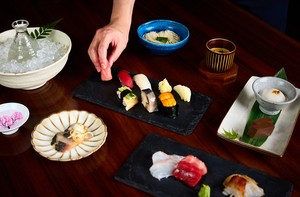
Jeju Dream Tower launches omakase menu at Japanese restaurant Yumeyama
Yumeyama debuts sushi omakase 13-course menu priced at 180,000 won per person Features Jeju local ingredients and caviar Lotte Tour Development announced Tuesday that Yumeyama, the Japanese restaurant at Grand Hyatt Jeju inside the Jeju Dream Tower integrated resort, has launched a new sushi omakase menu. A key feature is the removal of fixed reservation time slots and the allowance of same-day walk-in dining, making it more accessible to tourists with flexible travel schedules. The new menu runs 13 courses — from appetizers through sushi to dessert — with a dining time of one hour and 15 minutes, priced at 180,000 won ($135) per person. The menu draws on Jeju local produce and premium ingredients, with the lineup changing by season. The courses open with a steamed egg custard topped with sea urchin butter sauce and caviar, followed by Spanish mackerel seared over rice straw and two-day-aged slices of sevenband grouper. Guests then receive Jeju flounder aged in kelp, sea urchin sushi, seared bluefin tuna belly and surf clam grilled over charcoal. The meal closes with Inaniwa udon, handmade chocolate yokan and lemon sorbet. Two hotel-trained chefs lead the kitchen. Chef Park Beom-jin spent nearly 13 years on the sushi omakase program at Ariake in the Shilla Hotel and trained in sushi and traditional Japanese cuisine in Japan. Chef Lee Je-seung, who has 15 years of experience, previously served as head chef at The Timber House at Park Hyatt Seoul and has worked at Japanese restaurants in Japan and the United States. A Lotte Tour Development official said the menu was designed to maximize convenience for tourists with tight schedules and unpredictable itineraries. "Unlike a typical sushi omakase, there are no set reservation time slots, so guests can visit whenever they like, and walk-in dining without a prior reservation is also available," the official said. The sushi omakase is available Wednesday through Sunday from 5 p.m. to 11:30 p.m. Reservations can be made through the official website, Naver and Catch Table.
Nov. 17, 2026
-

bhc opens third Indonesia location, its first standalone roadside store
New Surabaya outlet targets family customers South Korean fried chicken brand bhc announced Tuesday it has opened its third location in Indonesia — and its first standalone roadside store — in the city of Surabaya. The new store sits on Jl. Raya Darmo, one of Surabaya's main thoroughfares. The surrounding area is dense with offices, educational institutions, commercial facilities, hotels and residential buildings. Its proximity to a major arterial road connecting key districts to the city center also positions the store to capture strong delivery demand. The two-story building spans about 992 square meters and seats 290 guests across 145 tables. A children's play area lets families dine and enjoy activities together. Brand character "Ppuringi" and photo zones are featured throughout the store. The menu centers on six signature chicken offerings, including bhc's flagship "Ppuringcle," along with "Hot Ppuringcle," "Matzzoking," "Red King," "Fried" and "Yangnyeom Chicken." The store also carries items tailored to the local custom of eating chicken with rice. For customers seeking an authentic Korean food experience, the store offers meal options such as rabokki, Chapagetti and kimchi fried rice. In response to local preferences, chicken breast has been added to the existing lineup of thighs and drumsticks. Indonesia is a market where K-food consumption is growing, driven particularly by the MZ generation and the middle class. bhc entered the Indonesian market in 2024 after signing a master license agreement with the Nachindo Group. Nam Hwa-yeon, head of the overseas business division at Dining Brands Group, said the company will "continue to deliver a differentiated brand experience unique to bhc and keep expanding in the Indonesian market."
Nov. 17, 2026
-

Nongshim to officially relaunch Bokkeum Neoguri, adding new 'spicy mayo' variety
Full production to begin in December as Neoguri brand expands into stir-fry noodle category Nongshim's Bokkeum Neoguri stir-fry noodles will return to store shelves next year, three years after the product was discontinued in 2024. Nongshim announced Tuesday that it will begin full-scale production in December ahead of an official relaunch next year, citing strong consumer response since a limited run of 1.5 million servings went on sale Oct. 27. The company had expected the limited stock to last through year-end, but the product is on track to sell out within a month of its return. Nongshim also confirmed it will release the first new product under the Bokkeum Neoguri line — the Spicy Mayo Bokkeum Neoguri Big Bowl — on Nov. 25, expanding the Neoguri brand into the stir-fry noodle market. The product draws on a cooking trend popular among consumers in their teens and 20s, who often add mayonnaise or cheese to spicy dishes for a richer flavor. "Encouraged by the strong support consumers have shown for the limited-edition Bokkeum Neoguri, we have confirmed an official relaunch and plan to extend the Neoguri brand into the stir-fry noodle category," a Nongshim official said. "Starting with the Spicy Mayo Bokkeum Neoguri, which targets younger palates, we will introduce a variety of stir-fry noodle products to expand the Neoguri lineup." Bokkeum Neoguri was originally launched in 2017 before being discontinued in 2024. Consumer interest grew after it was pulled from shelves, with calls for a relaunch mounting steadily. Ahead of the Oct. 27 return, a presale of 3,000 units through Nongshim's own online store sold out in about two hours.
Nov. 17, 2026
-
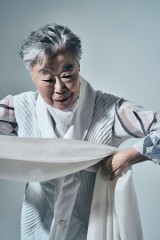
Bae Jeong-hye, 'godmother of Korean creative dance,' dies at 82
Only dancer to lead three national and public dance companies Choreographer behind more than 300 original works National Dance Company's 'Double Bill: Sinawi' stands as her final work Bae Jeong-hye (born Bae Suk-ja), the former artistic director of the National Dance Company of Korea and widely revered as the "godmother of Korean creative dance," died early Tuesday. She was 82. According to the dance community, Bae had been battling stage-four lung cancer and her condition deteriorated after she developed pneumonia. Over a career spanning more than 300 original works, Bae pushed the boundaries of Korean dance, blending the breath and spirit of traditional forms with techniques drawn from ballet and contemporary dance — a synthesis that kept her at the center of artistic debate throughout her life. She was the only dancer ever to lead all three of Korea's major national and public dance companies: the National Gugak Center Dance Company, the Seoul Metropolitan Dance Theatre and the National Dance Company of Korea. Her final work, "Salpuri Saeng," premiered last month through the National Dance Company's "Double Bill: Sinawi." A 'prodigy dancer' at 12, a Korean literature student who became a choreographer Born in Wonju, Gangwon Province, in 1944, Bae was introduced to dance by her uncle Bae Myeong-gyun, a dancer himself, who brought her to the studio of Jang Chu-hwa, a student of the legendary Choi Seung-hee. She made her stage debut in 1952 at a military theater in Wonju, then toured Chungju and Cheongju. In 1955, at age 12, her first solo recital at Sijong Hall in Myeong-dong, Seoul — now the Myeongdong Arts Theatre — earned her the nickname "prodigy dancer." Rather than pursuing a dance degree, Bae enrolled in the Korean literature department at Sookmyung Women's University, writing her own choreographic scripts and earning the label "literary dancer." During her tenure as head of the dance department at Seonhwa Arts High School (1974–1987), she introduced the ballet barre into Korean dance training and developed a foundational exercise system built around 12 upper- and lower-body breathing techniques. The male dancers she trained through this method performed "Tago Namun Jae" ("Ashes Left After Burning") in 1977, which was named the year's best work and earned Bae the nickname "architect of dance." Her uncle, who had choreographed in the sinmuyong tradition, dismissed the piece — "This is not dance," he said — but she did not stop experimenting. In 1984, Bae led the founding of the Rieul Dance Company, built around her former Seonhwa students. Her 1987 work "Glass City" sparked debate over whether it belonged to Korean dance or contemporary dance, and in 1991, after watching "Wandering Soul" performed by the Seoul Metropolitan Dance Theatre, poet Kim Ji-ha composed an impromptu tribute poem for her. The only dancer to lead three national companies — and still in the rehearsal room until the end Bae began her institutional career as resident choreographer of the National Gugak Center Dance Company in 1986, then served as artistic director of the Seoul Metropolitan Dance Theatre (1989–1998) and the National Dance Company of Korea (2000–2002 and 2006–2011). Over 25 years at the helm of national and public companies, she brought the National Dance Company to Lincoln Center in New York for the first time, with the production "Dance, Chunhyang." Another work, "Soul, Sunflower," became the first original piece in the National Dance Company's repertoire to tour abroad, selling out all eight performances in Ludwigsburg, Germany. After stepping down as artistic director, she never left the stage. She continued her "new tradition" series, refining classical forms for contemporary sensibilities, and in 2014 — marking 70 years in dance — she presented "Dance, 70 Years Bae Jeong-hye," a program of 22 signature solo works, at the M Theater of the Sejong Center for the Performing Arts. In 2017, she collaborated with director Jeong Gu-ho to reimagine "The Story of Chunhyang" as a love story for today's youth, staging "Chunsang" with the National Dance Company. From 2018, she served as artistic director of the Little Angels Arts Corps, overhauling its repertoire. Her final stage, "Double Bill: Sinawi" (Oct. 8–11, Haeoreum Grand Theater at the National Theater of Korea), marked a reunion with the National Dance Company after nine years. For the production, which she shared with choreographer Bae Jin-ho — more than 50 years her junior — the National Dance Company divided its members by generation for the first time in its history; 28 members born in 1985 or earlier worked alongside her. Reunited with former company members, she said it felt "like meeting siblings I had been separated from." She had also been selected in August as artistic director for the Yongsan Culture Foundation's preliminary hub support project for a youth dance company, and had been preparing for that new chapter when she died. 'I never reuse a movement' — what she left behind in her final interview Even at 82, Bae reported to the National Theater's rehearsal room every day, guiding dancers through the finest details of their fingertips and footwork. In an interview ahead of the premiere of "Salpuri Saeng," she said dance was "my fate and my destiny," adding: "I thought I couldn't do it anymore, but the dance keeps coming out." In what turned out to be her final interview, Bae also shared a creative principle she had upheld for more than 70 years: she had never reused a single movement across the dozens — even hundreds — of works she had made. "Choreography is the transformation of movement and composition," she said. "Simply borrowing a movement as it is — that is not creation." Another principle she kept for life was that every movement must originate from the choreographer's own body. "When preparing a work, I would hold onto it alone for six months, a year," she said. "That time is like setting sail on a boat with no oars." For Bae, dance was "proof that I am alive." She believed that even grief requires energy — that you must have it in you to weep — and she located the essence of Korean dance in the layered coexistence of han, a deep sorrow, and heung, a surging joy. Returning to sinawi past the age of 80, what she drew from it was "the joy of living." She included a scene of carefree play beneath a waterfall in "Salpuri Saeng" because, she said, she "wanted to show that traditional dance does not have to be dull." Throughout the interview, her gaze was fixed on the next stage. She said she still had things she wanted to say — "clearly, because I am still alive" — and spoke of wanting to collaborate with Bae Jin-ho, the choreographer five decades her junior: "His ideas are wonderful. I would love to work with him someday." She is survived by her husband Kim Gwang-seop and siblings Bae Jong-ok, Bae Jong-gwan and Bae Jong-il. The encoffining ceremony is scheduled for Wednesday at 2 p.m., with the funeral procession departing Thursday at 7 a.m. She will be interred at Gapsan Park.
Nov. 17, 2026
-
'Like a kitchen knife': Why e-commerce platforms can't fully block tiny cameras and earphones used in exam cheating
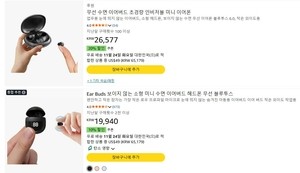
Naver Shopping sends sellers caution notice over exam-cheating concerns Coupang, Gmarket also step up monitoring Experts say a complete ban is impossible: 'Ultimately a human problem' South Korea's e-commerce industry is watching closely as fallout grows from a cheating scandal involving AI-powered devices at a national tax accountant licensing exam. Platforms have long banned items that could be used for illegal purposes such as privacy violations, but concerns are mounting that the latest high-tech gadgets will be exploited in new ways — and that such cases will only increase. The industry is expected to tighten its surveillance, though many in the sector acknowledge that a complete block is out of reach. Naver Shopping sent a notice to its sellers Monday urging caution over listed products, according to industry sources. "Cheating using micro cameras, AI glasses and micro earphones at national licensing exams and language tests has come to light repeatedly and become a serious social problem," the platform said in the notice. It added that exam cheating "is a grave act that can lead to criminal punishment, including invalidation of results, restrictions on eligibility to sit future exams, and referral for investigation and prosecution." Naver Shopping said it "restricts the handling of products that could be exploited for criminal purposes and monitors products that could be used to cheat on exams," and asked sellers for "special caution and cooperation." Through the notice, Naver Shopping banned product names, descriptions and images that evoke exam cheating — including terms such as "for exams," "crib sheet," "college entrance exam" and "certification exam." Promotional phrases such as "won't get caught by the proctor" and "won't show" were also prohibited. Marketing micro earphones small enough to hide inside the ear for exam use or covert purposes is likewise restricted. Also banned are cameras disguised as glasses, ballpoint pens, watches or buttons, as well as stickers and covers designed to conceal the recording indicator on AI glasses. The measures follow Naver Shopping's own product-handling standards, which restrict the sale of items that raise criminal concerns or could violate privacy. The platform holds a large share of South Korea's open-market segment, where individual sellers list their own products. Naver Shopping said that "if such products are found, sales may be suspended and sanctions imposed without prior warning." Gmarket, one of South Korea's first-generation open marketplaces, has also begun internal discussions on the issue. The platform has already banned the sale of cameras too small to tell whether they are recording or that are disguised as other objects. Coupang Inc also restricts the sale of privacy-violating devices and wiretapping or eavesdropping equipment, blocking listings through monitoring even when sellers attempt to post such products in violation of its policies. AliExpress said it "identifies problematic products in advance through seller and product verification, AI-based monitoring and additional review by staff, and suspends sales of any product found to violate policy." The platforms are acting because e-commerce has been identified as a primary distribution channel for the devices used in the cheating cases. Searching for micro cameras, earphones and AI glasses on various e-commerce platforms returns thousands of listings. Prices are low: searching "invisible earbuds" on Amazon yields products priced from around 10,000 to 30,000 won. Some platforms are also reported to sell micro cameras, wireless earphones and communications equipment as bundled sets. The top scorer on the tax accountant exam at the center of the controversy has admitted to using such devices to cheat. Despite the industry's self-policing efforts, many observers say a complete block will remain elusive. "A kitchen knife sold online can become a weapon or not, depending on who buys it, for what purpose and how they use it," one industry official said. "It's impossible to block everything, so all we can do is strengthen monitoring." Another official echoed the point: "AI glasses themselves are not illegal items. The problem lies with the people who use them for illegal purposes." The scandal could also prompt broader policy discussions. Lee Eun-hee, a professor of consumer studies at Inha University, said e-commerce platforms need to strengthen both pre- and post-sale self-regulation. "Full prior regulation is difficult, but platforms are required to take a proactive approach — constantly reviewing potentially problematic products and setting clear standards through internal review committees or similar evaluation bodies," Lee said.
Nov. 17, 2026
-

Korean artist Kim Ji-hee opens inaugural show at Shanghai gallery with 'The Sacred Gold'
First solo exhibition in China in two years, following K11 Art Museum show 'The Sacred Gold' explores human desire and existence through gold and ornament Korean contemporary artist Kim Ji-hee has brought her work to Shanghai audiences as the featured artist for a new gallery's inaugural exhibition. Known for depicting human desire through lavish jewels and gilded ornamentation, Kim uses the show to explore humanity's longing for wealth, power and eternity. Kim has been holding a solo exhibition titled "The Sacred Gold" at New Bond Gallery in Shanghai since Nov. 3. The show was organized to mark the gallery's opening and is Kim's first exhibition in China in about two years, following a solo show at the K11 Art Museum. The exhibition runs through Dec. 17. The opening reception on Nov. 7 drew about 100 prominent local figures, including former CCTV anchor Lei Li, influencer Wang Ayan and pianist Ruan Yangyang. The day before, on Nov. 6, Kim held a meet-the-artist session for VIP customers of China Merchants Bank. On Nov. 8, Kim also participated in an exchange program with students from an international school in Shanghai. Gold is the central material of the exhibition. Kim treats it not as a mere symbol of wealth but as a vehicle for revealing human desire and existence, drawing attention to the way brilliant gold appears eternal yet ultimately fades with the passage of time. The works feature elaborate jewels, phoenixes, peonies and headdresses evoking imperial courts — visual expressions of humanity's pursuit of beauty and power. They also carry the message that even the most absolute wealth and power ultimately survives only as a memory in history. The works were made using traditional Korean paper, natural mineral pigments and 24-karat gold leaf. Kim combines the techniques of traditional Korean color painting with contemporary imagery and decoration. The gold leaf shifts in hue and texture depending on the direction of light, lending the works a three-dimensional quality. The exhibition presents three of Kim's signature series: "Eternal Golden," "Sealed Smile" and "The Fancy Spirit." "Eternal Golden" explores the relationship between possession and loss, obsession and release, through the contrast of gold and negative space. "Sealed Smile" uses the elaborately adorned faces and smiles of its subjects to express the emotions and inner lives concealed behind outward beauty. "The Fancy Spirit" draws on mysterious animal forms and vivid colors to capture humanity's instinctive yearning and anticipation. "Sealed Smile," one of Kim's most recognized series, peers into the human interior through smiling faces. The subjects display ornate accessories and smiles on the surface, yet beneath lies the psychology of individuals navigating the gaze of others and the expectations of society. Kim has explored the relationship between desire, power and selfhood in contemporary society through the classical form of the female portrait since 2008. Her work has also been selected for the cover of a high school art textbook. Kim has maintained an active presence in the Chinese-speaking world, beginning with her first solo exhibition in Taiwan in 2023, "Gilding Fever," followed by a solo show at Breeze Nanshan last year. In January, she opened her third solo exhibition in Taiwan, "Scarlet Bloom," at Gallery 333 in Taipei, presenting about 30 flat and three-dimensional works. The show drew on the image of the red horse of the Year of Byongo to express longing for passion, power and abundance. In April, Kim held a solo exhibition in the Kyushu region of Japan, and in September she presented a media art project at Resorts World Las Vegas drawing on imagery from traditional Korean culture. She recently released a premium art book marking the 20th anniversary of her debut, surveying her creative output from early works to signature pieces. "It feels meaningful to participate in a Chinese gallery's inaugural exhibition as a Korean artist's solo show," Kim said. "I hope the essential human energy directed toward a golden age, and the thematic concerns I have pursued throughout my career, can reach Chinese audiences as radiant beauty."
Nov. 17, 2026
-

Movie theater attendance down 53%, dealing blow to film development fund
Last year's domestic theater audience fell to about 106.09 million, down 53% from before COVID-19 OTT overtakes theaters as primary viewing method; ticket surcharge revenue drops 59% National Assembly Budget Office calls for diversified funding sources including OTT platforms Domestic movie theater attendance fell to about 106.09 million last year, a 53.2 percent drop from the 226.68 million recorded in 2019, before the COVID-19 pandemic. The budget for the Film Development Fund, which relies primarily on theater ticket surcharges, has also shrunk by 44.5 percent compared with five years ago. As OTT services have become the dominant way people watch films, the National Assembly Budget Office has urged a review of the fund's theater-centered revenue structure. According to a report titled "Evaluation of Film Industry Promotion Policies and Projects," published Monday by the budget office, box office revenue fell 45.3 percent over the same period, from 1.91 trillion won ($1.44 billion) to 1.05 trillion won. Both attendance and revenue, which had rebounded after the pandemic, have declined for two consecutive years since 2024. Audiences shift to OTT; ticket surcharge revenue falls from 54.6b won to 22.5b won The Film Development Fund, which supports film creation, production and the screening of independent and art-house films, saw its revenue and expenditure budget shrink from 305.2 billion won in 2021 to 93.7 billion won last year. It rebounded to 169.6 billion won this year, but that still represents only 56 percent of the 2021 level. Under current law, 3 percent of each movie theater ticket price is collected as a surcharge. In practice, surcharge receipts fell 58.9 percent, from 54.6 billion won in 2019 to 22.5 billion won last year. The surcharge was briefly abolished at the end of 2024 before legislation passed in March last year restored the legal basis for its collection. A Korean Film Council survey found that the share of respondents citing OTT as their primary way of watching films rose from 35.3 percent in 2023 to 56.1 percent last year, while the share citing theaters dropped from 24.6 percent to 8.3 percent over the same period. The budget office recommended that South Korea examine overseas models — including levies on OTT platforms and mandatory content investment requirements — and consider funding mechanisms that extend to online distributors. Korean films post negative returns for 6th straight year; slate investment urged Korean films have recorded negative returns for six consecutive years, from 2020 through last year. To attract private capital, the budget office said the industry should make greater use of slate investment — bundling multiple projects together to spread the risk of any single film's box-office failure. It also proposed designing public investment schemes that allow production companies to retain intellectual property rights and leverage them for follow-on projects. Discount ticket programs aimed at drawing audiences back to theaters were flagged for concentrating support too heavily on large multiplex chains. The budget office said eligibility criteria for non-chain venues — including dedicated independent and art-house theaters and smaller cinemas — should be improved, and called for reviving programs that support regional filmmakers in production, education and distribution.
Nov. 17, 2026
-

Kensington Resort Jirisan Namwon launches culinary tour linking Namwon and Sunchang
Regional tourism model connecting Namwon and Sunchang Sold out in its first year, expanded to five runs last year Three Saturday departures beginning Saturday A culinary tour combining Sunchang's fermented-food culture with local festivals — including a tteokbokki festival and a winter night Olympics — is set to launch. Kensington Resort Jirisan Namwon, operated by Eland Park, announced Tuesday it has partnered with the Sunchang Fermentation Tourism Foundation to offer a regional stay-and-explore tourism product called "Punggyeong Bus Sunchang Jangmat Travel." Now in its third year, the program has established itself as a regional tourism model that combines the attractions of Namwon and Sunchang to help boost the local economy. The Punggyeong Bus tour debuted in 2024 and sold out in its first year. This year's edition is built around an autumn travel theme, weaving in Sunchang's distinctive culinary and fermentation culture. The tour is open to guests staying at Kensington Resort Jirisan Namwon and takes participants to major attractions in Sunchang through a series of locally focused experiences. It runs three times on consecutive Saturdays — Nov. 21, Nov. 28 and Dec. 5 — with up to 30 participants per departure on a first-come, first-served basis. This year's program has been expanded to align with local festival schedules. The Nov. 21 departure coincides with the 2026 Sunchang Korea Tteokbokki Festa, while the Dec. 5 run is timed to the Sunchang Winter Night Olympics, allowing participants to take in both the tour and the festivals. The itinerary also includes hands-on experiences and exhibitions at Sunchang Fermentation Theme Park, which focuses on Korean fermentation culture, as well as a walk along the Gangcheonsan trail — offering visitors a taste of Sunchang's flavors and scenery. Registration and further details are available on the Kensington Resort Jirisan Namwon website. "Three years of collaboration with the Sunchang Fermentation Tourism Foundation, backed by consistent enthusiasm from our customers, has made this a signature tourism program connecting Namwon and Sunchang," a resort official said. "We will continue to develop differentiated tourism content that showcases the hidden charms of small cities in the Jeolla region and brings vitality to the local economy."
Nov. 17, 2026
MOST READ
- 1Malaysia's BE International brings 1,500-strong incentive tour to Korea, bypassing Turkey
- 2AI singer tops Melon chart for first time with 'Did You Become the Adult You Dreamed Of?'
- 3Jensen Huang's daughter took the photo of him embracing his alleged mistress
- 4Man beat live-in girlfriend 514 times over 3 hours, killing her; forensic expert says footage was too disturbing to watch
- 5Crosswalk at Cheonggyecheon 6-ga intersection opens after 20 years of resident demands
- 6'A concert is a ritual for the soul': Currentzis makes long-awaited Korea debut after six years
-
WORLD

US warns of punishment for anyone enabling Iran's Strait of Hormuz toll scheme
-
INDUSTRY

Toyota union puts productivity first; Hyundai Motor union demands bigger share of profits
-
FINANCE

National Growth Fund to invest $531M in FuriosaAI, which rebuffed Meta's $800M takeover bid
-
INDUSTRY

Korea Shipowners' Association holds amateur baduk tournament for Maritime Day