
- HOME
- LIFE·CULTURE
-
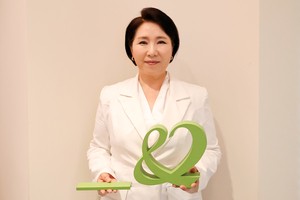
Counselor Lee Ho-sun's cumulative donations reach W130m for youth aging out of care
Psychological counselor Lee Ho-sun has been consistently donating a portion of her broadcast earnings to support young people transitioning out of the child welfare system, it was revealed Tuesday. The disclosure came on tvN STORY's "Lee Ho-sun Counseling Center," which featured a discussion on the theme of "relationships vs. conflict." During the opening segment, co-host Jang Young-ran spoke candidly about checking social media after tapings. "After we finish recording, I go through SNS looking for reviews — to see if anyone is saying nice things about me," she said. She then turned to Lee, noting that praise for the counselor had been flooding in. "There are so many posts saying, 'Lee Ho-sun is so beautiful in person,'" Jang said. Lee responded with a broad smile. Jang also complimented fellow panelist In Gyo-jin, saying viewers had been calling him a "real-life handsome man." In replied by asking, "Which site is that on?" drawing laughs. In then steered the conversation toward more uplifting territory. "There's even better news than that," he said, before sharing news of Lee's donations. "Ho-sun recently made a donation for youth aging out of care," In said. Lee explained her motivation. "I donate for youth preparing for independent living," she said. "They leave orphanages when they turn 18 and enter society. I donated out of a wish, as an adult, that those young people will do well." She added that the giving has not been a one-time gesture — she consistently sets aside a portion of her broadcast appearance fees for the cause. Lee has been supporting young people's transition to independent living for some time. Since 2025, she has donated a share of income from lectures and broadcast work to Good Neighbors. She also gave away the prize money she won appearing on tvN's "You Quiz on the Block" in January. Her cumulative donations have reached 130 million won ($96,600). The consistent giving has earned her a place in Good Neighbors' major-donor circle, known as the Neighbors Honor Club, a group for supporters who have contributed 100 million won or more and helped spread a culture of charitable giving. The funds go toward scholarships, vocational certification programs and daily living support for young people taking their first steps in society on their own.
Sept. 16, 2026
-
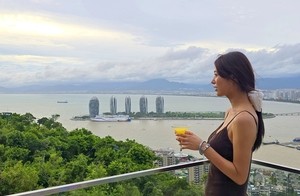
The legend of Luhuitou: How Sanya built its prosperity on a love story
Thrills, cheer and wellness in Hainan ⑦ Once upon a time, long ago, a daughter of the Jade Emperor grew weary of the tedium of heaven and descended to the human world — choosing Hainan, warm and inviting at the edge of the sea — where she fell in love with a hunter. Tales of a celestial woman who could no longer bear the monotony of life above and slipped down to earth are plentiful across Asia. The great goddess said to have shaped Jeju Island is one such figure. Across the Pacific, in North America — where Northeast Asian peoples form the core of many indigenous communities, including the Cherokee, who still use vocabulary strikingly similar to Korean — three sister peaks are said to stand guard over the Rockies, sent down by the gods. The story of a heavenly maiden coming to Hainan and falling for a mortal closely mirrors the Korean folktale of the woodcutter and the fairy. Her departure, too, was unauthorized. The Jade Emperor was furious and, though she was his beloved daughter, he cursed her and turned her into a deer. The celestial woman, now a deer, chose to vanish. With no word of his beloved, the hunter lived on alone until he spotted a deer deep in the mountains at Wuzhishan, in the heart of Hainan. He gave chase southward, following the animal to a high cliff above Sanya Bay, where he drew his bow at the cornered prey. At that critical moment, the Jade Emperor — a doting father at heart — hastily lifted the curse. As the deer turned to look back, the hunter saw the face of the woman he had loved and released the bowstring. She had returned. Only then did he realize that what he had taken for an unexplained disappearance had in fact been her ordeal, suffered on his account. No parent can truly prevail against a child's heart. The Jade Emperor gave his blessing to their love and marriage, and the two lived happily, cultivating the abundance of Hainan — Sanya above all, the place where their love was reborn. The defining image of this legend is the moment the deer turns its head to face the hunter. Written in hanja, those characters are read in Chinese as "Luhuitou" — the deer that looks back. The symbol of Sanya is the Luhuitou stone sculpture, which gazes down over Sanya Bay as the city prepares a prosperous future through free trade. The statue — depicting the moment the deer turns and resumes human form — stands at the summit of Luhuitou Ridge, 181 meters above sea level on the coast, with a panoramic view across three sides of the sea: Fenghuang Island and the East and West Daimao islands. Five years in the making, the deer sculpture was completed in 1987. It stands 15 meters tall, 10 meters long and 5 meters wide. The statue earned Sanya its nickname: "City of Deer." Most visitors — about 90 percent — see only the front and sides of the deer sculpture. Walk around to the back, however, and a hunter stands there, leaning against the deer with a bewildered expression. Of the 12 people in our group, only one found the hunter figure; the discovery drew cheers when the photo was shared. Encountering a monkey on Luhuitou Hill is a delight, but be aware that they may snatch food or belongings. The best approach is to stay mildly alert while avoiding direct eye contact — look away or observe from a distance. The site was developed in 1989 by Sanya Luhuitou Tourism Development Co. It was designated a key national scenic area in 1994 and named a national 4A-level tourist attraction in 2017. Looking down from the ridge, countless cargo vessels move busily in and out of Sanya Port, while leaf-shaped architectural landmarks rise on Fenghuang Island and in the city center alike. That a coastal city chose a giant leaf-shaped building as its landmark seems to speak to the harmony of sea and mountain — and perhaps to trace the journey of love in the legend of the hunter and the fairy. Sanya occupies 1,919.6 square kilometers at the southernmost tip of Hainan Island — about three times the area of Seoul — with 209 kilometers of coastline. The city, including its urban core and surrounding areas, has a population of just over 1 million and is Hainan Island's second-largest city. It sits at 18 degrees north latitude, comparable to Hawaii and roughly the same parallel as the former demarcation line between North and South Vietnam. Along the coasts of Yalong Bay and Sanya Bay, east of Luhuitou, international trade offices and luxury resorts have taken root. Rising from the sea, a towering 108-meter Guanyin statue and Nanshan Temple have become another landmark of the area. Tianya Haijiao — where the poetry of ancient writers, travelers and exiles has been carved into the rocks for centuries — has been designated a national scenic area and given a fresh makeover. Once a place of exile, Sanya has undergone a remarkable transformation into a city of free trade, culture and nature tourism. The indigenous Li people, along with Miao, Han and Hui communities who settled here over the centuries, coexist and work together toward the city's continued development. One of Sanya's defining landmarks is Atlantis Resort, one of only three in the world. It is a mixed-use resort where guests can enjoy eight experiences at once: relaxation, entertainment, exhibition, conventions, dining, live performances, shopping and aquatic attractions. Spread across a 540,000-square-meter site on Haitang Bay, the resort features 1,314 ocean-view rooms; the Atlantis Aquaventure water park covering 200,000 square meters, along with Dolphin Island; the "Atlantis — The Lost Chambers" aquarium holding a total of 17,500 tons of seawater; a performance venue with seating for 1,700; a marine mammal veterinary hospital; and a sea lion theme park. The complex has received numerous international hotel and resort awards, architectural prizes and green building certifications. A vast aquarium greets guests the moment they step into the hotel's main lobby. Some 86,000 marine creatures — sharks, rays and more — glide through the expansive aquarium as if living in the open sea. The main tank, called the Ambassador Lagoon, is designed to evoke Atlantis, the legendary ancient civilization said to have sunk beneath the waves. A standout experience was the underwater suites named Neptune and Poseidon. The Neptune Underwater Suite is a two-story room ranging from about 145.5 to 173.3 square meters, while the Poseidon Underwater Suite spans 340 square meters. Turn your head from the bed toward the aquarium window and a ray seems to smile back at you; lie in the bathtub gazing at the tank and a shark appears to charge straight at you. Sanya honors and carries forward its indigenous culture — including the Li people's bamboo dance — while international cruise ships call regularly at Fenghuang Island and more than 1,300 registered yachts dot the waters, giving the city the full character of a luxury marine leisure destination as well as a cultural tourism hub. The warmth of the people is genuine, the food differs markedly from mainland Chinese cuisine, and the city's long history of maritime exchange is reflected in a cuisine that draws on the best of diverse Asian culinary traditions — among the finest in East Asia. The dark beer, defying all expectations, is remarkably good. Golf travelers are also increasingly making the rounds between Sanya, Haikou and destinations across Hainan Island, seeking out a variety of courses. Visitors from other countries are flocking to Hainan in growing numbers, yet Korean tourists — who once came in large numbers — have not yet returned in full force. Korean visitor numbers have not recovered to pre-pandemic levels. Perhaps it is simply a matter of having briefly forgotten. Anyone who returns will quickly rediscover that Hainan stands out as the finest subtropical destination at its latitude. Hainan has long held a fondness for Koreans, and Koreans have long been drawn to the island's distinctive culture. The people of Hainan know well that friendship with Korea is a key to the island's continued growth. The warmth that Hainan residents show Korean tourists feels particularly genuine these days. Sanya, which aspires to develop into a high-tech economy and free-trade zone much like South Korea, says it is especially glad to welcome Korean visitors. Reporting assistance provided by Han Dan, CEO of Ramita Korea, a Hainan health travel agency; the Hainan Tourism Administration; and Sanya Luhuitou Tourism Development Co.
Sept. 16, 2026
-

Chuncheon rolls out nationwide discount coupons for dakgalbi and makguksu ahead of food festival
Makguksu discount set at 1,500 won; coupons already in use In the early 1960s, when barley ran out before the rice harvest arrived and meat was a rare luxury, large poultry farms began appearing around Chuncheon and Hongcheon, making chicken one of the more affordable proteins available. For ordinary people who rarely tasted meat, vendors took the rib section of the chicken, marinated it in gochujang and grilled it over a charcoal fire — and Chuncheon dakgalbi was born. The dish underwent a transformation in the 1970s. Along Chuncheon's Jungang-ro, cooks began placing thick cast-iron griddles over oil drums, and dakgalbi moved to center stage. Cabbage, sweet potato and rice cake — all commonly grown on farms near the city — joined it on the sizzling iron surface. College students on group retreats, young people short on cash, and girlfriends who had seen their partners off to front-line military bases all made a point of tracking down a good dakgalbi restaurant in Chuncheon. The city served as a hub for soldiers heading out on leave or returning to their units. Troops would stop in Chuncheon first, sharing a plate of iron-griddle dakgalbi to shake off the fatigue of military life. Makguksu — buckwheat noodles with a clean, spicy kick that cuts through the richness of the grilled chicken — is the other pillar of Chuncheon's food culture. On the way back to base, soldiers and their partners would linger over bowls of makguksu, eating slowly because finishing meant saying goodbye. The meal filled their stomachs for the hard days ahead, but leaving the restaurant, the tears came anyway. For the many Koreans who carry memories like these from Chuncheon, the city and the Chuncheon Makguksu Dakgalbi Festival organizing committee are distributing nationwide discount coupons — 3,000 won off dakgalbi and 1,500 won off makguksu — valid through Oct. 25, both online and in person. Distribution and redemption began Monday. The initiative reflects Chuncheon's designation this year as a K-Gastronomic Belt city by the Ministry of Agriculture, Food and Rural Affairs and the Korean Food Promotion Institute, with the aim of making the festival accessible to visitors across the country. As of Wednesday, 151 establishments are participating — 87 offline and 64 online. The offline network covers 67 dakgalbi restaurants and 20 makguksu eateries, up 16 from last year's 71. Online participation through Naver Reservations has grown to 64 venues — 49 dakgalbi and 15 makguksu — an increase of 22 from last year. Offline coupons are available at neighborhood administrative and welfare centers and tourist information offices. Promotional booths traveling to local events also hand out coupons to visitors who take part in simple activities such as food preference polls and quizzes. Coupons have already been distributed at a university festival, the Chuncheon Liquor Festa and the Gangchon Mulbit Market. Promotional booths are planned for the Coffee Festa, the Ani-Toy Festival and the Makguksu Dakgalbi Festival itself. Restaurants can still apply to join the program before the festival opens. Details on participating venues, how to use the coupons and how to apply are available on the festival's official website and social media channels. The K-Gastronomic Belt project aims to weave together local ingredients, traditional food culture and regional stories into an immersive tourism experience. Last year, Gwangju, Andong and Geumsan were selected. This year's theme is chicken, making Chuncheon the obvious choice — joined by Jeju, Suwon and Gumi. The push behind what is informally called the K-Chicken Belt stems from the dish's global popularity. A 2025 survey of overseas hansik consumers ranked Korean-style fried chicken first among preferred Korean foods, cited by 14 percent of respondents, cementing South Korea's image abroad as a nation of great chicken. Nationwide food travel programs to Chuncheon and the other designated cities are already under way. Korail Tourism Development and Chuncheon city jointly launched a "2026 Chuncheon K-Chicken Belt" travel package. Day-trip options are divided into five itineraries tailored to different tastes, and an overnight package — "One Night, One Table in Chuncheon" — is also available. The programs connect local produce, food, drink and the stories of the people behind them, offering visitors a deeper experience of the city's culinary landscape. The Chuncheon Makguksu Experience Museum lets visitors explore the full story of makguksu — noodles made and eaten fresh from the press. Visitors can try every step of the process, from kneading buckwheat flour to pulling the noodles themselves.
Sept. 16, 2026
-

Stray Kids' Felix donates W300m on his birthday
Stray Kids member Felix marked his birthday Tuesday by donating to organizations supporting underprivileged children and disaster-affected communities at home and abroad. According to his agency, JYP Entertainment, Felix donated 100 million won ($74,300) each to Samsung Medical Center and Seoul National University Children's Hospital, and 50 million won each to Books International and the Korean Committee for UNICEF — a total of 300 million won. The funds will primarily go toward medical expenses for pediatric and adolescent cancer patients and children from vulnerable households. The donation to Books International will support the creation and production of native-language picture books for children in underserved communities, while the contribution through the Korean Committee for UNICEF will be directed toward emergency relief supplies and recovery efforts in areas hit by recent flooding in Nepal. "I hope every child's day is filled not with worry but with bright hope," Felix said. "I sincerely wish this small gesture can be a warm source of strength for the precious todays and tomorrows of children everywhere." Felix has consistently given back around his birthday each year. In 2024, he supported a clean water and sanitation project for children in Laos through UNICEF and sponsored a breakfast program for vulnerable children run by World Vision. On his birthday in 2025, he donated for children with serious illnesses and child caregivers. He has also joined fellow Stray Kids members in donating to wildfire recovery efforts in the Yeongnam region and to support Hong Kong fire victims, demonstrating a commitment to public causes in times of disaster. Stray Kids continues to set records on the global stage, claiming the top spot on the Billboard 200 multiple times and cementing its standing as a leading act in K-pop. Felix in particular drives the group's commanding stage presence with his distinctive deep bass voice and intense performances. On Tuesday (local time), the group wrapped its second showing of the festival "STRAYCITY" in Buenos Aires, Argentina, continuing a successful run of South American dates on their world tour "RUN IT," the largest in the group's history.
Sept. 15, 2026
-
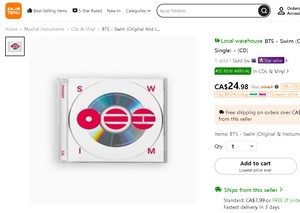
BTS album illegally sold on Temu in China, following Gwanghwamun merchandise scandal
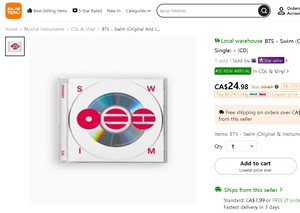
Pirated copies of BTS's full-group single CD SWIM are being sold on the Chinese online shopping platform Temu, a South Korean professor has found. Sungshin Women's University Professor Seo Kyoung-duk said Tuesday on his SNS that he had confirmed the illegal distribution after receiving tips from overseas members of ARMY, the BTS fandom. Sellers on the platform have gone further, running paid sponsored advertisements on social media to actively promote the counterfeit discs. "It is truly pathetic behavior," Seo said. "Even if the shopping mall claims it only provides the platform, allowing illegal counterfeit products to be listed is clearly wrong." The SWIM single CD is currently available exclusively through designated official retailers, including Weverse Shop, Hybe's official fan commerce platform. The copies circulating on Temu, which operates as an open marketplace, are unauthorized pirated reproductions made without the rights holder's permission. This is not the first time a Chinese online shopping platform has infringed on BTS's intellectual property. In March, when BTS's Gwanghwamun concert stage drew a global response, counterfeit merchandise flooded platforms including Taobao and AliExpress — among them T-shirts and fashion accessories bearing the official Arirang logo used without authorization, drawing widespread public outrage. "This has to stop," Seo said. "Profiting from the illegal sale of someone else's content must end immediately."
Sept. 15, 2026
-

Jennie's 'Dracula' surpasses BTS' 'Butter' to set new K-pop Billboard top 10 record
Song holds at No. 6 on Hot 100 for 16th straight week Breaks BTS' 'Butter' record of 15 weeks in top 10 Remix featuring Jennie sparked viral short-form resurgence "Dracula" by Tame Impala, featuring Blackpink's Jennie, has spent 16 consecutive weeks in the top 10 of the Billboard Hot 100, setting a new record for a K-pop act on the chart and surpassing the 15-week mark previously held by BTS' "Butter." According to a Billboard chart preview published Monday (local time), "Dracula" held at No. 6 on the Hot 100 this week, matching its position from the previous week. The run breaks the record BTS set with "Butter," which spent 15 weeks in the top 10. Originally released as a Tame Impala solo track in October last year, "Dracula" gained renewed momentum after a remix featuring Jennie dropped in February, going viral on short-form video platforms and climbing back up the chart. The song has since peaked at No. 5 on the Hot 100.
Sept. 15, 2026
-

'A Bona Fide Killer' actor Jung Jun-won answers controversy with his performance
Jung Jun-won overcomes attitude controversy to prove himself in 'A Bona Fide Killer' Actor says he chose to let his performance do the talking amid a flood of criticism 'It felt like receiving homework I had to work through as an actor' Twelve years into his career, actor Jung Jun-won had spent a long stretch in obscurity — and was only just beginning to establish himself as a leading man. Then, just as he was set to make his first leading-role debut on a major broadcast network in MBC's Friday-Saturday drama series "A Bona Fide Killer," an unexpected controversy erupted. His reserved demeanor on a variety show appearance made to promote the series drew fire. The sharp arrows fired from behind anonymous accounts targeted not only his attitude but his personality and appearance. The drama had barely begun airing when it happened, and Jung chose to weather the torrent of criticism in silence rather than offer any public defense. What ultimately turned public opinion was his acting. He played a devoted husband who believes the best thing he ever did was meet his wife, fall in love and build a family together. His steady, grounded performance — holding the center even as the story lurched through unpredictable crises and fractures in everyday life — was enough to quiet the storm. "It had already happened," he said. "My job is to persuade people through my acting in the work, so I thought I had to give that everything I had first." The weight of regret, reflection and responsibility over what had passed came through clearly. The Korea Herald met Jung — who plays Tae-seong, a society reporter and the husband of the protagonist Bona (played by Gong Hyo-jin) in "A Bona Fide Killer" — at a cafe in Gangnam-gu, Seoul. 'Persuading through acting was the only way' Based on a popular webtoon of the same name, "A Bona Fide Killer" wrapped its run Saturday with a series-high viewership rating of 10.7 percent. The production was not without its share of noise — questions about how closely the cast matched the original characters, directorial choices and the lead actor's attitude controversy — but it was a result forged by a cast and crew who stayed in their roles and saw the job through. For Jung, who had been at the center of the controversy, the numbers meant more than a ratings win. "I'm just so relieved it ended on a good note, and I feel nothing but gratitude," he said. The interview naturally opened with how he had felt during the variety show filming that sparked it all. "I don't have much experience with variety shows, so I was very nervous. I was so focused on doing well that I ended up freezing — I think I couldn't do anything at all. I imagine that came across as uncomfortable to viewers. If I ever get another chance, I really want to make up for it." The controversy his demeanor ignited spread beyond questions about his personality to criticism of his appearance compared to the original webtoon character. It would be a lie to say he was not hurt, and equally a lie to say he took it well. But he said he saw it as "something I had to endure and overcome." That was also why he chose not to actively fire back at the negative comments and criticism. "I do try to take care of my appearance, but I don't think I'm that kind of actor — the kind with striking looks," he said with a laugh. "I couldn't just brush it off. I was hurt, but it had already happened. I felt there was nothing to do but persuade people through my acting in the work. If a chance like this comes again, I have to give it everything so something like this doesn't happen again." He had been at a crossroads, reconsidering his path as an actor after years of anonymity, when "Resident Playbook" brought his name and presence to a wider audience. Then, almost immediately, came the opportunity to lead a primetime weekend drama on a major network. The pressure he carried while preparing for and filming this project was incomparably greater than anything he had faced before. "In 'Resident Playbook,' my role was closer to a device that provided romantic relief within the story. This time, I had to carry the entire drama alongside sunbae Hyo-jin. The biggest pressure was whether I could convince viewers as a lead actor. I thought people might not trust me because I was still unfamiliar to them. I really tried to give everything I had, because I couldn't let the production suffer because of me." The drama's version of Kwon Tae-seong stripped away much of the original webtoon's setup, which left some fans of the source material disappointed — and Jung was well aware of it. "The Tae-seong in the drama script is a husband and father so warm he almost feels unrealistic. I think I focused on how to make that more convincing. I talked a lot with the director about that too. I do think fans who were expecting the original may have found it a little lacking." 'Learned a great deal in a short time — will work toward confidence' The Tae-seong Jung brought to life ultimately comes down to one thing: an almost fantastical depth of love for his family. Rather than chasing the physical appeal of the original character, Jung approached the role by focusing on warmth itself. "There are so many different kinds of cool," he said. "Among them, I wanted to focus on being seen as a cool husband and a cool dad — that big, almost fantasy-like love and tenderness for his family above all else. I tried to pour as much energy into that as I could." Carrying a long-form drama for the first time, Jung found his greatest source of support in co-star Gong Hyo-jin. "Acting with sunbae had a way of making each moment feel real," he said. "I was truly grateful that Hyo-jin sunbae treated me not as a junior but as a colleague, on equal footing. Toward the end of filming she even offered advice first. Working with her, I felt just how remarkable an actor she is — and I leaned on her a great deal because of it." The series of twists and turns Jung experienced at what some might call a belated peak in his career taught him what it means to be responsible — as an actor and as a lead. What remains now is to work through, one by one, the lessons this project has left him. "I gained recognition relatively late, and there was so much I had to learn in a short amount of time. I think all of that converged in the things that happened recently. Working on this project felt like receiving homework I had to work through as actor Jung Jun-won — and in the end, it became an opportunity to learn a great deal." Sincerity and best effort. That, Jung says, is everything he can do "to keep making it in this industry." He plans to keep approaching viewers through consistent, wholehearted performances. He believes the confidence he seeks in his path as an actor also lies within that sincerity and effort. "I don't think I have some outstanding competitive edge, and there are many times I wonder whether I can keep making it in this industry. Still, I think I have to try to build my own sense of conviction by taking on projects one by one. I don't think there's any other way than to keep giving my best, the way I always have. I will keep working to be an actor Jung Jun-won who can show good performances in good projects."
Sept. 15, 2026
-

Gangneung to transform BTS pilgrimage site into garden city
Hyangho village in Jumonjin-eup, Gangneung — known as a BTS pilgrimage site after the global pop group filmed the album jacket for "Spring Day" there — is set to be transformed into a garden. Gangneung is launching a sweeping garden development project spanning not only Jumonjin but also outlying areas including Yeongok and Sacheon, as well as the sub-urban district of Hongje-dong, as it works to reinvent itself as a garden city. The city announced Tuesday it had been selected for the government's "garden city development project," which aims to convert the entire urban area into green ecological and healing spaces, in line with national garden policy. Starting in 2027, the city plans to invest a total of 10 billion won ($7.43 million) over five years — comprising 5 billion won in national funds, 1.5 billion won in provincial funds and 3.5 billion won in city funds — to build garden infrastructure across the city and comprehensively foster garden culture and the garden industry. The project will focus on seven areas: one town (Jumonjin-eup, which is also the planned site of the Hyangho provincial garden), two townships (Yeongok-myeon and Sacheon-myeon) and four neighborhoods (Hongje-dong, Gyeongpo-dong, Gyo-dong and Ponam-dong), with plans to expand citywide in the future. Across a total site of 60,000 square meters, the city plans to systematically develop 21 gardens — 11 community anchor gardens, five community gardens where residents tend the spaces together to rebuild neighborhood ties, and five climate-response gardens designed to reduce carbon emissions and mitigate the urban heat island effect. Particular emphasis will be placed on forming a spatial axis linked to the planned Hyangho provincial garden site, set to serve as the key hub for northern Gangneung, to maximize the synergy of the garden infrastructure. The project will begin with master planning and preliminary design in 2027, followed by detailed design and the development of garden education and software programs in 2028. Full construction and professional operations management are scheduled to run from 2029 through 2031. The project is closely aligned with three priority tasks of the Korea Forest Service's Third Basic Plan for Garden Promotion (2026–2030): creating new value through gardens (addressing climate change, enhancing biodiversity and promoting healing), expanding green living spaces in urban areas, and spreading garden culture while nurturing the garden industry ecosystem. Beyond simple landscaping, the city envisions the project as a hub for nature-based solutions (NbS) that address urban and environmental challenges and improve residents' quality of life. Gangneung also plans to invest heavily in expanding advanced garden software programs. The city will run a professional citizen gardener training program to build a local pool of garden specialists, and will work to spread garden culture into the private sector through the development of a garden tourism platform, the hosting of an Open Garden Festival, and the discovery and support of privately owned gardens — while at the same time promoting the garden materials sector and related industries. "We will complete a distinctive garden city that draws on Gangneung's unique natural resources while staying in line with the government's garden policy direction," Gangneung Mayor Kim Jung-nam said. "We will do our utmost to improve residents' quality of life and secure a new engine of growth for the local economy through the revitalization of garden tourism."
Sept. 15, 2026
-
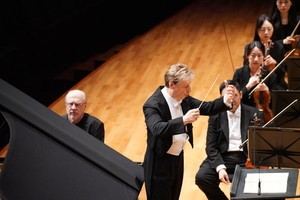
'Even the Moonlight Sonata sounds new': How a difficult-repertoire specialist became a YouTube star
Pianist Marc-André Hamelin First collaboration with the Korea National Symphony Orchestra, Saturday–Sunday 'I play these pieces because they are great music, not because they are hard' Live performance videos have accumulated 5.22 million views on YouTube It was the threshold of early autumn, yet the hall felt like the heart of late fall. As the piano's deep, unhurried waves folded over the low, noble melody of the horn, the air in the auditorium settled into stillness. Notes scattered across the keys dissolved into the orchestra's resonance, then returned, whole and undiminished, to the voice of a single piano. Deep but never heavy, passionate but never rough — the music's compact, slow-burning phrases were at turns aching and solitary, until at last they broke open into something luminous. Brahms' Piano Concerto No. 2. From the first keystroke, a crystalline sense of space filled the hall. The feeling of wanting to hold on arrived almost immediately, as the faint, textured afterglow of each phrase was nudged aside by the next. Before any impression could linger, an articulation honed to the precision of a lens moved across all 88 keys. Shaping a grand orchestral architecture while sustaining an intimate dialogue with the strings and woodwinds, the soloist revealed a sovereign dignity that no ensemble could absorb. The master's long-held artistic ambition — expressed years ago as a wish to "embody every adjective in the dictionary on the keyboard" — found its clearest vocabulary that day inside Brahms. "The Graceful Ghost" — 3.1 million views. Robert Schumann's "Scenes from the Forest" — 960,000 views. Franz Schubert's "Piano Sonata No. 21" — 520,000 views. Maurice Ravel's "Gaspard de la nuit" — 350,000 views. Claude Debussy's "Images, Book 1 — Reflets dans l'eau" — 280,000 views. The cumulative total: 5.22 million views. These are the YouTube figures for live performance videos recorded during master pianist Marc-André Hamelin's 2024 solo recital in Korea. Classical music enthusiasts hailed the recordings as among the finest performances of 2024, and they reached that remarkable number in just two years. Yet an entirely different musical reputation shadows him. Unlike the robust popular metrics his YouTube presence suggests, Hamelin has long made a habit of conquering the keyboard's most impregnable fortresses with apparent ease — earning him the labels "incarnation of transcendent technique" and "difficult-repertoire specialist." Even among classical devotees, a preconception persists that he is a scholarly purist who seeks out only obscure and forbidding works. He is, after all, the man who has rendered flawlessly on the keyboard the extreme repertoire of Charles-Valentin Alkan, Leopold Godowsky and Kaikhosru Shapurji Sorabji — composers who test the very physical limits of the human body. Hamelin, however, draws a calm but firm line against both the praise and the prejudice. "There is only one reason I play those pieces: they are great music. I always wish they were not considered so difficult. I, too, had to pour years of grueling effort into learning and internalizing them, just like any other performer." He returned to Korea for the first time in two years. Hamelin joined the Korea National Symphony Orchestra — led by Artistic Director Roberto Abbado — for their first collaboration. It marked the first time the internationally acclaimed master had performed with a Korean symphony orchestra. The concert recording will be released worldwide on Nov. 13 through "DG Stage+," the global classical platform of Deutsche Grammophon — itself a first for a Korean orchestra on that platform. Speaking with The Herald Business after two rehearsals before the performance, Hamelin called the sessions "a joyful and productive encounter." He was struck, he said, by the musicians' flexibility — "a willingness to adjust to whatever was asked" — and by the closeness and harmony of their ensemble playing. "This is the maestro's first year," he added, expressing confidence that "the conductor and the orchestra are a very good match, and I look forward to seeing where they go from here." The Brahms Piano Concerto No. 2 that Hamelin brought to his collaboration with the Korea National Symphony Orchestra is a monumental masterpiece of German Romanticism. "I have been playing the Second Concerto for nearly 40 years now," he said. "It is the oldest friend in my musical journey — a 'good friend' — so it is the piece I suggest to orchestras as often as I can." For him, a "good friend" means more than simply the length of time spent together. It also means a state of ultimate liberation as a performer — something earned through that time. "When I first put this piece on stage as a young man, I was pressing the keys without fully understanding what I was doing. It is a work that is technically demanding for both hands in every pianistic sense. After living with it for so long, over so many years, it has become something I can express as pure music rather than a summit to be conquered." 'An explorer sifting through 82,000 scores… playing even the Moonlight Sonata as if for the first time' The first label that follows Hamelin is "explorer of difficult repertoire." For decades he has sought out unknown works and brought them to light. The world of scores he has discovered seems to have no end. "A friend of mine has a collection of rare score PDFs that runs to about 82,000 files, and it keeps growing," he said. "Discovering unfamiliar music is a pleasure in itself." The same spirit runs through his recording of Frederic Rzewski's protest-song variations "El pueblo unido jamás será vencido," and through a recent episode at the Husum Festival in Germany, where he delivered the complete set of Earl Wild's George Gershwin études as an encore. On the Rzewski work, he said: "I have never been a social activist, but I deeply identify with the sense of popular feeling and solidarity the music carries." He added, however, that "as a pianist, my mission was not to shout political slogans but to maximize the musical persuasiveness of the piece so that it fully honored its spirit." Yet he says he would "not recommend the path of the excavator" — his own path — to anyone. The reality is that concert halls around the world have little choice but to build programs around well-known repertoire. "A large share of concertgoers are afraid to pay for a ticket to hear a piece they don't know. No matter how wonderful or approachable the music is, the fear of being disappointed by an unfamiliar work keeps them away. But if you choose a famous piece everyone knows, you fall into the trap of being compared with every other pianist who has played it. I am encouraged that more young performers are lately taking bold steps into unfamiliar repertoire and making it work — I hope it is the beginning of a good trend." In his approach, there is no hierarchy between celebrated masterworks and hidden gems. The supreme value he pursues at the keyboard is a single-minded clarity in conveying the essence of the music and the essence of its message, without addition or subtraction. "Whether the piece is well known or not, my approach is fundamentally the same," he said. "With a well-known piece, I try to bring the audience face to face with something they have never noticed before. With an unfamiliar piece, I try to give them the pure joy of discovery. Even if it is Beethoven's Moonlight Sonata, I try to play it as though the audience has never heard it once in their lives." He believes that breaking through the shell of familiarity and drawing out strangeness is what allows him to achieve a genuine musical communion with his listeners. "The most important thing when I perform is to convey the essence of the music and the essence of its message without distortion," he said. He had promised to "deliver the very heart of Brahms," and in the hall it seemed as though each listener's own private Brahms — one they had not known was there — was welling up like a spring. 'Practice only at the piano? I practice 24 hours a day' One of the more surprising things about the master pianist is his practice habits. Hamelin is well known as a performer who spends relatively little time sitting at the piano — he has said himself that people "would be astonished" to learn how few hours he actually practices at the instrument. But for him, practice is not confined to the act of playing. He insists that every moment spent in reflective thought away from the keyboard — in the ordinary spaces of daily life — counts as practice. "I actually practice 24 hours a day. The best ideas come to me while I am walking. It is time to think about music purely, without physically producing any sound. Walking stimulates the body and gets the blood moving, and when that happens the tempo stabilizes and the architectural structure hidden beneath the notes becomes much clearer." What matters, he says, is not the quantity of practice but its quality. "How many hours I practiced on a given day is not important," he said. "The satisfaction of closing the day with the feeling that 'on Monday I found the solution to a passage I had been stuck on' is far greater than the number of eight hours logged on Tuesday." Hamelin's encores are a talking point every time. "The Graceful Ghost," which has accumulated 3.1 million views, was the third encore he chose during his 2024 Korea visit. "It may surprise you, but sometimes I don't know what I'm going to play until the very moment I sit down on the piano bench," he said. "Ultimately it is a matter of reading the audience's reaction and energy." True to his word, each leg of this visit took on a different color depending on the communion with the hall. At the Goyang performance on Saturday, he delivered no fewer than three encores, conjuring an inexhaustible magic at the keyboard; at the Seoul performance, a single encore drew the audience into deep contemplation and rapture. "There is no doubt in my mind that Korean audiences will receive whatever I offer with the most open hearts possible," he said. "Korean audiences are among the finest in the world — among the most focused, and among the most sensitively responsive." His choice that evening was No. 12, "My Joy," from Franz Liszt's piano transcriptions of Chopin songs, drawn from the "17 Polish Songs." The encore — Chopin's Romanticism reborn through Liszt's pianism — offered a glimpse into the roots of Hamelin the score explorer. A man who rescues uncharted difficult works from obscurity while remaining deeply versed in the canonical German repertoire, he unfailingly opens the strata of the past at the decisive moment. As a performer who is also a composer, the DNA of the classical tradition runs deep within him. "I think today's musicians owe a great debt to the music of the past. In some cases that debt is stated explicitly; in others it is unmistakably present in the music itself. I am entirely dependent on the past, and my own compositions are connected to a kind of homage to more traditional music." His excavation of unknown works is, in its own way, another act of restoring the legacy left by the great masters. When the 60-minute journey was over, what remained on the stage was the transparent, lucid conversation Hamelin had held with a friend of 40 years. The criterion by which he selects pieces from among countless scores follows a clear north star. "First, the piece has to move me. More important than that, I have to feel certain it will move the audience as well. That is where it all begins."
Sept. 15, 2026
-
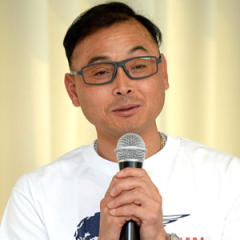
'My neck bent 90 degrees': Marathon legend Lee Bong-ju returns to running after rare disease
Lee Bong-ju, widely known as the nation's marathon hero, is drawing strong support after recovering from a rare disease and returning to running. A video titled "Bong-ju Runs Again Today" was recently posted on the SK Telecom YouTube channel. The clip shows Lee training ahead of the 2026 Infinite Challenge Run in Gyeongju, set for Saturday. "Running is about mental strength," Lee said in the video. "As long as you keep your mind focused, nothing can stop you." On equipment, he said his two legs are the most important gear and that he has no desire for anything beyond that. Lee revealed in 2021 that he had been diagnosed with dystonia, a rare neurological movement disorder, drawing widespread concern. Reports later emerged through various broadcasts that his condition had been severe enough to bend his neck 90 degrees, deepening worries about his health. But Lee never let go of his goal to run again. After consistently dedicating himself to rehabilitation, he returned to the public eye in noticeably better shape. In June, he appeared on singer Shin's YouTube channel "With Shin." Lee said his body was "about 80 percent" recovered, adding that he starts every morning with a run and continues to build up his fitness. In July, he competed in the half marathon at the 2026 Gold Coast Marathon in Queensland, Australia, finishing in 1 hour, 39 minutes and 55 seconds. Lee's decorated career began with a silver medal at the 1996 Atlanta Olympics, followed by gold medals at the 1998 Bangkok Asian Games and the 2002 Busan Asian Games. He also won the Boston Marathon in 2001. His Korean national record of 2 hours, 7 minutes and 20 seconds, set at the 2000 Tokyo International Marathon, has yet to be broken.
Sept. 15, 2026
-
![A father's way of teaching ['Our story for Tuesday']](https://wimg.heraldcorp.com/news/cms/2026/09/15/news-p.v1.20260915.f95fd6979c5f4159aff93bd9b2abc5ce_T1.png?type=h&h=240)
A father's way of teaching ['Our story for Tuesday']
The Herald Business is launching a new column, "Our Story for Today," in collaboration with emerging writers. The series presents everyday stories of ordinary people in the form of short fiction. This content originally appeared in HeralDeep, a members-only service — sign up to read more. When the television crew arrived after she had scored a perfect mark on the college entrance exam, the first thing they asked about was her father. She was not surprised. She simply reminded herself, once again, that her score had been earned entirely through her own effort. Her father had a habit of stumbling into her room reeking of alcohol while she studied late into the night, disrupting her concentration. "Oh, come on — does studying that hard really get everyone into Seoul National University?" Every time, she quietly hated him for it. The broadcasters and newspapers declared that her father's philosophy — raising his daughter to live like a country farmer — had proven itself right after all. From that point on, what had been a wave of resistance inside her swelled into something closer to a tsunami. Her father was a novelist who had enjoyed the golden years of 1990s Korean literature with his witty, distinctive prose. Born and raised in Seoul, he had never once left the city before she was born — yet one day he abruptly uprooted the entire family and settled in a small village at the foot of Deogyu Mountain. Everyone said it was exactly like him. He collected unremarkable-looking stones from the stream and arranged them as objects in a living room lined wall to wall with books; he liked to catch fish from the valley with his bare hands and release them again. A voracious reader, he later appeared in a documentary set around Deogyu Mountain, charming audiences with his knowledge and storytelling, and found himself in the public eye once more. As filming opportunities followed, her own face was naturally exposed to the camera from an early age. Reporters, producers and broadcast writers took whatever she said and shaped it into the message they needed. She gave them just enough to satisfy their curiosity about her father's life as a bestselling author who embodied naturalism, ecologism and environmentalism all at once — a farmer-writer in the countryside. They, in turn, packaged and broadcast the story of this family's way of living, which was every bit as sincere as her father's writing. They were also curious about how she had grown up with a reputation for being the best student in the region. More precisely, it was less curiosity about her than about how a novelist now celebrated for his erudition raised his children. She had clearly mentioned her father's erratic drinking, but the sharper she spoke, the more the conversation circled back to his ecological approach to parenting, and her criticisms were invariably received as nothing more than a minor, endearing quirk. Perceptive from a young age, she came to understand television that way. As she saw it, the truth had never come out. Did living bound to nature every day really mean a child naturally developed the academic abilities modern life demanded? Her father had passed on his intelligence, yes — but hadn't he also neglected her education entirely? She had long wanted the public to see that clearly. She wanted to say it plainly: believing you could send your child to a prestigious university by following her father's half-baked philosophy was a delusion. When she confided this to her closest friend from university, the sharp and trustworthy woman gave her a piece of advice. "It's better not to say things that spit in your own face. People only believe what they want to believe." She looked at her clever friend and asked in return. "I suppose you're right." After that, she stopped speaking about her father altogether. University life in Seoul, far from the mountain village, was wonderfully free. People who discovered who her father was would occasionally ask after him, and she felt a quiet sense of superiority in those moments — but nothing more. City life was convenient and efficient in every way, and the more she experienced it, the more she thought about how unproductive her father's chosen way of life had been. She graduated, began earning her own money, and welcomed the feeling of growing emotionally distant from him. It was, in a sense, the feeling of becoming independent — of shedding the outer shell that was her father. Time passed. She fell in love with a man in a similar field, and with only her father's name to offer, she was accepted into his family with little resistance and they married. A child came soon after. Day by day the child grew. At some point she began to sense it: the child was bright, but something was missing. Once the child started elementary school, the outside world's assessments became more pointed and more blunt. The question that ultimately mattered most to everyone became: "How will the daughter of the author who raised his children so brilliantly through ecological education raise her own child, and which school will she send them to?" Above all, the child lacked her own single-minded drive for studying. She told the child the same thing every day: dedication, passion — only those things will protect you. She got rid of the television and filled not just the living room but every available wall with bookshelves, just as her father's house at Deogyu Mountain had been. She pushed her busy husband until both parents were visibly reading in front of the child. Even so, the child's indifferent attitude toward studying did not change overnight. She had always wanted people to understand that which school a child ends up at depends on the child more than the parents. She had known early on that her own child, indifferent to studying, had talent in other areas. Yet whenever she met people, the conversation kept drifting toward the child's academics, and she could find no good way to steer it elsewhere. Her father scolded her, saying that a child does not thrive simply because parents fuss over such things. Every time she heard that, she found herself reflecting on how utterly indifferent he had been to her own education. She stayed on edge, determined that her father's shadow would not fall over her child as well. On a day when her frustration ran higher than usual, she reached out to her old university friend — the sharp, trustworthy woman who had since become a top instructor at a Daechi-dong hagwon. The friend explained how systematically the Daechi-dong hagwon district operated, and how unwise she had been. It was a moment when she felt humiliated by her child's barely average grades, so the friend's advice was blunt and practical. Even the child of a father who had lazily neglected her — whom she now considered emotionally abusive by her own standards — had made it into a top university. However little interest her child had in studying, if things went wrong, it would ultimately be her own reputation on the line. Her friend was right. She could not afford to let go of her child's education, and so she made a decision. Through means she could not disclose, she managed to get her child into her friend's hagwon, which had a waiting list of nearly a year. Within a few months, the child's grades rose with remarkable speed and precision. Before long, people began asking: was the daughter of that father really something different, and what was the secret? She could not bring herself to say openly that the hagwon had filled in what she lacked. Or rather, she did not want to hand all the credit to the hagwon. Studying is a habit, and the child was finally building that habit — even if the means was a hagwon. The day the child ranked first in the school, a small parent group invited her to give a special talk. As word of mouth spread and the invitations accumulated, she began earning nearly as much as her salary. Watching the audience's enthusiasm, she changed her thinking: people were finally paying attention to her — not as her father's daughter, but as herself, after years of never quite standing tall in his shadow. When a television crew came to her home, she opened up her house and her child's life to the camera and proudly described her family's reading habits. "My child reads for one hour every morning and one hour every evening without fail. Mornings are hard, but in the evenings the whole family reads together and talks about what we've read. It's something I've done with my family since I was very young. (When the producer dropped her father's name with a knowing air, she swallowed hard.) My father read far more than people realize. Even out in the mountains, he always found books for me to read. When I got a little older, I read his books myself. The key point here is that it has to feel natural. If you force it, it will eventually fall apart. For it to feel natural, the environment has to be in place first. That's the top priority. There's a saying that when you study abroad in the United States, every subject — social studies, science, everything — becomes an English class. Every subject begins with whether you can truly understand language. Once vocabulary takes off, grades soar. Private education matters, of course. But you still have to understand the material to keep up. So start with reading education. Right now." People were moved by her words. The brilliant child of a famous author was simply different, they said, and they responded with enthusiasm to her advice on reading education. Media outlets of all kinds reached out, asking for more specific guidance on her methods. A major publisher offered her a book deal, and speaking invitations poured in. Her name began to be known — not as her father's daughter, but as her own person. She barely had time to look in on her child. She wanted to become a little more famous. Having already used her father's name, she thought she might as well ride it higher — a better car, a better home, and with those, better education for her child. Not long after, she transferred the child to a boarding middle school. The dream of a clever mother would be complete the day her child entered a prestigious university.
Sept. 15, 2026
-
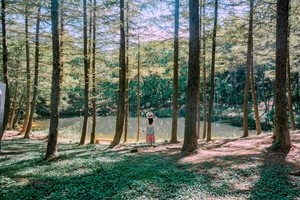
Gangwon Province sees more tourists but less spending, lawmaker urges shift to quality growth
Spending falls more than 10% when transport costs are stripped out 'Let foreign students showcase Gangwon to their home countries' Tourist numbers in Gangwon Province are rising, but visitor spending is falling — and the provincial council has called on authorities to build a tourism strategy that keeps visitors longer and encourages them to spend more. Kim Ki-cheol, a People Power Party lawmaker on the Gangwon Special Self-Governing Provincial Council representing Jeongseon, raised the concern during a field inspection held Wednesday through Friday as part of the 348th regular session's Economy, Industry and Tourism Committee. The delegation visited the Gangwon Tourism Foundation, the Bukpyeong Second General Industrial Complex and the Gangwon Free Economic Zone Authority to review the progress of major projects and identify areas for policy improvement. At the Gangwon Tourism Foundation stop, Kim focused on data showing that growth in visitor numbers has not translated into meaningful gains for the local economy or tourism spending. Big data analysis by the foundation showed that Gangwon Province received about 154.6 million tourists in 2025 — up 3.2 percent from the previous year — but tourism spending fell 9.7 percent to about 1.78 trillion won ($1.33 billion). Spending on food, accommodation and leisure all declined, while transport spending alone rose 18.1 percent, a trend analysts attributed to a surge in day trips and short-distance travel. The pattern continued into the first half of 2026: visitor numbers edged up 0.9 percent year-on-year to about 72 million, while tourism spending dropped 8.7 percent to about 786.2 billion won. Day-trippers and visitors staying one or two nights increased, but those staying three nights or more declined. Accommodation spending fell particularly sharply, down 14.6 percent, underscoring that higher visitor counts have not led to longer stays or greater overall spending. "The core measure of tourism policy should no longer be how many tourists came, but how long they stayed and how much they spent," Kim said. "We need to shift from quantity-driven growth focused on visitor numbers to quality-driven growth that deepens stays and raises spending." Kim also addressed the Untan Godo trail, a flagship tourism asset in the coal-industry transition zone. "The Untan Godo project cannot be an end in itself," he said. "There must be a 'plus-alpha' element that connects the trail to the region's history, culture, food, hands-on experiences and festivals. Tourism and culture need to work together organically so visitors have a reason to stay longer in the area." Kim also proposed using international students living in Gangwon Province as tourism ambassadors. "If foreign students studying here personally experience Gangwon's tourist sites, food, festivals and leisure activities and then introduce them on YouTube and social media in their own languages and from their own perspectives, the content will be far more vivid and impactful than conventional one-way promotional campaigns," he said. Kim further argued that the MICE industry — meetings, incentives, conventions and exhibitions — should be actively developed as a high-value segment of Gangwon tourism. The goal, he said, is to go beyond simply attracting visitors by expanding MICE demand to extend average stays, boost tourism spending and amplify the economic ripple effect on the region. After the tourism-focused visits, Kim inspected the Bukpyeong Second General Industrial Complex, where he reviewed the construction of hydrogen production infrastructure, including an electrolysis-based hydrogen production base. At the Gangwon Free Economic Zone Authority, Kim checked on development and investment attraction progress in the Mangsang, Bukpyeong and Okgye districts, urging officials to ensure each project delivers tangible results in business recruitment and job creation. "This field inspection was not just about confirming project status through reports — it was a process of seeing firsthand what results policies and projects are actually producing on the ground," Kim said. "I will continue my legislative work by finding answers in the field and proposing practical policy alternatives."
Sept. 15, 2026
-

Ventures, local governments and private sector unite at 'Eum Week' tourism forum
A business platform connecting the tourism ecosystem Tourism ventures seek survival strategies in the AI era One-on-one collaboration with local governments and large firms New startup education program for 40 university students A gathering designed to bring together tourism ventures, local governments and investors under one roof opens this week, aiming to foster collaboration and business expansion across the industry. The Ministry of Culture, Sports and Tourism and the Korea Tourism Organization announced they will hold the "2026 Tourism Business Eum Week" at Sofitel Ambassador Seoul in Songpa-gu, Seoul, on Tuesday and Wednesday. Now in its sixth year, Eum Week connects tourism ventures with local governments, private companies and investors to create opportunities for inter-company cooperation and growth. This year's edition runs under the slogan "TourGather," with a focus on broadening exchanges among tourism companies and providing stage-by-stage support covering investment attraction, business collaboration and startup education. The two-day event features a conference and demo day where tourism companies share competitiveness and growth strategies for the AI era; one-on-one business meetups with local governments, related agencies, large and mid-sized companies, and the travel industry; startup education and mentoring for university students considering entrepreneurship; investor relations pitching sessions and investment consultations to help tourism ventures attract funding; and a networking program called "Tourism Scene Talk" to facilitate collaboration within the tourism industry. On the first day, Tuesday, an opening ceremony will be followed by a lecture on brand marketing and survival strategies for tourism ventures in the AI era. Song Gil-young, Yoo Jeong-su of Glow Seoul and Ji Hyun-jun of Vacatio will speak, sharing the competitive strengths and business strategies tourism companies need to develop. New this year is a prospective entrepreneur program for about 40 university students, linked to the Korea Tourism Organization's future tourism talent development initiative. Through startup process education, introductions to the business models of three tourism ventures, and mentoring by "sunbae" tourism entrepreneurs, the program aims to help students at the idea stage gain firsthand exposure to how tourism companies are founded and grown, and to help them develop the viability of their own concepts. Wednesday's program focuses heavily on investment attraction for tourism ventures. One-on-one investment consultations will be held between tourism-sector venture capital firms, accelerators and tourism ventures, alongside IR pitching sessions targeting fund-of-funds operators in collaboration with Korea Venture Investment. The Korea Tourism Organization has continued to support tourism ventures in attracting investment since signing an MOU with Korea Venture Investment in 2022, and this year it is stepping up efforts to expand practical investment opportunities through the IR pitching sessions and related activities. "Eum Week is an important event that promotes the sustainable growth of the domestic tourism industry and supports companies with innovative ideas and technology," Korea Tourism Organization President Park Seong-hyeok said. "We will provide seamless support connecting prospective entrepreneurs' ideas through to tourism ventures' business expansion and investment attraction at each stage of growth, and we will back tourism ventures as they grow into the driving force of innovation in the industry."
Sept. 15, 2026
-

GKL, COEX join forces to draw foreign tourists to Gangnam
Casino and MICE infrastructure to be formally linked Four key initiatives to attract international visitors Partnership aims to offer richer tourism experience A foreigner-only casino operator and a major MICE complex are teaming up to attract more international visitors to South Korea, aiming to maximize the value of Gangnam's urban tourism ecosystem by linking casino and MICE offerings. Grand Korea Leisure, which operates the Seven Luck casino brand exclusively for foreign visitors, and global MICE firm COEX signed an MOU Tuesday to attract foreign tourists and promote the tourism and cultural industries. The signing ceremony was held at GKL's headquarters in Gangnam-gu, Seoul, and was attended by GKL President Yoon Du-hyeon, COEX President Jo Sang-hyeon and executives from both companies. The agreement is designed to connect the two companies' tourism and MICE infrastructure and networks to offer international visitors a wider range of experiences, while contributing to the development of the tourism industry and local economy around the COEX area. Under the MOU, the two companies plan to pursue four initiatives: developing tourism, MICE and cultural programs for foreign visitors; conducting joint marketing and promotions tied to international conferences and exhibitions; identifying joint promotional and cooperative projects with members of the COEX MICE Cluster; and exchanging information and conducting joint research on foreign visitor trends and spending patterns. "I hope this agreement will serve as a foundation for offering international visitors a richer, more multidimensional tourism experience," GKL President Yoon said. "GKL will grow into Asia's leading urban tourism platform company through convergence marketing that effectively connects surrounding tourism infrastructure." COEX President Jo said the two companies would "combine COEX's MICE infrastructure with GKL's capacity to attract foreign tourists to produce tangible results." He added that COEX would expand ties with COEX MICE Cluster members and related organizations to develop the COEX area into a premier tourism and MICE hub.
Sept. 15, 2026
-
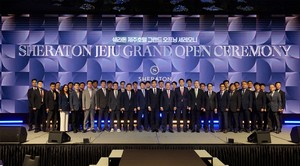
Sheraton Jeju Hotel holds grand opening ceremony
Sheraton Jeju Hotel has held its official opening ceremony and begun full operations on the island. The hotel hosted its grand opening ceremony Monday, drawing about 200 guests that included Jung Gap-yoon, chairman of the Korea Teachers' Credit Union, along with Marriott International representatives, local dignitaries and tourism industry officials. The event began with a hotel tour for key attendees, followed by the opening ceremony, a dinner and an after-party. Guests explored the hotel's main facilities — including guest rooms, a 100-meter infinity pool and a club lounge — to experience the spaces and services of the newly opened property. "I sincerely congratulate Sheraton Jeju Hotel on its opening as it embarks on a fresh start after a full renovation since its original launch in 2003," Jung said. "I hope Sheraton Jeju Hotel will grow into a space that moves its customers and earns the trust of the local community, creating new value together with the Korea Teachers' Credit Union." The opening also draws attention as a rebranding case that combines more than two decades of hotel operating experience with a global brand. The property originally opened in 2003 as Ramada Plaza Jeju and operated for 21 years before closing. Starting in January 2025, it underwent a full renovation over roughly a year and eight months before relaunching under Marriott International's Sheraton brand. Particularly notable is the hotel's location in Tapdong, Jeju, which offers easy access to Jeju International Airport, Jeju Port and the city center. That positioning allows it to attract not only leisure travelers but also business, banquet and MICE — meetings, incentives, conventions and exhibitions — demand. Whether the hotel can carve out a market position as an urban premium property, distinct from the resort-style luxury hotels that dominate the island, will be a key test. Sheraton Jeju features 402 guest rooms in total, along with the 100-meter infinity pool and a club lounge. It is the first Marriott International-affiliated brand hotel to open in Jeju. The hotel plans to use the grand opening as a springboard to ramp up services targeting both domestic and international tourists, with the goal of establishing itself as a global hotel representing Jeju.
Sept. 15, 2026
-
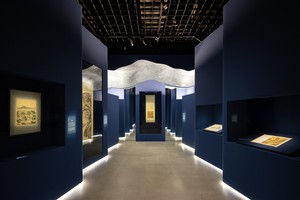
Jeong Seon's landscapes of Joseon gathered in largest-ever exhibition
Daegu Gansong Art Museum presents 'Gyeomjae Jeong Seon — Painting Joseon Through Joseon's Eyes' Largest-ever special exhibition includes national treasures and designated treasures 'Gyeonggyomyeongseungcheop,' 'Haeakjeonsincheop' shown in full for first time The largest exhibition ever assembled of works by Jeong Seon, the late Joseon master who pioneered the "true-view landscape" (jingyeong sansui) tradition, opens this week, bringing together more than 200 of his paintings in a single venue. Daegu Gansong Art Museum is marking the 350th anniversary of Jeong Seon's birth with a special exhibition, "Gyeomjae Jeong Seon — Painting Joseon Through Joseon's Eyes," running Wednesday through Dec. 27. Co-organized by the Gansong Art and Culture Foundation and the Samsung Culture Foundation, the show brings together 216 works drawn from both foundations' collections as well as from the National Museum of Korea and private collectors. Among them are one national treasure and 71 designated treasures. The Gansong Art and Culture Foundation is contributing 128 works from its holdings. The exhibition marks the first time the full pictorial contents of "Gyeonggyomyeongseungcheop" (treasure), "Haeakjeonsincheop" (treasure), "Sosangpalgveongdocheop" and "Gwandongpalgveongdo" have been shown publicly. Also on display are "Pungaknaesanchongnam" (treasure), "Cheongpungye" (treasure) and "Yeosanchodang" (treasure). Works from the National Museum of Korea — including "Sagongdosipumcheop" — as well as "Gyeomjae Jeong Seon Hwacheop" from Waegwan Abbey and "Dalseongwonjodo" round out the lineup. Among the works from "Gyeonggyomyeongseungcheop" on view are "Dokseo Yeoga," a self-portrait depicting Jeong Seon's life in Yuran-dong below Bugaksan in his early 50s; "Sihwahwansanggwan," which records the circumstances behind the album's creation; and "Chokjaejesi," capturing the moment he exchanged poems and paintings with his lifelong friend, the poet Yi Byeong-yeon. "Cheongpungye" illuminates Jeong Seon's relationship with the Jangdong Kim clan. Cheongpungye, a valley on the eastern slope of Inwangsan, was a villa established by Kim Sang-yong — who died in the Byeongja War — on the site of his great-great-grandfather's home, and the Jangdong Kim family lived there for generations. Kim Chang-heup, Kim Sang-yong's great-grandson, was Jeong Seon's teacher, and their great-great-grandfathers had been close neighbors in the Inwangsan area. Even when Jeong Seon's once-prominent family fell on hard times, his teacher and the Kim clan continued to support him. The Jangdong Kim family played a pivotal role in Jeong Seon's rise to become one of Joseon's foremost painters. The national treasure "Geumgang Jeondo" (private collection) centers on Mount Geumgang, the subject Jeong Seon returned to most throughout his life. Rendered as a bird's-eye panorama of Gaegolsan — the mountain's winter form — the composition sweeps across countless peaks and valleys in a single view. "Pungaknaesanchongnam" captures the autumn scenery of Mount Geumgang in meticulous detail, with the names of more than 40 individual sites inscribed across the painting to present as many celebrated landmarks as possible. Jeong Seon (1676–1759), known by his pen name Gyeomjae, was the Joseon master who invented the true-view landscape tradition, rendering Korea's own mountains and rivers in a distinctly Korean pictorial language. Gansong Jeon Hyeong-pil, who sought to preserve national cultural heritage and dignity, amassed a large collection of Jeong Seon's work, and the Gansong Art and Culture Foundation today holds more of his paintings than any other institution. Jeong Seon was born into an impoverished yangban family in Jangdong, Hanyang — the area now encompassing Hyoja-dong and Cheongun-dong — and produced countless masterworks until his death at 84. The true-view landscape tradition was a product of the philosophical and aesthetic shifts of the late Joseon period, and his paintings reflect the cultural identity, realist tendencies and travel culture of his era. The exhibition particularly aims to shed light on the personal life and social relationships of Jeong Seon, aspects that have remained little known despite his towering reputation. Beyond works such as "Dokseo Yeoga" and "Cheongpungye," the organizers have placed documentary records throughout the galleries to help visitors build a fuller picture of the man behind the paintings. "Jeong Seon's works, which captured the true beauty of our natural landscape through his own unique methods and philosophy, offer profound insights into how we view Korean culture today," said Jeon In-geon, director of Daegu Gansong Art Museum. "We hope this special exhibition will be an opportunity to again feel the distinctiveness and universality of Korean culture, and to deepen our pride in our cultural heritage." Hoam Art Museum said the long-standing collaboration between the Samsung Culture Foundation and the Gansong Art and Culture Foundation had made it possible to present an exhibition of this scale — one never seen before — at Daegu Gansong Art Museum. "This exhibition will be a rare opportunity to survey both Jeong Seon's artistic world and the life of the man himself," it said.
Sept. 15, 2026
-

Taebaek's Samsudong Pinwheel Festival to feature 'Mr. Trot 2' winner Ahn Sung-hoon
The name Samsu in Samsudong, Taebaek refers to three rivers that trace their origins to the same highland: the Han River, which flows westward along the Baekdudaegan mountain spine through Seoul and into the Yellow Sea; the Nakdong River, which heads south past Busan's Eulsukdo islet to meet the South Sea; and the Osipcheon, which winds through the Gyeongdong massif on the eastern side of the Baekdudaegan 50 times before reaching the East Sea through Samcheok's coastline. All three rivers have their source in Taebaek. Climbing above Samsuryeong ridge in Samsudong, visitors reach Maebongsan's Baramui Eondeok — the Hill of Wind. Where the Baekdudaegan splits toward the Yeongnam Alps and Jirisan, it forms a vast highland plateau swept by strong winds. Atop the hill stands a large wind farm, the Maebongsan Wind Power Plant. Maebongsan is also home to a recently popular forest retreat known as the "Heavenly Forest." A pinwheel festival is held in Samsudong, a place whose very name evokes the birthplace of three great rivers. It is a celebration where visitors can feel the area's singular energy in body and spirit — with performances by a trot competition champion and generous food offerings adding to the occasion. The Taebaek Samsudong Festival Committee announced Tuesday that the fourth Samsu Pinwheel Festival will be held Saturday and Sunday. Held under the theme "Laugh with the Wind, Heal with the Sunshine," the festival will welcome visitors with a variety of programs at the Geomnyongso Cheoulmul Ecology Garden in Changjuk-dong, Taebaek — the source of the Han River. On the festival's opening day Saturday, singer Ahn Sung-hoon — winner of "Mr. Trot 2" — will headline a large opening concert expected to set a lively tone for the event. Musical performances will continue throughout both days, including saxophone recitals, 1970s and '80s acoustic guitar sets, and shows by local singers. Other programs include a trekking course to Geomnyongso, an experience zone themed around travel through a "land of wind," and audience-participation stage events designed to appeal to all generations. Lucky-draw raffles with product prizes will be held daily. Food stalls will add to the festival atmosphere. The "Pinwheel Restaurant" will serve traditional bibimbap, yukgaejang (spicy beef soup) and muk-sabal (acorn jelly soup), alongside a variety of snacks, and a makgeolli tasting and sales event will also be held. Choi Chang-su, chairman of the Samsudong Festival Committee, said the fourth edition of the Samsu Pinwheel Festival had been prepared more thoroughly than ever so that everyone could enjoy Taebaek's pristine natural surroundings in comfort. "We hope you will visit with family and loved ones, laugh with the wind and heal in the sunshine, and take home the pure energy of Geomnyongso," he said.
Sept. 15, 2026
-
Lotte World Adventure kicks off autumn horror festival in collaboration with Junji Ito Collection
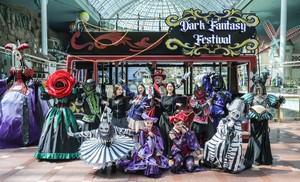
Lotte World Adventure has launched its autumn seasonal festival, "Invitation to a Strange World," in collaboration with the Japanese horror anime series Junji Ito Collection, featuring immersive photo zones, augmented reality experiences and exclusive collaboration products. The festival is built around the concept of a door opening into a strange world at Lotte World, where horror and fantasy blur with reality. It runs from Sept. 12 through Nov. 15. A highlight of the festival is the new sub-parade "Dark Fantasy Festival," staged nightly at 8:20 p.m. with a theme of setting off on a thrilling adventure. Performers in vivid, elaborate costumes and makeup add spectacle to the overall event.
Sept. 15, 2026
-
Donghae launches second-half workcation program 'Stay and work in Donghae'
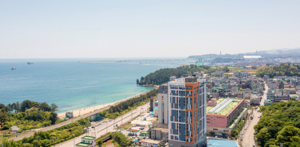
Donghae, a city in Gangwon Province, is rapidly emerging as a premier workcation destination where remote workers can combine business travel with leisure and tourism. The city is now launching its second-half workcation program after exceeding its first-half targets. Drawing on satisfaction surveys from the first half of the year, the city has improved its work and accommodation facilities and will offer locally tailored experiences — including surfing, singing bowl meditation, pottery and Pilates — along with cultural tourism guides and participation incentives. Applications are accepted through "The Holiday," a dedicated workcation platform. For the second half of the year, Donghae is focusing its workcation program on boosting weekday and off-season tourism demand. Mangsang Auto Camping Resort and Donghae Ocean City Residence will serve as accommodation hubs, with shared workspaces also available nearby. "Building on our first-half results, we will develop workcation into a tourism product that extends visitors' stays and increases local spending, providing real support for the city's commercial districts on weekdays and during the off-season," said Lee Jin-hwa, head of the tourism division. During the first half of this year, 127 participants took part — including employees from public institutions, companies, schools, research organizations and freelancers — surpassing the original target of 100 by 27 percent. Participants spent an average of 160,000 won ($119) locally per person, with the highest reaching 500,000 won, confirming the potential economic impact of stay-based tourism on the local economy.
Sept. 15, 2026
-
BTS 'SWIM' CDs sold illegally on Temu, professor says
'Being advertised and sold illegally on social media' Single CDs for BTS's new release "SWIM" are being sold illegally on a major Chinese online shopping platform, a South Korean professor has claimed. Seo Kyoung-duk, a professor at Sungshin Women's University, said Tuesday that tips from overseas BTS fans — known as ARMY — had confirmed that "'SWIM' single CDs were being openly sold illegally on Temu," adding that the platform was "even running advertisements on social media to promote the sales." The BTS "SWIM" single CD is available exclusively through official retailers, including Weverse Shop. "Even if the shopping mall claims it only provides the platform, exposing illegally sold products is clearly wrong," Seo said. "This is truly a pathetic act." BTS announced their comeback with a performance at Gwanghwamun Square in Seoul in March, then launched their "Arirang" world tour with a show in Goyang, Gyeonggi Province, in April. The tour has since continued across the United States, Mexico, Canada and five European countries. The surge in interest in BTS has coincided with a rise in illegal sales of related merchandise on major Chinese online shopping platforms. Earlier in March, unauthorized goods — including T-shirts and accessories bearing the "Arirang" logo without permission — were found on sale on major Chinese platforms such as Taobao and AliExpress, sparking controversy. At the time, Seo also stressed that "even if the shopping mall claims it only provides the platform and did not directly produce the counterfeit goods, allowing such fake products to be listed is clearly wrong."
Sept. 15, 2026
MOST READ
- 1KAIST develops high-performance bio-based adhesive using E. coli instead of petroleum
- 2Pope Leo XIV declines French honors and banquet, accepts only private meeting with Macron
- 3Daimler Truck unveils next-generation transport solutions at IAA 2026
- 4What was Rachmaninoff's performance fee? A 1928 price list tells all
- 5Samsung Biologics union's show of force backfires at the bargaining table
- 6APR says hair-loss treatment research published in international journal
-
WORLD

US warns of punishment for anyone enabling Iran's Strait of Hormuz toll scheme
-
INDUSTRY

Toyota union puts productivity first; Hyundai Motor union demands bigger share of profits
-
FINANCE

National Growth Fund to invest $531M in FuriosaAI, which rebuffed Meta's $800M takeover bid
-
INDUSTRY
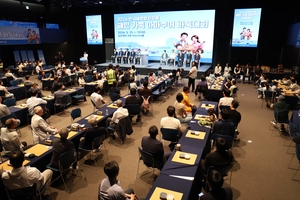
Korea Shipowners' Association holds amateur baduk tournament for Maritime Day