
- HOME
- LIFE·CULTURE
-

Korail offers up to 50% off remaining Chuseok train seats
Skip the ticket scramble with 'reverse homecoming' travel Sales open Friday at 10 a.m. on a first-come, first-served basis KTX group-of-four one-way set available for 99,000 won Korea Railroad Corporation (Korail) is offering discounts of up to 50 percent on remaining seats for trains running during the Chuseok holiday period. Korail said it will begin selling special discounted tickets for KTX and conventional trains Friday at 10 a.m. The discounts target travelers who could not secure tickets home for the holiday, giving them a way to instead invite family members to visit — a practice known as "reverse homecoming" — by sharply cutting fares on available seats. The promotion covers 793 trains with available seats operating over four days of the Chuseok special transport period — Sept. 23 through Sept. 27, excluding Chuseok day itself on Sept. 25. Remaining seats on KTX and conventional trains — including ITX-Saemaul, ITX-Maeum and Mugunghwa services — will be discounted between 30 and 50 percent. Korail is also selling a group package called the "Four-Person 99,000-won Set," which lets four passengers travel one way on KTX for 99,000 won ($72) combined. On the Gangneung and Jungbu Inland lines, the KTX-Eum version of the package is priced at 49,000 won for a group of four. Discounted tickets go on sale Friday at 10 a.m. on a first-come, first-served basis through the Korail website and its mobile app, Korail+. Each customer may purchase up to six individual tickets — or one group-of-four set — per transaction, with a total cap of 12 individual tickets, or three group-of-four sets. Tickets purchased through Korail+ can be forwarded to others via text message or KakaoTalk using the app's ticket-transfer feature. Further details are available on the Korail website or by contacting the railroad customer center. "We are offering special discounts on remaining seats for the Chuseok holiday, and we hope passengers will make the most of them for family gatherings and holiday travel to enjoy a full and festive Chuseok," said Lee Min-seong, head of Korail's passenger business division.
Sept. 18, 2026
-
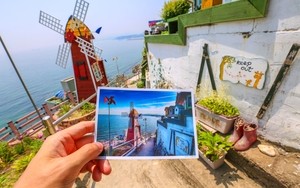
Why Nongol and Cheongok? Donghae's Haeparang Trail gets a richer guided-walk experience
The lead characters of the drama series "A Good Man in the World" longed to visit Chuam Beach, and whenever a troubled thought crept in, they would slip away there without a word. Simply standing alone before the East Sea on a sudden impulse can itself be a meaningful journey — but when a knowledgeable guide, warm as a favorite aunt, walks alongside, everything beautiful becomes even more so. The small tunnel at Hanseom Beach in Donghae is now a favorite spot for the MZ generation to snap the perfect photo, but it once served as the only passage connecting the homes of a farming-fishing community to the sea. Trains on the Yeongdong Line passed constantly, so residents petitioned hard to have the tunnel carved beneath the coastal railway. The narrow passage still carries the quiet weariness of people who labored day after day toward a better tomorrow. Nongoldamgil takes its name from the water that once ran through it. Fishermen hauling buckets heavy with seafood climbed the steep slope from Mukho Port into Mukho-dong, and the seawater that spilled and pooled along the alley made the lane look like a flooded rice paddy — "nong" meaning paddy field. A small actual paddy that yielded precious rice did sit at the hilltop of this hillside village where squid were hung to dry, but it is the image of the water-soaked alley that gave the street its name. This area was called "Nongol," while the inland spot near Hanseom where cold, clear spring water bubbled up was known as "Hangol" — written with the character for "cold." That spring-fed hollow is essentially the etymological root of Cheongok-dong, Donghae's downtown district, whose name means "a valley where springs flow." Hearing this, a stroll down the Nongoldamgil alleyway becomes something far richer than a visit to a filming location for the K-drama "The Heirs" — it takes on a deeply emotional pull. One might find oneself thinking of a grandmother, or a father. Cheongok-dong, where young people from in and around Donghae, ship crews and office workers gather nightly, feels all the warmer — and the drinks taste all the sweeter — when you picture clean spring water once welling up from that very ground. Cultural guides bring these real stories to life, giving visitors a far richer experience of the places they walk through. Donghae city is expanding its guided-tour services along Haeparang Trail routes 33 and 34 — the city's stretch of the 770-kilometer East Coast trail — to offer walkers a more rewarding experience at sites including Chuam, Hanseom, Cheongok and Nongoldamgil. Route 33 runs from Chuam Beach through Donghae Station and Hanseom Beach to Mukho Station. Route 34 continues from Mukho Station through the Mukho-dong neighborhood of Nongoldamgil, the raw-fish hub of Eodal, the emerging surf destination of Daejin, and Mangsang Beach — Donghae's signature seaside resort — before heading toward Okgye. On Wednesday, the city held field-focused training for its cultural tourism guides, covering route-specific information and how to use the "Durunubi" trail app, sharpening their ability to convey the stories and attractions of the Haeparang Trail more vividly. About 62,000 tourists have used Donghae's cultural tourism guide service through September this year. The city plans to link guided walks with its broader tourism offerings to raise visitor satisfaction. Improvements to the walking environment are also ongoing — deck repairs, railing maintenance, weeding and repainting continue across the trail — and restoration work on the Hanseom Rhythmical Gate section has been completed at a cost of about 80 million won ($58,500). Kim Hyeong-gi, director of the city's culture and tourism bureau, said the Haeparang Trail is "a path where you walk and encounter the stories of Donghae's sea, its downtown and its fishing villages," adding that the city would "run the guided-tour service with real substance, sharing stories unique to Donghae alongside a safe walking environment."
Sept. 17, 2026
-

Kangwon Land chefs cook 320 servings for children's centers in Jeongseon
Ingredients sourced from former coal-mining communities Hotel chefs volunteer to prepare and pack meals Seven children's centers receive holiday food ahead of Chuseok Kangwon Land announced Wednesday that it held a "Happy Food Sharing with Chefs" volunteer event in Jeongseon-gun in partnership with the Jeongseon Regional Self-Sufficiency Center, serving children who use local children's centers in the area. More than 10 Kangwon Land employees — including chefs from the company's five-star hotel — gathered at the Jeongseon Regional Self-Sufficiency Center in Nam-myeon, Jeongseon-gun, where they cooked and packed 320 servings of child-friendly dishes: barbecue pork ribs, beef rice balls, mashed potatoes, sweet red bean buns and morning rolls. The team used locally grown produce as ingredients, including Jeongseon potatoes and agricultural products from Taebaek, Yeongwol and Samcheok — all communities that have undergone transitions away from the coal industry — boosting consumption of regional farm goods and strengthening ties with local producers. The meals were delivered to seven children's centers across Jeongseon. Timed ahead of the Chuseok holiday, the initiative allowed hotel chefs to bring freshly prepared food directly to children in the community as part of the company's seasonal outreach. Kangwon Land has been partnering with the Jeongseon Regional Self-Sufficiency Center since February last year, donating surplus baked goods from its hotel and organizing food-sharing events around major holidays and Family Month. "This sharing is all the more meaningful because we were able to deliver not just delicious food but also warmth to the children," Kangwon Land Chief Executive Kim Do-gyun said. "We will continue to listen closely to the diverse voices of our community and carry out social contribution activities that provide real, tangible help."
Sept. 17, 2026
-

Taekwondo stunts dazzle Chuncheon crowds at world poomsae championship
Day two of the 2026 World Taekwondo Poomsae Championships in Chuncheon As Chuncheon, Gangwon Province cements its place as a global taekwondo hub, the 2026 World Taekwondo Poomsae Championships — which opened Wednesday — is drawing growing excitement from athletes and spectators alike. The competition runs through Sunday at the Songam Sports Town Air Dome in Chuncheon, where national team-level athletes from 85 countries are vying for world titles across 42 divisions in both recognized and freestyle poomsae. In the freestyle poomsae events, competitors perform high-difficulty kicks and creative movements choreographed to music. In the recognized poomsae events, male and female athletes showcased precise, disciplined technique. In the recognized poomsae team event, three athletes perform together, with judges evaluating technical accuracy, spacing, direction and synchronization of movement. The cadet recognized poomsae pairs event features two athletes from different countries performing their routines simultaneously. The cadet category is open to competitors aged 12 to 14. Each time the athletes pulled off a spectacular move, the crowd packed into Songam Sports Town erupted in cheers and applause. Earlier Wednesday, Chuncheon city signed an agreement with World Taekwondo (WT) and the Korea Taekwondo Association (KTA) at Chuncheon City Hall to host three international taekwondo competitions from 2027 to 2029 as part of the World Taekwondo Culture Festival. Under the agreement, Chuncheon will host the WT World Cup Team Championship, the World Para Taekwondo Open and the KTA Dynamic Taekwondo event each year from 2027 through 2029.
Sept. 17, 2026
-

Korail Tourism Development launches fall travel campaign ahead of corporate merger
Customer perks rolled out before company integration Mobile coupons offered to October train travelers Rail network links autumn festivals nationwide Korail Tourism Development announced Thursday that it has launched a customer appreciation campaign ahead of its planned merger with Korail Networks and the broader high-speed rail consolidation. The promotion offers a range of benefits to customers who book fall train travel products departing in October. The campaign centers on select October departure packages. Customers who purchase eligible products will receive a mobile coffee coupon. Full details and a list of qualifying products are available on the campaign page within the Korail Tourism Development travel portal. Throughout October, the company will support rail travel to autumn festivals and tourist destinations across the country. These include the Andong International Mask Dance Festival; the Yeongcheon joint festival series — encompassing a cultural arts festival, a traditional medicine festival, a wine festa and a starlit Hanwoo barbecue festival; the Geumsan World Ginseng Festival; the Gimje Horizon Festival; the Buyeo Baekje Cultural Festival; the Jeongseon Mindungsan Silver Pampas Grass Festival; and the Yeongwol Donggang Red Buckwheat Flower Festival. The company will also operate themed rail tour products, including a Daejeon bread festival package and a DMZ Peace Connection train. "Ahead of the high-speed rail integration and the launch of the consolidated subsidiary, we organized this event to express our gratitude to customers who have used Korail Tourism Development's train travel services and to make autumn rail travel more enjoyable," Chief Executive Officer Song Gwang-seok said. "We will continue to expand customer benefits through a wider range of train travel products and services that are even more convenient to use." Further details about the promotion are available through the Korail Tourism Development travel portal or its customer service center. Meanwhile, the government is moving to consolidate five subsidiaries of Korea Railroad Corporation (Korail) into three entities. Korail Tourism Development will merge with Korail Networks, and once the integration is completed after the end of this month, customer service functions — covering station operations, onboard services and tourism — will be unified, strengthening the continuity of rail passenger services.
Sept. 17, 2026
-
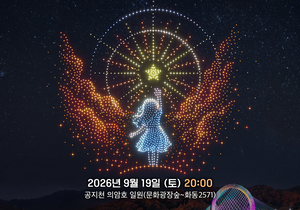
2,000 drones to light up Chuncheon lake in season finale of K-drone art show
'Autumn night in Chuncheon, draped in starlight' A festival of doing nothing — and doing it together From gazing at water to gazing at drones, the final drone light show of the year Performers from Britain and China who claim to lead the world in drone art have often seen their events go badly wrong — with around 1,000 of 2,000 drones crashing or catching fire mid-show. K-drone art, by contrast, has delivered flawless performances at the Han River in Seoul, Gwangalli in Busan and Chuncheon in Gangwon Province without a single accident, earning recognition as the world's best in the field. While drone shows at the Han River and Gwangalli have dazzled urban waterfronts, the Chuncheon Lake Drone Light Show weaves together nature and culture against the clean skies above the city. Chuncheon city will launch 2,000 drone dancers into the air Saturday at 8 p.m. for the final edition of the 2026 Chuncheon Lake Drone Light Show, staged across the Culture Plaza Forest and the Hwadong 2571 area. The theme is "Autumn night in Chuncheon, draped in starlight." The show will close out this year's series with a display of varied colors and movements inspired by autumn and the night sky. Alongside the drone show, the Hwadong 2571 venue will host an outdoor pub and food trucks from 4 p.m. and a live DJ set from 6 p.m., giving tourists who make the trip to Chuncheon plenty to enjoy around Uiam Lake before the main event begins. On the same day, the 2026 Seomyeon Lake Starlight Festa will open at the Seomyeon Animation Museum and Chuncheon Literature Park. Running through Sunday, the festival offers a range of wellness programs set amid the natural surroundings of Uiam Lake — yoga, meditation, singing bowl sessions, a waterside rest area, a book lounge, a lakeside market and a slow-walking program designed for unhurried rest and lingering. On the festival's opening day, a starlight performance at 5 p.m. and a wellness film festival at 6 p.m. will lead into the drone light show at 8 p.m., completing a full evening of autumn tourism at Uiam Lake from dusk to night. Elsewhere in Chuncheon during the same week, a series of events will run in parallel — the Korea Reading Convention, the Chuncheon Puppet Festival and the World Taekwondo Poomsae Championships. Chuncheon city plans to strengthen the link between daytime festivals and nighttime drone shows to extend how long tourists stay in the city. "As this is the final drone light show of the year, we plan to capture Chuncheon's autumn and starlight in the night sky above Uiam Lake with 2,000 drones," a city official said. "We hope visitors will spend a full day in Chuncheon, taking in the various autumn events from daytime onward."
Sept. 17, 2026
-
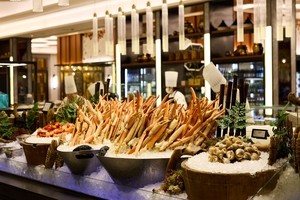
Jeju Dream Tower's Grand Kitchen buffet relaunches with expanded hansik lineup
K-food offerings significantly expanded in renovation Unlimited hanwoo beef and abalone sashimi on offer 30 chefs deployed across 7 stations Lotte Tour Development said Tuesday that Grand Kitchen, the buffet restaurant at Grand Hyatt Jeju inside the Jeju Dream Tower integrated resort, has reopened after a renovation aimed at drawing more visitors with a strengthened hansik, or Korean cuisine, lineup. Foreign guests have recently accounted for more than 80 percent of stays at Dream Tower. Grand Kitchen's revamped menu was designed to meet that tourist demand while capitalizing on the global wave of interest in hansik. The renovation brings together the most popular hansik dishes associated with Jeju travel and the island's broader culinary offerings under one roof. New additions to the menu include Jeju black pork samgyeopsal grilled over straw fire, hanwoo striploin (grade 1 or higher), deep-fried back ribs, LA galbi in a house sauce, and dombe-gogi — a traditional Jeju boiled pork dish. Seafood dishes have also been added, among them grilled Jeju hairtail, snow crab, soy-marinated and seasoned raw crab, abalone sashimi and raw fish rice bowls. Korean staples such as savory pancakes, sundae and fried chicken round out the savory offerings. Desserts lean on Jeju ingredients as well, featuring traditional yakgwa cookies, Jeju Karrot cake and hallabong scones. "Guests can enjoy an unlimited spread of premium health-boosting dishes at outstanding value," a Lotte Tour Development official said. "We expect strong popularity as a premium buffet where diners can experience high-end hansik — particularly freshwater eel, which is rarely found at buffets and is grilled to order by a chef at the live kitchen station." Grand Kitchen is overseen by Executive Chef Kim Young-min of Lotte Tour Development, who brings more than 20 years of experience including a stint as head chef at Fontana, the buffet restaurant at Wynn Palace integrated resort in Macau. Some 30 chefs, including Kim, staff the restaurant's seven stations — among them a Korean hot food station, a grill and a seafood counter. Grand Kitchen is located on the fourth floor. Admission for adults is 60,000 won ($44) for breakfast (7–11 a.m.), 75,000 won for lunch (noon–2:30 p.m.) and 119,000 won for dinner (5–9:30 p.m.). Children aged 5 and under are admitted free.
Sept. 17, 2026
-

Chuncheon dakgalbi set to charm Parma, Italy's gastronomic capital
Ahead of the Chuncheon Makguksu Dakgalbi Festival (Oct. 14–18), Chuncheon is sending an international delegation to Parma, Italy's renowned gastronomic city, from Oct. 16 to Oct. 23 to showcase the best of Chuncheon dakgalbi. The delegation, led by Deputy Mayor Hyun Jun-tae, will visit Chuncheon's sister city of Parma to promote Chuncheon's food and culture as part of the K-Gastronomic Road — a curated selection of standout K-food offerings — during Parma's "Settembre Gastronomico" food festival. The visit will also include exchange activities in gastronomy, education and tourism. Chuncheon honorary city ambassador Alberto Mondi and local dakgalbi restaurant chefs will join the delegation. On Friday (local time), the delegation will take part in a "Korea: Culture and Flavors (Corea: cultura e sapori)" event at the San Paolo cultural complex in Parma. Following a special lecture by Mondi, Chuncheon chefs will prepare and serve dakgalbi live for Parma residents. Students from Liceo Romagnosi will also perform music at the event. On Monday (local time), a four-hands dinner — "Cena a Quattro Mani" — will be held at Al Vedel restaurant in Parma, bringing together chefs from both cities. Executive Chef Enrico Bergonzi of Parma and the culinary team from Chuncheon's Tongnamu-jip Dakgalbi will present dishes that blend ingredients and cooking techniques from both cities. The delegation will also take part in a fresh pasta-making workshop with Parma chef Luca Pardini, and will visit a Parmigiano Reggiano cheese production facility, a salumi and cheese academy, and global food company Barilla to explore the foundations of Parma's food industry. Official meetings to strengthen ties between the two cities are also on the agenda. On Friday (local time), the delegation will visit Parma City Hall to meet Mayor Michele Guerra and discuss cooperation between the sister cities. They will then visit ALMA, the International School of Italian Cuisine, to explore possibilities for expanding ongoing exchanges with Chuncheon and Gangwon Province Life Science High School. On Monday (local time), Chuncheon and Parma will hold a working-level meeting on international exchange to discuss future cooperation projects, including the 2027 "Ciao Italia" program. Exchange programs between Liceo Romagnosi and high schools in Chuncheon are also expected to be on the agenda. "Through this visit, we will introduce Chuncheon's food and culture directly to the people of Parma and work to develop concrete exchange projects the two cities can pursue together," a Chuncheon city official said. "We will ensure that the discussions held on the ground lead to sustained exchanges in gastronomy, education, culture and tourism."
Sept. 17, 2026
-
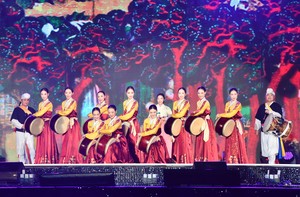
Hong Ji-yun, Park Ji-hyun, Kim Ki-tae to headline Korea's largest folk arts festival in Pyeongchang
Hosted by the Ministry of Culture, Sports and Tourism, Gangwon Province and Pyeongchang-gun Organized by Pyeongchang-gun and the Traditional Performing Arts Foundation 21 teams to compete, with a youth division drawing attention The 67th Korean Folk Arts Festival, the country's largest folk arts event, opens Friday at Jinbu-myeon Sports Park in Pyeongchang-gun, Gangwon Province. Running through Sunday, the three-day festival is hosted by the Ministry of Culture, Sports and Tourism, Gangwon Province and Pyeongchang-gun, and organized by Pyeongchang-gun and the Traditional Performing Arts Foundation. Some 5,000 people are expected to gather, including representative competition teams from 16 cities and provinces nationwide as well as the five provinces of North Korea. Thursday's opening ceremony will feature a procession of the 21 general-division competition teams and a pre-ceremony performance by the Pyeongchang Arari Preservation Society. Singers Hong Ji-yun, Park Ji-hyun, Shin Seung-tae and Kim Ki-tae will perform throughout the event, and busking stages will bring together local and professional artists. A range of hands-on programs will also be on offer, including traditional crafts, folk game experiences and special exhibitions. The local food courtyard will let visitors sample regional dishes and Pyeongchang's signature buckwheat pancakes. The general-division competition runs Friday and Saturday at a natural-grass soccer field, where city and provincial representative teams from across the country will showcase vanishing regional folk games, nongak percussion music, folk songs and folk dances. On the festival's final day, Sunday, the youth division will hold its opening ceremony, competition and awards presentation before the closing ceremony brings the three-day event to a close. The top prize — the Presidential Award — will be presented to the winning team. Park Seo-woo, head of the culture and arts division, described the festival as "a place where you can encounter the very best of Korean folk arts all in one spot," adding, "We have prepared not only the excitement of competition but also plenty to see, eat and experience — we hope many people will visit Pyeongchang and take home unforgettable autumn memories."
Sept. 17, 2026
-
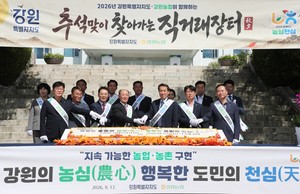
Gangwon Province promotes local food ahead of chuseok with up to 30% discounts
Direct-sales market co-hosted with NH Agri Business Holdings' Gangwon branch Gangwon Special Self-Governing Province, the Gangwon Provincial Assembly and NH Agri Business Holdings' Gangwon branch have teamed up to bring locally grown food from the region to chuseok tables across the country. A chuseok direct-sales market opened Thursday at the fountain plaza of the provincial government building, drawing a lively crowd. The event was jointly organized by the province and NH Agri Business Holdings' Gangwon branch to boost consumption of Gangwon agricultural and specialty products ahead of the holiday. More than 50 local food producers and organizations from Chuncheon, Wonju, Hongcheon, Hoengseong, Yanggu, Goseong and other areas took part. Participating producers included member farms of the Dong-Chuncheon Agricultural Cooperative's local food distribution association, Gangwon flower farms, Manna Grapes, Wonju Mushroom Agricultural Corporation, Hongcheon Dal's Farm, Hoengseong Yedawon, Yanggu Kkulsarang and Goseong Jinburyeong Tongil Deokjang. Producer organizations included NH Agri Business Holdings' Gangwon branch, Dong-Chuncheon Agricultural Cooperative and Gangwon Hanwoo Cooperative Joint Corporation. Items on sale included new-harvest rice, fruit, wild greens, mushrooms and other ritual food offerings, as well as fresh vegetables, processed agricultural products and Gangwon hanwoo beef — all priced 15 to 30 percent below regular market rates. Governor Woo Sang-ho, Provincial Assembly Speaker Park Gil-seon, Agriculture and Fisheries Committee Chairman Kang Jeong-ho, NH Agri Business Holdings Gangwon branch head Kim Byeong-yong and Chuncheon branch head Jeon Seong-yeol were among the officials who attended, encouraging participating farms and organizations while promoting Gangwon's agricultural products to provincial government employees and residents. NH Agri Business Holdings' Gangwon branch operated promotional booths showcasing representative agricultural products from each county and city, and ran events including tiered local food giveaways based on purchase amounts and a lucky roulette draw to raise awareness of local food's value. Jeon Jae-seop, director of the Gangwon Special Self-Governing Province's agricultural policy bureau, said local food — where produce grown in a region is also consumed there — is key to raising the value of Korean agriculture. "We will continue to pay close attention and provide ongoing support to direct-sales markets and local food initiatives that bring producers and consumers together," he said.
Sept. 17, 2026
-
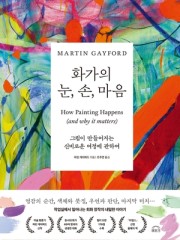
New books at a glance
"The Eyes, Hands and Heart of a Painter" by Martin Gayford, translated by Jo Ju-yeon (Epoch) — Painting is the longest-running art form in human history, stretching from prehistoric cave walls to contemporary galleries. People love pictures, yet reading the thought behind them is rarely easy. What goes through a master's mind before a blank canvas? How do artists choose their subjects and materials, and how do they decide where to place the brush? Art critic Martin Gayford draws on more than 30 years of conversations with painters — among them Gerhard Richter, Frank Auerbach, David Hockney, Paula Rego, Jenny Saville, Frank Stella, Lee Ufan and Zeng Fanzhi — to let the artists speak for themselves. Hockney was fond of quoting a Chinese proverb: "To paint well, you need your hands, your eyes and your heart." The idea is that great painting demands a hand skilled enough to command the right materials and tools, a mind attuned to the mood and spirit of the work, and the constant judgment of the eye. The book guides readers through artists' lives and stories, and through art history, so that they can experience paintings in fuller dimension. "Kill Switch" by Choi Young-seok (Hankyung BP) — "The car in the advertisement is not the car on the road." Starting from that premise, the author — a product liability officer at a consumer advocacy organization — digs into the reality behind Tesla's autonomous driving technology, including Autopilot and Full Self-Driving. His conclusion: the flashy marketing language and the low accident rates cited in statistics do not tell the whole story. Choi examines a series of cases one by one — the 2018 death of Walter Huang in California, a 2020 Model X fire in Hannam-dong, Seoul, and the 2025 Florida Benavides verdict that assigned Tesla 33 percent of the liability — and argues that autonomous driving technology has been rolling on public roads without adequate verification, all under the banner of innovation. He pays particular attention to South Korea, where many retail investors hold Tesla shares alongside drivers who use its vehicles. He argues that whenever Tesla's safety record makes headlines, confirmation bias, sunk-cost effects and loss-aversion psychology all kick in at once, leading people to deliberately refuse to acknowledge the company's flaws. "Everyday Utopia" by Kristen R. Ghodsee, translated by Seong Won (Saram in) — "Utopia," a word for an ideal and perfect society, is commonly used as a synonym for the unrealistic. American ethnographer Kristen R. Ghodsee pushes back against that assumption, arguing that utopianism has been a consistently recurring current throughout more than 2,000 years of history. To make her case, she traces how utopian visions — appearing at every moment of upheaval and inspiring generations — have ultimately become reality. Universal childcare is her central example. Plato imagined "Kallipolis," a society of communal child-rearing in which parents and children would not know one another; in the 19th century, Engels called for state-guaranteed universal childcare. By the 21st century, the public childcare those thinkers envisioned had become ordinary life — ideas once dismissed as radical had, over time, taken root as policy and everyday practice. Ghodsee extends her gaze beyond Western intellectual history to utopian communities in Asia and Africa, and invites readers around the world to pursue their "social dreams" together. People still dream of different ways of organizing life, she writes, even at personal risk — proof that utopianism is not a relic of the past but an ongoing, present-tense experiment.
Sept. 17, 2026
-

The morality economics forgot — and why a compromise is needed
Nobel laureate Alvin Roth's new book tackles the debate over 'repugnant' market transactions, from prostitution and surrogacy to drugs and organ trading Markets exist to allocate scarce resources efficiently among members of society. For them to function properly, they require well-designed rules — and some transactions remain fiercely contested. Trades involving organ transplants, prostitution, drugs and assisted dying have prompted sharp debate, with some countries banning or tightly regulating them outright. Alvin Roth, who won the Nobel Prize in economics in 2012 and is a leading authority on market design, takes on exactly these transactions in his new book, "The Economics of Forbidden Transactions." Deals touching on human life, dignity or deeply held beliefs are often treated as matters of morality or religion, where the two sides see no room for compromise. Roth calls such deals "repugnant transactions." As Roth defines them, repugnant transactions are ones in which all the parties directly involved want to participate, yet others believe — on moral or religious grounds — that they should not take place. Opponents typically argue that such transactions harm, or are likely to harm, people beyond the immediate parties. His examples include prostitution, surrogacy, alcohol and drugs, high-interest consumer loans and price gouging during emergencies, plasma and kidney donation, and medically assisted dying. Roth argues that while repugnant transactions are banned or regulated in many countries, prohibition alone is rarely the only answer. Banning certain trades can give rise to black markets and gray zones that effectively neutralize the measure. The United States' Prohibition era from 1920 to 1933 is a case in point: outlawing the sale and consumption of alcohol did not eliminate it. Instead, criminal organizations built black markets, and ordinary people ended up dealing with them just to have a drink. A more productive approach, Roth suggests, might have been to legalize such markets and regulate them appropriately. He points to the United States — which has opened both the plasma and surrogacy markets — as evidence. When the US government allowed financial compensation for plasma donors under strict regulatory oversight, the supply of American-donated plasma grew enough to save lives both domestically and around the world. In the surrogacy market, he notes, many children who could not otherwise have been born have come into the world in the United States. Roth cautions, however, against using those precedents to argue too quickly for opening other markets in human-derived materials. Offering financial compensation for kidney donation, he explains, cannot simply be assumed to work as smoothly or with as few side effects as the plasma or surrogacy markets. Because "morality in economics is not merely theoretical but also empirical," he argues, evidence must be gathered through experimentation before any such system is introduced. He also contends that even an existing ban deserves reconsideration if the targeted transactions have not declined or related crimes remain widespread. "There are policies that allow for far more productive discussions in terms of outcomes and costs, without imposing moral views by force," Roth writes. "We need to weigh the costs between what we desire or find repugnant and what we can actually achieve — and seek a compromise between the two." "The Economics of Forbidden Transactions" / by Alvin Roth / translated by Lee Gyeong-sik / supervised by Choe Jeong-gyu / Saenggakuihim
Sept. 17, 2026
-

Ko Ji-yong says illness left him unable to pay child support, vows installment payments
Ko Ji-yong, 46, a former member of the K-pop group Sechs Kies, has acknowledged failing to pay child support to his ex-wife, family medicine specialist Heo Yang-im, 46, saying his prolonged illness made it impossible. Ko said he is now meeting his obligations. The admission came after Heo filed a lawsuit seeking unpaid child support, even as Ko had separately filed an injunction requesting that she stop interfering with his visitation rights and cease posting photos and videos of their son, Seung-jae, online. According to Ko's agency, Mountain Movement, his monthly child support obligation is around 1.8 million won ($1,320). Ko had been battling liver cirrhosis, liver fibrosis and shock shortly after the divorce, making it unavoidable that he fell behind on payments, the agency said. "Ko Ji-yong collapsed and went to the hospital about a week after the divorce," the agency said. "How could he have paid child support when he couldn't even cover his own medical bills?" According to Ko's side, he and Heo finalized their divorce by mutual agreement on April 24, 2024, and Ko was hospitalized on May 9 of that year with liver cirrhosis, liver fibrosis and shock. He was admitted to hospital multiple times over the following roughly two years as he focused on recovering his health. Ko's side said disputes over child support payments and visitation rights emerged during that period. After recovering his health following the lengthy illness, Ko recently resumed public communication through TikTok Live and signed an exclusive contract with Mountain Movement on July 21 of this year, signaling his full return to the entertainment industry. "We signed the contract with Ko Ji-yong in July," the agency said. "The moment he started earning income, he paid child support first without even thinking about his hospital bills." The agency added that Ko had told Heo he could not repay all the overdue support at once but proposed installment payments now that his situation had stabilized. "He asked to be allowed to see his child in return, but she sent another certified letter saying, 'No. Give me all the money. I won't accept installments,'" the agency said. Ko's side filed an injunction against Heo on Wednesday seeking to bar her from interfering with his visitation rights and from posting photos and videos of the child online. According to Ko's side, Heo had pressured him to pay child support while he was ill and had his bank accounts and insurance seized through an attachment order. Ko's side said it had notified Heo through a certified letter that he would fulfill his obligations, but received no response. "He is already paying regular child support, but we could no longer tolerate her refusal to let him see his child, her disregard for warnings about violations of child protection law, and her use of the child to promote her medical practice," the agency said.
Sept. 17, 2026
-
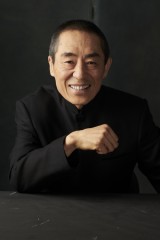
Zhang Yimou to chair jury at 31st Busan International Film Festival
Director Zhang Yimou has been named jury president of the competition section at the 31st Busan International Film Festival, set to open next month. The festival announced Thursday the full lineup of seven jurors for the competition section, with Zhang heading the panel. Zhang will oversee the judging of 13 competition films this year. A globally acclaimed filmmaker, he has swept the top prizes at all three of the world's major film festivals — the Golden Bear at the Berlin International Film Festival, the Golden Lion at the Venice International Film Festival, and the Jury Prize at the Cannes Film Festival. Zhang also drew wide attention for directing the opening and closing ceremonies of both the 2008 Beijing Summer Olympics and the 2022 Beijing Winter Olympics. His best-known works include "Red Sorghum" (1988), "Raise the Red Lantern" (1991) and "To Live" (1994). His ties with the Busan International Film Festival stretch back to 2010, when his film "Under the Hawthorn Tree" opened the festival, and he has maintained a consistent presence ever since. The jury joining Zhang is drawn from directors, actors and producers active across Asia. This year's competition jury includes director Bi Gan, Kazakh actor Samal Yeslyamova, Japanese director Kei Ishikawa and Vietnamese producer Tran Thi Bich Ngoc. Also on the panel is director Jeong Ju-ri, the first Korean woman director to have every one of her features — from her debut "A Girl at My Door" (2014) to her third film "Dora" (2026) — selected for the Cannes Film Festival. Rounding out the jury is actor Choi Hee-seo, who stars in and produces "Bedford Park" (2026), one of this year's Busan selections. "A master director celebrated by critics worldwide, a powerhouse actor and a producer with sharp on-set instincts have come together," the festival said. "Drawing on the perspectives and experience each has built in their respective fields, they will closely examine the achievements and new possibilities of this year's competition entries." The "Busan Awards" ceremony, held alongside the closing night, will present prizes in five categories: the Grand Prize, Best Director, Special Jury Prize, Best Performance and the Artistic Contribution Award. Total prize money amounts to 110 million won ($80,400). The 31st Busan International Film Festival runs Oct. 6 to 15 at the Busan Cinema Center.
Sept. 17, 2026
-
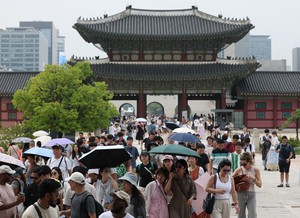
Foreign visitors to Korea set to hit record 23.57 million this year despite weak yen headwinds
Yanolja Research forecasts 23.57 million arrivals Visitors up in 53 of 59 tracked countries Japanese tourists choose Korea over yen disadvantage Chinese travelers shift from Japan to Korea 1 in 10 Taiwanese overseas trips now headed to Korea Foreign tourist arrivals in Korea are on track to reach a record 23.57 million this year, according to a new forecast, marking what analysts describe as a turning point in the quantitative growth of inbound tourism driven by the global popularity of Korean culture. Yanolja Research, a travel and tourism industry research firm, projected in a brief published Thursday that 23.567 million foreign tourists would visit Korea in 2026 — up 24.5 percent from last year's 18.937 million. The firm said the forecast reflects a rapid surge in Korea-bound travel from Japan and Taiwan since the start of the year, a trend that has since spread to long-haul markets including the United States. Foreign arrivals from January through July totaled 12.803 million, up 2.244 million, or 21.3 percent, from the same period last year. July alone drew 2.093 million visitors, the highest monthly figure this year. Even if arrivals for the remaining August-to-December period grow just 10 percent year-on-year, the annual total would reach roughly 22 million — already above the upper end of earlier forecasts. About 70 percent of the increase came from China (859,000 additional visitors), Japan (361,000) and Taiwan (349,000). Arrivals rose in 53 of the 59 countries tracked, including major markets such as Hong Kong, the Philippines, Indonesia, Canada, the United Kingdom and Australia, signaling that growth is not dependent on any single market. The sharpest shifts came from Japan and Taiwan. While overall Japanese overseas departures rose just 4.1 percent in the January-to-July period, Korea-bound Japanese travelers increased 18.8 percent — more than four times as fast. Taiwan showed a similar pattern: overall outbound travel grew 16.3 percent, but trips to Korea surged 34.3 percent, more than twice the pace, pushing Korea's share of Taiwanese overseas travel from 9.4 percent to 10.9 percent. The driving force behind the trend is Korean culture. Google Trends data show that searches related to Korean arts and entertainment in Japan jumped 116 percent year-on-year, while food and beverage searches rose 198.3 percent; in Taiwan, the figures climbed 38.7 percent and 69.8 percent, respectively. Japan-to-Korea arrivals rose nearly 20 percent even as the weak yen made Korea a more expensive destination, suggesting that content and cultural appeal — not price — is drawing Japanese travelers to Korea. "Japan and Taiwan are not markets where overseas travel overall has increased — they are markets where Korea's share among multiple destinations has grown," said Hong Seok-won, a senior researcher at Yanolja Research. "Both markets show the same pattern: a spike in search interest followed, a few months later, by a rise in actual arrivals." Chinese arrivals reached 3.988 million, up 27.5 percent. After the Chinese government advised its citizens in November 2025 to avoid travel to Japan, Chinese visitors to Japan fell 56.3 percent while Korea-bound Chinese travelers posted double-digit monthly gains throughout the period. Korea's share among 22 major destinations rose from 5.4 percent to 6.5 percent. American arrivals also grew 11.6 percent to 962,000, and Google Trends searches related to Korean culture rose 32 to 55 percent across the United States, Canada, the United Kingdom and Australia. Yanolja Research said growing interest in Korean culture has created a common foundation that makes Korea a desirable destination, while factors such as airfare, exchange rates and market-specific events determine how quickly that interest converts into actual visits — at a pace that varies by market. The full report is available on the Yanolja Research website. Jang Su-cheong, director of Yanolja Research, said the fact that Korea-bound travel from Japan and Taiwan is growing far faster than overall outbound travel from those countries — and that Korea's share of their overseas trips is rising — is "the clearest signal that interest in Korean culture and Korea itself is translating into actual travel choices." He added that the question for policymakers and the industry should now shift "from 'will foreign visitors come back?' to 'how do we stably absorb expanding demand and channel it into greater tourism spending, regional dispersal and repeat visits?'"
Sept. 17, 2026
-
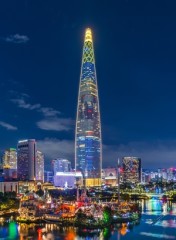
Lotte World Tower to light up with moon rabbit media facade for chuseok
Lotte World Tower and Mall announced Thursday that they will offer a range of autumn-themed cultural programs during the upcoming chuseok holiday. During the chuseok holiday from Sept. 24 to Sept. 27, Lotte World Tower will display a "moon rabbit" media facade on its exterior. The display, depicting a rabbit pounding rice cakes against a full moon backdrop, will run for 10 minutes at the top of each hour from 7 p.m. to 10 p.m.
Sept. 17, 2026
-

Jeju Shinhwa World to hold Chuseok scavenger hunt with buffet dining prize
Two-day outdoor event runs Sept. 25-26 Activities range from yutnori to songpyeon-making Jeju Shinhwa World, the integrated resort complex on Jeju Island, will hold a Chuseok holiday event called "Find the Moon Rabbit's Lost Songpyeon!" on Sept. 25 and 26. The event is free and open to all customers visiting the resort during the Chuseok holiday. It runs from 3:30 p.m. to 6 p.m. in the outdoor garden in front of the M Lounge. Inspired by the legend of the moon rabbit and Chuseok symbols — the full moon and songpyeon rice cakes — the main game challenges participants to find songpyeon hidden around the venue. Players collect color-coded stickers for each one they find, and final scores determine the rankings. Prizes await the top scorers: first place wins a single-person dining voucher for Sky on Five Dining, second place receives a lunch special voucher for Seonghwajeong, third place gets a running cushion, and fourth place earns a single Americano voucher at Cove. Beyond the main game, the resort has prepared a range of activities for all ages. These include a high-striker game where players swing a hammer to send a gauge up to the moon rabbit's full moon, a Chuseok songpyeon-making session for the whole family, a wish-letter station called the Moon Rabbit Wish Post Office, a yutnori board-game mission, a timer challenge where players guess the exact time to win, a random-draw game called "Find the Songpyeon in the Dark," and a balloon art workshop. "We have prepared a variety of interactive events so that customers visiting Jeju Shinhwa World during the great national holiday of Chuseok can laugh and enjoy themselves with their families," a resort official said. "We hope you will create a rich and happy Chuseok memory with the moon rabbit at Jeju Shinhwa World."
Sept. 17, 2026
-

Jennie breaks BTS record, becomes longest-charting K-pop act on Billboard Hot 100
'Dracula' tops BTS's 'Butter' with 16 weeks in top 10 Jennie claims longest solo No. 1 run in K-pop history Her 'lazy cool' aesthetic resonates with North American listeners Jennie has surpassed even BTS to cement her status as the undisputed force in K-pop. She has shattered what was long seen as a structural ceiling for the genre — the limits of concentrated fandom purchasing power — and has now spent 16 weeks riding high at the top of American pop music. According to the latest Billboard charts released Thursday, "Dracula," Jennie's remix collaboration with Tame Impala, held at No. 6 on the Hot 100, marking its 16th consecutive week in the upper reaches of the chart. The run surpasses BTS's record of 15 consecutive weeks in the top 10 set by their mega-hit "Butter" in 2021, making Jennie the longest-charting solo K-pop artist ever to dominate American mainstream radio and streaming. The Billboard Hot 100 top 10 has historically been a fortress guarded by a handful of global superstars. PSY cracked it in 2012 with "Gangnam Style," spending 12 weeks there and peaking at No. 2. BTS then expanded K-pop's footprint with "Dynamite" (13 weeks) and "Butter" (15 weeks). In late 2024, Blackpink's Rosé set a new record for female K-pop soloists with "APT.," her collaboration with Bruno Mars, which spent 13 weeks in the top 10. Now Jennie has rewritten that history entirely with "Dracula," reaching a milestone no K-pop act has ever reached before. Jennie's 'lazy cool' magic: a sound no one else can replicate "Dracula" was originally a solo track by Tame Impala, and when it first came out it did not achieve anything close to its current success. It was Jennie's collaboration that ignited the song on TikTok and other social media platforms, propelling it to the top of Spotify and the Billboard charts. The driving force behind this unprecedented record is by far the distinctive sonic texture that only Jennie can produce. She occupies a singular place in K-pop history as both a vocalist and a rapper. An A&R executive at a major Korean entertainment label said that while conventional K-pop has long leaned on explosive high notes and tightly structured vocal arrangements, Jennie takes a different approach entirely. "She goes head-to-head with a sensual mid-to-low register laced with breath," the executive said. "That signature languid, polished 'lazy cool' mood fits perfectly with the texture of alternative R&B that North American pop listeners respond to most." Jennie's ability to dissolve the boundary between singing and rapping is exceptional. She glides through melody with ease, then pivots to sharp, clipped rapping that pushes syllables off the tongue — and the transition feels entirely seamless. Her crisp English diction and the elastic syncopation with which she stretches and compresses rhythm generate a singular resilience over Kevin Parker's hazy synthesizers and driving bassline. Jennie was not merely a featured artist on this collaboration. Her creative authorship was on full display: she wrote the melodies and lyrics herself, from the intro through the pre-chorus and bridge. The killer line — "Run from the sunlight, Dracula" — became a meme that swept the world through TikTok and Instagram Reels. What had been a niche track from the indie world was fully reborn in Jennie's hands as a signature anthem of club culture. Beyond the fandom: breaking into everyday American life The commercial formula behind "Dracula" is also a sharp departure from the typical K-pop consumption pattern. There was none of the "front-loading" that has defined the genre — where fandoms flood streaming and sales platforms in the first week to push a song to No. 1, only for it to vanish within two or three weeks. Popularity sparked by short-form challenges translated directly into broad listenership on Spotify and Apple Music, and notoriously conservative American terrestrial radio programmers began voluntarily adding the track to their regular rotation. The song has consistently drawn more than 12 million weekly audio streams in the United States and reached more than 23 million radio listeners every week for over four months — evidence that it has taken root not just in fan playlists but in the daily lives of ordinary Americans, playing in cars during commutes and in cafes across the country. The parallel solo careers of all four Blackpink members are generating strong synergy. Rosé reached No. 3 on the Hot 100 with Bruno Mars, Lisa climbed to No. 7 on the Billboard 200, and Jisoo charted alongside Zayn, formerly of One Direction — all four members have now broken through both of Billboard's flagship charts. Led by Jennie, the members are simultaneously making their comebacks, each staking out a distinct musical identity. Jennie previewed a lo-fi soft rock sound with her pre-release single "Less than a Lover" in July, then followed it with her EP "Fallen Angel" in August, cementing her credentials as a singer-songwriter and creative force in her own right. That momentum carried over to Lisa and Jisoo, who both released new music on Sept. 4. Lisa, who is set to drop her EP "PRESS PLAY" on Oct. 23, demonstrated her world-class performer credentials with the pre-release single "SaWaDiKa," which surpassed 100 million YouTube views within two days of release and reached No. 13 on Spotify's global daily chart. Jisoo, who is preparing her first full-length solo album, is using her pre-release single "CLICK" to build a layered, sequential narrative through organic storytelling. Rosé, who has already stood at the peak of the global music market, is also joining the wave. She confirmed the release of a new single, "new trick," a collaboration with Apple's Shot on iPhone campaign, set for Friday — signaling a pop-punk energy again. An industry insider said Blackpink benefits from the interplay between its members' solo and group activities. "Their solo work is not a zero-sum game," the person said. "Each member is growing into a mainstream Western pop star in her own right, and that acts as a powerful centripetal force that launches Blackpink's collective value into the stratosphere."
Sept. 17, 2026
-
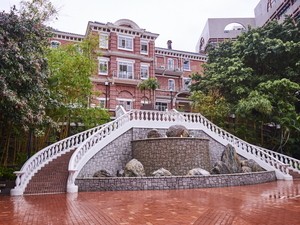
Hong Kong emerges as study tour destination with 5 universities in world's top 100
Hong Kong Tourism Board joins overseas study fair City's study tour programs among highlights The Hong Kong Tourism Board announced Wednesday that it will support on-site promotions at the 60th Overseas Study Fair, hosted by the Hong Kong Economic and Trade Office at COEX in Seoul's Samseong-dong on Saturday and Sunday. The tourism board plans to use the fair to showcase Hong Kong as a study tour destination with strong educational infrastructure. Hong Kong is roughly three and a half hours from Korea by air, with only a one-hour time difference, making it an accessible destination for student groups. More than 140 direct flights operate weekly between Hong Kong and four domestic airports — Incheon, Gimhae, Daegu and Jeju — giving schools flexibility in scheduling travel around the academic calendar. Getting around the city is equally straightforward. The MTR subway, trams and the Star Ferry connect key areas across the city, and a range of payment options — including the Octopus card, contactless credit and debit cards, and QR payments — make it easy for students to manage expenses during group activities or free time. Safety is another draw. Hong Kong ranked eighth globally in Numbeo's 2026 Global Safety Index, ahead of South Korea at 30th. The city maintains systematic police patrols and security management, and applies strict hygiene and safety standards to imported food and ingredients. Hong Kong also uses both English and Chinese as official languages, allowing students to encounter both during their trip, while the city's blend of Eastern and Western cultures offers a distinctive cross-cultural experience. Hong Kong is home to several universities with strong global standings. Five institutions — the University of Hong Kong, the Chinese University of Hong Kong, the Hong Kong University of Science and Technology, the Hong Kong Polytechnic University and the City University of Hong Kong — all rank within the world's top 100 in the QS World University Rankings 2027. The University of Hong Kong topped the QS Asia University Rankings 2026. The universities are recognized for excellence across fields including medicine, business, engineering, AI, design and hospitality and tourism. Several offer campus tour programs for school groups, covering admissions, academic programs and research facility visits, helping students explore potential majors and career paths. The chance to experience the academic environment of top-ranked universities firsthand is considered one of Hong Kong's key selling points as a study tour destination. Beyond its universities, Hong Kong offers a wide range of educational attractions spanning science and technology, arts and culture, and urban regeneration. Students can choose visits and hands-on programs based on their interests, and most permanent exhibitions at museums and galleries run by the government's Leisure and Cultural Services Department are free to enter. Urban regeneration sites add further depth to any itinerary. Tai Kwun, a former police station and prison converted into a cultural complex, PMQ, a revamped police married quarters, and The Mills, a repurposed textile factory, all offer a window into the city's evolving identity. The West Kowloon Cultural District's M+ museum and the Palace Museum complement traditional cultural experiences, while major theme parks offer education-linked programs, enabling visits tailored to specific fields of interest. At the fair, the Hong Kong Economic and Trade Office booth will distribute a "Hong Kong School Tour Guide" brochure prepared by the tourism board, providing information on key educational facilities, hands-on programs and recommended itineraries. Travel agencies planning student group tours can also request a copy of the brochure by application.
Sept. 17, 2026
-
![Trump's negotiating playbook: Win by designing the game [Book Review]](https://wimg.heraldcorp.com/news/cms/2026/09/17/rcv.YNA.20260901.PRU20260901094001009_T1.jpg?type=h&h=240)
Trump's negotiating playbook: Win by designing the game [Book Review]
Learning to 'design the board' from Donald Trump's negotiating style Extreme anchoring and unpredictability as tools of leverage 'Winning negotiations? Build a structure that favors you from the start' Moral and political assessments of US President Donald Trump diverge starkly. Provocative, blunt and unafraid to threaten, he is an unpredictable dealmaker — at once the world's most controversial figure and the key player shaping the course of nearly every major international negotiation and issue today. Business negotiation expert Kim Kyung's book "Trump's Negotiation Strategy That Flips the Board" opens with a single question: why does the world tremble at Trump's every word? The author dissects Trump's negotiating tactics and presents his "art of winning" as a practical guide for today's business world. For Trump, the negotiating table is a battlefield where every deal is won or lost. Win-win outcomes — built on mutual respect, logical persuasion and relationship maintenance — hold no interest for him. Once Trump sits down, his only concerns are domination and victory. "In the ruthless world of business, this 'nice negotiating' approach often ends in an agreement where only you come out the loser," the author writes. Trump does not simply try to extract better terms. He rewrites the rules of the game entirely. By deploying extreme anchor points to unsettle his counterpart and preemptively narrowing the range of available options, Trump effectively decides 80 percent of the outcome before he ever takes his seat at the table. A prime example of his extreme anchoring tactic is the Special Measures Agreement negotiations over South Korea's share of USFK defense costs. In the first round of talks in 2020, the Trump administration put $5 billion on the table — roughly five times the existing contribution. The South Korean negotiating team had anticipated an increase of 10 to 20 percent, so the figure was so far beyond any acceptable range that it shifted the entire baseline of the negotiation. Trump uses his counterpart's vulnerabilities as leverage, keeps them in a state of constant anxiety through unpredictable moves, and enters every negotiation ready to walk away at any moment. The author stresses that the most powerful force in any negotiation is not a stronger argument, but "the courage to leave the table without a second thought." When Trump took office, for instance, he signed an executive order withdrawing from the Trans-Pacific Partnership, signaling to the world that the United States was not an automatic participant in multilateral cooperation. "Trump weaponized uncertainty — the message being, 'We'll be fine without you, but you'll struggle without access to the American market,'" the author writes. "That posture allowed the United States to hold an overwhelming advantage in subsequent negotiations, including the revision of the Korea-US Free Trade Agreement and US-Japan trade talks." The author repeatedly emphasizes that negotiation is not a single conversation but a continuous process of preparation, execution and follow-through. Just as Trump's seemingly impulsive and chaotic behavior follows a discernible pattern on closer inspection, the key to successful negotiation lies in building a favorable structure across the entire arc — from pre-negotiation preparation to in-the-room responses to post-negotiation consolidation. "Negotiation is about reading the flow, not just the dialogue — about structure, not just terms, and about the whole board, not just the moment's gain," the author said. "Trump's Negotiation Strategy That Flips the Board" by Kim Kyung, published by Parkyoungsa
Sept. 17, 2026
MOST READ
- 1KAIST develops high-performance bio-based adhesive using E. coli instead of petroleum
- 2Pope Leo XIV declines French honors and banquet, accepts only private meeting with Macron
- 3Daimler Truck unveils next-generation transport solutions at IAA 2026
- 4What was Rachmaninoff's performance fee? A 1928 price list tells all
- 5Samsung Biologics union's show of force backfires at the bargaining table
- 6APR says hair-loss treatment research published in international journal
-
WORLD

US warns of punishment for anyone enabling Iran's Strait of Hormuz toll scheme
-
INDUSTRY

Toyota union puts productivity first; Hyundai Motor union demands bigger share of profits
-
FINANCE

National Growth Fund to invest $531M in FuriosaAI, which rebuffed Meta's $800M takeover bid
-
INDUSTRY
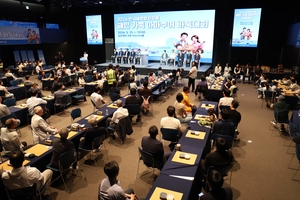
Korea Shipowners' Association holds amateur baduk tournament for Maritime Day