
- HOME
- IT·SCIENCE

Probiotics cut antibiotic-related diarrhea risk by nearly half, studies find
Probiotics reduce antibiotic-associated diarrhea risk by 46% Researchers caution findings do not validate specific products; effects unclear in adults 65 and older Children with little disruption to gut bacteria saw no benefit in clinical trial 'Should I take probiotics while on antibiotics to protect my gut?' Antibiotics cannot selectively target only disease-causing bacteria. They also reduce beneficial bacteria living in the gut, disrupting the intestinal balance and making diarrhea more likely. An estimated 5 to 35 percent of people taking antibiotics develop what is known as antibiotic-associated diarrhea. Most cases resolve within a few days, but the condition can prolong hospital stays or prevent patients from completing a full course of antibiotics. That has fueled hopes that taking probiotics alongside antibiotics could help preserve gut balance. But does the evidence actually support it? Diarrhea risk cut by nearly half A research team from Lanzhou University in China and other institutions published findings last month in the international journal Frontiers in Nutrition, synthesizing and reanalyzing 21 systematic reviews on the preventive effects of probiotics against antibiotic-associated diarrhea. The analysis found that people who took probiotics while on antibiotics had a 46 percent lower risk of antibiotic-associated diarrhea compared with those who took a placebo. Children saw a 54 percent reduction in risk and adults 45 percent, suggesting comparable benefits across age groups. There was also no evidence that probiotic use increased adverse effects. No clear benefit was observed in adults 65 and older. The research team said that as people age, the diversity of gut microbiota declines and immune function weakens, which may make it harder for externally introduced probiotics to establish themselves in the gut. Many probiotic products on the market advertise blends of multiple bacterial strains. The analysis found, however, that multi-strain and single-strain products performed similarly. Multi-strain products reduced diarrhea risk by 43 percent, while single-strain products reduced it by 45 percent. Taking 5 billion colony-forming units (CFU) or more per day was associated with a 65 percent reduction in diarrhea risk, compared with 28 percent for lower doses. The research team cautioned that this finding was based largely on studies involving children and should not be used as a criterion for selecting specific products. 'This does not mean specific products work' The research team stressed the need for caution when interpreting the results. Of the 21 systematic reviews used in the analysis, only one was rated high quality in terms of methodology. Thirteen were rated "very low." The researchers also noted that the same clinical trials appeared repeatedly across multiple systematic reviews, which could make the body of evidence appear larger than it actually is. When overlapping studies were removed and the data reanalyzed, the estimated effect shrank to between 37 and 41 percent. The research team drew a clear distinction, stating that "these results do not mean that any specific probiotic product is effective," and went on to say that "these findings should not be used to support efficacy claims for probiotics in general or for any specific product." On safety, the team said adverse effects did not increase overall, but noted that cases of probiotics entering the bloodstream and causing infection had been reported in patients with severely compromised immune systems and in critically ill patients. Some cases of diarrhea following antibiotic use carry greater risks than others. One such case is colitis caused by an overgrowth of the bacterium Clostridioides difficile (CDI), which takes hold when the gut's microbial balance is disrupted. It can cause severe diarrhea and, in rare cases, spread to a systemic infection. It occurs most commonly in hospitalized patients who receive heavy antibiotic treatment. A research team from Wenzhou Medical University in China and other institutions published findings in March in the same journal, analyzing 16 systematic reviews on the preventive effects of probiotics against CDI-related colitis. People who took probiotics had a 63 percent lower risk of developing CDI-related colitis. Products containing the yeast-based probiotic Saccharomyces boulardii and those combining multiple strains showed the most pronounced effects. Most adverse effects were mild gastrointestinal symptoms such as bloating. The research team noted that 11 of the 16 studies used in the analysis were rated "very low" in quality, and assessed the certainty of the evidence as low. Children with little diarrhea to begin with saw no benefit from probiotics A separate clinical trial found that probiotics are not helpful in every situation. A research team at Georgetown University published results in February in the international journal Scientific Reports from a clinical trial involving children aged 3 to 12 who had been prescribed antibiotics. The children consumed either probiotic yogurt or regular yogurt while taking antibiotics. Antibiotic-associated diarrhea occurred in 3 of 125 children who ate probiotic yogurt and in 2 of 130 children who ate regular yogurt. Diarrhea was rare in both groups, and there was no meaningful difference between them. The research team noted that most of the children had been prescribed antibiotics that do not significantly disrupt gut bacteria. The team interpreted this to mean that because the children's gut balance was not substantially disrupted from the outset, there was little for the probiotics to protect. They concluded that probiotics may not help prevent diarrhea when the gut microbiome is not significantly disturbed. The Lanzhou University research team also said the field needs to move beyond asking whether probiotics work, and instead determine which strains, at what doses, for which patients, and in combination with which antibiotics, are most effective. References DOI: 10.3389/fnut.2026.1994645 Xi F, Xu C, Li P, et al. Probiotics for the prevention of antibiotic-associated diarrhea: an umbrella review and second-order meta-analysis of 21 systematic reviews covering 170 unique randomized controlled trials. Front Nutr. 2026;13:1994645. DOI: 10.3389/fnut.2026.1699223 Chen W, Pan X, Ji J, Wu Z, Lin X. Efficacy of probiotic supplementation in preventing Clostridioides difficile infection: an umbrella review of systematic reviews and meta-analysis. Front Nutr. 2026;13:1699223. DOI: 10.1038/s41598-026-39826-4 Merenstein D, Grant-Beurmann S, Sanders ME, et al. Probiotic intervention not beneficial to prevent antibiotic-associated diarrhea in absence of antibiotic-induced microbiome disruption. Sci Rep. 2026;16:9301.
Jang Yun-woo Nov. 17, 2026
-

Children who learn instruments pull ahead in reading, too
Vocabulary, spatial reasoning and working memory all favored young musicians — but arithmetic computation showed no gap between groups Neural differences fell short of statistical threshold after correction; single time-point design leaves causation open Research team calls for broader school-based instrument access It is not uncommon for a child who wants to keep taking piano lessons to be told: "Use that time to work through one more practice sheet instead." The underlying assumption is that learning an instrument has little to do with college entrance exams and will be dropped once middle school begins anyway. Arts and music hagwon enrollment typically peaks in the early elementary years and thins out as students move up the grades. Researchers have long been interested in whether practicing a musical instrument can sharpen abilities that have nothing to do with music. A 2004 Canadian study found that children who received 36 weeks of music lessons scored higher on cognitive tests and academic achievement measures than those who took drama lessons or no lessons at all. Other research reported that as little as 20 days of music training was enough to raise vocabulary scores, and a separate study found that only children who had learned an instrument showed gains in language ability. It is no surprise that practicing an instrument improves a child's sense of rhythm or ability to distinguish pitch. What researchers have focused on is whether gains also appear in seemingly unrelated areas such as reading and mathematics. When skills acquired in one domain transfer to an entirely different one, researchers call it far transfer. What actually happens in the brain, however, remains unsettled. Multiple studies have reported structural differences in the brains of children who play instruments, but the regions identified have varied from study to study. It has also been difficult to rule out the possibility that children who were cognitively stronger to begin with were simply the ones who stuck with their instruments. A research team led by Kelsey Lopez at Northeastern University recently published findings in volume 81 of the international journal Developmental Cognitive Neuroscience showing that children aged 7 to 9 who were learning a musical instrument scored higher on both cognitive and academic achievement tests. Young musicians lead in vocabulary and spatial reasoning The research team drew on data from a child exercise study conducted by the University of Illinois, dividing participants into a group that played an instrument and practiced more than 30 minutes a week and a group that had no music instruction. Thirty-eight children learning an instrument were matched with 38 non-music children on age, gender and household income. Among the instruments played, piano was the most common at 29 children, followed by string instruments such as violin and cello at 8, and guitar or ukulele at 4. Cognitive test results were broadly higher for the instrument-learning group. The gaps were most pronounced in spatial reasoning — the ability to mentally rotate and match shapes — vocabulary comprehension, and the ability to pair and memorize images with sounds. The instrument-learning group also outperformed on working memory tests. The working memory task required children to memorize words appearing on a screen while simultaneously judging whether arithmetic problems were solved correctly. The gaps were even wider on academic achievement tests. Children learning instruments scored higher across the board, including in composite scores covering reading and mathematics. In the subcategories, differences were confirmed in reading comprehension, word recognition and fluency, and spelling. In mathematics, the instrument-learning group led on conceptual questions, but the two groups showed no difference on computation — solving given equations. Listening comprehension and writing also fell short of the statistical threshold for significance. However, the research team acknowledged a key limitation: because the study compared the two groups at a single point in time rather than tracking children before and after they began instrument lessons, it cannot rule out the possibility that children with higher baseline cognitive ability were simply the ones who continued learning an instrument. The team also noted that access to instrument instruction is often tied to family finances. Given that the cost of purchasing an instrument and paying for lessons can be a barrier, the researchers recommended that schools prioritize expanding opportunities for children to learn instruments and reducing the financial burden on families. Reference DOI: 10.1016/j.dcn.2026.101813 K.L. Lopez, Y. Chen, R. Burtonpatel, L. Raine, A.F. Kramer, C.H. Hillman & P. Loui, Musical training is associated with cognitive outcomes and white matter microstructure in middle childhood, Dev. Cogn. Neurosci. 81 (2026) 101813.
Nov. 17, 2026
-

Even real talented dogs are now suspected of being AI
US animal shelter calls viral video '100% fake' — AI-generated euthanasia lists and lost-pet photos used to solicit donations EU requires deepfake labeling from users too; South Korea's AI Basic Act covers only service providers A column exploring what can happen to our dogs and cats — weaving together the policies, research and global cases behind the headlines. AI-generated fake animal videos are flooding the internet in such volume that even a genuinely talented pet dog performing real tricks is now met with suspicion. Generative AI tools can produce lifelike animal footage from just a few lines of text. Emotionally stirring or shocking animal clips attract high view counts and advertising revenue, and some accounts have sprung up dedicated to posting several such videos a day. On a recent entertainment program, a pet dog accurately picked out hangul word cards and identified a card bearing its own name — prompting cast members to blurt out, "It's AI." "I can't believe it. This feels like a rigged show," one cast member said. The dog had in fact learned the tricks through training, but the moment laid bare just how quickly people now reach for AI as their first suspicion. 'Grandmother and the retriever' that moved viewers to tears was AI In late August, a video spread across Instagram in the United States showing an 81-year-old woman named Eleanor saying goodbye to a 7-year-old golden retriever named Duke as she surrendered him to the Oregon Humane Society (OHS). The clip was accompanied by an explanation that her health had deteriorated and she was moving into a care facility that did not accept pets. According to the Portland weekly Willamette Week, the video appeared on at least nine accounts, with one post alone drawing 62,700 likes and nearly 4,000 comments. The video was a fake created with AI. OHS staff member Sara Yusavitz said the clip was "heartbreaking but 100% fake." The shelter was flooded with calls from people asking whether they could adopt Duke, and staff lost significant time responding to the inquiries. The same account also posted similar videos showing other elderly women surrendering their dogs in Virginia and Kentucky. OHS staff member Laura Klink said, "Having to deal with this at all interferes with our work." According to US animal welfare activist Sophie Gamand, posts circulated in the San Francisco Bay Area in February using AI-altered photos of shelter dogs to falsely claim the animals were on euthanasia lists and solicit donations. The dogs were either not slated for euthanasia or did not exist at all. In Fresno, California, a scammer sent an owner who had lost a dog AI-generated photos as supposed proof of having the animal, then demanded payment in gift cards. The dangerous misconceptions fake videos spread Research has also found that AI-generated fake animal videos spread false perceptions about wildlife. Researchers at the University of Cordoba in Spain warned in a paper published in the journal Conservation Biology that "generative AI tools can now produce plausible wildlife videos and images of events that never actually occurred." One example the researchers cited was an AI video of a bird sheltering its chicks in the rain, captioned "true maternal love" — even though roughly 90 percent of bird species have males that share in raising their young. Fake videos of predators and prey living in harmony, or of wild animals forming close bonds with humans, are also common. The researchers said such videos could instill a false sense that wildlife is safe to approach, fuel demand for keeping rare animals as pets, and draw tourists to places where those animals do not actually live. Because international rules governing AI content are unlikely to be established quickly, the researchers said media literacy education is urgently needed. A separate paper published in the journal Nature Ecology & Evolution examined cases in which AI-enhanced photos uploaded to citizen science platforms contaminated ecological records. In one case, a photo purportedly showing a bird species never before recorded in Brazil turned out to depict a different species entirely. The person who posted it had used Google's AI photo-editing feature, which inadvertently overlaid markings resembling those of another bird onto the image. EU requires labeling from users too; South Korea targets only service providers Countries are moving to require labeling on AI-generated content. The EU has applied transparency obligations under its AI Act since Aug. 2. Companies that develop generative AI must embed machine-readable markers in AI-produced images, videos, audio and text. Those who use AI systems to create and distribute deepfakes must also visibly disclose that the content was AI-generated. Violations can result in fines of up to 15 million euros ($16.5 million) or 3 percent of global annual sales, whichever is greater. China has enforced its "Measures for the Administration of Labeling of AI-Generated Synthetic Content" since Sept. 1 last year. AI service companies must attach both a visible label and an embedded marker in the file metadata. Users who post AI-generated content online are also required to disclose that it was AI-produced and to use their platform's labeling function. In South Korea, the AI Basic Act took effect Jan. 22 this year. Article 31 of the law requires businesses that develop AI or provide AI-based services to label outputs from generative AI, and to disclose deepfakes in a manner clearly recognizable to people. The obligation applies only to AI service providers, meaning YouTubers and individual account holders who use AI services to create and post fake videos are not covered. The Korea Communications Commission has said it plans to push through an amendment to the Act on Promotion of Information and Communications Network Utilization and Information Protection by year-end that would require users who post AI-generated images or videos to label them as such, and would place platforms under a duty to manage compliance. Meanwhile, OHS staff member Klink said, "We are living in an era where it is hard to tell what is AI and what is real."
Nov. 17, 2026
-

Ha Jung-woo visits Daejeon to discuss AI strategy, startups and talent
The Presidential Committee on National AI Strategy said Tuesday that Ha Jung-woo, its standing vice chairman, visited Daejeon to meet with industry, academic and research officials at the National AI for Science Center, Daejeon Tips Town and KAIST. Ha attended an AI talk concert at Innovate Korea 2026, held at the Ryu Keun-chul Sports Complex at KAIST. The talk concert, moderated by KAIST Professor Yoon Yun-jin, brought together Ha, KAIST AI College Dean Yoon Kuk-jin, LG CNS AI Center Director Jin Yo-han and Korea Research Foundation Chairman Hong Won-hwa. The panelists exchanged views on South Korea's push to become one of the world's top three AI powers, corporate survival strategies in the AI era, and the future of AI talent. Earlier, Ha received a briefing from KAIST Professor Jang Young-jae of the Department of Industrial and Systems Engineering — also chief executive of Daim Research — on KAIROS, an AI-powered unmanned factory platform developed by KAIST, and toured the AI-driven manufacturing site. KAIROS is a next-generation unmanned factory operating system that uses AI to integrate and control a range of robots, including logistics, collaborative and humanoid robots. The system — from the robots and controllers to wireless charging and operating software — was built entirely on domestic technology. Ha also held a field meeting with representatives of AI startups and investment institutions at Daejeon Tips Town, located within Chungnam National University. Daejeon Tips Town is an open startup space established in 2021. It currently houses about 30 organizations in total, including 26 startup companies and several investment institutions. Participants shared on-the-ground perspectives on the challenges AI startups face as they grow, including attracting investment, commercializing technology and entering new markets, and discussed ways to strengthen the regional AI startup ecosystem. Ha also visited the National AI for Science Center, housed within the Institute for Basic Science, where he reviewed the center's operations and key initiatives with Director Yu Yong-gyun and other officials. NAIS was established in May within the National Research Council of Science and Technology to promote "AI Native R&D" — the integration of AI across the entire research and development process. The center's core functions include developing autonomous AI scientists, building and operating autonomous laboratories, and creating an online and offline hub for science AI research collaboration. Participants shared updates on these initiatives and discussed the center's role in strengthening South Korea's science and technology competitiveness, along with on-site challenges and potential improvements. "We will continue engaging with AI innovation sites — research institutions, universities and companies — to sharpen the execution of the national AI strategy and pursue field-driven policy development and support so that South Korea can rise to become one of the world's top three AI powers," the committee said. Ha visited Gangwon Province in October to examine AI applications in healthcare and transportation, review talent development efforts and inspect plans for large-scale AI data center construction. A subsequent visit to Daegu and North Gyeongsang Province focused on the progress of AI transformation in the region's key industries, including secondary batteries, mobility and robots.
Nov. 17, 2026
-
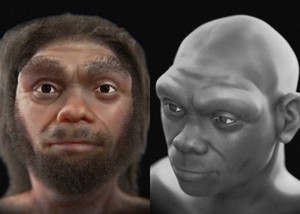
200,000-year-old Chinese skull claimed as 'new human species' turns out to be Denisovan
Protein analysis of bone powder identifies fossil as Denisovan, first confirmed in Siberia in 2010 Earlier case for 'new species' based on brain size challenged Fossil findings help sketch Denisovan appearance for first time When an ancient human fossil surfaces, researchers ask two questions: does it belong to a known species, or does it warrant an entirely new name? When the bone structure does not match any existing species closely enough, a new classification is sometimes proposed. A skull excavated in the 1970s from Xujiayao in China's Hebei Province and dated to roughly 200,000 years ago is unusually thick and low, with an estimated cranial capacity of 1,700 milliliters. That figure is considerably larger than the 1,120 to 1,420 milliliters recorded for other East Asian fossils from the same period. In 2024, those characteristics prompted researchers to propose a new human species called Homo yuluensis, with the Xujiayao fossil designated as the type specimen. Researchers had long disagreed over whether the fossil belonged to the Neanderthal lineage or represented an early modern human, and the placeholder term "archaic Homo" was used to defer the question. Bone morphology alone left the classification open to either interpretation. A research team led by Fu Chaomei and Xing Song of the Institute of Vertebrate Paleontology and Paleoanthropology at the Chinese Academy of Sciences published findings in Nature showing that protein extracted from the Xujiayao fossil identifies it not as a new species but as a Denisovan — an already-known extinct human lineage. Denisovans were first identified in 2010 through DNA recovered from a finger-bone fragment found in a cave in the Altai Mountains of Siberia. Evidence of interbreeding with modern humans survives in the genomes of present-day East Asians, yet almost no skull or facial bones had been found, leaving the Denisovans' physical appearance largely unknown. 18 proteins recovered from the fossil The Xujiayao fossils were excavated in the Nihewan Basin between 1976 and 1979. The collection comprises 20 pieces in total — skull fragments, jawbone pieces and teeth — and uranium-series dating combined with electron spin resonance places them at roughly 200,000 to 140,000 years ago. The research team drilled small holes into already-damaged areas of one right skull fragment and one right lower-jaw fragment to collect bone powder without causing additional harm to the specimens. Tens of thousands of protein fragments were detected in the powder. The challenge was distinguishing proteins originally present in the fossil from contaminants introduced after excavation. The team exploited the fact that certain amino acids degrade gradually over time: a high degree of degradation signals an ancient protein, while little change indicates recent contamination. Eighteen proteins that passed this screening were used in the analysis. The decisive clue lay at position 996 of a collagen protein. At that site, Denisovans carry the amino acid lysine, while Neanderthals and modern humans carry arginine. Every individual previously confirmed as Denisovan through protein or DNA analysis has carried lysine at that position. Both Xujiayao specimens returned the same result: 57 protein fragments from the skull piece and 61 from the jaw piece all read lysine at that site. The degradation rates of those fragments ranged from 69 to 100 percent, confirming they were not late-arriving contaminants. The team also constructed a phylogenetic tree by linking 2,074 protein positions. The Xujiayao fossil clustered with the Siberian Denisovan and the Xiahe, Penghu and Harbin individuals, with a probability exceeding 99 percent. On that basis, the team classified the Xujiayao fossil as belonging to a "late Middle Pleistocene East Asian Denisovan population." Brain size alone was not enough to define a new species The earlier argument for classifying the Xujiayao fossil as a new human species rested primarily on its large brain. The research team concluded that the difference in brain size is not sufficient to distinguish species. Modern human cranial capacity ranges from 1,090 to 1,880 milliliters, meaning both the 1,700-milliliter Xujiayao figure and the 1,120-to-1,420-milliliter range of contemporaneous East Asian fossils fall within that span. The Neanderthal range of 1,065 to 1,740 milliliters largely overlaps as well. A reexamination of bone morphology pointed in the same direction. The Xujiayao skull is thick — measuring 7.7 millimeters near the crown — and low and wide, traits that resemble those of the older species Homo erectus. The team noted that the same combination of features appears in fossils from Harbin, Jinniushan, Dali and Hualongdong, and concluded that all of them belong to the Denisovan lineage. The Harbin skull was confirmed as Denisovan through protein and DNA analysis in 2025. Combined with fossils that preserve facial bones, the team said the findings allow a near-complete picture of the Denisovan head to be drawn. According to the researchers, Denisovans had a low, receding forehead, thick and curved brow ridges, flat cheekbones, a wide nasal aperture and a jaw that did not protrude significantly. Professor Fu Chaomei told Xinhua that the research now makes it possible to "recognize, compare and classify" Denisovans by their physical form. The team acknowledged that proteins carry less information than DNA, which prevented them from resolving finer relationships within the Denisovan lineage. Reference DOI: 10.1038/s41586-026-11132-z Xing, S., Wu, Z., Shao, Q. et al. The proteome of Middle Pleistocene Xujiayao and common Denisovan morphology. Nature (2026).
Nov. 16, 2026
-

'More social than you think': Cats meow four times more when their owners are around
Brazilian researchers find cats meow four times more in front of people than alone — and only stare at the door when left by themselves Cats embed cries in purrs to beg for food and can even tell their owner's voice apart from a stranger's A look at what can happen to our dogs and cats — exploring the policies, research and global cases behind the stories. A new study finds that when a cat meows at a person, it is not talking to itself — it is sending a signal asking for help. Cats are often thought of as aloof, yet the number of cat-owning households in South Korea keeps rising. According to KB Financial's "2025 Korea Pet Report," the number of pet cats in the country stood at about 2.17 million at the end of 2024, up 9.2 percent from a year earlier, while the pet dog population fell for the first time — from about 5.56 million to about 5.46 million over the same period. The number of households keeping cats was estimated at about 1.37 million. According to the science news outlet ScienceAlert, a research team led by Naila Fukimoto at the University of São Paulo in Brazil published a paper in the international journal Animal Behaviour confirming through experiments why cats meow in front of people. The team recruited 38 cats whose owners reported they frequently vocalized around food, then placed each cat's favorite treat inside a small plastic box with holes. The cats could smell the treat but could not retrieve it on their own. The researchers observed each cat's behavior for one minute under two conditions: with a person present in the room watching, and with no one in the room at all. When a person was present, the cats meowed a combined 86 times; when left alone, they meowed only 20 times. The likelihood of a cat vocalizing with a person nearby was more than 16 times greater than when alone. With a person in the room, the cats frequently looked at the person and alternated their gaze between the person and the treat box. When left alone, the cats tended to stand still and stare toward the door for long stretches. They appeared to be waiting for someone to come in and open the box. "These results are consistent with meowing playing a communicative role in cat-human interactions," the team said. The researchers interpreted the meow not as an indiscriminate sound but as a targeted signal directed at a specific individual. Cats hide a cry inside a purr to beg for food Cats also manipulate people by concealing a cry inside a purr. A research team led by Karen McComb at the University of Sussex in the United Kingdom published a paper in the international journal Current Biology in 2009 analyzing what they called cats' "solicitation purr." The team played recordings of cats purring while asking for food alongside purrs made in other situations and had people rate them. Listeners judged the food-solicitation purrs as more urgent and less pleasant than ordinary purrs. Even people who had never owned a cat responded the same way. The secret was hidden inside the sound. Embedded within the low rumble of the purr was a higher-pitched cry, and the more prominent that cry, the more urgent listeners found the sound. When the researchers removed the cry component from the recording, urgency ratings dropped sharply. McComb concluded that cats learn to amplify the cry once they discover it works. The solicitation purr appeared more often in cats living one-on-one with an owner than in households with multiple cats. Cats meow more in front of men than women Research also shows that cats are selective about whom they meow at. A team led by Kaan Kerman at Bilkent University in Turkey published a paper in the international journal Ethology in November last year analyzing footage of 31 cat owners reuniting with their cats for 100 seconds immediately after returning home. The cats meowed more when a male owner entered than when a female owner did. Even after accounting for the cat's sex, breed and the number of cats in the household, the owner's sex was the only factor that influenced the result. The team suggested that women may talk to their cats more and pick up on their needs more readily, while cats may need to signal more loudly to capture a man's attention. Kerman said the findings demonstrate "cats' ability to distinguish between bonded individuals and adjust their responses accordingly." Cats are also selective listeners. A team led by Charlotte Duranton at the University of Paris Nanterre in France published results in 2022 in the international journal Animal Cognition from an experiment involving 16 indoor cats. The researchers recorded both the owner and a stranger speaking in a high-pitched, cat-directed voice and in a normal adult-directed voice, then played the recordings for the cats while observing their ear and tail movements and pupil size. Cats that had been listening to a stranger's voice gradually showed less and less reaction. Ten of the 16 cats perked up again when their owner's voice came on. The cats responded most strongly to their owner speaking in the high-pitched, affectionate tone typically used with them, and reacted less when the owner spoke in a normal adult voice. The team said "one-on-one relationships are important for cats and humans to form a strong bond." A cat's attachment to its owner rivals that of a human infant Research also suggests that the attachment cats feel toward their owners is comparable to that of a human baby. A team led by Kristyn Vitale at Oregon State University in the United States published results in Current Biology in 2019 from an experiment in which cats were placed in an unfamiliar room with their owner for two minutes, left alone for two minutes, then reunited with their owner. About 64 percent of the 70 kittens tested showed "secure attachment" to their owner — approaching and greeting the owner upon reunion while calmly exploring the surroundings. Adult cats showed a similar pattern, with about 66 percent displaying secure attachment. The secure attachment rate in human infants is about 65 percent. Vitale said "the majority of cats use their owner as a source of comfort." Vitale added that the attachment both cats and dogs feel toward people may be an adaptation of the bond young animals form with their mothers, reshaped for a relationship with humans. Research into decoding cat communication is still in its early stages. There is a popular belief that cats do not meow at each other and reserve the sound only for humans, but this has not yet been confirmed scientifically. Kerman said "cats are more social animals than we previously thought."
Nov. 16, 2026
-

Nuclear watchdog investigates tritium levels exceeding safety limits at Hanul nuclear plant
Concentration near levels seen at Fukushima intake Probe underway into possible damage to discharge pipes South Korea's nuclear safety regulator said Monday it launched an investigation into tritium discharges at the Hanul nuclear power plant in Uljin-gun, North Gyeongsang Province, after detecting concentrations comparable to those observed during the release of contaminated water from Japan's Fukushima plant. The Nuclear Safety and Security Commission said it dispatched an investigation team of experts from the Korea Institute of Nuclear Safety to begin a formal probe. The commission's regional office was notified Friday that tritium exceeding marine radiation safety standards had been detected at one groundwater monitoring well inside the Hanul plant. The groundwater sample showed a tritium concentration of 30,000 becquerels per liter — close to Korea Hydro & Nuclear Power's own internal management threshold of 40,000 becquerels per liter. The commission called for KHNP to halt operations at any facilities where radioactive material leakage was possible and to conduct seawater analysis to determine whether radioactive substances had been released into the surrounding environment. Seawater samples analyzed by KHNP that day showed a tritium concentration of 117 becquerels per liter at the plant's intake point, above the commission's marine radiation safety limit of 100 becquerels per liter. During Tokyo Electric Power Company's 25th discharge of Fukushima contaminated water — conducted from Oct. 16 to Friday — tritium concentrations of 179 becquerels per liter were recorded at the Fukushima intake point. However, KHNP reported to the commission that afternoon that no tritium was detected in seawater samples collected outside the plant's restricted zone. KHNP also said no gamma nuclides were detected, and that no anomalies were found at other groundwater monitoring wells or radiation monitors within the Hanul plant. The suspected cause is damage to a pipe that discharges treated liquid radioactive waste into the sea, with some of the discharged material believed to have leaked into the surrounding area. The commission said it plans to "thoroughly inspect KHNP's response measures and assess any impact on the surrounding environment."
Nov. 16, 2026
-
'Ethics must keep pace with AI research': NRF, bioethics institute sign MOU
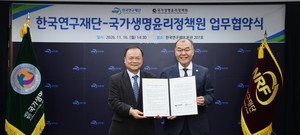
As AI- and biotech-driven research spreads rapidly, two South Korean institutions are joining forces to address the ethical challenges that can arise in the research process. The National Research Foundation of Korea signed an MOU with the National Bioethics Policy Institute on Monday at its headquarters in Daejeon, aimed at strengthening cooperation on research ethics and bioethics. The agreement combines the foundation's research support capabilities with the institute's bioethics expertise to reinforce researchers' ethical responsibilities and build a practical support system for use in the field. The growing use of AI and data-driven research, along with the diversification of research fields, has heightened the need to proactively address ethical issues — including personal data protection and human-subjects research — that can emerge during the research process. In response, the two institutions agreed to expand information sharing and policy consultation on research ethics and bioethics systems and projects, and to jointly pursue education and outreach that reflects the needs of researchers in the field. Particular emphasis will be placed on strengthening guidance and professional training related to institutional review boards, which assess the ethical appropriateness of human-subjects research, as well as the shared IRB system. The two sides also plan to cooperate on activating the IRB evaluation and accreditation regime and improving the research ethics support system. In addition, they will share outcomes and best practices from joint projects and pursue policy and system improvements that reflect feedback from the research community. "In a rapidly changing research environment with increasingly diverse fields, responsible conduct and an ethical research culture are more important than ever," National Research Foundation Chairman Hong Won-hwa said. "We will expand the links between research ethics and bioethics systems and our research support projects, and build a support framework that researchers can put to practical use in the field."
Nov. 16, 2026
-
Daedeok biotech firms ink MOU with Johns Hopkins to expand US market push
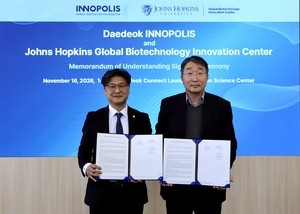
- Signs MOU with Johns Hopkins Global Biomedical Innovation Center - Agreement to support joint research, technology validation and US market entry Biotech companies in the Daedeok Research and Development Special Zone are joining forces with Johns Hopkins University to break into the US market. The Daedeok R&D Special Zone office of the Korea Research Institute of Science and Technology Promotion signed a memorandum of understanding Monday with the Johns Hopkins Global Biomedical Innovation Center (JHBIC) at the Daedeok Connect Lounge inside the Daejeon Science Complex, formalizing cooperation on global technology commercialization in advanced biotech. The agreement is designed to elevate existing technology exchanges between Daedeok-based research institutions and companies and Johns Hopkins researchers into an official cooperation framework. It focuses particularly on supporting South Korean biotech firms in pursuing international joint research, technology validation and entry into the US market. The two sides will work to identify collaboration opportunities between Daedeok institutions and Johns Hopkins researchers, and will pursue joint research, technology transfer and commercialization initiatives. They also plan to hold regular expert exchanges and technology cooperation seminars and forums, and to share information on South Korean and US biotech policy and regulation to help Daedeok companies navigate the US market. Following the signing ceremony, the two organizations co-hosted a "Global Biotech Partnership Showcase." The event brought together five advanced biotech companies from the Daedeok Special Zone and five overseas experts, including researchers from Johns Hopkins. Participating companies presented their core technologies and discussed prospects for international joint research, technology cooperation and global commercialization with the overseas experts. The Daedeok Special Zone office said it will use the collaboration leads identified at the event to facilitate follow-up work with Johns Hopkins researchers, with plans to develop them into concrete international joint research projects, global proof-of-concept initiatives and commercialization programs. Johns Hopkins, the first research university in the United States, operates an integrated biomedical research system linking its medical school and hospital. Its strengths lie in a research infrastructure and global network spanning basic research, clinical application and technology commercialization. According to the Daedeok Special Zone office, Johns Hopkins secured about $3.6 billion in US federal research funding in 2024, underscoring its standing as a world-class research institution. "A strong cooperative foundation that allows advanced biotech companies to tap into overseas expertise and research capabilities is essential for entering global markets," said Im Moon-taek, head of the Daedeok Special Zone office. "We will expand our cooperation network with leading global innovation institutions to help Daedeok biotech companies build competitiveness in overseas markets."
Nov. 16, 2026
-

KISTEP names first internal director general; Im Hyun vows to make institute a 'strategic think tank'
New director brings 20 years of science and technology policy experience, from technology forecasting to R&D feasibility reviews The Korea Institute of Science and Technology Evaluation and Planning (KISTEP) said Monday that Im Hyun, a senior research fellow at the institute, had taken office as its 12th director general. The appointment marks the first time since KISTEP's founding in 1999 that someone from within the organization has risen to lead it. The term runs three years. Im brings two decades of hands-on science and technology policy experience, spanning national foresight studies and preliminary feasibility reviews of large-scale research and development projects. Im earned a bachelor's and master's degree in fiber engineering from Seoul National University before completing a doctorate in polymer science at the University of Akron in the United States. After conducting fundamental research in polymers and materials at Sandia National Laboratories, Im joined KISTEP in 2006. Over the years, Im led the institute's technology forecasting division and headed its fiscal investment analysis bureau, overseeing national R&D policy development as well as investment and evaluation work. Im played a central role in directing the national science and technology foresight surveys, refining methodologies for predicting future technologies. In 2020, Im contributed to national crisis-response strategy through research identifying promising technologies for the post-COVID-19 era. As head of the fiscal investment analysis bureau, Im also oversaw preliminary feasibility reviews for large-scale national R&D projects, including five national strategic initiatives. Im has extensive international experience as well, having conducted joint technology foresight research with Finland's VTT Technical Research Centre, Japan's National Institute of Science and Technology Policy and Malaysia's Malaysian Industry-Government Group for High Technology. Im also served as a visiting researcher at the RAND Corporation. In an inaugural address, Im said the appointment of an internal candidate for the first time in the institute's history was "a recognition of the expertise and capabilities that our members have built on the ground," adding that KISTEP must "ask meaningful questions and provide answers grounded in insight and data to navigate a rapidly changing environment." Im said the institute would strive to become "a strategic architect of national R&D that looks ahead and provides the evidence base for policy — a strategic think tank that the world takes notice of."
Nov. 16, 2026
-
SK Telecom, Hyosung Heavy Industries team up to build GW-scale AI data centers
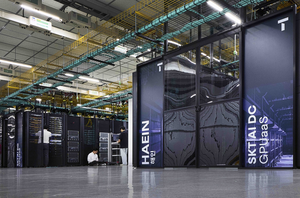
Partners to secure stable supply of key 345kV substation equipment Joint testing of 800V DC power distribution technology also planned Collaboration to extend to new GW-scale AI data center development SK Telecom is joining forces with Hyosung Heavy Industries to build gigawatt-scale AI data centers, the companies announced Monday. The partnership will focus on securing a stable supply of critical power equipment and jointly developing and testing next-generation power technologies, including 800V direct-current power distribution. SK Telecom said it signed a strategic MOU with Hyosung Heavy Industries at SKT Tower in Jung-gu, Seoul. Under the agreement, the two companies will work together on supplying key equipment for 345kV substations, piloting next-generation power conversion technologies such as 800V DC distribution, and identifying new GW-scale AI data center projects. The two companies' chief executives met to discuss cooperation across AI power infrastructure and related business areas, SK Telecom said. The plan is to combine SK Telecom's expertise in AI data center development and operations with Hyosung Heavy Industries' manufacturing and engineering capabilities in power infrastructure to strengthen their competitiveness in building GW-scale AI data centers. As a first step, the two companies will work to establish a stable supply chain for major power equipment, including key components for 345kV substations. Such substations are critical infrastructure that receive high-voltage power from the grid and step it down to the voltage levels required to run large-scale AI data centers. For long-lead-time equipment such as transformers — which can take months from order to delivery — delays in procurement can push back installation and commissioning schedules. The two companies agreed to coordinate production and supply plans for critical long-lead-time equipment in advance to reduce uncertainty in the procurement process. The partners will also pursue joint pilot testing of next-generation power conversion technologies, including 800V DC distribution. That technology delivers direct current close to servers and communications equipment, reducing the number of conversion steps and improving efficiency. Beyond securing equipment on schedule, the two companies said they aim to lay the technological groundwork for improving power efficiency at future AI data centers. The two companies also plan to strengthen their power infrastructure operations capabilities after data centers come online, sharing expertise and experience in operating and maintaining ultra-high-voltage substation equipment to improve the stability and reliability of power supply. SK Telecom and Hyosung Heavy Industries intend to expand the scope of their cooperation into AI data center development and construction, jointly identifying new business opportunities and collaborative business models that draw on each company's respective strengths. "This partnership will serve as a springboard for securing the critical power infrastructure that is the foundation of any AI data center, and for expanding into large-scale new AI data center development and construction," SK Telecom CEO Jeong Jae-heon said. "Through our strategic partnership with Hyosung Heavy Industries, we will strengthen our competitiveness in building GW-scale AI data centers and lead the global AI infrastructure market." Hyosung Heavy Industries CEO Woo Tae-hee said the collaboration "is meaningful in that it combines Hyosung Heavy Industries' power technology with SK Telecom's data center operations capabilities to establish a stable power supply foundation." Woo added that the company aims to expand its long-term strategic partnership not only with SK Telecom but also with SK Group more broadly, generating synergies in the AI data center power market.
Nov. 16, 2026
-
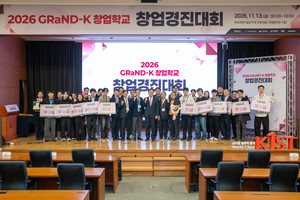
KIST-backed deep-tech startups raise W33.9b over five years
12 teams honored at GRaND-K startup competition Technology startups nurtured through a partnership between a leading domestic research institute and universities have raised a combined 33.9 billion won ($25.4 million) in investment over the past five years. The Korea Institute of Science and Technology announced Monday that it held the sixth annual GRaND-K Startup School competition final and awards ceremony Friday at the KIST International Cooperation Center in Seongbuk-gu, Seoul. The program is part of the Hongneung Small but Strong Research and Development Special Zone's technology startup support initiative. GRaND-K Startup School is a technology startup development program run jointly by KIST, Kyung Hee University and Korea University. Its goal is to help researchers transform laboratory-developed technologies into viable business models and connect them with investment opportunities. This year's competition drew 60 pre-launch and early-stage startup teams. Of those, 20 teams — 10 in each category — advanced to the finals, where they competed on the strength of their technology, market potential and commercialization prospects. Participating teams went through a business diagnostic assessment starting in June, followed by six weeks of startup education, mentoring from investment professionals and commercialization consulting. The program placed particular emphasis not only on the quality of the technology itself but also on validating customer demand and market entry feasibility, and on developing concrete investment attraction strategies. Eight venture capital and accelerator specialists served as final judges. The results yielded 12 winners across the pre-launch and early-stage categories — one grand prize, two excellence awards and three merit awards in each division. Iruvi, an AI solutions company for manufacturing environments, took the grand prize in the pre-launch category. The company is developing a quality-control AI that uses 3D cameras to detect missed steps or abnormal movements by workers in real time, as well as a diagnostic AI that predicts equipment failures before they occur. Plantner, a seaweed-based biomaterials company, won the grand prize in the early-stage category. Plantner has developed technology to extract high-purity alginic acid from seaweed for use in cosmetics and pharmaceuticals, with the aim of localizing production of biotech materials that South Korea currently relies heavily on imports to supply. Winning teams will share a total of 110 million won in prize money. They will also receive follow-up support, including move-in connections at KIST, Kyung Hee University and Korea University, as well as consulting to refine their commercialization strategies. Over the past five years, GRaND-K Startup School has supported investment connections for 251 startup teams, securing a total of 33.9 billion won in funding. This year, the program launched a second-phase investment consortium to strengthen investment support tailored to each stage of a startup's growth. The number of participating investment institutions expanded from 28 to 47. The consortium includes 26 accelerators, 14 venture capital firms and five corporate venture capital funds. It plans to provide customized investment connections covering the full spectrum from startup discovery and incubation through seed investment, growth-stage investment and scale-up to initial public offering. KIST President Oh Sang-rok said research goals should not be confined to technology alone. "We need to look beyond the technology to the entrepreneur's vision and the market," he said. "I hope GRaND-K Startup School becomes a place that nurtures that perspective."
Nov. 16, 2026
-

Nickel-based catalyst achieves 95.5% ammonia decomposition, cutting hydrogen production costs
- UNIST, KITECH develop high-performance catalyst without precious metals - Chromium tunes electron state; durability confirmed over 100 hours Researchers have developed a catalyst technology that efficiently extracts hydrogen from ammonia without relying on expensive precious metals. The key advance is using low-cost nickel to push ammonia decomposition rates above 95 percent. The technology is expected to help lower the cost of long-distance hydrogen transport and storage. Ulsan National Institute of Science and Technology (UNIST) announced Monday that a research team led by Professor Cho Seung-ho of the Department of Materials Science and Engineering had jointly developed a high-performance nickel-based ammonia decomposition catalyst to replace ruthenium — a precious metal — in collaboration with Kim Hong-dae of the Korea Institute of Industrial Technology (KITECH) and Professor Kim Min-gyu of Yeungnam University. Ammonia has drawn attention as a next-generation hydrogen carrier because it is easier to liquefy than hydrogen and can make use of existing transport and storage infrastructure. The concept involves converting hydrogen into ammonia for shipment, then decomposing it back into hydrogen at the point of use. However, efficient ammonia decomposition has long required costly precious-metal catalysts, a barrier to commercialization. The research team overcame that limitation by combining chromium and aluminum with inexpensive nickel. The resulting catalyst decomposed 95.5 percent of ammonia at 550 degrees Celsius — a dramatic improvement over a nickel-only catalyst, which achieved less than 10 percent decomposition under the same conditions. The catalyst also demonstrated strong durability, maintaining its ammonia decomposition performance through 100 hours of testing at 525 degrees Celsius. Electron microscopy analysis after the reaction confirmed that the evenly dispersed structure of nickel particles remained intact. The performance gain centers on chromium's ability to donate electrons. When chromium transfers electrons to nickel, it accelerates the breaking of bonds between nitrogen and hydrogen in ammonia. At the same time, it helps nitrogen generated during the reaction detach readily from the catalyst surface, allowing subsequent reactions to proceed smoothly. Aluminum, meanwhile, suppresses the tendency of nickel particles to aggregate at high temperatures. The team applied a layered double hydroxide (LDH) synthesis method to blend nickel, chromium and aluminum uniformly at the atomic level, boosting both the activity and stability of the catalyst. The team used X-ray and electron microscopy analysis to confirm electron transfer from chromium to nickel, and combined computational modeling with experiments to identify the mechanism behind the catalyst's improved performance. "We enhanced ammonia decomposition performance by evenly dispersing nickel particles while also controlling their electronic state," the research team said. "This approach can reduce the use of precious metals to lower hydrogen production costs, and could also be applied to improve the performance of other energy and environmental catalysts." The findings were published in the international journal Advanced Science on Oct. 7.
Nov. 16, 2026
-

S. Korea's KIT to unveil 45 promising biotech, toxicology technologies
Human liver, kidney organoids and AI-based pathology analysis among highlights Forty-five promising technologies in biotech and toxicology developed by South Korean researchers — ranging from lab-grown artificial organs that can replace animal testing to AI-powered pathology analysis — will be presented to industry. The Korea Institute of Toxicology (KIT) announced Monday that it will hold a "2026 Commercialization Technology Showcase" on Tuesday at the Textile Center in Gangnam-gu, Seoul. The event is designed to introduce KIT's research achievements in toxicology and biotech to companies and identify concrete commercialization opportunities, including technology transfers and joint research projects. One-on-one technology consultations between researchers and corporate representatives will also be held. The 45 technologies span five categories: 13 drug candidates and active compounds, 19 new approach methodologies (NAMs) as alternatives to animal testing, three toxicity assessment methods and devices, five biomarkers, diagnostic kits and sensors, and five biomaterials and functional materials. Particularly notable are advanced technologies that can evaluate the efficacy and toxicity of drug candidates while reducing reliance on animal testing. Among the highlights are a next-generation cartilage evaluation model that mimics human cartilage tissue to assess drug efficacy and toxicity, along with human-derived liver and kidney organoid technologies. Organoids are three-dimensional cell models that replicate the structure and function of human organs and can be used to evaluate drug responses and toxicity during the drug development process. Data from an AI-based pathology analysis model and related software will also be released. Additional research outputs applicable to the biotech industry — including natural product-based materials for disease management — are also set to be introduced. KIT said it aims to use the showcase to identify companies' technology needs and expand the application of its research in industrial settings. In addition, KIT will run a "technology sharing" initiative through year-end, transferring unused patents it holds to companies at low or no cost. Eligible patents will be listed on the KIT website and a newly built technology transfer platform. "We will work to ensure that the core technologies developed at our institute translate into outcomes that the nation, the public and industry can tangibly benefit from," KIT Director Heo Jeong-du said.
Nov. 16, 2026
-

LG Uplus launches U+SASE integrated network and security platform
Unified platform enables real-time monitoring and AI threat response LG Uplus has launched an integrated platform that combines the company's nationwide network and data center security capabilities with technology from a specialized security firm, aiming to go beyond real-time monitoring to counter generative AI threats. The telecom company announced Monday the release of U+SASE, a cloud-based security platform that allows businesses to manage their networks and security in a unified environment. Corporate work environments have been shifting rapidly toward cloud and software-as-a-service models, and the growing use of generative AI has exposed internal business data to a wider range of threats. Conventional security frameworks centered on internal corporate networks are no longer sufficient to address these risks. The traditional approach — where a telecom provider supplies the network lines and a separate security firm provides its own solution — has also proven inefficient to manage. U+SASE is a service that consolidates network connectivity and security functions across a company's headquarters, branch offices, data centers, cloud environments, and remote or home-working setups into a single platform. The platform comprises four core components: a secure web gateway that blocks access to harmful and malicious websites, a cloud-based firewall, a cloud access security broker that visualizes and controls SaaS usage, and zero trust network access that verifies the status of users and devices before granting access to business systems. Alongside this, U+SASE supports security features designed to counter generative AI risks. It analyzes prompts and data entered by employees, blocks dangerous requests, and prevents personal or sensitive corporate information from being transmitted to external AI services. In addition, LG Uplus has enhanced the platform's security level through a partnership with Monitorapp, a cloud security specialist. Dedicated LG Uplus security staff provide integrated monitoring of both network and security operations, enabling swift and efficient responses when anomalies arise. LG Uplus plans to expand U+SASE's security monitoring scope to cover endpoints, cloud environments and beyond. The company will also strengthen its security capabilities by building an "open security ecosystem" that connects the latest security technologies from domestic security firms to the U+SASE platform through standardized interfaces. "As corporate work environments shift rapidly toward cloud and AI, network and security have become inseparable," said Park Seong-yul, head of LG Uplus's Enterprise Business Innovation Group. "We will deliver differentiated security capabilities by combining our own network and data center operations with the technology expertise of domestic security specialists."
Nov. 16, 2026
-
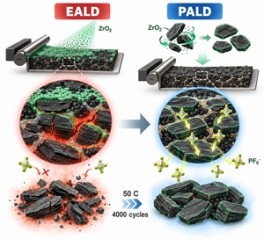
Graphite gets a 'nano armor' — and the battery survives 4,000 charges
- POSTECH uses semiconductor process to develop next-generation battery cathode - Storage performance more than triples under ultra-fast 1-minute charging conditions South Korean researchers have developed a technology that allows batteries to charge quickly while lasting far longer. The team coated inexpensive graphite particles with an ultrathin protective layer just 5 nanometers thick, enabling the battery to withstand 4,000 charge-discharge cycles under roughly 12-minute fast-charging conditions. POSTECH announced that a joint research team — led by chemistry professor Park Su-jin and mechanical engineering professor Ahn Ji-hwan at POSTECH, together with professor Ryu Jae-geon of the Department of Chemical and Biomolecular Engineering at Sogang University — has developed a graphite cathode for dual-ion batteries that improves both charging speed and cycle life. In a dual-ion battery, anions in the electrolyte migrate into the graphite structure during charging to store energy. The technology offers fast charging speeds and low material costs, but repeated charging had caused rapid capacity degradation — a key barrier to commercialization. Graphite has a layered structure made up of stacked sheets. Each time the battery charges, large anions force their way between the layers, causing the graphite to expand; it then contracts again upon discharge. Repeated cycles crack and collapse the graphite structure, degrading battery performance. At voltages above 4.5V, electrolyte decomposition also occurs, accelerating the deterioration. The research team found a solution in atomic layer deposition (ALD), a semiconductor manufacturing technique that builds ultrathin protective coatings one atomic layer at a time. Rather than coating the surface of a finished electrode — the conventional approach — the team applied a zirconium oxide (ZrO₂) protective layer to each individual graphite particle before assembling the electrode. The coating is just 5 nanometers, or one billionth of a meter, thick. The protective layer keeps the graphite structure intact as it expands and contracts through repeated charge-discharge cycles. It also allows anions to move rapidly into the graphite interior, boosting charging performance. In experiments, coated graphite delivered more than three times the charge-storage capacity of uncoated graphite under ultra-fast charging and discharging conditions equivalent to about one minute. The durability gains under roughly 12-minute fast-charging conditions were particularly notable. The coated graphite maintained its performance through 4,000 charge-discharge cycles, compared with fewer than 1,000 cycles for uncoated graphite. Compatibility with existing battery manufacturing processes is another advantage. The team confirmed that coating the graphite powder before electrode fabrication can be integrated into conventional electrode manufacturing workflows. The technology is expected to find applications in electric vehicles and large-scale ESS by reducing reliance on expensive metals while improving both charging speed and battery life. The research is also significant for applying a precision coating technique from semiconductor manufacturing to a powdered battery material. The team said the approach could be extended to other battery cathode and anode materials, as well as to a range of energy materials including fuel cells and water-electrolysis catalysts. "This will serve as a new design principle for making batteries that charge quickly and last long using inexpensive graphite," Park said. The findings were published online in Advanced Functional Materials, an international journal covering materials science.
Nov. 16, 2026
-

Shinsegae I&C offers 10% discount on enterprise cloud service through year-end
Customers can select only the features they need, from server virtualization to AI infrastructure Yeouido IFC Mall cut virtual server setup time to under an hour after adoption Shinsegae I&C is running a promotional discount on its enterprise private cloud service, aiming to ease the cost of cloud migration for companies facing aging server replacements or virtualization software contract renewals. The company announced Monday it would offer an introductory promotion for its Sparos One service, targeting businesses considering an IT infrastructure overhaul. Sparos One is a private cloud service built on Nutanix technology. Nutanix supplies software that consolidates resources across multiple physical servers to configure and manage virtual servers. Customers can mix and match components — server virtualization, storage, database and AI infrastructure — selecting only the services they need. Under the promotion, companies that sign a new Sparos One contract by Dec. 31 will receive a 10 percent discount on the total contract value. The offer is aimed primarily at businesses approaching virtualization software license renewals or physical server replacements. Customers can tailor costs to fit their budgets and operating environments. Unlike bundled licenses that package multiple features together, companies can purchase licenses only for the functions they actually use. They can also choose between a subscription that combines hardware and licensing fees, or a model that covers hardware costs upfront while licensing is paid separately. Shinsegae I&C said subscribing to both hardware and software reduces the initial investment burden and can cut total cost of ownership by up to 25 percent compared with traditional on-premises infrastructure. In addition, companies can scale IT resources up or down based on workload demand and integrate the private cloud with public cloud providers to run both environments in tandem. BGRE Korea, the operator of IFC Mall in Yeouido, Seoul, is a notable example. Shinsegae I&C used Sparos One to consolidate IFC Mall's existing physical servers into a single virtualized environment. Where provisioning a new physical server for a workload previously took an average of four months, virtual servers can now be configured in under an hour. Shinsegae I&C projected that the server consolidation will reduce IFC Mall's monthly infrastructure operating costs by about 16 percent. "Recent changes in virtualization licensing policies and billing structures are prompting companies to reassess their infrastructure costs and operating models," said Jung Pil-seung, head of the cloud business division at Shinsegae I&C. "We will offer optimized alternatives tailored to each company's environment and support more flexible, cost-efficient infrastructure operations."
Nov. 16, 2026
-

KT to deliver traffic fine notices via PASS app
Fine details and payment deadlines available at a glance Identity verification required to view notices; paper mail to continue in parallel KT Corp will partner with the Korean National Police Agency to deliver traffic fine notices through its mobile app PASS, allowing users to check fine details and payment deadlines on their smartphones instead of waiting for paper mail. KT announced Monday that the mobile electronic notice service for traffic fines will launch Wednesday. Traffic fine notices have traditionally been sent by paper mail, where they can be mixed in with other correspondence or lost altogether. Residents away from home for extended periods have also faced the inconvenience of missing notices before their deadlines. With the PASS electronic notice service, users can check the reason for a fine and its payment deadline at any time and from any location. To use the service, users must sign up for the PASS Wallet service once and agree to the terms for registering an official electronic address. After that, a simple identity verification is all that is needed to view a notice. The service also strengthens personal data protection and security. Notices can only be viewed after identity verification, reducing the risk of personal information being exposed. Because notices are accessed directly within the PASS app, the service is also expected to help prevent smishing scams impersonating the Korean National Police Agency and other official bodies. The Korean National Police Agency plans to run the mobile electronic notice service alongside the existing paper mail system. If a user does not receive a mobile notice or fails to view it within the designated period, a follow-up notification will be sent to ensure nothing is missed. The new service is also expected to improve administrative efficiency at the Korean National Police Agency. Officials will be able to confirm whether notices have been sent, received and viewed, while reducing the volume of paper notices and postal deliveries to cut resource use. "Through PASS electronic notices, the public can now check traffic fine notifications more conveniently and securely," said Jeon Myeong-jun, senior vice president and head of the enterprise service division at KT Corp's enterprise unit. "We will continue to expand PASS electronic notices into various public-sector areas and contribute to improving digital administrative services in ways that people can feel in their daily lives." Meanwhile, KT has also supported a facial recognition service for mobile phone activations via the PASS app since July. When a user chooses facial recognition during a new subscription or number transfer, the PASS app compares a photo of the user's ID with their actual face to verify their identity. The service was introduced to prevent illegal phone activations through identity theft and crimes such as voice phishing.
Nov. 16, 2026
-

Rail defect detector finds damage at 80 km/h, Korea Railroad Research Institute says
Compact camera system automatically diagnoses rail wear location and condition South Korean researchers have developed technology that can automatically detect rail wear conditions from a moving subway train. The Korea Railroad Research Institute announced Monday it had developed a vehicle-mounted rail image inspection device and diagnostic system capable of high-speed imaging and automatic analysis of rail surface wear during normal urban rail operations. One of the leading causes of noise and vibration on urban rail lines is corrugation — a phenomenon in which repeated train passages create evenly spaced ridges and grooves on the rail surface. The irregularities amplify the impact between wheels and rails, degrading ride quality and generating noise complaints, particularly in sections near residential areas or along sharp curves. Until now, assessing rail wear required expensive dedicated inspection vehicles or precision measurement equipment. The high cost of operating such equipment, combined with the prevalence of tight curves and steep gradients on urban rail lines, made repeated inspections difficult. The institute's device uses an ultra-high-speed line-scan camera to capture continuous, high-resolution images of the entire rail head while the train is in motion. A single pass is enough for the system to automatically analyze whether wear is present, pinpoint its location, and measure the wavelength — the interval at which corrugation repeats. Workers can also view the analysis results alongside the actual rail surface images, allowing them to assess damage conditions intuitively and decide whether maintenance is needed. The device comes in two configurations depending on the operating environment: an integrated PC unit and a separate PC unit. The separate configuration consists of two components weighing approximately 8 kilograms and 5 kilograms respectively, making it easy to install on existing rolling stock or maintenance vehicles. The technology was also validated in the field. The institute conducted tests at actual operating speeds across the entire Incheon Urban Railway Line 2 network in partnership with Incheon Transit Corporation and Saeyoung Technology. As a result, the system captured stable, high-resolution rail surface imagery even at 80 kilometers per hour — the maximum operating speed for urban rail lines. Corrugation detection performance reached an F1 score of 97 percent or higher, a composite metric used to evaluate detection accuracy. The technology marks a significant departure from conventional periodic inspection methods by enabling continuous, repeated checks using revenue service vehicles. Accumulating rail images of the same section over time allows the system to track how wear develops and progresses, helping operators determine the optimal timing for maintenance. The institute plans to integrate AI image analysis to advance the system into a comprehensive diagnostic platform covering not only corrugation but also rail surface cracks, damage and grinding conditions. "We can now easily identify both the location and wavelength of rail corrugation," said Hong Ji-young, a senior researcher at the institute. "We plan to develop this further into an intelligent rail condition management system that can predict how wear develops and supports maintenance decision-making." Institute President Sagong Myung said the technology "expands railway infrastructure management — which has centered on expensive dedicated inspection equipment — into a compact, lightweight and continuous monitoring approach," adding that the institute would "contribute to creating a quieter and safer rail environment through noise reduction and improved maintenance efficiency on urban rail lines."
Nov. 16, 2026
-
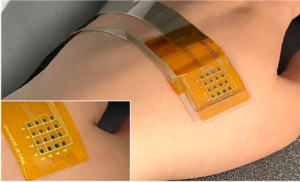
KAIST develops 'electronic name tag' readable by humans and robots alike
Flexible display transmits color to the human eye and infrared signals to machines, even in darkness or fog Researchers have developed a new display technology that lets humans read information through color while robots read the same screen using invisible near-infrared light. KAIST announced Monday that a research team led by Professor Song Young-min of the School of Electrical Engineering had jointly developed a flexible reflective display with a team led by Professor Yoo Ki-jun of Yonsei University. The display can simultaneously show visible-light and near-infrared information on a single screen. The key feature of the technology is that a single display can be read by humans and robots in entirely different ways. People see the colors shown on the screen, while robots use near-infrared cameras to detect bright-and-dark patterns. Conventional displays present information tailored to human vision — through color or text — which limits their usefulness in low-light or foggy conditions. To overcome that limitation, the research team used an electrochromic polymer material called PEDOT, whose light-absorption rate changes with applied voltage. By combining this material with a thin layered structure that reflects light multiple times, the team was able to control both the visible color and the near-infrared reflectance simultaneously through voltage alone. The display consists of 16 pixels arranged in a 4-by-4 grid. Each pixel is connected to a thin-film transistor, allowing individual control. This enabled the team to display various colors and near-infrared patterns at specific positions on the screen. The device was designed with a gel-type electrolyte and a flexible substrate so that it continues to function even when bent or attached to a curved surface. The research team successfully tested the display attached to the back of a human hand, switching the output of individual pixels while in place. A standard camera captured the color changes, while a near-infrared camera independently detected the pattern changes. The team also demonstrated that a near-infrared camera could read patterns in dark or foggy test environments. However, a separate near-infrared light source is required in low-light conditions. The technology is expected to find wide application in smart factories where humans and robots work side by side. Attaching the display to a product or a transport container would allow workers to check the product type and process status by color, while robots read the near-infrared pattern to obtain the information they need. The display could also be attached to robots themselves, allowing other robots to check operational status or error codes. The technology could further expand into next-generation information displays for wearable devices or curved equipment. The current prototype, however, remains at an early stage with only 16 pixels. Commercialization will require expanding the pixel count, ensuring long-term operational stability, developing encapsulation technology to protect the device from external conditions, and integrating the system with robots' camera-reading platforms. "The significance lies in expressing, on a single flexible screen, both the colors that humans see and the near-infrared information that machines detect," Professor Song said. "We hope this develops into a display technology capable of conveying information in spaces where humans and robots work together, adapting to ambient light levels and line-of-sight conditions." The findings were published in the international journal npj Flexible Electronics on Oct. 20.
Nov. 16, 2026
MOST READ
- 1Malaysia's BE International brings 1,500-strong incentive tour to Korea, bypassing Turkey
- 2AI singer tops Melon chart for first time with 'Did You Become the Adult You Dreamed Of?'
- 3Jensen Huang's daughter took the photo of him embracing his alleged mistress
- 4Man beat live-in girlfriend 514 times over 3 hours, killing her; forensic expert says footage was too disturbing to watch
- 5Madison Huang acted as de facto chief of staff at Nvidia, shouted at vice president: report
- 6'A concert is a ritual for the soul': Currentzis makes long-awaited Korea debut after six years
-
WORLD

US warns of punishment for anyone enabling Iran's Strait of Hormuz toll scheme
-
INDUSTRY

Toyota union puts productivity first; Hyundai Motor union demands bigger share of profits
-
FINANCE

National Growth Fund to invest $531M in FuriosaAI, which rebuffed Meta's $800M takeover bid
-
INDUSTRY
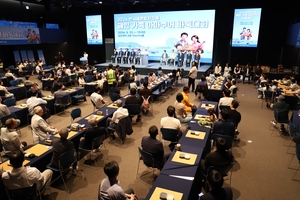
Korea Shipowners' Association holds amateur baduk tournament for Maritime Day