
- HOME
- LIFE·CULTURE
-
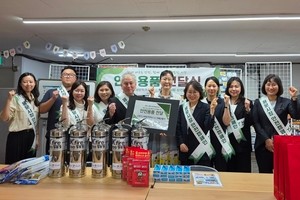
GKL's Seven Luck Casino brings traditional market desserts to foreign tourists for chuseok
GKL to host K-traditional market dessert festival at Gangnam COEX branch from Monday through Friday A casino for foreign visitors is reinventing itself as a cultural gateway to introduce Korean traditional market snacks to international tourists. Grand Korea Leisure (GKL), the state-run operator of the Seven Luck Casino, announced Thursday it will partner with traditional market merchants' associations around chuseok to launch a joint marketing campaign aimed at attracting foreign tourists and revitalizing local commerce. From Monday through Friday, GKL will hold the "K-Traditional Market Dessert Festa" at its Seven Luck Casino Gangnam COEX branch, showcasing the culinary culture of Korean traditional markets to foreign visitors. More than 10 vendors from the Yeongdong Traditional Market merchants' association in Nonhyeon-dong, Gangnam-gu, will take part in the event, offering foreign tourists traditional Korean snacks — including rice cakes, spicy fried chicken, twisted doughnuts and steamed buns — to highlight the flavors and character of Korea's traditional markets. A promotional giveaway of 200 sets of domestically pressed sesame oil is also planned to draw participation. "We hope this unique hands-on event introducing traditional Korean snacks to foreign visitors at Seven Luck will boost tourism satisfaction and contribute to revitalizing the local business district," GKL President Yoon Du-hyeon said.
Sept. 17, 2026
-

Community Chest of Korea to run booth at 'Woori MomoCon' music and charity festival
Charity festival at Seoul Land in Gwacheon on Saturday Community Chest of Korea confirmed for third consecutive year A festival combining live music with everyday giving will be held this weekend, inviting citizens to enjoy performances while taking part in a culture of sharing. The Community Chest of Korea announced Thursday that it will participate in the 2026 Woori MomoCon, a social contribution concert organized by Woori Financial Group, to be held Saturday at Seoul Land in Gwacheon. The Community Chest of Korea has taken part in Woori MomoCon for three consecutive years since 2024, using the event to share the meaning of giving with the public and promote a culture of everyday charity. Now in its fourth edition, the festival runs under the slogan "The more we gather, the greater the good" and brings together music and philanthropy in an interactive social contribution format. Artists including YB, QWER, Jannabi and Jinusean are set to perform, and around eight NGOs — including the Community Chest of Korea — will offer visitors a range of hands-on giving programs. At this year's event, the Community Chest of Korea will operate an interactive booth highlighting key social contribution projects it has carried out with Woori Financial Group. Visitors can browse the social contribution activities of all 17 Woori Financial Group affiliates on a touchscreen, then take part in a hands-on experience at a central structure called "With Woori," where they connect threads to a display. The installation is designed to represent the ongoing impact created together by Woori Financial Group and the Community Chest of Korea. As more visitors participate, the Korean word for "we" ("우리") grows more vivid on the structure, symbolizing the connection of hearts. Meanwhile, Woori Financial Group has donated a cumulative 79 billion won ($58.4 million) to the Community Chest of Korea since 2009, supporting local communities and vulnerable groups.
Sept. 17, 2026
-
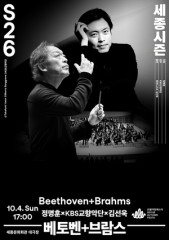
Chung Myung-whun, Kim Sun-wook reunite after two years for Beethoven-Brahms program
Oct. 4 at Sejong Center for the Performing Arts A preview of 2027: Beethoven and Brahms Conductor Chung Myung-whun and pianist Kim Sun-wook, who have built a deep artistic bond over many years, will share the stage again for the first time in two years. The Sejong Center for the Performing Arts announced Thursday that the two musicians will perform together in the 2026 Sejong Orchestra Series "Beethoven + Brahms" on Oct. 4 at the Grand Theater. Their last joint appearance was in 2024. The concert brings together Chung, one of the world's foremost conductors and a leading figure in Korean classical music, the KBS Symphony Orchestra he leads, and Kim — a collaboration built on years of shared musical understanding. The reunion carries particular symbolic weight. Kim won the Leeds International Piano Competition in 2006 at age 18, becoming the first Korean-trained pianist to claim the top prize at a major international competition. Chung guided Kim's development, serving as a musical mentor. The two released a recording of Beethoven's Piano Concerto No. 5, "Emperor," on Deutsche Grammophon in 2013, and in 2020 released a live recording of Brahms' Piano Concerto No. 1 in D minor, Op. 15 — captured at a 2019 performance at Seoul Arts Center — through Accentus Music. The program also serves as a preview of 2027, when the classical music world will mark the 200th anniversary of Beethoven's death and the 130th anniversary of the death of Brahms, widely regarded as Beethoven's musical heir. A year before orchestras worldwide turn their attention to that landmark season, the concert offers an early look at the essence of both composers. The first half features Kim performing Beethoven's Piano Concerto No. 3 in C minor, Op. 37 — a masterwork in which the composer forged classical formal clarity and romantic intensity even as he faced the terror of hearing loss. The second half sees Chung and the KBS Symphony Orchestra perform Brahms' Symphony No. 2 in D major, Op. 73, a work in which the composer's characteristic melancholy merges with the pastoral landscapes of Pörtschach, Austria, to produce radiant, bucolic joy.
Sept. 17, 2026
-
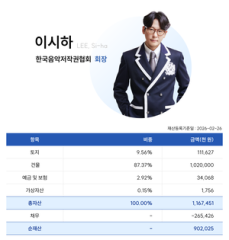
Head of Korea Music Copyright Association voluntarily discloses personal assets
Korea Music Copyright Association President Lee Si-ha has voluntarily disclosed her personal assets, totaling approximately 1.16 billion won ($857,000). Lee made the disclosure despite having no legal obligation to do so. While the association is designated as a public-related organization, it is not required to publicly release executives' asset details. According to the association Wednesday, Lee voluntarily released details of assets held in her name — including land, buildings, deposits, insurance, virtual assets and liabilities — even though no law compels her to do so. The disclosed figures show total assets of approximately 1.16 billion won and net assets of around 900 million won. The association was designated a public-related organization early last year, which legally requires its full-time executives to register their assets with the relevant authorities. However, the obligation to publicly disclose those assets applies only to heads of institutions and organizations that meet specific criteria under the Public Service Ethics Act — criteria that Lee does not meet. Lee went beyond what the law requires by proactively informing the public of her asset details. The association said the disclosure was part of its commitment to accountable management, aimed at allowing members to directly verify everything from the president's personal assets to the overall operations of the organization. During last year's election for the association's 25th president, Lee made disclosing her assets before taking office and just before the end of her term — along with publishing her royalty earnings — central campaign pledges. At the time, she won strong support from members by pledging to "make the association one with nothing to hide and nothing hidden, by transparently disclosing all expenditures and operational processes." "Members can only trust the association if the president and the executive team are transparent," Lee said. "We will not stop at what the law requires us to disclose — if there is anything members are curious about or feel needs to be verified, the association will step forward and make it known proactively." She added that she was turning the reform promises she made to members during the election into reality, one by one. "I will continue to disclose my assets and royalty earnings for up to one year after my term ends, so that no unnecessary allegations linger — not only during my tenure but after I leave office," she said. "I will do my utmost to build an association where members are truly in charge, until the very end." Lee, who took office in February, has been moving quickly to fulfill her campaign pledges under the mottos of "member-centered management" and "open organizational operations." Since taking office, she has published her monthly royalty receipts and has been live-streaming the association's full board meetings on YouTube to ensure transparency in major decision-making. Broadcasting board meetings in their entirety is a first among music copyright collective management organizations worldwide. Progress has also been made on substantive issues affecting members' rights. A long-running dispute over music copyright fees for OTT streaming services was resolved through a new contract with Netflix, while a protracted conflict with the Korea Music Copyright Association of Creators over YouTube residual distribution fees has been settled, with the royalty settlement process for rights holders now fully under way.
Sept. 16, 2026
-

A festival where doing nothing is the whole point
A festival built around slowing down and zoning out comes to the shores of Uiam Lake in Chuncheon this weekend, running Saturday and Sunday. The scene will be an unusual one: visitors simply gazing at the lake, lost in a water-watching trance, or sitting with ears open to the sounds of early autumn. Chuncheon city has described it as "a festival where you do nothing" — yet a closer look reveals it is far more varied than the "spacing-out" competitions held at the Han River in Seoul a few years ago. Over the two days, the area around the Seomyeon Animation Museum and Chuncheon Literature Park will host a gathering where the sight of citizens and travelers simply letting everything go is itself the draw. The event is called the 2026 Seomyeon Lake Starlight Festa, and its theme is "the slowest festival to give yourself rest — two days of experiencing stillness." The idea is to pause amid the natural surroundings of Uiam Lake and let body and mind recover. As nature moves at its own unhurried pace, so do the participants. The festival centers on staying quietly, without noise. There is an "energy zone" for those who want a bit of vitality, but the heart of the festival is the "slow zone." The energy zone offers lakeside yoga, wellness activities and a lake market. The slow zone features breathing meditation, singing bowl sessions and ritual classes using tea and fragrance. The lakeside yoga program has participants moving slowly while facing Uiam Lake, focusing on their core. The singing bowl session guides attendees to concentrate on deep vibrations and resonance as a way to relax body and mind. A tea therapy class lets visitors brew local teas and focus on their aroma and flavor, while a fragrance therapy session uses locally sourced Chuncheon materials to help participants discover their own preferences. "Do-nothing time" is one of the main programs. A rest area called the "water-gazing shelter" — where visitors simply sit and look out at Uiam Lake — will be furnished with parasols and beanbag chairs, while a nearby "book lounge" will stock around 50 titles on the themes of nature and rest. A "nature sounds headset" station will also be available, where visitors put on headphones and focus on natural sounds and healing audio, letting each person enjoy quiet rest in their own way. A gentle walking program called "Slow Stroll Walk" traces a path from the Animation Museum to Chuncheon Literature Park, with a nature guide leading the way at a leisurely pace. It is the most active thing on offer for slow-zone participants. Organizers are also exploring ways to tie it in with a picnic. A lake market will showcase local products. A farmers market run in partnership with the Seomyeon residents' council will feature 12 vendors, including local farms and food culture brands. Producers and brands from the area — among them Jisiuul Brewery and Bora Sigol — will offer a range of food and drink. Ten wellness lifestyle brands will also take part. Alongside this, the festival will run 10 wellness experience programs, including a starlight diary workshop, starlight tarot readings, flower body painting, beeswax candle making, sound massage, sleep sachet making, a Seomyeon coloring postcard activity and stone drawing. Children's programs are also planned. As the sun sets on the first day, Saturday, the festival shifts into its "starlight" chapter. An acoustic starlight performance set against the scenery of Uiam Lake begins at 5 p.m., followed by an outdoor screening of "Little Forest" at 6 p.m. A drone light show painting the night sky above Uiam Lake closes out the evening at 8 p.m. For a festival that bills itself as doing nothing, Chuncheon city appears to have prepared quite a lot. Participants, it seems, will leave with plenty of gifts — despite having done hardly a thing.
Sept. 16, 2026
-

Dam construction cost Yanggu-gun W3tr, but support amounted to just W2.3b
Seoho Village in Sangmuryong 2-ri, Yanggu-gun, Gangwon Province, was largely submerged and cut off from the outside world after rising water levels caused by the Hwacheon Dam flooded much of the area. For 80 years before the Sangmuryong suspension bridge was built, residents had no overland route and had to cross Paro Lake by motorboat to reach the nearest town. A new study has found that the construction of the Hwacheon Dam and Soyang River Dam inflicted more than 3 trillion won ($2.22 billion) in cumulative damage on Yanggu-gun, while support payments for areas surrounding the dams amounted to just 2.3 billion won. According to Yanggu-gun on Wednesday, the findings come from a research project commissioned by the Gangwon Research Institute titled "Analysis of Dam Impacts on Yanggu-gun and a Study on Returning Benefits to the Region." Local residents and officials in Yanggu-gun called on the government to adopt policy measures that would return to the affected region the benefits generated by the Hwacheon Dam and Soyang River Dam. They said the government must recognize that Yanggu-gun has endured more than half a century of social, economic and human hardship — including sweeping regulations, development restrictions and severed transport links — while the benefits of the dams have been concentrated in the national government and the Greater Seoul area. They called for expanded support and regulatory reform. "Since the construction of the Soyang River Dam, Yanggu has endured more than half a century of regulations and development restrictions while contributing to national development and the stable water supply of the metropolitan area," Yanggu-gun Mayor Kim Wang-gyu said. "Based on the findings of this research, we will work to establish an institutional framework that ensures our sacrifices and contributions are met with fair compensation and that the benefits of the dams are returned in a meaningful way to local residents." The Gangwon Research Institute found that the Hwacheon Dam caused 972 billion won in cumulative damage to Yanggu-gun over 81 years, while the Soyang River Dam caused between 2.75 trillion won and 2.95 trillion won in damage over 52 years. Ongoing annual damage was estimated at between 8 billion won and 14.7 billion won. The partial submersion of National Route 46 caused by the Soyang River Dam stretched travel time between Yanggu and Chuncheon from 40 minutes to two and a half hours, severing transport links that have had a prolonged negative impact on the local economy. By contrast, annual support payments to Yanggu-gun for dam-adjacent areas amount to about 2.28 billion won ($1.68 million), of which only about 1.09 billion won — just 48 percent of the total — goes toward direct community support projects. The study also found that a significant portion of the support funding is allocated to one-off or consumable projects, limiting its effectiveness in building a foundation for income growth and regional revitalization. The institute proposed four policy alternatives: expanding the eligibility criteria for dam-adjacent area support; improving the standards for calculating and distributing support funds; amending the Dam Construction and Management Act to diversify support programs covering income growth and renewable energy; and reforming unreasonable regulations on natural environment conservation zones around the Soyang River Dam. To leverage the dams and water resources as new drivers of regional growth, the institute also proposed developing an integrated waterfront tourism belt linking Paro Lake, Soyang Lake and the Peace Dam; launching a resident-invested, dividend-based floating solar power project; pursuing a pumped-storage hydropower project using Paro Lake as the lower reservoir; and building a community center along National Route 46 to serve travelers on the road.
Sept. 16, 2026
-

Lee Joo-yeon says 'bone-thin' trend pushed her to diet — but is it safe for those already at a healthy weight?
Behind every public figure's appearance lies a personal health and beauty regimen. This series examines the diets, workouts, procedures, and fashion and lifestyle choices of people in the spotlight. Actor Lee Joo-yeon, 39, a former member of the K-pop group After School, recently said she has been trying to lose weight after noticing the popularity of the so-called "bone-thin" body trend. Doctors warn that people who are already at a healthy weight risk harming not just their body fat levels but also their muscle mass and bone health if they push themselves to conform to a trending physique. Lee made the remarks Monday on her YouTube channel during a tarot card reading session, when the conversation turned to dieting. After a viewer shared that they kept starting and abandoning diets, Lee said, "There are so many 'bone-thin' people around these days, so that's why I'm trying to lose weight too." "Bone-thin" is not a medical term but a slang expression referring to a body so lean that the bones are visibly prominent. It has gained traction particularly among younger people as extremely slender celebrities and influencers appear repeatedly on social media. Being light on the scale, however, does not automatically mean being healthy. For those already within a normal weight range, drastically cutting food intake in pursuit of a lower number can leave the body short of the energy and nutrients it needs. Losing more weight when already at a normal range can bring fatigue and difficulty concentrating, health experts say. The Korean Society for the Study of Obesity classifies adults with a body mass index (BMI) of 18.5 to 22.9 as normal weight and those below 18.5 as underweight. While BMI alone cannot capture a person's full health picture, there is little health benefit to be gained when someone already in the normal range cuts intake so severely that they drop into the underweight category. When the body takes in far less energy than it needs, fatigue is typically the first sign. People may find that they feel unrefreshed even after a full night's sleep, tire easily during exercise, or struggle to concentrate. A study published in the Journal of the Japanese Society of Nutrition and Food Science found that 92.2 percent of women who were dieting were either underweight or of normal weight. Among them, 25.9 percent reported fatigue symptoms — higher than the 19.7 percent seen among women who were not dieting. The problem is that the body does not draw solely on fat reserves when energy runs short. If severe caloric restriction continues over time, the body begins breaking down the protein that makes up muscle tissue for fuel, leading to a loss of muscle mass. The result can be a body that shows the desired number on the scale but has less muscle and reduced physical capacity than before. Bone density is another concern for underweight women, experts say. Excessive weight loss can also take a toll on bone health. An analysis of 1,767 premenopausal women in South Korea, published in the International Journal of Clinical Practice, found that 18.4 percent of underweight women had low skeletal muscle mass — far higher than the 1.7 percent seen among women of normal weight. The proportion with low bone density was also higher among underweight women, at 23.9 percent, compared with 9.4 percent among those of normal weight. Bone is not static tissue — it undergoes a continuous cycle of breaking down old bone and building new bone. That process requires not only adequate energy but also a range of nutrients, including protein, calcium and vitamin D. When food intake is too low, supplying enough of these nutrients becomes difficult. When weight loss is accompanied by a reduction in muscle mass, the mechanical stress that muscles place on bones also decreases, which can work against long-term bone health. For women, menstrual changes can be a warning sign when an energy deficit persists. In women, extreme dieting can also disrupt the menstrual cycle. When the body is in a prolonged state of energy deficit — for instance, when high levels of physical activity are not matched by sufficient food intake — it can adapt by reducing energy allocated to functions it does not consider essential for survival. If the reproductive hormone system is affected in this process, menstrual cycles can become irregular or stop altogether, and bone health can suffer at the same time. A recent expert consensus statement on energy deficiency in female athletes noted that low energy availability can be linked to menstrual irregularities and bone loss. If menstrual cycles become noticeably irregular or stop for several months after starting a diet, and if persistent fatigue, dizziness or heightened sensitivity to cold appear alongside those changes, it is important not to dismiss these as a normal part of losing weight — food intake and overall health should be assessed. A healthy diet is not about getting as thin as possible. Even when weight loss is genuinely needed, the pace and approach matter. The US Centers for Disease Control and Prevention (CDC) notes that gradual weight loss of about 1 to 2 pounds — roughly 0.45 to 0.9 kilograms — per week is more effective for maintaining weight over the long term than rapid loss. Healthy weight management also involves regular physical activity, adequate sleep and stress management, not just diet. A combination of aerobic and strength training is recommended. Aerobic exercise helps increase energy expenditure and improve cardiovascular fitness, while strength training is important for preserving muscle mass during weight loss. The CDC recommends that adults get at least 150 minutes of moderate-intensity aerobic activity per week, along with muscle-strengthening activities on two or more days a week. When it comes to eating, it is better to draw from a varied mix of protein, whole grains, vegetables, fruit and healthy fats rather than eliminating entire food groups such as carbohydrates or fat. The CDC similarly advises against cutting out whole categories of food, recommending instead that people meet their nutritional needs through a diverse range of foods. The goal of healthy weight management is not to match a trending body shape as closely as possible. What matters more than the number on the scale is whether the body is functioning normally — including muscle mass, physical stamina, menstrual health and bone health. A thinner body is not necessarily a healthier one.
Sept. 16, 2026
-
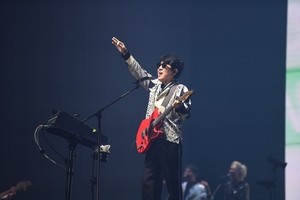
Cho Yong-pil returns with 'Great Birth' Seoul concerts
Cho Yong-pil, widely celebrated as the king of Korean pop, is set to return to the stage. The veteran singer, who has kept up an annual nationwide concert tour, will once again take audiences through half a century of music with his band Widaehan Tansaeng, or Great Birth. According to his agency YPC Entertainment, Cho will hold the "2026 Cho Yong-pil & Great Birth Concert" in Seoul from Nov. 27 to Nov. 29, performing three nights at KSPO Dome in Olympic Park. The shows will span the full breadth of Cho's musical world — one that has marked turning points in Korean popular music history across five decades. Timeless hits that have resonated with audiences for generations will be brought to life through the tight live sound of Great Birth. Cho began his musical journey in 1968, carving out an unrivaled path by breaking down the boundaries between rock, pop and trot music. Hailed as the king of Korean popular music, he has been a forward-thinking innovator behind countless hit songs. He set a record of eight consecutive sellouts at Jamsil Olympic Stadium and holds the title for the highest concert attendance in South Korean history. He is also the only singer to have topped the charts in the 1970s, '80s, '90s and 2010s. At this year's concerts, he is expected to reaffirm his standing as an artist still very much in his prime, performing beloved hits across generations — from "Taeyang-ui Nun" and "Baram-ui Norae" to "Kkum" and "Bounce."
Sept. 16, 2026
-
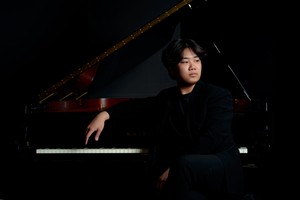
Pianist Sun Yul: 'I thought I had no talent — then Paris changed everything'
Mapo Art Center artist-in-residence takes the stage Wednesday Program features Chopin's four Scherzos and Schubert's Piano Sonata No. 20 The 21-year-old who once called herself 'dust in the universe' is now 26 — and certain A story of failure, self-doubt and a hard-won reversal "I feel like I'm forcing myself to play without any real talent. In the end, everyone is just a speck of dust in the universe — I'm simply grateful to be invited onto a stage." Those were the words of a 21-year-old pianist in 2021, as a once-in-a-generation pandemic gripped the world. She had been called a prodigy, and her very name — Sun Yul, meaning "melody" in Korean — seemed destined for music. Behind the mask she wore that day, her eyes were shy and unsteady; it was easy to chalk it up to the introversion common among performers. Five years later, those same eyes carry something altogether different: an unshakeable self-belief. It is the clear-eyed radiance that belongs only to someone who has cracked open a shell of self-denial and found themselves whole on the other side. Sun, 26, was selected this year as an artist-in-residence at the Mapo Cultural Foundation and will meet audiences across three concerts. Her second appearance — at Mapo Art Center on Wednesday, following a first concert in June — comes immediately after she completed four weeks of military training, so she will sit down at the piano with close-cropped hair rather than her usual full locks. The first half of the program features all four of Chopin's Scherzos; the second half presents Schubert's Piano Sonata No. 20 in A major (D. 959) — a work she once vowed never to touch again after playing it at her undergraduate graduation recital. Meeting her ahead of the concert, Sun said her challenge this year has been confronting a personal trauma. "I wanted to give myself time to look back at who I am," she said. 'I tried everything and still failed — I thought quitting was the only answer' Sun has carried her name as a conversation piece her whole life — people invariably ask how she could possibly be named "melody," and whether her email address is "melody" too. Her parents gave her the artistic name, and the music world took notice early: she moved through the elite track of Yewon School, Seoul Arts High School and early admission to the Korea National University of Arts (K-Arts). At school she was the model student — punctual with homework and practice, never causing trouble, doing exactly what her teachers asked. People in the music world agree that the first word that comes to mind when they think of Sun Yul is "diligence." But a diligent student does not always walk a smooth path. Behind Sun's conscientiousness lay a brutal dark period. While classmates and peers were collecting prizes at competitions, she was not. "Honestly, from high school onward I never once won a major award at a competition," she recalled. "It wasn't that I wasn't entering — I kept at it consistently, and it just didn't work out." What frightened her most at the time was the judgment of others. As the failures mounted, the years when she should have been growing became years of wandering and hardship. "At first my goal was simply not to be the person people said, 'Oh, she was just a flash in the pan — someone who shone a little when she was young.' Then gradually I started thinking, 'Maybe that really is what I am.' I stopped believing in myself." By her third and fourth years of university, even showing up to school felt painful. Then, in the first semester of her senior year, she sat down to register for a competition and was confronted by a stark reality: there was not a single award to list after her name. She turned to her mother with the resignation of someone who had already given up. "Mom," she said, "I've been at this for eight years and I have nothing to show for it." "I genuinely wondered whether I had no talent at all, whether it was really time to stop. From five years ago and even after that, I kept feeling like I shouldn't be playing the piano anymore. I hated going to school, it was exhausting, and I thought: maybe this isn't my path. If I just let go of my own ambitions, everything would be over." Having hit what felt like rock bottom, she stepped off the safe track she had followed her entire life. The model student who had never defied her elders listened to her own heart for the first time — and decided to study abroad. The destination was not the obvious one: those around her recommended Germany, but she chose Paris. That was in 2022. "Up to that point I had never once made a choice that was truly my own. Going abroad was the first time. I had always been the obedient student who did what she was told, so when I dug my heels in for the first time, everyone was shocked — and the opposition was fierce." Choosing France over Germany was itself an unexpected move. Paris was unknown territory for Sun — a world she had no information about and no familiarity with. "I knew I needed a change, and I felt that to change I couldn't live the same life as everyone else," she said. "So I chose somewhere most people don't." She had barely any grounding in French music. Before leaving for Paris, the only French pieces she had ever played were Ravel's "Gaspard de la nuit" and Debussy's "Pour le piano." But having nothing left to lose meant having nothing left to fear. "I had no certainty it would work out. But I had certainty that, because it was my own choice, I would never regret it. I had already seen the bottom — I kept thinking, 'Can it really get any worse than this?' Having no fear of the choice meant I could actually commit to it fully." The door finally opened in Paris, where she had gone with nothing to fall back on. Telling herself she would give it until she turned 25, she kept entering competitions while she studied. What followed looked almost like a deliberate strategy: from the moment she settled in Paris, she began sweeping the competition circuit. She took second place at the 2023 Isang Yun International Music Competition, then won prizes at the Maria Canals Competition in March 2024 and the Istanbul Sion Orchestra International Piano Competition in April 2024, before claiming the top prize at the Gina Bachauer International Piano Competition in June. She then won first place at the Seoul International Music Competition — placing in all four competitions she entered within a single year, writing what she calls her "reversal narrative." "I had gotten so used to losing that even when I started winning, my first thought was, 'Why are they giving this to me?' Then, after the Seoul International Music Competition, I had a moment of realization: 'Ah — I've actually built up some experience now.'" 'I hid my weaknesses behind busy notes — now I want to break out of safe playing' The phrase "flawless technique" has long trailed Sun's name. She shakes her head at it. What she will admit is that she consistently chose technically demanding repertoire — not out of strength, she says, but as a refuge to conceal what she felt was a lack of inner depth. "A competition is a stage where you have to show your strengths, so I thought I had no choice but to hide my weaknesses. I felt my expressiveness and inner depth were severely lacking. That's why I preferred pieces with a lot of notes — I always gravitated toward 19th- and 20th-century works, and 21st-century works, and avoided Baroque, Classical and core Romantic repertoire. I thought fast tempos and energetic pieces could hide me." Sun names two teachers as the most important figures in her musical life: Kim Dae-jin, a professor at K-Arts, and Olivier Gardon, the professor she studied under in France. "The direction they ultimately pursue in music, and even the way they teach, are similar," she reflects. The crucial difference between the two, she says, became the soil from which the pianist she is today grew. "The difference is that Professor Kim spent enormous energy during my undergraduate years shoring up my weaknesses. Without him, I would have gone to France and still been adrift. Professor Gardon, on the other hand, drew out my strengths. There are many things Professor Kim said to me back then that I only understood the meaning of while studying under Professor Gardon — those 'aha' moments came later." What Gardon pressed Sun to do was face things head-on: stop avoiding, start filling the gaps. "I began studying German repertoire last year," she said. "I've been studying the aesthetics of filling silence — the spaces between the notes — and I've felt a strong desire to build real inner depth." The Schubert Sonata No. 20 she will perform as artist-in-residence is the direct fruit of that fierce confrontation. "I chose it for my graduation recital at K-Arts and was so inadequate that I deeply disappointed myself," she said. "I put it away and told myself I'd never play it again, but my teacher kept recommending it." She added that when she received the artist-in-residence offer, the Schubert sonata was actually the first piece that came to mind. "Honestly, I was so scared — I agonized over what to do and ended up putting it last on the program. I don't think I can go on forever playing only technically showy works, and I wanted to break out of that. I think it's actually the hardest piece I know, but I felt like the challenge had to start somewhere difficult." Slowly, one step at a time, she is building self-belief — and her approach to performance has changed along with it. "I always thought of myself as someone who plays it safe," she said. "But lately I've been breaking a lot of that down. I'm not really afraid of being criticized anymore." "These days I even think that a performance that sparks debate is a good performance. The pieces we play became famous precisely because they were provocative in their time. There were ideas I used to always cut — things I thought were too much — but not anymore." For all the stages she has stood on, none of them feel comfortable yet. She says she enjoys competitions because they let her meet peers her own age, but severe stage fright means she always regrets entering in the moments just before she goes on. At concerts, she fights the fear so intensely that she only changes into her performance clothes five minutes before she walks out. Yet the moment she is alone with the piano on stage, Sun pours herself into what she sees as her role: that of a translator. "I think of notes as letters of the alphabet, and composers as writers who have written something in those letters — and performers are the ones who translate it," she said. "The performer's own opinions shouldn't get in the way of what the composer wrote. Bringing in a brilliant idea is fine, but it has to be an idea the composer would agree with." Sun's mid-20s have been eventful, to say the least. The ground has hardened after the rain; she has passed through a long tunnel and found her own path at last. Now serving as a social service worker in the arts and sports field, she teaches high school students — and shares her own story with young people gripping an uncertain future. Having walked the same road, she understands their feelings better than most. "The standard of success is not something someone else sets for you — you have to set it yourself," she said. "In hard moments, in moments when you want to give up, the easiest thing to do is ask yourself why you are still making music. The answer — 'because I love it' — comes quickly." Perhaps because of everything she has been through, there is a quiet happiness and ease about her now. "If music stops making you happy, I want to tell people: leave it boldly. If you can live your life happily, that is success. Honestly, as a performer I am still endlessly lacking — I think of this as just the beginning. But as a person, I think I have succeeded. I am living happily doing what I love. I want to keep living the way I am now — having never given up on the piano, because it is what I love."
Sept. 16, 2026
-
!['Tazza' finale: Byun Yeo-han bets everything on his most demanding role yet [Interview]](https://wimg.heraldcorp.com/news/cms/2026/09/16/news-p.v1.20260916.b40250012b7145bcb11f9d5403dba122_T1.jpg?type=h&h=240)
'Tazza' finale: Byun Yeo-han bets everything on his most demanding role yet [Interview]
Playing Jang Tae-young in "Tazza: Song of Beelzebub" The finale of a franchise spanning 20 years 'A character who never dwells on the past — just like Hold'em' 'Marriage brought me peace — and the confidence to keep going' This year, Byun Yeo-han has been everywhere — moving between streaming and the big screen with a frequency few actors can match. From the Netflix film "Pavane" to "Gyeongju Travelogue," directed by Kim Mi-jo and released last month, to "Dad's Home Cooking," a short-form drama series by director Lee Joon-ik, he has taken on roles of every size and left a distinct impression in each one, steadily cementing his name in the public consciousness. Now he is heading to cinemas over the chuseok holiday as Jang Tae-young, the protagonist of "Tazza: Song of Beelzebub," the fourth and final installment of the "Tazza" franchise. The franchise launched in 2006 with the first film starring Cho Seung-woo, Kim Hye-soo and Baek Yoon-sik, and has run for 20 years. Byun was chosen to carry its final chapter — a prospect that stirred not just pressure but outright fear. Yet when the script landed in his hands, turning it down never crossed his mind. Drawn in by an irresistible pull, he poured himself into shaping Jang Tae-young: rough and fierce, but driven by a tenacity that makes the character impossible to look away from. Meeting Byun at a cafe in Jongno-gu, Seoul, ahead of the film's release, he recalled the moment the script first reached him. "The moment I picked it up, I was pulled in as if by some irresistible charm," he said. "I thought that if I threw away this role just because I was scared, I'd be a coward — so I got on board." Original cartoonist Heo Young-man has described "Tazza: Song of Beelzebub" as the most dramatic entry in the series. The film follows two close friends whose bond unravels into jealousy and betrayal, culminating in a high-stakes showdown across the gambling table. Byun's character, Jang Tae-young, plunges into the online casino business alongside his best friend Park Tae-young (played by Noh Jae-won) — a man who shares his name but not his luck. When Park, envious of Jang's seemingly charmed fortune, betrays him and sends him crashing to rock bottom, Jang miraculously survives. He seeks out a legendary card sharp, masters poker, and ultimately returns to face the friend who once left him for dead. The film builds to a climax in a winner-take-all showdown between two friends who share a name but walk opposite fates. It balances the franchise's most emotionally charged drama with a propulsive pace and seamless chemistry among the cast — a combination that makes it a quintessential chuseok blockbuster. "This film has a completely independent world of its own, entirely separate from the three films that came before it," Byun said. "It holds the emotions between two friends — the envy, the jealousy, the ambition, and the obsession to rise again after falling apart. It carries the 'Tazza' title, but in some ways I think of it as a film about friendship." In the film, after barely surviving a near-death ordeal far from home, Jang Tae-young quietly begins preparing his revenge against the friend who stabbed him in the back without a second thought. Whether riding a streak of extraordinary luck or clawing his way back from the bottom, Jang shares one constant trait: he never looks back. Even amid a storm of emotion, audiences find themselves rooting for him — because of his unshakeable self-respect. It is that self-respect, the film suggests, that draws luck toward him rather than the other way around. Byun said that learning Hold'em — a variant of poker in which players combine personal and community cards to form the best possible hand — for the role led him to realize how closely the game mirrored Jang Tae-young's life. In gambling, dwelling on the cards already played makes it impossible to move forward. "Tae-young had a hard upbringing, but there's no bitterness in him — I think that's because he doesn't dwell on the past," Byun said. "Accepting the past, forgiving your former self, and holding onto your self-respect as you move forward — that's what it means to be lucky. After spending months learning Hold'em before filming, I realized the game itself closely resembles Tae-young's life. Staying steady when a good hand comes your way — I think that comes down to the attitude with which you receive luck." Byun pours himself into every role. "If I'm not giving everything, I wonder why I'm even acting," he said. "Whether I do it well or not, I simply don't know how to hold anything back." Jang Tae-young was no exception. The character goes through so many twists and turns that Byun had to capture the transformation not only emotionally but physically — and in a short span of time. For him, acting is not so different from being a professional athlete. "I was in the middle of building up my body at an intense pace, and it got to be too much — I ended up in the emergency room. I'd pushed past what my body could handle and went into hypoglycemic shock," he said. "After I got back from the hospital, I told actor Noh Jae-won, 'Let's just die doing this.' He wrote back, 'Yes, let's die.' It felt like the kind of extreme, simple answer that only someone with real passion could give." He laughed. The conversation, charged throughout with passion and sincerity about his craft, turned to Byun's philosophy of acting. Now past 40, he said he feels he finally understands why he acts — and the word he reached for was "pain." In his view, performance without suffering cannot reach an audience. So he willingly avoids the comfortable path. "In 'Waiting for Godot,' Park Geon-hyeong and Shin Gu came on stage and said almost nothing, and I nearly cried," he said. "I'm nowhere near that level, so I think I still have a long way to go — I have to make up for it with my body. That's why pain is essential in my acting. I'm not acting to show people a comfortable, well-fed life. I think an actor has to suffer to develop their own scent — and that's what gets through to audiences." Even as words like "pain" and "pursuit" filled the conversation, there was a new steadiness in Byun's expression — something different from before. Having someone to walk through life with, rather than going it alone, seemed to have shifted something fundamental in how he carries himself. The more grounded his life has become, the sharper and more resolute his commitment to his work as an actor. "Getting married brought me peace of mind," he said. "I've changed, and I think I need to keep changing. But when it comes to the work I have to do, I'm still just as confident — more so, even. Right now, I need to go out and meet audiences at the post-screening events. Every time I finish a film, the moment I've always been waiting for is finally here."
Sept. 16, 2026
-

Pregnant comedian Kim Ji-min says quitting alcohol made her feel '50,000 times better'
Behind every public figure's polished appearance lies a personal health regimen. This series examines the diets, workouts, treatments, and beauty and fashion choices of notable figures as practical lifestyle insights. Comedian Kim Ji-min has shared the physical changes she has experienced since giving up alcohol. Kim, who announced her pregnancy in July, has reportedly been abstaining from alcohol since she began trying to conceive, and is expected to give birth in early 2027. On Wednesday, Kim wrote on her Instagram account that she had been alcohol-free "since preparing for pregnancy" and was "feeling so many changes." "The whites of my eyes have gotten whiter — my eyes look clearer," she wrote. "The puffiness is going down. My body is swelling from the pregnancy, but the puffiness in my face keeps going away." She added that her esophagitis had cleared up, her organ levels had normalized, and her blood pressure was normal every day. "I can feel my gut getting stronger," she wrote. "My overall condition is 50,000 times better." Kim hinted that the benefits of quitting were far from over, writing that there were "so many more" she would add as they came to mind. Kim and fellow comedian Kim Jun-ho married in July 2025 and are expecting their first child together a year later. When she announced the pregnancy, Kim wrote: "Last year the two of us became forever, and this year we became the three we always dreamed of. A precious little life has found its way into my small belly." Even cutting small amounts of alcohol can lower blood pressure The World Health Organization (WHO) has stated that excessive alcohol consumption is directly or indirectly linked to more than 200 diseases and personal injuries. Along with tobacco, alcohol is classified as a Group 1 carcinogen by the International Agency for Research on Cancer (IARC), a WHO body, meaning there is sufficient evidence of its carcinogenicity in humans. On the blood pressure point Kim raised, relatively recent research has backed up her experience. According to the Asahi Shimbun in December last year, a research team from Tokyo University of Science, St. Luke's International Hospital and other institutions analyzed health checkup data from about 58,943 people and confirmed that quitting alcohol — even in small amounts — can lower blood pressure, Yonhap reported at the time. The team found that the greater a person's alcohol intake before quitting, the larger the drop in blood pressure, and that this held true regardless of sex. The findings were published in an American medical journal. The team analyzed 359,717 health checkup records from those who underwent examinations at St. Luke's International Hospital between 2012 and 2024. The type of alcohol consumed and daily intake were recorded at each checkup. The researchers defined one drink as 10 grams of pure alcohol and examined the relationship between alcohol and blood pressure while accounting for factors including age, body mass index, hyperlipidemia, diabetes, dietary habits and smoking status. Among women who had been drinking one to two drinks a day, quitting reduced systolic blood pressure by 0.78 mmHg and diastolic blood pressure by 1.14 mmHg. For men, the reductions were 1.03 mmHg and 1.62 mmHg, respectively. For both men and women, the greater the alcohol intake, the larger the blood pressure reduction from quitting. The research also confirmed, in both sexes, that higher alcohol consumption was associated with greater increases in blood pressure. Meanwhile, according to the National Cancer Center, France and Sweden ban all television and radio advertising for alcohol. Norway, Finland and Spain prohibit alcohol advertising for beverages with an alcohol content above 15 to 22 percent. The United States bars models under 25 from appearing in alcohol advertisements, while the United Kingdom enforces regulations — including market exclusion — against alcohol companies that engage in excessive marketing.
Sept. 16, 2026
-

'Business Proposal' to get short-drama adaptation as Studio S enters micro-drama market
Studio S, the drama production and distribution arm of SBS Media Group, is making a full-scale push into the short-drama market. Studio S said it has partnered with Mediacorp, Singapore's leading media company, and Sunshot, a micro-drama platform, to co-produce global micro-dramas. Sunshot is a K-drama-based micro-drama platform operated by ADG Company, which was co-founded by comedian Lee Kyung-kyu. The three companies signed a strategic partnership agreement Tuesday on the sidelines of the Broadcast Worldwide (BCWW) 2026 market at COEX in Seoul, committing to co-produce at least four micro-dramas. The partnership aims to go beyond the shock value and rapid-fire pacing that currently dominate the micro-drama space, instead delivering short-form content that balances entertainment with artistic quality. Under the agreement, the three companies plan to showcase the new potential of short-form content through strong storytelling, compelling characters and high production values. They also intend to cultivate "K-short-form" as a distinct global content genre, building on the international momentum already generated by K-dramas. Studio S will kick off its short-form push by adapting proven SBS drama intellectual properties to suit the micro-drama format for global audiences. According to a study by Media Partners Asia, the global short-drama market was worth about $5 billion in 2023 and more than doubled to $12 billion by 2025. It is projected to reach $26 billion by 2030. The first title out of the gate will be "Still 17," the 2018 romantic comedy starring Shin Hye-sun and Yang Se-jong, with a release targeted for the end of this year. The mega-IP "Business Proposal" is also in development as a short-drama adaptation. Actors from both South Korea and Singapore are set to appear in the co-productions. Finished titles will reach viewers worldwide through Sunshot, Mediacorp's platform and other global streaming services. Studio S said it will use the partnership as a springboard to accelerate its push into the global short-form market, with plans to steadily expand the adaptation of competitive K-drama intellectual properties into micro-dramas and pursue further international co-productions. "We want to extend Studio S's accumulated drama production expertise into micro-dramas and help define a new content grammar," Studio S CEO Hong Sung-chang said. "We will also actively leverage new technologies such as AI to sharpen our production competitiveness and continue expanding our global distribution reach and audience touchpoints." Virginia Lim, Mediacorp's head of content and artists, said it was meaningful to present high-quality micro-dramas built on solid storytelling and strong production values.
Sept. 16, 2026
-

5 essential Vaundy tracks for J-pop newcomers
[20's Choice] covers the real stories of people in their 20s, told in their own words and seen through their own eyes. Vaundy is a Japanese singer-songwriter often described as a prodigious talent — one who moves freely across pop, R&B, rock and ballad without being confined to any single genre. His first Seoul concert, announced for this September, sold out every showing on the first day tickets went on sale. That popularity is reflected in a phrase heard more and more often: "Vaundy is why I got into J-pop." His songs have quietly become a gateway into Japanese music for a whole new audience. So where should a first-time listener begin? Below are five Vaundy songs that have won over general listeners — not just devoted fans — and made the biggest impression on the widest audience. 'Kaiju no Hanautai' (strobo, 2020) Music video: Kaiju no Hanautai / Vaundy "The past that falls away is vivid / The future I want to show you is delicate / To you, indifferent to the passing days" This song served as the theme for the Japanese drama series "My Murderous Intent Fell in Love." There is an old custom: when you have a crush on someone, you pluck petals one by one, alternating between "they love me" and "they love me not." It is a cliché that has appeared in countless romance dramas. As the title suggests, the song uses that petal-plucking ritual as a metaphor for love. What makes it interesting is the reason behind the ritual — because neither the other person's feelings nor the couple's future can be known for certain, the narrator reaches for an answer even in a single small petal. The narrator asks, "What lies at the end of love's road?" and wonders about what lies ahead for the two of them. Yet what they hope to find at that end is surprisingly modest: "Let's talk about nothing in particular, just the two of us." That contrast comes through most sharply in the lyric: "Our thousand-year love is like a flower that bends at a single nod." A "thousand-year love" usually calls to mind something unshakeable and lasting — yet Vaundy compares it to a flower that can snap at the slightest word. It is as though he dreams of everlasting love while knowing full well how fragile and precarious that feeling really is. Near the end of the song, however, the lyric shifts. The flower that "bends at a single nod" becomes a flower that "blooms at a single nod." The same word, the same gesture, can either break a love or bring it back to life. Perhaps what Vaundy calls "trivial love" is built from exactly those small moments — listening to each other and nodding along. In that light, the "thousand-year love" the song describes seems less about permanence than about a wish to keep spending time together, even through change and uncertainty. The desire to share unremarkable stories a thousand years from now, to pluck petals and laugh together — that longing for the other person to still be there in an unknowable future may be the love this song is really about. 'Hana Uta i' (replica, 2021) Music video: Hana Uta i / Vaundy "A thousand years from now, the two of us / Will still be making the same vow / Wanting to laugh together" This track began its comeback in earnest after Vaundy performed it on the 2022 NHK Kohaku Uta Gassen, and it is probably the first song most people would name as his signature. It went on to hold a top position on Japanese noraebang charts for an extended stretch, winning fans across generations. Written from the start with a live audience in mind, "Kaiju no Hanautai" carries a particularly strong energy when heard in a concert hall. There is one intriguing detail about the song. The title is "Kaiju no Hanautai" — the monster's flower song — yet the lyrics repeatedly refer to "the monster's song," a different thing entirely. Vaundy himself has confirmed that the two are not the same. As he explained it, there is someone who once sang "the monster's song," and "Kaiju no Hanautai" is the song sung later by another person who remembers watching them. In other words, the very track we are listening to is itself a "song of memory" — someone singing again from recollection. Fans have debated its interpretation ever since. That context makes the lyric "The past that falls away is vivid, the future I want to show you is delicate" feel all the more weighted. We generally live facing forward, yet what pushes us ahead in hard times is often the memory of a moment already gone. Memory runs through the whole song. The line "What comes to mind is your song — clearer than any conversation" captures something true: old memories are strange. A voice, an expression, a song you heard together — things that seemed unremarkable at the time can surface with startling clarity long afterward. In this song, "your song" is what plays that role for the narrator. None of us can return to a good moment in the past, but we can sing the songs we heard back then. That may be why listening to this track brings on an unexpected swell of feeling. The time shared with someone may end, but the memories left behind keep carrying us forward. 'Tokimeki' (Tokimeki, 2021) Music video: Tokimeki / Vaundy "Let the tears fall and then smile / Even a future you can't see / Isn't so bad" What is excitement, really? The flutter of meeting someone you like? The anticipation of heading somewhere you have never been? The title "Tokimeki" is a Japanese word for the feeling of one's heart racing or fluttering with excitement. In this song, it takes shape as a kind of "magic" — something visible, audible, and capable of moving people. What makes the song interesting is that this magic does not arrive only in happy moments. Phrases like "the sound of someone's tears falling" and "unending sorrow" sit oddly against the bright melody. Yet the song says, "Let the tears fall and then smile" and "Even a future you can't see isn't so bad." The suggestion seems to be that happiness does not require sorrow to disappear first — sometimes the excitement of life is found in laughing through tears and moving toward an uncertain future anyway. The lyric that stands out in particular is: "It feels like unending sorrow becomes dots that draw a line." The scattered moments of sadness connect into a single line, and that line is what ultimately moves you forward. Looking back, the moments of crying and wavering gather into the person you are now and push you toward what comes next. The music video gives visual form to that sense of magic. Director Ninomiya Ken said that while working out how to portray the journey toward the excitement Vaundy had drawn, he found himself thinking of "The Wonderful Wizard of Oz" — an adventure setting out toward a new world, which aligns naturally with the song's message of embracing an unknown future rather than fearing it. For anyone who wants to feel the "magic of excitement" the song conjures, watching the video alongside it is well worth the time. Does excitement necessarily come from certainty that something good is about to happen? It might be better described as the thrill of the unknown — a feeling possible precisely because you do not know what comes next. The song calls out, "There's no time to be yawning," urging the listener to enjoy this very moment. The fact that it makes even an uncertain tomorrow feel worth looking forward to is what makes "Tokimeki" a small piece of magic that moves the listener — exactly as its title promises. 'Odoriko' (Odoriko, 2021) Music video: Odoriko / Vaundy (performed at the 75th NHK Kohaku Uta Gassen) "Riding the tide of the age, we / Will go on living and loving, unchanged / What remains after we scatter / Will surely be a song of unchanging love" This is probably Vaundy's most widely known song. It has been used in more than 240,000 Instagram Reels and has gone viral multiple times. In South Korea, it reached an even broader audience after NewJeans member Minji posted a cover video that drew widespread attention. The title "Odoriko" refers to a woman whose livelihood is dance. True to that title, the music video features Japanese actor Komatsu Nana as a dancer — drifting freely from place to place with no fixed destination, her movement blending naturally with the song's dreamy, floating atmosphere. The lyric "If the future spinning between you and me could stop somewhere and start again" captures the song's identity and message most clearly. It is the feeling of wanting to go back to the beginning, even while knowing that a relationship has already ended or is moving in a direction that cannot be reversed. That lingering regret runs quietly through the entire song. What makes the song special is that it expresses that feeling not with raw grief but as though recounting a dream. Unlike most breakup songs, it leaves the listener with something strangely wistful and warm. The lyric "What remains after we scatter is a song of unchanging love" hints at a wish to preserve even a finished love as a beautiful memory. Ultimately, the song speaks of love's ending while insisting that the warmth love left behind stays on in the song and never quite disappears. 'Koikaze ni Nosete' (Koikaze ni Nosete, 2022) Music video: Koikaze ni Nosete / Vaundy "Caught up in a worthless love / We are always laughing / The days that come to mind / Are the ones that make us sad" By Vaundy's own account, this song began as an attempt to reinterpret the distinctive sound of 1990s J-pop in a contemporary way. That origin gives it a texture noticeably different from his other work. The song also gained wide attention as the theme for the popular Japanese dating reality show "Okami ni wa Damasarenai" ("I Won't Be Fooled by a Wolf"). What stands out most is the wordplay embedded in the Japanese title. "Koikaze ni Nosete" — roughly, "carried on the wind of love" — draws on the fact that the Japanese word "kaze" carries three meanings at once: "koi" combined with "kaze" forms "koikaze" (the wind of love), while "kaze" on its own also means a cold or flu. Vaundy uses that overlap to capture the moment when love seeps in like a breeze and, before you know it, has spread as deep as a cold. When you think about it, a cold and falling in love are not so different. A cold often takes hold without your noticing — it starts as a vague sense that something feels off, and by the time you register it, you already have a fever and are fully in its grip. Love works the same way. You become aware of someone, unsure whether what you feel is really love, until one moment you realize you have already fallen deeply. That gradual shift is traced carefully in the lyrics through three glances: "averting eyes," "staring wide-eyed," and "meeting eyes directly" — a sequence that maps the arc from first awareness of a feeling, to recognizing it, to the moment two hearts finally connect. What follows is the small, unremarkable love of sharing ordinary things — and then, in the line "The days that come to mind are the ones that make us sad," a private sadness at the parting that must come someday. That may be why, long after the song ends, we find ourselves thinking back to the moment we first fell for someone. Vaundy has built a sound entirely his own — crossing genre lines freely and delivering powerful live performances. His Seoul concert is now just around the corner. As summer fades, why not let these five songs be your introduction to his music? By Kim Ju-yeon, content operator Editing by Min Sang-sik
Sept. 16, 2026
-

Yangyang pine mushrooms, Yanggu apples among Gangwon's finest heading to market ahead of Chuseok
Premium local specialties from Gangwon Province — including pine mushrooms that grow alongside the gold pines of the Baekdudaegan mountain range and apples from the pristine Punchbowl region of Yanggu-gun — are heading to market ahead of the Chuseok holiday. Yangyang pine mushrooms, the finest in the country and the first forest product to be registered under the national geographical indication system, will hold their first auction of the season Thursday. Yangyang pine mushrooms are prized nationwide for their low moisture content, firm flesh, and deep, rich aroma. In 2006, they became the No. 1 registered forest product under the Korea Forest Service's geographical indication system, setting them apart from pine mushrooms produced elsewhere. While some local governments around the country have passed off Russian-imported mushrooms as domestic produce — or abandoned pine mushroom events altogether after local harvests dried up — Yangyang's are state-certified. Yangyang Songyi Agricultural Cooperative and Yangyang-Sokcho Forestry Cooperative said they will begin purchasing freshly harvested mushrooms at the below-ground auction hall of the Yangyang-Sokcho Forestry Cooperative from 9 a.m. Thursday, with the first bidding round starting at 4:30 p.m. In addition to pine mushrooms, other forest products that have seen growing demand — including hawk's wing mushrooms and rubber mushrooms — will also go up for bid at the auction hall. Mushrooms brought in on the day are sorted into five grades — first through fourth, plus an ungraded category — based on size, shape and quality. Each grade is marked with a colored band in gold, silver, bronze or orange before going to open competitive bidding, with supply going to the highest bidder. At last year's opening auction on Sept. 27, a total of 29.8 kilograms of pine mushrooms were purchased. Of that, 1.56 kilograms were top-grade first-class mushrooms, which sold at 1.14 million won ($841) per kilogram. The highest price reached 1.61 million won per kilogram, while the lowest was 487,700 won. The 2026 Yangyang Pine Mushroom Festival, one of the country's signature autumn events, is scheduled to run for three days from Oct. 16 to Oct. 18 along the Namdaecheon riverside and multipurpose plaza in Yangyang. High mountains and deep valleys tend to concentrate sweetness in fruit — and it is no exaggeration to say that description fits the apples of Yanggu-gun, a clean border county nestled in remote highland terrain. Yanggu apples, the county's signature autumn crop and a popular Chuseok gift, are now being shipped in earnest. Some 215 farming households currently cultivate apples across 330 hectares in Yanggu-gun. The county expects to produce about 6,000 tons this year, generating 27 billion won in farm income. The main varieties are Fuji at 55 percent, Hongro at 23 percent, Gold at 10 percent and others at 12 percent. About half of the mid-season Hongro crop is expected to ship before Chuseok, while Fuji and Shinano Gold varieties are forecast to begin full-scale shipments from late October. Yanggu apples are grown under favorable conditions — a wide daily temperature range, low rainfall and abundant sunlight — that produce firm flesh and excellent storage quality. Their taste and quality have earned them a loyal following among consumers. Yanggu-gun has the largest apple-growing area in Gangwon Province, with Haean-myeon accounting for more than 80 percent of the total cultivation area. As climate change pushes suitable apple-growing zones further north, the county's cultivation area and output are expected to keep rising. Production is forecast to exceed 8,000 tons by 2027. "Yanggu apples are the county's flagship agricultural product, known for their outstanding taste and quality," said Kim Byeong-ae, head of the agricultural support division. "We will continue working to support stable production by local farmers, strengthen competitiveness and ultimately raise farm household income."
Sept. 16, 2026
-

Actor Chae Jeong-an, 48, shares her morning diet combination for satiety and weight management
Behind every public figure's appearance lies a personal wellness routine. "Their Health Aesthetics" examines the diets, exercise habits, procedures, and beauty and fashion choices of notable figures as practical lifestyle information. Actor Chae Jeong-an, 48, has revealed the diet she follows ahead of filming — boiled eggs for protein, tomato juice with olive oil, and a salad with figs and vegetables. The combination of protein, produce and healthy fat is reasonably well-balanced, though portion sizes still matter for weight management. Chae recently shared her pre-filming routine on her YouTube channel, Chae Jeong-an TV, showing herself stretching before sitting down to boiled eggs, tomato juice and a fig salad. "Every morning I make sure to have tomato juice or carrot juice," she said. "In winter I warm it up and drink it like a soup." What stands out about Chae's diet — she is listed at 172 centimeters tall and 48 kilograms — is that rather than simply cutting portions, she builds each meal around foods rich in protein and dietary fiber. Boiled eggs for protein help curb morning hunger. Eggs are a high-quality protein source containing all essential amino acids. Boiling them requires no cooking oil, making calorie control relatively straightforward. Protein also promotes satiety. A meta-analysis of randomized controlled trials published in Physiology & Behavior found that protein intake reduced short-term hunger and cravings while increasing feelings of fullness, with associated changes observed in satiety-related hormones including GLP-1 and cholecystokinin. However, research on the long-term effects of high-protein diets remains inconsistent, meaning more protein does not automatically translate to greater weight loss. Adding eggs to breakfast can help manage hunger, but eggs alone do not cause weight loss. Total daily calorie intake and the overall composition of meals must also be in order. Adding olive oil to tomatoes boosts lycopene absorption. The combination of tomatoes and olive oil that Chae favors is also nutritionally well-matched. Lycopene, the pigment that gives tomatoes their red color, is a fat-soluble carotenoid. Consuming it alongside fat can improve absorption in the body. A randomized crossover trial in healthy adults found that drinking tomato juice with olive oil significantly raised blood lycopene levels compared with plain tomato juice. Research also suggests that heating or processing tomatoes helps release lycopene from the food's cellular structure, further improving bioavailability. Warming tomatoes in winter and adding a small amount of olive oil, as Chae does, is therefore a practical approach worth adopting. Olive oil is still a fat, however, and is calorie-dense. Its unsaturated fat content does not make it calorie-free, and adding it without restraint raises the overall energy content of a meal. For those focused on weight loss, the amount of oil or dressing added to a dish deserves as much attention as the vegetables themselves. Figs add fiber, but dried varieties require portion control. The figs Chae adds to her salad provide both water and dietary fiber. According to the Cleveland Clinic, figs contain dietary fiber along with several nutrients including potassium, magnesium, copper and manganese. Dietary fiber supports gut health and regular digestion, and adds bulk to meals, helping to sustain fullness. Fresh and dried figs can differ considerably in sugar content and calories for the same serving size, because drying concentrates sugars and nutrients into a smaller volume as moisture is removed. The Cleveland Clinic recommends consuming dried figs in moderation given their sugar content. In practice, adding a few slices of fresh fig to a salad and snacking continuously on dried figs are two very different propositions in terms of total intake. Even healthy foods can fall short if portions are inadequate — the full day matters more than any single meal. Chae's disclosed diet draws protein from boiled eggs, dietary fiber and micronutrients from tomatoes, figs and vegetables, and fat from olive oil. For those managing their weight, building meals around protein and fiber can help maintain satiety more effectively than simply eating less. That said, a single meal snapshot is not enough to assess someone's overall daily diet. For people with high activity levels, insufficient carbohydrates or total calories can affect exercise performance and recovery. The key to Chae's approach lies not in any single ingredient but in the combination — pairing eggs with vegetables, fruit and a small amount of healthy fat is a practical model. For weight management, however, choosing nutritious foods matters just as much as calibrating total intake to match one's own level of physical activity.
Sept. 16, 2026
-
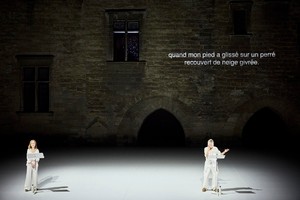
Lee Hye-young: 'Reading theater is an adventure — Isabelle inspired me'
Korean premiere of reading performance 'Bird' set for Oct. 10-11 Second Korean to perform at Avignon after world premiere in July Production draws only from Chapter 1 of 'We Do Not Part' Actor says nerves ran high, but Huppert's ease showed the way "Strange. Looking at the snow with you like this." (Inseon's line from "Bird") In the summer heat of France last July, the memory of a blizzard settled beneath 700-year-old stone walls in the Cour d'honneur of the Palais des Papes — the iconic centerpiece of the Avignon Festival, the beating heart of world performance arts. That opening line from "Bird," the first chapter of Han Kang's novel "We Do Not Part," set against the backdrop of the April 3 Jeju Uprising, filled the air through the voice of Lee Hye-young. Inseon speaks those words while gazing at white snow falling past a hospital window, but the strangeness she describes is not merely a change in weather. For Inseon, snow is silence and absence — the weight of grief that erases the boundary between the living and the dead. The snow that once fell mixed with Jeju's biting winds presses against the wound where Inseon lost her fingers in a carpentry accident, a medium of requiem carrying the indelible pain of massacre. Not a single snowflake drifted across the stage, yet Lee — performing in Korean — and French actor Isabelle Huppert, 73, performing in French, stared together into an invisible blizzard. It was a moment when two gazes crossed the same abyss, braving an unseen storm side by side. Lee, 64, the first Korean actor to stand in the Cour d'honneur, reflected on that moment. "The creative energy we generated — a strange, foreign language could have been heard like music, or simply like sound." Having completed the Avignon run, Lee will meet Korean audiences on Oct. 10 and 11 at Sogang University's Mary Hall Grand Theater in Seoul, as part of the 26th Seoul International Performing Arts Festival. Huppert, who shared the Avignon stage with her, will also travel to Korea for the performances. Ahead of the Korean premiere, Lee met with reporters at the Daehangno Arts Theater in Seoul. "'Bird' is a work that captures the process of carrying literary sentences into sound," she said. "Because it covers only Chapter 1 of the novel, it portrays the friendship between two friends and the fragility of human beings rather than historical scenes." An obsession 'like war' — and Huppert asking: 'Why try so hard to be perfect?' The road to the stage was one of agonizing solitude. An unfamiliar outdoor space, a role demanding emotional depth, the uncertain distance to the prompter — even for a veteran of Lee's stature, a bilingual reading performance at Avignon was uncharted territory. "I had never performed on a stage that large," she said. "My eyesight is poor, so I could not predict where the prompter would be or how far away it would sit. The obsession with doing everything perfectly wore me down. From the moment I left Seoul, I was already agonizing alone, like someone heading into battle." What pulled Lee out from under that pressure was her encounter with Isabelle Huppert. The two celebrated actors — one Korean, one French — first met at the home of director Hong Sang-soo before departing for Avignon. "She showed up at the director's place from the airport with just one suitcase. No manager. I thought it was so cool — 'Is this the French way?' (Laughs.) I had prepared for every possible scenario, determined to hold up my end no matter what. But Isabelle had read the script only once." The two actors' approaches to preparation could not have been more different. Even when Huppert visited Korea to attend the Bucheon International Fantastic Film Festival, "Bird" was the main topic between them. Huppert had read the script only once then too, and chose to listen to a recording rather than read it again, citing eye strain. "She actually turned it back on me and asked, 'It's a reading performance anyway — why are you trying so hard to be perfect?'" Working with Huppert became a source of inspiration for Lee. Watching Huppert communicate fluidly with the crew to shape the performance opened Lee's eyes to a different way of working. "She would ask the staff to reposition the prompter screen, or to change the text color at every point where a Korean line ended. (Laughs.) But nobody seemed burdened by it. Unlike me — carrying every load alone, walking an isolated path — Isabelle was someone who worked with others. It was a time when I learned a great deal more about what it means to collaborate." The first rehearsal took place in an enclosed room — a different kind of challenge from standing on a 2,000-seat outdoor stage. Lee arrived in Avignon three days before the performance and rehearsed every day, but that first rehearsal remains the moment she cannot forget. "It was the scene where Inseon and Gyeongha cook mung bean porridge and calmly talk about running away from home as students, about the wounds their mothers left them. The emotion surged up all at once. Everyone in the room felt it — some even cried. But after that, that same emotion never came back the same way on stage." Director Julie Deliquet demanded more than a simple reading — she called for a performance that sank into the characters' pain. Lee did not force or wring out the emotion from that first rehearsal. "I just go with whatever the air of that day brings, but when the feeling is not there and I still have to cry out in front of 2,000 people, the emotion does not match," she said. "For the Korean performances, I think conveying emotion will come more naturally since I will be performing in my mother tongue." At Avignon, Han Kang herself read the novel's final lines, but that element will not be part of the Korean production. Perhaps for that reason, Lee said she expects it to feel "like a completely different work from Avignon." She added: "The reason it was so powerful when Han read it is that those lines are the very heart of what this work is trying to say. Han reads them plainly, without emotion, coolly, without forcing any weight into them. I think it will depend on who comes in and how they read it." 'Western? I'm a thoroughly Joseon woman' France had long been a place of contemplation and longing for Lee. "I once wrote about Jules Verne's 'Twenty Thousand Leagues Under the Sea' and used it to explain why I loved France," she said. "I loved France because of couples like Sartre and Beauvoir — never married but together for nearly 50 years. And yet I have never actually met French people like that in real life." Having lived in Paris for two years, Lee found that France, beneath its romance and allure, left its mark on her as a place of loneliness. "In Korea, people often describe me as 'Western,' but I do not feel that way at all. When I first came to Avignon 30 years ago, in 1995 and 1996, I was drawn to and curious about foreigners. Now I feel none of that. If anything, I feel that I am a deeply Eastern — a thoroughly Joseon — woman." Lee has recently been pulled back into the spotlight after her character Audrey from the KBS2 drama series "I'm Sorry, I Love You" went viral as a meme through entertainment programs. She did not hide her complicated feelings about a past drama series living on through endless replay. "One reason I love theater is that it leaves no record. But with a drama series, even though that is not who I am now, it is still out there saying 'that's me.' I am grateful that Audrey from 'I'm Sorry, I Love You,' and my more recent work, are loved. But the arc of the life I have lived and the days I want to live run far deeper than that. The judgment, though, belongs to the audience — however they choose to remember me." It is a declaration in favor of the volatile and the present — something that ignites with each breath and dissolves into the air — over a past frozen in permanent preservation. The path Lee walks as an actor connects directly to the reason she chose this life. "I became an actor because I thought this work would make me happy. Reality was too hard to bear without the dreams I found watching films. I want to be a dream for people who still dream, the way I do."
Sept. 16, 2026
-
An Jae-hyun works out 7 days a week, does 1,000 ab reps daily to prepare for bed scene
Behind every public figure's appearance lies a personal regimen. This series examines the diets, workouts, procedures, and beauty and fashion routines of people in the spotlight. Actor An Jae-hyun has shared an update on his daily gym routine as he prepares for his next project, revealing he does 1,000 ab reps a day alongside weight training and about an hour of cardio. He has also bulked up from 60 kilograms to 77 kilograms through a combination of exercise and diet. An visited the gym at around 8:40 a.m. Monday, as shown in a video titled "An Jae-hyun's latest update — totally hooked on working out" posted to his YouTube channel. He started his session with ab exercises before moving on to weight training. "I do 1,000 a day," he said. When the production crew asked why, he said, "Because I need abs to show. It's a simple principle." His workout frequency was equally striking. Asked how many days a week he goes to the gym, he said, "Every day of the week." He said that starting in the morning, completing weight training and about an hour of cardio, then showering and eating, takes him until 2:30 p.m. His lifestyle has also changed since he started working out. An, who said he used to enjoy beer, said, "My favorite thing was falling asleep watching my favorite channel with a cold beer." Now, he said, "There's no room for beer anymore. Honestly, I'm just full." Will 1,000 ab reps a day give you a defined six-pack? Like any other muscle group, the abdominals can be developed through repeated resistance training. Exercises such as crunches and leg raises stimulate the rectus abdominis and surrounding core muscles, helping build the strength needed to stabilize the torso. However, doing large volumes of ab exercises does not selectively burn fat from the stomach. The so-called "spot reduction" effect — the idea that repeatedly working a specific area burns fat concentrated in that area — is limited. Achieving visible abs depends not only on the thickness of the abdominal muscles themselves but also on overall body fat levels. That means weight training for the whole body, cardio, and diet management must all work together alongside ab exercises. More repetitions are not always better, either. Even 1,000 reps may not provide enough stimulus for muscle growth if the movement becomes too familiar and the intensity too low. Conversely, piling on repetitions while fatigued and with poor form can put strain on the lower back and neck. What matters is maintaining proper form while adjusting intensity and repetition count to match your training goals. Working out every day — rest days count as training, too Even if you go to the gym every day like An, it is best to avoid training the same muscle groups hard on consecutive days. Strength training causes microscopic damage to muscle fibers, and muscles recover and grow during the rest and nutrition that follow. Repeatedly stressing the same muscles without adequate rest can reduce performance and raise the risk of pain or injury. Working out seven days a week does not necessarily mean overtraining. Adjusting intensity, splitting sessions by muscle group — chest, back, lower body — and scheduling days with only light activity such as walking or easy cardio can still allow adequate recovery time. What matters more than the number of sessions is your own fitness level and recovery state. If your performance consistently drops despite getting enough sleep, muscle soreness lingers for an extended period, your resting heart rate rises, or severe fatigue persists, it may be time to scale back your training volume. From 60 kg to 77 kg — what you gain matters as much as how much An said he began serious training and bulking up as he prepared for a bed scene in his next project. His weight, which had dropped to 60 kilograms at one point, has since climbed to 77 kilograms. When bulking to build muscle, what matters more than quickly pushing the number on the scale higher is increasing muscle mass while keeping excess body fat gain to a minimum. To do that, strength training must be paired with sufficient energy and protein intake. Rather than focusing exclusively on high-protein foods such as chicken breast, it is important to also eat carbohydrates — rice, whole grains, potatoes — and healthy fats found in nuts and fish, so the body has the energy it needs to train. Consuming large amounts of high-calorie foods or alcohol in an attempt to gain weight quickly is more likely to increase body fat than muscle. An's mention that his beer consumption dropped naturally once he became absorbed in training could also work in his favor for body composition. Alcohol itself contains calories, and heavy drinking can affect sleep quality and post-workout recovery. Brad Pitt's lean physique in 'Fight Club' — balance is the key The body An said he is aiming for is Brad Pitt's in "Fight Club." His trainer also said the goal is "muscles that aren't excessive but look beautifully balanced to anyone who sees them." Building a physique that is both defined and well-proportioned requires training the back, chest, shoulders, lower body, and core evenly, rather than simply doing more work on one area. Adequate sleep and rest, along with a diet that can be consistently maintained, are equally essential. Muscles receive the stimulus during exercise, but recovery and growth continue even during the hours away from the gym. Getting in shape does not come down to a single number — how many reps a day or how many sessions a week. What matters most is building a routine you can sustain over the long term: gradually increasing intensity to match your goals and fitness level, eating enough, and resting enough.
Sept. 16, 2026
-

Seoul Design Foundation unveils 17 'soban' pieces at DDP after Milan debut
Works drew praise at Milan Design Week in April Pieces to join DDP permanent collection after exhibition closes The Seoul Design Foundation announced Wednesday that it will hold the exhibition "SEOUL LIFE 2026: Heritage Reimagined, Soban" at the DDP Design Dulle-gil Gallery from Monday through Oct. 8. The show will feature 17 "soban" — traditional Korean low tables — that were first unveiled at Milan Design Week in April to widespread acclaim. The works made their debut at the ADI Design Museum during Milan Design Week in April, drawing 20,346 visitors. The pieces were praised for reinterpreting Korean tradition through a contemporary lens, earning recognition for both the curatorial vision and the artistic quality of translating traditional Korean lifestyle culture into present-day design. A soban is a small dining table used for meals and refreshments that can also be carried and stored, and it has evolved into a wide variety of forms and structures depending on region and purpose. Its compact, portable design reflects the Korean tradition of individual dining — one person, one table — as well as a communal way of life built around face-to-face interaction. The works draw on a broad range of techniques, from traditional crafts such as woodworking, lacquerwork and mother-of-pearl inlay to modern production methods including 3D printing and digital modeling. A total of 17 designer teams participated in the exhibition — 13 domestic and four international. Working within the soban's fundamental form and structure, the designers expanded its materials, production methods and uses in new directions. Traditional techniques such as lacquerwork and mother-of-pearl inlay were realized through collaboration with specialist craftspeople, while the combination of digital fabrication and contemporary materials opened new possibilities for tradition and technology to coexist. In conjunction with the exhibition, a design talk featuring participating designers and production specialists will be held at DDP on Wednesday. Under the theme "Contemporary Reinterpretation and Fabrication of the Traditional Soban," designers Kim Jong-wan, Kim Jin-sik, Leju, Seong Jeong-gi, Son Dong-hun and Lee Gi-yong, along with lacquer specialist Jeong Sang-yeop, will discuss the creative and production processes behind their works and the collaboration between traditional techniques and modern technology. All 17 pieces on display will be added to the DDP permanent collection after the exhibition closes. The foundation plans to preserve and manage the works systematically and use them in future exhibitions, research and education programs, building them into an asset that connects Seoul's living culture with contemporary design. The Seoul Design Foundation is a Seoul Metropolitan Government agency established in 2008 to promote the development of the design industry. "The soban is a design asset that carries Korea's traditional lifestyle culture while remaining flexibly connected to contemporary life," Seoul Design Foundation CEO Cha Gang-hee said. "Through this exhibition, we hope to share with the public the soban as reimagined by designers from Korea and abroad, and to carry it forward as a design record that reflects Seoul today."
Sept. 16, 2026
-

Park Hoon-jung's 'Sad Tropics' wins top prize at France's Etrangeres Film Festival
"Sad Tropics" won the Nouveau Genre Grand Prize, the top honor in the international competition section, at the 32nd Etrangeres Film Festival. According to international distributor Finecut, the film was invited to compete in the festival's international competition section and claimed the top prize after competing against other entries. "Sad Tropics" is the latest film from director Park Hoon-jung, one of the leading figures in Korean hard-boiled noir, known for "New World" (2013) and "The Witch" (2018). The film follows the children of a killer organization called "Sad Tropics," raised by an absolute ruler known as "Sabu" who reigns over a tropical rainforest. When a single event shakes the foundations of their existence, the group turns on one another and vows bloody revenge. Marc Truenen, the festival's international programmer, described the film as "an action thriller that builds with operatic intensity, charging relentlessly toward a furious climax as if there were no tomorrow." He added that it is "high-speed action that never lets you blink and never lets up." "Sad Tropics" has drawn strong attention in the global market even before its domestic release, receiving invitations from major film festivals worldwide. Following its selection for the "Orbita" section of the 58th Sitges International Fantastic Film Festival, the film won the Silver Raven in the international competition section of the 44th Brussels International Fantastic Film Festival in April. Most recently, the film was invited to the 40th Fantasy Filmfest, Germany's largest genre film festival, which tours seven major cities across the country. "Sad Tropics" is currently in final post-production ahead of its domestic release.
Sept. 16, 2026
-

Incheon's Songdo to swing with jazz this weekend
The 2026 Songdo Tribowl Jazz Festival runs Saturday and Sunday, featuring 14 acts including bassist Eddie Gomez, a former member of the Bill Evans Trio Incheon's Songdo International City will fill with jazz melodies this weekend as autumn breezes set in. Tribowl, an arts venue operated by the Incheon Foundation for Arts and Culture, will host the 2026 Songdo Tribowl Jazz Festival on Saturday and Sunday. Now in its 12th edition, the festival will bring together 14 top-tier acts from Korea and abroad, headlined by Eddie Gomez — the celebrated bassist from the Bill Evans Trio — alongside Jung Mi-jo, Jazz Park Big Band with Malo, Jeong Gi-go Quintet and Bump to Soul, among others. Indoor venue tickets have already sold out, but festivalgoers who missed reservations can still enjoy the event. Free, walk-in programs will be held at Tribowl's outdoor water stage, its lobby and on nearby streets, with no advance booking required. The outdoor water stage will host performances against the backdrop of an autumn evening, and a 12-piece brass band called Hontoni will deliver a roving performance, playing as they move from the outdoor plaza to the main hall. Inside the Tribowl lobby, Seoul Bossa Society will present an interactive bossa nova performance for visitors. For those hoping to catch an indoor show, a limited number of walk-in seats and remaining tickets will be available on a first-come, first-served basis at the second-floor lobby starting one hour before each performance. Beyond the music, the festival offers something for all the senses. A vinyl market and listening lounge will let visitors browse and buy rare records, and a free shaker-making workshop will also be on offer. A food-and-beverage pop-up from Sheraton Grand Incheon Hotel and a lineup of food trucks will be on-site to keep appetites satisfied. On Saturday, outdoor performances by Hakyung & Gypsy Dixie and the Na Hee-kyung Trio will also take place at Artpore, a commercial complex a five-minute walk from Tribowl. Shoppers who spend 50,000 won ($37) or more at participating Artpore stores can present their receipt and a festival brochure to receive a 5,000-won Onnuri gift voucher, while supplies last. Full performance schedules and program details are available on the Tribowl official website and the Songdo Tribowl Jazz Festival's Instagram account.
Sept. 16, 2026
MOST READ
- 1KAIST develops high-performance bio-based adhesive using E. coli instead of petroleum
- 2Pope Leo XIV declines French honors and banquet, accepts only private meeting with Macron
- 3Daimler Truck unveils next-generation transport solutions at IAA 2026
- 4What was Rachmaninoff's performance fee? A 1928 price list tells all
- 5Samsung Biologics union's show of force backfires at the bargaining table
- 6APR says hair-loss treatment research published in international journal
-
WORLD

US warns of punishment for anyone enabling Iran's Strait of Hormuz toll scheme
-
INDUSTRY

Toyota union puts productivity first; Hyundai Motor union demands bigger share of profits
-
FINANCE

National Growth Fund to invest $531M in FuriosaAI, which rebuffed Meta's $800M takeover bid
-
INDUSTRY

Korea Shipowners' Association holds amateur baduk tournament for Maritime Day