
- HOME
- SOCIETY

Exclusive: Migrant workers denied interpretation in unfair dismissal cases, data shows
No dedicated rules or budget for interpretation support; only 3 cases assisted through July this year Procedural guidance for applicants also lacking, advocates say Foreign workers who have turned to labor commissions to contest unfair dismissals are struggling to navigate the relief process due to a lack of interpretation support, data shows. Advocates say a proper support system must be put in place so that language barriers do not prevent workers from fully explaining the grounds for their dismissal claims and the harm they have suffered. According to data submitted to Democratic Party of Korea lawmaker Lee Yong-woo of the National Assembly's Climate, Energy, Environment and Labor Committee by the National Labor Relations Commission, only 25 cases involving foreign workers' relief applications received interpretation or translation assistance over the roughly five-year period from 2021 through July this year. Just three cases received such support from January through July this year. Although foreign workers filed 307 relief applications through August this year, the commission has no multilingual counselors on staff. When a relief application — such as one contesting an unfair dismissal — is filed with a labor commission, the commission collects written statements and responses, investigates the facts, and holds an examination hearing. The hearing is the stage at which a worker directly presents their case to the panel members who will render a final decision. Given the complex legal terminology and the back-and-forth over the circumstances of a dismissal, interpretation is an essential tool for foreign workers with limited Korean to exercise their right to relief. Yet no separate rules currently govern the scope, method or procedures for providing interpretation support to foreign workers. No dedicated budget has been allocated for that purpose either. The legal basis currently used for such support is a provision on reimbursing costs for general attendees. Article 23, Paragraph 3 of the Labor Relations Commission Act requires that persons who attend a proceeding at the commission's request — beyond the parties directly involved — be reimbursed for expenses in accordance with presidential decree. Article 11 of the implementing ordinance to the same law directs that the civil servant travel expense regulations be applied by analogy in such cases. The commission has been providing interpretation support by invoking this provision. While a legal basis exists for paying the costs of an interpreter's attendance, dedicated procedures for foreign workers to request interpretation support and a ring-fenced budget for that purpose have not been established. Advance guidance on how to apply for cost reimbursement is also inadequate, making it difficult for workers who have arranged their own interpreters to know whether they are eligible for support. As a result, a complaint was filed with the National Human Rights Commission of Korea in August alleging that the central and regional labor commissions had discriminated against foreign workers seeking unfair dismissal relief by conducting examination hearings without providing interpretation. The labor commission deflected responsibility, saying it "was unable to provide support within the agency's budget." After the controversy erupted, the commission belatedly announced it would draw up operational guidelines for supporting foreign workers. "Examination hearings at labor commissions involve complex legal terminology and intense disputes over the facts, which means interpretation support is a prerequisite for fair access to relief," Lee said. "The National Labor Relations Commission must carefully put in place institutional safeguards to guarantee meaningful procedural participation rights, and it must secure the necessary budget to back them up."
Kim Yong-hun Oct. 15, 2026
-
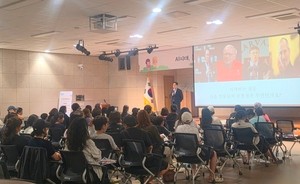
Taebaek City Hall becomes a one-stop education consultant
Part Seoul National University, part hagwon, part character-education center — Mayor Lee Sang-ho's education development zone takes shape with ambition and precision Taebaek's education policy, as currently carried out, looks something like a mashup of a prestigious Seoul university, a well-known education company, a character-development center, a speech training hagwon and a lifelong learning institute all rolled into one. The scope is sweeping: academic achievement and college admissions counseling, public speaking, career planning, advanced technology education, character development, persuasive and logical writing, and training in economic and financial literacy — everything a student needs to become a well-rounded member of society. Watching Taebaek execute its pilot education development zone project, one moment it resembles the student affairs office of Seoul National University, the next it calls to mind MegaStudy, and at other times it takes on the feel of a healing-oriented character education institution. Taebaek is broadening students' educational choices and providing diverse learning opportunities suited to each stage of their development. The city runs five specialized programs — a career and college counseling center, the online public learning platform "Tantan Baeumt'eo," a Maker AI Education Center, essay and speech education, and a transitional-year student support program — covering everything from career exploration to academic preparation and college admissions. The execution is meticulous, like the brushwork of a photorealist painting. Taebaek Mayor Lee Sang-ho once campaigned with the slogan "Lee Sang-ho will serve you right," pledging to work harmoniously even with a governor from a different party. Known for his sturdy, no-nonsense bearing, Lee reveals a surprisingly tender and attentive side in the fine details of the city's education initiatives. Personalized college and career counseling with expert guidance The career and college counseling center pairs students with professional consultants and former university admissions officers who provide tailored advice based on each student's aptitude and academic level. From last year through the end of September this year, the center conducted 734 counseling sessions. Operating out of three hubs — the Sangjang Youth Culture Center, the Sanso Dream Library and the city library — the program offers elementary school students help with study habits and foundational academic assessment, middle school students guidance on career planning and high school entrance strategies, and high school students support with university admissions analysis, school record management and interview preparation. Services also include strategies for early and regular admissions applications, analysis of admission prospects by target university and department, and counseling on special admissions tracks and job preparation for students at vocational high schools. College entrance information sessions and career and admissions lectures for parents round out the offering. Free access to premium online lectures through 'Tantan Baeumt'eo' Next to Tongni Elementary School in Taebaek stands Tantan Park, the filming location for the K-drama series "Descendants of the Sun." The word "tan" means coal. Once the heart of the coal industry, the site has been transformed into a popular national tourist destination. "Tantan Baeumt'eo" is an online public learning platform that allows Taebaek youth to access well-known paid educational content free of charge. Open to users aged 11 to 24, the platform had 269 registered users through the end of September this year. It offers curriculum-based content for elementary, middle and high school students from providers including MegaStudy and Milk T, as well as non-curriculum content in areas such as professional certification, reading and lifelong learning from Eduwill, Millie's Library and K-MOOC. AI-powered learning diagnostics and learning-style analysis recommend content matched to each user's level, and the platform includes features designed to support self-directed study. Elementary and middle school students can borrow tablet PCs to reduce the burden of acquiring devices, allowing them to use the platform's educational content at home as well. Maker AI Education Center: hands-on future technology training The Maker AI Education Center offers practice-oriented instruction that lets students directly experience and apply cutting-edge technologies. Located on the second floor of the Sangjang Youth Culture Center, the facility runs project-based classes across a range of fields, including AI music production, autonomous driving and humanoid robots. Courses run at multiple levels, from basic coding through autonomous driving and robot control. Through the end of September this year, the center provided instruction to 1,043 students across 55 classes at 18 elementary, middle and high schools, as well as 107 individuals enrolled in 12 separate sessions. Starting in November, the curriculum will expand into more specialized advanced technology fields, including AI agents, semiconductors and content creation. The center also runs an outreach program that brings AI education directly to schools, and offers ongoing hands-on activities at the facility itself, including robot-assisted baduk, virtual reality, augmented reality and drone experiences. Essay and speech education: building logical, persuasive young communicators The essay and speech program is designed to strengthen students' literacy, logical thinking and communication skills through writing, debate and presentation. In-school sessions focus on writing and presentation practice using news articles and books, while intensive vacation courses provide advanced training in debate and interview speaking. Through the end of September this year, the program reached 3,559 students across 188 classes at 12 elementary, middle and high schools, along with 46 individuals in three separate sessions. An online literacy component served 40 students in eight classes, covering news article and column analysis, writing practice and expert feedback. A debate competition is planned for November to give students a chance to demonstrate the discussion and presentation skills they have developed. Transitional-year support program: easing the leap to the next school level The transitional-year student program targets sixth-graders in elementary school and third-year middle school students, providing foundational academic support and help adjusting to life at their next school. During school vacations, sixth-graders take part in a nine-week foundational curriculum covering Korean reading comprehension, 800 core English vocabulary items for middle school and key mathematics concepts. The program also addresses self-directed study strategies such as time management and test preparation. Through school outreach sessions, sixth-graders receive guidance on understanding adolescence, peer relationships and preparing for middle school life, while third-year middle school students are coached on career exploration, high school study strategies and emotional management. In addition, the program incorporates economic and financial education to help students develop sound spending habits and a basic understanding of personal finance. "Through the education development zone, Taebaek's distinctive approach to education is providing real, practical benefits to students and parents," a city official said. "We will continue to diversify our programs and raise their quality to actively support students' growth and preparation for the future." Meanwhile, Taebaek has also applied, together with the Taebaek Office of Education, for a national education innovation leader district grant. The city plans to pursue a "10-minute education living zone" model centered on shared curriculum programs among small schools, personalized student growth support and the establishment of a safe student transportation system.
Oct. 15, 2026
-
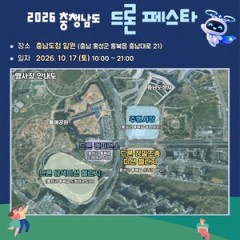
South Chungcheong Province to host drone festival Saturday
The one-day event at the provincial government complex will feature drone fishing, a light show and more than 30 programs The South Chungcheong Province government complex will transform into a sprawling drone playground for a day. South Chungcheong Province announced Thursday that it will hold the 2026 South Chungcheong Province Drone Festa on Saturday, starting at 10 a.m. at the provincial government complex. The event will offer more than 30 programs, including drone fishing, pop drone experiences and other hands-on activities, a national drone competition, an advanced drone exhibition, a conference and a drone light show. Visitors will be able to pilot drones themselves and explore the latest technology and future directions of the drone industry. A highlight will be the drone light show above Hongyegongwon park, which will be larger in scale than last year and incorporate three-dimensional aerial choreography to paint a spectacular display across the night sky. Live performances by singers will follow, adding to the autumn festival atmosphere. A conference themed "Meet the Future of Drones First" will be held at the South Chungcheong Provincial Library, bringing together experts from Hanwha Aerospace, the Korea Grand Drone Industry Association, Pusan National University and Baekseok University to discuss cutting-edge drone technology and the industry's future. "We have prepared a special day — from the fun of hands-on piloting to a three-dimensional drone show lighting up the night sky," said Im Taek-bin, head of the province's land and spatial policy division. "We hope you will come to the provincial complex this Saturday with family and friends to enjoy everything drones have to offer."
Oct. 15, 2026
-
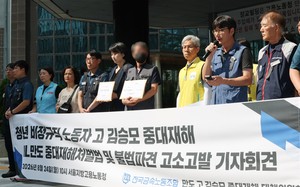
Nine in 10 workplaces convicted under serious accidents law failed safety inspection duties
Labor Ministry names 37 newly convicted workplaces 75 of 81 total violated hazard-check obligations One case saw work resume after fatal fall with no corrective action Nine out of 10 workplaces convicted under the Serious Accidents Punishment Act failed to properly carry out their obligation to identify and address on-site hazards, a government review has found. Of the 81 workplaces publicly named since the law took effect, 75 violated that duty. Of the 39 chief executives whose convictions were finalized and reported in the first half of this year, only one received an actual prison term. The Ministry of Employment and Labor on Thursday published in the official gazette and on its website the names of 37 workplaces where serious industrial accidents occurred and whose convictions were finalized and reported in the first half of this year under the Serious Accidents Punishment Act. The cumulative total of named workplaces has risen to 81 since the disclosure program began in September 2023. An analysis of violations across all 81 workplaces found that 75, or 92.6 percent, had breached the obligation to inspect and address hazardous and risk factors on site. Sixty-two workplaces, or 76.5 percent, also violated the duty to ensure that safety and health managers carried out their responsibilities diligently. Twenty-six workplaces failed to set safety and health goals and management policies, while 25 violated the obligation to solicit worker opinions and follow through on improvement measures. Twenty-two workplaces did not properly budget and execute accident-prevention spending, and 19 failed to prepare or review response manuals for serious industrial accidents. On average, each workplace violated 3.6 provisions. In one case, a worker fell from a 1.2-meter mobile scaffold while working without basic protective equipment. The workplace resumed operations without taking any corrective action, and the worker died the following day. Among the 39 chief executives — including two subcontractors in addition to the primary contractors — whose convictions were finalized and reported in the first half of this year across the 37 workplaces, one received an actual prison sentence, 35 received suspended sentences, and one received both a suspended sentence and a fine. Two received fines only. In total, 36 executives, or 92.3 percent, received suspended sentences. This round of disclosures includes a workplace where a three-year prison term — the heaviest sentence handed down since the law took effect — was confirmed. Also named was a workplace where the chief executive was detained and indicted for the first time following multiple casualties, but ultimately received a sentence of one year and six months, suspended for three years, on final appeal. From the law's effective date of Jan. 27, 2022, through the end of June this year, 85 chief executives across all publicly named workplaces have had their convictions finalized and reported. Of those, three received actual prison terms ranging from one to three years. Seventy-seven received suspended sentences, two received both a suspended sentence and a fine, and three received fines only. Fines imposed on corporations ranged from a minimum of 10 million won ($7,460) to a maximum of 2 billion won, with an average of 98 million won. Workplaces are eligible for disclosure when a serious industrial accident occurs due to violations of safety and health obligations and a conviction is finalized and reported. Information made public includes the workplace name, the date and location of the accident, the number of victims, the cause of the accident and the violations involved, and the workplace's record of serious industrial accidents over the preceding five years. Before disclosure, workplaces are given at least 30 days to submit explanations or statements. Workplaces with convictions finalized in the first half of a given year are disclosed in the second half of that year, while those from the second half are disclosed in the first half of the following year, and remain posted on the ministry's website for one year. Employment and Labor Minister Kim Young-hoon said a firm commitment to safety on the part of chief executives who oversee and manage operations is what guarantees worker safety on the ground. "We will provide support such as accident-prevention consulting for small businesses, while holding those responsible for serious accidents to account through rigorous investigation," he said.
Oct. 15, 2026
-

Seoul serious crimes agency assigns defamation case against Gwangju chief to anti-corruption unit
Im Eun-jung alleged Kim Ji-yong had problems during his time as a prosecutor Civic group filed complaint with the agency last Wednesday Defamation not listed among serious crimes under the law Case may be transferred to police if deemed outside agency's jurisdiction The Serious Crimes Investigation Agency has assigned to its anti-corruption unit a case involving Im Eun-jung, chief of the agency's Gwangju branch, who was accused by a civic group of defaming Kim Ji-yong, the nominee to serve as the agency's inaugural chief. According to legal sources Thursday, the Seoul Serious Crimes Investigation Agency recently assigned the case against Im — who faces charges of defamation through the posting of false information under the Act on Promotion of Information and Communications Network Utilization and Information Protection — to its anti-corruption investigation unit. The civic group Sabeop Jeongui Baro Seeugi Simin Haengdong filed the complaint against Im with the agency on Wednesday. On Oct. 5, Im posted on her SNS account claiming that the Supreme Prosecutors' Office's First Inspection Division had in 2018 ignored a complaint related to a sexual violence case involving Jin Dong-gyun, a former prosecutor and the brother-in-law of independent lawmaker Han Dong-hoon. Kim was the head of that division at the time. Im had repeatedly argued that Kim was unfit to serve as the agency's inaugural chief, continuing to make such remarks even after being appointed Gwangju branch chief — a stance that made her the first subject of an internal audit after the agency launched. The civic group said in its complaint filed on Wednesday that Im "worked for a long time as a prosecutor — a specialist in investigation and law — yet allegedly made false and defamatory claims against the victim, Kim, without even verifying the basic facts," adding that she "must bear criminal responsibility for damaging his reputation by portraying him as unfit to lead the agency." Kim responded to Im's allegations by saying that Im had simply requested an audit without submitting any supporting materials on a matter already under review by a fact-finding team, and that his division had merely notified her it would review the matter after the ongoing investigation concluded — not that it had mishandled anything. At his confirmation hearing Wednesday, Kim said the First Inspection Division had been a subject of the investigation, not the body conducting it. The agency is reviewing whether Im's defamation case falls within its investigative jurisdiction. Under the law and the agency's organizational rules, the anti-corruption unit handles corruption cases involving civil servants' job-related crimes, criminal cases involving civil servants from the prosecution service, the Corruption Investigation Office for High-ranking Officials, courts, and police, as well as cases related to public safety and political funds — along with any cases the agency chief designates. If the agency determines that defamation falls outside its jurisdiction, it may transfer the case to police or another authority. An agency official said defamation is not included among the serious crimes defined under the law and that the agency is reviewing how to proceed.
Oct. 15, 2026
-
Personnel: Korea Institute of Industrial Technology
Position appointments Vice President: Choi Tae-hun Director of the Intelligent Root Technology Research Institute: Lee Ho-nyeon
Oct. 15, 2026
-
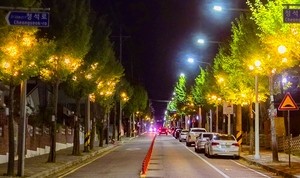
Samcheok's Gyodong district blooms at night with artistic lighting expansion
Gyodong, the Samcheok neighborhood home to Samcheok City Hall and the Samcheok campus of Kangwon National University, has been transformed into an artistically lit district through a nightscape improvement project. The city installed galaxy-style decorative lighting along the stretch from the Gyodong residential area elevator to the Myeonggajokbal restaurant district as part of the Gyodong Residential Area Landscape Improvement Project. The new lighting was designed to connect seamlessly with existing illuminated sections, with brightness levels calibrated to account for the surrounding light environment — including storefront signs and streetlamps. Samcheok is also reviewing plans to extend the lighting network and link it to the newly completed section. If additional installations go ahead, the city expects the expanded coverage to create a cohesive nightscape while improving pedestrian convenience and offering residents and visitors more to see after dark. What began as scattered points of light has grown into connected lines, and a fully illuminated nighttime panorama is expected to follow before long. Samcheok, which served as the capital of the ancient state of Siljikguk and long stood as a central hub along the Baekdudaegan mountain spine of the Korean Peninsula, is working step by step to restore its historic stature and raise the city's standing.
Oct. 15, 2026
-
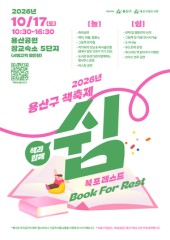
Yongsan-gu brings Book Forest festival to Yongsan Park this weekend
The 2026 Book Forest festival runs Saturday at Officer Housing Complex 5 in Yongsan Park, featuring four themed zones — performance, hands-on activities, reading and exhibitions — with programs for all ages Seoul's Yongsan-gu will host the 2026 Book Forest (Book For Rest) festival Saturday from 10:30 a.m. to 4:30 p.m. at Officer Housing Complex 5 in Yongsan Park. The event is organized by the Yongsan-gu Facilities Management Corporation and the district's public libraries. This year's festival is themed "Play and Rest with Books," aiming to expand the joy of reading through performances and hands-on activities while giving visitors a relaxed space to read outdoors in the park. The venue is divided into four zones: a performance forest, an experience forest, a reading forest and an exhibition forest. The festival is designed as an open literary gathering where children, seniors and everyone in between can join programs suited to their interests, enjoy books and connect with neighbors. The performance zone will feature resident-led nanta drumming, dance and choir performances, along with brass jazz, magic, bubble and balloon shows, and a picture-book family musical. The mix of music, storytelling and live entertainment is intended to give families a memorable outing. Particularly for young readers, the festival will include a meet-and-greet with Kang Hyo-mi, author of the children's book "Ddongbokki Halmeom," as well as a reading quiz competition where children can test their knowledge of books they have read. The experience and exhibition zones will be run jointly by local libraries and partner organizations. Programs range from book-themed crafts and AI and robot digital activities to children's rights and volunteer programs, catering to a wide range of ages. A picture-book exhibition and a display shelf presenting books through the theme of taste are also planned. The reading zone will be set up as a comfortable outdoor reading space furnished with bean bag sofas and chairs. A book-sharing event and a Bookstart program will give residents a chance to connect through reading. Visitors can pick up a book and unwind between performances and activities, and food trucks will be on site to add to the festive atmosphere. The festival is open to all on a walk-in basis on the day (the reading quiz competition excluded). For more information, visitors can check the official Yongsan-gu Book Forest blog or contact Yongsan Kkumnamu Library. Three Yongsan district public libraries — Kkumnamu, Cheongpa and Yongmaru — will be closed Saturday and Sunday to accommodate festival preparations and operations. Yongsan-gu District Mayor Kim Kyung-dae said he hopes the festival will help children discover the joy of reading and give adults a moment of rest amid their busy lives. "We will continue to broaden the culture of reading so that residents can easily access books and culture close to home, drawing on our libraries and diverse cultural resources," he said.
Oct. 15, 2026
-
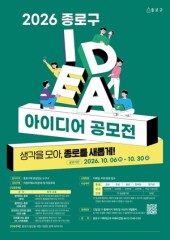
Shape the next decade of Jongno-gu with your ideas
Idea contest open through Oct. 30, with no restrictions on residency or age; top prize of 1 million won among awards selected by public vote Jongno-gu is inviting residents and anyone with an interest in the district to submit ideas for its 2026 idea contest, themed "Gather Your Thoughts, Renew Jongno," with submissions accepted through Oct. 30. The contest aims to find practical solutions to problems encountered in daily life and at administrative sites. The district plans to translate winning proposals into concrete policies and incorporate them into its governance. Proposals that pass an initial review will be made public, and residents will cast votes in a "public preference poll" as part of the judging process. The district said the goal is to weigh not only administrative feasibility and expert assessments but also real-world relevance and breadth of public support when selecting the final winners. The contest theme is "Ideas for the Development of a New Jongno in the Ninth Elected Term." Submissions fall under four designated categories: "Jongno Together" covering welfare; "Vibrant Jongno" covering culture and the economy; "Safe and Convenient Jongno" covering safety and transportation; and "Jongno Opening the Future" covering AI and smart administration. Proposals that do not fit any of these categories may be submitted under an open-topic option. Anyone with an interest in Jongno may participate, with no restrictions on place of residence or age. Submissions may take the form of a written proposal or a short-form video, whichever the applicant prefers. Applications can be submitted through Oct. 30 by email, postal mail or in person at the district's Planning and Budget Division. Full details, including forms and submission guidelines, are available on the district office website. Winners will receive a certificate and a cash prize. The gold prize carries 1 million won ($746), the silver prize 500,000 won, the bronze prize 300,000 won and the encouragement prize 200,000 won. Fifty participants will also be selected by lottery to receive coffee gift vouchers. Regardless of whether a submission wins an award, the district plans to categorize and review all received proposals by field and use them as foundational material in its policymaking process. "The everyday ideas of our residents can be the starting point for positive change in Jongno," District Mayor Yoo Chan-jong said. "Through this contest, we will gather a wide range of opinions and work to ensure that residents' interests and voices are reflected in policy."
Oct. 15, 2026
-
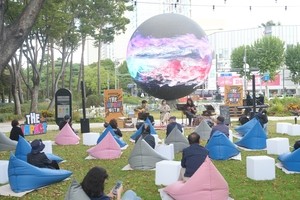
Songpa-gu hosts 'Fall in THE SPHERE' autumn busking festival at Seokchon Lake
Five youth artist teams perform pop opera, jazz and modern rock at The Sphere lawn, Seokchon Lake West, from 4 to 6:30 p.m. on Saturday Seoul's Songpa-gu will host an autumn youth busking festival, "Fall in THE SPHERE," at the lawn of The Sphere at Seokchon Lake West on Saturday, starting at 4 p.m. The Sphere is a spherical media art installation measuring 7 meters in diameter. The event was designed to let residents and visitors enjoy a blend of autumn music and media art while experiencing the installation's distinctive appeal. Five youth artist teams based in Songpa — including those active at the Seokchon Lake Atelier — will take the stage across a range of genres including pop opera, jazz and modern rock. The participating acts are Benny & Todd, Siseon, Moon Mi-hyang Quartet and Anrak Band. Anrak Band was selected for Songpa-gu's 2026 The Impact program, which supports emerging youth artists. The group features vocalists who have demonstrated their talent on the national stage, including winning the grand prize at TV Chosun's College Song Festival. The event aims to give young artists a platform to connect with the public and pursue their craft, while offering residents and visitors an autumn memory drawn from the seasonal scenery of Seokchon Lake, live music and media art. Songpa-gu District Mayor Seo Gang-seok said he hoped visitors would come to Seokchon Lake and "immerse yourself in the charm of The Sphere alongside a wonderful performance by young artists, in a season perfectly made for enjoying music."
Oct. 15, 2026
-
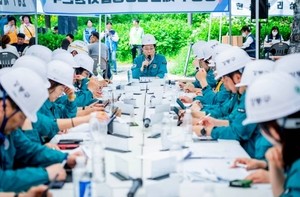
Gangdong-gu drills for electric vehicle fires and crowd crush in 2026 disaster response exercise
The Oct. 28 exercise at Gangdong I'Park The River Mall will simulate a combined disaster involving an EV fire and a crowd crush; 20 agencies and organizations will take part, with more than 100 residents joining the evacuation drill. Gangdong-gu in Seoul will hold its "2026 Disaster Response Safety Korea Drill" on Oct. 28 at 10 a.m. at Gangdong I'Park The River Mall (51 Godeokbizvalley-ro), simulating a scenario in which an electric vehicle fire and a crowd crush occur in rapid succession. This year's drill is set in a weekday daytime scenario: a fire breaks out while an EV is charging in the mall's second basement-level parking garage, spreads rapidly and causes multiple casualties, and then triggers a crowd crush as evacuees surge onto escalators. The River Mall is a large-scale retail complex with a total floor area of 301,337 square meters, six above-ground floors and five below-ground floors, drawing an average of about 500,000 visitors a month. The district selected the venue to build its capacity to respond to compound disasters that can occur in large-scale commercial facilities. Twenty agencies and organizations will take part — 12 public institutions, including Gangdong-gu District Office, Gangdong Fire Station, Gangdong Police Station, Gangdong-gu Public Health Center, Army Unit 6019, Korea Electric Power Corporation, Korea Electrical Safety Corporation, Korea Gas Safety Corporation, the Korean Red Cross and Central Veterans Hospital, along with eight private organizations, including The River Mall, KT Corp, Ko-one Energy Service, Gangdong Kyung Hee University Hospital, the volunteer fire brigade, the autonomous disaster prevention corps, safety wardens and a public experience team. The exercise will be conducted as a comprehensive drill combining tabletop and field components simultaneously. The district will convene a situation assessment meeting, activate a disaster safety response headquarters on the first basement level of the district office, and establish an integrated field support headquarters — including a disaster victim support center — at the scene. Gangdong Fire Station will operate an emergency rescue control unit, while the Gangdong-gu Public Health Center will run an on-site emergency medical station. Police will handle resident evacuation and scene control, and electricity and gas agencies will work to prevent secondary damage. Once emergency rescue operations wrap up, the drill will transition to victim support, recovery and restoration led by the district office, covering the full response cycle. This year the exercise moves away from scripted scenarios toward a live-action format. Quantitative targets have been set: situation alerts within 10 minutes and situation assessment meetings within 15 minutes. More than 100 residents will also take part directly in the evacuation drill, playing an active role as participants rather than observers. In addition, more than 10 types of district-owned equipment will be deployed, the public safety LTE (PS-LTE) disaster communications network will be used at least three times, and the district will request resources from neighboring local governments through the National Disaster Management Resource Integrated Information Center (KRMS) to test its disaster resource mobilization capabilities. Traffic will be restricted on parts of Godeokbizvalley-ro around 9 a.m. on Oct. 22, when a rehearsal is scheduled, and around 10 a.m. on Oct. 28, when the main drill takes place. After the exercise, the district will hold an evaluation and improvement meeting to identify gaps in the current response system and revise operational manuals — including the on-site action manual for large-scale retail facilities — to further strengthen cooperation among relevant agencies. "To prepare for compound disasters like EV fires and crowd crushes that can happen at any time, realistic drills are essential," Gangdong-gu District Mayor Lee Su-hee said. "We will carefully address every shortcoming revealed in this drill and build a safer Gangdong where residents can go about their daily lives with peace of mind." Gangdong-gu has consistently earned strong marks in disaster preparedness evaluations — receiving the top award in the 2022 Seoul Safety Korea Drill assessment, a prime minister's commendation in the 2023 national disaster response drill, an excellence award in the 2024 Seoul Safety Korea Drill assessment, and another excellence rating in the 2025 Safety Korea Drill — reflecting its track record of systematic drill management and inter-agency cooperation.
Oct. 15, 2026
-
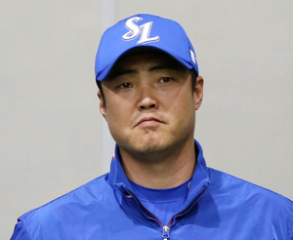
Ex-pro baseball player sentenced to prison for fraud after borrowing hundreds of millions while W2b in debt
A court has sentenced former professional baseball player An Ji-man, 43, to prison for fraud after he borrowed hundreds of millions of won from acquaintances and failed to repay them. Investigators found that An had already accumulated 2 billion won ($1.49 million) in debt when he took out the additional loans, using the borrowed money solely to pay off existing obligations. He argued at trial that he had intended to repay the money once he returned to professional baseball, but the court rejected that claim. Judge Jeon Myeong-hwan of Daegu District Court's Criminal Division 11 sentenced An to one year and eight months in prison on fraud charges, the court announced Wednesday. An was indicted on charges of borrowing a total of 322 million won from three acquaintances between April 2016 and October 2017 and failing to repay them. In October 2015, An, then a pitcher for the Samsung Lions, was removed from the Korean Series roster after coming under investigation for overseas gambling. The following July, the Samsung Lions terminated his contract, cutting off his salary. Investigators found that An already owed approximately 2 billion won at the time he borrowed the money from his acquaintances. An solicited the loans by telling acquaintances he would win acquittal on appeal and return to his team to repay them if they lent him money for legal fees, and that he was constructing a building in Gumi and would repay the principal with interest by year's end. The borrowed funds, however, were used entirely to service his existing debts. During the trial, An maintained that he had been transparent about his financial situation when borrowing the money and had genuinely intended to repay it upon returning to professional baseball. The court was unconvinced. "An claims he expected to return to the sport, but that was nothing more than his own hope — his prospects for a comeback were uncertain," Judge Jeon said. "Had the victims known in advance that the money borrowed under the pretense of legal fees or construction costs would be used entirely to pay off debts, it is clear that none of them would have lent it." The judge acknowledged that An had no prior convictions of a similar nature or criminal record beyond fines, but said the ruling took into account that An refused to accept criminal responsibility, made no effort to compensate most of the victims or reach a settlement with them, and exploited his public profile to commit the offenses.
Oct. 15, 2026
-
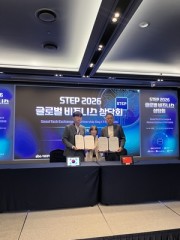
Geumcheon-gu hosts G Valley Global Business Consultation to forge tech cooperation deals
54 Seoul-based small and medium-sized enterprises and 40 buyers from eight countries participate in one-on-one export consultations, product exhibitions and sample sales to open overseas markets Geumcheon-gu held the "G Valley Global Business Consultation" on Wednesday at the Four Points by Sheraton hotel in Guro-gu, bringing together small and medium-sized enterprises from the district and across Seoul with overseas buyers. The event was organized to support small and medium-sized enterprises that, despite having competitive products, struggle to find export channels due to a lack of information about overseas markets. Five institutions jointly organized the consultation — Geumcheon-gu, Guro-gu, Gangseo-gu, the Seoul Business Agency and the Korea Industrial Complex Corporation — following an initial session at COEX Magok on Tuesday. A total of 54 small and medium-sized enterprises based in G Valley and across Seoul took part, alongside 40 buyers from eight countries including Vietnam and Japan. Participating companies held one-on-one export consultations with overseas buyers at "business matching" booths to explore opportunities for entering foreign markets. They also showcased their products at exhibition booths and discussed potential business cooperation with buyers. Geumcheon-gu worked with co-organizing institutions to identify and invite overseas companies interested in doing business with Korean firms ahead of the event, aiming to help participating companies achieve tangible export results. A range of supporting programs ran alongside the consultations, including pre-consultation export training, export consulting sessions, a seminar on entering global markets and an investor presentation session. The event was designed to go beyond simple consultations by linking companies to a full spectrum of support — from export preparation and overseas market entry to investment attraction. Two companies signed memorandums of understanding on-site during the event, covering exports, retail distribution and technology cooperation with firms from Singapore and China, respectively, according to the district. "I hope this consultation serves as an opportunity for local small and medium-sized enterprises to open new channels in overseas markets and achieve real export results," Geumcheon-gu District Mayor Choi Ki-chan said. "We will continue to provide multifaceted support so that competitive small and medium-sized enterprises can advance into global markets."
Oct. 15, 2026
-
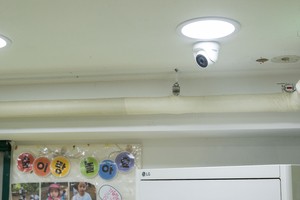
Yangcheon-gu launches support program to replace aging CCTV units at daycare centers
Units installed before 2021 and self-managed eligible... outdated equipment to be replaced with latest models Professional maintenance model... up to 105,000 won per unit annually, supported for up to three years Yangcheon-gu launched a program this month to replace aging closed-circuit television systems at local daycare centers, aiming to prevent safety incidents and create a more secure childcare environment. CCTV installation at daycare centers became mandatory under the Infant Care Act in 2015, and the systems have since served as a key safeguard against child abuse and accidents. A decade on, however, aging equipment has led to deteriorating image quality and frequent breakdowns, and the cost of individually purchasing and managing replacements has placed a burden on individual facilities. In response, the district will support the replacement of outdated units and go beyond a simple swap, backing a professional maintenance framework that ensures regular inspections, repairs and performance upgrades on an ongoing basis. Eligible facilities are daycare centers in the district that installed CCTV on or before Dec. 31, 2020, and have been managing the equipment themselves. Support is available when outdated units in legally mandated locations — such as childcare rooms and shared play areas — are replaced through a professional maintenance provider. Facilities that replaced their equipment on or after Jan. 1 this year may also qualify retroactively if they meet the requirements. The subsidy covers up to 105,000 won ($78) per unit per year, based on a standard rate of 150,000 won, with daycare centers responsible for only 30 percent of the cost. Operating and maintenance costs will be supported for up to three consecutive years from the year of installation, ensuring sustained upkeep after the replacement. Before launching the program, the district conducted a preliminary demand survey and received applications for 236 units across 34 daycare centers, which will be supported on a rolling basis. Facilities that did not apply in advance may still submit additional applications within the available budget, provided they meet the eligibility requirements. "Safety is paramount at daycare centers, as they are the first place children spend long hours away from home," Yangcheon-gu District Mayor Lee Ki-jae said. "We will replace aging equipment in a timely manner and establish a professional management system so that children, parents and childcare staff can all feel at ease."
Oct. 15, 2026
-
Dongjak-gu launches 'Clean Dongjak' campaign to spruce up walkways across all 15 neighborhoods
Commuter routes and high-traffic pedestrian paths to get intensive cleanups; District Mayor Ryu to tour all 15 neighborhoods starting Wednesday, with year-end awards and incentives for top performers Dongjak-gu has designated October as the month of its "Clean Dongjak, Take Action" campaign, mobilizing residents to carry out intensive cleanups along major pedestrian routes to create a more pleasant walking environment. The campaign is the first phase of a broader initiative called "Brighten Dongjak," which aims to transform the streets residents walk every day into what the district describes as "healing roads in everyday life." All 15 neighborhoods will hold their own cleanup launch ceremonies on Friday before beginning full-scale environmental improvement work. Patrol and maintenance teams drawn from neighborhood association heads and civic organizations will conduct at least one daily inspection of commuter routes and high-traffic walkways. The teams will also identify sites suitable for LED lighting installations, CCTV cameras and rest areas for elderly residents. Illegally dumped trash and neglected flower beds that obstruct pedestrians will be cleared promptly. Items that cannot be removed on the spot — such as objects left on the roadside or fallen leaves along main roads — will be logged through the district's "Administrative Comprehensive Observation System" app, which routes reports to the relevant department in real time. The app allows civil servants to photograph and register residents' complaints encountered during their commutes or field visits, with reports forwarded instantly to the responsible department. The district plans to use the system to make street-environment improvements more effective. District Mayor Ryu Sam-young will begin touring all 15 neighborhoods on Wednesday, joining residents on patrol and inspection walks along major commuter routes. Ryu will personally check the condition of walkways throughout each neighborhood and ensure that areas requiring improvement receive follow-up action, with the goal of delivering cleaner streets that residents can see and feel. At year-end, the district will hold a "Brighten Dongjak — Streets Worth Walking" results showcase, where before-and-after records and best practices from all 15 neighborhoods will be shared. Neighborhoods that post the strongest improvement results will receive incentives, a measure the district says is intended to boost engagement and participation in environmental upkeep across all areas. Dongjak-gu is also pursuing a range of other projects to improve residents' quality of life and living environment, including installing pet waste bag dispensers, expanding public restrooms inside traditional markets and upgrading the underground walkway at Noryangjin Fish Market. "When the streets people walk every day are clean and safe, their daily lives become that much more comfortable," Ryu said. "We will work together with residents to address sources of inconvenience throughout the neighborhood and build a walking environment where everyone can move around with peace of mind."
Oct. 15, 2026
-
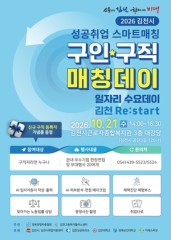
Gimcheon to host 2026 job-matching fair on Oct. 21
Gimcheon City in North Gyeongsang Province will host the "2026 Gimcheon Job-Matching Fair" on Wednesday at 2 p.m. at the grand hall on the third floor of the Gimcheon Workers' Welfare Center, the city announced Thursday. The event is co-organized by the North Gyeongsang Employers' Federation and the Gimcheon Employment Welfare Plus Center, and is designed to help local companies fill vacancies while expanding job opportunities for job seekers. Related institutions, including local universities, are also set to participate to support connections between companies and job seekers. Ten local companies will take part in the fair, conducting one-on-one on-site interviews with job seekers. Applicants will be able to meet directly with corporate recruiters for interviews and consultations, check hiring information, and find positions suited to their skills and interests. A range of supporting programs will also be available to help job seekers prepare. These include employment consulting, labor law counseling, AI-assisted resume writing, professional headshot photography and career tarot readings.
Oct. 15, 2026
-
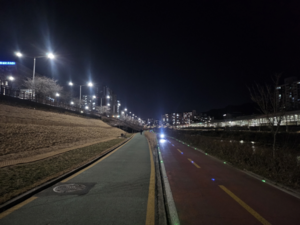
Dobong-gu to light up Jungnangcheon riverside path with 101 new streetlights
500 million won in city funds to bring 101 new security lights to a 2-kilometer stretch of the Jungnangcheon trail Installation to be completed in November, with full illumination to follow Dobong-gu in Seoul will install new security lights along a 2-kilometer stretch of the Jungnangcheon riverside path — from Nowon Bridge to the Uijeongbu city boundary — so residents can walk safely and comfortably at night. The stretch has long drawn complaints from residents about poor lighting after dark, with concerns raised over the risk of crime and accidents. In response, the district began work in September, committing 500 million won in city funds to install 101 security lights and three electrical distribution panels to ensure a stable power supply along the route. Pipe-laying, wiring and foundation work will be carried out intensively through October and November, with the full project set to wrap up in November and the lights switched on shortly after. Once complete, the Jungnangcheon trail is expected to become a welcoming walking path that all Dobong-gu residents can enjoy with peace of mind after dark. Dobong-gu District Mayor Kim Dong-wook said the district would continue to closely inspect and improve riverside areas and other sites tied to residents' daily lives, with the goal of making Dobong-gu a safer and more livable community.
Oct. 15, 2026
-
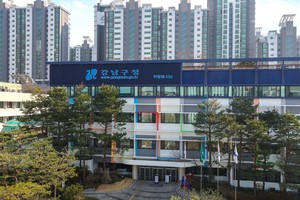
Gangnam-gu standardizes trust real estate tax collection, recovers cumulative W2b
District secures additional 646 million won from management-type trust after collecting 1.42 billion won in August; real-time tracking system flags sales before they close Gangnam-gu has standardized its approach to collecting delinquent taxes on trust-held real estate and, through continuous monitoring, recovered an additional 646 million won ($482,000) from a corporate-owned building held under a management-type trust. The collection follows a 1.42 billion won recovery from a development-type trust property in August, bringing the cumulative total from both operations to 2.06 billion won. Collecting delinquent taxes on trust-held real estate is more complicated than on ordinary properties. When a property is placed in trust, the registered owner shifts from the delinquent corporation to the trust company, meaning the taxpayer and the titleholder are different entities — making it difficult to seize the asset directly as one would with a delinquent party's general property. When a building is divided into multiple units, as in this case, the district's ability to sell the property and recover taxes can also take considerably longer. After the August collection, the district did not leave the know-how with individual staff members. It formalized the approach into a standard procedure: continuously monitor trust properties for delinquency and pending sales, and move to secure taxes before any sale is completed. The method was shared across staff, and a standing system for tracking trust-related delinquencies was put into operation. The latest recovery targeted 114 units of a corporate-owned building held under a management-type trust. A total of 229 tax items — including property taxes from 2025 through 2026 — had gone unpaid, amounting to 646 million won. During routine monitoring, the district detected that the property was being sold and immediately launched collection proceedings. The key was securing the right to collect taxes before the sale closed. The district first designated a physical tax-payment obligation on the trust company for the existing arrears and seized a representative unit. When an additional 192 million won in September property taxes fell into arrears, the district designated a further physical tax-payment obligation in early October. As a result, the full 646 million won — including all prior arrears — was collected the following day, before the trust property changed hands. The August case involved a development-type trust, in which the trust company oversees financing, construction and pre-sales. This time, the district applied the same collection method to a management-type trust, where the developer drives the project while the trust company manages property ownership and fund disbursement. The significance of this outcome lies in successfully extending a collection method proven in one type of trust structure to a structurally different one. The district plans to continue monitoring trust properties for delinquency and sale activity, and to act swiftly before transactions close. It also intends to share the case with other local governments so they can apply the approach to their own trust-related collection challenges. Gangnam-gu District Mayor Kim Hyun-ki said the result showed what was possible when a single successful collection was turned into a repeatable system rather than left as one employee's experience. "We will continue to respond proactively to delinquencies on trust properties before sales go through, closing the gaps through which tax revenue can slip away, and building a fair tax order that respects those who pay honestly," Kim said.
Oct. 15, 2026
-
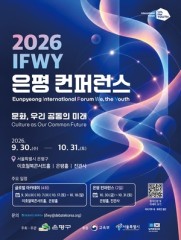
Eunpyeong-gu to host 'Global Dialogue' forum for youth from around the world
Korean and international youth will gather at Eunpyeong Hall on Saturday and Sunday for lectures, themed debates and the drafting of the Eunpyeong Declaration Eunpyeong-gu in Seoul will host the "Global Dialogue" — the main educational program of the 2026 IFWY Eunpyeong Conference — at Eunpyeong Hall in the district office on Saturday and Sunday, bringing together Korean and international youth participants. IFWY stands for International Forum We, the Youth, an international youth forum where young people discuss agendas for a sustainable future. More than 27,000 youth from 163 countries took part in the 2025 event. This year's event is themed "Culture, Our Common Future" and unfolds in three stages: the Eunpyeong Academy (preliminary education), the Global Dialogue (main program) and the Eunpyeong Conference. The preliminary Eunpyeong Academy held two sessions — on Sept. 30 and Oct. 7 — covering global citizenship education and debate training. Youth selected from among those academy participants will take part in the Global Dialogue. On the first day of the Global Dialogue, Saturday, Georg Wilfried Schmidt, the German ambassador to South Korea, and novelist Seo Su-jin, who received a special prize at this year's Lee Ho-cheol Unification Road Literary Award, will deliver lectures. Their talks will cover "Korea in the World and Public Diplomacy" and "AI, Humanity, Dialogue and Literature," respectively. In the afternoon, participants will split into six thematic groups to share the agendas they have each prepared, exchange views and work toward consensus. The six themes are climate crisis and cultural heritage, the creative economy and youth employment, cultural rights and equal access and representation, AI and human creativity, heritage amid peace and conflict, and governance, democracy and youth participation. On the second day, Sunday, participants will hold formal debates by theme and use the results to draft the content of the Eunpyeong Declaration. The program will conclude with a networking event among participants. The Eunpyeong Declaration drafted during the Global Dialogue will be unveiled at the closing ceremony of the Eunpyeong Conference, to be held Oct. 31 at Jingwansa Temple. The conference will feature an opening ceremony, keynote lectures, thematic presentations with expert commentary and a cultural experience at the temple. Eunpyeong-gu District Mayor Kim Mi-kyung said the Global Dialogue is "a process through which young people directly define international agendas related to culture and translate them into concrete policy proposals through debate," adding that the views participants refine together will be compiled in the Eunpyeong Declaration and presented at the Oct. 31 closing ceremony. Further details are available on the official website.
Oct. 15, 2026
-
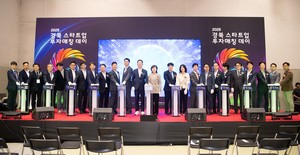
North Gyeongsang startups attract W3.68b at investment matching event
Nine startups from North Gyeongsang Province secured 3.68 billion won ($2.75 million) in investment at the 2026 North Gyeongsang Startup Investment Matching Day, the provincial government announced Wednesday. The event, held Tuesday and Wednesday at Gumico in Gumi, drew 103 startups and 32 investment firms, along with 15 regional innovation institutions, seven large and mid-sized companies, and eight financial institutions. The province holds the investment matching event annually to help startups with strong technology and ideas secure timely funding suited to their stage of growth. At last year's event, 11 participating companies attracted 13.1 billion won in investment. Three were selected for the Ministry of SMEs and Startups' TIPS program, and one completed a merger and acquisition. The province has built a full-spectrum support system covering every stage of company growth — from identifying promising startups through its "Everyone's Startup" initiative, to establishing the G-Star Fund of more than 1 trillion won, connecting companies with private investors, supporting TIPS entry, nurturing pre-unicorn firms, facilitating open innovation with large and mid-sized companies, and linking startups with financial institutions. Through end-to-end support spanning startup discovery and development, direct investment, follow-on funding and global expansion, the province had nurtured 13 "baby unicorn" companies as of the end of 2025. A total of 73 companies had been selected for the TIPS program, and startups from the province had received 30 CES Innovation Awards. At CES 2026, five North Gyeongsang companies received Innovation Awards, further demonstrating the technological competitiveness of the province's startup ecosystem. "For startups to leap forward into growth-stage companies, having an environment where they can secure investment at the right time — on top of strong technology and ideas — is essential," North Gyeongsang Province Deputy Governor for Economy Yang Geum-hee said. "We hope the investment discussions at this matching day will lead to follow-on funding, further strengthening the growth momentum of North Gyeongsang startups."
Oct. 15, 2026
MOST READ
- 1Ulsan launches housekeeping support for families with 5 or more children
- 26 in 10 Seoul workers in their 20s and 30s who worked overtime didn't get paid for it
- 3Galux CEO warns AI drug development still far from ‘mission accomplished’
- 4KAIST runner dies steps from finish line at Seoul Race, tributes pour in
- 5Drunk man urinates on convenience store shelf, flees without buying anything
- 6Flu cases in Japan surge sevenfold as yen weakness draws record Korean tourists
-
WORLD

US warns of punishment for anyone enabling Iran's Strait of Hormuz toll scheme
-
INDUSTRY
Toyota union puts productivity first; Hyundai Motor union demands bigger share of profits
-
FINANCE

National Growth Fund to invest $531M in FuriosaAI, which rebuffed Meta's $800M takeover bid
-
INDUSTRY
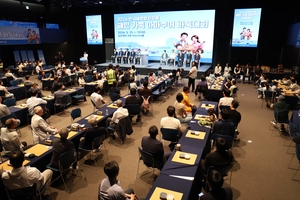
Korea Shipowners' Association holds amateur baduk tournament for Maritime Day