
- HOME
- LIFE·CULTURE
-

Chuncheon's humble street food goes national — and global
A K-Gastronomy Belt connecting Chuncheon's culinary heritage The working-class origins of dakgalbi The full-body effort behind authentic makguksu The unlikely comeback of the ugly potato Chuncheon, a city draped along the Soyang River, completes its identity through food — alongside its lakes, romantic atmosphere and train journeys. Chuncheon dakgalbi and makguksu can be found everywhere now — in the heart of Seoul, in small-town markets across the country — yet people still make the trip to Chuncheon to taste them again. That pull is the city's quiet power. What began as food for the working poor has become a centerpiece of the government's gastronomy initiative and a symbol linking local culture to tourism. The K-Gastronomy Belt and the 2026 Chicken Road The Ministry of Agriculture, Food and Rural Affairs and the Korea Food Promotion Institute are developing the K-Gastronomy Belt, a project that weaves together ingredient-producing regions, traditional food culture and local stories into extended-stay tourism experiences. The institute is working toward a roadmap of 30 gastronomy belts nationwide by 2032. The initiative launched with fermented-sauce belts in Sunchang and Damyang, and last year added belts centered on traditional liquor in Andong, ginseng in Geumsan and kimchi in Gwangju. This year's focus is chicken and chicken-based dishes. The push for what is informally called the K-Chicken Belt stems from the dish's surging global popularity. In a 2025 survey of overseas hansik consumers, Korean-style fried chicken ranked first among the most preferred Korean foods, chosen by 14 percent of respondents — cementing South Korea's reputation abroad as a country that does chicken right. In response, the ministry and the institute divided this year's chicken belt initiative into two tracks — chicken dishes and chicken-based cuisine — and invited local governments to compete for selection. Chuncheon and Jeju scored highest in the chicken-dish category, while Suwon and Gumi led in the fried-chicken category. Each municipality will roll out its own specialized chicken belt travel packages in sequence. Dakgalbi's origins in leaner times Chuncheon dakgalbi's selection as a government gastronomy product is rooted in the hardship of the early 1960s. Large poultry farms spread across the Chuncheon and Hongcheon areas during that period, making chicken relatively affordable. To feed customers with little money, tavern owners began slicing meat from the chicken's rib section, marinating it in gochujang and grilling it over a coal briquette fire — and dakgalbi was born. The dish reached a turning point in the 1970s. Along Chuncheon's Jungang-ro, cooks began placing thick cast-iron griddles over oil-drum stoves. Cabbage, sweet potato and rice cakes — staples grown on nearby farms — were tossed onto the griddle alongside the meat. Even with modest portions of chicken, loading the pan with vegetables meant a group could share a filling meal. For cash-strapped university students and soldiers on leave from nearby frontline bases, iron-griddle dakgalbi was a godsend. The tradition of finishing the meal by stir-frying rice with the remaining sauce, sesame oil and crushed seaweed — the beloved "griddle fried rice" — also took hold during this era. That spirit of generous sharing drove the dish's spread across the country. A traditional liquor brewed on patience: 100 days in the jar Korail Tourism Development and the city of Chuncheon have packaged this culinary narrative into the 2026 Chuncheon K-Chicken Belt travel product. Day-trip options are divided into five themed courses to suit different tastes, and a one-night, two-day immersive package called "Chuncheon Overnight Spread" is also available. The itinerary connects local produce, food, liquor and the stories of the people behind them, offering travelers a deeper encounter with the region's gastronomy and scenery. One stop on the itinerary is Jisiul Brewery, which produces a traditional liquor called Hwajeon Iltchwi — a name evoking the pleasure of getting pleasantly drunk together before flowers. The brewery's philosophy borders on uncompromising: no artificial sweeteners or acidulants, only rice, nuruk (a fermentation starter) and water. Rather than stainless-steel fermentation tanks, the brewery uses traditional earthenware onggi jars, whose microscopic pores encourage natural microbial circulation. Every bottle requires 100 days of low-temperature fermentation in onggi followed by two months of aging. Among the brewery's offerings, Hwajeon Iltchwi 18 Baekhwa stands out for its fragrance — crafted with 22 varieties of edible flowers and a traditional distilled spirit. Sweet yet potent, it is the kind of drink that sneaks up on you. The takju Dongjeongchun, at 8 percent alcohol, is fermented almost entirely from the natural starch of rice with virtually no added water, making it remarkably sweet without any sugar or honey. The labor-intensive production process puts the price at around 300,000 won ($223) per bottle, and the liquor is supplied to Korean restaurants in top Seoul hotels. "Tradition is not a preserved relic of the past — it must evolve flexibly with the times and with how people live in order to survive," said Yoo So-young, owner of Jisiul Brewery. "True continuity means embracing convenience while protecting the original depth and essence." Makguksu the old way: a full-body effort The Chuncheon Makguksu Experience Museum lets visitors discover firsthand the essence of makguksu — noodles made and eaten fresh the moment they are pressed. Visitors can work through the entire process, from kneading buckwheat dough to pressing the noodles. The experience begins by gradually adding cold water to a fine blend of buckwheat and wheat flour and working the dough by hand. Once the dough is ready, it is time to press the noodles. A ball of dough is loaded into a traditional noodle press that towers nearly to the ceiling. "Everyone push together — one, two, three!" At the instructor's call, several adults throw their full weight onto the press. The frame strains and slowly gives way, and the dough squeezes through in thick, tumbling strands. A mouthful of the freshly boiled, cold-rinsed noodles delivers a pleasantly snappy texture followed by a warm, nutty buckwheat aroma. The clean, mild flavor plays off a spicy sauce and crisp vegetables in a combination that surprises with how satisfying it is — no sugar or vinegar needed. Where dakgalbi leaves the palate rich and oily, makguksu cuts through with a bright, peppery freshness, making it the perfect counterpart and an indispensable part of Chuncheon's food identity. A bumper harvest's bitter lesson — and a potato beer born from it Down a quiet residential alley in Chuncheon's Toegye-dong neighborhood, a 35-year-old red-brick church greets visitors in an unexpected guise. The cross-topped steeple is still intact, but instead of hymns, the space — now home to Gamja Island — is filled with the aroma of fermenting beer. Behind this unusual pub lies a painful paradox of plenty. Co-representative Ahn Hong-jun, who studied German language and literature at Kangwon National University, was moved to act after witnessing the damage that potato overproduction inflicted on local farmers. When prices crashed, growers could not even recoup shipping costs and plowed their harvests back into the ground. The problem ran deeper than simple supply and demand. Closer investigation revealed that about 30 percent of potatoes grown in Gangwon Province and across the country were being discarded without ever reaching market — rejected for blemishes or failing to meet size standards. A group of university students rallied around the idea of brewing beer from the discarded potatoes to ease farmers' hardship, and their persistent experimentation eventually produced a working potato beer. The beers brewed here are notably smooth — the potato's natural starch and dietary fiber give each pour a silky texture and a clean, refreshing finish. Beyond potato, the lineup draws on other Gangwon Province crops including corn and sweet red bean, totaling 16 varieties. The snack menu is equally inventive: dakgalbi pizza and potato chicken cleverly reinterpret Chuncheon's culinary identity on the plate. Refined hansik and a warm welcome through traditional liquor A women's brewers' cooperative dedicated to promoting Chuncheon's traditional liquor culture and creating a sustainable cycle for local produce runs Hosu, a hansik dining bar. More than 70 percent of the ingredients used in the kitchen come from farms in and around Chuncheon. The table setting impresses visually before the first bite. The pumpkin tofu flower mandu — thinly sliced yellow pumpkin folded into petal-like shapes — uses chewy rice paper in place of dumpling skin and a filling of stir-fried tofu and vegetables instead of meat. One bite delivers a satisfying chewiness and a clean, delicate flavor that rivals any meat dumpling. Lightly braised cucumber and crispy seasonal vegetable pancakes follow in succession, each sharpening the appetite. The understated elegance of the spread — honest to the land rather than showy in technique — speaks to another dimension of Chuncheon's culinary depth. The restaurant operates entirely on reservations, and booking well in advance is essential; the earliest available slots open in early September. The 2026 Chuncheon K-Chicken Belt travel packages are available for purchase through the Korail Tourism Development travel portal. Day-trip options come in five themes — rice table, noodle table, drinks table, play table (family) and play table (couples and friends) — starting at 67,000 won ($50). On Oct. 16, a special ITX-Cheongchun train service will run to coincide with the Chuncheon Makguksu Dakgalbi Festival. The one-night, two-day "Chuncheon Overnight Spread" package will run twice: Oct. 23-24 and Oct. 30-31. Prices start at 224,000 won per person based on double occupancy. All packages are sold on a first-come, first-served basis and may sell out early.
Sept. 14, 2026
-

Shin Bong-sun denies facial contouring surgery after shedding 11 kg
Behind every public figure's appearance lies a personal health and beauty regimen. This series examines the diets, workouts, procedures and fashion choices of people in the spotlight. Comedian Shin Bong-sun, 45, has shown off a noticeably sharper jawline after losing 11 kilograms — prompting speculation that she had undergone facial contouring surgery, which she denied. Shin recently posted a photo on SNS with the single caption "powdering up," showing her freshly made-up face inside a moving vehicle. Followers quickly noticed her slimmer jaw and more defined features. Shin had previously said she lost about 11 kg through a combination of diet and exercise, and she has consistently drawn attention for her changed appearance since then, with no significant rebound in weight. The surgery allegations came up directly during an appearance on comedian Lee Hong-ryeol's YouTube channel. When told she had become prettier, Shin addressed the rumors head-on. "There's a rumor going around that I had facial contouring surgery — I didn't. I've only had my nose done twice," she said. She then mentioned Botox, Thermage and Ultherapy, adding with a laugh, "Procedures don't count as surgery." Lose 11 kg and your face changes too — less fat in the cheeks and chin sharpens the contour Weight loss reduces fat stored not only in the abdomen and thighs but also in the face. Subcutaneous fat around the cheeks, under the chin and along the neck is particularly susceptible — as it diminishes, the face appears narrower and the boundary between the jaw and neck becomes more defined. When fat that once obscured the cheekbones and lower jaw recedes, the underlying bone structure becomes visible, making the facial contour look different even though the bones themselves have not changed. A reduction in facial volume can also make features such as the nose and eyes appear more prominent by comparison. However, how much facial fat a person loses — and where — varies considerably. Some people accumulate fat mainly in the cheeks and under the chin, while others see little change in the face even after significant weight loss. Genetics, age, sex, skin elasticity and baseline body-fat distribution all play a role. For someone like Shin, who shed close to double digits in total body weight, a noticeably different facial contour is a plausible outcome. Does losing a lot of weight always slim the face? Rapid loss can cause sunken cheeks Losing a large amount of weight does not automatically make the face look younger or slimmer. Facial fat does more than add bulk — it supports the volume of the skin and soft tissue. When body weight drops sharply in a short period, facial fat can disappear just as quickly, leaving the cheeks hollow, accentuating the area under the eyes and deepening nasolabial folds. The problem is compounded with age. As skin loses elasticity and collagen over time, a sudden reduction in facial volume can outpace the skin's ability to adapt, making sagging more noticeable. Extreme weight loss purely for cosmetic reasons is therefore inadvisable. A better approach is to maintain adequate intake of protein, vegetables and other essential nutrients rather than drastically cutting calories, while incorporating strength training to minimize muscle loss. If the face looks gaunt or skin sagging becomes pronounced after weight loss, it is generally better to stabilize the current weight and allow the body time to recover rather than losing more. A slimmer face vs. facial contouring surgery — what's the difference? The facial contouring surgery that Shin said she did not have works differently from weight loss: rather than reducing the amount of fat, it alters the size or position of the facial bones themselves. Common procedures include zygoma reduction to pare down prominent cheekbones, square-jaw surgery to smooth the angled portion of the lower jaw, and chin surgery to adjust the length or position of the chin tip. Chin surgery involves cutting the chin bone and repositioning it forward, backward or sideways before securing it with metal plates or screws. In short, weight loss reduces the volume of fat covering the face, while facial contouring surgery reshapes the skeletal structure itself. Facial contouring surgery also differs from orthognathic surgery, which corrects the alignment of the upper and lower jaws and the bite. Where facial contouring focuses primarily on refining the outer appearance of the face, orthognathic surgery repositions both jaws to address malocclusion and functional problems with jaw movement. A wide or angular-looking face is not always caused by bone structure. Excess subcutaneous fat around the jaw, a well-developed masseter muscle or significant skin sagging can all make the face appear broader. A thorough assessment of the bones, fat, muscles and skin condition is therefore essential before deciding on surgery. Surgery involving bone and nerves carries risks of bleeding and sensory changes Facial contouring surgery directly involves bone and the surrounding nerves and blood vessels, often requires general anesthesia, and carries a greater recovery burden and higher risk of complications than routine cosmetic procedures. Postoperative swelling, bruising and pain are common, and complications such as bleeding, hematoma, infection and delayed wound healing can occur. Asymmetry in the facial contour or a result that differs from expectations is also possible. Because nerves responsible for facial sensation run near the lower jaw and chin, patients may experience numbness or tingling in the lower lip or chin tip after surgery. Most cases improve over time, but in rare instances the sensory changes can persist. Removing too much bone can alter the structural support for the overlying skin and soft tissue, paradoxically causing the cheeks or jaw area to sag. This is why identifying a range of change appropriate for one's own bone structure and soft tissue matters more than simply aiming to make the face as small as possible. Anyone considering the procedure should verify not only the surgeon's specialty and experience but also the anesthesia and emergency-response protocols and the postoperative care plan. Smoking can impair wound healing, so patients should stop before and after surgery. Aspirin, anticoagulants, certain anti-inflammatory drugs and some health supplements can affect bleeding risk, and any products being taken should be disclosed to the medical team in advance.
Sept. 14, 2026
-
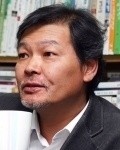
Munhakdongne, Korea's top book publisher, seeks new owner
Major shareholder Kang Byung-sun puts 41.5% stake up for sale Prospective buyer signals interest in acquiring 100% of shares Move seen as reflecting industry shifts and generational change Munhakdongne, South Korea's largest literary book publisher, is looking for a new owner. According to publishing industry sources Monday, Kang Byung-sun — founder of Munhakdongne, who writes poetry under the pen name Kang Tae-hyung — is moving to sell his entire 41.5% stake in the company. Kang has been meeting with multiple companies to explore a sale, sources said. The asking price is estimated in the hundreds of billions of won. According to Munhakdongne's audit report, the company's ownership structure consists of Kang's 41.5% stake, other shareholders holding 51.8% and treasury shares at 6.7%. The remaining shares are distributed among multiple shareholders, including editorial committee members involved in the company's founding. Company A, which has expressed acquisition interest, is said to have indicated it would be willing to purchase not only Kang's stake but the full 100% of Munhakdongne's shares. Kang is expected to meet with shareholders soon to discuss options for selling the company. He is currently abroad, sources said. Kang founded Munhakdongne in 1993, and it has since grown into South Korea's top-selling book publisher by single-volume titles, consistently posting annual sales of around 30 billion won ($22.3 million). He served as the company's chief editor at its founding and became publisher in 1995, running the company for two decades. Some analysts say the planned sale reflects both the prolonged slump in the publishing industry and the need for a new business strategy suited to the changing content landscape driven by AI. "I don't think he chose to sell for personal gain or financial benefit," a publishing industry official said. "I understand it as one of the options that came out of his thinking about what direction makes sense for the times." Some in the industry see the ownership change at Munhakdongne — which has played a central role in Korean literary publishing — as a natural generational transition. As publishers born in the 1950s and 1960s move toward retirement, Kang's decision to sell is seen as part of a broader shift. "If Kang, who played such a pivotal role in Korean literary publishing, exits through this sale and a new, younger ownership takes his place, a generational handover would happen naturally," another industry official said.
Sept. 14, 2026
-
![[Gallery] Kim Yeon-su solo exhibition 'Unexpected Guest' at Gallery Now](https://wimg.heraldcorp.com/news/cms/2026/09/11/news-p.v1.20260911.ebc44a9ef2f54b96af61752d8d97b556_T1.jpg?type=h&h=240)
[Gallery] Kim Yeon-su solo exhibition 'Unexpected Guest' at Gallery Now
Gallery Now in Gangnam-gu, Seoul, is hosting "Unexpected Guest," a solo exhibition by artist Kim Yeon-su, through Oct. 28. Kim paints ordinary scenes encountered on daily walks — wild grass, trees, water and birds — drawing on the idea that the same place can look entirely different depending on the season, time of day, quality of light and air, and one's mood. Working with thin layers of paint applied through rubbing, stroking and building up, she captures the forms and atmosphere of nature, using soft outlines and repeated brushwork to render fleeting emotions on the canvas. By Ryu Hee-won, Herald Art Day curator
Sept. 14, 2026
-
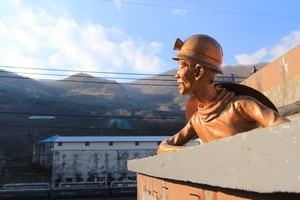
Gangwon Province woos Seoul visitors with Miners' Day events, 'Close Gangwon' campaign
Gangwon Special Self-Governing Province, which borders Seoul, Gyeonggi Province and Incheon, has been steadily closing the psychological gap with the greater metropolitan area. Pocheon and Yeoncheon feel like neighbors to Cheorwon, Gapyeong to Chuncheon, Yangpyeong to Hongcheon, and Wonju to Yeoju and Icheon. A highway from Incheon reaches Samcheok, and KTX trains from Cheongnyangni station cover Gangneung and Donghae in under two hours. The Seoul–Yangyang Expressway puts the province within a two-hour drive — roughly the same time many commuters spend crawling from Umyeon-dong to Gupabal. Gangwon Province recently launched a "Close Gangwon" campaign in the heart of Seoul, and will follow up Tuesday and Wednesday with a ceremony marking the inaugural Miners' Day — an event designed to honor the dedication of coal miners, many of whom relocated to the greater Seoul area after the coal industry's decline. A few years ago, Kangwon Land opened a pop-up in Hongdae themed around mining culture, drawing crowds of young visitors who enthusiastically posed in helmets and with pickaxes. Enjoyment, it turns out, is another way of remembering. At Gwanghwamun Square on Tuesday and Wednesday, organizers will run a commemorative exhibition hall introducing the lives of miners and the history of the coal industry, promotional booths for the four cities and counties of Taebaek, Samcheok, Jeongseon and Yeongwol, cultural performances, and hands-on experience programs for the public. Those four destinations are also widely known for their wealth of tourist attractions. Taebaek offers a Milky Way tour, Taebaeksan, the Paleozoic-era Gumunso gorge, a filming location from the drama "Descendants of the Sun," the Swiss-style Montorang Ranch, and the headwaters of three rivers — the Han River, Nakdonggang and Osipcheon. Samcheok is home to Jukseouru — one of the rare Gwandong pavilions designated a national treasure — along with the New Millennium Coastal Road, Hwanseon Cave, Miin Falls and the Chogok coastal deck trail. Jeongseon draws visitors with Byeongbangchi, Arirang Market, High1 leisure facilities, Park Roche Wellness, Mindungsan and Auraji. Yeongwol, famed as a place where kings once lived, boasts Cheongnyeongpo, Seondol, Yoseonam, Red Moon Y-Park, Sangdong Culture Village, Radio Star and Seobu Market. When someone charming comes calling, you at least go to meet them a few times — and if you really like what you find, you keep coming back. Coal mine experiences will also be on offer at Gwanghwamun. The program is designed to let citizens step directly into the working conditions and daily lives of miners, giving them a tangible sense of the coal industry's history. Visitors may be surprised to find themselves with striking cosplay photos to take home. Younger generations will also come away with a renewed appreciation for the miners who risked their lives extracting coal — South Korea's homegrown energy source and once its sole industrial fuel — and supplied it as the seed money for the nation's economic growth. Son Chang-hwan, head of the Global Division at Gangwon Special Self-Governing Province's Second Administrative Office, said Miners' Day is "a meaningful occasion to remember and honor the dedication and hard work of the miners who laid the foundation for South Korea's industrialization and economic growth." He added that he hoped the event would "spread awareness of the significance of establishing Miners' Day and serve as an opportunity for the public to collectively remember the miners' noble sacrifice." Gangwon Province kicked off its metropolitan outreach campaign Sunday with a promotional booth at the Jamsu Bridge Walking Festival, and has since been running simultaneous "Close Gangwon" booths at the University of Seoul and the Seoul International Garden Expo. The University of Seoul booth runs through Friday, the Gangwon booth at the garden expo operates Sept. 24 and Sept. 25, and the "Close Gangwon" corner at the Jamsu Bridge festival will return Sunday and again on Oct. 11. The province's courtship of the greater Seoul market is both layered and persistent. Rather than staging one-off events, organizers have embedded the campaign within existing local festivals and venues to maximize efficiency and impact. Booth visitors can take part in a "Close Gangwon Quiz" and social media participation events, among other interactive programs. Lee Jong-gu, director of the Construction and Transportation Bureau at Gangwon Special Self-Governing Province, said a survey conducted last year found that only about 10 percent of Seoul residents accurately knew how long it actually takes to travel from Seoul to major cities in Gangwon Province, showing that the psychological distance remains significant. "We will not stop at a single promotional push," Lee said. "We will keep going to places where citizens gather and let them know that Gangwon is closer than they think." Meanwhile, Gangwon Province will launch an online contest under the "Close Gangwon" banner — dubbed the "Within-One-Hour Campaign" — starting Wednesday. Participants are invited to create their own short videos on the theme of Gangwon's proximity and share them on social media, with top entries winning a combined 100 nights of resort accommodation within the province. Full details on how to enter and the schedule will be released Wednesday.
Sept. 14, 2026
-

Seoul dresses up its landmark billboard for chuseok with a 'sweet holiday' message
The large display on the Seoul Library facade features Seoul's mascots gazing at a full moon over the Han River, with playful speech bubbles wishing residents a sweet holiday The Seoul Metropolitan Government unveiled a new chuseok-themed display on the Seoul Dream Billboard — the large signboard on the exterior wall of Seoul Library — Monday, featuring the message "Have a sweet chuseok." Installed in 2013, the billboard covers the front facade of Seoul Library. The city regularly refreshes it through public submissions and recently held a contest for this autumn's edition under the theme of "clear and romantic phrases that capture the mood of fall." The new display shows Seoul's mascots, Haechi and the Soul Friends, gazing at a full moon against a backdrop of the city's nighttime skyline and the Han River as they offer chuseok greetings to residents. The city said the phrase "Have a sweet chuseok" was rendered in a handwritten-style font to evoke the romance of an autumn night under a rising full moon and the warmth of the holiday season. "We placed the full moon alongside Seoul Dal, the moored hot-air balloon, against the Han River night view, so that the two moons floating in the night sky playfully express the idea of a 'sweet chuseok,'" a Seoul Metropolitan Government official said. The official added that speech bubbles around Haechi and the Soul Friends read "a little less sweet on the food" and "Seoul is just different" — conveying that holiday food is best enjoyed with a little less sugar for the sake of health, and that Seoul has its own distinct charm. The display also promotes the city's "Less Sweet Expedition" project, which helps residents monitor their daily sugar intake, the official said. Kim Hyeong-rae, Seoul Metropolitan Government public relations planning officer, said he hoped residents would spend a relaxed and happy chuseok taking in Seoul's beautiful scenery with their loved ones and neighbors. "Just as the billboard shines with two moons, I hope this chuseok brings an abundance of joy and happiness to everyone's daily lives," he said.
Sept. 14, 2026
-
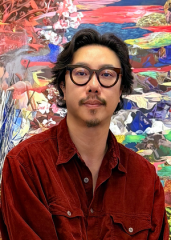
'AI is a new nature — designers must tend it, not conquer it,' says KAIST professor
In an age of infinite image generation, questions and discernment are the new competitive edge G-Dragon's iris, AI and a satellite antenna: the 'data gardening' experiment 'Korea's strength is speed and execution — what it lacks is patience and accumulation' Lee Jin-joon, a professor at KAIST's Graduate School of Culture Technology, said AI has become "the new arithmetic and the new nature of our time," and that designers must become people who tend that new nature — not conquer it. "If anyone can produce a high-quality image in seconds, what becomes scarce is the ability to ask 'what should we make?' and the eye to recognize 'what is good,'" he said in an interview. "AI excels at generating answers, but questions worth asking still come from human life," he added. "We are entering an age where the person who can explain why one image out of a thousand matters is more valuable than the person who made all thousand." 'The image itself is no longer the destination' Lee said design in the AI era must go a step beyond producing visual output. In an age when generative AI can produce images without limit, the image itself can no longer be the final destination of design. "'Beyond Visual' means designing a total experience that lies past the visual," he said. "Sound, touch, bodily movement, the temperature of a space, the passage of time, and even the silences in between — these are all materials for design." Lee's own career has traced a path across those boundaries. After studying business administration, he worked as a television producer and then as an executive at an architecture firm before becoming a visual artist. Drawing on that range of experience, he now focuses on what he calls "Total Experience" — designing sound, light, space, time and the body together. 'In the AI age, be a gardener, not a miner' Another keyword running through Lee's working philosophy is the garden. To describe his practice, he has developed two concepts: "Data Gardening" and "Gardenetics." The underlying idea is that technology should be tended like a garden rather than treated as something to be operated and controlled. "A gardener does not control the plants," he said. "You prepare the soil, water it, create the conditions, and then you wait. You welcome what grows unexpectedly." The same logic applies to data. Rather than mining data like a raw resource and extracting only what is immediately needed, he argues, one must think carefully about what data to plant and store, how to preserve it, how to retrieve it, and how to let it change over time. "If we use AI only as a machine that produces correct answers, we become miners," Lee said. "If we work with AI as though we are growing something together, we become gardeners. What the AI age calls for is not stronger control but a better gardener's sensibility." That thinking about the relationship between technology and humanity runs directly into his actual work. In a recent project titled "Good Morning, MR.G-Dragon," created with singer G-Dragon, Lee connected human body data, AI and outer space. Lee took G-Dragon's iris image, augmented it with generative AI, and projected it onto a 13-meter satellite antenna. He then combined sound data from the Emille Bell and transmitted G-Dragon's voice and the song "Home Sweet Home" into actual space. During his doctoral studies at the University of Oxford, Lee produced his dissertation, "Empty Garden," not as a bound book but as a 10-meter hanji scroll that readers had to physically unroll to read. One edition of that work was permanently acquired by the Ashmolean Museum in Oxford in March — the first time a work by a contemporary Korean artist had entered the museum's permanent collection. 'Korea's strength is speed — what it lacks is patience' Lee identified "speed and execution" as Korea's competitive advantage in combining AI with art and design. He also cited the country's world-class technology infrastructure and a public quick to embrace new things. "The fact that KAIST — a science and technology institution — has appointed a fine arts doctoral graduate as a full-time professor, and that an artist and a scientist can project a work onto a satellite antenna on the same campus, does not happen easily in other countries," he said. "Korea's strength is the ability to move from 'experiment' to 'execution' in convergence." What Korea lacks, he said, is accumulation and patience. What struck him during his time in Oxford and Tokyo was less any gap in technology itself than the depth of accumulated criticism and theory, and a culture willing to wait for experiments that yield no immediate results. "In a garden where you ask about the harvest the moment you plant the seed, no great tree can grow," he said. "What Korea needs now is not greater speed but a system and a sensibility that allow for slowness."
Sept. 14, 2026
-

More crew than passengers: Ultra-luxury cruise The World makes first call at Sokcho
The World, an ultra-luxury residential cruise ship carrying some 500 passengers and crew, will make its first-ever call at Sokcho port in Gangwon Province on Tuesday. According to the provincial government, the Gangwon tourism foundation and Sokcho city, The World is the fourth cruise ship to dock at Sokcho this year. It operates on a private-ownership model in which passengers own their individual cabins — and with three crew members assigned for every two passengers, crew outnumber guests on board. The ship departed from Kanazawa port in Japan and is scheduled to arrive at Sokcho at 9 a.m. Tuesday, where it will stay for two nights and three days — the first overnight cruise call in the port's history. A farewell fireworks display will close out the visit, giving passengers a lasting memory of Sokcho. The Ministry of Culture, Sports and Tourism will provide nighttime tourism content on Thursday as part of its port-attraction enhancement project. To welcome The World on its maiden call, the provincial government, the tourism foundation and Sokcho city will hold a variety of events on the day of arrival, including a traditional royal court music and dance performance and a Bukcheongsajannoleum lion dance. Inside the terminal, visitors can try on hanbok, take photos at a designated photo zone, try hangul calligraphy, and browse a selection of Sokcho souvenirs and local specialty products — offering a showcase of Korean traditional culture and regional character. A tourist information center will also be set up for passengers and crew, and a shuttle bus will connect the port to key attractions including Sokcho Tourist and Fisheries Market, allowing independent travelers to explore the port of call safely and comfortably. During their two-night, three-day stay through Thursday, passengers and crew are expected to visit major destinations across the province — among them Sokcho Jungang Market, Abai Village, the Goseong DMZ Museum, Naksansa temple in Yangyang, and the coffee street in Gangneung. The ship will then depart Sokcho for Busan. Gangwon Province Governor Woo Sang-ho said the province would work to attract more long-stay, high-value cruise tourists and develop distinctive local tourism content to make cruise tourism a genuine driver of the regional economy. The World is registered in the Bahamas and has a gross tonnage of 43,188 tons, a length of 196.35 meters and a beam of 29.8 meters. It has a passenger capacity of 200 and a crew capacity of 300.
Sept. 14, 2026
-

TXT's Yeonjun donates W100m on birthday
Singer joins high-value donor list Continues philanthropic work including fire department recovery support A popular singer has joined a growing culture of giving by making a major charitable donation to support vulnerable communities. The Community Chest of Korea announced Sunday that Yeonjun of the group Tomorrow X Together donated 100 million won ($74,700) to mark his birthday on Sept. 13. Through the donation, Yeonjun became a member of the Community Chest's Honor Society, a group of individual high-value donors. The funds will go toward providing free meals for elderly residents in Seongnam and renovating aging welfare facilities in the area. "I decided to donate because I wanted to share the generous love I have received with as many people as possible in a meaningful way," Yeonjun said. "I sincerely hope that my small act of care and sharing will reach those who need it and become a source of warmth that brightens someone's day, even just a little." Before this donation, Yeonjun had already been active in philanthropy across a range of causes — supporting underfed children in Korea, helping firefighters recover from PTSD and other psychological and emotional difficulties, funding the construction of a care hospital for ALS patients, and backing mental health programs for children and adolescents. With this latest gift, he has extended his giving to elderly welfare as well. Meanwhile, the Community Chest's Honor Society is a group of individual high-value donors who have given 100 million won or more, or have pledged to do so within five years. It was established in 2007.
Sept. 14, 2026
-
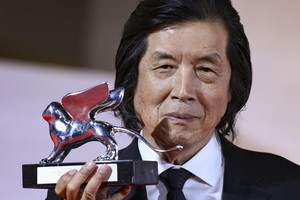
Lee Chang-dong wins Silver Lion at Venice after 24-year absence
'Possible Love' brings director back to Venice's top tier "I will keep asking what cinema can do," Lee says "The Golden Lion wasn't mine — but this is enough" Film heads to Toronto before Sept. 23 domestic opening "I made this film to ask what cinema can do — and what it must do — in an age when the bonds between people are breaking apart. I will take this award as an encouragement to keep asking that question." — Director Lee Chang-dong Director Lee Chang-dong lifted the Silver Lion trophy at Venice for the first time in 24 years with his new film "Possible Love." The film was named the Grand Jury Prize (Silver Lion) winner at the closing ceremony of the 83rd Venice International Film Festival, held Saturday evening (local time) at the Sala Grande on the Lido island. It marks the first time a Korean film has won a competitive award at Venice since Kim Ki-duk's "Pieta" in 2012 — a 14-year gap. Lee last competed at Venice in 2002, when he won the Silver Lion for Best Director for "Oasis," making this his second Silver Lion from the festival. 'A work born of countless people's waiting and endurance' When jury president Maggie Gyllenhaal called out "Possible Love" at the closing ceremony, Lee shared a moment of joy with his crew before walking calmly to the podium. He paused to take in the audience with a look of mixed emotions, then opened his remarks by thanking the Venice Film Festival "for inviting me back to this beautiful celebration after 24 years." He then recalled the long road the film had traveled. "This film would never have come into the world without the waiting and endurance of so many people," he said, adding with a touch of humor: "I want to apologize to producer Lee Jun-dong, who had to drink every day just to get through the wait." As Lee suggested, the path to Venice was far from easy. Even as a dark outlook hung over the Korean film industry's prospects for recovery, the director held on to the project, driven by the conviction that films still needed to be made. The producer, for his part, could do little but pour himself another drink and wait. At one point, plans for a theatrical release collapsed entirely, and it was only when Lee accepted Netflix's offer that the film finally found its way to the world. From the podium, Lee expressed his gratitude to the streamer. "I am also thankful to Netflix for believing in this film and making it possible," he said. He also thanked screenwriter Oh Jung-mi "for turning a story I had long set aside into something new together with me," and extended his appreciation to "the actors and crew who gave everything of themselves on set." 'Disappointed it's not the Golden Lion? This is enough for me' "Possible Love" is Lee's first film in eight years since "Burning" (2018). It follows two couples — a laid-off worker and his wife, and a documentary filmmaker and her husband — whose lives intersect as hidden desires surface. The film stars Jeon Do-yeon, reuniting with Lee for the first time since "Miryang" (2007); Sul Kyung-gu, working with the director for a third time after "Peppermint Candy" (2000) and "Oasis"; along with Jo Yeo-jeong and Jo In-sung. "Possible Love" had its world premiere at Venice on Monday to a seven-minute standing ovation. The questions and messages Lee wove into the film — about the erosion of labor's value and the normalization of disconnection — captivated Venice critics from the moment of its premiere, and the film quickly emerged as a leading contender for the festival's top prize, the Golden Lion. Following that first screening, Variety wrote that Lee "returns with a beautifully mature, quietly monumental drama," while Screen Daily said the film "announces an intense Venice comeback for Lee Chang-dong, offering another unsettling and enigmatic exploration of class and desire in the vein of 'Burning.'" Anticipation for the Golden Lion grew further when the International Federation of Film Critics (FIPRESCI) named "Possible Love" the winner of its prize in the main competition section, just ahead of the closing ceremony. The jury praised the film as a work that "explores exploitation and class, disillusionment, love and desire, as well as the ethics of owning and conveying a story." The Golden Lion ultimately went to "Woman Unknown," directed by Mai El-Toukhy. Set in Denmark just after World War II, it tells the story of a woman named Marie who tries to build a new life while concealing a past relationship with a German soldier. Having been widely tipped as a frontrunner, Lee might have been forgiven for feeling some disappointment — but after stepping down from the podium, he spoke with evident satisfaction and joy. In remarks shared through Netflix, he said: "Some people may be disappointed that it wasn't the Golden Lion, but I think this is enough for me. More than the award itself, the experience of premiering the film at Venice and meeting the audience for the first time — the emotions that passed between us in their faces and reactions — meant more to me and gave me greater strength." Oscar race begins: 'This is just the start' Lee also expressed gratitude to the actors who committed themselves to his vision, while noting with some regret that he could not share the moment of victory with them in person — they were already in Toronto for the next festival engagement. From the podium, he dedicated the award to them, saying, "This prize belongs to all of you." "The actors watched the ceremony on video from Toronto and reached out to share their joy," Lee said. "Many people have praised the ensemble the actors delivered in this film." "Possible Love" moves next to the 51st Toronto International Film Festival, which opened Thursday, where it will screen in the Special Presentations section Monday. Lee had earlier been named the first Korean director to receive the TIFF Ebert Director Award at this year's festival — a prize the festival gives to a director who has demonstrated singular vision and cinematic innovation. The film will open in select domestic theaters Sept. 23 for a limited run before streaming worldwide on Netflix in November. It has also been selected as South Korea's submission for the Best International Feature Film category at next year's Academy Awards. Closing out his Venice journey on a triumphant note, Lee said he sees the festival not as a destination but as the beginning of a longer road ahead. "This is the first time I've met an audience here, and I see this as just the start," he said. "I'm very much looking forward to meeting more audiences, to seeing how much we can communicate through this film, and to sharing and connecting over what the film is trying to say." "Whenever I make a film, I hope it will be meaningful — to myself, to the audience, and as a work of cinema in its own right," he added. "I hope this film will reach the audience in a meaningful way. This award feels like it gives me the strength and encouragement to believe that it will."
Sept. 13, 2026
-

'No need to compare with De Niro': Choi Min-sik and Han So-hee on Korea's 'The Intern'
Choi Min-sik and Han So-hee play silver intern Ki-ho and CEO Seon-u in the Korean remake A chemistry that transcends a 30-year age gap, on screen and off 'Comparison is inevitable — we just had to show what's ours' Opening Wednesday, the Korean remake of "The Intern" draws on the beloved 2015 Hollywood film that starred Robert De Niro and Anne Hathaway. The Korean version is a warm, low-key office comedy centered on Seon-u (Han So-hee), the young CEO of a fashion brand called WOO22 that has grown to 10 billion won ($7.47 million) in sales within three years of its founding, and Ki-ho (Choi Min-sik), a veteran "silver intern" with 37 years of work experience. The chemistry between the two leads, separated by more than three decades in age, extends well beyond the screen. Ahead of the film's release, Han and Choi sat down separately for interviews at a cafe in Jongno-gu, Seoul, yet both spoke — almost as if by prior arrangement — about the same moments on set: learning from each other, respecting each other. Their experience of becoming a team despite a gap of more than 30 years mirrored, naturally and without effort, the story of Seon-u and Ki-ho that the film tells. Every remake is born with the fate of being compared to its original. For better or worse, the benchmark is always the work that came first. That pressure only multiplies when the original is as beloved as this one, and when the characters to be inhabited were played by two Hollywood icons. There was pressure. But it was never a reason not to try. Both actors gave the same answer, almost in unison: "We just thought we had to show what's ours." "If you flip it around, it's actually a simple matter," Choi said. "Being compared to the original was something I anticipated from the moment I decided to do this. If it's unavoidable, I thought, let's just work hard and show what we've got." He drew an analogy from music, citing singer Han Young-ae's cover of "Bonguri," a song by the late Kim Min-ki. "She didn't sing it with a competitive spirit or fear of having to outdo the original, yet the emotion it carries is every bit as powerful," Choi said. "Isn't that the difference between an original and a remake?" Han So-hee, for her part, deliberately kept her distance from the original before filming began — a conscious choice to build her own version of Seon-u without being anchored to what came before. "Being part of a remake of a great original is, from my perspective, an honor," she said. "But I felt that the moment you try to imitate the original, it stops being a remake. The drive to interpret it in our own way was strong." That effort shows. Ki-ho and Seon-u, as Choi and Han play them, resemble their Hollywood counterparts — Ben and Jules — and yet they don't. The warmth Ki-ho radiates carries the distinctly Korean quality of a familiar ajeossi, something quite different from the polished, cosmopolitan middle-aged cool that De Niro brought to Ben. And the loneliness and anxiety that flicker beneath Seon-u's ambition and drive set her apart from Hathaway's more settled Jules. "We're built differently — why would I try to follow in that man's (De Niro's) footsteps?" Choi said. "I knew I had to find an emotional distinction. Rather than the aura of a sophisticated Western man, I tried to capture the particular warmth of a Korean ajeossi looking at a younger colleague like a daughter." "The perfectionism that comes from anxiety, the instability of wanting to do more than you're capable of — I think that's where Seon-u and I are alike," Han said. "The moments of pushing yourself to the edge under the pressure of having to get this right felt familiar. But when I saw Seon-u's boldness and drive, I thought she was more of a grown-up than I am." The age gap of more than 30 years was a shared theme for two actors who also inhabit different generations in real life. The film's message — about the value of experience and wisdom, about listening across generational lines and never stopping to learn — proved just as relevant on set. On a set full of younger actors, Choi approached it with the spirit of wanting to "play together," while Han in particular followed him around, building their off-screen chemistry in their own way. "Young actors today have a particular flexibility and naturalness about them," Choi said. "When I find myself getting tense and rigid, being around them actually loosens me up. Like water taking the shape of whatever container it's poured into — I tried to be water. I went in with the mindset of just having fun together." "At first I was intimidated by him," Han said of Choi. "I made a lot of effort to get close through script readings even before filming started." But she said Choi set a warm tone on set. "He was always there, even without saying much, and he'd tease me whenever he got the chance. We ate together and I just followed him around everywhere." Both actors also spoke warmly about working with director Kim Do-young. "The director has this girlish quality but with a real charisma underneath," Han said. "Being an actor herself, she was very clear from our first meeting about the kind of performance she wanted." Choi echoed the sentiment. "Because she's been an actor, she understands how an actor thinks and gave us a generous space to work in," he said. "I was grateful that whenever I suggested trying something, she took it on board naturally, without resistance." The film's central message — that we live and grow together, not alone — resonates with both actors personally. They know better than most that nothing they have built, or will build, comes from individual effort alone. "The world has changed a lot, but I think the fundamentals are the same," Han said. "We live in a society together, and the need for good elders, good sunbae and hoobae — that doesn't change with time. Even being an entertainer isn't something you achieve on your own. It's completed by the staff and the company that have been with you for a long time." For Choi, who appears before audiences with a warmer face than the intense genre roles he has been known for, the interview ended with a quiet wish: to keep making good work until the very end. Now in his mid-60s and almost always the most senior person on any set, his hunger feels as fresh as ever. "It doesn't matter whether it's an art film or an entertainment film," Choi said. "Indiana Jones isn't a bad film. My goal is to keep doing work with high cinematic quality without being confined to one genre. Getting older is actually a good thing as an actor — things I couldn't see before, I can see now. In work that looks deeply at the joys and sorrows of life, there is definitely a depth that an older actor can express." A chuseok season rich with Korean films returning to movie theaters is on the horizon. Both actors closed the interview with the same hope: that all the films do well together. "It's been four years since I've put out a film, so I'm nervous," Choi said. "The fact that Korean cinema is greeting audiences with such a varied spread after a long time feels like a real opportunity. More than anything, I hope audiences come out to the movie theaters." "I don't think of it as film competing against film," Han said. "So I genuinely want all of them — 'The Assassins,' 'Tazza,' all of them — to do well. A packed movie theater is just a good feeling in itself."
Sept. 13, 2026
-

Seoul kite festival soars ahead of Chuseok
Residents fly kites at Nakseongdae Park on Sunday Families build kites together, bridging generations Multicultural families, foreigners join traditional play Assembly Speaker Im Man-gyun vows 'warm Seoul that cheers on each other's dreams' Seoul's autumn sky filled with colorful kites carrying the hopes of its residents on Sunday, just days before the Chuseok holiday. The 2026 Seoul Hanmaeum Kite Flying Festival, sponsored by the Seoul Metropolitan Government, was held at Nakseongdae Park in Gwanak-gu. Held under the slogan "Flying citizens' hopes high into the sky," the festival used the traditional pastime of kite flying to bring families and neighbors together across generations and cultural backgrounds. Seoul Metropolitan Council Speaker Im Man-gyun of the Democratic Party of Korea, Gwanak-gu District Mayor Park Jun-hee of the Democratic Party of Korea, Gwanak-gu Council Speaker Pyo Tae-ryong of the Democratic Party of Korea, and Seoul council members Kim Jeong-ae, Kim Jeong-u and Gong U-seok, all of the Democratic Party of Korea, attended the event alongside residents. In his welcoming remarks, Im said that as kites carrying citizens' wishes rise higher, so too will Seoul's hopes, and expressed his wish that the festival would be a meaningful occasion for families and neighbors to cheer on each other's dreams and connect with one another. He added that the Seoul Metropolitan Council would work to help build a city where all residents can enjoy traditional culture in their daily lives and feel the warmth of community. District Mayor Park said it was meaningful to enjoy kite flying with residents at Nakseongdae Park, a site steeped in the history and spirit of Goryeo-era general Gang Gam-chan, and expressed hope that wishes for family health and happiness and for Gwanak-gu's continued growth would soar high into the autumn sky. Council Speaker Pyo said that while a kite rises on the wind, it flies higher and more steadily when the string connecting hearts remains taut, and pledged that the Gwanak-gu Council would keep its ties with residents strong and fulfill its responsibilities in driving change and development in the district. At the festival grounds, residents took part in hands-on kite-making and decorating activities, watched demonstrations by professional kite flyers, and joined family kite-flying programs. For parents, the event rekindled childhood memories, while children had a natural opportunity to discover the joy of traditional play and learn the principles of flight. Multicultural families and foreign residents joined children and teenagers in experiencing Korean traditional culture. Citizens of different generations and cultural backgrounds flew kites under the same sky, exchanging words of encouragement and deepening the spirit of the festival. Nakseongdae Park is one of Gwanak-gu's most representative public spaces, home to historical and cultural resources connected to Gang Gam-chan, a celebrated general of the Goryeo period. Organizers ran the event as a community-centered festival that wove the district's historical identity into the kite-flying experience. The festival was selected for the Seoul Metropolitan Government's 2026 private festival support and development project, and admission was free for all residents.
Sept. 13, 2026
-
'Things are tough': YouTuber Kim Sun-tae opens up about business struggles after RESCENE controversy
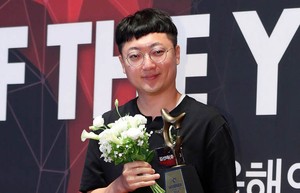
Kim Sun-tae, a YouTuber and former civil servant who rose to fame through his promotional work for Chungju, has spoken candidly about the difficult state of his business. Kim posted a video titled "Kim Sun-tae PR" to his YouTube channel on Saturday. While walking viewers through the production process for a V-profile project he is working on with all three major South Korean telecom carriers, Kim shared an update on his current situation. Asked how he was doing, he said, "As you know, I'm just getting through each day. There isn't much work coming in. It's technically peak season, but for us it feels like a cold winter has arrived." He added that a staff member who had been helping him had quit, joking with a tinge of bitterness: "Like rats being the first to flee a sinking Titanic, I think they might be one of the rats trying to survive." He also expressed worry about the future, saying, "Running the company is a heavy burden. There's always the possibility of shutting down at any moment." While going through his emails, Kim came across a request for a speaking engagement and said he was reconsidering his long-standing policy of turning such offers down. "I've kept saying no because I wanted to focus on YouTube content, but circumstances have changed and I'm thinking about giving lectures a try," he said. "Seeing how much news coverage I've been getting lately, I think it might not be a bad idea." Introducing an ongoing advertising project, he said, "Honestly, I've been a bit arrogant lately. I'm going to try to work with the desperation I had at the beginning." He even bowed deeply toward the client on camera. When asked why he had accepted the project despite the pressure it placed on him, he quipped that he had no choice — drawing laughter from viewers. On the subject of malicious online comments he has been receiving, Kim said he had spoken with a lawyer and warned that those posting such comments "would be wise to be careful," while also saying he was reluctant to file a lawsuit. "Filing a complaint is too ugly. I'm nobody," he said. He added, "Celebrities take a big hit from this kind of thing, don't they? I took a big hit too, but the supportive comments far outnumber the rest." Earlier, in July, Kim drew criticism for what many called secondary harm when he directly referenced a past controversy involving Won-i, a member of the girl group RESCENE, on the KBS web entertainment program "Donsuntae: Age of Success." The backlash intensified after the video's thumbnail featured the phrase "What's so scary?" along with the names of individuals who had no direct connection to the episode's content. As the controversy spread, Kim issued a personal apology and voluntarily stepped down from the program. "I think I got a little too greedy. I wanted to try being a solo MC on a terrestrial broadcast, but having done it, I realize it's not easy," he said. He also said he had personally apologized to the RESCENE members through the head of their agency. "I am sorry again, two and three times over. This incident made me look back at myself. I thought a lot about whether I had lost sight of where I started," he said. Kim began his career as a Grade 9 civil servant in 2016 and took charge of public relations for Chungju City Hall in 2018, building a following with his distinctive low-budget, offbeat style. He went on to lead the city's "ChungTV" channel to success, becoming a star influencer while still a public employee. After being promoted to Grade 6 in late 2023, he stepped down as head of the new media team and left public service to launch his own channel, which attracted about 1 million subscribers within 48 hours of opening. Now six months after its launch, the channel has grown to about 1.65 million subscribers.
Sept. 13, 2026
-

Lee Chang-dong says Silver Lion 'is enough,' questions how film can share others' pain
Director wins Grand Jury Prize at 83rd Venice Film Festival for 'Possible Love' "Films sometimes take the stories of others' suffering — of people in pain — and consume them for the sake of the film itself. I kept asking myself how filmmakers should capture that suffering, and I wanted to share that question with audiences." Those were the words of director Lee Chang-dong, who won the Grand Jury Prize — the Silver Lion — at the 83rd Venice International Film Festival for "Possible Love," speaking at a post-ceremony press conference on Saturday (local time) on Lido island in Venice, Italy. Lee said the stories in "Possible Love" grew out of a mass layoff by a large conglomerate that took place in South Korea about a decade ago. "There was a great social shock as workers went on strike and were forcibly suppressed," he said. "I was deeply shaken by it myself." The film evokes the 2009 mass dismissal of KGM workers, though Lee had asked at a production press event in South Korea on Aug. 25 that audiences "not receive it as the story of any specific company." Lee also described how he had once tried, more than a decade ago, to make a narrative film about laid-off workers — only to abandon the project. "I could not be certain I had the right to tell their story as a film," he said. After many years had passed, he found a new way in: a story about a documentary filmmaker — the character Yeji — who sets out to film those same laid-off workers. "I thought a great deal about how, as a filmmaker, I could put another person's pain on screen," he said. He added that the act of making the film itself might become "a process of sharing that pain together and finding a way to heal each other's wounds." Lee said he received the Grand Jury Prize as an encouragement to keep wrestling with the relationship between film and its audience. "I think we are in an era when filmmakers are being pushed to think more deeply about what cinema is," he said. "When it is becoming harder for people to gather in theaters, and the connections we once shared through film are being severed, I cannot help but ask what kind of films I should be making." "I want to meet audiences more deeply going forward, and I hope my questions and their thoughts can find each other," he said. "I believe this award is one that encourages exactly that." He also shared a lighthearted anecdote about buying a "good dream" from lead actor Jo Yeo-jeong before the ceremony. "Jo Yeo-jeong said she had a good dream and sold it to me — there is a custom like that in Korea," he said. "I think that dream is what brought this good fortune." In a separate interview released through Netflix after the ceremony, Lee addressed those disappointed he had not taken the top prize. "Some people may be disappointed it wasn't the Golden Lion, but I think this is enough," he said. "The award is the award, but what gives me the greatest strength is the expressions on the faces of the audiences I met for the first time in Venice — that feeling of emotions passing between us." "Possible Love" took the Grand Jury Prize, the festival's second-highest honor, in the main competition. It is Lee's first Venice award since he won the best director prize for "Oasis" in 2002 — a gap of 24 years. "Possible Love" is Lee's first film since "Burning" (2018) and his first Netflix production. It stars Jeon Do-yeon, Sul Kyung-gu, Jo In-sung and Jo Yeo-jeong. The film follows a documentary filmmaker (Jo Yeo-jeong) with a wealthy husband (Jo In-sung) as she trains her camera on a couple of laid-off workers (Sul Kyung-gu and Jeon Do-yeon), bringing people of vastly different class backgrounds face to face with each other's lives and desires. "Possible Love" opens in select theaters in South Korea on Sept. 23 and will be available on Netflix on Nov. 6.
Sept. 13, 2026
-

How IU keeps topping the charts: 'A singer for everyday listening, not just a moment'
Singer tops charts the moment her comeback drops Singer IU has once again reshaped the domestic music chart landscape with a pre-release single ahead of her full comeback. According to Melon, South Korea's leading music streaming platform, IU's new digital single "From This Star," released Thursday, debuted at No. 1 on Melon's Hot 100 and topped both Genie Music's Top 200 and Bugs' real-time chart on release day. It currently sits at No. 7 on Melon's Top 100. The single's B-side, "Dear My Crazy Soulmate," also landed in the No. 2 to No. 3 range on major charts on release day. The single made waves in global markets as well, reaching No. 1 on the iTunes Top Songs chart in Singapore, Taiwan and Sri Lanka and charting in the top tier across 16 countries in total. The single is IU's first new release in a year, following "Bye, Summer," which came out in September last year. Both tracks are also set to appear on her upcoming sixth full-length album. IU had originally planned a solo concert and a full album release, but adjusted her schedule after a flare-up of her chronic patulous Eustachian tube condition. She released the double-title single first to tide fans over. IU wrote the lyrics for both tracks. The lyrical ballad "From This Star" and the upbeat pop track "Dear My Crazy Soulmate" each tell a distinct story. The title track uses wordplay through spacing variations to explore the process of letting go of a past connection. "Dear My Crazy Soulmate" has also drawn attention for its music video, which features veteran actors Kim Young-ok and Na Moon-hee and depicts solidarity inside a prison. IU achieved these chart results while outpacing strong streaming competition from Im Young-woong and Evan, a former member of Enhypen, both of whom made comebacks around the same time. IU is widely regarded as the undisputed queen of digital music in South Korea. Since breaking through the second-generation girl group wave in 2010 with "Good Day," she has defended her dominance against the top artists of each era — from sweeping all 13 tracks of "You and I" onto the charts in 2011, to three consecutive perfect all-kills with "Pink Shoes" in 2013 and "Palette" in 2017, to "Celebrity" in 2021 and "Love Wins All" in 2024. Her records are equally remarkable. Since Circle Chart began tracking, she has accumulated 56 weekly No. 1s and 14 monthly No. 1s across 26 songs — the most in the history of the Korean music industry. On Melon, she has surpassed 8.4 billion cumulative streams, ranking first among female artists, and her songs appear in 16.6 percent of all playlists on the platform — about 16.97 million playlists in total. IU is also one of the rare artists known for long-running hits. Even during the era of late-night chart manipulation on real-time rankings, she achieved "rooftop kick" status — topping charts on the strength of sheer daily unique listener counts. When Melon overhauled its chart to reflect only 24-hour cumulative streams, she reached No. 1 within three hours of release, effectively neutralizing the new barrier. "Through the Night" has appeared on the annual chart for nine consecutive years since its release, while "Blueming" has charted for six straight years. "IU's music has moved beyond one-time trends and settled into a 'lifestyle listening' stage — woven into the everyday lives of the public," an industry insider said.
Sept. 13, 2026
-

Kim Ha-young says she had 1,700cc of fat removed from her arms — what liposuction actually does to your body
Behind every public figure's appearance lies a personal health and beauty regimen. This series examines the diets, workouts, procedures and fashion choices of people in the spotlight. Actor Kim Ha-young has shown off noticeably slimmer arms after undergoing liposuction on her upper arms. Two months after the procedure, she said her arms feel lighter and that she has gained confidence when getting dressed. Kim recently shared before-and-after photos on SNS. "It's already been two months," she wrote, adding, "Living with new arms for two months now — they feel so light, I'm full of confidence, and I love it." She said 1,700cc of fat was removed from her arms and was candid about the discomfort that followed. "It would be a lie to say it didn't hurt, but it was more of a dull ache," she said. She added that a light diet after the procedure drew compliments from those around her, with people saying her torso looked slimmer and smaller. "My arms are straight now," she said. Liposuction is a surgical procedure that can reshape specific areas of the body — such as the arms, abdomen and thighs — in a relatively short time. It should not be thought of simply as a fat-removal treatment, however: it involves anesthesia, incisions and a recovery period, meaning potential complications and post-operative care must be considered alongside the results. 1,700cc removed — but that's not the same as losing 1.7 kg Liposuction works by inserting a thin suction tube called a cannula beneath the skin to remove subcutaneous fat. It is typically performed on areas like the upper arms where fat tends to linger even after overall weight loss, or where the volume of one area stands out disproportionately relative to the rest of the body. When fat on the outer or back of the arm is reduced, the protrusion visible from the side diminishes and the arm can appear straighter — exactly the effect Kim described. Liposuction serves a different purpose from weight-loss surgery for obesity, however. The focus is not on significantly reducing overall body weight but on trimming the fat layer in a specific area to alter body shape and proportion. The 1,700cc Kim mentioned cannot be directly equated to a 1.7 kg reduction in body weight. The fluid suctioned during the procedure contains not only fat tissue but also the solution injected during surgery, along with blood and other bodily fluids. Even when the same volume is removed, the actual amount of pure fat eliminated can vary from person to person. Removing a larger volume in a single session does not necessarily produce better results, either. The amount that can be safely removed depends on the area being treated, the patient's weight, overall health and the type of anesthesia used, and must be assessed on an individual basis. 'It would be a lie to say it didn't hurt' — bruising, swelling and soreness are part of recovery As Kim's description of a dull ache suggests, pain, bruising, swelling and a pulling sensation are common after liposuction. Some patients also experience temporary numbness or, conversely, heightened sensitivity in the skin. Swelling is particularly pronounced immediately after surgery, making it difficult to judge the final result from what one sees in the mirror. Over the first few days to several weeks, bruising and swelling gradually subside, and the contour becomes more natural as the skin and underlying tissue settle. Most patients find that everyday discomfort decreases significantly after a few weeks, but it can take several months for the final body shape to fully emerge. When the treated area is large or an individual's recovery is slower, swelling and changes in sensation may persist for longer. During recovery, doctors may recommend wearing a compression garment depending on the surgical method and area treated. Strenuous exercise and heavy lifting are typically restricted for a set period, and the timing for resuming physical activity should be determined after assessing the scope of the surgery and the patient's recovery progress. What if you gain weight after liposuction? Remaining fat cells can still expand Removing some fat cells through liposuction does not mean the treated area will never accumulate fat again. Fat cells that remain in the treated area can enlarge if body weight increases. A significant weight gain can cause fat to build up not only in the arms but also in untreated areas such as the abdomen, back and thighs, altering the overall body shape. Conversely, keeping weight relatively stable after surgery helps preserve the contour achieved through liposuction over the long term. Kim herself said she went on a light diet after the procedure. Once recovery is sufficiently advanced, managing weight and muscle mass through regular aerobic exercise, appropriate strength training and a balanced diet is advisable. That said, aggressively cutting food intake or ramping up exercise intensity immediately after surgery in pursuit of rapid weight loss should be avoided. Wound healing requires adequate nutrition, including protein, vitamins and minerals. Cosmetic surgery is still surgery — seek care immediately if pain worsens or breathing becomes difficult While bruising and swelling are a normal part of recovery, medical attention is needed if pain worsens over time or the surgical site becomes severely red and hot. High fever, discharge or pus, or pronounced swelling in only one arm may indicate complications such as infection, hematoma or seroma. Uneven skin texture or asymmetry in the contours of the two arms can also occur. In particular, if systemic symptoms appear — such as sudden difficulty breathing, chest pain or severe dizziness — seek medical care immediately, as rare but serious emergencies such as blood clots or pulmonary embolism must be ruled out. Liposuction offers the advantage of reshaping a targeted area relatively quickly, but it is not a substitute for weight loss. Maintaining the desired contour over time requires managing not only the safety of the procedure itself and the recovery process, but also body weight in the months and years that follow.
Sept. 13, 2026
-
Lee Chang-dong's 'Possible Love' wins Silver Lion at Venice
Director Lee Chang-dong's new film "Possible Love" won the Grand Jury Prize — the Silver Lion — at the Venice International Film Festival, the second-highest honor at the event. The film was named the Grand Jury Prize winner at the festival's closing ceremony, held Saturday (local time) at the Palazzo del Cinema on Lido island in Venice, Italy. It is the first time a Korean film has won an award in the main competition at Venice since director Kim Ki-duk's "Pieta" took the Golden Lion in 2012 — a gap of 14 years. It is also the first time a Korean film has won the Grand Jury Prize. For Lee himself, the win marks his first Venice award in 24 years, since he received the Silver Lion for Best Director for "Oasis" in 2002. "Oasis" also brought a Best New Emerging Actor award to its lead, Moon So-ri, alongside Lee's directing prize at the time. Accepting the award, Lee credited his cast. "I am grateful to the four people who gave life to this film — Jeon Do-yeon, Sul Kyung-gu, Jo In-sung and Jo Yeo-jeong. This award belongs to all of you," he said. He added: "In an age when labor is disappearing, when the bonds between people are breaking down, I made this film to ask what cinema can do — and what it must do. I take this award as an encouragement to keep asking that question." "Possible Love" is Lee's first feature since "Burning" (2018) and his first Netflix film, starring Jeon Do-yeon, Sul Kyung-gu, Jo In-sung and Jo Yeo-jeong. The film follows a documentary filmmaker (Jo Yeo-jeong) married to a wealthy husband (Jo In-sung) who trains her camera on a laid-off working-class couple (Sul Kyung-gu and Jeon Do-yeon), as people from vastly different class backgrounds come face to face with each other's lives and desires. Earlier, "Possible Love" had also won the FIPRESCI Prize, awarded by the International Federation of Film Critics, the day before the official awards ceremony. The top prize, the Golden Lion, went to director Mai El-Toukhy's "Woman Unknown," a film set in Denmark just after World War II that follows a young woman named Marie who conceals a past relationship with a German soldier. "Woman Unknown" claimed a second prize as well, with lead actor Mathilde Arcel taking the Volpi Cup for Best Actress. The Silver Lion for Best Director went to Ilya Khrzhanovskiy for "DAU." The Volpi Cup for Best Actor went to John Malkovich for "Wild Horse Nine." The Venice International Film Festival, considered one of the world's three major film festivals alongside Cannes and Berlin, is the oldest international film festival in the world, having launched in 1932. Now in its 83rd edition, this year's event ran from Sept. 2 to Saturday on the Lido.
Sept. 13, 2026
-

'Possible Love' wins Venice jury prize; Lee Chang-dong says 'this award belongs to you'
Director claims Silver Lion 24 years after 'Oasis' 'I will take this as a call to keep asking the question,' he says Director Lee Chang-dong's new film "Possible Love" won the Grand Jury Prize — the Silver Lion — at the 83rd Venice International Film Festival. The film was named the jury prize winner at the festival's closing ceremony held Saturday (local time) at the Sala Grande on the Lido island in Venice, Italy. The award marks Lee's first Silver Lion in 24 years, since he won the best director prize for "Oasis" in 2002. "Possible Love," Lee's first film in eight years since "Burning" (2018), follows two couples — a laid-off worker and his wife, and a documentary filmmaker and her husband — whose lives intersect as hidden desires come to the surface. The Netflix original film stars Jeon Do-yeon, Sul Kyung-gu, Jo Yeo-jeong and Jo In-sung. Taking the stage after jury president Maggie Gyllenhaal announced the award, Lee opened his acceptance speech by thanking the Venice Film Festival for inviting him back to "this beautiful festival after 24 years." Lee went on to thank the many people who worked and waited for the film to reach the world. "This film would never have seen the light of day without the patience and endurance of so many people," he said. "I want to apologize to the producer who had to drink every day waiting for this film." He also expressed gratitude toward Netflix. "I am thankful to Netflix for believing in this film and making it possible," he added. Lee had originally intended to make "Possible Love" as a theatrical release, but after failing to secure sufficient investment, he partnered with Netflix, which had long been waiting to work with him. Lee also thanked screenwriter Oh Jeong-mi "for turning a story I had to set aside long ago into something new together with me," and extended his appreciation to "the actors and crew who gave everything on set." He also singled out his four lead actors. "I am grateful to Jeon Do-yeon, Sul Kyung-gu, Jo In-sung and Jo Yeo-jeong, who gave life to this story," he said. "This award belongs to you." Lee closed his remarks by reflecting on the question at the heart of "Possible Love" and what the award meant to him. "I made this film to ask what cinema can do — and what it must do — in an age when the bonds between people are fraying," he said. "I will take this award as a sign to keep asking that question." "Possible Love" will screen at select theaters in South Korea for a limited run beginning Sept. 23 before streaming worldwide on Netflix in November. The film is also South Korea's official submission for next year's Academy Awards.
Sept. 13, 2026
-

Lee Chang-dong's 'Possible Love' wins Grand Jury Prize at Venice Film Festival
Lee Chang-dong's film "Possible Love" has won the Grand Jury Prize at the Venice Film Festival.
Sept. 13, 2026
-

Shinsegae heiress Annie says movie ticket prices are 'fair'
Annie (real name Moon Seo-yoon), a member of the K-pop group All Day Project and the eldest daughter of Shinsegae Group Chairman Chung Yoo-kyung and granddaughter of Honorary Chairwoman Lee Myung-hee, has drawn attention after sharing her views on movie ticket prices. A video titled "Learning Crew - Movies" was posted Friday on All Day Project's official YouTube channel. In it, Annie and fellow members Tarzan, Bailey, Woo-chan and Young-seo sat down with hip-hop producer and rapper Hucky Shibaseki (real name Lee Seung-hyuk) to talk about all things cinema. The conversation turned to the ongoing debate over ticket prices when Hucky brought up the topic of how to tell whether a film is worth the price of admission. Tarzan noted that a movie ticket costs 15,000 won ($11) — roughly the same as a month of streaming — while a single subscription gives access to far more content. Annie acknowledged that some films are exclusive to theaters, but added that if a movie is available on a streaming platform, she would just watch it at home. When Tarzan pushed back, asking about popcorn, Annie was unfazed. "You can make popcorn at home, and CGV even delivers it," she said. As the debate among members continued, Hucky stepped in to argue that going to a movie theater is a meaningful experience in itself. "Going to the movies means buying the whole experience," he said. "You buy popcorn, sit in a seat and watch a film alongside other people all facing the same direction — that's what you're paying for." He added that 15,000 won seemed reasonable for that experience and that ticket prices had not risen dramatically since his childhood. Member Woo-chan disagreed, however, saying prices had gone up in recent years with the addition of recliner seats and 4D screenings. After listening to the back-and-forth, Annie delivered her verdict: "I think the ticket price is fair." 46% of moviegoers say they're going to theaters less — and cost is the top reason Meanwhile, a report on movie consumption trends released by the Korean Film Council last March found that nearly half of moviegoers — 45.8 percent — had reduced the number of times they visited a theater over the previous year, with high ticket prices cited as the leading reason. Of those who said they were going to theaters less often than the year before, 16.5 percent said their visits had decreased significantly and 29.3 percent said they had decreased somewhat. Only 12.1 percent reported going more often. Among those who had cut back on theater visits, one in four (25.1 percent) pointed to the cost of admission as the main reason. That was followed by a lack of appealing films (21.5 percent), an abundance of worthwhile content on streaming platforms (17.5 percent), and the availability of films through streaming or video-on-demand services after their theatrical run (17.4 percent). When asked what they considered a fair ticket price, 41.0 percent of respondents said between 8,000 won and just under 10,000 won — the most common answer. Standard tickets currently run between 14,000 won and 15,000 won. The survey was conducted last October and targeted people aged 14 to 69 nationwide who had watched at least one film — whether in a theater or via a streaming service — between October 2024 and September 2025.
Sept. 12, 2026
MOST READ
- 1KAIST develops high-performance bio-based adhesive using E. coli instead of petroleum
- 2Pope Leo XIV declines French honors and banquet, accepts only private meeting with Macron
- 3Daimler Truck unveils next-generation transport solutions at IAA 2026
- 4What was Rachmaninoff's performance fee? A 1928 price list tells all
- 5Samsung Biologics union's show of force backfires at the bargaining table
- 6APR says hair-loss treatment research published in international journal
-
WORLD

US warns of punishment for anyone enabling Iran's Strait of Hormuz toll scheme
-
INDUSTRY

Toyota union puts productivity first; Hyundai Motor union demands bigger share of profits
-
FINANCE

National Growth Fund to invest $531M in FuriosaAI, which rebuffed Meta's $800M takeover bid
-
INDUSTRY

Korea Shipowners' Association holds amateur baduk tournament for Maritime Day