Utopia Orchestra performs at Lotte Concert Hall on Tuesday and Wednesday
Program features Stravinsky's 'Rite of Spring' and Mahler's 'Titan'
'A musician's mission is like that of Doctors Without Borders,' conductor says
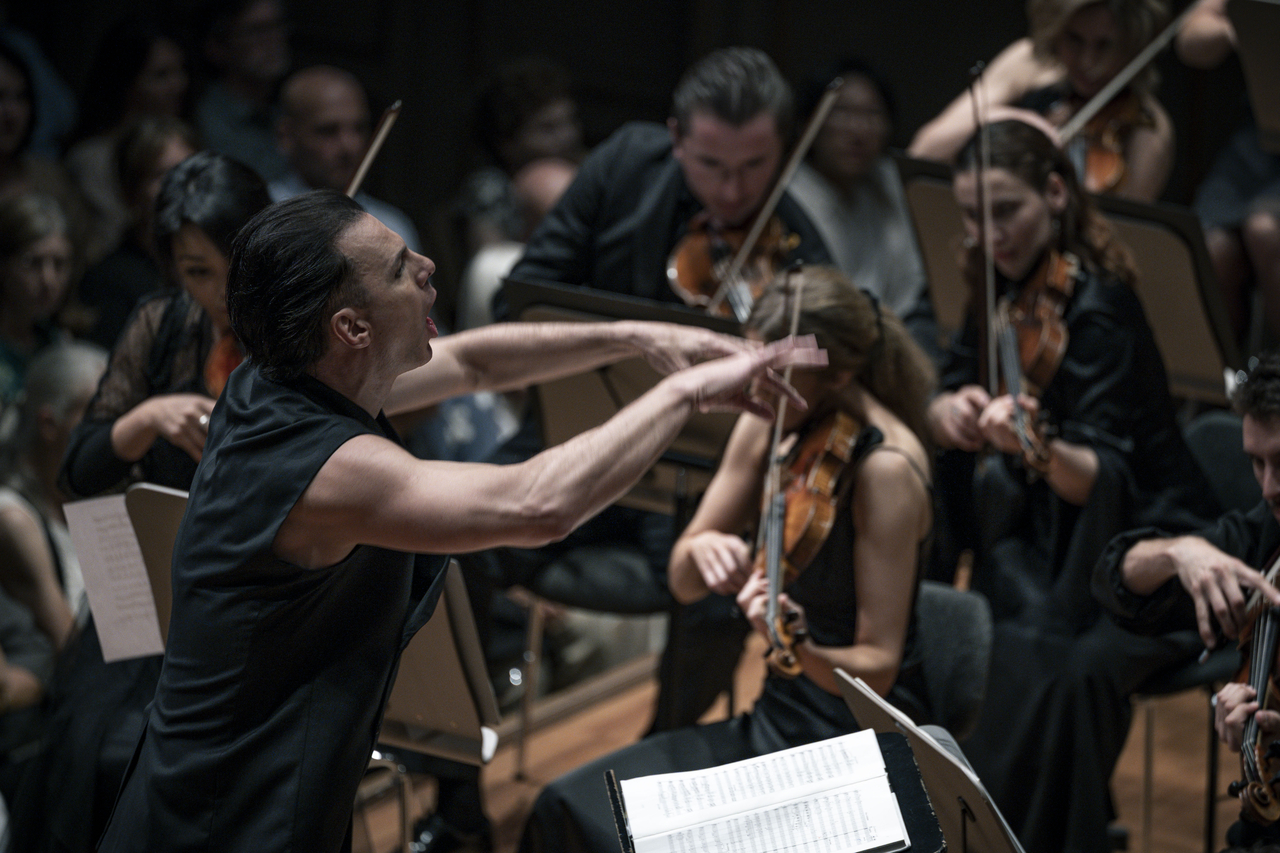
The heretic of classical music. Its savior. The punk maestro.
The labels attached to Greek conductor Teodor Currentzis, 54, have always swung between extremes. His interpretations — pianissimos that fade to near silence before a fortissimo crashes over the audience, familiar masterworks rendered in startlingly alien textures — have drawn equal measures of rapture and outrage. The New York Times once ran a profile of him under the headline "Savior or Charlatan?"
The "savior" tag first surfaced in a 2005 interview with the British daily The Telegraph, when the then-33-year-old conductor declared, "I will save classical music — just give me five or ten years." More than two decades on, Currentzis reflects on that boast with characteristic obliqueness.
"What I'm actually interested in is something we don't yet know," he said. "Many people fail to understand art as ritual — they call it theatrical, showy. By that logic, the candles and icons in a temple would be theatrical too. Music is a ritual. Going to a concert is not an everyday act — it is about the existence of the soul, and the soul always needs a special space where the heart can open. That is what I can give to music."
A concert derailed by the COVID-19 pandemic in April 2020 will finally take place in Seoul six years later. Currentzis brings his Utopia Orchestra — which he founded in 2022 — to Lotte Concert Hall for his first performances in Korea on Tuesday and Wednesday. In a written interview, he said he has been "dreaming of performing in Korea" and that he "absolutely wants to share that dream with Korean audiences."
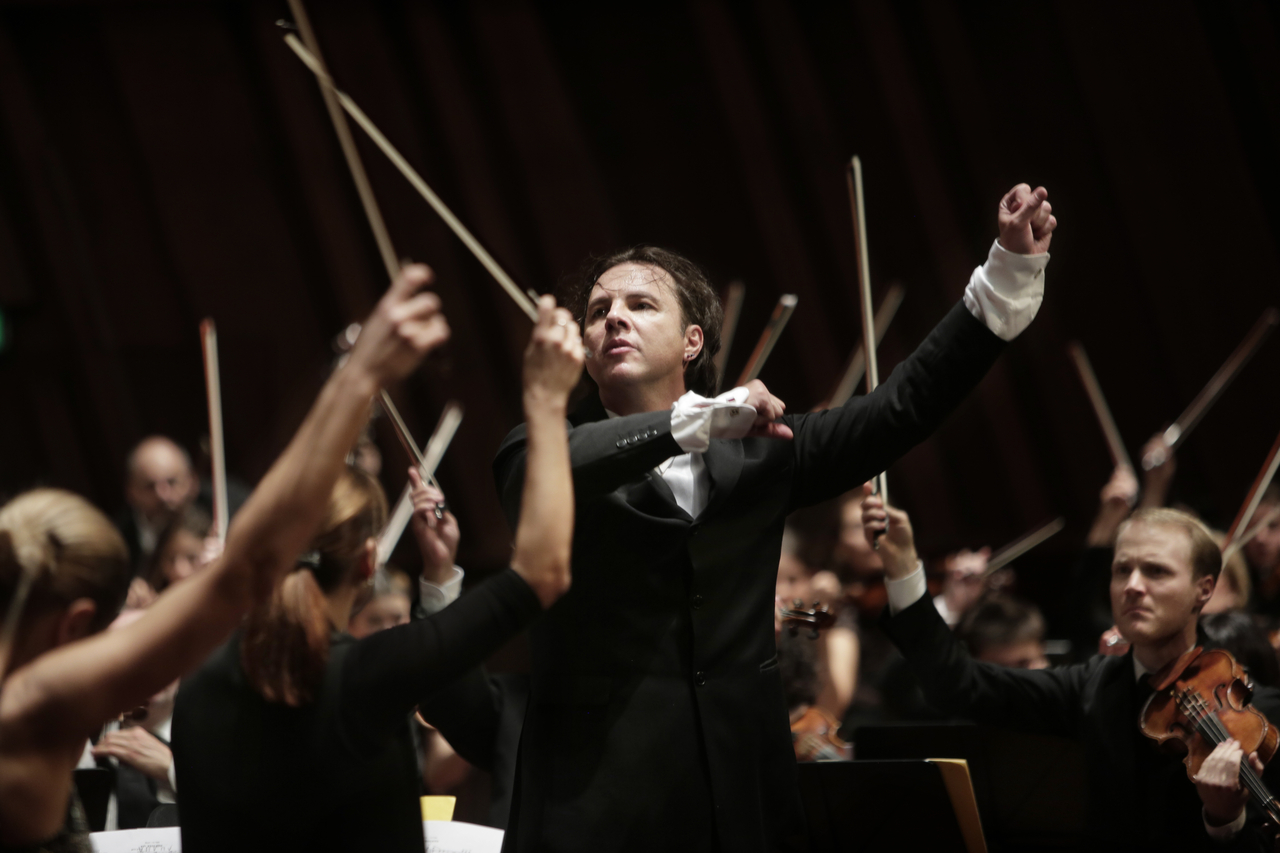
A student of Musin, builder of an orchestra without a flag
For Currentzis, conducting is "a magical art." The idea that moving one's hands could conjure sound struck him as a kind of enchantment — and the person who first revealed that magic to him was Ilya Musin, the legendary Russian conducting pedagogue.
The young Greek musician, who had been studying in Athens, crossed over to the St. Petersburg Conservatory in 1994 to study under Musin. Currentzis calls his teacher "the person who made me who I am today." What Musin taught him was "how to make the body obey the will of the spirit" — something Currentzis describes as impossible to reduce to rules, requiring instead "the intuition and instinct of a musician."
Currentzis first brought that intuition to the stage in Siberia. In 2004 he founded Musica Aeterna at the Novosibirsk Opera and Ballet Theater, later relocating the ensemble to Perm and then St. Petersburg as it grew. Recordings of Mozart, Mahler and Stravinsky released on Sony Classical established his name on the world stage. From 2018 to 2024 he served as chief conductor of the SWR Symphony Orchestra in Germany, cementing his standing in Europe as well.
But the career he had built in Russia generated fierce backlash in 2022. After Currentzis accepted Russian citizenship in 2014 and declined to take a public stance on the war in Ukraine, several European venues canceled his performances, citing his ties to the Russian state-owned VTB Bank. Looking back on that period, he said, "We are not politicians or public figures who give speeches and chant slogans," and compared a musician's mission to that of Doctors Without Borders.
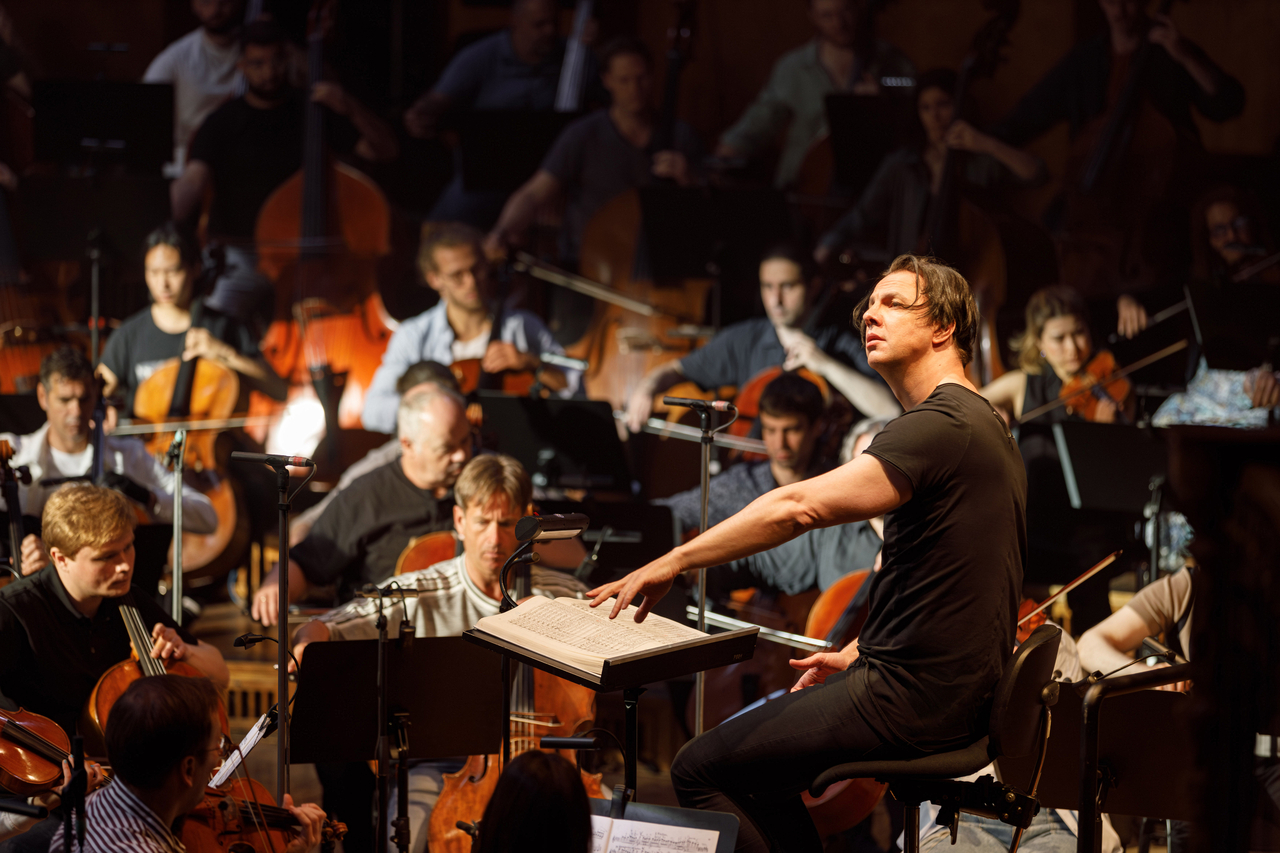
That same October, Currentzis gave Utopia its first performance. The orchestra is a fully independent ensemble — unaffiliated with any state institution or other organization in its structure, finances or operations. It runs on concert revenue and support from private foundations, is based at Funkhaus Berlin, and draws players from more than 30 countries for each project. There are no permanent members, yet Currentzis considers them family. "It's a large family of about 200 musicians who are friends and colleagues," he said. "The 'Utopians' are the ones who, even in today's world where pragmatism comes first, remain dreamers — idealists."
Outside the podium, Currentzis observes no boundaries. He played Soviet physicist Lev Landau in the film "DAU," which won the Silver Lion for Best Director at the Venice International Film Festival in September. He creates perfumes, writes poetry, and is about to publish a new collection of verse. Running through all of these pursuits is a single thread: humanism.
"It is a journey of becoming a better person, a more harmonious person," he said.
Applause for 'Rite of Spring,' silence for sacred music
"An opportunity to experience the ritual character of our art."
That is how Currentzis describes the Seoul concerts, presented as part of Lotte Concert Hall's "10 for 10" project marking the venue's 10th anniversary. On Tuesday, violinist Daniel Lozakovich joins the orchestra for Shostakovich's Violin Concerto No. 1, followed by Stravinsky's "The Rite of Spring."
"The Rite of Spring" — which sent the audience at its 1913 Paris premiere into uproar — opens with a solo bassoon straining at the very top of its range. The strings tear apart harmonies with irregular accents, and by the final "Sacrificial Dance" the entire orchestra becomes one vast percussion instrument. When Currentzis recorded the work with Musica Aeterna in 2015, he spoke of its "pure Russian essence." His view has not changed. "This music is the voice of the ancient world inscribed in our DNA," he said.
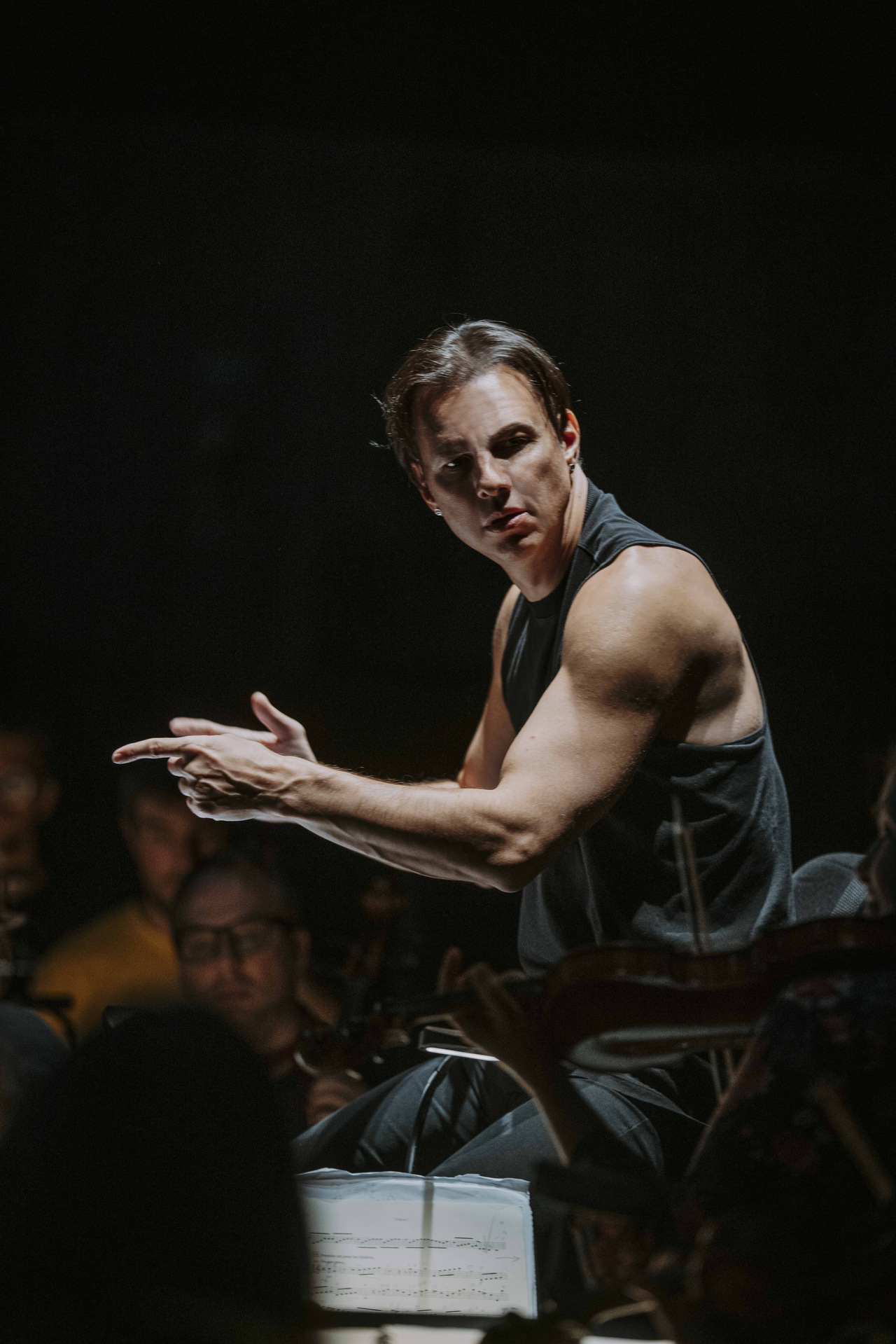
On the second evening, pianist Alexander Melnikov performs Shostakovich's Piano Concerto No. 2 before Mahler's Symphony No. 1, "Titan," closes the program. Asked to name a single Mahler symphony, Currentzis admits he "might have chosen the Third" — yet he places no hierarchy among them, saying "every Mahler symphony is a part of my life." The symphony rises from an A note sustained across seven octaves in the strings, like dawn mist, before erupting into a cry with a cymbal crash in the fourth movement and finally resolving into a blazing fanfare. Whenever conservative listeners push back against his emotionally charged approach — insisting that classical music must be restrained and dispassionate — Mahler is the name Currentzis reaches for.
"Look at Beethoven, Berlioz, Mahler," he said. "They are volcanoes of emotion overflowing their banks." When the final chord of the "Sacrificial Dance" dies away and the fanfare of Mahler's First fades into silence, the audience is welcome to surrender to that volcano — and he actively wants them to respond with applause after both works. "This music is dance, ecstasy in motion," he said. Sacred music is another matter: after performing it, Currentzis leaves the stage without waiting for applause, wanting to remain in a meditative state and "let the dream linger a little longer."
"It is a rare privilege to work in a field where people gather not to make money but because they want to devote their whole soul to what they do — and that is what makes me happy," he said. "I hope the people who come to my concerts will be happy too, and that they will find something true inside the music."
shee@heraldcorp.com