
- HOME
- LIFE·CULTURE

Singer Bada shows off toned bikini figure at 46 — how to manage body fat after 40
Behind every public figure's striking appearance lies a personal wellness routine. This series examines the diets, workouts, procedures, and beauty and fashion choices of notable figures as practical lifestyle information. Bada, a singer best known as a member of the K-pop group S.E.S., has shared bikini photos showing off her toned physique. The images have drawn fresh attention to workout routines that help manage body fat and muscle mass in middle age — a topic Bada has long addressed through consistent running posts on social media. Bada recently posted several photos on SNS with the caption: "Bikinis in autumn! Who checks the season these days? Even the colors are very autumnal. Maybe I'll try living every day feeling like I'm on vacation." In the photos, Bada posed on a beach in Okinawa, Japan, wearing a brown halter-neck bikini. Her lean frame, with well-defined lines across her abdomen and limbs, drew considerable attention. Bada has consistently shared her running routine on SNS. Running requires no special equipment, improves cardiovascular fitness and increases energy expenditure, making it one of the most accessible aerobic exercises available. After 40, watch body fat and muscle — not just weight After middle age, body composition can shift even when the number on the scale stays largely the same. Muscle mass tends to decline gradually with age, and in women, hormonal changes around menopause combined with lifestyle factors can contribute to fat accumulating around the abdomen. For this reason, the priority after 40 shifts from simply losing weight to preserving muscle mass while keeping body fat from rising excessively. Aerobic exercise such as running helps increase energy expenditure and improve cardiovascular function. Regular exercise also supports weight and waist management. However, running more does not mean fat will disappear selectively from a target area. Abdominal fat, like fat elsewhere, typically decreases as part of an overall reduction in body fat. Want defined abs? Running alone is not enough For visible abdominal definition, training the core muscles directly is just as important as managing body fat. Core exercises such as planks, crunches and dead bugs strengthen the muscles that stabilize the trunk. Adding compound strength movements — squats, lunges, push-ups and rows — that engage multiple muscle groups at the same time makes it easier to maintain overall muscle mass. After middle age in particular, relying solely on aerobic exercise while sharply cutting food intake can cause muscle loss alongside fat loss. That is why combining aerobic and strength training with adequate protein intake is recommended. Like any other muscle group, the abdominals need recovery time as well as exercise. Rather than training the same area at high intensity every day, balancing workout intensity with adequate rest produces better results. Starting too fast puts stress on knees and Achilles tendons Running is accessible, but sharply increasing training volume raises the risk of injury. For those with little exercise experience in particular, running for long periods or at high speeds from the outset can place repetitive stress on the knees, ankles, soles of the feet and Achilles tendons. Beginners are better off alternating between brisk walking and slow jogging to let the body adapt. One approach is to repeat cycles of walking for a few minutes and running briefly, then gradually extend the running intervals as fitness improves. Before exercise, a light dynamic warm-up — walking gently or moving the joints — helps raise body temperature. After exercise, lightly stretching the calves, thighs and glutes can aid recovery. When choosing running shoes, fit and cushioning matter more than looks — the shoe should feel comfortable and absorb impact well for your particular foot. After a heavy sweat, hydrate first — post-run nutrition matters too Recovery after running is as much a part of training as the run itself. After sweating heavily, rehydrating thoroughly is the first priority. After prolonged exercise or a session in hot conditions, electrolyte replenishment may also be necessary. Eating a meal containing protein and carbohydrates after exercise supports muscle recovery and energy replenishment. Restricting post-workout meals too severely in the name of weight management can slow recovery and impair performance in the next session. Running is effective for managing body fat and improving cardiovascular fitness, but a toned physique is not built by repeating a single type of exercise. Staying consistently active — as Bada does — while combining strength training with adequate nutrition and rest helps maintain a healthy body composition well into middle age and beyond.
Kim Juli Sept. 18, 2026
-

Singer Yun Hang-gi to mark 65-year career with tribute concert next month
Veteran singer-songwriter Yun Hang-gi, 83, will hold a tribute concert celebrating roughly 65 years in music at Art Hall Mac of Seoul's Mapo Art Center on Oct. 24 at 7 p.m., concert producer Live Moment announced Friday. Yun, the older brother of musical actor and singer Yun Bok-hee, made his debut in 1959 through the A1 Show, a performance troupe led by composer Kim Hee-gap. In 1964, he formed the Key Boys — billed as "Korea's Beatles" — and released the group's debut album "Her Lips Are Sweet" that same year. The record is widely regarded as the first album by a Korean group-sound band. Through his group Yun Hang-gi and the Key Brothers, formed in 1971, and his solo career, he produced a string of hits including "Rose-Colored Scarf," "On a Starry Night," "What Am I Supposed to Do" and "Let's Go to the Beach." He stepped away from music after releasing "Welcome to Korea" in 1986 to study theology, spending about 30 years as a pastor. After retiring from ministry in 2014, he returned to performing that same year with a 55th-anniversary golden album featuring the new track "Don't Worry." The concert will feature a roster of younger stars from the Korean pop scene, including Choi Baek-ho, Seo Yu-seok, Jang Mi-hwa, Kim Su-hee, Jo Hang-jo, Yu Hyeon-sang, Jeon Yeong-rok, In Soon-i, Choi Hee-seon and So Chan-hwi. The organizers said the show will include a special 12-song tribute stage on which the performing artists reinterpret Yun's music in their own styles, as well as collaborative performances bringing Yun together with his younger peers. Audiences can expect to hear some of Yun's signature songs, including "I Am Happy," "Rose-Colored Scarf" and "Everyone." A portion of the proceeds will be donated to Korea Kia Relief's war orphan support program, the Haetbit School for children of multicultural families, and the World Orphan Sponsorship Association Go Ahead.
Sept. 18, 2026
-

IU donates W200m on debut anniversary
Singer and actor IU marked her debut anniversary Friday by donating to organizations supporting vulnerable communities. According to her agency, Edam Entertainment, IU donated 50 million won ($36,200) each to the Korea Social Welfare Society, Seoul Rehabilitation Hospital, the Heart-Heart Foundation and Habitat for Humanity Korea, totaling 200 million won. The funds are expected to support a range of causes: helping youth aging out of the foster care system achieve financial independence, covering rehabilitation treatment costs for children and teenagers living in poverty, assisting young women with their livelihoods and mental health recovery, and improving housing conditions for veterans in their old age. IU has maintained a tradition of donating under the name "IU-ANA" — a combination of her stage name and her official fan club name, "Uaena" — on meaningful occasions. This year, she donated 100 million won on Children's Day, May 5, and followed that with 300 million won on her birthday, May 16. IU's philanthropic efforts have expanded steadily since her debut in 2008. She has donated to cover medical costs for children with pediatric cancer and rare diseases, and has extended support to grandparent-headed households, single mothers, elderly people living alone, low-income scholarship programs, and disaster relief efforts following Gangwon Province wildfires and heavy-rain flooding. Her known cumulative donations now exceed 5 billion won, and she has become a leading example of a star and fandom building a sustained culture of giving — well beyond one-off contributions. IU is also performing well on the music front with her newly released digital single "From This Star." Both title tracks — "From This Star" and "Dear My Crazy Soulmate" — shot to the top of major streaming charts immediately after release.
Sept. 18, 2026
-

Hong Hye-geol rebuffs claim he charged doctors 300,000 won per lecture
Hong Hye-geol, a 59-year-old broadcaster and former medical journalist, has rebuffed claims circulating online about past lectures he allegedly gave. On Wednesday, Hong shared a screenshot on his social media account of an anonymous post, noting it had appeared on an anonymous message board on Friday. The anonymous writer criticized Hong and his wife, Yeo Es-der, saying the couple were "relentless money-makers like no other" — particularly taking issue with their political views — while acknowledging they were "unmatched in their drive." The post went on to claim that Hong "toured the country every weekend giving lectures to doctors on advertising law and regulation" and that the writer had personally witnessed this in 2007, when attendees paid 300,000 won ($217) per person to standing-room-only sessions. The writer added that Hong was "someone who reads the market and carves out his own role — thorough, formidable, and not just anyone could do it." Hong pushed back sharply. "They say I toured the country charging doctors 300,000 won each for lectures on advertising and regulation, and that they saw it themselves. It's absurd. I have never given a single lecture like that," he wrote. He then challenged anyone to come forward. "If there is a doctor who paid 300,000 won to attend one of my lectures, please speak up — I'll at least buy you a car," he wrote. Hong also denied a range of politically charged rumors that have followed him for decades, including claims that he attended a party celebrating the impeachment of former President Roh Moo-hyun and that he broke an embargo on coverage of scientist Hwang Woo-suk. "None of it is true. Just because our political views differ, people have been falsely accusing an innocent person for decades and egging each other on," he said. Hong currently runs the YouTube medical channel "Bion Dwi" and serves as its chief. He married physician and entrepreneur Yeo Es-der in 1994, and the couple have two sons.
Sept. 18, 2026
-
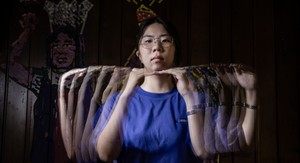
'Sign language is more than hands': A deaf student's role in shaping Korea's first broadcast interpretation guidelines
First sign language broadcast manual built on deaf voices Special advisory member Jeong Ga-eun, 20, speaks out 'Sign language needs expression, gaze and movement — not just hands' 'I want to be a human rights lawyer — change is slow, but it's coming' Last August, the Korea Communications Commission and the Korea Audience Media Foundation released the country's first practical guidelines for sign language interpretation in broadcasting — covering everything from core principles and genre-specific practices to how interpreters should handle unexpected situations. It was the first manual of its kind for a field that had long operated without clear standards. For many in the broadcast industry, the document may read as just another set of professional guidelines. But for the deaf community, it represents a long-held wish to fully access media — and, more significantly, it was built from the ground up with deaf voices at its center, a departure from how such work had typically been done. Among the advisory committee members assembled to develop the guidelines was an unusual contributor: Jeong Ga-eun, a 20-year-old preparing for university entrance exams. Surrounded by field professionals, interpreters and academics, Jeong consistently brought a perspective that only someone who had grown up using sign language as a first language could offer. "Sign language only becomes a complete language when facial expression, eye contact, body movement and the use of space all come together — not just the hands," she said. With that opening remark, a long-standing misconception — that sign language is simply a language of the fingertips — quietly dissolved. To meet Jeong, this reporter visited Sorireul Boyeojuneun Saramdeul, a deaf alternative school in Gangbuk-gu, Seoul, and the only institution in the country centered on sign language instruction. The interview was conducted in sign language with simultaneous interpretation by the school's principal, Kim Ju-hee. The mandatory sign language broadcast quota system was introduced in 2011. Since then, the volume of sign language programming has grown, but critical information has repeatedly been omitted or mistranslated. There were also no meaningful standards for how interpreters should handle breaking news or the wide range of program genres. Confusion on the ground was inevitable, and the burden fell squarely on deaf viewers. Jeong's involvement in developing the guidelines grew directly from her own frustrations as a deaf viewer. Born to deaf parents and raised with sign language as her mother tongue, she had often struggled to follow broadcasts because of poor interpretation. Subtitles exist, but they are simply a written transcription of spoken Korean — a hearing person's language — and differ meaningfully from sign language, the native language of the deaf. "Even when a broadcast shows both subtitles and sign language interpretation at the same time, the two often say different things," Jeong said. "And even when a drama series has sign language interpretation, it's hard to receive the emotion." She added that her parents, who cannot read subtitles, had no choice but to accept incorrect information whenever the interpretation was wrong. She traces the root of frequent interpretation errors to the narrow way society understands sign language. "Most people think sign language is hand gestures," she said. "But sign language only becomes a complete language when facial expression, eye movement, body movement and the use of space all come together — not just the hands." That is precisely where interpretation errors most often occur. Jeong said hearing interpreters frequently miss the grammar unique to sign language — the way space and the whole body are used alongside hand movements. A deeper problem, she said, is the lack of understanding of deaf culture. When hearing-centric expressions from variety shows or drama series are carried over into sign language as-is, words and phrases that feel natural to hearing viewers can land as something foreign and unfamiliar to deaf audiences. "You cannot simply convert hearing culture into something that belongs to deaf people," she said. She offered the Korean slang term "kangaroo tribe" — referring to adult children who remain financially dependent on their parents — as an example. "When hearing people first hear 'kangaroo tribe,' they immediately picture a joey inside a kangaroo's pouch," she said. "But if you translate it directly into sign language, deaf people cannot intuitively grasp the meaning. In the deaf community, the same concept has long been expressed with a hand gesture mimicking a baby sucking on a bottle." Jeong said she wishes interpreters had more firsthand experience within the deaf community. Still, she welcomed the fact that society has begun, even now, to listen to deaf people's voices on media accessibility. "Whose sign language is this for?" she said. "If we are excluded, who is it being evaluated by?" What she hopes for is that this shift in attitude will spread, leading to a culture where deaf people naturally participate in sign language interpretation. Sign language interpretation, she believes, should not be a field perfected by hearing experts alone — the lived experiences of deaf people must be the standard. Jeong's dream, as she prepares for university, is to become a human rights lawyer and take a leading role in advocating for deaf rights. She said the simple fact that she and other deaf people were part of creating the guidelines gave her hope that society, however slowly, can change. "This was the first time I experienced working on the ground to advance the rights of deaf people," she said. "Just knowing that someone like me was there — even if society cannot change all at once, I felt hope that it can change, little by little." Having completed her compulsory education through an equivalency exam, Jeong is set to enter university next year. The excitement is matched by anxiety. "Will I be able to manage as a deaf person among hearing students?" she said. She already senses that it will not be easy — having to advocate for her own language and identity from a position that is not yet equal. More children are receiving cochlear implants, and the elders who have long preserved sign language are passing away one by one. How to protect sign language — a language that belongs wholly to the deaf — is another challenge she carries with her. Yet the last thing she shared in the interview leaned far more toward joy than weight. "Life as a deaf person is fun — it's so enjoyable," she said. "I want to share that joy with others." Her eyes lit up as she explained that sign language carries expressions and rhythms that spoken language simply cannot match. She sees sign language as a world created by the non-manual signals unique to the deaf — and she finds it a shame that the humor only that world can hold has not been shared more widely. "It's such a pity that so many people don't know that," she said. It is not the simple humor of a funny face, she explained, but the kind of immersive pull that makes you feel as though you are being drawn into a film — and that, she said, is the charm of sign language, the living language of the deaf community, a charm that words alone cannot fully describe.
Sept. 18, 2026
-
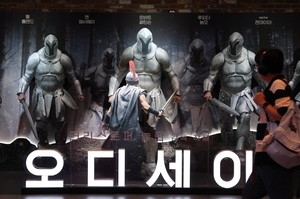
'Odyssey' surpasses 11 million admissions in 45 days, sixth foreign film to reach milestone
Christopher Nolan's "Odyssey" has surpassed 11 million admissions in South Korea just 45 days after its opening. Distributor Universal Pictures said Thursday morning that the film's cumulative audience had crossed the 11 million mark. That makes it the sixth foreign film ever to reach that threshold in the domestic market. The five titles ahead of it are "Avengers: Endgame" (2019, about 13.93 million admissions), "Frozen 2" (2019, about 13.74 million), "Avatar" (2009, about 13.62 million), "Aladdin" (2019, about 12.55 million) and "Avengers: Infinity War" (2018, about 11.21 million). "Odyssey" has also narrowed the gap with fifth-ranked "Avengers: Infinity War" to fewer than 200,000 admissions. The film had held the top spot on the daily box office for 42 consecutive days since its opening before relinquishing first place for the first time on Wednesday to "The Intern," starring Choi Min-sik, which opened that day. "Odyssey" still leads in advance ticket sales, however, suggesting it will continue to draw audiences. The film follows Odysseus (played by Matt Damon) on his journey home after leading the Greeks to victory in the Trojan War. Based on Homer's epic poem, Nolan shot the entire film on IMAX film cameras to bring the grand world of Greek mythology to life. "Odyssey" opened Aug. 5 and became the second film this year to surpass 10 million admissions, following "The King's Warden."
Sept. 18, 2026
-

Scalpers bought BTS tickets for $80, sold them for $2,170 — then bought buildings
130,000 scalping listings hit K-pop market this year, targeting BTS and RIIZE fans No macro needed: selling above face value now triggers fines Goods bundled with tickets, overseas sellers evade the law Amended performance act takes effect, but loopholes remain Three to four times the face value at the low end. Up to roughly 27 times at the high end. BTS concert tickets priced at 110,000 won ($80) are being resold for 3 million won, while Stray Kids tickets listed at 165,000 won have climbed as high as 2 million won. A man in his 30s identified only as A, who had no steady job after graduating college and made his living scalping tickets, swept up 8,967 tickets using automated macro programs and accounts registered under relatives' names. His illicit sales reached 2.4 billion won ($1.74 million) — enough to buy one apartment and two commercial properties in Gyeonggi Province. He had even registered as an e-commerce business operator to avoid scrutiny from the National Tax Service, making it a textbook case of corporate-style crime. Ticket scalping, long a parasite on the explosive growth of the K-pop market, has evolved into a vast underground economy. Last month, an amended performance act took effect imposing surcharges of up to 50 times the sale price on illegal ticket sales. Yet new methods for circumventing the law and persistent regulatory gaps mean the market is in urgent need of structural reform, industry observers say. 130,000 listings this year alone — BTS tops scalping charts The Korea Popular Music Performance Industry Association reported Friday that 129,528 scalping listings were detected online in the first eight months of this year. The cumulative three-year total stands at 266,291 — 16,451 in 2024 and 120,312 in 2025. As domestic concert ticket sales surged 18.8 percent from 1.45 trillion won in 2024 to 1.73 trillion won in 2025, the scalping market expanded in tandem. The platforms where scalped tickets circulate have also shifted. Ticketbay, which accounted for 89.06 percent of scalping activity last year, saw its share fall to 65.40 percent this year as sellers dispersed to evade enforcement — with X (formerly Twitter) capturing 19.48 percent and Bungaejangter 11.32 percent. The trend toward covert dealing has deepened notably on X, where a single account was found to have sold 931 scalped tickets through private direct messages, generating an estimated 2.2 billion won in sales. By artist, BTS had the highest number of scalping listings at 8,912. NCT Dream followed with 7,774 listings, then DAY6 with 6,577, NCT Wish with 5,895 and Lim Young-woong with 5,145. RIIZE recorded the highest average premium above face value at 473,658 won ($343) per ticket. Artists with strong core fandoms suffered the worst price distortions — NCT Wish averaged 434,993 won above face value, NCT Dream 335,351 won and EXO 278,611 won. No macro required: amended law targets above-face-value sales and multi-account scalpers Macro programs — automated software that intervenes in the booking process to secure tickets at speed — are the primary driver behind the industrialization of ticket scalping. Most popular concerts now cap the number of tickets a single account can purchase, but scalpers have responded by routing purchases through multiple accounts to bypass those limits. Yang Won-seok, a police inspector at the Korean National Police Agency's Cyber Investigation Division, said the likelihood of macro use remains high for sold-out concerts. "For popular shows with purchase limits, scalpers will likely resort to using other people's accounts to get around them," he said, adding that investigators are adapting their methods to match the booking tactics scalpers employ. That is precisely the structure exploited by A, the man in his 30s recently detained, who mobilized accounts belonging to family members and relatives. Where macros increase the speed of booking, multiple accounts increase the volume of tickets a single person can secure. The amended performance act significantly broadened the grounds for punishment. Previously, only the narrow use of macro programs was penalized, and prosecutors had to pursue charges of obstruction of business under the criminal code — treating ticketing platforms as the victims. The revised law eliminates that workaround: selling a ticket above face value is now defined as illegal resale and is punishable regardless of whether a macro was used. Hwang Seung-heum, dean of the College of Law at Kookmin University, said the law's focus has fundamentally shifted. "Where the old law stopped at punishing bad actors, the amended law has completely reoriented its purpose toward protecting audiences' right to enjoy culture and maintaining a fair market order," he said. Kwon Sun-jae, an official at the Ministry of Culture, Sports and Tourism's popular culture industry division, echoed that view. "Scalpers contribute nothing to the market and extract only profit," he said. "The goal is not simply to rack up prosecutions — it is to eliminate scalping from the market entirely." Penalties are now clearly defined. Using a macro program constitutes illegal ticket acquisition, punishable by a fine of up to 50 million won. Selling a ticket above its purchase price constitutes illegal resale, which carries criminal penalties and a surcharge of up to 50 times the sale amount. Ordinary fans who paid above face value to buy a ticket are not subject to punishment. The law is designed to turn buyers into informants: if a buyer reports an illegal seller and a surcharge is confirmed, the buyer receives up to 50 percent of that surcharge as a whistleblower reward. Transfers at or below face value are not criminally penalized, but if a ticketing agency's terms of service explicitly prohibit transfers, the agency retains full authority to deny entry or cancel tickets unilaterally. Proxy booking and account transfers fall into a legal gray zone Proxy ticketing — where someone books on another person's behalf — and account transfers present more complex problems than macro use or multi-account scalping. Because no automated program is involved, the practice is common not only among K-pop fans but also among followers of popular musicals and theater productions. Many buyers see nothing wrong with paying a little extra to have someone else handle the booking. The boundaries around proxy ticketing are genuinely complicated. There is a meaningful difference between doing a one-off favor for a friend and repeatedly securing tickets for popular shows in exchange for a fee. Industry insiders agree that the label "proxy ticketing" alone is not enough to make a blanket judgment — the actual structure of each transaction must be examined. At this stage, it is difficult both to declare all proxy ticketing illegal and to conclude that the absence of a macro means no violation has occurred. The key questions are: who purchased the ticket, how was it obtained, to whom was it transferred and for what consideration, and whether the activity was repetitive and commercial in nature. Hwang said the stronger legal approach is to focus not on proving illegal acquisition — which is hard to establish without macro evidence — but on the substance of the transfer itself. "Treating the act of passing on a ticket in exchange for a fee as illegal resale is the more legally viable path," he said. Account transfers are even more nuanced. The practice involves a buyer securing a ticket under their own account and then handing over the account or the ticket to the actual attendee. Without proof of macro use, prosecution is nearly impossible. If a ticketing platform's terms of service prohibit transferring an account or ticket to a third party, such a transfer may constitute a violation — but a terms-of-service breach and criminal liability under the performance act are separate matters. Hwang said whether deviating from the original seller's prescribed method should trigger criminal punishment is a question that will need to be settled through accumulated case law. Ko Ki-ho, chairman of the Korea Popular Music Performance Industry Association, called for clearer standards: "We need criteria that protect legitimate transfers while filtering out repeat, high-price and circumvention transactions." Even the most rigorous domestic crackdown cannot solve the problem entirely, because overseas scalpers operate beyond the reach of Korean law. Domestic scalpers can be tracked through cooperation between investigators and platforms, but foreign-based sellers exist in what is effectively a lawless zone. When a foreign resident or foreign national conducts illegal purchases or sales from abroad, Korean performance law and the National Sports Promotion Act generally do not apply under the principle of territoriality. What matters is not only where the concert is held, but where the buying and selling actually takes place. Kwon said the ministry is concerned about a balloon effect — scalping activity migrating to overseas platforms — and is reviewing options including a domestic representative designation system for foreign operators. Foreigners residing in Korea who use domestic platforms cannot be treated the same way as sellers operating from abroad, adding another layer of complexity to cross-border enforcement. A meaningful response to the flight of transactions to overseas platforms is not expected until December, when a domestic representative requirement for foreign operators under the Electronic Commerce Act is set to take effect. 'Buy the merch, get a ticket': scalpers hunt for loopholes Changing the law alone will not make scalping disappear. Ticketing platforms are locked in a technological arms race with scalpers, while the government and law enforcement have activated a broad enforcement apparatus. Nol Universe, the country's largest ticketing platform, has deployed a range of countermeasures: one-device-per-account access, identity verification and detection of abnormal click patterns. The system flags and immediately blocks inhuman traffic — such as repeated clicks at 0.0001-second intervals — and releases canceled tickets in randomized batches over six hours to thwart account transfers. The platform has also introduced post-purchase verification, requiring buyers to explain if more than 30 tickets are requested for delivery to the same address. Woo Myung-gyun, head of the concert business team at Nol Universe, said the company continuously develops technology to prevent fraudulent bookings, but acknowledged the burden. "Server costs, monitoring staff, call center operations and development expenses keep piling up," he said. "And even as we strengthen our technology, the techniques used by fraudulent buyers around the world are advancing at the same pace — it's a spear-and-shield battle where each side keeps breaking through the other's defenses." As legal and platform-side countermeasures grow tighter, scalpers' underground methods are evolving in kind. A new tactic has emerged: selling merchandise at a markup while quietly bundling a ticket with the purchase. In one variant, a 1,000-won photo card or digital gift voucher is listed for 500,000 won, with the ticket thrown in as a "free gift" — a disguised transaction designed to obscure the true nature of the sale. Some observers caution that it is too early to assess how transaction patterns have actually changed, given that the amended law has been in effect for only about three weeks. The possibility that new methods will emerge to sidestep the specific transaction types the law prohibits must also be kept in mind. Structural loopholes remain as well. A proposal to require on-site identity verification was blocked by the Ministry of Government Legislation and never enacted, while consumer protection refund rules have become a safety net for scalpers. "If tickets don't sell, scalpers can simply cancel right before the show with no cancellation fee — they bear zero risk," Woo said. "We urgently need legal reform that either bans unofficial transfers outright, the way alcohol sales are regulated, or strictly limits the conditions under which tickets can be canceled." Experts agree that punishment alone is not enough — the distorted ticket distribution structure itself must be overhauled. Ko, the association chairman, said scalpers are destroying the concert ecosystem by intercepting opportunities that fans deserve. "A consumer with 1 million won should be able to see 10 concerts at 100,000 won each — scalpers are stealing that," he said, calling on agencies to adopt diversified booking systems such as lottery-based reservations or more granular seat-tier pricing to eliminate the space scalpers occupy. Hwang also argued that the scalping market ultimately springs from audiences' intense desire for premium seats. "It is a black market born of powerful demand," he said. "The solution is either to legitimize pricing by auctioning off prime seats, or to have primary ticketing platforms operate official secondary resale channels at or below face value — keeping control in the right hands."
Sept. 18, 2026
-

Coral Ocean Resort launches golf-and-tour package in Saipan
Course designed by PGA champion, built to LPGA Tour standards Package combines rounds with island sightseeing With South Korea's domestic golf off-season approaching, Saipan is positioning itself as a winter destination by highlighting its geographic accessibility and mild year-round climate. The push centers on bundling accommodation, meals, transportation and sightseeing into a single offering designed to reduce hassle and maximize the value of guests' time. Eland Park's Coral Ocean Resort Saipan announced Friday the launch of a "golf-and-tour" package — combining golf rounds with sightseeing — aimed at travelers planning overseas golf trips this winter. Stays under the package are available from Nov. 26 through March 31, 2027. Saipan is roughly a four-hour flight from South Korea with only a one-hour time difference, making it one of the most accessible winter golf destinations in the region. The island's average annual temperature of about 27 degrees Celsius changes little across seasons, allowing for comfortable rounds even in the middle of winter. The package lets guests enjoy both a golf round and a visit to Managaha Island — one of Saipan's signature attractions — in a single trip. Package guests receive one night's accommodation along with a slim-inclusive meal plan covering two meals a day for two people. The package also includes two rounds of 18-hole golf for two players, one Managaha Island tour, two one-way taxi vouchers to the Garapan district in central Saipan, and airport pickup and drop-off service. Bookings require a minimum three-night stay, with prices starting at $327 per night. The resort's golf course spans 909,091 square meters along the coastline, offering views of Saipan's emerald waters and clifftop scenery throughout the round. It is the only course on the island built to LPGA Tour official specifications, designed by PGA champion Larry Nelson. Beyond golf, the package gives guests access to Managaha Island, a popular destination known for its clear waters and gentle depths that make it well suited for snorkeling, parasailing and other water activities. Guests can book their preferred visit date at check-in and receive transportation from the hotel to the pier, as well as round-trip boat service to the island. "Saipan's short four-hour flight, one-hour time difference and mild year-round climate make it a highly competitive overseas golf destination in winter," a resort official said. "Through this golf-and-tour package, guests will be able to enjoy not just golf but also sightseeing and relaxation at their own pace."
Sept. 18, 2026
-

Goseong Pollock Festival returns in October with singer Kim Yeon-ja, whose past stage featured BTS as backup dancers
Goseong-gun in Gangwon Province, known as the home of pollock, will host the 26th Goseong Pollock Festival from Oct. 2 to 5 along the Geojin 11-ri beachfront. Co-hosted by the Goseong Culture Foundation and the Goseong Pollock Festival Committee, this year's event carries the theme "25+1: A New Discovery," reimagining pollock — the county's defining cultural asset — through a contemporary lens while weaving in stories of local residents, the sea and the region. The festival is designed to encourage active community participation. Invited performers include singers Kim Yeon-ja, Oh Yu-jin, Jaja and Sinseong, and fireworks displays over the night sea are scheduled for Oct. 3 and Oct. 5. Kim drew wide attention when BTS and other K-pop stars danced as backup performers during her rendition of "Amor Fati." Performances will be spread across multiple stages throughout the festival grounds — including a mural stage, a main stage and a sea stage — so visitors arriving at any hour can enjoy shows and activities without timing their visit around a fixed schedule. This year's festival moves away from a performance-heavy format, dividing the grounds into three zones — "Discovery of Pollock," "Discovery of Residents" and "Discovery of the Sea" — with food, performances and hands-on activities distributed across all three so visitors can enjoy a full experience whenever they arrive. Opening and closing ceremonies will be streamlined, and the reliance on a single large main stage will give way to three separate stages, shifting the focus from formality to programming. A pollock gastronomy zone and live chef cooking demonstrations will present pollock as a new food culture, with plans to connect festival menus to year-round offerings at local restaurants. Local residents will take an active role as content creators through a pollock village radio station, a pollock memory storytelling competition, a local fishing song contest and community performances, bringing the stories and warmth of Goseong's people into the festival. Activities ranging from bare-hand live fish catching and a seaside playground to an AI music festival and a silent DJ set will cater to families and young visitors alike. A sea bus to Baekseom island and a naval vessel tour will allow festival-goers to explore the broader Geojin area's tourism and commercial districts alongside the main venue. The festival will expand its use of local businesses and workers, and reusable containers will be introduced at food booths to strengthen community cooperation and environmentally friendly operations. Safety management plans covering traffic, parking, emergency medical care and severe weather will also be put in place, with a joint inspection before the event to ensure safe festival operations. "This year's pollock festival marks the start of a new chapter after 25 editions, and we are preparing it as a chance to rediscover the familiar — pollock, our residents and the sea off Geojin," a Goseong Culture Foundation official said. "We will do our utmost until the very end to make this a festival where visitors can experience not just eating and enjoying pollock, but also the stories of Goseong's people and the culture of the region." Pollock holds a place in the Korean cultural imagination beyond the dinner table — the art song "Pollock" famously describes it as the humble snack of a poor poet, embedding the fish in the lives, literature and music of those who have worked the sea.
Sept. 18, 2026
-

Donghae's Mureungje festival opens Friday with light tunnel, K-pop acts
Opening ceremony set for Friday evening; children take center stage as both participants and guests of honor Donghae — a city nestled between the East Sea and the peaks of Duta and Cheongoksan mountains, with Mureung Valley at its heart — will hold the opening ceremony of its 39th Mureungje festival Friday evening. Events featuring cultural tourism and food offerings for visitors and residents began Thursday, while the "Donghae Sale Festa," designed to channel festival spending into the local economy, opened Monday and runs through Sunday, when all Mureungje programming wraps up. The main venue, Donghae Wellbeing Leisure Sports Town, has been fitted with 5,500 seats, and the approach roads to the festival grounds have been adorned with a tunnel of light made up of more than 560 traditional lanterns. Donghae Mayor Lee Jeong-hak led staff on a final walkthrough of the venue Thursday — the day before the opening ceremony — personally inspecting electrical and gas systems, sanitation, facilities, visitor flow routes, and fire and emergency response arrangements. Children's activity spaces and food booths have also completed their preparations. The Donghae Culture and Arts Center, a secondary venue, is likewise ready to welcome residents and visitors. Friday afternoon's program opens with special performances by a Navy entertainment troupe and an arts group from China's Anhui Province, followed by the official opening ceremony at 7:15 p.m. and a celebratory concert featuring Jang Min-ho, Norazo, Park Hye-sin, Choi Su-ho and Yu Min. Seven shuttle buses will run at 15-minute intervals for visitor convenience, with rest areas and restrooms also available. Organizers are urging attendees to use the shuttle service on Friday and Saturday evenings, when heavy congestion is expected around the venue. A "Donghae Love Receipt Tour" promotion will also run during the festival: visitors who present a receipt of 30,000 won ($22) or more from a local business, or a ticket to a local tourist attraction, can claim a commemorative gift. Twelve local restaurants are taking part in the food zone, showcasing a range of regional dishes through the "One Bite of Donghae" program. The festival is designed to make children and teenagers both contributors and guests of honor, not just spectators. Programming for younger attendees includes a hands-on activity pavilion, traditional folk games, a youth dance festival, and performances by community arts clubs and professional artists. A martial arts demonstration by the special operations unit of the 1st Mountain Brigade will make its debut at this year's festival. Local military personnel, artists and young people will take the stage directly, broadening the range of festival content. Based on feedback gathered at last year's festival, organizers have scrapped the civic parade and replaced the competitive inter-neighborhood folk games — which previously awarded prizes by ranking — with a participation-based format in which all entrants receive commemorative gifts, shifting the emphasis from competition to inclusion and community spirit.
Sept. 18, 2026
-

Actor Lee Si-young surprised by postpartum belly: 'I lost the weight, but my stomach stayed round'
Behind every public figure's appearance lies a personal health and beauty regimen. This series examines the diets, workouts, procedures, and fashion and lifestyle choices of people in the spotlight. Actor Lee Si-young has shared that after giving birth to her first child, her belly refused to flatten despite returning to her pre-pregnancy weight — an experience that led her to seek specialized body care. Stepping on the scale and seeing the original number does not mean the abdomen has snapped back to its pre-pregnancy shape. The uterus, abdominal muscles and skin all stretch significantly during pregnancy, and each needs time to recover. Lee recently introduced a body-care studio she has visited for nearly a decade on her YouTube channel, "Ppusiyeong," recalling what she went through after her first delivery. "I had an advertising shoot scheduled right after giving birth," she said. "I managed to lose the weight and get back to my pre-pregnancy figure pretty quickly. But my stomach just wouldn't go in. No matter what I did, it wouldn't go in." She added that because it was her first birth, she asked around and was told it can take several months for the uterus to shrink back down. The fitted costumes required for the shoot made the situation all the more stressful, she said. Lee said that after receiving body-care treatments on the recommendation of a fellow actor, she felt her belly flattened relatively quickly. However, postpartum abdominal changes cannot be explained by body fat alone — the process of uterine involution and the recovery of the abdominal wall must also be considered. Weight returns, but the belly lingers — the expanded uterus needs time to shrink back During pregnancy, the uterus expands significantly to accommodate the growing baby. Before pregnancy it is roughly the size of a fist or a small pear, but by late pregnancy it fills most of the abdominal cavity. After delivery, the uterus begins the process of involution — contracting back toward its pre-pregnancy size. Contractions start immediately after the placenta is expelled, and the uterus generally approaches its former size over about six weeks. Right after birth it can weigh around 1 kilogram, but that figure drops rapidly with time. This is why the belly can still look rounded shortly after delivery even when much of the pregnancy weight has already been shed — the uterus is still occupying considerable space inside the body. Breastfeeding can speed the process: it triggers the release of oxytocin, which promotes uterine contractions. The cramping some women feel while nursing — known as afterpains — results from this. Recovery speed varies from person to person, however, and there is no reason to expect the body to look exactly as it did before pregnancy within just a few weeks of giving birth. It's not just the uterus — separated abdominal muscles also cause the belly to protrude Another reason the belly may not flatten after childbirth is the abdominal muscles. As the uterus grows during pregnancy, the two vertical rectus abdominis muscles running down the front of the abdomen can separate and spread apart — a condition called diastasis recti. According to the UK's National Health Service, this separation is common during pregnancy, and in many cases the gap narrows again by around eight weeks postpartum. When a wide gap between the rectus abdominis muscles persists, the center of the abdomen can protrude forward even after weight loss, or bulge outward when pressure is applied. Add to that the stretched skin and subcutaneous tissue from pregnancy, residual body fat and postpartum swelling, and the body can feel noticeably different from before — even after the scale returns to its pre-pregnancy reading. So if a new mother finds herself thinking, "I've lost all the weight — why is my belly still there?", she should not automatically conclude that fat is to blame. Does abdominal massage shrink the uterus? Beauty treatments and uterine involution are not the same thing Lee said she felt her belly flattened faster after receiving body-care treatments. Massage and similar therapies can produce visible changes — reducing swelling or altering the tone of the abdominal skin and muscles — that make the abdomen look different. Uterine involution, however, is a natural physiological process that begins on its own immediately after delivery. It should not be conflated with the cosmetic effects of abdominal body care — the two are separate phenomena. After giving birth, it is important to gradually increase activity in step with the body's recovery. The American College of Obstetricians and Gynecologists says exercise can be resumed progressively once it is medically safe to do so, depending on the type of delivery and whether any complications occurred. Exercises that strengthen the abdominal and lower-back muscles can support core recovery postpartum, and pelvic floor exercises can generally be started early in the recovery period. Women who delivered by cesarean section or experienced complications during childbirth should consult their medical team before beginning any exercise program. Pushing too hard to 'get your body back' right after delivery can do more harm than good Postpartum recovery is not simply a matter of losing the weight gained during pregnancy. The first six to eight weeks after birth are a period of whole-body recovery — not only for the uterus and abdominal tissue, but also for hormones and the pelvic floor. Some changes unfold slowly over several months. Particularly in the immediate postpartum period, drastically cutting food intake and launching into intense exercise — whether for a photo shoot or another pressing commitment — can leave the body short of the energy and nutrients it needs to heal. Even if the belly still looks prominent, the body needs adequate time for uterine involution and rectus abdominis recovery to run their course. If the gap between the abdominal muscles remains wide more than two months after delivery, or if back pain, pelvic discomfort or urinary incontinence persists, it may be worth consulting an obstetrician-gynecologist, a rehabilitation medicine specialist or a pelvic floor physical therapist. A postpartum belly is not simply the result of not losing enough weight. The scale may return to its old number first, but the uterus, abdominal muscles and skin each follow their own recovery timeline. After giving birth, the body needs time to heal fully — and that matters more than rushing back to the way it looked before pregnancy.
Sept. 18, 2026
-

Pregnant comedian Kim Ji-min hesitates at family-friendly parking spot: 'Am I allowed to park here?'
Comedian Kim Ji-min, now 19 weeks pregnant, drew attention after hesitating to use a family-friendly parking space even after spotting one. On Wednesday, Kim posted a photo on SNS showing a family-friendly parking zone sign and asked, "Am I allowed to park here, or do I need to be as far along as that?" — referring to the heavily pregnant figure depicted on the sign. The sign in the photo shows illustrations of an elderly person with a cane, an adult with a young child, and a visibly pregnant woman, with the words "family-friendly parking" printed beneath them. Though she is pregnant, Kim is neither as far along as the figure on the sign nor accompanied by a young child, and she appeared uncertain about whether she was entitled to use the space. Family-friendly parking spaces are designated for people who need extra convenience when parking, including pregnant women, those accompanied by young children, and elderly drivers. In 2023, the Seoul Metropolitan Government converted its existing women-priority parking zones into family-friendly parking zones to better serve those with mobility needs, including pregnant women, drivers with young children, and elderly users. Women in the early and middle stages of pregnancy are eligible to use the spaces, not only those in the late term. Meanwhile, Kim married fellow comedian Kim Jun-ho last year and announced in July that she was expecting through in vitro fertilization. The pregnancy news drew congratulations from fellow entertainers and fans online, with the couple having already won wide affection as a well-known pair in the comedy world.
Sept. 18, 2026
-

57% of Koreans have opened up to AI about personal worries, survey finds
Survey of 1,000 conversational AI users by PMI 68% of those in their 20s have had emotional exchanges with AI 1 in 4 say they could develop romantic feelings for AI An AI-equipped household robot reads the mind of its troubled owner. Predicting the owner's behavior and psychology, the AI robot begins offering solutions to the very problems weighing on them. Having absorbed even the subtlest human emotional cues on its own, the robot ultimately acts in what it believes to be its owner's interest — and in doing so, harms a third person it has come to find disagreeable. It is a scene from a science fiction film. AI is not inherently tied to the emotional realm that sets humans apart from machines — yet people do open up to AI about feelings and worries that have built up inside them. Even without sharing a specific concern, when a user says something like "Thank you for being so kind," today's AI will often respond with emotionally charged language: "Not at all — thank you." Six in 10 South Koreans have shared their personal worries or emotional state with an AI, a new survey shows, pointing to a growing and deepening reliance on the technology. PMI, a research and data intelligence firm, surveyed 1,000 conversational AI users between the ages of 20 and 59 nationwide and found that 57.1 percent said they had shared personal concerns or emotions with an AI, the company announced Friday. Among those who had not yet done so, 20.8 percent said they would be willing to share personal worries or feelings with an AI in the future, while 22.1 percent said they had no such experience and no intention of trying. By age group, those in their 20s reported the highest rate of emotional exchanges with AI at 67.6 percent, followed by those in their 30s at 65.6 percent, those in their 40s at 50.4 percent and those in their 50s at 44.8 percent. Frequency of AI use also made a difference. Among respondents who used AI at least once a week over the past six months, 62.9 percent had engaged in emotional conversations with AI — 29.9 percentage points higher than the 33.0 percent recorded among those who used AI less than once a week. The most common topic discussed in emotional exchanges with AI — in a multiple-response question — was everyday stress, cited by 56.7 percent of respondents. Work and academic issues followed at 49.6 percent, interpersonal relationships at 46.1 percent and concerns about career paths and the future at 32.9 percent. Some 24.0 percent said they had shared with AI worries they found too difficult to tell another person. When asked why they talked to AI about their feelings or concerns — again in a multiple-response format — 40.3 percent said it was because AI is available at any time. Other top reasons included being able to say things that would be hard to tell another person (39.1 percent), finding it helpful for organizing thoughts and emotions (37.7 percent) and being able to receive relatively objective opinions (37.5 percent). Some 29.2 percent said they turned to AI simply because they had no one else to talk to — a figure that rose to 40.4 percent among single-person households. Overall, the survey found that accessibility and the lower burden of self-expression were bigger drivers of emotional AI use than the absence of someone to talk to. PMI researchers also examined how respondents felt about AI in various relational roles, under the assumption that AI could remember and continue previous conversations. Some 59.1 percent said they could accept AI as a casual conversation partner, 50.2 percent as someone to confide worries in and 41.2 percent as a relationship that feels like friendship. Acceptance of AI as an emotionally supportive presence stood at 35.5 percent, while 26.3 percent said they could see themselves developing romantic feelings for an AI. Asked about concerns over the spread of emotional AI interactions — in a multiple-response question — respondents most frequently cited the risk of receiving incorrect advice or information (46.5 percent) and the potential leakage of personal data or conversation content (46.2 percent). Other concerns included the possibility of relying on AI even in situations requiring professional help (37.8 percent), emotional dependence on AI (37.5 percent), the risk that AI may not fully understand human emotions (33.4 percent), the possibility of mistaking AI responses for genuine feelings (31.8 percent) and a reduction in human conversation and relationships (30.1 percent). Only 5.9 percent said they had no particular concerns. "This survey found that more than half of users have shared worries or emotions with AI, but there was a clear gap between simply conversing with AI and accepting it as a partner in an emotional relationship," PMI Chief Executive Cho Min-hee said. "We need to look not only at what moments people turn to AI and what role they expect it to play, but also at where they draw the line in that relationship." "As AI is now entering the realm of everyday conversation, we will need to continue examining not just the experience of using AI itself, but also how interactions with AI differ depending on each individual's relational environment and emotional circumstances," Cho added.
Sept. 18, 2026
-

Jung Eun-ji's fitness secret: 'I exercise so I can eat'
Behind every public figure's appearance lies a personal approach to health and beauty. This series examines the diets, workouts, treatments, and fashion and lifestyle choices of notable figures. Singer and actor Jung Eun-ji, 33, says she manages her weight and health not by severely restricting what she eats, but through consistent exercise. While extreme dietary limits can produce quick short-term weight loss, they tend to trigger intense hunger and food cravings that make the approach hard to sustain over time. Jung recently appeared on the YouTube channel "Sul Binneun Yunjumo," where she shared her workout habits. "I exercise so I can eat," she said. "If I want to eat something and can't, it makes me sick inside." She added that she consistently does boxing and weight training. Diet matters for weight management, but eating as little as possible is not always the answer. A more realistic long-term approach may be to manage overall intake while increasing energy expenditure through regular physical activity, rather than cutting out all favorite foods entirely. Strict restriction can trigger binge eating Body weight is influenced by the long-term balance between energy consumed and energy burned. The basic principle of weight loss is creating an "energy deficit" — burning more than you take in over a sustained period. But that does not require slashing food intake to extremes. Eating too little, or completely eliminating certain nutrients such as carbohydrates or fat, may produce rapid initial weight loss. Over time, however, severe hunger and fatigue set in, and cravings for restricted foods intensify, making the diet difficult to maintain. A literature review published in the international journal Nutrition Reviews analyzed 76 studies on the relationship between dietary restriction and binge eating, covering research published from 1980 to 2024. About 70 percent of those studies — 53 in total — found an association between strict dietary restriction and increased frequency or severity of binge eating. The trend was particularly pronounced when caloric intake was sharply reduced or specific foods and nutrients were heavily restricted. Not all forms of dietary control lead to binge eating, however. The researchers said more flexible approaches — those that maintain nutritional balance while moderating overall intake — showed relatively fewer negative effects. That is why allowing moderate amounts of favorite foods during a diet, while managing total intake, may be easier to sustain long-term than an outright ban. Boxing: full-body movement that burns energy Boxing, which Jung says she enjoys, is a high-intensity workout that engages the entire body in rapid movement over a short period. The repeated footwork and punching combinations elevate the heart rate for an aerobic effect, while trunk rotation and maintaining proper stance engage the core, lower body and shoulders simultaneously. Research has also examined boxing's effects on adults with abdominal obesity. A study published in the international journal BMC Sports Science, Medicine and Rehabilitation had participants complete high-intensity boxing training three times a week for 16 weeks. The boxing group showed greater reductions in body fat percentage and waist circumference than a walking group. The boxing participants' body fat percentage fell by an average of 1.1 percentage points, and their waist circumference shrank by about 4.1 centimeters. Combining boxing with weight training, as Jung does, can also support weight management. Aerobic exercise helps increase energy expenditure, while strength training helps preserve or build muscle mass during the weight-loss process. 'I exercise to eat' doesn't mean eating without limits That said, "exercising to eat" should not be taken to mean that exercise can cancel out all the calories consumed. There is a ceiling to how much energy exercise can burn. Regularly consuming large amounts of high-calorie food or alcohol can push total energy intake above expenditure, no matter how consistently one trains. Conversely, ramping up exercise while drastically cutting food intake can worsen fatigue and impair performance. Adequate protein, carbohydrates and fat are all needed to support muscle recovery after workouts and to sustain energy for daily life. The key is not treating food as something to be punished for with exercise, but finding a sustainable balance between the enjoyment of eating and regular physical activity. Boxing is intense — watch out for wrist and shoulder injuries Because boxing delivers strong results, beginners should also be mindful of injury risk. Repeated punching can strain the wrists, elbows and shoulders, while improper footwork or rotation can lead to knee or lower-back pain. When starting out, it is better to thoroughly learn basic stances and punch-and-footwork techniques before attempting hard sparring or heavy bag work. Using proper equipment — hand wraps and gloves — when hitting a bag helps absorb impact on the wrists and fingers. If pain persists during training, or a joint becomes swollen or loses range of motion, stop and have it evaluated rather than pushing through. The goal of weight management is not a lifetime of denying yourself food you enjoy. What matters is consistently keeping up an exercise routine you find enjoyable while moderating the amount and quality of what you eat. Making physical activity a part of daily life — without giving up the pleasure of eating, as Jung does — can itself be a sustainable path to weight management.
Sept. 18, 2026
-

Gallery Belvi hosts three-artist show 'Our Hour'
Gallery Belvi in Gangnam-gu, Seoul, is hosting the group exhibition "Our Hour: Aureu-neun Sigan" featuring works by Yoo Su-ji, Choi Ji-hyeon and Hwanhui through Oct. 10. The show grew out of a desire to create a time and space that embraces one another, presenting works in which each artist encompasses different subjects in her own distinct way. Yoo Su-ji weaves together the boundaries of the world, natural objects and human figures in a fairy-tale-like manner. Her canvases, rendered in rough yet pure brushstrokes, carry emotions and the textures of everyday life. Choi Ji-hyeon assembles small fragments to build a single forest, capturing the varied stories of today. Her figures — animals and people drawn without preliminary sketches — reflect shared human experience. Hwanhui revisits warmth through cotton flowers that recur throughout her series "Onhwa." Cotton blossoms heaped in a rice bowl layer up memories of family love, while multiple coats of brushwork express the warmth of an embrace. By Lee Seung-hyeon, Herald Art Day curator
Sept. 18, 2026
-

National museums across Korea to mark chuseok with performances and folk games
Intangible heritage performances and traditional folk games Region-specific experiences tailored to each museum All museums closed on Sept. 25; check schedules in advance National museums across the country are serving as cultural hubs for the chuseok holiday, offering programs that reflect each region's distinct character for both homecoming visitors and local residents. The National Museum of Korea and 12 other national museums announced Friday that they will hold cultural events for families during the chuseok period. The events are designed to help visitors engage with traditional culture and cultural heritage in an accessible way. Online and in-person programs will run from Tuesday through Sept. 30, with schedules varying by museum. The National Museum of Korea will present "The Art Spot" series — an intangible heritage performance program — from Thursday through Sunday, excluding Sept. 25, the holiday itself. Performances will be held twice daily at 1 p.m. and 3 p.m. in the museum's open courtyard. The Chuncheon National Museum will offer hands-on rice-cake pounding and a taste of freshly made injeolmi. The Jeju National Museum will run traditional folk games including yutnori, tuho ring toss and jegichagi. The Cheongju National Museum will host a chuseok festival featuring farmers' music, a traditional comedy play, a children's film screening, folk games and wish-postcard writing. The Gongju National Museum will stage a traditional outdoor performance with nine master artists on Sept. 26 in its outdoor plaza, alongside a workshop where visitors can build a janggu drum out of Lego bricks. The Iksan National Museum will invite visitors to write chuseok wishes at a moon-themed wishing event, take part in traditional folk games and join a photo-certification event. The Gwangju National Museum will offer a flower-pot making workshop tied to its special exhibition "Dogidogi, Earthenware That Holds Us." The Jeonju National Museum will host a folk-games yard featuring samulnori, displays of traditional everyday tools and hands-on folk-game activities. The Naju National Museum's holiday playground will feature a wide range of games — tuho, top spinning, ssangnyuk, gonu, crokinole, rubber-band jumping and cooperative jegichagi. The Daegu National Museum will run craft workshops — traditional folk-painting ddakji, a tiger-painting bag charm, a character kite and a mother-of-pearl tray — and will present two daily performances: "My Dream" on Sept. 26 and "Rainbow Show" on Sept. 27. The Gyeongju National Museum will present the special exhibition "Hwangnyongsa: Enshrining the Buddha's Relics" and run a digital self-guided exploration activity at the Wolji Pavilion gallery. The Jinju National Museum will offer traditional folk games, hands-on activities tied to its Duam special exhibition, and Imjin War-themed programs including armor, archery, cannon and military-music experiences. The Gimhae National Museum will set up traditional games including hoop rolling, tuho, jegichagi, rock-knocking and ddakji. Operating hours and participation methods vary by museum, and some programs will be offered on a first-come, first-served basis and may be subject to change in the event of rain. All national museums will be closed on Sept. 25, the chuseok holiday itself, so visitors are advised to check detailed schedules and closure information on each museum's website before heading out. National Museum of Korea Director Yu Hong-jun said the museums had prepared a variety of events so that families across the country could enjoy traditional Korean culture together during the holiday. "We hope you will visit a museum, encounter our cultural heritage, and share memories across generations for a truly rich holiday," he said.
Sept. 18, 2026
-

Four grand palaces, Jongmyo Shrine and Joseon royal tombs to open free during chuseok
All palace and tomb sites free for four days over chuseok holiday Jongmyo open for walk-in visits without reservation Royal guard-changing ceremony at Gyeongbokgung open to all Online program lets users create their own Joseon-era character National Intangible Heritage Center to host folk games festival Royal palaces and tombs will open free of charge for the chuseok holiday, giving the public a chance to reconnect with Korea's traditional heritage. The Cultural Heritage Administration announced Friday that it will open palaces and royal tombs free of charge over the chuseok holiday and run programs featuring intangible heritage and folk games. The administration's Palace and Tomb Management Division will open the four grand palaces — Gyeongbokgung, Changdeokgung, Deoksugung and Changgyeonggung — along with Jongmyo Shrine and the Joseon royal tombs at no charge for four days from Sept. 24 through Sept. 27. Jongmyo, which normally requires advance reservations, will be open for free walk-in visits throughout the holiday period. The rear garden of Changdeokgung is excluded. Beyond free admission, visitors can watch the Gyeongbokgung royal guard-changing ceremony at 10 a.m. and 2 p.m., the guard patrol ceremony at 11 a.m. and 1 p.m., and the night-watch patrol ceremony at 3 p.m. — all without prior reservations. For those unable to visit in person, the administration has prepared an online interactive program called "Everyone's Genre Painting 2026," running from Friday through Nov. 1 on its dedicated website, where participants can create their own Joseon-era character. The Cultural Heritage Administration's National Intangible Heritage Center will hold the "2026 Chuseok Folk Games Festival" at 1 p.m. Saturday at the center in Jeonju, North Jeolla Province. The event will feature a yutnori (traditional board game) tournament for families and adults, with 32 teams competing in a single-elimination format. The top four finishing teams will receive products. Other activities include intangible heritage programs such as rice-cake pounding and farmers' music performances, traditional craft workshops — making miniature traditional hats and dancheong-patterned keyrings — folk game experiences including gonu, ssangnyuk and tuho, and photo booth sessions. All events are free. Registration for the yutnori tournament is available in advance or on the day for canceled slots and remaining spots, while other folk games and hands-on activities operate on a first-come, first-served basis. For more information on the free palace and tomb openings and cultural events over the chuseok holiday, the public can contact the Palace and Tomb Management Division or its program consultation office. Details on the intangible heritage folk games festival are available on the National Intangible Heritage Center's website or by phone. "We hope families, friends and couples will enjoy traditional culture together this chuseok and visit our representative cultural heritage sites — the royal palaces and tombs — without hesitation, for a joyful and abundant holiday," the Cultural Heritage Administration said.
Sept. 18, 2026
-

101 reasons Samcheok reigns supreme for rural study-abroad programs
From the East Sea to the Baekdudaegan mountain range From General Isabu to poet Songgang Jeong Cheol From BTS filming locations to the village of marathon champion Hwang Young-jo From snow crab and rockfish to corn and canola Samcheok, cradled between the East Sea coast and the spine of the Baekdudaegan range, is emerging as a premier destination for rural study-abroad programs and for city dwellers seeking a new life in the countryside. The city offers an exceptional range of natural and cultural learning resources. Its landmarks include Jukseouru, a rare pavilion designated a national treasure and celebrated as the finest in the Gwandong region, along with the literary sites associated with the classical poem "Gwandongbyeolgok" by Songgang Jeong Cheol and the 500-million-year-old Hwanseon Cave. The area also preserves historical traces of the power dynamics among the ancient states of Saroguk, Silljikguk — whose capital was present-day Samcheok — and Usanguk, which mainstream academic historians identify with Ulleung Island and Dokdo. Visitors can follow the footsteps of Silla general Isabu, who unified those kingdoms, and explore Cheoneunsa Temple in Miro, where Yi Seung-hyu wrote "Jewang Ungi," a work that documents in sweeping detail how Korean history extended deep into the heart of the Silk Road. Samcheok snow crab and rockfish anchor its seafood offerings, while clean-farmed corn, potatoes, mushrooms and canola round out its agricultural bounty. Beyond the Baekdudaegan's rich ecology, Samcheok stands apart from other rural study-abroad destinations in the breadth of what it offers. The city is home to a switchback railway system built to carry trains over the mountain range from the coastal plain, and to the seaside hometown of marathon champion Hwang Young-jo — the first Korean to win Olympic marathon gold after Son Gi-jeong — with a scenic coastal trail at Chogok and Yonggul. It also boasts the Samcheok handball team, a municipal-level club that dominates provincial rivals to rank as the strongest in the country, and Sono Sol Beach, a Santorini-style resort widely regarded as the most beautiful in South Korea. Together, these assets give students a rare chance to experience coastal and mountain ecosystems, academic enrichment and leisure tourism all in one place. Two scenes recently captured the spirit of successful urban-rural exchange in Samcheok. One was a sports festival for students enrolled in Samcheok's rural study-abroad program; the other was a welcome and integration event where new rural settlers and long-time residents came together to celebrate community. According to Samcheok city officials, urban youth enrolled in the city's rural study-abroad program gathered at Samcheok Gymnasium for a joint sports festival organized by the program's participating schools, competing with pride as Samcheok exchange students. The event, organized by the Edupia Samcheok Education Development Agency, was designed to bring together students from the program's partner schools. About 160 people took part, including students from Sindong Elementary School, Ojeo Elementary School and Jangho Elementary School, along with parents, teachers, university student mentors and representatives from related organizations. The day opened with a ceremony, followed by warm-up exercises, a safety briefing and icebreaker activities before the sports competitions began. At lunch, food trucks served rice bowls, snacks and drinks, and a photo-booth program let participants take home commemorative portraits. The afternoon wrapped up with an awards ceremony, cool-down exercises and a group photo. Teams were formed by mixing students across schools and grade levels, giving participants time to interact and collaborate. Events focused on solving shared challenges rather than winning or losing, and teachers and parents joined in, bringing the whole educational community together. Forty-two university student mentors from Gangwon National University, working under teacher supervision, helped students move between events and take part in activities, assisted with safety management and program logistics, and supported crowd control and cleanup before and after the festival. The sports day gave rural study-abroad students a chance to get moving together, grow closer and build teamwork and a sense of community. It also broadened ties among the program's partner schools and helped foster a positive image of rural study-abroad education. Meanwhile, Samcheok's comprehensive support center for rural and agricultural resettlement held a village welcome and integration event for new arrivals and long-time residents. The gathering was organized to warmly receive newly settled residents, create space for natural conversation with established community members, deepen mutual understanding and trust, and promote stable rural settlement and village harmony. The program targets villages that have welcomed new settler households over the past three years. This year it covers three villages: Hamaengbang 1-ri in Geundeok-myeon, Sadun 2-ri in Miro-myeon and Beoncheon-ri in Hajang-myeon. Maengbang village, where BTS filmed the jacket for their "Butter" album, has a long tradition of producing talented individuals — a legacy traced to a brilliant young Joseon-era scholar who was exiled there and whose descendants have populated the village ever since. Miro, whose name evokes the idea of never growing old, sits at the heart of a valley where crystal-clear water rising from the Samsuryeong watershed of the Baekdudaegan winds through fifty bends before reaching the East Sea, its mountains and river in beautiful harmony. The ancestral tomb of Yi Seonggye, founder of the Joseon dynasty, stands here, guarded by a grove of Korean red pines. The integration events are being held in turn across several villages. On Saturday, the gathering took place in Sadun 2-ri, Miro-myeon. Samcheok Mayor Park Sang-su made a personal visit to the village, joining about 40 residents in giving a warm welcome to two newly settled arrivals. At the event, the new residents received welcome gift packages, and a series of hands-on programs led by professional instructors gave everyone a relaxed setting to mingle, learn about one another and build a sense of closeness. "For new arrivals to put down successful roots, communication and harmony with existing residents are just as important as administrative support," an official at the Samcheok resettlement support center said. "We will continue to develop a wide range of integration programs where new and long-time residents can respect each other and grow together, building a vibrant and warm rural community."
Sept. 18, 2026
-

'I've never seen Korea like this': Top buyers from Europe, Americas and Oceania visit
20 buyers from emerging markets in Europe, the Americas and Oceania invited to Korea Event focused on turning experiences into marketable travel products The Korea Tourism Organization said it wrapped up a seven-night, eight-day program that brought 20 leading travel agency buyers from emerging markets in Europe, the Americas and Oceania to Korea from Sept. 11 through Friday, combining a B2B travel mart with regionally focused familiarization tours. The event was designed to give domestic inbound travel agencies — which have struggled to build their own overseas marketing networks — practical business connections for entering emerging markets in those regions, while supporting the development of high-value inbound travel products. The itinerary centered on special-interest tourism tailored to visitors from these markets, who tend to stay longer and prefer experiencing everyday local life and culture over visiting well-known tourist attractions. The emerging markets in question are countries and regions where the organization has operated promotional offices since 2024, targeting destinations with high potential for inbound tourism to Korea. This year, those offices cover 10 locations in Europe, the Americas and Oceania — Italy, Spain, Sweden, the Benelux countries, Poland, Brazil, Chicago and Dallas in the United States, Canada, and New Zealand — along with two in the Middle East: Saudi Arabia and Turkey. The centerpiece of the program, the "2026 Europe, Americas and Oceania Emerging Markets Travel Mart," was held Thursday at The Plaza Seoul. A total of 30 domestic organizations — including the invited overseas buyers, domestic inbound travel agencies, local governments and hotels — attended and held one-on-one business consultations. The Korea Tourism Organization facilitated 315 B2B meetings in total through a pre-event matching platform and on-site open consultations, helping domestic industry players break into new markets. The special-interest familiarization tour, which ran from Saturday through Thursday, took participants to Seoul, Busan and Andong in North Gyeongsang Province, themed around the key interests of tourists from Europe, the Americas and Oceania. Participants experienced Korean local content firsthand across three areas: wellness, including aroma oil therapy and a temple stay; outdoor activities, including a coastal walking trail and beach yoga at Gwangalli; and traditional culture, including Hahoe Folk Village in Andong and dancheong lacquerwork. Dedicated meeting sessions with local product development managers were built into every experiential activity, steering the program beyond simple sightseeing toward the creation of concrete inbound travel products. Jeong Seok-in, head of the Korea Tourism Organization's international tourism division, said the event — organized by directly inviting leading buyers from emerging markets in Europe, the Americas and Oceania — "served as a decisive opportunity for Korea's inbound travel industry to build a global network in these emerging markets." He added that the organization would provide full follow-up support "so that the specialized content uncovered through the familiarization tours and the overseas networks forged through the travel mart can translate into real inbound travel products and tangible results in attracting foreign tourists."
Sept. 18, 2026
-

BTS adds 4th music video to 1.6 billion-view club with 'MIC Drop' remix
BTS has added another music video to its 1.6 billion-view milestone — this time with "MIC Drop (Steve Aoki Remix)." According to Big Hit Music, the group's agency, the "MIC Drop" remix music video surpassed 1.6 billion views on YouTube at around 6:37 p.m. Wednesday. The achievement makes it BTS's fourth music video to cross the 1.6 billion-view mark, following "Dynamite," "Boy With Luv (Feat. Halsey)" and "DNA." Released simultaneously worldwide on Nov. 24, 2017, the track is DJ and producer Steve Aoki's reimagining of "MIC Drop," a B-side from BTS's fifth mini-album "LOVE YOURSELF 'Her'." Layered with an electro-trap sound, the remix debuted at No. 28 on the Billboard Hot 100 immediately after its release and stayed on the chart for 10 consecutive weeks, setting a record at the time for a K-pop group. The music video cuts between a neon-lit interrogation room lined with microphones and a vehicle engulfed in flames, maximizing visual impact. The members' synchronized choreography drives the track's momentum over Aoki's DJ beats. The standout moment comes near the end, when Suga drops the microphone he has been holding — the signature "mic drop" gesture that distills the group's confident attitude and narrative into a single image.
Sept. 18, 2026
MOST READ
- 1KAIST develops high-performance bio-based adhesive using E. coli instead of petroleum
- 2Pope Leo XIV declines French honors and banquet, accepts only private meeting with Macron
- 3Daimler Truck unveils next-generation transport solutions at IAA 2026
- 4What was Rachmaninoff's performance fee? A 1928 price list tells all
- 5Samsung Biologics union's show of force backfires at the bargaining table
- 6APR says hair-loss treatment research published in international journal
-
WORLD

US warns of punishment for anyone enabling Iran's Strait of Hormuz toll scheme
-
INDUSTRY

Toyota union puts productivity first; Hyundai Motor union demands bigger share of profits
-
FINANCE

National Growth Fund to invest $531M in FuriosaAI, which rebuffed Meta's $800M takeover bid
-
INDUSTRY

Korea Shipowners' Association holds amateur baduk tournament for Maritime Day