300,572 visitors over 82 days
Daily average of 3,666; broad turnout across ages 20s to 50s
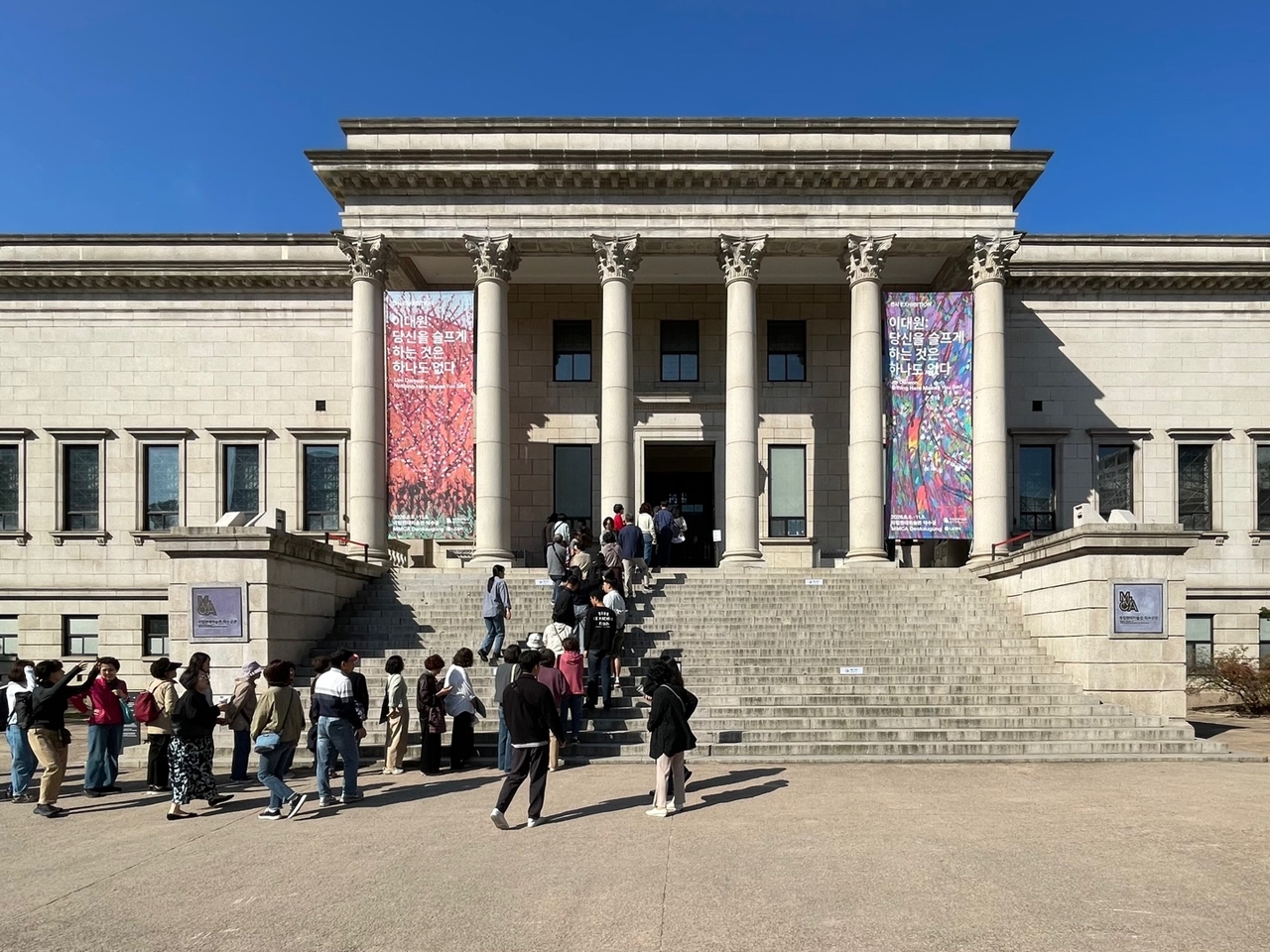
A retrospective of "the happy painter" Lee Dae-won (1921–2005) drew more than 300,000 visitors, setting an all-time attendance record among exhibitions held at the National Museum of Modern and Contemporary Art's Deoksugung branch.
The museum said the exhibition "Lee Dae-won: Nothing Makes You Sad," which ran at the Deoksugung branch from Aug. 6 to Sunday, attracted a cumulative 300,572 visitors.
That surpasses the previous record holder, the 2023 exhibition "The Most Sincere Confession: Chang Ucchin Retrospective," which drew 261,695 visitors over 130 days at a daily average of 2,013.
Over its 82-day run, the Lee Dae-won exhibition averaged 3,666 visitors a day. A single-day peak of 10,824 visitors was recorded on Sept. 26.
Paying visitors numbered 131,248, accounting for 43.7 percent of the total, while foreign visitors reached 8,726. An analysis of 21,728 members who purchased tickets online showed a broad generational spread: visitors in their 40s made up 25.1 percent, followed by those in their 50s at 23.9 percent, those in their 30s at 22.7 percent, and those in their 20s at 16.6 percent.
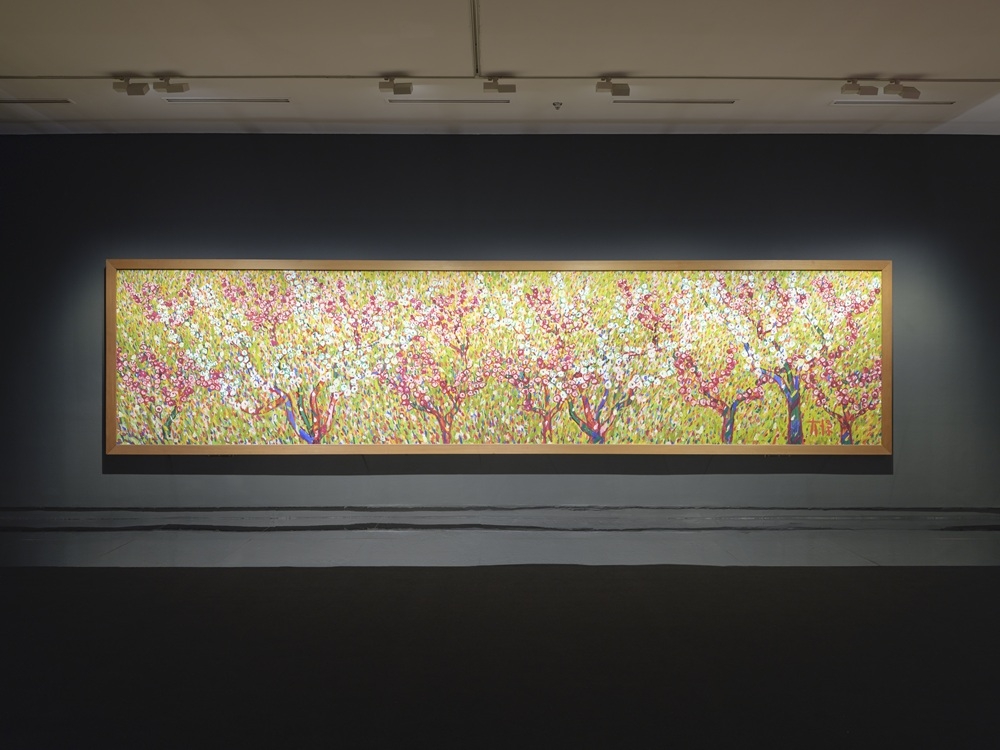
The exhibition was the first large-scale retrospective of Lee Dae-won, one of the defining figures of modern and contemporary Korean art. Spanning roughly 70 years of his career — from early works of the 1930s to the monumental "Orchard" series of his later years — it brought together more than 120 oil paintings, around 100 archival items, and traditional craft objects from the artist's personal collection.
The show reframed Lee, long known simply as "the painter of orchards," as an artist who developed the formal principles of traditional crafts and East Asian painting into a distinctive pictorial language. Traditional craft objects he collected — including embroidery, mother-of-pearl lacquerware and ox-horn inlay work — were displayed alongside his paintings to illustrate how those craft traditions shaped his art.
Particularly striking were the large-scale late works: the monumental "Orchard" and "Four Seasons" series canvases exceeding 5 meters in width, and "Inwangsan," all of which drew sustained attention from visitors.
Yoon Tae-wook, acting director of the National Museum of Modern and Contemporary Art, said it was especially meaningful that visitors had discovered the true depth of Lee's lifelong pursuit of a distinctly Korean modern painting, beyond the familiar image of "the happy painter." "We will continue to present exhibitions that research and introduce the great masters of modern and contemporary Korean art in depth," Yoon said.
pink@heraldcorp.com