'Namsan Area Urban Regeneration Plan' officially announced
19.2 billion won to fund 8 projects through 2031
Gondola operating revenue to be reinvested in ecological restoration
Damaged forests and vegetation to be restored; 'Namsan Oreum 360 Observatory' planned
Seoul Metropolitan Government aims to make Namsan a global eco-tourism hub
The Seoul Metropolitan Government plans to invest 19.2 billion won ($14.4 million) through 2031 to transform the Namsan area into an urban ecological and tourism hub that blends nature with diverse recreational offerings. Operating revenue from the planned Namsan gondola project will be reinvested in ecological restoration, damaged forests will be rehabilitated, and a 360-degree observatory will be built at the mountain's summit.
The city announced the plan Thursday, officially publishing the Namsan Area Urban Regeneration Activation Plan.
Seoul designated the Namsan area as an urban regeneration activation zone in October 2024, after which it held public hearings, gathered opinions from the city council and consulted relevant agencies. In May this year, the Urban Planning Committee approved the activation plan as originally drafted, and the city subsequently completed follow-up procedures including an investment review.
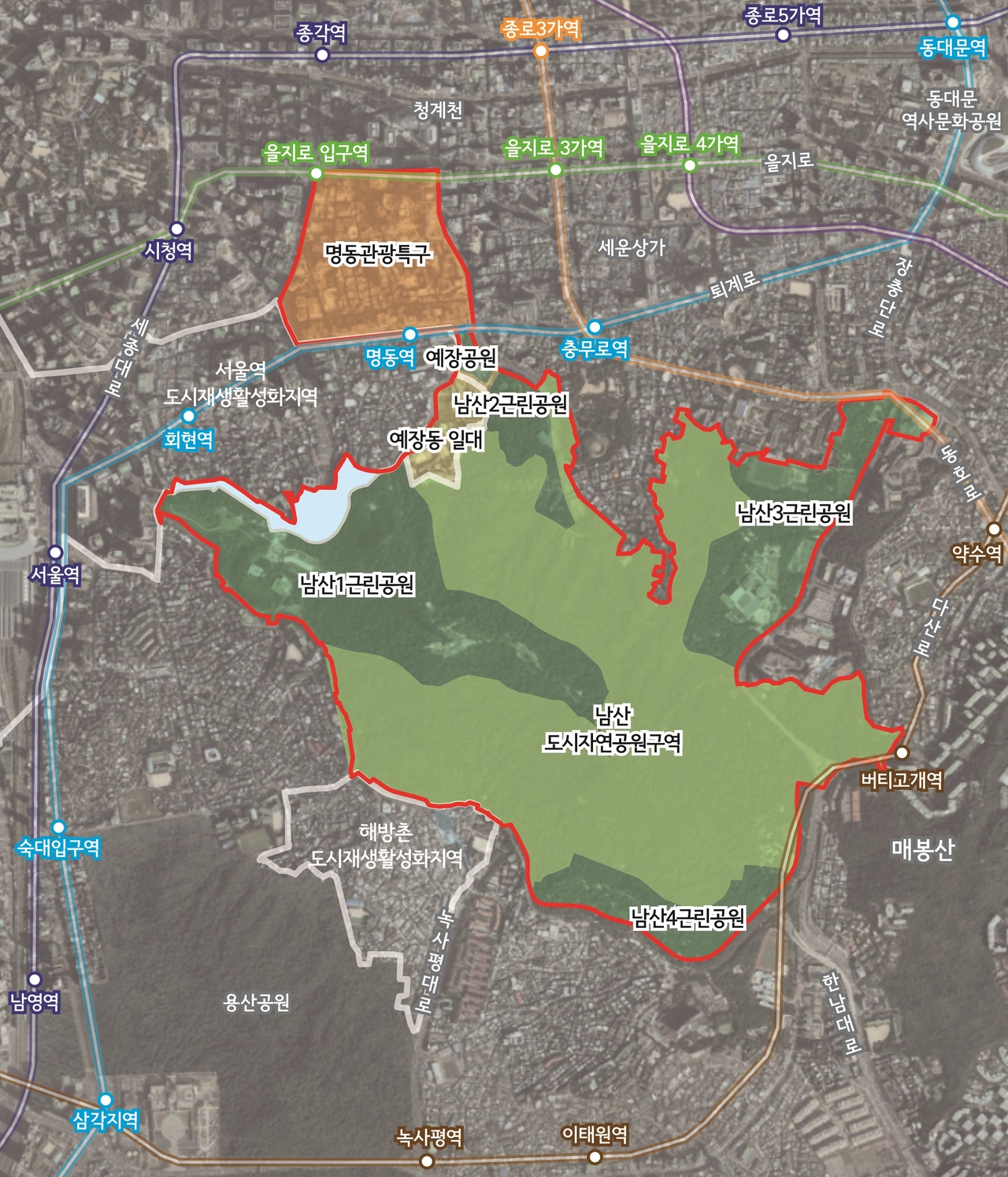
The plan covers approximately 3.11 million square meters encompassing Namsan and the Myeong-dong and Yejang Park areas, with 15 projects across four categories. Of these, the city will channel a total of 19.2 billion won into eight seed projects by 2031.
Built around the vision of "Namsan as a global eco-tourism hub where ecology and leisure coexist," the plan is organized into four categories — vitality, connectivity, recovery and experience — comprising 15 projects in total. The target area includes parts of Jung-gu (Myeong-dong, Hoehyeon-dong, Pil-dong and Jangchung-dong) and Yongsan-gu (Yongsan 2-ga-dong, Huam-dong, Itaewon 2-dong and Hannam-dong).
The city plans to channel operating revenue generated by the Namsan gondola project into a dedicated "Namsan Ecological Leisure Account" within the urban regeneration fund, reinvesting the proceeds in restoring Namsan's ecological environment and improving leisure facilities.
The gondola will span approximately 832 meters from Yejang Park near Myeongdong Station to the summit of Namsan, with a planned capacity of more than 1,600 passengers per hour — more than three times the capacity of the existing cable car.
However, gondola construction is currently suspended due to litigation over changes to the urban management plan. The city maintains that an alternative means of transport is needed to break up the long-standing monopoly structure and guarantee mobility for people with disabilities, particularly as the revised Track Transportation Act is expected to trigger a relicensing process for the existing operator.
Alongside this, the city will pursue forest ecosystem and biodiversity restoration projects to preserve Namsan's ecological value and restore its natural character. Informal trails that have formed haphazardly will be consolidated and closed to rehabilitate damaged areas, and forest paths will be reorganized.
In addition, the city will expand viewing and leisure spaces so that residents and tourists from home and abroad can experience and enjoy Namsan in a variety of ways while preserving its natural landscape.
At the summit, the city plans to build the Namsan Oreum 360 Observatory, offering a full 360-degree panoramic view of central Seoul, and will renovate eight key viewing points to provide visitors with diverse attractions and rest areas. Themed walking paths and seasonal landscape features will be created along the northern and southern circular routes, and rest, convenience and sports facilities will be upgraded to make Namsan more accessible for everyday use.
The city also plans to renovate the four entrances to Namsan's themed trails and the area around Yejang Park, with the aim of drawing visitors onward into the surrounding commercial districts of Hoehyeon-dong, Pil-dong and Jangchung-dong.
The city's specific investment breakdown across the eight seed projects is as follows: ecological environment restoration, 1.6 billion won; the 360-degree observatory and viewing point development, 3.71 billion won; improving pedestrian access around Namsan, 2.11 billion won; landscape improvements at Namsan themed-trail entrances, 1.89 billion won; urban management around the gondola zone, 2.83 billion won; creation of the Namsan circular forest trail, 3.91 billion won; seasonal landscape development along the Namsan circular road, 2.6 billion won; and preparation of a sustainable Namsan master plan, 550 million won.
Kang Seok, head of the Seoul Metropolitan Government's Balanced Development Headquarters, said the activation plan "is an important foundation for restoring Namsan's natural environment and advancing it as a sustainable ecological and leisure space." Kang added that the city would "comprehensively pursue everything from ecological restoration to enhanced tourism and leisure, to make Namsan a global eco-tourism hub representing Seoul."
ikson@heraldcorp.com