
- HOME
- INDUSTRY
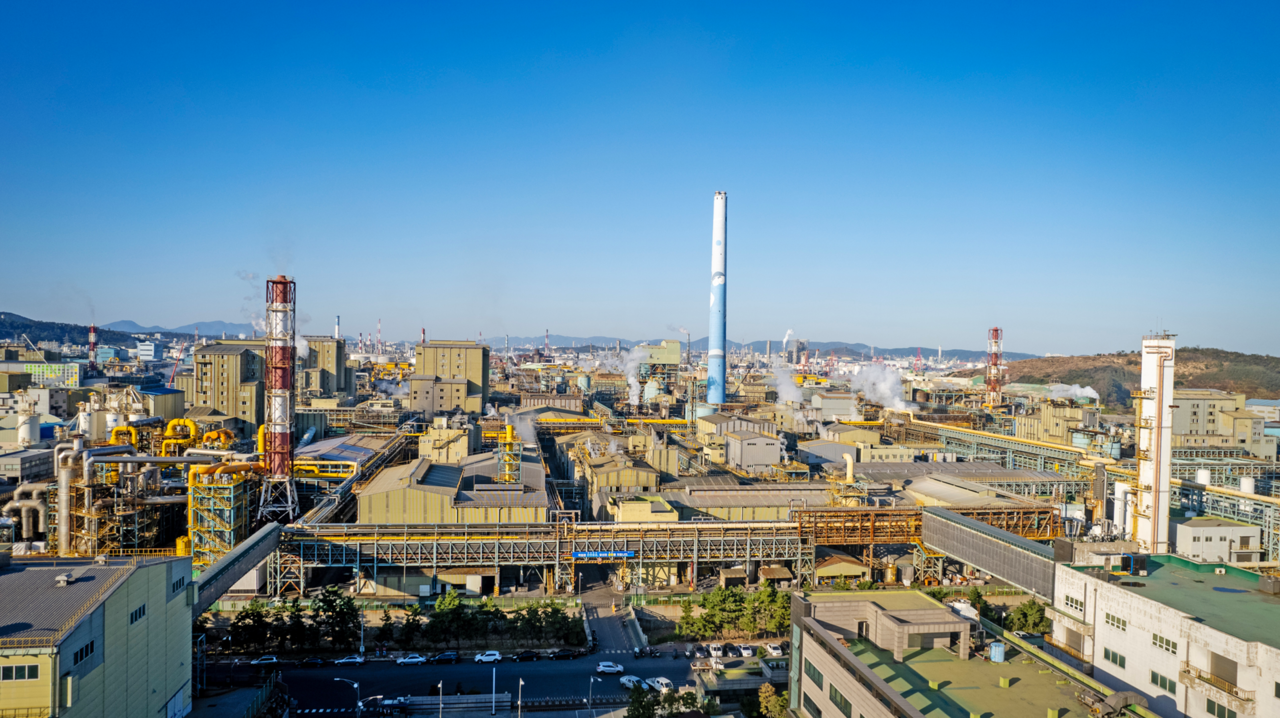
Korea Zinc rebuffs MBK, Young Poong's W9.3b 'fund circulation' allegations
MBK, Young Poong raise questions over One Asia fund investment flows Korea Zinc says investment decisions rest with fund managers, not investors Dispute continues despite court defeats totaling about 830 billion won Korea Zinc has rebuffed allegations from MBK Partners and Young Poong that it engineered a circular flow of funds, calling the claims an arbitrary attempt to link unrelated transactions. The pushback came after MBK and Young Poong raised the new allegations just a day after losing an 830 billion won ($627 million) shareholder derivative suit against the company on Thursday, prompting Korea Zinc to urge the two sides to stop disrupting its normal business operations. In a statement issued Friday, Korea Zinc shrugged off the allegations, saying they amounted to nothing more than "a forced, patchwork argument that relies on arbitrary interpretation and conjecture rather than objectively proven facts." The dispute centers on the flow of funds Korea Zinc used in the past for commercial paper purchases and fund contributions. MBK and Young Poong had alleged that Korea Zinc acquired 9.36 billion won worth of commercial paper issued by Young Media ENT in December 2019, and that the proceeds passed through multiple entities before being used to acquire a stake in Imagine Asia, a Kosdaq-listed company. They further claimed that about three weeks later, Korea Zinc contributed 9.6 billion won to a fund managed by One Asia Partners, and that the fund's investment proceeds flowed through related entities to repay the commercial paper that had been issued earlier. MBK and Young Poong argued that while the commercial paper Korea Zinc held directly was repaid, the investment risk remained within the fund Korea Zinc had contributed to, as the funds were converted into equity stakes. They called for an investigation into the decision-making process behind the transactions and potential conflicts of interest. Korea Zinc rebuffed that characterization, saying it was unreasonable to interpret the transactions as an intentional circular funding structure simply by connecting certain amounts and transaction dates without properly verifying each financial transaction and fund investment. Korea Zinc said investing a portion of its surplus funds in financial products such as funds is a standard treasury activity. It said a clear distinction must be drawn between contributing capital to a fund and directly managing that fund. "It is realistically impossible — and simply not reasonable — to track or control how funds flow through multiple counterparties and entities after an individual investment is made," the company said. Korea Zinc then said that selecting specific investment targets, drawing up investment plans, conducting due diligence and executing capital deployment are all functions of the general partner. It said claiming that Korea Zinc directly intervened in the fund manager's individual investment decisions merely because it was a limited partner distorts the facts. The company also said no concrete evidence had been presented to support the claim that transactions were prearranged at the corporate level, or that the fund's operations were improperly influenced, for the personal benefit of Korea Zinc Chairman Choi Yun-beom or any other specific individual. Korea Zinc also criticized MBK for applying a double standard — drawing a clear line between its role as an investor and its role as a manager in the context of the Homeplus crisis, while holding Korea Zinc to a different measure. MBK Partners Chairman Kim Byung-ju recently stated in a written excuse submitted to the National Assembly for skipping a national audit session on the Homeplus situation that he does not involve himself in the management of individual portfolio companies. Korea Zinc said MBK emphasizes the separation of investor and management roles when it comes to its own investments, yet holds Korea Zinc responsible for a fund manager's investment decisions on the sole basis that it was a limited partner — a clear double standard, it said. The latest exchange is also drawing attention because it erupted immediately after Korea Zinc won a series of major court rulings on Thursday. The Seoul Central District Court's Civil Division 30 ruled Thursday against Young Poong in a shareholder derivative suit it had filed against 10 Korea Zinc directors, including Chairman Choi, seeking approximately 837 billion won in damages. The court found that Korea Zinc's decision to conduct a tender offer for its own shares in 2024 did not constitute a breach of the directors' duty of care or duty of loyalty. It said directors cannot be held liable for damages as long as they reviewed the relevant information and made a reasonable business judgment in the company's interest, provided that judgment was not grossly unreasonable. On the same day, a separate shareholder derivative suit filed by MBK challenging Korea Zinc's sale of its Hanwha shares was also dismissed. However, the two rulings addressed the treasury share tender offer and the Hanwha share sale specifically, and did not directly adjudicate the allegations now being raised about the fund investment flows. Young Poong and MBK said they plan to appeal the first-instance ruling on the treasury share tender offer. Korea Zinc said repeatedly raising unverified allegations in the course of a management control dispute places a burden on both the company and its shareholders. "Repeatedly raising unverified allegations for the purpose of seizing management control, while ignoring productive discussions aimed at sustainable corporate growth and enhancing shareholder value, only deepens confusion and fatigue among the market and shareholders," the company said. Korea Zinc urged MBK and Young Poong to stop pressuring the company through litigation and public campaigns, and to focus instead on their role as shareholders in enhancing corporate value.
Jung Kyung-su Oct. 23, 2026
-
Business community welcomes deregulation push, urges swift passage of mega-zone bill
Deregulation of robots, semiconductors and AI welcomed Working-hour exemptions for R&D staff, faster semiconductor permits highlighted KEF calls for prompt legislation, comprehensive support for mega-zones South Korea's business community has welcomed the government's deregulation plan for mega-zone industrial complexes, saying easing regulations on semiconductors, robots and AI is essential to strengthening the country's competitiveness in advanced industries, and urging the National Assembly to pass the relevant legislation without delay. The Korea Enterprises Federation said Friday in a statement that "the current moment is urgent for revitalizing regional economies and securing future growth engines," expressing strong support for the government's plan to build a mega-zone industrial ecosystem centered on robots, semiconductors and AI data centers. The federation identified "speed" and "flexibility" as the two factors that will determine whether the mega-zone initiative succeeds, and put forward working-hour exemptions for high-income R&D personnel, a fast-track permitting system for semiconductor projects, the creation of conditions for robot demonstration and commercialization, and the easing of key regulations on autonomous driving and biotech as the top priorities. It described the deregulation measures as "essential steps to securing global competitiveness" and said it strongly welcomed the plan. The government discussed regulatory improvements to support the mega-zone industrial ecosystem at the second plenary session of the Regulatory Rationalization Committee, chaired by President Lee Jae-myung on Friday. The core aim is to reduce the permitting procedures and regulations that hinder large-scale corporate investment in regional areas. To that end, the government is pushing to enact a mega-zone special act containing more than 320 regulatory exemptions, under which companies and local governments would be able to select and apply the specific exemptions they need. By sector, a fast-track system running permitting, compensation and design procedures simultaneously will be applied to the development of advanced national semiconductor industrial complexes. The goal is to cut the time needed to build such complexes from the current 10-plus years to within five years. AI data centers will be brought under a unified permitting system, while the robot sector will see clearer safety standards for mobile industrial robots to create the conditions needed for demonstration and commercialization. The government also plans to revise regulations governing driverless autonomous vehicle operations and the use of new technologies in the biotech sector. The working-hour exemption for R&D personnel that the federation highlighted is expected to be a key flashpoint in the legislative process. A bill introduced by Democratic Party of Korea lawmaker Park Sang-hyeok includes a provision allowing researchers and developers in the top 3 percent of earned income to be exempted from the 52-hour weekly work limit through a written agreement with their employer. Labor groups, however, oppose the measure, arguing it could lead to an expansion of long working hours. The government is currently discussing the issue through a social dialogue process involving labor, management and related ministries. The business community had already signaled its support Tuesday, when the Korea Enterprises Federation and five other major economic organizations issued a joint statement welcoming the introduction of the mega-zone bill, which includes the working-hour exemption. The groups said greater flexibility in working arrangements for key R&D personnel was necessary, and pledged to develop appropriate compensation structures and measures to protect workers' health alongside any changes. The federation said swift legislation and institutional backing are needed for the government's deregulation plan to translate into actual corporate investment and regional industrial development. It called on the National Assembly and the government to "actively engage and cooperate so that broad regulatory exemptions and a comprehensive support system can be swiftly enacted into law during the National Assembly's deliberations on the mega-zone special act and related legislation."
Oct. 23, 2026
-
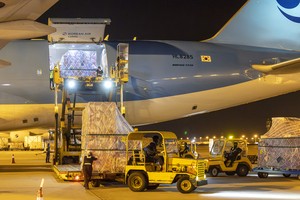
Korean Air upgrades Incheon cargo terminal with automation to chase AI logistics boom
Automation upgrade complete at Incheon cargo terminal Cargo handling capacity to rise more than 25% Hourly throughput up from 18 to 30 units Third-quarter cargo sales up 34% New York terminal modernization set for next year Korean Air is transforming its Incheon International Airport cargo terminal into a "smart terminal" as it accelerates its push into the AI logistics market. The airline plans to leverage automation to boost cargo handling capacity by more than 25 percent, targeting high-value freight such as semiconductors and server racks. Korean Air completed a roughly 15-month modernization of the Incheon cargo terminal that ran from June last year through September, industry sources said Friday. The overhaul replaced aging equipment that had been in service since the airport opened in 2001 and significantly expanded automation across cargo transport and loading operations. The most significant change involves how cargo is moved through the facility. Korean Air introduced automated guided vehicles and replaced the equipment transfer vehicles used to lift and move cargo containers. The number of bypass conveyor lines was also doubled from one to two, reducing bottlenecks in the cargo handling process. As a result, hourly throughput for cargo containers rose about 67 percent, from 18 units to 30. Korean Air expects overall terminal cargo handling capacity to increase by more than 25 percent compared with before the upgrade. The modernization also focused on workplace safety and working conditions. Automating heavy cargo transport equipment reduced the number of processes requiring workers to handle freight directly, while the facility upgrades improved on-site operational accuracy. The airline is also expanding dedicated facilities for processing high-margin special cargo. The modernization comes as Korean Air's cargo business is on a strong growth trajectory. The airline's third-quarter cargo sales reached 1.43 trillion won ($1.08 billion), up 34.3 percent from the same period a year earlier. Cumulative cargo sales for the first three quarters of this year came to 4.06 trillion won, a 28.0 percent increase from the same period last year. Notably, freight rates rose far faster than cargo volumes. While Korean Air's third-quarter cargo volume grew 5.3 percent year on year, freight rates climbed 27.5 percent. The cargo load factor also edged up 0.9 percentage points to 72.1 percent. Analysts attributed the results to a combination of factors: sustained demand for high-value freight including semiconductors and AI-related goods, along with fare adjustments tied to rising fuel costs. At its third-quarter earnings conference call, Korean Air identified AI and semiconductors as a stable demand base for its cargo business. The airline said it also boosted sales by capturing timely demand for cargo such as solar energy equipment and fresh eggs, which fluctuate with market conditions. The revenue structure of the cargo business is also shifting. Korean Air's share of long-term cargo contracts has risen from around 10 percent to roughly 30 percent. Under long-term cargo contracts, aircraft cargo space is sold over one to three years at a fixed base rate with variable surcharges applied on top. The arrangement reduces exposure to short-term freight rate swings and provides a more stable revenue base. Underpinning this cargo growth is the global surge in AI infrastructure investment. Logistics giant DHL projects the data center logistics market will grow at an average annual rate of 9 percent, from $23 billion last year to $35 billion by 2030. Demand is rising for the transport of not only servers and semiconductors needed to build data centers, but also power and cooling equipment and maintenance parts. Moon A-young, a senior researcher at Nice Credit Rating, said demand for air transport is growing, led by high-value IT goods such as semiconductors, server racks and batteries, driven by expanding AI infrastructure investment. Even as cargo supply has increased with the recovery of passenger flight operations, she added, "robust cargo demand and supply constraints stemming from the Middle East are combining to keep air freight rates at elevated levels." Korean Air plans to step up its pursuit of high-value freight needed for data center construction, including server racks and semiconductors. To prepare for the year-end consumer peak season around Black Friday and Christmas, the airline plans to flexibly deploy charter and extra cargo flights on routes with high freight demand. Beyond Incheon, Korean Air is also modernizing its overseas logistics hubs. The airline is currently upgrading facilities at its cargo terminal at John F. Kennedy International Airport in New York, with completion targeted for next year. The plan is to strengthen competitiveness in the global air cargo market by raising the handling capacity of its two major cargo hubs linking Incheon and New York. "This renovation is an essential measure to proactively respond to the rapidly changing global logistics environment by upgrading our facilities and integrating smart technology," a Korean Air official said.
Oct. 23, 2026
-
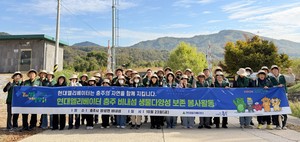
Hyundai Elevator expands ecological conservation efforts at Binae Island in Chungju
Observations logged on citizen-science platform Naturing New information boards installed; festival booth planned for November Hyundai Elevator said Friday that its employees carried out wildlife observation, documentation and environmental cleanup activities at Binae Island in Chungju, North Chungcheong Province. Participants used Naturing, a citizen-science platform, to observe and record species living on the island. After receiving education on Binae Island's ecology and biodiversity, they went into the field to photograph wildlife and log each observation — noting the time, location and habitat type — before uploading the records to the platform. They also conducted a cleanup of the surrounding area. Binae Island is a naturally formed river island along the South Han River in Angseong-myeon, Chungju. It is home to 865 species of wild flora and fauna, including 18 endangered species, and was designated a wetland protection zone in November 2021. The protected area, including surrounding waterways, covers 920,484 square meters. Hyundai Elevator also replaced information boards on the island that provide ecological details to visitors. The new boards include information on the wetland protection zone designation and key resident species such as the scaly-sided merganser, river otter and whooper swan. On Nov. 7, the company plans to set up a promotional booth at the Binae Island festival and distribute eco-bags of its own design to visitors. In December 2024, Hyundai Elevator signed an MOU with Chungju city and the Wonju Regional Office of the Environment to promote environmental conservation and biodiversity at Binae Island. In June last year, about 30 employees removed invasive plant species and collected waste on the island, and that same month conducted an operation to eradicate non-native fish species — including bass and bluegill — in Lake Chungju. Meanwhile, Hyundai Elevator was named a "good company" for disability employment at the 2026 Chungju Job Fair for People with Disabilities, held this month. The designation is awarded annually by the North Chungcheong Province Comprehensive Welfare Center for the Disabled to companies that have contributed to hiring people with disabilities, creating jobs and increasing their income. The company received high marks for treating disability employment as a core value of its sustainable management and consistently translating that commitment into actual job creation. Hyundai Elevator's disability employment rate stands at 3.6 percent, exceeding the legally mandated rate for private companies with 50 or more employees.
Oct. 23, 2026
-
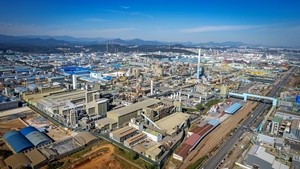
Korea Zinc wins back-to-back court rulings against MBK, Young Poong in damages suits
MBK's claim over discounted Hanwha share sale dismissed 837 billion won suit over share buyback also thrown out Korea Zinc calls decisions 'reasonable business judgment'; MBK, Young Poong to appeal Korea Zinc has prevailed in a damages lawsuit brought by MBK Partners over the sale of its stake in Hanwha, and on the same day won a separate shareholder derivative suit worth 837 billion won ($632 million) tied to its share buyback — dealing back-to-back setbacks to MBK Partners and Young Poong's efforts to hold Korea Zinc's management legally accountable. The Seoul Central District Court's 21st Civil Division on Thursday dismissed a damages claim filed by Korea Enterprise Investment Holdings, an SPC controlled by MBK Partners, against Korea Zinc's management. The suit stemmed from Korea Zinc's November 2024 sale of 5,436,380 shares in Hanwha — a 7.25 percent stake — to Hanwha Energy. Korea Zinc had said at the time that it sold the Hanwha stake to improve its financial structure and secure liquidity after buying back its own shares in response to a tender offer by MBK Partners and Young Poong, describing the move as a management decision made in light of its financial position and market conditions. MBK Partners, however, argued that the stake was sold below fair value and that the transaction caused losses to Korea Zinc. It filed a shareholder derivative suit last May, alleging that Chairman Choi Yun-beom and CEO Park Ki-deok disposed of the shares without board approval. The initial damages claim stood at about 19.6 billion won. MBK Partners revised the figure in June, seeking about 275.9 billion won as its primary claim and about 30.4 billion won as an alternative claim in the event the primary demand was rejected. Korea Zinc maintained throughout that the sale price reflected market conditions at the time and that the transaction was conducted in accordance with relevant laws and internal procedures. It also argued that the sale generated funds that strengthened its financial position. The court sided with Korea Zinc and ruled against the plaintiff. Earlier the same morning, a separate shareholder derivative suit worth 837 billion won filed by Young Poong over Korea Zinc's share buyback was also dismissed. The Seoul Central District Court's 30th Civil Division ruled against the plaintiff in the damages suit targeting Chairman Choi and nine other Korea Zinc directors. That suit arose from Korea Zinc's tender offer for its own shares at 890,000 won per share during the 2024 management control dispute. Young Poong argued that buying back shares at a price above the prevailing market rate inflicted losses on the company. The court noted that the directors had reviewed external legal advice and related injunction rulings before deciding to proceed with the buyback, and had also considered financing options. On that basis, it found that the business judgment could not be deemed grossly unreasonable and did not constitute a breach of the directors' duty of care or duty of loyalty. The court also rejected Young Poong's argument that using a specific-purpose discretionary reserve to fund the share buyback violated the Commercial Act or the company's articles of incorporation. Korea Zinc said the twin rulings showed that the court had rejected the damages claims repeatedly brought against its management, and that the decisions validated choices made in light of the company's financial circumstances and operational needs at the time. The company also said MBK Partners and Young Poong had filed repeated lawsuits in the course of pursuing management control, placing a burden on normal business operations, and warned that a prolonged legal dispute could weigh on the company's investment activities and shareholder value. Korea Zinc said it would continue to respond to the management control dispute while focusing on strengthening the competitiveness of its core businesses and securing a stable foundation for growth. The legal battle is not over, however. MBK Partners and Young Poong said they would appeal the first-instance ruling on the share buyback suit. The management control dispute and related litigation between the two sides are therefore expected to continue for now.
Oct. 23, 2026
-
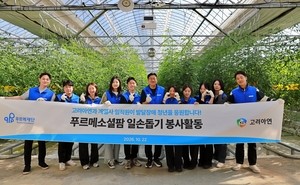
Korea Zinc helps young farmers with developmental disabilities for third year running
About 10 employees join cherry tomato harvest and packaging Farm employs 55 young adults with developmental disabilities full time Annual 50 million won donation continues since 2024 Korea Zinc has been running a smart farm volunteer program for the third consecutive year to help young adults with developmental disabilities achieve economic independence. Employees take part directly in cherry tomato harvesting and packaging, while the company donates 50 million won ($37,700) annually to support stable employment at the farm. Korea Zinc announced Friday that it had held a farm volunteer activity Thursday at Purme Social Farm in Yeoju, Gyeonggi Province, together with employees from its affiliates. About 10 employees from Korea Zinc, Axis IT and KZ Precision took part in the activity, visiting the farm where young adults with developmental disabilities work and helping with cherry tomato cultivation, harvesting and packaging. Purme Social Farm is a cherry tomato smart farm established in 2022 by the Purme Foundation. It currently employs 55 young adults with developmental disabilities on a full-time basis, providing jobs suited to their individual needs so they can earn a stable income and become self-sufficient members of society. Young adults with developmental disabilities often struggle to achieve economic independence because suitable jobs are hard to find and workplaces that can support them long-term remain scarce. Purme Social Farm was established to address these challenges by creating agricultural jobs through smart farm technology. The Korea Zinc employees began the day with a briefing on how the farm operates and how cherry tomatoes are grown. They then moved into the greenhouse, where they removed side shoots sprouting between stems and checked the growth of the tomatoes before carrying out the harvest. In the afternoon, the volunteers moved the harvested cherry tomatoes to a processing facility, washed them and packed them into retail containers. Korea Zinc's support for Purme Social Farm began in 2024. For three consecutive years through this year, the company has donated 50 million won annually to the Purme Foundation and paired the financial support with employee volunteer activities. The donations are used to purchase agricultural supplies needed for cherry tomato cultivation, including seedlings, growing media, fertilizer and plant-training wire. The aim is to ensure the farm has a steady supply of materials to sustain production and maintain employment for the young adults with developmental disabilities who work there. Beyond providing full-time jobs, Purme Social Farm also runs a vocational experience program. To date, it has given more than 500 young adults with developmental disabilities, along with their parents and teachers, the opportunity to try agriculture-related work firsthand. Korea Zinc said it plans to continue the initiative so that employees can work alongside young adults with developmental disabilities on-site and deepen their understanding of the importance of employing and supporting the independence of people with disabilities, rather than limiting its involvement to one-off donations. "We hope this volunteer activity — now in its third year with employee participation — not only encourages the economic independence of young adults with developmental disabilities, but also helps build broader social awareness of their right to work," a Korea Zinc official said. "We will continue to show sustained interest and support so that young adults with developmental disabilities can work in a stable environment and become self-sufficient members of our society."
Oct. 23, 2026
-
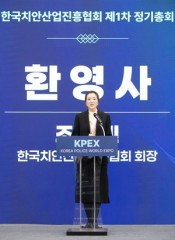
Hanjin President Cho Hyun-min makes first move as public safety industry association chief
Chairs inaugural general assembly of Korea Public Safety Industry Promotion Association Attends international expo to review advanced security technologies Pushes for AI, robotics cooperation and overseas market expansion Cho Hyun-min, president of Hanjin, has made her first official move as inaugural chair of the Korea Public Safety Industry Promotion Association, outlining plans to strengthen cooperation between public institutions such as police and private technology companies and to build a public safety industry ecosystem leveraging AI, robotics and other advanced technologies. Hanjin announced Friday that Cho chaired the association's general assembly Wednesday at Songdo Convensia in Incheon and attended the 2026 Korea Public Safety Industry Expo. The assembly was the first regular general meeting since the association launched in September. Cho discussed the association's operational direction and future project plans, emphasizing the importance of collaboration between the public safety sector and private technology firms. "The association must serve as a solid bridge connecting public safety with private innovation, and as the driving force behind the leap forward of the future public safety industry," Cho said, calling on the association to take an active role. The Korea Public Safety Industry Promotion Association held its founding general assembly on Sept. 15. The organization was set up to support technology development, commercialization and overseas expansion in the domestic public safety industry, with participation from security-related companies, universities and research institutions. Cho was elected inaugural chair at the founding assembly. At the founding assembly, Cho said, "To protect the peaceful daily lives that citizens enjoy, we must proactively prepare for a wide range of hard-to-predict threats, and that requires both the capabilities of those working on the front lines of public safety and the backing of advanced technology and industry." She added that she would "work to build a healthy industrial ecosystem encompassing everything from research and development of security technologies to training specialized personnel, institutional support and entry into global markets, in order to strengthen the competitiveness of South Korea's public safety industry." After the general assembly, Cho attended the opening ceremony of the expo and toured exhibition booths of major companies. She examined advanced public safety equipment and technologies on display and exchanged views on cooperation with officials from relevant agencies and industry representatives. This year's expo is co-hosted by the Korean National Police Agency and Incheon and runs four days from Wednesday through Saturday. A total of 245 companies are participating with around 880 booths, showcasing a range of technologies including AI, robotics, video security and criminal investigation equipment. The event also features an export consultation session with 82 overseas buyers from 31 countries, an AI patrol robot evaluation, and a procurement consultation session with public institutions. The focus extends beyond introducing the technologies of domestic public safety companies to actively supporting commercialization and securing overseas sales channels. The Korea Public Safety Industry Promotion Association also set up a dedicated promotional booth during the event to introduce its activities and recruit new member companies. The association plans to pursue an industry-academia-research cooperation framework linking police, companies, universities and research institutions as a core project. It intends to identify companies with field-applicable technologies — including AI, robotics and intelligent closed-circuit television — and support technology demonstration and commercialization. In addition, the association plans to expand cooperation with relevant agencies to help domestic public safety companies enter overseas markets. It will focus on supporting the application of technologies still at the research and development stage to actual public safety operations and helping them generate new business opportunities.
Oct. 23, 2026
-
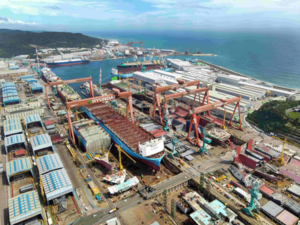
HD Hyundai Heavy Industries reaches second tentative labor deal with base pay rise
Lump-sum payment raised by 500,000 won from first proposal Seniority increment lifted by 5,000 won Full membership vote set for Monday HD Hyundai Heavy Industries and its union reached a second tentative agreement on this year's wages and collective bargaining terms, including a base pay increase of 120,000 won ($91). The deal came 21 days after union members voted down the first tentative agreement, and the union branch chief's high-altitude sit-in protest ended with the new accord. The two sides reached the second tentative agreement at their 26th round of negotiations, held Friday at the company's headquarters in Ulsan. Under the terms, base pay will rise by 120,000 won, including a 55,000-won seniority increment. The lump-sum payment — covering incentive bonuses and other allowances — was set at 11.5 million won ($8,680) plus 200 percent. Compared with the first tentative agreement, the lump-sum payment increased by 500,000 won. The total base pay raise remains the same, though the seniority increment within that figure was raised by 5,000 won. The two sides also agreed to consolidate collective bargaining terms and employment rules under the HD Hyundai Heavy Industries standard, while retaining certain more favorable conditions from the former HD Hyundai Mipo, including a 14-day retirement consolation leave. For severance pay calculations, employees may choose any three consecutive months from the four months immediately preceding the date on which severance entitlement arises. The agreement also includes the provision of 300,000 welfare points. The parties further agreed to conclude a special accord on industrial transition. Under that arrangement, the company would brief the union in advance whenever automation or digitalization in the shipbuilding sector could affect employment, and the two sides would discuss job security measures through a joint labor-management consultative body. Whether the tentative agreement takes effect will be decided by a membership ratification vote. The union plans to hold the vote among all members on Monday. A company official said that while the two sides had again reached a tentative agreement through negotiations, a vote held Oct. 2 had fallen through when 52.14 percent of participating members voted against it. After talks stalled following that rejection, the union launched partial strikes of seven hours a day for all members beginning Monday. Union branch chief Kim Dong-ha began a high-altitude sit-in on a crane inside the company premises on Sunday. The protest ended after five days with Friday's tentative agreement. The union has now staged a total of 11 rounds of partial strikes involving all members during this year's wage and collective bargaining process.
Oct. 23, 2026
-

Jejuair to launch Incheon–Sendai route in January, expanding Japan regional network
Three weekly flights on Wednesdays, Fridays and Sundays Japan route passengers up 29% in first three quarters this year Jejuair announced Friday it will launch three weekly flights on the Incheon–Sendai route starting Jan. 8, operating on Wednesdays, Fridays and Sundays. Flights will depart Incheon International Airport at 8:35 a.m. and arrive at Sendai Airport at 10:30 a.m. (local time), with the return leg departing Sendai at 11:30 a.m. and landing in Incheon at 2:40 p.m. (local time). Sendai, the largest city in Japan's Tohoku region, is known as the "City of Trees" for the tree-lined boulevards and parks throughout its downtown. It is the home of gyutan — grilled beef tongue — and sits near Matsushima, ranked among Japan's three most scenic views, as well as the Akiu and Sakunami hot spring resorts. Jejuair carried more than 3.7 million passengers on Japan routes in the first three quarters of this year, up 29 percent from about 2.87 million in the same period last year. Smaller Japanese city routes have also gained traction: passenger numbers on the Incheon–Hiroshima route rose 42 percent year on year, while the Incheon–Shizuoka route climbed 40 percent. Passengers on smaller Japanese city routes grew from about 610,000 in 2024 to about 760,000 in 2025, and have already reached about 700,000 through the third quarter of this year. Jejuair currently operates 16 Japan routes — 11 from Incheon, one from Gimpo and four from Busan. It plans to resume the Incheon–Kagoshima route Sunday and the Incheon–Hakodate route on Dec. 1. To mark the new service, Jejuair is offering discounts of up to 20 percent on tickets booked through its website and mobile app through Nov. 8. Pre-purchased baggage allowances will be discounted by up to 50 percent, and travel and accommodation partner discount coupons will also be available. "The launch of Sendai service broadens the options for customers planning trips to smaller Japanese cities and makes it possible to enjoy multi-city itineraries such as Incheon–Sendai combined with Tokyo (Narita)–Incheon," a Jejuair official said. "We will continue working to offer a wider variety of routes so customers can experience ever more diverse travel."
Oct. 23, 2026
-
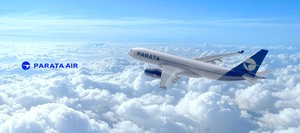
Parata Air extends cabin crew-curated in-flight shopping program into October
In-flight curators handle product selection and sales Seasonal health supplement featured for autumn transition Parata Air announced Friday it will continue its cabin crew-driven in-flight service program, "Curating Flight," through October. Following runs in August and September, the airline will operate Curating Flight on Saturday, Sunday and Wednesday aboard Incheon-departing flights to Da Nang and Sapporo. The program, designed to offer passengers a distinctive in-flight shopping experience, has cabin crew personally introduce products and provide special purchase benefits. Cabin crew members serving as "in-flight curators" go beyond simply selling products — they take part in product selection, promotion planning and customer guidance across the full range of in-flight services. For this round, the airline is featuring Regina Premium Royal Jelly, timed to growing passenger interest in health management during the seasonal change. Parata Air said it plans to expand programs that incorporate cabin crew's on-site experience and ideas into its in-flight services, including Curating Flight, with the aim of broadening passengers' travel experiences. "The in-flight curator program is meaningful because cabin crew — who work closest to customers — are the ones proposing and carrying out new services themselves," a Parata Air official said. "We will continue to draw on frontline ideas to provide customers with differentiated experiences, while steadily improving the quality and competitiveness of our in-flight services." Meanwhile, Parata Air this month completed a contract to introduce its sixth aircraft, an Airbus A320-200, as part of efforts to expand its international route network. The aircraft is expected to enter service after undergoing interior modifications, maintenance checks and regulatory procedures following its delivery to South Korea.
Oct. 23, 2026
-
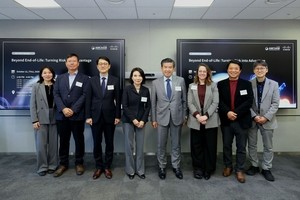
AmCham, Cisco urge companies to replace aging IT systems to boost digital competitiveness
The two organizations held a closed-door meeting Thursday 'End-of-life equipment is an easy entry point for hackers' Companies must assess risks in advance and draw up systematic transition plans James Kim, chairman and CEO of the American Chamber of Commerce in Korea (AmCham), said "a secure and stable digital foundation is essential to translating the potential of Korea-US technology cooperation into tangible and lasting business opportunities." Kim made the remarks Thursday at a closed-door meeting with Cisco Korea held at the ASEM Tower in Samseong-dong, Seoul, adding that "upgrading outdated systems is one of the key challenges ahead." He said AmCham would continue working with Cisco and other companies to facilitate dialogue between government and industry on managing technology risks, driving innovation and strengthening long-term competitiveness. The event, held under the theme "End-of-Life Technology Risks: Turning Challenges into Competitive Opportunities," was organized to examine the risks posed by aging IT systems and discuss ways for companies to strengthen their digital competitiveness. As rapid advances in AI and quantum computing reshape the security landscape, end-of-life equipment — hardware and software no longer receiving vendor support — has become one of the easiest entry points for hackers. Participants said companies must identify the risks in their legacy systems early and put systematic transition plans in place. Choi Ji-hee, president of Cisco Korea, said leaving end-of-life equipment without official security updates or technical support "can pose a fatal threat to business continuity." She called on companies to pursue phased infrastructure modernization by setting strategic replacement priorities based on available budgets and the criticality of each system. Sarah Sloan, Cisco's head of cybersecurity policy for Asia Pacific, presented a report titled "Past Its Use-By Date: Turning Legacy Technology Risk into National Competitive Advantage," published by the Australian Strategic Policy Institute with Cisco's sponsorship. Drawing on case studies from South Korea, India, the Philippines and Australia, the report framed the management of end-of-life technology not as a routine IT matter but as a challenge requiring attention at the management and policy level. It recommended that organizations clarify accountability for system management and replacement, and plan the necessary investment in advance. The report also outlined ways to reduce security risks and create new business opportunities through better technology lifecycle management and improved procurement practices.
Oct. 23, 2026
-

Beyond discounts: Automakers compete on post-purchase care
Competition shifts from sticker-price cuts to ownership perks Renault, Genesis, Peugeot beef up maintenance and warranty coverage Chabot offers up to 1 million won in accident deductible support Import car sales growth intensifies dealer rivalry Services that reduce the cost of owning and maintaining a vehicle after purchase are emerging as a new competitive front in the new-car market, alongside traditional price discounts. Automakers are expanding after-sales benefits such as free maintenance and extended warranty periods, and products that cover the insurance deductible a driver must pay after an accident have also appeared. Automakers and imported-car dealers have recently been rolling out a range of after-sales services for new-car buyers, industry sources said. Rather than one-time cash discounts or gift vouchers, companies are moving toward benefits that deliver tangible value throughout the ownership period as a way to win customers. The shift also reflects a growing tendency among consumers to weigh long-term costs such as running expenses, not just the purchase price. In a survey conducted earlier this year by auto-commerce platform company Chabot Mobility targeting 450 prospective new-car buyers, 66.8 percent of respondents cited price as the most important factor when purchasing a vehicle. The share who selected fuel efficiency and maintenance costs also reached 53.8 percent. In response, automakers have been rolling out a succession of services available to customers even after they take delivery of their vehicles. Renault Korea offered its "R:Assure Basic" service free of charge in March to buyers of the Grand Koleos midsize SUV. The service covers one engine oil change, oil filter replacement, air cleaner replacement and a vehicle inspection — each performed once within one year or 15,000 kilometers of delivery. Genesis provides vehicle-care benefits through its "Privilege" membership service for new-car customers. Customers can choose from a range of options, including an all-in-one vehicle-care package that combines polishing and glass-coating treatments in a single visit. Imported-car brands have also moved to expand after-sales services. Peugeot ran a program from August through September that extended the standard three-year warranty to five years or 100,000 kilometers for new-car buyers. The brand also improved service convenience by introducing an online reservation system at its authorized service centers nationwide. Support at the dealer level is also taking shape. Hanssung Motor, an authorized Mercedes-Benz dealer, previously offered new-car buyers a benefit covering the insurance deductible incurred when repairing a vehicle after an accident — up to 500,000 won ($377) per claim, for a maximum of three claims within one year of vehicle registration. The competition in services is tied to growth in the imported-car market. According to the Korea Automobile Importers & Distributors Association (KAIDA), new registrations of imported passenger cars in Korea totaled 279,729 units in the first nine months of this year, up 24.1 percent from the same period last year. As the market expands, competition for customers at the point of sale has intensified. At some dealerships, sales staff are using a portion of their commission incentives to offer customers additional discounts — a practice known as "advance commission discounting." However, critics note that such discount competition can shift the financial burden onto individual sales employees. "Cash discounts lead customers to compare figures and walk away, with no follow-up transaction," an official at an imported-car dealership said. "Even with the same budget, after-sales care benefits that customers experience during ownership raise both satisfaction and the likelihood of returning." More recently, services have emerged that cover repair costs a driver must pay out of pocket when an accident occurs. Even when a vehicle is repaired through auto insurance, drivers are typically required to pay a deductible under the terms of their policy. Minor scratches or scuffs can still generate out-of-pocket repair costs, and a history of insurance claims can push premiums higher. To ease that financial burden, Chabot Mobility last month launched "Chabot Care," a new-car management service. The flagship "Deductible Care" feature covers the insurance deductible arising after an accident claim — up to 500,000 won per incident, for a maximum of two incidents, with a total ceiling of 1 million won ($755). A separate "Parts Care" feature covers repair costs from everyday vehicle damage such as stone chips, door dings and scratches, also up to a maximum of 1 million won. Chabot currently provides customers who purchase a new car through its platform with a complimentary "100-Day Peace of Mind" care service, available for 100 days after delivery. General new-car buyers can also access a combined Deductible Care and Parts Care service by purchasing a designated driver and maintenance coupon pack. Chabot has also made these services available as purchase benefits that new-car dealers and agencies can offer their customers directly, allowing sellers to provide post-delivery care without securing their own maintenance facilities or operational staff. "A gift voucher's benefit ends on delivery day, but a care service keeps the customer thinking of the dealer for as long as they drive the car," an official at a new-car sales agency said. "A growing number of businesses are looking at restructuring their customer benefit packages around care services." The push to lower the costs of owning and using a vehicle is also visible in the long-term car rental market. Lotte Rent-a-Car on Thursday added the Genesis GV80 Hybrid to its "My Car Free Return Premium" product, which allows customers to return a vehicle without an early-termination penalty after 24 months of a contract. Industry insiders expect competition in services that maintain customer contact after delivery to grow, separate from vehicle price discounts. "The benchmark for new-car benefit competition is shifting from 'how much can you knock off the price' to 'how worry-free can you make ownership after delivery,'" an industry official said. "The tighter the discount margin for a sales channel, the greater the demand for service-based benefits will become."
Oct. 23, 2026
-
Lee Jae-yong marks 4 years as Samsung chairman with record profits, eyes year-end reshuffle
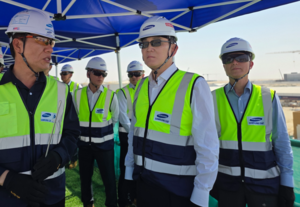
Lee visits UAE ahead of fourth anniversary as chairman Semiconductor boom drives operating profit up ninefold in four years Strong earnings seen as right moment to unveil 'New Samsung' vision Year-end personnel reshuffle expected to reflect Lee's organizational blueprint Losses in consumer electronics division and labor tensions remain key challenges Samsung Electronics Chairman Lee Jae-yong marks the fourth anniversary of his appointment as chairman on Tuesday. As in previous years, he is keeping a low profile, with no special message or internal ceremony planned. Lee has been focused on business matters and internal commitments — visiting Samsung's operations in the UAE on Wednesday (local time) and attending a memorial service Friday for his late father, former Chairman Lee Kun-hee, on the sixth anniversary of his death. Lee was elevated to chairman on Oct. 27, 2022, formally launching the third-generation leadership of the conglomerate. He enters his fourth anniversary in a markedly different environment from when he took the helm. With the semiconductor business posting unprecedented strength, attention is turning to the organizational reshuffle and personnel changes he is expected to carry out next month. Observers say the moves will reflect his blueprint for a "New Samsung" — his vision for the company's structure and business strategy going forward. Operating profit up ninefold in four years since Lee took chairmanship Samsung Electronics' annual operating profit stood at 43 trillion won ($32.5 billion) when Lee became chairman in 2022. This year it is forecast to surpass 370 trillion won — roughly nine times that figure. The business environment was far from favorable in the early days of his tenure. The semiconductor division, Samsung's core business, posted a loss of nearly 15 trillion won in 2023 due to a memory chip supply glut. In 2024, the company ceded ground in the high-bandwidth memory market to rivals, drawing criticism that it had missed the HBM opportunity. Even so, Lee kept his focus on medium- to long-term growth. When competitors moved to cut production, he held the line, maintaining Samsung's investment stance and refusing to authorize artificial output reductions. That bold stance paid off as the AI era arrived. The AI market reached an inflection point when OpenAI launched ChatGPT in late 2022, and Samsung's results followed. Samsung Electronics has set a new quarterly earnings record every quarter this year — 134 trillion won in sales and 57 trillion won in operating profit in the first quarter, 172 trillion won in sales and 90 trillion won in operating profit in the second, and 195 trillion won in sales and 107 trillion won in operating profit in the third. The third-quarter operating profit of 107 trillion won significantly exceeded Nvidia's second-quarter operating profit of $63.7 billion, making it the largest quarterly operating profit posted by any global tech company this year. Analysts say Samsung is on track to surpass Nvidia on an annual basis as well and claim the top spot for operating profit among all companies globally. Eyes on year-end reshuffle as Lee expected to elevate tech talent for 'New Samsung' With earnings growing at an extraordinary pace, analysts say Lee has arrived at the right moment to demonstrate the vision and capabilities of his "New Samsung" in earnest. Immediate attention is focused on the upcoming reshuffle of Samsung's president-level executives next month. Lee has long emphasized that technology comes first, second and third, and has consistently promoted performance-driven technical talent amid the AI wave. Last year's regular executive reshuffle saw him advance a large number of technology leaders and executives in their 30s and 40s to the front lines, with 161 promotions — the largest in three years. This year, the same approach is expected to continue, with personnel who contributed to HBM business growth moving into prominent roles alongside leaders tapped to drive AI and robotics initiatives. As the business environment accelerates with the spread of AI, analysts say Lee may move younger talent into frontline management positions ahead of schedule to sharpen the pace of innovation. However, a lingering conflict between the Device Experience division and the Device Solutions division — which began over bonus disputes — remains an unresolved challenge. Samsung narrowly averted a strike in May after reaching a labor-management agreement on bonuses, but tensions between the two divisions, fueled by a widening gap in their financial performance, have persisted. The prolonged losses in the Device Experience division, which oversees finished-product businesses, also remain a pressing issue. Outside the regular reshuffle cycle, Lee took the unusual step in May of abruptly replacing the head of the television business in a targeted personnel move, signaling his intent to shake up the division's culture. The year-end reshuffle is expected to carry a strong message from Lee calling for sweeping reform and competitiveness improvements across the Device Experience division as a whole.
Oct. 23, 2026
-
From W200m to 500 trillion: Lee Kun-hee's 'new management DNA' that built Samsung
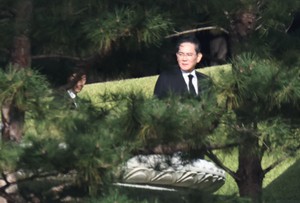
Tribute marks sixth anniversary of late Samsung Group Chairman Lee Kun-hee's death Lee Jae-yong, family and current and former Samsung presidents visit ancestral grave Lee staked personal fortune on semiconductors in 1974 Semiconductor operating profit hits 100 trillion won, spotlighting his vision 1993 'new management' declaration shifted Samsung toward quality over quantity Cultural legacy grows as 'Lee Kun-hee Collection' draws global audiences Samsung Electronics Chairman Lee Jae-yong visited the ancestral burial site of his late father, Samsung Group Chairman Lee Kun-hee, on Friday morning — two days before the sixth anniversary of Lee Kun-hee's death on Oct. 25 — accompanied by family members and senior executives to pay his respects. The visit came as Samsung Electronics posted a record quarterly operating profit of 107.4 trillion won ($81.1 billion) in the third quarter of this year, marking the first time the company has surpassed 100 trillion won in a single quarter. Lee reaffirmed his commitment to strengthening the company's business competitiveness while honoring his father's management philosophy. With the semiconductor business delivering unprecedented profitability this year and driving earnings growth, the late chairman's decision more than 50 years ago to stake his personal fortune on entering the semiconductor industry is drawing renewed attention. Lee Jae-yong leads Samsung presidents, family in memorial visit Lee arrived at the ancestral burial site in Imok-dong, Suwon, Gyeonggi Province, at around 8:50 a.m. Friday for the sixth-anniversary memorial ceremony. Family members joined him, including his mother Hong Ra-hee, honorary director of the Samsung Leeum Museum of Art; his sister Lee Boo-jin, president of Hotel Shilla; his other sister Lee Seo-hyun, president of Samsung C&T; and Kim Jae-yeol, president of Samsung Global Research. About 150 current and former executives also attended, among them Jeon Young-hyun, vice chairman and head of Samsung Electronics' DS (Device Solutions) division overseeing the semiconductor business, and Roh Tae-moon, president and head of the DX (Device eXperience) division, each carrying a floral tribute. After the ceremony, Lee traveled to the Changjo Hall at Samsung Electronics' Human Resources Development Center in Yongin, Gyeonggi Province, where he shared lunch with affiliate presidents in memory of the late chairman. The Changjo Hall serves as a training facility for new employees and houses a bust of the late chairman. Lee has held a similar luncheon there with company presidents following the annual memorial ceremony each year. He is also scheduled to attend a commemorative concert marking the sixth anniversary of Lee Kun-hee's death, to be held Wednesday at the concert hall of Samsung Electronics' Human Resources Development Center. As in previous years, Lee is expected to visit the center before the concert to encourage newly appointed executives and outstanding employees, and to hold a dinner with newly appointed executives and key management attending the event. In 1974, Lee staked his personal fortune to enter semiconductors As Samsung Electronics' semiconductor business continues its record-breaking run this year, the late chairman's foresight in recognizing the industry's importance and building its foundations is drawing fresh recognition. Samsung's semiconductor business traces its origins to the acquisition of Korea Semiconductor. In December 1974, Lee Kun-hee used his personal funds to acquire a 50 percent stake in Korea Semiconductor for $500,000. At the time a director at Tongyang Broadcasting Company, Lee had concluded that the future of the electronics industry depended on semiconductors. He was also driven by the conviction that Korea needed to enter high-value advanced industries for the good of its economy. Korea Semiconductor, founded by Dr. Kang Ki-dong, had launched Korea's semiconductor history with chips for wristwatches but was struggling financially in the wake of the oil shock. The year after Lee's acquisition, in September 1975, the company developed a semiconductor for electronic watches and turned a profit, recording sales of 200 million won for the year. In 1977, Samsung Electronics acquired the remaining 50 percent stake held by US firm ICII and renamed the company Samsung Semiconductor. 52 years on, semiconductors yield a record quarterly operating profit of 110 trillion won Samsung's semiconductor growth accelerated in earnest following the "Tokyo Declaration" of 1983, when late Samsung founder Lee Byung-chull announced at the Hotel Okura in Tokyo that the company would enter the VLSI (very large-scale integration) semiconductor business. Samsung Electronics chose DRAM as its strategic product within the memory segment and launched its first production line in Giheung in 1984. Having succeeded in developing 64K DRAM around that time, Samsung Electronics claimed the top share of the global DRAM market in 1992 and has held that position ever since. The semiconductor business surpassed 100 billion won in sales in 1986 and reached 1 trillion won in 1991. What began with 64K DRAM has since expanded to encompass advanced memory chips including HBM, a foundry business producing AI chips for major US technology companies, and a System LSI division designing the processors at the heart of electronic devices. Driven by the pursuit of an insurmountable technology lead and the rise of the AI era, Samsung's semiconductor business has grown beyond all comparison with its early days. After surpassing 100 trillion won in annual sales in 2024, the business is now writing a new chapter with a quarterly operating profit of 110 trillion won in the third quarter. Buoyed by the semiconductor boom, Samsung Electronics set an all-time earnings record in the third quarter of this year, with sales of 195 trillion won and operating profit of 107.4 trillion won. The market expects the semiconductor division alone to generate annual sales of 500 trillion won and operating profit of 360 trillion won for the full year. 1993 'new management' declaration: a defining moment in Korean business history The late chairman's "new management" declaration — best remembered for the line "Change everything except your wife and children" — remains the most dramatic moment in the history of not only Samsung Group but Korean business as a whole. After launching the new management initiative in Frankfurt, Germany, on June 7, 1993, Lee spent 68 days through Aug. 4 traveling between Germany, Switzerland, the United Kingdom and Japan, holding roundtable discussions with 1,800 people over 350 hours. Normally reserved by nature, Lee spoke with remarkable candor throughout that period, laying out his management philosophy at length. His discussions with company presidents alone ran to more than 800 hours. Samsung Group compiled Lee's remarks from that period into 33 thematic categories, producing a management guide spanning the equivalent of 8,500 A4 pages known as the "Jihaeng 33 Teachings." The word "jihaeng" is a condensed form of a five-part Korean concept encompassing knowing, acting, applying, teaching and evaluating — the five qualities Lee identified as the virtues of a true leader. The most representative management philosophy in the Jihaeng 33 Teachings is "quality management" — the principle that the focus of management must shift from quantity to quality. Only by making that shift, Lee argued, could a company raise its international competitiveness and complexity, and from that foundation leap to become a world-class enterprise in the 21st century. A decade later, Lee called on Samsung to "rearm itself with a sense of crisis." On the 20th anniversary of the new management declaration, he stressed that the company must not grow complacent simply because 20 years had passed, and must always maintain a sense of urgency. Lee's "talent-first" philosophy also remains a cornerstone of Samsung Electronics' management. Believing that a single genius could support 100,000 employees, he recruited talent willing to pay salaries higher than those of company presidents. Engineers recruited from the United States under this philosophy — including former Chairman Kwon Oh-hyun, former President Hwang Chang-gyu and former President Jin Dae-je — went on to lead Samsung Electronics' semiconductor renaissance. Lee also predicted early on that an era would come in which semiconductors, computers, software and robots converged into one. From the early days of his chairmanship in 1988, he called for the cultivation of software talent, foreseeing that advanced technologies would merge. Analysts say his prediction has proven prescient in today's AI era. A cultural legacy: 'Lee Kun-hee Collection' draws crowds in the US and UK The late chairman's influence extended well beyond the business world into the cultural sphere. After his death, Lee Jae-yong and other family members donated more than 23,000 artworks from his personal collection to national institutions in 2021, including the National Museum of Korea and the National Museum of Modern and Contemporary Art. The donation sparked intense public interest in his collection. A total of 35 traveling exhibitions were held between 2021 and 2024, drawing a cumulative audience of 3.5 million visitors. The collection is now attracting audiences abroad as well. After stops in Washington, D.C., and Chicago, a traveling exhibition titled "Korea: A 2,000-Year Journey of Creativity" opened at the British Museum in London on Oct. 1 and is currently on display. The Lee Kun-hee Collection has met audiences in major cities around the world, raising awareness of the value and historical significance of Korean culture and contributing to the country's international standing. The first overseas stop, held in Washington, D.C., last November, drew about 80,000 visitors — the largest attendance for a special exhibition at the Smithsonian's National Museum of Asian Art in the past decade. The Chicago exhibition, which ran from March through July this year, attracted about 115,000 visitors — more than 40 percent more than the Washington, D.C., showing. Combined attendance across the two American cities reached roughly 195,000, underscoring strong international interest in the long history and artistic depth of Korean art.
Oct. 23, 2026
-

MINI Korea to hold customer festival at Yeongjongdo circuit Oct. 31
Two-day event at BMW Driving Center features five track programs Circuit and gymkhana courses anchor driving lineup Flea market, vehicle exhibition round out family-friendly offerings MINI Korea will host a festival for customers and car enthusiasts in Yeongjongdo, Incheon, later this month, featuring driving experiences ranging from circuit laps to quirky mission-based challenges. Advance tickets are on sale through Thursday. The company announced Friday that the two-day event, titled "2026 MINI Our Stories," will run Oct. 31 to Nov. 1 at the BMW Driving Center in Yeongjongdo, Incheon. The event is designed to bring together MINI vehicle owners and brand fans for driving experiences and cultural programs. MINI Korea chose "MINIVERSE" as the event concept, reflecting the idea of customers with different tastes and lifestyles connecting through a shared love of the brand. The centerpiece is five track programs using the BMW Driving Center's circuit and gymkhana course. Rather than simple test drives, each program layers driving with a variety of missions. "Lead & Follow" has participants drive the circuit behind a lead vehicle, guided by a professional instructor, with a special-effects production awaiting them at the finish line. In "Minission Impossible," participants ride alongside an instructor and complete a mission mid-drive — reaching into a bag filled with various toy cars to find a MINI model while the vehicle is in motion. Three programs put participants behind the wheel themselves. "MINI Water Bomb" sends drivers through a section drenched by jets of water, while "MINI Hit Drive" challenges them to fire a laser gun at targets mounted on the car ahead. "MINI Ski" attaches large hand-shaped structures to both sides of a vehicle, and drivers must navigate a slalom course without touching the obstacles. MINI Korea said it will award a MINI test-drive voucher to the participant who sets the best daily record across those three programs. Off the track, a flea market run by MINI customers will feature about 60 teams of vehicle owners selling handmade goods, hobby items and personal collectibles. A portion of the proceeds will be donated after the event. A vehicle exhibition will also be on display, showcasing a range of models including the MINI Paul Smith Edition — a collaboration with the British fashion brand — alongside high-performance John Cooper Works (JCW) models and electric vehicles. Interactive attractions for visitors include a photo zone designed to make a MINI appear to float in mid-air, a "MINI Mix & Match" sticker-making station offering 512 possible combinations, and an AI caricature program. Partner brand experience booths and a food zone will also be available, making the event accessible to families as well as vehicle owners. General admission is free. However, participants who want to join the track programs must purchase a paid ticket. Advance tickets are available through Thursday via MINI Vantage, the brand's lifestyle platform app. Meanwhile, MINI Korea launched a new trim called the "JCW Pack" on Oct. 7, applying design and performance specifications from its high-performance JCW brand to existing MINI lineup models. The trim adds JCW-exclusive design elements, adaptive suspension and sport brakes, expanding the brand's high-performance options.
Oct. 23, 2026
-
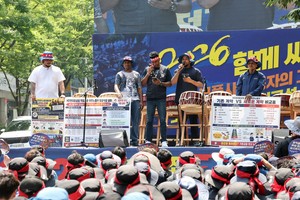
Exclusive: HD Hyundai Heavy Industries union to add migrant worker demands to wage talks
Union preparing separate migrant worker agenda amid deadlocked negotiations Demands to include equal bonuses, contract reforms and employment stability Shipbuilding labor disputes seen stretching into year-end Amid stalled wage and collective bargaining talks at HD Hyundai Heavy Industries, the union is set to present the company with an additional set of demands concerning migrant workers. The move could push the already deadlocked negotiations — marked by partial strikes and a high-altitude sit-in protest — well into year-end. Deadlocked HD Hyundai Heavy to face new migrant worker agenda The HD Hyundai Heavy Industries union is discussing whether to add migrant worker-related items to the demands it is currently negotiating with management, according to reporting Friday. The demands currently under discussion between the two sides contain no provisions specifically addressing migrant workers. The union is weighing two approaches: adding migrant worker items to the existing list of demands, or establishing a separate branch to conduct dedicated negotiations. "We will seek legal advice and choose the most appropriate method," a union official said. The substance of the migrant worker demands has already been decided. Chief among them is equal payment of performance bonuses — the most contentious issue in this year's shipbuilding industry wage talks. The union also plans to call for improved employment stability through reforms to short-term contract structures, as well as greater transparency in the criteria used to calculate vacation allowances and homeward-journey travel expenses. Over 200 migrant workers join subcontractor union this year Migrant workers at HD Hyundai Heavy Industries are currently enrolled in a subcontractor union rather than the primary union. More than 200 joined collectively in July after the company pushed through changes to migrant workers' employment contracts that drew strong opposition. The union estimates that about 1,600 migrant workers are directly employed by HD Hyundai Heavy Industries. The primary union maintains, however, that migrant workers — regardless of their subcontractor union membership — have the right to bargain directly with the primary contractor. Because foreign union members are under contract directly with the primary contractor, the union argues the so-called "Yellow Envelope Act," which grants subcontractor unions the right to bargain with primary contractors, does not apply to their case. In other words, the union contends migrant workers can demand direct negotiations without first obtaining a ruling from the Labor Relations Commission recognizing the primary contractor as their employer. A legal expert cautioned that such a move would require the union to file a request with the Labor Relations Commission for separate bargaining units. "However, there is no precedent for a migrant worker union applying directly to a primary contractor for negotiations, so it is difficult to say whether such a request would be accepted," the expert said. Shipbuilding wage talks set for prolonged standoff through year-end Adding a migrant worker agenda to the HD Hyundai Heavy Industries talks is expected to deepen and extend the labor-management standoff. This year's shipbuilding industry wage negotiations have been far more severely deadlocked than in previous years. The union chapter heads at both HD Hyundai Heavy Industries and Hanwha Ocean are currently staging high-altitude sit-in protests atop cranes at their respective sites. A joint news conference by the two unions was scheduled for Friday afternoon. Strike action has continued in parallel. The HD Hyundai Heavy Industries union staged seven-hour partial strikes daily at its Ulsan headquarters and other sites from Monday through Friday. Separately, the head of the Mipo committee within the HD Hyundai Heavy Industries union — who had been on a hunger strike to protest labor condition adjustments following HD Hyundai Heavy Industries' absorption merger of HD Hyundai Mipo — was taken to hospital on Thursday, 14 days into his fast. Both companies have held dozens of bargaining sessions with their respective unions but have failed to reach agreement. HD Hyundai Heavy Industries has conducted 26 rounds of negotiations to date, while Hanwha Ocean has held 29. In the case of HD Hyundai Heavy Industries, a tentative agreement reached on Sept. 30 — covering a base pay increase of 120,000 won ($91), a lump-sum payment of 11 million won and a 200 percent bonus — was ultimately rejected by union members because it fell short of their original demand for a performance bonus equivalent to 30 percent of operating profit.
Oct. 23, 2026
-
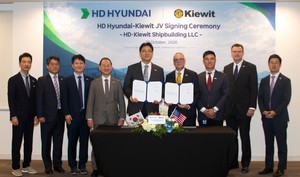
HD Hyundai to build advanced smart shipyard in US with Kiewit
JV with America's largest EPC firm signed Thursday HD Hyundai to bring shipbuilding expertise to US soil for first time; operations targeted for 2029 HD Hyundai will establish a joint venture with Kiewit, the largest engineering, procurement and construction company in the United States, to build a shipyard on American soil. HD Hyundai announced Friday that it signed the agreement with Kiewit on Thursday (local time). The signing ceremony was attended by Choi Han-nae, head of planning at HD Korea Shipbuilding & Offshore Engineering, and Chad Johnson, CEO of Kiewit Maritime, along with other senior executives from both companies. The two firms have been discussing joint production arrangements in the United States since signing a strategic partnership in July. The joint venture will operate under the name HD Kiewit Shipbuilding, combining HD Hyundai's world-class shipbuilding technology and shipyard management expertise with Kiewit's large-scale EPC execution capabilities. HD Kiewit Shipbuilding plans to break ground in 2027 and begin full operations in 2029 at an industrial site in the United States. The facility will be the first to adopt HD Hyundai's Future of Shipyard model. The Future of Shipyard, or FOS, is HD Hyundai's smart shipyard initiative in which every stage of production — from digital twin technology and automated manufacturing systems to robotic welding — runs on a data-driven basis. Through the model, HD Hyundai also aims to address the shortage of skilled workers in the US market. HD Hyundai has emphasized that it is building an entirely new shipyard rather than acquiring an existing, aging one. "The new shipyard will accelerate the expansion of shipbuilding capacity and the development of a shipbuilding ecosystem in the United States, and contribute to the revitalization and strengthening of the American shipbuilding industry," a company official said. Once fully operational, the shipyard is expected to employ about 3,000 workers locally. Going forward, HD Kiewit Shipbuilding plans to pursue business opportunities in US Navy auxiliary vessels and commercial shipping, while also exploring the manufacture and supply of ship blocks and modules to American shipyards. The venture also intends to expand its cooperation into port infrastructure over time. "The launch of HD Kiewit Shipbuilding is an important milestone that demonstrates HD Hyundai's commitment and vision as a strategic partner for the US shipbuilding industry," Choi said. "We will pool our capabilities to contribute to the revitalization of American shipbuilding and the expansion of Korea-US shipbuilding cooperation, and continue to identify new business opportunities." Johnson said Kiewit would provide the workforce, facilities and know-how needed for this broad, large-scale project. "Combined with HD Hyundai's world-class shipbuilding expertise, we expect this to be an opportunity to establish a modern shipyard in the United States," he said.
Oct. 23, 2026
-
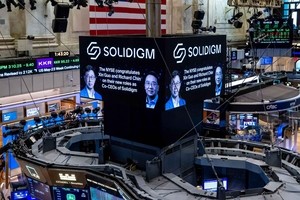
SK hynix vows to find new funding path for Solidigm after scrapping NASDAQ IPO
US IPO withdrawal eases dilution concerns New funding options for Solidigm in focus Surging AI server NAND demand raises expansion pressure 'Expanding production capacity remains key priority' SK hynix's abrupt withdrawal of its US subsidiary Solidigm's planned NASDAQ listing has eased shareholder concerns over equity dilution from a dual listing, but the move has narrowed the company's options for raising external capital — putting the spotlight on how it will fund future investment. In a statement posted to its newsroom Friday, SK hynix said the IPO had been "one of the options considered to secure new growth capital for Solidigm and enhance shareholder value," offering its first public explanation for why it had pursued a US listing. The company said it had believed that a successful IPO, if Solidigm received a fair market valuation, would allow the market to properly recognize the subsidiary's growth potential. SK hynix had also expected that attracting external capital through the IPO would boost its consolidated cash flow, giving it more room to fund facility investment while simultaneously strengthening shareholder returns through dividends and share buyback and cancellation. With the listing now scrapped, however, the door to external financing through an IPO has closed, leaving the search for alternative funding sources as the company's next challenge. Solidigm is a US entity SK hynix established in 2021 after acquiring Intel's NAND flash memory business for 10 trillion won ($7.54 billion). The company posted losses running into the trillions of won through 2023 but has been profitable since 2024. Solidigm has since established itself as a key NAND player in the US market, driven by high-capacity enterprise solid-state drives — a product in strong demand across AI data center deployments. As storage demand from AI data centers surged and existing production facilities began hitting their limits, the need for capacity expansion came to the fore. Reports emerged last month that SK hynix was exploring plans to build a new NAND factory in New York state. Against that backdrop, both internal funding and external capital-raising emerged as options for financing Solidigm's facility investment. The appointment of Goldman Sachs and Morgan Stanley as lead underwriters had signaled a tilt toward the external route. But the IPO ran into shareholder resistance. Issuing new shares in the listing process would have diluted existing shareholders' stakes and redirected a portion of Solidigm's net profit — previously flowing to SK hynix shareholders — to new investors. Some argued that SK hynix's strong earnings in recent years meant it already had sufficient cash on hand to fund the expansion without tapping external markets. Lee Nam-woo, chairman of the Korea Corporate Governance Forum, said SK hynix's cash holdings would reach 132 trillion won by year-end. "If tens of trillions of won are needed for Solidigm's capital expenditure, SK hynix — which is flush with cash — could simply inject funds into Solidigm through its AI company," he said. With cash reserves expected to exceed 130 trillion won, critics questioned why the company would pursue an IPO to raise just $10 billion in external financing. SK hynix said it would halt the listing process for Solidigm but continue exploring ways to secure investment capital for its growth. "Expanding Solidigm's production capacity and strengthening its competitiveness remain important priorities," the company said. "SK hynix will continue to review the timing, scale and method of investment financing, and will persistently explore a range of options that can simultaneously advance Solidigm's growth and enhance returns for existing shareholders."
Oct. 23, 2026
-
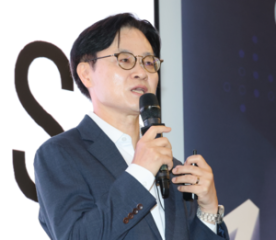
Minister Kim calls for Korea-Japan solidarity to counter supply chain risks from US-China rivalry
Korea, Japan business groups hold 33rd Korea-Japan Business Conference Leaders pledge cooperation on trade, energy and regional depopulation Minister of Trade, Industry and Energy Kim Jung-kwan called on Korean and Japanese business leaders to speak with one voice in response to the shifting global trade order. Business leaders from both countries agreed to coordinate on trade environment changes and energy supply chain instability, as well as on addressing regional population decline driven by low birth rates and aging. The Korea Federation of Enterprises and Japan's Keidanren held the 33rd Korea-Japan Business Conference on Friday at the FKI Tower Conference Center in Yeouido, Seoul, adopting a joint statement centered on those commitments. Held under the theme "A New Horizon for Korea-Japan Economic Cooperation — The Dawn of a New 60 Years," the conference brought together business leaders from both countries to share economic outlooks and discuss cooperation on key issues. In his keynote address, Kim said "the deepening US-China strategic competition and geopolitical instability are expanding uncertainty across global supply chains," and called on the two countries to overcome shared challenges through strategic solidarity. Kim said cooperation should focus on strengthening economic security — including resource procurement and supply chain stabilization — while also presenting a unified position on the evolving trade order. He also proposed exploring cooperation in physical AI. Korea Federation of Enterprises Chairman Ryu Jin said in his opening remarks, "If the past 60 years were largely about crossing the Korea Strait back and forth, I hope the next 60 years will be a new era of cooperation where we look beyond the horizon together." He put forward three priority areas for bilateral cooperation: international norms and economic security cooperation, supply chain and energy security, and responses to shared social challenges. Specifically, he called for joint responses to US trade policy and digital regulation, and for cooperation on South Korea's accession to the Comprehensive and Progressive Agreement for Trans-Pacific Partnership, as well as on setting technology standards and data rules for advanced industries. He also called for establishing mutual support frameworks for supply chain emergencies involving key goods, and for pursuing tangible cooperation in LNG and crude oil. He proposed that both sides work together to address structural social crises including low birth rates, aging, regional depopulation and labor shortages. Keidanren Chairman Tsutsui Yoshinobu said "it is essential for Korea and Japan to deepen and expand multilateral economic agreements such as WTO reform and the Regional Comprehensive Economic Partnership and CPTPP," adding that he strongly looks forward to South Korea applying to join CPTPP. In the session on international cooperation and multilateral coordination, participants agreed that both countries should work together to restore a WTO-centered trade order, support South Korea's CPTPP accession, and establish international rules on cross-border data flows and AI. Participants also called for the early resumption of the Korea-US-Japan Business Dialogue to deliver a joint position to the US government and Congress. The session on energy and resource security and supply chain resilience highlighted the need for cooperation in hydrogen — including identifying business opportunities and developing certification, standards and safety frameworks. On LNG, participants discussed strengthening emergency volume exchanges between Korea Gas Corporation and Japanese energy company JERA, and expanding such arrangements to third-country transactions. In critical minerals, cooperation on stockpiling and crisis response through the Korea-Japan Supply Chain Partnership was also proposed. The session on shared social challenges — including regional revitalization — spotlighted regional industry development as a solution to low birth rates, aging and the concentration of population in the greater Seoul area. Participants discussed a mutual-benefit model that would identify high-potential regional companies and commercial districts, connect them with financial support, and expand market access through the networks of financial institutions and retail companies in both countries. A proposal was also made to invite regional companies to the Korea-Japan Startup Cooperation Forum — set to resume next year — to expand business and investment opportunities with companies and investors from the other country. The Korea Federation of Enterprises and Keidanren also agreed to strengthen their role as a mutual cooperation platform supporting the economic activities of companies in both countries, with plans to use each organization's networks to broaden exchanges and business opportunities with local business communities.
Oct. 23, 2026
-
Kumho Tire joins Netflix Korea's 10th anniversary festival as official partner
Interactive events at Sangam Culture Depot Safety and immersion guide videos produced Kumho Tire announced Friday that it will participate as an official partner in "Netfljanchi," Netflix's offline fan festival marking the 10th anniversary of its Korean service, which runs for two days starting Saturday at the Sangam Culture Depot in Mapo-gu, Seoul. "Netfljanchi" is an offline fan event Netflix organized to celebrate a decade of service in Korea. The festival features audience participation programs built around popular Netflix content, along with celebratory performances. Kumho Tire supported the production of a "safety viewing guide" and an "over-immersion guide" video to help attendees enjoy the event safely and comfortably. The videos, created in collaboration with Netflix, are available at the venue and on Kumho Tire's official YouTube channel, "Xtra TV." The company will also run interactive events featuring its brand characters throughout the festival. Kumho Tire became the first domestic company to sign a brand partnership with Netflix, doing so in March. It is currently running a three-phase annual campaign called "Kumho Tire Net! Guide," which uses the company's original characters. The campaign draws on popular Netflix intellectual properties — following "Squid Game" with "Single's Inferno" — to communicate the brand's core value of safety in an approachable way and strengthen engagement with the MZ generation. At this event, the company plans to join in celebrating Netflix Korea's 10th anniversary while offering attendees a distinctive brand experience. "We hope customers will create special memories together with Kumho Tire's characters at this event," said Yoon Min-seok, executive director of Kumho Tire's global marketing division. "We will continue to expand our communication with customers through marketing activities tied to a wide range of content." Meanwhile, Kumho Tire has deployed its official characters — "Ttoro" and "Roro," introduced in 2011 — across a variety of marketing initiatives, including in-theater emergency evacuation announcements and digital content. More recently, the company has continued its collaborative campaign with Netflix while also running a dedicated Instagram account for the characters to engage with consumers.
Oct. 23, 2026
MOST READ
- 1Hyundai Mobis to develop robot semiconductors for Atlas humanoid
- 2Anpanman rolls out to all CJ Olive Young stores with limited-edition collabs from 30-plus brands
- 3Korean woman's mugshot goes viral in US after DUI arrest in Georgia
- 4Theater actor Kim Hyun-i asks public to stop sharing her photos after mix-up with late stunt performer of same name
- 5‘Blockchain won’t replace banks — integration is the key‘: Bankfrick
- 6Paper straws more harmful than plastic? Study finds 6 times higher cancer risk, double the acidification
-
WORLD
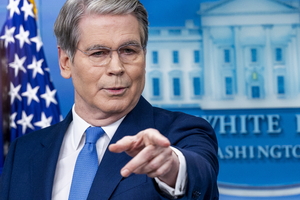
US warns of punishment for anyone enabling Iran's Strait of Hormuz toll scheme
-
INDUSTRY
Toyota union puts productivity first; Hyundai Motor union demands bigger share of profits
-
FINANCE
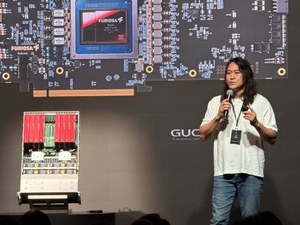
National Growth Fund to invest $531M in FuriosaAI, which rebuffed Meta's $800M takeover bid
-
INDUSTRY
Korea Shipowners' Association holds amateur baduk tournament for Maritime Day