
- HOME
- SMB·BIO
-
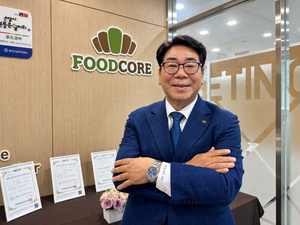
'I was ashamed of my past as a child laborer — but telling it all lifted a weight off my shoulders': Foodcoa Chairman Kim Young-sik
Eldest of five siblings, father a Guro Industrial Complex worker — seven in a hillside shanty From child laborer to civil servant exam passer: 'I hid my past, but telling it all made me feel lighter' CEO Kim Jun-hu: 'At first I hated throwing away bread that fell on the floor' — a three-generation legacy of honesty "It was a kind of shameful past for me. So I kept it hidden. But once I let it all out, it felt like putting down a heavy load I had been carrying on my shoulders my whole life." Kim Young-sik, chairman of food company Foodcoa, opened up about his childhood Tuesday at the company's factory in Anseong, Gyeonggi Province — stories he had kept to himself for a long time. They were stories of a boyhood spent in a hillside shanty and of working as a child laborer to earn money. Behind the career of a man who now leads a food company that posted 143 billion won ($104 million) in consolidated sales last year lies a long-suppressed memory of poverty. Kim's father was a worker at the Guro Industrial Complex in Seoul, laboring there in the early days of industrialization when factories producing wigs, garments and shoes for export were clustered in the area. Kim was born the eldest of five siblings. His parents and the five children — seven people in all — lived together in a hillside shanty. "We were dirt poor. My father had little education and worked in a factory," Kim recalled. "But he was a very strict man. He hated lying and anything dishonest." Poverty drove the young Kim into the workforce. It was an era when part-time jobs of the kind teenagers can easily find today were scarce. Kim worked at various sites as a child laborer from an early age. But he did not stay there. Telling himself he could not go on living that way and needed to study more, he returned to his books and ultimately passed the civil servant examination. He then went to work for Japan Tobacco, selling the then-popular cigarette brand Mild Seven. Frequent business trips to Japan later became the turning point that steered his life toward the food industry. Every time he walked into a Japanese convenience store, what caught his eye was shelving packed with bread, desserts and other food products. Watching the convenience store food market expand in Japan, Kim saw potential for the same growth in Korea's convenience store food and bakery sectors. The shifts he observed in Japan's convenience store food market — glimpsed during trips made to sell cigarettes — became one of the reasons he eventually turned his attention to the food business. Kim acquired Foodcoa in 2009, taking over a company that was struggling financially and building it up. Combined consolidated sales for Foodcoa and its affiliate Joyfood reached 143 billion won last year. Even after succeeding as a businessman, he did not readily speak about his early years. He gave numerous media interviews over the years, but they focused mainly on his life after starting the business. The years before his time as a child laborer were almost entirely unknown. "I went through an extremely poor childhood, and I wondered whether there was any need to talk about it," Kim said. "I thought of it as a shameful past, so I kept it hidden." What changed his mind was a recent request from a television program. He declined at first. The production team was interested in his life before he became a businessman and came all the way to Anseong to see him. He agreed to a 30-minute meeting, and after talking it through, decided to appear on the show. Filming lasted about six days. During that time, Kim laid out his life from the beginning for the first time — from his days in the shanty to his years as a child laborer — things he had never shared publicly before. An unexpected change came after filming wrapped. Pointing to both his shoulders with his right hand, Kim said, "After telling it all, what had been weighing me down was gone." He rolled his shoulders and added, "It felt like I had been carrying a heavy load on my shoulders my whole life, but after telling my whole story, this felt lighter." "I realized I had been holding myself down," he said. "Poverty is no crime, and everyone had a hard time back then. I thought I should have spoken up sooner." Alongside the memory of poverty, another legacy Kim carries from his father is the value of honesty — a principle his father never compromised on for his children, even in hardship. "There is one thing I learned from my father: 'Even if you are poor, you must be honest,'" Kim said. "That was drilled into my head from childhood, and I tried to uphold it the same way when running the company." He said this is especially important in the food industry, where consumers cannot see the production process and manufacturers must hold themselves to their own standards. "Consumers have no way of knowing whether the ingredients that go into a product are past their expiration date," Kim said. "So the people who make food must be honest. You follow the law, you follow the rules, and you do not cut corners or use workarounds." The principle passed down from his father now carries on to his son. Kim Jun-hu, Kim's son and CEO of Foodcoa, joined the company in 2020 and spent about a year working on the production line without letting anyone know he was the chairman's son. He lived in the company dormitory alongside factory workers and stood on the production line with them. A young man who readily lifted heavy objects for his older female colleagues was a rare sight on the food manufacturing floor, and he was said to have been quite popular among the women he worked with. Father and son resemble each other closely enough that his identity might have been discovered, but on the production floor everyone wore caps, masks and sanitary uniforms, and no one recognized him. Kim Jun-hu said it was only after he moved to the office a year later that employees learned he was the chairman's son. What Kim Jun-hu saw firsthand on the production floor was the same honesty his father had always preached. "The floor was always kept spotlessly clean, but even so, any bread or ingredients that fell on the floor were thrown away," he said. "The same went for anything even slightly past its expiration date. Honestly, at first I thought it was a waste." "My father always told employees to make products honestly, and that philosophy had filtered down to the workers on the floor," Kim Jun-hu said. "Seeing that with my own eyes taught me a great deal, and I am still learning from my father today." The honesty that a Guro Industrial Complex worker taught his son became the management philosophy of a businessman who started out as a child laborer — and is now being passed on to the second generation. "The smaller a company is and the tighter its finances, the more tempting it can be to cut corners — but that is precisely when sticking to principles is what keeps a business going for the long term," Kim said. "I always tell my son to be honest. It may look like a loss in the short run, but consumers will recognize it eventually. I hope our employees and my son will lead this company the same way."
Sept. 7, 2026
-
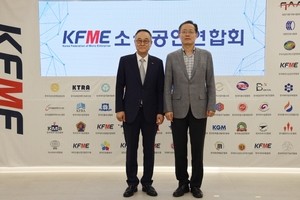
Small business owners call on minister nominee to raise simplified tax threshold to W200m
Federation calls for maintaining 1.3% VAT credit on card sales, 10 million won annual cap Seeks rule change so VAT on unpaid platform sales is due only upon actual receipt of payment Small business sentiment index at 55.6 in July; owners push for higher simplified tax threshold Small business owners have called on Lee Hyung-il, nominee for deputy prime minister and minister of the Ministry of Economy and Finance, to raise the simplified taxation threshold to as high as 200 million won ($148,000) and to keep the current value-added tax credit rate on credit card and other sales unchanged. They also asked that the VAT payment method be revised so that businesses pay VAT on sales made through online food delivery platforms and other platforms only when they actually receive the funds. The Korea Federation of Small and Medium Business said it held a meeting Monday with Lee at the federation's digital education center in Mapo-gu, Seoul, where it presented proposals on easing the tax burden on small business owners and expanding social safety nets. Lee currently serves as first vice minister of the Ministry of Economy and Finance and was nominated as deputy prime minister and minister on Aug. 30. The federation presented three core issues at the meeting: easing the tax burden and improving the taxation system, reforming rules that constrain cash flow, and building social safety nets while boosting consumer spending. On the tax front, the federation asked that the 1.3% VAT credit rate on credit card and cash receipt sales — along with the annual cap of 10 million won — be kept in place. According to the National Tax Service, small individual business owners subject to receipt issuance requirements can deduct 1.3% of the amount issued via credit card or cash receipt from their VAT liability, up to an annual limit of 10 million won. The federation also called for raising the simplified taxation threshold to as high as 200 million won. Currently, the regime applies to individual business owners whose prior-year supply value was less than 104 million won. That threshold was raised in July 2024 from the previous ceiling of 80 million won. The federation said the bar should be lifted further in light of rising prices and costs since then. The group also called for eliminating credit card payment fees on national taxes for small business owners. The National Tax Service cut the credit card payment fee rate for small business owners' VAT and comprehensive income tax from 0.8% to 0.4% in December last year. For general taxpayers, the fee ranges from 0.4% to 0.8% of the tax amount depending on the type of card. The federation said a credit extension system similar to the one used for local taxes should be introduced to further reduce the burden on small operators. To stimulate consumer spending, the federation proposed extending the 40% income deduction rate currently applied to traditional markets to purchases made at general small business establishments. It also asked the government to consider introducing a minimum income guarantee for small business owners whose livelihoods have been squeezed by fixed costs. "If neighborhood commercial districts collapse, we cannot expect a healthy recovery of the national economy," federation Chairman Song Chi-young said. "We hope the proposals we have put forward will translate into new policies at the Ministry of Economy and Finance, so that small business owners can once again hold onto hope and focus on their work." Lee said supporting the management stability and growth of small businesses is essential to easing economic polarization. "I will make every policy effort to ensure that the warmth of growth reaches all small business owners," he said.
Sept. 7, 2026
-

Yamaha Motorcycle offers free emergency inspections for flood-hit riders in Geoje
Korea Motor Trading conducts intensive checks on flood-damaged vehicles in Geoje Delivery riders, whose livelihoods depend on their bikes, given priority Service ran for three days from Aug. 24 at the Geoje branch Korea Motor Trading, the official importer of Yamaha motorcycles in South Korea, said Monday it had carried out free emergency inspection services for flood-damaged vehicles in Geoje following recent heavy rainfall. The company ran the service at its Geoje branch from Aug. 24 to Aug. 26 to help affected riders return to their daily routines and stabilize their livelihoods as quickly as possible. The torrential rains left numerous Yamaha motorcycles in the Geoje area submerged, while others sustained damage to their drivetrains and electrical systems from being ridden through severe weather. Delivery scooters were particularly in urgent need of attention, as riders continued operating them in poor conditions to earn a living. Vehicles brought in underwent thorough diagnostics by certified technicians, with the company focusing on fast turnaround to minimize inconvenience for riders. "We hope this inspection service was at least a small help in getting Yamaha riders back on their feet after the heavy rains," a company official said. "Yamaha will always be by your side and support safe riding."
Sept. 7, 2026
-
Hansol HomeDeco expands design lineup for Ultra engineered flooring
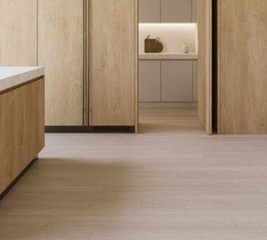
Total of 20 patterns now available, including oak, walnut and teak Hansol HomeDeco has expanded the design pattern lineup for its Ultra engineered flooring to 20 options. Ultra is a plywood-core engineered floor featuring a high-pressure laminate surface layer, designed to resist the dents and scratches of daily use. The refreshed lineup is distinguished by a wider range of oak patterns in varied color tones to reflect the latest interior design trends. The company said the signature "Infinity Oak" and "Infinity Gray" patterns in particular reproduce the deep, natural grain of real wood to achieve a surface texture closely resembling solid timber. Alongside this, the product series incorporates solid-wood patterns such as walnut and teak, as well as color patterns including deep brown, white and black, bringing the total to 20. The company added that releasing two sizes — 95 mm x 800 mm and 165 mm x 1,205 mm — broadens customer choice. "We minimized repeating patterns on individual planks so that when installed over a large area, the same design does not recur in a way that looks artificial," the company said. "By applying patterns that blend naturally with our furniture and wall materials, we have raised the overall design quality of the entire space."
Sept. 7, 2026
-

Kyung Dong Navien launches two sleep mats with detachable Australian wool covers
Company says products create a comfortable sleep environment through warmth and breathability Kyung Dong Navien has launched two sleep mat products — the Navien Sleep Mat Hot Water and the Navien Sleep Mat Carbon — both featuring covers made with Australian wool. The new products retain the core functions of the existing sleep mat lineup while upgrading the cover material for an improved user experience. The cover uses a soft cotton-blend fabric, while the filling uses Australian wool, a material commonly found in premium bedding. The wool filling maintains a plush, cushioned feel over time thanks to the natural elasticity and resilience of wool. The company said the material's moisture-wicking and breathable properties help sustain a comfortable sleep environment throughout the night. The Sleep Mat Hot Water replaces the previous zipper-style cover with a pad-style design to improve ease of use. The cover can be placed and secured on top of the mat with minimal effort, making it easy to attach, remove and wash. The mat's key feature, AI Sleep Mode, analyzes the user's sleep stages based on breathing sounds detected by a smartphone and automatically adjusts the mat's temperature accordingly. The company said the mode lowers the temperature during REM sleep — when the body becomes more sensitive to temperature changes — to maintain a comfortable environment and promote deeper sleep. "Consumers who want warm, cozy heat should choose the Sleep Mat Hot Water, while those who prioritize convenience should go with the Sleep Mat Carbon," Kyung Dong Navien said.
Sept. 7, 2026
-
Coway launches 'Cafe Ice Water Purifier' with brewing technology
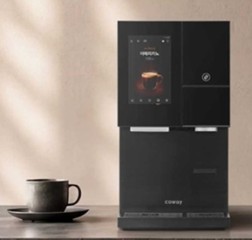
Company says new product focuses on delivering high-quality coffee flavor Coway has launched a new "Cafe Ice Water Purifier" featuring brewing technology. The product focuses on delivering authentic coffee flavor, supporting everything from capsule coffee to drip coffee. Unlike conventional coffee machines that accept only a single capsule format, the new model uses a swappable container structure to broaden capsule compatibility. Three dedicated containers are available — one for Nespresso-compatible capsules, one for Dolce Gusto-compatible capsules, and a custom capsule container for ground beans — allowing users to brew their preferred coffee. A dedicated brewing faucet attachment also enables drip coffee preparation. The coffee extraction unit features a detachable modular structure, allowing users to remove and clean the capsule container and coffee faucet tip at any time. "The product applies professional brewing technology found in high-end coffee machines to deliver a refined coffee flavor," Coway said. "Pre-infusion technology is built in, saturating the grounds with low-pressure water before extraction to produce a uniform, full-bodied taste. A bypass function is also included, adding water separately after espresso extraction to preserve the aroma and flavor." The company also said it partnered with the Korea Coffee Association to develop optimal brewing recipes tailored to different bean characteristics. When the dedicated brewing faucet is attached, the machine automatically adjusts water temperature, volume and brewing time based on the roast level and quantity of the beans, producing drip coffee suited to their profile with a single button press. The Cafe Ice Water Purifier is also equipped with a high-capacity ice-making function for on-demand cold beverages. Using Coway's proprietary dual rapid ice-making system, the unit can produce up to about 5.1 kilograms — roughly 580 pieces — of ice per day.
Sept. 7, 2026
-
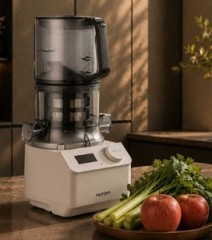
Hurom launches hands-free juicer H90
Company says the machine operates hands-free from juicing to cleaning Kitchen appliance maker Hurom will launch its hands-free juicer, the H90, on Sept. 14. The product is designed to operate without user intervention during juicing — no need to feed or push ingredients through. The H90 applies what Hurom calls a "true hands-free" concept, minimizing user involvement from ingredient preparation through to the completion of juicing. Once ingredients are loaded, the machine automatically detects and monitors the juicing status and adjusts its operation accordingly. The unit also supports quick rinsing and is made from dishwasher-safe materials. Hurom said the H90 features a smart interface designed to help users build healthy habits. "First, you simply place whole ingredients into the 2.5-liter mega hopper, which is 38 percent larger than previous models," the company said. "The spiral blade then evenly mixes and automatically cuts through everything without leaving residue, while the core drive engine and multi-screw juice any ingredient quickly and powerfully without overheating or stalling." The company added that if an ingredient becomes jammed, the machine detects it automatically and clears the blockage by reversing rotation, then alerts the user when juicing is complete — delivering a fully automated juicing process with no user intervention required. The H90 also features the company's first electronic display with a smart interface that logs real-time juicing data and supports 18 languages, with the aim of encouraging healthy habits among users worldwide. Scanning a QR code provides recipes and usage guidance for juices, nut milks, ice cream and cooking. "Since launching our first juicer in 2008, we have sold a cumulative total of 12.89 million units across 83 countries through this year, establishing ourselves as a global leader in the slow juicer industry," a Hurom official said. "The new product sets a new standard for hands-free juicers."
Sept. 7, 2026
-
Gov't to bring physical AI factory management to small manufacturers
MSIT-developed technology to link with SME ministry's smart factory program North Jeolla, South Gyeongsang pilots to precede full logistics-production rollout in 2028 SME-focused TF to pursue joint R&D in defense, pharma-biotech and K-consumer goods The government will combine the Ministry of Science and ICT's "AI Factory Manager for All" program with the Ministry of SMEs and Startups' smart factory support initiative to accelerate the adoption of physical AI in small and medium-sized manufacturers. Under the arrangement, the science ministry develops and validates physical AI technology while the SME ministry applies it directly to factory floors. The two ministries visited KAIST's physical AI demonstration lab Monday and held a roundtable with technology suppliers and manufacturing companies to discuss ways to promote the physical AI transition across small and medium-sized manufacturing sites. The core of the plan is to connect the two ministries' programs, which have until now operated separately — one focused on technology development, the other on factory-floor support. The science ministry will gradually expand access to physical AI full-stack solutions developed through ongoing regional pilots in North Jeolla and South Gyeongsang provinces, making them available to small and medium-sized enterprises. The SME ministry will link those technologies to its smart factory rollout program to support actual production-line deployment and validation. The science ministry's "AI Factory Manager for All" will begin this year with consulting services for introducing autonomous mobile robots and automated guided vehicles on individual logistics segments, then broaden its scope over time. In 2027, the program will expand to cover consulting on mixed-equipment deployment across entire logistics operations and the provision of precision manufacturing data. From 2028, it plans to offer integrated operations management consulting and systems spanning the full logistics and production process. The SME ministry will create a dedicated support program allowing small manufacturers to use the "AI Factory Manager for All" service and the smart factory construction program simultaneously. Standout results from the pilot process will be made available through the "Manufacturing AI 24" platform, which connects manufacturing data, solutions, technology suppliers and government support programs. The collaboration also extends the SME ministry's existing smart manufacturing policy agenda. Following the "AI-Based Smart Manufacturing Innovation 3.0 Strategy" announced last year, the ministry this year drew up a strategic technology roadmap for smart manufacturing and selected seven strategic fields and 49 promising technology items centered on AI and digital twins. In July, it also introduced for the first time in South Korea a special industrial classification system for smart manufacturing technology companies, including those in manufacturing AI. Beyond factory-floor application, the two ministries will pursue joint research and development in physical AI. The science ministry will lead development of core foundational technologies targeting areas including national security, pharmaceutical biotech, climate technology and K-consumer goods, while the SME ministry supports application and validation that reflects manufacturing demand and commercialization potential. The Physical AI Alliance, whose second cohort launched in June, will also serve as a link for supporting small manufacturers. A dedicated TF for small and medium-sized manufacturers will be formed within the alliance — which brings together related ministries, research institutions, industry associations and companies — to identify on-site needs and connect technology suppliers with manufacturers seeking solutions. Monday's roundtable was attended by technology suppliers including Rainbow Robotics, Persona AI, Pebblous and Impix, as well as manufacturers Baekje Food and New Hitech. Participants called for a sustained cooperation framework to connect supply and demand companies, better data utilization infrastructure, specialist workforce training and stronger coordination among government support programs. Noh Yong-seok, first vice minister of SMEs and Startups, said building verified leading models that companies can benchmark is essential for small manufacturers to quickly adopt and use physical AI. "We will concentrate our policy resources on spreading the results of the mega-project led by physical AI to small and medium-sized manufacturing sites," he said. Ryu Je-myeong, second vice minister of Science and ICT, said that for physical AI to deliver real results on the factory floor, it is important to build a system that connects with manufacturing demand and leads to validation and wider adoption.
Sept. 7, 2026
-
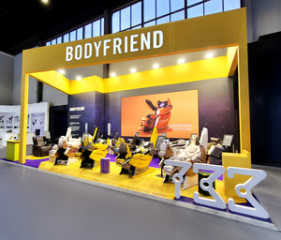
Bodyfriend, Cuckoo, Athom, Hats target European market with niche appliance strategy at IFA 2026
932 Chinese firms converge on IFA as Korean participants fall to 79 Bodyfriend, Cuckoo lead with AI healthcare and K-food appliances Athom, Hats enter food-waste processor market amid growing competition South Korean mid-sized and small appliance makers are making their presence felt at IFA 2026, one of the world's three largest consumer electronics fairs. Rather than competing head-on with Chinese manufacturers in traditional large-appliance categories such as TVs, refrigerators and washing machines, the companies are focusing on niche product lines — healthcare robots, K-food cooking appliances and food-waste processors — to carve out a foothold in the European market. IFA 2026 opened in Berlin, Germany, on Thursday and runs through Tuesday, drawing more than 1,900 companies from 49 countries. The standout Korean exhibitor this year is Bodyfriend, which built its booth around healthcare products that combine AI and robotics rather than conventional home appliances. The company set up in the "Beauty Tech & Wellbeing" exhibition hall, showcasing healthcare robots and AI massage technology. Bodyfriend took home two IFA 2026 Innovation Awards — for its biosignal-analysis generative AI product "733 AI Pro" and its perineal-care massage sofa "Medical Vivaldi." While major appliance brands are extending AI into convenience features on existing products such as refrigerators and washing machines, Bodyfriend is applying AI to personalized massage and health management. The company is also differentiating itself in overseas markets with robotics technology that drives the left and right legs independently. Its generative AI-equipped products analyze conversations with users to combine massage movements and create individualized programs. Cuckoo put K-food front and center at the show. The company, which has built its overseas reputation on rice cookers, unveiled 49 models of kitchen and home appliances for the European market — including rice cookers, multi-cookers, water purifiers, coffee machines and beauty devices. A highlight was the "K-Food Maker," a cooking appliance designed for European consumers that can prepare tteokbokki, kimchi stew, ramyun and barbecue. Cuckoo said its entire initial European supply sold out. Cuckoo currently exports to 12 European countries, including Germany, Austria, the Netherlands and the United Kingdom, and said its European sales have been growing about 30 percent annually. The strategy is to build on the proven success of its rice cooker and use the spread of K-food as a springboard to expand into cooking appliances more broadly. Athom participated in IFA with food-waste processors and small appliances. Its home appliance brand Minix has been targeting the small-appliance market for one- and two-person households — a segment that larger appliance makers have largely overlooked. At this year's IFA, Minix displayed a mini dryer and food-waste processor as it tests the waters in Europe. The food-waste processor has become a key growth product for Athom. According to market research firm NielsenIQ, Minix held a 30 percent share of domestic food-waste processor sales in 2025. As of July this year, cumulative brand sales reached 550,000 units. Demand for food-waste processors is also becoming less seasonal. Athom said Minix food-waste processor sales from December 2025 through February this year rose 169 percent compared with the same period a year earlier, and were up 54 percent even against the previous summer months of June through August last year. The company said demand that had been concentrated in summer — when odors are most severe — is now spreading throughout the year. Hats also brought its food-waste processor to IFA in a bid to enter the European market. Having first participated in IFA last year, Hats expanded its lineup this year to include kitchen hoods, induction cooktops, bathroom ventilation units, sink bowls, faucets and food-waste processors. The move reflects the company's effort to shed its image as a hood specialist and reposition itself as a comprehensive kitchen solutions provider covering cooking, washing and food-waste disposal. Its exhibition space was organized into a "Cooking Zone" pairing hoods with induction cooktops, and a "Washing Zone" linking sink bowls, faucets and food-waste processors. The push by Korean companies into niche categories is driven in large part by the rapid expansion of Chinese firms at IFA. The number of Chinese exhibitors registered for this year's show rose to 932 from 691 last year — an increase of 241 companies, or 34.9 percent — accounting for nearly half of all participants. By contrast, the number of Korean companies and institutions fell 25.5 percent, from 106 last year to 79 this year, marking a second consecutive annual decline from 127 in 2024. As Chinese companies compete on sheer product volume and exhibition scale, South Korean mid-sized and smaller firms are drilling deeper into their respective specialties. Bodyfriend leads with AI and healthcare robots, Cuckoo with K-food and cooking appliances, Athom with small appliances and food-waste processors, and Hats with kitchen and ventilation products. "It is not easy for mid-sized and small companies to compete with large Chinese firms on product numbers or exhibition scale," an industry official said. "A realistic strategy for expanding overseas is to take specialized products that have proven their market viability at home, adapt them to local living environments and secure retail distribution partners."
Sept. 7, 2026
-

Daedong partners with Nonghyup to commercialize precision farming services
Nonghyup farm-work contracting participants up from 222 to 290 in a year AI machinery, precision agriculture combined to optimize staffing and equipment deployment 254.6 billion won project to serve as core business model for national agricultural AI transformation platform Daedong is teaming up with Nonghyup to commercialize a "precision farm-work contracting service" that combines AI farm machinery with precision agriculture technology. As rural aging and labor shortages drive rapid growth in Nonghyup's farm-work contracting operations, the company aims to boost efficiency by layering AI and data onto the existing labor- and equipment-based contracting model. Daedong announced Monday that it held a demonstration of AI farm machinery and precision agriculture technology on Aug. 28 at the Rural Development Administration's Reclaimed Land Agriculture Research Center in Gimje, North Jeolla Province, for about 40 managers and field staff from local Nonghyup branches nationwide who oversee farm-work contracting. At the event, Daedong presented how its AI farm machinery, precision agriculture solutions and farm-work management platform can be applied to actual farming operations. Demonstrations covered precision soil analysis, variable-rate fertilization, precision seeding using smart seeders, autonomous and unmanned operation of AI tractors, drone-based crop growth analysis and precision pest control, and transport robots. Farm-work contracting is a service in which Nonghyup deploys farm machinery and labor on behalf of farming households that request tasks such as tillage, seeding, fertilizer application and harvesting. Demand for the service has been growing as rural aging and labor shortages worsen. The number of Nonghyup branches participating in the farm-work contracting program rose about 31 percent, from 222 in 2024 to 290 last year. The area covered under upland crop contracting also grew about 19 percent over the same period, from 161,000 hectares to 191,000 hectares. Because farm work tends to concentrate in specific windows of the growing season, the larger the contracting operation grows, the more critical it becomes to have systems in place for timely equipment and personnel deployment and schedule management. Daedong's precision farm-work contracting model integrates AI farm machinery, a farm-work management platform and precision agriculture solutions into the existing labor and field operations framework. Farming requests and field data are managed through the platform, which is then used to draw up work plans and assign operators and machinery. Work schedules, progress updates and results data are also accumulated in the system. Variable-rate fertilization — applying different amounts of fertilizer to different plots depending on need — is one of the key technologies involved. By analyzing soil conditions and crop growth to apply inputs only where and in the quantities required, Daedong expects the approach to improve both the efficiency of agricultural input use and overall work quality. The initiative is also tied to the Ministry of Agriculture, Food and Rural Affairs' National Agricultural AI Transformation Platform construction and operation project, in which Daedong serves as the lead company. The Daedong consortium was selected as the final operator for the project in July. Total project investment stands at 254.6 billion won ($188 million), with Daedong, LG CNS, Daedong Agtech, Daeyoung GS and Art Farm Agricultural Corporation among the participants. The project centers on connecting an AI and data platform, AI greenhouses and precision farm-work services into a single agricultural AI transformation framework. A 21.6-hectare AI greenhouse will also be built in Muan, South Jeolla Province. The project consortium has set a target of generating cumulative sales of 1.53 trillion won over 20 years through business models that include the precision farm-work service. Daedong plans to use data accumulated through the National Agricultural AI Transformation Platform — covering farms, farmland, soil, crop growth, weather and farm machinery — to inform work planning and precision prescriptions. Work data generated in the field will in turn feed back into the platform, creating a cycle designed to improve the accuracy and operational efficiency of the farm-work contracting service. "We will work with Nonghyup branches nationwide to bring the AI farm machinery and precision agriculture technology Daedong has built up into actual farming operations across the country," said Park Yun-seong, head of Daedong's precision agriculture division. "We will develop a business model that raises both the efficiency and quality of farm work, built on the foundation of the National Agricultural AI Transformation Platform."
Sept. 7, 2026
-
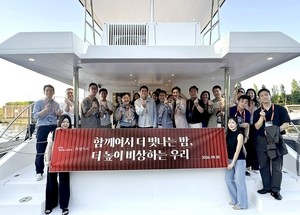
Gyowon Tour strengthens airline partnerships at Han River fireworks event
FSC, LCC and foreign carrier representatives gather to discuss cooperation, market trends Event follows January new year meeting, deepening ties with aviation industry Long-term partnerships to sharpen travel product competitiveness Gyowon Tour is stepping up efforts to deepen cooperation with domestic and international airlines, pursuing a strategy to secure stable seat allocations and sharpen the competitiveness of its travel products. The travel company announced Monday that it hosted the "Gyowon Tour Airline Appreciation Night" on Saturday along the Han River, with representatives from full-service carriers, low-cost carriers and foreign airlines in attendance. Gyowon Tour President and CEO Jang Dong-ha joined company executives and airline representatives at the event. Attendees shared a dinner cruise on the Han River, exchanging views on cooperation strategies and travel market trends, before watching the Yeouido fireworks festival together. This was the second dedicated networking event Gyowon Tour has held with airlines this year. In January, the company invited representatives from major domestic low-cost carriers and foreign airlines to a new year meeting, where it shared its business direction for the year. At the time, Gyowon Tour identified strengthening its premium package tour lineup as a key priority, announcing plans to improve route and seat management efficiency through airline partnerships and diversify travel products by theme. For package tour operators, airline partnerships are a critical factor shaping both product offerings and price competitiveness. The ability to secure seats on popular routes during peak seasons expands the range of products a travel agency can offer, making long-term cooperation between travel companies and airlines increasingly important. "Partnerships with airlines are a vital foundation for the stable operation and competitiveness of our travel products," a Gyowon Tour official said. "We will continue to build long-term partnerships with airlines and use them as a basis for consistently delivering competitive products."
Sept. 7, 2026
-
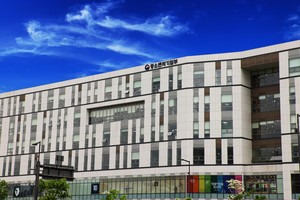
Gov't to transfer 3,563 dormant public-institution technologies to small firms free or at low cost
SMEs Ministry, Finance Ministry, trade ministry, IP office to run cross-ministry guide through Oct. 19 63 public institutions, including Korea Hydro & Nuclear Power and Korea KPS, covered Application procedures and technology databases to be consolidated for easier SME access The government will transfer 3,563 technologies held by public institutions but left unused to small and medium-sized enterprises free of charge or at minimal cost, while consolidating fragmented application procedures and technology databases scattered across ministries. The Ministry of SMEs and Startups, the Ministry of Economy and Finance, the Ministry of Trade, Industry and Energy, and the Korea Intellectual Property Office said Monday they will run a "cross-ministry integrated guide to free technology transfers" from Monday through Oct. 19, covering unused technologies held by 63 public institutions, including Korea Hydro & Nuclear Power and Korea KPS. The initiative covers a total of 3,563 technologies that domestic companies can receive free of charge or at low cost to develop products and services and pursue commercialization. Until now, each ministry ran its own technology transfer program on a different schedule, required different application documents, and listed technology information on separate platforms — forcing companies to search institution by institution to find what they needed. Under the new integrated guide, companies will be able to view all participating ministries' free technology transfer programs in one place by visiting any of the operating platforms — the National Intellectual Property Trading Platform, the NTB Technology Bank, or Smart TechBridge. Key programs include the SMEs Ministry's "Technology Transfer Supporters" and "Private Joint Brokerage Support Project," the Finance Ministry's "Unused Patent Sharing," and the trade ministry's "Technology Sharing." The ministries plan to link their technology and patent databases and streamline application documents. The initiative focuses on improving the distribution structure so companies can more easily find technologies that have been hard to locate. Previously, transfers of unused public-institution patents were handled through public technology trading agencies, dedicated departments at public institutions, and technology licensing offices at government-funded research institutes. The government also plans to expand incentives for technology-supplying institutions based on their free transfer track record. The aim is to encourage institutions holding technologies to take a more active role in transfers while lowering the application burden on companies to raise the actual commercialization rate. "Small and medium-sized enterprises will now be able to check free technology transfer programs spread across ministries at a glance," said Hwang Young-ho, director general for technology innovation policy at the SMEs Ministry. "We will continue to consult with related ministries on ways to ensure that excellent public technologies lead to new business models and commercialization outcomes for small businesses."
Sept. 7, 2026
-
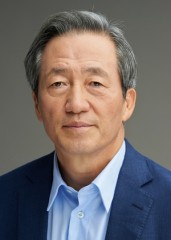
Asan Foundation donates $200,000 to Nepal flood victims
The foundation has consistently extended relief in major disasters at home and abroad, providing about 2.1 billion won ($1.55 million) in overseas aid since 2006 The Asan Social Welfare Foundation donated $200,000 Monday to support flood victims in Nepal, channeling the funds through the Korean Red Cross. The donation will be used for emergency relief and recovery efforts, including food, daily necessities and medical assistance for affected residents. The foundation has consistently provided relief funds whenever major disasters strike overseas. In 2023, it donated $400,000 through the Korean Red Cross for earthquake recovery in Turkey and Syria. Its overseas relief efforts also include support for Ukrainian refugees and ethnic Koreans in 2022, victims of the 2018 Indonesia tsunami, the 2015 Nepal earthquake, the 2013 Philippines typhoon, the 2010 Pakistan floods and the 2006 Sri Lanka tsunami — totaling about 2.1 billion won ($1.55 million) in overseas aid to date. The foundation has also consistently supported domestic disaster relief and recovery. It donated 800 million won for victims of wildfires and floods in Gangwon Province and North Gyeongsang Province between 2022 and 2025, 1 billion won for COVID-19 relief efforts in 2020, and 100 million won for wildfire victims in Gangwon Province in 2019.
Sept. 7, 2026
-

SK Magic slashes subscription fees on 5 water purifiers by half ahead of Chuseok
5 models targeted, including MEGA ICE and Two Water purifiers 1,000 consulting customers eligible for prize draw, top prize up to 1 million SK Magic points Promotion expands August ice purifier event; targets customers switching from rivals SK Magic will cut subscription fees by up to 50 percent for 18 months on five water purifier models ahead of the Chuseok holiday. The company is expanding a discount campaign it ran last month on two ice purifiers to cover its broader water purifier lineup, targeting consumers looking to replace home appliances during the holiday season. SK Magic, the health platform brand of SK Intellix, announced Monday that it will run a "Chuseok Special Promotion" through Sept. 30. The offer covers five water purifier models, including the MEGA ICE water purifier with ice and the Two Water purifier. Customers who subscribe to any of the eligible products will receive a 50 percent discount on their monthly subscription fee for up to 18 months. The company will also hold a prize draw for customers who request a product consultation during the promotional period. All consultation requests will be automatically entered into the draw, with prizes awarded to 1,000 winners. The top prize is up to 1 million SK Magic points. SK Magic is also running a "switch reward" aimed at customers currently using rival products. Those who cancel a competitor's subscription and sign up for an SK Magic product will receive up to 350,000 Naver Pay points. The promotion also covers the New Mini water purifier, the All Clean air purifier, the Full Stainless Spa bidet and the Walkerhill mattress. SK Magic has been running a series of discount campaigns to build its water purifier subscriber base. The "MEGA ICE FESTA," held from Aug. 19 to Aug. 31, offered up to 50 percent off subscription fees for 18 months on the MEGA ICE water purifier with ice and the MEGA ICE Mini. That event offered up to 30,000 Naver Pay points; the current Chuseok promotion broadens both the range of eligible products and the scope of customer benefits. "We have prepared subscription discounts and point rewards for customers considering gifts for their parents or appliance upgrades for the holiday," an SK Magic official said. "We will continue to introduce a variety of products and promotions going forward."
Sept. 7, 2026
-
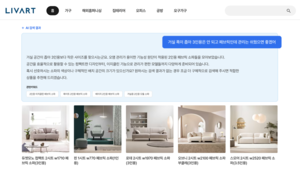
Hyundai Livart Furniture adds AI search to online mall via Plateer's Genser
AI search runs alongside existing engine via API; natural-language queries find products by size, material and more Plateer expands agentic commerce tool from fashion and food into furniture and home living Hyundai Livart Furniture is integrating AI into the search bar of its online shopping mall, allowing users to type sentences describing the size, material or ease of maintenance of a piece of furniture they want. The AI then interprets the intent and surfaces matching products. Plateer announced Monday that it has deployed its agentic commerce tool Genser Search in the integrated search function of Hyundai Livart Mall, the retailer's online store. A dedicated "AI search" menu has been added to the mall's search bar alongside the existing standard search option. Unlike conventional keyword-based search, Genser Search analyzes the meaning and context of sentences entered by users. When looking for a sofa, for example, a shopper can type multiple conditions — size, material, ease of cleaning — in a single sentence, and an AI agent processes the query to present a shortlist of product candidates. Furniture is considered a category with strong potential for natural-language search because buyers must weigh many factors at once — price, dimensions, material, color and installation space. Traditional search requires users to repeatedly adjust keywords and filters, whereas AI search lets them enter multiple conditions in a single query. Hyundai Livart Furniture chose to run AI search in parallel rather than replace its existing search engine. Plateer supplies the search engine as an API, while Hyundai Livart Furniture handles the user interface. The approach allows the AI search capability to be added without overhauling the existing service architecture. "The more conditions a category demands — like furniture — the more user needs slip through a single search term," said Yoo Min-su, head of Plateer's AI CX SaaS business division. "Genser's role is to follow that context and narrow down the candidates." "Agentic search has moved past the demonstration stage and is now live inside the actual storefronts of major commerce platforms," said Lee Sang-hoon, chief executive of Plateer. "We have entered a phase where our technological edge is translating into real adoption at home and abroad, and we intend to accelerate the expansion of deployment."
Sept. 7, 2026
-
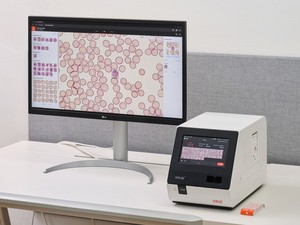
Noul's AI malaria diagnostic tool enters Benin's national disease-control program after public procurement win
20 units to be supplied first to major referral hospitals, with expansion planned nationwide Local clinical trial recorded 98.82% sensitivity, cutting test time by 20 minutes AI technology seen as answer to shortage of skilled diagnosticians in low-resource settings Noul, a South Korean company specializing in AI-based blood and cancer diagnostics, has won a public procurement contract with the Beninese government, securing official entry of its AI malaria diagnostic solution, miLab MAL, into the country's national disease-control system. Noul announced Monday that miLab MAL had been selected as the winning bid in a public procurement tender by Benin's Ministry of Health and formally adopted as a standard diagnostic platform under the country's National Malaria Control Program, known by its French acronym PNLP. Under the contract, Noul will initially supply 20 units, prioritizing major referral hospitals that bear the heaviest burden of severe malaria cases, with plans to extend supply to public health facilities across the country. The company said the deal goes beyond hospital-by-hospital sales, embedding its AI diagnostic device into the PNLP's standard response framework — the government body that oversees national disease control, including prevention, diagnosis and treatment, under the Ministry of Health. A locally conducted clinical trial played a decisive role in the national-level adoption. A study carried out last year at major university hospitals in southern and northern Benin, involving 211 children suspected of severe malaria, found that miLab MAL achieved a sensitivity of 98.82% and a specificity of 100% compared with conventional manual microscopy. The device also cut average testing time from 75 minutes to under 20 minutes. Based on those findings, Benin's PNLP officially classified miLab MAL as a point-of-care device and recommended its introduction into the country's malaria control program. Benin is a high-burden country where the entire population lives in malaria-endemic areas. According to the WHO, an estimated 5.1 million people in Benin contracted malaria in 2024 and about 9,900 died from the disease, making it a leading cause of child mortality. Conventional manual microscopy and rapid diagnostic tests have long been faulted for their limitations — inconsistent results depending on the examiner's skill level and a risk of misdiagnosis in patients with low parasitemia. The contract validates South Korean AI technology as an alternative capable of improving both diagnostic accuracy and speed in low-resource countries with weak diagnostic infrastructure. Noul said it expects the deal to serve as a springboard for expanding public procurement channels to global health organizations and neighboring African nations. The company plans to continue deepening partnerships with local public health programs as it targets the African market, which accounts for 95% of the global malaria burden. "This achievement is the fruit of Noul's AI technology being recognized as a core solution that can overcome the limitations of point-of-care diagnostics within national health systems," Chief Executive Im Chan-yang said. "Building on the official adoption recommendation and procurement contract from Benin's health authorities, we will accelerate the spread of our technology into public health markets in Africa and beyond."
Sept. 7, 2026
-
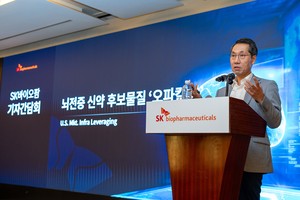
SK Biopharm arms itself with 128 Nvidia B200 chips, extending SK-Nvidia AI alliance into drug development
576 PFLOPS of computing power secured to accelerate translational research 1.1 trillion won drug deal followed by infrastructure build-out completes 'big biotech' push Holding company's AI drive and management execution converge; synergy with SK Telecom's 'Haein' cluster SK Biopharm has secured 128 units of Nvidia's next-generation Blackwell architecture-based B200 AI accelerators, building out a large-scale proprietary AI computing infrastructure. The move marks the first tangible result of the SK Group-Nvidia partnership — forged primarily around semiconductors and telecommunications — expanding into drug development. The acquisition directly channels SK Group Chairman Chey Tae-won's group-wide AI transformation drive into pharmaceutical and biotech R&D, while also accelerating SK Biopharm President Lee Dong-hoon's strategy to grow the company into a "big biotech." 576 PFLOPS secured; translational research initiative TR-AX takes shape The 128 B200 units deliver 576 petaflops per second at 8-bit low-precision (FP8) computation — roughly 0.58 exaflops — making it by far the largest self-built AI infrastructure assembled by a domestic pharmaceutical or biotech company for pure research purposes. SK Biopharm plans to deploy that computing power entirely toward TR-AX, its AI-driven translational research initiative and the linchpin of its drug development strategy. Translational research bridges preclinical findings from cell and animal studies to human clinical trials, narrowing the gap between the two stages to reduce the failure rate of drug candidates and speed up the identification of new indications. The investment aligns with a vision Lee laid out at a press conference last month for the in-licensing of cenobamate. At the time, he said AI was "not an option but a prerequisite" for becoming a big biotech, adding that the company's "ultimate and most critical goal is to focus above all on building TR-AX — a system in which the entire translational research process is run entirely by AI agents." Building on the B200 infrastructure, SK Biopharm plans to develop its own biotech- and healthcare-specific foundation model and accelerate the full R&D cycle — from target identification and candidate screening to clinical success-rate simulation. Proprietary LLM in the works; data security and open-innovation business models explored The infrastructure's applications extend well beyond the research lab. SK Biopharm plans to use the computing resources to develop a proprietary large language model for company-wide operations, aiming to maximize productivity and decision-making efficiency across the organization. Particularly sensitive data — including patient information and drug candidate details — will be processed within a closed, self-controlled infrastructure, allowing the company to proactively meet the strict data governance and security compliance requirements of global regulators. SK Biopharm also intends to open the infrastructure as an "open innovation AI platform" for joint research with promising external biotech firms, academic institutions and global research organizations. The company envisions using its computing capacity to attract global partnerships and, over the longer term, to develop new business models such as AI-based drug discovery research services. Having diversified its epilepsy commercialization pipeline through the 1.1 trillion won ($812 million) in-licensing of cenobamate, SK Biopharm has now added cutting-edge AI infrastructure to complete what it calls the two wings of its big biotech ambition. Holding company's AI push meets management execution; B200 secured ahead of rivals Some analysts say the early acquisition of large-scale AI infrastructure reflects the synergy between the holding company's aggressive AI transformation drive and SK Biopharm's solid financial fundamentals. With Chey declaring "all-round AI ecosystem expansion" as a core pillar of the group's rebalancing strategy, SK Biopharm — which has demonstrated strong cash generation through the direct US sales success of its epilepsy drug cenobamate (sold in the United States as Xcopri) — was identified as the group affiliate best positioned to lead the adoption of its AI capabilities. Earlier this year, Lee was the only CEO from a Korean pharmaceutical or biotech company to receive an official invitation to a private reception hosted by Nvidia CEO Jensen Huang at the JP Morgan Healthcare Conference in San Francisco in January — the same event at which Eli Lilly and Nvidia announced the world's first joint AI innovation laboratory, giving Lee a firsthand look at the convergence of AI and drug development. When Huang visited South Korea in June, Chey's eldest daughter, Chey Yoon-jung, head of SK Biopharm's strategy division, joined the dinner meeting at a Gangnam restaurant, drawing considerable attention. That network has now translated into tangible results through a cloud GPU-as-a-service subscription to "Haein," SK Telecom's data center cluster and the first in South Korea built on B200 chips. The pharmaceutical affiliate's ability to move quickly and secure the latest AI computing resources — in short supply worldwide — reflects tight group-level coordination and execution on AI infrastructure. "We made a preemptive investment decision based on the judgment that large-scale proprietary AI infrastructure is the critical foundation that will determine future drug development competitiveness," Lee said. "We will further strengthen TR-AX — the core capability in early-stage drug R&D — on the back of our global-standard B200 infrastructure, and dramatically improve the speed and efficiency of research and development by maximizing AI use across the entire drug development process."
Sept. 7, 2026
-

HK inno.N's Kepacab becomes world's first oral finished drug to earn global EPD certification
Registered on international platform EPD-Global, the certification quantifies environmental impact from raw materials to retail; HK inno.N says the move positions the P-CAB drug, sold in 55 countries, to meet tightening ESG demands from overseas buyers HK inno.N's gastroesophageal reflux disease drug Kepacab 50mg has become the world's first oral finished pharmaceutical product to receive an Environmental Product Declaration (EPD) certification. The company said Monday that it received the EPD certificate for Kepacab 50mg at a ceremony jointly held by EPD-Global and the International Green Sustainability Council (IGSC) in Oslo, Norway, on Wednesday (local time). An EPD quantifies a product's environmental impact across its entire life cycle — from raw material production through manufacturing and retail — in accordance with international standards, with the results independently verified and publicly disclosed. The certification is widely regarded as a product's environmental identity card. Kepacab 50mg's EPD was officially registered on EPD-Global, the internationally recognized platform, in June. Earlier, the IGSC completed an independent verification against ISO 14025 standards, while HK inno.N finished a life cycle assessment (LCA) conducted in accordance with ISO 14040 and ISO 14044. The assessment covers the manufacturing of active pharmaceutical ingredients through the production, packaging and retail of the finished drug, excluding post-consumption and disposal stages. The pharmaceutical and biotech industry had long struggled to obtain EPDs due to the absence of an officially recognized environmental assessment guideline specific to drugs. That changed in November 2025, when the British Standards Institution (BSI) published PAS 2090:2025, an international standard product category rules (PCR) framework for evaluating the environmental performance of pharmaceuticals. HK inno.N moved quickly to apply the new standard and secured the certification. The certification gives HK inno.N reliable data to meet increasingly stringent global requirements for Scope 3 carbon emissions accounting and environmental due diligence across the supply chain. The company said it is particularly well-positioned to satisfy ESG demands from buyers in Asia and Latin America, strengthening its export competitiveness. "Securing the EPD for Kepacab 50mg so soon after the establishment of a pharmaceutical life cycle assessment standard is a meaningful ESG achievement for Korea's pharmaceutical and biotech industry," an HK inno.N official said. "We will expand the assessment to cover our key product lines and build a more advanced environmental information management system across our entire portfolio."
Sept. 7, 2026
-

Korea SMEs and Startups Agency to hold 24 events at youth startup academies nationwide
KOSME to host regional entrepreneur events during Youth Week, Sept. 19–25 Investment programs include demo days in North Chungcheong, North Jeolla and closed IR sessions in Gangwon 950 entrepreneurs selected this year across standard, global and deep tech tracks The Korea SMEs and Startups Agency will run 24 programs across 19 youth startup academies nationwide, covering investment attraction, technology exchange and ESG activities to mark Youth Day and Youth Week. The agency announced Monday that it will hold tailored networking events for young entrepreneurs at its youth startup academies around the country from Sept. 19 to Sept. 25 in observance of Youth Week. The events focus on fostering growth among youth-led startups, strengthening their capacity to attract investment and promoting ESG activities tied to local communities. All 19 academies will hold a combined 24 events throughout September on schedules set by region. Investment attraction programs are among the highlights. The academies in North Chungcheong Province and North Jeolla Province will jointly host a "Dual-Impact Demo Day" to connect enrolled companies with investors. The Gangwon Province academy will hold a "Closed IR" session in partnership with regional investment institutions. A technology exchange program for deep tech startups is also on the agenda. The "Deep Tech Startup Academy Tech Exchange" will give companies in the deep tech sector a forum to share technical information and explore collaboration opportunities. The North Gyeongsang Province academy will organize an ESG activity bringing together enrolled companies and the local community, including a "Young CEO Plogging Day" for young entrepreneurs. The Youth Startup Academy was first established in Ansan in 2011 and has since expanded across the country. It currently supports entrepreneurs aged 39 or under who have been running a business for no more than three years, offering commercialization funding, startup space, education and coaching, and assistance with global expansion. This year, the program supports 950 participants. In addition to the standard track, the agency operates separate global and deep tech tracks. The deep tech academy in particular supports startups in fields such as ultra-competitive industries, emerging sectors and climate technology, providing up to 200 million won ($147,000) in commercialization funding along with investment attraction and market-entry programs. The agency said graduates of the Youth Startup Academy won 28 awards across 26 companies at CES 2026, and that the program has produced five unicorn companies and three listed firms. "We hope these events, held during Youth Week, will serve as an opportunity to sharpen the competitiveness of young entrepreneurs and spread ESG values that benefit local communities," said Jo Han-gyo, the agency's director of human resources and growth. "We will take the lead in creating spaces for young people to connect and building broader social understanding of youth policy."
Sept. 7, 2026
-
Daelim Bath's Jecheon factory named among top labor-management culture firms
Jecheon plant among 15 large-company workplaces selected by Labor Ministry Factory shares business updates with staff, runs labor-management and safety panels Daelim Bath's Jecheon factory has been named one of the Ministry of Employment and Labor's 2026 Outstanding Labor-Management Culture companies. The ministry selects companies and public institutions that have put cooperative labor-management relations into practice under the annual program. This year's 41 honorees are divided into 14 small and medium-sized enterprises, 15 large companies and 12 public-sector organizations. Among the large-company honorees alongside the Jecheon factory are Kyobo Life, Dong-A Pharmaceutical's Cheonan factory, DHL Korea, S&T Motiv, SK Trikem, Ecopro, LG Innotek, Wonik QnC and Haesung DS. The Jecheon factory said it was recognized for improving its labor-management practices and expanding workers' participation in management decisions and on-site communication. "This recognition reflects the efforts our members have made together to transform the workplace, built on mutual trust between labor and management," said Plant Manager Kim Hyeong-geun of Daelim Bath's Jecheon factory. "We will continue to listen to voices from the floor, broaden employee participation and maintain open dialogue with the local community to build an organizational culture rooted in shared growth."
Sept. 7, 2026
MOST READ
- 1KAIST develops high-performance bio-based adhesive using E. coli instead of petroleum
- 2Pope Leo XIV declines French honors and banquet, accepts only private meeting with Macron
- 3Daimler Truck unveils next-generation transport solutions at IAA 2026
- 4What was Rachmaninoff's performance fee? A 1928 price list tells all
- 5Samsung Biologics union's show of force backfires at the bargaining table
- 6APR says hair-loss treatment research published in international journal
-
WORLD

US warns of punishment for anyone enabling Iran's Strait of Hormuz toll scheme
-
INDUSTRY
Toyota union puts productivity first; Hyundai Motor union demands bigger share of profits
-
FINANCE
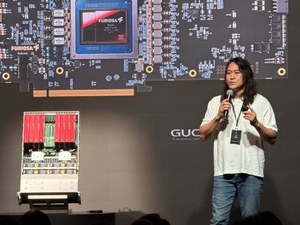
National Growth Fund to invest $531M in FuriosaAI, which rebuffed Meta's $800M takeover bid
-
INDUSTRY
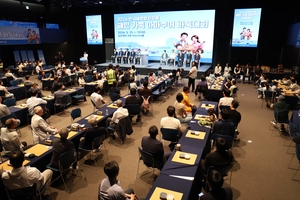
Korea Shipowners' Association holds amateur baduk tournament for Maritime Day