
- HOME
- SMB·BIO
-
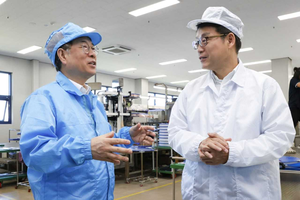
Kibo chief tours Busan chipmaker to check industrial complex regulations
Kwon Hyung-taek visits power semiconductor firm JMJeco in Busan on Tuesday Zoning limits force some manufacturing processes to outside contractors, raising costs and delays "We will pursue regulatory fixes companies can actually feel on the ground" Kwon Hyung-taek, chairman of the Korea Technology Finance Corporation, chose a power semiconductor manufacturer as the site of his first company visit since taking office. He checked on the difficulties companies face because of industrial complex move-in regulations. The Korea Technology Finance Corporation, known as Kibo, said Wednesday that Kwon visited JMJeco, a power semiconductor manufacturer in Gijang-gun, Busan, on Tuesday. He held an on-site meeting with the company. Kibo arranged the visit to hear out companies that must outsource part of their manufacturing process because of uniform restrictions on which businesses can operate within industrial complexes. The visit also aimed to examine how such regulations affect manufacturing operations on the ground. Kwon toured the production facility together with regulatory reform experts and heard about problems arising from the move-in restrictions, including higher production costs and longer production times. He also exchanged views with the company on the need to rationally improve industrial complex move-in regulations. "Through my first on-site company visit since taking office, I directly heard about the difficulties companies are actually experiencing and looked into what kind of support is needed on the ground," Kwon said. "We will continue to pursue regulatory improvements and effective support that companies can actually feel." After the meeting, Kwon met with staff from Kibo's Busan-Ulsan-South Gyeongsang and Daegu-North Gyeongsang regional offices to hear their views on organizational culture, work-related issues and safety and health matters. Kibo said it plans to continue visiting small and medium-sized venture businesses to identify regulatory and management difficulties and reflect them in policy and support programs.
Sept. 9, 2026
-

'The chairman was an artist': Hanmi Semiconductor's Kwak Dong-shin donates 5 works as 'Kwak Shin'
Aluminum sculpture 'Endless Love' donated to company Precision design, CNC machining and other manufacturing skills used in creation First solo exhibition 'Endless' runs through Tuesday at Seoul Auction's Gangnam center Hanmi Semiconductor said Wednesday that Chairman Kwak Dong-shin has donated five works titled "Endless Love," created under his artist name Kwak Shin, to the company. "Endless Love" is a sculptural piece that arranges precision-machined aluminum objects on canvas. Kwak applied manufacturing techniques drawn from the factory floor to the creative process, including AutoCAD-based design, CNC milling machines and industrial robot cutting. Hanmi Semiconductor plans to display the donated works in its offices. Kwak drew on the metal materials and precision manufacturing processes he has worked with through the semiconductor equipment business and an automobile sales business to create the pieces. The company described the works as combining "the precision manufacturing technology accumulated in the semiconductor equipment industry with artistic imagination." Kwak is holding his first solo exhibition, "Endless," at Seoul Auction's Gangnam center from Aug. 28 through Tuesday. The show presents about 60 aluminum sculptural works under the theme of "time that endures forever on metal."
Sept. 9, 2026
-
'Adding duties alone won't close safety gap for small firms,' forum says
Policy forum with Industrial Safety Mutual Growth Foundation, Korea Labor Institute tackles safety gap between large firms and SMEs Small firms lacking manpower and budget face limits in raising safety capacity on their own Accident rate at 186 supported firms fell 16.7 percent in 2024, serious accidents down from 6 to 1 With industrial accidents concentrated at workplaces with fewer than 50 employees, experts called for a phased implementation system based on workplace size and risk level. Such a system would help small and medium-sized enterprises build stronger safety management capacity. Rather than imposing uniform safety obligations on individual workplaces, they argued, regional and sector-based joint management systems should be established. The Korea Federation of SMEs said Wednesday it had held a "Policy Forum to Close the Industrial Safety Gap Between Large Firms and SMEs" jointly with the Industrial Safety Mutual Growth Foundation and the Korea Labor Institute. The forum examined the structural reasons behind the concentration of industrial accidents at workplaces with fewer than 50 employees and discussed safety support measures that small and medium-sized enterprises could realistically implement on-site. Oh Ki-woong, standing vice chairman of the Korea Federation of SMEs, said in his opening remarks that "no business owner is unaware of the importance of safety." He added that "small and medium-sized enterprises, which struggle to secure manpower, budget and especially specialized personnel, face limits in raising their safety management capacity through their own efforts alone." He also said that "a safe workplace can only be achieved when large companies' safety management experience and expertise, government policy support and recommendations from research institutions are applied on the ground at small and medium-sized enterprises." An Kyung-duk, chairman of the Industrial Safety Mutual Growth Foundation, said "setting standards that must be followed and making it possible to follow them must go hand in hand." He said the safety gap should be narrowed through a structure in which the government and public agencies establish prevention standards and fiscal support. Local governments and private institutions should work closely on-site to help with implementation. Park Jong-sik, a research fellow at the Korea Labor Institute, said South Korea's industrial structure includes many small workplaces. He proposed expanding the unit of occupational safety and health policy from the "individual workplace" to a "collective unit." For in-house subcontractors, this would mean strengthening the responsibilities and role of the primary contractor. For outside subcontractors or independent small and medium-sized enterprises, it would mean establishing joint management systems organized by region or industry. The aim is to pool manpower and expertise, given that it is difficult for each small or medium-sized enterprise to maintain its own dedicated safety specialists. On-site support has translated into an actual reduction in accidents, according to analysis presented at the forum. Seo Jung-soo, a team leader at the Industrial Safety Mutual Growth Foundation, unveiled an analysis of an integrated support project. It showed that the accident rate at 186 firms that received support in 2024 fell 16.7 percent from the previous year. Serious accidents dropped from six cases to one, and average safety and health management assessment scores rose from 35 points to 66 points. The panel discussion was moderated by Kang Sung-kyu, a professor at Gachon University Gil Medical Center. Participants included Yang Ok-seok, head of the manpower policy division at the Korea Federation of SMEs, and Kim Jung-min, director of the Work Environment Health Center. Lee Dong-young, a researcher at the National Assembly Research Service, also joined the discussion. Moon Byung-doo, head of the SME support office at the Korea Occupational Safety and Health Agency, participated as well. So did Kim Jun-ho, head of the industrial accident prevention support division at the Ministry of Employment and Labor. They discussed directions for supporting industrial safety at small and medium-sized enterprises. Yang said, "To close the industrial safety gap, we need support that raises small and medium-sized enterprises' capacity to comply, not just the imposition of obligations." He added, "Rather than uniformly expanding obligations for workplaces with fewer than 50 employees, we should establish a phased implementation system based on size and risk level." The Korea Federation of SMEs said it plans to continue consultations with the government, the National Assembly and other relevant bodies based on the opinions raised at the forum, and to spread best practices in safety management through its member cooperatives and industry associations.
Sept. 9, 2026
-
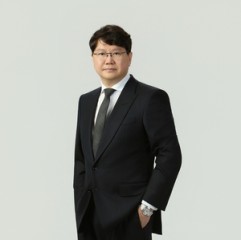
Hanmi Semiconductor chief buys W700m more shares, total tops W70.2b
Open-market purchase set for Oct. 7; stake to rise to 33.63% After 3 billion won in April, 8 billion won in June and 5 billion won in July, this year's total hits 16.7 billion won Q2 sales hit record 251.1 billion won, operating profit 130.3 billion won Kwak Dong-shin, chairman of Hanmi Semiconductor, will invest 700 million won ($522,000) of his own money to buy additional shares in the company. Once the purchase is complete, Kwak's cumulative share buybacks since 2023 will reach 70.2 billion won. Hanmi Semiconductor said Wednesday that Kwak plans to acquire 700 million won worth of shares on the open market on Oct. 7. The purchase would raise his stake to 33.63 percent. Kwak has been steadily buying Hanmi Semiconductor shares with his personal funds since 2023. This year alone, he purchased 3 billion won worth in April, 8 billion won in June and 5 billion won in July. Including the latest 700 million won purchase, his total share buybacks this year amount to 16.7 billion won. The continued share purchases coincide with Hanmi Semiconductor's earnings growth. The company posted 251.1 billion won in sales in the second quarter, its highest quarterly sales since its founding in 1980. Operating profit for the quarter came to 130.3 billion won, with an operating margin of 51.9 percent. Growth was driven by rising demand for TC bonders used in HBM production, as the AI semiconductor market expands. Hanmi Semiconductor's main products are TC bonders and MSVP (Micro Saw & Vision Placement) equipment. The company is also expanding into advanced packaging. Hanmi Semiconductor recently launched four types of 2.5D packaging equipment to target global foundries and outsourced semiconductor assembly and test companies. It is also expanding its EMI shield equipment project for the aerospace sector. Hanmi Semiconductor is also establishing a foothold in the US market. The company plans to set up a local subsidiary, Hanmi USA, in San Jose, California, by the end of this year. The move is aimed at strengthening equipment supply and technical support for local customers as investment in US semiconductor production facilities expands. A Hanmi Semiconductor official said, "Kwak's additional share purchase reflects his confidence in the company's growth as it expands into the US market and increases equipment supply, as well as his commitment to responsible management." The official added, "We will strengthen our position in the AI semiconductor and advanced packaging markets."
Sept. 9, 2026
-

Bizplay's e-receipt system breaks into Korea's big five hospitals
Catholic Medical Center completes rollout of 'bzp' expense management service across 10 institutions Bizplay, a cost management solutions company, has gained recognition for the technology behind its "bzp" expense management service after entering five of South Korea's largest hospitals. According to the company Wednesday, the Catholic Medical Center (CMC) of the Catholic University of Korea completed the rollout of Bizplay's e-receipt system on Aug. 31. The project integrates the entire process into a single system, from collecting key expense documentation to preparing statements, obtaining approvals and archiving. Documentation covered includes corporate card records, electronic tax invoices, cash receipts and paper receipts. The company said linking the system with its existing internal platforms, including its management information system and groupware, improved the efficiency of financial operations. The rollout covered 10 institutions in total: CMC, the Catholic University's Seongui Campus, and eight affiliated hospitals — Seoul St. Mary's Hospital, Yeouido St. Mary's Hospital, Uijeongbu St. Mary's Hospital, Bucheon St. Mary's Hospital, Eunpyeong St. Mary's Hospital, Incheon St. Mary's Hospital, St. Vincent's Hospital and Daejeon St. Mary's Hospital. The system applies AI-based optical character recognition, or AI OCR, to paper receipts and invoices. When employees register documentation, the technology automatically identifies key information, cutting down on manual data entry. It is also linked to a clinical research project management system. This allows documentation and approval processes generated by clinical research units — not just general administrative offices — to be handled within the same e-receipt framework. "This project with the Catholic Medical Center marks Bizplay's first entry into one of Korea's 'big five' tertiary general hospitals, and it is also the first case of integrating expense documentation from clinical research organizations — an area that had long been a blind spot — into a single system," said Seok Chang-gyu, CEO of Bizplay. "Building on the experience from this project, we plan to expand our hospital-specialized e-receipt business to support greater financial efficiency and stronger internal control systems at large hospitals." Meanwhile, Bizplay currently provides its "bzp" expense management service to more than 2,800 mid-sized and large companies and public institutions, as well as about 30,000 small and medium-sized enterprises. The latest project stands out as the first case of integrating e-receipt documentation from both general administrative organizations and clinical research organizations. Earlier, on Aug. 8, Bizplay signed a strategic MOU with BQ AI, an AI data intelligence company, to advance AI-based work automation and upgrade its business-to-employee, or B2E, services. Under the partnership, Bizplay will combine its travel and expense management platform with BQ AI's AI-based data structuring technology and news data capabilities. The two companies also plan to jointly research technology to structure unstructured data, including various forms of documentation such as travel and expense receipts, settlement and approval documents, and internal regulations.
Sept. 9, 2026
-
32 startups advance to finals of Ministry of SMEs' 2026 K-Startup contest
344 firms apply for newly launched AI league Industry-specific AI solutions lead with 50.9 percent 32 companies advance, including Innovative Startup League entrants Top 20 to compete in grand final for prize up to 500 million won A total of 344 early-stage startups applied for the government's first-ever artificial intelligence startup competition this year, with 10 of them earning a spot in the cross-ministry integrated finals. The Ministry of SMEs and Startups said Wednesday that it had selected 32 companies to advance to the integrated finals of the 2026 K-Startup contest, a cross-ministry startup competition, through the preliminary rounds of its AI League and Innovative Startup League. The K-Startup contest targets early-stage companies founded within the past three years. Nine government bodies — including the Ministry of SMEs and Startups, the Ministry of Science and ICT, the Ministry of Education, the Ministry of National Defense and the Ministry of Culture, Sports and Tourism — each run a specialized league. Top performers from each league compete in the integrated finals. A total of 130 teams will advance to this year's integrated finals. The AI League, launched for the first time this year, drew applications from 344 companies. By category, "industry-specific AI solutions" that apply AI to particular sectors accounted for more than half, with 175 companies, or 50.9 percent. "General-purpose AI solutions" followed with 106 companies, or 30.8 percent, ahead of AI infrastructure with 43 companies, or 12.5 percent, and physical AI with 20 companies, or 5.8 percent. After document review and in-person evaluations by AI experts and investment and management specialists, 10 companies advanced to the integrated finals. The AI League's top prize went to Intellisia, which offers market research solutions using AI-generated virtual "synthetic consumers." The approach is designed to cut the time and cost of traditional market research methods that rely on recruiting real consumers. Intellisia builds virtual synthetic consumers based on real human data to carry out companies' market research tasks, including surveys and qualitative interviews. Since launching its synthetic consumer solution, TheSurvey.ai, in May 2025, the company has conducted proof-of-concept projects with 70 companies. Runner-up honors went to Aidol, which developed a solution using neuro-symbolic AI technology to prevent malfunctions in physical AI systems. Notably, more than half of the entries in this year's AI League focused on industry-specific AI solutions aimed at solving problems in particular sectors. Relatively few focused on developing general-purpose AI models themselves. This suggests a relatively large number of early-stage startups sought to commercialize AI by applying it to individual industries such as content, education, biotech and health care. The physical AI category, which combines hardware with AI, accounted for 20 companies, or 5.8 percent of all applicants. The Innovative Startup League, open to startups across all sectors, drew 630 applications. After regional preliminary rounds at 17 Centers for Creative Economy and Innovation nationwide narrowed the field to 66 companies, a comprehensive preliminary round selected 22 companies for the integrated finals. The top prize went to The Ace Company, which developed an AI video detection system to prevent process accidents on semiconductor wafers. Runner-up honors went to Dear Onion, an AI agent company that helps restaurants order food ingredients. The 130 teams selected across the various ministry-run leagues will begin the integrated finals on Sept. 22. Twenty companies will advance from the integrated finals to the grand final. Winners of the grand final will receive prize money of up to 500 million won ($372,000) as well as preferential treatment when selected for follow-up support programs such as the early-stage startup package. "The companies driving innovation and growth in future new industries, including AI, are startups that take on challenges based on new technologies and ideas," said Mok Seung-hwan, head of the Startup and Venture Innovation Bureau at the Ministry of SMEs and Startups. "It is especially meaningful that we were able to discover promising AI startups through the AI League, which was newly launched this year."
Sept. 9, 2026
-
Ministry finds 23 payment-linkage violations at 4 firms in plastic container probe
Probe covers 15 firms buying plastic containers Food manufacturers, coffee franchises among violators 23 cases include delayed, unissued price-linkage agreements Fines of up to 10 million won, penalty points imposed The government has found 23 violations related to the price-linkage regime for raw material costs at four companies, including food manufacturers and coffee franchises. The violations were uncovered in a direct probe into plastic container supply transactions. The Ministry of SMEs and Startups said Wednesday it conducted the probe into compliance with the raw material price-linkage regime in plastic container transactions. It issued administrative sanctions against the four companies, including improvement orders, penalty points and fines. The ministry launched the investigation urgently in April after the Middle East war drove up international oil prices and the cost of naphtha and ethylene, the raw materials for plastic. The price spikes strained small and medium-sized plastic container manufacturers with rising costs. The ministry examined 15 companies across three industries with heavy demand for plastic containers -- food manufacturers, beverage manufacturers and coffee franchises -- with five companies from each sector. The ministry first conducted a written review of contracts and transaction records for all 15 companies. It then selected seven companies for on-site inspections and surveys of their subcontractors. These included firms suspected of violations, those that submitted incomplete or careless documentation, and those with a large number of subcontractors. The probe found violations of the Act on the Promotion of Mutually Beneficial Cooperation Between Large Enterprises and Small and Medium Enterprises at four companies. They included two food manufacturers and two coffee franchises. All four are mid-sized enterprises. The violations totaled 23 cases. They included five instances of delayed issuance of standard agreements, six of delayed issuance of price-linkage agreements, and 12 of failure to issue price-linkage agreements at all. Taking into account the severity of each violation, the ministry imposed administrative sanctions on the companies. These included improvement orders, two penalty points, fines of up to 10 million won ($7,450) and mandatory education. Plastic container manufacturing is particularly sensitive to raw material price swings. Synthetic resin, the primary raw material for plastic containers, accounts for about 70 percent of total production costs. Prices for synthetic resin materials rose more than 30 percent in March, sharply increasing the cost burden on small and medium-sized manufacturers in the sector. Under such conditions, subcontracted small businesses are likely to shoulder the full brunt of rising costs if the increases are not properly reflected in supply prices. The price-linkage regime requires that supply prices reflect changes in the cost of key raw materials once those costs move beyond a certain threshold. It has been in effect since October 2023 to prevent the burden of soaring raw material prices from falling disproportionately on subcontracted companies. Lee Eun-cheong, director general of the ministry's mutually beneficial cooperation policy bureau, said, "It goes against a fair market economy for small, subcontracted businesses to unilaterally bear the burden of soaring global raw material prices." He added, "We will continue to monitor compliance with the price-linkage regime so that a trading culture in which large and small companies share the burden of raw material costs can take root."
Sept. 9, 2026
-
K-medicine taught by Ilsan Paik Hospital blossoms in Laos
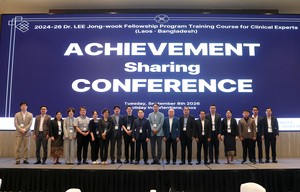
The results of learning South Korea's advanced medical technology and applying it in medical settings back home have blossomed in Laos. Physicians and other medical professionals trained in Korea returned home and put their skills into practice, and an event to share those outcomes was held in Laos. Inje University Ilsan Paik Hospital said it held the "2024-2026 Lee Jong-wook Fellowship Program Clinical Course (Laos, Bangladesh) Outcome-Sharing Meeting" at the Holiday Inn hotel in Vientiane, Laos, on Tuesday. The event drew about 100 Lao health officials, including Park Won-suk, head of the Laos office of the Korea Foundation for International Healthcare. Representatives also attended from major national and public hospitals such as Mahosot Hospital, Mittaphab Hospital, the Mother and Newborn Hospital, and Savannakhet Provincial Hospital, as well as officials from the University of Health Sciences and local health agencies. Directors of major national hospitals attended as well, demonstrating strong interest in medical cooperation between Korea and Laos. From 2024 to 2026, Ilsan Paik Hospital invited 21 Lao medical professionals — 14 doctors and seven nurses — to Korea for specialized clinical training under the Lee Jong-wook Fellowship Program's clinical course. The outcome-sharing event presented the results of the three-year training program along with case studies of how trainees applied their own "Action Plans" in the field. The Action Plan is an implementation plan trainees devised to translate the medical technology and clinical experience they gained in Korea into actual improvements in medical services at their home institutions. First- and second-year trainees presented improvements they had achieved in the field, including enhanced pathology and forensic medicine services at Mittaphab Hospital and strengthened response to acute coronary syndrome and heart failure management at Mahosot Hospital. They also reported improved capacity for treating dizziness and reading electrocardiograms at a district hospital in Phin. Third-year trainees shared plans for future initiatives, such as strengthening initial management protocols for traumatic brain injury patients at Mahosot Hospital and building a system to improve the quality of medical services at Mittaphab Hospital. They also plan to revise the CPR training manual at the University of Health Sciences. Ahead of the outcome-sharing event, medical staff from Ilsan Paik Hospital have been visiting major Lao medical institutions in person since Monday. They are checking how trainees are applying the medical technology they learned in Korea and providing field-specific consulting. The visiting team includes Professor Koo Hae-won of neurosurgery, Professor Kim Young-ah of obstetrics and gynecology, Professor Choi Pyung-hwa of surgery, Professor Lee Young-gun of neurology, Professor Heo Min-hee of anesthesiology and pain medicine, and Deputy Nursing Director Ryu Hyang-jin. Kim Hoon, head of Inje University's International Development Cooperation Center and a professor of emergency medicine at Ilsan Paik Hospital, is leading the delegation as the project's director. "This visit is meaningful in that it confirms whether the medical technology learned in Korea over the past three years and the Action Plans trainees developed are actually being applied in Lao medical settings," Kim said. "We will continue our cooperation with local institutions and follow-up support so that trainees can keep using their expertise even after their training ends," he added. Ilsan Paik Hospital plans to continue local consulting and medical staff exchanges based on its cooperative relationships with major Lao hospitals and health institutions. The hospital aims to help translate the medical technology gained in Korea into improved local medical services. The outcome-sharing event carried added significance as more than a simple invitational training program. It served as an occasion to confirm the results of sustainable international medical cooperation built on the principle of learning in Korea, applying it in the field in Laos, and developing together with local medical staff.
Sept. 9, 2026
-
Korea to get medical LLM tailored to local clinical practice
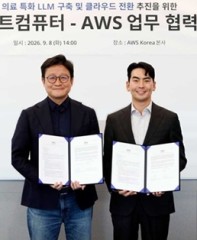
BITComputer, AWS sign MOU to combine company data, know-how with cloud and AI capabilities A large language model tailored specifically to Korea's medical field is set to be developed. Foreign AI models have been criticized for failing to adequately reflect the context and requirements unique to Korean medical settings. These include Korean-language medical terminology, prescription and reimbursement code systems, Health Insurance Review and Assessment Service standards, Ministry of Health and Welfare notices, and personal medical information protection rules. Concerns have also been raised about data leaks, as sensitive medical information on Korean patients could end up flowing overseas. Medical information company BITComputer announced Wednesday that it had signed a memorandum of understanding with Amazon Web Services to build a medical-specialized LLM and migrate to the cloud. Under the agreement, BITComputer will combine 43 years of accumulated proprietary data and clinical know-how with AWS's cloud and AI technology. The company plans to use this to build its own LLM optimized for Korea's medical environment — something general-purpose models alone struggle to adequately address. BITComputer plans to train the model on its accumulated, de-identified electronic medical record data along with domestic medical literature and clinical guidelines. It aims to develop this into a common foundation model to be shared across its entire product lineup and future Korean medical AI agents. Over the past 43 years, the company has built up data and know-how from Korea's medical field. It has done so through its EMR systems for hospitals and clinics, digital health care services and IT education business. "We currently operate our own AI product lineup, including BitMate, an AI-based EMR system for clinics; MediGent AI, an AI tool supporting insurance review; and DrugInfo AI, an AI tool for drug information," the company said. "We plan to combine this data and know-how with AWS's cloud and AI model capabilities to build an LLM specialized for Korea's medical field." The two companies agreed to cooperate in four areas. They will develop a Korea-specialized medical LLM trained on de-identified domestic EMR data and medical literature. They will also upgrade the clinical and administrative support functions of existing AI products such as BitMate AI and MediGent AI. The partnership further covers expanding voice-recognition-based automated charting for clinical settings and migrating AI model development, training and operating environments to the AWS cloud. "We will build a Korea-specialized medical LLM that renowned foreign models cannot replicate," said Cho Jae-suk, BITComputer's chief strategy officer. "By securing a cloud-based serving environment together, we will raise the quality and speed of our entire product lineup to the next level." "As Korean medical institutions apply AI to a growing range of tasks — from writing medical records to supporting insurance review and checking drug information — demand is rising for specialized models that accurately reflect Korean clinical terminology and the country's regulatory framework," said Cho Min-sung, head of AWS Korea's health care business. "We will develop a medical-specialized LLM to create an environment where medical staff can focus more on treating patients."
Sept. 9, 2026
-
KMI Korea Medical Institute talks checkup, preventive care cooperation with Alberta government delegation
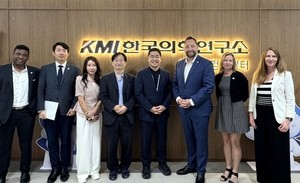
Senior officials from the government of Alberta, Canada, visited KMI Korea Medical Institute's (KMI) Gwanghwamun Center to experience the Korean-style comprehensive health checkup system firsthand and discuss mutual cooperation, KMI said. "The delegation that visited the KMI Gwanghwamun Center on Monday discussed ways to link Korea's comprehensive health checkup and preventive care system with Alberta's preventive health policy," KMI said. The visit was arranged for KMI to share its systematic health checkup operating model and preventive care system, which incorporates digital technology such as AI-based imaging analysis, and to explore concrete opportunities for cooperation with Alberta's preventive health policy and early cancer detection project. The Alberta delegation included Justin Wright, minister of primary and preventive health care; Sayid Ahmed, chief of staff; Matt Torigian, deputy minister; Kim Simmonds, CEO of Primary Care Alberta; and Sherri Wilson, vice president of government services at Alberta Blue Cross, along with other senior officials from the Alberta government and related organizations. The delegation reviewed KMI's checkup process, from reception through testing, medical consultation and results management, to confirm how the Korean-style one-stop health checkup system operates and how efficient it is. They showed particular interest in the prevention-focused health management model, which identifies and manages risk factors before disease treatment becomes necessary, as well as the systematic operation of the checkup process covering numerous test items. "This visit by the Alberta government delegation is significant in that it allowed us to share the competitiveness of Korea's health checkup and preventive care system directly with officials from a foreign government," said Lee Kwang-bae, chairman of KMI. "We will actively explore ways to align KMI's years of experience in health checkup operations and early diagnosis capabilities with Alberta's preventive health policy."
Sept. 9, 2026
-
SMEs warn tofu, soybean paste factories may halt over soybean shortfall
SMEs: 'We need at least 250,000 tons a year, but the government plans to supply only 223,899 tons' Oil-extraction soybeans get a 0 percent tariff-rate quota and direct imports, while processing-use soybeans face a 5 percent tariff and import profit charges 'Processing-use soybeans should also get a 0 percent tariff and direct imports by end-user groups' SMEs producing tofu and soybean paste products are calling for an overhaul of the import regime. They warn that some factories could halt operations as early as September because this year's supply of processing-use soybeans falls short of demand. Unlike the soybeans used mainly by large companies for oil extraction, processing-use soybeans used mainly by small and medium-sized enterprises are subject to tariffs and import profit charges. The industry says this must be fixed. Kim Suk-won, vice chairman of the Korea Federation of SMEs, held a press conference with other industry officials Wednesday morning at the federation. Kim also heads the Gwangju-South Jeolla Fermented Food Cooperative. The event was titled "Calling for the Resolution of Structural Contradictions in the Supply Policy for Edible (Processing-Use) Soybeans and Reform of the Import System." They said they would also submit a related petition to the National Assembly's Agriculture, Food, Rural Affairs, Oceans and Fisheries Committee. The industry's biggest concern was the volume shortage. According to the cooperative, the domestic processing-use soybean industry needs at least 250,000 tons a year. The government's 2026 supply plan calls for only 223,899 tons — about 26,100 tons short of what the industry says it needs at minimum. An industry official said, "The government cut import volumes to help clear domestic soybean stockpiles, but this creates a price mismatch and technical problems that make it difficult to produce tofu." The industry expressed concern that once companies exhaust their current raw material stockpiles, production disruptions could begin in earnest at tofu and soybean paste manufacturers nationwide starting in September. Processing-use soybeans are a raw material used directly in food production such as tofu and soybean paste, so prolonged supply disruptions could lead to reduced output or factory shutdowns. The industry also raised the disparity in import conditions between oil-extraction soybeans, used mainly by large companies, and processing-use soybeans. According to the petition, oil-extraction soybeans are subject to a 0 percent tariff-rate quota and can be imported directly and autonomously through end-user groups. Processing-use soybeans, by contrast, are supplied through state trading and public auction bidding led by the Korea Agro-Fisheries & Food Trade Corp. (aT). The industry argued that a 5 percent tariff and import profit charges on top of that are adding to the raw material burden for small and medium-sized food companies. SMEs also argued that the policy of restricting import volumes to preserve domestic soybean stockpiles does not match the actual market structure. In the petition, they said, "The price gap between domestic and imported soybeans is about 3.5 times, and the two also differ in main consumer base and products used, effectively forming separate markets." The industry called for applying the same 0 percent tariff-rate quota to processing-use soybeans as to oil-extraction soybeans and abolishing the import profit charge. They argued that the current system, centered on state trading and auctions through aT, should be changed. Direct imports should be allowed by end-user groups that actually use the raw material, such as fermented food associations and soybean paste cooperatives.
Sept. 9, 2026
-
Korea approves Latica eye drops, its first homegrown dry eye treatment
Local new drug enters $372 million dry eye treatment market Clears tough bar of proving both objective signs and symptoms, boosts mucus secretion Co-developed by GL Pharm Tech and Aju Pharm in open-innovation success story South Korea has produced its 44th homegrown new drug and, for the first time, a domestically developed treatment for dry eye disease. The Ministry of Food and Drug Safety said Wednesday that it had approved Latica Ophthalmic Solution 5% (ingredient name recoflavone hydrate) as the country's 44th locally developed new drug. The prescription medicine was jointly developed by GL Pharm Tech, a biotech venture specializing in improved new drugs, and Aju Pharm, a midsize pharmaceutical company. According to market researcher UBIST, the domestic dry eye treatment market is worth about 500 billion won ($372 million). The market currently sees fierce competition among a range of drugs, including hyaluronic acid-based artificial tears as well as cyclosporine, diquafosol and rebamipide formulations. Latica works by promoting mucus secretion on the ocular surface of adult dry eye patients, helping repair damaged corneal and conjunctival epithelium. While the dry eye treatment market has long been dominated by artificial tear products such as hyaluronic acid solutions and anti-inflammatory immunosuppressant eye drops, the arrival of a domestically synthesized new drug that directly induces mucus secretion to treat corneal damage gives patients a new treatment option. Dry eye treatments face an unusually difficult path to approval because symptoms vary widely among patients and stem from complex causes, including tear film breakdown and inflammation. Drugmakers must prove improvement in both objective signs and subjective symptoms simultaneously. In practice, numerous biotech companies at home and abroad have failed to demonstrate efficacy over placebo at the Phase 3 trial stage. Several domestic firms have either halted development after failing to prove efficacy or revised their evaluation metrics and pursued new trials. Amid this string of setbacks, close cooperation between a midsize Korean pharmaceutical company and a biotech venture bore fruit. Development of the source material behind Latica began in earnest in 2017, when GL Pharm Tech obtained rights to use recoflavone from Dong-a ST. GL Pharm Tech then led research to improve the drug's absorption rate and therapeutic effect. It later teamed up with Aju Pharm to successfully complete a large-scale Phase 3 trial and clear the final hurdle to commercialization. The drug is considered a model case of open innovation. It combines a major pharmaceutical company's source material, a biotech venture's proprietary formulation technology, and a midsize drugmaker's clinical execution capabilities. This is also the first approval granted under an expedited review process based on the Ministry of Food and Drug Safety's "New Drug Item Approval and Review Procedures" guideline. The ministry enacted the guideline in 2025. It formed a 20-member "Latica task force," including review specialists, to prioritize examination of Good Clinical Practice and Good Manufacturing Practice standards. It also held ongoing customized in-person meetings with the companies before and after the approval application, significantly shortening the review period. "We plan to continue enhancing the predictability and transparency of drug approval and review so that safe and effective new drugs can be swiftly supplied to patients," the Ministry of Food and Drug Safety said.
Sept. 9, 2026
-
Seoul St. Mary's Hospital signs cooperation MOU with Gyeongsang National University Hospital
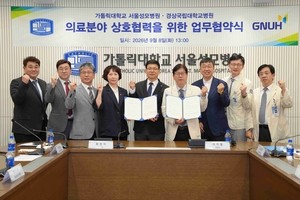
Hospitals to exchange medical staff, share regional care experience Two-year MOU; details of cooperation to be discussed separately The Catholic University of Korea's Seoul St. Mary's Hospital will expand cooperation with Gyeongsang National University Hospital in medical staff exchange, clinical practice, education, research and academic activities. Seoul St. Mary's Hospital said it signed an MOU with Gyeongsang National University Hospital on Tuesday for medical workforce exchange and cooperation, at the main building of the Catholic University of Korea. Seoul St. Mary's Hospital officials attending included Lee Ji-yeol, president, and Shin Hee-jun, vice president for spirituality. Also attending were Jeong Nak-gyun, director of the children's hospital, and Kim Soo-hwan, director of the clinical cooperation center. Gyeongsang National University Hospital was represented by Hwa Jeong-seok, president; Park Eun-sil, vice president for clinical affairs; and Park Ki-su, vice president for public health affairs. Also attending were Kim Seong-hun, secretary general, and Cheon Yun-hong, director of external cooperation. The MOU calls for the two institutions to build on their accumulated clinical and research capabilities in severe and essential care. They also plan to share experience in medically underserved fields and pursue exchanges of medical personnel. This marks the first direct agreement between Seoul St. Mary's Hospital and Gyeongsang National University Hospital. Although the two hospitals are about 300 kilometers apart, they plan to link their respective strengths to explore a new model of medical cooperation. The two institutions will broaden cooperation by linking Seoul St. Mary's Hospital's clinical and research capabilities with Gyeongsang National University Hospital's experience. Gyeongsang runs a regionally self-sufficient system for severe, emergency and essential care. The agreement covers the exchange and support of medical personnel, as well as the sharing of experience and information on public health and regional essential care. It also includes exchange in clinical practice, education, research and academic fields. The agreement runs for two years. The two hospitals will also work together to strengthen clinical capabilities in medically underserved fields. Specific topics and methods of cooperation will be discussed separately, taking into account each institution's circumstances and needs on the ground. The backgrounds of the two hospital presidents also stand out. Lee Ji-yeol, president of Seoul St. Mary's Hospital, and Hwa Jeong-seok, president of Gyeongsang National University Hospital, are both urologists specializing in urologic cancer, with extensive experience in patient care and surgery. Both previously served as heads of robotic surgery centers at their respective institutions. Lee served as Seoul St. Mary's Hospital's first smart hospital director, leading a customized care system built on advanced information and communication technology. When Hwa took office, he likewise set biomedical research and an AI-based, research-focused smart hospital as key directions for Gyeongsang National University Hospital. The two hospitals plan to pursue cooperation in medical personnel exchange as well as in clinical practice, education, research and academic fields. They will link Seoul St. Mary's Hospital's clinical and research capabilities with Gyeongsang National University Hospital's experience running a regionally self-sufficient system for severe, emergency and essential care. "We will build a practical cooperation model that complements Seoul St. Mary's Hospital's clinical and research capabilities with Gyeongsang National University Hospital's experience running a regionally self-sufficient essential care system," Lee said. "Through mutual exchange in medical personnel, clinical practice, education, research and academic activities, we will work to ensure that local residents reliably receive the care they need," Hwa said. Meanwhile, Seoul St. Mary's Hospital has been expanding its network of clinical cooperation with regional medical institutions through a support project for restructuring tertiary general hospitals. At a meeting on strengthening clinical cooperation held in June 2025, 114 staff members from 80 partner institutions attended. The hospital said it was at the time operating referral and return e-forms, a fast track, and clinical information sharing across 169 partner institutions.
Sept. 9, 2026
-
Samsung Biologics launches second-half recruitment drive amid industry hiring freeze
Roles open in process engineering and business support; job-fit assessment this month, aptitude test in October, interviews in November Youth hiring jumped 136% in two years as production expansion and portfolio diversification fuel virtuous cycle Average pay reaches 114 million won; turnover rate at 1.9%; pharma-biotech employer-of-choice ranking for four consecutive years Samsung Biologics has launched its second-half new-hire recruitment drive, stepping up efforts to secure young talent to lead the global contract development and manufacturing organization market. The move stands out at a time when many large South Korean companies are scaling back hiring amid economic uncertainty, as the biotech firm continues to expand aggressively and build out its production infrastructure. The recruitment process, which opened Tuesday, covers two job categories: process engineering and business support. Candidates will sit a job-fit assessment this month, followed by Samsung's General Aptitude Test in October and interviews and a medical examination in November. Successful hires will go through structured on-the-job training and development programs designed to groom them into core talent for the global biotech industry. South Korea's job market has been in a deep freeze amid mounting domestic and global economic uncertainty. According to corporate analysis firm Leaders Index, the 113 largest South Korean conglomerates hired 92,680 new employees in 2025, down 15.3 percent from 109,456 in 2023. The share of new hires aged 30 or under also fell from 56.4 percent to 51.1 percent over the same period. Samsung Biologics has bucked that trend sharply. The company hired 484 young workers in 2025, a 136 percent jump from 205 in 2023. The surge reflects the company's push to build out what it describes as the world's largest biologics production capacity and to diversify its portfolio into areas such as peptides. As demand for specialized talent has grown alongside the company's expansion, hiring and business growth have reinforced each other in a self-sustaining cycle. The company's full-time headcount surpassed 5,000 for the first time in the industry in the first half of last year and stood at about 5,300 as of the first half of this year. Alongside its hiring push, Samsung Biologics has steadily strengthened compensation and welfare benefits to help employees perform at their best in a stable environment. Average pay rose 44 percent, from 79 million won ($58,800) in 2021 to about 114 million won in 2025, while the overall turnover rate fell from 4.5 percent to 1.9 percent over the same period. Particularly notable are the company's work-life balance benefits. Samsung Biologics operates the largest on-site childcare center in Yeonsu-gu, Incheon, covering all costs beyond government subsidies, and offers parental leave of up to two years per child — six months longer than the statutory minimum. Given the company's location in Songdo, Incheon, employees who commute long distances receive free housing support. A dedicated welfare complex called Bio Plaza houses an in-house clinic, pharmacy and fitness center. Additional benefits include medical expense coverage for employees and their families and a personal pension scheme under which the company matches employee contributions won for won. Samsung Biologics' standing among job seekers has become unrivaled, driven by its competitive compensation and growth prospects. In a survey of 1,811 university students nationwide by recruitment platform Incruit on the most desirable employers for 2026, Samsung Biologics ranked fifth overall — up eight places from 13th the previous year. In the pharmaceutical and biotech category, it has held the top spot for four consecutive years since 2023, cementing its reputation as the dream employer for young talent.
Sept. 9, 2026
-
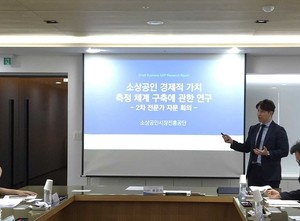
SEMAS moves to upgrade 'S-GDP' indicator for small merchants
Separately measures small merchants' production and value added 'S-GDP' developed based on national accounts system Bank of Korea, Ministry of Statistics and other experts take part To be compiled regularly for use in policymaking and evaluation South Korea has stepped up efforts to develop a separate indicator that measures small merchants' production and value added in the economy, similar to gross domestic product (GDP). The Small Enterprise and Market Service (SEMAS) said Wednesday it held its second expert advisory meeting on "Research on Upgrading and Regularizing the System for Measuring Small Merchants' Economic Value." The meeting was held at Dream Square in Mapo-gu, Seoul. The indicator SEMAS is developing is tentatively named the "Small Merchant Gross Product Index (S-GDP)." It is designed to systematically measure the production and value added that small merchants create in the national economy, based on the System of National Accounts (SNA). SEMAS launched an expert advisory panel on July 24 to build the S-GDP system and began related research in earnest. The panel includes experts from the Bank of Korea, the Ministry of Statistics, the Korea Development Institute (KDI), the Korean Economic Association and the Korean Association of Applied Economics. About 15 experts from relevant institutions and academia attended the second advisory meeting. They included officials from the Small Business Policy Research Institute, the Bank of Korea, the Ministry of Statistics, the Korean Economic Association and the Korean Association of Applied Economics. Participants shared research findings compiled so far and discussed ways to regularly produce the S-GDP as well as its potential use in policymaking. Discussions particularly focused on the structure of the S-GDP compilation system and a pilot account format. Participants also discussed ways to incorporate the indicator into the national accounts system as a satellite or supplementary account. They also reviewed expert survey questions designed to verify the indicator's conceptual validity, compilation framework, and potential for data and policy use. Currently, the national accounts system has limits in independently capturing small merchants' economic contribution. Once S-GDP is established, it is expected to more systematically identify the scale of value added and production that small merchants generate across the economy. It could also serve as basic data for evaluating the effectiveness of support policies for small merchants. Prior research has likewise pointed out that the current national accounts system fails to independently identify small merchants' economic contribution. It has proposed creating a separate account for them using a satellite account. SEMAS plans to reflect the opinions raised at this advisory meeting to upgrade the S-GDP's compilation system and improve its statistical consistency. It will also build a framework to continuously produce the indicator. Going forward, it will expand the scope of its research beyond economic value to also measure the social and cultural value that small merchants create. "To properly understand small merchants' economic value, it is essential above all to demonstrate it with objective data," said In Tae-yeon, chairman of SEMAS. "We will work carefully with experts to refine the measurement system so that it can establish itself as an indicator that objectively shows the value small merchants create in our economy."
Sept. 9, 2026
-
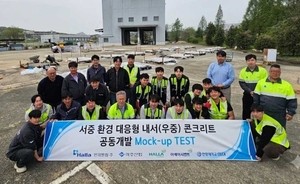
New concrete technology tackles rain, summer heat
Asia Zumsan, Halla Cement, Halla NCOM jointly develop certified technology A new concrete technology that can be applied during rainfall and in hot weather while maintaining consistent quality has been developed. According to industry sources Tuesday, companies jointly secured the "concrete manufacturing technology for hot-weather and rainy-weather conditions" through a collaborative effort. The technology recently obtained certification from the Korea Institute of Building Construction, clearing the way for it to be adopted at construction sites. The technology, jointly developed by Asia Zumsan, Halla Cement, Halla NCOM and Asia Cement, is designed to withstand both high temperatures and rainfall. It preserves workability over extended periods in hot summer conditions and minimizes quality degradation in wet conditions. The technology combines PCE-based dispersion-retention technology with glycol-based rheology control technology. According to the developers, it keeps flowability stable and suppresses material segregation and loss of cement paste caused by rainwater infiltration. When average temperatures exceed 25 degrees Celsius, or when the maximum temperature within 24 hours of pouring exceeds 30 degrees Celsius, concrete's hydration reaction accelerates. As moisture evaporation increases, slump loss and reduced workability occur rapidly. The developers said the technology improves flowability under these conditions, helping maintain stable work efficiency and construction quality. At the same time, it strengthens resistance to scouring and material segregation caused by rainwater in wet conditions with rainfall of 3 millimeters or less per hour. "We have systematized 'ultra-retention concrete,' which maintains flowability over an extended period, and 'rain-resistant concrete,' which reduces quality degradation caused by rainfall, into a single heat-resistant concrete manufacturing system," the developers said. "This can prevent construction delays caused by adverse weather and reduce costs for rework, repair and maintenance. We expect that, based on the technology we have secured, we will be able to overcome weather-related constraints at construction sites and achieve safe construction quality."
Sept. 8, 2026
-

Dongwha Natural Maru unveils seamless flooring with 'Hidden Edge' technique
Dongwha Natural Maru: 'Matching side and surface color hides seams' A new flooring installation technique that hides seams between panels is drawing attention. Because the seams are less visible, the eye moves smoothly across the surface, making the space appear larger. Dongwha Enterprise's building materials brand Dongwha Natural Maru has introduced this technique, called "Hidden Edge." The method finishes the edges of each flooring panel in the same color as its surface. An automated coating process applies the color evenly, giving the finish greater precision. "With the introduction of Hidden Edge, seams are less noticeable during installation, making spaces appear larger," a Dongwha Enterprise official said Tuesday. "It highlights the product's inherent design, offering a distinctive interior experience while also enhancing aesthetic value." Hidden Edge has been applied to the square (675 by 675 millimeters) and rectangular (675 by 1,210 millimeters) formats of the company's engineered flooring line, Jin Grande Square. Unlike conventional tile-style flooring, which exposes the wood's cross-section along its sides, the technique reduces the sense of discontinuity felt at the boundary lines, the company said. It also said the design brings out the refined look characteristic of tile-style flooring and the luxurious texture of stone patterns. Jin Grande Square also stands out for its functionality. Compared with solid wood or plywood flooring, it is more resistant to dents and scratches, allowing it to maintain a clean appearance long after installation, and its strong water resistance helps prevent lifting or warping caused by moisture. The flooring also offers excellent thermal conductivity and insulation when used with underfloor heating, making it well-suited to Korean residential spaces, the company said. It added that the product also has a carbon-storage effect: installing Jin Grande Square across an exclusive use area of 84 square meters fixes about 950 kilograms of carbon.
Sept. 8, 2026
-
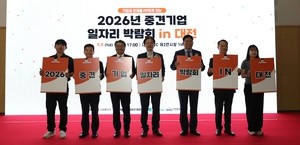
FOMEK holds second-half job fair in Daejeon, draws 66 firms, 2,000 seekers
YC, Nepes, Huons among semiconductor, pharma and biotech firms taking part Fair expands job matching beyond Seoul, where 90-plus firms met 6,000 seekers earlier this year Mid-sized firms employ 1.757 million, or 13.9 percent of Korea's workforce The Korea Federation of Middle Market Enterprises (FOMEK) held a large-scale hiring event in Daejeon to ease labor shortages at regional mid-sized companies and support young job seekers. A job fair in Seoul in March drew about 6,000 participants. The group's second-half event focused on connecting local talent with mid-sized firms in Daejeon and the Chungcheong region. FOMEK said Tuesday it held the "2026 Mid-sized Enterprise Job Fair in Daejeon" at the Daejeon Convention Center, jointly with the Ministry of Trade, Industry and Energy, the Korea Student Aid Foundation and the Korea Industrial Technology Association. Sixty-six mid-sized and candidate companies in the semiconductor and pharmaceutical-biotech sectors — including YC, Nepes and Huons — took part, drawing from Daejeon, the Chungcheong region and beyond. About 2,000 job seekers attended, exceeding the organizers' earlier target of more than 60 participating companies. FOMEK also held the "2026 Mid-sized Enterprise Job Fair" at the aT Center in Yangjae, Seoul, on March 31. About 90 companies — including Sempio Foods, Nepes and Hanmi Pharm — and roughly 6,000 job seekers took part in that event. By following the first-half Seoul fair with a second-half event in Daejeon, FOMEK expanded its hiring-support reach beyond the greater Seoul area to regional mid-sized companies. According to the Ministry of Trade, Industry and Energy, mid-sized companies employ about 1.757 million people, or 13.9 percent of the country's total workforce. Despite that share, the ministry has said such companies still struggle to secure suitable talent, prompting it to expand hiring-support programs. The Daejeon event featured one-on-one hiring consultations and interviews with individual companies, corporate briefing sessions, job-search consulting and mentoring from current employees at mid-sized firms. Organizers also ran an AI-based matching system that paired job seekers' profiles with suitable companies. They also provided real-time crowding information for each company booth, along with an online wait-list reservation service. The Mid-sized Enterprise Job Fair series began in 2017. Through last year, a cumulative 857 mid-sized and candidate companies and about 50,000 job seekers had taken part, resulting in roughly 9,000 hires. "To ease the labor shortages facing regional mid-sized companies, we will cooperate with the government, local governments and related organizations to expand not only tailored hiring-support programs for mid-sized firms but also settlement infrastructure covering housing, education, health care and culture," said Kim Hyun-chul, standing vice chairman of FOMEK.
Sept. 8, 2026
-
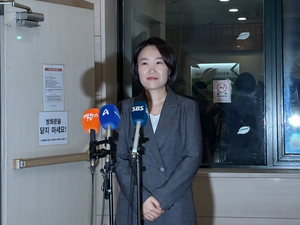
Lee So-young vows 'cost-reduction roadmap' for small businesses, rebuffs political donation allegations
Minister of SMEs and Startups nominee Lee So-young visits Korea Federation of Small and Medium Business on Tuesday Pledges to quantify small-business cost burdens and build reduction roadmap Rebuffs proxy donation allegations; plans to pay gift tax on mother's jeonse deposit Lee So-young, nominee for minister of SMEs and Startups, said she plans to analyze the income and expenditures of small-business owners, quantify their total management burden and draw up a cost-reduction roadmap — going beyond one-time financial support to address the underlying cost structure pushed higher by elevated interest rates, inflation and platform fees. She said the jeonse deposit she provided to her mother was for the purpose of supporting a dependent, and she strongly rebuffed allegations that she had received political donations under others' names, saying the claims left her feeling "not just baffled, but insulted." Speaking to reporters after visiting the Korea Federation of Small and Medium Business in Yeouido on Tuesday, Lee said self-employed workers feel they have nothing to show for their hard work because "the cost structure has already become unsustainable," adding that "what is needed is not frequent, piecemeal support measures but fundamental solutions for the self-employed." She said small-business owners face a complex set of challenges beyond high interest rates and inflation — including an aggressive push by Chinese retailers, accumulated financial debt, a structural shift toward online retail, a shrinking consumer base and the hollowing out of regional commercial districts. Lee said the federation had also called for policies with a tangible impact that could address rising cost burdens and deteriorating external conditions. Her proposed solution is to collect monthly income and expenditure data for representative types of small businesses, map out exactly where costs are going and by how much, and use that data to set targets and specific policies for reducing the burden. "This is the kind of attempt the Ministry of SMEs and Startups has never made before, and I want to try it," she said. She singled out online food delivery platforms as a prime example of the cost burden. "When a 20,000-won ($15) order comes in, more than 6,000 won goes to the delivery app under various charges," she said. "The reality is that many self-employed owners are left unable to pay even their own labor costs after covering all other expenses from what remains." She said she would look into ways to reduce the platform cost burden on small businesses, including by fostering low-commission delivery apps. She also said that subsidizing delivery coupons for public delivery apps "is extremely inefficient," arguing that coupons alone would struggle to attract new users who had not previously used cooperative delivery apps. Asked whether that position conflicted with next year's budget proposal, she said the government's plan had been drawn up before her nomination and that she would work to ensure the budget for cooperative delivery app support is used more efficiently during the National Assembly's budget review process. On follow-up measures related to the Tmon-WeMakePrice settlement crisis, she said she had been briefed during a work handover that the ministry was considering various responses, including measures related to Homeplus, and that an announcement of related measures was planned. Lee pushed back firmly against allegations that she had received political donations under others' names — so-called "proxy donations" — from candidates in local elections in her constituency, some of whom later received party nominations. She said some of those candidates had run in districts where it was difficult to find anyone willing to stand and had lost, others had received nominations after going through a primary election, and some were individuals she had worked with on climate policy. "Without verifying any of these facts, calling it 'proxy donations' or 'nomination money' left me feeling not just baffled, but insulted," she said. "This is an attack that does not match the facts." On the allegation that she had provided her mother with a jeonse deposit without paying gift tax, Lee said the support was intended to fulfill her duty as a caregiver. "My husband and I contributed to the jeonse deposit when my mother, who has no real estate or income, was looking for a villa in Uiwang," she said. "Under the Inheritance Tax and Gift Tax Act, providing living expenses to a parent in a manner recognized by common social standards does not constitute a gift. I believe resolving the housing situation of a financially struggling mother is the fulfillment of a duty to support her." She added, however, that she would proceed with filing and paying gift tax "to prevent unnecessary controversy from spreading."
Sept. 8, 2026
-

'Open-run' frenzy: The first-come, first-served scramble for small-business policy loans
September temporary business hardship fund opens, closes in minutes Up to 70 million won, 2-year grace period, 3.85% rate — direct loans draw heavy demand Eligibility screening follows application; accessibility remains a challenge Every time a government policy loan for small-business owners opens for applications, the same scene plays out: a frantic rush the moment the window opens at 10 a.m. The scramble is driven by interest savings that can run into the millions of won compared with commercial lenders. Funds close quickly because each round is capped at around 10 billion won ($7.45 million) — enough to benefit only about 100 borrowers nationwide at the maximum loan amount of 70 million won. Critics say the first-come, first-served structure is further fueled by the direct-lending model that bypasses banks, a "close when funds run out" intake policy, and post-application eligibility screening. According to industry sources, the Small Enterprise and Market Service opened applications for its September round of the temporary business hardship fund at 10 a.m. Monday. The intake window closed in a matter of minutes. "It is difficult to say exactly how many minutes it took, but it is true that applications closed in a short time," a SEMAS official said. The temporary business hardship fund is a policy-finance program that provides working capital to small-business owners facing short-term difficulties such as falling sales. Eligibility is generally limited to operators with annual sales below 104 million won and fewer than seven years in business whose sales have dropped at least 15 percent compared with a reference period. The maximum loan per business is 70 million won, with a five-year term that includes a two-year grace period during which borrowers pay only interest and no principal. The loan carries a variable rate of 3.85 percent per year — the policy-fund benchmark rate for the third quarter of this year — with no additional spread. Borrowing the full 70 million won over five years, with a two-year grace period followed by three years of equal principal repayments, would cost 9.54 million won in total interest through SEMAS, compared with 14.4 million won at the five major commercial banks' average lending rate of 5.81 percent. That makes the SEMAS policy loan roughly 4.86 million won cheaper. The direct-lending structure is another draw. SEMAS accepts applications, conducts its own review, and disburses funds itself — unlike agency loans, which require separate guarantee reviews by a credit guarantee institution and additional bank screening. For small-business owners whose sales have declined and who face tighter commercial-bank lending standards, the temporary business hardship fund offers a comparatively accessible source of capital. A rising interest-rate environment has also intensified demand for policy funds. The Bank of Korea's Monetary Policy Board raised the benchmark interest rate by 0.25 percentage point to 3.00 percent from 2.75 percent on Aug. 27, the second consecutive monthly increase following a hike in July. The central bank said it would "determine the timing and pace of further increases" in its future monetary policy, leaving the door open to additional rate hikes. With market rates expected to climb further, small-business owners appear to be rushing to lock in long-term working capital at below-market rates before conditions worsen. The two-year grace period on principal repayment is an added incentive for operators with tight cash flow. The loan budget comes from government appropriations. The Ministry of SMEs and Startups added 70 billion won to the temporary business hardship fund as part of this year's first supplementary budget — a larger sum than the 50 billion won originally allocated in the main budget. The problem, however, is that as long as the near-first-come, first-served intake structure remains in place, the open-run phenomenon will keep repeating regardless of how much funding is added. The temporary business hardship fund accepts applications over a set period and closes intake once the budget is exhausted. Because the chance of receiving funds diminishes the later one applies, applicants flood in the moment the window opens. A further concern is the gap between the application stage and actual eligibility screening. Applicants first submit an online form, after which SEMAS reviews their eligibility, creditworthiness and business viability. Clearing the intake stage does not guarantee a loan. If ineligible applicants join the rush, qualified small-business owners may lose their chance to apply. "Simplified-tax-regime operators are the only eligible borrowers, but general-tax-regime operators also apply, which makes competition even fiercer," a SEMAS official said. "General-tax-regime applicants are filtered out and do not receive loans."
Sept. 8, 2026
MOST READ
- 1KAIST develops high-performance bio-based adhesive using E. coli instead of petroleum
- 2Pope Leo XIV declines French honors and banquet, accepts only private meeting with Macron
- 3Daimler Truck unveils next-generation transport solutions at IAA 2026
- 4What was Rachmaninoff's performance fee? A 1928 price list tells all
- 5Samsung Biologics union's show of force backfires at the bargaining table
- 6APR says hair-loss treatment research published in international journal
-
WORLD

US warns of punishment for anyone enabling Iran's Strait of Hormuz toll scheme
-
INDUSTRY
Toyota union puts productivity first; Hyundai Motor union demands bigger share of profits
-
FINANCE
National Growth Fund to invest $531M in FuriosaAI, which rebuffed Meta's $800M takeover bid
-
INDUSTRY
Korea Shipowners' Association holds amateur baduk tournament for Maritime Day