
- HOME
- SMB·BIO
-
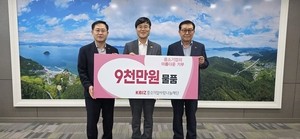
SME Love Sharing Foundation delivers W90m in relief supplies to Geoje flood victims
75 million won in bedding, 15 million won in wet wipes delivered World Inotech, Gyeongil Metal sponsor drive; Evezary, Hanul Saengyak provide goods Foundation extends South Gyeongsang flood relief after earlier Tongyeong aid The SME Love Sharing Foundation has delivered 90 million won ($66,800) worth of relief supplies to flood victims in Geoje, South Gyeongsang Province, continuing its support for communities in the region after earlier aid to flood-hit Tongyeong. The foundation visited Geoje City Hall on Monday to hand over the relief goods for residents displaced by heavy rains. The supplies included bedding and pads worth 75 million won and wet wipes valued at 15 million won, funded through donations from small and medium-sized enterprises including World Inotech and Gyeongil Metal, with goods contributed by Evezary and Hanul Saengyak. The foundation also delivered 10 million won worth of relief supplies to flood-affected Tongyeong in August, bringing the items directly to evacuation shelters for displaced residents there. Son In-guk, chairman of the SME Love Sharing Foundation, said the small and medium-sized enterprise community's attention and support are needed to help flood victims in South Gyeongsang Province return to their daily lives as soon as possible. "We will continue to actively fulfill our social responsibilities, take the lead in disaster relief and share in the hardships of local communities," he said.
Sept. 14, 2026
-
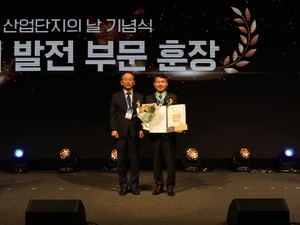
Korea's industrial complexes mark 62 years, investing W114.3b in AI manufacturing push
Over 1,000 attend '62nd Industrial Complex Day' ceremony in Daegu Smart green complexes to expand to 27 sites; AI pilot complexes to reach 13 Irim Electronics CEO receives Order of Industrial Service Merit; two firms earn presidential commendations South Korea's industrial complexes, now in their 62nd year, are pushing to reinvent themselves as hubs for AI-driven manufacturing and balanced regional growth. The government and Korea Industrial Complex Corp. plan to expand the number of smart green industrial complexes to 27 this year and grow the network of AI Experience (AX) pilot complexes — where small and medium-sized enterprises can test and apply AI in manufacturing processes — from 10 last year to 13. Korea Industrial Complex Corp. held the "62nd Industrial Complex Day Ceremony" at Exco in Daegu on Monday. The Ministry of Trade, Industry and Energy hosted the event, with Korea Industrial Complex Corp., the Korea Industrial Complex Business Association and the Global Leading Companies Association serving as co-organizers. More than 1,000 people attended, including government and National Assembly officials, local government representatives, and companies and workers based in industrial complexes. Industrial Complex Day is a statutory commemoration designated to honor the contributions of companies and workers in industrial complexes to national economic growth and industrial development. This year's event was held under the slogan "Regional strength toward the future, corporate ambition toward the world." The ceremony also laid out the government's policy direction to transform industrial complexes from conventional production zones into industrial hubs encompassing AI-driven manufacturing, carbon neutrality, youth employment and regional growth. The plan links the government's "five poles, three special zones" balanced-growth policy, the K-Industrial Complex Grand Transformation Strategy and the Manufacturing AI Transformation initiative to industrial complex policy. Korea Industrial Complex Corp. is investing about 114.3 billion won ($84.9 million) this year to build the foundation for AI transformation across industrial complexes. Smart green industrial complexes will expand to 27, while AX pilot complexes — where small and medium-sized enterprises can test and verify AI technology in manufacturing processes — will grow from 10 last year to 13. The corporation is also building out digital infrastructure, including 5G private networks, to enable real-time use of manufacturing data. The focus of industrial complex policy is also broadening — shifting from simply supplying production facilities to supporting tenant companies' digital transformation, energy efficiency and improved working conditions. Alongside the spread of AI in manufacturing, Korea Industrial Complex Corp. is pursuing carbon neutrality transitions, the creation of youth-friendly industrial spaces, and support for tenant companies' overseas expansion and growth. The ceremony also included awards for business leaders and workers who have contributed to the development of industrial complexes and the national economy. Jeong Jae-deok, CEO of Irim Electronics, received the Order of Industrial Service Merit (Silver Tower). Presidential commendations went to Kwon Sun-tak, CEO of Taesung Industries, and Kim Gang-hun, CEO of Ssangyoung Spinning. Lee Un-young, CEO of C&C Apparel, and Shin Young-su, CEO of Uwon Meditech, received prime ministerial commendations. "Behind South Korea's industrialization and economic growth, there have always been the business leaders and workers who stood by the industrial complexes and the factory floor," said Lee Sang-hun, chairman of Korea Industrial Complex Corp. "We will press ahead with the grand transformation of industrial complexes, grounded in the voices from the field, so that they can leap forward as future industrial spaces where AI-driven manufacturing innovation and regional growth flourish and companies can grow even bigger."
Sept. 14, 2026
-

Gov't to back startups using public data to predict crowds, detect black ice
18 public institutions propose 22 innovation challenges Up to 20 startups to be selected, each eligible for up to 100 million won in support Program links technology verification and prototype development to further R&D funding Startups will be invited to develop AI-powered technologies that predict crowd density at festivals and holidays and detect black ice on highways using closed-circuit television footage, the government announced Monday. The Ministry of SMEs and Startups said it will accept applications from startups for its "public data utilization support" project from Tuesday through Oct. 6. The initiative is part of the government's "National Startup Era" plan announced in April, which aims to open public data to startups and foster collaboration between startups and public institutions — simultaneously driving innovation in public services and helping startups commercialize their technologies. The program operates through two tracks: a top-down approach, in which public institutions propose challenges that can be addressed using data they are willing to share, and a bottom-up approach, in which startups request access to non-public data held by institutions and propose their own challenges. The ministry recruited collaboration challenges from public institutions last month and selected 22 tasks from 18 agencies under the top-down track. Participating institutions include the Ministry of Statistics, the Defense Acquisition Program Administration (DAPA), Korea Airports Corporation, the Korea Expressway Corporation and the Korea Energy Research Institute. Many of the proposed challenges involve everyday AI-driven services built on public data. The Ministry of Statistics proposed developing an AI model to predict population density in key areas during events such as festivals and national holidays, with the aim of preventing crowd-related safety incidents and improving public mobility. The Korea Expressway Corporation put forward a challenge to develop and demonstrate technology that uses CCTV footage to detect rain and snowfall conditions and provide advance warning of black ice. The system would enable real-time hazard monitoring and allow preemptive spreading of de-icing agents to prevent road accidents. Other challenges include a smart baggage delivery service using real-time airport data, AI-based farming information recommendations, a generative AI-powered K-design service and an upgraded AI-driven clinical pathway generation system. The challenges span a wide range of sectors beyond transportation and safety, including energy, agriculture, welfare, healthcare and culture. The program connects services that public institutions need on the ground with startups' AI and data capabilities, giving startups the opportunity to pursue technology verification and commercialization based on real challenges proposed by public agencies. Through this recruitment round, the ministry will select around 20 startups to carry out top-down challenges. Each selected company will receive up to 100 million won ($74,700) in commercialization funding to cover technology verification with public institutions, prototype development and related activities. Additional technology development support is also available. Through the ministry's startup growth technology development program, companies can receive up to 200 million won over a maximum of 18 months, and through the public-private joint technology commercialization program, up to 600 million won over a maximum of two years. However, actual support and its scope may vary depending on the requirements of each individual program. The bottom-up track — in which startups propose the data they need rather than responding to institution-defined challenges — is also under way. A total of 63 startups have applied, and the ministry is working with the Corporate Public Data Problem-Solving Support Center to secure the non-public data they require. Selected companies under this track will receive the same support as those chosen through the top-down approach: up to 100 million won in commercialization funding and access to linked technology development programs. A key feature of the program is that it goes beyond simply opening up data held by public institutions — it directly connects those institutions with startups to support the full commercialization process, including technology verification and prototype development. By running both the institution-led challenge track and the startup-driven data request track simultaneously, the program is designed to reflect the needs of both sides. "Supporting startups in leveraging public data will lay the foundation for accelerating the commercialization of innovative technologies and creating public services that citizens can tangibly benefit from," said Jo Gyeong-won, the ministry's director general for startup policy. "We will promote startup growth by expanding access to public data that companies are eager to use and broadening open innovation."
Sept. 14, 2026
-

78% of newlyweds say marriage improved their lives, survey finds
Yuhan-Kimberly, Seoul YWCA survey 570 newlywed school applicants 78.5% say life improved after marriage; 78.7% intend to have children 68.9% back equal housework sharing, but only 23.3% of wives say it happens About eight in 10 engaged and newly married couples say they intend to have children, and nearly as many report that marriage has improved their lives — yet more than 90 percent say they have not had enough conversation about how to divide housework and childcare after having a baby, pointing to a gap between expectations and practical preparation. Yuhan-Kimberly and Seoul YWCA said Monday that 78.5 percent of respondents in a survey of 570 applicants to the "2026 Newlywed School" reported their lives had changed positively after marriage. Among respondents who had no children or were currently pregnant, 65.33 percent said they planned to have children, while 13.33 percent were already pregnant — combining to 78.7 percent who indicated an intention to have children. Practical concerns about childbirth and child-rearing weighed heavily on respondents, however. They cited financial burdens, the responsibilities of parenthood and work-life balance as their main worries. Notably, 92.4 percent said they had not yet had sufficient discussions with their partner about dividing housework and childcare after having a baby. The gap between perception and reality on housework sharing is also reflected in national statistics. In the 2024 Ministry of Statistics social survey, 68.9 percent of respondents said housework should be shared equally — up 4.2 percentage points from two years earlier. Only 23.3 percent of wives, however, said equal sharing was actually happening in their homes. Social attitudes toward marriage have shown some signs of recovery recently. In the same survey, 52.5 percent said they believed people should get married, up 2.5 percentage points from 2022. Among those who chose not to marry, insufficient funds was the most common reason at 31.3 percent, followed by the burden of childbirth and child-rearing at 15.4 percent and unstable employment at 12.9 percent. Yuhan-Kimberly and Seoul YWCA held the "2026 Newlywed School Let's PICNIC" on Sept. 5 and Sept. 12 to give couples a space to work through these real-life concerns together. A total of 50 couples participated, ranging from those engaged to be married to couples in their seventh year of marriage. This year's program was designed for couples to share their thoughts on married life, childbirth, child-rearing and caregiving, and to explore each other's values. Sessions with experts were also offered. The Newlywed School is a corporate social responsibility program run jointly by Yuhan-Kimberly and Seoul YWCA that has continued for 18 years since its launch in 2009. Cumulative participation, both online and in person, has reached approximately 37,700 people. "It is important for couples to fully share their thoughts and concerns as they prepare for marriage, childbirth and child-rearing," a Yuhan-Kimberly corporate social responsibility official said. "We hope this Newlywed School served as an opportunity for couples to envision together what a family built on mutual respect and consideration looks like."
Sept. 14, 2026
-

Kiturami adds AI to carbon mat for automatic sleep temperature and vacancy detection
2027 3rd-generation carbon mat AI ondol to launch AI analyzes optimal sleep temperature and usage time to auto-adjust heating 160W low-power design; eco mode cuts energy use by additional 13% Kiturami has integrated AI into its carbon heating mat, enabling the product to automatically adjust warmth based on the user's sleep temperature preferences, usage patterns and whether the mat is occupied. Since introducing its third-generation carbon mat in 2020, the company has been shifting the competitive focus of the heating mat market away from heating elements and materials toward sleep-data-driven automatic control. The company announced Monday it will launch the "2027 Kiturami 3rd-Generation Carbon Mat AI Ondol," featuring an "AI Sleep Control System" and an "AI Smart Temperature System." The centerpiece of the new product is its AI mode. Activated by holding the AI button on the smart remote for three seconds, the mode learns the user's preferred sleep temperature and usage duration. It then analyzes accumulated sleep pattern data to automatically regulate the mat's temperature throughout the night. The product also detects when a user has left the mat. The AI Smart Temperature System monitors whether someone is lying on the mat, switches to a power-saving mode when the user gets up, then reverts to AI mode when they return — reducing the need for manual readjustment via the remote. According to Kiturami, the AI mode's accuracy in applying optimal sleep temperatures, calculating sleep duration, and detecting user departures and returns has been verified through testing by Korea Testing Certification (KTC). Standard heating functions are also included. The general heating mode allows temperature adjustment from 25 to 50 degrees Celsius in 1-degree increments. A sleep mode maintains 33 degrees Celsius for nine hours, and a three-level sauna mode operates at 45, 50 and 55 degrees Celsius. The mat fabric blends Tencel from Austria's Lenzing with an Aerosilver material. The product has received a washable certification for up to five machine washes and has passed domestic safety standards for children's textile products as well as radon and thoron testing. Kiturami first launched the third-generation carbon mat in 2020, when electric and hot-water mats dominated the heating mat market. The company has since expanded its carbon mat lineup by adding smart controls and sleep-enhancement features. The key difference in this latest model is that some temperature and time settings previously adjusted manually by users are now handled by AI-based automatic control. "We applied AI-based sleep control technology to read each user's sleep habits and deliver personalized heating," a Kiturami official said. "We will continue to advance our carbon mat lineup by integrating intelligent sleep control capabilities into our heating technology."
Sept. 14, 2026
-
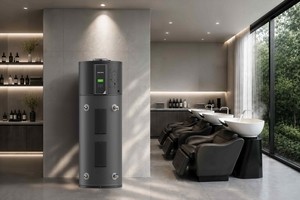
Kyung Dong Navien expands electrification lineup with air-source water heater
PCW351 combines heat pump and electric heater Company says energy efficiency is more than four times that of conventional electric water heaters Launch follows air-source boiler debut in June, expanding heat pump lineup Kyung Dong Navien is bringing an air-source water heater to the domestic market, using thermal energy drawn from the air to heat water. The move follows the June launch of its air-source boiler and extends the company's push to expand its electrification business across heating and hot water. The company announced Monday the launch of the Navien air-source water heater, a product that pairs a heat pump with an electric heater. Unlike conventional storage-type electric water heaters that heat water directly with an electric resistance element, the air-source water heater draws thermal energy from the surrounding air through a heat pump to produce hot water. Kyung Dong Navien applies a hybrid approach, combining the heat pump with an electric heater. Under normal conditions the heat pump handles hot water production, while the electric heater kicks in as a supplement when demand spikes. The company is targeting commercial facilities with high hot-water consumption — restaurants, cafes, guesthouses, hair salons and sports facilities. Heat pumps are inherently more energy-efficient than electric resistance heating. The Korea Energy Agency's energy and greenhouse gas information platform EG-TIPS notes that air-source heat pumps typically achieve a coefficient of performance (COP) of 3 or higher, compared with a COP of 1 for electric resistance water heaters, meaning they use significantly less electricity for the same output. According to Kyung Dong Navien, tests on the NWP500 — a North America model with the same specifications as the PCW351 — showed that cumulative hot water output over four hours was about 60 percent greater than that of a standard storage-type electric water heater, with energy efficiency more than four times higher. The company estimates the product could cut annual hot water operating costs by around 500,000 won ($371), though actual savings will vary depending on usage volume, electricity rates, and installation and operating conditions. The unit offers five operating modes: heat pump only, auto-save, rapid heat, electric heater only, and extended away. Users can switch modes or set day- and time-based schedules through the Navien Smart app. The hot water tank uses corrosion-resistant stainless steel and comes with an anti-Legionella function that periodically sanitizes the tank interior, along with freeze protection. An automatic water shutoff that activates upon leak detection is available as an optional feature. Kyung Dong Navien has been building heat pumps into a new pillar of its heating and hot water business. The company opened a Navien Heating Electrification Center on Jeju in May and launched the air-source boiler in June. Both the air-source boiler and the new water heater are produced at its Pyeongtaek factory. The Korea Energy Agency also includes heat pumps among the high-efficiency equipment eligible for support under its energy efficiency market development program. Air-source heat pump water heaters are classified as facilities that can improve the power efficiency of buildings and business premises, as they transfer thermal energy from the air using electricity. "The air-source water heater combines hot water technology and heat pump technology accumulated in domestic and overseas markets," a Kyung Dong Navien official said. "We will provide efficient heating and hot water solutions centered on the air-source boiler and air-source water heater."
Sept. 14, 2026
-

Daedong Mobility eyes US low-speed EV market after 4.5x sales surge in Japan
96 golf carts sold in Japan from Jan.–Aug., up 3.7x from a year earlier Orders secured at 5 golf courses for 150 units worth 2.6 billion won; talks underway with 20 more for 200 additional units Six-seat cart pilots underway in Utah, Texas and Georgia ahead of planned US market entry next year Daedong Mobility has grown its golf cart sales in Japan 4.5 times year-on-year and is now setting its sights on the US low-speed electric vehicle market. Having built a local sales and after-service network in Japan, the company is testing market viability in the United States with a six-seat premium cart. Daedong Mobility said Monday it sold 96 golf carts in Japan from January through August, generating about 1.6 billion won ($1.19 million) in sales. That compares with 26 units and about 400 million won in the same period last year — a 3.7-fold increase in volume and a 4.5-fold rise in revenue. The company has secured orders from five Japanese golf courses for 150 units worth about 2.6 billion won, and is in talks with 20 additional courses for roughly 200 more units. Its full-year sales target for the Japanese golf cart business stands at 5 billion won. Japan has roughly 2,500 golf courses, and annual domestic demand for golf carts is estimated at about 8,000 units, according to Daedong Mobility. The share of electric carts has also risen, climbing from 32 percent in 2021 to about 42 percent last year. Daedong Mobility developed a Japan-specific product tailored to the country's hot and humid climate and local usage patterns. The cart features a built-in air conditioner integrated from the design stage, as well as a slope-detection system that limits speed on downhill terrain. The company has also moved to build a distribution network. In January, it signed a contract with Hamada, a Japanese general trading company specializing in golf equipment. Hamada operates sales networks across the Kanto, Kansai, Mie, Kyushu and Okinawa regions. Daedong Mobility plans to use that network to expand its sales and after-service reach. "We have confirmed the competitiveness of a business model that combines locally tailored products, production quality and a sales-service network in Japan," said Park Gyeong-jun, head of Daedong Mobility's mobility business division. "We will take the market-entry model we built in Japan and extend it to key markets including the United States, nurturing golf carts and low-speed electric vehicles as drivers of global growth."
Sept. 14, 2026
-

Huons selected for 3 government-backed drug development projects in open innovation push
Consortiums formed with Surgeneex, Pino Bio and Pulse in Myers Projects cover mRNA eye drops, ADC and anticancer drug development Three of 10 Ministry of SMEs and Startups grants go to Huons partnerships Huons has teamed up with three domestic biotech ventures to win selection for a government-backed joint drug development program. Huons announced Monday that three consortiums it formed separately with Surgeneex, Pino Bio and Pulse in Myers were all chosen as final grant recipients under the drug pipeline co-development track of the "2026 Pharmaceutical Biotech Venture Collaboration-Based Technology Development Project," an initiative run by the Ministry of SMEs and Startups and administered by the Korea Technology and Information Promotion Agency for SMEs (TIPA). The track is a government support program designed to help biotech ventures and mid-sized or large pharmaceutical companies collaborate to advance promising drug candidates toward commercialization. Huons was named a joint research and development institution in three of the 10 projects selected this year. The company plans to leverage its in-house chemistry, manufacturing and quality control (CMC), production, nonclinical and clinical development, and regulatory affairs infrastructure to combine each venture's next-generation modality technology and drive the candidates into clinical trials. With Surgeneex, Huons will develop a treatment for refractory diabetic keratopathy that uses a proprietary lipid nanoparticle delivery system (RX-LNP) to convert mRNA therapeutics — previously dominated by injectable formulations — into a noninvasive eye drop. Huons will draw on its ophthalmology development expertise to handle efficacy and safety validation and establish the target product profile. With Pino Bio, the company will refine the Phase 1 trial protocol and pursue an investigational new drug (IND) submission for PBX-004, an ITGB6-targeting antibody-drug conjugate candidate developed using Pino Bio's proprietary platform. With Pulse in Myers, Huons will support formulation optimization of a subcutaneous injection and an IND application for Pearl-101, a peptide candidate targeting homologous recombination deficiency solid tumors resistant to existing anticancer drugs. The outcome amounts to policy recognition of an open innovation model that offsets the research and development risk inherent in early-stage drug materials held by biotech ventures by pairing them with the development and process infrastructure of established pharmaceutical companies, improving the odds of successful commercialization. "We will work with biotech ventures that each hold innovative technology in different modalities to achieve our shared goal of early clinical entry," Huons Chief Executive Song Su-young said. "We will consistently deliver open innovation results by identifying promising technologies and advancing them into clinical trials."
Sept. 14, 2026
-
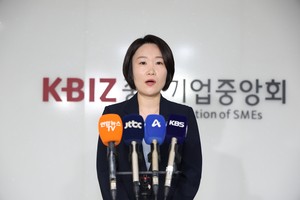
Three questions Lee So-young must answer before becoming minister
'Exaggerated' labor fears, years of SME opposition From 'anti-share-suppression bill' to calls for a slower delisting pace 'Deregulation minister' pledge sits uneasily with a record of regulatory bills With her National Assembly confirmation hearing set for Tuesday, questions are mounting over whether Lee So-young, nominee for minister of SMEs and Startups, has shifted her policy positions since leaving the legislature. As a lawmaker, Lee championed the Yellow Envelope Act, pushed for amendments to the Commercial Act and sponsored legislation aimed at boosting share prices — a reform-minded agenda that now sits in tension with some of her recent statements. Since her nomination, however, Lee has said the venture industry's calls to ease the 52-hour workweek cap "have a point," and has raised the need to slow down and carve out exceptions to tighter Kosdaq delisting standards and mandatory treasury-share cancellation rules. How she reconciles her past legislative philosophy with the interests of small and medium-sized enterprises and the venture sector is expected to be a central issue at Tuesday's hearing. Accountability for the Yellow Envelope Act called 'absurd' — but SME groups opposed it for years The first flashpoint is the Yellow Envelope Act. Lee was one of the key Democratic Party members who helped push the bill through a full plenary vote. In 2023, she described it as a "law guaranteeing lawful union activity" and said she would "pursue passage of the law guaranteeing lawful union activity for labor-management coexistence and the protection of workers' rights." She also called it "a bill that must pass in September" and "a core task for the September regular session of the National Assembly." Her personal stance remained consistent after the bill passed. On Aug. 27, 2025, responding to business community concerns that the law could reduce jobs, she said such fears were "truly an exaggeration." She pointed to the stark gap in treatment and legal standing between directly and indirectly employed workers, arguing that "it is not the right direction to push out workers — who make up more than half the population — so that they cannot even have their basic constitutional rights protected." As recently as this past May, in a broadcast interview on a terrestrial network, she dismissed opposition-party claims linking the Samsung Electronics union strike to the Yellow Envelope Act as "a forced argument." In the same interview, she personally explained the bill's core provisions — the right of subcontracted workers to demand bargaining with the primary contractor, an expanded scope for labor disputes, and limits on damage claims against workers engaged in lawful industrial action. She also said workers in special-employment and freelance arrangements were being left outside existing labor law protections, adding: "The time has come to change this labor law, with its very high threshold that we fought for and won over a long time." The arc is clear: "must pass" in 2023, "exaggeration" in 2025 when business groups warned of job losses, and "forced argument" in 2026 when asked about accountability for the law. Lee has consistently framed the Yellow Envelope Act as a necessary institutional reform to protect labor rights. The business community's position has been the polar opposite. When the bill cleared a National Assembly subcommittee in February 2023, the Korea Federation of SMEs warned that it would "increase illegal industrial action at workplaces, causing enormous damage to corporate and national competitiveness and bringing irreparable breakdown to labor-management relations." The Korea Federation of Mid-sized Enterprises labeled it a "bill that strangles businesses." Sponsor of anti-share-suppression bill now calls for slower delisting pace Among the legislative causes Lee pursued most aggressively as a lawmaker, observers inside and outside political circles point to share-price policy. In 2025, she sponsored the so-called anti-share-suppression bill, which would require that when a listed company's share price falls below 80 percent of its net asset value, the shares inherited or gifted by the largest shareholder be valued using the unlisted-company assessment method rather than the market price alone. The bill addressed the concern that, because a higher share price means a larger inheritance tax bill, controlling shareholders have little incentive to return value to shareholders through dividends or treasury-share cancellations. In a radio appearance this past May, Lee said that "from the perspective of major shareholders, a rising share price is not welcome," and argued that companies with abnormally depressed valuations should have fair value applied during inheritance and gift transfers to remove that perverse incentive. President Lee Jae Myung also backed the bill directly. In January this year, he hosted Democratic Party members of the "Kospi 5000 Special Committee" for lunch at Cheong Wa Dae. Lee presented the anti-share-suppression bill to the president in person and said she received his response: "Let's push ahead with it." Lee was widely seen as one of the lawmakers most focused on enhancing shareholder value. Her perspective shifted somewhat after she was nominated to lead the Ministry of SMEs and Startups. Visiting the Korea Venture Business Association on Thursday, she said that even when "the broad direction and thrust are right, the pace and specific method matter enormously," in reference to the financial authorities' push to tighten Kosdaq delisting standards and introduce a promotion-and-relegation system. She said it was necessary to examine whether the pace of the tightened delisting criteria — in effect since this year — was manageable for the market and whether existing shareholder protections were adequate, and indicated she was willing to debate the issue directly with the FSC chairman if needed. Lee also said that "because venture companies sometimes hold treasury shares over the long term to compensate executives and employees, there is clearly an aspect that needs to be viewed differently from large conglomerates," and said she would review the need to add exception provisions. Both the anti-share-suppression bill and the tighter Kosdaq delisting standards are, in broad terms, policies aimed at lifting share prices. Lee pledges to be a 'deregulation minister' — but her legislative record tells a different story The third issue is the "deregulation minister" label Lee has attached to herself. On Aug. 31, her first day reporting to the preparation office the day after her nomination, she said: "If appointed minister, I will go beyond support policies for small and medium-sized enterprises and venture companies, and ease unreasonable regulations with the mindset of a minister of deregulation." When she visited the venture business association on Thursday, she again said that most regulations blocking companies from trying new things fall under other ministries' jurisdiction, and that she would debate and persuade the relevant ministers directly when necessary. Her legislative record as a lawmaker, however, includes numerous bills that imposed new constraints on business activity. In 2020, she sponsored an amendment to the Trade Insurance Act that would bar the Korea Trade Insurance Corporation (K-SURE) from participating in or providing financial support for overseas coal-fired power generation projects. While framed as a climate and environmental policy measure, critics argued it could shrink the overseas contracting base not only for large engineering, procurement and construction firms but also for small and medium-sized supplier companies. In 2023, she sponsored an amendment to the Food Sanitation Act that would impose a blanket ban on imports of food, seafood and processed products from countries that have experienced nuclear power plant accidents. The Ministry of Food and Drug Safety said at the time that a ban unrelated to actual safety risk was excessive, while the Korea Food Service Industry Association warned of higher ingredient costs and added burdens on the restaurant sector. A bill she sponsored on Aug. 22 of that year — an amendment to the Act on Support for Environmental Technology and Environmental Industry — extended the regulatory reach a step further. Existing law restricted false, exaggerated or deceptive advertising related to a product's environmental performance; Lee's bill would have expanded that scope to cover a company's service provision and business operations as well. A bill she sponsored on Aug. 26 last year amending the Greenhouse Gas Emissions Trading Act also contained provisions that could directly affect costs for companies covered by the emissions trading scheme. Her bill would have capped the total free-allocation ratio for the fourth emissions trading plan period at 80 percent or below, and would have removed the existing ceiling of 100,000 won ($74) per ton on penalty surcharges imposed on companies that fail to meet their emissions submission obligations.
Sept. 14, 2026
-
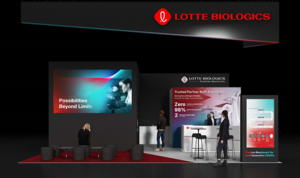
Lotte Biologics to hit Milan, Yokohama and San Diego in October blitz
Company to exhibit solo booths at CPHI Europe, BioJapan and World ADC San Diego Songdo Plant 1 approval puts Korea-US dual-site operation within reach Four global contracts secured this year as firm eyes broader customer pipeline Lotte Biologics is set to make a consecutive run at major global biotech events across Europe, Asia and North America in October as it ramps up its push for contract development and manufacturing organization contracts. The company announced Monday that it will participate in three back-to-back international events throughout the month: CPHI Milan 2026 in Italy, BioJapan 2026 in Japan and World ADC San Diego in the United States. At CPHI Milan 2026, running Oct. 6-8 in Milan, Lotte Biologics will operate a solo booth and deliver on-site presentations showcasing its large-scale commercial manufacturing capabilities and bispecific antibody technology. At BioJapan, held Oct. 7-9 in Yokohama, the company plans to highlight its automated manufacturing control system and digital twin-based production quality management. It will then present the technical capabilities of its antibody-drug conjugate CDMO platform at World ADC, running Oct. 12-15 in San Diego. Lotte Biologics received building-use approval for Plant 1 at its Songdo Bio Campus in June, moving the facility into the good manufacturing practice readiness phase. With a Korea-US dual-site operation linking the Songdo plant and its Syracuse, New York factory now coming into view, the company is positioning supply chain stability for global major pharmaceutical companies as a core competitive advantage. The company has secured a total of four contracts with global pharmaceutical and biotech firms since the start of this year. The October conference blitz is seen as an all-out effort to build a preemptive pipeline of potential customers in the United States, Asia and Europe ahead of the commercial launch of Songdo Plant 1 — with the aim of driving up the factory's utilization rate as early as possible. "As we approach GMP-Ready status, we are working harder than ever to attract potential customers by actively promoting our large-scale commercial manufacturing capabilities and the competitiveness of our Korea-US dual-site operation," a Lotte Biologics official said. "We will continue to pursue global partnerships and strive to expand our order book and strengthen our global competitiveness."
Sept. 14, 2026
-

PharmaResearch donates W320m worth of atopic skin cream to vulnerable children
8,000 units distributed across three public-interest organizations Class 2 medical device with patented ingredient shields damaged skin barrier Donation aims to ease treatment burden for low-income patients PharmaResearch has donated hundreds of millions of won worth of its moisturizing treatment to help atopic skin disease patients and underprivileged children access care. The regenerative medicine company said Monday it would donate 8,000 units of its adhesive transparent wound dressing "Rejuderm Ato Cream MD," valued at 320 million won ($238,000), to three public-interest organizations. The Korean Atopic Dermatitis Association will receive 3,000 units, ChildFund Korea 3,500 units, and Save the Children 1,500 units. The products will be distributed through each organization's welfare network to patients requiring specialized skin disease management and to low-income families with children. Rejuderm Ato Cream MD is a Class 2 medical device that forms a physical protective barrier over damaged skin, preventing moisture loss and shielding the skin. It contains hydrolyzed DNA (c-PDRN), a proprietary patented ingredient developed by PharmaResearch, and is currently used primarily as a non-reimbursed prescription treatment at dermatology and pediatric clinics. PharmaResearch said the donation is intended to improve treatment access for vulnerable patients facing growing financial burdens after insurers tightened reimbursement requirements for non-reimbursed moisturizers, while also delivering social value through the company's core regenerative-medicine products. "We hope this donation provides meaningful, practical support to patients and children whose daily lives are affected by skin conditions," CEO Son Ji-hun said. "We will continue to fulfill our corporate social responsibility by growing alongside local communities, drawing on our products and R&D capabilities."
Sept. 14, 2026
-

Osstemimplant's faculty seminar for dentists hits 100th session
Monthly program running for over a decade covers surgery and digital dentistry Company operates training centers in 34 countries with 150,000 graduates worldwide 3D-printer-based custom materials support a self-reinforcing education ecosystem Osstemimplant's academic exchange program for dentists, running for more than a decade, has reached its 100th session. The dental implant maker held its 100th Faculty Seminar at the main auditorium of Magok Twin Tower in Gangseo-gu, Seoul, on Saturday, the company announced Monday. Launched in March 2016, the seminar has been held monthly, reaching the milestone in just over 10 years. The Faculty Seminar brings together dental school faculty, academic society members and clinical specialists to share the latest knowledge and surgical techniques across implantology, prosthetics, orthodontics, digital dentistry and general oral health. Invited universities and academic societies propose their own topics, and speakers and participants engage in open discussion — a format that has established the event as a practical academic platform for building real-world clinical skills. Osstemimplant founded its dedicated training institution, the Osstemimplant Implant Center (OIC), in 2001 — the first of its kind in South Korea — moving beyond product demonstrations to offer hands-on surgical education. In 2018, the company introduced a tiered curriculum called the Master Course. Top instructors identified through the Faculty Seminar go on to teach in the Master Course, and the company supplies its own infrastructure — including practice mannequins and 3D-printer-based custom training materials — creating a self-reinforcing education ecosystem. The model has expanded internationally: Osstemimplant now operates 38 local OIC centers across 34 countries. Of more than 140 permanent training facilities worldwide, over 100 are located outside South Korea, and the cumulative number of dentists who have completed online or in-person programs has reached 150,000. Osstemimplant is evolving its long-term clinical training and academic exchange infrastructure — once seen primarily as a corporate social responsibility initiative — into a core sales and marketing engine that locks in a global community of dentists and drives brand loyalty for its homegrown dental devices. "We will develop the Faculty Seminar into a platform that bridges future technology and clinical practice, in line with the changes sweeping dental care as digital and AI technology takes hold," an official at Osstemimplant's dental research institute said. "We will spare no effort in supporting education so that strengthening clinicians' capabilities ultimately translates into better care for patients."
Sept. 14, 2026
-
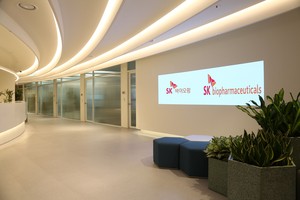
SK Biopharm earns top ESG rating for 3rd consecutive year, a first among Korean pharma firms
Company achieves highest tier in MSCI index amid stricter global standards; cenobamate prescriptions surpass 300,000 patients worldwide SK Biopharm has become the first South Korean pharmaceutical company to receive the highest rating in the MSCI ESG assessment for three consecutive years, the company announced Monday. SK Biopharm said it received an AAA rating — the top tier — in MSCI's 2026 ESG evaluation. No other domestic pharmaceutical company has maintained the AAA rating for three straight years. The MSCI ESG assessment benchmarks a company's ability to manage environmental, social and governance risks and opportunities against global industry peers. SK Biopharm earned the top score even as MSCI tightened its methodology, raising disclosure transparency requirements and data verification standards. In this year's evaluation, SK Biopharm received globally leading scores across three key assessment areas: corporate behavior, human capital development, and product quality and safety. Evaluators praised the company's compliance framework and ethics management infrastructure, including tax and accounting transparency. Its membership in Rx-360, a global initiative to strengthen pharmaceutical supply chain quality, and its company-wide Good Practice standards education program also contributed positively to the result. The company's new drug business also translated into measurable social value. Global cumulative prescriptions of cenobamate — its independently developed epilepsy treatment — have surpassed 300,000 patients. SK Biopharm said the total social value it created last year reached 498.7 billion won ($370 million), of which 452.4 billion won came from social outcomes generated through its products and services, including improvements in patients' quality of life. The three consecutive AAA ratings reflect recognition of the company's sustainability credentials — achieved after successfully establishing a direct sales operation in the United States in the highly competitive global central nervous system drug market, while also fully meeting the increasingly stringent non-financial evaluation criteria of global institutional investors. "Maintaining the top MSCI ESG rating for three consecutive years — a first among Korean pharmaceutical companies — reflects recognition of our transparent board-centered governance, responsible management, and commitment to quality and safety," said SK Biopharm President Lee Dong-hoon. "We will continue to expand social value through innovative new drugs and solidify our growth foundation through ESG management that meets global standards."
Sept. 14, 2026
-
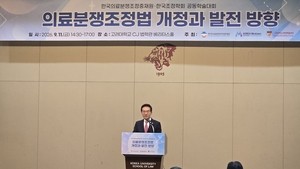
Can dialogue replace lawsuits in medical disputes? A new law aims to find out
Revised Medical Dispute Mediation Act set to take effect next May Government, medical and legal experts seek path forward Faster relief for patients left in the dark after medical accidents A safer environment for doctors to practice without fear of prosecution 'Turning a good law into a good system starts now' For the revised Medical Dispute Mediation Act — set to take effect next May — to take hold in clinical settings, experts say the law must both deliver swift relief to patients harmed by medical accidents and create an environment in which medical professionals can practice without the burden of excessive criminal liability. The Korean Association for Mediation, the Korea Medical Dispute Mediation and Arbitration Agency, and the Dispute Resolution Center of Korea University's Institute of Legal Studies jointly held an academic conference Friday at Veritas Hall in the CJ Law Building at Korea University in Seongbuk-gu, Seoul. The event focused on the revision and future direction of the Medical Dispute Mediation Act. The conference brought together officials from the Ministry of Health and Welfare and the Korea Medical Dispute Mediation and Arbitration Agency alongside medical and legal scholars and practicing attorneys. Participants shared anticipated issues ahead of the law's implementation and examined areas for improvement, with the government, the agency overseeing the system, and frontline medical and legal professionals all represented. The Medical Dispute Mediation Act governs mediation and arbitration procedures through the Korea Medical Dispute Mediation and Arbitration Agency, with the aim of providing swift and fair relief to victims of medical accidents while fostering a stable environment for healthcare professionals to practice. Presenters said the revised law focuses on building a framework that moves away from relying solely on civil and criminal litigation to resolve medical disputes, instead making use of specialized medical assessment and mediation. Key changes include mandatory liability insurance for medical institutions and the introduction of a disclosure requirement for medical accidents. The revision also expands compensation for unavoidable medical accidents, strengthens the medical assessment and mediation system, and introduces measures to ease the criminal liability burden on medical professionals performing high-risk essential procedures that meet certain criteria. The intent is to give patients a timely and meaningful opportunity to recover from harm, while providing medical professionals with institutional safeguards so they need not fear criminal punishment solely because of an unpredictable medical outcome. The Ministry of Health and Welfare said the existing dispute resolution structure — centered on civil and criminal litigation — can delay relief for patients and increase the financial and criminal liability burden on medical professionals. The ministry added that the structure may also be contributing to a reluctance among doctors to enter high-acuity, essential medical fields. Patients will also see tangible changes. When a serious medical accident occurs, healthcare institutions will be required to explain the nature of the incident, how it happened, and what follow-up measures were taken. Another notable provision bars expressions of comfort, empathy, or regret made by medical professionals during such explanations from being used as evidence of civil or criminal liability. The measure is designed to reduce situations in which medical staff avoid communicating with patients out of legal concern, and to encourage open dialogue and explanation in the aftermath of an accident. Participants at the conference said the law's effectiveness would be difficult to achieve if medical accidents were viewed purely as a conflict between patients and doctors. They argued that the inherent uncertainty of medical practice must be taken into account, and that relief, disclosure, mediation, incident reporting and prevention must all be addressed together. Yu Byung-hyun, president of the Korean Association for Mediation and director of the Dispute Resolution Center at Korea University's Institute of Legal Studies, said medicine is inherently accompanied by uncertainty and that even the most diligent care can produce unexpected outcomes. "The rational direction for medical law is to create an environment where patients receive swift and substantive relief, and where medical professionals can practice with conviction, free from the anxiety of excessive criminal liability," he said. Yu said medical accidents that occur in the course of good-faith care should not be treated solely as grounds for criminal punishment and stigma. "They must be developed into a patient safety issue through relief, explanation, mediation, reporting and learning," he said. Yu also stressed the importance of ensuring the law takes root as a system that people can feel in their daily lives. "Once a law is promulgated, it takes on an organic life of its own — like a poem that has left the poet's hands," he said. "The concrete shape of the system is formed as the intent of the legislators is joined by the interpretations of academics and practitioners, and by experience from the field." "Turning a good law into a good system starts now," Yu said. "Through the stable implementation of the revised law, we must build a medical environment where patients are protected swiftly and medical professionals can practice with conviction."
Sept. 14, 2026
-

Simmons launches 10 new fall/winter products under 'high-end comfort' concept
Four frames, six bedding items in new lineup Natural leather, wood veneer among materials used Robot vacuum compatibility, charging ports among added conveniences Simmons announced Monday the launch of 10 new fall/winter products. Built around the concept of "high-end comfort," the lineup comprises four bed frames and six bedding items. The collection targets consumers who value restrained design, quality and comfort over flashy aesthetics or passing trends. The four new frames are the B1, B3, Lutian and Kina. The flagship B1 features a large headboard reminiscent of an art wall in a luxury hotel suite. It uses brushed fumigated wood veneer to bring out the texture and depth of natural wood, and incorporates Italian genuine leather. The B3 combines multiple materials and emphasizes practicality. Its base sits 12.3 centimeters off the floor to accommodate robot vacuums, and a floating design gives the bed a weightless, hovering appearance. The Lutian comes with flicker-free lighting that minimizes subtle flickering, along with a floating drawer. A bedside table fitted with power outlets and charging ports can be added to the configuration, making it suitable for twin-bed and other varied bedroom arrangements. The Kina pairs red oak wood veneer with PU leather and metal legs. Its generous under-bed clearance and PET floor mat are designed with cleaning, ventilation and noise reduction in mind. All four new frames use eco-friendly materials rated E0, a higher standard than the nationally certified E1 benchmark. Alongside the frames, Simmons is also releasing six bedding items: the Berga, Menzel, Dosel, All-Season Palette Spread, Basic Pillow Cover and Mattress Quilted Cover. The bedding line focuses on restrained design, natural patterns and soft textures. Consumer expectations for the bedroom are shifting. What was once a space centered on beds and storage furniture has evolved into one where people consider both the quality of rest and interior aesthetics. Shoppers are increasingly drawn to materials and colors built to last rather than designs that follow fleeting trends, and convenience is becoming a factor in furniture selection as well. In response, bedroom furniture makers are introducing products that address everyday practicality — cleaning and charging, for instance — alongside design. The new Simmons lineup reflects this shift, pairing premium materials and design with practical features such as under-bed clearance for robot vacuums, charging ports and storage space. "More consumers are looking to furnish their bedrooms with designs and quality that stand the test of time, in a comfortable and reassuring atmosphere," a Simmons official said. "We will deliver a differentiated bedroom experience through enduring quality and refinement."
Sept. 14, 2026
-

Discarded banners get new life as 'conscience umbrellas' at Sejong traditional markets
Umbrella stands installed at two Sejong markets Visitors shielded from heat, sudden rain Satisfaction survey planned this month to gauge impact The Korea Technology and Information Promotion Agency for SMEs (TIPA) announced Monday that it donated "conscience umbrellas" made from discarded banners to the Jochiwon traditional market and Daepyeong Market in Sejong on Friday. The initiative was designed to promote resource recycling by repurposing discarded banners while easing the inconvenience of market visitors caught in extreme heat or sudden rain. TIPA collected used banners, had them made into conscience umbrellas and placed them — along with dedicated stands — at the entrance of the Jochiwon traditional market's parking tower and at the entrance of Daepyeong Market. The umbrellas are available for visitors to borrow freely during heat waves or rain and return after use. To go beyond a one-time donation and gauge actual user satisfaction, TIPA plans to conduct a star-sticker satisfaction survey at the markets this month. Discarded banners — widely used for elections, events and promotional campaigns before being thrown away — are among the most common forms of household waste. Local governments and public institutions are increasingly running upcycling projects that repurpose the material into everyday items such as shopping bags, sacks and umbrellas. "I hope this initiative helps improve the convenience of traditional market visitors and brings a little more vitality to local markets," TIPA President Kim Young-shin said. "We will continue to pursue a variety of eco-friendly activities that we can carry out together with local communities."
Sept. 14, 2026
-

Kibo shields flood-hit SMEs from default classification with special relief measures
Targets SMEs in special disaster zones: Andong, Uiseong-gun, Geoje, Tongyeong Guarantee default processing deferred even if arrears, seizures or credit deterioration occur Covers areas hit by heavy rains in July–August; disaster damage certificate required Korea Technology Finance Corporation said Monday it will implement special relief measures to prevent small and medium-sized enterprises in flood-hit special disaster zones from being classified as insolvent due to temporary liquidity shortfalls. The measures apply to SMEs with business premises in designated special disaster zones — including Iljik-myeon, Namseon-myeon and Imha-myeon in Andong, North Gyeongsang Province; Danchon-myeon in Uiseong-gun; and Geoje and Tongyeong in South Gyeongsang Province. Companies must verify actual damage through a disaster SME confirmation certificate or equivalent documentation. Parts of Andong and Uiseong-gun in North Gyeongsang Province were declared special disaster zones on Aug. 7 following heavy rainfall in July. The affected areas included Iljik-myeon, Namseon-myeon and Imha-myeon in Andong, and Danchon-myeon in Uiseong-gun. The Ministry of Interior and Safety said the areas met the criteria for the designation after local government self-assessments and joint on-site inspections by related ministries. In South Gyeongsang Province, Geoje and parts of Tongyeong — including Sanyang-eup and Bongpyeong-dong — were initially declared special disaster zones following heavy rains from Aug. 15 to 18. Geoje recorded 956.1 millimeters of rainfall during that period, while Tongyeong received 766.9 millimeters. Geoje's peak hourly precipitation reached 124.5 millimeters. The storms caused flooding of homes, schools and traditional markets, as well as road damage and landslides. Kibo said the measures are designed to prevent companies facing temporary liquidity problems from natural disasters from having those difficulties escalate into formal guarantee default proceedings. Qualifying companies will have guarantee default processing deferred for a set period even if they fall behind on principal or interest payments, or if their business premises are subject to seizure, provisional seizure or provisional disposition. Deferral also applies when a company is registered for debt default or public information with Korea Credit Information Services, or when the representative's credit standing deteriorates. Kibo will also postpone its own bond-preservation measures — including provisional seizures and dispositions it would otherwise execute directly — giving affected companies time to stabilize rather than immediately initiating debt-recovery procedures when financial problems arise during the recovery process. However, companies for which operational recovery is objectively deemed unlikely — such as those that have already received a guarantee default notice from a creditor bank, or whose premises are subject to ongoing auction or public sale proceedings — are excluded from the measures. "I hope these measures help flood-affected SMEs recover quickly and restore normal operations," Kibo Chairman Kwon Hyung-taek said. "We will do our best to support affected companies in rebuilding their business foundations as soon as possible."
Sept. 14, 2026
-
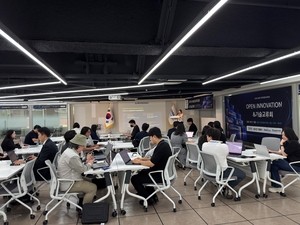
Korea SMEs and Startups Agency holds deep tech startup technology exchange with large and mid-sized firms
Six firms from AI, telecom, cloud, education, IT infrastructure and semiconductor sectors take part One-on-one PoC meetups open door to procurement, technology transfer and investment talks The Korea SMEs and Startups Agency announced Monday that it held a technology exchange event for deep tech startups enrolled in its Deep Tech Startup Academy on Friday at the academy's campus in Yangcheon-gu, Seoul. The event focused on connecting deep tech startups with large and mid-sized companies so the startups could validate their technologies in real industrial settings. It was designed to create touchpoints that could lead from proof-of-concept trials to follow-on business cooperation, including procurement, technology transfer and investment. This year's advanced track of the Deep Tech Startup Academy admitted 198 deep tech startups selected on the basis of their technological merit, business viability and growth potential. The companies are technology-intensive firms with proprietary core technologies and intellectual property, and a significant number have already entered the technology-validation stage ahead of industrial deployment. Six large and mid-sized companies from the AI and telecommunications, cloud, education, IT infrastructure and semiconductor sectors participated in the exchange as prospective partner firms. The agency matched enrolled startups with partner firms based on cooperation areas the firms had indicated in advance, then structured the program in three stages: on-site meetups followed by post-event consultation support. The aim was to ensure the exchange did not end as a one-off encounter but led to substantive follow-up discussions. The event opened with an open-innovation seminar in which each company outlined its collaboration strategy and priorities, followed by four sessions of one-on-one proof-of-concept meetups. Enrolled startups visited each partner firm in turn, presenting their technologies and solutions and discussing how they could be applied in actual business environments. Im Ji-hyeon, head of the agency's Youth Startup Academy, said the agency would continue to expand cooperation opportunities with large and mid-sized companies "so that the innovative technologies of deep tech startups can be validated in real industrial settings and translate into commercialization outcomes." The agency supports enrolled startups in technology validation and market entry both domestically and abroad. It plans to run follow-on programs to help the collaboration projects discussed at the exchange move toward actual commercialization.
Sept. 14, 2026
-

Yuhan marks centennial with online history museum
A century of milestones brought to life through historical records Founder Yu Il-han's philosophy and professional management system highlighted Public-interest legacy of full asset donation preserved for all to access Yuhan has unveiled a digital exhibition space offering a comprehensive look at its century-long history. The pharmaceutical company announced Monday the official opening of an online history museum commemorating its 100th anniversary, bringing together the company's milestones and founding spirit in a single digital platform. The museum was built on "Yuhan 100-Year History," a comprehensive chronicle compiled for the centennial. It reconstructs a century of growth since the company's founding in 1926, tracing its contributions to public health through digital content rich in period photographs and key events organized by era. The centerpiece exhibition, "Great Visionary, Dr. Yu Il-han," chronicles the life of the company's founder, who returned to Korea after building a successful business career in the United States and went on to establish the company while dedicating himself to the independence movement. The section examines the corporate governance and organizational culture unique to Yuhan — including Yu's belief in giving back, embodied by his donation of his entire fortune to society, the public-interest work carried out through the Yuhan Foundation, and the professional management system he established early on by separating ownership from operations. Alongside this, the museum features a range of multimedia content — including a centennial commemorative video, card news and highlights from major anniversary projects pursued this year — and is designed to be accessible to the public at any time, free of geographic or time constraints. The launch marks Yuhan's effort to extend its brand identity to future generations by systematically preserving in digital form the symbolic assets of its founder's philosophy of social contribution and its professional management system — a rare achievement among domestic pharmaceutical companies to have reached the 100-year mark. "We hope the online history museum will serve as a window through which people can look back on the past 100 years and share the founding spirit and corporate values with future generations," a Yuhan official said. "We will continue to pursue challenge and innovation as we open a new century dedicated to human health and social progress."
Sept. 14, 2026
-
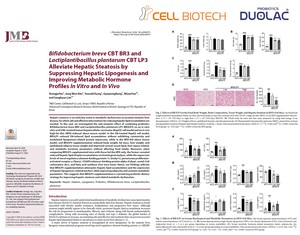
Cell Biotech's Duolac probiotic blend shown to reduce liver fat, not just body fat
Liver tissue weight down 41%, intracellular lipid droplets reduced 63% Strains derived from newborns and kimchi suppress fat-synthesis genes in liver cells Metabolic hormone normalization points to gut-liver axis as target for metabolic disease treatment New research shows that strains in Cell Biotech's probiotic brand Duolac can suppress fat accumulation in the liver and improve metabolic conditions, building on earlier findings about the product's weight-loss effects. Cell Biotech said Monday that a joint study by its R&D center and the World Institute of Kimchi — a government-funded research institute — had identified the biological mechanism by which a combination of its patented lactic acid bacteria strains CBT-BR3 (Bifidobacterium breve) and CBT-LP3 (Lactiplantibacillus plantarum) inhibits fatty liver development. The findings were published in volume 36 of the Journal of Microbiology and Biotechnology, an SCIE-indexed international academic journal. The research team evaluated changes in hepatic metabolic markers using a human liver cell model (HepG2) with induced fat accumulation and a mouse model in which obesity was induced through a high-fat diet. When the CBT strains were administered orally to high-fat-diet mice for six weeks, body weight fell 10.8 percent, body fat 16.4 percent and abdominal fat 41.7 percent compared with the control group. Liver tissue weight dropped 41.1 percent, and the number of lipid droplets in liver tissue fell 63.3 percent — from an average of 360 in the control group to 132. Food intake showed no significant difference between groups, confirming that the reduction in hepatic fat accumulation occurred independently of dietary intake. At the molecular level, expression of key genes involved in fat synthesis in liver cells — Srebp1c, Pparγ, Cebpα, Acc and Fas — fell by an average of 59.7 percent. Liver damage markers AST and ALT declined 39 percent and 46.1 percent, respectively, while leptin levels and the leptin-to-adiponectin ratio — indicators of insulin resistance and obesity — also dropped significantly. CBT-BR3 is derived from neonatal fecal matter and CBT-LP3 from kimchi, a traditional fermented food. Both strains are listed on the US Food and Drug Administration's Generally Recognized as Safe registry, confirming their safety. The study is significant for scientifically demonstrating, in both cell and animal models, that a specific probiotic combination can reduce hepatic fat accumulation by suppressing fat-synthesis gene expression in liver cells and regulating metabolic hormone secretion — validating the potential of lactic acid bacteria to address metabolic fatty liver disease. "Fatty liver, if left untreated, carries a high risk of progressing into complex metabolic syndrome conditions such as diabetes and cardiovascular disease," a Cell Biotech official said. "Following our earlier research on weight reduction in companion animals, we have now demonstrated the mechanism behind the suppression of hepatic fat accumulation and gene expression. We will continue to scientifically verify the potential of the microbiome across various metabolic health areas and develop differentiated probiotic solutions."
Sept. 14, 2026
MOST READ
- 1KAIST develops high-performance bio-based adhesive using E. coli instead of petroleum
- 2Pope Leo XIV declines French honors and banquet, accepts only private meeting with Macron
- 3Daimler Truck unveils next-generation transport solutions at IAA 2026
- 4What was Rachmaninoff's performance fee? A 1928 price list tells all
- 5Samsung Biologics union's show of force backfires at the bargaining table
- 6APR says hair-loss treatment research published in international journal
-
WORLD

US warns of punishment for anyone enabling Iran's Strait of Hormuz toll scheme
-
INDUSTRY
Toyota union puts productivity first; Hyundai Motor union demands bigger share of profits
-
FINANCE

National Growth Fund to invest $531M in FuriosaAI, which rebuffed Meta's $800M takeover bid
-
INDUSTRY

Korea Shipowners' Association holds amateur baduk tournament for Maritime Day