
- HOME
- SMB·BIO
-

SK Biopharm's cenobamate wins Japan approval, completing Northeast Asia regulatory sweep
Epilepsy drug enters world's second-largest market through partner Ono Pharmaceutical South Korea, China and Japan approvals secured; milestones and royalties to follow Additional Phase 3 trials targeting generalized seizures and pediatric patients underway SK Biopharm's cenobamate, an innovative epilepsy drug, has received marketing approval in Japan, completing the company's entry into all three major Northeast Asian markets — South Korea, China and Japan. SK Biopharm announced Wednesday that its local partner Ono Pharmaceutical had obtained manufacturing and marketing approval from Japan's Ministry of Health, Labour and Welfare for cenobamate, sold in Japan under the brand name Excopri. Japan is the world's second-largest epilepsy market by country after the United States, with an estimated 1 million patients — roughly 30 percent of whom are considered treatment-resistant, meaning existing medications fail to control their seizures. The approval was based on results from a multinational Phase 3 trial (YKP3089C035) conducted in South Korea, China and Japan. The trial demonstrated a statistically significant reduction in seizure frequency compared with placebo, along with an acceptable safety profile, in adults with treatment-resistant focal seizures. With this approval, SK Biopharm has cleared the regulatory bar in all three Northeast Asian countries. The company had previously received marketing approvals in South Korea in November 2025 and in China in December 2025, with commercial prescriptions in China beginning in March this year. In Japan, Ono Pharmaceutical secured final approval roughly a year after submitting its new drug application in September 2025. Under a technology licensing agreement signed with Ono Pharmaceutical in October 2020, SK Biopharm will receive a milestone payment tied to this approval and will earn tiered royalties on future local sales. The size of the milestone payment has not been disclosed under the terms agreed by both parties. Cenobamate has now received marketing approval in more than 45 countries, including the United States and across Europe. In the US, SK Biopharm operates a direct sales operation, while in Asia and Europe it pursues a two-track strategy pairing direct sales in key markets with partnerships with established local pharmaceutical companies. Ono Pharmaceutical is currently running separate Phase 3 trials in Japan for adolescent and adult patients with primary generalized tonic-clonic seizures and for pediatric patients with focal seizures. The Japanese approval marks a turning point that strengthens SK Biopharm's global cash-generating capacity — adding a stable royalty pipeline across Asia through licensing partners, anchored by the world's second-largest single-country epilepsy market, on top of the direct-sales revenue the company maximizes in the United States. "Japan is a strategic market we must secure to drive cenobamate's global expansion," SK Biopharm President Lee Dong-hoon said. "Now that we have completed our Northeast Asian foothold connecting South Korea, China and Japan, we will focus on delivering full commercial results by expanding local prescriptions."
Sept. 16, 2026
-
Korea Federation of SMEs urges procurement reform to curb excessive price competition
Forum with Public Procurement Service chief draws 20 SME leaders Groups call for higher MAS threshold, advance payment reform Kim Ki-moon: 'Urgent' to guarantee fair prices in procurement system South Korea's small and medium-sized enterprise community has called on the government to reform the public procurement system to ease excessive price competition and ensure fair pricing for SME suppliers. The Korea Federation of SMEs held a forum Wednesday at its Yeouido headquarters in Seoul, inviting Public Procurement Service Commissioner Baek Seung-bo to discuss pressing policy issues and potential reforms in public procurement. The forum brought together 20 SME representatives from various industries alongside Baek and other Public Procurement Service officials. The SME leaders submitted a total of 23 reform proposals based on challenges they face in the field. Key requests included establishing guidelines for unit-price sliding adjustments and revision applications in goods manufacturing contracts, raising the threshold for second-stage competition under the Multiple Award Schedule (MAS) system, reflecting SME views on the abolition of mandatory MAS contracting by local governments, and improving advance payment rules. The SME community particularly stressed that intensifying price competition in the procurement process could hurt not only profitability but also product quality, calling for institutional safeguards to guarantee fair pricing. Korea Federation of SMEs Chairman Kim Ki-moon said procurement administration "carries great significance in securing the country's domestic manufacturing base — and by extension laying a solid foundation for the national economy — by purchasing goods produced directly by domestic companies." He added that it was "urgent to establish a procurement system that guarantees fair prices so that excessive price competition does not worsen the financial difficulties of SMEs participating in the procurement market or drag down product quality."
Sept. 16, 2026
-
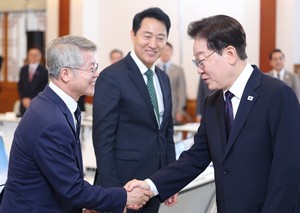
Lee government's Gwangju-South Jeolla merger sparks debate over fate of regional SME agency
Government pushes to fold regional SMEs and Startups office into new integrated city Officials and industry warn of gaps in support for small businesses and crisis response Concerns raised over lack of expertise if functions transfer to local government Since the Lee Jae Myung government launched the South Jeolla-Gwangju Special Integrated City in July, a new controversy has emerged: whether to fold the Gwangju-South Jeolla Regional Office of the Ministry of SMEs and Startups into the newly created city. Officials within the Ministry of SMEs and Startups and industry groups warn the move could leave small and medium-sized enterprises and small business owners without adequate support or crisis response. According to a government document obtained Wednesday outlining a plan to reorganize the functions of special regional administrative agencies in the South Jeolla-Gwangju Special Integrated City, the government is pursuing a transfer of certain duties previously handled by central government agencies at the regional level to the integrated city. Special regional administrative agencies are national bodies established by central ministries to carry out their mandates locally; the Gwangju and South Jeolla area has 599 such agencies affiliated with 23 ministries. The Gwangju-South Jeolla Regional SME Office is one of them. In the small business sector, functions the regional SME office has long handled — including workforce support, SME policy implementation, traditional markets and small business assistance, venture and startup support, exports, and unfair trade investigations — are among those slated for transfer. The plan to fold the Gwangju-South Jeolla Regional SME Office into the integrated city is being pursued as part of that process. The Gwangju-South Jeolla Regional SME Office serves as the on-the-ground arm of the central government for local small businesses and self-employed operators. Beyond research and development and export support, it also handles unfair trade investigations and public procurement assistance. Concerns have been raised that abolishing the office could create a vacuum in SME and small business policy implementation. Critics say policy consistency, enforcement capacity and accountability at the central government level could deteriorate, and that the ability to mount a swift national-level response in the event of a major crisis or disaster could be compromised. A precedent exists: when Jeju Special Self-Governing Province was established in 2006, some functions and staff of the Jeju Regional SME Office were transferred to the provincial government, and problems stemming from a lack of expertise have persisted ever since. "During COVID-19, the Gwangju-South Jeolla Regional SME Office handled loss compensation payments at Jeju's request, precisely because local governments have inherent expertise limitations due to the rotating assignment system," a Ministry of SMEs and Startups official said. Within the ministry, concern is growing that the Gwangju-South Jeolla office is the only regional agency being targeted for abolition, unlike counterparts in other ministries. Agencies affiliated with the Ministry of Employment and Labor and the Ministry of Climate, Environment and Energy are set to retain their organizations while transferring only their administrative duties and budgets to the integrated city — whereas the SME ministry's regional office faces outright dissolution. The status of the office's civil servants is also in dispute. If the Gwangju-South Jeolla Regional SME Office's functions transfer to the integrated city, some national civil servants under the ministry could be reclassified as local government employees. The shift from national to local civil service raises questions about how personnel management, promotion systems and working conditions would be guaranteed. There are also fears that the dissolution could spread to other regions. If the Gwangju-South Jeolla office is abolished following the 2006 Jeju precedent, other local governments may push for similar transfers of their own regional SME offices. Officials within the ministry warn that such a domino effect could weaken the central government's nationwide SME policy implementation framework. Industry voices share those concerns. If regional SME offices disappear, businesses in affected areas could face a support gap compared with other regions, and local governments may struggle to immediately take on specialized functions such as unfair trade investigations and research and development work. "The Gwangju-South Jeolla Regional SME Office was already handling work for Jeju after its office was abolished, and if Gwangju and South Jeolla lose theirs while other regions still have one, local companies will face discrimination," said Kim Hong-seok, an executive at the Inno-Biz Association. "Even for unfair trade work alone, you need specialists who have dealt with disputes for years — if that gets handed to a local government, businesses will inevitably run into serious difficulties."
Sept. 16, 2026
-
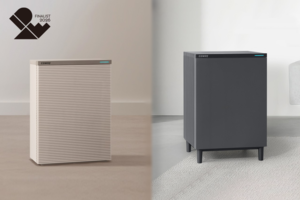
Rental appliance firms shift from dehumidifiers to air purifiers as autumn nears
Sales focus shifts from summer dehumidifiers and ice water purifiers to autumn air purifiers Coway, SK Magic, Chungho Nice ramp up air purifier promotions and lineups Kyowon Wells expands B2B push; dehumidifiers broaden into year-round appliances Rental and home appliance companies that spent the summer pushing dehumidifiers and ice water purifiers have pivoted to air purifiers as they enter their autumn and winter sales season. Coway has expanded its air purifier lineup, SK Magic is running subscription discounts on air purifiers through the end of this month, Chungho Nice has launched a new AI-equipped model, and Kyowon Wells is extending its reach into the business-to-business market, targeting daycare centers and care facilities. Industry sources said Wednesday that rental companies are shifting their sales strategy away from humidity management toward indoor air quality. Coway added 50-square-meter and 66-square-meter versions of its Square Fit air purifier in April, rounding out a four-model lineup that also covers 38 and 82 square meters. In May, the company expanded its inverter dehumidifier range, and in June it ran summer promotions on ice water purifiers, air conditioners and dehumidifiers. As summer winds down, the marketing emphasis is swinging back to air purifiers. Coway is also selling its Heatwave warm-air purifier, introduced last year, positioning it to capture both air quality and heating demand as temperatures drop. "We will continue to roll out promotions and membership benefits optimized for each season's lifestyle," a Coway official said. SK Magic is running subscription discounts on its All Clean and D'Art air purifier lines through Sept. 30, cutting monthly fees on select models and offering half-price subscriptions for the first six months. The company is targeting autumn air purifier demand with products segmented by coverage area and use environment, including models designed for households with pets. Chungho Nice is aiming to carry its summer dehumidifier momentum into air purifier sales. The company's dehumidifier sales rose about 40 percent in the first half of this year compared with the same period last year. In February, it launched the Summit Tower, an air purifier covering roughly 83 square meters that uses AI to automatically adjust its operating mode based on indoor air conditions. The company also offers products that combine dehumidification and air purification, responding to a growing number of households that use dehumidifiers year-round — for drying laundry indoors or managing humidity in closets — rather than only during the rainy season. "Demand for dehumidifiers to maintain a comfortable living environment continues consistently throughout all four seasons," a Chungho Nice official said. Kyowon Wells is pushing air purifier sales beyond the home. Working with the Ministry of Climate, Environment and Energy and the Korea Environment Corporation, the company plans to install air purifiers at more than 60 sites — including daycare centers and elderly care facilities — through November. It has also been supplying water purifiers, air purifiers and bidet units to retail venues such as E-mart and Starfield, expanding its B2B business. Cuckoo Homesys is also running rental promotions that include air purifiers. Having centered its seasonal appliance marketing on air conditioners and dehumidifiers over the summer, the company is now shifting its discount offerings in September to include air purifiers and other rental products. The industry's renewed focus on air purifiers reflects sustained demand for indoor air quality management from autumn onward. Sales of air purifiers were once concentrated in spring and autumn when fine dust levels peak, but the range of uses has broadened in recent years to include pet dander removal, odor control and general indoor air management. In winter, people spend more time indoors and ventilate less frequently, further driving demand. "September is when the promotional focus shifts from summer appliances to autumn and winter products," an industry official said. "The perception that dehumidifiers and air purifiers are only for certain seasons has faded, and companies are responding by differentiating their products by function and intended space."
Sept. 16, 2026
-
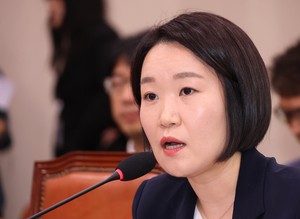
Lee So-young vows to act as 'minister of deregulation' at confirmation hearing
'I will tackle regulatory issues head-on as if I were minister of deregulation' Pledges public debate with FSC chief on Kosdaq policy; says she would persuade even the president if their views differ Confirmation report could be adopted as early as Thursday, depending on ruling-opposition talks Park Young-sun, the ministry's second minister, cast a bold shadow — Lee says differences are 'healthy, not controversial' Lee So-young, nominee for minister of SMEs and Startups, laid out her positions Tuesday on regulatory reform, labor issues and policies for Kosdaq and startups at her National Assembly confirmation hearing. Opposition lawmakers pressed her on the circumstances of her nomination, her use of political funds, and her ties to real estate and a climate solutions firm. Lee defended herself against the allegations while signaling she would coordinate — and if necessary disagree — with other ministries and even the president on policy matters. 'Korea wants its own Nvidia but won't even accept Uber' — she pledges to lead on deregulation Regulatory reform was the central theme of the hearing. Lee pointed to the contradiction of a country that aspires to produce companies like Nvidia or Tesla while failing to accommodate far more modest innovations such as Uber or Tada. "I don't think our society is yet open to innovation," she said. "We want companies like Nvidia or Tesla to emerge in Korea, but the reality is that we cannot even accept small innovations like Uber or Tada." She added that an open attitude toward change was a prerequisite for new ideas to take root. "I believe that lowering the barriers of various entry regulations is the way to enable bold new challenges," she said. "That is why I said I would tackle regulatory issues head-on, with the mindset of a minister of deregulation," she said. Lee also made clear she would not shy away from voicing dissent within the government. Asked what area she most wanted to make her mark on if confirmed, she said she wanted "to try working in a new way." "If necessary, I would like to have a public debate with the FSC chairman on Kosdaq policy, which is dominated by small and medium-sized enterprises, and I would also like to argue with ministers of regulatory agencies at Cabinet meetings over startup regulations," she said. 'Diversity, not discord' — and an abstention on the criminal procedure bill On her working style as minister, Lee said she expected people would want to see her "not as a managerial minister who works in a solemn, familiar way, but as someone who works dynamically — sometimes looking rough around the edges, not following inertia, and willing to push back." On the prospect of policy disagreements surfacing within the government, she said such moments would "show the diversity and vitality of the Korean government, not discord or conflict." The question of whether she would hold her ground against the president arose after lawmakers raised her abstention, during her time as a National Assembly member, on a vote to amend the Criminal Procedure Act to abolish prosecutors' supplementary investigative powers. Lee explained that she had "publicly expressed concerns several times during the deliberation process, and since those concerns were not fully resolved, I could not vote in favor." She added that because the party's position had been decided after multiple caucus meetings and hours of debate, voting against it would also have been disrespectful to that process — so she had abstained after much deliberation. Asked what she would do if a policy she disagreed with came before the Cabinet after she became a minister, Lee said, "If there is something that conflicts with my convictions, I think I would try to persuade the ministers around me — and I would persuade the president as well." 'The 52-hour rule doesn't fit the diversity of modern work' Lee was equally direct on labor issues. On the 52-hour workweek cap, she acknowledged the need to reduce working hours while arguing that the current blanket enforcement needed reform. "Korea has extremely long working hours, and the resulting deaths from overwork are very high — so there is a case for shortening working hours from a worker-health perspective," she said. However, she said, applying the 52-hour limit as a rigid, uniform regulation — with criminal penalties of up to two years in prison for employers who violate it — "does not fit today's work structures and the diversity of how people work." "Beyond the traditional model of commuting to a factory and working in a fixed location, many forms of knowledge work are evaluated by output rather than hours logged," she added. On the government's push for a four-and-a-half-day workweek, Lee distanced herself from any mandatory rollout. When People Power Party lawmaker Jo Ji-yeon asked her position, she said the conditions for a legally mandated introduction "do not currently exist." She said her understanding was that the government's approach had been to support companies running pilot programs with incentives rather than to impose the change by law. Opposition presses on nomination call: 'It was definitely not the chief of staff's office' — and on real estate gains: 'Nothing has been realized yet' Opposition lawmakers also pressed Lee on how she came to be nominated. People Power Party lawmaker Jo Ji-yeon asked who from Cheong Wa Dae had contacted her. Lee said she understood it was customary not to disclose who made the approach or how. Asked whether she had heard directly from the president, she said, "At least it was not from the president." When Jo pressed further, asking whether the call had come from First Deputy Chief of Staff Kim Hyun-ji — whom she described as a figure surrounded by public suspicion — Lee replied, "That is definitely not the case." Her use of political funds also came under scrutiny. Opposition lawmakers questioned the contracting process and her failure to submit related documents after it emerged that Lee had paid about 70 million won ($51,700) in legislative consulting fees to a firm whose registered address turned out to be vacant. Lee said she had contracted with the individual consultant based on their personal credentials, adding that "the name of the corporation or the state of its registration was not something I was focused on." She said she would be more careful going forward about verifying corporate details. The issue of her owning a home she does not live in was also raised again. Lee said she understood government policy to differentiate tax benefits for non-resident single homeowners, and that it did not amount to a direct restriction on ownership itself. On the suggestion that she had profited from rising apartment prices, she said, "I have not sold the property, so nothing has been realized." On the public online food delivery app policy, Lee cited poor service quality as the core problem. Drawing on her own experience using the cooperative delivery app, she said it was "far less convenient compared to private delivery apps" and that "without service improvements, injecting coupons alone will not be enough to fix things." In her closing remarks, Lee said she would "always think of the field first when pursuing policies and communicate closely with the National Assembly, which represents the people." The confirmation report on Lee could be adopted as early as Thursday, depending on how talks between the ruling and opposition parties proceed. The Trade, Industry and SMEs Committee is set to continue consultations on whether to adopt the report. Former Minister Park Young-sun, who took office in April 2019 as the ministry's second minister, remains a towering figure within the Ministry of SMEs and Startups. A four-term veteran who had served as floor leader, she is still remembered inside the ministry as a "powerful minister." Her tenure is credited with launching the SME Policy Deliberation Council and establishing a regulatory innovation hotline. When she left office, observers inside and outside the ministry said her time there had significantly raised its standing within the government — no small feat for what had been seen as one of the cabinet's junior agencies. At Tuesday's hearing, Lee similarly signaled an intent to break from the mold of a passive minister — invoking the prospect of a public debate with the FSC chairman, arguments with fellow ministers at Cabinet meetings, and a determination to push through policy by coordinating across agencies. Within and around the ministry, expectations are growing that Lee, a two-term lawmaker from a constituency seat, could become a second Park Young-sun.
Sept. 16, 2026
-
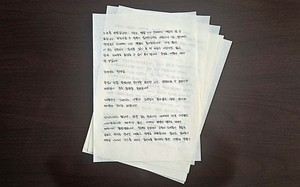
Korea Mid-sized Business Federation chief sends handwritten letters to 169 companies in membership drive
Letters target mid-sized firms in K-beauty, food, content and culture Choi urges 'self-strengthening and solidarity' as membership drive expands 228 policy ideas collected from member visits in first half of year The Korea Mid-sized Business Federation has launched a membership drive targeting mid-sized companies in the K-beauty, K-food and K-content sectors. The federation announced Wednesday that Chairman Choi Jin-sik sent handwritten letters Monday to the heads of 169 mid-sized companies across K-industry sectors, asking them to join discussions and activities aimed at advancing the mid-sized business community. The federation plans to bring on board companies building competitiveness in global markets — including those in K-beauty, K-food, K-content and K-culture — to broaden its industry-based membership and expand dialogue on growth strategies for mid-sized enterprises. In his letter, Choi said the answer to navigating an era of fierce competition and turbulent international affairs lies in "self-strengthening and solidarity." He added that companies must secure "systematic agility in long-term industrial foundations that guarantee national sustainability through mutually beneficial cooperation." The number of mid-sized companies in South Korea has grown from 2,979 in 2014 to 6,474, according to the federation. Over the same period, combined sales rose from 483.6 trillion won ($357 billion) to 1,030.5 trillion won, while employment increased from 898,000 to about 1.757 million workers. The federation said it sees a growing need to strengthen solidarity among mid-sized companies and improve their capacity to respond to policy challenges posed by the spread of AI, protectionism and the restructuring of global supply chains. The federation has also been deepening its engagement with existing members. In the first half of this year, it carried out a member-visit project involving all secretariat staff. Through the initiative, it collected 228 policy innovation ideas, registered them in a dedicated grievance channel for mid-sized businesses, and submitted recommendations for regulatory improvements to the government and relevant agencies. "When more mid-sized companies speak with one voice, a rational business environment will take shape — one that promotes the growth of small and medium-sized enterprises and supports their leap to becoming globally specialized firms," Choi said. "Please share the experience you have built on the ground to help lay the foundation for a great economic leap forward."
Sept. 16, 2026
-
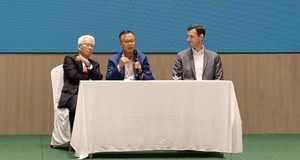
Yuhan marks centennial by spotlighting lazertinib's journey to global blockbuster
Key figures from Genosco, Severance Hospital and J&J gather to retrace the drug's development Phase 3 MARIPOSA data, BBB-penetrating design and global commercialization reviewed Combination therapy cuts mortality risk by 25%, cementing status as standard of care Yuhan gathered the key figures behind lazertinib — South Korea's 31st domestically developed new drug and a rising global blockbuster for non-small cell lung cancer — to mark its centennial and look back on the treatment's path to worldwide success. The company held an event titled "Beyond 100 Years" on Tuesday at Willow House in Daebang-dong, Dongjak-gu, Seoul, celebrating lazertinib's research and development journey and its global commercialization. Timed to coincide with the World Conference on Lung Cancer, the event brought together Yuhan Chief Executive Cho Wook-je and R&D President Kim Yeol-hong, along with Ko Jong-sung of Genosco, who first identified the drug candidate, Cho Byoung-chul, a professor at Yonsei University Severance Hospital who led the clinical trials, and representatives from global partner Johnson & Johnson. Attendees shared key milestones from the initial discovery through to the successful global combination therapy trials. Ko, speaking as a presenter, described how he and Professor Cho established a target product profile in 2013 and, through precise molecular design optimized for blood-brain barrier penetration and selectivity, identified drug candidate GNS-1480 within roughly a year. Professor Cho recounted the clinical journey from the 2018 technology licensing deal with J&J (Janssen) and the 2021 domestic approval to the combination therapy's establishment as a global standard of care. A session on first-line treatment presented detailed data from the global Phase 3 trial MARIPOSA, which showed a 25 percent reduction in the risk of death compared with rival drug osimertinib (brand name Tagrisso). The event highlighted what organizers described as a model of Korean-style open innovation: domestic biotech venture Genosco originated the compound; traditional pharmaceutical company Yuhan identified and refined it; and multinational J&J brought it to market through its large-scale global clinical network. "Lazertinib is a symbol of the challenges and innovation we have accumulated over the past 100 years, and the achievement that opens the next 100," Cho Wook-je said. "I am grateful to the researchers and partners who collaborated to make the amivantamab combination therapy a source of hope for lung cancer patients around the world."
Sept. 16, 2026
-

Public home-shopping channel pays partners W30b early ahead of Chuseok
All broadcast and mobile partners covered; payments advanced by 7 days Move aims to ease cash-flow pressure before the holiday Public Home Shopping announced Wednesday it will pay about 30 billion won ($22.3 million) in sales proceeds early to its small and medium-sized enterprise and small-business partners ahead of Chuseok. The early payment is intended to help partners secure liquidity during the holiday period, when demand for cash rises due to wage payments and purchases of raw materials. All broadcast and mobile partners are covered, with payments advanced seven days ahead of the regular schedule. Under the arrangement, proceeds for orders with deliveries completed between Sept. 8 and Sunday will be paid out Monday. Proceeds for deliveries completed between Tuesday and Monday will be paid Sept. 23. Partners enrolled in Public Home Shopping's shared-payment network program will be able to cash out their proceeds early starting Sept. 15 and Sept. 22, respectively. The shared-payment network program goes beyond direct payment of supplier proceeds by allowing partners to convert their receivables into cash before the scheduled payment date. Public Home Shopping said partners enrolled in the program will be able to cash out even earlier than the already-advanced payment dates. "We hope this early payment helps ease the financial burden on our partner companies," a Public Home Shopping official said. "We will continue to pursue a range of support measures that allow us to grow together with our partners."
Sept. 16, 2026
-
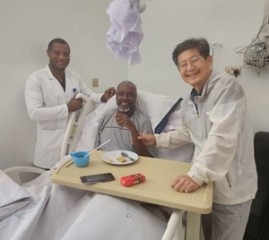
Former North Chungcheong professor Kim Yong-min wins 2026 JW Seongcheon Award
Emergency relief work in Gaza, Ethiopia and other conflict zones Tanzanian doctors brought to Korea for training at his own expense Free treatment for foreign workers ... award ceremony Oct. 21 Kim Yong-min, a 67-year-old former professor at Chungbuk National University College of Medicine who gave up a tenured university hospital position to serve in conflict zones and medically underserved countries, has been named the recipient of the 2026 JW Seongcheon Award. The JW Lee Jong-ho Foundation, the public-interest arm of JW Pharmaceutical, announced Wednesday that Kim had been selected as the 14th winner of the award. A graduate of Seoul National University College of Medicine, Kim served as a professor at Chungbuk National University College of Medicine before resigning early in 2018 to pursue international humanitarian work. As a medical relief volunteer, he has since been deployed four times to conflict and refugee zones around the world — including the Gaza Strip in Palestine, Gambella in Ethiopia and Abyei in South Sudan — where he focused on treating gunshot and trauma patients. Since 2024, he has continued his volunteer work at his own expense in medically underserved areas including Tanzania and Uzbekistan, performing advanced spinal procedures such as anterior spinal approach surgery and teaching the techniques to local doctors. Committed to building local self-sufficiency rather than making one-off visits, he personally covered the living expenses of two Tanzanian doctors who came to Korea for training last year, and plans to fund training for three more in October. Kim has also maintained his service to marginalized communities at home. Since 2020, he has provided free medical care to the urban poor and foreign workers at Joseph Clinic and Rafael Clinic. During the COVID-19 pandemic, he mentored the next generation of doctors as a supervising specialist in orthopedics at the National Police Hospital. He also took part in emergency relief efforts following the 2010 Haiti earthquake and served on the medical support team for the 2018 PyeongChang Winter Olympics and Paralympics. The award recognizes a lifetime devoted to building a sustainable, self-reliant healthcare ecosystem — combining emergency relief in conflict zones with the transfer of advanced medical skills to doctors in developing countries. "Leaving behind a secure position to travel through conflict zones and underserved areas and lay the groundwork for local medical self-sufficiency embodies the spirit of respect for life," said Lee Seong-nak, chairman of the JW Seongcheon Award Committee, explaining the selection. The award ceremony will be held Oct. 21 at JW Pharmaceutical's headquarters in Gwacheon, Gyeonggi Province.
Sept. 16, 2026
-

'Customers come to us first now': Heat pumps catch on in Jeju
Residential heat pump market stirs in Jeju Autech Carrier selected for heating electrification project, stepping up market push Company touts first-mover edge as it competes with Samsung Electronics, LG Electronics "Sales reps used to go door to door. Now customers come to us first." At a detached house on Dodu Hanggil in Jeju on Tuesday, a white machine resembling an air conditioner's outdoor unit sat in one corner of the yard. It was a residential air-source heat pump boiler installed by Autech Carrier. Unlike conventional boilers that burn oil or gas to generate heat, the device draws warmth from outside air to heat water, which is then used for underfloor heating and hot water supply. Jung Seung-jin, chief executive of J&A, the local distributor of Autech Carrier heat pumps in Jeju, said the technology is easy to grasp if you think of it as an air conditioner in reverse. Where an air conditioner expels indoor heat outside to cool a room, a heat pump pulls heat from outside air to warm water. The biggest draw for Jeju residents is lower heating bills. According to Jung, commercial facilities on the island that have already switched to heat pumps are reporting maintenance costs roughly half those of oil boilers. "Commercial users who have already made it through a winter are saving about 50 percent on running costs compared with oil boilers," Jung said. "Some existing residential installations have also cut heating bills by around half." Heat pumps find a home in Jeju as fuel costs bite Jeju has emerged as a testing ground for the residential heat pump market largely because of the island's distinctive heating environment. With low natural gas penetration and a high share of detached houses, a relatively large number of households rely on kerosene or liquefied petroleum gas boilers. That backdrop has prompted the Ministry of Climate, Environment and Energy to launch a "heating electrification" initiative — starting in Jeju — to replace kerosene and LPG boilers with high-efficiency heat pumps. As the government support program has gathered pace, consumer interest on the ground has shifted noticeably. In the second half of this year, two Autech Carrier residential heat pump models — a 14-kilowatt and a 16-kilowatt unit — were designated as eligible products under the government's second round of support for its 2026 heating electrification project. Jung said Autech Carrier has been allocated about 179 units under the current second-half program, and applications have already come in from more than 100 households. "A lot of consumers are reaching out on their own because of the burden of winter fuel costs," he said. Inquiries are concentrated among residents of detached homes looking to ease that burden. Autech Carrier's push into the residential heat pump market is not new. The company began developing an inverter hybrid boiler in 2011, before a domestic heat pump market had taken shape, and started rolling out units in 2014. More recently, it launched mass production of residential heat pump boilers at its manufacturing base in Gwangju. Samsung, LG Electronics head to Jeju as heat pump rivalry heats up The competition among companies vying for the residential heat pump market was on full display Tuesday at the Green Hydrogen Global Forum at the Jeju International Convention Center. Autech Carrier, Samsung Electronics, LG Electronics and Daesung Heat Energys — all four participants in Jeju's heating electrification project — exhibited their residential heat pump products side by side. At a glance, each company's unit looked much like a large air conditioner outdoor unit. The Jeju pilot program has cracked open a market that was relatively unfamiliar to domestic consumers, and the race to stake out an early position is well under way. Kim Min-seok, head of Autech Carrier's systems sales team, said the Jeju pilot is proceeding at a scale of 2,460 units this year, with Autech Carrier joining from the second half. "We are competing on the strength of our heat pump business experience and service network," he said. On competing with Samsung Electronics and LG Electronics, Kim said going up against large conglomerates is not easy, but the company's goal is to keep pace as closely as possible, given its roots as a pioneer in heating and cooling technology. "If the program scales up in earnest from next year, we expect the residential heat pump market to grow considerably," he added. Electricity rates, apartment buildings stand as hurdles to nationwide rollout For the residential heat pump market that has taken root in Jeju to spread nationwide, however, significant challenges remain. The biggest variable is the electricity tariff. Because heat pumps use electricity to transfer heat, the progressive rate structure applied to residential electricity bills could undercut the cost savings consumers actually feel, even given the technology's high efficiency. "This is not a market that manufacturers can crack simply by making a good product," Kim said. "Because it runs on electricity, the right policy framework has to be in place — whether that means addressing the progressive tariff structure or introducing a dedicated heat pump rate plan." Expanding the program to apartment buildings is another unresolved challenge. This year's heating electrification initiative has focused primarily on detached homes. Extending it to apartments and other multi-unit housing will require solving practical problems: finding space for outdoor units and thermal storage tanks, and integrating the systems with existing heating infrastructure.
Sept. 16, 2026
-
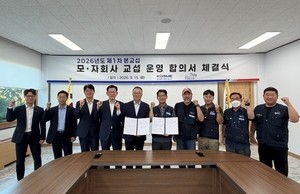
Korea SMEs and Startups Agency opens first formal talks with subsidiary union
KOSAC signs bargaining operations agreement with subsidiary union Direct bargaining framework established after revised labor union law takes effect Public-sector labor consultations expand ahead of Friday's civil service workers committee law The Korea SMEs and Startups Agency has entered into regular formal collective bargaining with its subsidiary's union for the first time, establishing a direct negotiation framework between a public institution and its subsidiary amid the expanded employer obligations introduced by a revised labor union law that took effect in March. The agency announced Wednesday that it held the first round of parent-subsidiary collective bargaining for 2026 with the KOSAC Partners branch of the National Public Transport and Social Services Workers' Union at the Small and Medium Venture Business Training Institute in Ansan, Gyeonggi Province, on Tuesday, signing a bargaining operations agreement at the session. KOSAC Partners is a subsidiary of the Korea SMEs and Startups Agency responsible for facility management and administrative support services. The agency was represented at the talks by Deputy President Lee Byung-chul, along with the heads of its human resources, management support and safety management divisions. The union side included branch chief Seo Jae-cheon and Kim Seon-jong, a deputy chairman of the Korean Confederation of Trade Unions' public transport and services union, among roughly 10 bargaining representatives from both sides. The bargaining operations agreement sets out the procedures and basic principles for future negotiations. The agency and the union plan to proceed with working-level talks on that basis. The bargaining follows the March 10 entry into force of the revised Trade Union and Labor Relations Adjustment Act. The amended law allows an entity to be recognized as an employer — within the relevant scope — even if it is not a direct party to a labor contract, provided it holds a position that substantially and specifically controls or determines working conditions. According to the Ministry of Employment and Labor, in the 100 days after the revised law took effect, 1,161 subcontractor unions filed bargaining demands against 439 primary contractor workplaces. The institutional framework for discussing working conditions of civil service workers in the public sector is also set to expand. The Act on the Establishment and Operation of the Civil Service Workers Committee takes effect Friday. The law establishes a civil service workers committee under the prime minister and mandates that it deliberate on and coordinate employment, wages, working conditions and personnel management policies for civil service workers in the public sector. Subsidiaries of public institutions fall within the scope of the public sector under the law. "We will listen carefully to the union's voice within the bounds of the law and principles, and proactively respond to changes in public-sector labor policy, including the launch of the civil service workers committee," Deputy President Lee said.
Sept. 16, 2026
-
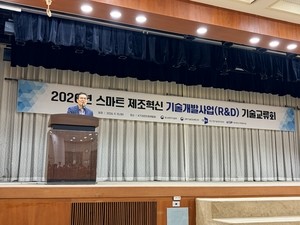
TIPA chief visits HEV, wire harness maker expanding into EVs and robots
HEV specializes in wire harness production for Hyundai and Kia, and has expanded into electric vehicle and serving robot components, with subsidiaries in Vietnam and Mexico. The company has received support from TIPA's growth ladder program for prototyping, technology transfer and certification. Automotive electronics parts maker HEV is broadening its business into components for electric vehicles, robots and energy storage systems, driving steady revenue growth. According to publicly available audit reports, the company's sales rose from 17.9 billion won ($13.3 million) in 2024 to 25.5 billion won last year. Korea Technology and Information Promotion Agency for SMEs said Tuesday that TIPA President Kim Young-shin visited HEV's facility in Sejong on Monday to review the company's technology development progress and overseas market expansion. Founded in 1993, HEV is a small and medium-sized enterprise that produces wire harnesses — components that supply power and transmit electrical signals to automotive sensors, fuel pumps and motors. The company supplies parts to Coavis and Hyundai and Kia, among others. More recently, HEV has developed wire harness components for electric vehicles and serving robots, including deliveries to LG Electronics, extending its customer base beyond traditional automakers into broader mobility sectors. Through its in-house corporate research institute, the company has also established a mass production system for ESS wire harness components. Overseas, HEV has set up subsidiaries in Vietnam and Mexico to expand its production and supply chain. The company plans to combine domestic technology development with its overseas manufacturing bases to grow its global parts supply. HEV has received support under the Ministry of SMEs and Startups and TIPA's "regional key industry development" growth ladder program, covering marketing, prototype development, technology transfer, product upgrading, and intellectual property and certification. The company said sales rose 56.7 percent compared with before it joined the regional specialization support program, reaching 25.5 billion won, while its workforce grew 104.3 percent to 143 employees. Publicly available audit reports show 2025 sales of 25.5 billion won, up from 17.9 billion won in 2024. "We will continue to pursue technological advancement and overseas market expansion to build a core component production system for the future mobility market and further strengthen our global supply chain," said Kim Sun-hee, chief executive of HEV. TIPA President Kim Young-shin said HEV "is a regional company that has achieved step-by-step growth by linking the growth ladder support program with its selection as a leading super-regional enterprise," adding that TIPA would "support the competitiveness of regional companies by connecting technology development, commercialization and overseas expansion."
Sept. 16, 2026
-
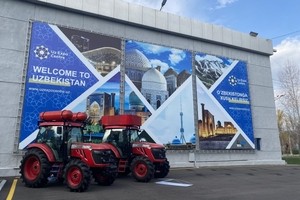
TYM signs MOU with Uzbekistan's Agriculture Ministry for CNG tractor pilot
T6092 to be tested for performance, fuel efficiency and carbon reduction; commercialization subject to separate deal CNG use expected to cut fuel costs by more than 50% vs. diesel; cooperation with local research institutes also under review Co-developed with Uzbek government in 2024, deal seen as foothold into Central Asian market South Korean tractor maker TYM will conduct field trials of its compressed natural gas (CNG) tractor in Uzbekistan in partnership with the country's Ministry of Agriculture. The move follows the joint development of a locally tailored CNG tractor with the Uzbek government in 2024 and marks a step toward establishing a formal cooperation framework and verifying the model's commercial viability. TYM announced Wednesday that it signed an MOU with Uzbekistan's Ministry of Agriculture at the Korea-Uzbekistan Business Forum, held Tuesday at the Shilla Hotel in Seoul. TYM Chairman Kim Hee-yong attended the forum. Under the MOU, the two sides will conduct a pilot test of the T6092 CNG tractor at agricultural sites in Uzbekistan through the end of 2028. They plan to verify the model's performance, fuel efficiency, carbon reduction and farm productivity, and to roll out tractor demonstrations and supply in stages. Cooperation with local research institutes is also under review. Based on the pilot results, the two sides will work out market-entry strategies and financial and institutional support measures. Whether to proceed with commercialization and the scale of supply will be determined through a separate contract. The T6092 is a model TYM developed in cooperation with the Uzbek government and unveiled in 2024. It features a 92-horsepower engine and a bi-fuel system running on both CNG and gasoline — gasoline for road driving and CNG for farm work. TYM met with an Uzbek delegation in November 2024 to discuss commercialization of the T6092, at which point the company said it planned to begin local distribution in 2025. The new MOU sets out a revised schedule under which commercialization options will be reviewed separately after field trials are completed by the end of 2028. TYM estimates that CNG tractors could cut fuel costs by more than 50 percent compared with diesel tractors, which are widely used in Uzbekistan. The actual savings will be verified during the local pilot test, taking into account fuel prices and operating conditions. The Uzbek government has also been pushing to convert its agricultural machinery to CNG. Last year, it announced a $10 million project to build a platform for eco-friendly agricultural machinery in Uzbekistan, undertaken with partners including the Korea Institute for Advancement of Technology. Key components include establishing a CNG-based agricultural machinery research and development center and converting existing farm equipment. A visit to TYM was included in a training program for local officials held in South Korea at the time. The MOU was signed on the sidelines of the bilateral business forum held during Uzbek President Shavkat Mirziyoyev's state visit to South Korea. Mirziyoyev visited South Korea from Sunday through Wednesday for a state visit focused on expanding economic cooperation between the two countries. "This MOU is significant in that it establishes a systematic framework with Uzbekistan's Ministry of Agriculture to verify local acceptance of the T6092 CNG tractor and lays the groundwork for cooperation on agricultural mechanization and the transition to eco-friendly farming," said Kim Ho-gyeom, head of TYM's global business division. "We will expand cooperation step by step through a successful pilot to contribute to the modernization of Uzbekistan's agriculture and ultimately move toward commercialization."
Sept. 16, 2026
-
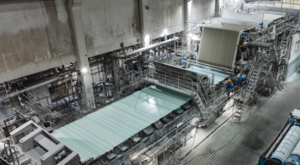
Printing industry calls on Hansol Paper, Hankuk Paper MFG to roll back price hikes after cartel sanctions
Hansol Paper, Hankuk Paper MFG said to have notified clients of up to 13% price hike from September KFTC fined printing paper firms 338.3 billion won in April; Nongmin Sinmun bid-rigging also sanctioned Printing industry urges KFTC to scrutinize price-reset plans, take firm action against repeat offenders South Korea's printing industry is demanding that major printing paper manufacturers, including Hansol Paper and Hankuk Paper MFG, immediately reverse price increases and discount cuts introduced in the second half of this year. The industry says pushing through price hikes is inappropriate given that the companies were sanctioned by the Korea Fair Trade Commission in April for price-fixing and have since been caught in an additional bid-rigging case. The Korea Printing Cooperative Federation and 11 regional cooperatives issued a joint statement Wednesday urging the companies to halt the price increases, saying "unilateral price hikes by major printing paper conglomerates are threatening the survival of small printing businesses." According to the federation, Hansol Paper and Hankuk Paper MFG recently notified their clients that they would raise prices on some products by up to 13 percent starting this month. The federation said the companies had also narrowed per-item discount rates or raised base prices in July and August. The industry's growing backlash comes amid a string of cartel sanctions this year. In April, the Fair Trade Commission imposed a combined fine of 338.3 billion won ($251 million) on printing paper manufacturers including Hansol Paper, Hankuk Paper MFG and affiliates of Moorim, and ordered each company to independently reset its printing paper prices — a so-called "price redetermination" order. At the time, the commission found that the paper companies had agreed in advance, starting in 2021 and for years afterward, to raise base prices and reduce discount rates on printing paper. The price redetermination order was intended to restore the competitive conditions that existed before the cartel by requiring each company to set its own prices independently. This month, the commission also sanctioned bid-rigging in a printing paper tender issued by Nongmin Sinmun. It fined six companies — Moorim SP, Moorim Paper, Moorim P&P, Hansol Paper, Hankuk Paper MFG and Hongwon Paper — a combined 3.009 billion won, and decided to refer Hansol Paper and Hankuk Paper MFG to prosecutors. The printing industry argued that if prices rise again through the price redetermination process under these circumstances, the cartel sanctions' purpose of restoring market competition would be undermined. The federation said the paper companies were "continuing to cut discounts and raise prices rather than reducing costs and restoring competition," and called on the Fair Trade Commission to "thoroughly scrutinize the price-reset plans submitted by each company." The federation also criticized support measures offered by the companies, including a "Donghang Project" through which Hansol Paper offered 600 million won and Moorim Paper offered 300 million won. It said improving the trading structures and pricing practices affected by the cartel should come before one-off support measures. The federation urged the Fair Trade Commission to verify the price redetermination process of printing paper manufacturers and to take strict action against repeated cartel behavior, including criminal referrals.
Sept. 16, 2026
-
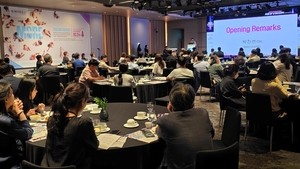
SK Bioscience holds pediatric infectious disease prevention symposium
Clinical experience with infant RSV antibody drug Beyfortus shared New meningococcal vaccine Menquadfi, pertussis vaccination strategies spotlighted University hospital faculty discuss lifecycle-based disease management SK Bioscience held an academic event for pediatricians nationwide to share the latest clinical insights on preventing infectious diseases in infants and young children. The company said it hosted the "2026 New Vision Symposium" over two days starting Saturday at the Westin Seoul Parnas hotel in Gangnam-gu, Seoul. The event focused on the latest clinical evidence and practical applications for major pediatric infectious diseases, including respiratory syncytial virus (RSV) in infants, meningococcal disease and pertussis. On the first day, Korea University Ansan Hospital Professor Kim Yun-kyung chaired the session, with Bundang Seoul National University Hospital Professor Lee Hyun-ju and Korea University Guro Hospital Professor Yoon Yun-sun presenting updated guidelines for infant RSV prevention ahead of the upcoming season. Clinical experience with Beyfortus — an antibody drug for newborns and infants co-marketed with Sanofi Korea — and data on its efficacy in preventing lower respiratory tract disease were also shared. On the second day, Im Hyun-taek, president of the Korean Pediatric Society, chaired a session on meningococcal and pertussis prevention. Seoul Metropolitan Government Boramae Medical Center Professor Han Mi-sun and Gangnam Severance Hospital Professor Choi Jun-sik reviewed age-specific vaccination strategies, with a focus on the clinical utility of Menquadfi — a quadrivalent meningococcal protein conjugate vaccine introduced in South Korea this year and approved for use from six weeks to 55 years of age. The symposium aimed to share the latest clinical evidence on major infectious diseases in infants and young children with frontline medical staff, establish an early prevention-centered care paradigm for seasonal respiratory illnesses and invasive infections, and strengthen field-oriented academic collaboration. "This was a meaningful occasion to share clinical experience and reflect on the value of vaccination across different life stages," said Yoo Su-an, head of SK Bioscience's domestic marketing division. "We will continue academic exchanges with medical professionals to help build a vaccination environment grounded in scientific evidence."
Sept. 16, 2026
-
Celltrion retires W100b in shares, pledges third of net profit to shareholders
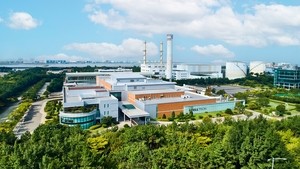
Some 544,000 shares to be retired by Sept. 30, bringing this year's total to 200 billion won Company moves to eliminate resale risk while pairing cancellations with cash dividends Strong first-half operating profit of 773.7 billion won underpins shareholder return policy Celltrion has retired an additional 100 billion won ($74.3 million) worth of treasury shares this year, demonstrating its commitment to a medium- and long-term shareholder return policy. The company said Wednesday it had resolved to cancel 544,299 treasury shares valued at 100 billion won to enhance shareholder value. The cancellation is scheduled for Sept. 30, with the updated share listing expected to be finalized in October. The move follows Celltrion's previously announced medium- and long-term shareholder return principle, under which the company pledged to return roughly one-third — about 33 percent — of its annual consolidated net profit through share cancellations or cash dividends. With this resolution, the total value of treasury shares Celltrion has acquired and earmarked for cancellation this year reaches 200 billion won across two separate tranches. The company said it has been canceling recently repurchased shares immediately to head off concerns about resale on the market and to make its shareholder return policy more predictable. Going forward, Celltrion said it plans to make active use of buybacks and cancellations during periods when its share price appears undervalued, while flexibly allocating cash dividends when stable cash returns are called for, with the aim of maximizing shareholder value. The aggressive return policy is backed by solid earnings and cash generation. Celltrion posted record annual sales of 4.16 trillion won and operating profit of 1.17 trillion won last year on a consolidated basis, and has kept the momentum going with sales of 2.54 trillion won and operating profit of 773.7 billion won in the first half of this year. Growth has been driven by the global rollout of high-margin products — including Yuflyma, Vegzelma and Omlyclo — alongside its established lineup of Remsima, Truxima and Herzuma. The cancellation is seen as a move to bolster management credibility by promptly delivering on a promised return ratio — through actual cash outflows and share retirements — at a time when calls for greater shareholder value are growing across South Korea's stock market, and when the company's strong earnings provide a firm foundation to do so. "This cancellation is a consistent follow-through on the medium- and long-term return principles we recently announced," a Celltrion official said. "We will continue investing in research and development and capital expenditure to fuel future growth, while firmly upholding our commitment to return one-third of net profit to shareholders."
Sept. 16, 2026
-
Boryeong to spin off prescription drug sales unit, targets No. 1 spot in domestic pharma
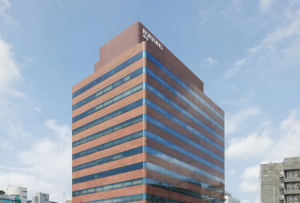
Unlisted subsidiary to launch in January next year; 42 products to be added by 2030 R&D, space life science and commercial operations to be separated; company eyes 10% domestic market share Articles of incorporation to bar split listing; appraisal rights capped at 50 billion won Boryeong plans to spin off its prescription drug sales and marketing operations into a dedicated commercial subsidiary. The move marks a departure from the traditional pharmaceutical business structure, separating research and development and production infrastructure from sales and retail operations, as the company aims to capture more than 10 percent of the domestic market and become the top player in South Korea's pharmaceutical and biotech industry. Boryeong held a board meeting Tuesday and resolved to carry out a simple physical spin-off of its prescription drug sales and marketing division, creating a new entity called Boryeong Pharma Solution Co. The split is set to be completed on Jan. 4, 2027, following an extraordinary shareholders' meeting on Oct. 28. The new subsidiary will be established as a wholly owned, unlisted entity with Boryeong holding a 100 percent stake, while the parent company will retain its KOSPI listing. The restructuring follows a "Life Science Infrastructure Company" vision drawn up ahead of the company's 70th founding anniversary next year. Under the plan, Boryeong will reorganize its capabilities into three specialized infrastructure pillars: production and R&D, space life science, and commercial operations. Each pillar will serve as a distinct business axis. The production and R&D infrastructure will form the foundation for global operations, with the company positioning itself as an "Essential Pharma Company" responsible for the full lifecycle of globally essential medicines. The space life science infrastructure will target strategic business, aiming to become an indispensable gateway for domestic and international companies pursuing space life science R&D. The commercial infrastructure will anchor domestic operations, with the goal of becoming the undisputed leader in South Korea's pharmaceutical industry. The parent company, Boryeong, will focus on strengthening its R&D pipeline, upgrading products through combination formulations and dosage-form improvements, managing its own production, quality and regulatory affairs, acquiring and operating original brands, and providing global contract development and manufacturing services for essential medicines. The new subsidiary, Boryeong Pharma Solution, will independently operate as a domestic commercial platform — handling prescription drug marketing strategy, specialized sales execution, business development and retail functions. Boryeong said structural constraints had long stemmed from its company-wide integrated operating model. Because investment needs across research, production and sales were coordinated at the corporate level, it was difficult to allocate resources independently around commercial priorities. The company also said its tendency to prioritize its own pipeline had limited its ability to select products based purely on market potential and sales competitiveness. The new Boryeong Pharma Solution will have independent business planning and budget allocation authority, with unified accountability for the performance of deployed resources. The subsidiary plans to flexibly select an optimized product lineup driven by market demand, drawing on the expertise of specialized teams organized by disease area — including chronic conditions and oncology — and evidence-based marketing grounded in accumulated clinical data. Through this approach, Boryeong Pharma Solution aims to add 42 new products to its sales portfolio by 2030 — 26 proprietary products and 16 externally sourced ones. The company envisions a virtuous cycle in which strong commercial capability combining Boryeong products and in-licensed items expands the portfolio, and the broader portfolio in turn strengthens sales competitiveness. The subsidiary will also feed post-launch sales performance and market demand data back to the parent company to inform product development and supply improvements. The organizational and compensation structure will also be overhauled. Previously, sales staff were subject to the same company-wide human resources standards as research and production employees, limiting the ability to develop and reward talent in ways suited to sales roles. The new subsidiary will build a sales-specific HR system that deepens disease-area expertise and introduce what it described as an "industry-leading compensation structure" reflecting each employee's contribution by product. All employees in the sales, marketing and management support divisions subject to the spin-off will have their employment, length of service and legal status transferred in full to the new entity. Boryeong said it would hold on-site briefings and continue internal communication and feedback sessions to ensure a smooth transition. Institutional safeguards have also been put in place to head off concerns about harm to ordinary shareholders from the physical spin-off and to prevent any controversy over a so-called split listing. Chief Executive Officer Kim Jeong-gyun said the launch of a specialized commercial entity was "about focusing on what each side does best in order to grow bigger," adding that the company had "absolutely no plans" for a future sale or separate listing of the subsidiary, whether raised internally or externally. Kim said Boryeong would "grow it together as a core growth engine, as a wholly owned subsidiary in which Boryeong holds a 100 percent stake." Boryeong Pharma Solution made clear it has no plans to apply for a preliminary listing review within the next five years. Furthermore, Article 15 of the new subsidiary's articles of incorporation explicitly codifies the principle of remaining unlisted and the procedures for protecting parent company shareholders. Even after five years have elapsed, the listing process may only proceed if the parent company notifies its approval following procedures in accordance with relevant laws and financial authority guidelines. The process also requires application of the "3 percent rule," which caps the voting rights of the largest shareholder and related parties at 3 percent at an ordinary shareholders' meeting of the parent company. Applying the rule based on the shareholder register as of the end of June 2026, the largest shareholder's effective voting stake would fall from 64.9 percent (55.69 million shares) to 8.4 percent (2.52 million shares), while the voting weight of ordinary shareholders — foreign investors, institutional investors and individuals — would surge from 33.2 percent (28.44 million shares) to 91.6 percent (27.39 million shares), making it impossible for the largest shareholder to pursue a listing unilaterally. Under the key schedule for the spin-off process, the shareholder record date falls on Sept. 30, followed by an extraordinary shareholders' meeting on Oct. 28 to approve the spin-off plan. Shareholders opposed to the split may exercise appraisal rights. Eligible shareholders are those registered in the shareholder register as of Sept. 30 who meet the statutory acquisition requirements by Wednesday and vote against, abstain or are absent at the shareholders' meeting. The planned purchase price per share is 8,924 won. It was calculated as the simple arithmetic average of the volume-weighted average share prices over the two months (8,668 won), one month (9,011 won) and one week (9,092 won) preceding the day before the board resolution date, in accordance with the Capital Markets Act. The advance notice of opposition period runs from Oct. 13 to Oct. 27, and the appraisal rights exercise period runs from Oct. 28 to Nov. 17. Purchase proceeds are expected to be paid by Dec. 17. However, if the total amount of appraisal rights exercised exceeds 50 billion won ($37.2 million), the board may resolve to withdraw the spin-off. CEO Kim Jeong-gyun said the launch of Boryeong Pharma Solution as a specialized commercial entity was "about focusing on what each side does best in order to grow bigger," and that the company had "absolutely no plans" for a future sale or separate listing of the subsidiary, whether raised internally or externally. Kim added that the company would "grow it together as a core growth engine of Boryeong, as a wholly owned subsidiary in which Boryeong holds a 100 percent stake," and said he intended to "compete on the strength of sales and marketing expertise, build a company that attracts the best sales and marketing talent, and make it the driving force for becoming the undisputed No. 1 in South Korea's pharmaceutical industry."
Sept. 16, 2026
-
'Saving W100b could cost us more': SME minister nominee backs keeping youth startup academy alive
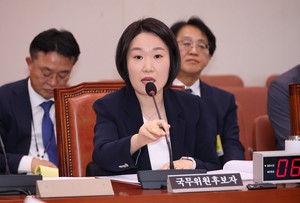
Youth startup academy faces full budget cut in next year's spending plan Existing facilities to be converted for restart school; move-in application rate at 8% Lee: 'Losing senior-junior networks would be a greater social loss' Lee So-young, nominee for minister of SMEs and Startups, said the government's youth startup academy program should be kept alive in some form, warning that shutting it down entirely could cost society more than the budget savings it would generate. Speaking at her confirmation hearing before the National Assembly's Trade, Industry, Energy, SMEs and Startups Committee on Tuesday, Lee responded to a question from Democratic Party of Korea lawmaker Jang Cheol-min about cuts to the program. "The government has announced a policy shift in which the entire budget for the Youth Startup Academy has been eliminated from next year's spending plan, and the existing facilities will be repurposed as a restart school," she said. She added that losing the academy's organic networks — where entrepreneurs support and lift one another across generations — would represent a greater social loss than eliminating the 100 billion won ($74.3 million) budget itself. Lee said a low move-in application rate appeared to be behind the government's decision to restructure the program. "When I looked into the background of the policy change, I confirmed it was because the application rate for the facilities had fallen to around 8 percent," she said. She went on to say that even if the physical space were shared with a restart school, it would be better to preserve at least a thread of continuity so the network could be sustained. The Youth Startup Academy is a Ministry of SMEs and Startups program that selects young entrepreneurs and provides them with startup funding, education and workspace. The government is moving to restructure the program in next year's budget process and redirect the existing facilities toward support for entrepreneurs attempting a fresh start after a previous failure.
Sept. 15, 2026
-
K-design housewares and crafts draw attention in Paris
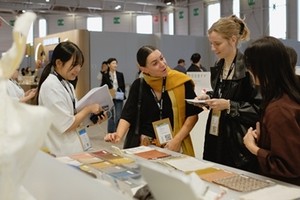
Korea Institute of Design Promotion joins Maison & Objet with 20 companies French luxury department stores, retailers hold distribution and collaboration talks Korean-designed housewares, lifestyle products and crafts — including kitchenware inspired by the traditional gat hat — drew strong interest in Paris. The Korea Institute of Design Promotion (KIDP) opened a Korea Design Pavilion at Maison & Objet alongside 20 domestic companies. The fair ran from Thursday through Sunday (local time) in Paris. This year's Korea Design Pavilion featured 20 companies with strong potential for overseas expansion and exports, including Gotae, Naelna, Neulpum, Dot Design Lab, D-Rising and Moseori. The participating firms showcased small home appliances, lighting, stationery and kitchenware, highlighting the sensibility and competitiveness of K-design on the global stage. The pavilion drew steady interest from buyers in global retail, distribution and design, generating a total of 905 business consultations during the fair. Representatives from major international retailers — including luxury department store Le Bon Marché Rive Gauche, lifestyle retail chain Virgin Megastore, the Fondation Louis Vuitton cultural and arts venue, and lifestyle concept store Merci — visited to discuss product placement, distribution and collaboration opportunities. One buyer who visited the pavilion said Korean products showed a high level of design refinement, with each brand carrying a distinct identity. "We were able to confirm the competitiveness and potential of K-design," the buyer said. KIDP President Kang Yun-ju said the institute would work to identify promising domestic design companies and strengthen support for their overseas expansion so they can grow on the world stage.
Sept. 15, 2026
-
Former Hanmi Group executives file police complaint against Hanyang Precision chair over embezzlement, breach of duty
Three former executives filed the complaint with Yongsan Police Station, alleging misuse of Hanyang Precision funds Complaint details repeated short-term loan withdrawals, a 113 billion won dividend and alleged toll-fee scheme Shin's camp calls the transactions lawful and vows strong legal action Shin Dong-kook, chairman of Hanyang Precision and the largest individual shareholder of Hanmi Science, has been reported to police by former Hanmi Group executives on allegations that he misappropriated corporate funds from Hanyang Precision for personal use. Three former Hanmi Group executives, including a former executive vice president, filed a complaint against Shin and his eldest son on Friday with the Seoul Yongsan Police Station, alleging violations of the Act on the Aggravated Punishment of Specific Economic Crimes, including embezzlement and breach of fiduciary duty, according to industry sources. The complainants allege that Shin exploited Hanyang Precision — a company he owns 100 percent — as a personal slush fund, diverting corporate money on a large scale. The complaint is said to detail the alleged misappropriation and breach of duty across several categories, including the use of short-term loans, excessive dividend payments, funneling business to a family-owned company and embezzlement under the guise of capital investment. On the short-term loan allegations, the complainants said Shin repeatedly withdrew approximately 467.3 billion won ($347 million) from Hanyang Precision under the name of short-term loans over a 10-year period from 2014 to 2023, repaying the amounts in full at each fiscal year-end to maintain the appearance of proper accounting. The complaint also states that in 2024 and 2025, Shin withdrew an additional 44.4 billion won in short-term loans and used the funds to acquire Hanmi Science shares in his own name. The complainants also raised allegations of breach of fiduciary duty through excessive dividend payments, saying Shin liquidated Hanyang Precision's financial assets and took out real estate-backed loans in 2020 to pay himself an interim dividend of 113 billion won — tens of times the company's annual operating profit — causing financial harm to the company. The complaint further alleges that Shin inserted a family-owned company, H&D, which had no human or physical infrastructure, into Hanyang Precision's raw material procurement chain, channeling approximately 49.6 billion won in transactions over five years from 2021 and extracting toll fees and business opportunities. Allegations of embezzlement under the pretext of capital investment were also included. Shin's camp rebuffed the complaint, saying it was groundless and that the legality of the transactions had already been confirmed through audits and tax investigations. In a statement, Shin's representatives said all monetary loans to the company were made under formal loan agreements, with principal and statutory interest repaid on time, and that the 2020 interim dividend was lawfully executed with taxes duly paid within the bounds permitted by law. They added that H&D operates a legitimate business model that delivers real benefits to all affiliates through bulk steel-plate purchases that lower unit costs, and that the camp would take strong legal action — including filing complaints for false accusation and defamation — as soon as it reviewed the complaint.
Sept. 15, 2026
MOST READ
- 1KAIST develops high-performance bio-based adhesive using E. coli instead of petroleum
- 2Pope Leo XIV declines French honors and banquet, accepts only private meeting with Macron
- 3Daimler Truck unveils next-generation transport solutions at IAA 2026
- 4What was Rachmaninoff's performance fee? A 1928 price list tells all
- 5Samsung Biologics union's show of force backfires at the bargaining table
- 6APR says hair-loss treatment research published in international journal
-
WORLD

US warns of punishment for anyone enabling Iran's Strait of Hormuz toll scheme
-
INDUSTRY
Toyota union puts productivity first; Hyundai Motor union demands bigger share of profits
-
FINANCE
National Growth Fund to invest $531M in FuriosaAI, which rebuffed Meta's $800M takeover bid
-
INDUSTRY
Korea Shipowners' Association holds amateur baduk tournament for Maritime Day