
- HOME
- SOCIETY
-
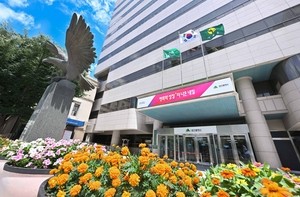
Daegu ramps up tourism push for Chuseok holiday and fall travel season
Daegu announced Friday it will deploy supplementary budget funds to attract both domestic and foreign tourists, starting with the upcoming Chuseok holiday and the fall travel peak season. A range of events is lined up in Daegu this autumn, including the 23rd Daegu International Opera Festival, a special exhibition on Joseon-era painter Jeong Seon at the Daegu Gansong Art Museum, a tteokbokki festival and a makchang (grilled beef intestine) festival. The city said it will launch an active overseas marketing drive to draw foreign visitors. With direct routes to Chinese-speaking markets expanding steadily — following the launch of Hong Kong and Qingdao routes last year and an increase in Shanghai flights this year — Daegu plans to step up promotional marketing in those cities. The city will hold tourism briefings in Shanghai, Qingdao and Hong Kong to raise Daegu's profile as a travel destination. For domestic tourists, Daegu will participate in the second-half edition of the Korea Accommodation Sale Festa, a program run by the Ministry of Culture, Sports and Tourism and the Korea Tourism Organization. The city plans to offer discount coupons for hotel bookings in Daegu to ease the cost of staying and help visitors explore the city's diverse attractions more fully. Daegu will also expand a facility-improvement project for local accommodation providers to better accommodate group tourists. Using the supplementary budget, the city will recruit additional participating businesses and subsidize the cost of creating twin rooms and setting up simple breakfast services. "Through the supplementary budget, we will push ahead without a hitch — from attracting tourists to improving visitor convenience — so that both domestic and foreign tourists come to Daegu and leave with a satisfying experience," said Hwangbo Ran, director of Daegu's culture, sports and tourism bureau.
Sept. 18, 2026
-
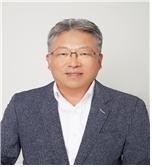
New Busan employment chief vows 'field-centered' labor administration
Incoming director emphasizes on-the-ground approach to labor disputes, industrial accidents and job creation Lee Chang-gil, former chairman of the North Chungcheong Provincial Labor Relations Commission, took office Friday as director of the Busan Regional Office of Employment and Labor. Lee graduated from Seoul National University with a degree in political science and entered public service through the 40th administrative officer examination. He has since held key posts at the Ministry of Employment and Labor headquarters, the Labor Relations Commission and regional employment and labor offices. "The Busan, Ulsan and South Gyeongsang Province region has built its industrial ecosystem around large-scale complexes in shipbuilding, automobiles and petrochemicals," Lee said. "I will pursue field-centered employment and labor administration so we can respond effectively to regional challenges, including labor-management disputes, industrial accident prevention and job creation."
Sept. 18, 2026
-

Unauthorized access, leaks of police investigation data surpass last year's full-year total in first half of 2026
The number of police officers caught illegally accessing the Korea Information System of Criminal Justice Services, known as KICS, or leaking investigation data already exceeded last year's full-year total in just the first half of this year, according to data released Friday. Of the cases that have been resolved, eight out of 10 ended with only a caution, warning or quiet dismissal — falling short of formal disciplinary action. People Power Party lawmaker Seo Myeong-ok of the National Assembly's Public Administration and Security Committee disclosed the figures Friday, citing data obtained from the Korean National Police Agency. A total of 171 cases of unauthorized KICS access or investigation data leaks were detected between April 2021, when the police investigative audit unit was established, and June this year. The annual breakdown shows 93 cases in 2021, 13 in 2022, 21 in 2023, 12 in 2024 and 14 last year. This year, 18 cases were detected in the first half alone — four more than the full-year total for last year. Of all cases detected over the past five and a half years, 93 involved leaking investigation data and 78 involved unauthorized KICS access. Of the 18 cases detected this year, 17 involved investigation data leaks and one involved unauthorized KICS access. Setting aside 24 cases still under review, the outcomes of the remaining 147 cases show that 91 resulted in a caution or warning and 27 were closed without any action. Only 29 cases led to formal disciplinary measures. In total, 118 cases — 80.3 percent of those resolved — were closed without formal discipline. Among those disciplined, 18 received heavy penalties including removal from office, dismissal, demotion or suspension. Four officers received pay cuts and seven received reprimands. By regional police agency, the Seoul Metropolitan Police Agency recorded the most cases at 51, accounting for 29.8 percent of the total. It was followed by the Daegu agency with 20 cases, the Gyeonggi Northern agency with 16, the Busan and Gyeonggi Southern agencies with 13 each, and the Incheon agency with 10. One case of investigation data leakage was also detected at the Korean National Police Agency headquarters. Among specific cases, a Gwangju Metropolitan Police Agency officer assigned to the wide-area investigation unit was removed from office in 2021 after leaking search and seizure information to a former officer. In 2022, an officer at the Ilsandongbu Police Station under the Gyeonggi Northern Police Agency was demoted after passing investigation details to a complainant. In 2023, an officer at Seoul's Suseo Police Station received a pay cut after leaking victim information to a journalist. In 2024, an officer at Daegu's Seongseo Police Station was demoted for leaking investigation documents to a former officer. Last year, an officer at South Jeolla Province's Boseong Police Station received a reprimand for disclosing a complainant's criminal record during a search and seizure. In 2021, 75 cases of unauthorized KICS access were detected, including 60 officers who looked up the case involving former Vice Minister of Justice Lee Yong-gu's assault on a taxi driver without any work-related purpose. "Rather than relying solely on after-the-fact detection, the access control and anomaly detection systems must be completely overhauled to block non-work-related queries at the source," Seo said.
Sept. 18, 2026
-

Army sergeant who sold military secrets to China for W17.26m gets 4-year prison term confirmed
An army soldier convicted of leaking military secrets, including materials related to South Korea-US joint exercises, to a Chinese intelligence organization has had his prison sentence confirmed. The Supreme Court's Second Division, presided over by Justice Park Young-jae, last month upheld a lower court ruling sentencing the defendant, identified only as A, to four years in prison, a fine of 20 million won ($14,600) and a surcharge of 19.07 million won on charges including general treason, military secret disclosure, bribery in connection with misconduct, and violations of the Information and Communications Network Act, Yonhap reported. A, who held the rank of army sergeant, had been in contact with an unidentified Chinese national he met through SNS. He traveled to Beijing in August 2024 to meet the person. The Chinese national, who claimed to work for a Chinese intelligence agency, proposed that A hand over classified military materials, and A agreed. From around that time through February of the following year, A was tried on charges of leaking military secrets — including materials on South Korea-US combined exercises, UN Command-related documents and South Korean military-only training data — on seven occasions in exchange for a total of 17.26 million won. Investigators found that A had complained to his contact about the difficulty of photographing classified materials with an iPhone. He then received a wristwatch-style hidden camera and used it to photograph the secrets. A military court sentenced A to five years in prison at the first trial. The Seoul High Court reduced the sentence to four years in prison, a fine of 20 million won and a surcharge of 19.07 million won at the second trial. A argued he had no intent to commit treason, but the court rejected the claim. "There is no direct evidence that the Chinese national who recruited the defendant and issued instructions was a member of a Chinese intelligence organization," the appellate court said, "but based on the established facts, it has been proven that the defendant leaked military secrets to a Chinese intelligence organization through the unidentified individual." The court added that A "was an active-duty soldier who had received security training and was well aware that military secrets must not be disclosed to outside parties, yet committed the crimes anyway, making his culpability grave." It further said "the crimes were carried out in an organized and meticulous manner, making their nature all the more serious." Former military civilian employee's 20-year sentence for leaking secrets to China confirmed in January Earlier, in January, a civilian employee of the Defense Intelligence Command who leaked classified military information — including details on "black agents," intelligence operatives who conceal their identities — to a suspected Chinese intelligence operative had a 20-year prison sentence confirmed. The Supreme Court's Third Division, presided over by Justice Lee Heung-gu, upheld a lower court ruling sentencing Cheon, a 51-year-old former civilian military employee, to 20 years in prison, a fine of 1 billion won ($731,000) and a surcharge of 162.05 million won on charges including general treason under the Military Criminal Act, Yonhap reported at the time. Cheon was indicted and detained in August 2024 on charges of general treason under the Military Criminal Act after being recruited by a suspected Chinese intelligence operative around 2017 and leaking military secrets on multiple occasions in exchange for money starting in 2019. Additional charges were applied under the Act on the Aggravated Punishment of Specific Crimes for bribery and under the Military Secrets Protection Act. The Supreme Court dismissed Cheon's appeal, saying it could not find the lower court's sentence of 20 years in prison and other penalties to be "grossly unreasonable" given the defendant's age, conduct, circumstances, motive, means and consequences of the crimes, and post-offense behavior.
Sept. 18, 2026
-
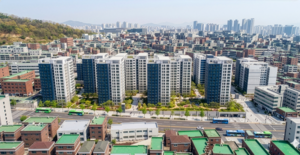
Namsan Daerim Apartment Reconstruction (630 Units) Kicks Off — Public Inspection Now Open!
Residents may submit feedback from Friday through Oct. 19, with a public briefing set for Oct. 1; plans reflect a Namsan-facing view corridor and improved pedestrian space along Noksapyeong-daero Yongsan-gu will hold a public inspection of the proposed designation of the Namsan Daerim Apartment reconstruction improvement zone and its draft improvement plan from Friday through Oct. 19. The inspection was organized to gather broader resident input and strengthen the plan before it advances. The district said it intends to carry out subsequent planning procedures without delay, guided by ongoing communication with residents. The draft improvement plan envisions integrated development that incorporates an adjacent plot along Noksapyeong-daero — owned by the Korea Land and Housing Corporation — into the project zone. The move is intended to allow unified redevelopment of the streetfront and to reinforce the landscape and pedestrian network connecting the complex to Namsan. The Namsan Daerim Apartment site sits at the intersection of Namsan's natural landscape axis and the urban street axis of Noksapyeong-daero. The draft plan calls for securing a view corridor toward Namsan to improve openness and sightlines, and for creating a sidewalk-adjacent forecourt along Noksapyeong-daero to enhance the pedestrian environment. Pedestrian routes inside and outside the complex will also be linked to improve walkability and accessibility. The plan also addresses public benefit. Building setback lines will be established from Noksapyeong-daero and the adjacent lot boundary to secure frontage space, which will be developed as a sidewalk-adjacent forecourt to improve pedestrian connectivity with the surrounding area. Public contributions — including the donation of a below-ground public parking lot — have been incorporated to improve residents' quality of life and everyday convenience. The public inspection covers the draft designation and improvement plan for the Namsan Daerim Apartment reconstruction zone, which proposes 630 units on a roughly 39,944-square-meter site in the Itaewon-dong 729 area. The draft plan is available for review at the Housing Division on the seventh floor of Yongsan-gu Office. Residents wishing to submit comments may do so by registered mail or in person at the Housing Division within the inspection period. To help residents understand the plan, Yongsan-gu will hold a public briefing on Oct. 1 at 3 p.m. in the fifth-floor auditorium of the Seobinggo-dong Community Center at 279 Seobinggo-ro. After the inspection period closes, the district will seek the opinion of the Yongsan-gu Council before formally requesting that the Seoul Metropolitan Government approve the improvement plan and designate the zone. "This public inspection is a process to more faithfully reflect residents' opinions," Yongsan-gu District Mayor Kim Kyung-dae said. "We will work to ensure that the Namsan Daerim Apartment reconstruction proceeds as a project that offers both a pleasant residential environment and strong public value, built on open communication with residents."
Sept. 18, 2026
-

Daejeon expands night bus, special train services for fall festivals
Double-decker 'D-Universe' bus, special tourist trains to draw Greater Seoul visitors to Daejeon Bread Festival, Daejeon International Wine Expo Daejeon is expanding its nighttime tourist transportation network, linking major night-tourism districts and key festival venues to make it easier for visitors to get around after dark. The city announced Friday that it is operating the "D-Universe" double-decker loop bus and special tourist trains through November in partnership with the Daejeon Tourism Organization, aiming to improve nighttime mobility for visitors on weekends and during major festival periods. The D-Universe bus runs a loop connecting Daejeon Station's east plaza, Hanbat Arboretum and the Expo Water Plaza. It will operate on Fridays, Saturdays and Sundays — excluding the chuseok holiday — for a total of 24 days from Friday through Nov. 15. Regular service hours run from 5:30 p.m. to 10:30 p.m., with five departures a day at one-hour intervals. During the Daejeon Bread Festival and Daejeon International Wine Expo, running Oct. 16 through Nov. 8, daytime service will be added, extending hours to 11 a.m. to 9:30 p.m. with eight runs per day. The expanded schedule is designed to help festival-goers visit major tourist attractions and enjoy nighttime activities. The city is also running special tourist trains for visitors from the Greater Seoul area to coincide with the two festivals. The trains will operate on Oct. 17 and Nov. 6, offering a tourism product that combines the Paldo Jangter tourist train and connecting buses to take passengers to Daejeon's signature festivals and major nighttime attractions. "We are putting in place transportation that connects Daejeon's major festivals and nighttime attractions so visitors can enjoy the city's nights more conveniently," said Kwon Gyeong-min, director of the city's culture, sports and tourism bureau. The D-Universe bus accepts walk-up passengers on-site for 1,000 won in cash, while the special tourist trains can be booked through the Korail Tourism Development website.
Sept. 18, 2026
-

Woman sends W35m to impersonator claiming to be actor Lee Dong-wook
SBS 'News Hunters' features story of background actor in her 30s who fell victim to romance scam Impersonator demanded money under guise of customs clearance for overseas gift A scammer impersonating actor Lee Dong-wook has defrauded a woman of tens of millions of won in a romance scam. According to SBS's "News Hunters," a woman in her 30s who works as a background actor and has long been a fan of Lee exchanged messages with the impersonator over a mobile messenger for about eight months beginning earlier this year, coming to believe she was in a romantic relationship before transferring a large sum of money. The woman, identified only as A, sent approximately 35 million won ($25,600) in total. "It was like Lee Dong-wook was confessing his feelings to me," A said. "We even talked about visiting my parents together for a formal meeting. It just naturally developed into a romantic relationship." She added: "We said 'I love you, honey' — I called him oppa and he called me 'jagi.' We had conversations like that for nearly a year. It seemed like he had chosen me as his partner." The impersonator exploited the fact that A worked as a background actor, offering her advice on life in the entertainment industry while continuously expressing affection. The scammer then claimed to have sent A a parcel containing gifts worth around 700 million won from an overseas filming location, saying it had been held up at customs, and began demanding money for document processing fees to clear the package. Throughout the process, A never suspected she was dealing with an impersonator, even though the account holder names on the bank accounts the scammer provided were all different each time. "I even broke into my fixed savings account and added my own living expenses to send him money," A said. "He told me his celebrity identity had to stay hidden, so I sent money to a different account each time — but I never got any of it back." Attorney Lee Kyung-min, who appeared on the program, said the victim appeared to have had no suspicion at all that she was being scammed. "Approaching someone through social media as if you're in a romantic relationship and then asking for money is a textbook romance scam," he said. Lee Dong-wook's agency, Kingkong by Starship, posted a notice on its official social media accounts saying it had received reports of individuals impersonating its artists through personal messenger and social media accounts. "Our artists do not request money, valuables or personal information through personal messenger or social media accounts," the agency said. The agency also warned that its artists never approach fans individually to solicit money under the pretext of hosting VIP fan meetings. "We ask that you take extra care to avoid falling victim to such schemes or being misled," it said.
Sept. 18, 2026
-
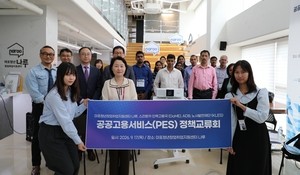
Sri Lankan Officials Visit Mapo-gu to Benchmark South Korea's Youth Employment Policy
The visit was part of the Asian Development Bank's South Asia Public Employment Service Capacity Building Project; Mapo Youth Startup and Employment Support Center Naru draws more than 60,000 visitors a year A delegation of Sri Lankan government officials traveled to Mapo Youth Startup and Employment Support Center Naru to study South Korea's youth employment policies firsthand. Mapo-gu said about 10 civil servants from the Manpower and Employment Division of Sri Lanka's Ministry of Labour visited the center — known as Mapo Youth Naru — on Thursday. The visit was organized as part of the Asian Development Bank's South Asia Public Employment Service Capacity Building Project. The Korea Labor Foundation, an agency under the Ministry of Employment and Labor, coordinated the delegation's itinerary and selected Mapo Youth Naru as a model site representing South Korea's youth employment policy. During the visit, the Sri Lankan officials received briefings on Mapo-gu's youth policies and the center's locally rooted employment services. They also toured the facility, observing its job-seeking and startup support programs, youth-led space operations and policy implementation cases. Shanika Nadeeshani Mayadunne, a deputy director general from Sri Lanka, said she was impressed that classrooms, a media room and a lounge were all available under one roof. "We will study Korea's systems, facilities and operational methods closely so we can apply them to Sri Lanka's public employment services," she said. Mapo Youth Naru is a district-run youth support center that Mapo-gu opened in December 2019 to help young people enter the workforce and become self-reliant. It offers comprehensive services covering startup support, job placement, networking activities and rest spaces. The center has drawn particular praise for its "Startup Master" course designed to build entrepreneurial skills, job-search consulting and events, walk-in counseling, youth networking, psychological recovery programs and aptitude exploration — supporting young people from the career-exploration stage through to successful employment or business launch. As a result, more than 60,000 young people used Mapo Youth Naru last year, and the center recorded about 50 cases of measurable achievement, including employment, business launches, certifications and awards. Mapo-gu District Mayor Yoo Dong-kyun said he was pleased to welcome the Sri Lankan delegation. "I hope Mapo's youth policies help improve the employment environment for young people in Sri Lanka," he said. "We will consistently expand policies that support youth employment and entrepreneurship going forward."
Sept. 18, 2026
-
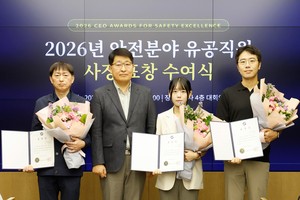
Seoul Metro Honors Three Safety Champions for Subway Accident Prevention
Employees recognized for shutter alarm system, anti-slip stairway work and tunnel lighting improvements CEO Kim Tae-kyun personally presents awards, stresses passing on safety know-how to younger staff Seoul Metro honored employees who contributed to preventing subway safety accidents, reaffirming its commitment to a safety-first management philosophy. The company held the "2026 Safety Merit Employee Commendation Ceremony" on Wednesday and presented citations to three outstanding employees recognized for their contributions to preventing serious accidents and spreading a culture of safety. Jin Jeong-il, deputy station manager at Namseong Station, was recognized for identifying the risk of passengers being struck by platform shutter doors during the last train of the night and devising a plan to install audiovisual alarm systems around the shutters to proactively prevent accidents. Cho Eun-hee, a senior official on the architectural planning team, was also selected for her work actively pursuing canopy installation and anti-slip stairway construction to prevent passengers from slipping inside stations. She was particularly credited for dramatically reducing slip accidents by introducing a burner construction method that heats and roughens station stairway surfaces. Alongside this, Kang Byeong-woo, a section chief at the Dapsimni train crew depot, was recognized for proposing improvements to tunnel and depot lighting to prevent train operators from slipping or falling while boarding and alighting in tunnels or at vehicle depots during nighttime hours. The ceremony was the first held since CEO Kim Tae-kyun took office. It was designed to boost employee pride and spread a safety culture by presenting citations to meritorious staff in front of senior officials from both headquarters and field operations. In France and a number of other countries, citations are presented directly to meritorious employees, and publicly recognizing their achievements before colleagues and the organization is considered important. At the "Serious Accident Prevention Safety Integration Meeting" that followed the ceremony, participants shared plans to address safety vulnerabilities in 2026, the company's high-risk and high-frequency industrial accidents, and the current status of crowd management efforts, then discussed company-wide safety management measures and improvement plans. Seoul Metro said it will continue to realize its "safety-first" management philosophy through regular safety meetings and maintain ongoing communication with field operations. "Managers need to provide support so that field employees can devote themselves even more to safety activities, just like the employees honored today," Seoul Metro CEO Kim Tae-kyun said. "Please make every effort to ensure that the safety know-how of sunbae is fully passed on to younger employees." He also said the company would "trust the voice from the scene more than the numbers written in reports and secure safety through on-site management," again emphasizing the safety-first management policy.
Sept. 18, 2026
-
![[Interview] Park Jeong-suk, CEO of Seoul Foundation for Women and Family](https://wimg.heraldcorp.com/news/cms/2026/09/18/news-p.v1.20260918.7d7cb605de68461ab914acea6348eca8_T1.jpg?type=h&h=240)
[Interview] Park Jeong-suk, CEO of Seoul Foundation for Women and Family
Seoul works to reconnect women's 'paused time' — turning caregiving into career capital AI links jobs, care and safety — but fairness matters as much as technology Looking beyond household type to lived experience: a new blueprint for Seoul's women and family policy 'Policy answers lie in citizens' daily lives — the public sector must innovate first' Time spent on housework and family caregiving shows up on a resume as a gap. For anyone who left the workforce to raise children or care for aging parents, re-entering the labor market often means having years of accumulated experience and skill go unrecognized. Park Jeong-suk, CEO of the Seoul Foundation for Women and Family, believes this is precisely where women and family policy must change. Simply increasing the number of employed people or program participants is not enough, she argues — policy must reshape the very structure of daily life so that citizens can sustain both work and caregiving at the same time. "Re-employment itself cannot be the final destination of policy," Park said in an interview with The Herald Business on Wednesday. "What matters is creating an environment where people do not have to give up work because of caregiving, and do not have to give up family life because of work." That standard has guided her priorities since taking office. The measure of success, in her view, is not the number of programs launched but the tangible changes felt in citizens' lives. To maximize impact within limited resources, she has focused on broadening collaboration between the public and private sectors and on integrating programs and information that had previously been scattered. Park has been particularly emphatic on one point: "Public institutions should actually be more innovative than the private sector." With citizens' needs and the social environment changing rapidly, she said, simply repeating existing programs is no longer sufficient for a public institution to fulfill its role. One area the foundation has prioritized this year is the reappraisal of housework and caregiving experience. Activities long treated as employment gaps — managing a household, caring for family members — have been reframed as genuine workplace competencies. The foundation developed 21 job-skill descriptions based on the National Competency Standards framework, translating experiences such as scheduling, communication and problem-solving gained through caregiving into the language of employment so that job seekers can articulate them during the hiring process. Support for women returning to the labor market has also been broadened. The foundation runs the Seoul Career-Up Project, which links job-search grants, internships and employment incentive payments, while an IT and AI learning community called Seoul Women It's supports women seeking to enter new industries. Seoul Women It's has drawn more than 3,600 participants, including employed workers and those hoping to enter related fields. Members propose their own learning topics and share experiences with working professionals. The next step is individualized career planning. The foundation plans to develop and pilot a "Seoul-type career path" model that maps a tailored route for each person by combining the reason for their career interruption, their re-employment goals and their existing competencies. Self-directed study groups, expert workshops and short knowledge-sharing meetups will also be expanded. AI should assist people, not replace them Park identifies AI as another major axis of change — but she is clear that technology must not become an end in itself. Through its Smart Women Project, the foundation is applying AI and digital tools to women's economic activity, child care, responses to crime victimization and administrative work. One of the most prominent applications is support for victims of digital sex crimes. The Seoul Digital Sex Crime Relief Support Center assisted 4,333 victims between 2022 and 2025, with cumulative support cases reaching approximately 99,000. The foundation has also strengthened a 24-hour response system that uses AI to detect illegally filmed content, analyze video similarity and assist with takedown requests. The technology is changing the working environment for support staff as well as for victims. By automating the review of illegal footage, it reduces the psychological shock and secondary trauma that workers would otherwise experience from manually screening such material. AI has entered child care center administration, too. An AI accounting chatbot designed to handle routine accounting inquiries allows staff to access the information they need regardless of time or location. As of 2025, it had logged 4,282 cumulative consultations, resolving cases without human intervention at a rate 1.5 times higher than telephone consultations. Yet Park emphasizes the need to monitor AI just as much as she promotes its use. An analysis of generative AI outputs conducted by the foundation found gender bias — professionals and leaders were depicted predominantly as male, while caregiving and housework were portrayed as women's roles. "What matters is not how much AI is used, but whether the results are gender-equal and fair," Park said. "We need tools and usage guidelines that can diagnose and correct bias, and we need a 'human-in-the-loop' principle that keeps critical policy judgments and accountability in human hands." The lens through which Seoul views family policy is also shifting. Single-person households account for 40.5 percent of all households in Seoul in 2026. But the lives of citizens grouped under that single label are far from uniform. For young people, employment and housing may be the most pressing concerns; for those in middle age, changes in family relationships loom larger; and for older residents, isolation following the loss of a spouse or separation from adult children can be the greatest challenge. Dual-income households present a similar complexity. The share of dual-income households among married couples nationwide reached a record high of 48.6 percent in the second half of 2025. Applying identical policies to parents in their 30s and 40s raising children and to people in their 60s and beyond who remain economically active is simply not workable. In response, the foundation is moving away from categorizing support recipients by household type — "single-person household," "dual-income household" — and expanding its policy research and programs to reflect age, life stage and actual living conditions together. "Dual caregiving" — the burden of simultaneously caring for young children and elderly parents — is another area receiving fresh attention. Beyond the financial and physical strain, the foundation argues that policy must also address the emotional exhaustion and social isolation that build up over prolonged caregiving. Lowering the 'information barrier' so citizens don't have to search for help Even the best policy falls short if citizens do not know it exists or find the application process too complicated. That is why Park places as much emphasis on accessibility as on policy content. Seoul I-Room consolidates information on pregnancy preparation, marriage, childbirth and child-rearing that had been scattered across the Seoul Metropolitan Government and individual district offices, with a focus on helping citizens find the right policy for their situation and follow through to the actual service application. Seoul-type kids cafes, neighborhood care centers and a platform called Mirae-ai 365 — which lets residents easily browse play and education programs by area — reflect the same philosophy of bringing care infrastructure closer to where people live. Children's policy is expanding beyond facility construction into content. The foundation has developed board games and educational materials designed to build numeracy, social skills, creativity and problem-solving through play, and is distributing them to child care centers and similar facilities. Teaching methods are provided alongside the materials so that teachers, caregivers and child-minding workers can use them in line with each child's developmental level. Efforts to lower information barriers are also under way in violence victim support. The goal is to consolidate information on support for domestic violence, sexual violence, stalking and digital sex crimes so that victims no longer have to visit multiple agencies and repeat their accounts each time. The foundation is also exploring the use of AI to assess a victim's situation and guide them to the appropriate support agency and procedures. For Park, a term as head of an institution is not simply a period of organizational management. She describes it as a time to convert an individual's experience, networks, expertise and operational capacity into lasting organizational assets. The roughly two years since she took office — spent expanding partnerships with outside organizations and embedding new technologies in the field — have been driven by that conviction. Rather than treating budget and staffing constraints as reasons not to pursue new initiatives, the approach has been to draw on external resources and expertise to amplify policy impact. The ultimate destination of the innovation she describes is, in the end, the citizen. "I prefer the expression 'let's lift the glass ceiling together' to 'let's break it,'" Park said. "Some people should be able to keep working, others should have their caregiving burden eased, and still others should feel the reassurance of knowing there is somewhere to turn in a difficult moment."
Sept. 18, 2026
-
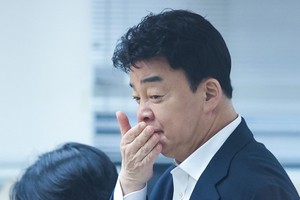
The Born Korea files insult charges against online critics
The Born Korea, the restaurant franchise company led by CEO Baek Jong-won, has filed criminal complaints against users who posted critical comments about the company and its management on online stock discussion boards. According to industry sources Thursday, The Born Korea recently filed complaints with the Eunpyeong Police Station in Seoul and other authorities, accusing users who posted critical or defamatory content on its Naver stock discussion board of insult and related charges. The complaints also extend to users of other online communities, including DC Inside, FM Korea and Bobaedream. The Eunpyeong Police Station confirmed it had received the complaints against investors but declined to provide details — including the number of those named — saying the matter is under investigation. On Thursday, posts appeared in those online communities from users saying they had received phone calls informing them they had been reported for insult. One investor wrote: "The police told me about the comment I left — something I wrote about the fourth-quarter loss — and said I have to come in. This is outrageous. I've never set foot in a police station even while criticizing outright fraudulent companies, and now I'm being dragged into one." Another investor posted a screenshot of a call log from the Eunpyeong station, writing: "I also got a call saying I need to come in for an insult investigation. I believe what I wrote was legitimate criticism — no profanity, just content about the harm done to shareholders and franchise owners who invested. I'm furious that they're doing this through legal complaints." At least four users in those communities have so far said they were contacted by police. A company official confirmed the filings in response to a Yonhap inquiry, saying: "Since last year, malicious posts and comments aimed at spreading defamatory content and false information through online communities have been causing direct harm to the company and its franchise owners." The official added: "We are currently pursuing legal action through a law firm against defamation, abusive language and the spread of false information. This is an unavoidable and legitimate defensive measure to protect the reputation and credibility of the company, its employees and our law-abiding franchise owners from baseless, indiscriminate defamation and insult." The Born Korea listed on the stock exchange on Nov. 6, 2024, at an initial public offering price of 34,000 won ($25) per share. The stock surged to a high of 64,500 won per share on its first day of trading. As of Thursday's close, shares stood at 14,550 won each.
Sept. 18, 2026
-
Personnel: Ministry of Employment and Labor
Director-general level transfers: Spokesperson Lee Min-jae; Director General of Industrial Safety and Health Policy Hong Kyung-eui Director level transfers: Busan Regional Employment and Labor Office Director Lee Chang-gil Director level secondments: Hong Jeong-u, policy planning director, Public Service Workers Committee Planning Group; Shin Sol-won, labor conditions improvement director, Public Service Workers Committee Planning Group
Sept. 18, 2026
-
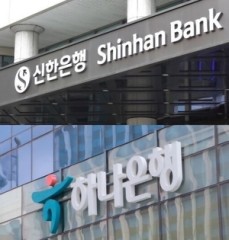
Shinhan Bank retains Incheon city treasury as Hana Bank's all-in bid falls short
Shinhan Bank to manage Incheon's city treasury for four more years through 2030 Long track record in local tax electronic payment systems proved decisive Hana Bank pledged 350 billion won and relocated headquarters to Cheongna, but still lost Some in financial circles speculate Hana could be next in line for the account The competition among financial institutions for Incheon's city treasury account — worth around 16 trillion won ($11.7 billion) annually — has come to a close. Shinhan Bank emerged victorious, retaining the primary treasury account for the sixth time. Hana Bank, which had staked everything on winning the contract, failed to wrest it away. With the selection confirmed, Shinhan Bank will again manage the primary treasury — covering general accounts, public enterprise special accounts and funds totaling 14.45 trillion won — from 2027 through 2030. NH NongHyup Bank, selected as the secondary treasury, will oversee other special accounts worth 2.02 trillion won. The contest pitted Shinhan Bank, which has operated Incheon's primary treasury for 20 years, against Hana Bank, which mounted a renewed challenge anchored by its presence in Incheon's Cheongna International City. Shinhan Bank's greatest advantage in the primary treasury competition was the operational experience it accumulated over two decades in local tax electronic payment and tax revenue collection systems — built up through actual day-to-day work. Incheon's local tax electronic billing and payment infrastructure, including the city's E-TAX system, is structured so that the systems of residents, the city government and financial institutions are organically interconnected. The local tax network directly serving Incheon residents was the decisive battleground. In this setup, the bank plays a role far beyond simple fund custody — it serves as core financial infrastructure for tax revenue administration, handling virtual account operations, transmission of collection results and electronic payment processing. Shinhan Bank continuously upgraded its systems each time local tax regulations and electronic payment methods changed during its long tenure managing the treasury, and adapted to new administrative bodies and shifts in the revenue framework as Incheon reorganized its administrative structure in recent years. The treasury designation review committee ultimately chose not to set aside the two decades of IT system operations Shinhan Bank had built up. Shinhan Bank's sixth consecutive retention of the city treasury is, in the end, a story that cannot be told without acknowledging the weight of long-accumulated operational experience. Having now secured the city treasury for the sixth time, Shinhan Bank should look beyond celebration and prepare for the relentless competition from rival financial institutions that lies ahead, while working to deliver an even higher quality of service than it provides today. Hana Bank, by contrast, pursued what amounted to an all-in strategy on Incheon to reclaim the primary treasury, but ultimately could not break through Shinhan Bank's hold. In this competition, Hana Bank went well beyond simply bidding for the treasury account, putting forward group-level investment in Incheon, regional co-prosperity initiatives and the relocation of its headquarters to Cheongna International City as centerpieces of its campaign — a clear demonstration of its resolve. Yet it must now wait another four years. The outcome is notable in that Hana Financial Group's bold bet on Incheon did not translate into winning the treasury designation. Hana Financial Group significantly expanded its footprint in Incheon this year. The most prominent move was a financial support and investment agreement with the city worth 350 billion won. Earlier, Hana Financial Group had agreed with Incheon to pursue a large-scale financial support and co-growth initiative that included establishing a 200 billion won Incheon Unicorn Fund. The timing of the agreement, however — which coincided with the treasury selection process — drew fairness concerns from the local community. Hana Financial Group's push into Incheon did not stop there. Starting this month, the group began a phased deployment of approximately 2,200 employees from Hana Financial Group, Hana Bank and affiliated companies to its Cheongna group headquarters. Combined with staff already working in Cheongna, the total number of finance and IT personnel based in Incheon was expected to reach around 4,000. Hana Financial Group estimated that the direct and indirect economic impact of the Cheongna headquarters relocation over the next decade would reach around 3.4 trillion won, and projected that the resulting expansion in tax revenue — including local income tax and property tax — would exceed 23 billion won per year. In short, Hana Financial Group's strategy was to turn Incheon into a new financial hub. Despite this large-scale regional investment and hub relocation strategy, the bid to reclaim the primary treasury came to nothing. Is Hana's Incheon gamble over? The question is whether Hana Bank's failure to reclaim the treasury can be viewed as simply losing a competition for a bank account. Hana Financial Group has already embarked on the long-term project of relocating its headquarters to Cheongna. Regardless of whether it holds the treasury account, Incheon is likely to become one of the group's core bases going forward. It is therefore difficult to conclude that the outcome of this treasury selection signals a retreat from Hana Financial Group's broader Incheon strategy. What matters more is what comes next. With the treasury account out of reach, the new question is whether Hana Financial Group will proceed as planned with its 350 billion won regional co-prosperity and financial support initiative, and whether it will continue to expand its Cheongna headquarters relocation and regional investment strategy. Whether the large-scale support program that drew scrutiny during the treasury selection process will continue regardless of the outcome is also worth watching. Speculation about the 'next treasury' — a rumor born of Hana's aggressive Incheon push. There is another story circulating in some corners of the financial industry. It is the so-called prediction that "this time it's Shinhan Bank, next time it's Hana Bank." The suggestion, raised cautiously, is that while incumbent Shinhan Bank has held the primary treasury this time around, Hana Bank could be the one to take it in the next competition. There is, however, no official basis or confirmed information among Incheon, Shinhan Bank and Hana Bank to support such a scenario. The speculation likely stems from the fact that Hana Bank's aggressive push into Incheon — which intensified after the June 3 local elections and ahead of the treasury selection — was so pronounced that many assumed the account would go to Hana this time. That momentum, in all likelihood, is what has led some in the financial industry to predict that Hana Bank will be next in line for the treasury. Whether the "next time it's Hana" narrative is simply a market forecast within the financial industry, or is grounded in actual discussions or commitments, remains unverified and requires separate confirmation. What matters more than Hana's treasury loss is what follows. The treasury competition has been settled in Shinhan Bank's favor for now, but it is hard to say that Hana Financial Group's contest for Incheon is over. Hana Financial Group is already moving forward with a substantial regional hub strategy centered on the Cheongna headquarters relocation, and has put forward a large-scale financial support initiative aimed at growing alongside Incheon. The real question going forward is therefore clear: will Hana Financial Group, having failed to secure the treasury, continue to expand its investment in Incheon? And can Incheon separate Hana Financial Group's large-scale regional investment from the treasury selection and turn it into a sustainable model for regional co-prosperity? What significance this competition's outcome will carry when the treasury door opens again in four years remains to be seen.
Sept. 18, 2026
-
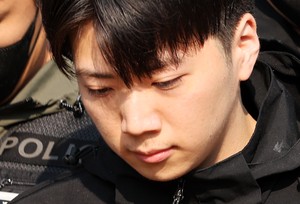
Jang Yun-gi, who faces death penalty for killing high school girl, showed no remorse in prison, fellow inmate says
A fellow inmate has said that Jang Yun-gi, 23, who faces the death penalty on charges of killing a high school girl he did not know in downtown Gwangju, showed no sign of remorse after being taken into custody. According to an MBC report Thursday, a man identified only as A, who was held in the same wing as Jang at Gwangju Prison, came forward with details of conversations the two had during their time there, saying he could not stay silent about Jang's apparent lack of remorse. A, who had been detained on theft charges, said the two were housed in separate cells but spoke through a window on multiple occasions. A said Jang initially deflected questions from other inmates but, when repeatedly pressed about his motive, brought up a "sexual fantasy." "When I asked why he killed her, he wouldn't say at first," A said. "When I kept asking, he said his sexual fantasy was like that — minors, schools, middle and high school students, that kind of thing." A also said that when he asked Jang whether he was indeed Jang Yun-gi, Jang smiled and waved, with no sign of remorse. Jang was wearing a yellow name tag, which indicates an inmate requiring close monitoring, but reportedly expressed a desire for the red name tag worn by death row inmates. "He said he would rather get the death penalty than life in prison," A said. "When I asked why, he said the red name tag looks cool and that he was going to live there for the rest of his life." A added that when he told Jang to get a grip, Jang replied that the red name tag was what he wanted and that it would give him status. Jang was indicted on charges of attempting to sexually assault and then killing a high school girl on a deserted walkway in Wolgye-dong, Gwangsan-gu, Gwangju, at around 12:10 a.m. on May 5, and of attacking with a knife a male student who ran to the scene after hearing screams. The indictment also included charges that he raped a female co-worker at his part-time job two days before the killing and secretly filmed the bodies of teenage girls while serving as a social service worker, among other sex crimes. He was transferred to prosecutors and taken to Gwangju Prison on May 14. Prosecutors sought the death penalty — the maximum sentence — against Jang on charges including murder in the course of rape on Aug. 31. They also asked the court to order the disclosure of his personal information, completion of a sexual violence treatment program, attachment of an electronic monitoring device for 30 years and probation. In his final statement, Jang expressed regret toward the victim and pledged to carry the weight of his crime for the rest of his life. The victim's family said Jang had offered nothing but excuses and deflections throughout the trial and urged the court to hand down a death sentence. The first-instance sentencing is scheduled for 2 p.m. on Sept. 30 at the Gwangju District Court.
Sept. 18, 2026
-
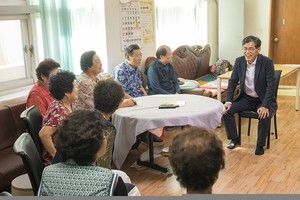
Yangcheon-gu Launches Comprehensive Chuseok Holiday Plan to Keep Residents Safe and Comfortable
The district's "2026 Chuseok Comprehensive Plan" runs Wednesday through Monday, covering safety, livelihoods and daily life — with an emergency medical operations center at the public health clinic, 91 clinics and pharmacies open during the holiday, and facility safety inspections completed in advance. Yangcheon-gu announced Friday it will roll out its "2026 Chuseok Comprehensive Plan" from Wednesday through Monday, covering three key areas — safety, livelihoods and daily life — so residents can enjoy a safe and comfortable holiday. To respond swiftly to emergencies and everyday inconveniences during the holiday, the district will set up dedicated task forces for flood control, medical care, traffic, sanitation and parks, with a central operations center running around the clock on the first floor of the district office. A total of 208 staff members will be on emergency duty throughout the holiday to ensure seamless coverage. Safety measures: 91 clinics and pharmacies open during the holiday; facility inspections completed before the break The district will activate an emergency medical response system to prevent any gap in healthcare during the holiday. An emergency medical operations center will be set up at the public health clinic from Thursday through Sunday, maintaining a 24-hour emergency care network in coordination with Ewha Womans University Mokdong Hospital — the regional emergency medical center — as well as local emergency facilities Hongik Hospital and Seonam Hospital. Two after-hours pediatric clinics will also operate to ensure prompt care for young patients. The district has also designated clinics and pharmacies that will remain open during the holiday so residents can access medical services without delay. A total of 91 clinics and pharmacies will be open in the district over the chuseok break; detailed information is available on the Yangcheon-gu district office website, the emergency medical portal E-gen, and the emergency medical information smartphone application. To help residents celebrate the holiday safely, the district will complete safety inspections before the break at 475 key facilities, including 35 gas installations, 14 construction sites, 11 multi-use establishments and 105 parks. Roads and road infrastructure will also undergo preemptive inspections to ensure public safety. The district's disaster safety operations center will run around the clock, maintaining a constant state of readiness and relaying any emergency situations to field response agencies quickly so that initial responses proceed without delay. Livelihood measures: holiday allowances for about 19,000 vulnerable households; charity-sharing campaign also planned The district will also strengthen support for vulnerable residents who are at risk of being left behind during the holiday season. Holiday allowances will be provided to 19,107 households, including low-income residents, veterans' families, people with disabilities, single-parent families and children in care. Welfare facilities for people with disabilities (32 locations) and senior community centers (154 locations) will also receive gift packages of rice and fruit. A "Chuseok Warmth-Sharing Campaign" will encourage residents to donate to neighbors in need. Donation boxes will be placed at community hubs — including neighborhood community centers and welfare centers — through Oct. 6, and donated items such as food and daily necessities will be distributed to residents in need through the Yangcheon-gu Food Bank Market Center. The district will also operate a price-monitoring operations center to track price trends for key chuseok goods and watch for market disruptions such as hoarding, stockpiling and unposted pricing, in an effort to keep holiday prices in check. Daily life measures: traffic, sanitation and fuel supply plans to support a smooth and comfortable holiday A traffic operations center will be set up to provide holiday traffic updates and address resident concerns, maintaining communication links with the Seoul Metropolitan Government's traffic operations center. Safety inspections have been completed in advance for 33 community buses, and illegal parking enforcement will focus on traffic-vulnerable areas near department stores, subway stations and community bus routes during the holiday. To keep the district clean and pleasant during the holiday, the district will announce household waste collection schedules by neighborhood in advance through its website and social media. Environmental patrol units will monitor areas prone to illegal dumping throughout the holiday, and major arterial roads and sanitation-vulnerable areas will undergo thorough cleaning before and after the holiday period. The district will also maintain emergency contact networks to ensure a stable supply of key fuels — including city gas, LPG and petroleum products — and will strengthen safety management at related facilities to enable a rapid response in the event of supply disruptions or accidents. "We have put in place a tight response system covering everything from safety inspections to medical care, traffic and sanitation — all the areas that matter most to residents' daily lives — so that everyone in the district can enjoy a safe and happy chuseok holiday," Yangcheon-gu District Mayor Lee Ki-jae said. "We will do our utmost to protect vulnerable residents and respond swiftly to any emergency, so that all residents can celebrate the holiday with peace of mind."
Sept. 18, 2026
-
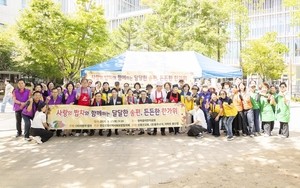
Yongsan-gu Hosts 'Hearty Chuseok' Celebration for 300 Seniors
Hangang-ro-dong teams up with Sarang-ui Bapcha and local sponsors to share holiday warmth with elderly residents; volunteers provide meals, gifts and health consultations Hangang-ro-dong in Seoul's Yongsan-gu held the "2026 Sweet Songpyeon and Hearty Chuseok with Sarang-ui Bapcha" event Thursday at Hanmaeum Children's Park, sharing the holiday spirit with neighbors ahead of Chuseok. The event was hosted by Sarang-ui Bapcha, a nonprofit meal-delivery organization, and organized by the Hangang-ro-dong Community Social Security Council. About 300 low-income elderly residents and senior center regulars from the neighborhood gathered to enjoy the warmth of the holiday season. The event was designed to provide nutritious meals to seniors at risk of skipping meals and to give the community a chance to check on their health and well-being. Local businesses — including Sinyongsan Church, Yongwoo Sangsa and E-mart's Yongsan branch — provided sponsorship, while about 60 volunteers from civic groups such as the Saemaul Women's Association and the neighborhood council, as well as employees of Welcome Savings Bank, pitched in to help. Sarang-ui Bapcha served samgyetang and banchan prepared since early morning. The food was cooked in mobile kitchen vehicles parked outside the park, while volunteers helped with serving and seating inside the dining area set up within the park. The Hangang-ro-dong Community Social Security Council distributed "Onmaeum Gift Packages" — each containing holiday songpyeon rice cakes and a dried-seaweed set — to the seniors, using funds from a designated project grant from the Seoul Community Chest of Korea. Additional donated goods from local sponsors were also handed out, adding to the festive atmosphere. A health corner was set up alongside the meal. The Yongsan-gu Public Health Center ran a booth offering dementia awareness information and health consultations for seniors. The Saemaul Women's Association provided complimentary beverages for attendees. Yongsan-gu District Mayor Kim Kyung-dae visited the event and joined in serving the samgyetang. He greeted each senior individually, asking after their health, and expressed gratitude to the volunteers and sponsors who had worked to make the event possible. "I am deeply grateful to Sarang-ui Bapcha, the Hangang-ro-dong Community Social Security Council, our sponsors and all the volunteers who prepared such a heartfelt meal and gifts," Kim said. "I hope our seniors enjoy a warm and satisfying Chuseok, and we will continue working with the community to build a tightly woven welfare safety net so they can live comfortably in their daily lives."
Sept. 18, 2026
-
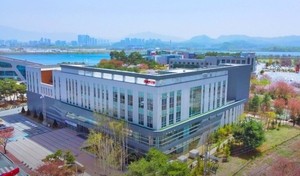
'Great Transformation' forum held in Gangwon Province for first time, at Chuncheon's Baksa-ro
The "Great Transformation National Forum," organized by the Social Reform Committee under the prime minister's office, was held in Gangwon Special Self-Governing Province for the first time. The Gangwon-focused edition was co-hosted by the Gangwon Democracy Foundation, Chuncheon City and the Gangwon Research Institute. The forum opened Thursday afternoon at Liberty Hall of the Gangwon Research Institute at 880 Baksa-ro, Seo-myeon, Chuncheon. It was convened to explore solutions to structural regional challenges facing Gangwon Special Self-Governing Province, including inequality, polarization and industrial shifts. Key issues on the agenda included population decline, regional depopulation and changes in the industrial structure — all central to Gangwon's transformation agenda. Gangwon Province Governor Woo Sang-ho said the answer to the province's transformation lies in "building industries and finding good jobs on the foundation of clean nature and clean energy." He added that he would incorporate the proposals put forward at the forum into provincial governance and work to translate them into policy and institutional change. In the first session, Yoon Hong-sik, a professor of social welfare at Inha University, presented on "Conditions for South Korea's Great Transformation," and Jang In-su, a research fellow at the Korea Institute for Health and Social Affairs' population policy division, spoke on "Directions for Regional Population Policy in an Era of Population Decline." The second session featured presentations by Lee Won-hak, a senior research fellow at the Gangwon Research Institute, on "Policy Tasks for a Just Transition in Gangwon"; Yong Jeong-sun, a Gangwon Province Assembly member, on "How to Redistribute the Fruits of Growth"; Yoon Yo-wang, chairman of the Chuncheon Starlight Social Cooperative, on "The Value and Transformation of Small Schools Through Rural Study Programs"; and Kim Seong-hun, chief executive of Wassup Town, on "Local Youth Villages as an Alternative to Regional Depopulation." A panel discussion followed, moderated by Ha Gwang-yun, standing director of the Gangwon Democracy Foundation.
Sept. 18, 2026
-

Capture the Charm of Noryangjin Mannaro in the 'Bulkkot Manyang' Short-Form Video Challenge!
Post a short-form video shot at Noryangjin Mannaro on personal social media by Sept. 27 — AI videos featuring mascot 'Manyangi' also eligible. Top prize: iPad; second prize: AirPods. All participants receive Mannaro vouchers worth up to 20,000 won. Dongjak-gu is running a short-form video challenge using its local brand "Bulkkot Manyang" to boost commerce in the Noryangjin Mannaro district (around 92 Manyang-ro) through Sept. 27. The Noryangjin Mannaro commercial district — known for its cherry blossom-lined streets in spring — spans 44,014 square meters and is home to 297 stores as of the first half of 2026. Since being selected in January for the Seoul Metropolitan Government's "2026 Local Brand Commercial District Development Project," the area has been pursuing branding efforts to establish itself as a youth-friendly destination. The challenge was designed to showcase the appeal and attractions of Noryangjin Mannaro through short-form content and to draw visitors of all generations through online promotion. To participate, entrants must follow the official Noryangjin Mannaro Instagram account and post a video of at least 30 seconds — filmed in the Noryangjin Mannaro area — on personal social media platforms such as Instagram, Naver Clip, YouTube or TikTok. Participants may submit either self-shot footage or an AI-generated video featuring the district's mascot character "Manyangi." Posts must include five required hashtags: #noryangjinmannaro, #bulkkotmanyang, #bulkkotfestivalspot, #bulkkotfestivalbest and #worldfireworksfestival. After posting, participants must complete and submit an entry form via a QR code found on the Dongjak-gu official blog post or the promotional poster. Top entries will receive a "Bulkkot Manyangi Award" iPad (one winner) and a "Bulkkot Mannaro Award" AirPods (two winners). Winners will be notified individually on Sept. 29. Participation prizes are also available. Uploading a post to social media earns a 10,000 won ($7) Mannaro voucher, while uploading both a post and a short-form video earns a 20,000 won voucher. Mannaro vouchers will be distributed on a first-come, first-served basis — up to a total budget of 4 million won ($2,920) — to participants who meet all challenge requirements, and can be picked up in person at Newcastle Real Estate (1st floor, 92 Manyang-ro) or Jipshin Spicy Galbi-jjim (94 Manyang-ro). The vouchers can be used like cash at 56 participating stores, including all restaurants in the Noryangjin Cup-bap Street as well as cafes, hair salons, photo studios, optical shops and pharmacies. The vouchers are valid through Sept. 30. A full list of participating stores is available via a QR code on the promotional poster. Inquiries can be directed to the Dongjak-gu Office's Commercial District Revitalization Division or the short-form challenge operations team. "A great commercial district becomes even more special when the attention and stories of the people who visit it are added to it," Dongjak-gu District Mayor Ryu Sam-young said. "I hope the many faces of Noryangjin Mannaro captured through this challenge will draw new visitors and breathe fresh energy into the local commercial district."
Sept. 18, 2026
-

Yecheon's Samgang Naru Tavern Festival opens Sept. 25 at Samgang Cultural Complex
The Yecheon Culture and Tourism Foundation announced Friday that the 2026 Yecheon Samgang Naru Tavern Festival will be held for three days, from Sept. 25 to Sept. 27, at the Samgang Cultural Complex. This year's festival reflects the updated name "Samgang Naru Tavern," adopted following the site's designation as a national folk cultural heritage in 2025, and reinterprets the historical and cultural significance of the old river crossing in a contemporary way throughout the event. Three newly introduced characters make their debut: Dari, an otter inspired by the itinerant merchants known as bobu merchants; Gangi, representing the Samgang rivers and their ferryman; and Jumi, a warm-hearted tavern hostess. The festival's signature stamp tour has been reimagined as the "Samgang Bobu Merchant Pass." Participants carry a tour booklet and traditional coins as they complete five required and three optional programs, collecting eight stamps in total to receive a commemorative gift. Alongside this, the festival offers a range of programs — a personality quiz called "Find Your Samgang Character," a "Bobu Merchant Gathering" in which actors portraying life at the old ferry landing mingle with visitors, and a "Samgang Slow Post Office" where festival memories are mailed back to participants a year later. Other activities include a traditional candy-making workshop and hands-on experiences in traditional clothing, pottery spinning, kayaking, caricature drawing and a children's zone. The Samgang Market, Haeborae Market and food trucks also operate throughout the festival, selling a variety of goods and street food. "Samgang Naru Tavern stood at the confluence of the Nakdong, Naeseong and Geumcheon rivers, a place where countless people passed through and rested," said An Byeong-yun, chairman of the foundation's board. "We have woven the many stories of that place into an enjoyable festival, and we hope visitors will come with their families during the chuseok holiday to create special memories."
Sept. 18, 2026
-
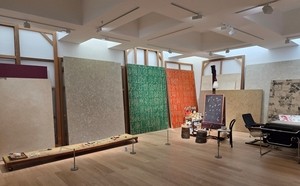
'Water Drop Artist' Kim Chang-yeol Exhibition Extended Through December After Drawing 20,000 Visitors
The Pyeongchang-dong studio where Kim spent 30 years creating — including a fully restored below-ground atelier — has been open to the public since May; the inaugural exhibition spotlighting his hanji works features 24 pieces from the district's collection Jongno-gu will extend the exhibition "Kim Chang-yeol: Traces of Water Drops" at the Jongno-gu Kim Chang-yeol Artist's House (74 Pyeongchang 7-gil) through Dec. 20, citing strong public interest. The exhibition focuses on the significance of the Pyeongchang-dong studio where Kim worked, highlighting his hanji pieces — a body of work that occupies an important place in his artistic legacy. The space, with its high ceilings and abundant natural light, was well suited to large-scale paintings and hanji work. On display are 24 works from Jongno-gu's collection — 19 paintings, four prints and one drawing — along with preparatory studies and finished pieces from his signature series "Water Drops" and "Recurrence." Visitors can examine up close the process behind each completed work and the artist's distinctive mode of expression. The Kim Chang-yeol Artist's House is the only studio in South Korea where the artist lived with his family and continued creating for more than 30 years before his death in 2021. The district signed an MOU with his family, purchased the home and converted it into a public cultural facility. The first floor houses two dedicated exhibition rooms, while the former living quarters on the second floor have been turned into a ticket booth and café. The below-ground studio has been restored as closely as possible to its original state during Kim's lifetime, allowing visitors to experience his creative space firsthand. Since opening on May 28, the venue has welcomed about 20,000 visitors as of Sept. 6, drawing an enthusiastic response from the public. The house is open Tuesday through Sunday, 10 a.m. to 6 p.m. It will be closed on Mondays, on chuseok (Sept. 25) and on Oct. 6. It will remain open on the substitute holiday Oct. 5, as well as on National Foundation Day and Hangul Day. Admission is 5,000 won for adults, 3,000 won for teenagers and 2,000 won for children; Jongno-gu residents and visitors wearing hanbok, among others, are eligible for discounts of up to 50 percent. For more information, visitors may consult the Jongno Cultural Foundation website or contact the Kim Chang-yeol Artist's House directly. "The fact that more than 20,000 people visited in just four months since opening is proof of how deeply the public cares about Kim Chang-yeol's artistic spirit and the space he inhabited," Jongno-gu District Mayor Yoo Chan-jong said. "We have extended the exhibition so that more people can fully experience the artist's creative world, and we hope visitors will come before year's end and feel something truly special."
Sept. 18, 2026
MOST READ
- 1KAIST develops high-performance bio-based adhesive using E. coli instead of petroleum
- 2Pope Leo XIV declines French honors and banquet, accepts only private meeting with Macron
- 3Daimler Truck unveils next-generation transport solutions at IAA 2026
- 4What was Rachmaninoff's performance fee? A 1928 price list tells all
- 5Samsung Biologics union's show of force backfires at the bargaining table
- 6APR says hair-loss treatment research published in international journal
-
WORLD

US warns of punishment for anyone enabling Iran's Strait of Hormuz toll scheme
-
INDUSTRY
Toyota union puts productivity first; Hyundai Motor union demands bigger share of profits
-
FINANCE
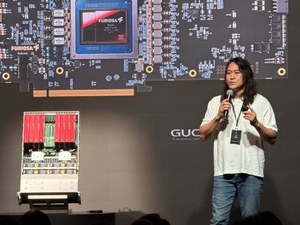
National Growth Fund to invest $531M in FuriosaAI, which rebuffed Meta's $800M takeover bid
-
INDUSTRY
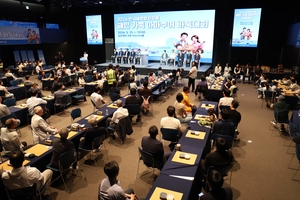
Korea Shipowners' Association holds amateur baduk tournament for Maritime Day