
- HOME
- SOCIETY
-
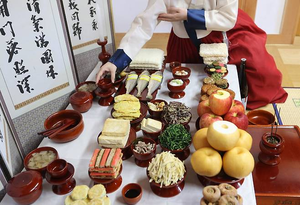
Chuseok table costs rise as zucchini prices surge 44%
Seoul Metropolitan Government's agricultural corporation surveys chuseok ritual table costs Hypermarket costs up 6% from last year to 290,711 won; traditional markets up 3.5% to 245,051 won Setting up a chuseok ritual table at a Seoul hypermarket will cost 290,711 won ($212) this year, up 6% from last year, according to a survey. Traditional market shoppers will pay 245,051 won, a 3.5% increase. Vegetables, which rose more than 10% on average, were the main driver of the overall cost increase. Seoul Agricultural & Marine Products Corporation conducted the survey ahead of the chuseok holiday, visiting 25 retail outlets across Seoul — including 16 traditional markets, eight hypermarkets and Garakmal, the general food market inside Garak Market — and released the results Friday. Traditional markets offered lower prices than hypermarkets for namul vegetables such as bracken and peeled bellflower root, seafood including frozen pollack fillet and yellow croaker, and meat products such as beef and chicken. Hypermarkets, however, were cheaper for some processed and packaged goods, including songpyeon rice cakes, dasik confections, imitation crab sticks and eggs. Garakmal posted a total cost of 228,000 won, up 5.6% from a year earlier, but still the cheapest option among all retail formats surveyed — 7.0% below traditional markets and 21.6% below hypermarkets. Garakmal offered lower prices than the other formats for vegetables such as radish, green onion, zucchini, bracken and peeled bellflower root, as well as pork, chicken and some processed foods. Among fruits, apples and jujubes were cheaper there than at hypermarkets. By category, vegetables led the overall price increase, rising 14.7% on average across the three retail formats. Meat products followed at 7.4%, seafood at 6.2% and fruits at 3.6%. Processed foods held roughly steady from a year earlier. Vegetable prices climbed due to summer heat waves and frequent rainfall. Zucchini surged 43.8%, radish rose 24.9% and bellflower root gained 23.0%. Baby cabbage and green onion, however, fell 9.6% and 2.0%, respectively, as increased supply from stored inventory entered the market. Among fruits, apples were nearly flat, slipping just 0.1% from last year. Dried persimmons fell 12.0% and jujubes dropped 14.5%. Pears and chestnuts rose 12.7% and 15.4%, respectively, driven by holiday demand. In seafood, lower catch volumes and reduced inventory pushed frozen pollack fillet up 20.1% and dried pollock up 10.8%. Yellow croaker fell 6.4% after the government released stockpiles and ran discount promotions. Meat prices rose as livestock numbers and slaughter volumes declined. Pork climbed 18.5% and beef for soup gained 10.5%. Beef for skewered dishes was nearly unchanged, up just 0.3%. Among processed foods, songpyeon fell 5.9%, imitation crab sticks dropped 8.3% and sikhye rice punch declined 3.7%. Pancake mix and cheongju rice wine each rose 5.8%. The survey prices are based on Sept. 9, two weeks before the chuseok holiday, and may differ from prices at the time of actual shopping. The corporation surveys and publishes the cost of purchasing 34 key seasonal items for a six-person family's ritual table. The latest survey was conducted Sept. 9 by a team of 10 — including members of Seoul's consumer price monitoring unit and senior employment price surveyors — who visited 16 traditional markets, eight hypermarkets and Garakmal across eight autonomous districts. A separate survey by the Korea Price Research Center yielded similar findings. The center surveyed prices for 28 ritual table items at traditional markets in six cities — Seoul, Busan, Incheon, Daegu, Gwangju and Daejeon — on Sept. 10 and Sept. 11, and found the total cost for a four-person family came to 303,750 won, up 4.1% from 291,810 won last year. Zucchini showed the sharpest price increase in that survey as well, with a single zucchini priced at 2,410 won — up 92.8% from a year ago — as reduced sunlight following heavy rains late last month hurt harvests. Five pears cost 27,300 won, up 16.0%. Radish rose 24.0% to 2,530 won, and a pack of 10 eggs climbed 8.9% to 2,820 won.
Sept. 18, 2026
-
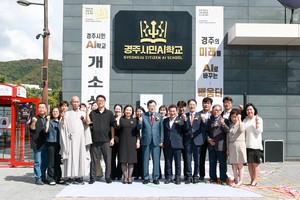
Gyeongju launches permanent AI education program for residents
Gyeongju, North Gyeongsang Province, is converting its AI education offerings — previously run as standalone courses — into a permanent, structured program open to all residents. The city held an unveiling ceremony for the "Gyeongju Citizens' AI School" Thursday at the plaza in front of the Gyeongju Smart Media Center, marking the program's official launch. The event, organized by the Gyeongju Smart Media Center Foundation, drew about 50 people, including students, guests and advisory committee members. The school formalizes AI education the center has been offering this year and is part of the city's eighth-term elected administration's campaign pledge action plan. The program runs five tracks: a general AI lecture series for residents, a mobile AI classroom, a creative AI application academy, employment and startup training, and an executive course. Of these, the mobile AI classroom and the creative AI application academy are already running this year, while the general lecture series, employment and startup training, and executive course are set to launch next year. The creative AI application academy has been organized into 56 sessions this year, with 182 participants having completed the course so far. The mobile AI classroom visits senior centers and community halls in towns and villages, offering free sessions to groups of 10 or more. The city aims to hold at least 18 sessions this year, reaching more than 180 participants. At the ceremony, nine advisory committee members received appointment certificates. They will advise on curriculum planning and overall program operations through Sept. 16 next year. The center plans to publicly recruit a pool of around 30 instructors through Oct. 16, run a pilot citizens' forum on Monday and trial lecture sessions from October through December, and finalize a Gyeongju-tailored AI utilization roadmap by year's end. Kim Jang-ju, director of the center, said the program would "link the five tracks step by step and reflect feedback from the field to deliver AI education that residents can truly feel the benefit of." Gyeongju Mayor Ju Nak-young said the city would "lower the barrier so that any resident can learn AI close to home and apply it to their daily lives and work," adding that he aims to build "a city where learning drives innovation in work and industry."
Sept. 18, 2026
-
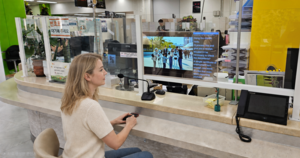
Gangnam-gu Transforms Service Counter Dividers Into Real-Time AI Translators!
Gangnam-gu district office reinvents its service counter partitions — speak and translated subtitles appear instantly on screen. Transparent OLED displays paired with AI technology improve access for foreign nationals and hearing-impaired visitors. Pilot units installed at two counters support 130 languages, with expansion under review based on results. Gangnam-gu's streak of creative governance initiatives under District Mayor Kim Hyun-gi shows no signs of slowing. The district has transformed the transparent partitions at its public service counters into digital communication stations, combining transparent OLED displays with AI-powered real-time captioning and translation. The new "real-time transparent OLED communication counter" allows foreign nationals, hearing-impaired visitors, and others who face communication barriers to receive assistance more easily. Where the old partition simply divided the space between staff and visitors, the new system turns that same barrier into a communication tool. When either party speaks into a microphone, AI converts the speech into text in real time — and for foreign languages, translates it into any of 130 languages displayed on the transparent OLED screen. The face-to-face nature of the consultation is preserved; the screen supplements it with only the information needed. Foreign nationals can follow the conversation in their preferred language, while hearing-impaired visitors can read staff explanations as subtitles. The system is expected to reduce the need to repeat information or rely on interpreters, and to improve the accuracy of communication between visitors and staff. When no consultation is in progress, the display doubles as a digital information board, showing guidance on administrative procedures, lifestyle information and district news — allowing a single device to serve both as a communication aid and an information channel. The project is one of eight pilot initiatives Gangnam-gu selected through its public-private open innovation program. One unit has been installed at each of two counters — the civil affairs and passport section and the public health administration section. The district plans to assess captioning and translation accuracy, visitor convenience and staff usability during the pilot phase and refine the system as needed. Depending on the results, it will consider rolling the technology out to neighborhood community centers and other public service locations. "We wanted to use AI technology at the service counter to reduce communication difficulties caused by language barriers or disabilities," District Mayor Kim Hyun-gi said. "We will continue to actively apply AI and digital technology in public administration to expand smart government services that residents can truly feel."
Sept. 18, 2026
-

Gangseo-gu's Senior Welfare Programs Win Prime Minister's Award at National Local Government Competition!
District recognized for expanding social participation opportunities for elderly residents; senior jobs grew 70.6% to 6,083 in three years Senior store expansion and rising sales among standout achievements Gangseo-gu in Seoul won the grand prize — the Prime Minister's Award — in the community vitality category at the 22nd Korea Local Government Management Awards on Thursday. The district was recognized for broadening social participation opportunities for elderly residents and injecting new energy into the local community. Key achievements cited included developing tailored jobs that draw on seniors' long experience and expertise, expanding community-service positions linked to local public services, and creating sustainable jobs in which seniors produce and sell goods themselves. Since 2023, Gangseo-gu has pursued sustainable senior employment by focusing on differentiated job creation that leverages the experience and expertise of older residents. As a result, the number of senior jobs, which stood at 3,566 at the time, grew to 6,083 over three years — an increase of about 70.6 percent. Those efforts have produced even more tangible results on the ground. About 100 elderly participants in the "Gangseo Airport Supporters" program — who provided interpretation and information services for airport travelers — have continued their work by signing employment contracts with Korea Airports Corporation even after the project formally ended. A senior restaurant called "Hansulduchan" surpassed 350 million won ($270,000) in sales in 2025 and opened a second location. "Hanseong Sanghoe," a senior-run operation that produces sesame oil and other goods, sold more than 500 bottles during a single senior market promotion for Family Month, earning recognition for its quality. As the AI era takes hold, the district has also expanded seniors' roles into digital and cultural fields. It introduced a new "neighborhood AI instructor" program, positioning elderly residents not as passive beneficiaries of education policy but as key contributors who can put their capabilities to work. The senior employment program has also drawn strong satisfaction ratings. A survey found that more than 90 percent of participants expressed satisfaction, citing reasons such as "being active as a member of the community" and "finding new meaning in life through a sense of belonging in the neighborhood." The Korea Local Government Management Awards is a policy competition co-hosted by the Ministry of Interior and Safety and sponsored by four ministries including the Ministry of Agriculture, Food and Rural Affairs and the Ministry of Culture, Sports and Tourism. Its aim is to identify and share outstanding local government initiatives that drive regional economic vitality and development. Evaluation categories cover livelihood stabilization, community vitality, youth support, and locally specialized resource development. Gangseo-gu District Mayor Jin Kyo-hoon said the award "demonstrates that the experience and talents of our elderly residents are a precious asset that moves our community forward," adding that the district would "continue to expand tailored employment opportunities so that seniors' long experience and individual expertise can translate into safety and convenience for all residents."
Sept. 18, 2026
-
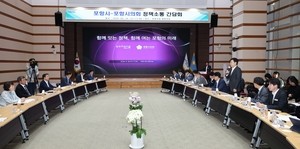
Pohang city government, council meet to share key policies, strengthen cooperation
The Pohang city government and Pohang City Council held a meeting to share major policies and current issues and discuss ways to cooperate for regional development. On Wednesday, Pohang Mayor Park Yong-seon, Deputy Mayor Bae Yong-su, senior civil servants at the fourth grade and above, City Council Speaker Kim Cheol-su, Deputy Speaker Jo Min-seong and the chairs of standing committees gathered at the city hall conference room for the Pohang City-Pohang City Council Policy Communication Forum. Participants exchanged views on a range of key issues, including the relocation of a second batch of public institutions to the city, the budget planning direction for 2027, designation of a low-carbon steel special zone, designation of an AI data center special zone, the successful hosting of the 2027 ICLEI World Congress, a project to develop a mixed-use marine leisure and tourism city, and the construction of a cross-bay bridge over Yeongil Bay. They also discussed anticipated challenges and areas requiring cooperation in advancing major policies, seeking ways to deepen mutual policy understanding between the city government and the council and to ensure smooth city administration. "Sharing the city's major policies and current issues with the council and exchanging views is an important process for more faithfully reflecting the will of citizens in city governance," Mayor Park said. "The city and the council will respect each other's roles, communicate closely, and work together to gather the wisdom needed for Pohang's next leap forward." Council Speaker Kim said that "continuous communication and cooperation between the executive branch and the council is paramount" in pursuit of the shared goals of Pohang's development and the happiness of its residents. "We will strengthen our cooperative relationship by thinking through the region's key issues together and finding reasonable solutions," he added.
Sept. 18, 2026
-
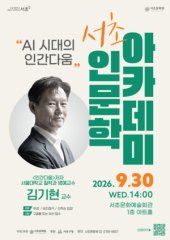
Seoul National University professor to lecture on humanity in the AI age
Kim Ki-hyeon of Seoul National University speaks Sept. 30 on what it means to be human in the AI era; Sookmyung Women's University President Moon Si-yeon follows Oct. 7 with a lecture on hallyu as a global force Seocho-gu in Seoul will host two humanities lectures at the art hall on the first floor of the Seocho Culture and Arts Center, on Sept. 30 and Oct. 7, both starting at 2 p.m. The lectures are part of a humanities academy program organized by the Seocho Cultural Center, which invites experts from various fields to explore humanistic themes in depth and offer residents new perspectives on life and society. The first lecture, on Sept. 30, will feature Kim Ki-hyeon, emeritus professor of philosophy at Seoul National University, speaking on the theme "What Does It Mean to Be Human in the Age of AI?" Kim will examine how AI is shaping human judgment and decision-making, and explore the values — empathy, reason and freedom — that must be preserved amid technological advancement, along with the importance of autonomous thinking and mutual respect. On Oct. 7, Moon Si-yeon, the 21st president of Sookmyung Women's University, will deliver a lecture titled "Hallyu Megatrend: The New Global Competitiveness Created by Culture." Moon will trace how hallyu has expanded well beyond K-pop into diverse fields, examine shifts in fandom culture, and explore the new possibilities emerging from the convergence of technology, culture and AI — and what they mean for Korean culture's standing on the world stage. Both lectures are free of charge. Residents wishing to attend may register in advance through a Google Form for each lecture or by calling 02-2155-8607. Seating on the day of each lecture is unassigned and available on a first-come, first-served basis. Seocho-gu District Mayor Jeon Seong-su said he hopes the lectures will give residents a meaningful opportunity to reflect on what it means to live a fully human life in the AI era and to appreciate the growing global reach of Korean culture. "We will continue to develop a wide range of humanities programs to help residents understand the changes of our time and think broadly about their lives and the future," he said.
Sept. 18, 2026
-
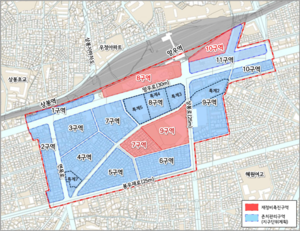
Jungnang-gu Raises Maximum Floor Area Ratio to 880% in Sangbong Redevelopment Zone
Allowable floor area ratio in general commercial zones adjusted upward from 800% to 880%; mandatory 10% non-residential ratio requirement waived; tourism accommodation zone temporarily designated Jungnang-gu announced that the floor area ratio system and mandatory non-residential ratio requirements for the preservation management zone within the Sangbong Redevelopment Promotion District have been revised, following the Seoul Metropolitan Government's official notification Thursday of an amended redevelopment promotion plan and topographic map. The floor area ratio framework has been overhauled. For general commercial zones whose land-use designations were set or left unchanged before July 1, 2000, the allowable floor area ratio has been raised from the previous ceiling of 800% to a maximum of 880%. The base floor area ratio will be set at or below the level stipulated in Seoul's urban planning ordinance, the allowable ratio at no more than 1.1 times the base, and the upper-limit ratio at up to twice the statutory maximum. Calculation standards have also been updated to add upper-limit floor area ratio incentives tied to measures such as installing subway entrances within a building's lot and obtaining green building and energy efficiency rating certifications. Also, the mandatory requirement that buildings in commercial and semi-residential zones dedicate at least 10 percent of their floor area ratio to non-residential uses has been waived, allowing Seoul city ordinance provisions to apply instead. The change reflects a sharp decline in demand for commercial floor space driven by recent shifts in social and retail structures. Alongside this, the preservation management zone of the Sangbong Redevelopment Promotion District has been temporarily designated as a tourism accommodation special zone. Developers who consult with the Seoul Metropolitan Government in advance and apply for a building permit to construct tourism accommodation facilities by Jan. 4, 2029, will be eligible for an upper-limit floor area ratio of up to 1,040%. Jungnang-gu District Mayor Ryu Gyeong-gi said the restructuring of the Sangbong Redevelopment Promotion District framework would serve as a catalyst for the Sangbong and Mangu-dong area to advance further as Jungnang-gu's economic, commercial and tourism hub through a rational easing of floor area ratio restrictions. "Based on the revised system, we will lead systematic urban development suited to the characteristics of the area," he added.
Sept. 18, 2026
-

Teacher assaulted by elementary student; parents file child abuse complaint the next day
The parents of an elementary school student who assaulted her homeroom teacher in a classroom earlier this month have filed a child abuse complaint against the teacher and others, it has emerged. According to education authorities and Yonhap, the parents of fifth-grader A, a student at an elementary school in Cheongju, filed a complaint with police on Sept. 3 against teacher B, the vice principal and one other teacher — three people in total. In the complaint, the parents alleged that teacher B had shouted at their daughter after refusing her request to replace a test paper. They also alleged that the vice principal made remarks to A during the assault that constituted emotional abuse. The North Chungcheong Provincial Office of Education, which received child abuse notifications from both police and administrative authorities, said it is providing legal support to the accused teachers while also requesting conflict mediation services involving the parents. Earlier, A punched and kicked teacher B in the face and head at around 8:40 a.m. on Sept. 2 in a classroom at the school. Video footage of A grabbing B by the hair and assaulting her spread through media coverage, drawing wide public attention. Teacher B, a contract teacher in her late 60s and a retired educator, had started work the day before the incident — her first day on what was to be a six-month assignment. On that first day, A cursed at B during a diagnostic assessment, complaining that the test paper was dirty. The school calmed A down and called her guardian to take her home early. The following day, when B instructed A to retake the diagnostic assessment, A assaulted her. The vice principal and another teacher who intervened to stop the attack were also assaulted. A, who had been experiencing emotional instability, had a history of directing verbal abuse and aggressive behavior at multiple teachers and students. She was subsequently suspended from attending school, and B remains on leave.
Sept. 18, 2026
-
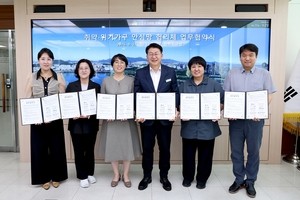
Seongdong-gu Builds Safety Net for Vulnerable and At-Risk Households
A new consultative body will deliver tailored support for single-person households, foreign residents, single-parent families and multicultural households, linking specialized services in counseling, welfare, medical care and legal aid with community resources through joint case conferences. Seoul's Seongdong-gu will operate a consultative body dedicated to identifying vulnerable and at-risk households — including single-person households, foreign residents, single-parent families and multicultural families — at an early stage and swiftly connecting them with the support they need. The consultative body is a cooperative framework through which local specialized agencies work together to identify and assist households facing complex hardships. It focuses on providing tailored support suited to each household's circumstances by linking the specialized services of each participating agency with community resources. To that end, Seongdong-gu signed an MOU with five related agencies, including the Seongdong-gu Family Center, on Tuesday to formalize the body's operation. Six organizations are party to the agreement: Seongdong-gu, the Seongdong-gu Family Center, the Dongbu Foreign Residents Center, the Seongdong-gu Single-Person Household Support Center, the Seoul Seongdong Family Counseling Center and the Dongbu Crime Victims Support Center. Under the agreement, participating agencies will cooperate in identifying vulnerable and at-risk households, making inter-agency referrals, holding case conferences based on the needs and crisis situations of referred individuals, and linking clients with specialized services — including counseling, welfare, medical care, legal aid and employment assistance — as well as broader community resources. For complex crises that a single agency cannot resolve alone, the Seongdong-gu Family Center will oversee case conference operations while each agency contributes its area of expertise to jointly determine the necessary support. The aim is to move beyond siloed, single-agency assistance by coordinating services and resources across multiple organizations so that at-risk households receive help in a timely manner. The consultative body will hold regular quarterly meetings to share case information and each agency's support plans. For urgent or complex cases requiring immediate intervention, agencies will convene ad hoc consultations to respond quickly. Seongdong-gu District Mayor Yoo Bo-hwa said strengthening inter-agency cooperation is essential to connecting residents in crisis with the support they need more swiftly and systematically. "We will closely link the expertise and resources of each agency to build a tight-knit welfare safety net that delivers real, practical support to residents who need help," she said.
Sept. 18, 2026
-
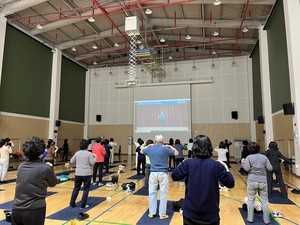
Nowon-gu Launches Moderate-to-Vigorous Fitness Program to Build Lasting Exercise Habits!
Twice-weekly moderate-to-vigorous physical activity sessions over 12 weeks, with body composition and fitness assessments for personalized health management 177 sessions held this year with 261 participants; health indicators including flexibility, body fat percentage and moderate-intensity exercise rates all improved Nowon-gu in Seoul said it is running a moderate-to-vigorous physical activity program designed to help residents build consistent exercise habits in their daily lives. The WHO and the American College of Sports Medicine recommend that adults engage in at least 150 minutes of moderate-intensity physical activity per week, along with strength training at least twice a week. Nowon-gu developed the program to help residents consistently meet those guidelines, linking fitness assessments, exercise education and follow-up care in a single offering. The program targets Nowon-gu residents aged 20 and older and runs three cohorts per year. Each cohort spans 12 weeks, with two 60-minute sessions per week. It is structured around four stages: a pre-assessment, tailored exercise education, a post-assessment and a resident-led independent exercise phase. In the pre-assessment, participants have their body composition — including skeletal muscle mass, body fat percentage and BMI — as well as their flexibility, muscle strength and exercise habits evaluated. Under the guidance of professional instructors, participants then work through a range of moderate-to-vigorous activities: bodyweight strength exercises, small-equipment workouts using resistance bands and balance cushions, aerobic exercise, and foam roller routines. They also learn to use the Rating of Perceived Exertion scale to self-regulate workout intensity based on their individual fitness levels. The program also incorporates a nutrition component, using a dietary habit survey to review participants' eating patterns and teaching them nutritional strategies to reduce body fat and increase skeletal muscle mass. As of late August, the program had held 177 sessions this year, with 261 residents taking part. Post-assessments for the ninth cohort, which ran from June through August, showed 100 percent participant satisfaction. Flexibility improved by an average of 1.7 centimeters and body fat percentage fell by 0.5 percentage points. According to the Community Health Survey, the share of Nowon-gu residents meeting moderate-to-vigorous physical activity guidelines has risen consistently, from 24.6 percent in 2023 to 25.8 percent in 2025. After the formal program ends, the district runs resident-led self-help exercise clubs to help participants keep up their physical activity. Members can continue exercising independently using instructional videos, audio materials and printed guides. From January through August this year, the self-help clubs held 258 sessions. Since 2024, a cumulative 342 individual members have joined the clubs, with total attendance reaching 7,230 person-visits. The district plans to continue linking the exercise education program with the resident-led clubs to support ongoing moderate-to-vigorous physical activity in daily life. Recruitment is currently open for the 10th and final cohort of the year. Any Nowon-gu resident aged 20 or older may apply by phone or through the program's KakaoTalk channel. Sessions are held at the Nowon-gu Public Health Center and the Gongneung and Wolgye community health branches; hours and enrollment capacity vary by location. Nowon-gu District Mayor Seo Jun-o said building a sustainable exercise routine matters more than one-off workouts for a healthy life. "Through this program, we want residents to understand their own health status, develop the capacity to exercise on their own, and make physical activity a natural part of everyday life," he said. "We will continue to provide consistent support to make that happen."
Sept. 18, 2026
-
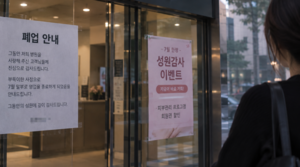
Customers left out of pocket after popular Seoul dermatology clinic shuts down abruptly
Head doctor of well-known clinic faces fraud charges Customers left unable to reclaim their membership fees after a well-known clinic in Gangseo-gu, Seoul, abruptly shut down have filed a complaint with police. The clinic operated primarily as a dermatology practice, and police have opened an investigation into its head doctor, who has since filed for court rehabilitation. Seoul's Gangseo Police Station has booked the clinic's head doctor, identified only as A, on fraud charges and is conducting an investigation. More than 20 victims filed a group complaint with the station on Aug. 13, and police have since questioned the complainants about the circumstances of their losses. Members who say they were harmed claim the clinic suddenly ceased operations around the end of July without refunding their remaining membership balances. The number of victims is reportedly still growing, as notices about the closure and refund procedures reached only some members, leaving others unaware they had been affected. A group chat set up by affected members currently has about 90 participants. Individual losses range from hundreds of thousands of won to several million won, and the total amount yet to be refunded is estimated at tens of millions of won. One member, also identified as A, told The Herald Business that the clinic had held a "thank-you event" in July offering steeper discounts than usual. "Right up until the end of July, there was no separate notice of closure given to customers — just a small sign posted at the front desk," the member said. Some members also claimed that even as the clinic was on the verge of closing, staff continued booking August appointments for customers who visited in person, giving the impression that normal operations would continue. According to those who filed the complaint, the clinic responded to refund requests after the closure by saying it had no money or simply could not issue refunds, or ignored contact attempts altogether. Once the group criminal complaint was filed, some smaller-sum victims began receiving refunds — a development that victims say was a deliberate attempt to reduce the apparent scale of the damage. Doctor A filed for court rehabilitation with the Seoul Bankruptcy Court around the end of August. The court lists 77 registered creditors under A's name. The clinic had previously said it would do its best to ensure repayment. Brand headquarters says Doctor A terminated contract unilaterally The clinic had originally operated as a franchise branch under a medical brand agreement, but changed to an unaffiliated name around February this year. The brand, identified as Clinic B, operates 25 branches nationwide, and its head doctor has hundreds of thousands of followers on social media. Clinic B announced through its official social media accounts in late February that the Gangseo-gu branch's brand licensing agreement had ended as of Feb. 13, and that the location would operate as a separate, unaffiliated medical institution with no connection to the main clinic or other branches. Some members, however, are holding the headquarters partly responsible, pointing out that membership payments continued to be transferred into an account bearing the brand's name even after that announcement. Clinic B rebuffed that claim, saying its contracts require three months' advance notice from either party before termination, with penalties and exit terms to be negotiated. "Doctor A unilaterally changed the website and business name without notifying headquarters, and we only found out after we noticed the website had been changed," the brand said. On the question of why the brand name lingered after the contract ended, Clinic B said it was Doctor A's responsibility to change the signage and account names, and that A had simply failed to do so. The brand also said that as a franchise headquarters, it plays no structural role in individual clinics' medical services or membership sales. It provides brand licensing, management support and education in exchange for a monthly fee, and is not involved in payment processing or membership revenue. Doctor A and Clinic B's headquarters are now engaged in mutual litigation over who bears responsibility.
Sept. 18, 2026
-
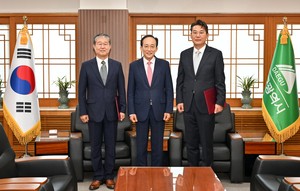
Daegu appoints new heads of city transit, urban development corporations
Daegu Mayor Choo Kyung-ho presented appointment certificates Thursday to Han Geun-su, the new president of Daegu Transportation Corporation, and Lee Jae-yong, the new president of Daegu Urban Development Corporation, at the mayor's office in the Sanggyeok administrative complex. Both appointments take effect Friday and run for three years. The two incoming presidents appeared before city council confirmation hearings on Sept. 8 and Sept. 9, where they outlined their management philosophies and plans for addressing key issues at their respective agencies. Han said he would make safety on the urban rail network his top priority and work to deliver transit services centered on the needs of residents. Lee said he would draw on 36 years of experience in urban development to strike a balance between the public interest and profitability, and pursue new growth opportunities through change and innovation. "Both organizations are core public enterprises responsible for residents' daily lives and the region's development," Choo said. "I hope they will produce results that citizens can feel and establish themselves as public enterprises that earn the public's trust through accountable management."
Sept. 18, 2026
-
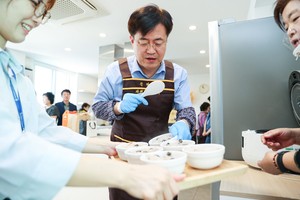
'No Neighbor Goes Hungry This Chuseok': Yeongdeungpo-gu Expands Meals for Homeless, Delivers Fruit Boxes to Low-Income Families
Free meals for homeless residents expanded to three times daily; 200 households with children to receive fruit gift boxes; welfare payments extended to 10,000 households; welfare safety net strengthened through check-ins on isolated residents Yeongdeungpo-gu will roll out a comprehensive Chuseok relief plan targeting vulnerable residents during the holiday period from Wednesday through Monday. The district said the plan aims to strengthen the welfare safety net for vulnerable groups and ensure all residents can enjoy a comfortable and warm holiday. From Thursday through Saturday, free meals for homeless residents will be expanded to three times daily through the district's comprehensive support center, self-sufficiency center and temporary shelter, eliminating concerns about missed meals during the holiday. The district will also provide newly introduced Chuseok gift boxes — containing fruit and nutritional supplements — to 200 low-income households raising children. Holiday welfare payments will be extended to 10,000 households receiving basic livelihood benefits, with additional payments going to low-income single-parent families (284 households), children under protection (234 children) and people with severe disabilities (about 4,000). Welfare officials will also conduct well-being check-ins on about 1,600 elderly residents living alone and around 700 socially isolated households to minimize gaps in care. The district will maintain tight emergency medical and public safety systems throughout the holiday. Around-the-clock emergency response teams will operate across all departments, including a central situation room. An emergency medical operations center will remain active, and 53 clinics and hospitals along with 32 pharmacies have been designated to stay open, ensuring uninterrupted medical access. Residents can find the full list of open facilities on the national emergency medical portal. Measures to ease daily inconveniences are also in place. The district — the first in Seoul to introduce a voice-alert system for parking enforcement — will use the service to encourage drivers to move their vehicles voluntarily rather than issue fines, helping prevent traffic congestion. Thirty-six public parking lots, including school grounds, will be opened free of charge. Special enforcement operations will also target illegal taxi conduct at the stand in front of Yeongdeungpo Station late at night. Household waste may only be put out on Saturday and Sunday between 8 p.m. and midnight; disposal will be prohibited from Wednesday through Friday. The district will operate a sanitation operations center, deploying 606 workers and six road-sweeping vehicles to conduct intensive waste collection along major arterial roads and at designated collection points, keeping the entire district clean throughout the holiday. Yeongdeungpo-gu District Mayor Jo Yu-jin said the district would "thoroughly manage the holiday on the ground by closely attending to welfare blind spots and strengthening hands-on support that residents can feel in their daily lives." She added, "I hope everyone enjoys a joyful holiday with family and loved ones they haven't seen in a while."
Sept. 18, 2026
-

'Let me hear you moan': 14-year-old boy harassed family of Jeju missing woman
Boy referred to prosecutors on charges of violating the Stalking Punishment Act A 14-year-old boy who repeatedly called and sent text messages to the family of a woman who went missing in Jeju and was later found dead — making inappropriate demands — has been referred to prosecutors. The Korean National Police Agency's National Investigation Headquarters said Thursday it had referred the boy, identified only as A, to prosecutors on charges of violating the Stalking Punishment Act after he contacted the missing woman's family 29 times by phone and text message. A allegedly reached out through a contact number the family had made public, telling them he would help find the missing woman if they "let him hear moaning sounds," and continued to contact them repeatedly. Because A is 14 — not under 14, the threshold for criminal immunity under the Criminal Act — he does not qualify as a juvenile under criminal age and is subject to criminal punishment. The National Investigation Headquarters said spreading false information about the deceased or mocking and denigrating her constitutes secondary harm — causing additional pain to the bereaved family and damaging her reputation — and can be punishable depending on the nature and severity of the conduct. Police said they would continue to monitor secondary harm targeting the deceased and her family, and would track down and strictly respond to any confirmed violations.
Sept. 18, 2026
-

Daegu launches advisory council to drive advanced industry strategy
Daegu launched the Daegu Advanced Industry Development Strategy Advisory Council on Thursday at the Daegu Creative Economy Innovation Center, kicking off a top-level expert body to guide the city's industrial transformation and advanced industry development. The council is tasked with diagnosing the current state of Daegu's industries, analyzing their strengths and limitations, and providing comprehensive advice on the direction of industrial development, core strategies, and key projects and action items. Daegu Mayor Choo Kyung-ho chairs the 22-member council, which includes 10 external specialists representing advanced industries — semiconductors, robotics, mobility, AI and biotech — along with the heads of 11 regional industrial research institutions, including Kyungpook National University, the Daegu Gyeongbuk Institute of Science and Technology and the Korea Institute for Robot Industry Advancement. The inaugural session, which also served as a kickoff meeting, featured introductions of council members followed by presentations from Kyungpook National University and the Daegu Policy Research Institute on the current state and challenges facing the city's key industries. The city plans to hold regular council sessions and establish a standing working-level planning team under the council to ensure that recommendations are translated into concrete policies and projects. Building on those discussions, the city also aims to complete a roadmap for Daegu's industrial development strategy by the end of this year and draw up annual action plans to put it into practice. "Through the advisory council, we will clearly identify the areas where Daegu must focus its efforts and push forward with action items without delay, creating tangible results that lead to change and growth," Mayor Choo said.
Sept. 18, 2026
-
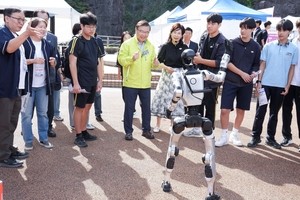
Jungnang-gu Hosts 'Dream High' Career Fair to Inspire Local Youth
About 2,500 students from 14 middle schools in the district took part Thursday at Yongma Waterfall Park, exploring 47 booths across four themes — from career and college strategies to future industries and hands-on vocational experiences. Jungnang-gu hosted the "2026 Jungnang Dream High Career Fair" on Thursday at the multipurpose plaza of Yongma Waterfall Park. Now in its seventh year, the fair was held under the theme "A Day When Dreams Become the Future," drawing about 2,500 students from 14 middle schools in the district. A total of 47 booths were organized across four themes: career and college strategies, future industries and convergence technology, hands-on vocational mastery, and careers for social value. In the career and college strategies zone, students received one-on-one consultations with career counseling teachers and took part in mentoring sessions led by university students from 16 departments and colleges, including the pre-medicine program at Kyung Hee University. Students exchanged ideas about majors and college pathways while exploring fields of interest. The future industries and convergence technology zone drew particular attention: humanoid robot G1 made its first-ever appearance at a local government fair, where students tried operating it themselves and experienced emerging technologies including drones and the metaverse. The hands-on vocational mastery zone offered experiences in fields such as K-beauty, train operation and barista work, while the careers for social value zone let students explore areas including traditional Korean medicine, military service, environmental education and youth counseling. The opening ceremony featured a street dance performance by b-boy crew Goonies Crew, followed in the afternoon by a stage from local youth dance club Attention. A stamp-rally program was also set up, allowing students to collect stamps at each booth and enter a prize event. "I hope this becomes a day when our young people step outside the classroom, meet a wide range of professions firsthand, and discover their own potential," Jungnang-gu District Mayor Ryu Gyeong-gi said. "We will continue to work with the community to support career education, so that young people can explore fields that match their aptitudes and interests and begin to shape their dreams in concrete terms."
Sept. 18, 2026
-
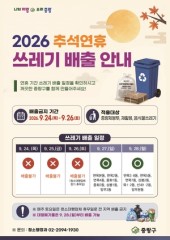
When Can You Take Out the Trash During Chuseok?
Jungnang-gu announces that areas with Sunday, Tuesday and Thursday collection may resume disposal from Sept. 27, while Monday, Wednesday and Friday areas may do so from Sept. 28 Jungnang-gu has announced adjusted household waste disposal schedules for the Chuseok holiday period and will operate a dedicated sanitation response system throughout the break. Waste collection will be suspended for two days — Sept. 24 and 25 — due to the closure of the Nowon Resource Recovery Facility and the Greater Seoul landfill site. As a result, residents in areas with Sunday, Tuesday and Thursday collection will not be able to put out general waste, food waste or recyclables on Sept. 24, while those in Monday, Wednesday and Friday collection areas must hold their waste until after Sept. 25. Regular disposal will resume Sept. 27 for Sunday, Tuesday and Thursday collection areas, and Sept. 28 for Monday, Wednesday and Friday areas. Large-item waste — including home appliances and furniture — may be put out from Sept. 28 in all areas. The district will operate a sanitation control center and a rapid-response team throughout the holiday to address any inconvenience caused by the adjusted schedule. Patrols will also be stepped up in areas prone to illegal dumping, including major arterial roads and high-traffic public facilities, to deter unauthorized disposal and maintain clean streetscapes. Jungnang-gu District Mayor Ryu Gyeong-gi said the district would do its utmost to keep the neighborhood clean throughout the Chuseok holiday. "We ask residents to observe the designated disposal dates and join us in keeping our streets tidy," he said.
Sept. 17, 2026
-

Father of golf star Kim Mi-hyun sent to prosecutors over illegal subletting at driving range
The head of the company that operates a large golf driving range associated with professional golfer Kim Mi-hyun, once known as "Super Peanut," has been referred to prosecutors on charges of illegally subletting part of the facility. The Incheon Nonhyeon Police Station said Thursday it had recently sent Kim Mi-hyun's father — identified only by his surname Kim — to prosecutors on charges of violating the Public Property Act. He serves as the representative of the company operating Kim Mi-hyun Golf World. Kim's father is accused of subletting portions of the driving range to other businesses without prior approval from Namdong-gu. The subletting is believed to have covered a screen golf facility on the first below-ground floor, a restaurant on the first floor and a golf equipment shop on the second floor. Kim Mi-hyun Golf World is a driving range built on a park site in Nonhyeon-dong, Namdong-gu, Incheon, with a land area of 27,069 square meters and a total floor area of 4,284 square meters. Kim Mi-hyun's side developed the driving range on the park site in 2009 and donated it to Namdong-gu, securing operating rights for 25 years — from 2009 to 2034 — through a trust agreement. In March this year, Namdong-gu discovered that the company had been subletting the facility without prior approval in violation of the trust agreement's terms and issued a corrective order demanding compliance. When no action had been taken by Aug. 6, Namdong-gu filed a complaint against the operating company with the Nonhyeon Police Station. The district office believes the illegal subletting has been ongoing since the trust agreement was signed in 2009. "We confirmed the illegal subletting and referred the case to prosecutors," a police official said. "We did not conduct a separate investigation into Kim Mi-hyun herself." Meanwhile, Kim Mi-hyun made her debut on the Korea Ladies Professional Golf Association Tour in 1996 before joining the LPGA Tour in 1999, where she won Rookie of the Year. She went on to win eight titles on the LPGA Tour, establishing herself as one of the top players of her era.
Sept. 17, 2026
-
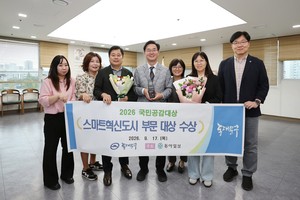
Dongdaemun-gu Wins Grand Prize in 'Smart Innovation City' Category at 2026 National Empathy Awards
The district is upgrading its CCTV network with AI, launching autonomous buses and running smart senior centers — using AI and IoT to boost resident safety and convenience Seoul's Dongdaemun-gu has won the grand prize in the "Smart Innovation City" category at the 2026 National Empathy Awards, recognized for integrating AI and the Internet of Things (IoT) across safety, transportation, welfare and public administration. The 2026 National Empathy Awards, sponsored by the Ministry of Economy and Finance, the Ministry of Science and ICT and the Ministry of Interior and Safety, honors outstanding cases of empathy-driven management by local governments, companies and organizations that have created value through community engagement and communication. The district has gone beyond simply adopting new technologies, applying them to solve everyday problems residents can feel directly — from personal safety and mobility to care services. It has also used data to identify urban challenges, deploy targeted services on the ground and expand the foundations for resident participation in smart-city policymaking. On the safety front, the district is pursuing a full conversion of its closed-circuit television network to AI-powered intelligent monitoring through its "Intelligent Selective Surveillance Infrastructure Upgrade Project." The upgraded system enables AI to analyze CCTV footage in real time, detect warning signs and respond swiftly. Smart poles have also been installed at school zones and major crosswalks to strengthen pedestrian safety. In transportation, Dongdaemun-gu became the first district in Seoul's northeastern corridor to launch a pilot autonomous bus service, operating in areas such as Jangan-dong where public transit access is limited. The district has also expanded traffic-safety infrastructure — including IoT-based smart shelters, an AI right-turn alert system and smart crosswalks — to improve both mobility and road safety. In welfare, the district has connected advanced technology to care services and efforts to bridge the digital divide. It established the nation's first video-conferencing platform for senior centers and operates "smart senior centers" equipped with digital devices such as smart tables, allowing elderly residents to participate in various programs and grow comfortable with digital technology. The district also runs an AI care-call service that checks on single-person households around the clock, a robotic public rehabilitation service for people with disabilities, and AI patrol robots that monitor fire and crime risks at traditional markets. The focus has been on applying technology in areas closely tied to daily life to reduce care gaps and everyday inconveniences for the elderly and vulnerable. AI has been integrated into internal administration as well. The district introduced "Chat DDM," a generative AI chatbot for staff, to improve work efficiency, and operates a "Smart City Living Lab" where residents identify local problems and explore technology-based solutions — broadening the foundation for participatory policymaking. To connect these individual projects into district-wide innovation, Dongdaemun-gu has established a "2025–2029 Smart City Mid- to Long-Term Master Plan." Going forward, the district plans to expand smart services across sectors in stages and continuously assess whether technology adoption is translating into real improvements in resident convenience and quality of life. "The goal of a smart city is not advanced technology for its own sake, but how much that technology can make residents' daily lives safer and more convenient," Dongdaemun-gu District Mayor Choi Dong-min said. "We will actively apply AI and IoT in areas closely tied to daily life — transportation, safety and welfare — to build a smart city where residents can feel the change themselves."
Sept. 17, 2026
-
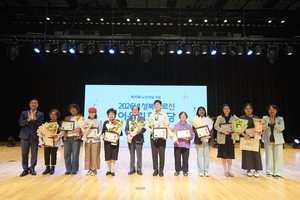
Seongbuk-gu Celebrates 30th Senior Citizens' Day With Grand Community Festival
17 exemplary seniors and contributors honored with district mayor commendations, including one Ministry of Health and Welfare ministerial citation Seoul's Seongbuk-gu held the "2026 Seongbuk Senior Citizens' Community Festival" on Wednesday at the Centennial Hall of Dongduk Women's University, marking the 30th Senior Citizens' Day. Senior Citizens' Day, observed on Oct. 2, is a statutory commemorative day established to promote respect for elders and express gratitude for their contributions. Seongbuk-gu organized the event to honor the seniors who have long supported the local community and to share the spirit of an intergenerational, caring neighborhood. The ceremony opened with a recitation of the Senior Citizens' Pledge, followed by a welcoming address from Moon Gyeong-ju, head of the Seongbuk-gu chapter of the Korea Senior Citizens Association, and congratulatory remarks from district officials. Seongbuk-gu District Mayor Lee Seung-ro presented commendations to 17 exemplary seniors and contributors who have advanced senior welfare and community service in the district, including one recipient of a ministerial citation from the Ministry of Health and Welfare. Inside and outside the venue, outdoor performances ran alongside a variety of activity booths. The Korea Senior Citizens Association's Seongbuk-gu chapter, seven organizations from the district's community welfare working committee senior division, and the Jongam Police Station took part, offering traditional games, dementia and voice-phishing prevention campaigns, traffic safety awareness activities, and caricature drawing, among other programs. "Seniors are the steadfast elders of our society and guides who pass on the wisdom of life," District Mayor Lee Seung-ro said in his address. "We will do our utmost to repay their dedication and build a Seongbuk-gu where every senior can enjoy a healthy and happy retirement."
Sept. 17, 2026
MOST READ
- 1KAIST develops high-performance bio-based adhesive using E. coli instead of petroleum
- 2Pope Leo XIV declines French honors and banquet, accepts only private meeting with Macron
- 3Daimler Truck unveils next-generation transport solutions at IAA 2026
- 4What was Rachmaninoff's performance fee? A 1928 price list tells all
- 5Samsung Biologics union's show of force backfires at the bargaining table
- 6APR says hair-loss treatment research published in international journal
-
WORLD

US warns of punishment for anyone enabling Iran's Strait of Hormuz toll scheme
-
INDUSTRY

Toyota union puts productivity first; Hyundai Motor union demands bigger share of profits
-
FINANCE

National Growth Fund to invest $531M in FuriosaAI, which rebuffed Meta's $800M takeover bid
-
INDUSTRY
Korea Shipowners' Association holds amateur baduk tournament for Maritime Day