
- HOME
- SOCIETY
-

'Fabricated indictment' special prosecutor bill heads to Cabinet amid mounting constitutional concerns
Conflict of interest, revival of prosecutorial investigative powers and uncertain outcomes raise legal questions; critics warn new probe could hinder criminal justice reform A bill to appoint a special prosecutor to investigate alleged abuses of prosecutorial power during the Yoon Suk Yeol administration — widely referred to as the "fabricated indictment special prosecutor bill" — is on the verge of taking effect. The Cabinet was set to deliberate and approve the measure Tuesday, after which it would go to the president for signature and promulgation. The bill has drawn a steady stream of criticism from legal circles and the political opposition, with detractors arguing that its launch procedures, investigative powers, scope and stated purpose are all unconstitutional or otherwise unlawful. According to legal and political sources, the bill — passed by the full National Assembly under the leadership of the Democratic Party of Korea and transmitted to the government on Nov. 6 — was placed on the agenda of Tuesday's Cabinet meeting, presided over by Prime Minister Han Seong-sook. President Lee Jae Myung is abroad attending the Asia-Pacific Economic Cooperation summit. Once the Cabinet clears the bill, only Lee's formal approval and promulgation remain. Under the bill's supplementary provisions, it takes effect on the day of promulgation, meaning the launch of yet another special prosecutor's office is imminent. The bill targets alleged abuses of prosecutorial power in the investigation of 12 cases: the Daejang-dong development allegations, the Wirye new-town development allegations, allegations that former Democratic Research Institute Vice Chairman Kim Yong accepted bribes, the Baekhyeon-dong apartment development allegations, Public Official Election Act violations related to the Daejang-dong and Baekhyeon-dong development cases, allegations of third-party bribery involving Seongnam FC, allegations that Kim Jin-seong suborned perjury, SBW's alleged remittances to North Korea, the Gyeonggi Province corporate card allegations, the shooting death of a South Korean civil servant in the West Sea, alleged statistical manipulation by the Moon Jae-in administration, and an alleged defamation case involving former President Yoon Suk Yeol. Of those 12 cases, six — excluding the West Sea shooting, the statistical manipulation allegations and the Yoon defamation case — are directly linked to President Lee, fueling a conflict-of-interest controversy. Under the bill, the special prosecutor would be appointed by the president from candidates recommended by the Democratic Party, the People Power Party and the Rebuilding Korea Party. Critics question whether it is appropriate for a special prosecutor appointed by Lee to examine alleged problems in the prosecution of cases involving Lee himself. Another point of contention is that, while the revised Code of Criminal Procedure that took effect Oct. 2 abolished prosecutors' investigative powers, those powers would be revived for prosecutors seconded to the special prosecutor's office under transitional provisions. Article 14 of the supplementary provisions of the revised code sets out transitional measures for special prosecutors and deputy special prosecutors under special prosecutor acts. Transitional provisions are rules designed to ensure a smooth shift from old law to new when legislation is enacted, amended or repealed. Democratic Party lawmaker Seo Yeong-gyo, chair of the National Assembly's Legislation and Judiciary Committee, argued on social media that Article 14 of the supplementary provisions means special prosecutors and their deputies are authorized to conduct investigations under every special prosecutor act, including newly created ones. Legal experts, however, say the transitional provisions do not extend to special prosecutor offices launched after the revised code took effect. The National Election Commission special prosecutor, which launched in September before the revised code came into force, was covered by the transitional provisions — but applying them to a special prosecutor office launching more than a month after the revised code took effect is untenable, critics say, and would require an amendment to the code itself. An Mi-hyeon, a senior prosecutor at the Cheonan branch of the Daejeon District Public Prosecution Service, wrote on social media Nov. 10 that "transitional provisions govern how to handle existing legal relationships or ongoing matters that straddle the period before and after a legal amendment — they are transitional measures for a special prosecutor that was operating when prosecutors still had investigative powers," referring to the NEC special prosecutor. "They are not a provision that contemplates every special prosecutor office launched afterward," An said. "This should have been written into the main body of the Code of Criminal Procedure." Even if the special prosecutor's office is launched, observers say the investigation will be far from straightforward. Probing past prosecutorial investigations is inherently complex, and legal experts predict that even securing basic warrants will prove difficult. The second omnibus special prosecutor's office — which launched after the three major special prosecutor probes into the insurrection, Kim Keon Hee and the Marine corporal's death — examined allegations that an investigation into former first lady Kim Keon Hee's acceptance of a Dior bag was improperly shelved, but ultimately reached no conclusion and referred the matter to police. Kong Bong-suk, a prosecutor at the Seoul Metropolitan Public Prosecution Service, wrote on social media Wednesday that the new special prosecutor would apply psychological pressure "just as the previous omnibus special prosecutor did with its 'massive state power abuse' framing. But that is as far as it goes." Kong predicted that search-and-seizure requests and arrest warrants "will be rejected one after another," and that as the 200-day mandate nears its end, the office will invoke a "heavy-tail strategy" — claiming time ran short and demanding an extension. Although the bill omits provisions on whether to maintain prosecutions or drop charges, critics across the political spectrum and in legal circles — including the opposition — contend that the fabricated indictment special prosecutor is ultimately designed to secure the withdrawal of criminal charges against President Lee. The argument is that once the special prosecutor concludes its investigation and finds that prosecutorial powers were abused, the Ministry of Justice and the Public Prosecution Service will move to drop the charges. The issue has resurfaced with the nomination of Lee Yong-cheol, a longtime acquaintance of Lee, as minister of justice. Lee Yong-cheol left open the possibility of dropping charges, saying it was "time to focus on the special prosecutor's fact-finding." President Lee currently faces three trials at the first-instance level — the Daejang-dong and related cases, the SBW North Korea remittance case, and the corporate card case. All three proceedings have been suspended since he took office. Under the Code of Criminal Procedure, charges may be withdrawn before a first-instance verdict is handed down. Some say the expansion of grounds for dismissal of indictments under the revised Code of Criminal Procedure is also aimed at influencing Lee's trials. The revised code added two new grounds for dismissal: when charges are brought on the basis of a seriously unlawful investigation, and when charges are brought in a manner that grossly exceeds prosecutorial discretion. On a practical level, concerns are growing that the launch of another special prosecutor with an unclear mandate could push everyday criminal cases to the sidelines at a time when the criminal justice system urgently needs to stabilize. Those concerns follow the sweeping changes that took effect Oct. 2 — including the abolition of the Prosecution Service and the launch of the Serious Crimes Investigation Agency and the Public Prosecution Service. The Public Prosecution Service is already grappling with a staffing shortage stemming from reduced headcount, while the Serious Crimes Investigation Agency remains occupied with the special investigation unit on the insurrection case.
Nov. 17, 2026
-
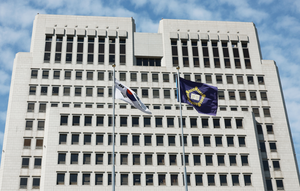
Sitting judge caught drunk driving in Seoul gets 1-month pay cut
Judge drove while intoxicated in Seocho-gu A sitting judge caught driving drunk in Seoul has been disciplined with a one-month pay cut. The Supreme Court announced Tuesday through the official gazette that it had imposed the salary reduction on Judge A, a Seoul High Court judge, on Nov. 9. The judge drove a car about 500 meters along Seocho Jungang-ro in Seocho-gu, Seoul, at around 6:09 a.m. on Sept. 9 while intoxicated, according to the investigation. The blood alcohol concentration at the time was 0.056 percent, a level that triggers a license suspension under the Road Traffic Act. The Supreme Court determined that the drunk driving had damaged the judge's dignity as a member of the judiciary and undermined the court's standing, and imposed the disciplinary measure accordingly. Under the Act on Disciplinary Action against Judges, the available sanctions are suspension from duty, a pay cut and a reprimand. The Supreme Court said it disclosed the disciplinary action pursuant to Article 26, Paragraph 2 of the act.
Nov. 17, 2026
-
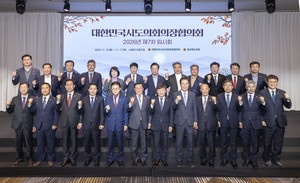
North Gyeongsang council hosts 7th extraordinary session of national assembly speakers' council
The North Gyeongsang Provincial Council held the 7th Extraordinary Session of the Korea Council of Metropolitan and Provincial Assembly Speakers at the Stanford Hotel in Andong on Monday, bringing together legislative leaders from across the country to discuss cooperation on local council development and regional issues. The session drew the speakers of all 16 metropolitan and provincial assemblies nationwide, along with North Gyeongsang Province Governor Lee Cheol-woo and provincial education superintendent Lim Jong-sik. Key agenda items included a resolution urging the swift enactment of a Local Assembly Act to strengthen the independence and autonomy of local councils, as well as a proposal calling for a second round of public institution relocations to the regions. Also on the agenda was a joint resolution submitted by the North Gyeongsang and South Chungcheong provincial councils calling for measures to contain the spread of pine wilt disease and the establishment of a nationally integrated pest-control system, underscoring the need for nationwide cooperation in responding to forest disasters. "For local councils to faithfully carry out their core role of checking and overseeing executive bodies, they must be backed by commensurate authority and institutional foundations," North Gyeongsang Provincial Council Speaker Kim Hui-su said. "The enactment of a Local Assembly Act to strengthen the independence and expertise of local councils must happen without delay." Kim said local councils across the country must communicate and cooperate closely to address pressing challenges including the low birth rate, population decline and regional economic stagnation. "The North Gyeongsang Provincial Council will also work actively for the advancement of local autonomy and the well-being of provincial residents," Kim added.
Nov. 17, 2026
-

Samsung Fire, Hanwha General Insurance, Meritz Fire acquitted in LH bid-rigging case
Supreme Court's Second Division rejects prosecution appeal, upholding not-guilty verdicts from lower courts Insurers face separate administrative suits over Fair Trade Commission fines Three non-life insurers charged with colluding in insurance contract bids issued by the Korea Land and Housing Corporation have been acquitted by the Supreme Court. The Supreme Court's Second Division, presided over by Justice Kwon Young-jun, rejected the prosecution's appeal Thursday and upheld the not-guilty verdicts against Samsung Fire, Hanwha General Insurance and Meritz Fire, which had been indicted on charges of violating the Fair Trade Act. Prosecutors alleged that Samsung Fire and Hanwha General Insurance conspired around December 2017 to rig a bid for LH's comprehensive property insurance on rental housing, ensuring that one insurer — identified only as Company A — would win the contract. Prosecutors further alleged that Meritz Fire joined the scheme in February 2018, with all three insurers helping Company A secure a jeonse rental housing fire insurance contract in exchange for a share of the premiums. Prosecutors argued the companies exploited a standard industry practice in which a winning insurer takes out reinsurance, and the reinsurer in turn takes out retrocession coverage to spread risk, using that structure to facilitate the alleged collusion. The trial court acquitted all three, finding that chat logs and text messages submitted as evidence by insurer employees were insufficient to establish a conspiracy. Prosecutors appealed, but the second court also returned not-guilty verdicts. The Supreme Court, nine months later, found no error in those rulings and confirmed the acquittals. Although the insurers have escaped criminal liability, a separate dispute over Korea Fair Trade Commission fines remains unresolved. The commission imposed corrective orders and fines in April 2022, citing unfair concerted practices in connection with the bids. The insurers filed administrative suits seeking to have the penalties overturned. According to each company's third-quarter report, Hanwha General Insurance is contesting a fine of 263 million won ($197,000) in a first-instance administrative trial, with the next hearing scheduled for Jan. 20. A second-instance ruling in Samsung Fire's suit — involving a claim amount of about 126 million won — is set for Nov. 26.
Nov. 17, 2026
-

Gangseo-gu's 'Saeromi' goods contest names Lee Eun-sol's exploration passport as top prize
Third Saeromi Goods Contest held; exploration passport, spoon set and pop-up keychain among standout entries Seoul's Gangseo-gu district is stepping up promotional efforts by unearthing distinctive merchandise featuring its official character, Saeromi. The district office announced Tuesday that it held an awards ceremony Monday for nine winning entries in the third Saeromi Goods Contest. Saeromi is the district's official character, modeled after the magpie — Gangseo-gu's symbolic animal. The contest was organized to expand communication with residents and build familiarity with district administration through everyday lifestyle content featuring the character. Held from Sept. 11 to Oct. 14 under the theme "Meet Saeromi Every Day — Now It's a Lifestyle," the contest drew 71 entries across two categories: painting and sculpture, and digital. The overall grand prize went to Lee Eun-sol for "Gangseo-gu Exploration Passport with Saeromi." The top prize in the painting and sculpture category went to Kim Min-jeong for "Saeromi Spoon Set," while Seo Hui-jin took the digital category top prize for "Snap It on the Door! Today's Saeromi Pop-Up Keychain." The district plans to display all submitted works in the first-floor lobby of the district office through the end of this year, giving residents a chance to see the Saeromi merchandise in person. The winning entries will later be used in promotional materials and social media content to publicize Gangseo-gu's policies and key projects. "We are working to discover a wide range of Saeromi goods to raise attention to district administration and spread the word about key projects and policies closely tied to residents' lives," Gangseo-gu District Mayor Jin Kyo-hoon said. "We will continue to get closer to residents' daily lives through diverse content."
Nov. 17, 2026
-
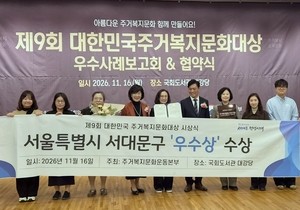
Seodaemun-gu's housing safety net — from emergency relocations to youth rentals — earns national recognition
The district's residential welfare policies span emergency relocations from a condemned building and temporary housing for displaced residents to 154 youth-tailored public rental units Seodaemun-gu's residential welfare policies — ranging from emergency relocations out of hazardous buildings and temporary housing for suddenly displaced residents to tailored public rental units for young people — have earned national recognition. Seodaemun-gu announced Tuesday that it received the excellence award at the 9th Korea Residential Welfare Culture Awards, hosted by the Residential Welfare Culture Movement Headquarters. The ceremony was held Monday at the National Assembly Library auditorium. The award recognized the district's efforts to build a housing safety net calibrated to residents' circumstances and life stages — covering emergency relocations from dangerous structures, protection for households in housing crisis, and residential stability for young people. The flagship policy is the emergency relocation support provided to residents of Jwawon Arcade, a building that received an E rating — the lowest safety grade. Completed in 1966, Jwawon Arcade was South Korea's first mixed-use residential-commercial complex, and the deterioration of the aging structure made securing safe housing for its residents urgent. The district partnered with the Korea Land and Housing Corporation (LH) to set up a relocation support center on site and linked residents to a housing-upgrade support project for vulnerable groups as well as emergency housing assistance, enabling tenants in difficult financial circumstances to move into public rental housing. The district also operates "Jinggeomdarijutaek" — stepping-stone housing units that serve as emergency temporary accommodation for residents who suddenly lose their homes. Since 2021, the district has maintained five such units for residents displaced by disasters, domestic violence or forced evictions. Residents placed in these units receive full coverage of their deposit and rent. A distinguishing feature of the program is that support does not end with temporary shelter: through the Seodaemun Residential Security Comprehensive Center, the district continues assisting residents until they secure stable long-term housing, including placement in public rental units. The district's supply of tailored public rental housing to ease the cost burden on young residents has also drawn attention. Reflecting the area's character as home to nine universities, the district worked with the Seoul Housing & Communities Corporation (SH) to deliver 154 youth-tailored public rental units — called "Cheongnyeondamda" — in Sinchon-dong. Billed as the largest demand-tailored public rental housing development in Seoul, the project was designed to support young residents' housing stability and long-term settlement in the area. Field-based outreach to reduce gaps in residential welfare runs alongside these programs. Together with the Seodaemun Residential Security Comprehensive Center, the district operates a monthly mobile housing consultation service that visits each neighborhood in turn, and it also runs a home-repair project for low-income households in vulnerable housing situations. Through a home-repair initiative carried out in partnership with private organizations including Habitat for Humanity Korea, the district is also tackling housing-environment improvements that public support alone cannot fully address. "A home is not merely a living space — it is the most fundamental safety net that sustains a person's life," Seodaemun-gu District Mayor Park Un-gi said. "The role of government must continue until residents in crisis find safe shelter and restore their daily lives." Park added that the district would pursue residential welfare policies that stay with residents from the moment they need housing support through to stable settlement.
Nov. 17, 2026
-

Gyeongsan trade mission logs $84.9m in export consultations in China, India
Gyeongsan, a city in North Gyeongsang Province, dispatched a trade mission to China and India, generating $84.9 million in export consultations and helping local small and medium-sized enterprises expand into overseas markets. According to the city government Tuesday, the mission operated in Shanghai and New Delhi from Nov. 8 to Nov. 14, producing 119 export consultations worth $84.9 million and 13 MOUs valued at $2.82 million. Ten local small and medium-sized enterprises from sectors including robotics, industrial machinery parts, food and consumer goods took part in the delegation. Participating companies held one-on-one meetings with local buyers to introduce their products and technologies and explore opportunities for export and technology cooperation. In Shanghai, discussions focused on processing technology cooperation to help food companies enter the Chinese market. The Qingdao branch of Korea Testing & Research Institute (KTR) also joined the consultations, providing practical guidance on certifications and regulations required for entry into China. In New Delhi, industrial parts manufacturers visited buyer facilities to advance contract negotiations, while a robotics company secured a commitment from a buyer to visit South Korea for follow-up cooperation, raising the prospect of concrete deals. The mission also included exchanges in advanced industries. Delegates visited a humanoid robot innovation center and a Huawei research and development center in China to examine robotics and next-generation communications technology, and held talks on technology cooperation with IHFC, a robotics research institute at the Indian Institute of Technology Delhi. Gyeongsan Mayor Jo Hyeon-il said the city would do its utmost to provide follow-up support for each company so that the overseas buyer networks built through the trade mission translate into actual contracts and expanded exports. "We will strengthen the global competitiveness of local companies by expanding overseas exchanges in our core industries — machinery and auto parts — as well as future industries such as robotics and AI," Jo said.
Nov. 17, 2026
-
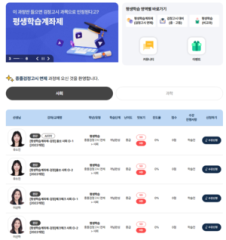
Gangnam-gu's online education service expands exam-exemption courses to middle school equivalency
Ministry of Education accredits 16 social studies and science courses; completing 90 hours waives the corresponding equivalency exam Program previously covered high school equivalency; now extended to middle school level Online format lets learners study anytime, anywhere Gangnam Internet Lecture Service, an online education platform operated by Gangnam-gu, is expanding its exam-exemption program to cover the middle school equivalency exam, building on an existing high school equivalency offering. Residents who complete at least 90 hours of designated online courses will be exempt from the corresponding subject exam, easing the burden on those who interrupted their studies or are working toward a formal academic credential. Gangnam-gu said the platform received accreditation for 14 middle school-level and one high school-level course under the Ministry of Education's 23rd Lifelong Learning Account System evaluation. The newly accredited middle school courses are set to launch in December. The Lifelong Learning Account System accumulates and manages individuals' learning records and links them to academic credential recognition. Completing at least 90 hours of an accredited course exempts the learner from the corresponding equivalency exam. Completed hours are logged in the learner's personal account on the national lifelong learning portal and can also be used for employment and college applications. The newly accredited middle school courses include seven in social studies and seven in science. Combined with two middle school courses accredited last year, the total number of courses qualifying for middle school equivalency exam exemptions rises to 16 — eight in social studies and eight in science. The science courses cover the first- and second-year middle school curriculum, while the social studies courses span first-year history, first- and second-year social studies, and a society and culture subject. One additional high school-level society and culture course has also been accredited and is set to open soon. All courses are offered online, allowing students to learn at their own pace regardless of time or location. The program is managed systematically through lectures using standard textbooks, learning assessments and satisfaction surveys. Gangnam Internet Lecture Service has consistently expanded its exam-exemption offerings since launching two high school-level courses in 2024, adding 15 more in 2025 and another 15 in 2026. The platform now combines subject preparation courses in Korean, English and mathematics with exam-exemption courses in social studies and science, providing a comprehensive study foundation for equivalency exam candidates. Eligible free-enrollment students may access all courses year-round. Applications can be submitted at the local community service center, and detailed eligibility criteria and course information are available on the Gangnam Internet Lecture Service website or through its customer center. Gangnam-gu District Mayor Kim Hyun-ki said the expansion from high school to middle school equivalency exemptions would reduce the time and financial burden on those returning to education. "We will continue to support the dream of learning — from middle school and high school equivalency all the way through to university," Kim said.
Nov. 17, 2026
-
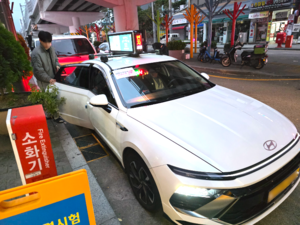
Dobong-gu mobilizes 28 emergency vehicles for college entrance exam day
2,207 students to sit exam at 5 venues; village buses to run on concentrated schedules, traffic control center to operate Vehicles barred within 200 meters of exam sites; construction noise to be managed to protect test environment Dobong-gu in Seoul will launch a special traffic management plan to transport college entrance exam candidates and secure safety around test sites ahead of the College Scholastic Ability Test for the 2027 academic year, set for Thursday. This year, 2,207 students will sit the exam across five venues in Dobong-gu: Nuwon High School, Seondeok High School, Jawoon High School, Changdong High School and Hyomun High School. The district will operate a traffic control center from Wednesday evening through exam day Thursday, responding swiftly to any unexpected situations, including maintaining traffic order around test sites and providing emergency transport. On exam day, village buses passing through test sites will run on concentrated schedules from 6 a.m. to 8:10 a.m. The buses will carry notices indicating their routes through exam sites and make in-vehicle announcements to help students reach their destinations with ease. Twenty-eight emergency vehicles will also be deployed from 6 a.m. to 9 a.m. for students who miss public transportation or require urgent transport. The vehicles will be stationed at four locations: Exit 1 of Ssangmun Station, Exits 1 and 2 of Changdong Station, Exit 3 of Banghak Station, and Exit 2 of Dobongsan Station. Fourteen administrative vehicles from neighborhood community centers and 14 private vehicles — provided by Donghwa Transport, a model drivers' association and a Marine Corps veterans' group — will support the operation. Traffic management around exam sites will also be tightened. Traffic control personnel will be deployed at each venue, and vehicles will be barred from entering within 200 meters of test sites from 6 a.m. to 8:30 a.m. on exam day. Illegal parking and stopping will be subject to intensive enforcement to keep traffic flowing smoothly. The district will also monitor and manage construction sites near exam venues to prevent traffic disruptions and safety incidents, and to eliminate in advance any factors that could interfere with the exam — including noise during the English listening section. "I wholeheartedly support the efforts of every student who has prepared so earnestly for this exam," Dobong-gu District Mayor Kim Dong-wook said. "Dobong-gu will stand watch over the roads leading to the exam sites so that every student can focus solely on the test in the best possible environment."
Nov. 17, 2026
-
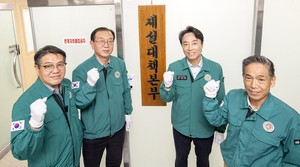
Yongsan-gu activates winter snow-removal plan with expanded road heating, 317 civilian responders
The four-month snow-removal drive runs through March 15 next year, with heated road sections expanded from 42 to 53 sites; 317 civilian snow-removal team members will cover sidewalks and back streets across 16 neighborhoods, while 776 salt supply boxes are stocked and residents are encouraged to clear snow in front of their own homes. Seoul's Yongsan-gu has activated its winter snow-removal system to prepare for sudden and heavy snowfall this season. The district plans to strengthen early-response capabilities and ensure pedestrian safety through expanded road-heating infrastructure and civilian snow-removal teams. Yongsan-gu announced Tuesday that it will carry out its winter snow-removal program for four months, from Nov. 15, 2026, through March 15 next year. As part of the launch, officials gathered Monday at the district office's disaster safety operations center for an opening ceremony and briefing, where Yongsan-gu District Mayor Kim Kyung-dae presided over a review of sector-by-sector response plans and on-site operational procedures. The most notable new measure this year is the expansion of road-heating infrastructure. The district has increased the number of smart remote-controlled heated road sections from 42 sites — totaling 9,273 meters — last year to 53 sites totaling 11,363 meters this year. The heating systems, installed along major corridors including Sinheung-ro, Hyochangwon-ro and Jangmun-ro, will be activated ahead of snowfall as a preemptive measure, with real-time operation monitored via closed-circuit television. For sidewalks and back streets inaccessible to vehicles, the district will deploy 317 civilian snow-removal team members. Organized by each of the 16 neighborhoods, the teams will be mobilized by community service centers when a snow-removal emergency alert of Level 1 or higher is issued. Each neighborhood will also receive a one-ton truck to bolster on-site response capacity. The district manages 252 road sections — covering a total of 120 kilometers — including arterial and secondary roads. When snowfall probability reaches 80 percent or higher, de-icing agents will be pre-loaded and spread in advance. The district said it will pay particular attention to high-risk pedestrian areas, including bus stops heavily used during rush hours and routes frequented by mobility-impaired residents. The district is also reinforcing its supply chain and equipment management. De-icing agents will be regularly replenished at 776 salt supply boxes across the district, with additional supplies provided as needed. A full inspection and maintenance of snow-removal equipment will be conducted, and trial operations involving both equipment and personnel will be held to prepare for actual snowfall conditions. Yongsan-gu is also working to build a culture of resident-led snow removal. The district will step up promotion of its "clear snow in front of your own home and shop" campaign and install salt supply boxes and snow-removal tool stations at key vulnerable locations to encourage voluntary participation. After the official snow-removal period ends, the district plans to maintain a post-season response period from March 16 through March 31 next year to guard against unseasonable weather. "Swift initial response and preemptive snow removal in vulnerable areas are essential to minimizing resident inconvenience and safety incidents caused by snowfall," District Mayor Kim said. "We will operate road-heating systems and other snow-removal infrastructure efficiently and strengthen our on-site response framework so that residents can walk safely throughout the winter."
Nov. 17, 2026
-
Gangbuk-gu breaks W1tr budget mark for first time
Social welfare spending reaches 676.4 billion won, accounting for 63.4 percent of general accounts; investment expands in administrative complex, transport and residential environment Uidong family campground gets 4.4 billion won; 20 billion won in local gift certificates and landscape lighting planned along April 19 Road to boost local economy Seoul's Gangbuk-gu is set to cross the 1 trillion won ($750 million) threshold in its base budget for the first time in the district's history. Gangbuk-gu said it has submitted a 2027 budget proposal of 1.08 trillion won to the district council — a 94.8 billion won, or 9.64 percent, increase from the previous year. The budget, the first base budget of the ninth elected administration, comprises 1.07 trillion won in general accounts and 12.1 billion won in special accounts. The central focus of the budget is directing investment toward areas tied directly to residents' daily lives — including residential environment, transport, education, the local economy and cultural tourism — even as mandatory welfare spending continues to grow. Social welfare spending stands at 676.4 billion won, accounting for 63.4 percent of the general account. Social security benefits, including basic pensions and livelihood grants, total 528.6 billion won. National and city government subsidies also rose 55 billion won, or 10.3 percent, from the previous year to 590.7 billion won, increasing the district's fiscal burden. In response, the district reviewed the effectiveness and necessity of existing projects and adjusted investment priorities. It will set aside 13 billion won in a building fund for the construction of an administrative complex, and has expanded capital investment spending by 28.7 percent from the previous year to 47.2 billion won. Residential environment improvements include the construction of the administrative complex and a new community center in Beon 3-dong. Some 800 million won will go toward designating zones and supporting redevelopment projects at 14 redevelopment sites and candidate areas. In transport, 200 million won has been set aside for a preliminary feasibility study to attract the Dongbu Line urban railway to the district. Another 340 million won will fund feasibility research on introducing a public circulation bus service and expanding smart traffic infrastructure. On the welfare front, the district will work to build a Gangbuk-style integrated care system linking medical and long-term care services. Some 330 million won has been allocated for operating health care centers, connecting discharged patients with community services and supporting home-visit medical care for seniors. An additional 1.3 billion won will go toward expanding shingles vaccination support for all residents aged 65 and older. Investment in education and childcare is also increasing. The district will expand education expense subsidies to 3.1 billion won and has set aside 5.4 billion won to improve the teacher-to-child ratio at daycare centers. Plans are also underway to open a second comprehensive childcare support center and operate a Seoul-style kids cafe. For local economic revitalization, the district plans to issue 20 billion won in Gangbuk Love gift certificates and 1 billion won in public delivery gift certificates. Some 400 million won will be spent installing landscape lighting called "Light of April 19 Road" along the April 19 Road area, with local festivals linking traditional markets and alley commerce also set to expand. To support youth, 800 million won will be invested in tailored programs for young job seekers who have given up on finding work, and a new youth lifelong education voucher program will be introduced. The program provides 500,000 won per person annually, with 80 million won budgeted for it. In culture and tourism, the focus is on connecting visitors to Bukhansan with the local economy. Some 360 million won will go toward developing a wellness tourism special zone, including the construction of an anchor facility for healing tourism in Uidong, while 4.4 billion won has been earmarked to expand a family campground in Uidong. The district will also expand its summer water play areas to four locations and build a screen park golf course at the Gangbuk Wellbeing Sports Center. A project to transform the former home of Han Kang in Suyuri into a cultural facility is also planned. District Mayor Jeong Chang-su said the budget was drawn up with clear priorities "so that spending at the right time changes residents' lives and feeds back into the vitality of the community — even as the district's share of the burden has grown with the expansion of national and city government projects." Jeong added that "welfare is not about waiting for residents to ask for help, but about the administration reaching out first," and pledged to "make 2027 a year in which every single resident feels change in their daily lives, grounded in communication and pragmatism." The Gangbuk-gu Council is scheduled to finalize the 2027 budget proposal on Dec. 16 after deliberations.
Nov. 17, 2026
-
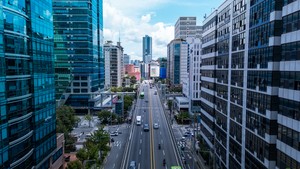
Geumcheon-gu unveils blueprint for 2050 urban transformation
Seoul district to develop AI and advanced industry hub in Gasan, pursue mixed-use redevelopment of air force base site in Doksan Siheung industrial zone to be restructured; transit-oriented development planned around key stations Residents to shape long-term strategy through district planning panels and neighborhood workshops Seoul's Geumcheon-gu is embarking on a 30-year urban development strategy encompassing industry, housing, transportation and green space. The district plans to identify growth potential in the Gasan, Doksan and Siheung zones and strengthen connectivity between them as it draws up a vision for 2050. Geumcheon-gu announced it will launch work on the "2050 Geumcheon Plan Comprehensive Future Development Strategy." The initiative will assess urban conditions and development potential across the entire district, setting a long-term direction and vision for 2050. It focuses particularly on tailoring development strategies to the distinct characteristics of the Gasan, Doksan and Siheung zones, and on securing growth drivers for the district as a whole rather than pursuing piecemeal development in individual areas. The plan will also factor in the broader metropolitan spatial structure linking southwestern Seoul with adjacent areas of Gyeonggi Province, with the aim of redefining Geumcheon-gu's role and standing in the wider region. Development concepts for each zone are also taking shape. The Gasan zone, centered on the Seoul Digital Industrial Complex — known as G-Valley — will be developed into a hub for AI and advanced industries. The strategy draws on the area's strength as an industrial and employment center, home to more than 18,000 companies and roughly 189,000 workers as of 2025. Given that 94 percent of G-Valley workers commute from outside the district, the plan places particular emphasis on expanding residential options and everyday amenities. The goal is to transform what is now a job-focused industrial zone into a mixed-use urban environment where work, housing, and cultural and leisure facilities are all within reach. The Doksan zone will anchor its development on an approximately 125,000-square-meter air force base site. The district plans mixed-use redevelopment combining housing, industry, offices, green space and community facilities, with surrounding roads and pedestrian networks integrated into the scheme so that the benefits of development extend into neighboring areas. Other priorities for Doksan include strengthening the Doksan Cattle Market brand, developing food-related specialties, and promoting culture and tourism by drawing on local assets such as the Seo-Seoul Museum of Art and Anyangcheon. In the Siheung zone, the district will pursue restructuring of the local industrial landscape, focusing on the redevelopment of the Jungang Steel Market and Siheung Distribution Center. New community hubs will be created in response to changing transit conditions, including transit-oriented development around Siheung Sageori and Sindoksan Station and the arrival of the Sinansan Line. The district also plans to restore historic and local heritage assets such as old pathways and ginkgo-lined streets, and to improve green space and pedestrian environments, developing the zone into an area where history, ecology and culture converge. Geumcheon-gu will expand resident participation in the planning process. Through a citizens' planning panel and neighborhood-level workshops, the district will gather residents' views on local issues and future needs, incorporating them into the development of the district's vision and key projects. Urban planning, transportation, industry and environmental experts, along with relevant municipal departments, will also take part to strengthen the plan's feasibility. "Geumcheon is a dynamic city that has constantly evolved as industry and housing grew together," Geumcheon-gu District Mayor Choi Ki-chan said. "The time has come to look beyond our past growth and chart a new urban development strategy for the next 30 years." Choi added that through the 2050 Geumcheon Plan, the district would work to fully realize Geumcheon's potential while achieving balanced development across its zones and improving residents' quality of life.
Nov. 17, 2026
-

Seocho-gu brings two neighboring apartment complexes together for first joint community festival
Hoban Summit Seocho Park and Park View to co-host event Saturday; festival expands community-building beyond individual complexes Youth artist performances, bubble show, flea market, plant clinic and mobile library among highlights Seoul's Seocho-gu will host a joint community festival designed to foster exchange and harmony between neighboring apartment complexes. The district announced it will hold the "Woori Apartment Sotong·Hwatong Day" on Saturday, bringing together residents of Hoban Summit Seocho Park and Hoban Summit Seocho Park View. The event marks the first time the district's community-building initiative — previously carried out on a complex-by-complex basis — has been expanded to include neighboring complexes. It was organized to address the lack of communication among residents of apartment buildings, which account for more than 60 percent of housing in Seocho-gu, and to spread a resident-led community culture. The festival is particularly notable for being jointly planned and run by two separate apartment complexes. The aim is to extend community activities beyond individual complexes to neighboring ones, building social networks among residents and fostering a spirit of togetherness. The program features a range of performances, including shows by Seocho-gu youth artists, a jazz concert, a bubble show and a talent showcase by residents. A flea market and food zone run by residents will operate from 11 a.m. to 5 p.m. Hands-on programs offering practical help for daily life will also be available. These include a companion plant clinic offering diagnosis, treatment and repotting education, a mobile library called "Yeohaenghaneun Seojae" (a traveling bookshelf), and knife and umbrella repair services. Residents can also get information on district programs including senior transportation subsidies, Seocho Coin, eco-mileage incentives and the Seocho Carbon Zero Shop. The Woori Apartment Sotong·Hwatong Day is a community-activation project in which residents plan and participate in programs themselves. The district has supported selected complexes this year with cultural performances and hands-on events since September. "It is all the more meaningful that two neighboring apartment complexes have come together to plan and enjoy this festival," Seocho-gu District Mayor Jeon Seong-su said. "We will actively support efforts to build a healthy apartment community culture where communication and consideration for one's neighbors remain alive."
Nov. 17, 2026
-
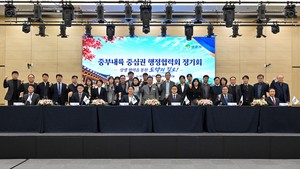
Six central inland cities and counties join forces for shared development
Six cities and counties in the central inland region — Yeongju and Bonghwa-gun in North Gyeongsang Province, Jecheon and Danyang-gun in North Chungcheong Province, and Yeongwol-gun and Pyeongchang-gun in Gangwon Province — have joined forces to address shared challenges and pursue mutual development. Yeongju City announced Monday that it had held the 2026 regular meeting of the Central Inland Core Administrative Cooperation Council at the Seonbi World Convention Hall. About 80 people attended, including the heads of the six cities and counties across three provinces and relevant civil servants, with Yeongju serving as this year's chair city. Participants reviewed eight joint proposals, including plans for expanding regional transportation networks, along with seven cooperative projects in tourism, culture and the local economy. Key joint proposals included the construction of National Route 28 between Munjeong and Sangmang, a new east-west rail line through the central region, a new expressway along the east-west fifth corridor between Mungyeong and Uljin, and the inclusion of a Jecheon-Yeoju expressway project in national infrastructure plans. The six municipalities agreed that expanding regional transportation networks is essential to improving accessibility and revitalizing the local economy, and pledged to coordinate their response to major transportation issues. The council also plans to advance cooperative projects that directly affect residents' daily lives — building a joint wildfire response system along the Baekdudaegan mountain range, linking local food direct-sales stores for joint marketing of regional agricultural and specialty products, enabling cross-use of public libraries, and developing shared tourism routes. Through these efforts, the municipalities aim to deliver tangible results for residents, including stronger wildfire response capacity, expanded markets for local produce, more vibrant tourism and improved public services. Meanwhile, Danyang-gun was selected as the chair city and county for 2027. Yeongju Mayor Hwang Byeong-jik said expanding regional transportation networks and responding to the threat of local population decline are challenges no single municipality can tackle alone. "Only by speaking with one voice and cooperating beyond administrative boundaries can the six cities and counties create new opportunities for regional development," he said. The Central Inland Core Administrative Cooperation Council was launched in 2004 and brings together six cities and counties across North Gyeongsang, North Chungcheong and Gangwon provinces to pursue balanced regional development and address shared challenges.
Nov. 17, 2026
-

'Yangcheon, the green that lets me rest' wins top prize in district short-form video contest
Yangcheon-gu selects 8 winners in short-form video competition showcasing the district through residents' eyes Yangcheon-gu in Seoul has selected eight winners in a short-form video competition that invited residents to capture the district's policies and everyday charms through their own fresh perspectives. The district announced the results of the "2026 Yangcheon-gu Short-Form Video Competition — My Yangcheon Pick," choosing one grand prize winner, two excellence award winners and five encouragement award winners from 95 submitted entries. The competition was organized around the seven governing goals of the district's ninth elected administration: a convenient city, a green future city, an economically vibrant city, a safe city, a premium education city, a fun city and a warm city. It was designed to let residents discover and document Yangcheon's policies and hidden attractions on video. An online public vote held over one week starting Oct. 26 drew 2,572 participants. Final winners were determined by combining expert jury scores, which accounted for 60 percent of the total, with the online vote results at 40 percent. The grand prize went to "Yangcheon, the Green That Lets Me Rest," a visually striking work capturing the district's green spaces — including Seoseoul Lake Park, Anyangcheon and the Yongwangsan Skywalk. The entry drew praise for conveying the sense of calm and respite that nature offers within an urban setting. The two excellence awards went to "Yangcheon Painted in Green," which used the district's mascot Haewuri to introduce green landmarks including the Anyangcheon Family Garden, and "Yangcheon — the Longer You Look, the More You Love It," a witty portrait of neighborhood life made by two students who have lived in the district for 17 years. Among the encouragement award winners, "A City That Wakes When It Rains" drew attention for spotlighting the Sinwol stormwater retention and drainage facility and the district's flood-preparedness systems. The remaining winners featured resident-focused content on themes of everyday safety and leisure. All eight winners will receive a district mayor's citation and a share of the total prize pool of 3.5 million won ($2,620). The competition also allowed the use of generative AI, broadening creative approaches, and incorporated direct resident participation through the online vote. The winning entries are set to be released through Yangcheon-gu's official YouTube channel "Yangcheon TV," as well as the district's official website, local IPTV services and a media wall in the district office lobby. "It was a meaningful opportunity to rediscover the vision and everyday life of Yangcheon-gu's ninth elected administration through the fresh eyes of our residents," District Mayor Lee Gi-jae said. "We will make active use of the winning works across various promotional channels to spread the word about Yangcheon as a city people want to live in and a great place to call home."
Nov. 17, 2026
-

Uncle who sexually abused 10-year-old nephew sentenced to 8 years, 15 years after the crime
A man who sexually abused his minor nephew has been handed a heavy sentence at trial — 15 years after the crime. The first criminal division of Daejeon District Court's Cheonan Branch, presided over by Chief Judge Jo Yeong-jin, sentenced A, 66, to eight years in prison Monday on charges of violating the Act on Special Cases Concerning the Punishment of Sexual Violence Crimes — specifically, quasi-sexual acts against a minor under the age of 13. A had been indicted in detention. The court also ordered A to complete a 40-hour sexual violence treatment program and barred him from employment at institutions serving children, adolescents and people with disabilities for seven years. A is accused of sexually abusing his nephew, B, who was 10 years old at the time, at a campsite and at A's home during a family trip in 2011. After reaching adulthood, B sought counseling and was told the abuse had contributed to conditions including sleep disorders. B then asked A for an apology, and when A refused, filed a complaint with police. In explaining the sentence, the court said A "committed an inhumane crime, exploiting a position of superiority to use a young victim as a means of satisfying sexual urges," adding that "the victim must have suffered profound shame, yet the defendant has made no effort toward recovery for the victim and has evaded responsibility with excuses that are difficult to comprehend, making a severe punishment unavoidable."
Nov. 17, 2026
-
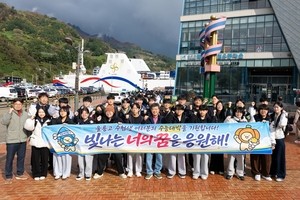
Ulleung-gun cheers on 27 students leaving island to sit college entrance exam
Ulleung-gun in North Gyeongsang Province sent off students from Ulleungdo High School with warm words of encouragement as they left the island for Pohang to sit the 2027 College Scholastic Ability Test. Ulleung-gun is the only county in North Gyeongsang Province without a designated CSAT testing site, meaning students must board a passenger ferry to the mainland several days before the exam every year. A farewell ceremony held at Sadong Port on Sunday morning drew the 27 test-takers along with their supervising teachers, Ulleung-gun County Chief Nam Han-kwon, family members, residents and education officials, all gathering to wish the students a safe journey and strong results. "I applaud these students who have quietly worked toward their dreams despite the difficult conditions of living on a remote island," Nam said. "Trust in the time and effort you have put in, and move forward with confidence toward your potential and your future — I hope you reap the rewards you deserve."
Nov. 17, 2026
-

Dongjak-gu launches winter preparedness plan with expanded support for vulnerable residents
14 projects across 4 areas to run through March 15 next year Low-income households to receive 100,000 won in heating subsidies; free senior meals expanded to twice daily; smart snow-removal platform introduced Dongjak-gu in Seoul is launching a comprehensive winter preparedness plan to protect vulnerable residents and prevent safety accidents during cold snaps and heavy snowfall. The district said it will carry out its "2026 Winter Comprehensive Plan" from Nov. 15 through March 15 next year — a four-month period covering 14 detailed projects across four areas: cold-weather response, snow removal, safety and lifestyle. The plan centers on targeted support for residents most exposed to extreme cold and on strengthening snow-removal operations through smart technology. The district will operate a cold-weather response headquarters and situation room, and designate 15 senior centers as cold-weather shelters and temporary evacuation sites. Low-income residents, including basic livelihood security recipients, will receive 100,000 won ($75) per household in heating subsidies and an additional 50,000 won in winter living allowances. Free meals for low-income elderly residents with limited mobility will be expanded from one to two per day. The district will also provide briquette coupons and energy vouchers to ease the heating burden on vulnerable households. Snow-removal capacity is also being reinforced. The district has secured 2,940 personnel, 2,875 metric tons of snow-removal agents and 113 pieces of equipment. It is also introducing a new smart snow-removal management platform to monitor road icing in real time, with 76 automatic road heating strips and 20 automatic brine-spraying units under continuous observation. Community participation in snow removal will be expanded as well. The district is doubling its civilian snow-removal response team from 150 to 300 members and increasing the supply of lightweight 3-kilogram snow-removal agent packets from 10,000 to 20,000 bags. On the safety front, the district will conduct intensive inspections of disaster-vulnerable facilities — including construction sites, structurally at-risk buildings, social welfare facilities, and facilities for people with disabilities and the elderly — as well as high-traffic public venues. Safety checks will be carried out at 24 traditional markets and alley-style shopping streets to prevent fires, with 80 percent of fire mutual-aid insurance premiums covered. Alongside this, the district will operate a forest fire prevention headquarters and a 24-hour monitoring system, inspect gas-handling facilities, and promote COVID-19 and influenza vaccinations as part of its winter health and safety management. In the lifestyle area, the district will ensure timely collection of seasonal waste such as kimchi-making refuse, fallen leaves and briquette ash, and will step up management of fine-dust relief zones, public restrooms and street waste bins. It will also closely monitor prices of key goods during the kimchi-making season and the Lunar New Year holiday, and continue overseeing 153 registered affordable-price businesses in the district. "Winter demands extra caution for residents' daily lives and safety due to cold snaps and heavy snow, so it is important to be thoroughly prepared for unexpected situations and respond swiftly," District Mayor Ryu Sam-young said. "We will do our utmost to ensure that no one is left behind and that every resident can spend a safe and warm winter."
Nov. 17, 2026
-
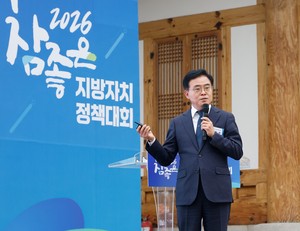
Gangseo-gu wins local governance award for Magok-driven growth initiative
Magok tech industry gains spread to local commerce, jobs and culture as District Mayor Jin Kyo-hoon presents results Seoul's Gangseo-gu has won recognition for its policy work linking Magok's advanced industrial infrastructure to growth across the wider district. Gangseo-gu announced Tuesday that it received the Korean Association for Local Government Studies presidential award at the 2026 Good Local Governance Policy Competition, held Friday at Sarangjae Hall in the National Assembly, for its "Magok-Gangseo Co-Growth Project." The competition was organized by the Good Local Government Council and brought together 19 local governments from across the country to share and evaluate standout regional policies. Gangseo-gu District Mayor Jin Kyo-hoon took the stage to present the district's co-growth strategy, outlining how Magok's corporate, technological and talent infrastructure is being channeled into development across all of Gangseo-gu. The central aim is to ensure that the gains from Magok's development do not remain confined to the industrial complex but flow outward into local commerce, employment and residents' daily lives. The district supports startups and business expansion — and helps companies enter overseas markets — through Magok's combined industrial and MICE complex. Among the notable achievements is hosting the 2026 Korea Business Expo, the first such event organized by a basic local government, which created a platform for exchanges between domestic companies and international buyers. The district has also drawn attention for applying advanced technology to local talent development and quality-of-life improvements. It runs practical AI and robotics education programs for future professionals using technology from Magok-based companies, and has deployed robots for park patrols and food and beverage delivery so residents can experience cutting-edge technology in their everyday lives. Gangseo-gu is also working to boost the local economy through cultural and tourism content. It has linked a range of cultural and recreational programs — including the MCT Festival, a locally distinctive event incorporating advanced technology, as well as the Magok Art Road, an outdoor library called Haneulpumeun, and the Heojun Run — to draw more visitors, extend their stays and encourage local spending. The award is significant as external recognition of the district's policy direction: expanding Magok's industrial growth potential into areas such as entrepreneurship, talent, technology, culture and tourism, and spreading those benefits across all of Gangseo-gu. "It is important that Magok's development does not stay within the industrial complex but extends into local commerce, jobs and residents' daily lives," Jin said. "We will consistently push forward with Gangseo-gu's co-growth policy — where business and community, industry and daily life, and growth and distribution reinforce one another in a virtuous cycle — to bring about changes that residents can feel."
Nov. 17, 2026
-
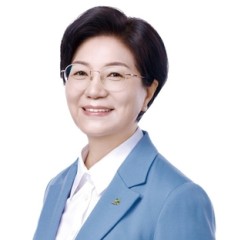
Eunpyeong-gu to launch lifelong care welfare foundation in Oct. 2027 after 6-year push
Founding ordinance clears district council; foundation to address rising welfare demand from single-person households and aging population Field-centered programs — including emergency welfare support and aid for youth aging out of care — to serve as a local welfare coordination hub Seoul's Eunpyeong-gu is moving ahead with the establishment of a lifelong care welfare foundation, a project six years in the making. The passage of a founding ordinance through the district council has cleared the way for a specialized agency that will identify welfare programs tailored to the district's needs and close gaps in social services. Eunpyeong-gu said the ordinance on the establishment and operation of the Eunpyeong-gu Lifelong Care Welfare Foundation was amended and passed Thursday at the second plenary session of the 326th Eunpyeong District Council regular meeting. The ordinance was first submitted in 2020, making Thursday's vote six years in the making. With the legal basis for the foundation now in place, the district plans to begin follow-up procedures with a target launch date of October 2027. The foundation is intended to help the district respond to a shifting welfare landscape driven by an aging population and a growing number of single-person households. As of end-2025, single-person households account for 41.3 percent of all households in Eunpyeong-gu, and residents aged 65 or older make up 22.5 percent of the total population. The share of basic livelihood security recipients stands at 6.4 percent, above the Seoul average of 5.0 percent. These figures point to a growing demand for complex care needs that existing welfare systems alone cannot adequately address. The foundation will identify field-centered, specialized programs based on local welfare needs and deliver tailored services to residents. It will also coordinate cooperation among the district government, welfare facilities and private organizations to reduce duplication in welfare services and connect local welfare resources more efficiently. Key programs include an Eunpyeong-style emergency welfare initiative providing living and medical expenses to households in crisis who fall outside the formal support system; a "Dream Wings" growth grant to help youth aging out of foster care enter society; and an intergenerational care housing program aimed at preventing social isolation among single-person households while fostering exchanges across age groups. The foundation will also support small-scale welfare facilities and work to secure and channel donations and in-kind contributions from local businesses and private organizations. The district has already completed preliminary steps toward establishing the foundation. In July, the Seoul Public Investment Management Center of the Seoul Institute assessed the project as feasible, and in October the Seoul Metropolitan Government's investment and affiliated agency operations review committee approved the foundation's establishment. After the ordinance is promulgated, the district will proceed with appointing officers, drafting articles of incorporation and operating regulations, securing a budget, and obtaining corporate registration before officially launching the foundation in October 2027. "This ordinance is an important starting point for advancing Eunpyeong-gu's welfare system to the next level," Eunpyeong-gu District Mayor Kim Mi-kyung said. "Through the foundation, we will build tighter connections among local welfare resources and expand care services that residents can feel in their daily lives."
Nov. 17, 2026
MOST READ
- 1Malaysia's BE International brings 1,500-strong incentive tour to Korea, bypassing Turkey
- 2AI singer tops Melon chart for first time with 'Did You Become the Adult You Dreamed Of?'
- 3Jensen Huang's daughter took the photo of him embracing his alleged mistress
- 4Man beat live-in girlfriend 514 times over 3 hours, killing her; forensic expert says footage was too disturbing to watch
- 5Madison Huang acted as de facto chief of staff at Nvidia, shouted at vice president: report
- 6'A concert is a ritual for the soul': Currentzis makes long-awaited Korea debut after six years
-
WORLD

US warns of punishment for anyone enabling Iran's Strait of Hormuz toll scheme
-
INDUSTRY

Toyota union puts productivity first; Hyundai Motor union demands bigger share of profits
-
FINANCE

National Growth Fund to invest $531M in FuriosaAI, which rebuffed Meta's $800M takeover bid
-
INDUSTRY
Korea Shipowners' Association holds amateur baduk tournament for Maritime Day