
- HOME
- SOCIETY
-
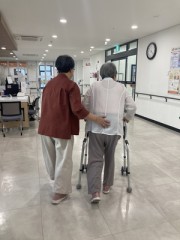
'I just want to hold her hand': A daughter's nine years caring for a mother with dementia
Park Eun-hwan has lived with her mother, who has had dementia for nine years, as her only child 'I couldn't believe it when Mom was first diagnosed' Programs at the Mapo-gu Dementia Care Center have helped both mother and daughter stay healthy She compiled their shared moments into a picture book 'I hope our society becomes one where dementia patients can live alongside others' Her 86-year-old mother, once in good health, had begun losing her balance and falling repeatedly. First her ankle broke, then her hip, and she ultimately needed surgery. After the operation, the doctor suggested the falls were not simply a balance problem and recommended a dementia screening. The diagnosis came back: Lewy body dementia. It was a devastating blow. The second most common form of degenerative dementia after Alzheimer's disease, Lewy body dementia is characterized by cognitive decline, visual hallucinations, REM sleep behavior disorder and Parkinson's-like symptoms. It is estimated to account for about 3.8 percent of all dementia cases. In February 2018, Park Eun-hwan (pseudonym, 62) became a family caregiver. Meeting with a reporter Monday at the Dementia Care Center in Mapo-gu, Seoul, Park recalled that her mother had already been showing early warning signs. "Mom would say things like, 'It's so hot — summer must be coming,' even though it was autumn, and she had trouble remembering the date," she said. "Everyone gets a little forgetful with age, so I didn't think much of it. But I suppose all those little things were the clues." When Park asked the doctor what would happen to her mother, the doctor said her condition would likely worsen in about five years. Hearing that, Park steeled herself. She was the only family member who could care for her mother. An only child, Park had lost her father early and had been living alone with her mother ever since. After taking early retirement from her job in 2014 and working as a freelancer, she gave up work entirely after her mother's hip surgery in 2024 and has been by her side full time. At first, she brought a caregiver to the house. Three times a week, the caregiver would spend three hours a day with her mother — going for walks, doing puzzles and chatting. But when COVID-19 arrived in 2020, home visits became impossible. With less social interaction, her mother's condition gradually worsened. Park said she felt a growing sense of urgency that she could no longer keep her mother confined to the house. That led her to look into a day care center. Her mother's reaction, however, was not good. "Mom got furious and accused me of trying to abandon her there," Park said. "Her condition kept getting worse, and my own life was slowly disappearing — I was so overwhelmed that all I could do was cry." Park then turned to the Dementia Care Center near her home in Mapo-gu. Unlike a day care center, which requires patients to stay all day, the center's program runs three afternoons a week for three hours at a time — and it turned out to be a perfect fit for her mother. The center's cognitive health programs cover a wide range of activities beyond language exercises, including physical exercise and musical instrument sessions. More than anything, joining more than 10 other elderly people living with dementia has been a strong help in rebuilding her mother's social connections. The center has also been a source of comfort for Park herself. Caregivers who accompany their loved ones meet others facing similar challenges, sharing encouragement and practical information. "Even with a very close friend, there are things you simply cannot share if they have never cared for someone with dementia," Park said. "Their words of comfort can actually feel uncomfortable at times. But here, everyone is going through the same experience with dementia, so you can open up completely — and you end up feeling, 'I'm not the only one struggling.'" The center has also offered Park concrete, practical help. "Mom has trouble remembering the date, so I asked what to do about it, and one caregiver told me she puts a calendar out and tells her child every morning, 'Today is this date,'" Park said. "After hearing that advice, I have Mom write down the month and day every day. There are so many tips here that are more genuinely useful than any dementia textbook." The center runs programs not only for dementia patients but also for their caregivers. Last year, the caregivers took part in a theater performance. Park said everyone initially shrank back, saying, "How could I possibly act?" — but once it was over, they all said they could not imagine having missed it. "Like all caregivers, I have to be mentally and physically healthy myself before I can properly care for someone else," Park said. "Caregivers who first came to the center looking utterly devastated seem to find strength here by sharing their worries with others and lifting each other up." Park recently gathered her experiences caring for her mother and turned them into a picture book. To mark Dementia Awareness Day, observed every year on Sept. 21, the Mapo-gu Dementia Care Center is running a "Memory Reading Room" exhibition, displaying picture books made by dementia caregivers at Mapo Central Library and other venues. Park's picture book, titled "How to Spend a Happy Day with Mom," captures in illustrations the routines she developed while caring for her mother over the years: starting each day by writing down the date and day of the week, copying down one memorable sentence a day, taking a trip down memory lane, keeping a daily record, doing household chores together and sharing warm physical affection. "After I finished the book, I showed it to Mom and she looked through the whole thing and said, 'This is nice,'" Park said. "In that moment, I had the feeling — just briefly — that she was herself again." Fortunately, her mother's condition has not deteriorated as much as feared since the initial diagnosis. But Park knows that, however slowly, the dementia will continue to progress. "The hardest part is not knowing when it will end," she said. "It's difficult to gauge when Mom's condition will get worse, or how long I'll be able to care for her at home." She added that as the hours of caregiving have grown longer and her own time has shrunk, she sometimes feels angry. "But while I'm with Mom, giving my best feels like my destiny," she said. Park also expressed a broader hope. "Unless a patient's dementia is so severe that they become violent, I'd like to see dementia patients be able to live at home and go about their daily lives," she said. "It seems like staying connected with others in everyday life is what keeps the symptoms from getting worse. I hope our society can become that kind of environment." Asked what she most wants to do with her mother, Park gave a quiet smile. "I had always planned that after I retired, Mom and I would travel all over and have a wonderful time — but I've let go of that," she said. "Now, I think just taking a walk hand in hand with Mom is enough." Nine years into life alongside a mother with dementia, Park is fighting — and finding her way through — the disease with a resilience few could match.
Sept. 17, 2026
-
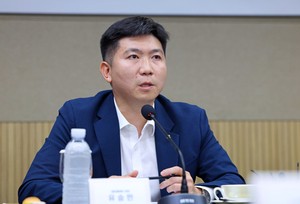
Complainants seek review after police clear KSOC chief Yu of national team, breach of trust allegations
A civic group in the sports community that filed a criminal complaint against Korean Sport & Olympic Committee President Yu Seung-min has applied for a police investigation review, arguing the case warrants further scrutiny after police declined to refer it to prosecutors. According to police and local media reports Thursday, the group submitted the review application to the Seoul Metropolitan Police Agency on Sept. 7. The application targets allegations that Yu improperly influenced national team selections and committed breach of trust during his tenure as head of the Korea Table Tennis Association. The complainants had earlier filed an objection to the police's decision not to refer the case, but police refused to accept it. The review application followed, asking authorities to examine both whether that refusal was appropriate and whether reinvestigation is warranted. Under current criminal procedure law, complainants — as opposed to victims — are excluded from filing objections to a police decision not to refer a case to prosecutors. The group has argued that it has a direct stake in the matter and should effectively be treated as an aggrieved party. Police accepted the initial complaint against Yu in July last year and launched an investigation, ultimately deciding in July this year not to refer the case to prosecutors. During Yu's tenure at the table tennis association, the organization ran a system that paid incentives to those who brought in sponsorship funds. The complainants alleged that Yu and his leadership team used vague rules to authorize incentive payments that caused financial harm to the association. Police concluded that breach of trust charges could not be established, finding that Yu and other association executives at the time lacked the authority to decide on incentive payments. Suspicions were also raised that the brother of the head of Yu's agency received around 200 million won ($145,000) in incentives on Yu's behalf, but police determined through their investigation that there was insufficient evidence to conclude Yu had received the money. Yu also faced allegations that he had improperly used his influence to ensure a specific athlete was selected for the national team for the 2020 Tokyo Olympics, held in 2021. Police rejected those charges as well, finding that Yu had exercised legitimate authority as head of the organization during the selection process. Police also found no evidence that Yu had used his position to coerce committee members through intimidation. Under the criminal code, obstruction of business requires proof of deception or the use of force.
Sept. 17, 2026
-

Korea Mine Rehabilitation Corp. buys local produce, donates to child welfare facility ahead of chuseok
Employees of the Korea Mine Rehabilitation and Mineral Resources Corp. carried out a dual act of goodwill Thursday, supporting both local children and regional merchants one week before the chuseok holiday. The employees purchased 4.8 million won ($3,510) worth of clean Gangwon Province agricultural products and local specialties from producers and retailers in Wonju and surrounding areas, then visited Seongage Won, a child welfare facility in Wonju, to deliver the goods. The initiative was designed to support the daily lives of children in the community while also promoting the local economy by sourcing products grown and made in the region. While delivering the donated items, the employees spoke with facility staff and gathered a range of perspectives on child welfare work on the ground. The donated goods will be used to support the daily lives and welfare of the children at Seongage Won. Kim Jun-seop, the corporation's standing auditor, said continued community attention is needed "so that children can nurture their dreams and potential in a better environment." He added that he hoped the visit would go beyond a simple donation and become "an opportunity to hear directly from those on the ground and think together about what support is truly needed."
Sept. 17, 2026
-
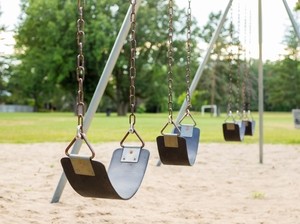
Child safety volunteer in his 60s gets suspended sentence for groping child on swing
A child safety volunteer in his 60s who was indicted on charges of molesting a child while pushing the child on a swing has received a suspended prison sentence. Jeju District Court's Criminal Division 2, presided over by Chief Judge Seo Beom-uk, sentenced the man, identified only as A, to two years and six months in prison, suspended for four years, on charges of violating the Act on Special Cases Concerning the Punishment of Sexual Violence Crimes — specifically, forcible indecent acts against a minor under 13. The court also ordered him to undergo probation, complete 80 hours of sexual violence treatment lectures, and be barred from employment at institutions serving children, youth and people with disabilities for 10 years, according to Yonhap. A was indicted on charges of groping a child's buttocks while pushing the child on a swing in April last year. He acknowledged pushing the swing but denied touching the child's buttocks, arguing that even if his hand had made contact with the child's body, it was incidental contact in the course of pushing the swing and did not constitute indecent conduct. The court rejected that argument. "Taking together the victim child's testimony and CCTV footage, it can be established that A's hand moved near the child's buttocks in a manner different from ordinary swing-pushing," it said. The court also noted that A had received training as a child safety volunteer warning that physical contact with children could be subject to criminal punishment, adding that "even a contingent intent to commit indecent acts can be recognized."
Sept. 17, 2026
-

Koreans back essay questions on college entrance exam — but not yet
Deliberative panel of 180 citizens reaches conditional consensus on college admissions reform 72.8% support expanding essay-style questions in high school grades Only 5.5% back immediate rollout across all subjects on CSAT Scoring fairness tops list of concerns at 48.3% "Essay-style questions on the college entrance exam are necessary. Just not right now." That was the essence of the answer delivered by 180 citizens after a two-day deliberative session on college admissions policy — a verdict closer to conditional approval than outright endorsement. A majority said introducing essay and short-answer questions to the College Scholastic Ability Test was necessary, but opinions diverged sharply on when and how. Only 5.5% supported rolling out such questions across all subjects at once, while the largest share of respondents said the change should take effect in the 2037–2038 academic year, when students currently in first and second grade of elementary school will sit the exam. After the deliberation, support for essay-style CSAT questions actually declined, making the case for a slower, more cautious approach all the clearer. According to a deliberative findings report released Thursday by the National Education Commission, 55.5% of the 180 citizen panel members who took part in the Aug. 29–30 session said introducing essay and short-answer questions to the CSAT was necessary. Of those, 23.3% said it was "very necessary" and 32.2% said it was "necessary." On the other side, 25.0% said it was unnecessary and 16.7% said it was not necessary at all, putting total opposition at 41.7%. Caution grew over the course of the deliberation. Before the session, 58.3% of participants said such questions were necessary; afterward, that figure fell to 55.5%, a drop of 2.8 percentage points. Those saying the change was unnecessary rose from 37.8% to 41.7%, an increase of 3.9 percentage points. Twenty-two participants shifted from supporting the change to opposing it, while 15 moved in the opposite direction. Those who changed their minds against the reform cited the need for adequate preparation — including a concrete road map, a reliable scoring system and a pilot program — before any rollout. Preferences on how to implement the change also leaned heavily toward a phased approach. The most common response, at 36.7%, was to introduce essay questions in select subjects first and then expand to all subjects. Another 30.0% favored introducing them in select subjects only. Opposition to any introduction stood at 26.7%, while support for an immediate across-the-board rollout was limited to 5.5% — down from 12.2% before the deliberation, a drop of more than half. Respondents also favored keeping the share of essay and short-answer questions low, at least initially. The most common response, at 42.8%, was that such questions should make up less than 40 percent of the exam. Another 17.2% said 40 to 60 percent would be appropriate, 8.9% said more than 60 percent, and 3.3% said all questions should be in essay or short-answer format. Those opposed to including any such questions at all accounted for 26.7%. On timing, 39.4% of respondents chose the 2037–2038 academic year as the appropriate point of introduction — the period when students currently in first and second grade of elementary school will take the CSAT. The 2033–2034 academic year was chosen by 21.7%, and 2035–2036 by 11.1%. Support for the 2037–2038 window rose sharply through the deliberation, climbing from 22.8% before the session to 39.4% afterward, a gain of 16.7 percentage points. By contrast, support for the earlier 2033–2034 window fell from 31.1% to 21.7%. Scoring fairness was cited as the biggest concern about introducing essay-style questions to the CSAT. Worries about an expansion of private tutoring and the difficulty of preparing through school education alone each came in at 13.9%, while concerns about grading a large-scale exam within a short time frame stood at 11.1%. Demands for reliable scoring also dominated responses on what preparations would be needed before any reform. Panelists rated the importance of disclosing grading criteria and establishing an appeals process at 4.59 out of 5. Designing questions aligned with the school curriculum scored 4.55, training and securing specialist teacher-graders scored 4.30, and developing and distributing an AI-assisted scoring support system scored 4.22. There was comparatively broader support for expanding essay and short-answer questions in high school grades. Some 72.8% of respondents said it was necessary to increase the share of such questions in high school midterm and final exams, while 22.8% said it was not. Even so, support here also dipped slightly — from 76.1% before the deliberation to 72.8% afterward, a decline of 3.3 percentage points. When asked what direction future college admissions policy should pursue, the most common answer — chosen by 23.7% — was ensuring fairness, objectivity and reliability in assessment and selection. Evaluating the competencies needed for future society and using admissions reform to drive change in school education and learning each followed at 20.2%. The National Education Commission said it plans to continue public deliberation on specific policy issues based on the findings. It also said it will analyze results from field forums and online opinion surveys on college admissions reform and report to the full commission in October.
Sept. 17, 2026
-
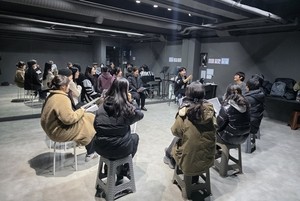
From cooking to personal finance: Jongno-gu launches free 6-course academy for young adults
Six courses — cooking, barista, yoga, personal finance, dance and sewing — offered free across 12 sessions; open to adults under 40, with QR-code registration starting Sept. 28 and classes kicking off Oct. 13 Jongno-gu is recruiting participants for its "2026 Jongno Youth Lifestyle Academy," a free program designed to build self-reliance among young adults and create opportunities for peer connection. The academy runs under the motto "Living well on your own, living better together" and centers on practical, everyday skills. Six courses are on offer: cooking for single-person households, a barista experience, healing yoga, personal finance, K-pop dance and home sewing — giving participants a wide range of options. Classes run from Oct. 13 to Nov. 18, with each course held twice over the roughly one-month period for a total of 12 sessions. The cooking course will be held at Hansol Cooking Hagwon, the barista experience at First Barista, healing yoga at Boiled Yoga, and the personal finance course at Nuguna. K-pop dance will take place at the Dancepot practice studio and home sewing at Norano Fashion Hagwon — drawing on a range of specialized local studios and workshops across the district. Enrollment caps vary by course. The personal finance class accepts the most participants at 25 per session, followed by K-pop dance at 12. The barista experience, healing yoga and home sewing each cap at six per session, while the cooking course is limited to five — keeping classes small enough for meaningful interaction among participants. The program is open to adults aged 39 and under, with priority given to those who live or spend most of their time in Jongno-gu. Registration opens Sept. 28 on a first-come, first-served basis via QR code. All courses are free, and applicants will be notified of results by text message. "I wanted to give young people a chance to build a solid, independent life while also connecting with those around them," District Mayor Yoo Chan-jong said. "We've filled the program with courses that are genuinely useful in everyday life — things like cooking and personal finance — and I hope participants come away with real skills and meaningful new relationships."
Sept. 17, 2026
-
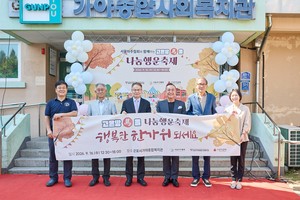
Seoul Horse Owners Association holds chuseok charity event in Gunpo
Horse owners deliver holiday gift packages to neighbors in need The Seoul Horse Owners Association held a community sharing event ahead of chuseok to support marginalized residents in the area. The association announced Thursday that it co-hosted the "Sharing Lucky Festival" at Goeuntang Village in Gunpo on Wednesday, together with the Gunpo Gaya Community Welfare Center and the Community Chest of Korea. The event was attended by Seoul Horse Owners Association President Jo Yong-hak, public relations committee chair Jo Geon-jin, board members Jo Byeong-tae and Hong Jong-un, Gunpo Gaya Community Welfare Center Director Lee Eun-a, and about 200 local residents. Food trucks and activity booths were set up in the courtyard in front of the welfare center. Performances included a traditional arts show by the Hansori Arts Troupe and a folk percussion performance by the Gunpo Lake Pungmul Arts Troupe. The association donated 5 million won ($3,650) to the Gunpo Gaya Community Welfare Center for use on behalf of residents in need. It also delivered chuseok gift packages to families in crisis and gave racehorse dolls to local children. After the event, association executives personally visited elderly residents living alone to deliver chuseok gifts. The event was held in a neighborhood with a high concentration of single-person households and elderly residents living alone. The name Goeuntang Village was chosen by residents through a public contest in 2016 to mean "a village of people with beautiful hearts," an effort to shed the negative image associated with permanent public rental housing complexes. "Through this sharing event, I hope we can build social networks for our marginalized neighbors and foster a culture of giving that helps identify those who fall through the cracks of the welfare system," President Jo Yong-hak said. "We will continue to practice ongoing acts of sharing for those who are left behind."
Sept. 17, 2026
-

Gwangjin-gu Launches Smart Store Training to Help Small Business Owners Break Into Online Sales
Online sales channel support — four weeks of hands-on training starting Oct. 7 Step-by-step instruction from store setup to content creation and marketing — first-come, first-served enrollment for 30 participants open Monday through Sept. 27 on the Gwangjin-gu website Gwangjin-gu will run its "2026 Smart Store Training for Small Business Owners and Aspiring Entrepreneurs" to help local small business owners and would-be founders build online sales channels and sharpen their marketing skills. The program was designed to help participants keep pace with the rapidly expanding online consumer market by equipping them with the practical skills needed to operate a smart store — from promoting products to completing actual sales on their own. Classes will run from Oct. 7 to Nov. 4 at the Gwangjin-gu Office's mid-sized conference room and integrated operations center. The curriculum covers each stage of smart store operation — store setup, product listing, promotional content creation and online marketing — and pairs instruction with hands-on exercises in which participants register products and produce content themselves, so they can apply what they learn directly to real online sales. Small business owners and aspiring entrepreneurs who wish to enroll can apply through the Gwangjin-gu website from Monday through Sept. 27 on a first-come, first-served basis, with a cap of 30 participants. Full details are available on the Gwangjin-gu website and its official blog and Instagram. "We structured the curriculum around hands-on practice so participants can learn everything themselves — from listing products to creating promotional content," Gwangjin-gu District Mayor Kim Kyung-ho said. "We hope this training helps small business owners and aspiring entrepreneurs overcome the challenges of selling online and open up new sales channels."
Sept. 17, 2026
-

Airport Railroad to extend last trains during Chuseok holiday
Airport Railroad will extend its last late-night trains during the Chuseok holiday. According to Airport Railroad, the last inbound train — which departs Incheon Airport Terminal 2 station at 11:50 p.m. and currently terminates at Digital Media City station — will run through to its final destination of Seoul Station on Sept. 26 and 27, arriving at 12:57 a.m. the following day. The last outbound train, which departs Seoul Station at midnight and currently terminates at Geomam station, will also be extended to Incheon Airport Terminal 2 station, arriving at 1:07 a.m. The extended Airport Railroad service will lead other operators — including Seoul Metro, Line 9 and Incheon Transit Corporation — to extend their operating hours during the Chuseok holiday as well.
Sept. 17, 2026
-

Donghae ranks 4th among Gangwon cities, but its mayor places 16th in brand index
Chuncheon, Wonju and Taebaek mayors rise in rankings; Gangneung and Sokcho mayors fall Chuncheon Mayor Yuk Dong-han topped the Gangwon Province local government chiefs category of the K-Brand Index, the Asia Brand Research Institute announced Thursday. The K-Brand Index is an online big data analysis system developed by the Asia Brand Research Institute in collaboration with domestic and international researchers. It measures public perception and response by aggregating digital data generated in daily life — including search activity, content consumption, and positive and negative online interactions. This month's Gangwon Province category covered all 18 heads of basic local governments in Gangwon Province, analyzing about 1.14 million online big data entries recorded from Aug. 1 through Aug. 31. Chuncheon Mayor Yuk Dong-han ranked first, followed by Wonju Mayor Gu Ja-yeol in second and Gangneung Mayor Kim Jung-nam in third. Taebaek Mayor Lee Sang-ho placed fourth, Hwacheon-gun County Chief Kim Se-hun fifth, Cheorwon-gun County Chief Kim Dong-il sixth, Hongcheon-gun County Chief Shin Young-jae seventh, Sokcho Mayor Lee Byeong-seon eighth, Pyeongchang-gun County Chief Shim Jae-guk ninth and Samcheok Mayor Park Sang-su tenth. Rounding out the rankings, Yanggu-gun County Chief Kim Wang-gyu placed 11th, Goseong-gun County Chief Ham Myeong-jun 12th, Hoengseong-gun County Chief Jang Shin-sang 13th, Yeongwol-gun County Chief Kim Gil-su 14th, Jeongseon-gun County Chief Choi Seung-jun 15th, Donghae Mayor Lee Jeong-hak 16th, Inje-gun County Chief Choi Sang-gi 17th and Yangyang-gun County Chief Kim Jeong-jung 18th. Compared with July, the August rankings saw notable declines: Gangneung Mayor Kim Jung-nam fell from first to third, Sokcho Mayor Lee Byeong-seon dropped from second to eighth, and Donghae Mayor Lee Jeong-hak slid from eighth to 16th. Chuncheon Mayor Yuk Dong-han climbed from third to first, Wonju Mayor Gu Ja-yeol rose from fourth to second, and Taebaek Mayor Lee Sang-ho advanced from fifth to fourth. Hwacheon-gun County Chief Kim Se-hun rose sharply to fifth place. Pyeongchang-gun County Chief Shim Jae-guk and Samcheok Mayor Park Sang-su held their positions from last month. The institute said the pronounced shifts at both ends of the rankings "appear to reflect the influence of regional issues and the public activities of local leaders during the period on online mentions and public perception."
Sept. 17, 2026
-

Cheongna Haneul Bridge to waive tolls for all during Chuseok holiday
Cheongna Haneul Bridge will be toll-free for all vehicles during the four-day Chuseok holiday, the Incheon Free Economic Zone Authority announced Thursday. The authority said the toll waiver will run from midnight Sunday through midnight Wednesday. Vehicles from other regions are also eligible, meaning homebound travelers and tourists can cross the bridge at no charge throughout the holiday period.
Sept. 17, 2026
-

Man who killed wife's lover at his home gets sentence reduced on appeal
A man in his 40s who stabbed and killed his wife's lover after the man came to his home had his sentence reduced on appeal. The First Criminal Division of the Gwangju High Court overturned the original ruling Thursday and sentenced A, 41, to 10 years in prison on murder charges, according to Newsis. A was indicted after attacking B with a knife in the parking lot of an apartment complex in Gwangsan-gu, South Jeolla Province, in October last year, killing him. A had learned of the affair between his wife and B through dashboard camera footage. His wife acknowledged the relationship and agreed to a divorce, but A carried out the attack after B showed no remorse during a phone call, according to the investigation. At the first trial, A admitted to all charges but argued that he had grabbed a knife from home intending only to frighten B after becoming enraged by his defiant attitude, and that the killing was impulsive after B laughed at him. The first-instance court found that A had planned the crime within a short period and sentenced him to 15 years in prison, also citing his failure to reach a settlement with the victim's family. The appeals court said the original sentence was excessively harsh, noting that A had since reached a settlement with the victim's family, who no longer sought punishment. The court also took into account that A had called emergency services himself immediately after the killing and had no prior criminal record.
Sept. 17, 2026
-
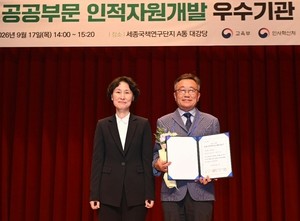
Incheon Transit Corp. earns first 'Best HRD' certification
Incheon Transit Corp. has been recognized for its competency-based talent recruitment and management and its systematic approach to human resources development. The corporation earned its first Best HRD certification Thursday, when it was named an outstanding public-sector human resources development institution at the 2026 Outstanding Human Resources Development Institution certification ceremony. The Best HRD certification is administered jointly by the Ministry of Education and the Ministry of Personnel Management. In this year's evaluation, the corporation was recognized for its talent development framework aligned with organizational management strategy, job-centered personnel management, integrated HRM-HRD operations, expansion of AI and digital education, and strengthened safety-focused training. Evaluators particularly noted the corporation's practice of incorporating its management strategy and talent vision into its training framework, linking organizational goals with employee competency development. It also built an integrated system connecting personnel management and training through programs including managerial competency assessments, promotion qualification exams, mandatory learning hours and job-specific education. The corporation has also consistently expanded AI and digital education as well as safety training. Evaluators gave positive marks for its efforts to strengthen job training, on-site skills transfer and self-directed learning — initiatives designed to raise employee job competency and translate it into organizational performance. "This Best HRD certification is the result of consistently building a talent-centered growth framework," Incheon Transit Corp. President Choi Jeong-gyu said. "We will continue to focus on AI and digital transformation, strengthening safety capabilities and improving job expertise to develop the transportation talent of the future."
Sept. 17, 2026
-
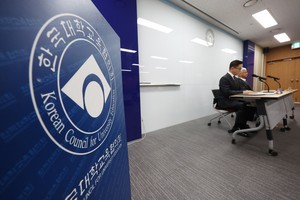
Only 3 applicants viewed competition ratios before applying amid system outage, Education Ministry says
39 applications filed after ratios disclosed; only 3 confirmed to have checked them first Ministry recommends cancellation of those 3 applications on fairness grounds 354 of 414 eligible applicants successfully remediated across 40 universities 16 of 116 universities did not extend deadline; public application system under review Three applicants have been found to have checked publicly disclosed competition ratios before submitting their university applications during an extended deadline caused by a system outage, the Ministry of Education and the Korean Council for University Education said. The two bodies said they recommended the relevant universities cancel those three applications, citing serious concerns about fairness and equity among applicants in the college admissions process. The Ministry of Education and the council announced Thursday the results of their review into the system failure affecting Uwayapply's early admissions application platform. Of 1,588 relief requests filed by applicants affected by the outage, 354 were confirmed as successfully completed applications. The outage occurred at around 5:50 p.m. on Friday, the deadline day for early admissions applications. As some universities disclosed their competition ratios during the extended application period, a fairness dispute arose between students who had already submitted their applications and those who applied only after viewing the disclosed ratios. The investigation found that 100 universities had extended their application deadlines to 7 p.m. Of those, 17 disclosed their competition ratios during the extended window between 6 p.m. and 7 p.m. The ministry and the council analyzed 39 applications submitted after those universities released their ratios. Of the 39 applications, three were confirmed to have been submitted after the applicant had viewed the disclosed competition ratio for that university. The ministry and the council said they had determined those cases posed a risk to the fairness of the admissions process and had recommended the relevant universities cancel the applications. They noted, however, that no final cancellation decision had yet been made by the universities. The remediation process for applicants affected by the system failure has also been completed. Of the 1,588 total relief requests, 414 were recognized as eligible for remediation, and 354 of those applicants ultimately completed their applications, confirming their relief. Eligibility for remediation was determined by whether the system's error logs from around 5:50 p.m. on Friday and the applicant's submission history — including attempts to fill out, save, submit and pay for an application for the relevant program — could be objectively verified. Officials said the principle applied was to grant relief based on electronic records while excluding cases involving unfair conduct. Of the 116 universities originally scheduled to close applications at 6 p.m. on Friday, 16 did not extend their deadlines. The ministry said remediation for applicants to those universities was unavoidable, as those students had not been given a separate opportunity to submit their applications. The 354 remediated applications were distributed across 306 recruitment units and admission tracks at 40 universities. By institution, Kyungpook National University had the most with 72 cases, followed by Kyung Hee University with 51, Chung-Ang University with 48, Chonnam National University with 27, Kookmin University with 26, Inha University with 18, Seoul National University of Science and Technology with 15, Sangmyung University with 12 and Jeju National University with 11. Kyungpook National University, Howon University and Chongshin University were among the institutions that had not extended their deadlines, with 72, four and three applications remediated, respectively. Following the completion of the remediation process, the average competition ratio at the 40 affected universities shifted from 9.634-to-1 to 9.635-to-1. The total number of applications across all universities rose by 354, from 2,554,259 to 2,554,613. The ministry said there was no concentration of remediated applicants in any particular recruitment unit or admission track. Nine recruitment units had three or more remediated applicants, and the average competition ratio for those units was 71.25-to-1. The ministry and the council have formed a special investigation team conducting an on-site probe of Uwayapply, examining the precise cause of the failure, how it was handled, and the overall system operation and management framework. The ministry said it plans to pursue necessary measures based on a review of relevant laws and contractual obligations once the problems are identified. In addition, the ministry said it will improve the stability and oversight of the application system to prevent similar incidents from the 2027 regular admissions cycle onward. It is also reviewing a shift away from the current private-agency-centered model toward a publicly operated application system. Education Minister Choi Kyo-jin said the ministry had acted with fairness and equity as its top priorities — providing relief to affected applicants based on objective facts and electronic records while ensuring that students who had submitted their applications normally would not be disadvantaged. "We will develop fundamental improvements to enhance the overall stability and reliability of the application system," Choi said.
Sept. 17, 2026
-
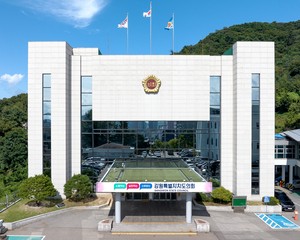
Gangwon FC's Hiroshima trip draws scrutiny over political motives, lawmaker says
Assembly member cites local elections timing, calls for full audit of subsidy use; Kim Byung-ji told to answer public funds allegations Amid growing anger among Chuncheon residents over Gangwon FC's decision not to hold home matches in the provincial capital, a provincial council member has raised fresh questions about a fan trip to Hiroshima organized under former Governor Kim Jin-tae of the People Power Party, alleging it may have served political ends. Current Governor Woo Sang-ho addressed Gangwon FC's decision to stop hosting home games in Chuncheon — the seat of the provincial government — at a regular press briefing, saying the club's move to block Chuncheon's mayor, a Democratic Party member, from entering the stadium last year had been a political matter. He added that he had issued an emergency directive and was working to resolve tensions between Chuncheon and the club. The issue raised at the provincial council, however, is a separate one. Yoon Ji-young, a Democratic Party of Korea member of the Gangwon Special Self-Governing Provincial Council's Administrative and Culture Committee representing Chuncheon District 1, used a five-minute open-floor speech at the council's 348th regular session Thursday to call for a thorough investigation into whether political motives were behind the Hiroshima away-match fan trip organized under a special directive from former Governor Kim. The away match in Hiroshima took place Nov. 4, 2025, with about 200 people — including fans, ordinary residents and provincial officials — joining the supporters' group. The event was proposed by former Governor Kim himself and was widely promoted through official provincial press releases. Because it was organized just seven months before local elections, it drew allegations of vote-buying and possible legal violations. Yoon noted that a civic group filed a complaint against former Governor Kim on Sept. 1 on charges including violations of the Public Official Election Act, and said, "Whether the travel expenses provided to residents for the away trip constitute an act of contribution under the Public Official Election Act, and whether any actual legal violation occurred, will be determined through investigation and judicial judgment." She went on to say, "The core of the issue is whether taxpayers' money and Gangwon FC were used as a political promotional tool by the former governor," adding, "Gangwon FC is a precious asset belonging to the people of this province, and the fans' support comes from pure passion — we must determine whether political intent was involved and how." Yoon also raised questions about the provincial administration's handling of the matter after the trip. According to Yoon, Gangwon FC applied on Dec. 31, 2025 to revise its project plan to cover the away supporters' travel expenses, and the provincial sports division approved the application as submitted that same day. In April 2026 — two months before local elections — the division abruptly ruled the expenditure an unauthorized use of funds and notified the club it would not recognize the settlement and would seek to recover the money. Yoon said the project revision application submitted by Gangwon FC and the provincial sports division's own review report both explicitly listed 114.13 million won ($83,400) for "away match support," and that former Governor Kim as well as the responsible director, division chief and team leader had all accompanied the trip. "It is hard to accept the explanation that they did not know where the funds came from," she said. She went on to say, "I question whether the province pushed ahead with the event at the former governor's proposal, approved the project plan revision, and then belatedly sought to recover the funds only after the political situation changed," adding, "We must thoroughly examine whether political judgment played a role in the entire process — from organizing the away trip and disbursing the subsidy to approving the revision and initiating the recovery." Yoon called on Gangwon Province and Gangwon FC to conduct a full audit covering the entire process from the initial proposal for the away trip through subsidy disbursement, project plan revision approval, settlement and recovery; to disclose all reports and consultations between the two bodies; and to review whether to cancel the grant decision and apply penalty surcharges, and report the findings to the council. Yoon also addressed Gangwon FC chief Kim Byung-ji directly, saying he must "respond to the allegations surrounding public funds and subsidies with accurate facts, and if wrongdoing is confirmed, accept the corresponding responsibility." "I hope Gangwon FC will no longer be embroiled in political controversy," Yoon said. "The club must reinvent itself as a team for all provincial residents — one where players can focus on the game and fans can cheer freely."
Sept. 17, 2026
-

Gangnam-gu to Host '2026 Gangnam Environmental Great Transformation Festival' at COEX
The Sept. 18 event at COEX features carbon neutrality and resource-recycling experiences under the theme "Less carbon, more circulation, more action" Hands-on programs include an eco-type personality test, carbon footprint calculator and upcycling workshops Gangnam-gu will host the "2026 Gangnam Environmental Great Transformation Festival" at the first-floor lobby of the COEX east entrance on Friday, from 10:30 a.m. to 3 p.m. September is home to several environmentally significant observances — Blue Sky Day, World Ozone Layer Protection Day and World Car-Free Day among them. The district is using the occasion to create a platform for residents, environmental groups and related organizations to come together under the theme "Less carbon, more circulation, more action," with a focus on translating awareness of the climate crisis into small, everyday actions. The event will open with a celebratory performance, followed by commendations for contributions to environmental conservation and a "Gangnam Environmental Great Transformation Performance." Fifteen residents and others recognized for their contributions to carbon neutrality and environmental protection will receive awards, and Gangnam-gu District Mayor Kim Hyun-ki and key guests will stage a performance conveying messages of environmental commitment. The venue will also display winning entries from the Korea Meteorological Administration's weather and climate photo contest, giving visitors a chance to reflect on climate change and the importance of environmental stewardship. Experience booths will offer hands-on programs centered on resource circulation and carbon neutrality. Activities include sea-glass crafts, sock-yarn doorbell making and coffee-grounds body scrub workshops — all focused on giving discarded materials new life. The event will also promote everyday energy-saving practices such as the Eco-Mileage program. The Seoul Metropolitan Government's Institute of Public Health and Environment and local environmental groups will also run their own programs. The institute will offer environment-themed activities and quiz programs, while local groups will present natural soap-making, eco-friendly lifestyle product campaigns, handkerchief dyeing using plant leaves, and companion plant cultivation to help reduce fine dust. Civic groups and companies — including Noltan, I'm Not a Baby and Ohu Dusi Lab — will also take part. Noltan and I'm Not a Baby will run a "My Eco-Type Test & Great Transformation Pledge" session, in which participants examine their daily habits, identify their environmental personality type and commit to specific actions going forward. Ohu Dusi Lab will operate a "Calculate My Carbon Footprint" station where visitors can check their personal carbon emissions. "Change that protects the environment begins not with grand slogans but with small actions practiced in daily life," Gangnam-gu District Mayor Kim Hyun-ki said. "I hope this event gives everyone a chance to reflect on their own lifestyle and try at least one thing for themselves, so that carbon neutrality and resource circulation can take root as a natural part of everyday culture."
Sept. 17, 2026
-
Court rules Yoon's insurrection verdict must name defendants
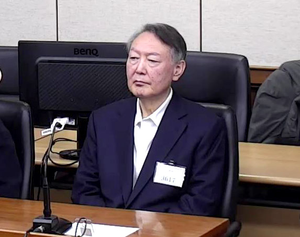
People's Solidarity for Participatory Democracy wins first-round suit after court withheld names from ruling People's Solidarity for Participatory Democracy has won a first-instance lawsuit demanding that the verdict in former President Yoon Suk Yeol's insurrection leadership case be released with the defendants' real names. Seoul Administrative Court's Administrative Division 7, presided over by Judge Kang Woo-chan, ruled Thursday in favor of People's Solidarity for Participatory Democracy in its suit against the chief judge of Seoul Central District Court, seeking to overturn the court's refusal to disclose the information. In March, Seoul Central District Court posted the verdict in Yoon's insurrection leadership case on its website but anonymized key information, including names and titles. Yoon was identified only as "Defendant E." Earlier, the Constitutional Court had released the full text of its ruling on Yoon's impeachment with the real names of Yoon and other parties. People's Solidarity for Participatory Democracy had filed a public information request for a version of the verdict bearing Yoon's real name, but Seoul Central District Court refused. The court cited the Code of Criminal Procedure, saying no provision existed allowing the public to inspect or copy an unfinalized criminal verdict. It also cited privacy concerns as grounds for the anonymization. People's Solidarity for Participatory Democracy then filed the lawsuit. The group argued that most of the key defendants were civil servants who had led or participated in the insurrection by abusing their official authority, and that disclosing their real names was necessary given the gravity of the case and the imperative to uphold the Constitution. The court said the central question was whether members of the general public are absolutely prohibited, under any circumstances, from inspecting or obtaining copies of an unfinalized criminal verdict. The court said the Code of Criminal Procedure does not explicitly prohibit the public from inspecting or copying an unfinalized criminal verdict — it simply leaves the matter unaddressed, creating a regulatory gap. Because the restriction is not grounded in any other specific law, the court added, it cannot be regarded as falling outside the scope of the public information disclosure framework. The court further found that interpreting the Code of Criminal Procedure as an absolute bar on public access to unfinalized criminal verdicts would likely violate the constitutional principle of proportionality. The court said separately that if a court were to overlook this constitutional perspective and adopt such an interpretation in a ruling, it could give rise to a constitutional complaint — a mechanism by which a party may petition the Constitutional Court to overturn a finalized court ruling that infringes on constitutionally guaranteed rights. If the ruling is upheld, Seoul Central District Court will be required to make a fresh determination, under the Public Information Disclosure Act, on whether and to what extent the verdict should be made public.
Sept. 17, 2026
-
Seongbuk-gu Launches Joint Public-Private-University Energy Efficiency Campaign
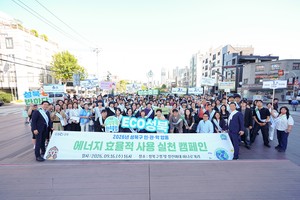
Held Wednesday ahead of the Chuseok holiday along Sungshin Women's University's Hanaro Street and at the district office, the campaign drew about 100 participants under the slogan "Seongbuk-e Banhada" — meaning both "Cut energy in half" and "Fall in love with Seongbuk-gu" Seoul's Seongbuk-gu held a joint public-private-university energy efficiency campaign Wednesday near the district office and along Hanaro Street near Sungshin Women's University. The campaign was organized ahead of the Chuseok holiday, when energy consumption typically surges, to build public awareness of the climate crisis and encourage residents to adopt more efficient energy habits in their daily lives. The slogan "Seongbuk-e Banhada" carries a double meaning — "cut energy in half" and "fall in love with Seongbuk-gu." The event was notable for bringing together two key groups: a university student climate monitoring team drawn from Kookmin University, Seokyeong University and Hansung University, and a carbon neutrality action corps made up of community leaders from each neighborhood. Together, they worked to spread a "2050 Seongbuk-style carbon neutrality culture" across the district. About 100 people attended, including the district's carbon neutrality implementation officer. Divided into six teams, participants marched through the streets carrying promotional placards and wearing sashes, drawing the attention of passersby. They also promoted enrollment in the Eco-Mileage program and distributed a "One Person, One Ton of Greenhouse Gas Reduction Checklist" to help residents take concrete steps toward carbon neutrality in everyday life. "Given the severity of climate disasters occurring with increasing frequency around the world, efficient energy use in daily life and residents' active participation are just as important as government-level policy," District Mayor Lee Seung-ro said. "We will continue to work closely with the university student monitoring team and the carbon neutrality action corps to pursue a wide range of carbon neutrality projects grounded in the voluntary participation of climate-conscious citizens."
Sept. 17, 2026
-
Gangnam-gu Takes K-Medical Tourism Push to LA and Orange County
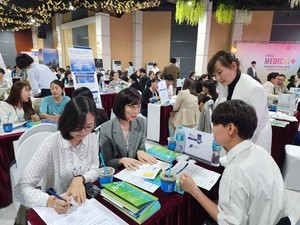
B2B consultations with local travel industry Thursday in LA, with six Gangnam medical institutions joining to expand patient referral networks; consumer briefing in Orange County on Saturday features eight medical institutions presenting services by specialty Gangnam-gu is heading to Los Angeles and Orange County this week to court American medical tourists, holding back-to-back events for local travel industry players and consumers on Thursday and Saturday. The LA stop aims to broaden ties with travel agencies that package and arrange medical tourism products, while the Orange County event will give prospective patients a direct look at Gangnam's medical institutions and the services they offer — all part of the district's push to deepen its foothold in the US market. Gangnam-gu drew 650,958 foreign patients in 2025, setting a record for the third consecutive year and marking a 72.6 percent increase from the previous year. American patients numbered 52,176, ranking third among all countries. With an eye on the US market's growth potential, the district has tailored separate events for industry partners and consumers alike. On Thursday, Gangnam-gu will take part in the "2026 K-Medical Tourism B2B LA" event hosted by the Korea Tourism Organization at the JW Marriott Los Angeles L.A. LIVE. Six Gangnam partner institutions — Chaum Medical Center, Gwangdong Hospital, JK Plastic Surgery, DM Dermatology Clinic, Gangnam JS Hospital and Cheotnunae Eye Clinic — will join a total of 12 domestic medical institutions and patient-referral agencies for one-on-one business consultations with US travel industry representatives. Alongside the consultations, a medical tourism seminar and networking session will give participating institutions a chance to highlight their specialties and differentiated services, and to explore partnership opportunities and future business prospects in the American market. On Saturday, Gangnam-gu and the Gangnam Medical Tourism Association will hold the "2026 Gangnam Medical Tourism Briefing" at the DoubleTree by Hilton Buena Park in Orange County. The six institutions from the LA event will be joined by Gangnam Nanoori Hospital and Podo Women's Clinic, bringing the total to eight medical institutions meeting directly with local consumers. The briefing will cover treatment programs across specialties including health checkups and wellness, dermatology and plastic surgery, ophthalmology, spine and joint care, and women's health. Attendees can consult with individual institutions to learn about treatments suited to their needs, as well as booking procedures and how to navigate the process. The focus is on providing concrete, practical information that moves beyond simple promotion and helps turn interest into actual visits and treatment in Gangnam. The district will also introduce its foreign patient support services, including the Gangnam Medical Tour Center, the medical tourism platform Medical Gangnam, and a one-stop concierge service covering airport transfers and interpretation — walking overseas patients through every step of receiving care in Gangnam. On Friday, between the two events, district officials will meet with local medical professionals to exchange information on the US healthcare market and system. Visits to major local medical institutions and media interviews will give the delegation a closer look at the American healthcare landscape and medical tourism trends to inform future market strategy. Following the US events, Gangnam-gu plans to participate in Cosmobeauty Indonesia 2026 in Tangerang, Indonesia, from Oct. 1 to 3, extending its overseas patient outreach into the Southeast Asian medical tourism market. "The United States is becoming a key market for Gangnam medical tourism, so it is important to expand our patient referral network on the ground and introduce Gangnam's medical services directly," Gangnam-gu District Mayor Kim Hyun-ki said. "We will actively support overseas outreach — through local briefings, trade fair participation and more — so that more international patients can discover Gangnam's outstanding medical institutions."
Sept. 17, 2026
-

Incheon e-eum cashback benefit to resume early Friday
Incheon city will resume the 10 percent cashback benefit on its local currency card "Incheon e-eum" on Friday — three days ahead of the originally scheduled date. The city moved up the launch to capture peak consumer spending ahead of the chuseok holiday weekend. Incheon plans to use 13.4 billion won ($9.79 million) in newly secured national government funds to boost consumption before the chuseok holiday. From Friday through Sept. 30, the monthly spending cap on Incheon e-eum will be raised from 500,000 won to 1 million won, with 10 percent of each payment returned as cashback. Residents in Ganghwa-gun and Ongjin-gun, areas with relatively weaker economic conditions, will receive a higher cashback rate of 15 percent. To sustain consumer momentum after the holiday, the city plans to continue operating the card with a monthly spending cap of 500,000 won and a 10 percent cashback rate from October through the end of December. Additional support measures to help stabilize living costs are also in place. Customers who use businesses designated as "good-price establishments" — local shops that keep prices low — will receive an extra 5 percent cashback on top of the standard rate. The city also expanded its supported mobile payment services to include Kakao Pay and Naver Pay, adding to the existing lineup of Samsung Pay and KB Pay, to improve convenience for users. "We will manage Incheon e-eum with care to ensure it operates stably without interruption, and do our utmost to revive the livelihoods of our residents," Incheon Mayor Park Chan-dae said.
Sept. 17, 2026
MOST READ
- 1KAIST develops high-performance bio-based adhesive using E. coli instead of petroleum
- 2Pope Leo XIV declines French honors and banquet, accepts only private meeting with Macron
- 3Daimler Truck unveils next-generation transport solutions at IAA 2026
- 4What was Rachmaninoff's performance fee? A 1928 price list tells all
- 5Samsung Biologics union's show of force backfires at the bargaining table
- 6APR says hair-loss treatment research published in international journal
-
WORLD

US warns of punishment for anyone enabling Iran's Strait of Hormuz toll scheme
-
INDUSTRY

Toyota union puts productivity first; Hyundai Motor union demands bigger share of profits
-
FINANCE

National Growth Fund to invest $531M in FuriosaAI, which rebuffed Meta's $800M takeover bid
-
INDUSTRY
Korea Shipowners' Association holds amateur baduk tournament for Maritime Day