
- HOME
- SOCIETY
-
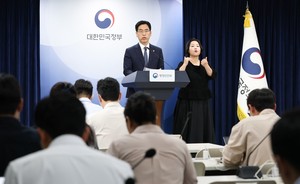
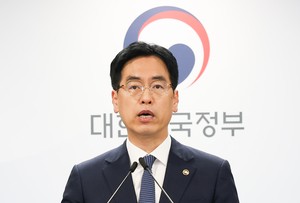
Kim Min-jae briefs press on inaugural anti-corruption agency chief nominee
Vice Minister of Interior and Safety Kim Min-jae held a briefing Thursday morning at Government Complex Seoul in Jongno-gu on allegations surrounding Kim Ji-yong, nominee for inaugural chief of the new anti-corruption investigative agency.
Sept. 17, 2026
-
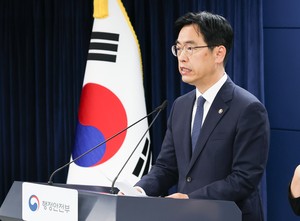
Vice Minister Kim Min-jae briefs on nominee for inaugural anti-corruption agency chief
Kim Min-jae, vice minister of the Ministry of Interior and Safety, held a briefing Thursday morning at Government Complex Seoul in Jongno-gu, Seoul, on Kim Ji-yong, the nominee for inaugural chief of the new senior anti-corruption investigative agency.
Sept. 17, 2026
-
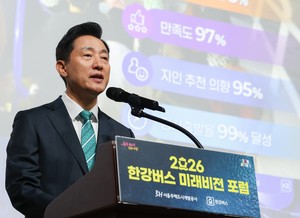
Seoul Mayor Oh Se-hoon speaks at Han River Bus Future Vision Forum
Seoul Mayor Oh Se-hoon delivers a congratulatory speech at the 2026 Han River Bus Future Vision Forum at Seoul City Hall in Jung-gu, Seoul, on Thursday morning.
Sept. 17, 2026
-

Spousal miscarriage leave, expanded birth leave take effect Friday
Ministry of Employment and Labor rolls out 'three-part spousal support package' First 3 days of miscarriage and stillbirth leave paid Parental leave also allowed for partners facing high-risk pregnancies Workers whose spouses suffer a miscarriage or stillbirth will be entitled to up to five days of leave, and paternity leave will be available starting 50 days before the expected due date under new rules taking effect Friday. The Ministry of Employment and Labor announced Thursday that it will begin enforcing the "three-part spousal support package" on Friday, filling a gap in support for male workers that had been concentrated largely on the period after childbirth. Under the new rules, workers whose spouses experience a miscarriage or stillbirth may take between one and five days of leave, provided they apply within 20 days of the event. The first three days are paid. Workers at small and medium-sized enterprises designated as priority support targets will receive full reimbursement of their ordinary wages for those three days from the government, up to 84,210 won ($62) per day and 252,630 won for three days combined. The leave must in principle be taken consecutively, though employers may allow it to be split. The window for taking paternity leave is also being widened. Previously, workers could only use paternity leave within 120 days of their spouse giving birth. Going forward, they may take it from 50 days before the expected due date through 120 days after delivery. Paternity leave totals 20 paid days and may be split into up to three separate periods. Workers may use all 20 days before the birth, all after, or a combination. Those at priority-support small and medium-sized enterprises will receive 100 percent of their ordinary wages, up to 1.68 million won. Male workers will also be permitted to take parental leave before a child is born if their pregnant spouse faces a risk of miscarriage or premature birth. Applications must be submitted at least seven days before the intended start date. The period used counts against the worker's total parental leave entitlement but does not count toward the limit on how many times parental leave may be split. According to the ministry, about 269,000 people received work-family balance benefits — including parental and maternity leave — from January through August this year, a 16.7 percent increase from the same period last year. The number receiving paternity leave benefits rose 45.1 percent to about 22,000. "Male caregiving participation will be significantly broadened across the entire journey from pregnancy to childbirth," said Cho Jeong-suk, the ministry's director general for employment support policy. "We will continue developing measures to ease the burden on working parents — including employees at small and medium-sized enterprises and those in special-employment and freelance arrangements — as they balance work and child-rearing."
Sept. 17, 2026
-
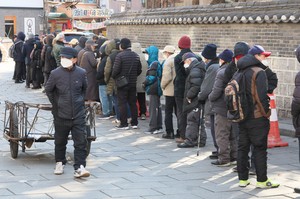
Elderly lifecycle deficit surpasses children's for first time
Labor income exceeds consumption from age 28 Surplus years last 33, ending at 61 Elderly spending up 8.1% amid rapid aging The lifecycle deficit of South Koreans aged 65 and older has for the first time surpassed that of children aged 14 and under, driven by rapid aging and rising elderly consumption. On a per-person basis, the surplus years — when labor income exceeds consumption — span only 33 years, from age 28 to 60. According to the 2024 National Transfer Accounts released by the Ministry of Statistics on Thursday, the elderly lifecycle deficit reached 188.9 trillion won ($138 billion), up 9.6 trillion won, or 5.3 percent, from the previous year. That figure exceeds the children's deficit of 186.2 trillion won by about 2.7 trillion won. The lifecycle deficit is calculated by subtracting labor income from consumption for each age group. It is the first time since the Ministry of Statistics began compiling the National Transfer Accounts in 2010 that the elderly deficit has exceeded the children's deficit. The elderly deficit has grown 2.3 times over the past decade, rising from 83.3 trillion won in 2014. Over the same period, the children's deficit increased 38.5 percent, from 134.5 trillion won to 186.2 trillion won. Analysts attribute the divergence to a shrinking child population due to the low birth rate and a rapidly expanding elderly population. Elderly consumption in 2024 reached 263.7 trillion won, up 8.1 percent from the previous year. Public consumption rose 8.9 percent and private consumption 7.6 percent. Elderly labor income also grew 15.7 percent to 74.8 trillion won but failed to keep pace with spending. By contrast, the working-age population between 15 and 64 recorded a labor income surplus over consumption of 155 trillion won, an expansion of 18.7 trillion won from the prior year. Children, who have no labor income, consumed 186.2 trillion won, generating a deficit of the same amount. The overall lifecycle deficit across all age groups fell 7.3 trillion won, or 3.2 percent, to 220.1 trillion won. Total consumption grew 3.4 percent to 1,509.8 trillion won, while labor income rose 4.6 percent to 1,289.7 trillion won — a faster pace than consumption growth. On a per-person basis, individuals run a lifecycle deficit from birth through age 27, then turn a surplus starting at 28. The surplus continues through age 60, after which the deficit resumes at 61. The surplus period now spans 33 years in total. In 2010, the surplus began at age 27 and ended at 56, lasting 29 years. As people remain in the labor market longer, the age at which the deficit resumes has been pushed back by five years over the past 14 years. Per-capita consumption peaks at age 16 at 46.04 million won, concentrated in education spending, when labor income is nearly zero and the lifecycle deficit is at its widest. Labor income peaks at age 45 at 46.51 million won; after subtracting per-capita consumption of 27.19 million won at that age, the surplus of 19.32 million won is the largest recorded at any age. Looking at intergenerational transfers, a net outflow of 344.9 trillion won from the working-age population was redistributed to children and the elderly — 185.9 trillion won and 148.3 trillion won, respectively. Children received 92.6 trillion won mainly through private transfers such as family support, while the elderly saw net public transfer inflows of 123 trillion won through pensions, healthcare and other programs. The National Transfer Accounts track the flow of economic resources across generations by analyzing consumption, labor income, and public and private transfers by age group. The figures include the effects of inflation.
Sept. 17, 2026
-

'Does this daycare lunch photo look AI-generated?' A mom's question draws answers from staff
Parent posts photo of child's lunch tray, asking if the meat dish looks artificially generated A claim has emerged that meal photos shared by daycare centers with parents may be AI-generated. A post on the social media platform Threads on Wednesday drew attention after a user uploaded a photo of a daycare lunch tray and asked, "Does the meat in the middle look like an AI photo?" The author, identified only as A, was referring to a portion of spicy stir-fried pork on the tray. "Am I just imagining that it looks oddly out of place?" she wrote, adding that she was posting the question to a "national group chat" because she could not tell for herself. "I'm just curious, that's all," she added. "There are so many people these days who are really good at spotting AI food photos." She said she normally does not pay close attention to the daily meal photos. "My general attitude is, 'At least the daycare is feeding them,'" she wrote. "But this photo stood out — it looked sharper than the others, and it caught my eye." The photo shows a lunch tray filled with white rice and doenjang soup, with small portions of kimchi and sautéed mushrooms in the side compartments — but the spicy pork section is packed full with no empty space. At a glance, the portion appears far too large for a single preschool-aged child. She also posted a meal photo from two days earlier alongside Wednesday's image. "Doesn't this one look unusually sharp?" she wrote, suggesting a camera filter may have been applied. Responses varied widely. Some agreed — "Anyone can see the meat is AI" — while others were dismissive: "People will suspect anything these days. Just live your life." Others offered more neutral explanations, such as "Looks like it was shot in the camera's auto-optimization mode." One user said their own daycare had also been using AI for meal photos and wondered why. Several others shared specific tips for detecting AI-generated images, including uploading the photo to Google's AI detection tool. Current and former childcare workers also weighed in with explanations of their own. One user who identified as a former teacher said it was not uncommon to forget to take a photo during the hectic lunch period and resort to compositing one afterward. "Please understand when that happens," the user wrote. A current teacher offered a similar account: "Sometimes I think I took the photo, but after feeding the kids and putting them down for a nap, I check my phone and realize I didn't. Meat dishes rarely have leftovers, so I end up compositing." A user who said they work as a nutritionist admitted the bulgogi in the photo did appear to be AI-generated. "I use AI when submitting work reports — for example, when the soup looks like it doesn't have enough solid ingredients, I'll ask it to composite more in, or when the food is all gone and I can't photograph the tray," the user said. A cook at a home-based daycare said that on days when labor-intensive dishes pile up, there is often no time to take photos. "On those days, the teacher in charge composites a photo from a previous meal and uploads it to KidsNote," the user said.
Sept. 17, 2026
-

Drunk driver who killed Japanese tourist gets five-year term upheld on appeal: 'Same result as murder'
Convicted under the Act on Aggravated Punishment for Specific Crimes for dangerous driving resulting in death Five-year prison term from first trial upheld as appeal dismissed A drunk driver who struck a Japanese mother and daughter visiting Seoul as tourists — killing the mother — has had his five-year prison sentence upheld on appeal. The defense had argued the original sentence was excessive and unjust, but the court rejected the appeal. The fourth criminal appeals division of Seoul Central District Court dismissed the appeal Thursday in the case of the defendant, identified only by his surname Seo, who faces charges including dangerous driving resulting in death under the Act on Aggravated Punishment for Specific Crimes. The court said Seo "struck the victims without reducing speed at one of the largest intersections in central Seoul after drinking," adding that "there is no evidence he took any measures such as braking." The court went on to say that "even if unintentional, he drove in a state where he could not control himself and caused a person's death under reckless disregard," concluding that the act "produced the same result as murder." The court added that while Seo "appears to be deeply remorseful and his family has made efforts toward restitution, it is difficult to treat that as grounds for a reduced or lenient sentence." Seo was charged with striking a Japanese mother and daughter as they crossed a pedestrian crossing near Dongdaemun Station in Seoul last November while driving drunk. The mother died from her injuries. It was the first day of what was to be a three-day, two-night trip to South Korea. The daughter, in her 30s, also suffered rib fractures and injuries to her forehead and knees. The first trial had sentenced Seo to five years in prison. In May, the first-instance court said "one of the two victims died and the other suffered injuries requiring six weeks of treatment as a result of the defendant's negligence — an irreversible outcome," adding that "severe punishment was unavoidable." However, the court noted that Seo "admitted to the offense and made efforts toward restitution, including paying 350 million won ($256,000) in settlement," and said it took into account as favorable sentencing factors that the bereaved family did not seek punishment. In appealing the first-instance ruling, Seo's defense said he "has pledged to spend the rest of his life in repentance and atonement, and has a family to support," asking the court to "allow him to return to society even a little sooner so he can make amends for his wrongdoing." Seo himself, in his final statement at the appellate trial, said "10 months have passed since I came to the detention center" and that "during this time I have been facing the consequences of that devastating moment without looking away." He also appealed for a reduced sentence, saying that "past the age of 40, the entire lives of my parents, spouse and children have been shattered because of the crime I committed." The appeal was nonetheless rejected.
Sept. 17, 2026
-

Police nab 67 in voice-phishing ring led by Chinese national who posed as 'Prosecutor Kim Min-su'
Police have arrested dozens of suspects, including the ringleader of an overseas criminal organization that impersonated prosecutors and financial regulators to steal billions of won from victims. The Busan Metropolitan Police Agency's wide-area crime investigation unit said Thursday it had arrested 67 people — including the ringleader, a Chinese national in his 30s identified only as A — on charges including violations of the Act on Special Cases Concerning the Prevention of Loss Caused by Telecommunications-Based Financial Fraud. Seventeen of those arrested have been detained. Police said A was the ringleader of the organization behind a voice-phishing scheme that drove a job-seeking woman in her 20s to her death several years ago, with gang members posing as "Prosecutor Kim Min-su" of the Seoul Central District Prosecutors Office. "There was no particular reason for choosing the alias Kim Min-su," a police official said. "A admitted to some involvement in the crimes but denied being the ringleader, showing little sense of remorse." A and his associates are accused of operating call center offices in China and other overseas locations from August 2015 to July 2021, impersonating prosecutors and Financial Supervisory Service officials to steal 5 billion won ($3.65 million). The group recruited members through social media advertisements promising high-paying part-time work, then divided them into roles including call center agents, recruiters and cash collectors. They deceived victims by claiming that bank accounts opened in the victims' names had been used in crimes and that the money needed to be moved, or by offering to refinance their loans at lower interest rates. In the process, they presented forged civil servant identification cards and fabricated official documents describing fictitious cases. Police have requested Interpol red notices and forced repatriation for 33 accomplices believed to be hiding abroad. On Jan. 20, 2020, members of A's organization impersonated "Prosecutor Kim Min-su of the Seoul Central District Prosecutors Office" and told a woman in her 20s who was preparing for job applications that she was implicated in a large-scale financial fraud and needed to withdraw money from her account. They stole 4.2 million won from her. A few days later, the victim died by suicide. If you're thinking about self-harm or suicide, dial the Suicide Prevention Hotline at 109, available 24 hours a day, seven days a week. Please request a translator for English-language services.
Sept. 17, 2026
-
Daejeon unveils 'Our Daejeon' vision under newly elected mayor
Mayor Heo Tae-jeong presents 3 core values and 10 strategies to guide city administration Daejeon held a ceremony Thursday to share and reaffirm its new governing vision — "Our Daejeon, Completely Happy Citizens" — with residents as part of a drive to realize happiness for all. Daejeon Mayor Heo Tae-jeong hosted the ninth-term popular election vision proclamation ceremony at the city hall auditorium, with about 500 people in attendance, including citizens, city council members and public officials. Heo personally presented the administration's direction and vision for the term, outlining three core values — future growth, livelihood recovery and civic sovereignty — along with 10 governing strategies. ▶ Future growth: The city said it would develop science and technology and innovation capacity as new growth engines, building a city where businesses and talent grow together around AI and future strategic industries. ▶ Livelihood recovery: The city pledged to more firmly support residents' daily lives and work toward livelihood recovery on the basis of a mutually beneficial and inclusive economy. ▶ Civic sovereignty: The city vowed to ensure that every resident can realize their potential through equal opportunity and participation, and to practice governance decided and shaped together with citizens. The 10 governing strategies presented were: completing future strategic industries through an AI-driven transformation; building a hub for advanced technology commercialization and startups; realizing a carbon-neutral city in response to the climate crisis; establishing a robust and wide-ranging livelihood economy; creating convenient living conditions for all; building a culturally rich city through arts in everyday life; strengthening demand-tailored sports infrastructure; building a civic sovereignty city through participation and respect; guaranteeing the right to pursue happiness across all life stages; and innovating safe and convenient citizen-centered administration. A citizen representative and Mayor Heo then read the vision proclamation together, followed by a performance embodying the three core values. Attendees took commemorative photos and pledged to work together to realize the governing vision for the term. Daejeon plans to pursue 77 campaign pledges and more than 20 key tasks grounded in the three core values and 10 strategies, providing a solid foundation for the administration's vision. "Even amid difficult fiscal conditions, we will maintain unwavering investment in livelihoods and the future to firmly support the lives of our citizens," Heo said. "We will not stop at a mere declaration of vision, but will swiftly deliver effective governance that citizens can feel in their daily lives."
Sept. 17, 2026
-

Church teacher who raped teenage student dozens of times gets 6 years on appeal
A church teacher in his 30s who committed sex crimes against a minor student dozens of times received the same prison sentence on appeal as he did at trial. The first criminal division of the Suwon High Court, presided over by Judge Shin Hyeon-il, sentenced the defendant, identified only as A, to six years in prison on charges of violating the Act on the Protection of Children and Youth Against Sex Offenses, including rape through deception and coercion, according to Yonhap on Wednesday. The lower court had handed down the same six-year sentence, along with a mandatory 40-hour sexual violence treatment program and a five-year ban on employment in fields involving children. A was indicted on charges of raping or attempting to rape a then-17-year-old student in the high school division of his church on dozens of occasions between August 2019 and June 2020, and of engaging in similar sexual acts with her. Investigators found that he had exploited the victim's vulnerability — she had been unable to receive proper parental care due to her family's financial circumstances and had relied on the church as a result. The appeals court acknowledged that A had admitted to the crimes during the appellate proceedings and had deposited money into escrow for the victim's benefit. However, it noted that the victim still suffers and has petitioned for a severe sentence, and has said she will refuse to accept the deposited funds. "Given the method, frequency and duration of the crimes, their nature is grave, and it is difficult to view the aforementioned circumstances as sufficient grounds to change the sentence," the court said. During the first trial, A and his defense consistently denied the charges, claiming he and the victim "were in a mutual loving relationship."
Sept. 17, 2026
-
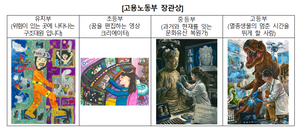
AI firefighters, space sanitation workers: children imagine future careers
Korea Polytechnics holds exhibition of winning entries from future-career drawing contest 12,579 submissions received; 292 winners named, including 16 grand-prize recipients Show opens at Gwanghwamun, then travels to Korea JobWorld and Osong Station From firefighters working alongside AI to sanitation workers clearing space debris and marine doctors saving ocean life, the future careers imagined by children and teenagers across South Korea are coming together in one place. Korea Polytechnics announced it will hold an exhibition of top entries from the 18th Future Career Drawing Contest at the 172G Gallery in Seoul's Gwanghwamun Station from Thursday through Tuesday. Jointly organized by the Ministry of Employment and Labor and Korea Polytechnics since 2009 to mark Vocational Skills Month, the nationwide contest invites children and teenagers to explore their futures and career aspirations through drawing. This year's theme — "My Future Self, My Choice" — drew 12,579 submissions, up 3,270 entries, or 35.1 percent, from last year. Since the contest launched, cumulative submissions have reached 218,599. A total of 292 winners were selected this year: 16 grand-prize recipients, 16 excellence awards, 30 merit awards, 130 encouragement awards and 100 honorable mentions. Of those, 192 works — including all grand-prize entries — will be on display. Many of the winning pieces depicted familiar professions reimagined with cutting-edge technology. Entries included "Future Firefighter Working with AI," "Tomorrow's Farm Transformed by AI Engineers," "Hair Designer Working Alongside AI Robots" and "Future Painter with AI." Works envisioning space as a new workplace also drew attention. Students portrayed space not merely as a frontier for exploration but as a place where environmental stewardship, life and career possibilities converge — through figures such as sanitation workers collecting space debris and zookeepers at orbital animal parks. Among middle and high school entries, careers tied to solving social problems featured prominently, including cultural heritage restorers, marine debris collection managers, future marine doctors and specialists in reviving extinct species. Lee Chae-won, a student at Daemyeong High School whose entry "Director of a Digital Historical Verification Institute" won the high school grand prize, said she envisioned a future institution that uses digital technology to authenticate historical records. "I want to be someone who correctly promotes and preserves Korean culture and history," she said. At the awards ceremony Thursday, the 16 grand-prize winners — including Shim Tae-min, a kindergarten-division winner whose entry was titled "I Am a Rescue Worker Who Appears Wherever There Is Danger" — will receive ministerial citations from the Ministry of Employment and Labor, the Ministry of Education and the Ministry of Gender Equality and Family, as well as a Seoul mayor's citation and a cash prize of 500,000 won ($365) each. After the Gwanghwamun run, the exhibition moves to Korea JobWorld from Tuesday through Oct. 7, followed by a showing at KTX Osong Station from Oct. 8 through Nov. 9. Lee Cheol-su, chairman of Korea Polytechnics, said the children's drawings capture the creative imagination needed to navigate a changing society, as well as the process of discovering what one loves and does well. "I hope this becomes an opportunity for children and teenagers to reflect on the value of work and carry their potential into the future," he said.
Sept. 17, 2026
-

Spigen Korea, Opennote, MET named top human resources development companies
95 firms receive Best HRD certification this year, including 60 new entrants; top honorees earn minister's commendation and three-year exemption from routine labor inspections Spigen Korea, Opennote and MET have been named this year's top human resources development companies in their respective categories. The Ministry of Employment and Labor and the Human Resources Development Service of Korea announced Wednesday that they will hold the "2026 Best HRD Certification Award Ceremony" at the Fairmont Ambassador Hotel in Seoul on Thursday. A total of 95 companies received the "Best Human Resources Development Institution (Best HRD)" certification this year — 19 large enterprises, 56 small and medium-sized enterprises and 20 work-first, study-later companies. Of those, 60 are newly certified and 35 are recertified. The top-scoring companies in each category were Spigen Korea in the large enterprise division, Opennote in the small and medium-sized enterprise division, and MET in the work-first, study-later division. All three will receive a commendation from the Minister of Employment and Labor. Spigen Korea was recognized for building a talent development system that links individual performance evaluations with personal development plans, creating a virtuous cycle between HR management and training. The company also operates an in-house chatbot trained on more than 60 HR regulations and has strengthened employees' AI capabilities through tiered AI education programs. Opennote structured its training curriculum around the job competencies needed for core future businesses, including AI, cloud and energy information and communications technology. The company was cited as a best-practice example for connecting training outcomes to on-the-job application, performance reviews, promotions, compensation and career development. MET runs hands-on new-employee training programs focused on automation equipment and robotics, and provides allowances to employees who obtain relevant certifications. The company also earned high marks for offering youth a work-first, study-later pathway through partnerships with specialized and meister high schools and through P-TECH, a high-skill work-study program. The Best HRD certification comprehensively evaluates a company's talent development system, covering everything from recruitment, performance assessment and compensation to training and career development. This year's review incorporated participation in AI training programs, online training outcomes and human resources investment records at work-first, study-later companies. Certified companies are exempt from routine labor inspections for three years and receive preferential points when applying for government support projects and subsidies. Since the program was introduced in 2006, a total of 2,661 companies have applied for certification and 1,319 have received it. Pyeon Do-in, director general of the ministry's vocational competency development bureau, said systematic talent development is essential for companies to keep pace with rapidly changing industrial conditions driven by AI and digital transformation. "We will continue to push forward a range of training and education policies so that workers can build the competencies needed in this era of change," he said.
Sept. 17, 2026
-
Korea Labor Foundation helps Korean firms navigate Cambodia's labor laws
Korea Labor Foundation joins Phnom Penh seminar Employment contracts, seniority pay, workplace safety rules covered AI-based overseas labor information service to launch in December A seminar was held to brief Korean companies operating in Cambodia on changes to local labor laws and industrial safety and environmental regulations. The Korea Labor Foundation said Thursday it participated in a seminar on "Trends in Cambodian Labor Law and the Labor Environment," hosted by the South Korean Embassy in Cambodia in Phnom Penh. The event was organized to help Korean businesses reduce the risk of legal violations and labor disputes by keeping them up to date on changes to Cambodia's labor, industrial safety and environmental regimes and workplace inspection standards. Attendees included Heng Sour, Cambodia's minister of labor and vocational training, officials from the Ministry of Environment, and representatives and HR managers from Korean companies based in the country. The seminar covered key issues under Cambodian labor law, including employment contracts, contract renewals and seniority pay, as well as recent workplace inspection findings and compliance requirements. Discussions also addressed workplace safety and environmental regulations, violations uncovered during actual inspections, and the impact of global supply chain shifts on corporate labor management. The foundation introduced its support services for Korean companies operating abroad, including country-specific labor law and labor management information, HR and labor consulting, and local seminars. Starting in December, it also plans to launch an AI-powered overseas labor information service that will allow companies to easily access labor law and labor management information by country. The foundation signed an MOU with the Korean Chamber of Commerce in Cambodia (KOCHAM) on Wednesday. The agreement aims to combine the foundation's expertise in labor affairs with KOCHAM's local business network to support labor management and dispute prevention. The foundation also held a roundtable with local business representatives to hear about the difficulties they face in managing HR and labor matters. On Thursday, the foundation held a separate meeting with Cambodia's Ministry of Labor and Vocational Training to discuss follow-up cooperation measures aimed at helping Korean companies comply with local labor laws and maintain stable labor management. Park Jong-pil, secretary-general of the Korea Labor Foundation, said the foundation would "provide timely labor information that companies need by leveraging its network of cooperation with local governments, the embassy and business associations, and strengthen on-the-ground support."
Sept. 17, 2026
-
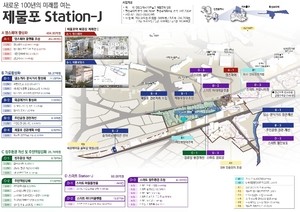
Jeomulpo Station gets an AI makeover in Park Chan-dae's bet on urban revival
Incheon targets digital and AI firms for a declining inner-city district Jeomulpo Station-J project moves beyond physical renewal to economic regeneration Jeomulpo Damso facility set to open in November, with Young Square to follow in 2028 Success will hinge on attracting real businesses and young entrepreneurs AI has become the new watchword for urban renewal around Jeomulpo Station, one of Incheon's most prominent inner-city districts in decline. The city's approach to regenerating the area has shifted away from the conventional model of patching up aging alleys and facilities, toward one that actively draws young people, businesses and startups into the old urban core. The Jeomulpo Station-J urban regeneration project, championed by Incheon Mayor Park Chan-dae, has entered the phase of constructing its key anchor facilities, marking the start of a full-scale policy experiment to connect a stagnant inner-city district with future industries. The centerpiece is Young Square, planned for the north side of Jeomulpo Station. The complex will span seven above-ground floors and two below-ground floors, with a total floor area of 9,592 square meters. It is designed as a mixed-use hub bringing together office space for innovative digital and AI companies, a smart farm, training rooms and a flagship restaurant under one roof. Particularly notable is the plan to dedicate the fifth through seventh floors entirely to digital and AI firms. The move signals an effort to reframe urban regeneration in the Jeomulpo area — shifting it from a simple "living environment improvement project" to an economically driven model focused on attracting businesses and jobs. The underlying vision is to create a space where young people can launch and grow businesses in a district they have been leaving, drawing in companies so that spending and employment are generated within the community itself. The Jeomulpo Station-J project was selected in December 2021 through a Ministry of Land, Infrastructure and Transport urban regeneration competition. Incheon Housing and Community Corporation (iH) serves as the overall project manager under a formal agreement, with work continuing through 2028. The project's main pillars are improving the living environment, revitalizing the local community, and building a foundation for jobs and startups. Work completed so far includes remodeling a senior center, improving the streetscape around a neighborhood park, and upgrading the Damso and snack-food street corridors, along with resident-driven initiatives such as a home-repair support program. The project is now moving into its next phase: layering genuine economic functions — businesses and jobs — onto that foundation. Another anchor facility, Jeomulpo Damso, is set to open in November. The four-story building, with a total floor area of 612 square meters, is about 95 percent complete. After it opens, Michuhol-gu plans to use the space for a shared kitchen and youth facilities. While Jeomulpo Damso is intended as a community hub for residents and young people, Young Square is meant to serve as an economic hub that draws in businesses and youth talent. The harder challenge, however, lies ahead. In urban regeneration, the most difficult task is not constructing a building but filling it with people and activity once it is finished. Young Square is currently about 20 percent complete, with excavation work underway. The city is targeting a 2028 completion. Incheon Technopark is slated to manage the facility's overall operations, but the specifics of tenancy and management are still being worked out. What matters most going forward is not the building itself. The real questions are which digital and AI companies will actually move in, how many young entrepreneurs will set up shop there, and what connections those tenants will forge with the businesses around Jeomulpo Station. Branding a space with the word "AI" alone will not revive a declining district. Sustained regeneration requires a self-reinforcing cycle — companies moving in, young people staying, residents and businesses interacting, and spending circulating within the local economy. The project also offers a window into the direction of Mayor Park's broader inner-city policy. Recognizing that physical improvements alone cannot stem the outflow of residents and commerce, his administration is testing a regeneration model that brings young people and future industries into the old urban core. Jeomulpo Station's strong transport links give it particular potential as a site where new industrial and startup spaces can take root within an established urban setting. Still, a significant gap remains between policy ambition and on-the-ground results. Whether Young Square will succeed in attracting real companies, how many youth jobs will actually be created, and whether the benefits will ripple out to surrounding businesses are all questions that remain unanswered. Ultimately, the test is whether "AI-infused urban regeneration" can translate into tangible change in how people live and work around Jeomulpo Station. The city expects that once the key anchor facilities are in place, a new foundation for revitalization — one shared by young people, businesses and residents alike — will begin to take shape. The transformation of Jeomulpo Station begins with construction but will be decided by what comes after. The question is whether the area will simply be patched up as it once was, or whether it will become a new Jeomulpo that draws young people and businesses. The completion of Young Square in 2028 will be the first real test of whether Jeomulpo Station-J can grow beyond a standard regeneration project into a genuine model for inner-city growth.
Sept. 17, 2026
-
Preparation team mounts full defense of first SCIO chief nominee amid 'pro-Yoon prosecutor' allegations
Kim Min-jae says appointing director is key to successful launch of new agency The preparation team for the Ministry of Interior and Safety's Serious Crime Investigation Office pushed back Thursday against calls from hardline pro-opposition figures for inaugural SCIO director nominee Kim Ji-yong to step aside, saying he "was not the final decision-maker" in cases that critics have cited from his time as a prosecutor. Kim Min-jae, vice minister of the Ministry of Interior and Safety and head of the SCIO preparation team, held a briefing at Government Complex Seoul in Jongno-gu on Thursday morning, reading from a prepared statement. "We take the public's voice seriously, as various questions and concerns have been raised about the nominee's past conduct and his stance on prosecutorial reform," Kim said. Democratic Party of Korea lawmaker Kim Yong-min, Rebuilding Korea Party lawmaker Park Eun-jeong and Gyeonggi Province Governor Choo Mi-ae, among other hardline opposition-aligned figures, have argued that Kim Ji-yong is unfit to lead the new agency. They have pointed to his opposition to separating investigative and indictment powers as part of prosecutorial reform, as well as his position in the chain of command during two high-profile cases: the illegal travel ban imposed on former Vice Justice Minister Kim Hak-eui and the misconduct assault case involving former prosecutor Jeong Jin-ung. The Kim Hak-eui case centers on allegations that officials illegally blocked the former vice minister from leaving the country at Incheon International Airport in 2019. Prosecutors indicted then-Immigration and Foreign Policy Bureau chief Cha Gyu-geun, prosecutor Lee Gyu-won and Cheong Wa Dae civil affairs secretary Lee Gwang-cheol, among others — all of whom were ultimately acquitted by the Supreme Court. "There are concerns that the nominee approved the indictment of those involved in the emergency travel ban on the former vice minister," Kim Min-jae said Thursday. "However, three of the four indicted individuals were already under investigation and had been indicted before the nominee took up his post as head of the criminal division at the Supreme Prosecutors' Office." "While it is difficult to disclose the specifics of the internal decision-making process, we have confirmed that the nominee voiced his opposition to the indictment of the remaining individual in an internal meeting and was not the final decision-maker," he added. Kim Min-jae said the nominee was also not the final decision-maker in the Jeong Jin-ung misconduct assault case. "It is true that the nominee was in the chain of command as deputy chief prosecutor of the Seoul High Prosecutors' Office," he said. "However, the investigation was already under way when he took up the post, he clearly expressed his opposition to the indictment in an advisory capacity, and he was not the final decision-maker." The Jeong Jin-ung case stems from the so-called Channel A affair, in which Jeong was charged with assaulting and injuring then-Prosecutor Han Dong-hoon during a search and seizure operation. Jeong was convicted at trial but acquitted on appeal, and the Supreme Court confirmed his acquittal in 2022. Kim Ji-yong previously joined a statement opposing the suspension and disciplinary proceedings against then-Prosecutor General Yoon Suk Yeol, and also publicly opposed legislation that would have stripped prosecutors of their investigative powers — a measure critics dubbed "complete deprivation of prosecutorial investigative rights." Hardline opposition figures have since labeled him a "pro-Yoon prosecutor" or a "prosecutorialist." Kim Min-jae said the nominee joined the statement because he believed the disciplinary process itself was partly improper, even if Yoon's conduct may have warranted discipline, and that his opposition to the investigative-powers legislation was not a rejection of the principle of separating investigation from indictment, but rather a concern that victims' rights could be left unprotected without adequate safeguards in place. Kim Min-jae also said the nominee had in fact ordered a reinvestigation into a complaint involving relatives of former President Yoon, having found the original decision not to indict to be unjustified. Yoon's mother-in-law, identified only by her surname Choi, was accused of perjury by a former business partner surnamed Jeong. The Seoul Central District Prosecutors' Office declined to indict, but the Supreme Prosecutors' Office ordered a reinvestigation in 2021. The district office again declined to indict, and Jeong's subsequent application for a court-ordered prosecution was ultimately rejected by the Supreme Court. Asked why the preparation team held a second briefing even after Kim Ji-yong had personally addressed the allegations through a doorstep statement on Monday, Kim Min-jae said it was "for a successful launch." He noted that ministers preparing for confirmation hearings typically have established support structures in place, but that the SCIO does not, as it is set to open Oct. 2. He said he views the director's appointment as "a critical matter for the launch." Shin Jun-ho, head of the confirmation hearing preparation team, said the nominee had taken the position that the Jeong Jin-ung case could not proceed as a misconduct assault charge because he sided with the investigating prosecutors, while in the Kim Hak-eui case he disagreed with the investigative team and believed the travel ban had been handled properly. "It is true that the nominee was involved as part of the chain of command, but we are deeply troubled by the allegations framing him as having led these cases," Shin said.
Sept. 17, 2026
-
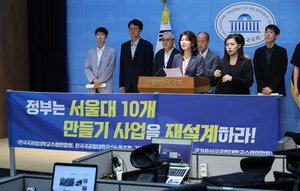
Why only 3 universities? Faculty group pushes back on 'Make 10 Seoul National Universities' picks
National federation of national university professors issues emergency joint statement 'Selection contradicts 5-pole, 3-special zone balanced development policy — must be reviewed' A national federation of professors at regional public universities has pushed back against the government's selection of only three institutions — Pusan National University, Chonnam National University and Chungnam National University — under its "Make 10 Seoul National Universities" initiative, saying the picks run counter to the spirit of balanced national development. The National Federation of Professors at Regional National Universities issued an emergency joint statement Thursday, urging the government to add the six unselected regional national universities to the program and establish a comprehensive national support framework. The Ministry of Education announced Sept. 1 that Pusan National University, Chonnam National University and Chungnam National University had been chosen as the first recipients of the "Make 10 Seoul National Universities" package. Each selected university is set to receive about 400 billion won ($292 million) more than other regional national universities through 2030. The federation said the selection process had abandoned the government's own "5-pole, 3-special zone" strategy — a framework covering five regional hubs (the greater Seoul area, the southeastern, Daegu-North Gyeongsang, central and Honam regions) and three special autonomous zones (Gangwon Province, North Jeolla Province and Jeju) — and instead forced regional national universities into competition and ranking, picking only some for priority support in direct contradiction of the balanced national development goal. The group added that if the initiative widens the gap in fiscal, education and research conditions among regional national universities and creates a new hierarchy, "it is a clear policy contradiction." It called on the state to build a basic support framework that allows every regional national university to grow into a central pillar driving education, research and industry in its respective region. The federation also questioned the fairness and transparency of the selection process, demanding that the ministry disclose the evaluation criteria, how each criterion was applied and the basis on which differences among universities were judged. "Make all evaluation criteria, procedures and results public," it said. The group urged the Ministry of Education to take three steps: add the six unselected regional national universities to the program; conduct a full review of the competitive support framework that concentrates funding on select institutions; and release all evaluation criteria, procedures and results while guaranteeing the independence, objectivity and fairness of the assessment. "What is needed now is national responsibility, not selection and exclusion — co-growth of regions and universities, not competition and ranking," the federation said, calling on the government and the Ministry of Education to treat the matter not as a simple project selection issue but as an opportunity to set the right fundamental direction for higher education and balanced national development in South Korea.
Sept. 17, 2026
-
Obituary: Father-in-law of People Power Party communications director Kim Yong-jin
Kim Seong-yeon, father-in-law of Kim Yong-jin, communications director of the People Power Party and former presidential office deputy secretary for external affairs, died Wednesday at Eunpyeong St. Mary's Hospital in Seoul, Room 5 of the funeral hall. The funeral procession departs Friday at 6 a.m. For inquiries, call 02-2030-4444.
Sept. 17, 2026
-

Husband who gave wife 300,000 won a month hid years of secret investment losses
A husband who managed the household finances of a dual-income couple for eight years — taking most of his wife's salary each month — secretly invested the money in shares and virtual assets and lost a substantial sum, it has emerged. The story of Woman A, eight years into her marriage and the mother of an elementary school-age son, was recently featured on YTN Radio's legal advice program "Jo In-seop's Counseling Center." After marrying, A handed financial control to her husband on the grounds that he was good with numbers and investing. Although both spouses worked, she transferred most of her monthly salary to him. He gave her about 300,000 won ($218) as a monthly allowance and told her it had to cover lunch, transportation and clothing. He also monitored her spending closely, checking her card transaction history line by line and demanding to know why she bought coffee so often or who she had eaten with. When she bought her mother a bag worth 200,000 won as a birthday gift, he reportedly flew into a rage, asking why she had spent "household money" without his permission. Yet the husband never disclosed his own spending or the state of his finances. Frustrated by the pattern, A checked her husband's accounts and made a shocking discovery: over the previous eight years, he had used the couple's combined earnings to invest in shares and virtual assets without telling her, incurring significant losses. It also emerged that he had taken out unsecured loans to fund the investments. When A confronted him, asking why he had done all this without consulting her, he reportedly shot back that someone who "doesn't know how to manage a single won" had no business questioning who controlled the finances. "My husband never cheated on me or hit me, but I couldn't spend the money I worked hard to earn as I pleased," A said. "Even when I wanted to meet friends or take care of my parents, I had to watch his reaction." She asked whether any of this could constitute grounds for divorce. Attorney Lim Hyeong-chang of Shinsegae Law said that even without infidelity or assault, prolonged financial control that has broken down a marriage to the point where it cannot be repaired can constitute grounds for a judicial divorce. In fact, Article 840, Clause 6 of the Civil Act lists "any other grave cause making it difficult to continue the marriage" as a ground for judicial divorce. Lim said that one spouse managing the finances alone is not by itself grounds for divorce, but added that "if control over finances was used as a means to dominate or pressure the other party, it can become a problem." Excessively restricting living expenses while continuously monitoring the other spouse's card use, and managing a spouse's income while concealing one's own financial situation over a prolonged period, could be considered unfair treatment within the marriage or evidence of an irretrievable breakdown, he said. On the husband's decision to invest in shares and virtual assets — and to take out loans to do so — without consulting his wife, Lim said the investment losses would not automatically be attributed entirely to the husband's liability. He added, however, that even if most assets are held in the husband's name, they may still be subject to division if they were built up together during the marriage. He advised A to compile detailed records — including salary histories and bank transfer logs — documenting how the husband managed and disposed of the assets on his own. When a spouse has managed finances unilaterally for a long period and the full extent of the assets is difficult to determine, a court order requiring the submission of financial transaction records can be sought during divorce proceedings to trace financial assets, loan histories and the movement of funds.
Sept. 17, 2026
-

Seo Kyoung-duk protests to Asian Games organizers over Toyotomi appearance at athletes' village welcome event
Sungshin Women's University Professor Seo Kyoung-duk has filed a protest with the organizing committee of the 2026 Aichi-Nagoya Asian Games after a performer dressed as Toyotomi Hideyoshi appeared at a welcome event for the athletes' village. Seo said Thursday that he sent a formal protest email to the Asian Games organizing committee via SNS, demanding an official apology and measures to prevent a recurrence, according to Yonhap. "Toyotomi was a figure who invaded Joseon in 1592, triggering the Imjin War and shattering peace in East Asia," Seo said, criticizing the performance as "highly inappropriate given that the Asian Games is a competition held under the banner of peace and harmony across Asia." He said the incident was "even harder to accept in light of Japan's past conduct," adding that he raised the same point in his protest email. Seo also recalled the 2021 Tokyo Olympics, when the South Korean delegation hung a banner at the athletes' village bearing a phrase attributed to Admiral Yi Sun-sin — "I still have twelve ships" — only to take it down after backlash from Japanese media and right-wing groups. "It is an anachronistic double standard for Japan to bar Admiral Yi Sun-sin while allowing Toyotomi — a figure whose legacy of aggression left deep wounds on neighboring countries — to appear," he said. He added that the organizing committee "must issue an official apology over this matter and take care to ensure it never happens again." Seo said he would "consistently inform the world of Japan's wrongful conduct on matters of history." The incident stems from a pre-docking ceremony held Tuesday at Kinjo Pier in Nagoya, where a stage performance featuring Oda Nobunaga, Toyotomi Hideyoshi and Tokugawa Ieyasu marked the arrival of the Costa Serena, a large cruise ship serving as the floating athletes' village.
Sept. 17, 2026
-
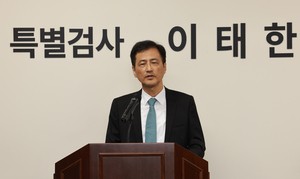
NEC special prosecutor launches first raids 10 days after taking office, targeting commission headquarters and 9 regional offices
"Securing materials related to ballot shortage and other allegations" The special prosecutor's team investigating allegations against the National Election Commission — including a ballot shortage during the June 3 local elections — launched its first coercive investigation Thursday, just 10 days after taking office, raiding the commission's headquarters and regional offices. The team said it began search-and-seizure operations at around 9:10 a.m. Thursday at the National Election Commission headquarters and nine regional offices — including those in Gyeonggi Province, Incheon, Busan and Daegu — to establish the facts surrounding the ballot shortage and related issues during the June 3 local elections. It is the first time the team has conducted a raid since its official launch on Sept. 7. One deputy special prosecutor, six prosecutors and 68 investigators were deployed to the sites, including 22 forensic specialists. "This search and seizure is aimed at securing materials related to the ballot shortage at the ninth nationwide simultaneous local elections and other matters stipulated in the National Election Commission special prosecutor act," the team said. "The special prosecutor's team will secure the necessary materials in accordance with the law and principles, and will swiftly and thoroughly verify the relevant facts."
Sept. 17, 2026
MOST READ
- 1KAIST develops high-performance bio-based adhesive using E. coli instead of petroleum
- 2Pope Leo XIV declines French honors and banquet, accepts only private meeting with Macron
- 3Daimler Truck unveils next-generation transport solutions at IAA 2026
- 4What was Rachmaninoff's performance fee? A 1928 price list tells all
- 5Samsung Biologics union's show of force backfires at the bargaining table
- 6APR says hair-loss treatment research published in international journal
-
WORLD

US warns of punishment for anyone enabling Iran's Strait of Hormuz toll scheme
-
INDUSTRY

Toyota union puts productivity first; Hyundai Motor union demands bigger share of profits
-
FINANCE

National Growth Fund to invest $531M in FuriosaAI, which rebuffed Meta's $800M takeover bid
-
INDUSTRY
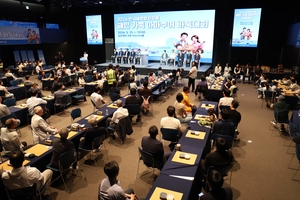
Korea Shipowners' Association holds amateur baduk tournament for Maritime Day