
- HOME
- SOCIETY
-
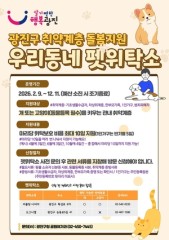
Gwangjin-gu Launches Pet Care Program for Vulnerable Residents Ahead of Chuseok
Up to 50,000 won per day in boarding fees covered, with a maximum of 10 days per pet annually; two designated facilities in the district available after prior inquiry and in-person application with required documents Gwangjin-gu is launching a neighborhood pet boarding program to help low-income residents who need temporary care for their pets during the Chuseok holiday, particularly those traveling to their hometowns. The "Woori Dongne Pet Boarding" program assists socially vulnerable residents who need a safe place to leave their pets during illness, hospitalization, financial hardship or relocation, providing temporary care for a set number of days. Ahead of the Chuseok holiday, when long-distance travel makes it difficult to bring pets along, the district is subsidizing boarding fees so residents can visit family with peace of mind. Eligible residents include those registered in Gwangjin-gu who receive basic livelihood benefits, near-poverty households, single-parent families and single-person households. The district covers up to 50,000 won ($37) per day in boarding fees, depending on the type and weight of the pet, with a maximum of 10 days per pet per year. Single-person households may receive support for up to five days per half-year. Residents wishing to apply must visit one of the designated facilities in person, bringing proof of eligibility, a copy of their ID and a copy of their pet's registration certificate. Staff will assess the pet's condition before drawing up a boarding agreement to complete enrollment. The two designated facilities are Bubbling-Nabiya (670 Ttukseom-ro, Room 201) and Dogniell (41 Neungdong-ro 5-gil, below-ground floor 1). Hours and boarding conditions may vary by facility, so residents are advised to call ahead before visiting. "Quite a few residents want to visit their hometowns for Chuseok but are worried because they have nowhere to leave their pets," District Mayor Kim Kyung-ho said. "I hope this program helps vulnerable residents set aside their worries and enjoy a warm holiday with their families."
Sept. 17, 2026
-
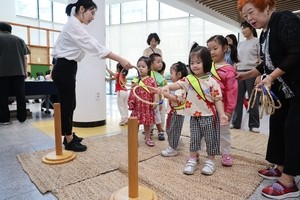
Mapo-gu District Mayor Yu Dong-gyun Joins Chuseok Celebration Bridging Generations
Mapo-gu District Mayor Yu Dong-gyun attended the 2026 community Chuseok celebration "One Family, One Chuseok" at Yeomni Community Welfare Center on Thursday morning, joining seniors and children in a holiday gathering ahead of the traditional autumn festival. The event was organized to foster neighborly bonds and help residents enjoy a warmer Chuseok. Attendees took in special holiday performances and tried their hand at traditional games, filling the venue with laughter. Yu greeted the seniors and children who came out for the occasion, watched them take part in traditional games and shared in the festive atmosphere. He also expressed gratitude to welfare center staff for their care in organizing the event for local residents. "Seeing the bright smiles of the children alongside the warm faces of the seniors makes this Chuseok feel all the richer," Yu said. "I hope everyone enjoys a healthy and happy holiday sharing warmth with their neighbors."
Sept. 17, 2026
-
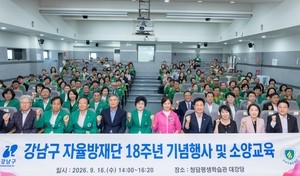
Gangnam-gu Council Marks 18th Anniversary of Volunteer Disaster Prevention Corps
The Gangnam-gu Council attended the 18th anniversary ceremony of the Gangnam-gu Volunteer Disaster Prevention Corps, held Wednesday afternoon at the main auditorium of the Cheongdam Lifelong Learning Center. The event marked 18 years of the corps' work in disaster and emergency prevention, recovery support and infectious disease response, and included capacity-building education aimed at strengthening disaster response capabilities. Council Speaker Lee Jae-jin, Operations Committee Chairman Kang Hyeon-seop, Administrative Safety Committee Chairwoman Lee In-seon and council members Park Dae-yong, Hwang Tae-hyeon and No Mi-jin attended to celebrate the anniversary and express gratitude to corps members for their efforts to make Gangnam-gu safer. The ceremony was also attended by Gangnam-gu District Mayor Kim Hyeon-gi, National Assembly member Seo Myeong-ok, Seoul city council members Min Gyeong-hui, Kang Sin-uk and Lee In-hwa, Corps Commander Shin Gil-sun, and Deputy Commanders Nam Deuk-su and Lee Hyeong-seok. The gathering included a review of the corps' activities over the past year, and 26 outstanding members who contributed to disaster prevention and response received commendations and certificates of appreciation. "Rapid climate change has made disasters harder to predict and increased the likelihood of large-scale emergencies, making proactive prevention efforts at the community level more important than ever," Speaker Lee said. "I am deeply grateful to the corps members who have dedicated themselves to keeping our community safe over the past 18 years." He added that the Gangnam-gu Council would actively support the corps so that members could carry out their work with pride and in safety. Now in its 18th year, the Gangnam-gu Volunteer Disaster Prevention Corps has 284 members and operates through two dedicated units focused on disaster relief and on-site recovery, along with 22 neighborhood-level units active across the district. In normal times, the corps conducts disaster prevention activities and public safety campaigns; when emergencies strike, members join recovery and field support operations to protect the community.
Sept. 17, 2026
-
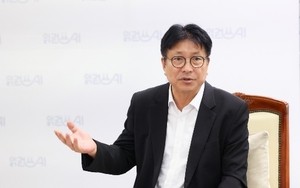
Incheon education chief urges government to scrap plan to cut local education grants
Do Seong-hun, superintendent of the Incheon Metropolitan Office of Education, has come out firmly against the government's push to overhaul the local education finance grants system, urging the government and the National Assembly to restart discussions from scratch. Do attended the 109th General Assembly of the Korean Council of Superintendents of Education, held Thursday at Sonokcam in Yeosu, South Jeolla Province, where he raised concerns about the government's proposed education finance reform and discussed ways to secure stable funding that reflects the realities of the classroom. Do pushed back strongly against the argument that education budgets should be cut because the school-age population is shrinking. "Simply reducing education budgets because student numbers have fallen is not a matter of fiscal adjustment — it is stripping our children of their right to education and their future potential," he said. He went on to say that essential spending demands in schools are in fact rising sharply, citing higher personnel costs, the need to build digital and future-education infrastructure, and the need to ease overcrowding in classrooms in new towns. "We cannot accept any reform that shakes the foundations of education finance without sufficient consensus or prior consultation with those working in schools," he said. Do then called on the government and the National Assembly to "take a hard look at the realities on the ground and reopen discussions on the current local education finance grants reform plan from the very beginning." Beyond the education finance issue, the general assembly also took up five other major challenges facing metropolitan and provincial offices of education across the country. Key agenda items included amendments to the school violence prevention law to normalize its application to sexual violence cases and revisions to the hagwon regulation law; the rationalization of special education teacher placement standards and improvements to overtime pay rules for staff on overseas official travel; and the establishment of a NEIS-linked system to improve the efficiency of school violence case processing. "We will work closely with education offices nationwide to bring about institutional improvements so that every student can learn in a safe environment," Do said.
Sept. 17, 2026
-

Chungcheong leaders unite behind bid to bring integrated power company HQ to South Chungcheong Province
Four Chungcheong governors and mayors adopt joint statement Thursday, calling the move 'a starting point for national energy policy and balanced growth' The leaders of four Chungcheong region municipalities have united behind a shared call to locate the headquarters of a planned integrated state power company in South Chungcheong Province, declaring it "by far the most suitable site." South Chungcheong Province Governor Park Soo-hyun, Daejeon Mayor Heo Tae-jeong, Sejong Mayor Jo Sang-ho and North Chungcheong Province Governor Shin Yong-han convened the inaugural Chungcheong Metropolitan Union Council on Thursday at Independence Hall in Cheonan, where they adopted a joint statement calling for the integrated headquarters to be established in South Chungcheong Province. In the statement, the four leaders said South Korea faces the urgent challenge of responding to the climate crisis and transitioning to a carbon-free power system. They said the government has announced plans to merge five state power companies into a single entity tentatively named Korea Power, and described the consolidation as "a core pillar of national energy policy that answers the demands of the times." The choice of location, they added, "goes beyond a simple relocation of a public institution — it is a critical decision that will determine the success or failure of future energy security and balanced national development." The leaders said the headquarters site "must serve as a hub capable of supplying stable electricity to the high-tech industrial belt connecting the Chungcheong region and Greater Seoul, and must be a place that can overcome the job losses and economic contraction caused by the closure of power plants." South Chungcheong Province, they said, "is by far that optimal location." The four leaders declared that establishing the integrated headquarters in South Chungcheong Province "is a national task that must be carried out without delay, reflecting the aspirations of 5.6 million people in the Chungcheong region." They jointly affirmed that locating the headquarters in South Chungcheong Province would serve as a starting point for simultaneously advancing national energy policy and achieving balanced national development. They also described it as an essential condition for realizing a "just transition" and the surest path to successfully building a state-led renewable energy ecosystem. The leaders strongly urged the government and the National Assembly to "promptly confirm the establishment of the integrated headquarters in South Chungcheong Province in keeping with the legislative intent of supporting regions affected by coal power plant closures." They pledged to use the headquarters as a catalyst to strengthen inter-regional energy cooperation across the Chungcheong area and lead South Korea's energy transition. South Chungcheong Province has been mounting an all-out campaign to secure the headquarters. Since July, Park has met in succession with the chair of the National Assembly's climate, energy, environment and labor committee, negotiators from both parties on the committee, the minister of the Ministry of Climate, Environment and Energy, and the ruling and opposition party leaders to press the case for South Chungcheong Province, while also urging the government to act through the Central-Local Cooperation Council and a meeting with the prime minister.
Sept. 17, 2026
-

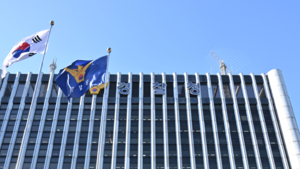
Ex-national investigation chief faces new complaint over alleged interference in Kim Byung-kee probe
Complainant says Park delayed arrest warrant request by investigation team Park Sung-joo, the former chief of the Korean National Police Agency's National Investigation Headquarters, is expected to face a prosecutors' investigation over allegations that he deliberately delayed a police probe into independent lawmaker Kim Byung-kee, the former floor leader of the Democratic Party of Korea. A former aide to Kim, identified only by the surname Kim, filed a complaint Thursday afternoon with the Seoul Central District Prosecutors' Office accusing Park of abuse of authority and dereliction of duty. The aide alleged that Park used his influence to delay the Seoul Metropolitan Police Agency's public crime investigation unit from seeking an arrest warrant against the lawmaker. The Seoul Metropolitan Police Agency sought an arrest warrant for Kim on Sept. 7 — more than a year after launching its investigation — but prosecutors rejected the application. Critics have argued that the delay in seeking the warrant caused police to miss the optimal window to secure custody of the lawmaker. In the complaint, the former aide alleged that Park "systematically obstructed and delayed the legitimate exercise of investigative authority by the Seoul Metropolitan Police Agency's investigation team, which had completed prior consultations with prosecutors and confirmed a plan to promptly seek an arrest warrant, by exploiting his position as the top investigative commander of the National Investigation Headquarters." The Seoul Metropolitan Police Agency completed preliminary consultations with the Seoul Central District Prosecutors' Office on seeking an arrest warrant in April, when Kim was last summoned for questioning. The former aide wrote in the complaint that police and prosecutors had at that point reached a shared understanding that securing custody was necessary, given the gravity of the case and concerns about destruction of evidence. "However, due to Park's intervention, the Seoul Metropolitan Police Agency's investigation team was unable to seek an arrest warrant in a timely manner, and prosecutors cited that delay as grounds for rejecting the application — resulting in the failure to secure custody of the lawmaker," the complaint stated. Park also faces allegations that he publicly intervened to halt the Seoul Metropolitan Police Agency's plan to release investigation findings on Kim's charges one by one as each was completed, thereby slowing the overall handling of the case. Park Jung-bo, who was then Seoul Metropolitan Police Agency chief, said at a press briefing in April that police would "first reach conclusions on charges where the investigation has been completed." The intent was to accelerate case proceedings by resolving finished inquiries among the 13 allegations against Kim before wrapping up the rest. Park, however, publicly broke with that position, telling reporters that "conclusions can only be drawn once the investigation into all allegations is complete." Park oversaw the investigation into Kim until his mandatory retirement on June 30. On June 8, ahead of his retirement, he told reporters that he had directed investigators to conduct additional work on areas the National Investigation Headquarters deemed in need of supplementation in connection with the Seoul Metropolitan Police Agency's preliminary findings. The former aide drew a parallel to the case of Jang Yun-gi, writing in the complaint that the Gwangju District Prosecutors' Office had indicted a senior official in that case on the logic that "the authority to direct an investigation must be exercised solely for the legitimate purpose of uncovering the truth, and must not be used to conceal organizational wrongdoing or avoid external criticism." The former aide argued that in Kim's case as well, Park had delayed investigative procedures not out of concern for legal propriety or truth-finding, but for external political reasons. Earlier, Park had already been indicted in connection with the Jang Yun-gi case — in which police were accused of conducting a shoddy investigation into the murder of a high school girl — on charges of improper investigative direction. The Gwangju District Prosecutors' Office indicted Park on Sept. 2 on charges of abuse of authority, concluding that he had directed investigators to handle Jang's alleged intent to commit sexual assault separately from the murder charge, thereby influencing the investigation team's ability to fully establish the facts of the case.
Sept. 17, 2026
-

Korea Labor Foundation shifts focus to preventive labor-management coaching, supporting 97 workplaces
Kooksoondang's contractor cooperation model serves as benchmark Foundation moves beyond financial aid to introduce on-site expert coaching Second workshop planned at Vitzrocell next month on long-hours reform The Korea Labor Foundation has overhauled its labor-management cooperation program, shifting from financial assistance to on-site coaching and conflict prevention, and has extended support to 97 workplaces. The foundation said Thursday it would hold a best-practice benchmarking workshop over two days starting Thursday, visiting Kooksoondang in Hoengseong, Gangwon Province, with representatives from workplaces participating in its 2026 Win-Win Partnership Comprehensive Support Project. Revamped this year for the first time in three years, the Win-Win Partnership project's defining feature is the full introduction of "on-site support coaching," in which experts visit workplaces directly to facilitate dialogue between labor and management. The aim is to reduce the sources of conflict in advance through direct communication on the ground, rather than responding after disputes have already broken out. Financial support has already reached its target of 100 workplaces. On-site coaching has been provided to 97 workplaces, putting the program on the verge of hitting its own 100-workplace goal. The scope of support has also expanded beyond individual workplaces to include industry- and regional-level councils. Kooksoondang, where the workshop is being held, won an excellence award at the 2021 Labor-Management Partnership Competition. The company has continued its contractor cooperation activities this year, including improving communication with suppliers and enhancing working conditions. Participants examined Kooksoondang's primary contractor-subcontractor cooperation model, its approach to labor-management communication, and its record of improving working conditions. On Friday, the program will feature sessions on sharing best practices in workplace labor culture and strengthening conflict-resolution capabilities. Representatives from participating workplaces will discuss ways to bridge differences between labor and management and design preventive partnership frameworks suited to their individual workplace conditions. Park Jong-pil, secretary-general of the Korea Labor Foundation, said the key to breaking through gridlock on the ground is "a partnership that accepts the other side as they are," adding that "efforts are needed to create a space where labor and management can sit down and talk, and to start by finding even small areas of common ground." The foundation plans to hold a second benchmarking workshop next month at Vitzrocell, sharing the company's experience using flexible work arrangements to reduce long working hours. Vitzrocell received the presidential award at the 2024 Labor-Management Culture Grand Prize.
Sept. 17, 2026
-

Man threatens middle schoolers with toy knife after they ask him to use earphones
A man in his 30s has been taken in for questioning after threatening three middle school students with a toy rubber knife in Incheon. Incheon's Nonhyeon Police Station is investigating the man, identified only by his surname initial A, on charges of intimidation, according to Yonhap. A is accused of brandishing a toy rubber knife at three middle school students near a middle school in Nonhyeon-dong, Namdong-gu, Incheon, at around 7:45 p.m. Monday. A had been playing music loudly at the time, and the incident occurred after the students asked him to use earphones. After the students reported the incident, police tracked A down using CCTV footage and brought him in voluntarily Wednesday. Police said they plan to investigate the full circumstances of the case. The charges against A may also change as the investigation proceeds, they added.
Sept. 17, 2026
-
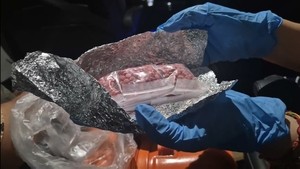
30 arrested in W6b Southeast Asia drug smuggling ring
6 billion won worth of meth, yaba seized Drugs hidden in food packaging, cosmetics containers 17 detained; Interpol red notices issued for 3 overseas ringleaders Police arrested 30 people in connection with three separate drug smuggling and distribution cases involving approximately 6 billion won ($4.39 million) worth of narcotics smuggled into South Korea from Cambodia, the Philippines, Thailand and other parts of Southeast Asia. The Seoul Metropolitan Police Agency Metropolitan Investigation Unit announced Thursday that it had booked all 30 suspects — seven smugglers, 13 distributors and 10 users — on charges including violations of the Narcotics Control Act, and detained 17 of them. Seized in the operation were 1.25 kilograms of methamphetamine, 500 grams of ketamine, 2,000 yaba tablets and 500 milliliters of etomidate, with a combined street value of about 6 billion won. Police also recovered 27.45 million won in criminal proceeds. The largest of the three cases involved methamphetamine and ketamine. A suspect in his 40s, identified only as A, is accused of recruiting couriers via social media at the direction of an overseas drug dealer based in Cambodia, then smuggling 1.25 kilograms of methamphetamine and 500 grams of ketamine into Incheon International Airport from Cambodia, the Philippines and Thailand. A total of 25 people were arrested in that case — five smugglers, 10 distributors and 10 buyers and users — and 12 were detained. The group concealed drugs inside sunflower seed packets or on their bodies. In July last year, 800 grams of methamphetamine was divided among eight sunflower seed packets, placed in shopping bags and handed off between smugglers in front of Juan Station in Incheon's Michuhol-gu. "One suspect concealed drugs on their body, using tape to secure them to the groin or hiding them inside underwear," a police official said. Distribution within South Korea relied on a "dead drop" method, in which drugs were hidden at designated locations for buyers to retrieve. "Distributors were to receive 30,000 won per delivery, while smugglers were promised 2 million to 3 million won per run — but in most cases they did not receive the full amount agreed upon," the official said. In a separate yaba case, a Thai national in his 30s identified as B is accused of receiving 2,000 yaba tablets smuggled into the country by an overseas Thai ringleader, concealing them in snack boxes and distributing them to Thai nationals living in South Korea. All three distributors arrested in the case are Thai nationals — B is in his 30s and the other two are in their 20s — and all three were detained. The overseas ringleader is believed to be a Thai national in his 40s. After entering the country, the yaba was distributed via dead drops in Jeungpyeong, North Chungcheong Province, and other locations. One Thai suspect, who was in the country illegally, hid yaba at a specific location in Jeungpyeong and was arrested by undercover investigators while fleeing the scene on a motorcycle. In the etomidate case, a suspect in his 40s identified as C is accused of agreeing to a proposal from an overseas drug dealer based in Thailand, recruiting a junior acquaintance as a courier and smuggling a total of 1,000 milliliters of etomidate into Incheon International Airport by concealing it in cosmetics containers. Both smugglers were detained. "The crime was carried out in two separate runs, and 500 milliliters of etomidate was intercepted during the second," a police official said. The methamphetamine-ketamine and yaba investigations were launched based on intelligence about Southeast Asia-originating drug smuggling and distribution provided by the National Intelligence Service. Police cracked the etomidate case by sharing their own intelligence with customs authorities, leading to the suspects' interception at the point of entry. Police have issued Interpol red notices for three overseas ringleaders and are tracking the identity and whereabouts of one additional ringleader. A tipster in the etomidate case received a reward of 10 million won. "We plan to pursue the arrest and repatriation of overseas ringleaders and strengthen cooperation with relevant agencies, including the National Intelligence Service and customs authorities, to block the flow of foreign narcotics into the country," said Hwang In-gi, chief of Drug Crime Investigation Section 2 at the Seoul Metropolitan Police Agency Metropolitan Investigation Unit.
Sept. 17, 2026
-

Seoul city government calls appellate court ruling on Namsan gondola 'unacceptable'
Seoul High Court upholds cancellation of urban management plan change needed for gondola project Seoul says it will fight ruling at Supreme Court and push for revision of enforcement decree The Seoul Metropolitan Government on Thursday condemned a Seoul High Court ruling that struck down its urban management plan change for the Namsan gondola project, calling it "a ruling that leaves unchecked a private monopoly entrenched for 60 years and the serious mobility hardships faced by citizens." The city said it would review filing an appeal with the Supreme Court and vowed to push with full force for a revision of the enforcement decree under the Act on Urban Parks and Green Areas — the key regulatory hurdle to resuming construction. "This ruling is an unacceptable decision that fails to adequately reflect the procedural legitimacy and legal requirements the city observed throughout the urban management plan process," the city said, adding that the plan change "was a lawful administrative measure that met the requirements for modifying an urban natural park zone." The city said Namsan is an area where urban natural park zones and urban planning facilities — parks — overlap, and that integrated, systematic management is essential. "Revising the urban management plan to achieve that is an indispensable administrative step for the active development and management of urban parks," it said. "The claim that such a plan change is impossible undermines the very foundation of the park management system." The city also said the court's interpretation — that a park must lose its green space and leisure functions before it can be redesignated as a facility park — was self-contradictory, amounting to saying "a park must cease to function as a park before it can be designated as one." "It is deeply regrettable that Seoul's public-interest administrative discretion, aimed at relieving the hardships of about 12 million annual visitors and people with mobility difficulties, has not been recognized," the city said. "If the gondola project collapses, the damage will fall entirely on citizens, and we will carefully review and pursue an appeal to the Supreme Court." The city also said delays by the central government in completing follow-up procedures were "a major factor obstructing the restoration of citizens' right to mobility and prolonging their inconvenience," and urged the Ministry of Land, Infrastructure and Transport to swiftly revise the enforcement decree. The ministry last June announced a proposed revision to the enforcement decree under the Act on Urban Parks and Green Areas that would ease the 12-meter height restriction on track and disaster-prevention structures within urban natural park zones. The city said that once follow-up procedures for the proposed revision are completed, the project can proceed legally regardless of the litigation outcome, and it plans to devote all efforts to establishing the legal foundation through the decree revision. Kang Seok, head of the Seoul Metropolitan Government's Balanced Development Headquarters, said the ruling "failed to adequately reflect the policy judgment Seoul has pursued to guarantee citizens' right to mobility and serve the public interest." He added: "If the project is halted, we will not only suffer economic losses but also lose the opportunity to grow as a global city. We will carefully review an appeal to the Supreme Court and do our utmost to protect citizens' mobility rights and return Namsan to its citizens." Meanwhile, Seoul High Court's Administrative Division 7, presided over by Chief Judge Kwon Sun-hyung, ruled Thursday in favor of the plaintiffs — as the first-instance court had — in a suit brought by Korea Ropeway Industry Co., the operator of the Namsan cable car, against the Seoul Metropolitan Government. Korea Ropeway Industry and the other plaintiffs filed suit in September 2024 challenging the city's decision to rezone the project site from an urban natural park zone to an urban planning facility park in order to install intermediate support pillars standing 30 meters or more on Namsan for the gondola's operation. The Namsan cable car currently operates with two 48-passenger cabins. The city plans to build a gondola system using 25 ten-passenger cabins capable of transporting more than 2,000 people per hour to improve visitor accessibility. The first-instance court ruled in December to cancel the city's decision, finding it did not meet the standards for changing or lifting an urban natural park zone designation under the enforcement decree of the Act on Urban Parks and Green Areas. Construction on the Namsan gondola has been suspended since October 2024, when a court accepted an injunction request filed by Korea Ropeway Industry and others.
Sept. 17, 2026
-

Court blocks Seoul's Namsan gondola project in second ruling
A court has again ruled against the Seoul Metropolitan Government's Namsan gondola project, blocking it for the second time on appeal.
Sept. 17, 2026
-
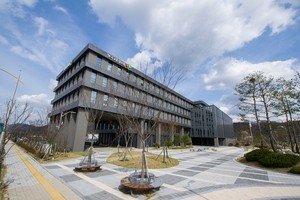
Korea Employment Information Service donates goods to Cheongju mother-child shelter ahead of Chuseok
Donation worth 1 million won delivered to Cheongju Haeoruem Village Agency pledges continued social contribution including career and employment support The Korea Employment Information Service said Thursday it visited Cheongju Haeoruem Village, a mother-child protection facility in Cheongju, North Chungcheong Province, and delivered donated goods worth 1 million won ($731) ahead of the chuseok holiday. The event was organized to provide practical assistance to single-parent families and promote a culture of sharing within the local community. The handover ceremony was attended by Korea Employment Information Service President Lee Chang-su, labor union chairman Lee Dong-hwan and staff from Cheongju Haeoruem Village. Earlier this year, the agency held two sessions at the facility offering career counseling, employment support and job-stress consultations for residents. It has also run a youth employment support program at Chungnam National University and a local study-room support project. The agency plans to hold a parenting lecture concert in the innovation city Oct. 21-22. "I hope this brings a small measure of comfort and encouragement to the mothers raising children on their own, and to their children," President Lee said. "We will continue to grow alongside the local community through sustained social contribution activities."
Sept. 17, 2026
-
Hansol Paper, partner firms boost welfare benefits from 400,000 won to W1m
Hansol Paper's Cheonan factory builds mutual-growth council with three contractors Youth hiring, retirement age extension pursued; local health support also provided Dong-A Pharmaceutical links shop-floor feedback directly to collective bargaining Hansol Paper's Cheonan factory and its in-house contractors are working to raise welfare benefits for subcontractor workers from 400,000 won ($292) to 1 million won through a joint labor welfare fund — a 2.5-fold increase. The initiative is part of a broader co-prosperity model in which the primary contractor, subcontractors, local government and universities work together to address labor shortages and an aging workforce. The Korea Labor Foundation said Thursday it held the sixth workplace innovation case-sharing forum of 2026 at the O&City Hotel in Cheonan, South Chungcheong Province, under the theme of strengthening workplace innovation capacity through primary-subcontractor co-prosperity partnerships and regional social dialogue. The forum featured workplace innovation consulting cases from Hansol Paper's Cheonan factory and Dong-A Pharmaceutical's Cheonan factory. Hansol Paper's Cheonan factory joined the consulting program as part of a consortium with three in-house contractors — Gaon ST, Daol-on and Huiwon Tech. While the paper industry is characterized by tight operational links between primary contractors and subcontractors, it faces mounting challenges including an aging workforce, difficulty recruiting young workers and growing reliance on foreign labor. High turnover among new hires due to high-heat and shift-work conditions, and the resulting loss of skilled workers, were also identified as shared problems. Hansol Paper and its contractors expanded their existing safety-and-health-focused consultation structure into a broader "primary-subcontractor co-prosperity council" that also addresses grievance handling, subcontractor worker welfare and environmental, social and governance issues. Regional labor-management-civic bodies and related institutions also joined the effort. One contractor hired a young graduate from a local university's contract-based department and is preparing to file regulatory amendments for a continued employment system for older workers, including an extended retirement age. Another contractor received support for special health screenings and follow-up care for its workers through a local health center. The parties also designed an operational plan to use the joint labor welfare fund to raise subcontractor worker benefits 2.5 times, from 400,000 won to 1 million won. Dong-A Pharmaceutical's Cheonan factory has maintained cooperative labor-management relations without a single labor dispute in the more than 50 years since its union was established. Through this round of consulting, the factory built a communication system linking a permanent feedback channel, monthly shop-floor meetings with union delegates and an annual member survey. Procedures were also established to channel grievances and suggestions collected on the shop floor through a grievance committee, a labor-management council and collective bargaining. Rewards for outstanding proposals were strengthened, and the suggestion system was tied to the organization's key performance indicators so that worker input translates into tangible improvements on the factory floor. Labor and management formed an ESG activities task force and extended their cooperation into the wider community, donating 5,000 bottles of Bacchus to South Chungcheong Province's mobile worker support center in April. On the strength of these results, Dong-A Pharmaceutical's Cheonan factory was named an outstanding labor-management culture company this year. Korea Labor Foundation Secretary-General Park Jong-pil said the foundation would work to spread a workplace innovation model in which labor, management, primary contractors, subcontractors and local communities join forces to solve the challenges companies face.
Sept. 17, 2026
-
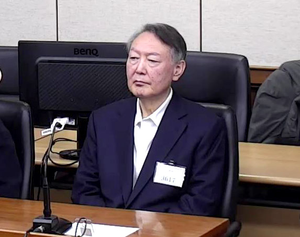
Yoon indicted without detention over failure to report wife's luxury bag
Prosecutors drop election law charges over Kim Keon Hee's alleged stock manipulation involvement Prosecutors filed additional charges against former President Yoon Suk Yeol on Thursday, alleging he failed to report that his wife, Kim Keon Hee, had received a luxury handbag — a disclosure required under anti-graft law. The Seoul Central District Prosecutors' Office Anti-Corruption Investigation Unit 3 indicted Yoon without detention on charges of violating the Act on the Prohibition of Improper Solicitation and Provision of Money and Valuables, commonly known as the Kim Young-ran Act. According to prosecutors, Yoon was aware that Kim had received a Dior handbag from Pastor Choi Jae-young but failed to fulfill his legal obligation to report the gift. Kim had earlier received a Chanel cosmetics set from Pastor Choi in June 2022 and the Dior bag in September of the same year. Prosecutors had initially declined to indict Kim in October 2024, ruling that the bag had no connection to presidential duties. A special prosecutor's team investigating Kim Keon Hee, led by Special Prosecutor Min Joong-ki, reopened the case but was unable to conclude it within its mandate. A special investigative unit under the Korean National Police Agency, which took over the case, decided in June not to refer Kim on bribery charges but forwarded Yoon to prosecutors on suspicion of violating the Kim Young-ran Act. Prosecutors said they weighed Pastor Choi's courtroom testimony and a separate court's finding — in Kim's case involving allegations of brokerage corruption — that a connection to official duties existed. On that basis, they concluded that Kim's receipt of the Dior bag met the threshold for duty-related gifts under the Kim Young-ran Act, and that Yoon had been aware of this yet failed to report it. Prosecutors separately declined to indict Yoon over statements he made during the presidential campaign denying that Kim had been involved in stock price manipulation. The Central District Prosecutors' Office Public Investigation Unit 2 dropped the Public Official Election Act charge of spreading false information, finding insufficient grounds for the allegation. Yoon had faced allegations that, between October 2021 and February 2022 — while he was a presidential candidate — he publicly stated that Kim had no involvement in allegations of share price manipulation at Deutsch Motors, with the intent of winning the election. Police, who received the case from the Kim Keon Hee special prosecutor's team, forwarded it to prosecutors in July after concluding the charges were substantiated. Prosecutors decided not to indict, noting that Yoon's statements primarily concerned Deutsch Motors share transactions from January through May 2010 — a period distinct from the transactions for which Kim was convicted of violating the Capital Markets Act on appeal in October 2010. Prosecutors also found that most of the transactions occurred before Yoon and Kim's marriage, and that evidence was insufficient to show Yoon had direct knowledge of the relevant facts or had reviewed related materials. The January–May 2010 Deutsch Motors share transactions fall outside the scope of the stock manipulation charges brought by the Kim Keon Hee special prosecutor.
Sept. 17, 2026
-
Court orders man who posted fake Jeju airport bomb threat to pay police deployment costs
A man who posted a fake bomb threat online has been ordered to pay for the police resources wasted in response. According to police, the Jeju District Court ruled on Sept. 8 that the man, identified only as A, must pay 22.77 million won ($16,600) in damages to the state, upholding a civil lawsuit police filed against him. A had posted messages on an online community six times in August 2023 threatening to bomb Jeju International Airport and other locations. Police deployed a total of 571 officers over 18 days to maintain security and conduct searches at the airport and surrounding areas. They subsequently filed a lawsuit seeking compensation for 32.53 million won in expenses the state had unnecessarily incurred, including overtime pay, dispatch allowances, fuel costs and business travel expenses. The court found that the unnecessary costs would not have arisen but for A's intentional unlawful act, and that those costs exceeded the scope of expenses normally generated by routine crime prevention and investigative activities. Since the public intimidation law — which punishes threats directed at unspecified members of the public — took effect in March last year, police have pursued both criminal charges and civil damages claims against those who post fake bomb and murder threats, signaling a tougher stance. "Going forward, police will actively pursue damage claims to deter public intimidation that causes public anxiety, social disorder and unnecessary waste of law enforcement resources," a Korean National Police Agency official said.
Sept. 17, 2026
-
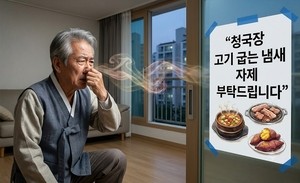
'What am I supposed to do about roasted sweet potato smell at 10 p.m.?' Apartment notice stirs debate
Notice posted in apartment complex spreads online Netizens say: 'Are we not allowed to eat sweet potatoes in our own homes?' A notice posted in an apartment complex asking neighbors to manage cooking odors — citing the smell of fermented soybean paste stew in the evening and roasted sweet potatoes late at night — has gone viral online. On Saturday, a photo of the notice, posted on an apartment bulletin board, spread across online communities and social media alongside the caption: "Are we really in an era where you get complaints for making fermented soybean paste stew in the evening?" The resident who wrote the printed notice opened with a polite appeal, saying they wanted to raise the matter "carefully." "Recently, strong cooking smells have been coming into my home during the evening hours, causing significant disruption to my daily life," the resident said. "Particularly around 8 p.m., smells from fermented soybean paste stew, grilling meat and other strong foods drift in through the balcony and windows, making it nearly impossible to open them for ventilation in the living room and bedroom." The notice continued: "I don't mind you enjoying roasted sweet potatoes, but what am I supposed to do about the smell still coming in at 10 p.m.?" "Of course everyone has the right to enjoy delicious food," the resident said, "but since this is an apartment complex where we all live together, I would be grateful if everyone could pay a little more attention to ventilation and odor management while cooking." The notice concluded: "I hope we can all be a little more considerate of each other so that everyone can live comfortably." The person who shared the photo online said they understood that the smell could be unpleasant for whoever was on the receiving end, but added: "People still have to cook and eat, don't they?" Most commenters sided with the cooking neighbors. "Isn't 8 p.m. dinnertime?" one wrote. Others chimed in: "If you can't make fermented soybean paste stew, grill meat or eat sweet potatoes, is it even a home?" "Now people are filing complaints over food smells?" "If you hate cooking smells, live in a detached house." "This is nitpicking over nothing." A few commenters, however, expressed sympathy for the notice's author. "You don't know what it's like to frantically shut your windows until you've been through it yourself," one wrote.
Sept. 17, 2026
-
Patent and trademark filings hit record highs on surge in individual, first-time applicants
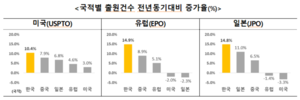
Patents up 29.2%, trademarks up 18.6% in first half of this year; individual filings soar 134% Domestic patent and trademark filings broke all-time records in the first half of this year, driven by a sharp rise in applications from individuals and first-time filers. The surge was not limited to the domestic market — Korean applicants also posted significant increases in patent filings at major intellectual property offices abroad. Patent and trademark filings reach record highs amid expansion in computer-related applications According to industrial property filing trends released by the Korean Intellectual Property Office on Thursday, domestic patent filings totaled 141,259 cases in the first half of 2026, while trademark filings reached 180,787 cases — both all-time highs. Compared with the same period last year (109,322 and 152,419 cases, respectively), patent filings rose 29.2 percent and trademark filings rose 18.6 percent. By sector, strong performance in advanced industries such as semiconductors and AI translated into broader filings in the computer, software and information service fields. In patents, the share held by "computer programming, systems integration and management" — the top category with 20,503 filings — expanded from 10.5 percent in the first half of last year to 16.0 percent in the first half of this year. In trademarks, filings under "computer and science and technology services" (Class 42) reached 9,635 cases, up 64.2 percent from 5,867 cases in the same period last year. Individual and first-time filers drive patent growth Individual patent filings reached 33,819 cases in the first half of this year, up 134.0 percent from 14,454 cases in the same period last year, and individuals' share of total patent filings rose from 13.2 percent to 23.9 percent. Particularly notable was the jump in direct filings — those submitted without an agent — among individual applicants: 22,559 cases, with the share of direct filings among individual applications climbing sharply from 28.8 percent in the first half of 2023 to 66.7 percent in the first half of 2026. The office attributed the trend in part to the growing use of generative AI, which has lowered barriers to filing directly. First-time filers — those submitting a patent application for the first time — also posted strong growth, with 25,726 cases, up 74.2 percent from 14,769 cases in the same period last year, far outpacing the overall patent filing growth rate of 29.2 percent. First-time filers' share of all applicants rose 4.7 percentage points to 36.9 percent from 32.2 percent. In trademarks, first-time filer applications reached 69,134 cases, up 31.8 percent from 52,446 cases a year earlier. Korean applicants also post sharp increases at major overseas patent offices Patents filed by Korean nationals at the five major intellectual property offices — collectively known as the IP5 — totaled 165,567 cases, up 30.1 percent from 127,247 cases in the same period last year. Filings rose across all major jurisdictions compared with a year earlier: up 10.4 percent in the United States, 14.9 percent in Europe, 14.8 percent in Japan and 1.8 percent in China. Growth at the US Patent and Trademark Office, the European Patent Office and the Japan Patent Office was particularly pronounced, outpacing increases by applicants of other nationalities. The office said the trend reflects the continued expansion of Korean companies into overseas markets. Jung Jae-hwan, director general of the intellectual property information bureau at the Korean Intellectual Property Office, said the first half of 2026 saw a significant increase in patent and trademark filings, with the applicant base broadening, particularly among individuals and first-time filers. "We will closely monitor filing trends and work to ensure that the increase in applications translates into the securing of high-quality intellectual property rights," he said.
Sept. 17, 2026
-

Public Procurement Service promotes regional innovators at ENTECH 2026
Agency engages 16 innovative firms through one-on-one consultations, procurement guidance programs South Korea's Public Procurement Service is strengthening its field-based support system for regional innovators, building a pipeline that runs from identifying promising local firms to linking them with public demand, facilitating purchase consultations and ultimately securing market access. The agency visited the innovative procurement pavilion at the 2026 International Environment and Energy Industry Exhibition, known as ENTECH 2026, at Busan's BEXCO on Wednesday to inspect its on-site efforts to help innovative products reach public-sector buyers. The visit aimed to hear directly from regional companies about their challenges and explore ways to help their technologies and products improve public services — and to use public procurement as a springboard for entering new markets. ENTECH 2026 marks its 20th edition this year and is one of South Korea's leading trade fairs for the environment and energy sectors. The exhibition runs from Wednesday through Friday at BEXCO in Busan, featuring 200 companies from seven countries across 450 booths. Business programs on offer include export consultations and public procurement meetings designed to help environment and energy firms expand both domestically and abroad. The Public Procurement Service is operating an innovative products pavilion at the exhibition under the supervision of its Busan regional office, showcasing outstanding regional innovations to public institutions and visitors through a promotional area and booths for 16 participating companies. The pavilion is hosting one-on-one purchase consultations between innovative firms and procurement officers from public institutions, alongside a public procurement guidance program to help companies navigate the procurement market and make use of available systems. The agency expects the initiative to give regional innovators a direct window into public demand and a broader path to market. Deputy Commissioner Kang Seong-min of the Public Procurement Service toured the pavilion on Wednesday, examining the products and technologies on display and listening to the concerns and suggestions of company representatives. "There are many innovative companies in the regions with excellent technology, but a good product needs the bridge of public procurement before it can actually be used in the market," Kang said. "We will strengthen tailored market-access support that reflects the voices from the field, so that regional innovative companies can find their first market through public procurement and continue to grow."
Sept. 17, 2026
-

Warning issued over counterfeit weight-loss drugs smuggled into South Korea
Korea Customs Service steps up screening of harmful obesity drugs; seizures through August reach 5,030 cases — 4.2 times last year's full-year total Consumers are being urged to exercise extra caution as the domestic influx of counterfeit versions of well-known weight-loss drugs — including Mounjaro and Wegovy — has risen sharply in recent months. The Korea Customs Service announced Thursday that it has tightened customs inspections across major entry channels — including traveler baggage, express courier shipments and international mail — to block the import of harmful counterfeit obesity drugs and prevent illegal smuggling. Customs seizures of weight-loss drugs surged from 4 cases in 2024 to 1,189 in 2025, and have already reached 5,030 cases through August this year — 4.2 times last year's full-year total. Over the past three years, customs authorities have seized a combined 6,223 cases of weight-loss drugs. By entry channel, international mail accounted for 4,961 cases, traveler baggage for 1,232 and express courier for 30. Seizures of illegal pharmaceuticals brought in from abroad extend well beyond weight-loss drugs. The Korea Customs Service has intercepted about 60,000 cases of illegal medicines over the past three years, including roughly 21,000 cases through August this year. The Korea Customs Service works with the Ministry of Food and Drug Safety to manage customs clearance for pharmaceuticals entering the country from abroad, in order to protect public health. Under current rules, harmful drugs that the Ministry of Food and Drug Safety has flagged to the Korea Customs Service may only clear customs if they meet designated import requirements, such as holding an exemption recommendation for import-requirement verification. Mounjaro and Wegovy imported from overseas also fall under the category of harmful drugs flagged by the ministry. Customs officers screen such items through X-ray scanning and physical inspection; products that fail to meet the required import conditions are held from clearance and then returned or destroyed. When violations go beyond a simple failure to meet import requirements — such as confirmed smuggling — the agency pursues investigation and punishment in accordance with relevant laws. The Korea Customs Service operates a border-level interception system that links on-site customs inspections with scientific analysis conducted by the Central Customs Laboratory, responding to the growing variety of narcotics and other public-safety hazards entering the country. The Central Customs Laboratory scientifically analyzes the composition and characteristics of items seized or held by customs, supporting clearance decisions, enforcement operations and criminal investigations. As part of that analytical work, the Central Customs Laboratory teamed up with researchers at Chung-Ang University's College of Pharmacy to analyze Mounjaro products originating from India that had been intercepted at the border — examining active-ingredient content, impurities and other product characteristics. The laboratory used an analytical method established by the Ministry of Food and Drug Safety's National Institute of Food and Drug Safety Evaluation to measure the content of tirzepatide, Mounjaro's active ingredient. A Chung-Ang University research team — Kim Su-hyeon, Choi Jong-woo and Byeon Su-bin — focused on impurities, a critical aspect of pharmaceutical quality control, and conducted a detailed analysis. Inconsistent active-ingredient levels, unidentified impurities detected; rights holder confirms products are counterfeit The analysis found wide variation in active-ingredient content across products, and multiple unidentified impurities were detected in some. Taken together, the findings indicate that the Mounjaro products examined cannot be considered to reliably meet pharmaceutical quality and safety standards. The products were also found to have been transported without a cold-chain distribution system — the refrigerated logistics required to maintain drug quality during distribution. Mounjaro must in principle be refrigerated at 2 to 8 degrees Celsius, making proper quality management essential not only during manufacturing but also throughout transport and storage. Na Dong-hee, a professor at Chung-Ang University's College of Pharmacy, said the analysis found inconsistent active-ingredient levels across products as well as unidentified impurities. "Injectable drugs in particular require strict manufacturing and quality controls — not only for active ingredients and impurities but also for sterility assurance," Na said. "Purchasing and using products of unverified origin and quality on one's own can be dangerous." Lee Jin-hee, director general of the Korea Customs Service's Customs Clearance Bureau, said the agency would strengthen inspections across all entry channels — traveler baggage, international mail and express courier — as illegal import attempts involving weight-loss drugs and other pharmaceuticals continue to increase, and would respond firmly to smuggling and other illegal activities. "We will also work more closely to link on-site customs inspections with the specialized analysis of the Central Customs Laboratory, so that narcotics, illegal pharmaceuticals and other items that threaten public health and safety are thoroughly blocked at the border before they can enter the country," Lee said.
Sept. 17, 2026
-
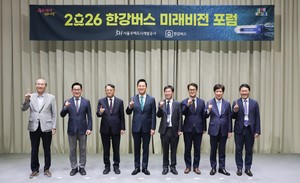
Han River Bus marks first anniversary of service
Seoul Mayor Oh Se-hoon (fourth from left) and other guests pose for a photo at the 2026 Han River Bus Future Vision Forum held Thursday morning at Seoul City Hall in Jung-gu, Seoul.
Sept. 17, 2026
MOST READ
- 1KAIST develops high-performance bio-based adhesive using E. coli instead of petroleum
- 2Pope Leo XIV declines French honors and banquet, accepts only private meeting with Macron
- 3Daimler Truck unveils next-generation transport solutions at IAA 2026
- 4What was Rachmaninoff's performance fee? A 1928 price list tells all
- 5Samsung Biologics union's show of force backfires at the bargaining table
- 6APR says hair-loss treatment research published in international journal
-
WORLD

US warns of punishment for anyone enabling Iran's Strait of Hormuz toll scheme
-
INDUSTRY
Toyota union puts productivity first; Hyundai Motor union demands bigger share of profits
-
FINANCE
National Growth Fund to invest $531M in FuriosaAI, which rebuffed Meta's $800M takeover bid
-
INDUSTRY
Korea Shipowners' Association holds amateur baduk tournament for Maritime Day