
- HOME
- SOCIETY
-
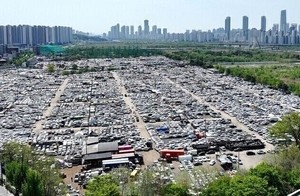
Large apartment complex takes shape on site of Songdo used-car export hub as support ordinance clears council
Urban development project near Songdo amusement park gains momentum Relocation of industrial hub and urban redevelopment emerge as key linked challenges A large-scale apartment and urban development project in Incheon's Yeonsu-gu is moving closer to reality after the Incheon Metropolitan Council passed an ordinance supporting the relocation of the used-car export complex in Oknyeon-dong — long considered the biggest obstacle to redeveloping the area. The site near Songdo amusement park has served as South Korea's largest used-car export hub, but the complex has drawn persistent complaints over illegal parking, noise and dust that have steadily degraded the surrounding residential environment. Incheon city has been pursuing a comprehensive urban development plan to transform the site into a large residential town combining apartment housing with commercial and cultural facilities. At its fifth plenary session of the 313th extraordinary session on Friday, the Incheon Metropolitan Council passed the "Ordinance on the Promotion and Support of the Used-Car Export Industry in Incheon," sponsored by Democratic Party of Korea lawmaker Jeong Bo-hyeon of Yeonsu-gu District 3. With the ordinance now establishing the institutional groundwork for relocating the export complex, long-delayed plans to develop the site and supply a large volume of housing are expected to gain significantly more traction. The removal of the blighted open-air storage yards and the construction of a modern residential complex are expected to substantially improve living conditions across the Oknyeon-dong area. Several challenges must still be resolved before the urban development project — including the large apartment supply — can proceed smoothly. Because the used-car export industry plays a significant role in Incheon's local economy and logistics, a replacement site — envisioned as an eco-friendly, state-of-the-art used-car export cluster — must be completed on schedule before existing operators can be cleared from the Oknyeon-dong site. Should construction of the replacement complex be delayed, existing operators could refuse to relocate or continue occupying the site, potentially disrupting the ground-breaking and overall development timeline. Experts also note that plans for expanding the surrounding road network and providing schools, parks and other public infrastructure on time must be carefully coordinated to accommodate the influx of residents a large apartment complex would bring. "The passage of the export complex relocation ordinance opens the possibility of creating a large-scale residential town, as the city of Incheon has envisioned," an Incheon Metropolitan Council official said.
Sept. 18, 2026
-

Officer indicted for leaking police secrets to Telegram drug ring in exchange for arrest tips
A serving police officer has been indicted on charges of leaking confidential investigative information to the leader of a large Telegram-based drug trafficking organization and receiving tips on rival dealers in return to pad his own arrest record. The government's joint drug crime investigation headquarters announced Friday that Officer A had been indicted without detention on charges including disclosure of official secrets, aiding a criminal organization and bribery. Prosecutors had earlier sought a warrant to detain A, but the court rejected the request, finding no risk of flight. A is accused of leaking internal police secrets — including the criminal records and arrest histories of applicants for "dropper" (courier) positions — to the operator of "Maseokdo," a Telegram drug sales channel, from October 2024 through June this year. In exchange for the information, A allegedly received from Maseokdo details on rival drug trafficking groups and couriers who had betrayed the organization, which he used to fraudulently build up his investigative record. Prosecutors believe the Maseokdo organization was able to evade police surveillance and expand a large-scale drug distribution network by acting on the information A supplied. A also faces charges of accepting bribes by approaching drug offenders he had arrested and offering to write letters attesting to their cooperation with investigators — documents that can help secure reduced sentences at trial. He is also accused of coercing those offenders into paying 7 million won ($5,070) on his behalf, money he claimed was needed to fund undercover drug operations. Maseokdo, the channel A colluded with, had more than 3,300 members and is believed to have distributed drugs with a street value of 2.6 billion won. The channel's operator, a man in his 20s who processed 5.8 billion won in drug payments through cryptocurrency, was indicted in custody earlier last month.
Sept. 18, 2026
-

Yeosu World Islands Expo rebuffs 'poor value' criticism over soy-marinated crab meal
Organizing committee says it will 'continuously improve shortcomings' Vows to raise production quality of traditional island performances The organizing committee of the Yeosu World Islands Expo said it will "humbly accept visitors' feedback and move immediately to make improvements," addressing a series of controversies surrounding the event. The expo, which opened Sept. 5, drew online criticism in its early days over the quality of its food offerings and the production value of its performances. In a press release issued Friday, the committee said it plans to diversify the banchan, or side dish, lineup at on-site restaurants, conduct visitor satisfaction surveys and "continuously address shortcomings." It also pledged to strengthen the production quality of traditional regional performances "to match the expectations of our audience." The committee rebuffed criticism that a 14,900-won ($11) soy-marinated crab set meal was poor value for money, saying the dish used blue crabs from Yeonpyeong Island — not the smaller stone crabs — and was priced 3,000 won cheaper than what the same vendor charges for the same portion in Seoul. However, it added that "if visitors felt dissatisfied, it is the committee's responsibility to improve." The controversy erupted after a YouTuber posted a video showing the set meal they had ordered at a restaurant inside the expo grounds, sparking widespread criticism that the meal was underwhelmingly assembled for its price. The video showed a reasonably sized portion of soy-marinated crab, but the accompanying items — soup, kimchi, macaroni salad and a sheet of dosirak seaweed — drew complaints for looking sparse. In response, the committee conducted a full inspection of all restaurants at the venue and instructed them to expand their side dish offerings. It also said it would stagger cooking volumes according to demand throughout the day to maintain food quality, and carry out ongoing visitor satisfaction surveys to improve service. On the controversy over a performance of "Geomundo Baetnnorae" — a traditional boat song — staged on a one-ton truck draped in cloth to resemble a vessel, the committee said the show was "a program promoted as a local government project to introduce the traditional culture of island communities" and was not directly organized by the committee itself. It nonetheless promised to "reinforce the production elements" of the performance. The performance, staged Tuesday at an open-air venue, drew mockery as a "half-hearted show" after the truck drove around while performers in the cargo bed mimed rowing. Geomundo Baetnnorae is a labor song that fishermen on Geomundo Island sang during anchovy fishing, and was designated an intangible cultural heritage of South Jeolla Province in 1972. The performers were not professional artists but residents of Geomundo Island, many of them elderly heritage bearers in their 70s or older. The committee's implicit message was that audiences should be understanding: despite the modest staging, the performers were aging tradition-keepers, and the show was part of a local government-linked program to introduce island culture. The committee said it agrees that "shortcomings must be corrected and inconveniences addressed," but urged the public not to "judge the efforts of people working hard on the ground, or the entirety of the culture islands have preserved, based solely on a few scenes circulating online." It added that merchants and island residents taking part in the expo "are working hard to share their local food and culture," and asked the public to take in the full picture of what the event has to offer.
Sept. 18, 2026
-
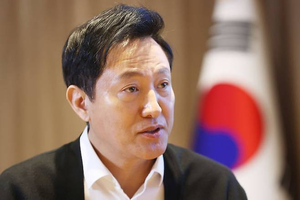
Oh Se-hoon hits back at Lee Jae Myung, says housing prices began rising when president took office
"Instead of answering how to fix flawed real estate policy, he just blamed Oh Se-hoon" "The president's mind needs a full reset before citizens' lives collapse further" Seoul Mayor Oh Se-hoon on Friday rebuffed President Lee Jae Myung after Lee cited the previous administration and Oh as factors behind the sharp rise in Seoul real estate prices. Oh said it is "a fact" that housing prices began climbing again around the time Lee took office — after having stabilized following the reinstatement of the land transaction permit zone system. Oh posted on social media that day, saying data clearly shows Seoul housing prices trended downward during his tenure as the city's eighth directly elected mayor before reversing course around the time Lee assumed the presidency. At a press conference Friday, Lee had attributed the surge in housing prices in part to short-term causes, saying that from 2022 — the year the Yoon Suk Yeol administration took power and the year Oh was elected mayor — the number of building permits and ground-breakings was cut in half. Lee added that supply shrank dramatically between 2022 and 2025 as a result, and that the lifting of land transaction permit restrictions caused prices to spike in certain areas. Oh said in response that the president "cannot be unaware of the process and time required for housing to reach the ground-breaking stage," and that it remains an unchangeable fact — however much Lee may wish to deny it — that former Mayor Park Won-soon scrapped redevelopment and reconstruction projects across all of Seoul, wiping out that entire pipeline. Oh added that had Lee properly reviewed the redevelopment and reconstruction progress report submitted by the Seoul Metropolitan Government, "it would have been difficult to make the remarks he made today." He said he could not help but ask whether Lee had simply not looked at the report or had chosen to read only what he wanted to believe. Oh said blaming him might put the president's mind at ease, but asked why, if Seoul's rising housing prices were his fault, he had been re-elected mayor and why the president's approval rating in Seoul kept falling. He then said the president was welcome to blame him as much as he liked, but urged Lee to at least properly grasp "the reality unfolding on the ground right now." Oh added that Seoul housing prices had been rising more steeply and for longer than under any previous administration, leaving no time to argue over who was responsible. Oh said he had previously told the president not to run on "wishful thinking" based on a handful of softening prices in Gangnam, and suggested Lee appeared to be pinning his hopes on selective data and treating the catch-up price increases in Seoul's outer districts as a merely temporary phenomenon. He said Seoul citizens on Friday did not hear the answer they had been waiting for from the president — that instead of a pledge to fundamentally reverse a flawed real estate policy, all they got was blame shifted onto Oh Se-hoon. Oh said he had previously suspected that aides were feeding the president incorrect information, but that after watching Friday's press conference he had changed his mind. The problem, he said, lay with the president himself being trapped in a false conviction and refusing to accept reality. Oh wrote that the president was free to blame him a hundred times over, but asked that at least once among those hundred he take a hard look at the reality facing young people unable to find homes and newlyweds giving up on homeownership at the loan counter. "Stop the excess of self-conviction," he wrote. "The president's mind needs a full reset before citizens' lives collapse any further."
Sept. 18, 2026
-

Gangnam-gu Council Members Join 2026 Gangnam Environmental Transformation Festival
The Gangnam-gu Council attended the 2026 Gangnam Environmental Transformation Festival on Friday morning at the COEX east entrance lobby to raise awareness of the climate crisis and environmental conservation and to promote carbon neutrality practices. Organized to mark September — a month that includes Blue Sky Day, World Ozone Layer Protection Day and World Car-Free Day — the festival ran under the theme "Reduce carbon, increase circulation, add action," featuring a range of performances and hands-on programs. Council Vice Speaker Kim Hyun-jung and Assembly member Noh Mi-jin attended the event, joining residents in trying out various programs and reflecting on the importance of carbon neutrality and environmental conservation. The opening ceremony, attended by residents, tourists, Gangnam-gu District Mayor Kim Hyun-gi, city council members and other guests, included a commendation ceremony honoring individuals who have contributed to environmental conservation. District Mayor Kim and the assembled guests then took part in an "Environmental Transformation Performance" delivering hands-on messages about environmental action. Experience booths offered programs centered on resource circulation and carbon neutrality — including making doorbells from sock yarn and crafting body scrubs from used coffee grounds — as well as a giveaway of fine-dust-reducing houseplants. Several companies also joined the event. Skincare brand I'm Not a Baby presented a program called "My Environmental Type Test & Transformation Pledge," in which participants identify their environmental profile through lifestyle habits and set personal action goals. Climate-tech startup Ohu Dusi Lab drew attention with its "Calculate My Carbon Footprint" program, which lets participants measure the carbon emissions from their daily lives. In her congratulatory remarks, Vice Speaker Kim said she hoped the Environmental Transformation Performance held Friday "will serve as a precious stepping stone toward a sustainable future for Gangnam," adding that "overcoming the climate crisis and building a healthy foundation for future generations is the most urgent responsibility we face today." She said the Gangnam-gu Council "will make environmental policy its top priority and spare no institutional support for the healthy future of our residents."
Sept. 18, 2026
-

Mapo-gu District Mayor Comforts Bamseom Displaced Residents
Mapo-gu District Mayor Yoo Dong-gyun attended the "2026 Bamseom Displaced Residents' Homecoming Ceremony" on Bamseom island Friday morning, offering comfort to former residents who were forced to leave their homes and reflecting on the island's history and traditions. The event was organized ahead of the chuseok holiday to allow displaced residents who lost their homes during the 1968 Han River development to return to their former community, look back on their lives there and find solace in their shared experience of displacement. About 70 people, including displaced residents and guests, traveled to the island by boat to take part in the homecoming rites. They also joined a performance of "Bamseom Bugundang Dodanggut," a shamanistic ritual designated Seoul Metropolitan Government Intangible Cultural Heritage No. 35, in a moment of reflection on Mapo's distinctive local culture. District Mayor Yoo greeted the displaced residents warmly and said he deeply understood the sorrow of those who had been forced to leave Bamseom. "We will continue to support the homecoming ceremony and cherish the lives and hardships of everyone here," he said. He added that he hoped the gathering would be a time for sharing the longing for home and offering one another comfort, free of grief. After residents were relocated during the Han River development, Bamseom's ecosystem was restored and the island is now recognized as a Ramsar wetland, holding both the history and natural heritage of Mapo.
Sept. 18, 2026
-
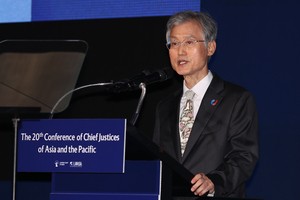
Chief Justice Jo stresses judicial independence must 'always be protected'
Chief Justice Jo Hee-dae said Friday that mutual respect and cooperation among the judiciary, legislature and administration are essential for the judicial system to function effectively. Speaking at the closing ceremony of the 20th Conference of Chief Justices of Asia and the Pacific at the Grand Hyatt Seoul in Yongsan-gu, Jo said the discussions had shown that judiciaries around the world face many common challenges. "We were reminded again that no judiciary has all the answers," he said. Jo said that while legal systems and conditions may differ across countries, all judiciaries share the same fundamental obligation — to uphold the rule of law, protect basic rights and deliver justice fairly and independently. "One thing that became clear at this conference is that while courts must respond to change, the principles that guide us must be firmly upheld," he said, adding that "the independence, impartiality and integrity of the judiciary, and the trust of the people, must always be protected." The remarks marked the second time Jo had emphasized judicial independence at the conference — he made similar comments at the opening ceremony Thursday — as tensions with Cheong Wa Dae continue over the resubmission of a Supreme Court justice nominee. In his opening address, Jo said that "no matter what challenges we face, judicial independence must be preserved," describing it as essential for the judiciary to fulfill its role in defending democracy and the rule of law. On Aug. 18, Jo nominated Son Bong-gi, a senior judge at the Daegu District Court, as his pick to fill the vacancy left by former Supreme Court Justice Noh Tae-ak, selecting Son from among four candidates recommended by the Supreme Court Justice Candidate Recommendation Committee. Cheong Wa Dae rejected the nomination about 10 days later, calling it a "unilateral written submission without substantive consultation" and calling for a resubmission. Cheong Wa Dae has signaled it wants Jo to resubmit one of the remaining three candidates from the original list, but within the court there is growing support for reconstituting the recommendation committee from scratch and restarting the nomination process under the Court Organization Act. Jo had been expected to announce his position on the resubmission relatively quickly, but has remained silent for more than two weeks. The Conference of Chief Justices of Asia and the Pacific is an international forum held every two years, bringing together chief justices from across the Asia-Pacific region to share experiences and policies on judicial systems and issues. South Korea hosted the conference for the third time, following previous editions in 1999 and 2011. This year's conference was the largest in the event's history, with chief justices and supreme court justices from about 40 countries attending — including, for the first time, participants from outside the Asia-Pacific region.
Sept. 18, 2026
-

Incheon moves to overhaul used-car export industry with digital, eco-friendly push
Ordinance championed by Democratic Party lawmaker clears full council session Relocation of Oknyeon-dong complex gains momentum as residents' long-standing grievance nears resolution Incheon's used-car export industry — one of the city's core logistics sectors — has announced a sweeping transformation toward an eco-friendly, digital operating model. The long-delayed relocation and redevelopment of the used-car export complex in Oknyeon-dong, Yeonsu-gu, a persistent source of frustration for local residents, is now expected to gain significant momentum. The Incheon Metropolitan Council passed the "Ordinance on the Promotion and Support of Incheon's Used-Car Export Industry" at the fifth plenary session of its 313th extraordinary session on Friday, following its introduction by Democratic Party of Korea Lawmaker Jeong Bo-hyeon, who represents Yeonsu-gu District 3. With the ordinance now in force, Incheon has secured a firm legal and institutional foundation for systematically supporting the used-car export sector. Incheon has long handled the overwhelming majority of South Korea's used-car exports, but operations centered on the existing Oknyeon-dong complex have been hampered by aging infrastructure and the small scale of individual operators. Particularly troublesome for nearby residents has been the daily disruption caused by vehicles awaiting export — illegal parking, noise, dust and chronic traffic congestion have steadily eroded the quality of life in surrounding neighborhoods. The ordinance addresses not only the relocation of the complex and improvements to the residential environment, but also a range of measures aimed at upgrading the industry itself. Key provisions include the establishment of master and implementation plans for developing the used-car export industry, the relocation of the complex and its eco-friendly modernization, upgrades to the logistics system linking it to Incheon Port, support for quality certification and overseas market development, and the expansion of digital infrastructure alongside the training of specialized personnel. Notably, the ordinance also provides the legal basis for establishing and operating a "Used-Car Export Comprehensive Support Center," which would offer one-stop assistance covering administrative procedures, connections to overseas buyers, and education and consulting services. The center is expected to significantly boost the competitiveness of export businesses. "The relocation and modernization of the Oknyeon-dong export complex is a project residents have long hoped for," Jeong said. "Starting with this ordinance, I will carefully follow through on the remaining tasks to simultaneously improve the residential environment and quality of life for residents while strengthening the industry's competitiveness in global markets." With the ordinance cleared by the full council, Incheon city authorities plan to begin drawing up concrete implementation plans, including the preparation of a replacement site, expansion of logistics infrastructure and support measures for businesses currently operating in the complex.
Sept. 18, 2026
-
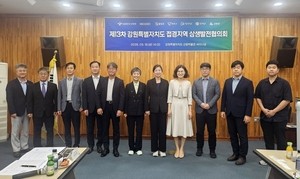
Gangwon border counties, Defense Ministry hold joint development council
President Lee Jae Myung's remark that "peace is a benefit" has begun to take shape as concrete policy for border communities in Gangwon Province. Gangwon Special Self-Governing Province and the Ministry of National Defense held the Border Region Mutual Development Council on Friday afternoon at the Forest Museum seminar room of the Forest Science Research Institute, where participants discussed deregulation and other measures to promote development in the border area. The province's policy planning officer and the Defense Ministry's military facilities bureau chief served as co-chairs, while deputy county heads from the five border counties and Defense Ministry officials joined to discuss ways to resolve military-related issues facing the region. The council convenes twice a year and is scheduled to operate through 2029, with a possible five-year extension if needed. Launched in 2020, the body is expected to move toward more substantive policy action following the launch of the new administration. The main agenda items at the 13th session were cooperation on renewable energy projects in the border region, cooperation on development projects utilizing idle military land, the integrated water supply facility project in Hwacheon-gun, and local government cooperation matters related to the adjustment of the civilian control line. Participants also discussed plans to expand the existing government-military council into a civilian-government-military cooperative framework ahead of the statutory launch of the Gangwon Special Self-Governing Province Civilian-Government-Military Cooperation Committee on Oct. 22, and to establish a unified communication channel under that body. The cooperation committee was formed under Article 73-2 of the Special Act on the Establishment of Gangwon Special Self-Governing Province and the Creation of a Future Industry Global City — a provision added specifically to enable such a body. Set to be established in the second half of this year, the committee will bring together the province, the Defense Ministry, 18 cities and counties, and civilian representatives to discuss matters related to mutual development among civilian, government and military stakeholders across the province. Jeon Hee-seon, the province's policy planning officer and co-chair of the council, said the border region faces hardship from accumulated economic stagnation and continued population decline caused by military base reorganizations, but that the easing of military regulations under the Gangwon Special Act has marked an important turning point. "Particularly at a time when cooperation among the province, the border region and the Defense Ministry — all of whom share key issues such as the northward adjustment of the civilian control line — is critical, we will work actively with the Defense Ministry," she said. Gangwon Special Self-Governing Province and the Defense Ministry plan to continue sharing regional issues through the forthcoming civilian-government-military cooperation committee and to actively seek collaborative approaches that benefit both the military and local communities. In addition, the two sides said they will continue working-level consultations among relevant agencies on the agenda items discussed at Friday's meeting, and will move forward without delay on follow-up measures, including submitting those items to the cooperation committee once it is formally established.
Sept. 18, 2026
-
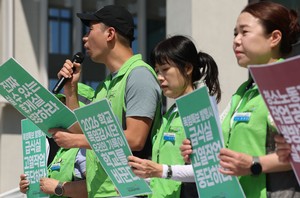
Public-sector labor panel relaunches as statutory body; unions demand end to sunset clause
Policy scope expanded to cover dispatched, subcontracted and outsourced workers Unions call for unified wage system, retirement age of 65, end to welfare disparities 'Budget constraints must not block agreements as they did before' A government committee tasked with improving employment stability and working conditions for non-regular workers in the public sector officially launched Friday as a statutory body under the prime minister. Labor groups agreed to participate but demanded abolition of a five-year sunset clause and called on fiscal authorities to take direct responsibility for implementing any agreements reached. The Ministry of Employment and Labor said it held the inaugural ceremony and first meeting of the Public Service Workers Committee at Government Complex Seoul on Friday — the first day the Act on the Establishment and Operation of the Public Service Workers Committee, enacted in February, took effect. The committee is a deliberative and coordinating body that reviews policies and systems related to employment, wages, working conditions, personnel management, labor relations and education for non-regular public-sector workers, including public service workers. The new committee carries stronger legal standing and a broader membership than its predecessor, which operated from March 2020 to March 2023. The first committee was an advisory body based on a prime ministerial directive; the new one is a statutory committee formally attached to the prime minister's office under an act of law. Its policy scope has also been expanded from public service workers and fixed-term employees to include dispatched, subcontracted and outsourced workers. Unlike the first committee, which was dominated by government officials, the new body directly includes representatives from labor, management and academia. Im Gi-geun, head of the Office for Government Policy Coordination, will chair the committee. Deputy Minister of Employment and Labor Kwon Chang-jun serves as the committee's lead negotiator, and the body comprises 30 members drawn from related ministries — including the Ministry of Economy and Finance, Ministry of Education, Ministry of Interior and Safety, Ministry of Planning and Budget and Ministry of Personnel Management — as well as labor, management and expert representatives. Labor groups, however, expressed concern about the committee's five-year sunset provision and the feasibility of implementing agreements that require budget commitments. The Korean Public Service and Transport Workers' Union held a press conference in front of Government Complex Seoul ahead of the launch ceremony, calling for the committee to be made permanent and for fiscal authorities to participate actively. Eom Gil-yong, the union's chairman and a committee member, said wage levels, employment security and the elimination of discrimination against non-regular public-sector workers are issues that must be addressed on an ongoing basis. "The committee must be made permanent to ensure continuity and stability in the discussions," he said. He particularly urged the Ministry of Planning and Budget and the Ministry of Economy and Finance to take responsibility from the negotiating stage through to implementation, saying the committee must not repeat the experience of the first round, when agreed improvements to working conditions were not properly reflected in the budget process. Labor groups plan to raise demands in sector-specific subcommittees for a unified wage system, elimination of disparities in allowances and welfare benefits, legal recognition of public service worker status, and an extension of the mandatory retirement age to 65. For public service workers at central government agencies, they are calling for a seniority-based wage system and an end to disparities in family allowances, welfare points, long-service bonuses and performance pay. For the public institution sector, labor groups proposed setting the appropriate wage for indefinite-contract workers at no less than 118 percent of the minimum wage and establishing a pay system that reflects length of service and skill level. For subsidiary company workers, they called for abolishing the labor-cost bid rate and vacancy settlement system, securing adequate staffing levels, and closing the welfare gap with parent companies. In the education sector, the groups identified low wages, unpaid leave during school vacations, job insecurity and staff shortages as the core agenda items. For the private outsourcing sector, they proposed expanding direct public operation, guaranteeing employment succession and introducing a seniority-based wage system. The committee will operate through a multilayered structure comprising the main committee, a working committee, a development council and sector-specific subcommittees. The main committee will make final decisions on policy plans and discussion outcomes, while the sector-specific subcommittees will handle issues from individual fields — central government agencies, local governments, educational institutions, public institutions, subsidiary companies and private outsourcing. At its first meeting Friday, the committee approved its operating plan, rules of procedure and the composition of the working committee. It plans to finalize the membership of the sector-specific subcommittees and select specific discussion topics going forward. Committee Chair Im said a stable dialogue framework had been established for ongoing discussion of employment and working-condition issues facing public-sector workers. "The government will fulfill its responsibilities as a model employer, and we will create an exemplary case of social consensus in which labor, government and experts work together to reach agreement," he said.
Sept. 18, 2026
-
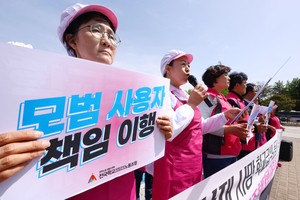
Panel on public-sector irregular workers relaunched as statutory body under prime minister
Pan-government consultative body under the prime minister draws 30 members from labor, management and academia New committee to review employment, wages and working conditions for public-sector irregular workers Multi-tiered structure includes development councils and sector-specific subcommittees A committee tasked with improving employment stability and working conditions for public-sector irregular workers has been officially launched as a statutory body under the prime minister. Its policy scope covers not only public-service workers and fixed-term employees but also dispatched, subcontracted and outsourced workers. The Ministry of Employment and Labor said it held the inaugural ceremony and first meeting of the Public Service Workers Committee at Government Complex Seoul on Friday — the day the Act on the Establishment and Operation of the Public Service Workers Committee, enacted last February, took effect. The committee reviews and coordinates employment, wages and other working conditions for public-sector irregular workers, along with related personnel, labor and education policies and systems. Its aim is to reduce workplace discrimination and raise both the quality of employment and the standard of public services. The new body carries greater legal standing and a broader membership than its predecessor, which operated from March 2020 to March 2023. The first committee was an advisory body established under a prime ministerial directive; the new one is a statutory committee formally attached to the prime minister's office under an act of law. Im Gi-geun, director general of the Office for Government Policy Coordination, chairs the committee. Deputy Minister of Employment and Labor Kwon Chang-jun leads the ministry's side on the committee, and the body draws a total of 30 members from related ministries — including the Ministry of Economy and Finance, the Ministry of Education, the Ministry of Interior and Safety, the Ministry of Planning and Budget and the Ministry of Personnel Management — as well as representatives from labor, management and academia. The policy scope has also been expanded. In addition to public-service workers and fixed-term employees covered under the previous committee, dispatched and subcontracted workers are now included. Unlike the first committee, which was dominated by government officials, the new body directly incorporates labor, management and expert representatives as full members. The committee operates through a multi-tiered structure linking the main Public Service Workers Committee, a working-level subcommittee, a development council and sector-specific councils. The main committee makes final decisions on policy plans and discussion outcomes, while the working-level subcommittee monitors and adjusts those plans. The development council researches institutional improvements on common agenda items that cut across job categories and sectors, and oversees discussions in the sector-specific councils. Those councils address agenda items that reflect the particular characteristics of each sector, drawing on input from the field. At its first meeting Friday, the committee approved its operating plan, internal rules and the composition of the working-level subcommittee. It plans to finalize the membership of the sector-specific councils and select specific discussion topics going forward. "A stable dialogue framework has been established for ongoing discussion of employment and working-condition issues facing public-sector workers," committee chair Im said. "We will ensure the government fulfills its responsibilities as a model employer and create a landmark example of social consensus-building among labor, government and experts."
Sept. 18, 2026
-

Secondary teachers union says essay-based CSAT deliberation 'not a social consensus' for 2037 introduction
Support for essay questions drops after deliberation among teachers and parents Union calls for grading fairness and appeals process before any timeline is set The Secondary Teachers' Labor Union criticized the National Education Commission's deliberation results on introducing essay-type questions to the College Scholastic Ability Test, saying the outcome "should not be interpreted as a social consensus for introduction." While the largest share of deliberation participants chose the 2037–2038 academic year as the preferred introduction window, that group fell short of a majority. The union said prerequisite conditions — including grading fairness and securing enough teachers and professional graders — must be addressed before any timeline is fixed. The union issued a statement Friday saying the results "are closer to a call for careful judgment after fully establishing school conditions and fairness measures, not a demand to rush the introduction." The union said support for introducing essay-type questions to the CSAT stood at 55.5 percent after the deliberation process — down 2.8 percentage points from before it began. Support fell particularly sharply among teachers, dropping 19.2 percentage points, and among parents, down 13.9 percentage points. The union also said the 39.4 percent who favored a 2037–2038 introduction — while the largest single group — fell short of a majority and therefore could not be read as a consensus on timing. The union identified grading fairness as the central issue. "The problems of grading personnel and fairness will not resolve themselves just because 2037 arrives," it said, noting that grading fairness was the top concern raised throughout the deliberation. It also listed the difficulty of preparing for essay-type questions through school instruction alone, the potential for expanded private tutoring, and the logistical challenge of grading large volumes of answers in a short period as unresolved problems. The union said expanding essay-type assessments in high school internal evaluations would also require advance preparation. Because disputes over accepted answers and partial credit could escalate into administrative appeals or lawsuits, it said standards to protect teachers' assessment authority and institutional response systems at the school and district level must be established first. The union said introducing essay questions to the CSAT would require securing enough teachers and professional graders, as well as establishing multiple-grader review, public disclosure of grading criteria, and clear procedures and accountability for appeals. On AI-assisted grading, it said AI "is only a tool to assist grading and cannot be the party responsible for explaining the basis of scores or accountable for errors and appeals." The union also raised concerns that expanding essay-type assessments could widen educational inequality between private tutoring and public schooling across regions. It argued that changing the assessment format alone — without addressing university rankings and labor market structures — could fuel demand for essay-writing and editing tutoring, and that differences in school and regional educational conditions could create new disparities in college admissions. The union called on the National Education Commission to spell out implementation conditions and verification standards in its national education development plan — covering the securing of teachers and professional graders, multiple-grader review and appeals procedures, institutional responses to assessment complaints, and the scope of AI use — before locking in a specific introduction date. Kim Hee-jeong, chairperson of the Secondary Teachers' Labor Union, said "the number 2037 does not recruit teachers or create grading fairness," adding that the deliberation results "should be read as a warning that sufficient preparation and verification are needed, not as a decision on when to introduce the system." She said the commission must first answer "not when to introduce it, but what conditions must be met — and how to defer implementation if those conditions are not met."
Sept. 18, 2026
-
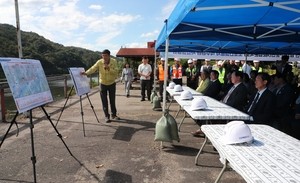
Second Gyeongchun National Highway breaks ground, cutting Namyangju-Chuncheon drive to 25 minutes
Gangwon Province announced Friday that construction has begun this month on the second Gyeongchun National Highway linking Namyangju and Chuncheon, with completion targeted for 2032. Gangwon Province and the Wonju Regional Land Management Office held a ground-breaking briefing Friday in the Anbo-ri area of Seo-myeon, Chuncheon, attended by about 30 people, including local residents, Gangwon Province Governor Woo Sang-ho, Wonju Regional Land Management Office Director Lee Dong-min, Chuncheon Mayor Yuk Dong-han, and Assembly members Heo Young and Han Ki-ho. The event informed local residents of the project's formal launch and shared updates on construction progress and plans to expand the road network by connecting the new highway with existing national and local roads. The second Gyeongchun National Highway will be a new four-lane road stretching 33.6 kilometers from Geumnam-ri in Hwado-eup, Namyangju, Gyeonggi Province, to Dangnim-ri in Seo-myeon, Chuncheon. The project was designated in 2019 as exempt from a preliminary feasibility study under the national balanced development initiative. It carries a total budget of 1.94 trillion won ($1.41 billion) and aims to open in 2032. The full route is divided into five construction sections, with work on all of them beginning Sept. 1. The Seoul Regional Land Management Office is handling sections one and two, covering 15.8 kilometers, while the Wonju Regional Land Management Office is responsible for sections three through five, covering 17.8 kilometers. The project calls for 25 tunnels, 41 bridges and seven intersections. Once open, the highway is expected to cut travel time between Namyangju and Chuncheon from 54 minutes to 25 minutes — a reduction of about 29 minutes. The road is also expected to ease chronic congestion on existing National Highway 46, lower logistics costs, and improve access from the greater Seoul area to Gangwon Province, boosting tourism and industrial activity in Chuncheon and the broader northern Gangwon region. To spread the benefits of the new highway across northern Gangwon Province, the provincial government is also pursuing an expanded road network linking existing national and local roads to the new route. A separate project to build a bypass along National Highway 5 between Seo-myeon and Sinbuk — stretching 10.5 kilometers at a cost of 365.1 billion won — has been included in the sixth national highway construction plan to divert traffic expected to concentrate around Anbo-ri toward Yongsan-ri after the second Gyeongchun highway opens. A separate project to widen a 3.1-kilometer stretch of Local Highway 70 between Geumsan and Sinmae in Seo-myeon to four lanes — at a cost of 36.6 billion won — has been included in the sixth national highway construction plan as a candidate project exempt from preliminary feasibility review for projects under 50 billion won, with results pending. "The second Gyeongchun National Highway is a core transport link connecting the greater Seoul area with Gangwon Province and will create a new axis of development for Chuncheon and the northern Gangwon region," Governor Woo said. "After seven years of waiting, construction has finally begun in earnest, and we will actively cooperate on securing the budget and supporting administrative procedures to ensure the road opens on schedule in 2032."
Sept. 18, 2026
-
Incheon Transit Corp. builds data standardization and security framework to power AI push
Incheon Transit Corp. is accelerating efforts to improve data quality and establish a company-wide management framework in response to the rapid spread of AI technology. The transit operator announced Friday it would formally build a "data management system" covering the entire data lifecycle — from production and utilization to security — to boost workplace productivity and maximize the value of its data assets. The initiative aims to address AI model performance degradation and the cost burden of reprocessing data, problems that arose because different departments had been generating and managing data under inconsistent standards. The corporation set up an AI Innovation Task Force earlier this year and has been executing a phased action plan since then. As a first step, it assessed data management practices across the organization, identified priority areas for oversight, and established uniform standards for terminology and security. Going forward, the corporation plans to form a dedicated unit centered on a data management committee and revamp related internal regulations to strengthen its institutional foundation. "Securing high-quality data in a stable manner is a core element of company-wide AI adoption," Incheon Transit Corp. President Choe Jeong-gyu said. "We will go beyond efficient internal use to ensure compatibility with external systems, delivering public data services that citizens can tangibly feel."
Sept. 18, 2026
-

'Sign language is more than hands': A deaf student's role in shaping Korea's first broadcast interpretation guidelines
First sign language broadcast manual built on deaf voices Special advisory member Jeong Ga-eun, 20, speaks out 'Sign language needs expression, gaze and movement — not just hands' 'I want to be a human rights lawyer — change is slow, but it's coming' Last August, the Korea Communications Commission and the Korea Audience Media Foundation released the country's first practical guidelines for sign language interpretation in broadcasting — covering everything from core principles and genre-specific practices to how interpreters should handle unexpected situations. It was the first manual of its kind for a field that had long operated without clear standards. For many in the broadcast industry, the document may read as just another set of professional guidelines. But for the deaf community, it represents a long-held wish to fully access media — and, more significantly, it was built from the ground up with deaf voices at its center, a departure from how such work had typically been done. Among the advisory committee members assembled to develop the guidelines was an unusual contributor: Jeong Ga-eun, a 20-year-old preparing for university entrance exams. Surrounded by field professionals, interpreters and academics, Jeong consistently brought a perspective that only someone who had grown up using sign language as a first language could offer. "Sign language only becomes a complete language when facial expression, eye contact, body movement and the use of space all come together — not just the hands," she said. With that opening remark, a long-standing misconception — that sign language is simply a language of the fingertips — quietly dissolved. To meet Jeong, this reporter visited Sorireul Boyeojuneun Saramdeul, a deaf alternative school in Gangbuk-gu, Seoul, and the only institution in the country centered on sign language instruction. The interview was conducted in sign language with simultaneous interpretation by the school's principal, Kim Ju-hee. The mandatory sign language broadcast quota system was introduced in 2011. Since then, the volume of sign language programming has grown, but critical information has repeatedly been omitted or mistranslated. There were also no meaningful standards for how interpreters should handle breaking news or the wide range of program genres. Confusion on the ground was inevitable, and the burden fell squarely on deaf viewers. Jeong's involvement in developing the guidelines grew directly from her own frustrations as a deaf viewer. Born to deaf parents and raised with sign language as her mother tongue, she had often struggled to follow broadcasts because of poor interpretation. Subtitles exist, but they are simply a written transcription of spoken Korean — a hearing person's language — and differ meaningfully from sign language, the native language of the deaf. "Even when a broadcast shows both subtitles and sign language interpretation at the same time, the two often say different things," Jeong said. "And even when a drama series has sign language interpretation, it's hard to receive the emotion." She added that her parents, who cannot read subtitles, had no choice but to accept incorrect information whenever the interpretation was wrong. She traces the root of frequent interpretation errors to the narrow way society understands sign language. "Most people think sign language is hand gestures," she said. "But sign language only becomes a complete language when facial expression, eye movement, body movement and the use of space all come together — not just the hands." That is precisely where interpretation errors most often occur. Jeong said hearing interpreters frequently miss the grammar unique to sign language — the way space and the whole body are used alongside hand movements. A deeper problem, she said, is the lack of understanding of deaf culture. When hearing-centric expressions from variety shows or drama series are carried over into sign language as-is, words and phrases that feel natural to hearing viewers can land as something foreign and unfamiliar to deaf audiences. "You cannot simply convert hearing culture into something that belongs to deaf people," she said. She offered the Korean slang term "kangaroo tribe" — referring to adult children who remain financially dependent on their parents — as an example. "When hearing people first hear 'kangaroo tribe,' they immediately picture a joey inside a kangaroo's pouch," she said. "But if you translate it directly into sign language, deaf people cannot intuitively grasp the meaning. In the deaf community, the same concept has long been expressed with a hand gesture mimicking a baby sucking on a bottle." Jeong said she wishes interpreters had more firsthand experience within the deaf community. Still, she welcomed the fact that society has begun, even now, to listen to deaf people's voices on media accessibility. "Whose sign language is this for?" she said. "If we are excluded, who is it being evaluated by?" What she hopes for is that this shift in attitude will spread, leading to a culture where deaf people naturally participate in sign language interpretation. Sign language interpretation, she believes, should not be a field perfected by hearing experts alone — the lived experiences of deaf people must be the standard. Jeong's dream, as she prepares for university, is to become a human rights lawyer and take a leading role in advocating for deaf rights. She said the simple fact that she and other deaf people were part of creating the guidelines gave her hope that society, however slowly, can change. "This was the first time I experienced working on the ground to advance the rights of deaf people," she said. "Just knowing that someone like me was there — even if society cannot change all at once, I felt hope that it can change, little by little." Having completed her compulsory education through an equivalency exam, Jeong is set to enter university next year. The excitement is matched by anxiety. "Will I be able to manage as a deaf person among hearing students?" she said. She already senses that it will not be easy — having to advocate for her own language and identity from a position that is not yet equal. More children are receiving cochlear implants, and the elders who have long preserved sign language are passing away one by one. How to protect sign language — a language that belongs wholly to the deaf — is another challenge she carries with her. Yet the last thing she shared in the interview leaned far more toward joy than weight. "Life as a deaf person is fun — it's so enjoyable," she said. "I want to share that joy with others." Her eyes lit up as she explained that sign language carries expressions and rhythms that spoken language simply cannot match. She sees sign language as a world created by the non-manual signals unique to the deaf — and she finds it a shame that the humor only that world can hold has not been shared more widely. "It's such a pity that so many people don't know that," she said. It is not the simple humor of a funny face, she explained, but the kind of immersive pull that makes you feel as though you are being drawn into a film — and that, she said, is the charm of sign language, the living language of the deaf community, a charm that words alone cannot fully describe.
Sept. 18, 2026
-
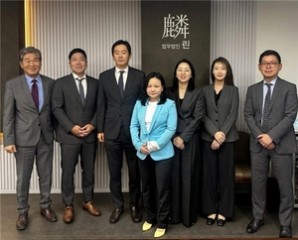
Law firms build entertainment practices as K-content boom brings legal risks
As the K-content and entertainment industry expands rapidly in global markets, legal disputes and risks tied to shifts in business structures — including exclusive contracts, intellectual property and investment and distribution arrangements — are on the rise. In response, law firms are moving to establish dedicated teams specializing in the entertainment industry. Law firm Lin launched an entertainment team composed of specialist attorneys to handle legal issues and disputes across the entertainment and content sectors, according to legal industry sources Thursday. The entertainment industry has seen boundaries blur across music, video, gaming and over-the-top streaming, giving rise to a widening range of legal risks — from disputes over the validity of exclusive contracts and rights of publicity to mergers and acquisitions, management control battles and unfair trade practices. Lin's newly formed entertainment team plans to offer one-stop legal counsel by drawing on specialists across corporate M&A, intellectual property, litigation, fair trade and platform regulation. "Behind the rapid growth driven by K-content lies structural legal risk and disputes that are difficult to predict," said Do Hyun-su, head of Lin's entertainment team. "We will focus on resolving the legal risks facing companies, production houses and artists through collaboration among specialists in each field."
Sept. 18, 2026
-

'Super ant' investor indicted for manipulating Kosdaq stock, pocketing W6.2b
15,908 manipulation orders drove share price surge Accomplice charged separately for aiding scheme A full-time investor who allegedly manipulated the share price of a Kosdaq-listed company for three years and five months, pocketing 6.2 billion won ($4.49 million) in illicit gains, has been indicted in custody. The Seoul Southern District Prosecutors' Office said Thursday it had indicted the suspect, identified only as A, on charges of violating the Capital Markets Act. A second suspect, B, a full-time investor who allegedly aided the scheme at A's request, was summarily indicted on charges of abetting the violation. A is accused of repeatedly placing manipulation orders while steadily accumulating shares between January 2020 and May 2023, artificially driving up the stock price. The share price of the targeted company rose from 11,800 won to 45,800 won over that period, at one point surging as high as 51,100 won. Investigators found that A, drawing on years of experience as a full-time investor, deliberately targeted a Kosdaq-listed company with a small float, making it easier to manipulate the price. The company designs, manufactures and installs powder conveying systems including pipes for transporting coal dust, and was listed on Kosdaq in December 2009. A approached 26 acquaintances — including businesspeople and doctors met at upscale wine and dining gatherings — with promises of investment returns, obtaining 47 brokerage accounts, six contract for difference accounts and funds from them. A also borrowed about 12 billion won from cryptocurrency traders and private lenders to finance the scheme. Total deposits into the accounts during the scheme reached 74.5 billion won. Using various forms of leverage — including margin financing, stock-backed loans and CFDs — A purchased about 340 billion won worth of shares in total. As a result, A's holdings in the stock grew from 8 percent to more than 40 percent of the shares in market circulation. Facing the threat of forced liquidation due to excessive leverage, A asked friend B to place high-price buy orders and engage in wash trading. Together, A and B submitted 15,908 manipulation orders, investigators found. The share price subsequently tumbled after the company's earnings deteriorated due to COVID-19 and overseas conflicts, and a price decline in May 2023 triggered a cascade of forced liquidations by brokerages on A's holdings. The stock fell from 45,800 won to 22,050 won in just four days from May 15, 2023. Investigators determined that A's illicit gains from the manipulation amounted to 6.2 billion won. Including accounts belonging to acquaintances whose investments A managed on a discretionary basis, prosecutors estimated total gains reached approximately 49.7 billion won. A was also found to have received about 1.6 billion won in exchange for managing the stock investments of acquaintances. A used the criminal proceeds to live in a luxury villa and spent the equivalent of 20 million to 30 million won on credit card bills each month. The Financial Supervisory Service detected A's suspected manipulation while monitoring stocks flagged for unusual activity and referred the case to prosecutors. During the investigation, prosecutors also found evidence that A had attempted to destroy evidence — deleting Telegram message histories with the accomplice immediately after the scheme and asking account holders to give false statements. "This is a case of ultra-long-term leveraged market manipulation in which the defendant, having cultivated an image as a successful 'super ant' investor, used stock price manipulation disguised as long-term investment in quality shares to obtain illicit gains," a prosecutors' office official said.
Sept. 18, 2026
-

Prosecutors indict officer over falsified closure of Jeju missing-persons case
Prosecutors have indicted a police officer on charges of falsely closing a missing-persons case in Jeju, placing the officer in pretrial detention.
Sept. 18, 2026
-

Police study criminal procedure law ahead of prosecutors losing investigative powers
'Investigator support TF' to launch this month Police have launched training sessions on the revised Code of Criminal Procedure for investigators nationwide, with the abolition of prosecutors' investigative powers set to take effect Oct. 2. The Korean National Police Agency said Friday it convened peer instructors from provincial and metropolitan police agencies across the country, along with investigators from its own directly affiliated units and those of the Seoul Metropolitan Police Agency, at its headquarters in Seodaemun-gu, Seoul, for a training session on the revised code. Peer instructors are officers who train fellow officers in field-response skills and related competencies. The session was designed to ensure frontline investigators are well versed in the key provisions of the revised code and related regulations — including investigative guidelines and police investigation rules — so that police offices nationwide can carry out their duties without confusion once the law takes effect. A field operations manual summarizing step-by-step investigative procedures under the revised code served as the training material. Following Friday's session at the agency's headquarters, in-person regional training is set to be held at all 18 provincial and metropolitan police agencies. Video training sessions will also be conducted for all investigation team leaders, and every officer — including those at the superintendent level — will be required to complete related online training. Starting later this month, the agency will also activate a "step-by-step investigative field consultation and support TF" at police stations, provincial and metropolitan agencies, and the National Investigation Headquarters. The TF will receive queries from frontline investigators through the internal network on the interpretation of laws and guidelines, and provide unified, standardized responses. "We will activate a nationwide training and field support system to ensure the revised Code of Criminal Procedure takes root in investigative practice as quickly as possible," an agency official said. "We will do our utmost to ensure operations run smoothly and without confusion from the very first day the law takes effect."
Sept. 18, 2026
-
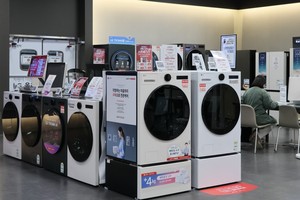
Ex-LG Electronics store worker sentenced to 3.5 years for defrauding 37 customers of W639m
37 customers deceived with promises of discounts, gift vouchers Former LG Electronics store employee convicted of fraud totaling 639.21 million won Sentenced to 3 years, 6 months on appeal A former LG Electronics store employee who defrauded customers — including couples shopping for wedding appliances — out of more than 600 million won ($435,000) was sentenced to three years and six months in prison on appeal. Chief Judge Jung Woo-seok of the Seoul Northern District Court's Criminal Appeals Division 2 handed down the sentence Friday morning to the defendant, identified only by his surname Yang, 42, who had been indicted on fraud charges. Yang is accused of defrauding 37 customers of a combined 639.21 million won between July and October last year while working at an LG Electronics Best Shop branch in Dongdaemun-gu, promising discount and refund benefits that he never delivered. He collected payments upfront by telling customers he would refund their original charges if they paid again with an affiliated card, and induced additional payments and direct bank transfers into his personal account by claiming eligibility for government rebates and employee discounts. Couples preparing to furnish their first homes were among those deceived. In one case, Yang told a customer that purchasing a set of wedding appliances would entitle them to a 1.35 million won refund, 500,000 reward points and gift vouchers worth 800,000 won — then collected 13 million won from the victim. At the time, Yang had neither the intention nor the means to sell the products legitimately or return the money. The funds he collected were used to pay off existing debts in a revolving scheme and to finance personal gambling, according to the court. Yang had received sentences of two years and six months and one year respectively in two separate first-instance trials, and appealed both. Prosecutors also appealed part of the case, and the appellate court consolidated the two proceedings before issuing a single combined sentence. The court said mitigating factors included Yang's acknowledgment of and remorse for his crimes, the fact that his actual financial gain was less than the total amount defrauded, and his lack of a prior criminal record. However, the court said Yang "exploited his role as a home appliance salesperson to induce victims into upfront payments, additional payments and transfers into his personal account, defrauding them of approximately 640 million won in total," adding that "the nature of the offense is poor given the number of incidents and the scale of the damage." The court also noted that while LG Electronics appeared to have compensated the victims, Yang himself had taken no meaningful steps toward restitution, and that the head of the company he worked for had filed a petition for a severe sentence, citing significant losses.
Sept. 18, 2026
MOST READ
- 1KAIST develops high-performance bio-based adhesive using E. coli instead of petroleum
- 2Pope Leo XIV declines French honors and banquet, accepts only private meeting with Macron
- 3Daimler Truck unveils next-generation transport solutions at IAA 2026
- 4What was Rachmaninoff's performance fee? A 1928 price list tells all
- 5Samsung Biologics union's show of force backfires at the bargaining table
- 6APR says hair-loss treatment research published in international journal
-
WORLD

US warns of punishment for anyone enabling Iran's Strait of Hormuz toll scheme
-
INDUSTRY

Toyota union puts productivity first; Hyundai Motor union demands bigger share of profits
-
FINANCE

National Growth Fund to invest $531M in FuriosaAI, which rebuffed Meta's $800M takeover bid
-
INDUSTRY
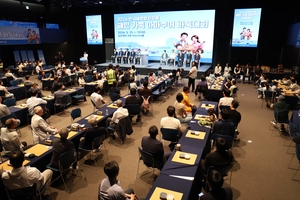
Korea Shipowners' Association holds amateur baduk tournament for Maritime Day