
- HOME
- SOCIETY

Construction Workers' Mutual Aid Association inspects electronic card system at SK Yongin semiconductor site
Officials check terminal and app usage at site employing about 20,000 workers daily Workers and employers share difficulties with retirement mutual aid system The Construction Workers' Mutual Aid Association visited the SK Yongin semiconductor cluster construction site, where about 20,000 workers are employed daily, to inspect the operation of its electronic card system. Officials also met with construction workers and employers to hear about difficulties they face in using the electronic cards and running the retirement mutual aid system. The association said Wednesday that Chairman Jang Geon visited the SK Yongin semiconductor cluster construction site. More than 150 subcontractors are participating at the site, the association said. Jang arrived at the site at 6:30 a.m., as construction workers were beginning their shifts, and checked the operating status of electronic card terminals installed at the commuter assembly points. Jang also observed workers tagging their cards on the terminals and using the mobile app. Commute records stored on the electronic cards are used to report the number of working days for retirement mutual aid purposes. Jang received a briefing on construction progress from executives at SK Ecoplant and discussed ways to cooperate in ensuring the retirement mutual aid system runs smoothly on site. At a subsequent joint forum with workers and employers, Jang gathered suggestions for improving the electronic card and retirement mutual aid operations, and discussed the association's welfare projects and measures to strengthen employment stability for construction workers. "I am deeply grateful for the hard work of the construction workers who pour their sweat on site from the early hours of the morning," Jang said. "We will make every effort to protect the rights and interests of construction workers and improve their employment conditions."
Kim Yong-hun Nov. 18, 2026
-

Gangwon Province draws up strategy to attract, retain young farmers
Province to complement national youth farming policy with locally tailored programs covering succession planning, agribusiness employment, new rural jobs and cooperative work Gangwon Special Self-Governing Province has unveiled a strategy to help young people enter, work in and settle permanently in its farming communities, with phased implementation set to begin in 2027. The province said it will build on the national government's existing youth-farmer support programs while filling gaps those programs cannot adequately address — specifically in succession planning, employment at agricultural corporations, rural industry jobs and cooperative youth activities — through its own Gangwon-tailored initiatives. The strategy expands the policy focus beyond simply recruiting young farmers and supporting independent farming startups, extending support to the full arc of a young person's rural life: entering the sector, building a livelihood, settling down and growing professionally. Gangwon Province said it aims to build a virtuous cycle linking youth inflow to employment, housing, daily life, settlement and long-term growth — advancing both a generational transition in agriculture and a revival of vitality in rural communities. Provincial statistics released Wednesday show that as of 2025, people in their 60s or older account for 76.9 percent of Gangwon's farming population, while those in their 40s or younger make up just 2.3 percent. Over the past three years, the province's population of residents aged 18 to 39 fell 4.3 percent, and the number of young farmers in the same age group dropped 7.2 percent. The figures underscore how difficult a stable generational handover has become in agriculture — a sector central to food security. The province said the worsening demographic picture made it necessary to move beyond policies focused solely on independent young farmers and to open up diverse pathways for young people to enter agriculture and rural life, prompting the development of the Gangwon-style settlement strategy. The province will establish three main settlement pathways tailored to young people's circumstances and how they enter farming: farm succession, startup and employment farming, and rural industry youth. For farm succession, the province will shift from after-the-fact transfers to planned, advance succession. It will identify young people expected to inherit a farm while their parents are still actively farming, then support joint management between parents and the next generation along with a phased handover of operations. The plan links land and facility transfers with tax, legal and management consulting to help aging farmers pass on their operations smoothly and help young successors settle in early. For the startup and employment pathway, the province will expand routes that let young people learn on the job before launching their own operations or committing to long-term employment. Young people who are not ready to farm independently from the outset will be able to join agricultural corporations to gain hands-on experience in production technology, farm management, accounting, and retail and marketing — then move on to independent startups, long-term employment or participation in corporate management. Working from the premise that farming is not the only path to rural settlement, the province will also extend its policy reach to rural industries. It plans to connect young people with jobs in agri-food manufacturing, processing and retail companies, rural tourism, experiential and service businesses, and local startups — broadening the routes through which urban youth can enter rural life. Examples of this approach are already emerging across the province. In Wassup Town, a youth village in Seokmyeon, Hongcheon-gun, urban young people are experiencing rural life through extended-stay programs such as "Nangmanchon Kangsu," building relationships with local residents through community activities and local startups before eventually settling in the area. In Goseong-gun, Airbnb's "We Live Together. Here, in Goseong" campaign has recently highlighted young settlers who run local accommodation and restaurant businesses while building ties with the community. Gangwon Province said it plans to spread a range of rural settlement models that allow young people to visit, stay, work and start businesses in rural areas and transition naturally into permanent residents. To support stable long-term settlement, the province will strengthen not only employment opportunities but also housing, daily-life infrastructure and local community support. Youth rural housing communities will be established in four cities and counties — Samcheok, Jeongseon, Inje and Hwacheon — combining public rental housing with leisure, cultural and childcare facilities to reduce the housing burden on young people and lay the groundwork for long-term settlement. The province will also cultivate youth networks and cooperative farming and work organizations by region and crop type. Through youth cooperative work teams, drone pest-control units, and shared seedling, harvesting and sorting operations, it aims to strengthen the community foundations that allow young people to work and grow together within their regions. In addition, the province will operate youth agriculture and rural affairs councils at both the city-county and provincial levels, and through policy forums and on-the-ground proposals will elevate young people from passive recipients of support to active participants in shaping local agricultural policy. To fill gaps left by national programs, the province plans to introduce four new Gangwon-tailored initiatives starting in 2027. The new initiatives will be developed in consultation with the provincial assembly and will go through required procedures — including a review by the Ministry of Health and Welfare on establishing new social security programs — before launching in 2027. The four new initiatives are: support for planned farm succession and joint management by young farmers; youth employment and incubation at agricultural corporations; a joint-growth employment support program linking young people with rural businesses; and city-county youth cooperative work teams for farm labor support. The succession planning initiative will support the drafting of succession plans, specialist consulting, and joint management between parents and young successors. The agricultural corporation employment initiative will help young people build practical and management experience in the field, with a path toward long-term employment or independent startups. The rural business employment initiative will connect youth hiring and job-skills development at agri-food and rural industry companies with local settlement. The youth cooperative work team initiative will aim to reduce the labor burden on elderly and small-scale farmers while providing young people with work opportunities and income. "We will continue building on the foundation of the national government's youth-farmer policy, while using Gangwon-tailored initiatives to fill the areas it has not been able to adequately support," Jeon Jae-seop, director general of agricultural policy at Gangwon Special Self-Governing Province, said. "Going forward, we want the measure of our policy's success to be not how many young farmers we recruited or how much money we handed out, but whether young people are actually coming to rural areas, working, living, settling down and growing." "We want rural areas to be not just a place where young people farm, but a space of opportunity where they can start businesses, build a life with their families and shape their own futures," Jeon added.
Nov. 18, 2026
-
Magnitude 3.6 earthquake strikes North Gyeongsang Province
A magnitude 3.6 earthquake struck an area 22 kilometers northwest of Sangju in North Gyeongsang Province at around 11:10 p.m. Tuesday. The Korea Meteorological Administration issued an emergency disaster alert Tuesday, warning residents near the epicenter that they may feel tremors and urging them to take precautions. The agency also said it had revised the magnitude down to 3.6 from an initial reading of 3.7 following a detailed analysis.
Nov. 17, 2026
-

Top scorer in tax accountant exam ends 13-hour police questioning over AI cheating
Police questioning of the top scorer on the tax accountant licensing exam, who is suspected of using AI to cheat, ended after 13 hours Tuesday.
Nov. 17, 2026
-
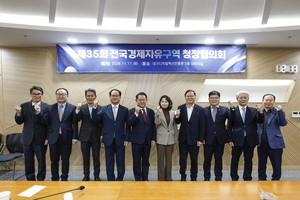
Daegu-North Gyeongsang free economic zone authority hosts 35th national FEZ chiefs' council
The Daegu-North Gyeongsang Free Economic Zone Authority hosted the 35th National Free Economic Zone Chiefs' Council on Tuesday at the Daegu Digital Innovation Promotion Agency's main conference room, with about 40 participants in attendance, including the head of the Ministry of Trade, Industry and Energy's free economic zone planning division and the chiefs of nine free economic zone authorities nationwide. The council was convened to discuss regulatory and institutional improvements related to free economic zones and to strengthen cooperation among the country's zone authorities. It was the fifth time the Daegu-North Gyeongsang authority has hosted the gathering since 2010. Participants adopted a joint petition calling for measures to boost the global competitiveness of free economic zones and submitted it to the Ministry of Trade, Industry and Energy. The petition outlined nine reform tasks, including revisions to restrictions on the disposal of industrial land, improvements to the effectiveness of foreign investment incentives, expansion of permitted uses for reinvested development proceeds, relaxed criteria for designating core strategic industries, and stronger support for RE100 and energy infrastructure. "Eliminating unreasonable on-the-ground regulations and reforming the institutional framework are essential if free economic zones across the country are to emerge as world-class special economic zones," Daegu-North Gyeongsang Free Economic Zone Authority Commissioner Jeong Hae-yong said. "We will continue to work closely with the government and generate synergies among the free economic zones."
Nov. 17, 2026
-
Mother, 5-year-old son struck and killed by car at unmarked crosswalk in Daegu
A mother in her 40s and her 5-year-old son were struck and killed by a car while crossing an unmarked crosswalk in Pado-dong, Suseong-gu, Daegu. According to the Daegu Fire and Safety Headquarters and police, the accident occurred around 2:20 p.m. Sunday at a crosswalk in Pado-dong, Suseong-gu, when a BMW driven by a man in his 20s, identified only as A, struck the woman and her son as they crossed. Both were seriously injured and transported to a hospital, where they later died. Investigators determined that A had switched from the first lane to the second lane of a two-lane one-way road after a bus stopped in the first lane ahead of the uncontrolled crosswalk, striking the mother and son as they crossed. Police booked A on charges of causing death under the Act on Special Cases Concerning Traffic Accidents and said they are investigating the exact circumstances of the crash before deciding whether to seek an arrest warrant.
Nov. 17, 2026
-
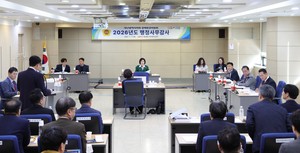
Daegu council committee scrutinizes Daegu Technopark operations in annual audit
The Daegu City Council's Economy and Environment Committee conducted an intensive review of Daegu Technopark's operations and key project management Tuesday as part of its 2026 administrative audit. The audit focused on several issues: wage inversions among employees of the same rank, deteriorating finances and declining management evaluations, allegations of inflated labor costs in research and development budgets, problems with national grant settlements, a reduction in programs to nurture promising companies, and high vacancy rates at the knowledge industry center. Committee Chair Park Jong-pil urged Daegu Technopark to draw up a concrete plan to resolve the long-standing wage inversion problem, calling for details on the number of affected employees, funding sources and the scale of annual adjustments. Deputy Chair Kim Jeong-min said the decline in core business activities, a drop in tenant companies and falling management performance evaluations pointed to the need for organizational reform and improved financial soundness. Committee member Kwon O-seop raised concerns over allegations of inflated labor costs in research and development projects and lax management of national grant settlements, calling for the recovery of unsettled funds and stronger internal controls. Member Kim Gi-yeol said the scaling back of programs to foster promising venture companies had left a gap in growth support and called for follow-up support mechanisms to be put in place. Member Park Hyeon-gyu pointed to repeated water leaks and sluggish leasing at Fexco, calling for revitalization measures linked to the fashion and garment industry. Member Jin Mi-suk called for improvements to performance indicators for the ANCHOR project and greater industry participation, while member Lee Dong-un pointed to the low occupancy rate at the Seodaegu Industrial Complex knowledge industry center and urged practical revitalization measures, including tailored corporate support and stronger promotional efforts. Members of the Economy and Environment Committee said Daegu Technopark "must raise accountability in its operations and develop concrete improvement plans for key issues so that it can serve as a hub for regional industrial innovation and corporate growth."
Nov. 17, 2026
-
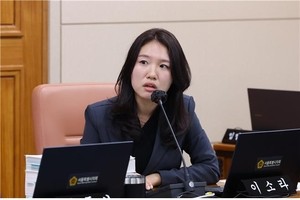
Seoul council lawmaker questions assembly's personnel authority after dismissal lawsuit loss
Trial court finds dismissal lacked objective, rational basis and abused discretionary power; lawmaker Lee So-ra says council must weigh appeal carefully The Seoul Metropolitan Council has lost a first-instance lawsuit over its dismissal of a policy support officer, drawing criticism that the council failed to adequately consider the personal harm caused to the individual when it exercised its personnel authority during a reorganization. Seoul Metropolitan Council member Lee So-ra of the Democratic Party of Korea (Seongbuk District 4) pressed council Secretary-General Kim Yong-seok at an administrative audit of the operations committee during the 340th regular session Monday, demanding answers on why the council lost the first-instance case, whether the decision to appeal is justified, and what steps the council plans to take going forward. Earlier, the Seoul Administrative Court ruled in August that the council must rescind the compulsory dismissal of its policy support officer, which the council had carried out on Dec. 11, 2024. The court found the dismissal lacked objective and rational grounds and violated the principle of proportionality, constituting an abuse and excess of discretionary authority. Lee particularly raised questions about whether the council had sufficiently examined the appropriateness of hiring the officer through open recruitment, given that discussions about a reorganization were already under way at the time of appointment. Lee also pressed the secretariat on whether it had adequately explored alternative posts or ways to avoid dismissal for an officer who had been guaranteed a two-year term, only to be dismissed just five months after being hired. "The council's argument on appeal is that the two-year term for an open-position appointment does not constitute an absolute guarantee of tenure — but then what was the intent behind setting a minimum two-year term in the relevant regulations?" Lee said. In response, Secretary-General Kim said the policy support officer's workload had shrunk significantly after duties were reorganized around standing committees, and that the council had determined that creating a new field complaints unit would better serve the public interest. Kim added that alternative posts had been reviewed internally but could not be offered because other open positions had already been filled. Lee said the case was not simply a dispute over one individual's dismissal but a matter that reflected the accountability of the council in exercising its personnel authority. "In pursuing a policy decision to reorganize, the council dismissed within just five months a person hired through open recruitment — and the court also flagged a violation of the recusal rules for the personnel committee in that process," Lee said. "The court did not deny the need for the reorganization itself. What it said was that even when reorganization is necessary, the council must give sufficient weight to the appointee's length of service and the personal disadvantage caused, and must have objective and rational grounds to justify it." The wisdom of pursuing an appeal also draws fire. Secretary-General Kim said the council had asked the Ministry of Justice to direct the administrative litigation, and the ministry determined that all three grounds for appeal the council had put forward were valid, instructing the council to proceed. Kim said first-instance legal fees came to just over 10 million won ($7,490), with an additional 3 million to 4 million won expected for the appeal. Lee said the council should not simply defer to the Ministry of Justice's direction but must soberly assess on its own the likelihood of winning and the practical benefit of continuing the appeal. "When pursuing future reorganizations or changes to personnel systems, it will be important to put in place institutional safeguards that minimize the personal disadvantage and infringement of rights that individuals may suffer in the process," Lee added. Secretary-General Kim agreed that balancing the public interest against potential harm to individuals was essential, and said the final ruling, once confirmed, would serve as an important reference for future organizational management. Lee also requested that the council continue to report on the progress of the litigation and any follow-up measures.
Nov. 17, 2026
-
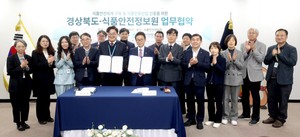
North Gyeongsang Province, food safety body sign MOU to promote K-food industry
North Gyeongsang Province and the Food Safety Information Service signed an MOU Tuesday to strengthen food safety systems and promote the hallyu food industry. The signing ceremony was held at the Food Safety Information Service's office in Seoul and was attended by North Gyeongsang Province Governor Lee Cheol-woo and Food Safety Information Service President Lee Jae-yong, among others. Under the agreement, the two organizations will collaborate across five areas: researching and developing policies for food safety management throughout the entire food industry lifecycle; strengthening safety management capabilities of food companies and helping them navigate domestic and international regulations; coordinating food safety management for culinary festivals, tourism events and international gatherings; sharing food safety information and pursuing joint projects; and building expert networks to improve food safety policies and systems. The Food Safety Information Service is a public institution under the Ministry of Food and Drug Safety. It collects and analyzes domestic and international food safety data, manages food traceability systems, supports export companies in meeting regulatory requirements and conducts food safety policy research. North Gyeongsang Province has been working to develop a national food industry testbed, with the aim of helping food companies expand into overseas markets and fostering a hallyu food industry that links those exports to tourism. "The food industry is a strategic sector that connects agriculture, manufacturing, advanced technology, and culture and tourism," Governor Lee said. "We will add food safety expertise to our national testbed vision and support North Gyeongsang's K-food in earning trust and growing in global markets."
Nov. 17, 2026
-

Daegu hosts matchmaking event linking major construction firms with local subcontractors
Daegu city held a matchmaking event Tuesday at Exco, bringing together 17 major construction companies and 49 local specialty contractors to expand subcontracting opportunities for regional firms. The event was organized to help local construction companies struggling amid a construction market downturn and a decline in new project volume, and to lay the groundwork for cooperative partnerships with large construction firms. Major companies taking part included Hyundai Engineering & Construction, GS Engineering & Construction, Hyundai Engineering, DL E&C, Lotte Engineering & Construction and Posco E&C. Local firms held one-on-one consultations tailored to advance demand surveys across a range of specialties, including earthwork, metal and window installation, reinforced concrete, and mechanical systems. The major construction companies briefed attendees on the requirements and procedures for registering as partner contractors and discussed future cooperation, while local firms presented their technical capabilities and project track records. The event was a follow-up to a regional construction industry revitalization plan announced at the third emergency economic policy meeting in August. Daegu city secured funding for the event through its second supplementary budget. Daegu city plans to monitor participating firms' progress in registering as partner contractors and track follow-up negotiations, while incorporating suggestions raised during the consultations into local construction industry policy. Daegu Mayor Choo Kyung-ho said he hoped the event would serve as a forum for communication between major construction companies and local firms, as well as a catalyst for new contracting opportunities. "We will continue to provide administrative support to expand participation opportunities for local companies and help them achieve tangible contracting results," Choo said.
Nov. 17, 2026
-
AI cheating suspected at Konkuk University LEET mock exam
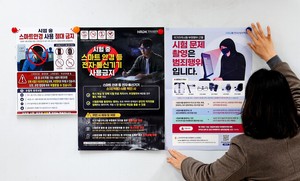
Konkuk University has launched an investigation after a suspected case of AI-assisted cheating was detected at a mock Law School Admission Test held on campus. The university said Tuesday that it is probing a participant suspected of cheating during the "LEET King Selection Contest," a president's cup mock LEET held Nov. 5. A proctor noticed a light coming from a necklace worn by the test-taker during the exam, and the student was removed from the testing room. The necklace is believed to have contained a hidden camera. The school has launched an investigation to determine whether cheating in fact occurred. "If the investigation committee confirms that cheating took place, we will take strict action in accordance with school regulations," a Konkuk University official said.
Nov. 17, 2026
-
North Gyeongsang governor urges Land Ministry to back public agency relocation, new airport
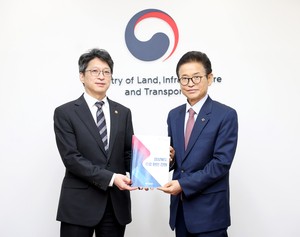
North Gyeongsang Province Governor Lee Cheol-woo has asked the central government to support key provincial projects, including a second round of public agency relocations, construction of the Daegu-North Gyeongsang integrated new airport, and major highway development. Lee met with Land, Infrastructure and Transport Minister Hong Ji-seon at the National Land Development Exhibition Hall in Seoul on Tuesday to outline the need to advance major projects for the province's development and request active government backing. North Gyeongsang Province proposed that the second round of public agency relocations include the National Agricultural Cooperative Federation, Korea Racing Authority, Korea Institute for Advancement of Technology (KIAT), Korea Agency for Infrastructure Technology Advancement (KAIA), and the National Heritage Promotion Agency. The province envisions drawing these institutions to the Gimcheon Innovation City to build a self-sustaining hub linked to regional industries. Lee also asked for an amendment to the special act governing the Daegu-North Gyeongsang integrated new airport to allow the province to participate as a joint developer alongside Daegu, and requested government funding for land and housing acquisition at the airport site. He further called for construction of a cross-Yeongil Bay section and a Gumi-Gunwi expressway. "The projects we proposed today are not just about North Gyeongsang's development — they are critical tasks that will lead a sweeping transformation of the national territory," Lee said, urging the Ministry of Land, Infrastructure and Transport to provide strong support. Earlier in the day, Lee visited the Food Safety Information Service to request its relocation to North Gyeongsang Province, while North Gyeongsang Vice Governor Hwang Myeong-seok called on KIAT to make the case for its relocation as well.
Nov. 17, 2026
-
N. Gyeongsang council committee urges fiscal discipline, policy overhaul in administrative audit
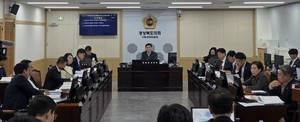
The Planning and Economy Committee of the North Gyeongsang Provincial Assembly conducted an administrative audit of the provincial government's Planning and Coordination Office, the spokesperson's office and the autonomous police commission Tuesday, calling for stronger fiscal soundness and improvements in provincial administration. During the audit, members focused on the fiscal strain caused by rising local bond issuance, inefficiencies in budget execution and recurring underperformance in projects. They said the province should move beyond simply tracking budget acquisition and spending figures, and instead analyze outcomes by project — scrapping those with low effectiveness. Individual members also raised specific concerns. Assembly member Kim Ye-young called on the spokesperson's office to diversify its public-interest communications content, and urged the autonomous police commission to improve the tangible results of its community outreach policing program in resolving residents' complaints. Assembly member Do Hui-jae called for greater efforts to secure national government funding for research projects, while Assembly member Park Sun-beom urged transparent and efficient management of the provincial treasury's interest rates and cooperative project funds. Assembly member Bae Jin-seok said that despite budget increases, residents had seen insufficient improvement in quality of life, and stressed the need for field-centered administration. Assembly member Son Hui-gwon called for budget savings through the consolidation of underperforming, similar or overlapping projects. Assembly member Shin Hyo-gwang said provincial subsidies for farmers' allowances were being cut during the rollout of a basic rural income program, and called for measures to ensure balanced development across regions. Assembly member Yun Jong-ho urged responsible administration that takes into account residents in the northern part of the province during the Daegu-North Gyeongsang administrative integration process, and called for more crosswalks in rural areas. Assembly member Jeong Suk-gyeong said the province should analyze why individual cities and counties fail in competitive grant applications and refine its strategy for securing national funding. Assembly member Choe Byeong-geun called for more effective management evaluations of invested and endowed institutions and for recurring audit findings to be addressed. Deputy Committee Chair U Chung-mu said the province should reduce its dependence on local bonds and incorporate principal and interest repayment burdens into its medium- and long-term fiscal plans. Committee Chair Kim Chang-hyeok said the Planning and Coordination Office serves as the control tower overseeing the province's budget, policies and organization, but is not fulfilling that role adequately. "It must deliver real results on key issues such as youth employment, the low birth rate and AI, and lead provincial administration through sufficient consultation with the assembly," Kim said.
Nov. 17, 2026
-

'Use metal detectors to catch AI cheaters on college entrance exam,' KAIST-trained researcher says
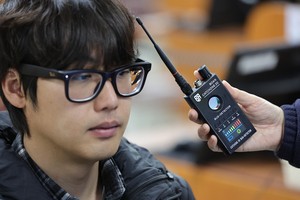
Amid growing concern among test-takers after the top scorer on this year's tax accountant exam admitted to cheating with AI, AI researcher and content creator Heo Seong-beom has drawn attention by sharing countermeasures against cheating ahead of the College Scholastic Ability Test, known as the Suneung. Heo posted a video titled "This is not what AI was made for" to his YouTube channel Monday, saying he was "deeply saddened that people are exploiting AI before any social systems or guidelines have even been put in place." "The biggest problem is that a small number of students abusing technology could rob students who have worked hard all this time of their opportunities," he said. Heo, who graduated from the Korea Science Academy and KAIST and works as an AI researcher, said institutional responses to the recent AI exam-cheating controversy are urgently needed. He described AI-assisted cheating as a three-stage process — capturing, transmitting and receiving — and identified metal detectors as the most practical tool to stop it. The scheme works by photographing exam questions through a miniature camera or a lens attached to smart glasses, transmitting the images to an AI via a mobile phone or pocket Wi-Fi device, and then receiving the analyzed answers through a display or a miniature earpiece. "Whether it is a lens, smart glasses or an earpiece, a battery is needed for extended use, and batteries contain metal components that metal detectors will inevitably catch," Heo said. "Using metal detectors thoroughly is more effective than thermal cameras." Alongside this, he proposed additional measures: checking unsubmitted belongings and inspecting restrooms and hallways, deploying radio-frequency detectors without prior notice, and conducting post-exam forensic investigations of SIM card communication records and handwriting on answer sheets. However, Heo acknowledged practical limitations, noting that "even with metal detectors, there is a chance that suspicious signals could be missed during screening, and time is needed to secure equipment and train supervisors." He explained that equipping all exam venues with the necessary equipment and establishing a screening system in the short time remaining before the Suneung on Thursday would not be easy. Heo also left a warning for any test-takers considering cheating. "Cheating will eventually be discovered, even if it takes time," he said. "It can derail your life, so please do not do it under any circumstances." "Adults will find ways to address this, so do not be swayed — walk your own path and see the exam through to the end," he added.
Nov. 17, 2026
-
Daegu education office tightens exam security against hidden cameras, earpieces ahead of CSAT
The Daegu Metropolitan Office of Education is strengthening test-site management to prevent cheating using miniature cameras and earpieces at the 2027 College Scholastic Ability Test. The office announced Tuesday that it will tighten identity verification and belongings checks for the CSAT, to be held Thursday, in line with new anti-cheating measures from the Ministry of Education. The steps are designed to prevent a method in which a test-taker conceals a miniature camera in clothing or buttons to photograph exam questions, then receives AI-generated answers through a tiny earpiece. Under the new procedures, proctors will additionally inspect test-takers' buttons, collars and sleeves during identity verification and watch checks at the first and third sessions. No separate inspection period will be added; the checks will be carried out within existing procedures, with candidates rolling up both sleeves for visual confirmation by proctors. The role of dedicated staff at test sites — previously responsible for checking smart glasses — will be expanded to cover miniature cameras and earpieces as well. Bags used to store belongings during breaks will be kept in hallways rather than inside exam rooms. "Ensuring the fairness of the CSAT is of the utmost importance," Daegu Metropolitan Office of Education Superintendent Kang Eun-hee said. "We will carry out the additional verification procedures swiftly to minimize inconvenience for test-takers."
Nov. 17, 2026
-
Lee Jae Myung calls college entrance exam 'symbol of fairness,' vows zero tolerance for cheating
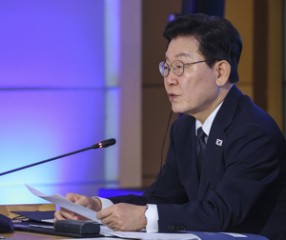
President Lee Jae Myung said the College Scholastic Ability Test is "a symbol of fairness" and pledged zero tolerance and a strict response to any cheating.
Nov. 17, 2026
-
N. Gyeongsang education office to deploy 549 corridor supervisors for 2027 college entrance exam
The North Gyeongsang Province Office of Education will station 549 corridor supervisors across 74 exam sites in the province for the 2027 College Scholastic Ability Test to prevent cheating using electronic devices. The office announced Tuesday it would add 193 corridor supervisors under the Ministry of Education's reinforced anti-cheating measures, while tightening oversight of candidate identification and personal belongings at exam sites. Key measures include storing test-takers' bags outside exam rooms and conducting full inspections of eyeglasses before every session. Supervisors will also check buttons, collars and sleeves on clothing to detect smart glasses, miniature cameras and other electronic devices before they can be used to cheat. To minimize unnecessary suspicion and ensure smooth supervision, the office has advised test-takers to refrain from wearing jewelry or hats and to avoid clothing with buttons where possible. The office has also established a close coordination system between eight district control centers and the 74 exam schools across the province. Graduates and candidates who passed the high school equivalency exam have already been briefed on the updated guidelines, and current high school seniors will receive their admission tickets along with another briefing at a preliminary assembly Wednesday. "We will do everything in our power to ensure stable exam operations so that students' efforts are evaluated fairly and justly," North Gyeongsang Province Superintendent of Education Im Jong-sik said. "We will do our best to help test-takers approach the exam with peace of mind over the remaining three days."
Nov. 17, 2026
-
Student files emergency petition to halt Thursday's college entrance exam over AI cheating concerns
Ministry of Education rules out postponement, citing disruption to university admissions schedule A student has filed an emergency petition with the Constitutional Court seeking to suspend Thursday's College Scholastic Ability Test, arguing that holding the 2027 academic year exam as scheduled — despite inadequate safeguards against AI-assisted cheating — is unconstitutional. Ahn Min-jun, an 18-year-old high school senior, filed a constitutional complaint Tuesday asking the court to annul the Korea Institute for Curriculum and Evaluation's designation of Thursday as the exam date, as well as the Ministry of Education's decision to proceed as planned. Ahn also filed an injunction request asking the court to provisionally suspend the effect of the exam date designation until a ruling on the merits is issued. "Holding the exam as scheduled without an effective system in place to prevent sophisticated cheating infringes on test-takers' right to fair competition and their fundamental constitutional rights," Ahn said. Calls to postpone the exam have mounted in recent weeks amid growing concern over AI-assisted cheating, but the Ministry of Education decided to proceed as planned, citing security concerns and potential disruption to the university admissions calendar. The ministry announced expanded inspection procedures and additional personnel to counter AI cheating, but Ahn said the exam should not be held until those measures have been empirically verified and their nationwide implementation confirmed. Ahn argued that exam sites across the country have had only two days to receive and practice the new procedures, and that the announced deployment scale alone is insufficient to confirm whether the additional personnel can actually carry out the inspections. "The exam date exists to fulfill the test's purpose of fairly assessing ability for use in university admissions," Ahn said. "If the schedule is maintained while excluding the time needed to secure the supervisory conditions that make that purpose possible, test-takers are left to bear that risk." "Postponing the exam is not an end in itself — it is one means of ensuring a fair test," Ahn added. "What matters more than the state holding the exam on the scheduled date is ensuring that every test-taker is protected from cheating and can compete on equal terms." The AI cheating controversy has also sparked a wave of satirical posts online, with a photo of gang members circulating under the caption "Welcome reception for the Seoul National University School of Medicine class of 2027." Citing the posts, Ahn said, "We cannot allow delinquents to take over elite universities through cheating. Universities must not become places where students repeatedly seize admission spots through fraud while also threatening others' freedom and learning environment through violence and intimidation."
Nov. 17, 2026
-

Gyeonggi teachers union urges education authorities not to shift AI cheating crackdown burden onto teachers
The Gyeonggi Teachers' Labor Union issued a statement Tuesday, two days before the 2027 College Scholastic Ability Test, urging education authorities to stop shifting responsibility for detecting cheating involving AI and other advanced devices onto teachers and to establish effective protective measures. The union said the Ministry of Education's guidelines require proctors to inspect every test-taker's glasses, check buttons, collars and sleeves, and monitor specific behaviors. "Even with additional proctoring staff, there are limits to how quickly miniaturized cameras and earpieces — which are nearly impossible to spot with the naked eye — can be detected in a short period of time," it said. The union added that proctors could mistakenly flag normal behavior as cheating, and could then face blame for failing to catch actual violations. "The Ministry of Education must not try to solve problems it has failed to resolve technologically by simply demanding more caution and dedication from teachers," it said. The union also responded to the government's pledge not to hold teachers who diligently supervised exams liable for unjust complaints or lawsuits, saying a declaration alone would not eliminate individual complaints or civil suits against teachers. It called on the Ministry of Education and the Gyeonggi Provincial Office of Education to clearly define the scope of proctors' verification duties and who bears final responsibility, and to present concrete plans under which authorities would directly cover legal support and litigation costs in the event of disputes. Chae Yu-gyeong, chairperson of the Gyeonggi Teachers' Labor Union, said authorities have for years demanded a "flawless college entrance exam" from teachers while remaining stingy with compensation and support, and are now asking them to spot miniature cameras hidden inside buttons with the naked eye. "Stop trying to patch the gaps in policy with teachers' dedication, and instead provide guidelines that can actually be carried out in the field, along with concrete measures to protect teachers," Chae said.
Nov. 17, 2026
-
Defense for ex-707th unit commander claims civilians at National Assembly committed rioting
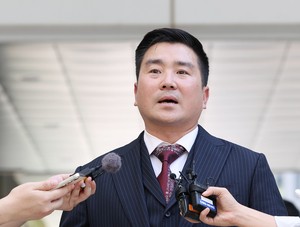
The defense for Kim Hyun-tae, the former commander of the Army Special Warfare Command's 707th Special Mission Battalion, denied all charges Tuesday at the start of his appeal trial — repeating the position he took at the first trial, where he was sentenced to prison for his role in blockading the National Assembly during the Dec. 3 emergency martial law. According to Yonhap, Kim's attorney told Seoul High Court's Criminal Division 12-2 — presided over by Judges Jo Jin-gu, Kim Min-a and Lee Seung-cheol — at the first hearing of the appeal on charges including participation in key duties of insurrection that "unlike the first-instance ruling, both the intent to undermine the constitutional order and the intent to riot and commit insurrection must be denied," and argued for acquittal. The attorney said the mission Kim received from former Special Warfare Command chief Kwak Jong-geun during the emergency martial law was to "secure" the exterior of the National Assembly building that houses the main chamber. That amounted to simply locking the building's doors, the attorney said, adding that the order to enter the building and remove people inside was given not to the 707th Special Mission Battalion but to the 1st Airborne Special Forces Brigade. "When the defendant arrived at the main entrance, for some reason people who had no business being there — National Assembly staff, journalists and others who were not lawmakers — had already arrived and were obstructing the mission," the attorney said. "Unable to abandon the mission, the defendant decided to go around to the right side and broke a window in a darkened room to enter." The attorney said the unit then tried to seal only the main entrance and withdraw immediately, but was attacked with fire extinguishers by others at the scene, which unintentionally forced them to move through the third and fourth floors and below-ground floors before they could pull out. The attorney also said that during this process, former commander Kwak asked whether blank rounds or a Taser could be used, to which Kim replied, "There are too many people. It's dangerous," and refused the order. "How could this possibly warrant a 12-year prison sentence? It makes no sense," the attorney said. "The rioting was carried out not by the 707th Special Mission Battalion but by the far greater number of civilians who got there first." The attorney also said the first-instance court found that 19 members of the 707th Special Mission Battalion broke two windows and infiltrated the building in just two minutes. "Common sense says it would take at least five minutes," the attorney said. The attorney doubled down on a request for an on-site inspection, saying "the only way to challenge the special prosecutor's indictment, which was written on imagination, is for the court to go there in person and see the height of the wall and the thickness of the windows." Kim was indicted in February last year on charges of participating in key duties of insurrection for his involvement in blockading and infiltrating the National Assembly during the emergency martial law. In August this year, the first-instance court found that Kim had entered the National Assembly on orders from former commander Kwak, blockaded the chamber and attempted to stop lawmakers from voting on a motion to lift martial law, and sentenced him to 12 years in prison, ordering his detention in the courtroom. Kim subsequently filed for bail and then for the cancellation of his detention during the appeal proceedings, but both requests were denied.
Nov. 17, 2026
MOST READ
- 1Malaysia's BE International brings 1,500-strong incentive tour to Korea, bypassing Turkey
- 2AI singer tops Melon chart for first time with 'Did You Become the Adult You Dreamed Of?'
- 3Jensen Huang's daughter took the photo of him embracing his alleged mistress
- 4Man beat live-in girlfriend 514 times over 3 hours, killing her; forensic expert says footage was too disturbing to watch
- 5Madison Huang acted as de facto chief of staff at Nvidia, shouted at vice president: report
- 6'A concert is a ritual for the soul': Currentzis makes long-awaited Korea debut after six years
-
WORLD

US warns of punishment for anyone enabling Iran's Strait of Hormuz toll scheme
-
INDUSTRY

Toyota union puts productivity first; Hyundai Motor union demands bigger share of profits
-
FINANCE

National Growth Fund to invest $531M in FuriosaAI, which rebuffed Meta's $800M takeover bid
-
INDUSTRY
Korea Shipowners' Association holds amateur baduk tournament for Maritime Day