Supreme Court set to rule Thursday on Kim Keon Hee's '3 allegations' case
Whether free polling constitutes illegal political funding is the central issue
Both Yoon Suk Yeol and Oh Se-hoon acquitted on appeal in related cases
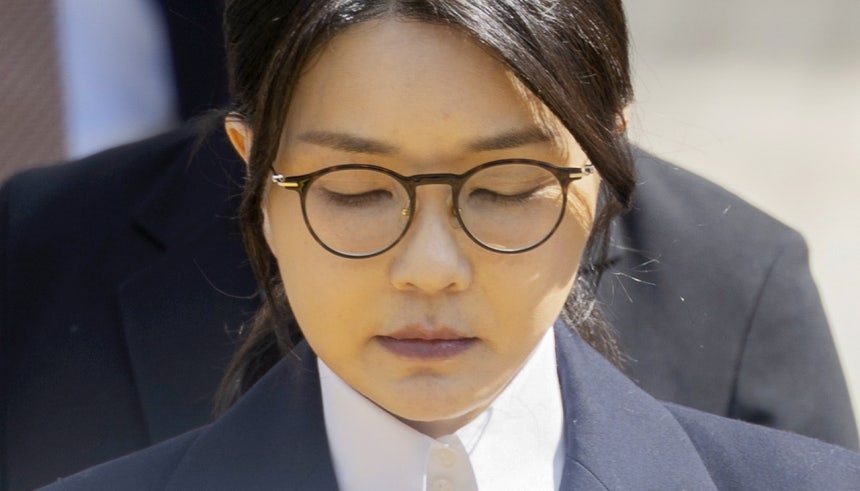
The Supreme Court is set to deliver its first ruling on what has been dubbed the "Myung Tae-gyun gate" scandal. With the en banc panel scheduled to issue its verdict Thursday in the so-called "3 allegations" case against Kim Keon Hee, legal circles are paying close attention to how the court will rule on allegations that political broker Myung Tae-gyun provided polling services free of charge. The ruling is expected to influence parallel Supreme Court proceedings against former President Yoon Suk Yeol and Seoul Mayor Oh Se-hoon, both of whom were acquitted on appeal on charges related to Myung's polling activities.
According to legal sources, the Supreme Court's en banc panel, presided over by Justice Park Young-jae, will deliver its ruling at 4 p.m. Thursday in the case against Kim on charges including violations of the Capital Markets Act and the Political Funds Act. The case centers on three sets of allegations: share price manipulation involving Deutsch Motors, receipt of gifts from the Unification Church, and the free provision of polling services by Myung.
The Supreme Court has identified the central legal question as whether conducting or providing the results of a poll constitutes a political fund contribution prohibited under the Political Funds Act. Kim was acquitted at both the first and second trials on the charge — shared with Yoon — of receiving polling services from Myung free of charge. The key question is whether the Supreme Court will uphold those acquittals or find fault with the lower courts' interpretation or application of the Political Funds Act.
Legal observers say the Supreme Court's assessment of the credibility of Myung's testimony in Kim's case will serve as an important benchmark in the subsequent Supreme Court proceedings against Yoon and Oh. While Oh's case differs structurally from those of Kim and Yoon, all three share the common thread that the credibility of Myung's statements is a central issue.
The Supreme Court had originally planned to rule on Kim's appeal in July, but postponed the sentencing date and referred the case to the full bench. The delay came after first-instance courts handed down guilty verdicts in both the Yoon and Oh cases — outcomes that diverged from Kim's acquittals and raised the need for additional deliberation.
Both the first and second trials in Kim's case found that Myung had provided the polling services to expand his own political influence, and acquitted her on that basis. In Yoon's case, however, the first-instance court found that Yoon and his wife had reached a mutual understanding with Myung regarding the receipt of political funds in connection with some of the polls, and convicted him. The appellate court later reversed that verdict, ruling that polling services were difficult to classify as a financial benefit under the Political Funds Act and that evidence of a mutual agreement on free provision was insufficient.
Oh's case also produced conflicting verdicts at the two trial levels. Oh was indicted on charges of commissioning Myung to conduct polls ahead of the 2021 Seoul mayoral by-election and arranging for a supporter, Kim Han-jeong, to pay the 33 million won ($24,700) fee on his behalf. The first-instance court found parts of Myung's testimony credible and fined Oh 10 million won. A conviction carrying a fine of 1 million won or more would cost Oh his mayoral seat and bar him from public office for five years after the sentence is finalized — effectively ruling out a presidential run. The appellate court, however, acquitted Oh, finding Myung's testimony unreliable and the objective evidence supporting it insufficient.
Yoon's case is currently before the Supreme Court's Second Division, presided over by Justice Kim Sung-su. Oh's case, which has also reached the Supreme Court, has yet to be assigned to a formal panel.
yg@heraldcorp.com