
- HOME
- SOCIETY
-
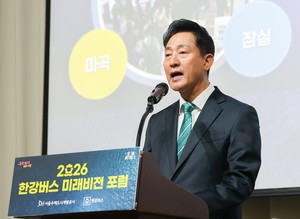
Oh vows 15-minute Han River bus intervals, express and cross-river routes
Service marks first anniversary Friday; 'Han River Bus Future Vision Forum 2026' held Mayor pledges more piers, better access to draw more riders 'A multifunctional platform creating new urban experiences and economic value' Cumulative ridership tops 600,000; satisfaction rate 97.3%, on-time rate 99.3% Seoul Mayor Oh Se-hoon pledged to cut Han River bus headways to 15 minutes and introduce express and cross-river routes as the service approaches its first anniversary Friday. Oh made the remarks Thursday morning at the Han River Bus Future Vision Forum 2026, held at Seoul City Hall. "We will further strengthen safety and punctuality, expand piers and improve accessibility so that more citizens can use the service conveniently," he said. The Han River bus currently operates eight piers — seven permanent stops at Magok, Mangwon, Yeouido, Apgujeong, Oksu, Ttukseom and Jamsil, plus a temporary pier at Seoul Forest open during the International Garden Expo — with headways of about one hour. "If the first year was a time to confirm the possibilities, we must now grow those possibilities into Seoul's future," Oh said. "The starting point lies in redefining the identity of the Han River bus." He described the service as "a multifunctional platform that not only moves people but also connects the Han River and various parts of Seoul, creating new urban experiences and economic value." Oh said the Han River bus breaks the conventional framing of water transport as either public transit or a tourism vehicle. "Its identity is to faithfully uphold the basics of public transportation — safety, punctuality, reasonable fares and accessibility — while at the same time offering the scenery and comfort of the Han River and a fresh way to experience Seoul," he said. The mayor added that he sees the service's potential extending well beyond transportation. "Along the Han River lie Seoul's major growth hubs — the R&D industrial base in Magok, the financial district in Yeouido, the new international business district taking shape in Yongsan, Seongsu and Jamsil," he said. "I hope the Han River bus grows beyond a waterway that carries people into an 'economic corridor' that links these key economic hubs and expands Seoul's future economy." The Han River bus launched Sept. 18 last year. Cumulative ridership stood at 603,293 as of Monday. Notably, 498,795 passengers rode the service from March 1 through March 14 — when full-route operations resumed — accounting for roughly 83 percent of total ridership to date. In August alone, 89,246 people used the service. Rider satisfaction has been strongly positive. A Seoul Metropolitan Government survey of 3,569 Han River bus users conducted from June 29 to July 5 found that 3,472 respondents, or 97.3 percent, said they were "generally satisfied" with the service. Some 3,325 respondents, or 93.2 percent, said they intended to use it again, and 3,406 — or 95.4 percent — said they would recommend it to others. On-time performance also improved as operational know-how accumulated, rising from 97.7 percent in March to 99.3 percent in July. A comparison of the area around Yeouido pier — within a 500-meter radius — between May last year, before the service launched, and May this year showed that the average monthly resident population grew 20.9 percent, while card sales at nearby restaurants rose 15.5 percent. The Seoul Metropolitan Government characterized the first year as "a time to confirm the possibilities." It plans to raise safety, punctuality and service standards further so that citizens can choose the Han River bus as an everyday mode of transport rather than a special experience. The city also intends to strengthen the service's differentiated value — building on the basic function of getting passengers to their destination, as a subway or bus would, by layering in Han River views, comfort, and connections to tourism and waterfront spaces, developing it into a Seoul-style water transit that combines mobility with urban experience. About 100 people attended the forum, including university students, members of the general public, and specialists in finance, operations, management and public relations. Park Jin-young, head of the Seoul Metropolitan Government's Future Han River Bureau, delivered the keynote, reviewing the service's operational achievements and challenges over the past year. Presentations followed from Yoon Seon-gwon, a researcher at the Seoul Institute, on "One Year of the Han River Bus: Standards of Achievement Written on the Water," and from Kim Jae-in, a senior programmer at Cannes Lions and public relations specialist, on strategies to improve public awareness and marketing of the Han River bus.
Sept. 17, 2026
-

Yongsan-gu District Mayor Joins Chuseok Rice Cake-Making Event With Seniors and Children
About 30 seniors and daycare children gathered Wednesday at Songhakdang senior center to make songpyeon together ahead of the Chuseok holiday Yongsan-gu District Mayor Kim Kyung-dae joined a cross-generational songpyeon rice cake-making event Wednesday at Songhakdang senior center ahead of the Chuseok holiday, spending time with local seniors and children. The event was part of the "Eoulim Senior Center Program," a Seoul Metropolitan Government support project designed to bring seniors and children together to make traditional holiday food and foster intergenerational exchange. About 30 people attended, including seniors from Songhakdang senior center and children from Dowon Samsung Daycare Center. Before the rice cake-making began, children performed songs and dances in a talent showcase that added to the festive atmosphere. Kim then joined participants in shaping the songpyeon, personally showing the children how to make the rice cakes as they followed along and chatted. The group shared the finished songpyeon together, savoring the warmth of the holiday season. "It was a meaningful occasion to have seniors and children gather in one place ahead of Chuseok to make songpyeon and share the warmth between generations," Kim said. "We will continue to create opportunities for intergenerational exchange and build a warmer community."
Sept. 17, 2026
-
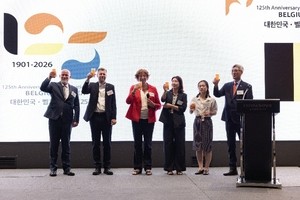
Beyond 125 years of alliance, South Korea and Belgium forge ties in biotech and advanced industry
Networking event held in Songdo to coincide with Flanders economic delegation's visit to Korea Ghent University Global Campus and MarineUGent Korea seen as key innovation bridgeheads between the two countries South Korea and Belgium are significantly deepening cooperation as forward-looking economic partners across biotech, advanced science and education, marking 125 years of diplomatic relations. The Flemish government's Department of Foreign Affairs, Flanders Investment and Trade, and Ghent University Global Campus jointly hosted a networking event Wednesday at Gyeongwonjae in Songdo, Incheon, to mark the 125th anniversary of South Korea-Belgium diplomatic ties. Held to coincide with the visit of a Flemish economic delegation to South Korea, the event drew about 120 key figures from industry, academia, research and government of both countries. They included Belgian Ambassador to Korea Bruno Janssen, Ghent University President Petra De Sutter and Ghent University Global Campus President Han Tae-joon, who gathered to explore avenues for future cooperation. The two countries first forged ties through a treaty of amity and commerce in 1901, and have since maintained a historically close relationship — Belgium extended early recognition to the South Korean government shortly after its establishment and dispatched a combat unit of some 3,500 troops during the 1950-53 Korean War. That relationship has recently been expanding rapidly into advanced industry and research cooperation centered on Songdo, Incheon. Ghent University Global Campus, which opened in Songdo International City in 2014, and MarineUGent Korea, a marine biotech research institute established in 2024, are regarded as central hubs for cutting-edge science and technology exchange between the two countries and as bridgeheads for business entry. During the delegation's visit, the Flemish economic mission toured research facilities at Ghent University Global Campus, then called on a series of global pharmaceutical and biotech companies in Songdo and other major domestic biotech clusters to explore concrete business cooperation opportunities. At the event, participants expressed optimism about generating synergies between the two countries through education and research and development. "The friendship built over 125 years is now evolving into a deep convergence in education and advanced research," Ghent University President De Sutter said. "We will continue to serve as a key partner driving growth in both countries' industries by nurturing globally innovative talent." Ghent University Global Campus President Han said Belgium serves as "a critical logistics and R&D hub through which Korean companies pass when expanding into the European market," adding that he hopes industry-academia-research exchanges centered on Songdo will translate into tangible economic benefits for both countries.
Sept. 17, 2026
-
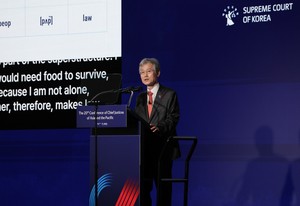
Chief Justice Jo says judicial independence must be upheld 'no matter what challenges we face'
Jo delivers welcome address at Asia-Pacific Chief Justices' Conference 'Mutual respect and cooperation among judiciary, legislature and administration are necessary' 'But such cooperation must take place while guaranteeing judicial independence' Chief Justice Jo Hee-dae said Thursday that judicial independence must be protected no matter what challenges arise. Jo made the remarks in a welcome address at the 20th Asia-Pacific Chief Justices' Conference, held Thursday morning at the Grand Hyatt Seoul in Yongsan-gu, Seoul. "This is necessary for the judiciary to uphold democracy and the rule of law and to fulfill its essential role," he said. Jo doubled down on the need for courts to hold firm to the law and principle. "In many countries, complex political and social disputes are increasingly being brought before the courts, and the public is placing ever-greater expectations on the judiciary," he said. "In such circumstances, courts must stand firm in upholding the law and principle." "Every judge must have the courage to adjudicate solely in accordance with the law and principle, without fear, no matter what difficulties they face," he said, adding that chief justices bear a special responsibility to support judges in fulfilling that duty. Jo said that, as many chief justices have emphasized, mutual respect and cooperation among the judiciary, the legislature and the administration are necessary for judicial functions to be carried out effectively. "Such cooperation helps resolve the complex and multifaceted conflicts of modern society," he said. He went on to say, however, that "such cooperation must take place while respecting the distinct responsibilities of each institution and guaranteeing the independence of the judiciary." Jo said the conference's agenda ultimately converges on a single question: how to defend the rule of law and protect fundamental rights while effectively responding to major social and technological changes — and what responsibilities the judiciary must fulfill in this era. "The underlying principle is the same for all: courts must preserve their independence," he said. The 20th Asia-Pacific Chief Justices' Conference, which began Wednesday, runs through Sunday at the Grand Hyatt Seoul in Yongsan-gu and the Supreme Court in Seocho-gu. The conference brings together chief justices from across the region every two years to share experiences and policies on judicial systems and key issues. This is the third time South Korea has hosted the conference, following the eighth session in 1999 and the 14th in 2011, making it the first country to host three times. This year's gathering drew chief justices and supreme court justices from about 30 countries, along with representatives from 13 international organizations. Over the course of the conference, participants will discuss six topics: the role of the judiciary, the use of AI in the judiciary and the legal profession, the importance of judicial training in the modern judicial environment, judicial approaches to sexual and domestic violence, raising public awareness of courts, and the scope of court support for mediation.
Sept. 17, 2026
-
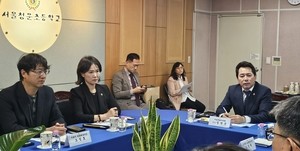
Seoul council speaker inspects aging school pool, eyes fee cuts for young female swimmers
Council moves to expand public pool discount for girls; speaker and lawmaker tour Cheongwun Elementary facilities The Seoul Metropolitan Council is moving to renovate aging school swimming pools and expand sports welfare for students. The council plans to remodel 14 deteriorating school pools across the city while also pursuing regulatory changes to reduce the cost of public pool access for young female swimmers. Council Speaker Im Man-gyun visited Cheongwun Elementary School in Jongno-gu on Wednesday alongside council member Yun Seon-hui of the Democratic Party of Korea to inspect the pool's current condition and usage. Im received a briefing from school officials on the planned remodeling before touring amenities including changing rooms and shower facilities to assess the extent of deterioration and the state of safety management. The Cheongwun Elementary pool is a six-lane facility on the first below-ground floor. More than 20 years after it was completed, calls for renovation due to aging infrastructure had consistently mounted, and the school suspended operations in July to begin remodeling. The Seoul Metropolitan Office of Education currently oversees 48 school pools in the city, of which 14 have been identified as aging and are slated for remodeling. The Seoul Metropolitan Council views facility upgrades as essential now that survival swimming education has been made compulsory, elevating school pools from ordinary sports facilities to core educational infrastructure responsible for student safety. The council is also considering the potential for school pools to serve as community sports hubs when opened to local residents. "With survival swimming now mandatory, school pools have become important educational and sports facilities that support not only students' healthy development but also their safety," Im said. "We will progressively upgrade aging facilities so that students and local residents alike can conveniently use a pool close to home." Alongside the facility improvements, the council is pursuing amendments to local ordinances to ease the financial burden on young female swimmers at public pools. The changes would extend an existing 10 percent fee discount at public pools — currently available to female youth aged 13 and older — to those aged 9 and older, providing support from an earlier age. Four ordinances are targeted for amendment: the ordinance on the establishment and operation of Seoul Metropolitan Government sports facilities; the ordinance on the management and operation of Seoul's Eoulrim Plaza; the ordinance on the use and operation of sports facilities at institutions directly under the Seoul Metropolitan Office of Education; and the ordinance on the opening and use of public school facilities under the Seoul Metropolitan Office of Education. Yun, who joined the inspection that day, said the Youth Basic Act defines youth as starting from age 9 and that related ordinances should be brought in line with that standard. "Given that girls are reaching physical maturity earlier, expanding the discount eligibility will help children enjoy swimming more freely and grow up healthy," she said. Im said the council would continue to reflect feedback from the education office and schools, reform regulations that no longer fit current realities, and actively pursue facility renovations, safety enhancements and expanded sports welfare. He particularly stressed that public sports facilities, including schools, serve as community sports hubs used by both students and local residents, and that the council would pay closer attention to facility conditions and the environment in which people use them.
Sept. 17, 2026
-

Can it work? Results of public deliberation on essay-style college entrance exam released
National Education Commission to present public deliberation findings 180 participants took part in overnight forum on college admissions Grading fairness and AI reliability emerge as key concerns Shift to absolute grading on CSAT also under review Draft national education plan, including admissions overhaul, due in October The results of a public deliberation on introducing essay and short-answer questions to South Korea's College Scholastic Ability Test will be presented to the full committee of the National Education Commission. As debate over the proposed change intensifies — with grading fairness, the reliability of AI-assisted scoring, and the potential expansion of private tutoring emerging as central concerns — the direction of future college admissions reform is drawing close attention. The National Education Commission, which operates under the president, said it will hold its 10th plenary session Thursday morning at Government Complex Seoul to receive a report on the results of the Citizens' Participation Committee deliberation on college admissions policy. The commission conducted a deliberative forum with the Citizens' Participation Committee over a two-day, one-night session Aug. 29-30, focusing on the future direction of college admissions and essay-style assessment. Of the 203 people who applied to participate, 180 attended the discussions. The commission plans to analyze pre- and post-deliberation surveys along with the discussion content as it considers reforms to the college admissions system. During the deliberation, participants raised concerns that the current multiple-choice-centered format is insufficient for assessing students' critical thinking and creativity. Views were divided, however, on how essay-style assessment should be introduced. Even among those who supported or acknowledged the need for the change, a strong consensus emerged that grading fairness and reliability must be secured before such a format can be used in college admissions. How to grade large volumes of CSAT responses is also a point of contention. The commission is examining the possibility of using AI to score essay-style answers, but participants in the deliberation raised concerns that even if AI handles initial grading, teachers could ultimately bear responsibility for final scores. Some also suggested that a robust scoring system should be built first, with shorter written-response questions introduced gradually before moving to full essays. The debate has continued within the commission itself this month. At a special session held Sept. 4, commissioners raised a series of concerns: the fairness of AI-based grading, the possibility of grade disputes and litigation, the burden on teachers doing the scoring, increased pressure on students, and the potential expansion of private tutoring. Some commissioners also questioned whether the public consultation process was being steered toward a predetermined conclusion in favor of introducing essay-style assessment. Commission Chairperson Cha Jeong-in said at the time that "it is time to reflect on the multiple-choice format that has defined the CSAT for 33 years," while also stressing that sufficient preparation is needed to address concerns about private tutoring, teacher readiness and the safe use of AI technology. The admissions reform agenda currently under review by the commission extends beyond essay-style questions on the CSAT. It also includes converting all CSAT subjects to absolute grading, expanding absolute grading for school-based assessments, broadening essay-style evaluation within schools, and adjusting the timing of the college admissions process. Under the current CSAT system, subjects such as English, Korean history and second foreign languages are already graded on an absolute scale; extending that approach to all subject areas is also under discussion. The commission maintains, however, that no finalized admissions reform plan exists yet. The commission plans to deliberate on admissions reform proposals based on input gathered through the Citizens' Participation Committee deliberation and on-site forums. A draft of the 2028–2037 National Education Development Plan — which will incorporate the admissions overhaul — is set to be released in late October. The commission aims to finalize the plan in March next year after additional public consultations. Thursday's session will also receive a final report on the Basic Principles of School Civic Education. The document was approved at the commission's eighth session last month, subject to minor wording revisions. The finalized version removes the word "national" from the title and incorporates provisions requiring that controversial issues be addressed with reference to the national curriculum, educational objectives and students' developmental levels. "For college admissions policy, which draws wide public attention, we will do our utmost to listen carefully to the views of the people through a multifaceted deliberation process and develop policy grounded in social consensus," Cha said.
Sept. 17, 2026
-
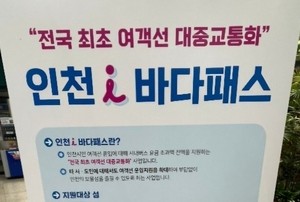
Incheon to extend 1,500-won ferry fare program to soldiers, police and other island workers
Initiative born from Marine Corps proposal at Yeonpyeong Island Military, police, firefighters and public health doctors all eligible Program open regardless of Incheon residency, starting Monday Public workers who brave rough seas to guard South Korea's frontline islands will soon face a far lighter burden when traveling to and from their posts. Incheon is overhauling its transportation welfare network for workers stationed in remote island areas. Starting Monday, the city will expand its "Incheon i Bada Pass" program to cover soldiers, military civilian employees, police officers, firefighters and public health doctors working on islands, the city announced Thursday. Under the expansion, roughly 1,700 public workers stationed on frontline islands — regardless of whether they are registered residents of Incheon — will be able to ride coastal passenger ferries for 1,500 won, the same rate as a standard city bus fare and the same price available to Incheon residents. The policy was sparked by a voice from the field. During a presidential visit to the Marine Corps' Yeonpyeong Island unit in June, troops raised concerns about the heavy cost of ferry fares when taking leave or going out. Incheon Mayor Park Chan-dae immediately directed officials to find a solution, and within two months the city had pushed through the necessary amendments to the relevant municipal ordinance enforcement rules. Notably, the revised rules go beyond the career military personnel originally discussed. The city broadened eligibility to include all frontline workers serving in remote postings — covering public safety, firefighting and community medicine — to preemptively close gaps in the policy's coverage. Previously, only residents registered in Incheon were eligible, meaning soldiers and uniformed civil servants from other parts of the country had to pay fares close to the full price. From Monday, the city will cover the full difference between the 1,500-won flat fare and the combined total of the regular fare, fuel surcharge and terminal usage fee. The city expects the measure to go beyond boosting morale among frontline workers, hoping it will also improve living conditions on the islands and help revitalize island communities. The city has been steadily expanding its maritime transportation welfare offerings: since July, it has also applied the 1,500-won fare to former island residents and their families — those who were once registered on an island or lived there for at least 10 years. "Those who stand at the very front lines of national security, public safety and healthcare deserve special recognition for their extraordinary sacrifice," Park said. "We will continue to find practical welfare policies that improve living conditions and make our islands a place where anyone would want to stay."
Sept. 17, 2026
-
Seoul rises to 7th in global financial center index
GFCI released twice yearly in March and September; Seoul ranked 8th in March Fintech ranking hits all-time high of 7th; city reputation jumps from 9th to 3rd Seoul Mayor Oh Se-hoon vows to further strengthen city's financial competitiveness Seoul ranked 7th in the Global Financial Centres Index, which measures the financial competitiveness of major cities worldwide, also hitting an all-time high of 7th in the fintech category. The Seoul Metropolitan Government announced Thursday that the city placed 7th overall among 139 cities in the 40th edition of the GFCI, published by British consulting group Z/Yen — one spot higher than its previous ranking of 8th. Seoul has climbed steadily since debuting at 53rd in 2009, jumping to 16th in 2021 and 12th in 2022, and has remained in the global top 10 for four consecutive years. The GFCI is co-published by Z/Yen and the China Development Institute and is one of the leading global benchmarks for comparing financial competitiveness across major cities. Published twice a year in March and September since 2007, the index combines five assessment categories — city reputation, infrastructure, financial industry development, business environment and human capital — with an online survey of financial professionals worldwide. Particularly notable in this round was Seoul's fintech ranking, which reached an all-time high of 7th. The city first entered the top 10 in September last year, debuting at 8th, and has now climbed one further place. To build Seoul into a digital financial hub, the city operates a fintech development system tailored to different stages of company growth. Through Seoul Fintech Lab, which supports growth-stage companies, and the Second Seoul Fintech Lab, which nurtures early-stage startups, the city has identified and developed a total of 530 fintech firms to date. Those companies have generated cumulative revenue of 1.11 trillion won ($824 million), attracted 574.6 billion won in investment and created 5,592 new jobs. A tenant company also won the CES 2026 Best Innovation Award and an Innovation Award in the fintech category. Seoul's financial competitiveness improved broadly across subcategories. The city ranked 3rd in city reputation and 5th each in infrastructure, financial industry development and business environment. City reputation saw the sharpest gain, surging six places from 9th to 3rd — a category that assesses city brand, attractiveness, cultural diversity and innovation. The full subcategory breakdown shows Seoul ranked 3rd in city reputation (up from 9th, a six-place gain), 5th in infrastructure (up from 10th, five places), 5th in financial industry development (up from 8th, three places) and 5th in business environment (up from 6th, one place). Seoul also ranked 6th last year in the Global Power City Index published by Japan's Mori Memorial Foundation, which analyzes overall urban competitiveness across six major categories — economy, research and development, cultural interaction, livability, environment and accessibility — along with 26 subcategories and 70 indicators. Seoul started at 13th when the GPCI was first published in 2008, reached 6th once in 2012, slipped to 8th in 2020 and 2021, then reclaimed 6th last year. The city also placed 9th overall in Time Out's "World's Best Cities 2026," a jump of 33 places from 42nd in 2024. Meanwhile, New York and London again topped the GFCI at 1st and 2nd, respectively, with Hong Kong (3rd), Singapore (4th) and Shanghai (5th) rounding out the upper tier. Seoul continues to compete among the world's top 10 financial centers alongside those leading global cities. Seoul Mayor Oh Se-hoon said the city "is no longer chasing leading cities — it has become a city that competes confidently at the very top of the global rankings." He added that as cities around the world vie for talent and technology beyond capital and corporations, Seoul would "nurture the digital finance ecosystem where it holds a competitive edge, create an environment that attracts global companies and talent, and continue to raise Seoul's financial competitiveness."
Sept. 17, 2026
-

Seoul ranks 7th in global financial competitiveness, Oh says 'real journey to top 3 is just beginning'
GFCI ranking climbs 9 spots in 5 years, from 16th in 2021 to 7th Seoul hits record 7th in fintech; city reputation jumps to 3rd worldwide Oh accelerates push for 'global top 3 city' goal under his new term Mayor recalls CNN weather snub: 'I was obsessed with branding' Seoul brand now 'powerful growth engine' for South Korea's economy Seoul Mayor Oh Se-hoon said Thursday that Seoul's rise to seventh place in the Global Financial Centres Index marks only the beginning of a larger ambition. "Seoul's journey toward becoming a global top-3 city is only now truly starting," he said. Oh has been accelerating his push to make Seoul a top-three financial hub alongside London and New York — the central goal of his current term. He unveiled the "G3 Seoul Plan" on Sept. 10 and announced a related organizational restructuring Thursday. In a Facebook post titled "When you're obsessed, you get results," Oh said Seoul had "leapt nine spots in just five years from 16th place in 2021, firmly entering the upper tier of the world's financial cities." He added that Seoul's record-high seventh-place finish in fintech "once again proves that Seoul is growing into a hub of digital finance." In the 40th GFCI report released by London-based consultancy Z/Yen, Seoul ranked seventh among 139 cities worldwide — up one place from eighth in the 39th assessment in March, maintaining a top-10 position for four consecutive years. New York ranked first and London second, followed by Hong Kong, Singapore, Shanghai and Tokyo. The GFCI is a financial center competitiveness index published every March and September by Z/Yen and the China Development Institute. It draws on five categories — business environment, human capital, infrastructure, financial sector development and city reputation — combined with a survey of financial professionals worldwide. Oh noted in particular that Seoul's city reputation score jumped six places, from ninth to third globally. "City reputation is an indicator that measures a city's brand value, attractiveness and innovation," he said. "It shows that the most powerful asset driving Seoul's financial competitiveness is the 'Seoul' brand itself." Seoul also reached a record seventh place in the fintech category. Oh recalled an episode from his first term as Seoul mayor in 2008, when he noticed that CNN's global weather forecast included Tokyo and Beijing but not Seoul. He said he asked the network to add Seoul, only to be told it was possible — for a fee. "I still cannot forget the humiliation and despair I felt that day," he said. "In that moment, I resolved that I would make Seoul the central city of Asia without fail." He went on to cite examples such as hosting a snowboard World Cup at Gwanghwamun Square, saying, "I was obsessed with branding." "I was convinced that a powerful brand is the most efficient economic infrastructure and the foundation of the future," Oh said. "People seek out cities that are great to live in, and capital flows to cities that are attractive. Finance, tourism, business attraction, startups — ultimately, they all dance on the appeal of a brand." "Eighteen years after that shocking CNN moment, Seoul's brand has grown beyond a simple city image into a powerful growth engine that drives South Korea's economy and leads its future," he said. "But I am still hungry. Seoul's journey toward becoming a global top-3 city is only now truly starting." Oh said the standard for a world-class city does not rest on brand and appeal alone. "It must be a city where the quality of life and happiness of every single resident is at the highest level in the world — a city where people around the globe associate the name 'Seoul' not just with attraction and innovation, but with a better life," he said.
Sept. 17, 2026
-
Obituary: Song Seung-hyun, Korea Herald New Content Department social team leader
Yoo Eun-ok, 90, passed away Wednesday. She is survived by her daughters Kim Kyung-sook and Kim Mi-sook, sons-in-law Lee Seong-gyu and Song Gwang-sil, and grandchildren Lee Jin-ho, Song Seung-hyun (social team leader, New Content Department, The Korea Herald) and Song Gi-rim. The funeral is being held at Shil Nakwon Osan Dongtan Funeral Home, Room 6. The procession departs Friday at 1 p.m., with interment at Hwaseong Hambaeksan Memorial Park. Tel. 031-966-1009.
Sept. 17, 2026
-

Sangju to offer Onuri gift voucher refunds at traditional markets for chuseok
Sangju city in North Gyeongsang Province will hold a five-day Onuri gift voucher refund event at traditional markets through Sunday to ease the financial burden on residents ahead of the chuseok holiday and boost spending at traditional markets, the city announced Thursday. Under the program, customers who purchase domestic agricultural, livestock or seafood products at participating stores inside traditional markets will receive a refund of up to 30 percent of their purchase amount in Onuri paper gift vouchers. Eligible agricultural and livestock products include vegetables, fruits, meat and grains. Seafood products cover both domestically caught and deep-sea fish, as well as processed foods such as salted fermented seafood containing at least 70 percent domestic or deep-sea raw ingredients. For both categories, customers spending 34,000 won ($25) or more but less than 67,000 won will receive a 10,000 won voucher, while those spending 67,000 won or more will receive a 20,000 won voucher. Each person may receive a maximum refund of 20,000 won during the event period. The agricultural and livestock refund program will involve 21 stores at Jungang Market and 17 at Pungmul Market. Refund booths will be set up at the Jungang Market customer lounge and in front of the public restroom at the Pungmul Market public parking tower, operating from 9 a.m. to 5 p.m. The seafood refund program will include 11 stores at Jungang Market, four at Pungmul Market and three at Namseong Market. Jungang and Pungmul markets will jointly operate a refund booth at the Jungang Market customer lounge from 9 a.m. to 5 p.m. Namseong Market will run its own refund booth at the Namseong 1-dong neighborhood community center from 10 a.m. to 6 p.m. Sangju Mayor An Jae-min said he hoped the event would "ease the burden on residents doing their chuseok shopping and breathe new life into the traditional markets." He encouraged citizens to visit the markets, purchase quality agricultural, livestock and seafood products, and share in the spirit of the holiday.
Sept. 17, 2026
-
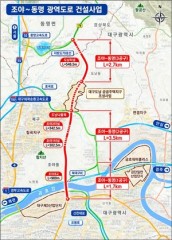
Daegu secures W21b in supplementary budget for northern regional road project
Daegu has secured 21 billion won ($15.5 million) in its second supplementary budget of 2026 for the Joya-Dongmyeong regional road construction project, aimed at easing traffic congestion in the city's northern districts and expanding the regional transport network between Daegu and North Gyeongsang Province. According to the city government Thursday, the Joya-Dongmyeong regional road will run 7.9 kilometers with four lanes in both directions, connecting Joya-dong in Buk-gu, Daegu, through the Donam district to Dongmyeong-myeon in Chilgok-gun, North Gyeongsang Province. The total project cost is estimated at around 370 billion won. Construction is divided into three sections. Section 1 covers the Joya Grand Bridge spanning the Geumho River and a connecting road to Sincheon-daero, Section 2 links Joya-dong to the Donam district, and Section 3 connects the Donam district to Dongmyeong-myeon in Chilgok-gun. All three sections have broken ground and are under construction. Work on Section 1 is particularly active, with construction under way on the 865-meter Joya Grand Bridge and its connection to Sincheon-daero. The supplementary budget allocation is expected to give the project fresh momentum by ensuring timely funding for key construction phases, including land compensation and major structural work. Daegu plans to tighten construction management and complete the project by 2029. "Securing this supplementary budget of 21 billion won will allow us to push the Joya-Dongmyeong regional road project forward with greater speed," said Heo Ju-yeong, head of the Daegu city transportation bureau. "We will concentrate our administrative efforts on construction management and securing national funding so that this key regional transport corridor — linked to the TK new airport — can be built on schedule and relieve traffic congestion in northern Daegu."
Sept. 17, 2026
-

Seoul to upgrade public health bureau, create new housing supply office in major reorganization
Legislative notice for restructuring plan set for Oct. 7; changes take effect next year Reorganization aims to strengthen execution of 'G3 Seoul Plan' core projects New 'Livelihood Economy Headquarters' to serve as economic control tower Population, labor and housing policy divisions to be bolstered Dedicated units for international exchange, tourism and urban space innovation also planned Oh Se-hoon vows to focus all capacity on realizing 'Seoul as a quality-of-life special city' The Seoul Metropolitan Government will elevate its public health bureau to a full headquarters, rename its architecture planning office to a rapid housing supply policy office, and establish a new economic control tower called the Livelihood Economy Headquarters. The city announced Thursday that it had drawn up the "9th Elected-Term Seoul Metropolitan Government Organizational Restructuring Plan." Seoul plans to open the proposal for public legislative comment through Oct. 7 before submitting it to the Seoul Metropolitan Council. The restructuring is designed to reinforce the organizational capacity and staffing needed to execute the core projects of the G3 Seoul Plan, which was unveiled Wednesday. The key elements of the reorganization plan cover three broad areas: strengthening health and disaster-response units for a safer daily life; creating dedicated organizations to boost Seoul's global competitiveness; and bolstering divisions handling population, labor and housing policy to realize Seoul as a quality-of-life special city. To narrow health disparities among residents and build toward a "100-year healthy city Seoul," the city will upgrade the Citizens' Health Bureau to the Citizens' Health Headquarters. A new public medical policy office will be established to deepen expertise in essential medical care and infectious disease management. The smart health division will be reorganized into a health vitality division. To enable the Seoul Metropolitan Fire and Disaster Headquarters to serve as the on-site control tower during major disasters, the rank of the headquarters' field response commander will be elevated. New units will also be created — an advanced equipment response team to expand the use of cutting-edge disaster gear such as robot dogs, and a fire law support team to strengthen the expertise of fire department special judicial police. A Jamsil Sports Complex integrated development task force will be established under the Urban Infrastructure Headquarters. The Livelihood Economy Headquarters will be created to oversee the full spectrum of economic policy, from supporting small businesses and revitalizing commercial districts to nurturing future industries. A new economic vitality policy office will be set up to pursue the urban strategy of "24-hour vibrant economy city Seoul" for regional economic revitalization. The creative industries planning office will be reorganized into a strategic industries policy office. An international exchange and cooperation office will also be established directly under the first administrative deputy mayor. Through a new investment attraction division, the city will maximize its capacity to identify investors and develop investment strategies for key development sites including the Yongsan International Business District and Seoul Digital Bio City. A tourism content division will be added to the tourism and sports bureau to identify immersive and experience-based tourism offerings. A spatial development innovation division will be set up within the Urban Space Headquarters to strategically integrate key development tools including pre-negotiation processes, transit-oriented area revitalization and mixed-use urban redevelopment. Policy areas closely tied to residents' daily lives — including population, labor and housing — will be reinforced. In line with the Framework Act on Population Strategy, which took effect Wednesday, a population and family policy office will be created within the women and family division to drive a comprehensive population strategy. A population policy planning unit will also be established to analyze demographic shifts using data and develop overarching strategies. A new employment and labor bureau will be created to integrate customized job-matching services and efforts to build a fair and safe working environment. A labor inspection division and a social economy division will be established under the new bureau. To meet the target of breaking ground on 310,000 housing units by 2031, the architecture planning office will be reorganized into the rapid housing supply policy office to maximize the speed and effectiveness of housing delivery. The international events support division under the administrative bureau will be expanded and restructured into an international events support corps in preparation for the 2027 World Youth Day in Seoul. The regulatory innovation planning office will be abolished. However, regulatory reform work will continue steadily and without interruption, centered on the creative regulation planning unit — the dedicated division for identifying and improving regulations. "This reorganization lays the groundwork for putting the G3 Seoul Plan into full action and bringing Seoul's future vision to life in the daily lives of its residents," Seoul Mayor Oh Se-hoon said. "The ultimate purpose of strengthening Seoul's global competitiveness lies in the better lives and happiness of each and every resident. We will focus all of the city government's capacity on improving residents' quality of life and will absolutely realize 'Global Top, Seoul — a quality-of-life special city.'" Earlier Wednesday, Oh unveiled the G3 Seoul Plan, setting out a vision of Seoul as a global top city and quality-of-life special city, along with five future city images — a healthy and safe city, an inclusive growth city, a stable housing city, an opportunity and vitality city, and a spatial innovation city — as well as 20 strategic goals and 100 core tasks. "Reaching the global top three is not simply about climbing the rankings of world cities — it is a strategy for translating Seoul's competitiveness into better lives for each and every resident," Oh said. "We will make the five future city images and 100 core tasks the top priorities of city administration, see them through to the end, and prove their worth through results, not declarations."
Sept. 17, 2026
-

Trot singer Sukhang, embroiled in affair allegations, returns to stage after 9 months
Sukhang (47), a trot singer who suspended her activities amid affair allegations, is set to return to the stage. A court is scheduled to deliver its first-instance ruling Thursday in a damages lawsuit filed against her by an alleged victim. According to legal sources, the seventh civil division of the Seongnam branch of Suwon District Court has set Thursday as the date for its ruling in the damages lawsuit filed by a woman identified only as A against Sukhang, whose full name is Han Sukhang. Sukhang became embroiled in the affair lawsuit controversy in December last year. A woman in her 40s with two children, identified as A, appeared on JTBC's "Sageun Banjang" ("Crime Scene") and said her husband had been having an affair with a trot singer and had left home to live with her. The broadcast also aired footage showing a woman believed to be Sukhang embracing and kissing A's husband. Sukhang subsequently responded on the same program, saying she had begun the relationship after being told that the man's marriage had "in effect already broken down and only the legal formalities remained," and that the division of assets and alimony had all been settled. As the controversy grew, Sukhang issued a public apology, saying she was "sincerely sorry for causing concern over a personal matter," and withdrew from MBN's "King of Veteran Singers 3," on which she had been appearing. Having halted her activities since the controversy, Sukhang is set to hold a concert titled "A special time with fans — back to song" on Sept. 30 at Arte Seoul Muse Hall in Seoul's Mokdong neighborhood. Ahead of the concert, Sukhang conveyed that she would "greet everyone through song rather than words" and that she was "returning to the stage with the same heart I had when I first started singing." Meanwhile, Sukhang first gained recognition in 2019 when she finished sixth on TV Chosun's "Miss Trot 1." She went on to appear in several other programs, including "Modern Family," "Dining Out Day 2" and "Trot Magic Wandering Troupe."
Sept. 17, 2026
-
'I thought it was full-time, but it was contract': 323 false job ads reported in first half of year
Cases where advertised wages differed from contract wages referred to prosecutors Referrals in six months reach 86.2% of last year's full-year total 287,772 job ads screened; 3,000 flagged as suspicious A company that advertised a "full-time position with a three-month probationary period" but offered only a one-month fixed-term contract during the actual hiring process has been caught by authorities. Another employer, whose advertised wages differed from those in the actual employment contract, was referred for investigation and subsequently sent to prosecutors. Reports of false job advertisements — listings that lure job seekers with misleading working conditions — reached 323 in the first half of this year alone, equivalent to 77.6 percent of last year's full-year total. The number of cases referred for criminal investigation also reached 86.2 percent of last year's annual figure in just six months. According to data submitted to the National Assembly by the Ministry of Employment and Labor and obtained by Democratic Party of Korea lawmaker Park Hae-chul of the Assembly's Climate, Energy, Environment and Labor Committee, the number of false job ad reports has risen every year — from 334 in 2022 to 365 in 2023, 404 in 2024 and 416 last year. Last year's figure was the highest since records began. The upward trend has continued this year. The 323 reports filed through June amounted to 77.6 percent of last year's total. If the current pace holds, this year's tally could far exceed last year's record. Cases escalating to criminal proceedings have also increased. Investigation referrals fell from 20 in 2022 to 18 in 2023 and 14 in 2024, before rebounding to 29 last year. This year, 25 cases were referred in the first half alone — already 86.2 percent of last year's annual total. Even in cases that did not rise to the level of criminal punishment, employers whose ads could mislead job seekers received administrative guidance. The Seoul Eastern District Office directed one company — which had listed a monthly salary of "up to 3.5 million won ($2,590) or more" without specifying actual pay — to clearly state wage conditions and the basis for calculating pay. The Ansan District Office ordered a company that had advertised manufacturing work but assigned employees to product packaging duties to accurately describe the actual job responsibilities. Another employer that advertised a five-day workweek but disclosed alternating Saturday shifts only during interviews was directed to specify working hours and the basis for wage calculation. The number of administrative guidance cases grew from 14 in 2022 to 54 in 2023 and 75 in 2024. Last year the figure stood at 17, while 23 cases were recorded in the first half of this year. The Ministry of Employment and Labor this year established an integrated job advertisement monitoring system. The system conducts comprehensive checks on newly posted listings across recruitment platforms and focuses on suspicious keywords such as "high income" and "Telegram" on major portals and SNS. A review of 287,772 job advertisements conducted from April 1 through Aug. 31 identified 3,000 suspicious listings. Of those, 2,855 were confirmed to have been deleted, revised or reported. The remaining 145 operators were notified but either did not respond or failed to take action. On major job platforms including Jobkorea and Saramin, 227,335 job ads were screened and 566 suspicious listings were found. Of those, 375 were deleted and 191 were revised or kept after a review of the facts. All 1,128 suspicious ads found on major portals including Naver and Daum were processed as reports. "There have even been cases where job ads are exploited as a tool for crime — such as luring people into criminal organizations through major job portals and SNS with promises of high-paying overseas work," Park said. "We need to strengthen effective responses, including swift deletions and more active investigation referrals."
Sept. 17, 2026
-

North Gyeongsang Province to hold 2026 Marine and Fisheries Expo in Daegu this weekend
North Gyeongsang Province will host the 2026 Marine and Fisheries Expo at Hall 5 of the Daegu Exco East Wing from Friday through Sunday, the provincial government announced Thursday. The three-day event aims to showcase the quality of seafood products and identify new growth engines for the marine and fisheries industry. Organized by the province and run by the East Sea Rim Industrial Research Institute, the expo will feature 200 booths from 83 companies under the slogan "The future of marine fisheries, meet it in North Gyeongsang!" This year's expo goes beyond displaying and selling the province's premium seafood products, positioning itself as an industry-oriented event that connects businesses with export, investment and retail opportunities. The event is built around three strategic pillars — participatory, business-focused and future industry-oriented — to present both the current state and future direction of North Gyeongsang's marine and fisheries sector. At the opening ceremony on Friday, an inaugural performance and exhibition tour will be followed by a three-way MOU signing among North Gyeongsang Province, overseas buyer PT Indogal Agro Trading and local seafood company Ajin. The agreement aims to support entry into the Indonesian market and expand exports, while strengthening cooperation on overseas market development through buyer, importer and distributor networking, market and distribution information sharing, and export consultation sessions and trade shows. A separate export contract worth $5 million will also be signed to help local seafood companies expand their overseas sales channels. The expo will also run export consultation sessions, an IR demo day to attract investment for marine and fisheries startups, and a product evaluation session with buyers from domestic hypermarkets — all designed to link export, investment and retail channels. A school lunch competition featuring North Gyeongsang seafood makes its debut this year, with 12 teams of school cooks, nutritionists and students from across the province competing to present the best seafood-based school meal menus. "We will actively support the MOU and export contract so they translate into real overseas market entry and expanded sales channels, creating new growth momentum for North Gyeongsang's marine and fisheries industry," said Yang Geum-hee, the province's vice governor for economic affairs.
Sept. 17, 2026
-

Daejeon to introduce flexible speed limits in school zones along major roads
46 segments targeted by 2028; daytime limit stays at 30 km/h, nighttime limit raised to up to 50 km/h Speed limits in school zones along major roads in Daejeon will shift to a flexible, time-based system, replacing the blanket 30 km/h restriction that has applied around the clock. The city announced Thursday it will introduce time-variable speed limits in school zones along roads with six or more lanes, allowing nighttime speeds to exceed the current 30 km/h cap. The city conducted a comprehensive survey of road and traffic conditions across all school zone segments subject to the 30 km/h limit and carried out joint inspections with the Daejeon Metropolitan Police Agency to develop the time-based speed management plan. Under the new system, the 30 km/h limit will remain in effect during daytime hours when children are most active, while nighttime limits may be raised to as high as 50 km/h based on road and traffic conditions. Daejeon plans to roll out the project in phases across 46 segments from this year through 2028 — starting with four segments this year, adding 15 in 2027 and 27 more in 2028. The total project cost is 6.928 billion won ($5.12 million). Taking into account on-site conditions and the effectiveness of signage, the city will install fixed signs on roads with four or fewer lanes this year. From 2027, variable signs will be placed on major roads with six or more lanes to clearly display the applicable speed limit to drivers at each time of day. Before implementation, the city plans to gather input from parents and other stakeholders and obtain approval from the Daejeon Metropolitan Police Agency's traffic safety review committee before finalizing the target segments and detailed operating guidelines. Meanwhile, Daejeon has been running a time-based speed system near Daeduk Elementary School in Yuseong-gu since July 2023. That segment uses variable signs to enforce a 30 km/h limit during the day and 50 km/h at night. "Child safety comes first, but applying a uniform speed limit even during nighttime hours is not always rational — we need to factor in road and traffic conditions," said Park Seung-won, the city's director of transportation. "We will pursue this project with both safety and practicality in mind, so that we protect children while also improving traffic convenience for residents."
Sept. 17, 2026
-
Seodaemun-gu Greenlights Bukgajwa Zone 6 Rebuild After 12-Year Wait — 1,953 Units to Rise
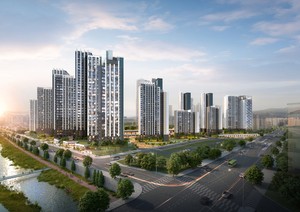
Project implementation plan approved 12 years after the area was designated a redevelopment zone in 2014 Complex to rise 34 stories across 16 buildings with 1,953 units, designated a special architecture zone to preserve Bulgwangcheon views Public walkway to link Bulgwangcheon cultural park, public parking and Bukgajwa Elementary School The Bukgajwa Zone 6 reconstruction project, designated a redevelopment zone in 2014, has received approval for its project implementation plan. The approval paves the way for a new 1,953-unit residential complex alongside a cultural park along the Bulgwangcheon and a public walkway, bringing significant change to the residential environment in the Bukgajwa-dong area. Seodaemun-gu said it approved the project implementation plan for the "Bukgajwa 6th Housing Reconstruction and Improvement Project" at 372-1 Bukgajwa-dong, effective Wednesday. Bukgajwa Zone 6 was designated a redevelopment zone in May 2014 and received approval to establish a reconstruction association in February 2020. It cleared the Seoul Metropolitan Government's integrated review committee for improvement projects last November, and following the submission of the project implementation plan on May 8, the district reviewed the application with relevant departments before granting approval. In all, 12 years passed from the zone's designation to the approval of the project implementation plan. With the approval, the specific blueprint for the project — including architectural plans and infrastructure — has been finalized, allowing the process to move on to subsequent steps such as approval of the management and disposal plan. The project covers a zone area of 104,656 square meters and will comprise 16 buildings ranging from six below-ground floors to 34 above-ground floors, for a total of 1,953 units. A key feature is the creation of parks and pedestrian spaces connecting the Bulgwangcheon with the surrounding neighborhood, alongside the large-scale housing supply. Designated as a special architecture zone, the complex will move away from uniform apartment aesthetics, with residential buildings arranged in varied heights, facades and forms. The plan calls for a residential complex that harmonizes with the surrounding landscape, taking advantage of the site's position along the Bulgwangcheon. A cultural park for residents will be built between the complex and the Bulgwangcheon, with a public parking facility beneath it. A public walkway running from the Bulgwangcheon toward Bukgajwa Elementary School will also be secured to improve convenience for students and residents on foot. The location also offers strong transport links. Three subway lines — Line 6, the Gyeongui-Jungang Line and the Airport Railroad — are accessible at the nearby Digital Media City station, and Line 6's Jeungsan Station is also close. Road access is available via Susaek-ro and the Inner Circular Road. Seodaemun-gu District Mayor Park Un-gi said the district would carefully manage the remaining administrative procedures "so that the expectations of residents who have waited 12 years can translate into real improvements in their living environment." He added that the district would "continue to communicate with residents to ensure this becomes a redevelopment project that revitalizes both the new complex and the surrounding neighborhood."
Sept. 17, 2026
-
Bonghwa-gun selected for two 2027 national heritage programs
Bonghwa-gun in North Gyeongsang Province announced Thursday that two of its projects have been selected for the Cultural Heritage Administration's 2027 "Our Hometown National Heritage Utilization" grant program. The two selected projects are a living heritage program titled "Baby Deer's Star Stories" and a traditional house and head-family home program titled "Giheon Historic House of Beopjeon Village, Embraced by the Taeguk." The "Baby Deer's Star Stories" living heritage program centers on the life of Bae Sang-yeol, a scholar known by the pen name Goedam who was born in Seokpyeong-ri — also called Yurok Village — in Bonghwa-gun, and on the astronomical heritage he left behind. Programming includes lessons on Joseon-era astronomical instruments such as the armillary sphere and sundial, traditional Korean constellations, and hands-on stargazing through telescopes. "Baby Deer's Star Stories" was selected four consecutive years from 2022 through 2025, making it one of Bonghwa-gun's flagship national heritage programs. The Giheon Historic House program reimagines the legends and historical figures associated with the old house and Beopjeon Village through outdoor park installations and experiential activities. Key offerings include an overnight program called "Did You Dream of a Dragon Last Night?" — a two-day, one-night stay at the historic house featuring traditional Korean cultural experiences — and a same-day program called "The Lady's Secret Recipe: Heirloom Cuisine," which lets participants explore traditional food culture and ceremonial customs. In 2026, the program's inaugural year, a courtyard theater performance will be staged twice over the first Saturday and Sunday of November at the Giheon Historic House grounds. Bonghwa-gun Mayor Choi Ki-young said the county would continue developing its distinctive cultural heritage into diverse content to build it into a cultural tourism asset unique to Bonghwa-gun and to help revitalize the local economy.
Sept. 17, 2026
-

Andong mask dance festival to open Sept. 24
The city of Andong in North Gyeongsang Province announced Thursday that the 2026 Andong International Mask Dance Festival will run for 11 days from Sept. 24 to Oct. 4 at Jungangseon 1942 Andong Station, Mask Dance Park, the old downtown area and Hahoe Village. Designated as one of South Korea's global festivals by the Ministry of Culture, Sports and Tourism, this year's event connects the communal memories embedded in masks through dance to contemporary life. Held under the theme "Memories of the Mask, Dance for All," the festival will feature 27 overseas performance troupes from 23 countries, 17 domestic traditional mask dance groups whose work is inscribed on UNESCO's Intangible Cultural Heritage of Humanity list, and 10 madang theater and original drama companies. Visitors can experience a wide range of traditional dances and mask cultures from around the world alongside Korean mask dance traditions — including Hahoe Byeolsingut Talnori, Bongsan Talchum, Gangnyeong Talchum and Dongnae Yaryu — all in one place. The opening ceremony will be held at 7 p.m. Sept. 25 on the main stage at Jungangseon 1942 Andong Station, featuring an entrance performance by overseas troupes, a themed stage show, a communal dance celebration with performers and audience members, and a fireworks display. Starting at 6 p.m., a parade connecting the old downtown area and the festival grounds will kick off the evening, with domestic and international troupes and local residents taking part. This year's guest of honor country is Malaysia. "Malaysia Guest of Honor Day" will be held on the main stage from 2 p.m. Sept. 26, with the official delegation from Sabah state on Borneo Island and Malaysian performance troupes joining for a cultural exchange. Hahoe Byeolsingut Talnori and Malaysian cultural performances will share the same stage, and a Sabah cultural pavilion will introduce traditional masks, crafts and tourism content throughout the festival. Traditional Malaysian craft workshops and special food offerings will also be available. Interactive programs for visitors will run at the festival grounds and in the old downtown area. The Global Mask Parade will be held four times — on Sept. 26, Sept. 27, Sept. 30 and Oct. 3 — with a communal dance celebration featuring performers and audience members beginning at 7 p.m. on each of those days. Competition programs will include the World Mask Dance Contest, the World Creative Mask Design Competition, a mask painting contest, and "TaLooK," a competition combining masks with fashion. A busking stage at Mask Dance Park will offer mask dance lessons and "Tallalla Dance" classes from Sept. 25 through Oct. 4. The mask dance troupe "Remember" will perform guerrilla shows and interactive performances at various spots around the festival grounds. Parades will also wind through the old downtown area and the festival grounds, while the market performance group "Market Mask" will visit the old and new markets to mingle with merchants, residents and tourists. A side program called "Talchum Oejeon" — featuring performances by local artists and community participation activities — will be staged at Bukmun Market, Sinsi Market, Gusi Market and Yongsang Market. At Hahoe Village, visitors can enjoy Hahoe Byeolsingut Talnori and traditional cultural performances. On Sept. 26, Oct. 3 at 7 p.m. and Oct. 4 at 6:30 p.m., the Seonyu Julbul Nori — a traditional Andong fire-on-a-rope spectacle — will be staged in the Mansongjeong and Buyongdae area, offering the distinctive atmosphere of an Andong autumn night through rope-fire displays, falling embers, egg-shaped lanterns and boat rides. Additional programs running throughout the festival grounds include an exhibition of more than 400 prize-winning works from the World Creative Mask Design Competition, a world mask exhibition hall, an East Asian City of Culture mask exhibition, an Andong traditional liquor expo and a mask atelier — offering a mix of performances, exhibitions and hands-on experiences. "This year's festival is a gathering where residents, tourists and performance troupes from around the world come together on the foundation of the traditional values held within masks and mask dance," Andong Mayor Kwon Ki-chang said. "We hope visitors will enjoy the many charms of Andong — from the festival grounds and old downtown to the traditional markets and Hahoe Village — and create special autumn memories."
Sept. 17, 2026
MOST READ
- 1KAIST develops high-performance bio-based adhesive using E. coli instead of petroleum
- 2Pope Leo XIV declines French honors and banquet, accepts only private meeting with Macron
- 3Daimler Truck unveils next-generation transport solutions at IAA 2026
- 4What was Rachmaninoff's performance fee? A 1928 price list tells all
- 5Samsung Biologics union's show of force backfires at the bargaining table
- 6APR says hair-loss treatment research published in international journal
-
WORLD

US warns of punishment for anyone enabling Iran's Strait of Hormuz toll scheme
-
INDUSTRY
Toyota union puts productivity first; Hyundai Motor union demands bigger share of profits
-
FINANCE

National Growth Fund to invest $531M in FuriosaAI, which rebuffed Meta's $800M takeover bid
-
INDUSTRY
Korea Shipowners' Association holds amateur baduk tournament for Maritime Day