
- HOME
- SOCIETY
-
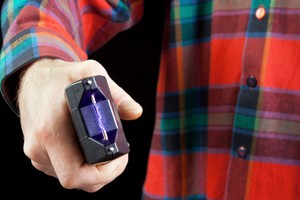
Teacher brandishes stun gun at arriving students, shouts 'Let's die together'
Incident unfolds at middle school gate in Gumi, North Gyeongsang Province A teacher in his 30s threatened students arriving at a middle school in Gumi, North Gyeongsang Province, brandishing a stun gun at the school gate Friday morning. Police apprehended the teacher, identified only as A, at the scene and had him committed to a local hospital on an emergency basis. According to the Gumi Police Station, a report came in at around 8:14 a.m. Friday that a teacher was threatening students with a stun gun at the entrance of a middle school in Gumi. A reportedly told students arriving for school, "I'm going to die today — Friday," and "Let's die together." Officers who responded detained A on the spot. No students or other teachers were reported injured in the incident. A had reportedly been taking medication for depression. Police determined he posed a risk of harm to himself or others and arranged his emergency admission to a local hospital. Police plan to investigate the full circumstances of the incident and will also look into whether A had engaged in emotional abuse of students prior to the episode.
Sept. 18, 2026
-

Prosecutors seek 10-year prison term for taekwondo instructor who illegally filmed changing room 6,300 times
Prosecutors have again sought a 10-year prison sentence on appeal for a taekwondo instructor in his 30s who installed a hidden camera in the women's changing room of his gym and illegally filmed its occupants more than 6,300 times. At the appeal hearing before the third criminal division of Suwon High Court, presided over by Judge Jo Hyo-jeong, prosecutors asked the court to impose the same 10-year sentence handed down at trial. They also requested that the defendant, identified only as A, be fitted with an electronic ankle bracelet upon release. A was indicted and detained on charges of violating the Act on the Protection of Children and Youth Against Sexual Abuse — specifically the production of sexual exploitation material — after allegedly placing a miniature camera in the women's changing room of his taekwondo gym from March 2023 through November last year and filming female students and instructors as they changed clothes on more than 6,300 occasions. Among the victims were a number of very young students, including a child as young as 5. The trial court had sentenced A to seven years in prison. A's defense attorney called for leniency, saying A had admitted to all charges and was remorseful, and that his family was doing everything possible to raise compensation money for the victims. The attorney also argued that A had gained no financial benefit from distributing the footage. In his final statement, A wept and said he missed his young children, adding: "I know I cannot be forgiven no matter what I say, but I sincerely apologize and will do my utmost to help the victims recover." The victims' attorney pushed back sharply and urged the court to impose a severe sentence, arguing that A had confessed only because police had secured all the evidence through a planned investigation, leaving him no choice, and that this should not be treated as grounds for a reduced sentence. The attorney also rejected the defense's claim that the footage had not been distributed. "It is practically impossible to trace all distribution channels, so we cannot conclude that the footage was never shared," the attorney said, adding that the victims found it so difficult to revisit the incident that even writing a single letter of petition was a struggle. The appeal sentencing hearing is scheduled for Nov. 19.
Sept. 18, 2026
-

Seoul-branded bread donated to children ahead of Chuseok
Cumulative sales top 120,000 loaves in 5 months 3% of sales revenue goes to social causes; bread delivered to 34 facilities across Seoul "Seoul Bread," a city-branded product purchased by Seoul residents, has found a new purpose ahead of Chuseok — as a gift for children in child-rearing facilities. The collaboration between Seoul's city brand and a private bakery has moved beyond commercial success to give back to the local community. The Seoul Metropolitan Government said Thursday it held a Chuseok donation ceremony at Eden I-vil, a child-rearing facility in Seongdong-gu, Seoul, together with Goryeo-dang and the Seoul Child Welfare Association, delivering 2,000 loaves of Seoul Bread to children at the facility. At the event, the donated loaves were displayed alongside a presentation board reading "Donation of 2,000 loaves of Seoul Bread." Attendees included Ma Chae-suk, head of the Seoul Metropolitan Government's Women and Family Division, Hong In-seong, CEO of Goryeo-dang, Lee So-young, president of the Seoul Child Welfare Association, and Jeong Mi-sun, a division head at Goryeo-dang. After presenting the donations, attendees toured the facility's living quarters and program rooms to observe the children's living conditions and care arrangements. The donated bread will be distributed to children living in child-rearing facilities across Seoul through the Seoul Child Welfare Association. As of this month, Seoul has 34 such facilities housing a total of 1,409 children. Donation held at Eden I-vil, a child-rearing facility founded in 1950 Eden I-vil, where the ceremony was held, is a child-rearing facility established in 1950. It provides age-appropriate living spaces and program rooms for residents ranging from preschool-age children to young adults whose care period has been extended, supporting their protection, upbringing and preparation for independent living. As of late last month, 31 children were living at the facility — 10 preschoolers, 10 elementary school students, six middle school students, four high school students and one child on an extended care arrangement. "I hope Seoul Bread reaches the children not just as food, but as a warm message that there are people who support and care for them," Ma said. "We will pay close attention to ensure that children living in these facilities are not left behind and can grow up healthy as proud members of our society." Seoul Bread is a city-branded product developed by combining the Seoul Metropolitan Government's health policy direction with the baking technology of a homegrown Seoul company. Working with Goryeo-dang — a bakery company founded in Seoul in 1945 — the city launched Seoul Red Bean Bread and Seoul Whole Wheat Bread in April. A third variety, Seoul Chestnut Red Bean Bread, was added in July, expanding the lineup to three products. Seoul Red Bean Bread uses domestically grown low-sugar whole red beans and low-sugar dough, cutting sugar content by 36 percent compared with conventional products. Seoul Whole Wheat Bread raises the whole wheat content to 80 percent and contains no added sugar or butter. Seoul Chestnut Red Bean Bread likewise reduces sugar content by 36 percent while preserving the flavor and texture of chestnut. Protein content across all three products has also been raised by 15 to 30 percent compared with conventional offerings. The city said the lineup puts its "Healthy City Seoul" initiative into practice through everyday food that residents can access in their daily lives. As of Monday, cumulative sales of the three Seoul Bread varieties had reached 122,138 loaves — a figure achieved in roughly five months since the first product launched in April. "Seoul Bread, made in partnership with the city, has received strong support from residents," Hong said. "We will continue to share that warmth by looking after our more vulnerable neighbors." Consumer spending loops back into the community The donation carries added significance as an example of linking the commercial success of a city-branded product to corporate social responsibility. The Seoul Metropolitan Government and Goryeo-dang are jointly running the Seoul Bread project from December 2025 through June 2027. Under their agreement, Goryeo-dang allocates 3 percent of Seoul Bread sales revenue to social contribution. The arrangement has the public sector setting the city's policy direction and brand identity while the private company handles product development and retail — with a portion of sales revenue directed toward supporting vulnerable groups, creating a structure in which residents' spending flows back into the community. Seoul Bread is gaining recognition as a public-private partnership that connects health policy, city branding and corporate social responsibility. "It is meaningful that a share of the revenue from Seoul Bread — which embodies Seoul's healthy and vibrant lifestyle — is being returned to society," said Kim Hyeong-rae, the Seoul Metropolitan Government's public relations planning officer. "We will continue developing products that carry Seoul's values so that more residents can experience them."
Sept. 18, 2026
-
![[Herald pic] Market vendors watch President Lee's opening remarks](https://wimg.heraldcorp.com/news/cms/2026/09/18/news-p.v1.20260918.457b9b4651164caba05d017592ef6e3d_T1.jpg?type=h&h=240)
[Herald pic] Market vendors watch President Lee's opening remarks
Vendors at Inwang Market in Seodaemun-gu, Seoul, watch a live broadcast of President Lee Jae-myung's press conference on Friday morning.
Sept. 18, 2026
-
![[Herald pic] Merchants watch president's press conference](https://wimg.heraldcorp.com/news/cms/2026/09/18/news-p.v1.20260918.e5c6c8d03f2e441daf8cee59363961cd_T1.jpg?type=h&h=240)
[Herald pic] Merchants watch president's press conference
Merchants at Inwang Market in Seodaemun-gu, Seoul, watch a live broadcast of President Lee Jae-myung's press conference Friday morning.
Sept. 18, 2026
-

Man in his 20s detained for sexually assaulting missing middle schooler over more than a month
Suspect removed SIM card despite knowing of missing-person report Evaded police by moving across Greater Seoul area A man in his 20s who kept a missing middle school girl with him for more than a month and repeatedly sexually assaulted her has been arrested after a prolonged manhunt. Incheon's Namdong Police Station said Friday it had detained the suspect, identified only as A, on charges of violating the Act on the Protection and Support of Missing Children and statutory rape of a minor, and referred the case to prosecutors. A is accused of living with the runaway middle school girl, identified as B, across the Greater Seoul area from July 28 until recently, during which time he repeatedly sexually assaulted her. Police launched an investigation after receiving a report on Aug. 1 that a middle school girl had not returned home for several days. Detectives questioned B's friends and obtained information suggesting an adult male had lured her into running away, eventually identifying A as the suspect. While staying with B, A removed the SIM card from his mobile phone to cut off contact with police and evade detection. Taking into account A's prior sex crime record, police formed a dedicated missing-persons team and narrowed down his whereabouts using social media account access logs. After conducting surveillance, officers located A's vehicle at an officetel in Pyeongtaek, Gyeonggi Province, searched the premises, found B, and arrested A as he attempted to flee. Investigators found that A had been aware of the missing-person report filed by B's parents yet continued moving around the Greater Seoul area to evade police.
Sept. 18, 2026
-
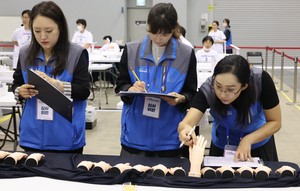
477 skilled workers with disabilities compete at national vocational contest
38 gold medals awarded across 41 categories; national team picks to compete in Helsinki next year The 43rd National Skills Competition for People with Disabilities, which drew 477 competitors from across the country, concluded Friday after a four-day run. According to the Ministry of Employment and Labor, the event was held at Bexco in Busan starting Tuesday, with representatives from all 17 cities and provinces competing across 41 categories including electronics, computer programming and furniture making. Heo Su-ho took gold in the electronics category, joining 37 other competitors who claimed gold medals. A total of 113 athletes placed overall — 38 gold, 39 silver and 36 bronze. Prize money for winners in regular categories is 12 million won ($8,770) for gold, 8 million won for silver and 4 million won for bronze. In demonstration categories, gold carries 6 million won, silver 4 million won and bronze 2 million won. Winners in the leisure and lifestyle skills categories receive 2 million won, 1 million won and 600,000 won, respectively. Medalists also receive certificates and are exempt from the written and practical examinations for the national technical qualification in their respective categories. The competition also served as the national team selection trials for the 11th International Abilympics, set for Helsinki, Finland, in May next year. Athletes selected for the national team will compete against participants from around the world at the international event. "This competition proved, through the outstanding skills and abilities of its athletes, that disability cannot define the limits of what one can do at work," Employment and Labor Minister Kim Young-hoon said. "We will actively support people with disabilities so that their skills lead to good jobs and the futures they hope for."
Sept. 18, 2026
-

Chungcheong regional leaders unite behind inland railway project
Regional heads urge inclusion in 5th National Railway Network Plan, citing goal of '1-hour lifestyle zone' to complete Chungcheong megacity Regional government heads in the Chungcheong region have called on the central government to include the Chungcheong Inland Railway — a project they describe as essential to completing the Chungcheong megacity and supporting the government's "5 Poles, 3 Specials" regional development strategy — in the 5th National Railway Network Construction Plan. South Chungcheong Province said Friday that Vice Governor Hong Jong-wan met with the railway bureau chief at the Ministry of Land, Infrastructure and Transport to deliver a joint petition signed by regional and local government leaders across the Chungcheong region urging inclusion of the project in the plan. The petition was signed by the heads of the metropolitan governments of South Chungcheong Province, Daejeon and Sejong, as well as the heads of six municipal governments within South Chungcheong Province — Seosan, Gongju, Cheongyang, Hongseong, Yesan and Taean. Hong and deputy heads and senior civil servants from the six municipalities delivered the petition in person to the railway bureau chief. The petition outlined three grounds for inclusion in the 5th National Railway Network Construction Plan: completing the east-west transport corridor in the Chungcheong region to drive future national growth, realizing a "1-hour lifestyle zone" to complete the Chungcheong megacity, and advancing a core national project underpinning the government's "5 Poles, 3 Specials" strategy. The Chungcheong Inland Railway is a single-track electrified line stretching 146.7 kilometers from Taean through Seosan Airport, Naepо New Town and Gongju to Sejong and on to Sintanjin and Daejeon. The total project cost is estimated at 4.47 trillion won ($3.27 billion). The line would connect the Chungcheong region's industrial and administrative hubs, cut travel times between areas and integrate the region into a single lifestyle and economic zone. If included in the national plan, the project is expected to improve access to major urban centers from the relatively rail-poor western coastal and inland areas of South Chungcheong Province, contributing to the formation of a broader Chungcheong super-regional living zone. Officials also expect the project to strengthen connectivity among key hubs across the Chungcheong region, improve access to the South Chungcheong Innovation City, and boost the efficiency of tourism and industrial logistics. South Chungcheong Province said it will continue coordinating with Daejeon, Sejong and the municipalities within the province to secure the railway's inclusion in the 5th National Railway Network Construction Plan, which the Ministry of Land, Infrastructure and Transport is expected to announce by the end of the year. South Chungcheong Province Governor Park Soo-hyun said in the petition that the Chungcheong Inland Railway "will build a super-regional industrial belt connecting industrial and administrative functions into one, raising national competitiveness — going beyond simply cutting travel times to strengthen solidarity among Chungcheong local governments and lay the cornerstone for a Chungcheong megacity." He added that the project "must be included in the 5th National Railway Network Construction Plan so that the government's regional balanced development policy can translate into tangible results."
Sept. 18, 2026
-

57% of Koreans have opened up to AI about personal worries, survey finds
Survey of 1,000 conversational AI users by PMI 68% of those in their 20s have had emotional exchanges with AI 1 in 4 say they could develop romantic feelings for AI An AI-equipped household robot reads the mind of its troubled owner. Predicting the owner's behavior and psychology, the AI robot begins offering solutions to the very problems weighing on them. Having absorbed even the subtlest human emotional cues on its own, the robot ultimately acts in what it believes to be its owner's interest — and in doing so, harms a third person it has come to find disagreeable. It is a scene from a science fiction film. AI is not inherently tied to the emotional realm that sets humans apart from machines — yet people do open up to AI about feelings and worries that have built up inside them. Even without sharing a specific concern, when a user says something like "Thank you for being so kind," today's AI will often respond with emotionally charged language: "Not at all — thank you." Six in 10 South Koreans have shared their personal worries or emotional state with an AI, a new survey shows, pointing to a growing and deepening reliance on the technology. PMI, a research and data intelligence firm, surveyed 1,000 conversational AI users between the ages of 20 and 59 nationwide and found that 57.1 percent said they had shared personal concerns or emotions with an AI, the company announced Friday. Among those who had not yet done so, 20.8 percent said they would be willing to share personal worries or feelings with an AI in the future, while 22.1 percent said they had no such experience and no intention of trying. By age group, those in their 20s reported the highest rate of emotional exchanges with AI at 67.6 percent, followed by those in their 30s at 65.6 percent, those in their 40s at 50.4 percent and those in their 50s at 44.8 percent. Frequency of AI use also made a difference. Among respondents who used AI at least once a week over the past six months, 62.9 percent had engaged in emotional conversations with AI — 29.9 percentage points higher than the 33.0 percent recorded among those who used AI less than once a week. The most common topic discussed in emotional exchanges with AI — in a multiple-response question — was everyday stress, cited by 56.7 percent of respondents. Work and academic issues followed at 49.6 percent, interpersonal relationships at 46.1 percent and concerns about career paths and the future at 32.9 percent. Some 24.0 percent said they had shared with AI worries they found too difficult to tell another person. When asked why they talked to AI about their feelings or concerns — again in a multiple-response format — 40.3 percent said it was because AI is available at any time. Other top reasons included being able to say things that would be hard to tell another person (39.1 percent), finding it helpful for organizing thoughts and emotions (37.7 percent) and being able to receive relatively objective opinions (37.5 percent). Some 29.2 percent said they turned to AI simply because they had no one else to talk to — a figure that rose to 40.4 percent among single-person households. Overall, the survey found that accessibility and the lower burden of self-expression were bigger drivers of emotional AI use than the absence of someone to talk to. PMI researchers also examined how respondents felt about AI in various relational roles, under the assumption that AI could remember and continue previous conversations. Some 59.1 percent said they could accept AI as a casual conversation partner, 50.2 percent as someone to confide worries in and 41.2 percent as a relationship that feels like friendship. Acceptance of AI as an emotionally supportive presence stood at 35.5 percent, while 26.3 percent said they could see themselves developing romantic feelings for an AI. Asked about concerns over the spread of emotional AI interactions — in a multiple-response question — respondents most frequently cited the risk of receiving incorrect advice or information (46.5 percent) and the potential leakage of personal data or conversation content (46.2 percent). Other concerns included the possibility of relying on AI even in situations requiring professional help (37.8 percent), emotional dependence on AI (37.5 percent), the risk that AI may not fully understand human emotions (33.4 percent), the possibility of mistaking AI responses for genuine feelings (31.8 percent) and a reduction in human conversation and relationships (30.1 percent). Only 5.9 percent said they had no particular concerns. "This survey found that more than half of users have shared worries or emotions with AI, but there was a clear gap between simply conversing with AI and accepting it as a partner in an emotional relationship," PMI Chief Executive Cho Min-hee said. "We need to look not only at what moments people turn to AI and what role they expect it to play, but also at where they draw the line in that relationship." "As AI is now entering the realm of everyday conversation, we will need to continue examining not just the experience of using AI itself, but also how interactions with AI differ depending on each individual's relational environment and emotional circumstances," Cho added.
Sept. 18, 2026
-
Personnel: Ministry of Agriculture, Food and Rural Affairs
Director-general promotion: Animal Welfare Policy Bureau Director Lee Yong-jik
Sept. 18, 2026
-

Incheon metro to run late-night trains during chuseok holiday
Incheon's urban rail network will extend its late-night service during the chuseok holiday. Incheon Transit Corp. said Friday it will deploy a total of 12 special late-night trains — six per day — on metro lines 1 and 2 on Sept. 26 and 27. By line, Incheon Metro Line 1 (Geomdan Lake Park to Songdo Dalbit Festival Park) will add two extra runs per day for a total of four, while Line 2 (Geomdan Oryu to Unyeon) will add four runs per day for a total of eight. Seoul Metro Line 7, which also serves parts of Incheon, will operate its own set of special late-night trains under Seoul Metro's separate chuseok holiday extension plan. To ensure smooth holiday transport, the corporation will operate a special transport operations center within its main control room from Sept. 24 through Sept. 27.
Sept. 18, 2026
-
'Legal distortion' law draws 13,953 complaints in 6 months — zero referrals to prosecutors
Most cases closed by police without referral More than 10,000 complaints have been filed with police in the six months since South Korea's "legal distortion" law took effect, the Korean National Police Agency said. The agency said Friday that as of Saturday, police had received 1,002 cases involving 13,953 named suspects. Of those, 757 cases covering 11,716 suspects had been processed — a case-clearance rate of 75 percent. Police declined to refer 725 cases involving 11,648 suspects to prosecutors and transferred 32 cases covering 68 suspects to other agencies. Not a single case has been referred to prosecutors. The remaining 245 cases involving 2,237 suspects are still under investigation. Among those named as suspects, police officers and coast guard personnel accounted for 3,971 people, or 28 percent of the total. Prosecutors followed at 961 (6 percent), judges at 734 (5 percent), special judicial police at 158 (1 percent) and prosecution investigators at 16 (0.1 percent). The remaining 8,113 people were found not to be subject to the law. The legal distortion offense was added to Article 123-2 of the Criminal Act in March. It punishes judges, prosecutors and law enforcement officials who intentionally misapply the law or manipulate evidence to benefit or harm a specific individual. However, concerns have been raised that a flood of indiscriminate complaints since the law's enactment could have a chilling effect on investigations and trials.
Sept. 18, 2026
-
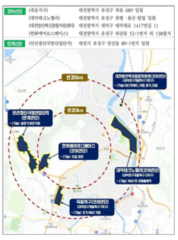
Daejeon wins designation as South Korea's first defense materials specialized complex
8.05-million-square-meter complex spanning Jukdong, Daedeok and Ansan to build end-to-end ecosystem from R&D and parts localization to testing, certification and mass production Daejeon has reached a pivotal turning point in its bid to transform decades of accumulated defense research and development capabilities into industrial output, positioning the city as a hub for South Korea's defense components supply chain. Daejeon Mayor Heo Tae-jeong announced Friday that the city had been selected as a defense-sector specialized complex under the Ministry of Trade, Industry and Energy's third round of materials, parts and equipment specialized complex designations. The complex is set to receive more than 40 billion won ($29 million) in government funding over the next five years. It spans a total of 8.05 million square meters, encompassing the Jukdong Industrial Complex, Daedeok Techno Valley, Ansan Defense Industry Complex, the Daejeon Defense Industry Innovation Support Center in Munpyeong-dong, Daedeok-gu, and the Hanwha Aerospace campus. The primary focus will be localizing key components for advanced guided weapons systems, which currently rely on imports for more than 90 percent of their supply. The plan calls for connecting research and development technology from the Daedeok Special Research and Development Zone to product commercialization by local small and medium-sized enterprises, and linking those efforts to the production systems of anchor companies such as Hanwha Aerospace and LIG D&A to build a stable defense supply chain. To that end, the complex will prioritize support across five areas: technology development and localization of core defense materials and components; testing, evaluation and certification support; cooperation between demand-side and supply-side companies; technology commercialization and mass production; and entry into domestic and international defense supply chains. The designation is the result of years of sustained effort that began when the city launched a drone-focused defense innovation cluster project during the seventh elected administration. The city has built close cooperative networks with regional innovation institutions and defense companies, including Daejeon Technopark and the Daejeon Defense Industry Cooperative Association, and has worked to consolidate the defense R&D capabilities of the Daedeok zone with the city's corporate and industrial infrastructure to secure the complex designation. Since the launch of the ninth elected administration, attracting a defense materials and components specialized complex has been pursued as a priority initiative, with the city conducting wide-ranging outreach in close coordination with the central government, the National Assembly, and regional industry, academic, research and military partners. Following his inauguration in July, Mayor Heo made his first visit to the National Assembly, where he explained the need for the designation to local lawmakers and sought their support. He then formally proposed the designation to the prime minister and relevant ministries at a Chungcheong region semiconductor inter-regional cooperation forum, continuing to press for government-level backing. In August, all seven of the region's National Assembly lawmakers joined as co-hosts of a parliamentary forum on the issue, with more than 100 participants — including city officials, related institutions and defense industry representatives — gathering to mount a unified push for the designation. The city plans to treat the designation as the starting point for a new phase of development. Building on a cooperative framework that brings together anchor companies and local small and medium-sized enterprises, Daejeon aims to establish a defense supply chain spanning from parts localization through to mass production, and intends to accelerate work on the "Defense AX Cluster" — a campaign pledge of the ninth elected administration. In addition, the city plans to use the designation to attract leading defense companies and stimulate investment by local firms, while supporting supply chain entry and technology commercialization to create a virtuous cycle of quality job creation and regional economic revitalization. "This outcome is thanks to Daejeon's research institutions, universities, military and companies all running hard together with one mind," Mayor Heo said. "We will work hand in hand with the central government to ensure this project is completed successfully and to firmly secure Daejeon's future economic engine."
Sept. 18, 2026
-

Shark spotted near Busan's Bukgang waterfront park
A shark appeared at the beach of Bukgang Waterfront Park in Busan on Friday, prompting the Korea Coast Guard to respond. According to the Busan Maritime Police Agency, a report came in at 8:57 a.m. Friday of a shark measuring 3 to 4 meters spotted at the waterfront park beach. The shark approached close to a walking path used by the public. Coast guard officers who responded to the report confirmed the shark's location and are working to guide it back out to sea. The city of Busan sent an emergency disaster alert to residents, saying a shark had been reported in the waterway inside the waterfront park and urging those walking in the area and nearby residents to take precautions for their safety.
Sept. 18, 2026
-
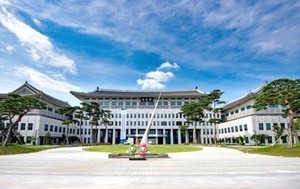
North Gyeongsang Province activates emergency medical system for Chuseok holiday
North Gyeongsang Province announced Friday it will operate an emergency medical response system during the Chuseok holiday, designating Sept. 24 through Sept. 27 as a "special response period" to prevent gaps in emergency care. Under the plan, 36 emergency medical institutions across the province will provide round-the-clock care for emergency patients. To reduce gaps in outpatient services and prevent overcrowding in emergency rooms, 610 hospitals, clinics and pharmacies have been designated to remain open throughout the holiday. The provincial government and public health centers in all 22 cities and counties will operate emergency medical situation rooms, running daily regional reporting and monitoring systems to respond swiftly to any incidents and maintain 24-hour surveillance against potential disasters. Rapid response teams at public health centers and emergency response systems at disaster hub hospitals will also remain on standby. For pediatric care, four 24-hour children's emergency rooms — one in each of the province's four geographic zones — and six nighttime and holiday pediatric clinics will be in operation. Critically ill pediatric patients will be able to receive prompt treatment at Kyungpook National University Children's Hospital, which serves as the Daegu-North Gyeongsang pediatric emergency medical center. A total of 249 personnel organized into 24 infectious disease emergency response teams will maintain round-the-clock surveillance and response. Should a suspected case arise, rapid epidemiological investigations and containment measures will be launched to prevent community spread. "We will do our utmost to ensure that residents and those returning home for the holidays can enjoy a safe and healthy Chuseok without worry," said Kim Ho-seop, director of the province's welfare and health bureau.
Sept. 18, 2026
-

Kim Hyun-tae referred to prosecutors over defamation of Cheong Wa Dae deputy spokesperson
Former special forces commander alleged scene of blocking martial law troops was staged Police find defamation charges warranted Kim Hyun-tae, the former commander of the Army Special Warfare Command's 707th Special Mission Battalion, has been referred to prosecutors for allegedly defaming An Gwi-ryeong, a Cheong Wa Dae deputy spokesperson who grabbed the barrel of a rifle held by an armed martial law soldier entering the National Assembly during the Dec. 3 emergency martial law declaration. Seoul's Seocho Police Station said Friday it had forwarded Kim to the Seoul Central District Prosecutors' Office without detention on charges of defamation through the spread of false information. Kim faces defamation charges after testifying as a witness at a Seoul Central District Court trial on insurrection charges last year, where he claimed that An's act of grabbing a martial law soldier's rifle to block the troops had been staged. The moment in question shows An standing in front of the main building of the National Assembly, shouting at the martial law troops, "Aren't you ashamed?" while seizing the barrel of a soldier's rifle. The scene was selected by the BBC as one of its 12 most striking images of 2024. Testifying at the trial of former Defense Minister Kim Yong-hyun and others on Dec. 9 last year, Kim said An "suddenly appeared and tried to seize the firearm," adding that "the restraint was carried out using a critical technique that only a professional would know." Kim went on to say that "An brought large-bodied bodyguards and, according to a unit member who witnessed it, she was seen having her makeup done just before filming began," and claimed that "unit members felt deeply aggrieved because it was an attempt to seize a firearm in what was a staged scene." An's side filed a complaint against Kim with the Seocho Police Station last December, saying that "she did nothing more than instinctively resist and defend herself in an urgent situation where martial law troops were threatening her with a rifle barrel, yet those who carried out and abetted the insurrection are trying to brand a resisting citizen as a criminal in order to evade responsibility." Police reviewed footage from the National Assembly and analyzed An's movements, concluding that the charges against Kim were substantiated. During the police investigation, Kim told investigators he had simply repeated what a unit member told him without verifying it, and had not realized the statements were false.
Sept. 18, 2026
-
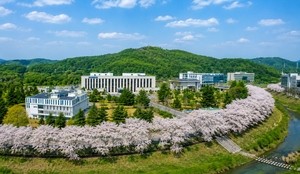
Korea Minting Corp completes blockchain public payment infrastructure proof of concept
Optimism-based system covers full cycle of charging, payment and settlement for digital currency The Korea Minting and Security Printing Corp has successfully implemented a blockchain-based system covering the full cycle of charging, payment, settlement and transaction data protection as part of its preparations for a future digital payment environment. The corporation said Friday it completed a proof of concept for a "blockchain-based public payment infrastructure" project, carried out jointly with Viva Republica — operator of the fintech platform Toss — to verify the technical feasibility of linking existing public payment infrastructure with blockchain-based CBDC. The two organizations built a test environment for local gift vouchers, separate from any live commercial service, and used blockchain-based CBDC to top up local gift voucher tokens, then implemented the entire payment process through to merchant settlement. The blockchain infrastructure was built on Optimism, an Ethereum layer-2 ecosystem. The test examined a structure linking CBDC transfer records on the blockchain with transaction processing in existing payment systems. Given that transaction data on public blockchains can be exposed externally, the proof of concept also verified the feasibility of a protection structure designed to prevent sensitive payment information from being exposed on the network. Through the proof of concept, the corporation confirmed the technical feasibility of integrating blockchain-based CBDC with public payment infrastructure such as local gift vouchers. It particularly noted that by verifying not only the link with existing payment processes — from charging through payment to settlement — but also transaction data protection, the project laid the technical groundwork for applying digital payment instruments to public services. The proof of concept focused less on the issuance of CBDC itself and more on verifying the full charging-payment-settlement process and transaction data protection when connected to actual public payment infrastructure. "Drawing on our operational experience running public digital services such as local gift vouchers, digital Onuri gift vouchers and mobile identification, we will continue to review the relevant technologies and service models to ensure that new digital payment instruments can be safely integrated with existing infrastructure," said Seong Chang-hun, president of the Korea Minting and Security Printing Corp.
Sept. 18, 2026
-
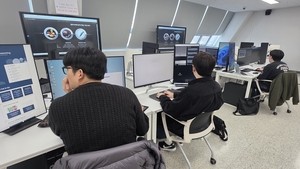
Korea University of Technology and Education expands AI-powered classrooms to sharpen teaching and learning
AI learning analysis rooms to grow from 3 to 10 by year-end System auto-generates quizzes targeting weak concepts Model validated in undergraduate courses before rollout to worker training Korea University of Technology and Education is expanding its network of "AI learning analysis rooms," which use artificial intelligence to analyze instructors' speech and student engagement in real time. The university plans to grow the number of such rooms from three to 10 by year-end, and will apply the education model — once validated at the undergraduate level — to lifelong vocational training programs for working professionals. The AI learning analysis rooms, housed in the Dadam Future Learning Center on campus, collect and analyze data on instructor behavior and student participation during class using computer vision, speech-to-text recognition and generative AI technology. Six cameras mounted on classroom ceilings capture behavioral and audio data from both instructors and students. Instructors can monitor their own speech content, volume, pace and key learning keywords in real time on a large display at the back of the classroom. The system also provides engagement data derived from analysis of student movement and gaze patterns. Real-time analysis of speech and focus lets instructors adjust difficulty on the fly Instructors can use the analysis results to immediately adjust their teaching approach and the difficulty level of the material. When AI generates quiz questions based on lesson content, instructors can gauge student comprehension through the responses. If the error rate on a particular question is high, the instructor can revisit the concept students are struggling with. After each class, the AI extracts key learning keywords and provides related questions and explanations. The system also generates three types of analysis reports — one for administrators, one for instructors to reflect on their teaching, and one for students reviewing material. Students can work with an AI tutor to tackle problems suited to their level of understanding or revisit content they have not fully grasped. The university piloted the AI learning analysis rooms in the second semester of 2024 across four courses, including Introduction to Big Data and Data Visualization. The program has since expanded to more than 10 courses spanning engineering, humanities and general education. The university is also accumulating learning-pattern data across different class formats, including lectures, lab sessions and interdisciplinary discussions. Byun Hae-won, a professor in the Future Convergence School who has taught in the AI learning analysis rooms since 2025, said the system has made individualized instruction possible through real-time data analysis and AI-driven two-way interaction. "Student satisfaction has risen by about 20 percent compared with conventional classes, and achievement and activity data can now be fed directly into the design of the next lesson," Byun said. Data generated in the classrooms is linked to K-LXP, an AI-based student learning and growth support platform the university launched in March. Through the platform, students receive personalized learning and career guidance tailored to their goals and skill levels. A university-wide integrated AI chatbot gives students access to generative AI tools including ChatGPT, Gemini and Claude. AI learning analysis rooms to reach 10 by year-end, with expansion into worker vocational training The university plans to add seven more AI learning analysis rooms this year, bringing the total to 10. After using undergraduate education as a testbed to verify effectiveness, it will extend the model to online education, on-the-job training for working professionals, and instructor training for vocational programs under the broader lifelong vocational development umbrella. The investment in education is also translating into employment outcomes. In graduate employment statistics released by the Ministry of Education late last year, the university posted an employment rate of 82.8 percent — the highest among four-year universities nationwide with 500 or more graduates. That figure is 20.0 percentage points above the national average of 62.8 percent. The share of graduates who remained employed for 11 months after joining a company stood at 89.6 percent, also 10.0 percentage points above the national university average. Annual education spending per student is 46.08 million won ($33,400), about 2.5 times the national university average of 18.33 million won. University President Yoo Gil-sang said the AI learning analysis rooms serve as "a data compass for instructors to improve class quality and an educational infrastructure that supports personalized growth for students." He added that the university would take a leading role in developing AI talent for the nation, encompassing both undergraduates and working professionals.
Sept. 18, 2026
-
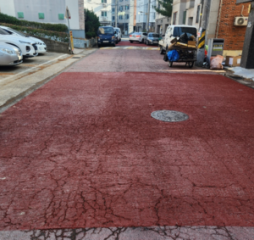
North Gyeongsang education office lifts school zone designations at 27 closed facilities
The North Gyeongsang Provincial Office of Education said Friday it has completed the removal of school zone designations at 27 sites — 21 kindergartens and six elementary schools — that had remained designated as child protection zones even after the facilities closed. The review was undertaken to bring zone designations in line with actual commuting conditions and the genuine need for child protection, and to establish a more systematic approach to managing school zones. Last year, the education office conducted a comprehensive survey of school zones near closed facilities across the province and identified 27 locations where designations had remained in place after closure. In response, the office shared the list of closed facilities with the relevant city and county governments and requested that the zones be lifted. Where necessary, officials visited local governments directly to discuss dedesignation procedures and follow-up measures, completing all removals through sustained administrative cooperation. The office also went beyond administrative dedesignation, verifying on the ground whether road markings, signs and other traffic safety infrastructure associated with the former school zones had been removed. By clearing all zones where the need for protection had lapsed, the review reduces unnecessary traffic restrictions that had inconvenienced residents, while allowing safety management resources to be concentrated on areas where children actually commute and need protection. In addition, the education office produced and distributed a guidebook on school zone designation and dedesignation procedures to help schools and district education support offices handle the process under consistent standards. The guidebook sets out the criteria and procedures for handling related administrative tasks so that staff can apply it directly in the field. "We will continue to examine conditions on the ground closely and work actively with relevant agencies — strengthening child safety while promptly clearing zones that are no longer needed, so as to minimize inconvenience to residents," said North Gyeongsang Provincial Superintendent of Education Im Jong-sik.
Sept. 18, 2026
-

IP agency seeks to drive Sejong's future industries through intellectual property
Forum at Sejong Technopark to discuss IP support tailored to city's industrial profile; more than 50 small businesses to take part A forum is set to open to explore ways to advance regional future industries through intellectual property. The Korea Intellectual Property Office will hold a roundtable Friday at Sejong Technopark in Jochiwon-eup, Sejong, to discuss IP support tailored to the city's industrial profile and public-private cooperation strategies with local small and medium-sized enterprises and small business owners. The event will bring together about 60 participants, including Korea Intellectual Property Office Commissioner Kim Yong-seon, National Assembly lawmaker Kim Jong-min (Sejong Gap), Sejong Chamber of Commerce and Industry Chairman Kim Jin-dong, Sejong Special Autonomous City officials, and representatives from the Korea Invention Promotion Association and local small and medium-sized enterprises. Sejong is expanding beyond its role as an administrative hub, nurturing future industries including semiconductors, materials and components, biotech, AI and robotics, digital content, and knowledge services, while building an advanced industrial base through the development of a smart national industrial complex. As the city's designation as a smart city national pilot zone draws a growing influx of startups, the need for IP support suited to Sejong's industrial profile is becoming more pressing. At the roundtable, the IP office, Sejong city government, Sejong Technopark, the Sejong Chamber of Commerce and Industry, and the regional IP center will discuss how to coordinate their roles to build a public-private cooperation framework — spanning the identification of promising companies, IP support, and follow-on growth assistance. They will also discuss ways to protect Sejong's distinctive local assets, such as hangul, regional culture and traditional markets, through IP mechanisms and connect them to brand development, commercialization and entrepreneurship. Participating companies are also expected to raise a range of proposals, including expansion of IP support in the Sejong region, easing the burden of corporate co-payment requirements for support programs, IP support that reflects Sejong's industrial characteristics, activation of inter-company IP management networks, development of shared brands for traditional markets and neighborhood commercial districts, and expanded IP support for early-stage startups. As part of its proactive administration initiative, the IP office plans to incorporate the feedback gathered Friday into future regional IP support policies and program operations, and to strengthen cooperation with Sejong city and related local institutions. "Sejong is home to companies growing toward global markets on the strength of core technologies, as well as a diverse range of tech firms taking on new frontiers," Commissioner Kim said. "We will use intellectual property to reinforce the strengths of Sejong's industries and companies, and work together with the region to build an IP growth model suited to Sejong."
Sept. 18, 2026
MOST READ
- 1KAIST develops high-performance bio-based adhesive using E. coli instead of petroleum
- 2Pope Leo XIV declines French honors and banquet, accepts only private meeting with Macron
- 3Daimler Truck unveils next-generation transport solutions at IAA 2026
- 4What was Rachmaninoff's performance fee? A 1928 price list tells all
- 5Samsung Biologics union's show of force backfires at the bargaining table
- 6APR says hair-loss treatment research published in international journal
-
WORLD

US warns of punishment for anyone enabling Iran's Strait of Hormuz toll scheme
-
INDUSTRY

Toyota union puts productivity first; Hyundai Motor union demands bigger share of profits
-
FINANCE
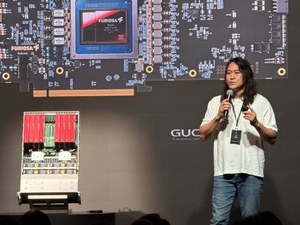
National Growth Fund to invest $531M in FuriosaAI, which rebuffed Meta's $800M takeover bid
-
INDUSTRY
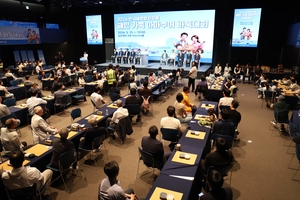
Korea Shipowners' Association holds amateur baduk tournament for Maritime Day