
- HOME
- REAL ESTATE
-

Construction Mutual Aid Association signs overseas guarantee deal with Bank of Hope
The Construction Mutual Aid Association has agreed to partner with Bank of Hope, the largest Korean-American bank in the United States, to provide overseas construction guarantee support for South Korean builders entering the US market. The association signed the MOU at Bank of Hope's US headquarters on Nov. 4, it announced Thursday. Under the agreement, the association plans to work with Bank of Hope to provide optimal financial support — including the issuance of counter-guarantees — for South Korean construction companies securing contracts of various types in the US market. The move comes as tariff negotiations with the Donald Trump administration last year locked in $350 billion in South Korean investment commitments to the United States, with shipbuilding, energy and other sectors beginning to act on those pledges this year, making financial support for South Korean builders looking to enter the US market an urgent priority. The association envisions combining its expertise in overseas construction guarantees with Bank of Hope's financial network across the United States to deliver a one-stop financial solution tailored to the needs of Korean builders operating locally. Bank of Hope, founded in 1980, ranks among the top 100 banks in the United States and operates a nationwide branch network, making it the largest Korean-American bank in the country. The association has been actively expanding its overseas guarantee business since 2014. It currently supplies roughly 1.7 trillion won ($1.27 billion) in overseas guarantees annually through more than 30 global banks. "Through this agreement, we will accelerate our efforts to provide an even higher level of financial solutions, particularly for South Korean construction companies entering the US market," an association official said. Meanwhile, the association has been pursuing company-wide operational innovation this year using AI technology.
Nov. 12, 2026
-

LH, lawmaker host forum on eliminating wage theft in construction
Hosted by Democratic Party of Korea lawmaker Ahn Tae-jun Korea Land and Housing Corporation held a policy forum Thursday at the National Assembly Members' Hall in Yeouido, Seoul, co-hosted with Democratic Party of Korea lawmaker Ahn Tae-jun, on the theme of "Innovative Payment System Reforms to Eliminate Wage Theft Among Construction Workers." The forum was organized to share the current state of wage payments to construction workers and to discuss ways to improve payment systems and reform laws and regulations to eradicate wage theft. Ahn hosted the event, with LH serving as the organizer, and the Ministry of Land, Infrastructure and Transport, the Ministry of Employment and Labor, the Korea Federation of Construction Contractors and the Korea Specialty Contractors Association serving as sponsors. At the forum, Park Gwang-bae, a senior researcher at the Korea Construction Policy Research Institute, presented on "The Current State and Problems of Wage Payments to Construction Workers." Park said wage theft in the construction industry last year totaled 416.6 billion won ($312 million), accounting for 20.1 percent of all industries, and that three in 10 construction workers — 29.5 percent — had experienced delayed wage payments within the past year. Son Chang-gi, deputy head of LH's construction management division, then presented on "New Wage Payment Methods to Eliminate Wage Theft Among Construction Workers." Son said wage theft reports at LH sites had fallen from 54 cases in 2020 to five last year, but added that a payment system linking actual attendance records with fintech was needed so workers could receive wages easily and frequently in line with the work they performed. Jo Gang-yeon, chief executive of Paywatch Co., rounded out the presentations with a fintech technology case study on "Real-Time Work Verification and Wage Payment Services Linked to Labor Data." A general discussion and question-and-answer session followed, moderated by Lee Bok-nam, a professor at Seoul National University. A total of 10 panelists from relevant agencies, including the Ministry of Land, Infrastructure and Transport and the Ministry of Employment and Labor, took part. Participants agreed on the need to shorten the gap between labor performed and wage payment and to ensure transparent construction site operations. They discussed a range of regulatory improvements — including more efficient linkage with government systems — to strengthen the practical effectiveness of the proposed payment methods. "Wage theft destabilizes a family's livelihood, and that financial anxiety leads to reckless work and on-site accidents — which means a site where wages are paid on time is a safe site," Ahn said. "I will take the lead in providing legislative support so that the new wage payment system can spread beyond LH to public and private construction sites alike." An LH official said the corporation would work together with the National Assembly and the government to help the new wage payment system discussed Thursday take root on the ground. Meanwhile, LH is pursuing an electronic payment system, a pilot program for advance wage payments combining the latest fintech technology, and a digital wage system to prevent wage theft at construction sites and establish a transparent payment framework.
Nov. 12, 2026
-
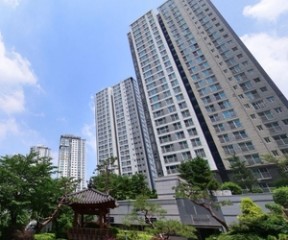
Gwangyo LH apartments listed at discount, but buyers may still need W1b in cash
LH to sell 7 units in Gwangyo and Yongin Suji from Nov. 23 to 24 Soaring Gwangyo prices push some complexes past loan regulation threshold Experts warn similar cases likely to multiply in future public-sector sales Vacant units held by the Korea Land and Housing Corporation in Gwangyo have hit the market at prices nearly 200 million won ($150,000) below prevailing rates, but industry observers say the opportunity is only half an opening for buyers who rely on mortgage financing — loan caps in the regulated zone make the units effectively out of reach for many end-users. Concerns are growing that even in public-sector apartment sales, surging home prices and tightened lending rules will increasingly shut out ordinary buyers. LH will conduct open sales of seven units across three complexes from Nov. 23 to 24: two 84-square-meter units at Gwangyo Complex 62 The Reeve in Suwon in the 1.4 billion won range, four units ranging from 84 to 120 square meters at Gwangyo Complex 40 The Forest in Suwon in the 900 million won range, and one 101-square-meter unit at Gwangyo Complex 45 The Hill in Yongin at around 1.4 billion won. LH's open sales of vacant units involve homes originally supplied under a "10-year rental followed by conversion to ownership" scheme that were returned to the corporation after existing tenants chose to vacate. Because no housing subscription account is required to apply and homeowners may also be eligible depending on the unit, these sales are regarded as a niche opportunity for genuine end-users. The complex generating the most industry interest is The Reeve, which offers the strongest price appeal among the listed units. An 84-square-meter unit at Gwangyo Complex 62 The Reeve last changed hands Nov. 5 at 1.65 billion won on the 10th floor, while the sale price for the same floor plan has been set at a maximum of 1.45 billion won — more than 200 million won less. The catch is that lending regulations may still block buyers who depend on mortgages, even at below-market prices. Because vacant-unit sales involve existing homes rather than new pre-sale units, buyers must generally rely on bank mortgage loans. In Suwon's Yeongtong-gu, a regulated zone, the mortgage cap drops from 600 million won for homes priced at or below 1.5 billion won to 400 million won once the price exceeds that threshold. Industry insiders note that even if the sale price stays under 1.5 billion won, buyers could need close to 1 billion won in cash if the bank's assessed market value at the time of loan calculation exceeds that figure. For the unit in question — based on the 21st-floor listing — the purchase price breaks down into a down payment of 145 million won and a remaining balance of 1.305 billion won. Successful applicants must submit documents by early December, and once a land transaction permit is issued, they must sign the contract within 10 days and pay the full balance in a lump sum within 90 days of signing. LH flagged the issue in its public notice, stating that "individual loan amounts may be restricted, so applicants must confirm their housing financing arrangements in advance," and that "any penalties arising from late payment or contract cancellation will be borne by the applicant." Gwangyo home prices have been climbing steeply as the area draws attention as part of the semiconductor belt. According to the Korea Real Estate Board, the cumulative apartment sale price increase this year in Suwon's Yeongtong-gu — which includes Gwangyo new town — stood at 17.97 percent as of Tuesday, more than double the 7.8 percent rate for central Seoul districts. KB's market price index, widely used by banks to set mortgage limits, put the standard average price of an 84-square-meter unit at Gwangyo Complex 62 The Reeve at 1.545 billion won as of Friday — above the 1.5 billion won threshold at which mortgage caps are reduced. Experts warn that even in public-sector apartment sales by LH and similar bodies, opportunities may increasingly favor those with greater cash reserves. Yoon Su-min, a senior real estate specialist at NH NongHyup Bank, said that as home prices rise, sales transactions where the supplier is a public entity are also being affected, making it harder for end-users who rely heavily on loans to apply. Yoon added that as similar cases are likely to increase, it is time to examine whether the effects and criteria of lending regulations are keeping pace with reality. Industry insiders expect demand for the listings to concentrate among those who can meet the owner-occupancy requirement and mobilize cash. Park Ji-min, head of the Wolyong Apartment Subscription Research Institute, said the units carry a price advantage of more than 10 percent relative to the sale price, making them open to applicants from the greater Seoul area, but predicted that interest would center on jeonse tenants in Gwangyo new town or semiconductor industry workers who can arrange cash financing.
Nov. 12, 2026
-

Jin Air, Air Seoul, Air Busan cleared to merge; unified LCC to launch in March
Approval comes with conditions on flight safety and consumer protection South Korea's Ministry of Land, Infrastructure and Transport approved the merger of Jin Air, Air Seoul and Air Busan on Thursday, with conditions requiring the carriers to establish a flight safety management system and fulfill consumer protection commitments. The ministry also said it would monitor the integration process to ensure passengers face no disruption when the unified carrier launches in March. With the approval, the three low-cost carriers — Jin Air, a subsidiary of Korean Air, and Air Seoul and Air Busan, subsidiaries of Asiana Airlines — are set to begin operating as a single LCC on March 17. The merger follows the planned launch of a combined full-service carrier under Korean Air on Dec. 17. A full-service carrier provides comprehensive in-flight services such as meals and baggage handling, while an LCC minimizes or charges separately for such services to keep fares low. The Korea Fair Trade Commission also approved the merger filing. All three carriers are affiliates of Hanjin Group, and under corporate combination review standards, a merger among affiliates within the same group is presumed not to restrict competition. The ministry applied licensing criteria set out under the Aviation Business Act and verified relevant legal requirements through in-depth consultation with a merger advisory panel, as well as expert reviews by the Korea Transport Institute and an accounting firm. The advisory panel comprised specialists in aviation, consumer affairs, employment, law and accounting. The review found no disqualifying factors — such as effective foreign control of the company or foreign nationals serving as registered executives — and confirmed that the merger met approval requirements covering capital adequacy, financial capacity and the soundness of the business plan. The ministry granted final approval after a licensing advisory meeting. As conditions of approval, the ministry required the merged LCC to complete a safety management system change inspection and obtain all necessary approvals from foreign aviation authorities before its launch date, and to report monthly to the ministry on the implementation of its submitted plans, including consumer protection measures. Jin Air also submitted a plan to develop Busan as a second hub, including expanding its Busan-based route network and infrastructure. Key proposals include increasing international routes at Gimhae Airport from 28 to 33 and raising weekly flights from 281 to 339. The ministry said it expects Jin Air's second-hub plan to contribute to revitalizing regional airports and pledged to monitor its implementation closely. It also recommended that Korean Air and Jin Air communicate closely with Busan city and local communities — given Air Busan's importance to the region — and commit fully to developing Busan as a second hub. Park Jun-sang, director of the ministry's aviation industry division, said the ministry would "strictly oversee the integration of the Korean Air group's full-service and low-cost carriers to ensure no safety issues arise and that passenger convenience is not diminished." He also urged Jin Air, as the country's largest LCC, to "strengthen its competitiveness in the international aviation market while improving air travel convenience for the public." Meanwhile, the ministry said it plans to explore ways to strengthen the competitiveness of other LCCs and foster a competitive environment among carriers, given that the Korean Air group's overall scale will grow following both the full-service and low-cost carrier mergers.
Nov. 12, 2026
-

Gwangyo new town's final housing release draws 23,820 applicants, averaging 147-to-1
84-square-meter Type A units see highest competition at 260.6-to-1 Move-in scheduled for October 2029 Gwangyo Jayeon & Centreville, a public housing development supplied by Gyeonggi Housing and Urban Development (GH) and built by Dongbu, drew an average competition ratio of 147-to-1 in its first-priority apartment subscription round, with all unit types fully subscribed. According to Dongbu on Thursday, the first-priority subscription held Tuesday drew 23,820 applications for 162 units on offer, excluding special supply allocations. By supply type, the 84-square-meter public sale units attracted 16,587 applications for 90 units, yielding an average ratio of 184.30-to-1. The 59-square-meter equity-accumulation sale units received 7,233 applications for 72 units, averaging 100.46-to-1. By unit type, the 84-square-meter Type A public sale units posted the highest competition ratio at 260.60-to-1, with 2,606 applications filed for 10 units. Analysts attributed the strong subscription demand to the complex's scarcity value as the last new housing supply in Gwangyo new town, as well as its status as a public sale development subject to the price ceiling on new apartments. Notably, the 59-square-meter units mark the first application of the equity-accumulation sale model anywhere in the country. Under this scheme, buyers initially acquire a 25 percent stake at the pre-sale price, then purchase additional equity in five-year increments to reach full ownership after 20 years. The price for each additional equity tranche is calculated by applying the average interest rate on fixed-term deposits to the original pre-sale price. Buyers pay a rental deposit on the publicly held portion of the unit, and that burden decreases as they acquire more equity. Gwangyo Jayeon & Centreville will be built at 633 Woncheon-dong, Yeongtong-gu, Suwon, Gyeonggi Province, rising 20 floors above ground with two basement levels and a total of 600 units — 360 public sale units at 84 square meters and 240 equity-accumulation units at 59 square meters. Move-in is scheduled for October 2029. The complex is accessible via Gwangyo Jungang Station on the Shinbundang Line, and transportation links are expected to improve further once the Indukwon–Dongtan double-track rail line opens at Woncheon Station. The development also sits close to major business districts including Samsung Digital City and Gwangyo Techno Valley. Nearby amenities include schools such as Maewon Elementary, Suwon Dasan Middle, Gwangyo Lake Middle and Yushin High, as well as Ajou University Hospital, Galleria department store and Lotte Mall. Gwangyo Lake Park and Saesaek Park provide green space in the immediate vicinity. On-site community facilities will include an indoor golf practice range, a shared childcare center, co-working space, a mothers' lounge and a guesthouse. Each unit will also come with a separate storage room. "The strong subscription results appear to reflect high interest in Gwangyo new town's excellent location and the new housing supply model," a Dongbu official said. "We will create a living environment that satisfies residents, drawing on the residential quality and product competitiveness that Centreville stands for." Winners of the public sale units will be announced Tuesday, with equity-accumulation unit results following Wednesday. Contract signings for public sale units are scheduled for Dec. 21-23, while equity-accumulation unit contracts will run from Jan. 25-27 next year. Meanwhile, Dongbu is also preparing to launch pre-sales for Nam Chuncheon Centreville in Hyoja-dong, Chuncheon, Gangwon Province — a 264-unit development rising up to 39 floors. The project marks the first new apartment supply in Hyoja-dong in four years and will feature AI-based residential services and a sky community, among other design highlights.
Nov. 12, 2026
-

Kumho Engineering & Construction posts 44% rise in Q3 operating profit
Net profit for the period rises 61% to W12.4b Q3 cumulative new orders reach W2.85tr 'Profitability recovering on improved cost ratio' Kumho Engineering & Construction reported third-quarter consolidated sales of 494.5 billion won ($370 million), operating profit of 22.2 billion won and net profit for the period of 12.4 billion won, the company announced Thursday. Sales fell 5.5 percent from a year earlier, while operating profit and net profit for the period rose 44.2 percent and 61 percent, respectively. The improvement in profitability was driven by a decline in the cost-of-sales ratio, which fell 1.8 percentage points to 91.9 percent in the third quarter from 93.7 percent a year earlier. As a result, the operating profit margin rose 1.6 percentage points, from 2.9 percent to 4.5 percent. New orders also surged. Cumulative new orders through the third quarter reached 2.85 trillion won, up 91.5 percent from 1.49 trillion won in the same period last year, already surpassing the company's full-year new-order target of 2.7 trillion won. By segment, new orders comprised 1.28 trillion won in building construction, 927.8 billion won in housing and 640.4 billion won in civil engineering — up 180 percent, 60 percent and 42 percent, respectively, from a year earlier. Particularly notable was 1.41 trillion won secured through Korea Land and Housing Corporation's private-participation public housing program. The company also booked orders across multiple sectors, including the Busan Eco Delta City Block 8 and Namyangju Wangsuk 2 A-1 Block projects, the Jangji bus depot redevelopment and the Samsung Electronics Flakt Korea factory. The order backlog stood at 10.2 trillion won as of the end of the third quarter, up 906.9 billion won, or 9.8 percent, from 9.29 trillion won at the end of last year — roughly five times the company's annual sales last year. By segment, the backlog comprised 3.04 trillion won in building construction, 4.65 trillion won in housing, 2.39 trillion won in civil engineering and 119.8 billion won in overseas projects. The company's financial structure also improved. The consolidated debt-to-equity ratio at the end of the third quarter stood at 337.2 percent, down 68.3 percentage points from 405.5 percent at the end of the previous quarter and 183.0 percentage points below the 520.2 percent recorded at the end of last year. Kumho Engineering & Construction said the ratio is expected to fall further once perpetual convertible bonds issued in October are reflected in fourth-quarter equity. "We are achieving positive results across key management indicators, including a recovery in profitability through improved cost ratios and an expansion of new orders," a company official said. "We will maintain a stable business foundation built on our robust order backlog and continue the trend of improving profitability." Meanwhile, the Jangji bus depot redevelopment project — in which Kumho Engineering & Construction holds a 50 percent lead stake — is worth approximately 350.6 billion won and was commissioned by the Seoul Housing & Communities Corporation. The development will add 658 public housing units along with community facilities and green space to the existing Jangji public bus depot site.
Nov. 12, 2026
-
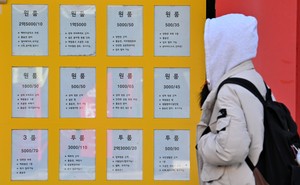
Seoul to offer interest-free deposits, expand fee support for young renters
Seoul holds roundtable on student housing stability Interest-free deposit support of up to 45 million won for youth safe housing City targets 6,000 shared housing units and new youth future town The Seoul Metropolitan Government will begin covering maintenance fees for young renters in the second half of next year as part of efforts to ease housing costs for youth. The city is also pushing to provide interest-free deposit support of up to 45 million won ($33,500) for residents of youth safe housing. The city held a roundtable on university student housing stability at Dongguk University's Wonheung Hall on Thursday, bringing together students, landlords and experts to discuss ways to reduce the housing burden on young people. At the event, students described the hardships they face as rising monthly rents and maintenance fees force them to choose smaller, older units or take on more part-time work. Seoul Mayor Oh Se-hoon said the city would continue its existing youth monthly rent support program while moving to add maintenance fee assistance starting in the second half of next year. Funding for the interest-free deposit support of up to 45 million won for youth safe housing residents has already been included in next year's budget proposal. The city launched its youth monthly rent support program in 2020, initially covering 5,000 recipients, and has steadily expanded its reach since then. The number of beneficiaries stood at 36,000 in 2022, 44,000 in 2024 and 32,000 this year. Eligibility criteria have also been loosened. The income threshold was raised from 120 percent to 150 percent of the median income in 2021, and the deposit ceiling for eligible housing was increased from 50 million won to 80 million won in 2024. The city is also scaling up the supply of Seoul-style shared housing for university students, targeting 6,000 units by 2030 through a mix of purchase-for-lease arrangements, donation-in-lieu-of-development contributions, public-private partnerships and private rentals. Under the public-private partnership model, the city provides the site while the Korea Private School Promotion Foundation handles construction and management. Idle land including public parking lots and railway sites is currently being reviewed as potential locations. The city is also considering adding sports and cultural facilities to the shared housing complexes and opening ancillary parking and dining facilities to the surrounding community. For Seoul-style shared housing, the city has already completed purchase reviews for 540 units — more than double the public acquisition target of 250 units set for this year. The city plans to finalize purchase agreements by year's end. Landlords and experts at the roundtable noted that tightened deposit insurance requirements following a wave of jeonse fraud have accelerated the conversion of small studio units to monthly rent arrangements. They also called for regulatory reform, arguing that tax surcharges on multi-home owners are adding upward pressure on monthly rents. In March, the city unveiled a youth housing stability plan to supply 74,000 life-stage-tailored youth housing units over the five years from 2026 to 2030. As of the end of September this year, about 11,000 units had been supplied, reaching 84 percent of the annual target of 13,000. By type, the supply included 7,586 youth safe housing units and 2,565 Mirinaezip units. New programs — including Seoul-style starter studios and shared housing — are set to launch in earnest next year. The city is also moving ahead with plans for a youth future town that combines housing with employment and startup support, as well as cultural and leisure amenities. The former National Institute of Health site has been designated as the pilot development, with three additional locations — the Sinnae vehicle depot, the Susaek vehicle depot and the Tancheon Water Reclamation Center — to be developed in phases, bringing the total to four sites. "We will supply youth housing without interruption and provide comprehensive housing cost support so that the housing ladder for young people can be restored," Oh said. Meanwhile, the city has eased the income threshold for its youth rental deposit interest subsidy program from 40 million won to 50 million won per year, effective June this year. The program targets youth between the ages of 19 and 39, allowing them to borrow up to 200 million won — within 90 percent of their rental deposit — with the city covering 2.0 percent annual interest on the loan.
Nov. 12, 2026
-
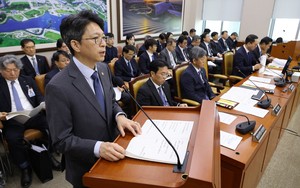
Seoul apartment prices rise for 92nd consecutive week as land minister signals possible downturn
Minister cites growing housing inventory and falling transactions as signs of a potential price decline 'Outer Seoul slowing, rate hike could widen drop' Rental market instability to be addressed with more Greater Seoul supply Land Minister Hong Ji-sun said Thursday that a continued buildup of housing inventory and a drop in transactions "can be seen as a signal that home prices may be entering something of a downturn." Hong made the remarks at the seventh plenary session of the National Assembly's Land and Infrastructure Committee, responding to a question from People Power Party lawmaker Kim Mi-ae, who asked what basis the minister had for saying there were "hopeful signs of housing price stabilization." Hong said prices in the three Gangnam-area districts — Gangnam, Seocho and Songpa — "have already been falling consistently," while the pace of gains in outer Seoul is slowing. Hong added that if the benchmark interest rate rises by year-end, the decline could widen. On instability in the jeonse and monthly rent market, Hong said the government would "continuously expand the supply of rental housing, particularly in the greater Seoul area, as sufficient housing supply is the fundamental solution." Hong rebuffed Kim's suggestion that the government was focused solely on falling prices in the three Gangnam districts, saying, "That is not the case at all." Asked about President Lee Jae Myung's recent remarks that home prices in major areas were falling at a surprising pace, Hong said the president's intent was to call for "balanced reporting" — acknowledging that prices in outer Seoul were rising while noting that prices in key areas including Gangnam and Yongsan were falling. Meanwhile, data released Thursday by the Korea Real Estate Board showed Seoul apartment prices rose 0.07 percent in the second week of November, based on figures as of Sunday, marking 92 consecutive weeks of gains. However, the three Gangnam-area districts continued to decline, and Gangdong-gu and Seongdong-gu also turned negative this week.
Nov. 12, 2026
-

Seoul apartment prices rise for 92nd consecutive week despite declines in Gangnam, Seongdong-gu and Gangdong-gu
Seoul sales prices up 0.07%; Seongbuk-gu leads district gains Songpa-gu widens decline to -0.35% as Gangnam-area weakness persists 'Semiconductor belt' stays strong; balloon effect seen in unregulated zones Seoul apartment prices rose for the 92nd consecutive week, even as Gangdong-gu and Seongdong-gu joined the three Gangnam-area districts in turning negative, with outer districts driving the overall gain. In Gyeonggi Province, areas within the so-called semiconductor belt — including Giheung in Yongin, Yeongtong in Suwon and Gunpo — posted some of the sharpest increases. According to the Korea Real Estate Board's weekly apartment price survey for the second week of November 2026 (based on Monday's data), Seoul apartment prices rose 0.07% this week — the same pace as the previous week and the 92nd straight week of gains. While the decline in Seoul's southeastern districts continued, outer areas led the price increases. Seongbuk-gu recorded the highest gain in Seoul at 0.39%, driven by transactions in large transit-oriented complexes in the Jeongneung and Donam-dong areas. Gangbuk-gu rose 0.32%, led by large complexes in Mia and Beondong; Seodaemun-gu gained 0.29%, centered on Hongjae and Namgajwa-dong; and Dongdaemun-gu climbed 0.28%, led by Jeonnong and Jangan-dong. However, Seongdong-gu (-0.02%) in northern Seoul turned negative for the first time in six weeks. Among the three Gangnam-area districts — Gangnam-gu, Seocho-gu and Songpa-gu — the pace of decline eased in Gangnam-gu and Seocho-gu. Songpa-gu deepened its fall to -0.35% from -0.17%, led by declines in the Jamsil and Garak-dong areas, marking its steepest drop in six weeks. Gangdong-gu (-0.01%), also part of the southeastern zone, turned negative. Seocho-gu and Gangnam-gu, however, narrowed their declines from the previous week's -0.37% and -0.39%, respectively, posting their smallest drops in six weeks. A Korea Real Estate Board official said transactions at preferred large complexes and transit-oriented developments continued to close at higher prices, while some areas saw downward adjustments and a wait-and-see mood persisted. "Mixed trends of gains and declines are appearing by district, but Seoul as a whole rose," the official said. In Gyeonggi Province, the semiconductor belt remained strong. Giheung in Yongin rose 0.63%, led by Yeongdeok and Dongbaek-dong. Yeongtong in Suwon gained 0.60%, centered on major complexes in Yeongtong and Mangpo-dong, while Gunpo climbed 0.56%, led by Sanbon and Geumjeong-dong. Dongan in Anyang also rose 0.50%. Gains slowed in higher-priced southern Gyeonggi areas, including Bundang in Seongnam (0.26%), Jungwon (0.25%) and Sujeong in Seongnam (0.16%). Analysts said overheating in southern Gyeonggi Province and unregulated areas continues to intensify. Nam Hyeok-woo, a real estate researcher at Woori Bank, said a chain of upgrade moves — sellers in southern Gyeonggi trading up to higher-tier properties within the same region — is sustaining price strength in those premium submarkets. "The possibility of Samsung Electronics resuming its second round of in-house loans, along with potential additional liquidity from 2027 performance bonuses, could further reinforce price floors across the greater Seoul area," Nam said. Nam added that as the jeonse and monthly rent crunch drags on, lower-income owner-occupiers are moving to nearby unregulated areas, fueling strength in the market for properties priced around 600 million won ($432,000) that forms the lower end of the greater Seoul price range. Meanwhile, Seoul jeonse prices rose 0.17% this week, matching the previous week's pace. Dobong-gu led with a 0.37% gain, driven by large complexes in Chang and Dobong-dong, followed by Gangbuk-gu at 0.35%, centered on Mia and Beondong, and Seongbuk-gu at 0.34%, led by major complexes in Jeongneung and Gireum-dong. Mapo-gu rose 0.28%, driven by large complexes in Sangam and Yonggang-dong, while Dongdaemun-gu gained 0.26%, led by small- and mid-sized units in Jangan and Jeonnong-dong. Unlike the previous week, when Songpa-gu (-0.05%) and Seocho-gu (-0.01%) posted jeonse price declines, both districts turned positive this week — rising 0.04% and 0.03%, respectively — as jeonse price indexes climbed across all of Seoul. Gyeonggi Province jeonse prices rose 0.17%, slightly above the previous week's 0.16%. Giheung in Yongin gained 0.40%, led by small- and mid-sized units in Gongse and Dongbaek-dong; Sujeong in Seongnam rose 0.38%, centered on Changgok and Sujin-dong; and Dongtan in Hwaseong climbed 0.37%, driven by large complexes in Bansong and Sancheok-dong. Icheon fell 0.14%, led by smaller units in Jeungpo and Songjeong-dong, while Manan in Anyang slipped 0.02%, centered on Anyang-dong.
Nov. 12, 2026
-

Hyundai Engineering wins back-to-back design awards, showcasing landscape architecture credentials
'Floating Way' and 'Color Sphere' each take top honors Space and color design capabilities on display Hyundai Engineering has claimed consecutive wins at major design competitions, demonstrating differentiated strength in landscape architecture. The company announced Thursday that it received the Grand Prize — the top rating — at the 2026 K-Design Award, and the RED (Innovation Award) at the 24th Korea Color Awards. The K-Design Award is an international design competition that recognizes outstanding work across product, spatial and communication design, judging entries on originality, aesthetics and practicality. Hyundai Engineering took the Grand Prize in the spatial design category for its landscape-specialized product "Floating Way." The Grand Prize is the top rating, awarded to only the top 0.1 percent of all entries. Installed at Hillstate Pyeongtaek Hwayang, Floating Way is a pedestrian walkway inspired by "sosomill-mil," a compositional principle from East Asian painting that plays on the contrast between open space and dense form. Centered on a skywalk that appears to float in the air, the design weaves together a grass plaza and a lush forest to create a layered, three-dimensional experience. At the 24th Korea Color Awards, the media art installation "Color Sphere" took the RED prize. Organized by the Korean Society of Color Studies, the Korea Color Awards recognizes outstanding work across landscape, architecture, interior, visual and video design, evaluating entries on cultural and industrial value, creativity, public benefit and social contribution. The RED is given to works that present new value through innovative use of color. Color Sphere, installed in the landscape area of Hillstate Cheomdan Central, is a media art installation that combines light, color and sound. It uses color to shape the identity of a space and engage with the people who use it. The wins are notable because Hyundai Engineering's landscape-specialized products earned recognition in two distinct fields — spatial design and color design — simultaneously. "Going forward, we will continue to raise customer satisfaction through design that carefully considers how customers live and experience their surroundings, and contribute to a better quality of life," a company official said. Meanwhile, Hyundai Engineering was also recently selected for a bronze-level Commissioner of the Korean Agency for Technology and Standards Award in the special ergonomic design category at the 2026 Good Design Award.
Nov. 12, 2026
-
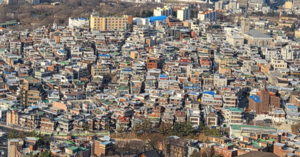
Public redevelopment fee cut from 3% to 1%, saving W13b per zone
Ministry of Land, Infrastructure and Transport and LH to apply reduced rate to zones applying by end of next year Privately driven projects also eligible if they apply for public redevelopment candidate status The government is moving to accelerate housing supply by promoting public redevelopment, cutting the fee charged by public project operators — who step in for redevelopment associations — from 3% to 1% of total project costs. The reduced rate will apply only to zones that newly apply for candidate designation by the end of next year. The fee burden per redevelopment zone is expected to fall by about 13 billion won ($9.73 million). Projects that had been proceeding under a private model may also apply for public redevelopment candidate status to benefit from the lower rate. The Ministry of Land, Infrastructure and Transport and Korea Land and Housing Corporation said Thursday they have finalized the fee reduction as part of public redevelopment promotion measures under the "rapid housing supply plan" announced Aug. 13, and will begin actively identifying new candidate sites. Under the public redevelopment system, public enterprises such as LH take on the role of project operator in place of associations, directly overseeing the entire process — from permits and design review to construction cost estimation and site management. In return, the operator receives a fee of about 3% of total project costs, which include construction and service expenses. The fee savings from this measure are expected to average about 13 billion won per zone. For example, a project supplying 2,200 units with total costs of 720 billion won would pay 21.6 billion won in fees at the 3% rate, but only 7.2 billion won at 1%. When combined with a 15% government subsidy on fees for projects completed within eight years of operator designation — announced in last year's Sept. 7 measures — the fee burden falls further, from 18.4 billion won to 6.1 billion won. The total effective fee rate would drop from 3% to 0.85%. A ministry official said the average savings figure was calculated based on total project costs across zones where LH serves as project operator. Since the public redevelopment system was introduced in 2021, a total of 39 sites have been designated as redevelopment zones, with LH selected as project operator at 22 of them. The Sinseol 1 zone — a 299-unit project where LH is the operator — has entered the management and disposal plan approval stage and is expected to be the first to break ground, potentially as early as next year. The ministry said that despite the fee cut, LH's specialist staff will continue to directly oversee the full scope of work, including design review, construction cost estimation and site management. The reduced rate will apply to zones that newly apply for candidate designation by the end of 2027, and projects previously pursuing a private model may also apply for public redevelopment candidate status to receive the same rate. Zones interested in public redevelopment may apply to LH for preliminary consulting. If at least 10 percent of landowners and rights holders consent, LH will analyze a rough project plan and estimated cost-sharing burden. Zones that proceed with redevelopment under the public model are eligible for four benefits: a floor-area ratio allowance of 1.2 times the legal ceiling, exemption from the price ceiling on new apartments, the option to apply a private brand, and interest rate subsidy support. A pending amendment to the Act on the Improvement of Urban Areas and Residential Environments — set to go before a plenary session of the National Assembly — would raise the floor-area ratio allowance to 1.3 times the legal ceiling. The interest rate subsidy covers project financing loans and resident relocation loans: when the rate exceeds 1.8 percent, the excess is subsidized by up to 2 percentage points. A single-homeowner who takes out a basic relocation loan of 300 million won at an annual rate of 4.8 percent would save about 6 million won in interest per year. The ministry is also pursuing a plan to ease the resident consent requirement for operator designation from two-thirds of landowners and rights holders to 60 percent, which would further lower the barrier to entering the public redevelopment system. Yun Young-jung, the ministry's housing improvement policy director, said the fee cut would ease the burden on residents looking to pursue public redevelopment. "We will work actively with relevant agencies to ensure that public redevelopment — where the public sector takes responsibility for managing projects — becomes a genuine alternative in the redevelopment market," Yun said.
Nov. 12, 2026
-

S. Korea's first landscape architecture expo opens Friday in Gwacheon
The Ministry of Land, Infrastructure and Transport and Gwacheon city will co-host the inaugural Korea Landscape Architecture Expo on Friday and Saturday in Gwacheon. Held under the slogan "Beyond Boundaries, Toward a Resilient Future," the expo will showcase outstanding landscape architecture projects and technology from both the private and public sectors. Around 45 exhibition booths will be set up at an outdoor venue in Gwacheon Civic Plaza. A joint booth for local governments, a special Gwacheon city pavilion and a local business pavilion will introduce landscape projects and companies from the region. Family-oriented programs — including face painting, roulette events, photo booth experiences and performances — will run from 10 a.m. to 4 p.m. each day. On the first day, a landscape architecture awards ceremony will honor 14 works, including one receiving the presidential award. Land Minister Hong Ji-seon said the expo is "an occasion to confirm together with the public that landscape architecture is a public asset that strengthens urban resilience and enriches people's everyday lives," adding that the ministry would "actively support efforts to boost the competitiveness of the landscape industry and help people feel the value of landscape architecture in their daily lives."
Nov. 12, 2026
-

HL D&I Halla earns 'excellent' rating on co-prosperity index for 2nd consecutive year
'Top' rating on fair-trade agreement compliance for 2nd year Achievements in partner education, co-prosperity fund recognized HL D&I Halla has received an "excellent" rating on the co-prosperity index for the second consecutive year, in recognition of its collaborative activities with partner companies. The construction company said Thursday it earned the "excellent" rating again this year, following last year's result, after working to support partner companies and foster a fair business culture. HL D&I Halla also received a "top" rating for the second consecutive year on the Korea Fair Trade Commission's fair-trade agreement compliance evaluation. The company earned a range of incentives as a result, including a two-year exemption from the commission's ex officio investigations, designation as a model subcontracting company, and additional points in the Public Procurement Service's pre-qualification screening for public tenders. The co-prosperity index measures the level of mutual cooperation between large corporations and small and medium-sized enterprises. It is published annually by combining the results of the Co-Prosperity Committee's comprehensive co-prosperity evaluation and the Korea Fair Trade Commission's fair-trade agreement compliance evaluation. The company has pursued a range of initiatives to promote co-prosperity with its partners, including actively adjusting payment terms, contributing to a co-prosperity fund, and providing education and training support for partner company employees. It also conducts internal audits to prevent violations of subcontracting laws and protect partner companies from harm. In July, the company also received a top rating in the Ministry of Land, Infrastructure and Transport's mutual cooperation evaluation for construction contractors. Meanwhile, HL D&I Halla plans to supply 228 units of "Gyeonghuigung Epitt" in the Donuimun Zone 2 redevelopment promotion district in Jongno-gu, Seoul. The complex is a new apartment development on the last remaining site of the Donuimun redevelopment project, with 134 units available for general pre-sale.
Nov. 12, 2026
-

Korea Asset In Trust named project operator for Taereung Woosung reconstruction
Complex to be rebuilt up to 33 stories with 704 units Korea Asset In Trust has been designated as the project operator for the Taereung Woosung apartment reconstruction project in Gongneung-dong, Nowon-gu, Seoul. With the designation process complete, the company plans to move forward with subsequent steps, including convening a general meeting of landowners and other rights holders, conducting an integrated review, and selecting a contractor. According to industry sources, Nowon-gu officially designated Korea Asset In Trust as the project operator for the Taereung Woosung reconstruction project on Thursday. The designation comes just 23 days after Korea Asset In Trust submitted its application, and follows the project zone designation in May, putting the reconstruction on track to proceed in earnest. The current 432-unit complex will be rebuilt into a development of up to 33 stories and 704 units, along with ancillary welfare facilities, applying a floor area ratio of 299.46 percent. The total unit count includes 87 public housing units. By exclusive use area, the units break down as follows: 87 units at 59 square meters, 120 units at 74 square meters, 433 units at 84 square meters, and 64 units at 103 square meters. Particularly notable is the application of a "project viability correction coefficient" of 1.68 — an index used during the planning process to bolster a project's financial feasibility — which significantly expanded the allowable floor area ratio incentive. Detailed architectural plans are to be finalized during the integrated review and project implementation authorization stages. The surrounding pedestrian environment will also be improved. A 6-meter-wide public walkway connecting Nowonno 1-ga-gil and Madang Park will be created within the complex and kept open at all times to enhance residents' walking convenience and the safety of elementary school students commuting to school. Along Nowonno, pedestrian space will be secured, and facilities for shared community use — including childcare and senior services — will also be provided. The project site is within walking distance of Hwarangdae Station on subway Line 6, and is close to Taereung Elementary School and Gongneung Middle School, giving it strong educational surroundings. Madang Park borders the complex to the north, and large residential developments nearby — including Taereung Harrington Place, Taegang Apartments and Isu Cheongsol Apartments — provide abundant lifestyle infrastructure. Nowon-gu's active administrative cooperation is credited as a key factor behind the swift designation. A Korea Asset In Trust official said the district had worked closely with the company in advance to coordinate the requirements for the designation, providing full support to ensure the process proceeded smoothly. The official added that Nowon-gu had established a dedicated task force to accelerate reconstruction projects and was taking the lead in resolving pending issues and improving the regulatory framework for reconstruction and redevelopment projects in the district. Nowon-gu said it would continue to closely monitor the progress and challenges at each project site, and actively support redevelopment initiatives through coordination with relevant agencies and administrative assistance. As project operator, Korea Asset In Trust will oversee the entire process transparently, from financing and design through permitting, construction and pre-sales. Key decisions — including finalizing the implementation rules and selecting designers and contractors — will be made through resolutions at general meetings of landowners and rights holders. Meanwhile, Korea Asset In Trust has recently taken on the role of project operator in several major Greater Seoul reconstruction projects, including the Mok-dong complexes 9 and 11, Bundang THE Sibeom, and the Yeouido Sibeom and Gwangjang apartment complexes. A Korea Asset In Trust official said the company plans to lead the Taereung Woosung reconstruction project in a stable and systematic manner, drawing on its expertise in key procedures such as permitting and contractor selection.
Nov. 12, 2026
-

Namkwang Engineering & Construction to open model home for Bucheon Daejang Haustory Decent on Friday
548 units to be supplied in 3rd-generation new town Bucheon Daejang Special supply subscriptions open Nov. 23, first-priority applications Nov. 24 The model home for Bucheon Daejang Haustory Decent, a public apartment development being supplied by a consortium of Korea Land and Housing Corporation (LH) and Namkwang Engineering & Construction in the Bucheon Daejang district of the third-generation new town, will open Friday. Namkwang Engineering & Construction announced Thursday that it will open the model home for the project, located in Block A-2 of the Bucheon Daejang public housing district in Bucheon, Gyeonggi Province, launching the formal pre-sale process. The LH-Namkwang Engineering & Construction consortium is developing and building the complex as a privately participated public sale apartment. The development will comprise eight buildings rising up to 15 above-ground floors over two basement levels, with a total of 548 units. Unit types cover small-to-mid-sized exclusive use areas of 59, 74 and 84 square meters. The price ceiling on new apartments applies to the complex. Apartment subscriptions open with special supply on Nov. 23, followed by first-priority applications on Nov. 24 and second-priority on Nov. 25. Successful applicants will be announced Dec. 1, and formal contracts are scheduled to run over five days from Jan. 25 to Jan. 29 next year. On the transportation front, a new Daejang Station on the Daejang-Hongik University line is planned near the complex. The Daejang-Hongik University line is a wide-area rail link spanning 20.1 kilometers from Bucheon Daejang through Seoul's Gangseo and Yangcheon-gu districts and Digital Media City before terminating at Hongik University Station. Once open, the line is expected to bring travel time from Bucheon Daejang to Hongik University Station to within 20 minutes. The GTX-D line is also being pursued in the area. Corporate research and development facilities and industrial complexes are also planned nearby. The first Bucheon Daejang urban advanced industrial complex is set to include SK Green Techno Campus and DN Solutions' R&D facilities, while Korean Air is pursuing a development for urban air mobility and aviation safety R&D at the second urban advanced industrial complex. Within walking distance of the complex, sites have been designated for a kindergarten and elementary, middle and high schools. Parks, waterfront walking paths and a central commercial district are also planned for the surrounding area, with the overall lifestyle infrastructure expected to improve over time. Community amenities within the complex will include a guest house, seasonal storage, a fitness center, a small library and a study cafe. Childcare and education facilities — including a daycare center, a shared childcare center and a kids center — are also planned. Namkwang Engineering & Construction is building a Haustory brand town spanning a total of 5,280 units from Bucheon to Incheon Gyeyang, with the current complex included. Yeokgok District Haustory, which held its main subscription round in July, drew 5,608 applications for 570 units, posting an average competition ratio of 9.8 to 1. The 55-square-meter Type A units recorded the highest ratio at 15.2 to 1. "Bucheon Daejang Haustory Decent combines the locational advantage of proximity to Seoul with wide-area transportation links including the Daejang-Hongik University line and live-work convenience anchored by corporate and R&D facilities," a pre-sale official said. "We have carefully curated everything from education and the natural environment to the everyday amenities residents need, and we expect strong interest from end-users once the model home opens." Meanwhile, Haustory is a residential brand launched through the merger of Kukdong Engineering & Construction — which marks its 80th anniversary next year — and Namkwang Engineering & Construction. The brand is built around the concept of moving beyond standardized housing to offer homes tailored to the life stages of residents.
Nov. 12, 2026
-

Hoban Construction earns 'excellent' rating on co-growth index for 10th consecutive year
Partnership expanded through 'Hoban Open Innovation Week' Hoban Construction has maintained a rating of "excellent" or above on the co-growth index for 10 consecutive years. Hoban Construction announced Thursday that it received an "excellent" rating in the co-growth index evaluation released by the Council on Cooperative Partnership. The company has earned a rating of "excellent" or higher every year since 2017. The co-growth index measures the level of mutual cooperation between large corporations and small and medium-sized enterprises. It is calculated by combining, in equal proportion, the Council on Cooperative Partnership's comprehensive co-growth assessment and the Korea Fair Trade Commission's fair-trade agreement compliance evaluation. Hoban Construction operates a range of support programs for its partner companies — covering financial aid, education and management consulting — to help them stabilize operations and sharpen their competitiveness. The company annually selects and recognizes outstanding partners, providing co-growth support funds and business stabilization funds, while also helping partners maintain liquidity through prompt payment of construction fees. Financial consulting, employee job training and welfare benefits are also provided on an ongoing basis. Hoban Construction is also running programs to strengthen the technological competitiveness of partner companies and innovative firms. In August, Hoban Group held "Hoban Open Innovation Week" at COEX in Gangnam-gu, Seoul, featuring an awards ceremony for its Hoban Innovation Technology Competition, an ESG co-growth vision declaration, a demo day and technology seminars. The event expanded opportunities for technology exchange and business cooperation between partner companies and innovative firms, and included the signing of an MOU with the Council on Cooperative Partnership to broaden mutual cooperation between large and small and medium-sized enterprises. Since signing a "partner company ESG support project" agreement with the Council on Cooperative Partnership in 2021 — the first such agreement in the construction industry — Hoban Construction has continued to support sustainable management among its partners. Hoban Group has contributed a cumulative total of more than 100 billion won ($74.8 million) to the large-and-small business and rural community co-growth cooperation fund through last year. "Stable management and competitiveness among our partner companies are the foundation for growing together," a Hoban Construction official said. "We will continue to strengthen a mutually beneficial ecosystem in which we grow alongside our partners through practical management support and technology cooperation." Meanwhile, Hoban Construction recently renewed its residential brand Hoban Summit for the first time in seven years, releasing a new brand identity and slogan. Alongside this, the company introduced a premium line called Hoban Summit Edition, conceived around the concept of "a downtown summit embracing nature," which it plans to apply to future development sites.
Nov. 12, 2026
-

LH to inject W2tr into Gwangmyeong-Siheung, Yongin semiconductor projects
1.3 trillion won earmarked to accelerate Gwangmyeong-Siheung housing supply 700 billion won to complete Yongin semiconductor site compensation this year Korea Land and Housing Corporation (LH) said Thursday it will inject an additional 2 trillion won ($1.5 billion) this year into key national projects, including the Gwangmyeong-Siheung public housing district and the Yongin semiconductor national industrial complex, to keep both on schedule and deliver early results. The move is aimed at swiftly fulfilling national priorities — expanding housing supply in the greater Seoul area and building advanced industrial infrastructure — by securing upfront compensation funding and accelerating subsequent construction phases. To that end, LH raised its total project budget for the year from 40.7 trillion won to 41 trillion won. The corporation said it will generate 1.7 trillion won in available funds through more efficient budget execution and secure an additional 300 billion won in supplementary project costs, channeling the combined 2 trillion won into the two flagship projects. For the Gwangmyeong-Siheung public housing district — the largest of the third-generation new towns at roughly 12.71 million square meters and 67,000 units — LH plans to fast-track the project by injecting 1.3 trillion won into the negotiated compensation phase that began in July. The early infusion is intended to complete land compensation quickly and immediately link it to site development and subsequent construction, bringing forward the housing supply schedule. At the Yongin semiconductor national industrial complex, LH will inject an additional 700 billion won to complete all compensation procedures, including compulsory acquisition rulings, by year-end. Following the ground-breaking for the priority zone in October, the corporation plans to press ahead with site preparation and infrastructure development to ensure the on-time launch of the first fabrication plant in 2028. "The Gwangmyeong-Siheung public housing district and the Yongin semiconductor national industrial complex are core national policy projects essential to housing stability for the public and securing future growth engines for the country," LH President Lee Seong-hun said. "We will mobilize all available resources to complete early-stage procedures such as land compensation as quickly as possible, and push subsequent phases forward with the same urgency to deliver tangible policy results." Meanwhile, President Lee Jae Myung visited the Incheon Gyeyang district — one of the third-generation new towns — on Oct. 20 and ordered a review of the compulsory acquisition process itself. Lee directed officials to consider moving directly to compulsory acquisition proceedings when negotiated compensation talks fail to progress after one or two rounds, and to establish legal mechanisms to handle cases where residents refuse to vacate after receiving compensation.
Nov. 12, 2026
-
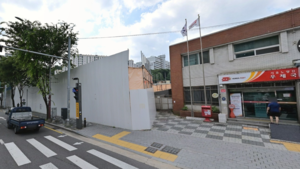
938 homes to rise near Nodeul Station; CBS Mokdong site to get senior housing
CBS Mokdong site to shift from industrial center to mixed-use complex Kids cafe, Garosu-gil commercial development also approved A 938-unit residential complex — including 224 long-term jeonse ("public long-term lease") units — is set to be built near Nodeul Station on Seoul Metro Line 9. The CBS broadcasting site in Mokdong, Yangcheon-gu, will be redeveloped as a mixed-use complex combining office, residential and cultural functions instead of the previously planned industrial center. The Seoul Metropolitan Government said Thursday that its Joint Urban and Architecture Committee and delegated subcommittee approved four agenda items at a meeting held Wednesday: the construction of long-term jeonse housing in the Nodeul Station transit-oriented area, a revision to the development plan for the CBS Mokdong site, the installation of a Seoul-style kids cafe at the West Seoul Culture Plaza, and a commercial facility development along Garosu-gil in Sinsa-dong. The residential complex in the Nodeul Station transit-oriented area, covering the vicinity of 402-1 Bon-dong, Dongjak-gu, will rise from five basement levels to 42 above-ground floors across four buildings. Of the 938 total units, 224 will be supplied as long-term jeonse housing. The site is an aging low-rise residential neighborhood adjacent to Nodeul Station, for which a district unit plan was finalized in September last year. The city revised the plan to secure additional housing supply within the transit-oriented area and increase the volume of long-term jeonse units. Neighborhood commercial facilities will be placed along Noryangjin-ro, while a public office building will be installed along Maebong-ro. Taking into account the hilly terrain, the plan calls for reducing excessive retaining walls and installing an elevator connecting Noryangjin-ro to the residential complex. The Nodeul Station area's proximity to Yeouido positions it as a live-work neighborhood. The city plans to complement the housing supply with improved pedestrian access and everyday amenities, upgrading the living environment of the existing aging low-rise district. The CBS site in Mokdong, Yangcheon-gu, will shift from a plan centered on an industrial center to a mixed office-residential development. The site has housed the CBS broadcasting station since 1992 — 34 years — and an industrial center was planned through a pre-negotiation process in 2023, but the city revised the development plan to reflect changed conditions including oversupply and an economic slowdown. The revised plan's core elements are converting the building's primary use to a mixed office-residential complex and introducing senior housing. At least 35 percent of the total floor area will be reserved for office use to preserve the commercial function of the Mokdong central district. The residential portion will include long-term private rental housing targeting active seniors. The existing public-contribution facility — a Seoul media content center — will be retained but relocated from the basement level to floors one through three above ground. Some of CBS's news and current affairs functions will also remain, keeping the site's role as a broadcasting cluster. The media content center will be equipped with equipment, systems and production support workspaces to foster the new-media industry. The city also plans to pursue an agreement with CBS covering facility operations and technical support. Two public open spaces linked to Omok Park and Omok Plaza, along with a rooftop garden, will also be created. The open spaces will feature benches, landscaping and shaded rest areas, and additional street trees will be planted in the surrounding area. A complex cultural facility tentatively named the West Seoul Culture Plaza, combining a library, a kids cafe and recreational sports facilities, is being pursued at 743 Naebalsan-dong, Gangseo-gu. To allow for the installation of a Seoul-style kids cafe, the city designated the entire 10,017.6-square-meter cultural and sports facility site as a social welfare facility zone and added child-related facilities to the list of permitted building uses. The West Seoul Culture Plaza will be developed as a combined cultural complex housing a library, recreational sports facilities and a Seoul-style kids cafe. A neighborhood commercial building running from four basement levels to six above-ground floors is planned for the Garosu-gil area of Sinsa-dong, Gangnam-gu. The exterior of the building at 546-5 Sinsa-dong will incorporate building-integrated photovoltaics. The complex will house retail shops and restaurants, and vehicle access will be routed through a back street rather than Garosu-gil to separate pedestrian and vehicle traffic. Shade trees and awnings will be installed along the street frontage to improve the pedestrian environment. The city said it will proceed with follow-up steps for each project to advance housing supply, expand office and cultural facilities, and improve walkability.
Nov. 12, 2026
-
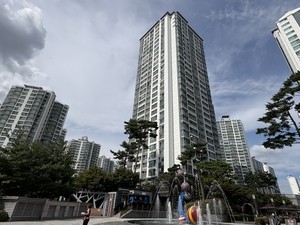
Jamsil 'ELT' apartments slip below W3b mark as asking prices tumble
Jamsil Els 84㎡ asking price falls to 2.94 billion won, down 761 million won from record high Triium also sees sub-3 billion won listings as loan curbs and tax concerns weigh on buyers Downward price pressure on apartments in Seoul's Gangnam area is intensifying, with a string of lower-priced transactions now emerging in Jamsil, Songpa-gu. Asking prices for the standard 84-square-meter units at the area's flagship "ELT" complexes — Jamsil Els, Recentz and Triium — have fallen below 3 billion won ($2.23 million), while the reconstruction bellwether Jamsil Jugong 5 complex has also recorded transactions below 4 billion won. Jamsil Els listings dip into 2 billion won range; Triium high-floors follow According to real estate agencies in the Songpa-gu area, asking prices for Jamsil Els 84-square-meter units start at 2.94 billion won as of Thursday. That is 161 million won below the most recent transaction price for the same floor area — 3.1 billion won recorded Wednesday for a 22nd-floor unit. Compared with the record high of 3.7 billion won set in February for a 21st-floor unit, the asking price has fallen 761 million won. The last time an actual transaction for a standard-size Jamsil Els unit was recorded in the 2 billion won range was 18 months ago, in May last year, when a fourth-floor unit changed hands at 2.95 billion won. The listing is understood to be a distressed sale, with the seller having sharply cut the original asking price. The head of a nearby real estate agency, identified only as W, said sellers are lowering their asking prices and sub-3 billion won listings are appearing, but actual deals have yet to follow. "Buyers are firmly in wait-and-see mode, and ordinary price adjustments are not enough to close a deal," the agent said. "Transactions are happening only sporadically, and only for deeply discounted distressed listings." Jamsil Els, with 5,678 units, is one of the three large complexes collectively known as "ELT," alongside Recentz (5,563 units) and Triium (3,696 units). The lowest actual transaction price recorded this year for a standard-size Jamsil Els unit was 3.07 billion won, set in April for a second-floor unit. While no actual transaction in the 2 billion won range has yet been recorded, the emergence of late-2 billion won asking prices — more than 100 million won below the previous floor — signals a shift in market price expectations. Sub-3 billion won listings have also appeared at Triium. Recent actual transaction prices for 84-square-meter units there have fallen to 3.05 billion won, and some high-floor listings are now on the market at 2.97 billion won. The units are available for immediate move-in with no sitting tenants, and their distressed-sale status has drawn buyer attention. Another real estate agent in the area said Jamsil Els has traditionally attracted strong investment demand, making it more vulnerable to price corrections when the market softens. "Recentz, by contrast, has a school within the complex, which gives it relatively stronger price resilience among the three — there are still no listings below 3 billion won there," the agent said. Price declines are also spreading to reconstruction complexes. Jamsil Jugong 5, which was trading above 4 billion won earlier this year, has recently seen transactions fall into the 3 billion won range, widening the correction. According to the Ministry of Land, Infrastructure and Transport's actual transaction price disclosure system, a 76-square-meter unit at Jamsil Jugong 5 sold for 3.73 billion won on Oct. 21 on the 15th floor — 520 million won below the complex's record high of 4.25 billion won set in February for a fourth-floor unit. A week later, on Oct. 28, another unit of the same size traded at 3.78 billion won on the seventh floor, keeping prices below the 4 billion won threshold. Tight loan limits squeeze buyers; experts warn 3 billion won floor may break Apartment prices in Songpa-gu have been falling in step with Gangnam-gu and Seocho-gu throughout this year. The district has posted nine consecutive weeks of declines since the first week of September, dropping 0.17 percent last week. The recent slide has erased most of the earlier gains, leaving the cumulative increase for the year at 4.18 percent. The number of sellers rushing to offload properties has grown amid concerns over tax burdens and potential policy changes, while buyers are holding back in anticipation of further price declines. Financing conditions for buyers are particularly difficult. Government lending restrictions have sharply reduced the mortgage ceiling for high-priced homes. For properties valued above 2.5 billion won in the Greater Seoul area and other regulated zones, the maximum mortgage loan is capped at 200 million won. A buyer purchasing a Jamsil Els 84-square-meter unit at 2.94 billion won would need to come up with at least 2.74 billion won in cash even after maximizing the available mortgage. Acquisition tax and other concessions are on top of that. A government-led overhaul of real estate taxation is also influencing sellers' timing. The tax reform package the government announced in August includes a restructuring of the long-term holding deduction to favor owner-occupants. If enacted as proposed, the deduction rate based on holding period alone would be reduced starting in 2028, and from 2029 only deductions tied to the length of actual residence would remain. Owners who have held a property for a long time but lived in it only briefly could face a significantly higher capital gains tax burden in the future. A real estate expert who asked not to be named said Jamsil had previously narrowed much of its price gap with Gangnam, but the recent correction in Gangnam-area apartment prices appears to be pulling Jamsil down with it.
Nov. 12, 2026
-

Hanwha develops off-site balcony installation technology using precast concrete
New method reduces high-altitude work and process interference compared with conventional RC construction Hanwha Construction & Civil Engineering has developed a precast concrete balcony joint technology designed to improve construction precision and safety for protruding balconies. The company said Thursday it completed a full-scale mock-up test installation Wednesday of the "PC balcony joint technology," a system co-developed with Samil C&S and Wontop Structural Engineering. The technology involves factory-fabricating PC balconies in advance and attaching them to a building's exterior walls after the main structural frame is complete. The precast balcony units are slotted onto support brackets pre-installed on the outer wall, then connected to the main structure using a separate joining device. Because the balconies are manufactured off-site, the company said on-site workload is reduced and rebar placement and concrete quality can be managed in a standardized environment. Height-adjustable bolts are incorporated at the joints to correct minor elevation discrepancies that may arise during installation. The system is also designed to allow non-shrink mortar to be filled from the top of the slab, improving ease of work and joint quality management. Conventional cast-in-place reinforced concrete construction requires the installation and removal of shoring and formwork on the building exterior. The new technology reduces exterior work processes, lowering the risks associated with high-altitude work and minimizing interference between construction phases. The system also incorporates structural features from the initial installation stage of the PC balcony slab to prevent displacement and falling. Hanwha said the growing prevalence of open protruding balcony designs has made it increasingly important to secure both constructability and safety at the joint between the balcony and the main building structure. Hanwha filed a patent application for the technology in July. The company plans to conduct structural performance tests on the joints based on the mock-up results to further verify structural safety, and intends to pursue application at apartment construction sites as the technology matures. "This PC balcony joint technology was developed to reduce the risks of high-altitude work that arise during conventional open protruding balcony construction, and to improve joint precision and quality," said Choi Woo-seok, head of the operational innovation division at Hanwha Construction & Civil Engineering. "We will continue to develop off-site construction-based building technologies to enhance on-site safety and strengthen our construction competitiveness." Meanwhile, Hanwha Construction & Civil Engineering is marketing Hanwha Forena Jije Station, a 1,098-unit residential complex in Pyeongtaek, Gyeonggi Province. The development comprises 12 buildings ranging from two below-ground floors to a maximum of 27 above-ground floors, with units of 84 square meters accounting for about 86.5 percent of the total. The model home opened Friday, marking the start of the formal pre-sale schedule.
Nov. 12, 2026
MOST READ
- 1AI singer tops Melon chart for first time with 'Did You Become the Adult You Dreamed Of?'
- 2Seoul subway work-to-rule action causes 17-minute delay on Line 2 on first day
- 3Trump floods Truth Social with China visit photos, calls himself 'GOAT' and touts 'great powers'
- 4SoftBank's Son explored $1tr bid for SK hynix, but deal no longer under active review
- 5Malaysia's BE International brings 1,500-strong incentive tour to Korea, bypassing Turkey
- 6Seatmate stunned as Mexican president flies economy for 21-hour trip to China
-
WORLD

US warns of punishment for anyone enabling Iran's Strait of Hormuz toll scheme
-
INDUSTRY
Toyota union puts productivity first; Hyundai Motor union demands bigger share of profits
-
FINANCE
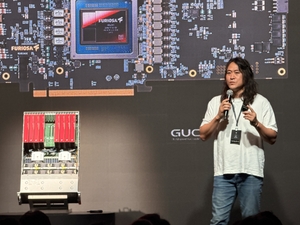
National Growth Fund to invest $531M in FuriosaAI, which rebuffed Meta's $800M takeover bid
-
INDUSTRY
Korea Shipowners' Association holds amateur baduk tournament for Maritime Day