
- HOME
- REAL ESTATE
-
GS E&C adopts AR technology to catch plant equipment errors before installation
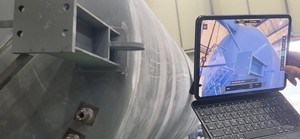
Tablet overlays 3D design models onto actual fabricated parts for instant comparison Scope to expand into steel modular and other factory-fabricated segments GS Engineering & Construction will deploy augmented reality technology at its plant construction sites, allowing inspectors to use tablets to instantly compare 3D design drawings against actual fabricated equipment before installation. The company said Tuesday it is introducing Twyn, a digital inspection solution developed by German AR specialist Visometry, to digitize quality control at its plant sites. Equipment used in plant construction must pass mandatory quality inspections verifying that fabricated parts match their design drawings before being installed on site. Under the conventional approach, inspectors compared drawings and parts by eye — a process that was time-consuming for complex structures and prone to inconsistency depending on the inspector's experience. Defects missed at the fabrication stage often led to costly rework during installation, making fast and accurate pre-installation checks a persistent challenge. Twyn uses AR technology to overlay 3D design data onto actual fabricated parts on screen, letting inspectors verify on the spot whether a part matches its specifications using a tablet. A key feature is "geometry-based automatic alignment and tracking," which automatically matches the position and orientation of equipment without requiring markers or QR codes — unlike conventional AR systems. Because the technology directly compares the shape captured by the camera against the 3D design, it works in indoor factories where GPS signals are unreliable. The system first screens for primary quality issues — missing components, incorrect installation, and positional or directional anomalies — then deploys 3D laser scanners only for items requiring further verification. By combining AR-based inspection with 3D laser scanning in stages, GS Engineering & Construction aims to significantly cut inspection time while improving both precision and efficiency. The company has already applied the technology at four plant sites, both domestic and overseas. It plans to expand the scope to steel modular construction and other areas requiring repeated factory inspections, while systematically managing quality history data to further refine its processes. "The key is being able to directly compare 3D design models with actual fabricated parts on site, quickly identify any quality issues, and select which items need precision inspection," a company official said. "We will continue to leverage digital technology to improve the efficiency and reliability of plant quality management." Meanwhile, GS Engineering & Construction recorded 5.22 trillion won ($3.88 billion) in new orders in the second quarter of this year, up about 62 percent from 3.23 trillion won in the same period last year.
Sept. 15, 2026
-
HUG wins Ministry of Trade, Industry and Energy minister's award for boosting private investment in industrial complex renewal
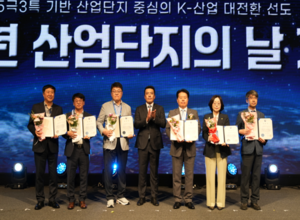
The Korea Housing and Urban Guarantee Corporation (HUG) announced Tuesday that it won the Ministry of Trade, Industry and Energy minister's award in the private investment promotion category at the 2026 Industrial Complex Structural Upgrade Awards, held Monday. The awards are hosted by the Ministry of Trade, Industry and Energy and organized by the Korea Industrial Complex Corporation to identify and promote outstanding cases of structural upgrade projects that transform aging industrial complexes into future-oriented innovation spaces based on the "4X" framework. The 4X concept refers to four transitions: AI transformation, eco-friendly transformation, generational transformation and new-industry transformation. HUG earned the recognition by providing fund loans for mixed-use redevelopment projects — combining industrial, office and retail functions — in industrial complex regeneration zones, while also guaranteeing private loans used in those projects. The support lowered financing costs for project operators and strengthened the momentum of redevelopment efforts. According to HUG, the seven fund project sites involved a total of 347.9 billion won ($259 million) in loans and 318.2 billion won in guarantees. "This award is the result of our efforts to improve aging industrial complexes and fulfill our responsibility for balanced regional development," HUG President Choi In-ho said. "We will continue to provide tailored financial support to build a sustainable industrial complex ecosystem."
Sept. 15, 2026
-
Hanshin Construction volunteers clean graves at Seoul National Cemetery ahead of chuseok
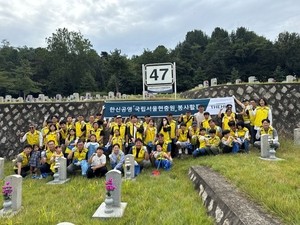
'1 company, 1 cemetery plot' partnership signed in 2023 Annual veterans' service activities continue Employees of Hanshin Construction, organized as the Hanshin Hyo Volunteer Corps, visited Seoul National Cemetery ahead of the chuseok holiday to carry out grave-cleaning volunteer work. The corps visited the cemetery in Dongjak-gu, Seoul, on Saturday, the company said. The activity was organized to honor the nation's fallen heroes ahead of chuseok and to give employees an opportunity to reflect on the meaning of patriotism. Volunteers went to Plot 47 at Seoul National Cemetery, carefully wiping down headstones and pulling weeds from around the graves. They also collected litter scattered across the site, expressing gratitude and remembrance for those who gave their lives for the country. The Hanshin Hyo Volunteer Corps was established in 2015 to put into practice the company's founding spirit of "hyo" — filial piety and respect — and to promote a corporate culture of sharing and mutual growth. Since then, employees have consistently participated on a voluntary basis, continuing the grave-cleaning activities at Seoul National Cemetery every year. Hanshin Construction signed a "one company, one cemetery plot" partnership with Seoul National Cemetery in 2023, committing to the ongoing care of a designated plot. Through regular grave-cleaning activities, the company works to express its respect and gratitude toward national merit holders and fallen heroes, and to help spread a culture of veterans' commemoration. This year, the corps has continued its volunteer activities consistently. In April, members visited a free meal service center in Jongno-gu, Seoul, to help serve food, and in May they carried out another round of grave cleaning at Seoul National Cemetery. With this latest chuseok service added to the calendar, the company said it is steadily expanding employee-led community outreach. "We took part in this volunteer activity to again reflect on the noble sacrifice of those who devoted themselves to the country, and to convey our gratitude ahead of the chuseok holiday," a Hanshin Construction official said. "We will continue to remember and honor the fallen, and will keep up a wide range of community activities — including cemetery maintenance — going forward." Meanwhile, Hanshin Construction posted consolidated revenue of 511.3 billion won ($380 million) in the first half of this year, with operating profit of 39.8 billion won and net profit for the period of 31.2 billion won.
Sept. 15, 2026
-
Dongbu launches leadership lecture series to build company culture
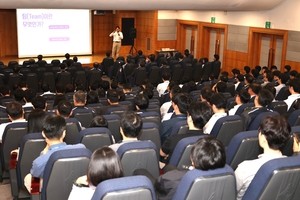
Refresh day, trekking day and cinema day to follow in sequence Dongbu Construction has launched a corporate culture initiative called the "Dongbu Synergy Series," kicking it off with a leadership lecture open to all employees. The company said Tuesday it hosted an insight lecture featuring Dr. Moon Sung-hoo at its headquarters auditorium. Employees at field sites joined via live online broadcast. The lecture marked the first event in the Dongbu Synergy Series, a program designed to give employees opportunities to learn together and recharge. Dongbu Construction said it plans to combine education, outdoor activities and cultural experiences to deepen mutual understanding among staff and strengthen a "one team" spirit. The inaugural session was held under the theme "What does a leader do — the path to awakening the heart of an organization, beyond the five absences and five obstacles." Moon explained the essence of leadership and the factors that hinder organizational growth, and outlined the roles leaders must play amid change and uncertainty. Following the lecture, Dongbu Construction plans to roll out additional programs in sequence: a "Dongbu Refresh Day" walk along Seoul's Hanyangdoseong trail, a "Dongbu Trekking Day" along the Jirisan Dulle-gil trail, and a "Dongbu Cinema Day" centered on shared cultural content. Dongbu Construction also runs welfare and education programs for employees and their families. This past summer, it held a camp for employees' children combining history, culture, AI and nature experiences, and has continued offering training to strengthen employees' professional expertise and leadership skills. "Starting with the insight lecture, we plan to continue offering a range of programs where employees can learn, communicate and recharge together," a Dongbu Construction official said. "We will keep expanding the organizational culture and welfare programs that support our people's growth and well-being." Meanwhile, Dongbu Construction has secured a string of large public-sector contracts this year, including the Gyeyang–Ganghwa expressway, the Southern Inland Railway and public housing in Goyang Changneung. The company has also continued winning private-sector work, including Seoul urban renewal and street-block redevelopment projects.
Sept. 15, 2026
-
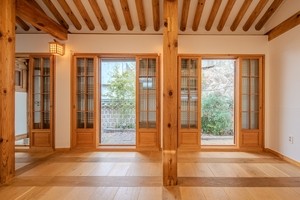
Seoul's public hanok rentals sit half-empty despite 956-to-1 odds
Vacant units re-listed after winners walk away from contracts Hanok living costs, lifestyle concerns cited as barriers SH says rent adjustments under review Some units in Seoul's public hanok rental housing program — which drew subscription competition rates of hundreds to one — have sat vacant for nearly half a year after winners walked away from their contracts. With a re-listing drawing average odds of more than 200 to 1, confirming strong demand, attention is now focused on whether this round will finally result in actual move-ins. According to the Seoul Housing & Communities Corporation (SH) on Tuesday, a recruitment drive held earlier this month for four remaining units of the city's public hanok rental program — marketed under the general housing category of the Mirinaezip scheme — drew 831 applicants, yielding an average competition rate of 207.8 to 1. The most sought-after unit was a hanok in Bomun-dong 6-ga, Seongbuk-gu, which attracted 574 applicants. That property had recorded a competition rate of 956 to 1 when it was first offered. The re-listing was triggered after winners of four units from a January recruitment round declined to sign contracts. The original listing had drawn 2,093 applicants for seven public hanok units, producing an average competition rate of 299 to 1. Despite the intense interest, only three contracts were ultimately signed — with winners citing duplicate wins across other public rental programs and concerns about actually living in a traditional hanok. An SH official said the public hanok rental is a new type of single-family rental housing introduced for the first time last year, and that some move-in cancellations were inevitable during the early stages of implementing a new system still in transition. The official added that many winners had opted instead for apartments or multi-unit housing offered at the same time under other residential options. Industry observers point to two main barriers: the unique demands of hanok living and high rents. To qualify for the general housing Mirinaezip public hanok, applicants must hold total assets of no more than 362 million won ($269,000) and earn no more than 130 percent of the average monthly household income — or 200 percent for dual-income households. Yet depending on the unit, the apartment-type Mirinaezip can work out cheaper. The Bomun-dong hanok (51 square meters), which drew the highest competition rate in the re-listing, is a three-bedroom, two-bathroom property with a courtyard. Its base rental terms require a deposit of 104 million won and monthly rent of 1.35 million won. By contrast, winners of apartment-type Mirinaezip units — the long-term jeonse housing category, open to households with assets up to 662 million won and monthly income up to 120 percent of the average, for units of 60 square meters or less — can secure cheaper housing: a 47-square-meter unit at Wangsimni mixed-use complex in Seongdong-gu carries a deposit of 262.08 million won, while a 43-square-meter unit at the Imun 3 mixed public complex in Dongdaemun-gu requires 295.62 million won. Those seeking a 59-square-meter unit also have alternatives. Instead of the Gaehoe-dong hanok — which converts to a jeonse deposit of 579 million won or a monthly rent of 530,000 won — winners of units such as the Cheongye SK View in Seongdong-gu (537.42 million won) can live in an apartment at lower cost with no monthly rent burden. SH attributes the structurally high rents to the hanok's single-family format and its prime locations in central districts such as Jongno-gu, where market prices are inherently elevated. "We are taking seriously the concerns raised in the field," an SH official said. "Depending on the final contract results from the re-listing, we plan to review rent adjustment measures and other improvements so that more people with genuine housing needs can benefit without financial strain." To improve occupancy, SH and the Seoul Metropolitan Government introduced several measures for the re-listing: expanding the pool of document-screening candidates from six to 12 times the number of units, providing education on hanok living and seasonal facility management services, and offering shared storage space as a common facility. Under administrative procedures, however, move-ins for re-listing winners are not expected until between December and February next year — meaning the units will inevitably remain vacant for more than six months compared with the originally planned move-in window of April to June. An SH official said utility costs for the four corporation-owned vacant units run about 100,000 won per unit per quarter, making the financial burden minimal. "We will move quickly on institutional improvements to minimize prolonged vacancies and ensure the assets are used efficiently," the official said. The Seoul Metropolitan Government also plans to use the spaces for hanok-related events scheduled before the end of the year.
Sept. 15, 2026
-
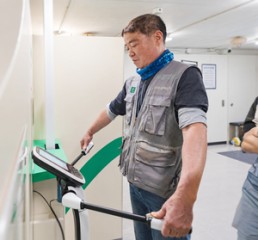
Samsung C&T launches AI wellness solution 'Wellfy,' debuting at Raemian Trinione
Combining physical spaces with digital health technology Samsung C&T's construction division announced Tuesday the launch of Wellfy, an AI wellness solution that combines physical spaces with digital health technology. The service will first be rolled out at a Raemian apartment complex in Seoul's Seocho-gu. The name Wellfy blends "wellness" and "comfy." The platform is an online-offline AI wellness solution designed to help people manage their health across the various spaces of modern daily life — including homes and workplaces. Under the slogan "An era where spaces manage your health," Samsung C&T built on digital innovation expertise accumulated through earlier platforms such as Homenik and Bind. Homenik had been the company's next-generation integrated residential platform, allowing users to control smart-home features, make community reservations and access lifestyle services through a single app. Wellfy represents an expansion of that platform into an AI wellness solution. To integrate the service with physical spaces, Samsung C&T operates a dedicated mobile app alongside offline hubs called Wellfy Stations. The stations were developed and validated in partnership with startups discovered through Futurescape, an open-innovation program Samsung C&T has run since 2023. The stations consist of three components: Wellfy Body, which measures 37 health indicators including blood pressure, stress, body composition and skin condition; Wellfy Food, a micro-store where users can purchase personalized food products on the spot; and Wellfy Mind, an immersive space designed to ease everyday stress. Wellfy Mind sets itself apart by incorporating an AI model trained on the counseling techniques of Kwon Su-young, a professor at Yonsei University. The AI engages users in conversation to help them work through emotional difficulties and stress, while also offering personalized meditation content. In addition, health data collected through the Wellfy mobile app is stored cumulatively and used to deliver hyper-personalized services. The platform also features a chronic-disease prediction AI model built on the extensive health screening data and medical expertise of Kangbuk Samsung Hospital, bolstering the service's professional credibility. Wellfy will be introduced for the first time at the Raemian Trinione apartment complex in Seoul's Seocho-gu. Three types of Wellfy Stations installed in the complex's community facilities will sync in real time with the mobile app, allowing residents to access a full range of wellness services in their everyday surroundings — from health indicator measurements and personalized food recommendations to mind care. The solution will also be deployed at construction sites, including the new NCsoft building in Pangyo. Beyond the three Wellfy Station types already launched — Body, Food and Mind — Samsung C&T plans to continuously develop and add new devices while strengthening data-driven hyper-personalization features in the app. The company also intends to expand the ecosystem by installing Wellfy in office buildings, shopping centers and leisure spaces, making wellness accessible in daily life not only to apartment residents and construction workers but also to office employees, shoppers and the general public. "The core competitive advantage lies not just in constructing buildings, but in delivering wellness experiences to the people who use those spaces," said Cho Hye-jung, executive vice president and head of Samsung C&T's DxP division. "We will continue to strengthen open collaboration with diverse partners — including specialized medical institutions, healthcare startups and food and beverage companies — to lead an integrated wellness ecosystem built around spaces."
Sept. 15, 2026
-
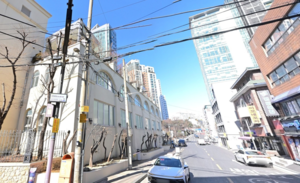
Seoul to create 70 growth and lifestyle hubs, with up to 1,300% floor-area ratio allowed in Yeoksam, Jayang
Seoul reshapes city into multi-hub network for jobs, housing and culture DDP, Changdong and Sanggye areas designated as priority growth zones Seongne, Junggok, Doksan to be managed as lifestyle hubs with zoning upgrades The Seoul Metropolitan Government is moving to reshape the city into a multi-hub metropolis — integrating jobs, housing, culture and daily life — by linking major centers, transit transfer stations and arterial roads across Seoul. Yeoksam-dong in Gangnam-gu and Jayang-dong in Gwangjin-gu are slated for high-density mixed-use development as major growth hubs, while Seongne-dong, Changdong, Junggok-dong and Doksan-dong are set to be developed as lifestyle hubs outside transit-oriented areas. The city announced Tuesday it had selected six pilot project sites — two for its growth-hub mixed-use development program and four for its growth-potential zone activation program. The selections follow up on the "Seoul Transit-Oriented Live-Work-Play Activation Strategy" announced in March. The two growth-hub sites are 680-1 Yeoksam-dong in Gangnam-gu and a site in Jayang-dong, Gwangjin-gu. Under the program, sites of a certain size near city-center or metropolitan hubs, or around transit transfer stations, are eligible for high-density development. Where location and road-access requirements are met, zoning can be upgraded to allow a floor-area ratio of up to 1,300 percent under general commercial district standards. The city noted, however, that the selection alone does not confirm a 1,300 percent floor-area ratio for either site. The Yeoksam-dong site sits within the transfer station area of Seonjeongneung Station and borders Eonju-ro. The city plans to extend the office functions concentrated along Teheran-ro into the Seonjeongneung Station and Eonju-ro corridor, creating a hub combining business, commercial, cultural and leisure uses. The Jayang-dong site falls within the transfer station area of Konkuk University Station and is part of the Seongsu district center. The city envisions developing it as a northeastern growth hub connecting the advanced industries and young talent of the Seongsu-Konkuk area with cultural and commercial functions. The city will also manage the areas around Dongdaemun Design Plaza and the Changdong-Sanggye corridor as "priority growth zones." Rather than immediately designating them as project areas, the system manages high-potential sites from the planning stage in line with the city's spatial development direction. Conversion to a full growth-hub mixed-use development project becomes possible once conditions such as landowner consent are met. The DDP area overlaps the historic Hanyang City Wall district center with the transfer station zones of Dongdaemun Station and Dongdaemun History & Culture Park Station, which the city sees as offering strong potential for mixed-use development tied to existing cultural, commercial and office functions. Large-scale projects are already under way in the Changdong-Sanggye area, including Seoul Arena and Seoul Digital Bio City. The planned GTX-C line and a multimodal transit center are also expected there, giving the corridor strong growth potential as a northeastern metropolitan hub. Four sites — 448-1 Seongne-dong in Gangdong-gu, 715-1 Changdong in Dobong-gu, 587-2 Junggok-dong in Gwangjin-gu, and 1066-2 Doksan-dong in Geumcheon-gu — were selected for the growth-potential zone activation program. Though located some distance from subway stations, these arterial road corridors see heavy public transit use and foot traffic. The program aims to transform them into lifestyle hubs anchored by office, commercial and daily-life facilities. Depending on the project type, zoning can be upgraded to as high as general commercial district status. The Seongne-dong site sits along Gangdong-daero between Gangdong-gu Office Station and Olympic Park Station. The Changdong site is near Changdong Station, where a GTX-C stop and multimodal transit center are planned. Junggok-dong will leverage its location along Dongil-ro near the Dongbu Expressway and Jungnang Stream, while Doksan-dong will draw on its proximity to the Gasan and Guro Digital Industrial Complexes — each expanding its office and daily-life functions accordingly. Alongside this, the city will manage six arterial roads — Dobong-ro, Dongil-ro, Tongil-ro, Gonghang-daero, Gyeongin-ro and Siheung-daero — as "growth-potential corridors," with the aim of coordinating development along each road rather than limiting it to individual lots. The city noted, however, that designation as a growth-potential corridor does not in itself mean a zoning upgrade. The city plans to finalize development plans for the six pilot sites by December and begin administrative procedures, including formal project proposals, from January next year. The plans will then go through Urban Planning Committee review and licensing procedures. By 2030, the city aims to expand the total to 70 sites — 28 under the growth-hub mixed-use development program and 42 under the growth-potential zone activation program. "We will upgrade the city-center and metropolitan hubs into high-intensity growth engines leading Seoul's future, while transforming the arterial road corridors between stations into lifestyle hubs that support residents' daily lives and local economies," said Kim Chang-gyu, head of the Seoul Metropolitan Government's Urban Space Bureau.
Sept. 15, 2026
-
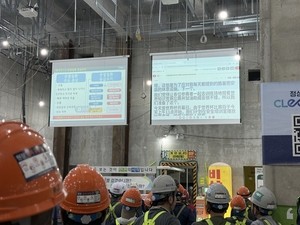
Daewoo E&C rolls out AI real-time translator to boost safety for foreign workers
Voice recognition accuracy at 94.6% 'Smart safety training' also standardized Daewoo Engineering & Construction announced Tuesday it will introduce an AI real-time translator to standardize its "smart safety training" program, improve operational efficiency and help foreign workers better understand safety instructions. Daewoo E&C will expand the AI real-time translator to all its domestic construction sites to strengthen on-site communication. The system translates a supervisor's Korean safety briefings into the foreign worker's language in real time, delivering the output simultaneously as on-screen text and audio. The company designed the tool to work across a range of settings — from smart safety training venues to general meeting rooms and on-site classrooms. A pilot run showed the system's Korean voice recognition accuracy reached 94.6%. Building on that result, foreign workers showed an overall improvement in their awareness and understanding of safety-related content, and the number of repeated safety announcements fell, significantly reducing on-site confusion caused by language barriers. The results also eased the burden of repetitive briefings and improved meeting efficiency. Daewoo E&C began rolling out the standardized AI real-time translator across all domestic sites this month. The move aims to ensure that essential safety rules and work instructions are conveyed accurately to foreign workers, closing safety gaps caused by language barriers. The company's "smart safety training" system is a digital platform that conducts new-hire and periodic safety training for on-site workers using tablet PCs. The entire training process — from registering worker information and checking health status to generating post-training reports — has been digitized, reducing the paperwork burden on site managers and improving practical efficiency. The smart safety training system is integrated with SMARTy, Daewoo E&C's unified safety and health management platform, enabling automatic management of training data. The pilot showed data-sync reliability of 99 percent or higher. The standardized rollout is expected to significantly cut paperwork and administrative burdens at construction sites, allowing site managers to focus more fully on their core safety management duties. A safety and health official at Daewoo E&C's headquarters said the smart safety training system and AI real-time translator are "practical on-site support solutions that reduce unnecessary administrative work while ensuring safety information is delivered accurately to workers." The official added that the company would "continue to actively adopt smart safety technologies with proven on-site effectiveness to steadily raise the level of safety management." Going forward, Daewoo E&C plans to gather feedback from the field to further refine the systems' capabilities. The company also intends to run pilot programs for a range of other smart safety technologies — including AI-enabled CCTV and smartphone-based location tracking — before rolling them out to sites in stages. Daewoo E&C has also partnered with the Korea Institute of Disaster and Safety to strengthen safety management at construction sites. The two sides will jointly pursue research and development for accident prevention, safety education and professional training programs.
Sept. 15, 2026
-
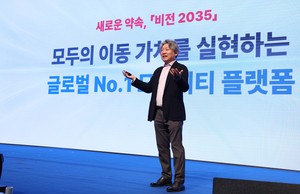
Korea Expressway Corporation unveils 'Global Mobility Platform' vision
20 subsidiaries and partners take part Safety management forum strengthens on-site communication Korea Expressway Corporation held its "Vision 2035 and Safety Management Declaration" ceremony at its headquarters in Gimcheon on Monday, announcing a new corporate vision, core values and safety management policy before employees, executives and partner company representatives. The event was designed to proclaim the corporation's future direction and safety management policy simultaneously, with the aim of embedding a commitment to safety all the way to the front lines of expressway construction and maintenance sites. The corporation plans to overhaul its organizational culture in earnest by resetting its medium- and long-term vision and safety management policy. The corporation replaced its previous vision — "a safe and convenient future transportation platform company," established in 2021 — with a new one: "Global No. 1 Mobility Platform Realizing the Value of Movement for All." The new vision reflects the corporation's intent to respond proactively to shifts in government policy and lead the coming era of future mobility. The new vision embodies an ambition to create an environment where all citizens, including those with mobility challenges, can travel safely and conveniently, and to generate new mobility value by connecting data, energy and mobility services. The corporation put forward four core values to guide the realization of the vision: safety for all, public responsibility, mutual growth and future-oriented innovation. To give concrete shape to Vision 2035, the corporation plans to build a future mobility foundation using the existing expressway network. It intends to develop an "energy expressway" that supplies power along roads, contributing to the expansion of the national power grid and the energy transition, while transforming interchanges and rest stops from simple facilities into transit hubs linked to regional transportation networks — maximizing the value of expressway space. Through these efforts, the corporation envisions completing its "Global No. 1 Mobility Platform Realizing the Value of Movement for All" — a network where power and data flow alongside people and freight, advanced industries and mobility converge, and that transformation drives regional growth and balanced national development. Korea Expressway Corporation President Yoo Jeong-hoon also announced a "Safety Management Policy" embodying a safety-first management philosophy. Five priority tasks were presented: protecting the lives of citizens and workers, creating a safe and comfortable work environment, establishing a voluntary and mature safety culture, complying with health and safety laws and regulations, and building a smart safety management system. Korea Expressway Corporation and a total of 20 companies — including subsidiaries and partners — then joined in a "Joint Declaration on Safety Management Practice," pledging to spread a culture of on-site safety through the proactive identification and improvement of workplace hazards, guaranteeing workers' right to self-protection, and adhering to basic safety rules and procedures. "At the center of our new vision are the safety of citizens and our workers," Yoo said. "Safety is the starting point of all management activities and the top priority that can never be compromised." He added that the corporation and its partners would work together continuously to ensure that the vision and safety management policy declared Monday translate into real action at every worksite, rather than remaining a one-time declaration. Meanwhile, Korea Expressway Corporation reduced the number of expressway traffic fatalities to 147 last year, the lowest figure on record. The achievement came not from conventional approaches centered on traffic safety campaigns and enforcement, but from applying AI and digital technology to expressway safety management.
Sept. 14, 2026
-
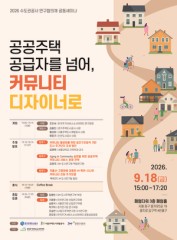
SH, GH and iH to hold joint seminar on community-centered public housing
Under the theme 'Beyond public housing supplier, toward community designer' Event to explore community support strategies for evolving residential needs The Seoul Housing & Communities Corporation announced Monday that it will co-host the "2026 Greater Seoul Housing Corporation Joint Research Seminar" with its counterparts in the metropolitan area. Organized by the Korea Housing Services Society, the event is jointly hosted by SH, Gyeonggi Housing & Urban Development Corporation (GH) and Incheon Urban Corporation (iH), and is scheduled to take place Friday at 3 p.m. at Ferrum Hall on the third floor of Ferrum Tower in Jung-gu, Seoul. The seminar brings together the Greater Seoul housing corporations' research consortium to discuss community support and residential service roles in public housing, under the theme "Beyond public housing supplier, toward community designer." The event will address public housing policy and operational strategies for responding to care gaps and social isolation stemming from the rise of a super-aged society, a low birth rate, and the growing number of single-person and elderly households. Presentations will be delivered in the following order: Kim Young-wook, a professor in the department of architecture at Sejong University, on "Urban and residential complex development strategies based on spatial structure analysis for community revitalization"; Kim Young-guk, a senior researcher at the SH Urban Research Institute, on "Public housing community service strategies for realizing aging in community"; and Park Seok-gyu, head of the urban research team at iH, on "iH's child-friendly and senior-friendly community housing model in response to low birth rates and aging." Im Gwang-bin, head of the urban housing research division at GH, will then chair a panel discussion on public housing community support strategies, joined by Ki Yun-hwan, a senior research fellow at the Incheon Research Institute; Nam Won-seok, a senior research fellow at the Seoul Institute; Park Gi-deok, a research fellow at the Gyeonggi Research Institute; Jo Seung-yeon, a principal researcher at the LH Land and Housing Institute; and Kwon O-jeong, co-standing representative of the Korea Housing Services Society. SH President Hwang Sang-ha said the importance of care and community within apartment complexes is growing as society ages, birth rates fall and single-person households increase. "Based on the discussions at this seminar, we will continue to review residential service and community support measures for public housing," he said. As the government pushes to expand public rental housing, the role of the corporations carrying out that mission is becoming increasingly important. Discussions on rental housing for diverse age groups and demographics — from newlyweds to seniors — are expected to gain further momentum.
Sept. 14, 2026
-
High-end apartment complexes ditch builder brands for bespoke names
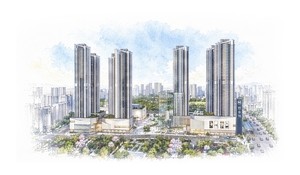
Apgujeong reconstruction projects opt for 'Apgujeong Hyundai,' 'Cullinan Apgujeong' "Location and product quality used to assert site's own identity" High-end residential complexes in Seoul's Gangnam area are increasingly choosing project-specific names that reflect a site's character over the brand names of their construction companies — a trend now spreading to Greater Seoul areas such as Dongtan in Hwaseong, Gyeonggi Province. Banpo The H Classt, a reconstruction project covering sections 1, 2 and 4 of the Banpo Jugong 1 complex in Seocho-gu, is reportedly in discussions to change its name ahead of a scheduled move-in next year. Some association members have called for the removal of the "THE H" brand from the complex name, arguing the change would better highlight the development's exclusivity. The same trend surfaced in the recent competition for Apgujeong reconstruction contracts. Hyundai Engineering & Construction proposed "Apgujeong Hyundai" for zones 3 and 5, while Samsung C&T put forward "Cullinan Apgujeong" for zone 4 — both securing construction rights with their independently branded proposals. Several established high-end complexes have also kept builder brands out of their names. Nineone Hannam, built by Lotte Engineering & Construction, combines a place name with the site's address. PH129 and Eterno Cheongdam, both built by Hyundai Engineering & Construction, similarly adopted standalone names. The Park Side Seoul, currently under construction in Yongsan-gu, is cited as another example. Industry analysts say the shift reflects a strategy of emphasizing a site's location and product quality over any particular builder's brand recognition. For complexes with sufficiently differentiated offerings, the approach embeds the site's own identity directly into the name rather than leaning on a corporate brand. In some large-scale reconstruction projects, separate branding serves a different purpose. When multiple construction companies participate as a consortium, applying each firm's brand to a single complex becomes impractical, making a neutral project name the natural choice. Heliocity, with 9,510 units, and Olympic Park Foreon, with 12,032 units, are the most prominent examples. The trend is extending beyond Seoul into the broader metropolitan area. A mixed-use residential development planned for lots 95 and 99 in Bansong-dong of Dongtan 1 new town in Hwaseong, Gyeonggi Province, will carry the project-exclusive name Acmer Dongtan. "We were planning a hyper-end product entirely different from conventional apartments, so choosing an independent brand came naturally," a sales official said. The exterior design of Acmer Dongtan features the work of designer Janaina Mireille, who has collaborated with Hermès and Chanel. Interiors will incorporate Cucine Lube kitchen furniture, Listone Giordano hardwood flooring, Hansgrohe faucets and Mirage & Infinity ceramics. Every unit will include a private storage room, and ceiling heights are set at 2.5 meters. Each unit is planned to have about 1.5 parking spaces, with more than 1,000 wide-format spaces measuring 2.6 meters across. Posco E&C, which built LCT the Sharp in Haeundae, Busan, and Brighton N40 in Nonhyeon-dong, Gangnam-gu, Seoul, will handle construction. The complex will rise to a maximum of 49 stories and contain 1,808 units in total — block M1-1-2 will have 812 units with exclusive use areas of 84 to 188 square meters, and block M1-2-2 will have 996 units with exclusive use areas of 84 to 162 square meters. "A brand is ultimately a tool that underpins trust," an industry official said. "The goal is to choose the approach that most effectively conveys the identity and competitiveness of a given site — taking into account not just location and product quality, but also the recognition and credibility a brand carries."
Sept. 14, 2026
-
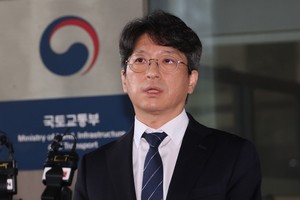
Land minister nominee Hong says public agency relocations should be judged by regional economic impact, not numbers
'Commuter bus suspension unavoidable; living conditions must improve' Hong Ji-sun, nominee for minister of land, infrastructure and transport, said the success of the second round of public agency relocations to regional areas should be measured not by the scale of the moves but by their tangible impact on local economies. In written responses submitted Monday to the National Assembly's land and transport committee ahead of her confirmation hearing, Hong said evaluating the relocations solely on "quantitative indicators such as the number of agencies moved or the number of personnel transferred has fundamental limitations." She added that assessments must also capture real-world outcomes — local talent hiring, job creation, business attraction and investment, linkages with regional industries, and growth in the resident population. On the first round of relocations, Hong said the process had laid new foundations for regional growth, including expanded hiring of local talent, industry-academia-research cooperation and increases in the resident population. However, she acknowledged that "relocating public agencies alone had limitations in fundamentally easing the concentration trend toward the greater Seoul area," citing insufficient links between relocated agencies and local industries as well as shortfalls in living conditions such as transportation, education and healthcare. For the second round, Hong said she would focus not merely on dispersing agencies but on fostering industry-academia ties and nurturing regional growth hubs. On the question of suspending metropolitan-area commuter bus services for agencies that have already relocated, Hong said the suspension was "unavoidable given the purpose of the regional relocation," but stressed that transportation, education, healthcare and cultural amenities must be improved to help employees and their families settle in their new locations. On the costs of the second relocation round, Hong said that if confirmed she would "pursue the process in a direction that minimizes the use of national funds by making maximum use of existing infrastructure built in innovation cities and reviewing various relocation methods, including the use of shared government buildings." On the polarization of the housing market, Hong attributed the simultaneous problem of price instability in the greater Seoul area and a buildup of unsold units in regional markets primarily to the concentration of housing demand in the metropolitan area. She said differentiated housing policies for the two regions would be needed to address the imbalance. For regional markets, she said short-term measures to ease the unsold-unit backlog — including direct purchases, tax incentives, guaranteed buyback programs and corporate restructuring real estate investment trusts — should be pursued continuously alongside longer-term structural solutions such as the second public agency relocation, completion of the administrative capital, the five-hub three-special-zone policy and three major megaprojects.
Sept. 14, 2026
-
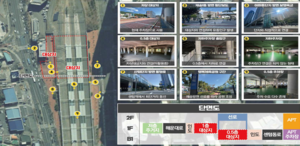
Korea National Railway seeks private developers for idle rail sites near Centum, Geoje stations
Korea National Railway said Monday it is launching a public solicitation for private development proposals, aimed at putting idle rail land near Centum Station and Geoje Station on the Donghae Nambu Line to productive use and revitalizing the surrounding areas. The two sites up for development are a roughly 6,600-square-meter plot at 645-12 Jaesong-dong, Haeundae-gu, Busan, and a roughly 7,500-square-meter plot at 469-12 Geoje-dong, Yeonje-gu, Busan. Korea National Railway said it plans to explore a range of development concepts that take advantage of each site's location and surrounding conditions. The Centum Station site is expected to benefit from planned nearby developments, including construction of a new Haeundae-gu district office and renovation of aging residential areas, which are projected to drive increased foot traffic and open up diverse development possibilities. The Geoje Station site sits adjacent to a legal district, giving it an active commercial environment and high parking demand; developing a dedicated parking structure is seen as one way to address the area's parking shortage. The solicitation allows private operators to propose combining or separating the two sites based on market conditions and each plot's characteristics. For the Centum Station site, proposals may also treat the under-track area and the above-ground idle land as separate development zones, broadening the range of business models available to private participants. Korea National Railway also eased the financial burden on private operators through regulatory improvements, including a reduction in the railway facility contribution levy applied outside the Greater Seoul area. Proposals will be accepted through Nov. 12, and further details are available on the Korea National Railway website. "We have set up broad conditions for private operators to propose a wide variety of business models, and we look forward to uncovering creative development plans," Korea National Railway Chairman Jeong Jin-hyeok said. "We will actively support efforts to raise the development value of the idle rail land near Centum and Geoje stations and transform them into vibrant new spaces for the community." Meanwhile, the GTX division of Korea National Railway is moving ahead with an overhaul of aging power supply equipment on the Gyeongin Line to ensure stable train operations and meet growing rail demand.
Sept. 14, 2026
-
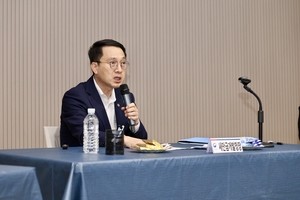
Saemangeum chief vows full support for Hyundai Motor Group's investment
'Focus is on creating an environment where companies can actually invest and operate' 'We will make Saemangeum a model for locally driven growth' Second pre-sale of single-family housing lots in waterfront city planned this month "The focus will not stop at securing budgets and attracting investment — it will be on creating an environment where companies can actually invest and run their businesses. Hyundai Motor Group has announced plans to invest about 9 trillion won ($6.73 billion) to build an advanced industry ecosystem centered on robotics, AI and hydrogen. To fully support that, the Saemangeum Development Authority plans to convert the third block of agri-bio land into energy land and provide it as a solar power site. We will upgrade Saemangeum's industrial structure and establish it as a leading model for locally driven growth." Saemangeum Development Authority Commissioner Moon Seong-yo made the remarks Thursday at a press briefing held at the Saemangeum Reclamation Museum. His comments signaled a commitment to channeling policy resources into revitalizing the long-troubled Saemangeum development project — one that has seen its master plan revised multiple times since it was first drawn up in 1989, with the seawall completed in 2010. Along the 33.9-kilometer seawall, tourists, residents and developers alike are showing renewed optimism that reflects the government's determination to accelerate development, a Saemangeum authority official said. Gunsan — which lost momentum after a string of major corporate departures including a shipyard and GM — as well as Buan and surrounding areas are pinning their hopes on Hyundai Motor Group's investment moves, the official added. The government and the ruling party are both throwing their weight behind Saemangeum. Prime Minister Han Seong-sook chose the zone as her first regional destination after taking office, and Democratic Party of Korea leader Kim Min-seok pledged sweeping budget support at a budget policy conference held in North Jeolla Province on Wednesday, saying he had "200 percent certainty that Saemangeum will become a forward base ushering in a new era for the South Korean, Asian and global economies." Infrastructure upgrades bring Saemangeum closer to a livable community Roads and other infrastructure in Saemangeum are gradually taking on the character of a community where people can actually live. Beyond the seawall road, a north-south arterial and an east-west national highway are already in place, and a highway connecting the zone to Jeonju has been completed. "It used to take 50 minutes to an hour to cross the Saemangeum district from one end to the other — now it takes about 20 minutes," an authority official said. A third north-south road network is set to go through a preliminary feasibility study this year, and a new port, railway and airport are planned to follow, giving the zone a comprehensive land, sea and air transport network. The Saemangeum new port is on track to open by the end of this year with two general-cargo berths. The authority also plans to introduce a demand-responsive transit service to improve mobility for residents and enhance access to the zone. The most visible sign of Saemangeum's development momentum is the site where Hyundai Motor Group's investment will take shape. The group's 9 trillion won commitment to building an advanced industry ecosystem in robotics, AI and hydrogen is widely seen as both the catalyst and the cornerstone of Saemangeum's full-scale development. Hyundai Motor Group plans to break ground on an AI data center in March next year, followed by phased construction of solar power generation and hydrogen production facilities by the end of 2027. Related procedures, including architectural review, are set to begin this month. The authority plans to support the group in completing building permits within the year so that Hyundai Motor Group can secure its future growth engines at the earliest opportunity. Hyundai Motor Group to break ground on AI data center early next year Hyundai Motor Group's total investment in Saemangeum is currently estimated at 8.9 trillion won. The breakdown includes 400 billion won for AI robotics, 5.8 trillion won for an AI data center, 1 trillion won for an electrolysis plant, 400 billion won to support the development of an AI hydrogen city, and 1.3 trillion won for solar power generation. The AI data center, which carries the largest share of the investment, will be the first to break ground. Equipped with 50,000 GPU units, it will support machine learning for self-driving cars and robots. The solar power project — the second-largest by investment — is a gigawatt-scale facility designed to supply renewable energy to the electrolysis plant, the hydrogen AI city and the data center. Hyundai Motor Group estimates the investments will generate about 16 trillion won in production-inducing effects and create roughly 70,000 jobs. Commissioner Moon said the authority is working to expand Saemangeum's renewable energy production capacity from 7 gigawatts to 10 gigawatts to ensure a stable power supply for tenant companies, and is also drawing up a master plan to have the industrial complex designated as an RE100 zone. Waterfront city where companies and residents grow together takes shape As infrastructure expansion and corporate investment — led by Hyundai Motor Group — become more tangible, the authority is also stepping up efforts to attract residents. The goal is to accelerate development of a waterfront city where companies and residents can live and grow together. The authority has prepared a smart waterfront city site near the Gogunsan Archipelago, at the midpoint of the seawall, and began selling residential lots last year. The waterfront city spans 6.25 square kilometers — twice the area of Yeouido — and is planned to accommodate 39,000 residents in 19,000 housing units. Residential land accounts for 21.3 percent of the total, with commercial and business facilities at 5.6 percent and parks and green space at 27.2 percent. The development is marketed on the strength of its living environment, with green space within a five-minute walk and waterfront access within ten minutes. The authority is also planning a "Tri-Port" integrated transport system within a 10-kilometer radius — combining land routes including bus rapid transit and rail, maritime access via the new port, and air connectivity through urban air mobility and a new airport. Consumer interest in the waterfront city's long-term potential drove fierce competition in last year's housing lot pre-sale, with all available supply taken up. The first round offered 67 single-family housing lots and two neighborhood commercial lots through a lottery and competitive bidding, respectively. The top competition ratio for single-family lots reached 41 to 1. Saemangeum Development Corporation said 27 percent of bidders came from outside North Jeolla Province, validating the site's competitiveness and future value, and announced it would launch the second pre-sale as early as this month. The offering will include 35 purely residential single-family lots and 10 mixed-use single-family lots with ground-floor retail, all through competitive bidding. The authority said the second-round lots are located near an education-specialized facility and are being offered following Hyundai Motor Group's investment announcement in February, and it expects strong interest from end-users who see long-term value in Saemangeum. Sales of apartment complex sites are planned to begin from next year onward. 'Saemangeum to grow through public leadership and corporate-driven development' Commissioner Moon said several other companies — whose names he was not yet able to disclose — are also pursuing investment in Saemangeum beyond Hyundai Motor Group, and that the zone's growth strategy would focus on combining public-led development with corporate-driven growth. The government's budget proposal for next year allocates 222.2 billion won for Saemangeum — an increase of 7.4 billion won from this year — with the aim of having the public sector take more accountable leadership in driving development, reducing uncertainty in project execution and building necessary infrastructure on schedule. The authority also plans to work with the Ministry of Land, Infrastructure and Transport to designate the waterfront city as an AI pilot city, and to actively introduce and test physical AI technology across the urban environment, as part of efforts to develop it into a hub for AI and advanced mobility. Commissioner Moon also stressed the importance of building a sustainable Saemangeum where environmental protection and development go hand in hand, saying the master plan would be revised to reflect that vision. "Saemangeum will transform into a future industrial city where companies invest and people gather to grow together, centered on advanced strategic industries such as robotics, AI and hydrogen," Moon said. "We will ensure that infrastructure is in place without fail so that corporate investment and development projects translate into real results, and we will do our utmost to make Saemangeum a center of balanced national development and shared regional growth."
Sept. 14, 2026
-
Jungheung Group pays contractors W70b early ahead of chuseok
Move follows 100 billion won early payment before Lunar New Year, continuing shared-growth push Jungheung Group announced Monday that it will make early payments on construction contracts to help subcontractors of Jungheung Construction and Jungheung E&C manage cash flow ahead of the chuseok holiday. The early disbursement totals about 70 billion won ($52 million) and will be paid entirely in cash. The group said the move is intended to ease financial strain on partner companies facing increased demand for funds before the holiday, including costs for raw materials and wages. Jungheung Group said it expects the early payments to allow subcontractors to settle wages and material costs without disruption. The group made a similar move ahead of the Lunar New Year holiday earlier this year, releasing 100 billion won in contract payments early. The early payment is part of what Jungheung Group describes as a sustained shared-growth management philosophy. The group said it has consistently identified high-performing partner companies each year and offered various forms of support, including incentives and exemptions from contract performance bond insurance requirements. Kim Hae-geun, president overseeing Jungheung Construction and Jungheung E&C, said the company's role and corporate spirit lie in creating an environment where growth through cooperation is possible, especially when the construction market is struggling. "We will continue to actively practice shared-growth management with our partner companies," he said. Meanwhile, Jungheung Group recently decided to donate 10 billion won to support a major development project in the Honam region and South Korea's semiconductor and AI cluster initiative.
Sept. 14, 2026
-
Land minister nominee Hong Ji-sun says housing mobility has become harder, feels 'heavy responsibility'
"Applied statutory interest rate of 4.6% annually, remitting interest monthly" "Extension of mother-in-law loan deferral was for tuition purposes" Hong Ji-sun, the nominee for Minister of Land, Infrastructure and Transport, said Monday that she feels a "heavy sense of responsibility" over the growing difficulty ordinary citizens face in moving up the housing ladder. Hong made the remarks in written responses submitted to the National Assembly's Land and Transport Committee ahead of her confirmation hearing. She was asked whether her purchase of an apartment in Sindorim-dong, Guro-gu, using a 300 million won ($223,000) mortgage conflicted with the current government's stance on household debt and mortgage regulation. She said that unlike when she bought the home, the housing market had since overheated in parts of Seoul and the Greater Seoul area, making it "inevitable" to designate regulated zones and tighten lending rules to stabilize the market and manage demand. Hong and her spouse jointly purchased an apartment in Sindorim-dong, Guro-gu in May 2025 for 1 billion won, taking out a mortgage of 367 million won. Her spouse also borrowed 170 million won from her mother, signing a loan agreement, then amended the contract this year to extend the principal repayment deferral period from one year to three years. Hong said the extension of the deferral on the loan from her mother-in-law was to cover her child's graduate school tuition. "My spouse borrowed from her mother in 2025 to pay the interim installment on the apartment, and after our child's enrollment in graduate school from 2026 was confirmed, we amended the contract to extend the principal repayment deferral period to cover tuition and related expenses," Hong said. "Since the loan was taken out last year, we have been remitting monthly interest to the account at the statutory annual rate of 4.6%." On criticism that her own housing transaction contradicted the policy stance she had previously championed — providing stable housing without excessive reliance on jeonse or loans — Hong said the remarks "were not a denial of the jeonse system or the partial use of loans when purchasing a home." She added that her intent had been "to offer those burdened by housing costs an additional option in the form of long-term, stable public housing, enabling a variety of living arrangements."
Sept. 14, 2026
-
Standard construction cost rises 4.07% from July
Ministry of Land, Infrastructure and Transport notice puts per-3.3-square-meter cost up 356,000 won this year The standard construction cost applied to apartments subject to the price ceiling on new apartments has risen 4.07% from the previous level — the second increase this year, following an off-cycle upward adjustment in July, as surging materials costs continue to push up building expenses. As a result, the standard construction cost has climbed a cumulative 4.86% this year, from 2.22 million won ($1,660) per square meter to 2.33 million won. The sharp rise is squeezing construction firms on costs while forcing end-buyers to absorb higher pre-sale prices. The Ministry of Land, Infrastructure and Transport said it will issue a notice Tuesday setting the standard construction cost for above-ground floors of units with an exclusive use area of 60 to 85 square meters in buildings of 16 to 25 stories at 2.33 million won per square meter, up 4.07% from the previous 2.24 million won. The ministry publishes the figure twice a year — on March 1 and Sept. 15 — but also made an off-cycle adjustment in July. The ministry said it made the July adjustment after the price of high-strength rebar rose about 18.6% from the March regular notice through early June. Including this latest regular notice, the cost converted to a per-3.3-square-meter basis now stands at 7.68 million won — up 356,000 won from 7.33 million won in March. Compared with the previous July notice of 7.38 million won per 3.3 square meters, the per-unit cost has risen 300,000 won in just two months. The sharp rise in construction costs reflects not only swings in materials prices but also a significant increase in indirect construction costs. Key materials — including high-strength rebar, ready-mixed concrete, window glass, reinforced plywood flooring and aluminum formwork — have been pushed up by rising raw materials prices stemming from the war in the Middle East. In addition, the government's policy to strengthen safety investment support across all pre-construction phases led the Public Procurement Service to revise the indirect cost rate upward: the indirect labor cost rate rose from 14.6% to 18.1% and miscellaneous expenses from 6.0% to 6.9%, driving a broad increase in indirect construction costs. Indirect construction costs rose 9.77%, from 604,000 won to 663,000 won per square meter. The revised construction cost will apply to projects that file for resident recruitment approval on Tuesday or later. The ministry said actual pre-sale prices are determined by local governments' pre-sale price review committees, which take into account the standard construction cost, land cost and other additional charges. The adjustment raises the likelihood that pre-sale prices for apartments subject to the price ceiling will continue to climb. Data from the Korea Housing and Urban Guarantee Corporation show that the average pre-sale price for private apartments in Seoul first exceeded 60 million won per 3.3 square meters in May this year and has since hovered in the 62 million to 63 million won range. Industry officials say the adjustment will inevitably affect the add-on charges factored into pre-sale prices, and expect prospective buyers in the pre-sale market to become even more cautious. "We plan to continue adjusting the standard construction cost in a reasonable manner, reflecting changes in construction materials prices, so that high-quality apartments incorporating the latest technologies and construction methods can be supplied," a ministry official said. Meanwhile, the standard construction cost applies to apartment complexes sold in public and private land development zones subject to the price ceiling on new apartments, covering Gangnam, Seocho, Songpa and Yongsan-gu.
Sept. 14, 2026
-
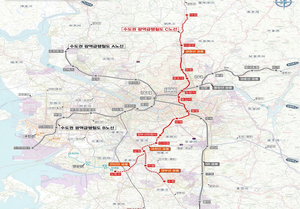
GTX-C line linking Yangju and Suwon breaks ground Tuesday
Land Ministry says travel time between Deokjeong and Samsung stations to drop from 80 minutes to 30 The long-delayed GTX-C line is breaking ground. The 86.6-kilometer route will run from Deokjeong in Yangju, Gyeonggi Province, through Changdong, Cheongnyangni, Samsung and Yangjae stations before terminating at Suwon and Sangnoksu station in Ansan. Once open, the line is expected to significantly improve commutes for new-town residents traveling between Yangju and Seoul's Gangnam district, as well as those commuting to Gangnam from Suwon, Uiwang and surrounding areas. The Ministry of Land, Infrastructure and Transport said Tuesday it was launching construction on the GTX-C private investment project and would also open a promotional center where prospective passengers can preview the service. When the line opens, travel time between Deokjeong and Samsung stations will fall from 80 minutes to 30, while the Suwon–Cheongnyangni leg will shrink from about 75 minutes to 30. Planned stops include Deokjeong, Uijeongbu, Changdong, Kwangwoon University, Cheongnyangni, Wangsimni, Samsung, Yangjae, Government Gwacheon Complex, Indeokwon, Geumjeong, Uiwang and Suwon stations. The line will also branch at Geumjeong to share the Ansan Line, adding Sangnoksu station. Construction is expected to take 60 months from the ground-breaking, with the line targeting an opening in the second half of 2031. Total project costs stand at 4.93 trillion won ($3.68 billion). The project held a ground-breaking ceremony in January 2024 but stalled after Hyundai E&C and other lead contractors clashed with the government over cost increases driven by soaring materials and labor expenses that they said were not adequately reflected in the contract. The Korea Commercial Arbitration Board stepped in to broker a settlement in April, and in August the Private Investment Project Review Committee approved changes to the implementation agreement. The ministry will hold an official opening ceremony for the promotional center at Suwon Station on Tuesday. Metropolitan Area Transportation Commission Chairman Kim Yong-seok will attend alongside lawmakers and local government heads. Visitors can explore the line's travel times and train designs and take part in various events. "I am overjoyed to be able to share with the public that the C line, which has faced difficulties for so long, is finally breaking ground," Kim said. "We will manage the construction process rigorously to ensure quality and safety, and open the line on schedule."
Sept. 14, 2026
-
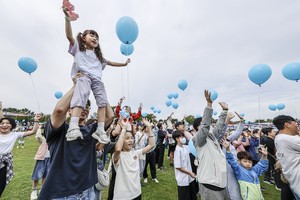
Daewoo Engineering & Construction holds family festival with over 2,000 employees and their families
Over 2,000 employees and family members take part Daewoo Engineering & Construction announced Monday that it co-hosted the "2026 Labor-Management Joint Family Love Festival" with Yeoncheon-gun on Saturday, drawing more than 2,000 employees and their families to the Jeongok-ri prehistoric site and the Hantan River tourism area in Yeoncheon-gun. The event was designed to foster communication and unity among employees and their families, deepening their pride and sense of belonging as members of the "Daewoo family." The company's labor union had proposed a company-wide family invitation event in June to carry on Daewoo Engineering & Construction's family-friendly corporate culture, and management agreed with the goals of boosting morale and strengthening a sense of belonging, with both sides joining forces to organize the festival. To ensure a comfortable stay for attending families, labor and management rented out the entire Hantan River Auto Camping Site near the venue and offered a two-night, three-day lodging program from Friday through Sunday. Participants had access to caravans, cabin houses and auto-camping sites, and families without camping gear could borrow tents, cookware, camp stoves and other equipment. Yeoncheon-gun, where the festival was held, is rich in historical, cultural and natural attractions — including Jaein Falls, known for its basalt columnar joints; the Jeongok-ri prehistoric site, a center of Paleolithic culture; Horogoru, a Goguryeo-era historical fortress; and Daeopsari Park, celebrated for its vivid red autumn scenery. On the day of the festival, participants kicked off with a walking program through the Jeongok-ri prehistoric site and along the Hantan River, then took part in a range of activities reflecting the site's historical character, including Paleolithic costume experiences and barbecue sessions. The event also highlighted the company's commitment to supporting local communities. Yeoncheon-gun set up a market selling local agricultural and specialty products so participants could purchase regional goods directly, while Daewoo Engineering & Construction served abalone dishes — including butter-grilled abalone and abalone cold soup — made with abalone shipped directly from Wando that day, in a show of support for abalone farmers struggling with sluggish consumption and falling prices. "This family festival was a meaningful event that gave employees' families unforgettable memories while also allowing labor and management to build a family-friendly culture together and contribute to the local community," a company official said. "We will continue to expand programs that employees' families can participate in and sustain our cooperation with Yeoncheon-gun and other local communities to pursue a variety of activities that help us grow together." Meanwhile, Daewoo Engineering & Construction has also been running its "Daewoo's Pride Truck" Season 4 program, which sends snack trucks to domestic construction sites to boost employee morale.
Sept. 14, 2026
-
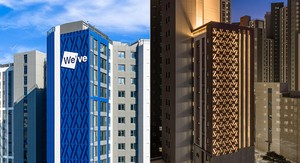
Doosan E&C's We've The Zenith tops high-end apartment brand awareness survey
Survey of 3,388 consumers nationwide conducted by Real Estate 114 and Turnaround Brand favorability and intent to reside both rise across the country We've The Zenith, the high-end apartment brand of Doosan Engineering & Construction, ranked first in both high-end brand awareness and regional landmark brand recognition, according to a survey conducted last month by Real Estate 114 and Turnaround. Real Estate 114 said Monday the results came from its "Apartment Brand Competitiveness Diagnostic Survey," which polled 3,388 consumers nationwide from Aug. 5 to Aug. 13. "We've The Zenith has rapidly established a presence in key hub cities, building broad public recognition," a Real Estate 114 official said. "As a landmark complex representing its region, the brand has expanded its standing while earning positive evaluations from buyers for its product quality, which reflects residential trends, and its refined brand image." We've The Zenith has also contributed to improving perceptions of We've, Doosan Engineering & Construction's flagship brand. Among respondents who said they were familiar with We've, more than half — 52.2 percent — said their perception of the brand had improved over the past two to three years, selecting either "has changed very positively" or "has changed somewhat positively." The most commonly cited reason for the positive shift was "a sense that brand competitiveness has improved," chosen by 33.3 percent of respondents. Greater Seoul residents gave that response at a rate of 33.9 percent, compared with 32.5 percent outside the metropolitan area, suggesting consumers in the capital region are more likely to perceive We've as a stronger brand. Respondents outside the Greater Seoul area most frequently cited "a more refined brand design and image" as the top driver of positive change, at 35.8 percent. Doosan Engineering & Construction unveiled pattern designs in 2024 that visualized the brand identities of both We've and Zenith, as part of efforts to sharpen brand differentiation and elevate spatial design. Those branding efforts appear to have translated into the shift in consumer perception. The change in perception of We've was also reflected in brand favorability and intent-to-reside scores. On a seven-point scale — ranging from 1 ("strongly disagree") to 7 ("strongly agree") — nationwide brand favorability rose from 4.87 in 2025 to 4.98 in 2026, a gain of 0.11 points, while intent to reside climbed from 4.99 to 5.05 over the same period, up 0.06 points. Brand favorability among Greater Seoul residents rose 0.12 points, from 4.84 in 2025 to 4.96 in 2026, outpacing the nationwide gain of 0.11 points. Real Estate 114 said the recent positive shift in perceptions of We've is translating into stronger brand favorability and intent to reside among metropolitan-area consumers. The survey, jointly conducted by Real Estate 114 and Turnaround, carries a margin of error of plus or minus 1.68 percentage points at a 95 percent confidence level. "We've, which marks its 25th anniversary this year, is leveraging the brand assets it has built over decades to strengthen the competitiveness of its high-end line, We've The Zenith," a Real Estate 114 official said. "A defining feature is how the brand has extended its reach into the Greater Seoul housing market, drawing on the recognition and trust it has accumulated as a long-established name." Meanwhile, Doosan Engineering & Construction posted second-quarter revenue of 405.1 billion won ($301 million) and operating profit of 42.7 billion won. The company has been selected as the contractor for Seoul's first and second urban public housing complex projects and is pressing ahead with those developments, while focusing on improving profitability by managing costs through selective order intake.
Sept. 14, 2026
MOST READ
- 1Hyundai Motor unveils all-new Tucson with bigger body, smarter tech after 6-year wait
- 2Flat sneakers are back: Why Nike is reviving a 55-year-old running shoe
- 3Pope Leo XIV declines French honors and banquet, accepts only private meeting with Macron
- 428 illegal sports streaming sites found operating freely despite repeated blocks
- 5What was Rachmaninoff's performance fee? A 1928 price list tells all
- 6Samsung Biologics union's show of force backfires at the bargaining table
-
WORLD

US warns of punishment for anyone enabling Iran's Strait of Hormuz toll scheme
-
INDUSTRY
Toyota union puts productivity first; Hyundai Motor union demands bigger share of profits
-
FINANCE
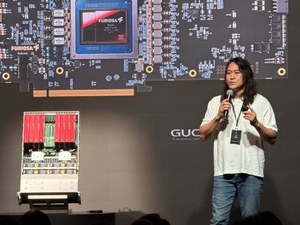
National Growth Fund to invest $531M in FuriosaAI, which rebuffed Meta's $800M takeover bid
-
INDUSTRY
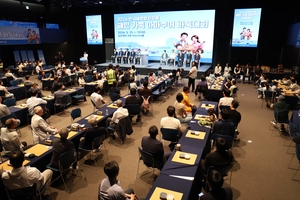
Korea Shipowners' Association holds amateur baduk tournament for Maritime Day