
- HOME
- REAL ESTATE
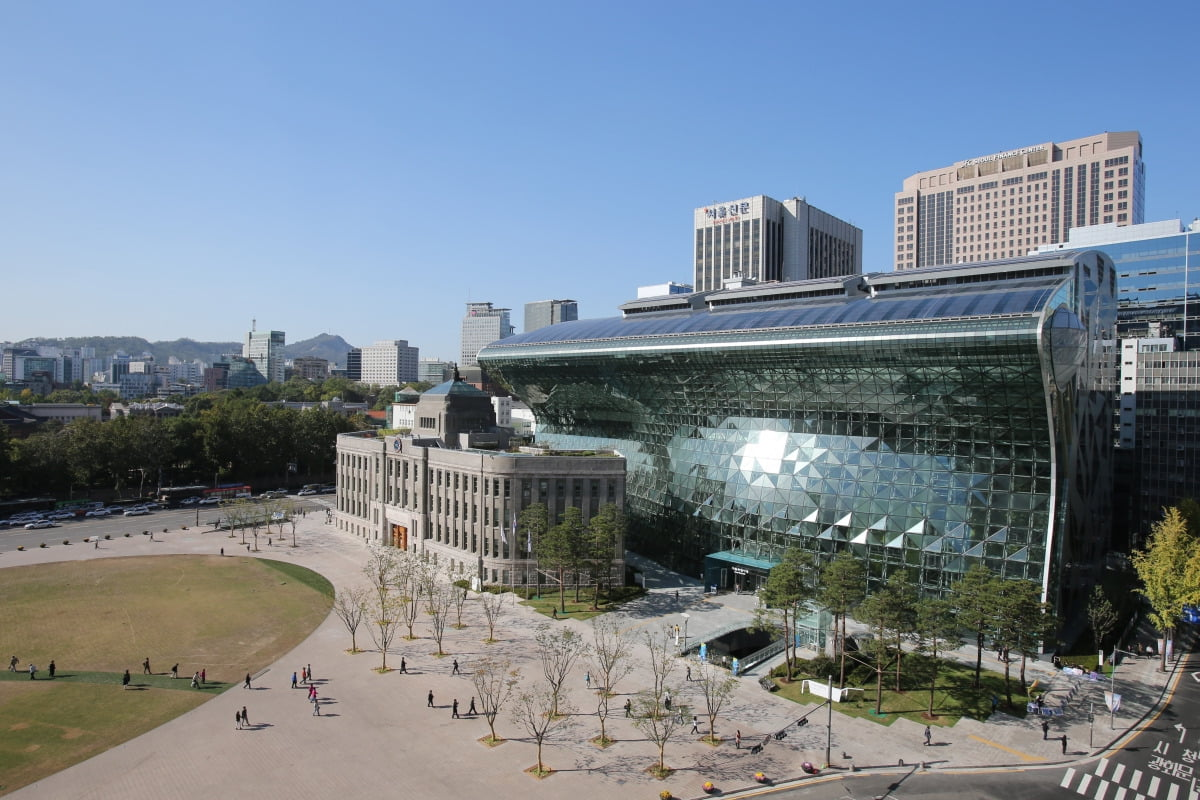
Seoul to bring redevelopment planning exhibitions to neighborhood district offices
Architectural models and videos to show residents what their neighborhoods will look like after renovation The Seoul Metropolitan Government will launch a traveling exhibition series for the first time, giving residents a firsthand look at the future of neighborhoods designated under its Fast-Track Integrated Planning system. The exhibitions will open first in Dobong-gu, followed sequentially by Dongjak-gu and Eunpyeong-gu. The city said the exhibition series, titled "Fast-Track Integrated Planning on the Road," opens Monday in the lobby of the Dobong-gu district office. The exhibitions are designed to display planning details, architectural models and videos for Fast-Track Integrated Planning sites in spaces close to where residents live, so they can see how their neighborhoods will change after redevelopment without visiting a dedicated exhibition venue. Visitors can view architectural models and visual materials showing how building layouts, heights, roads, parks and pedestrian networks will be transformed. Architectural models previously used at zone-by-zone resident briefings will be put on public display for a set period, allowing more residents to engage with the redevelopment plans. The first exhibition in Dobong-gu runs through Sept. 30. It will be followed by an exhibition in Dongjak-gu from Oct. 19 to Oct. 30, and one in Eunpyeong-gu from Nov. 16 to Nov. 27, each held in the respective district office lobby. The exhibitions will present the progress of Fast-Track Integrated Planning sites in each district, along with key zone-by-zone plans, models and videos. Fast-Track Integrated Planning is a public support system in which residents, the Seoul Metropolitan Government, district offices and experts work together from the earliest stages of redevelopment and reconstruction projects to set the direction of planning. There are currently 314 Fast-Track Integrated Planning sites across Seoul, of which 200 have completed the planning process. Residents in areas not included in the traveling exhibition series can access Fast-Track Integrated Planning information through the "Fast-Track Integrated Planning Archive" on the Seoul Metropolitan Government's website. The city plans to expand the scope and format of future exhibitions based on this year's results and visitor feedback. "Redevelopment plans involve a great deal of technical content, making it difficult for residents to get a real sense of how their neighborhood will change just from drawings and documents," said Kim Chang-gyu, head of the Seoul Metropolitan Government's Urban Space Bureau. "We hope this traveling exhibition will give residents an easier and more accessible way to encounter the plans and envision the future, and serve as an opportunity to deepen understanding of and build consensus around Fast-Track Integrated Planning."
Yoon Sung-hyun Sept. 21, 2026
-
South Korea to roll out tailored public rental housing for youth, elderly and families
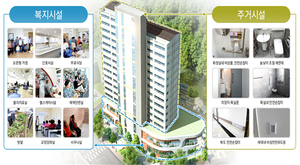
Ministry of Land accepts applications from local governments through Nov. 20 South Korea is set to begin supplying tailored public rental housing designed for youth, elderly residents and families with young children. The Ministry of Land, Infrastructure and Transport announced Thursday that it will accept applications for specialized housing projects from public housing operators — including local governments and regional public corporations — from Saturday through Nov. 20. The specialized housing combines residential units with facilities and services suited to each resident group, such as social welfare centers, childcare spaces and shared offices. Projects selected through the competition will receive financial support, including loans and grants from the Housing and Urban Fund, to help ensure that housing tailored to local demand and conditions can be built. Starting with this round, projects located outside the Greater Seoul area will receive additional scoring points. Youth-focused housing and childcare-friendly housing will also be subject to new minimum floor-area requirements for specialized facilities, ensuring sufficient communal and care spaces to deliver the community and childcare services residents need. The competition covers four project types. Youth specialized housing targets unmarried young adults and university students, offering rental units in prime transit-oriented locations within urban centers. The units reflect preferences common among younger residents — including preferred unit sizes and built-in furniture — alongside tailored services. Region-proposed specialized housing, introduced in the second half of 2024, allows public housing operators such as local governments to customize eligibility criteria, selection methods and residency periods to match local needs — such as encouraging childbirth or promoting migration to rural areas. The format allows for locally tailored design and reflects residents' needs, and links easily to central and local government policy initiatives. Elderly welfare housing is open to homeless residents aged 65 and older. It pairs residential units — equipped with accessibility features such as sliding bathroom doors and safety grab bars — with on-site social welfare facilities, providing housing and welfare services at the same time. The housing also includes health support facilities such as senior dining halls, health consultation rooms and lecture rooms, as well as leisure amenities, contributing to high resident satisfaction. Employment-linked support housing targets startup founders, workers at small and medium-sized enterprises and industrial complex employees. It provides rental units alongside specialized facilities such as shared offices and startup centers to help reduce housing costs for workers. "Specialized housing can supply tailored units that match local demand and conditions, and provides residential spaces and services that take into account the characteristics of diverse residents — including youth, the elderly and families raising children," Han Seong-su, the ministry's director general for residential welfare policy, said. "We will work to actively identify and supply a wide variety of specialized housing that communities need through this competition."
Sept. 20, 2026
-
Hong Ji-sun pledges 'rational solution' on reconstruction levy as next year's budget hits W83m
Levies imposed in the 2010s still being collected National Assembly debates abolition amid calls to act quickly The government has allocated 83 million won ($60,100) in next year's budget for the redistribution of funds collected under the reconstruction excess profit recapture regime, it emerged Sunday. As levies imposed in the 2010s continue to be collected more than a decade later, experts say the government needs to quickly establish a clear direction for how the system will operate going forward. 2.1 billion won collected in 2010–2012, still being recouped According to the budget proposal the government submitted to the National Assembly on Sunday, the Ministry of Land, Infrastructure and Transport earmarked 83 million won for its "reconstruction excess profit recapture capital transfer" project next year. That is 113 million won less than this year's budget of 196 million won — a year-on-year decrease of 57.7 percent. The capital transfer program redistributes to local governments with poor residential environments the portion of reconstruction levies — collected from excess profits generated by reconstruction projects — that flows to the central government. Reconstruction levies are distributed among the central government, metropolitan governments and basic local governments, and the central government's share is in turn redistributed back to local authorities. "Most reconstruction levies go to local government revenues, with a portion allocated to the central government," a Ministry of Land, Infrastructure and Transport official said. "The funds that come into the central government, combined with any unspent balances, are redistributed to local governments with poor residential environments." The 83 million won budgeted this time also does not stem from new reconstruction projects but from levies imposed in the past. According to the ministry, roughly five project sites had a total of about 2.1 billion won in reconstruction excess profit recapture levies imposed on them around 2010 to 2012, and a portion of that amount went unpaid due to litigation and other reasons — and has continued to be collected through recent years. "The ongoing collection of past reconstruction levies that went unpaid due to litigation is what is driving the continued budgeting for the related capital transfer," the ministry official said. The situation illustrates that the reconstruction excess profit recapture regime remains, even now, at the stage of collecting levies imposed years ago. The reconstruction excess profit recapture system was introduced in 2006 to recoup excess profits generated by reconstruction projects. It calculates excess profit by subtracting the value of housing at the start of a project, normal housing price appreciation and development costs from the value at the project's completion, then imposes a levy accordingly. After its introduction, the system went through a period during which levies were not actually imposed, depending on real estate market conditions. In particular, levy imposition was suspended for reconstruction projects that applied for management and disposal plan approval between Dec. 18, 2012, and Dec. 31, 2017. After the system was reinstated, the Constitutional Court ruled in 2019 that the Reconstruction Excess Profit Recapture Act was constitutional. 'A rational approach to the regime must be found' Three bills calling for the abolition or reduction of the reconstruction excess profit recapture levy are currently before the National Assembly, and petitions for abolition and revision have been referred to the land committee's legislation subcommittee. Opinion is divided between those who argue the system should be maintained and those who say it should be abolished or reformed, as the current framework risks increasing uncertainty for reconstruction projects. "A rational approach to operating the system needs to emerge through the National Assembly's deliberations," a ministry official said, adding that the ministry would monitor the progress of reconstruction projects and the status of levy imposition. Industry observers say that because the system has repeatedly cycled through suspension and reinstatement since its introduction, uncertainty over the scale of levies and whether they apply to individual project sites has persisted — making it necessary to clarify both whether the regime will be kept and how it will be run in practice. If levy imposition begins in earnest, debate over reforming the system is expected to intensify. Hong Ji-sun, the nominee for minister of land, infrastructure and transport, said in written responses submitted to the National Assembly ahead of her confirmation hearing that "a way is needed to increase housing supply in urban areas while balancing the interests of the public and private sectors," adding that she would "work to ensure a rational approach to operating the system emerges if the National Assembly takes up legislation to abolish it." A member of a reconstruction apartment association in Seocho-gu urged abolition of the levy, saying it "is a tax imposed on the assumption that profits have been made from reconstruction, even though those profits have not actually been realized," and that "because capital gains tax is applied when actual profits are realized, the levy has the character of double taxation."
Sept. 20, 2026
-
Chuseok traffic to peak Wednesday morning for outbound trips
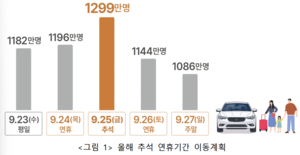
Ministry designates Sept. 23–27 as special traffic management period Shorter holiday than last year expected to worsen congestion; about 30.93 million people to travel About 30.93 million people are expected to travel over the five-day Chuseok holiday period from Wednesday through Sunday. Most travelers are expected to use private vehicles. With the holiday period shorter than last year, traffic congestion could be worse than usual. Daily traffic on Chuseok itself is forecast to reach about 6.84 million vehicles — up 6.7 percent from last year — with outbound congestion peaking Wednesday morning and inbound congestion peaking Thursday afternoon. South Korea's Ministry of Land, Infrastructure and Transport designated Sept. 23–27 as a special traffic management period and said it would operate a special traffic control headquarters to ensure safe and convenient travel for the public. According to the Korea Transport Institute and Korea Expressway Corporation, the shorter holiday compared to last year is expected to bring total travelers down 3.5 percent from a year ago to about 30.93 million. Private cars are expected to account for 88.4 percent of all travel. Average daily expressway traffic is forecast at about 6.05 million vehicles, up 11.8 percent from last year's 5.41 million. On Chuseok day itself, Thursday, outbound travelers, inbound travelers and those visiting family graves are all expected to converge on the roads, pushing daily traffic to about 6.84 million vehicles — a 6.7 percent increase from last year's 6.41 million. Travel times between major cities are expected to be longest for outbound trips on Wednesday morning and for inbound trips on Thursday afternoon. In response, the ministry designated 299 expressway and national highway sections as congestion-prone zones, where it will focus on managing traffic and guiding vehicles to alternate routes. Shoulder lanes will also be opened on 64 expressway sections. Eleven new national highway sections will open, including the Yeonsan–Duma stretch, the Chungju Daesowon interchange intersection, Jangsu–Janggye, Posan–Seomang and Maejeon–Geoncheon. Bus-only lanes on the Gyeongbu Line between Yangjae and Sintanjin will be extended by four hours compared to normal operations, running until 1 a.m. instead of the usual cutoff of 9 p.m. Expressway tolls will be waived from Wednesday through Sunday, and fuel prices at expressway service stations will be cut by 100 won per liter to ease the financial burden on travelers. Congestion information for 14 major rest stops will be displayed before drivers enter, to help manage crowding. For rail travelers, the integrated ticketing app Korail+ will allow users to search and book tickets in one place, and fares for reverse-direction holiday trips will be discounted by up to 50 percent. Both train and bus services will be expanded compared to normal operations — trains by 11.8 percent (11,567 additional runs) and bus seats by 11.1 percent (853,000 additional seats). At airports, departure halls will open up to 30 minutes earlier than usual, and self check-in and self bag-drop services will be expanded. Temporary parking areas will also be secured to ease airport parking shortages. To improve traffic safety, the ministry will strengthen pre-holiday safety inspections of major transportation facilities and expand AI-based accident-prone zone monitoring from 40 to 50 locations. Park Jae-soon, director general for transport and logistics at the ministry, urged the public to obey traffic laws for a safe and smooth journey. "With the holiday period shorter than last year, traffic congestion is expected to be significant, so check traffic information before you leave, and make sure to get enough rest to prevent drowsy driving," he said.
Sept. 20, 2026
-
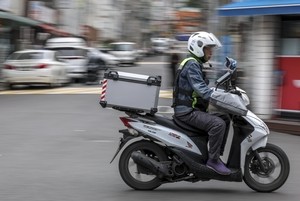
Safe-driving delivery workers to get up to 11% insurance discount
Ministry of Land, Infrastructure and Transport launches product through delivery services mutual aid association South Korea is significantly expanding an insurance discount policy to encourage delivery workers to drive safely. The Ministry of Land, Infrastructure and Transport and the Delivery Services Mutual Aid Association announced Monday that they will raise the maximum discount rate under the traffic safety special policy rider from 5 percent to 11 percent, allowing delivery workers' voluntary safe-driving efforts to translate directly into lower premiums. The move comes after mandatory enrollment in commercial-use insurance for delivery workers took effect June 3. The aim is to ease the premium burden on workers while creating a virtuous cycle in which safe-driving effort leads to tangible financial benefits. Workers who complete a traffic safety education course — including on-road driving practice — or who install a digital tachograph (DTG) or a front license plate on their motorcycle will each receive a 5 percent discount on their premium for that item. Previously, the discount for fitting a front license plate stood at 1.5 percent, while completing the traffic safety course and installing a DTG each carried a 3 percent discount. The discounts can be stacked, meaning workers can reduce their premiums by up to 11 percent through traffic safety-related benefits alone, the ministry said. The expanded rates will apply to new enrollments or renewals of the association's "commercial-use monthly (30-day) mutual aid insurance" product on or after Monday. Existing policyholders can also receive the discount by signing up for the special rider. The product is available through the association's mobile app or website. In addition, the association plans to launch a specialized driver injury support product before the end of the year, reflecting the nature of delivery work — where injuries from traffic accidents tend to be severe and income drops immediately. Park Jae-soon, director general of the transport and logistics bureau at the ministry, said the discount range was expanded "so that delivery workers' voluntary attention and effort toward safe driving can translate into the benefit of reduced premiums, given that safe driving is the most important practice for protecting not only the workers themselves but all citizens." He added that the ministry would "continue to pursue policies that reduce the burden on delivery workers while raising safety standards." Meanwhile, the number of delivery platform workers has exceeded 400,000 since 2021, and accidents involving delivery workers have increased year after year amid tight delivery deadlines and intense competition for jobs, heightening attention to road safety.
Sept. 20, 2026
-
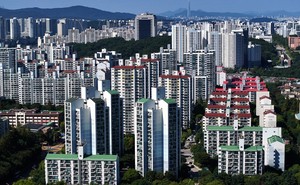
'Why isn't my apartment rising?' — some Gyeonggi homes trade at half their peak as divide widens
Gyeonggi apartment prices up 4.92% so far this year Average price in Anyang-Bundang corridor tops 1 billion won 'Northern Gyeonggi faces fundamental limits on growth potential' Apartment prices in Gyeonggi Province have risen about 5 percent this year, but sale prices have fallen in 15 of the province's 44 cities and districts — roughly one-third of the total. While Dongtan-gu in Hwaseong, a prime live-work area, has posted a cumulative gain of nearly 18 percent to rank first nationwide, some areas have seen deals close at half their peak prices, underscoring a sharp divide across the region. According to the Korea Real Estate Board's weekly apartment price trend report for the second week of September (based on data through Monday), apartment prices this year have fallen in Icheon (-5.10%), Pyeongtaek (-2.81%) and Paju (-2.13%). Transaction records from those areas confirm the steep declines. According to the Ministry of Land, Infrastructure and Transport's actual transaction price disclosure system, an 84-square-meter unit at Unjeong Hwaseong Park Dream Signature in Mokdong-dong, Paju, changed hands Tuesday for 460 million won ($333,000) — a drop of 51.6 percent from its peak of 950 million won recorded in February 2022. A 99-square-meter unit at Godeok International New Town Jeil Punggyeongchae in Godeok-dong, Pyeongtaek, sold Aug. 20 for 647 million won, down 478 million won from its previous peak of 1.12 billion won. In Siheung, where prices have edged down 0.16 percent this year, even a large complex of about 2,700 units has yet to reclaim its peak. An 84-square-meter unit at Halla Vivaldi Campus 2 in Baegot-dong, Siheung, hit a high of 800 million won during the 2021 real estate boom but sold Wednesday for 518 million won. Icheon, which has seen the steepest apartment price decline in Gyeonggi Province this year, tells a similar story. A 74-square-meter unit at Icheon Central Prugio in Jeungpo-dong traded above 400 million won through last year but sold Friday for 355 million won — 36.6 percent below its 2022 peak of 560 million won. Analysts attribute the polarization to a combination of Seoul accessibility and live-work demand. As non-resident landlords convert properties to owner-occupied use, those priced out of Seoul have moved to adjacent areas, while rising buying activity near industrial complexes has driven sharp price gains in select locations. Areas close to Seoul have seen notable gains this year, including Anyang's Dongan district (up 13.89 percent) and Gwangmyeong (up 14.68 percent). Seongnam's Bundang district (up 13.69 percent) and Yongin's Suji district (up 14.44 percent), both part of the semiconductor belt alongside Dongtan, also posted strong increases. Average sale prices have also diverged by corridor. According to the Korea Real Estate Board, the average apartment sale price in the Gyeongbu 1 corridor — which includes Anyang's Dongan-gu and Seongnam's Bundang-gu — surpassed 1 billion won in July. It reached 1.02 billion won in August, up more than 60 million won from 954.81 million won in January. Over the same period, the Gyeongui corridor (Gimpo, Goyang and Paju) edged down from 461.61 million won to 460.54 million won, and the Eastern 2 corridor (Icheon and Yeoju) fell from 216.5 million won to 211.41 million won. The Gyeongwon corridor (Pocheon, Dongducheon, Yangju and Uijeongbu) rose by only about 2.45 million won ($1,770), from 274.6 million won to 277.05 million won. Experts said structural differences will keep the divide in place. Park Won-gap, a senior real estate specialist at KB Kookmin Bank, said Gyeonggi Province is a prime example of live-work demand reshaping the property market. "With dual-income couples in their 30s and 40s now making up more than half of all households, couples with greater purchasing power living near industrial complexes are setting home prices," he said. Kim Jin-yu, a professor in the department of urban and transportation engineering at Kyonggi University, said southern Gyeonggi still has advantages — including a potential National Assembly relocation — and continues to expand, while the north faces fundamental limits on growth. "The only real solution would be attracting major employers on the scale of the Yongin semiconductor cluster, but that is realistically difficult, so the gap is likely to widen," he said. On Dongtan's sharp run-up, Kim said the current gains may be excessive but noted that the district's area — roughly twice that of Bundang — could serve as a foundation for a self-sufficient city.
Sept. 20, 2026
-
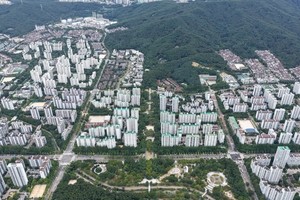
Nau Dongin selected as architect for Bundang Saetbyeol village reconstruction
Fastest-moving of Bundang's first-phase new town pilot districts Complex to be redeveloped into 5,050-unit, 49-story project Nau Dongin Architects has been selected as the lead architect for the integrated reconstruction of Saetbyeol village, a pilot district in Bundang's first-phase new town development. At a general meeting of landowners and property holders in the Saetbyeol village integrated reconstruction zone held Saturday, Nau Dongin won 1,654 votes out of 1,939 eligible voters, an approval rate of 85.3 percent, according to the urban renewal industry. Three other firms — DA, Espace and Wonyang — also competed for the contract, drawing strong industry attention given the scale of the Bundang reconstruction project. As the selected architect, Nau Dongin will be responsible for drawing up the project implementation plan and overseeing the full permitting and approval process. The Saetbyeol village integrated reconstruction project will consolidate the Life, Dongseong, Ubang and Sambu apartment complexes and Hyundai Villa in Bundang-dong, Bundang-gu, Seongnam, Gyeonggi Province into a single special maintenance zone. The 231,037-square-meter site will be redeveloped into a complex of 5,050 residential units across buildings ranging from two basement levels to 49 above-ground floors, along with ancillary community facilities. The project is advancing faster than any other pilot district in Bundang. After being designated a pilot district in November last year, the zone received its special maintenance district designation and official notice on Jan. 19 this year. The zone boundary was also revised to include Hyundai Villa, a process completed April 30. Nau Dongin was the first firm to declare its candidacy, submitting a design proposal titled "THE EMPYREAL BUNDANG." The firm focused on balancing the interests of individual complexes and ensuring equitable outcomes, drawing on its prior experience advising on architectural planning during the special maintenance zone designation and urban renewal planning process. The residential buildings are oriented so that every unit faces south, with maximum spacing between buildings. A multi-level pedestrian bridge connecting the complex to a central park will provide easy park access, and the design also calls for a 7-kilometer circular walking trail and themed gardens within the complex. "As the first architect selected for a Bundang reconstruction pilot district, we will deliver the finest design to ensure this becomes the most outstanding complex — developed with speed," a Nau Dongin official said.
Sept. 19, 2026
-
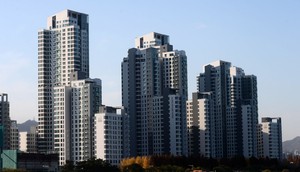
Banpo apartments sell for 9.8b, 9.4b won — ultra-luxury buyers sidestep rates and loan curbs
Record deals emerge in Gangnam even as distressed listings mount Lee says 'prime single home' above 10b won is leading prices higher Ultra-luxury segment reorganizes around cash buyers Even as President Lee Jae Myung has identified ultra-luxury Seoul homes — those priced above 10 billion won ($7.24 million) — as a key driver of rising property prices, record-breaking transactions continue to close in the city's top-end market, bypassing high interest rates and tightened lending rules. Transaction volumes have contracted under stricter taxes, loan regulations and rising rates, but the segment is being reshaped around cash-rich buyers who are pushing prices to new highs. Data from the Ministry of Land, Infrastructure and Transport's actual transaction price disclosure system show that 118 apartments priced at 5 billion won or more changed hands in Seoul over the three months from June through August — a 41.9 percent plunge from 203 deals recorded in the same period a year earlier. Analysts attribute the slowdown to a combination of tightened lending rules, a sustained high-rate environment and a wait-and-see mood that has spread across the high-end market since the government unveiled its Aug. 3 tax reform package, which raised both property holding taxes and capital gains taxes simultaneously. With the government continuing to signal tougher measures targeting ultra-luxury homes, both buyers and sellers are treading carefully. Even so, record prices are still being set across Seoul. A 208-square-meter unit at Hanyang 4-cha in Apgujeong-dong, Gangnam-gu, sold for 9 billion won on Aug. 29, setting a new high — 300 million won above the 8.7 billion won paid for the same floor area in May. A 129-square-meter unit at Acro River Park in Banpo-dong, Seocho-gu, also changed hands at a record 8.5 billion won on Aug. 3, while a 243-square-meter unit at Tower Palace 2 in Dogok-dong, Gangnam-gu, set a new high of 7.45 billion won on Aug. 11. In Yongsan-gu, a 273-square-meter unit at Nine One Hannam in Hannam-dong — one of the district's most prestigious addresses — sold for a record 25.5 billion won on Aug. 27. Against this backdrop, Lee reiterated his concern on Friday that ultra-luxury homes are driving broader price increases and pledged to stabilize the market. Speaking at a press conference at Cheong Wa Dae's banquet hall, he said, "Isn't it the case that a so-called prime single home now costs more than 10 billion won? I can't even imagine it. I used to think only the biggest chaebol lived in places like that, but now they go for 8 billion, 9 billion, 10 billion won." He added, "These ultra-luxury homes lead prices higher and the rest follow. Combined with a shortage of supply, expanded lending and other factors, they have become a cause of rising housing prices." Lee also acknowledged the difficult interest rate environment, saying the government would deploy every available policy tool — including sustained loan restrictions, expanded supply and tax measures — to stabilize the real estate market. "The United States is raising its benchmark interest rate and Korea is narrowing that gap, so the rate situation is not easy," he said. "Taking all of this into account, we will take every possible measure through regulation, supply and taxation, and the real estate market will gradually stabilize." The deeper problem, however, is that the ultra-luxury segment has already formed a league of its own, largely insulated from rate hikes and regulatory pressure. With mortgage lending capped at just 200 million won for such properties, the market is effectively limited to buyers with substantial cash reserves, and a string of record purchases of scarce, high-prestige units is widening the gap with the broader housing market. One such buyer is a person born in the 1980s who purchased a 178-square-meter unit at Acro River Park for a record 9.8 billion won in late June and completed the final payment this month, transferring ownership. No collateral mortgage has been registered on the title, suggesting the purchase was made entirely in cash. A nearby 191-square-meter unit at Raemian One Pentas also sold for 9.4 billion won in June; the buyer, also born in the 1980s, completed the final payment with no mortgage registered and has since transferred the title. At the same time, record deals in the Gangnam area are occurring alongside a steady flow of distressed listings driven by pressure from the tax reform package. Properties held by multi-home owners or elderly sellers struggling with the tax burden are coming to market at reduced asking prices, nudging overall apartment prices slightly lower. Nam Hyeok-woo, a real estate researcher at Woori Bank, said the core provisions of the capital gains tax increase — including a reduction in the long-term holding deduction rate and a new cap on the long-term residency income deduction — "are still acting as a strong incentive to sell." He added that "policy uncertainty remains, as the market must wait to see whether the tax reform package is further softened during the legislative process," and that with investor sentiment also dampened by rising rates, "there is a reasonable likelihood that the slowdown in transactions and the trend of price weakness in the Gangnam area will persist for now."
Sept. 19, 2026
-
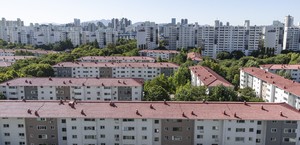
'First, priciest, biggest': the battle for Mokdong's W30tr reconstruction throne
47,000 households to reshape Mokdong new town after 40 years Complex 6 leads the race; Complex 7 commands top prices; Complex 14 is the largest Low floor-area ratios and large land shares draw construction giants Permits before 2030 are key — simultaneous relocation and construction costs loom large A 30 trillion won ($21.7 billion) urban reconstruction is now underway in Mokdong, Yangcheon-gu, Seoul. All 14 complexes of the Mokdong New Town — home to more than 26,000 households — have entered the reconstruction race simultaneously. If completed as planned, the area will be transformed into a new residential city of about 47,000 households. Among Seoul's major reconstruction projects, it is rare to find a case where 14 large complexes within a single living zone move forward all at once. Before the Anyangcheon embankment was properly built, the Mokdong area was a mix of low-lying land and farmland. The neighborhood's name is said to derive not from the Chinese character for "wood" but from a different character meaning "to raise" or "to tend." The area was completely transformed in the 1980s. To address housing shortages, overheated real estate speculation and regional imbalances, the Seoul Metropolitan Government unveiled a master plan in 1981 for the city's urban structure through the year 2000, pursuing a multi-core urban layout. In 1983, it announced the Mokdong New Town development plan, formalizing its vision to supply housing on a large scale while creating a new center for western Seoul. Mokdong was designed as a self-sufficient "new town within a city," combining commercial, business and residential uses. It was laid out as a planned city with a gently S-shaped north-south central axis, a one-way road system and district heating supplied by a combined heat and power plant. The 14 complexes were built in sequence from 1985 to 1988, and as schools, parks and commercial facilities followed, a hagwon district and strong school zone took shape. Mokdong established itself alongside Daechi-dong in Gangnam-gu as one of Seoul's premier education-oriented residential neighborhoods. Now, roughly 40 years after being built from the same blueprint, all 14 complexes are being torn down at once. This article examines the contest that will define Mokdong's next 40 years across five dimensions: project pace, contractor, project viability, current market value and risk factors. First dimension — project pace: Complex 6 leads, and the old front-back hierarchy is shifting Complex 6 is currently the frontrunner in project pace. In May, it became the first of Mokdong's 14 complexes to clear Seoul's integrated review for redevelopment projects, with plans to rebuild its existing 1,362 households into up to 2,170 units across towers of up to 49 stories. DL E&C has been confirmed as the contractor, with a proposal branded "Acro Mokdong Regency." A reconstruction association official with roots in Mokdong, identified only as A, said Complex 6 was not particularly sought-after in the past, but its fast project pace has itself become a premium. "After reconstruction, it will be able to offer views toward both the Anyangcheon and the Han River at the same time, which could earn it a very different reputation," A said. In Mokdong, Complexes 1 through 7 are known as the "front complexes" and Complexes 8 through 14 as the "back complexes." Administratively, most front complexes fall under Mokdong while the back complexes are largely in Sinjeong-dong. A said the market price gap between the two groups had once been clear, but some back complexes have recently moved faster on reconstruction, narrowing the difference considerably. By contrast, Complexes 1, 2 and 3 were originally designated as second-class general residential zones and took relatively longer due to the rezoning process required. Complex 13, which had long been considered a frontrunner, hit a snag at Seoul's integrated review. It was flagged for placing too many 49-story towers without sufficient height variation between buildings, falling short of the landscape and layout guidelines for the Mokdong housing district development plan. The complex is now revising its design. Seoul did not object to the 49-story height itself, but is said to have required that the tallest towers be reduced to about 10 percent of the total, with greater height variation to create a skyline that rises gradually toward the Anyangcheon. In the meantime, Complexes 9 and 10 are closing the gap quickly. Complex 9 is preparing to submit its case to the main integrated review committee, while Complex 10 is running the integrated review process and contractor selection in parallel after being designated as a project operator. Second dimension — contractors: Samsung, Hyundai, DL and GS wage a 30 trillion won territorial war Competition among construction companies for a share of Mokdong's 30 trillion won reconstruction market is intensifying. DL E&C planted its flag first, winning the contractor role for Complex 6 in June. Hyundai Engineering & Construction has more recently been selected as the preferred bidder for Complex 10, entering the Mokdong contest in earnest with a proposal branded "The H Mokdong Esser." For Complex 12, the balance is tilting toward GS Engineering & Construction. GS E&C was the only bidder in the first main tender, which was voided due to the lack of competition, and it was again the only company to appear at the re-tender site briefing. Samsung C&T is the most aggressive contender for Complex 13. It submitted the sole bid in the first tender and has partnered with an overseas design firm to prepare an alternative design, signaling its intent to deliver "Mokdong's first Raemian." But the contest that Mokdong residents are watching most closely has not yet begun — the fight for Complexes 4, 7 and 14. Complex 7 in particular is seen as the flashpoint where Samsung C&T and Hyundai E&C are most likely to collide. A Complex 7 association member, identified only as B, said residents have clear brand preferences of their own. "Early on, there was talk that Samsung C&T's Raemian would take the odd-numbered complexes including Complex 7, but recently Hyundai E&C has been moving in aggressively," B said. "Complex 7 is one where Samsung C&T has been canvassing since early on, and Hyundai E&C has also been expanding its presence lately, so residents are paying close attention," B added. Whether the two companies will actually go head-to-head remains an open question, however. "With 14 complexes in Mokdong, there is no reason for a construction company to bleed in a single battle," B said. "There is talk in the industry that they may end up dividing the complexes among themselves to some degree — each taking the ones they want." Competitive bidding may also emerge from unexpected complexes. A said that while major builders tend to lock up the most desirable complexes early — often with a single bid — less sought-after complexes could attract multiple companies that see them as winnable. "Paradoxically, the real bidding wars may break out in those places," A said. The current landscape bears this out. DL E&C has secured Complex 6, Hyundai E&C has emerged as preferred bidder for Complex 10, and both Complex 12 and Complex 13 have so far drawn only single bids — from GS E&C and Samsung C&T, respectively. Complex 8, by contrast, has drawn interest from Daewoo Engineering & Construction, DL E&C, GS E&C and Ipark Hyundai Development, making it the site most likely to see a multi-way contest. Major builders including Daewoo E&C, Lotte Engineering & Construction and Hyundai E&C have also set up dedicated showrooms and lounges in the Mokdong area, presenting their brands, design concepts and financing terms to association members and residents to get ahead of the competition. Third dimension — project viability: why Complex 5 is quietly rising The biggest asset in Mokdong's reconstruction is land. The Mokdong New Town was built at low density in the 1980s, with most existing floor-area ratios at only 116 to 125 percent — among the lowest of Seoul's major reconstruction sites. A low floor-area ratio means more room to build new apartments. The more units available for general pre-sale after reconstruction, the greater the revenue an association can capture — and the lower the additional contributions required from existing members. This is why some complexes are drawing attention for their project viability alone, independent of current market prices. Complex 5 is the prime example. A said its existing floor-area ratio of about 116 percent is the lowest among Mokdong's 14 complexes. "It is also composed mainly of larger unit types, so existing members hold relatively large land shares — it is widely regarded as one of the most viable complexes from a project standpoint," A said. In other words, while Complex 7 is the undisputed price leader today, Complex 5 is a "hidden top performer" when it comes to the reconstruction project itself. Complex 14 also stands out for sheer scale. Its existing 3,100 households will grow to 5,123 after reconstruction — the largest of any complex in Mokdong — with a net increase of more than 2,000 units. But size does not guarantee smooth sailing. Complex 14's project zone is divided into three blocks, and that structure has created subtle friction over how construction should be managed. A said a contractor consortium was considered early on given the scale of the three blocks, but the trust company and the redevelopment committee settled on a single-contractor approach. "There is still a quiet internal tug-of-war over this," A said. Fourth dimension — market value: Complex 7 is 'the undisputed leader' — but will it stay that way? If asked to name a single price leader in Mokdong today, the answer is fairly clear: Complex 7. A said Complex 7 is "the leader with virtually no dissent" — close to Mokdong Station, convenient to Hyundai Department Store, and home to Mongwun Elementary and Mongwun Middle School, which rank among the most sought-after school zones in Mokdong. Its sale prices have consistently outpaced other complexes even before reconstruction. The most common unit type in Complex 7 — a 66-square-meter exclusive use area — sold in March for 2.82 billion won, already exceeding 100 million won per 3.3 square meters. After reconstruction, however, the current hierarchy may not hold. Complex 6 — once considered relatively less desirable — has cleared the integrated review first and is now preparing for project implementation approval, drawing noticeably more market attention as a result. Complex 5, with its concentration of large unit types, is seen as the complex with the greatest potential for upscale positioning. A 152-square-meter unit there sold for 4.1 billion won in June — the highest transaction price by absolute amount recorded within the Mokdong New Town. Views are another variable. Complexes 6, 13 and 14 sit along the Anyangcheon and stand to gain a waterfront view premium after high-rise reconstruction. Complexes 1 and 6 are said to offer sightlines all the way to the Han River. Some back complexes have their own individual strengths. Complex 14 will become a development of more than 5,000 households after reconstruction — large enough to offer advantages in on-site community amenities and infrastructure through economies of scale. Complex 9 carries the image of a "legal district" residential address, given its proximity to the Seoul Southern District Court and the Seoul Southern District Prosecutors' Office. "Complex 9 is a back complex, but its closeness to the southern court and prosecutors' office makes it quite popular within Mokdong for residents who want to live near work," A said. Some complexes have more obvious weaknesses. Complex 11 is composed mainly of small and mid-sized units and is considered one of the areas more exposed to aircraft noise from Gimpo Airport. Final dimension — risk factors: the 2030 height restriction and the mass relocation of 26,000 households One more major variable looms over Mokdong's reconstruction contest: a deadline. The International Civil Aviation Organization has revised its international standards for height restrictions around airports, with the new rules set to take full effect in 2030. Mokdong, located near Gimpo Airport, falls within a flight safety zone. Most of the 14 complexes are currently planning towers of up to 40 to 49 stories. Depending on how the new standards are incorporated into domestic law, the planned heights could be affected. Industry insiders widely believe it is critical to secure project implementation approval before 2030 in order to lock in current design plans. But a more immediate challenge than height restrictions may be people. When more than 26,000 households enter reconstruction, residents will need to find somewhere else to live. Mokdong is different from a typical reconstruction area, and the reason is its school zone. Families whose children attend schools and hagwon in Mokdong will find it difficult to leave the area even during the relocation period. If multiple complexes relocate simultaneously, the jeonse and monthly rent market in Mokdong, Sinjeong-dong, Sinwol-dong, Gangseo-gu and Yeongdeungpo-gu could face a surge in demand over a short period. That is why there is growing talk of staggering relocation schedules across complexes. Construction costs are another risk. With 14 complexes — not just one or two — pursuing large-scale construction at the same time, the supply of construction workers, materials and contractor capacity could all come under strain. Mokdong's distinctive education infrastructure adds yet another layer of complexity. The number of households is set to grow from about 26,000 to 47,000, and if schools, roads and commercial facilities cannot keep pace, the new apartments may be finished while the new city is not. 'The throne is still empty': Mokdong's 14 complexes and the next decade The 14 Mokdong complexes, born simultaneously from a single blueprint 40 years ago, are now lining up again — each competing on pace, brand and project viability. Complex 6 is currently the fastest, Complex 7 commands the highest prices, and Complex 14 is the largest, but the final rankings when reconstruction is complete are far from settled. Mokdong's next throne will not be decided by location alone. Who clears permits first, which contractor they secure, how many units they put up for general pre-sale, and whether they can weather construction costs and relocation risks — these are the factors that will determine the new order. The 14 complexes that were once part of the same new town in the 1980s could emerge in the 2030s as 14 very different properties with very different price tags.
Sept. 19, 2026
-

Construction company failures surge 30% in a year as regional housing slump deepens
Regional mid-sized builder enters court receivership Rate hikes raise fresh closure fears 'Interest rate subsidy needed for small builders' Taewang E&C, the third-largest construction company in Daegu, has entered court receivership as unsold apartment units pile up across regional markets. The number of construction companies shutting down nationwide has jumped more than 30 percent in a single year, as a prolonged construction slump, rising build costs, mounting unsold inventory in regional markets and troubled project financing converge. Industry observers warn that further closures and receivership filings could follow — particularly among financially vulnerable regional builders — if rising interest rates push financial costs even higher. Even 200-unit complexes going unsold in Daegu as builder failures mount The Korea Housing and Urban Guarantee Corporation recently notified pre-sale contract holders of the S Apartment reconstruction project in Gwaneum-dong, Buk-gu, Daegu, that a pre-sale guarantee incident had been triggered following the contractor's entry into receivership proceedings. The project received its completion approval on June 30 and reached 100 percent construction progress, but the corporation instructed buyers to suspend move-in payments until further notice following the receivership filing by Taewang E&C, which served as both contractor and pre-sale guarantor. Taewang E&C ranks 67th nationally and third in Daegu in this year's construction capacity assessment. The Daegu Rehabilitation Court ruled Thursday that the company had fallen into a severe liquidity crisis due to the materialization of large-scale project financing guarantee liabilities, and ordered the commencement of rehabilitation proceedings. As of end-March, the company's actual total assets stood at 312.69 billion won ($227 million), while its total liabilities reached 320.95 billion won — leaving it 8.26 billion won more indebted than its assets. The corporation said it would continue follow-up measures to protect pre-sale contract holders. "This was already a project site under financial supervision due to the contractor's poor condition, so move-in payments have been collected through a dedicated corporation account," a corporation official said. "We will continue to manage the site so that pre-sale contract holders can complete ownership transfers." Taewang E&C's receivership is widely attributed to its failure to collect payments amid the regional construction downturn. The S Apartment complex is a small development of two buildings and 200 units, but a large share of units excluding those allocated to association members are reported to have gone unsold. Nearby real estate agencies are currently listing units at discounts of up to 150 million won below the original pre-sale price. The Taewang E&C case illustrates the cash crunch gripping regional builders. According to the Ministry of Land, Infrastructure and Transport's Construction Industry Knowledge Information System, 622 general construction companies had filed for closure nationwide as of Friday — up 33 percent from 467 during the same period last year. Including specialty contractors, total closures reached 3,139, also up 27 percent from 2,465 a year earlier. Residential construction cost index hits year-high as calls grow for small-builder support The prolonged slump in regional housing markets lies at the root of the liquidity strain on construction companies. So-called "hard-core unsold units" — apartments that remain on the market even after completion — are concentrated in regional areas, adding to the difficulty builders face in recovering construction payments. As of end-July, there were 29,152 completed but unsold homes nationwide, of which 24,708 units, or 84.5 percent, were in regional areas outside the greater Seoul metropolitan area. Even when construction is finished, cash flow problems arise if pre-sale proceeds are not collected as planned. Rising raw material and labor costs compound the burden, increasing the total outlay contractors must absorb. According to the Korea Institute of Civil Engineering and Building Technology, the construction cost index stood at 138.59 in July, up 0.18 percent from 138.34 the previous month. The residential building sub-index reached 135.57, its highest reading of the year. The construction cost index combines direct construction costs — materials, labor and equipment — with the Bank of Korea's producer price index to gauge the cost burden on contractors. A sharp rise in the index signals that the strain on small and mid-sized builders has intensified correspondingly. Polarization in the project financing market is also widening the funding gap for regional builders. While financing has begun to flow again in the financial sector, capital is concentrating in high-quality, proven projects in the greater Seoul area, leaving regional sites still struggling to secure funding. "Small and mid-sized construction companies are facing greater difficulties in the industry's downturn," said Park Gwang-bae, a senior research fellow at the Korea Institute of Construction Policy. "Credit risk is high for individual construction firms and the sector as a whole, which drives up borrowing costs." He added that some companies cannot secure loans even after being selected for policy funding support because they cannot provide adequate collateral. The situation could worsen if interest rates rise again. Because the construction industry relies heavily on external financing such as project financing and borrowings, higher financial costs can rapidly erode the profitability of individual project sites. Industry voices are calling for funding support measures for small and mid-sized builders to be put in place first. "Support measures for small and mid-sized construction companies must focus on tools that can ease their financing difficulties to be effective, and alternatives that expand contracting opportunities for small specialty contractors must also be proposed," Park said. "For financing support, it would be most effective to operate the support system in a direction that expands interest rate subsidies." He added: "Because individual construction companies face financing difficulties due to high credit risk across the industry, a policy instrument that covers the gap in borrowing rates would be effective."
Sept. 18, 2026
-
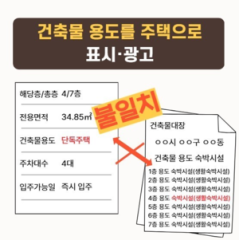
Over 10,000 illegal real estate ads flagged, including listings disguising lodging facilities as homes
Ministry of Land finds 'false and misleading advertising' most common violation in year-long review of online platforms More than 10,000 illegal real estate advertisements were flagged over the past year, including cases where lodging facilities were falsely listed as single-family homes. The Ministry of Land, Infrastructure and Transport said Friday it had reviewed real estate listings posted on online platforms — including Naver Pay Real Estate, Zigbang and Dabang — from July 2025 through June this year, identifying 10,412 suspected violations and calling on local governments to impose fines or refer cases for investigation. The vast majority of cases — 9,383 — were flagged through ongoing public tip-offs, while a further 1,029 were uncovered through targeted monitoring of repeat offenders and specific individuals. Under the Licensed Real Estate Agents Act, false or misleading advertising can carry fines of up to 5 million won ($3,650), while violations of mandatory disclosure requirements can result in fines of up to 500,000 won. Among the cases identified through ongoing monitoring, false or misleading advertising — such as misrepresenting a property's designated use, floor area or included amenities — accounted for 5,201 cases, or 55.4 percent. Violations of mandatory disclosure requirements, including the omission of essential information such as floor area and price, made up 3,753 cases, or 40 percent. Advertisements placed by unlicensed individuals, rather than registered real estate agents, accounted for 429 cases, or 4.6 percent. In specific cases, properties officially classified in building registers as neighborhood living facilities, lodging facilities or office buildings were openly advertised as multi-unit homes, single-family homes or apartment complexes. False disclosures about financial encumbrances such as mortgage loans were also common. In one example, a listing stated "no mortgage" while the property's registry showed a collateral mortgage of more than 1 billion won. To help consumers avoid falling victim to such illegal listings, the ministry said buyers should verify that key property details — including designated use, floor area, outstanding loans, address and any building code violations — match official records such as building registers and property registry documents before signing a contract. The ministry also urged consumers to confirm whether the listing agent is a registered real estate broker through the relevant local government or the V-World real estate brokerage lookup service, and to exercise particular caution when a listed price is significantly higher or lower than the surrounding market price. In addition, the ministry called on the public to actively report suspected illegal online real estate listings through the Real Estate Illegal Activity Integrated Reporting Center. Shin Yun-geun, the ministry's land policy director, said the government would continue to strengthen monitoring of false and exaggerated real estate advertising. "We will do our utmost to create a transparent real estate market environment where anyone can transact with confidence," he said. Meanwhile, the ministry said it had revised the system in the second half of this year to exempt advertisers from fines if a listing was removed within three days of a request from the registering authority due to a simple mistake. At the same time, the revisions introduced fines for deceptive practices such as using a sold property to lure prospective buyers toward other listings.
Sept. 18, 2026
-
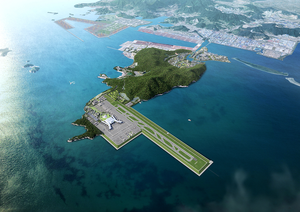
Gadeokdo New Airport project body holds first meeting to address rising construction costs
Ministry of Land, Infrastructure and Transport, Busan and construction authority hold inaugural coordination meeting Friday A project coordination body involving the central government, local government and the project operator has begun formal operations to advance construction of Gadeokdo New Airport. South Korea's Ministry of Land, Infrastructure and Transport said it will hold the body's inaugural meeting Friday afternoon with Busan and the Gadeokdo New Airport Construction Authority to discuss measures including how to reflect rising construction costs in the contract. The three-way standing communication and cooperation framework was activated after Daewoo Engineering & Construction — the contractor for the site preparation work — submitted basic design documents on Sept. 7, marking the start of pre-construction preparations such as permit consultations and detailed design work. The meeting will focus particularly on sharing the need for swift action and discussing how to incorporate construction cost increases accumulated since the outbreak of conflict in the Middle East into the contract amount. Participants will also closely examine on-site difficulties, including concerns raised by regional construction companies in the consortium, and will cover the status of consultations among related government ministries on these issues. Regional construction companies in the consortium have demanded that construction costs be raised by 620 billion won ($453 million), citing factors such as oil prices and exchange rates. The government, political circles and Busan are all moving quickly to find a response. The meeting will also take up plans for breaking ground on priority construction work before year-end and preparations for a ground-breaking ceremony. Relevant agencies will work together to shape the ceremony into an event that reflects the region's development vision, not merely marks the start of a nationally significant project. Participants will further discuss a comprehensive regional development plan linking the new airport with its surrounding areas. The coordination body plans to hold regular quarterly meetings, with working-level consultations convened as needed. It will cover a broad range of cooperative tasks — from permit procedures and other pre-construction preparations to safety and quality management during construction and development linked to surrounding areas. Jung Chae-gyo, director general for aviation policy at the Ministry of Land, Infrastructure and Transport, said Gadeokdo New Airport is "a national project to build a 24-hour gateway airport that the southern region has long aspired to." He added that the government, local government and project operator would "move forward as one team, without wavering, from breaking ground this year through to opening on schedule."
Sept. 18, 2026
-
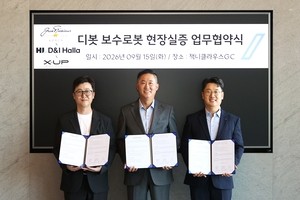
HL D&I Halla to commercialize autonomous golf course repair robot
MOU signed with X-Up, Jack Nicklaus GC to begin commercialization verification HL D&I Halla is moving to conduct field trials of a golf course management robot that uses drone and autonomous driving technology. The company signed an MOU with robotics firm X-Up and Jack Nicklaus Golf Club on Tuesday for the field verification of an autonomous divot repair robot, HL D&I Halla said Friday. The autonomous divot repair robot navigates golf course fairways on its own, identifies damaged turf — known as divots — and automatically carries out repair work. The three companies plan to verify the robot's technical performance and course management effectiveness in a real golf course environment as part of their push toward commercialization. HL D&I Halla will contribute its proprietary drone surveying technology to generate field maps and support data analysis. X-Up will handle robot-related technical support, while Jack Nicklaus Golf Club will provide a test field for performance evaluation and verification under real-world conditions. In October, the partners plan to hold an on-site demonstration for representatives and operations managers from major golf courses across the country, showcasing the robot's autonomous driving and divot repair capabilities on an actual fairway. HL D&I Halla earlier unveiled the autonomous divot repair robot at CES 2026, the world's largest IT and consumer electronics exhibition, held in Las Vegas earlier this year, where it won innovation awards in two categories — Robotics and Advanced Mobility. "Through this verification process, we plan to rigorously assess the performance and potential applications of the autonomous divot repair robot," an HL D&I Halla official said. "We will continue to identify new business opportunities by integrating a range of advanced technologies with our drone surveying and data capabilities."
Sept. 18, 2026
-
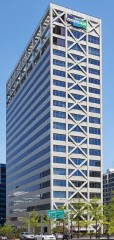
Doosan Engineering & Construction opens recruitment drive for 8 roles in second half of 2026
Benefits include flexible work arrangements, tuition support and medical expense coverage Doosan Engineering & Construction is conducting its second-half 2026 entry-level recruitment drive across eight fields, including architecture, civil engineering and mechanical work. The company announced Friday that it will accept application documents from Monday through Oct. 2. The eight positions open for recruitment are architectural construction, civil construction, mechanical construction, electrical construction, safety, site management, sales and finance. Applicants must hold a four-year university degree or be on track to graduate by February 2027, and must meet the company's language proficiency requirements. Candidates must have completed or been exempted from military service and must have no restrictions on overseas travel. Those who meet the major and qualification requirements for each role — or possess equivalent expertise — are eligible to apply. A relevant certification is mandatory for the safety position. The selection process consists of a document screening, an AI competency assessment, a first-round interview and a second-round interview. Successful candidates are expected to join the company in late December. Applications will be accepted from 10 a.m. Monday to 6 p.m. Oct. 2. Doosan Engineering & Construction offers a range of employee benefits, including flexible work arrangements, tuition support for employees' children, health checkups and medical expense coverage, and long-service awards. The company said it also operates a performance-sharing compensation system that distributes the rewards of business growth among its employees. "We are conducting this open recruitment to secure talented individuals who will help shape the company's future, as we continue to expand our business competitiveness," a company official said. "We look forward to receiving applications from candidates who can demonstrate their abilities across a variety of sites and roles."
Sept. 18, 2026
-
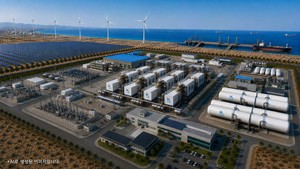
Hyundai E&C to develop key technology for large-scale water electrolysis hydrogen production
Forms consortium with Hyundai Motor, Hanwha Global and others Hyundai Engineering & Construction announced Friday it will participate in a government-funded research project to develop design technology for large-scale water electrolysis plants with a capacity of 100 MW or more, led by the Ministry of Climate and Environment. As maximizing renewable energy use, standardizing large-scale plants and optimizing systems have emerged as key themes in the water electrolysis plant market — which splits water into hydrogen and oxygen using electricity — Hyundai E&C plans to use the project to build integrated capabilities for large-scale renewable-linked hydrogen production systems and strengthen its ability to respond to market shifts. The project, titled "Development of Design Technology for Large-Scale Water Electrolysis Plants of 100 MW or More," aims to secure a comprehensive design package for water electrolysis plants targeting the large-scale hydrogen production market. It seeks to develop an integrated solution covering system and core process design through to operational configuration, and to bring it to a level ready for demonstration and commercialization. Hyundai E&C will lead the project as the principal organization, working in a consortium with Hyundai Engineering, Hyundai Motor, Hanwha Global, Korea Midland Power, Mirae Standard Research Institute, Seoul National University and Korea University. Hyundai E&C will be responsible for developing the basic design package and conducting economic feasibility assessments. The project will also apply AI and dynamic simulation models to address output volatility from renewable energy sources while improving the stability and reliability of plant operation. Hyundai E&C previously carried out a hydrogen production base construction project in Buan, North Jeolla Province — the first commercially operated green hydrogen production facility based on water electrolysis to be completed in South Korea. The company has also been developing a 5 MW plant-type proton exchange membrane water electrolysis system in Jeju, steadily accumulating technical expertise and experience in the water electrolysis sector. "The results gained through research and development will become a core asset in strengthening our competitiveness for winning water electrolysis projects at home and abroad," a Hyundai E&C official said. "The HMG Construction Technology Research Institute, which is carrying out this project, will consolidate the key technological capabilities of Hyundai Motor Group across hydrogen production, storage and transport, and utilization, to build a Korean-style green hydrogen platform while cementing a leading position in the next-generation water electrolysis hydrogen business." Meanwhile, the HMG Construction Technology Research Institute — the integrated R&D organization of Hyundai E&C and Hyundai Engineering — is focusing on generating R&D synergies across four core areas to secure future growth engines: energy, future residential, smart construction and infrastructure. The institute is also accelerating research in future energy fields — including small modular reactors, sustainable aviation fuel, offshore wind and biogas alongside hydrogen — as it moves to establish itself as a global energy company.
Sept. 18, 2026
-
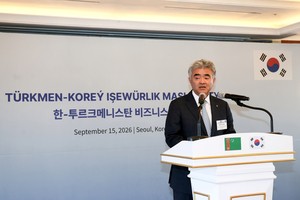
Daewoo E&C chairman pursues private diplomacy at Korea-Central Asia summit
MOU signed with Turkmenistan on Karakum Canal modernization Daewoo Engineering & Construction Chairman Jung Won-ju attended the inaugural Korea-Central Asia Summit, using the occasion to strengthen cooperation with countries across the region. According to Daewoo E&C, Jung participated in key events of the three-day summit, held Monday through Wednesday, meeting directly with heads of state, senior government officials and business leaders to discuss industrial and infrastructure development priorities in each country. The summit was the first multilateral leaders' meeting to bring together South Korea and the five Central Asian nations, convened to expand practical cooperation across fields including the economy, industry, energy and infrastructure. The leaders of Uzbekistan, Turkmenistan, Kazakhstan, Tajikistan and Kyrgyzstan all traveled to South Korea to attend. Jung attended a series of events — the Korea-Uzbekistan Business Roundtable, the Korea-Turkmenistan Business Forum and a Korea-Central Asia state dinner — actively promoting Daewoo E&C's project capabilities and potential for collaboration. At the Korea-Turkmenistan Business Forum on Tuesday, Daewoo E&C signed a memorandum of understanding with Turkmenistan's Water Resources Commission on cooperation for the Karakum Canal modernization project, securing a concrete business outcome from the summit. The Karakum Canal is the world's largest irrigation and water supply canal, stretching roughly 1,100 kilometers across Turkmenistan from east to west, originating at the Amu Darya River in the north and measuring 25 to 30 meters wide. Completed in the 1960s, it has played a vital role in supplying agricultural, residential and industrial water throughout the country. Under the agreement, Daewoo E&C secured a foundation to pursue the modernization of approximately 250 kilometers of the canal's lower section, while also establishing a foothold to expand cooperation into water resources and environmental projects across Turkmenistan. At the forum, Jung met with Turkmenistan President Serdar Berdimuhamedov to outline additional project plans in the country and request government-level attention and support. He also met with senior officials and business representatives from Uzbekistan and other Central Asian nations to discuss cooperation prospects across a broad range of sectors — including energy, plant construction, infrastructure and urban development — extending Daewoo E&C's network across the region. "The Korea-Central Asia Summit has been an important opportunity to broaden the scope of cooperation between Korea and Central Asia beyond the economy and industry to culture and people-to-people exchange," Jung said. "We will further solidify our relationships of trust and cooperation with the Central Asian nations and actively participate in the various infrastructure projects they need." Daewoo E&C plans to continue strengthening its network with all five Central Asian countries, expanding its project portfolio in the region by building on its experience in plant and energy work to branch into water resources, infrastructure and urban development.
Sept. 18, 2026
-
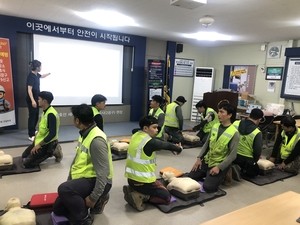
Hanwha Construction expands tailored safety training for foreign workers
Hands-on CPR, Heimlich maneuver and AED drills added to regular program Hanwha Construction is expanding nationality-specific safety training for foreign workers at its construction sites, combining in-person instruction in workers' native languages with hands-on emergency response and CPR drills. Hanwha Construction held a "customized safety and health training for foreign workers" at the Hanwha Forena Cheonan-Asan Station construction site on Wednesday. The session covered nationality-based safety education, situational first-aid response and CPR practice, and was supplemented by a video training session broadcast to all sites. The company said it recognized a growing need for safety education that accounts for language and cultural differences as the share of foreign workers at its construction sites has consistently risen. In response, it has since last year partnered with the Korea Career Competency Development Institute and the Central Emergency Care Education Institute to regularly deliver customized training through certified foreign safety culture instructors. This session covered workers from five countries — China, Vietnam, Thailand, Cambodia and Myanmar. Safety culture instructors from each of those countries led the sessions, explaining emergency response procedures in the workers' native languages. The hands-on portion of the training included practice in the Heimlich maneuver for airway obstruction, CPR and initial response for cardiac arrest, and the use of automated external defibrillators. Participants ran repeated drills using mannequins and AED units in simulated emergency scenarios and received feedback from professional instructors. The company also operates nationality-based "safety and health leaders" to encourage foreign workers to take an active role in workplace safety. These leaders support pre-work safety briefings and foreign worker safety education sessions. To help them develop their skills, the company also covers their registration fees for the Test of Proficiency in Korean (TOPIK). "As the number of foreign workers at construction sites continues to grow, practical safety education that takes language and cultural differences into account is essential," said Kim Yun-hae, head of the safety and environmental management division at Hanwha Construction. "We will keep expanding in-person and hands-on training so that foreign workers can recognize hazards on their own and build the safety capabilities to respond to them."
Sept. 18, 2026
-
Korea Land and Housing Corp. to extend jeonse deposit protection to 200,000 homes from October
LH, HUG sign MOU on jeonse lease return guarantee System to link with Ansim Jeonse app for blacklisted landlord checks Starting Oct. 1, about 200,000 jeonse rental homes supplied by Korea Land and Housing Corporation (LH) will be covered by Korea Housing and Urban Guarantee Corporation's (HUG) jeonse deposit return guarantee, bolstering protections for residents' deposits. LH announced Friday that it had signed a memorandum of understanding with HUG on jeonse deposit return guarantees for jeonse rental housing, with full application of the HUG guarantee scheme set to begin Oct. 1. Under the jeonse rental housing system — a residential welfare regime in which tenants choose a home and LH signs a jeonse contract with the landlord before subletting it to the tenant at a reduced rate — LH has required guarantee insurance enrollment for jeonse lease contracts in accordance with Ministry of Land, Infrastructure and Transport directives. The two institutions agreed to link jeonse rental data under the MOU to strengthen the guarantee management system, covering everything from enrollment to post-contract oversight. In addition, the Ansim Jeonse app, a government-run platform for jeonse safety checks, will provide advance information on whether a landlord has been barred from HUG guarantees and on property rights analysis. The two organizations also plan to overhaul the system so that lease information related to tenant protection rights, previously scattered across multiple agencies, can be viewed at a glance through the app. "The agreement with HUG has allowed us to strengthen the deposit protection system for jeonse rental housing and improve convenience for residents," LH President Lee Seong-hun said. "We will continue building a residential safety net where people can live with peace of mind." HUG President Choi In-ho called the agreement "a cooperation model to protect the deposits of housing-vulnerable groups and invigorate the supply of public rental housing," adding that the corporation would "fulfill its role as a pillar of residential stability for the public." Meanwhile, LH said it would tighten sanctions against companies with wage and payment arrears and strengthen on-site supervision as part of a drive to eliminate unpaid wages and construction payments. The corporation also plans to disburse about 591.6 billion won ($432 million) in construction payments due across 361 sites before the Chuseok holiday.
Sept. 18, 2026
-
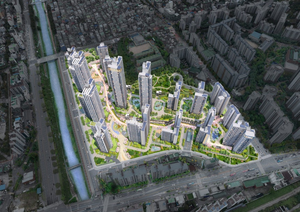
Bukgajwa District 6 reconstruction wins implementation approval for 1,953-unit Acro complex
Special architecture zone and outstanding design designations secured simultaneously, with 100% balcony expansion incentive The Bukgajwa District 6 reconstruction project in Seodaemun-gu, Seoul, has received implementation plan approval from the district office. Korea Real Estate Investment & Trust announced Friday that the Bukgajwa District 6 housing reconstruction project, for which it serves as project manager, had obtained implementation plan approval from the Seodaemun-gu district office. The project association voted to approve the implementation plan in April with a 98 percent approval rate at its regular general meeting, then submitted the application for approval in May. The approval process was completed swiftly following consultations among the trust company, the association and local authorities. With the approval secured, the Bukgajwa District 6 site will be transformed into a large-scale apartment complex comprising 16 buildings with six below-ground floors and up to 34 above-ground floors, totaling 1,953 units. DL E&C will handle construction, and the development will carry the builder's high-end brand, Acro. The complex earned both a special architecture zone designation and an outstanding design selection simultaneously through the Seoul Metropolitan Government's integrated review process, securing aesthetic and practical advantages at once. The project will feature a three-dimensional complex design that harmonizes with the Bulgwangcheon riverside landscape, while the outstanding design incentive allows for 100 percent balcony expansion, expected to increase usable living space for association members. Plans also call for a cultural park and a public parking lot between the complex and Bulgwangcheon, along with a public pedestrian pathway toward Bukgajwa Elementary School, providing residential, transportation and education infrastructure. "We have achieved results quickly, thanks to the support of association members and the trust built between the trust company and the association," a Korea Real Estate Investment & Trust official said. "We will push forward with follow-up procedures — including property valuation and the establishment of a management and disposal plan — at pace, with the goal of creating a landmark in northwestern Seoul." Founded in 1996, Korea Real Estate Investment & Trust operates across four business lines: land trust with borrowing, urban renewal projects through trust-based redevelopment and reconstruction, real estate investment trusts and investment projects. The company has supplied approximately 30,000 housing units — including apartments and officetels — across major regions nationwide, and is currently advancing trust-based urban renewal projects as project operator and manager at 30 sites in the greater Seoul area, including Yeouido, Gangbyeon and Heukseok, and 38 sites nationwide.
Sept. 18, 2026
-

Heerim to lead design, PM and CM for W600b North Jeolla finance town
Development to cover 33,257-square-meter site near National Pension Service headquarters Heerim Architects & Planners will join the North Jeolla Finance Town development project — backed by North Jeolla Province and Jeonju — as a strategic investor, taking on master planning, architectural design, project management and construction management alongside an equity stake. The Orion Asset Management consortium signed an MOU with North Jeolla Province and Jeonju on Wednesday at the North Jeolla provincial government office to advance the Jeonbuk International Financial Center and surrounding finance town development project. The agreement follows the consortium's selection last month as the project operator after competing against three other consortiums in a public tender for the finance town development. The signing marks the formal start of full-scale project execution. Orion Asset Management, the consortium's lead company, will oversee project planning and fund management as the asset management company. KB Securities, Daishin Securities, Kiwoom Securities and Truston Asset Management will participate as financial investors, handling equity contributions, investor recruitment and financing arrangements. Heerim will serve as the strategic investor, taking an equity stake while leading master planning, architectural design, project management and construction management. The North Jeolla Finance Town will be built on an approximately 33,257-square-meter site in Manseong-dong, Deokjin-gu, Jeonju, near the National Pension Service headquarters. The total project cost is approximately 600 billion won ($439 million), with ground-breaking planned for the second half of next year and completion targeted by 2030. The development will include an international financial center, hotel and convention facilities, and small-office units. The plan envisions combining financial and MICE functions in a single location to maximize synergies with the National Pension Service. Heerim plans to develop the Jeonbuk International Financial Center into a regional landmark, drawing on its experience designing and managing large-scale mixed-use complexes including supertall office towers, hotels and convention centers. North Jeolla Province and Jeonju will support the necessary administrative procedures, including securing designation under the regional revitalization investment fund program, amending the district unit plan and obtaining building permits. "In a mixed-use finance town where financial, hotel and convention functions are organically connected, integrating circulation and function across facilities is the core design challenge," a Heerim official said. "We will draw on the design and PCM expertise we have built through large-scale mixed-use projects to create a space that strengthens North Jeolla's urban competitiveness." Heerim is also providing construction management services for several redevelopment projects, including Hannam zones 3 and 4, Apgujeong zone 3, Eunma Apartments and Samik Beach in Busan.
Sept. 18, 2026
MOST READ
- 1Hyundai Motor unveils all-new Tucson with bigger body, smarter tech after 6-year wait
- 2Flat sneakers are back: Why Nike is reviving a 55-year-old running shoe
- 3Pope Leo XIV declines French honors and banquet, accepts only private meeting with Macron
- 428 illegal sports streaming sites found operating freely despite repeated blocks
- 5What was Rachmaninoff's performance fee? A 1928 price list tells all
- 6Lee Jung-woo, 18, wins George Enescu Competition, sweeps 5 special prizes
-
WORLD

US warns of punishment for anyone enabling Iran's Strait of Hormuz toll scheme
-
INDUSTRY
Toyota union puts productivity first; Hyundai Motor union demands bigger share of profits
-
FINANCE
National Growth Fund to invest $531M in FuriosaAI, which rebuffed Meta's $800M takeover bid
-
INDUSTRY
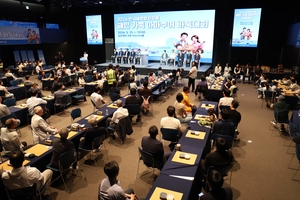
Korea Shipowners' Association holds amateur baduk tournament for Maritime Day