
- HOME
- REAL ESTATE
-
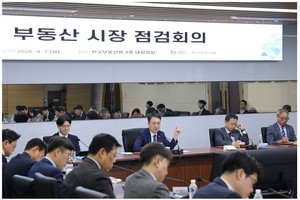
Real estate board chief vows targeted support for small redevelopment projects
Housing Supply Support Bureau launched under July reorganization Lee Heon-wook, head of the Korea Real Estate Board, held a real estate market inspection meeting at the board's headquarters on Monday and said, "As the government has prepared regimes and policy measures to expand housing supply, what matters now is making sure that supply actually reaches the market on the ground." He stressed the need for swift support to carry out the government's supply measures. The Korea Real Estate Board plans to focus its capabilities on strengthening the on-the-ground execution of redevelopment and reconstruction projects, moving beyond simple market monitoring. This aligns with the direction of the government's Aug. 13 measures, announced last month. The Aug. 13 measures included a plan to supply more than 230,000 additional housing units in the Greater Seoul area. The goal was to stabilize the jeonse and monthly rent market as well as the sales market. At the meeting, Lee reviewed changes in the sales and jeonse-monthly rent markets, as well as in supply volume, across Seoul and the greater metropolitan area since the government's announcement. He also instructed the board to discuss ways to diversify support for redevelopment and reconstruction projects, in order to close gaps in redevelopment project support. This includes targeted, "pinpoint" support for small complexes with fewer than about 500 households. He further directed the board to concentrate its capabilities on reducing bottlenecks that arise as such projects move toward actual housing supply. For redevelopment projects that are delayed or facing difficulties, the Korea Real Estate Board will identify the progress made at each project stage and the causes of delay. It will then provide support by linking its existing expert functions, such as construction cost verification and dispute mediation. In particular, the board will strengthen its ability to identify and mediate construction cost disputes and conflicts among stakeholders such as associations and contractors. These disputes are a leading cause of delays in redevelopment projects. It also plans to expand its role in quickly relaying institutional difficulties found on the ground to the government to help drive policy improvements. The move carries added significance as it formalizes on-the-ground support for the government's supply policy. This follows the Korea Real Estate Board's establishment of its Housing Supply Support Bureau in a July reorganization. The Korea Real Estate Board plans to expand its role beyond its existing functions of real estate price and transaction investigation and market management. It aims to become a "real estate policy infrastructure institution" that uses data and on-the-ground information to help the government's housing policy function effectively in the actual market. Accordingly, the board plans to build a policy support system running from market data analysis to checking supply progress at each project site. The system will also identify the causes of delays, mediate conflicts and disputes, and support government policy improvements. Lee also said at the meeting, "As the government is swiftly pushing forward various policies to stabilize the real estate market, our institution must also closely monitor how those policies are being implemented on the ground and how the market is responding, so that they can function effectively." He added, "In particular, we must carefully check whether there are project sites experiencing delays or difficulties in redevelopment, and quickly relay any need for institutional improvement to the government."
Sept. 8, 2026
-
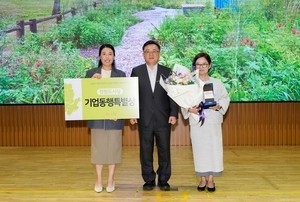
Hyundai Engineering wins Seoul Garden City Award for urban ecological garden
Three gardens planned across Seoul by 2027 Hyundai Engineering announced Tuesday that it received the Corporate Partnership Special Award at the 2026 Seoul Garden City Awards for Plan B Garden, an urban ecological space it created last year at Bukseoul Dream Forest in Gangbuk-gu. Now in its 14th year, the Seoul Garden City Awards is the city's flagship competition designed to identify and promote outstanding garden projects created in everyday urban spaces through the participation of citizens, organizations and businesses. The Seoul Metropolitan Government held the awards ceremony at Seoul City Hall on Monday, presenting trophies to 23 works and teams. Hyundai Engineering was recognized for its contribution to expanding urban green space and spreading garden culture through Plan B Garden. The company was particularly praised for going beyond simple garden construction to link the project with urban ecosystem restoration, citizen participation programs and vocational training for people with borderline intellectual functioning. Hyundai Engineering is pursuing "Gift House Plan B" in partnership with the Seoul Metropolitan Government, the Justpeace Foundation and Urban Bees Seoul, aiming to extend the values of its social contribution program "Gift House" — which has long provided safe housing for vulnerable residents — into urban ecosystem restoration. As part of that campaign, the company opened Plan B Garden at Bukseoul Dream Forest in Gangbuk-gu in May last year, creating a new habitat for bees losing their homes to urbanization and climate change, and contributing to biodiversity conservation. Plan B Garden was designed as a shared space for both citizens and bees. A diverse mix of plants ensures continuous blooming from spring through autumn, providing bees with a stable environment for nectar and pollen collection while offering visitors a landscape that changes with each season. The garden also runs ecological education programs to help citizens understand the importance of biodiversity. Plan B Garden is also opening doors to independence for marginalized youth who fall outside the welfare safety net. Hyundai Engineering provides vocational training in urban beekeeping — covering bee habitat management, garden upkeep and honey harvesting — to people with borderline intellectual functioning, supporting their growth as contributing members of society. In this way, a single garden serves as a habitat for bees, an ecological space for citizens and a self-sufficiency training ground for disadvantaged youth. Meanwhile, Hyundai Engineering opened the second Plan B Garden at Boramae Park in Dongjak-gu in May this year. A third location is planned for next year, bringing the total to three gardens, through which the company intends to consistently advance biodiversity conservation and support for the self-reliance of marginalized communities. According to Hyundai Engineering's sustainability report, the company is pursuing sustainable growth by embedding ESG (environmental, social and governance) management across all corporate activities rather than treating it as a one-off initiative. In 2024, it established a new monitoring framework to prevent greenwashing and conducted company-wide training to deepen employees' practical understanding of and commitment to ESG principles. "Plan B Garden is a public-interest garden that combines urban ecosystem restoration, support for the self-reliance of socially vulnerable groups, and citizen-participatory ecological education," a Hyundai Engineering official said. "We will continue to develop a sustainable social contribution model grounded in the value of space and energy."
Sept. 8, 2026
-
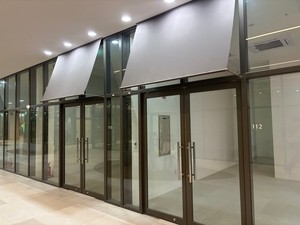
Gov't to buy up vacant shops in regional downtowns in pilot revitalization drive
Ministries of Land, Culture and SMEs to jointly back 'RE:CORE' project Up to 24.24 billion won in national funds per site for vacant-shop and idle-building overhaul The government is moving to revitalize the historic downtowns of regional cities by repurposing vacant shops and idle buildings. South Korea's Ministry of Land, Infrastructure and Transport announced Tuesday it will jointly launch a pilot program called the "RE:CORE Project" with the Ministry of Culture, Sports and Tourism and the Ministry of SMEs and Startups, aiming to transform declining downtown cores in regional cities into vibrant spaces by attracting young people, entrepreneurs and artists along with locally rooted content. The project is a cross-ministry urban regeneration initiative designed to restore the core functions of regional downtowns — hollowed out by population decline and commercial stagnation — by simultaneously overhauling vacant spaces and injecting new content into them. The government plans to concentrate on renovating vacant shops and idle buildings in regional downtown areas that have been losing ground to population concentration in Greater Seoul, youth outmigration and commercial decline, then support the settlement of young people and cultural figures in the newly created spaces. The Ministry of Land, Infrastructure and Transport noted that the vacancy rate for small commercial properties in regional cities stood at 8.5 percent in the first half of this year, up from 6.7 percent four years ago, underscoring the severity of the problem. In response, the ministry will acquire vacant downtown shops outright or secure them through long-term leases and cooperative agreements, converting them into what it calls "downtown revitalization commercial spaces." The properties will be remodeled and repurposed as studios for artists, startup spaces, co-working offices and pop-up stores, with rent subsidies provided throughout the project period to help young residents, artists and entrepreneurs operate stably. To ensure the revitalization effects outlast the project itself, local governments that draw up urban regeneration activation plans will be required to include an operating plan covering at least 10 years after the spaces are established. Larger idle facilities in the downtown area — including unused public buildings, vacant motels and clusters of empty shops — will be developed into "specialized hubs" tailored to each locality's character. These hubs will serve as cultural and arts centers, startup incubators, commercial support facilities, and showrooms for local brands, and will be linked to surrounding individual vacant shops. The plan also calls for expanding infrastructure that downtown areas lack, such as parking, and improving the streetscape through signage and facade upgrades, nighttime lighting and themed street corridors. The Ministry of Culture, Sports and Tourism will run a parallel "downtown cultural content revitalization project" tied to the spatial regeneration effort, aimed at raising the cultural appeal of downtown areas and generating sustained visitor demand. Signature content will be promoted in connection with local festivals, cultural facilities, commercial districts and online platforms, and a range of programs — including exhibitions and markets — will be staged at the specialized hubs and revitalization commercial spaces created under the Ministry of Land, Infrastructure and Transport's initiative. The government will first select one to two pilot sites in each of the four major regional poles and three special zones outside Greater Seoul, with pilot projects set to begin in 2027. The plan calls for gradually designating two to three sites per zone through 2029. Eligible sites are downtown or sub-downtown areas designated as urban decline zones under the Special Act on the Promotion and Support of Urban Regeneration, where vacant shops are concentrated and regeneration is most urgently needed under current urban and county master plans. Selected pilot sites will receive up to about 36.5 billion won ($26.9 million) in total project funding per location. The Ministry of Land, Infrastructure and Transport will provide up to 21 billion won in national funds per selected site over four years, with total project costs — including matching local government contributions — capped at 30 billion won, reflected in the supra-regional special account. The Ministry of Culture, Sports and Tourism will contribute up to 2.4 billion won in national funds for the production and promotion of signature cultural content, and up to 840 million won for cultural content-based downtown revitalization activities, also reflected in the supra-regional special account. The Ministry of SMEs and Startups will give preferential consideration to RE:CORE Project-selected sites when they apply for related programs, including local commercial district development initiatives such as local-theme and promising alley districts, traditional market development programs such as century-old and cultural tourism markets, and small business lifestyle innovation support. The government will hold a preliminary briefing session on Sept. 17 to outline the pilot program plans for next year and formally launch the site selection process. Minister of Land, Infrastructure and Transport Kim Yun-deok said downtown areas are the historic centers of regional life where economic activity, daily living and culture have accumulated over generations and people have long gathered, adding that their decline goes beyond a rise in vacancies to threaten the vitality of entire regions. "Through this project, we will connect the assets and potential that downtown areas already hold to new sources of demand, so they can once again serve as the foundation for regional growth and transformation," Kim said.
Sept. 8, 2026
-

Pre-sale outlook dims on loan curbs, tax uncertainty; Seoul falls for second straight month
National apartment pre-sale index at 86.3, down 6.9 points from prior month Greater Seoul and non-metropolitan areas both decline Tightening loan regulations and uncertainty over real estate tax policy are dampening developer confidence in the pre-sale market. Seoul's apartment pre-sale outlook index fell below the benchmark of 100 for a second consecutive month in August, with negative sentiment continuing to dominate. According to the Korea Housing Industry Research Institute, a survey of housing developers conducted Aug. 19–28 found that the national average apartment pre-sale outlook index for September came in at 86.3, down 6.9 points from the previous month. A reading above 100 indicates that more developers hold a positive outlook on pre-sales, while a reading below 100 signals that pessimists outnumber optimists. The Greater Seoul area index fell 4.5 points to 84.0. Seoul dropped 3.4 points from 97.3 to 93.9, Incheon fell 6.5 points from 80.6 to 74.1, and Gyeonggi Province declined 3.6 points from 87.5 to 83.9. In the July survey, Seoul's index had stood at 114.3, above the 100 threshold, but it has remained below that benchmark for two consecutive months since August. The institute said tightened loan regulations centered on the Greater Seoul area, combined with rising interest rates, have increased the burden of financing, while uncertainty over real estate tax reform and high pre-sale prices have dampened developer sentiment. A series of loan restrictions targeting the Greater Seoul housing market has reduced buyers' borrowing capacity, heightening developer concerns about a slowdown in pre-sales. As the amount available through mortgage lending has shrunk, the financial burden on end-users — particularly for high-priced homes — has grown, adding to uncertainty in the pre-sale business. The government capped mortgage loans for homes in the Greater Seoul area and regulated zones at 600 million won ($447,000) under its June 27 measures last year, then tightened restrictions further under its Oct. 15 package. Current mortgage limits stand at 400 million won for homes priced between 1.5 billion won and 2.5 billion won, and at 200 million won for homes priced above 2.5 billion won. Outside the Greater Seoul area, a buildup of unsold units weighed on sentiment, pushing the non-metropolitan index down 7.4 points to 86.8. All cities and provinces except five — Busan, Daegu, South Chungcheong Province, Daejeon and Ulsan — posted month-on-month declines. Analysts attributed the drop to a combination of persistently weak housing demand outside the capital region and rising interest rates that have added to financing burdens. About 85 percent of the roughly 29,000 completed but unsold units nationwide as of July were concentrated outside the Greater Seoul area. The steepest declines were recorded in South Jeolla Province, which fell 28.9 points from 88.9 to 60.0; Jeju, down 25.0 points from 100.0 to 75.0; South Gyeongsang Province, down 18.2 points from 100.0 to 81.8; Gangwon Province, down 11.7 points from 91.7 to 80.0; Gwangju, down 11.1 points from 111.1 to 100.0; North Chungcheong Province, down 11.1 points from 100.0 to 88.9; North Jeolla Province, down 10.0 points from 100.0 to 90.0; North Gyeongsang Province, down 6.7 points from 106.7 to 100.0; and Sejong, down 0.6 points from 92.9 to 92.3. Four regions posted gains: Busan rose 10.2 points from 72.2 to 82.4, Daegu climbed 8.1 points from 78.3 to 86.4, South Chungcheong Province edged up 1.3 points from 83.3 to 84.6, and Daejeon gained 0.6 points from 93.8 to 94.4. Ulsan held steady at 100.0, unchanged from the previous month. The institute said how the pre-sale market performs going forward remains to be seen, depending on the progress of government measures to clear unsold inventory in regional areas and the implementation of housing supply policy. Meanwhile, the September outlook indexes for pre-sale prices, pre-sale volume and unsold volume all rose. The pre-sale price outlook index climbed 1.2 points from the previous month to 108.8, reflecting continued upward pressure on construction costs including materials and labor. The pre-sale volume outlook index rose 9.0 points to 97.1, reflecting expectations that schedules delayed over the summer would resume with the arrival of the autumn pre-sale season. Some of the gain also reflected optimism that expanded financial support for developers included in the Aug. 13 housing supply package would improve business conditions. However, the index still fell short of the 100 benchmark amid lingering concerns about a market contraction. The unsold volume outlook index rose 14.9 points from the previous month to 105.9. The institute said demand concerns stemming from tighter loan regulations were weighing on the Greater Seoul area, while a persistent backlog of unsold units was the key drag outside the capital region. The number of unsold homes nationwide has risen for three consecutive months.
Sept. 8, 2026
-

World Smart City Expo opens in Busan Wednesday
The 2026 World Smart City Expo, aimed at supporting Korean smart-city companies' overseas expansion and raising the profile of K-Smart City, will be held at Bexco in Busan from Wednesday through Oct. 3. Co-hosted by the Ministry of Land, Infrastructure and Transport, the Ministry of Science and ICT, and the Busan city government — and jointly organized by Korea Land and Housing Corporation (LH), Korea Water Resources Corporation, Bexco and the Smart City Association — the event carries the slogan "Beyond Smart City, Into AI City," reflecting a vision of cities that evolve autonomously on the basis of AI. Marking its 10th anniversary this year, the expo will open with a ceremony featuring an address by the Ministry of Land, Infrastructure and Transport and congratulatory remarks from the head of Kazakhstan's Alatau Development Agency. The program includes exhibitions such as an AI pilot city pavilion, business sessions, conferences and intergovernmental meetings. "The 2026 World Smart City Expo is an opportunity to get a closer look at the AI City that the Ministry of Land, Infrastructure and Transport is newly preparing, building on the achievements of smart cities so far," Land, Infrastructure and Transport Minister Kim Yun-deok said. "We plan to develop K-AI City as a warm future city realized through technology."
Sept. 8, 2026
-
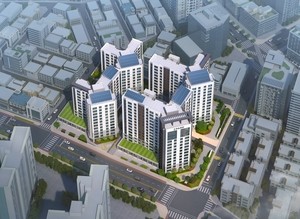
Seoul's first 'Moa Housing' complex opens as Korea Real Estate Investment & Trust completes Gangbyeon station project
Small-scale redevelopment yields 215-unit apartment complex Floor-height deregulation enables roomier layout Gangbyeon Station Central i'Park in Gwangjin-gu, Seoul — a project managed by Korea Real Estate Investment & Trust — has completed construction and begun move-ins. Korea Real Estate Investment & Trust said Tuesday that the complex received its completion approval on Aug. 25 and began accepting residents Monday. The development replaced a deteriorating low-rise neighborhood of 99 units with a modern residential complex of 215 units spread across four buildings rising up to 15 above-ground floors. The project also carries the distinction of being the first completed under Seoul Metropolitan Government's Moa Housing program, again demonstrating the viability of trust-managed redevelopment. The project benefited significantly from deregulation under Seoul's Moa Housing review standards, which substantially improved its feasibility. Originally planned as six buildings with 211 units, the introduction of the Moa Housing review criteria in 2022 allowed the maximum height to be raised to 15 floors while reducing the number of buildings to four, resulting in a more spacious complex layout with greater distance between buildings. New apartment developments are rising steadily in the surrounding area, and the construction of a new Gwangjin-gu district office and the relocation of major corporate headquarters are also underway, pointing to further improvements in living conditions and local infrastructure. Trust-managed redevelopment became viable after a 2016 amendment to the Act on the Improvement of Urban Areas and Residential Environments opened the sector to real estate trust companies. Given the long development timelines involved, larger trust firms that entered the market early are now beginning to see completed projects materialize. Korea Real Estate Investment & Trust has been building its track record in the redevelopment sector since the law was amended. As of the second quarter of this year, it employs more than 70 staff dedicated solely to redevelopment — the largest such team in the industry — and is currently leading projects at 40 sites nationwide, totaling 44,633 units, either as project operator or project agent. Recent completions include the Incheon Hagik SK View redevelopment, the Yeongdeungpo-dong 2-ga Centreville Asterium street-block housing project, and the Incheon Seoknam Brownstone The Prime reconstruction complex. This year, major Seoul redevelopment sites including the Heukseok District 11 redevelopment and the Singil District 10 reconstruction have also reached the ground-breaking and pre-sale stages. "The symbolic title of being the first completed Moa Housing project in Seoul again demonstrates our expertise in trust-managed redevelopment," a Korea Real Estate Investment & Trust official said. "We will do our utmost to manage the site until the very end so that residents can move in without any disruption." Founded in 1996, Korea Real Estate Investment & Trust operates across four business lines: loan-type land trusts, urban redevelopment and reconstruction projects managed through the trust method, real estate investment trusts (REITs), and investment projects. The company has supplied approximately 30,000 units — including apartments and officetels — across major regions nationwide, and is currently advancing trust-managed urban redevelopment projects at 30 Greater Seoul sites, including Yeouido, Gangbyeon and Heukseok, as well as 38 sites across the country, serving as both project operator and project agent.
Sept. 8, 2026
-
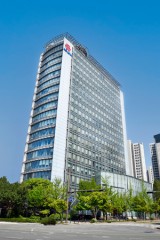
Kolon Global accelerates open innovation with field tests of six external technologies
Six pilot projects include four under Ministry of Land smart construction program Transparent BIPV modules among green technologies under review for commercialization Kolon Global is significantly expanding its open innovation framework, which actively identifies external technologies and applies and validates them at real construction sites. The company announced Tuesday that it will pursue field demonstrations and proof-of-concept tests for six external innovations this year through its open innovation program. The collaboration is notable for combining the creative technologies of external technology firms with Kolon Global's accumulated on-site expertise and construction infrastructure. The company plans to extend its collaborative scope beyond smart construction into the green building sector, raising the likelihood of real-world application and laying the groundwork for eventual commercialization. This year's demonstration projects consist of four under the Ministry of Land, Infrastructure and Transport's smart construction technology demonstration support program and two under Inno-wave, a deep-tech startup initiative run by the Korea Startup Agency. Through the smart construction program, the company will work to improve quality management and operational efficiency at construction sites. It plans to conduct comprehensive field validation of four technologies: AI-based monitoring using intelligent cameras (Contilab), drone-based structural crack management (Seonggeon Engineering), earthwork automation using 3D excavators (Youngshin), and IoT-based hazardous gas monitoring (Piquant). In the green building sector, Kolon Global will use the Inno-wave program to run parallel demonstration and commercialization reviews. Together with Zest, the company will validate an advanced renewable energy forecasting solution for zero-energy buildings, verifying improvements in energy efficiency and operational optimization. It will also work with Hexa Energy to assess the commercialization potential of a high-transparency building-integrated photovoltaic (BIPV) module made from new materials, broadening the application of eco-friendly construction technology. Rather than stopping at technology review, the company intends to use real data collected during the demonstration process to incrementally improve technical completeness. Through this approach, it plans to expand deployment sites and build a virtuous cycle of open innovation leading to full-scale commercialization. "To solve the wide range of challenges facing construction sites, it is essential not only to develop our own technological capabilities but also to flexibly embrace original and innovative ideas from outside," a Kolon Global official said. "We will continue to expand collaborative partnerships with technology companies, actively identify technologies with high on-site impact, and connect them to commercialization." Meanwhile, Kolon Global posted consolidated sales of 750.5 billion won ($559 million), operating profit of 52.2 billion won and net profit for the period of 32.3 billion won in the second quarter of this year.
Sept. 8, 2026
-
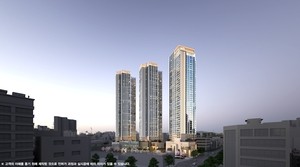
GS Engineering & Construction to launch pre-sales of 'Yeonje Gallery Xi' in Busan in October
499-unit complex, all units in 84-square-meter exclusive use area Triple transit-oriented location and rare flat-terrain site among key selling points GS Engineering & Construction announced Tuesday it will launch pre-sales in October of Yeonje Gallery Xi, a new apartment complex to be built in Yeonsan-dong, Yeonje-gu, Busan. The complex will rise up to 43 above-ground floors with four below-ground levels across three buildings, comprising a total of 499 units. All units are configured in a single floor plan of 84 square meters of exclusive use area — a size favored by end-user buyers. The unit breakdown by type is: 84㎡A with 112 units, 84㎡B with 114 units, 84㎡C with 39 units and 84㎡D with 234 units. The site previously housed the "Xi Gallery," a showroom where GS Engineering & Construction introduced its Xi brand's residential trends to Busan residents. The development carries symbolic significance as a former model-home site being reborn as an actual residential complex. Transportation access is a key selling point. The complex sits within a triple transit-oriented area served by Yeonsan Station — a transfer hub for Busan Metro lines 1 and 3 — as well as Gyodae Station on lines 1 and Donghae, and Geoje Station on lines 3 and Donghae. Major arterial roads including Jungang-daero, Geoje-daero and World Cup-daero are easily accessible, and the Yeonsan intersection provides quick connections to destinations across Busan. Lifestyle infrastructure and educational amenities are also well established nearby. Large-format retailers — E-mart Traders Yeonsan, E-mart Yeonje, Lotte Department Store Dongrae and Homeplus Asiad — are all within close reach. Yeonje Elementary School sits adjacent to the complex, and Isabel Middle and High School, Dongrae High School and the hagwon district in Sajik-dong are also conveniently accessible. The natural environment and topography add further appeal. Residents will be able to walk to the waterside promenade along Oncheoncheon stream and Oncheoncheon Citizens Park. The site also occupies one of the rare flat plots in Busan, a city where hilly terrain predominates. Surrounding redevelopment activity — including the reconstruction of Sambo Apartments and the redevelopment of Yeonsan districts 11 and 12, as well as mixed-use development projects — is expected to further improve the residential environment over time. On the product side, the complex will be the first in Busan to feature the Xi brand's renewed identity, refreshed for the first time in 22 years. Rising to a maximum of 43 floors, the development is expected to define a new skyline for Yeonsan-dong. The layout prioritizes south-facing orientation with four-bay flat-slab and tower-type floor plans, and storage spaces including pantries and dressing rooms have been optimized. The community facility "Club Xi-an" will house a fitness center, a golf practice range, a small library and a Kyobo Book Centre book lounge. A high-end upper-floor amenity space called "Club Cloud" will offer a guesthouse with a jacuzzi and a sound chamber, among other premium features. "Given that this complex stands on the Xi Gallery site that holds such symbolic meaning for Busan residents, we will bring together locational advantages, the flat-terrain premium and the brand's product strengths to set a new residential standard for downtown Busan," a GS Engineering & Construction pre-sales official said. Meanwhile, GS Engineering & Construction recently reported preliminary second-quarter results showing revenue of 2.78 trillion won ($2.07 billion) and operating profit of 91.4 billion won.
Sept. 8, 2026
-
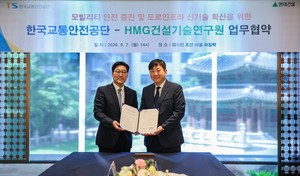
Hyundai E&C to develop safety standards for future mobility in residential complexes
Company signs MOU with Korea Transportation Safety Authority to address evolving traffic environment in housing complexes Hyundai Engineering & Construction is moving to develop safety technologies and design and operational standards for future mobility systems — including demand-responsive transit, delivery and service robots, and personal mobility devices — as their adoption in apartment complexes accelerates. The company views residential complexes as lifestyle platforms integrating various transportation and last-mile logistics services, and aims to improve pedestrian safety and mobility convenience for residents. Hyundai E&C signed an MOU with the Korea Transportation Safety Authority on Monday at the Westin Josun Seoul in Jung-gu, Seoul, to cooperate on safety technology demonstration for future mobility in apartment complexes. The signing was attended by Kim Jae-young, director of the HMG Construction Technology Research Institute — the integrated research and development organization of Hyundai E&C and Hyundai Engineering — along with Song Myeong-jun, head of the infrastructure and urban research lab, and Min Seung-gi, head of the mobility division at the Korea Transportation Safety Authority. The agreement was drawn up in response to the rapid introduction of diverse transportation modes and services in apartment complexes. The two organizations plan to examine pedestrian safety issues that may arise as future mobility spreads and to develop complex design and operational technologies suited to the changing traffic environment. Specific plans include joint research to improve the safety of future mobility within apartment complexes and identifying traffic safety improvements stemming from the introduction of new transportation modes. The two sides will also explore ways to improve road conditions within complexes using next-generation software-defined road technology, which controls and manages road infrastructure through software and links various transportation modes with real-time data. The research will not be limited to any single mode of transportation. It will cover a range of mobility options likely to be used in residential complexes, including demand-responsive transit, delivery and service robots, and personal mobility devices. The two organizations plan to comprehensively analyze the elements that make up actual residential environments — including roads and pedestrian routes within complexes, pick-up, drop-off and waiting areas, and operating systems for each mode of transportation — and verify the feasibility of applying the technologies through on-site demonstrations. Based on the research findings, Hyundai E&C intends to build a pedestrian-centered traffic system within complexes and improve road and pedestrian route design using data on mobility operations and space usage. The company also plans to establish design and operational standards that reflect the characteristics of each transportation mode from the planning and design stages of apartment projects, and to develop a mobility infrastructure model connecting future residential complexes with smart cities. "As diverse mobility services are introduced into residential complexes, the importance of spatial planning and operational systems that allow pedestrians and transportation modes to coexist safely is growing," a Hyundai E&C official said. "Through joint research and demonstration, we will build a safe and efficient mobility environment and systematize design and operational standards for apartment complexes that incorporate future mobility." Meanwhile, Hyundai E&C had previously announced plans to introduce a residents-only demand-responsive transit service by integrating the reconstruction projects in zones 2, 3 and 5 of Apgujeong in Gangnam-gu, Seoul, into a single living district.
Sept. 8, 2026
-

Seoul apartment auction rate drops 4 percentage points in a month, but outskirts tell a different story
Seoul bid-to-appraisal rate falls from 101% to 97%; average bidder count also declines Nowon-gu, Jungnang-gu top 100% as mid-to-low-priced units draw crowds 'If market turns down, outskirts could correct first,' analyst warns Seoul's apartment auction market has broadly weakened, with the bid-to-appraisal rate dropping 4 percentage points in a single month — yet properties in the city's outer districts continue to sell well above their appraised values. As President Lee Jae-myung recently flagged rising mortgage delinquencies and a growing volume of properties going to auction, attention is turning to whether Seoul's auction market will diverge further along geographic lines. According to GG Auction's August 2026 auction trend report, Seoul apartments posted a bid-to-appraisal rate of 97.0% last month, down 4.0 percentage points from 101.0% the month before. The award rate — the share of auctioned properties that actually sold — slipped from 38.3% to 37.1%, remaining in the 30-percent range for a third consecutive month. The average number of bidders per property also fell, from 7.2 to 6.1. Some large-unit apartments and standalone complexes sold at 60 to 80 percent of their appraised values, dragging down the overall rate. The weakness extended nationwide. The number of apartment auctions held across the country last month reached 3,614, up about 26 percent from the same month last year. The national bid-to-appraisal rate fell to 84.7 percent, declining for a third straight month. The rate for all residential properties nationwide — including apartments, row houses and multi-family units — came in at just 69.9 percent, the lowest since January 2005, more than two decades ago. Earlier, President Lee mentioned "award rates" in an Aug. 30 post on X (formerly Twitter), saying he had directed officials to prepare a system for bulk purchases of homes below a certain threshold for use as public housing, in preparation for a scenario in which housing prices fall sharply. Within Seoul, however, districts dense with mid-to-low-priced apartments are still seeing properties sell above their appraised values. According to GG Auction, Jungnang-gu recorded a bid-to-appraisal rate of 115.2 percent last month, while Nowon-gu came in at 102.8 percent. Demand is concentrating on mid-to-low-priced apartments with solid living conditions and on complexes where reconstruction or remodeling projects are anticipated. A 58-square-meter unit at Sanggye Jugong Complex 6 in Sanggye-dong, Nowon-gu, went to auction with an appraised value of 646 million won ($481,000) and drew 12 bidders before selling for 813 million won — a bid-to-appraisal rate of 123 percent. In Sinnae-dong, Jungnang-gu, a 60-square-meter unit at Sinnae Complex 6 attracted 16 bidders and sold for 775.2 million won, or 129 percent of its 602 million won appraised value. Lower-priced complexes within Han River belt districts also saw above-appraisal results. An 85-square-meter unit at Seongsan World Town Daelim Apartment in Seongsan-dong, Mapo-gu, entered auction at an appraised value of 1.09 billion won and drew three bidders before selling for 1.27 billion won — a bid-to-appraisal rate of 116 percent. The trend mirrors the broader sales market. According to the Korea Real Estate Board, Seoul apartment sale prices rose 0.22 percent in the week ending Aug. 31 compared with the prior week. Mid-to-low-priced districts led the gains by a wide margin: Seongbuk-gu rose 0.54 percent, Jungnang-gu 0.52 percent, Nowon-gu 0.50 percent, Gangbuk-gu 0.45 percent and Dongdaemun-gu 0.42 percent — all well above the Seoul average. Gangnam-gu, by contrast, fell 0.41 percent and Seocho-gu fell 0.23 percent. The auction market is showing a similar pattern, with demand clustering in areas where price levels are relatively accessible. That is part of why the overall decline in Seoul's bid-to-appraisal rate alone does not necessarily signal a broad cooling of buyer sentiment across the city. Historically, auction indicators in Seoul's housing market have tended to deteriorate alongside — rather than ahead of — downturns in the sales market. In 2022, Seoul apartment prices began falling at the end of May, yet the bid-to-appraisal rate for Seoul apartments remained high at 110.0 percent in June of that year, with an award rate of 56.1 percent. The sharp deterioration in auction indicators came only after the sales market downturn had taken hold. By December of that year, Seoul's apartment bid-to-appraisal rate had fallen to 76.5 percent and the award rate to 17.9 percent. During the 2008 global financial crisis, the Seoul apartment bid-to-appraisal rate similarly dropped from 91.34 percent in June to 69.23 percent in December as the sales market correction deepened. Because the bid-to-appraisal rate measures the final sale price against the appraised value, it is also affected by the time lag between appraisal and actual bidding. During a price downturn, buyers' price expectations can fall faster than appraisals — which reflect past market prices — causing the bid-to-appraisal rate to drop sharply with a delay. Experts caution, however, that it would be premature to assume the strength in mid-to-low-priced and outer-district apartments will persist. "If interest rates rise further in the second half of the year, there is a real possibility that the kind of bid-to-appraisal rate declines seen during past housing downturns could repeat themselves," said Lee Ju-hyeon, a senior researcher at GG Auction. "Smaller and mid-sized apartments in outer districts with high loan dependency are currently driving the auction market's upward momentum — but they are also the type most likely to see prices fall first if the market turns down."
Sept. 8, 2026
-

Seoul to recycle 9,300 long-term jeonse units by 2031, rules out lease extensions
City reaffirms no renewals or conversions to ownership sales Oh Se-hoon: vacated units must become opportunities for next residents Expiring units to go to youth, newlyweds 73.9% of surveyed residents back 20-year eviction rule The Seoul Metropolitan Government plans to reclaim and redistribute a total of 9,300 long-term jeonse units by 2031, starting with 310 units whose 20-year leases expire next year. The city reaffirmed its position that contract renewals and conversions to ownership sales will not be permitted, pushing back against demands from some current residents that have sparked recent controversy. "Long-term jeonse housing is a stepping stone — it eases housing worries, allows residents to build savings and move toward homeownership," Seoul Mayor Oh Se-hoon said Tuesday. "I will make sure that once a unit is vacated, it feeds into a virtuous cycle where the next homeless resident gets their chance, and that long-term jeonse housing becomes a genuine ladder of hope for Seoul citizens." Long-term jeonse units account for about 12 percent of the public rental housing stock held by the Seoul Housing & Communities Corporation (SH), with roughly 38,296 units supplied to date. The average length of stay among current residents is about 10 years. The city also addressed recent demands from residents of long-term jeonse complexes in Songpa-gu and Gangdong-gu who had called for guaranteed lease renewals, saying the expiring units would be redistributed as "Mirinaezip" housing for youth and newlyweds, as well as new long-term jeonse units. "A maximum 20-year tenancy with no conversion to ownership has been a basic condition stated in the program's original announcement since 2007," the city said. It added that households whose leases expire would be connected to other public rental housing options suited to their circumstances, and that relocation counseling and financial support information would be provided through district-level residential welfare centers. A public awareness survey on long-term jeonse housing, conducted from Aug. 10 to Aug. 19 among 1,000 Seoul residents, confirmed broad support for the program's role as a housing ladder and for the 20-year rotation principle, the city said. In the survey, 73.9 percent of respondents supported requiring residents to vacate after 20 years. The top reasons cited were that the terms of the contract should be honored (37.2 percent) and that the purpose of public rental housing is to support self-sufficiency, not permanent residence (37.1 percent). The city held a forum Tuesday at Seoul City Hall titled "From Long-Term Jeonse to Homeownership: Seoul's Housing Ladder Hope Talk," bringing together past and current residents to share their experiences moving in and out of the program. Officials said long-term jeonse housing has served as a practical housing ladder for residents without homes of their own by offering rents well below market rates. "As of September this year, households that have moved out had an average stay of seven years and six months," the city said. "A significant number reduced their housing costs during that stable period, built up savings and prepared apartment subscription applications, then moved on to the next stage — buying a home or entering the private jeonse market." As of this month, 15,529 households had vacated before their lease terms expired, accounting for 34 percent of cumulative supply as tallied by SH. Of those, 82.4 percent left voluntarily to buy a home or move into private jeonse housing. A city official said the total savings on deposits — calculated by adding up the difference between long-term jeonse deposits and average jeonse market prices at nearby complexes — is estimated at about 10 trillion won ($7.38 billion). "That gap translates into reduced loan burdens or extra capacity for savings and apartment subscriptions," the official said. A 2022 SH panel survey found that 69.9 percent of long-term jeonse households were saving an average of 625,000 won per month, and that 83.7 percent held a housing subscription account. One attendee at Tuesday's forum, a resident surnamed Kim from a long-term jeonse complex in Guro-gu, said she had raised two daughters in stable housing for 16 years after moving in, steadily building her savings until she won an apartment subscription in a third-generation new town development. "Because I could live stably on an affordable deposit, I was able to save little by little and lay the groundwork for buying my own home," Kim said.
Sept. 8, 2026
-
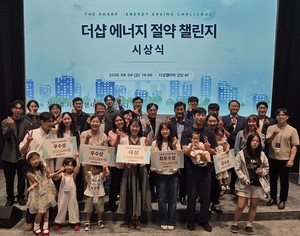
Posco E&C saves equivalent of 1,000 households' daily power use over four months through energy challenge
3,850 households across 32 The Sharp complexes nationwide take part Posco E&C said Tuesday it saved 8,500 kilowatt-hours (kWh) of electricity over four months through "The Sharp Energy Saving Challenge," a program it ran jointly with the Korea Power Exchange, Posco DX and Paran Energy. Amid growing concerns over stable power supply — driven by energy market instability from the Middle East and a prolonged heat wave — Posco E&C has built and operates an automatic demand-response (Auto DR) system based on its smart-home platform, allowing residents to take part in energy conservation effortlessly in their daily lives. South Korea imports about 93 percent of its energy. Coal, oil, liquefied natural gas and uranium are almost entirely sourced from overseas, with the imported fuels then burned to generate electricity. Auto DR automatically controls home appliances through the smart-home system when electricity demand surges, reducing power consumption. Residents can join the Korea Power Exchange's "Energy Pause" program without any manual input, saving electricity and receiving rewards based on their conservation results. "Energy Pause" is a public demand-response program operated by the Korea Power Exchange. Participants who reduce their electricity use in response to grid conditions receive compensation based on how much they save. In July 2024, Posco E&C signed an MOU with the Korea Power Exchange, Posco DX and Paran Energy to roll out Auto DR across 100,000 apartment units and began building the necessary infrastructure in earnest. Starting with The Sharp Uijeongbu Rhythm City, a newly occupied complex, the system has since expanded to about 20,000 units across 32 The Sharp complexes nationwide. A total of 3,850 households across the 32 complexes voluntarily joined the challenge. More than 70 percent of enrolled households participated in the 15 demand-response events held over the four-month period, reflecting strong engagement. The combined effort saved 8,500 kWh of electricity — equivalent to the amount a residential complex of about 1,000 households consumes in a single day. "This challenge is meaningful because residents were able to participate in energy conservation easily and conveniently from home, and actually see the results of their power savings," a Posco E&C official said. "Going forward, we will continue expanding the number of complexes with Auto DR to accelerate our goal of reaching 100,000 apartment units, and lead the way in eco-friendly residential services that improve both energy efficiency and resident convenience."
Sept. 8, 2026
-

'200 listings, only 2 real': Seocho jeonse prices hold firm despite 5,000-unit move-in wave
Seocho jeonse listings surge 94% in six months Raemian Trinione, DH Bangbae move-ins drive supply Large units fall; small units scarce School-zone, upgrade demand erases move-in effect In real estate, the impatient always lose. Demand for smaller units is so strong that prices won't come down — the move-in market effect is only showing up for the large units. 서울 서초구 반포동 A공인중개사무소 대표 More than 5,000 units in newly built apartment complexes have begun move-ins in Seoul's Seocho-gu this year, yet the expected "move-in market effect" has been slow to appear. Typically, when large complexes open for occupancy, landlords put jeonse listings on the market to cover balance payments, pushing rental prices down. In the Banpo-dong and Bangbae-dong areas, however, steady rental demand — particularly for small- and mid-sized units — has kept prices from falling. According to real estate big data firm Asil, jeonse listings for apartments in Seocho-gu stood at 6,908 on Monday, up 94.3 percent from 3,555 six months earlier on March 7. The increase reflects a wave of move-ins at large complexes in the second half of this year, including Raemian Trinione (2,091 units) in Banpo-dong and DH Bangbae (3,064 units) in Bangbae-dong. Listings in Banpo-dong repeatedly rose by more than 100 in a single day in June, surpassing 3,500 at the end of May. Jeonse listings in Bangbae-dong also climbed to 2,074 as of Monday. The listing figures alone would suggest jeonse prices should be falling, but conditions on the ground tell a different story. Local agents say there is a significant gap between the number of listings aggregated online and the volume actually available for lease. The head of Agency A in Banpo-dong said listings on apps should not be taken at face value. "Landlords post the same unit across multiple platforms for advertising purposes, so two actual listings can look like 200," the agent said. Another agency noted that a client searching for a monthly-rent unit about 10 days ago had found what appeared to be a viable option, only to discover it was a phantom listing that could not actually be contracted. Analysts also point out that the large supply of new units has not been enough to outpace demand. An official at Agency B in Banpo-dong said that while prices normally fall during a move-in period, Raemian Trinione is a different case. "Many of the union members are people in their 50s and 60s who want to live there themselves," the official said. "Because it is not a complex driven by investment demand, jeonse listings were structurally unlikely to come to market." The official added that the complex's location in a sought-after school zone — home to Sehwa High School — has also drawn tenants eager to secure a place before school assignment deadlines. The head of nearby Agency C echoed the point, noting that in Seocho-gu it is common for prospective tenants to reserve units six months to a year in advance. "Demand from people looking to upgrade into units in the 66-to-99-square-meter range is so strong that even when move-in supply comes onto the market, there is never enough," the agent said. An official at Agency D agreed, saying that standard-sized jeonse units "can't be sold because there simply aren't any." According to the Korea Real Estate Board, the average jeonse price for apartments in Seocho-gu rose consistently from about 1.12 billion won ($838,000) in January to about 1.16 billion won in July. The jeonse price index climbed from 96.74 in January to 100.34 in July. Prices edged down slightly in August, but the cumulative gain for the year still reached 5.02 percent. With rental demand concentrated in small- and mid-sized units of 59 to 84 square meters in exclusive use area, an unusual divergence has emerged: jeonse prices for large units are falling sharply even as landlords cut asking prices, with no takers in sight. The head of Agency A said a 182-square-meter unit at Raemian Trinione is currently listed at 3.5 billion won with no contract in sight. "That is a floor plan where asking prices had reached 4.2 to 4.3 billion won," the agent said. Meanwhile, the market is bracing for a standoff among landlords ahead of the implementation of the Aug. 3 tax reform package targeting high-value properties and non-resident single homeowners. Many landlords who had originally planned to put their units up for jeonse are now weighing whether to move in themselves. An official at Agency B said some owners are torn over whether to take up residence because of real estate policy, while others have opted for short-term rentals to wait out the situation until policy is finalized next year. Experts say the move-in market effect will be difficult to count on in Seoul for the foreseeable future. Yoon Ji-hae, head of the research lab at Real Estate 114, said tighter owner-occupancy requirements under the land transaction permit zone designation have eliminated speculative rental supply — buyers who subscribed to apartments intending to lease them out rather than live there. The government's Oct. 15 measures last year placed all of Seoul and parts of Gyeonggi Province under land transaction permit zone restrictions, imposing a two-year owner-occupancy requirement. "No matter how much supply comes onto the market, it will be hard to see a move-in effect the way we used to," Yoon said. "It might occasionally appear in areas with weak jeonse and monthly-rent demand, but Seocho-gu has always had abundant rental demand."
Sept. 8, 2026
-

Ssangyong E&C to build 574-unit 'The Platinum' near Gireum Station
Construction contract worth 215 billion won signed for transit-oriented housing project Ssangyong Engineering & Construction plans to build its The Platinum residential complex near Gireum Station in Seoul. The company announced Tuesday that it signed a construction contract Monday for a community housing project in the transit-oriented area of Donam-dong, Seongbuk-gu, Seoul. The project will develop a 13,043.35-square-meter site at 624 Donam-dong, Seongbuk-gu, into a complex of seven buildings ranging from six below-ground floors to 29 above-ground floors, comprising 574 residential units along with neighborhood commercial facilities and community support facilities. The total construction cost is 215 billion won ($159 million). The 574 units are divided into four types: 102 units of 50 square meters, 286 units of 59 square meters, 28 units of 70 square meters and 158 units of 84 square meters. Of the total, 410 units are reserved for association members, 49 will be offered through general pre-sale and 115 will be designated as public rental housing. The site sits in a transit-oriented area adjacent to Gireum Station on Seoul Metro Line 4, offering strong access to central Seoul. The surrounding Gireum New Town provides well-developed residential infrastructure, with hospitals, hypermarkets and a range of other lifestyle amenities within easy reach. The Platinum brand reflects Ssangyong Engineering & Construction's commitment to delivering a premium living environment built by specialists with world-class expertise in high-end construction, giving residents a sense of pride in their homes. "We will draw on our accumulated housing construction expertise and technical capabilities built up at home and abroad to deliver a differentiated residential complex that association members can be proud of — a 574-unit The Platinum community in the heart of Seoul's transit-oriented district, with excellent transport links and lifestyle infrastructure," a company official said. Meanwhile, Ssangyong Engineering & Construction has been consistently expanding its housing project portfolio in Seoul. The company has secured a series of urban street-block redevelopment projects — in Hongeun-dong, Siheung 5-dong, Cheonho-dong and the Noryangjin Eunha Mansion area — and added another this year in the Changjeong-dong 46-1 area of Mapo-gu, reinforcing its competitiveness in the Seoul residential market.
Sept. 8, 2026
-

Land ministry to spend W500b buying up urban sites to boost Greater Seoul housing supply
Sites of 3,300 square meters or larger eligible in Seoul, Gyeonggi Province and Incheon Farmland and forests excluded as government pushes for faster urban housing delivery The Ministry of Land, Infrastructure and Transport and Korea Land and Housing Corporation will launch a public solicitation Tuesday to purchase land for supply-adjustment stockpiling under the 2026 public land reserve program. The move is a preemptive step to address the housing supply shortage in the Greater Seoul area. The government had earlier signaled, through its Aug. 13 housing measures, that it would secure idle urban land and use it to accelerate housing delivery. The solicitation marks the first pilot under a new supply-adjustment land stockpiling initiative — an expansion of the existing public land reserve system, which has focused mainly on acquiring sites for public-interest projects such as roads and industrial complexes in cash-strapped local governments, to now proactively securing land for market stabilization. Open to institutions, companies and individuals, the solicitation will accept applications for one month starting Sept. 29. Submitted sites will be reviewed for their suitability for public-interest use and appropriateness for public stockpiling, with the ministry planning to select purchases totaling 500 billion won ($369 million). Eligible sites must be located within the Greater Seoul area — Seoul, Gyeonggi Province and Incheon — measure at least 3,300 square meters and be zoned for multi-unit residential construction as of the application date. Sites with existing structures, those encumbered by mortgages or seizure orders, and restricted land categories such as farmland and forests are excluded. Purchase prices will be determined through negotiation with landowners, capped at the arithmetic average of appraisals conducted by two appraisal firms selected by Korea Land and Housing Corporation. Landowners wishing to apply may submit the required documents — including a sale application form — in person at any of the corporation's four Greater Seoul regional offices, by mail or through its website (www.lh.or.kr) between Sept. 29 and Oct. 28. Full details will be available on the corporation's website starting Monday in the official 2026 supply-adjustment public land stockpiling purchase notice. Shin Yun-geun, the ministry's land policy director, said the government would "actively work to ensure that land secured through this supply-adjustment public land stockpiling initiative is swiftly put to use for housing supply in urban areas." He added that, as the first pilot of a public land reserve system aimed at housing supply, the ministry would "refine the program based on a wide range of feedback."
Sept. 8, 2026
-

Land Ministry receives basic design for Gadeokdo airport site work
Ground-breaking for priority construction set for November after design review The Ministry of Land, Infrastructure and Transport has completed its receipt of the basic design for the Gadeokdo New Airport site preparation work, paving the way for detailed design and construction to begin in earnest. The ministry and the Gadeokdo New Airport Construction Authority said Monday they had received the basic design documents from the Daewoo Engineering consortium, the preliminary candidate for a negotiated contract on the site preparation work, and would move forward with a design review and other follow-up procedures. The basic design process was launched at a site briefing held by the authority on March 9 and was completed over six months. The submitted documents will be rigorously reviewed by the Central Construction Technology Review Committee, which will assess compliance with relevant regulations as well as the adequacy of construction methods, equipment and scheduling plans. Following the design review, the ministry plans to swiftly launch detailed design work and break ground on the priority construction phase before the end of the year. The ministry said it would begin detailed design immediately upon receiving notification from the Public Procurement Service of a qualified contractor, proceed with the November ground-breaking for the priority construction phase, launch full construction in the first half of next year, and do everything possible to meet a 2035 opening target.
Sept. 7, 2026
-
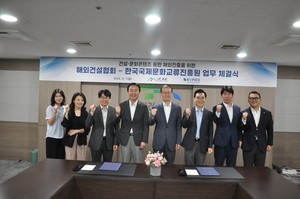
Overseas Construction Association signs MOU with Korea Foundation for International Cultural Exchange
Two organizations to collaborate on joint overseas expansion The Overseas Construction Association of Korea signed an MOU with the Korea Foundation for International Cultural Exchange on Monday to promote the convergence of cultural content and overseas construction for joint international expansion. The two organizations plan to cooperate on sharing information across overseas construction, urban development, international cultural exchange and cultural content; linking the K-City initiative with each organization's projects; identifying overseas business opportunities and building networks for participating companies and association members; and supporting the joint overseas expansion of the construction and content sectors. "Overseas construction has recently been evolving beyond physical infrastructure to encompass culture and lifestyle as well," Overseas Construction Association Chairman Han Man-hee said. "If the foundation's expertise in cultural content and its global network are combined with K-City, our culture and content can be realized more concretely in cities and spaces abroad." The two organizations plan to expand practical joint projects and strengthen ties among participating companies to continuously pursue the overseas expansion of both the construction and cultural content industries. Meanwhile, the Overseas Construction Association supports domestic construction companies in securing overseas contracts through its K-City convergence platform.
Sept. 7, 2026
-
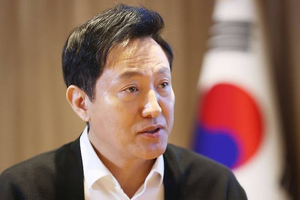
Seoul Mayor Oh warns city becoming 'rental hell,' calls for drastic action
Average monthly apartment rent in Seoul hit record 1.62 million won in July Over 20,000 registered rental apartments set to exit mandatory lease period this year Mayor calls for full review of owner-occupancy-focused real estate policy Seoul Mayor Oh Se-hoon said Monday that a surge in jeonse and monthly rent prices is turning the entire city into a "residential hell," and called for drastic government action. Writing on his SNS account Monday, Oh said the average monthly apartment rent in Seoul hit a record 1.62 million won ($1,200) in July, while jeonse prices have surged 9.95 percent and a shortage of jeonse listings persists. He added that he had heard the government was reviewing ways to reduce the comprehensive real estate tax burden on corporate rental operators, but called the move "too little, too late." Oh said he had been calling since last year for eased loan regulations and an exemption from the comprehensive real estate tax for purchase-type rental operators, to allow them to supply sufficient jeonse and monthly-rent housing. "It is fortunate that the government is now at least reviewing what is an eminently practical proposal," he said. He said the measures under consideration were still far from enough to resolve the current crisis, given the speed at which jeonse is disappearing and monthly rents are rising. "The government must swiftly produce drastic measures to revive the private rental market," he said. Oh warned that branding registered rental operators as speculators and stripping their existing tax benefits might push some units into the sales market, but would also eliminate housing where tenants had been able to live long-term without fear of rent hikes or contract termination. "Ultimately, it is ordinary people who will bear the cost," he said. He said more than 20,000 registered rental apartments in Seoul are set to reach the end of their mandatory lease periods this year, with around 30,000 more expected to expire by 2028. "I cannot shake the fear that the rental hell we are experiencing now may be only the beginning," he said. Oh called on the government to conduct a full review of regulations he described as burning down the house to catch a flea, and to institutionalize private rental businesses as a pillar of stable rental housing supply. He also proposed establishing a legal definition for corporate private rental operators and clearly setting out their entitlements and obligations to foster a stable rental market. Above all, Oh said, the fundamental solution to the current crisis was a full review of the real estate policy framework centered on owner-occupancy. "A binary approach that treats owner-occupancy as the only good cannot bring down home prices or revive the rental market," he said.
Sept. 7, 2026
-

LH expands bid-rigging leniency program, raises reward cap to W3b
'LH-style leniency' program launched Korea Land and Housing Corp. (LH) announced Monday it will introduce an "LH-style leniency" program — a system that reduces or waives penalties for companies that voluntarily report bid-rigging — to stamp out procurement corruption and foster a culture of fair contracting. The new program expands on a leniency regime LH established last year under the Fair Trade Act to combat collusion, broadening both the scope of reportable offenses and the reward structure. LH said the changes are designed to encourage voluntary disclosures and strengthen mutual oversight among bidders to prevent misconduct before it occurs. Under the updated framework, the range of offenses eligible for leniency has been extended beyond bid collusion. By drawing on the Public Interest Whistleblower Protection Act and the Anti-Corruption and Civil Rights Commission Act, the program now covers all forms of corruption that can arise during the bidding process — including duplicate-document submissions and bribery related to bid evaluations. Rewards have also been enhanced. Under existing internal guidelines, LH paid up to 100 million won ($73,800) as a commendation award when a tip was recognized as serving the public interest, and up to 3 billion won as a compensation award when a report directly increased revenue or reduced costs. On top of that, LH plans to recommend whistleblowers to the Anti-Corruption and Civil Rights Commission for additional recognition under the Public Interest Whistleblower Protection Act — including commendation awards of up to 500 million won and compensation awards of up to 30 percent of recovered funds with no ceiling. A separate reward scheme will apply to reports of improper pre-contact with evaluators, unauthorized briefings, and other irregularities during the proposal-review process for technology and other service contracts. LH plans to revise its internal rules this year to raise the cap on awards for bribery and collusion tips from 30 million won to 100 million won. "To eradicate bid-rigging, what we need is not just after-the-fact detection and punishment, but a system of institutional incentives that allows immediate reporting when misconduct occurs, along with a culture of mutual checks that prevents it from happening in the first place," an LH official said. "We will thoroughly protect whistleblowers and ensure that public-interest contributions made through reporting are properly rewarded, so that the reporting system can truly take hold." Meanwhile, starting this year, bid documents for LH public housing projects must be prepared using the designated "Bid Document Preparation Program."
Sept. 7, 2026
-

Seoul non-apartment ground-breakings surge 81% from last year, signaling housing supply recovery
Housing permits and ground-breakings through July exceed 3-year average Apartment ground-breakings up 36.1% year on year '48,000 new units set for move-in through next year' Seoul's urban renewal projects are gaining momentum, pushing cumulative housing permits and ground-breakings through July above the three-year average. Ground-breakings for non-apartment units — which serve as a key entry point on the housing ladder for young people and single-person households — surged more than 80 percent, signaling a positive turn for housing supply. The Seoul Metropolitan Government said Monday that housing permits issued from January through July totaled 28,634 units, while ground-breakings reached 19,507 units. Compared with the three-year average for the same period, permits were up 36.7 percent and ground-breakings rose 34.6 percent. "Permits and ground-breakings are representative indicators of the future scale and pace of actual housing supply," the city said, adding that supply expansion policies — including the revitalization of redevelopment and reconstruction projects and shorter project timelines — "are translating into actual permits and ground-breakings." Ground-breakings in Seoul through July were up 44.4 percent from the same period last year, when 13,508 units broke ground. Apartment ground-breakings reached 14,995 units, a 36.1 percent increase from 11,014 units a year earlier. Redevelopment and reconstruction projects accounted for 12,211 of those starts, or 81.4 percent of all apartment ground-breakings. Major complexes that broke ground this year include the Heukseok District 11 complex (1,515 units), the Sillim District 2 complex (1,430 units) and the Junggye Bondong complex (3,178 units). However, apartment permits slipped 1.6 percent year on year, with 23,480 units approved from January through July compared with 23,852 units in the same period last year. Redevelopment and reconstruction projects made up 19,447 of those permits, or 82.8 percent of the total. Large-scale complexes receiving permits this year had an outsized impact, including Jamsil Jugong 5 (6,411 units), Hannam District 5 (2,592 units) and Geoyeo Saemaul (1,678 units). Non-apartment supply, which had been subdued for some time, is also rebounding. Permits for non-apartment units through July totaled 5,154, up 64.4 percent from 3,135 units in the same period last year. That figure is more than double the three-year average of 2,553 units for the same period. Ground-breakings for non-apartment units also rose sharply. A total of 4,512 non-apartment units broke ground through July, up 80.9 percent from 2,494 units in the same period last year and 48.3 percent above the three-year average of 3,043 units. The city said the pronounced upward trend in permits and ground-breakings points to sustained housing supply that residents will be able to feel. New apartment move-ins in Seoul are projected to reach 26,000 units in 2026 and 22,000 units in 2027, totaling 48,000 units through next year. "The simultaneous increase in permits and ground-breakings this year, along with the recovery in non-apartment supply, is a positive signal that Seoul's housing supply foundation is strengthening," said Myeong No-jun, head of the Seoul Metropolitan Government's housing bureau. "We will closely manage key projects to ensure the supply expansion translates into actual move-ins."
Sept. 7, 2026
MOST READ
- 1Hyundai Motor unveils all-new Tucson with bigger body, smarter tech after 6-year wait
- 2Flat sneakers are back: Why Nike is reviving a 55-year-old running shoe
- 3Pope Leo XIV declines French honors and banquet, accepts only private meeting with Macron
- 428 illegal sports streaming sites found operating freely despite repeated blocks
- 5What was Rachmaninoff's performance fee? A 1928 price list tells all
- 6Lee Jung-woo, 18, wins George Enescu Competition, sweeps 5 special prizes
-
WORLD

US warns of punishment for anyone enabling Iran's Strait of Hormuz toll scheme
-
INDUSTRY
Toyota union puts productivity first; Hyundai Motor union demands bigger share of profits
-
FINANCE
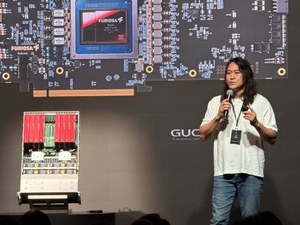
National Growth Fund to invest $531M in FuriosaAI, which rebuffed Meta's $800M takeover bid
-
INDUSTRY
Korea Shipowners' Association holds amateur baduk tournament for Maritime Day