
- HOME
- REAL ESTATE
-
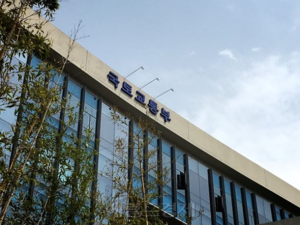
Transport ministry panel launches forum to build inter-regional transit network under '5-pole, 3-special' plan
Over 20 experts in transport and urban planning to participate; monthly workshops to begin Sept. 29 The Metropolitan Area Transportation Commission under the Ministry of Land, Infrastructure and Transport announced Thursday it will establish a "super-regional transport policy forum" with more than 20 experts to develop a transport policy framework aligned with the government's "5-pole, 3-special" national balanced development strategy. The forum aims to go beyond the existing metropolitan-area-centered transit system and build a super-regional transport network that efficiently connects inter-regional movement in line with the expanding reach of lifestyle, economic and industrial zones. More than 20 academics and researchers from the fields of transport, rail, roads, urban planning, regional development and balanced development will serve as forum members. The forum will analyze transport demand and travel patterns across super-regional zones from multiple angles and is expected to comprehensively discuss three areas: the direction of super-regional transport network development for each zone, financing and implementation frameworks, and improvements to relevant laws and regulations. It will focus particularly on designing a transport network that reflects each zone's characteristics and the functional linkages between regions, in alignment with the 5-pole, 3-special national balanced development strategy. The forum will kick off with an inaugural meeting on Sept. 29, followed by monthly policy workshops, with ad hoc advisory sessions held as needed on major issues. A policy forum is planned for December, with a final strategy to be announced before the end of the year. The commission said it will use the forum's findings as a basis for close cooperation with the Local Era Committee, the Office for Government Policy Coordination and local governments to flesh out a pan-government super-regional transport policy. It plans to coordinate with the Local Era Committee's expert panel on regional public transit networks and with each local government's "5-pole, 3-special regional development strategy" — due by December 2026 — to meet actual regional transport needs. "At a time when the major transformation of the national spatial structure under the 5-pole, 3-special framework is getting fully under way, a super-regional transport network is the core infrastructure for boosting regional economic and industrial competitiveness and driving national balanced development," commission Chairman Kim Yong-seok said. "We will actively incorporate expert opinion to build a transport policy that guarantees the right to mobility for residents and strengthens the competitiveness of super-regional zones." Meanwhile, the government plans to accelerate its regional balanced development strategy centered on the 5-pole, 3-special framework through a recently announced plan to relocate central government agencies and public institutions to the regions — following earlier moves involving businesses and universities — as part of its second round of central administrative agency and public institution relocation and functional reform initiatives.
Sept. 17, 2026
-
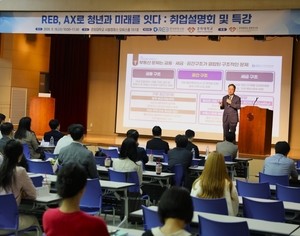
Korea Real Estate Board holds AI and future cities lecture at Kyung Hee University
President Lee Heon-wook proposes alternatives to Greater Seoul concentration AI data seminar and job fair also held The Korea Real Estate Board co-hosted an event with Kyung Hee University's Seoul Anchor AI Education Support Center on Wednesday, the agency announced. Held for Kyung Hee University students, the program featured a special lecture by Korea Real Estate Board President Lee Heon-wook titled "Real Estate for All, Great Cities," along with seminars on real estate data and AI transformation (AX) applications, and a job fair — all aimed at engaging young people on career paths, future cities and changes in the national land and spatial landscape. In his lecture, Lee said real estate issues are ultimately questions about the cities and spaces where people live. "Going beyond simply increasing the quantity of housing supply, what matters is creating enough high-quality urban spaces where people genuinely choose to live and stay for the long term," he said. He added that good cities require jobs, transportation, education, healthcare and culture to function together, and that urban quality must be designed to raise both innovation and quality of life. Lee also said that to ease the concentration of people and businesses in the Greater Seoul area, competitive cities must be built outside the metropolitan region — places that people and companies would choose on their own. He proposed developing hub cities that leverage each region's strengths and linking them rapidly to transform the national spatial structure into a multi-hub, decentralized metropolitan economic zone, in which multiple hub cities are interlinked to form a broad economic and lifestyle region. "A competitive city is one where young people can find good jobs and opportunities and live with stability," Lee said. "We will play an active role in building innovative and livable cities, drawing on the real estate data and expertise the Korea Real Estate Board holds." At the job fair held alongside the lecture, the agency provided detailed information on its key operations and hiring, and set up a mobile café where staff could speak directly with students. Meanwhile, the Korea Real Estate Board plans to hold its second Real Estate Data Academy of 2026 at its Seoul Gangnam branch from Sept. 29 to Oct. 1.
Sept. 16, 2026
-
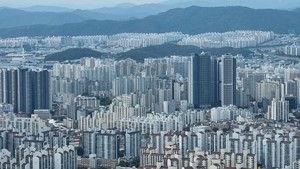
Record highs in Daegu and Busan mask 48,000 unsold units in regional housing markets
Prime locations in Daegu's Suseong-gu and Daejeon's Dunsan-dong hit new price records Investors shut out of Greater Seoul turn to top-tier regional apartments Sharp contrast as some complexes sit unsold even after discounts of over 100 million won Suseong Beomeo W, the top-tier complex in Beomeo-dong, Suseong-gu, Daegu, sold an 85-square-meter unit on Aug. 23 for a record 1.825 billion won. A unit on a similar floor in the same neighborhood sold for 1.325 billion won in February, meaning the price rose 500 million won in roughly six months. Apartment complex A in Dalseo-gu, Daegu, which still has unsold units, is currently offering discounts of up to 90 million won off the original pre-sale price, along with interest-free installment financing and a free balcony extension — but buyer sentiment remains frozen and sales have been slow. As tax tightening and lending restrictions deepen the price divergence between mid-range and high-end housing in Seoul, a similar polarization is sharpening in regional real estate markets — between prime locations and outlying areas. Top-tier apartments in major regional cities are changing hands at prices rivaling Greater Seoul and setting new records, while elsewhere developers cannot clear unsold inventory even after discounts of more than 100 million won. Record-price transactions have been reported across major regional cities including Gwangju, Daegu, Daejeon and Busan, according to the real estate industry Wednesday. Some prime complexes have gained hundreds of millions of won in a matter of months, a pace comparable to the metropolitan area. A 187-square-meter unit at Trump World Marine in U-dong, Haeundae-gu, Busan, sold on Aug. 29 for a record 2.91 billion won ($2.15 million), putting it within reach of the 3 billion won mark. The same floor plan sold for 2.7 billion won in July last year, a gain of 200 million won in roughly a year. Nearby, an 84-square-meter unit at Centum Martian also set a record on Aug. 28, selling for 725 million won. A 59-square-meter unit at The Beach Prugio Summit in Daeyeon-dong, Nam-gu, Busan, set a new high on Aug. 25 at 1.075 billion won, up more than 100 million won from its actual transaction price of 950 million won in January. That figure far exceeds the average sale price for 59-square-meter apartments in the metropolitan area last month — 635.28 million won, or 10.77 million won per square meter, according to KB Real Estate data. In Dunsan-dong, Seo-gu, Daejeon — widely regarded as the city's top school district — a 92-square-meter unit at Hanmaru crossed the 1 billion won threshold for the first time on Aug. 20. A 101-square-meter unit in the same complex also set a record on Sept. 4, selling for 1.2 billion won. Record transactions have also been rolling in across the Jeonnam-Gwangju Special City, which has drawn strong attention in recent months over plans for an 800 trillion won southwestern semiconductor cluster. An 84-square-meter unit at Naju Station Xi River Park in Songwol-dong, Naju, sold for a record 440 million won on Aug. 29. In Gwangsan-gu, adjacent to the planned cluster site, an 84-square-meter unit at Eunbit Maeul Moa El'ga sold Saturday for 650 million won — crossing the 600 million won mark for the first time. The same unit type had sold for 570 million won on June 12, a gain of 80 million won in three months. The record-price run at prime regional complexes reflects a sustained preference for a single high-quality property over multiple holdings. Analysts say that as owner-occupancy requirements and other restrictions on gap investment — buying with a jeonse tenant to cover the purchase — have effectively shut investors out of apartments across Seoul and 15 regulated areas in Gyeonggi Province, wealthy regional buyers are funneling their capital into the best addresses in their own cities. "Just as demand from wealthy buyers concentrates on Apgujeong and Banpo in Seoul, demand in regional markets is converging on the top complexes in prime locations," said Ko Jun-seok, a professor at Yonsei University's Sangnam School of Management. "Because buying Seoul apartments for investment purposes is now difficult, buyers are turning their attention to top-tier regional complexes, and that is driving prices higher." Outside those prime addresses, however, the picture is starkly different. The leading complexes have pulled the overall regional apartment sale price index — tracked by the Korea Real Estate Board — out of its decline since the first week of June, leaving it flat or edging up. But conditions on the ground for housing projects are deteriorating. The Housing Industry Research Institute's regional housing business outlook index tumbled 11.2 points in September to 77.9, a sharp contrast with Seoul, where the equivalent index rose 4.4 points from 92.8 to 97.2 last month. Unsold regional units stood at 48,758 as of July, including 24,708 units classified as hard-to-sell inventory — units that remain unsold after completion. That compares with 17,229 such units at the end of 2024, a jump of 43.4 percent in roughly a year and a half. Construction companies have responded with steep discounts and generous financing terms in a push to clear inventory, but progress has been slow. One apartment complex in the Jeonnam-Gwangju area cut its pre-sale price by 130 million won below the original asking price in an attempt to move unsold units. The preference for a single prime property in regional markets is expected to persist for now. "Unlike in Seoul, where record-price news tends to lift prices across the board, the buying concentration in regional markets will remain focused on prime complexes rather than spreading citywide," Ko said. "Unless incentives such as tax benefits for rental business operators are extended to unsold regional housing, clearing that backlog will not be easy."
Sept. 16, 2026
-
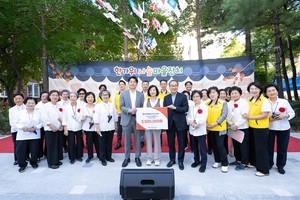
IPark Hyundai Development shares chuseok rice cakes with Nowon-gu community
Company also serves meals and donates funds at Nowon No. 1 Community Welfare Center IPark Hyundai Development announced Wednesday that it had carried out a series of community outreach activities in Nowon-gu ahead of the chuseok holiday. The company joined the Nowon-gu Volunteer Center for a chuseok rice-cake sharing event, then visited Nowon No. 1 Community Welfare Center to serve meals and present a donation to elderly residents in the area. The morning rice-cake sharing event was held in the multipurpose hall of the Nowon-gu Public Health Center and brought together about 20 Nowon-gu volunteer camp leaders, along with Jung Myung-jin, director of Nowon No. 1 Community Welfare Center, Shin Wang-seop, general manager of IPark Hyundai Development, and Jung Gwang-jae, project director of the company's urban renewal bidding team. The afternoon event at Nowon No. 1 Community Welfare Center was attended by Kang Hyun-suk, director of the Nowon-gu Volunteer Center, as well as Shin and Jung Gwang-jae. "We organized a range of sharing activities in Nowon-gu to exchange warm feelings with our neighbors in the community during chuseok," a company official said. "We will continue to communicate consistently with the community, carry out social contribution activities that provide real help to residents, and spread a culture of sharing together with the community." Nowon-gu's Wolgye-dong is the site of IPark Hyundai Development's Seoul One I'Park project. The company has been conducting a variety of community-oriented social contribution activities centered on Nowon-gu. This year, new employees made snacks by hand and delivered them to children's and youth organizations in the district; the company also organized plogging and underwater cleanup activities along the Jungnangcheon stream. Meanwhile, the company changed its name from Hyundai Development to IPark Hyundai Development in March and has been working to strengthen its residential brand. Its Iksan Busong I'Park project recently received the top residential culture service award at The Herald Business's "Home I Want to Live In 2026" ceremony.
Sept. 16, 2026
-
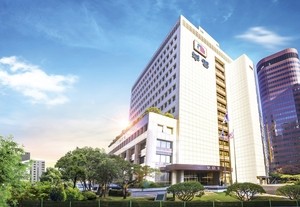
Boo Young Group distributes Chuseok gifts to senior centers, partner firms
Fruit sets sent to senior centers at 85 managed complexes nationwide Food sets to go to 3,435 partner company employees Boo Young Group announced Wednesday that it will distribute holiday gifts to senior centers at its apartment complexes nationwide and to employees of partner companies in celebration of Chuseok. The group said it will deliver 233 fruit gift sets to senior centers at 85 managed apartment complexes across the country, and food sets to a total of 3,435 people — including building management office staff and workers from security, cleaning and other service contractors. "We prepared these small tokens to wish good health to the elders who have led our local communities, and to express our gratitude to the partner company employees who quietly work hard on the front lines," a Boo Young Group official said. The group has made a practice of sharing holiday gifts not only with its own executives and employees but also with apartment senior centers, partner companies, daycare centers and military units. Boo Young Group has sustained a wide range of philanthropic activities — including donations of educational and cultural facilities, scholarship programs and disaster-relief contributions — accumulating 1.22 trillion won ($902 million) in social contribution to date. In recognition of those efforts, the group received the top residential welfare service award at The Herald Business's "Home I Want to Live In 2026" event held this month.
Sept. 16, 2026
-
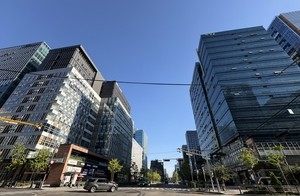
Empty industrial complexes eyed for youth housing — but experts see hurdles ahead
LH to buy vacant Greater Seoul industrial units for public housing Seoul vacancy rate at 10.7%; 40.7% of units completed within 3 years sit empty On the ground: 'Please, just buy them all' Experts: heating, plumbing and parking redesigns pose major obstacles The government plans to convert some knowledge industry centers — multi-tenant commercial buildings that house manufacturers, IT firms and media companies — into public housing for young workers and newlyweds, as it scrambles to ease a deepening shortage of rental homes in the greater Seoul area. The move is designed to bring down the centers' high vacancy rates while adding to the housing supply in the short term. The response from the field has been broadly positive, with both owners and prospective tenants welcoming the idea. But experts caution that the path from policy announcement to actual housing units is lined with obstacles — from the cost of retrofitting plumbing and parking facilities to the need for local governments to revise their district-unit plans. Real estate industry sources said Wednesday that since the Ministry of Trade, Industry and Energy recently unveiled its plan to repurpose vacant knowledge industry center units in the greater Seoul area as public housing, market interest in the scope and feasibility of the scheme has been running high. The ministry's reform package, announced Thursday, includes four measures: the Korea Land and Housing Corporation purchasing vacant knowledge industry center units in the greater Seoul area and supplying them as public rental housing for young workers and newlyweds; a temporary allowance to convert vacant and unsold units in general industrial zones into officetels; an exemption from the obligation to secure additional parking spaces and a deferral of acquisition tax recoupment triggered by a change of use; and a full shift to a negative-list system for regulating the types of businesses permitted to move in. Built and empty: vacancy rate hits 41% for Seoul centers completed within 3 years The government's push to repurpose non-residential knowledge industry centers as housing reflects a dual calculation: bring down vacancy rates while accelerating housing supply. With rental market pressures mounting across the greater Seoul area, officials see converting already-completed but empty buildings as faster than acquiring new land and building from scratch. The greater Seoul rental market is facing a severe supply-demand imbalance. The designation of land transaction permit zones and regulated areas across all of Seoul and 15 districts in Gyeonggi Province, combined with tighter restrictions on jeonse loans, has shrunk the supply of jeonse listings and deepened housing insecurity for lower-income residents. According to real estate platform Asil, Seoul apartment jeonse listings stood at 20,529 as of Wednesday — down about 12 percent from 23,320 a year earlier. A spillover effect has pushed demand into Gyeonggi Province, where apartment jeonse listings plunged 41.6 percent over the same period, from 21,054 to 12,309. Incheon also saw a 34.8 percent contraction, from 4,135 listings to 2,699. The government has pledged, through its Aug. 13 housing package, to supply at least 1.47 million units in the greater Seoul area during the current administration's term. But proposed supply sites have drawn pushback from local residents, and experts say the front-loaded presale structure of Korea's housing market makes it difficult to move quickly from announcement to groundbreaking and completion. The Korea Construction Industry Institute said of the Aug. 13 package: "Most domestic housing supply relies on a presale structure that draws on buyers' own funds. Without effective demand-stimulation measures, developers' capacity to raise project financing will inevitably be constrained." Repurposing existing knowledge industry centers could also relieve the financial strain on developers and unit holders whose capital has been tied up by unsold inventory. The centers — mixed-use commercial buildings that cluster businesses from manufacturing, IT and media under one roof — had attracted investors as an alternative asset class, partly because they faced lighter regulation and lower rents than residential properties. But a deteriorating economy and prolonged high interest rates have eroded their profitability and dampened demand. As of last May, the national average vacancy rate for knowledge industry centers stood at 16.6 percent and the unsold rate at 9 percent, according to the ministry. Seoul's vacancy rate was a relatively contained 10.7 percent, but that figure jumped to 40.7 percent when narrowed to centers completed within the past three years. The sales market has frozen alongside rising vacancies. According to real estate data firm Real Estate Planet, transaction volume for Seoul knowledge industry center units in the second quarter of this year fell to 125 deals — down 39.3 percent from 206 in the first quarter. The total transaction value dropped 45.8 percent over the same period, from 137 billion won ($101 million) to 74.3 billion won. 'Please, just buy them all': owners welcome LH intervention as distressed sales pile up On the ground, expectations are growing that converting knowledge industry centers into public housing could provide meaningful near-term relief for the housing supply. Real estate agents near Gasan Digital Complex station in Geumcheon-gu, Seoul — visited Monday afternoon — said the policy would be welcomed by both center owners and the workers in the area looking for somewhere to rent. "Four years ago prices reached 17 million won per 3.3 square meters, but now the market has completely collapsed — distressed listings are coming in at around 9 million won," said the head of real estate agency A in Gasan-dong. "If LH says it will buy, I think applications will flood in. I just hope they buy every single one." The same agent added that even in Seoul, where vacancy rates are comparatively low, a fair number of owners who bought multiple units for their own use or to rent out are suffering from empty space. "These days it's hard enough to cover loan interest, and business conditions are tough, so the general mood is one of welcome," he said. Distressed and auction listings are easy to find in the market. The head of real estate agency B, located inside a knowledge industry center about a 10-minute walk from Gasan Digital Complex station, said vacancies account for 10 to 20 percent of total units in the building, with auction listings — including those in progress or already awarded — making up another 10 percent or so. "Transactions have almost dried up. Only well-capitalized companies are stepping in to buy at the bottom, and even then it's rare and mostly for larger units," he said. The building housing agency B had three vacant units even on its ground floor, which typically draws the highest foot traffic and tenant demand. "Owners who acquired units through auction sometimes list them for about 1 million won less than the going distressed price," the agent said. "If LH comes in to buy, negotiations should be fairly straightforward." A shortage of worker housing in the Gasan area has added to the sense of anticipation. "Six or seven people a day come in looking for dormitory-style accommodation, but I often have nothing to show them and have to turn them away," the agent at agency B said. "As long as people don't mind being surrounded by offices, it should work out fine." The head of agency A agreed: "This neighborhood is severely short on residential space — workers are being pushed out to areas like Sindorim — so demand for housing close to work will be strong." The proximity of many Seoul knowledge industry centers to subway stations is another factor fueling expectations of demand. An analysis of the 381 knowledge industry centers in Seoul as of February found that 234, or 61.4 percent, were within 500 meters of the nearest subway station. Another 139 were between 500 meters and 1 kilometer away, and only eight were more than 1 kilometer from a station. By district, Geumcheon-gu — home to Gasan Digital Complex — had the most centers at 133, followed by Seongdong-gu with 72, Guro-gu with 60, Yeongdeungpo-gu with 48 and Gangseo-gu with 27. On the ground, however, questions have emerged about how broadly the policy would actually apply. "After the announcement, I got quite a few calls from owners who had seen the news asking whether they were eligible," said the head of one real estate agency in Gasan-dong. "But Gasan and Guro are national industrial complexes where even move-in registration is strictly controlled. Realistically, I think the centers in Gyeonggi Province are the more viable candidates." 'Lifting regulations alone won't make homes': heating, plumbing and parking remain steep hurdles Experts were united in saying that converting a building designed for commercial use into livable residential space involves far more than relaxing zoning rules. Simply lifting use restrictions, they said, will not automatically turn vacant units into homes. "To use a space residentially, you need heating and bathrooms, so construction timelines and profitability both have to be factored in," said Seo Gwang-chae, a professor in the real estate department at Hanyang Cyber University. "There is also the potential for conflict between existing business tenants and new residents." A construction industry official with direct experience on knowledge industry center projects said the finishing requirements for residential and non-residential buildings differ substantially — covering heating pipes, water supply and electrical systems — making full remodeling necessary. "Construction could be completed within a year, but existing office tenants would likely face noise and dust during the work," the official said. Kwon Dae-jung, a distinguished professor in the economics and real estate department at Hansung University, said that while government acquisition at current depressed prices was feasible, private owners carrying loan burdens would find it difficult to fund the conversion themselves. "Prices have fallen so far that government purchase and repurposing is entirely plausible, but it won't be easy for private owners burdened with debt to take on the additional cost of conversion," he said. Concerns were also raised about the limits of remodeling alone as a path to stable residential environments. "Because the floor areas are larger than those of officetels, new walls would have to be built and bathrooms installed — and that means reworking the load-bearing design from the ground up," said Lee Eun-hyung, a senior researcher at the Korea Research Institute for Construction Policy. Lee also flagged local government district-unit plans as a factor that cannot be overlooked. "District-unit plans drawn up by local governments to shape desirable environments are not something you can resolve with a single signature," she said. "There is nothing wrong with exploring every possible way to make use of vacant space, but the moment you start saying you will supply large numbers of homes through knowledge industry centers, you will find there are no easy answers." Detailed criteria have yet to be established, and the number of variables to be worked through during actual conversion is considerable. Knowledge industry centers, for instance, are not subject to the per-household parking requirements that apply to apartment buildings. The standard for commercial facilities is one space per 150 square meters of floor area — a benchmark that would be difficult to meet if the buildings were reclassified as residential. "There are quite a few regulations that apply to buildings where people live — from the number of elevators to parking requirements to unit sizes — and construction costs will vary enormously depending on what exemptions are granted and how far the relaxations go," said Jeon Yeong-jun, head of the research center at the Korea Construction Industry Institute. Jeon added that while knowledge industry center developers struggling with unsold units had long been pushing for a change-of-use option, and both the government and the ruling party were actively backing housing supply expansion, the current policy still looked more like a statement of direction than a concrete plan. "This is also a matter that cuts across multiple departments within the Ministry of Land, Infrastructure and Transport, which will be responsible for drafting the subordinate legislation," he said.
Sept. 16, 2026
-
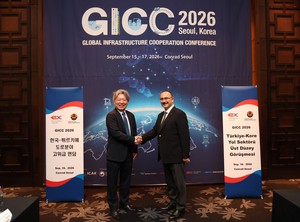
Korea Expressway Corporation pursues overseas contracts at GICC, meeting officials from Bangladesh and Turkey
Tanzanian officials among those visiting traffic control center Korea Expressway Corporation participated in the 2026 Global Infrastructure Cooperation Conference (GICC), hosted by the Ministry of Land, Infrastructure and Transport at Conrad Seoul hotel from Tuesday to Thursday, holding discussions with senior foreign officials on cooperation in roads and transportation to advance its overseas expansion. The GICC, first held in 2013, has brought together ministers, vice ministers and chief executives of project owners from 90 countries worldwide. This year's edition drew more than 500 participants, including ministers and vice ministers from over 30 countries. At the conference, Korea Expressway Corporation met with Sheikh Rabiul Alam, Bangladesh's minister of road transport and bridges, and Ahmet Gülsen, director general of Turkey's General Directorate of Highways, to review the status of ongoing projects in each country and discuss follow-up cooperation. The corporation's engagement with Bangladesh dates to 2014, when it began the Padma Bridge construction supervision project. It is currently carrying out the Padma Bridge and N8 Expressway operations and maintenance project, which is set to expire in 2027 — prompting discussions on extending the contract. In Turkey, the corporation shared its recent track record — securing the Nakas–Basaksehir investment project in 2024, followed this year by the Kinali–Malkara operations and maintenance project and the Malkara–Canakkale major rehabilitation project — and discussed ways to advance the next initiative, the Izmir northeastern ring road investment project. On Thursday, the corporation also plans to showcase its advanced intelligent transportation system and traffic control capabilities through a guided tour of its traffic control center for delegates from participating countries. "Participating in the GICC, a government-hosted international event, has been an opportunity to strengthen our cooperative framework with major overseas institutions," Korea Expressway Corporation President Yu Jeong-hun said. "We will continue working to expand our overseas cooperation network so that our corporation can become more active in global markets." The corporation's cumulative overseas contract value stood at 749.5 billion won ($554 million) as of June. In 2005, its first year of overseas operations, it secured just 400 million won in contracts; it now operates 24 projects across 17 countries.
Sept. 16, 2026
-
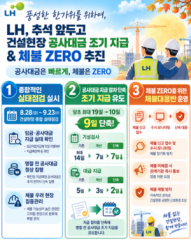
LH to fast-track W600b in construction payments ahead of Chuseok
Firms with unpaid wage violations to face strict sanctions The Korea Land and Housing Corporation said Wednesday it will accelerate the payment of about 600 billion won ($443 million) in construction fees ahead of the Chuseok holiday, as part of a broader push to eliminate unpaid wages and subcontract payments. LH said it is leading efforts to stamp out wage and payment delinquency — long identified as a chronic problem at construction sites — by tightening on-site supervision and imposing stricter penalties on companies found to be in violation. Under the measures, prime contractors that fall behind on payments will receive a "quality deficiency notice," resulting in point deductions during future LH project bids. Subcontractors will be designated as "managed subcontractors" and barred from subcontracting work for up to three years. Delinquency deductions can reach up to 1.5 points based on the amount owed, while quality deficiency notices can accumulate to a maximum of 4.5 points depending on how many notices have been issued. The deductions apply to violations recorded within one year of a bid announcement date. Companies that refuse to comply with corrective orders will be reported immediately to the relevant regional employment and labor offices and local governments for action under the Framework Act on the Construction Industry, the Subcontracting Act and other applicable laws. To ensure that small and mid-sized subcontractors and workers can enjoy the holiday without worrying about unpaid wages, LH said it will conduct a comprehensive inspection of construction sites nationwide. The inspection will cover compliance with the public client's direct wage payment system, as well as five areas: scheduled wage and subcontract payment amounts, the status of progress payment receipts and disbursements, whether construction workers have been paid, whether equipment and materials suppliers have been paid, and the status of delinquency cases and complaints. Through the inspection, LH said it will ensure that about 591.6 billion won in scheduled payments across 361 sites is disbursed in full before the holiday. Any delinquency uncovered will prompt an immediate payment demand, and sanctions will follow if the demand is not met. Sites where inspectors find signs of deteriorating contractor liquidity, delinquency complaints or underreported labor cost payments will be classified as high-risk and placed under intensive monitoring until the Chuseok holiday. LH also said it will cut the payment processing period ahead of Chuseok from a maximum of 19 days to 10 days to speed up disbursements. The progress inspection period, which previously took up to 14 days, will be halved to seven days, while the payment deadline will be shortened from five days to three, bringing the total process down to a maximum of 10 days. LH said it will also strongly encourage prime contractors to pay their subcontractors within five days. In addition, LH will operate a dedicated "delinquency response team" over the Chuseok period to pursue its goal of zero unpaid wages and payments. The team will immediately assess any reported cases of delinquency, coordinate with relevant departments and site managers to confirm resolution, and continuously monitor payment flows to detect anomalies such as delayed or indirect disbursements and prevent prolonged delinquency. "We will block any possibility of delinquency at the source so that construction workers and subcontractors receive fair compensation on time without difficulty, and deal with any violations swiftly through strict punishment," LH President Lee Seong-hun said. "We will continue to use round-the-clock monitoring and on-site investigations to build construction sites free of delinquency where workers can feel secure." LH has also been pursuing the introduction of a digital wage payment system to fundamentally prevent wage delinquency at construction sites.
Sept. 16, 2026
-
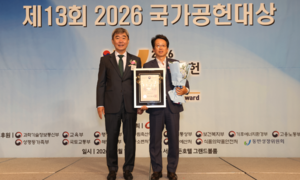
Korea Housing and Urban Guarantee Corporation wins Ministry of SMEs and Startups minister's award for small business support
The Korea Housing and Urban Guarantee Corporation (HUG) announced Wednesday that it received a minister's award from the Ministry of SMEs and Startups at the National Contribution Awards on Tuesday, in recognition of its ESG (environmental, social and governance) support activities for small and medium-sized enterprises. HUG has pursued a range of support projects — including smart factory construction, overseas market development and its HUG Startup School program — to promote a culture of shared growth with small businesses. As a result, the corporation earned the top "excellent" rating in its evaluation group at the Ministry of SMEs and Startups' public institution co-growth assessment in April, establishing itself as a leading institution in shared growth. This year, HUG declared an "ESG management inaugural year" alongside the inauguration of a new chief executive. The corporation has also worked to spread its model of ESG management through regional small business cooperation, hosting the first IT roundtable for Busan-based companies among public institutions that have relocated outside Seoul, and introducing a preliminary review system that gives priority contracts to local firms. On top of that, HUG plans to strengthen regional business preferences and ties to its core operations within existing small business support projects, building a broader co-growth ecosystem. It also intends to contribute to quality job creation through its second HUG Startup School cohort, which will for the first time provide direct commercialization funding. "This award is external recognition of the results of the ESG management and co-growth initiatives our corporation has pursued," HUG President Choi In-ho said. "Going forward, we will expand co-growth projects for small and medium-sized enterprises linked to our core business, while actively pursuing cooperative programs to support small businesses in Busan, where we are based, so that HUG can emerge as a leader in ESG management for regional development." Meanwhile, HUG also took the grand prize at the third Korea Public ESG Management Awards earlier this year.
Sept. 16, 2026
-
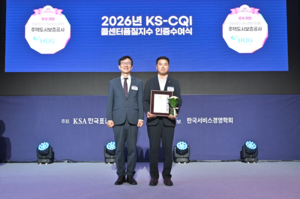
HUG named top call center for 2nd consecutive year, cuts jeonse consultation time in half
Dedicated jeonse team, proptech tools boost service efficiency New jeonse and monthly rent trust system consultation framework also in place Korea Housing and Urban Guarantee Corporation said Wednesday it has been named an outstanding institution in the quasi-market public enterprise category for the second consecutive year in the 2026 KS-CQI Call Center Quality Index survey conducted by the Korean Standards Association. The KS-CQI is an index that evaluates the overall quality of call center services through telephone monitoring and customer satisfaction surveys. HUG was recognized for improving its consultation systems and providing customized services to raise customer satisfaction. As inquiries related to jeonse deposit returns surged, the corporation established a dedicated team to build a rapid consultation framework. HUG also integrated a proptech-based unified housing price lookup screen into its consultation system, cutting the time needed for jeonse deposit return guarantee consultations from five minutes to two minutes and 30 seconds — half the previous time — to maximize operational efficiency. The corporation also drew praise for introducing video consultations and a slow-guidance service tailored to middle-aged and elderly customers, as well as expanding the pool of customers surveyed for satisfaction feedback so their opinions could be reflected immediately. HUG said it has also completed advance preparations for its upcoming jeonse and monthly rent "Ansim Trust" service, including assigning dedicated consultants, conducting training and overhauling its systems. Under the scheme, tenants deposit their security money with HUG to reduce the risk of non-return, while landlords receive investment returns on the deposit in the form of monthly rent payments. HUG said it plans to provide tailored consultations suited to the needs of both landlords and tenants. "Being named an outstanding institution for two consecutive years is the result of our sustained efforts to provide customer-centered service," HUG President Choi In-ho said. "We will continue to raise the quality of our call center consultations so that customers can rely on our services." Meanwhile, HUG received the Minister of Trade, Industry and Energy Award in the private investment promotion category at the 2026 Second Industrial Complex Structural Upgrading Awards on Tuesday. The awards event, hosted by the Ministry of Trade, Industry and Energy and organized by the Korea Industrial Complex Corporation, was established to identify and promote best practices in structural upgrading projects that transform aging industrial complexes into future-oriented innovation spaces based on the 4-X framework — AX, GX, YX and NX.
Sept. 16, 2026
-

Hong Ji-sun says land transaction permit zone extension to hinge on market conditions
On Yongsan Park, nominee says Seoul city agreement and public consensus must come first Hong Ji-sun, nominee for minister of the Ministry of Land, Infrastructure and Transport, said Wednesday she would assess market conditions before deciding whether to extend the land transaction permit zone designation currently applied to all of Seoul and 12 areas in Gyeonggi Province through the end of this year. At her confirmation hearing at the National Assembly on Wednesday, Hong responded to a question from People Power Party lawmaker Kim Jeong-jae about whether the land transaction permit zone designations would be maintained after year-end, saying she would "closely examine market conditions and consult with relevant ministries." Addressing criticism that the land transaction permit zone designation suppresses transactions while driving up prices, Hong said the policy "also plays a relatively positive role," adding that lifting and reimposing such restrictions in Seoul had itself caused housing prices to rise. "Every policy has its advantages and disadvantages, and I will look into this carefully," she said. The government had designated all of Seoul and 12 areas in Gyeonggi Province as land transaction permit zones through its Oct. 15 measures last year. The designation was set to remain in effect through the end of this year. Hong reaffirmed that any housing supply plan for Yongsan Park must be preceded by agreement with the Seoul Metropolitan Government and the formation of a public consensus. "No specific development plan has been drawn up for the former US military base," she said, adding that public deliberation and opinion-gathering would be required, as would legislation before anything could be implemented. "The park's core landscape must of course be preserved, and if there are ways to additionally contribute to housing stability for future generations, those should be reviewed as well," she said. Meanwhile, Hong said her purchase of an apartment last year was driven by genuine housing need following the expiration of a jeonse contract, not by a desire for capital gains. The questioning came amid remarks by President Lee Jae Myung describing jeonse as "a form of private finance unique to South Korea," with lawmakers noting that Hong had lived in jeonse housing multiple times before buying a Seoul apartment last year. "Over 30 years in public service, I lived as a jeonse tenant without owning a home for about 20 of those years," Hong said, explaining that she had moved multiple times due to personal circumstances — including postings in Uijeongbu and Suwon and her spouse's work in Incheon. She added that moving between jeonse homes did not grow the deposit but instead cost money in brokerage fees and moving expenses. "The hardest part of living in jeonse was having to move every two or four years not by my own choice, but by someone else's — that was truly draining," she said. On her purchase of an apartment in Seoul's Sindorim area last year, Hong said she decided to buy as she was about to move following the expiration of her jeonse contract. "When I looked for another jeonse home, nearby jeonse prices exceeded 900 million won ($665,000), while I could buy a home in a slightly farther area for around 1 billion won," she said. "Since I would have had to take out a jeonse loan anyway, and moving again had become too much, I took out a bit more in loans and bought instead." She added that the move was not motivated by capital gains, but was a purchase made at a moment when her jeonse contract was expiring and she would once again have been forced to move against her will.
Sept. 16, 2026
-
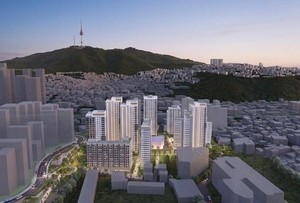
Cheongpa-dong becomes 200th site under Seoul's fast-track planning scheme, anchoring 8,000-unit residential belt
Cheongpa-dong 1-ga fast-track plan finalized for up to 25 floors, 1,280 units Five nearby fast-track projects to be linked through shared roads, parks and walkways An area around 97-35 Cheongpa-dong 1-ga in Yongsan-gu, Seoul, will be redeveloped into a residential complex of up to 25 floors and approximately 1,280 units — the 200th site to have its plan finalized since the city introduced its fast-track integrated planning scheme. The Seoul Metropolitan Government envisions linking the project with nearby fast-track redevelopment initiatives in the Cheongpa, Gongdeok and Seo-gye neighborhoods to create a residential zone of roughly 8,000 units. The Seoul Metropolitan Government announced Wednesday that it had finalized the fast-track integrated redevelopment plan for the site. Located west of Seoul Station, the area developed as a residential neighborhood behind the station in the 1970s. Although it sits near Seoul Station, Sookmyung Women's University, Sukdae Ipgu Station, Cheongpa Elementary School and Hyochang Park, the area has long been criticized for deteriorating living conditions caused by hilly terrain and narrow roads, as well as poor connectivity with surrounding neighborhoods. Under the plan, land currently zoned as first-category and second-category general residential (up to seven floors) will be upgraded to second-category general residential. The floor-area ratio will be capped at 250 percent, with building heights of up to around 25 floors, yielding a supply of approximately 1,280 units. Measures to improve project viability — including adjustments based on the current floor-area ratio and a project-feasibility correction factor — will also be applied. The final height and unit count, however, will be confirmed during the formal district improvement plan process. Several other fast-track integrated planning projects are already under way in the surrounding area, including Cheongpa Zone 2, Gongdeok Zones 7 and 8, and the integrated Seo-gye-dong zone. Cheongpa Zone 2 was designated a redevelopment district in October 2024, while Gongdeok Zones 8 and 7 received the same designation in May of that year. The integrated Seo-gye-dong zone completed its district designation in April 2025. The city plans to link all five fast-track projects across the Seo-gye, Gongdeok and Cheongpa-dong area — including the newly confirmed Cheongpa-dong 1-ga site — to build a residential zone of roughly 8,000 units. An integrated park connecting to the green space planned for Cheongpa Zone 2 will be created on the northern side of the site, with a separate park on the southern side. Vehicle access routes will be secured by linking to roads planned in Cheongpa Zones 1 and 2, while the central road through the complex will be built as a multi-level road to integrate underground parking, improving overall land-use efficiency. A pedestrian network connecting the site to Sookmyung Women's University, Cheongpa Elementary School and Sukdae Ipgu Station will also be established. Given an elevation difference of roughly 40 meters across the site, walkway gradients will be eased and vertical mobility facilities such as elevators will be installed. Open community facilities for local users — including university students and children — will be built near Sookmyung Women's University and Cheongpa Elementary School, and multi-generational housing units will be introduced to meet the independent living needs of students and others. The complex layout will also be designed to preserve views of Namsan. Residential buildings will be positioned to allow Namsan to be seen from both inside and outside the complex, and a visual corridor linked to the Cheongpa Zone 2 park will be secured. Buildings near schools and existing low-rise residential areas will be kept shorter to create a skyline that blends with the surrounding neighborhood. With the Cheongpa-dong 1-ga site now confirmed, the total number of sites finalized under the fast-track integrated planning scheme — introduced in September 2021 — has reached 200. There are currently 314 designated fast-track sites in total. The city expects the five fast-track projects across the Seo-gye, Gongdeok and Cheongpa-dong area, including this site, to deliver roughly 8,000 units. The site was selected as a fast-track planning candidate in April 2025, and the city plans to begin the formal district improvement plan process next month. "The five fast-track integrated planning projects around the Seo-gye, Gongdeok and Cheongpa-dong area will supply about 8,000 housing units while also improving transportation, pedestrian access and parks in the surrounding area," said Kim Chang-gyu, head of the Seoul Metropolitan Government's Urban Space Bureau. "We will actively support the area so it can grow into a premier residential neighborhood at the heart of the city."
Sept. 16, 2026
-
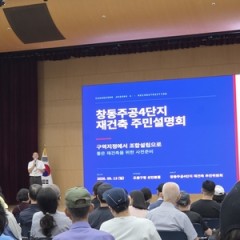
Changdong Jugong 4 complex gets fast-track reconstruction push ahead of zone designation
Second fast-track planning consultation this month Zone designation targeted for early next year Rights distribution and design direction set from the start The Changdong Jugong 4 apartment complex in Dobong-gu, Seoul, has received approval to form a reconstruction promotion committee before its redevelopment zone is officially designated. The committee plans to pursue formal association establishment as early as next year, running zone-designation preparations and pre-association groundwork in parallel. According to industry sources Wednesday, the Changdong Jugong 4 Reconstruction Promotion Committee recently received approval from the Dobong-gu district office to form the committee and has begun preparing follow-up procedures. At a residents' briefing held Sunday at Seoninbong Hall in the Dobong-gu district office, the committee disclosed its planned association establishment schedule and the direction for selecting partner firms. The committee's formation ahead of zone designation was made possible by a regulatory change that now allows residents to voluntarily organize a promotion committee before a redevelopment zone is formally designated. Under the previous system, committees could only be formed and association establishment procedures pursued sequentially after zone designation. The reform allows redevelopment planning and committee formation to proceed simultaneously. The committee aims to complete a second consultation under the fast-track integrated planning process this month, then move through public notice and review procedures for the redevelopment plan, targeting zone designation in early next year. In the meantime, it plans to collect association membership consent forms and select partner firms so that the association can be formally established within about two months of zone designation. The Changdong Jugong 4 complex was completed in 1991 and comprises 10 buildings of up to 15 stories with 1,710 units. It passed a reconstruction safety assessment in April 2024 and applied for fast-track integrated planning consultation in November last year. A master planner has been involved in drawing up the redevelopment plan since July this year. To reduce disputes among future association members, the committee has decided to establish rights distribution principles from the earliest stage of the project. Criteria for assessing existing assets, allocating new units, and distributing costs and gains — matters typically addressed at the management and disposal stage — will be reviewed starting from the association establishment phase. This will allow members to gauge their future contributions and allocation terms in advance. The rights distribution framework is expected to factor in the type and size of existing units, land share and location. Methods for calculating the rights of commercial unit holders and those with multiple ownership interests will also be discussed from the outset, with detailed implementation proposals to be sought during the later process of selecting a redevelopment firm. The committee has also decided to change how it selects a design firm. Rather than simply comparing proposals submitted by competing firms, the committee will first set the complex's design direction and incorporate that into the design brief. Plans are also under consideration to reflect the surrounding natural environment — including Choansan, Dobongsan, Bukhansan and the Jungnangcheon stream — in the complex's design. Current concept plans include positioning residential towers to take advantage of views of Choansan, adding terraces on lower floors, and creating a central plaza featuring a hanok pavilion and pond. A design reinterpreting the traditional market-arcade style in a contemporary idiom is also being considered for the complex's commercial spaces. "We plan to make full use of the regulatory change that allows zone designation and association establishment preparations to proceed at the same time, in order to shorten the project timeline as much as possible," a Changdong Jugong 4 Reconstruction Promotion Committee official said. "We will also work out the rights distribution framework and design direction in detail from the early stages to minimize conflicts that could arise later in the project."
Sept. 16, 2026
-
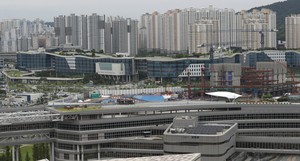
Sejong housing sentiment surges on government relocation plans despite falling prices
Korea Research Institute for Human Settlements releases August consumer sentiment survey Sale market index jumps 11.4 points from previous month Actual home prices down 0.07%, gap widens between sentiment and reality Consumer sentiment in Sejong's real estate market has surged on news of a planned second wave of government agency relocations to the city. The Korea Research Institute for Human Settlements said Wednesday that its August consumer sentiment survey showed Sejong's housing sale market index jumped 11.4 points from the previous month. The jeonse index also rose 7.5 points. Sejong's sale sentiment index peaked at 124.8 in December last year before falling sharply, hovering below the 110 mark throughout this year. With an announcement of a second-phase relocation plan for central government agencies and public institutions on the horizon, however, buyers and real estate agents active in the Sejong housing market appear to be warming up again. The government announced Sept. 3 the direction for the second phase of central government agency relocations, saying it would begin moving the Ministry of Justice and the Ministry of Gender Equality and Family to Sejong from the first half of 2027, with other agencies to follow in stages. The announcement reflected a judgment that, while 43 agencies had relocated to Sejong between 2012 and 2021, a large number of central government ministries still remain in the greater Seoul area, and that improving inter-ministry collaboration and communication efficiency — as well as strengthening a Sejong-centered national governance framework — remained necessary. The government also unveiled plans to build a presidential office in Sejong by August 2029 and to complete a National Assembly annex there by 2033, aiming to fully establish the city's identity as an administrative hub. "In regional areas, the sale sentiment index tends to fluctuate more sharply when a major issue arises," said Kwon Geon-woo, a researcher at the Korea Research Institute for Human Settlements. "The government agency relocation issue appears to have had an effect — particularly notable is the sharp drop in the share of respondents saying price levels have fallen somewhat." Despite the improved sentiment, actual housing sale prices in Sejong have yet to break out of their downward trend. According to the Korea Real Estate Board's August nationwide housing price survey, Sejong's housing sale prices fell 0.07%, a steeper decline than the 0.04% drop recorded in July. Apartment sale prices also fell 0.08%. The gap between sale sentiment and actual transaction activity has yet to narrow. Market observers expect, however, that the government's official announcement earlier this month — and the prospect of agency relocations becoming concrete through legislative amendments — could eventually ripple through to the transaction market. Meanwhile, Seoul's housing sale market sentiment index eased, falling to 132.5 from 139.9 the previous month. Even so, the index remains in what is considered an "upward phase." "Real estate agents are still reporting that prices are higher than the previous month, but the share of respondents saying so has declined," Kwon said. "The index appears to have pulled back as fewer people expect further price increases." Nationwide, the sale market sentiment index edged down to 116.7 from 119.5 the previous month, while the jeonse market sentiment index edged up to 113.5 from 112.7.
Sept. 16, 2026
-
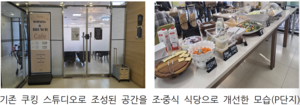
Ministry spotlights best practices for reviving neglected apartment community facilities
Ministry of Land, Infrastructure and Transport shares case studies with local governments An apartment complex that converted an underused squash court into a music room and table tennis hall, and another that transformed an outdoor badminton court into a landscaped garden to support the health and leisure needs of elderly residents, are among the complexes recognized as best-practice cases for shared community facilities. The Ministry of Land, Infrastructure and Transport said Wednesday it will distribute a collection of best-practice case studies to local governments and others. The studies are based on on-site inspections of 226 apartment complexes nationwide conducted from September last year through May, aimed at boosting usage of shared community facilities and fostering a sense of community. The best practices are organized around three spatial approaches to revitalizing shared facilities: improving a space without changing its designated use, converting a space to a new designated use, and adapting an existing space for multiple uses. Among cases involving space improvements without a change of use, one complex recognized that its first-floor multipurpose lounge was suited for hydroponic cultivation, installed a smart farm and offered the produce to residents free of charge. Another upgraded the interior of an existing cooking studio, made use of its existing kitchen equipment and hired dedicated staff to provide a breakfast service. A complex that expanded its senior lounge beyond a simple rest area — offering programs such as non-medical health checkups and cultural classes, and opening the space to residents outside the complex — was also selected as a best-practice case. Jang Woo-cheol, the ministry's housing policy director, said the selected cases "spell out operational models and detailed revitalization examples by category, covering everyday convenience, sports and healthcare, and education and childcare." He added that he hoped the examples would "provide practical guidance for transforming neglected spaces within apartment complexes into resident-tailored spaces."
Sept. 16, 2026
-
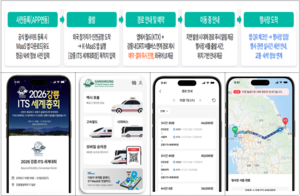
South Korea launches super app for seamless travel booking across trains, buses and taxis
Ministry of Land, Infrastructure and Transport releases K-MaaS app ahead of Gangneung ITS World Congress South Korea is rolling out a new app that lets users search routes, book tickets and pay for a range of transportation options — from trains and buses to taxis and flights — all in one place. The Metropolitan Area Transportation Commission under the Ministry of Land, Infrastructure and Transport announced Wednesday it will launch a K-MaaS (Mobility as a Service) transportation app timed to the ITS World Congress in Gangneung. The ITS World Congress is an annual gathering where industry, academia and government representatives from around the world exchange ideas on intelligent transportation system technology, research and policy. This year marks its 32nd edition. Unlike the current approach — where users rely on separate apps such as Naver Maps for route searches and Korail Talk or the high-speed bus Tmoney app for individual bookings — K-MaaS offers a one-stop service covering route searches, reservations and payments for trains, buses, taxis and other modes of transport in a single application. The commission has been running a K-MaaS pilot program since 2024. Under the initiative, the Korea Expressway Corporation serves as an intermediary platform that aggregates and relays data from individual transport operators, which private service platform providers then use to power a real-time search, booking and payment app called Super Move. For the Gangneung congress — the world's largest advanced transportation event, drawing some 60,000 industry professionals from about 90 countries — the commission will launch and operate a dedicated K-MaaS app tailored to the event. It has signed MOUs with relevant agencies to provide one-stop transportation services throughout the congress. Foreign visitors attending the event can download the app, enter the Gangneung venue as their destination, receive route guidance, and book and pay for trains and shuttle buses to the venue. They can also use QR check-in for convenient entry. "Through Thursday's agreement, we have launched the K-MaaS service — previously available only through the private Super Move app — as an app tailored to an international event," Metropolitan Area Transportation Commission Chairman Kim Yong-seok said. "We plan to gradually develop it into a model for boosting regional transportation use that contributes to the growth of small and mid-sized cities, expanding beyond improved local transport convenience to also drive inbound tourism."
Sept. 16, 2026
-
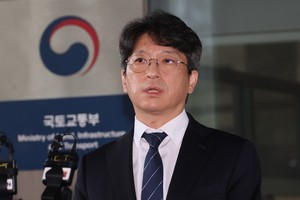
Hong Ji-sun vows to supply housing 'until the market feels it's enough'
Confirmation hearing held Wednesday; minister-nominee signals continuity on 'basic housing' Stresses execution through faster permits; cautious on greenbelt releases 'Yongsan Park has great potential… cooperation with Seoul is the goal' Hong Ji-sun, the nominee for minister of land, infrastructure and transport, has identified stabilizing the housing market through increased supply as her top priority if confirmed. She said she would draw on her experience in local government to accelerate permit approvals and sharpen the ministry's ability to deliver on policy. She also indicated she would carry forward the "basic housing" initiative she championed as head of the urban housing division in Gyeonggi Province. Hong made the remarks in her opening statement at a confirmation hearing held Wednesday at the National Assembly. "I will mobilize the full capacity of both the public and private sectors to push forward housing supply swiftly — until people in the places they want to live feel the market has enough," she said. "I will strengthen the housing ladder for the younger generation, including young people and newlyweds, and provide robust protection for vulnerable groups such as the elderly and victims of jeonse fraud," or rental deposit fraud. Alongside housing supply, Hong named balanced regional development as a key priority. "Balanced development is a matter of national survival," she said, adding that she would support mega-projects to establish advanced industrial hubs in the regions and continue to develop the administrative capital and Saemangeum as core regional anchors. She also pledged a successful second round of public institution relocations, saying she would "engage in sufficient communication with the institutions and local governments and link them organically with regional industries to prime the pump for growth." She further listed expanding road and rail networks, nurturing future mobility industries such as autonomous driving and urban air mobility, and raising the value-added profile of the construction sector among her major policy goals. In written responses submitted ahead of the hearing, Hong left open the possibility of using Yongsan Park as a concrete supply option to stabilize Seoul's housing market. Amid ongoing consultations with the Seoul Metropolitan Government over housing supply measures, she described Yongsan Park as "a place with great potential to quickly deliver a substantial amount of residential space for the younger generation and future generations," adding that "while the park's core areas should be preserved, it is necessary to examine the possibility of housing supply focused on peripheral spaces." Hong also stressed the need for cooperation with Seoul. "Both the central and local governments share the common goals of housing stability and improved transport access," she said. "Since housing supply, redevelopment projects and transport network construction are difficult to advance without cooperation, I will work toward rational solutions through ongoing consultations and operational coordination." On greenbelt releases, she struck a cautious note. "Housing supply through greenbelt releases should be pursued only when public necessity is recognized after comprehensively weighing factors such as the effect on housing stability for ordinary citizens and the feasibility of securing alternative sites," Hong said. "Even then, it is advisable to limit the scope to areas with high levels of existing degradation." On public housing policy, Hong signaled she would maintain the direction of the "basic housing" initiative she pursued as Gyeonggi Province's urban housing chief. "Basic housing was conceived as part of a housing policy to fulfill the constitutional right to a pleasant residential environment and the housing rights guaranteed under the Housing Basic Act," she said. She explained that the initiative had required legislative and regulatory changes but ultimately failed to reach the move-in stage because the relevant bill did not pass before the end of the previous National Assembly term. She added that "for the sake of housing stability, it is important not only to expand supply sufficiently but also to ensure that housing reaches those without homes at affordable prices." She said she would maintain the policy direction while remaining open to gathering diverse opinions and not being bound by past announcements on specific program names or details, taking into account policy conditions and market circumstances. The prolonged slump in the construction sector was also raised as a major challenge for the incoming minister. Hong cited a tightening of project financing, worsening market liquidity driven by rising unsold units — particularly outside Seoul — climbing labor costs since the pandemic, and supply chain disruptions and sharp increases in material costs stemming from the Russia-Ukraine war and conflicts in the Middle East as the main causes of the downturn. "The Ministry of Land, Infrastructure and Transport has consulted with related ministries on construction recovery and project normalization, and has announced measures including steps to stimulate housing demand in regional areas, clear post-completion unsold units in the regions, and provide project financing and financial support — including as part of the 2026 tax reform package," she said. "There is a need to ensure these measures actually translate into ground-breakings and to continuously monitor whether the construction sector is recovering."
Sept. 16, 2026
-
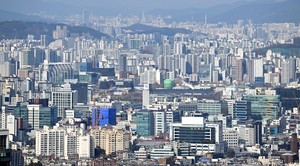
Tenanted listings shunned despite rule change as buyers seek immediate move-in
Owner-occupancy exemptions account for just 4% of land-transaction permit applications in Seoul North of Han River districts trail Gangnam 3 and Yongsan-gu at 3.8% vs. 5.7% Ruling party pushes to extend exemption period, but experts see limited impact Although the government extended its owner-occupancy exemption within land-transaction permit zones in May — effectively allowing the purchase of tenanted apartments — the market has seen little actual activity in such transactions. The trend is especially pronounced north of the Han River, where loan-dependent first-time buyers have shown little appetite for tenanted listings, put off by the difficulty of coordinating move-in dates with existing tenants and the added burden of financing. End-users appear to be concentrating on properties where they can move in immediately. According to the Seoul Metropolitan Government, owner-occupancy exemption applications accounted for 4.5 percent — 135 cases — of the 3,012 new land-transaction permit applications filed for Seoul apartments in August, a rate that held flat for two consecutive months. That figure is sharply lower than the 21.7 percent share — 4,906 cases — recorded between March and the first week of May, when multi-home owners were actively listing properties. The share of tenanted-listing transactions is higher in high-priced apartment clusters such as the Gangnam 3 districts and Yongsan-gu than in the 10 districts north of the Han River. In August, the owner-occupancy exemption rate among land-transaction permit applications stood at 5.7 percent, or 20 cases, in the Gangnam 3 districts and Yongsan-gu, compared with 3.8 percent, or 56 cases, in the 10 northern districts. About half of August's 1,471 land-transaction permit applications came from districts north of the Han River, yet exemption requests there lagged behind Gangnam — a sign that loan-dependent buyers without homes of their own are gravitating toward listings where they can move in right away. Purchasing a tenanted apartment is more complicated than a standard transaction: the buyer must time the move-in to the tenant's lease expiration and must satisfy stricter eligibility and financing requirements. Even in Gangnam, the share of tenanted-listing transactions has declined since June. The owner-occupancy exemption rate in the Gangnam 3 districts and Yongsan-gu fell from 9.6 percent in June to around 5 percent from July onward. Experts say that although the government opened a path for tenanted-listing sales, practical obstacles prevented a meaningful increase in supply, and transaction volume has since contracted. "Multi-home owners largely finished listing their properties around May, so what remains is mainly stock from single-home owners who do not live in the unit," said Yoon Ji-hae, head of the research lab at Real Estate 114. "The absolute total volume of tradable listings has not grown." Nam Hyeok-woo, a real estate researcher at Woori Bank, said restrictions on eviction-fund loans have limited the number of deals that can close on tenanted properties. "Sellers can also transact more smoothly and command relatively higher asking prices when the unit is vacant, so record-price deals keep clustering around empty homes," he said. The Seoul Metropolitan Government noted that the share of exemption applications has remained low even after the eligible pool was expanded, and said the government's decision has not translated into a clear increase in housing transactions. After the government announced its tax reform package, the number of Seoul apartment listings climbed back above 70,000 this month, according to the real estate platform Asil, but much of the new supply is concentrated in high-priced clusters such as the Gangnam 3 districts and the Han River belt. Even when those properties come to market as tenanted listings, their high price tags make financing difficult, putting them out of reach for most first-time buyers. The Democratic Party of Korea proposed to the government on Tuesday that the current two-year owner-occupancy exemption applied within land-transaction permit zones be extended through 2031. The party said the move was intended to ease housing insecurity for existing tenants and give more flexibility to those unable to occupy their units immediately, as a "triple rise" — simultaneous increases in home prices, jeonse and monthly rent — continues to intensify. Industry insiders, however, expect even that measure to have only a limited effect. "If a large complex of 1,000 units once had 100 tradable listings, land-transaction permit rules and lending restrictions have now cut that number to just a few dozen," Yoon said. "Extending the owner-occupancy exemption does not increase the absolute supply of listings — it simply adds another detour for transactions, so the real-world impact will be minimal."
Sept. 16, 2026
-
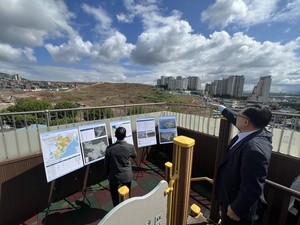
Hannam 3 redevelopment nears ground-breaking as four Seoul projects target 10,809 homes
Demolition at Hannam 3, Seoul's largest redevelopment zone, is 99% complete Mia 2's 4,003-unit complex among major Gangbuk projects gaining momentum Four urban renewal projects in Seoul — Hannam 3 in Yongsan-gu, Mia 2 and Mia 11 in Gangbuk-gu, and Gajaeul 9 in Seodaemun-gu — are moving forward with a combined supply of 10,809 homes. Hannam 3, a near-6,000-unit complex, is on track to break ground before the end of the year, while Mia 2 will be redeveloped into a large complex of up to 45 stories and 4,003 units. The Seoul Metropolitan Government said Wednesday it held the 19th Integrated Deliberation Committee for Urban Renewal Projects on Tuesday, reviewing proposals for all four sites. The largest of the four, Hannam 3, covers roughly 386,364 square meters around 686 Hannam-dong in Yongsan-gu and will be developed into a complex of up to 21 stories across 123 buildings, totaling 5,970 units. Of those, 1,020 will be public rental housing. The project also includes an elementary school, parks, a public office building, social welfare facilities and parking. The city had earlier considered converting a school site within the zone into public open space, but reversed course and decided to proceed with the originally planned school construction. The project has since gone through the integrated deliberation process again to reflect the revised plan. Demolition work at Hannam 3 is now 99% complete, with the full teardown and the start of main construction both expected before year's end. The Seoul Metropolitan Government plans to begin infrastructure work — including roads within the zone — this year as well, while simultaneously pursuing an amended project implementation plan approval that incorporates the latest deliberation results. Building heights and layouts will take into account the hilly terrain between Namsan and the Han River, and green spaces and landscaped walkways will be created along major pedestrian routes. Hannam 3 is one of the priority sites the Seoul Metropolitan Government is closely managing to meet its ground-breaking targets this year. Last month, the city held a progress promotion meeting for 11 renewal projects scheduled to break ground in the second half of this year, setting a target of 30,000 housing units from renewal projects in 2026. As of August, about 15,000 units had broken ground — roughly half the target — and the city said it is intensively managing permitting, relocation and demolition procedures at Hannam 3 and the remaining sites. Seoul's broader goal is to break ground on a total of 310,000 units through urban renewal projects by 2031. Among Hannam New Town zones 2 through 5, Hannam 3 is the furthest along. Hannam 2 received its management and disposal plan approval in July last year, began resident relocations in January and aims to complete relocations by year's end and break ground in the second half of 2027. Hannam 4 has received its project implementation approval and is working through the management and disposal planning process after completing the subscription application period for existing members; last month it put out a bid for a feasibility verification service for its management and disposal plan. Hannam 5 is also at the project implementation approval stage and recently began its own subscription application process for existing members. The Mia 2 zone, covering the area around 403 Mia-dong in Gangbuk-gu, will be redeveloped into a large complex of up to 45 stories and 4,003 units, including 710 public housing units. The project applied regulatory reforms for renewal promotion projects to raise the base floor-area ratio from 190 percent to 220 percent and expand the planned floor-area ratio to around 310 percent, improving the project's financial viability. The complex will feature children's parks and small green spaces, while the pedestrian corridor linking Mia Sageori Station and Samyang Sageori Station will include neighborhood commercial facilities and a shaded walkway. A civic university, community center, social welfare facilities, and childcare and care centers will also be built. The nearby Mia 11 zone is also getting back on track after years of stagnation. The project will build 656 units across 10 buildings ranging from three below-ground to 26 above-ground floors in the area around 791-108 Mia-dong in Gangbuk-gu, including 108 public housing units. Mia 11 had been stalled at the preparatory committee stage since the zone was designated in 2010, but last year secured more than 50 additional units through a revised improvement plan and has now cleared the integrated deliberation process. A small park of 1,200 square meters will be created along Samyang-ro, and a 4-meter-wide public pedestrian path connecting the northern and southern ends of the complex will also be built. The project will next proceed through project implementation plan approval and management and disposal plan approval before breaking ground. In Nam Gajwa-dong, Seodaemun-gu, the aging Jwawon shopping arcade — completed in 1966 — will be transformed into a mixed-use residential complex. The Gajaeul 9 zone will include 180 apartments in a building of up to 25 stories and 30 officetel units. The Jwawon arcade received an E rating — the lowest disaster-risk facility designation — in 2020 due to its deteriorated condition. In May, the Seoul Metropolitan Government applied revised renewal promotion planning standards to raise the base floor-area ratio for Gajaeul 9 from 500 percent to 600 percent and adjusted the public rental housing component from 73 units to 32 units. The second floor will include about 25 publicly rented commercial units and public sports facilities available to residents. Myeong No-jun, head of the Seoul Metropolitan Government's housing bureau, said the city would "provide support to ensure housing supply moves forward quickly by closely managing permitting procedures and project progress so that renewal projects can proceed smoothly."
Sept. 16, 2026
-
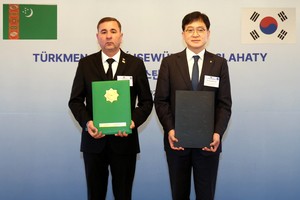
Daewoo E&C signs MOU with Turkmenistan to modernize Karakum Canal
Deal follows mineral fertilizer plant contract won last year Company eyes expansion into water infrastructure sector Chairman Jeong Won-ju moves to build ties across Central Asia Daewoo Engineering & Construction signed a memorandum of understanding with Turkmenistan's Water Resources Committee on Tuesday at the Korea-Turkmenistan Business Forum, held at Lotte Hotel in Sogong-dong, the company announced Wednesday. The MOU was signed on the sidelines of the first Korea-Central Asia Summit to strengthen bilateral cooperation and lay the groundwork for a modernization project covering approximately 250 kilometers of the lower Karakum Canal, in which Daewoo E&C is considering participation. The two sides also plan to explore cooperation opportunities on promising water resources and environmental projects within Turkmenistan. The Karakum Canal is the world's largest irrigation and water supply canal, stretching roughly 1,100 kilometers across Turkmenistan from east to west, originating at the Amu Darya River in the north, with a width of 25 to 30 meters. Completed in the 1960s, it has long played a vital role in supplying agricultural, residential and industrial water across the country. The need to modernize the canal for more efficient water management and stable supply has grown increasingly urgent in recent years. Daewoo E&C entered the Turkmenistan market for the first time in May last year when it won a contract for a mineral fertilizer plant in the country. The facility is designed to produce 350,000 tons of phosphate and 100,000 tons of ammonium sulfate annually, with completion scheduled for 2028. Building on that foothold, the company is actively exploring additional contracts in industrial infrastructure and construction in Turkmenistan. At the Korea-Turkmenistan Business Forum held during the Korea-Central Asia Summit, Daewoo E&C Chairman Jeong Won-ju met with President Serdar Berdimuhamedov to outline further project plans and seek the Turkmenistan government's cooperation. Jeong also attended a state dinner at Cheong Wa Dae and the Korea-Uzbekistan Business Forum during the summit, as part of broader efforts to build cooperative ties with multiple Central Asian nations. "This MOU is significant in that it lays the foundation for our entry into Turkmenistan's water resources and environmental infrastructure construction market," a Daewoo E&C official said. "We will draw on our civil engineering expertise and experience to support the successful execution of this project and continue expanding cooperation across a range of sectors." According to disclosures filed with the Financial Supervisory Service, Daewoo E&C posted consolidated sales of 3.99 trillion won ($2.97 billion) in the first half of this year, with operating profit of 487.9 billion won and net profit for the period of 363 billion won.
Sept. 16, 2026
MOST READ
- 1Hyundai Motor unveils all-new Tucson with bigger body, smarter tech after 6-year wait
- 2Flat sneakers are back: Why Nike is reviving a 55-year-old running shoe
- 3Pope Leo XIV declines French honors and banquet, accepts only private meeting with Macron
- 428 illegal sports streaming sites found operating freely despite repeated blocks
- 5What was Rachmaninoff's performance fee? A 1928 price list tells all
- 6Samsung Biologics union's show of force backfires at the bargaining table
-
WORLD

US warns of punishment for anyone enabling Iran's Strait of Hormuz toll scheme
-
INDUSTRY
Toyota union puts productivity first; Hyundai Motor union demands bigger share of profits
-
FINANCE

National Growth Fund to invest $531M in FuriosaAI, which rebuffed Meta's $800M takeover bid
-
INDUSTRY
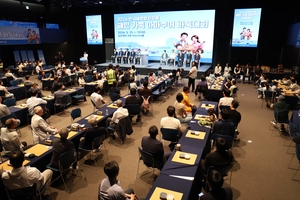
Korea Shipowners' Association holds amateur baduk tournament for Maritime Day