
- HOME
- REAL ESTATE
-
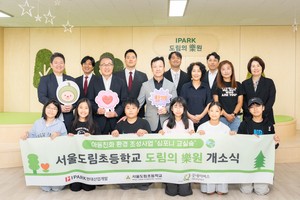
IPARK Hyundai Development creates eco-friendly classroom forest at Seoul elementary school
Opening ceremony held with Good Neighbors for Symphony Classroom Forest IPARK Hyundai Development, an affiliate of HDC Group, announced Monday that it has created a Symphony Classroom Forest — an eco-friendly green space for students — at Seoul Dorim Elementary School in Yeongdeungpo-gu, Seoul. An opening ceremony was held at the school Thursday, attended by Seoul Dorim Elementary School Principal Noh Jin-woo, Good Neighbors division head Jang Seong-gye and IPARK Hyundai Development manager Shin Wang-seop, among others. The Symphony Classroom Forest is part of a corporate social responsibility program that IPARK Hyundai Development runs to raise environmental awareness among the next generation and create a more pleasant learning environment. In partnership with Good Neighbors, the company transforms classrooms and unused spaces within schools into plant-filled, eco-friendly areas, helping students engage with nature in their daily lives and learn about the importance of environmental stewardship. "We created the classroom forest at Seoul Dorim Elementary School so that children can connect with nature in their everyday lives and naturally come to appreciate the environment," an IPARK Hyundai Development official said. "We hope it leads to hands-on experiences in environmental protection through activities where students tend and care for the space themselves." IPARK Hyundai Development previously established a Symphony Classroom Forest at Seoul Sinmok Elementary School in Yangcheon-gu, Seoul, in August. The company plans to open its final Symphony Classroom Forest of this year next month at Samgwang Elementary School in Yongsan-gu, Seoul. Meanwhile, the company changed its name from Hyundai Development to IPARK Hyundai Development in March and has been working to strengthen its housing brand. Its Iksan Busong Ipark development recently received the top residential culture service award at The Herald Business's "Home I Want to Live In 2026."
Sept. 14, 2026
-
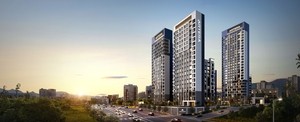
Kumho Engineering & Construction wins contract for first Artera complex in Suwon
Total construction cost 92.7 billion won; completion set for 2034 Kumho Engineering & Construction has been selected as the contractor for the Pajang Zone 1 housing reconstruction project in Suwon, Gyeonggi Province, in a deal worth about 92.7 billion won ($68.9 million). The company announced Monday that it had been chosen to carry out the Pajang Zone 1 housing reconstruction project in Jangan-gu, Suwon. The project calls for a residential complex of four buildings rising up to 28 above-ground floors over two basement levels, with a total of 258 units. The total construction cost stands at about 92.7 billion won. Groundbreaking is scheduled for February 2031, with completion targeted for February 2034. The new complex will carry Kumho Engineering & Construction's residential brand Artera, marking the brand's first entry into Suwon. The complex is tentatively named Artera Lumiere. The site sits near the Pajang interchange on the Suwon Northern Beltway and the Buk-Suwon interchange on the Yeongdong Expressway. A Buk-Suwon station on the Indukwon–Dongtan double-track railway line, set to open in 2029, is also planned near the complex. The complex is close to Pajang Elementary School and Dasol Elementary School, with Pajang Children's Park and Jeongja Culture Park within walking distance. The planned Buk-Suwon Techno Valley, a high-tech industrial complex, is also nearby. The win extends Kumho Engineering & Construction's recent run of reconstruction contracts. Last year the company secured the Dongsam Park Villa small-scale reconstruction project in Hang-dong, Guro-gu, Seoul, and in March signed a preliminary contract for the Gaeum Zone 3 reconstruction project in Changwon, South Gyeongsang Province. "This project marks Artera's first foray into Suwon," a company official said. "We will draw on our expertise in reconstruction projects and Artera's signature design to create a differentiated landmark complex." Meanwhile, Kumho Engineering & Construction has been drawing market attention amid growing expectations surrounding the government's plan to fast-track groundbreaking on a semiconductor cluster in the Honam region. Although the company's headquarters is in Seoul, its main office is in Naju, South Jeolla Province, making it one of the most prominent construction firms rooted in the Honam region. Its share price has surged sharply of late.
Sept. 14, 2026
-
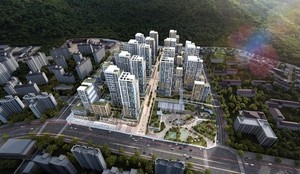
LH launches contractor selection for 3,376-unit Sanbon Zone 9-2 redevelopment
Bidding guidelines reflect residents' demands Project implementation approval targeted for 2027 Korea Land and Housing Corporation (LH) announced Monday that it has formally launched the contractor selection process for Zone 9-2 in Gunpo's Sanbon new town, a pilot integrated reconstruction district. Zone 9-2 in Gunpo Sanbon, planned for 3,376 units, was designated and publicly announced as a special redevelopment zone in December last year under the Special Act on the Improvement and Support of Aging Planned Cities. It has moved faster than any other LH-participating pilot district in the first-generation new towns, completing its redevelopment zone designation in December 2025 and its project operator designation in March 2026. Contractor selection will proceed through a transparent and competitive bidding process under the Act on the Improvement of Urban and Residential Environments. A residents' representative council will recruit candidates through competitive bidding, and landowners and property holders will vote around January 2027 to recommend a final contractor. LH, as the project operator, will then make the final selection and sign the contract. LH plans to pursue project implementation approval in 2027 without delay once contractor selection is finalized. "We actively communicated with the residents' representative council and reflected their needs as fully as possible in the bidding criteria — raising finishing material standards and drawing up tailored bidding guidelines," an LH official said. "We will do our utmost to ensure Zone 9-2 in Sanbon develops into a premium residential complex." Meanwhile, LH plans to supply 20,000 purchased rental housing units in central Seoul over the next three years. The units, counted on a move-in recruitment announcement basis, include 15,000 for youth and 3,400 for newlywed couples. LH said it will distribute the supply across multiple areas within Seoul to meet diverse housing needs.
Sept. 14, 2026
-
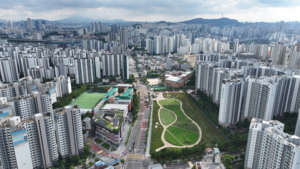
Gwangmyeong, Dongdaemun-gu close in on Seoul median as mid-tier price convergence deepens
Real estate platform Zigbang analyzes Land Ministry transaction data Seongbuk-gu, Dongdaemun-gu, Jungnang-gu narrow gap with Seoul median Gangnam 3 districts widen premium over city-wide average A "price alignment" trend is deepening in Seoul's mid- to lower-priced districts, with some non-Gangnam areas rising to the level of the city-wide median. Parts of Gyeonggi Province with strong transport links to Seoul — including Gwangmyeong and Yongin's Suji-gu — are also rapidly closing the gap with the capital. Real estate platform Zigbang compared the median actual transaction price per square meter of exclusive use area for apartments in January and August this year, using Ministry of Land, Infrastructure and Transport data. Seoul's city-wide median stood at 12.68 million won ($9,420) per square meter in January and held at the same level in August. August figures may be revised, however, as the statutory reporting deadline for transactions has not yet passed. Breaking down results by district, some non-Gangnam areas — including Seongbuk-gu, Dongdaemun-gu and Jungnang-gu — moved closer to the city-wide median. Seongbuk-gu's median rose from 11.46 million won per square meter in January to 12.6 million won in August, lifting its ratio against the Seoul median from 0.90 to 0.99 — meaning prices there went from about 90 percent of the Seoul level in January to nearly 99 percent by August. Dongdaemun-gu climbed from 12.18 million won to 13 million won over the same period, pushing its ratio from 0.96 to 1.03 and edging above the Seoul city-wide median in August. Gangseo-gu also rose from 12.39 million won to 13.36 million won, with its ratio advancing from 0.98 to 1.05. Jungnang-gu and Nowon-gu remained below the Seoul median but narrowed the gap. Jungnang-gu's median rose from 9.36 million won to 11.63 million won per square meter, lifting its ratio from 0.74 to 0.92. Nowon-gu climbed from 10.04 million won to 11.17 million won, with its ratio rising from 0.79 to 0.88. In already high-priced areas, however, the premium over the Seoul median widened further. Gangnam-gu's ratio rose from 2.41 to 2.69, Seocho-gu's from 1.68 to 1.95, and Songpa-gu's from 1.74 to 1.99. Seongdong-gu also climbed from 1.69 to 1.93. "Two distinct trends are playing out in Seoul simultaneously," said Kim Eun-seon, head of Zigbang's big data lab. "Some non-Gangnam areas that were relatively affordable have narrowed the gap with the city-wide median, while already expensive areas such as the Gangnam 3 districts and Seongdong-gu have seen their premium widen further." In Gyeonggi Province, Gwangmyeong and Yongin's Suji-gu posted the most notable gains relative to Seoul. Gwangmyeong's median rose from 11.1 million won per square meter in January to 12.97 million won in August, pushing its ratio against the Seoul median from 0.88 to 1.02 and edging above the city-wide figure. Suji-gu in Yongin also saw its median climb from 9.54 million won to 11.1 million won per square meter, with its ratio against Seoul rising from 0.75 to 0.88 — meaning prices there went from about 75 percent of the Seoul level to 88 percent. Areas already at or above Seoul levels continued to rise as well. Hanam's median increased from 12.95 million won to 14.48 million won per square meter, lifting its ratio from 1.02 to 1.14. Bundang-gu in Seongnam rose from 20.51 million won to 21.68 million won, with its ratio climbing from 1.62 to 1.71. Elsewhere in Gyeonggi Province, Dongtan-gu in Hwaseong moved from 0.75 to 0.77 of the Seoul median, Gwonseon-gu in Suwon from 0.50 to 0.55, and Osan from 0.33 to 0.41. While the degree of convergence varied by location, the broader pattern across Gyeonggi Province showed multiple price tiers narrowing the gap with Seoul. Kim said the market is now showing new signs of change. "The upward momentum that had been led by high-priced Gangnam-area properties is slowing or even reversing," she said. "This reflects a squeeze on purchasing power for expensive homes, as the accumulated burden of price gains has been compounded by interest rate increases, lending restrictions and tax changes." She added that strength is continuing in relatively affordable areas, and that rising jeonse prices could push more end-users toward buying. "The divergence in trends by region and price tier is likely to deepen further," she said. "How long these currents persist will determine the direction of price gaps going forward."
Sept. 14, 2026
-
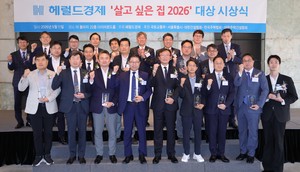
'Herald Business Home of the Year 2026' awards honor 15 builders
Ceremony held Friday; GS Engineering & Construction takes grand prize 15 companies recognized for advancing housing market, residential culture Fifteen housing construction companies that have contributed to improving residential environments in South Korea were honored at the Herald Business "Home of the Year 2026" awards. GS Engineering & Construction's "Dalseo Xi Zenique" took the grand prize, which carries the Ministry of Land, Infrastructure and Transport minister's commendation. The ceremony was held Friday at The Plaza hotel on Sogong-ro in Jung-gu, Seoul. Now in its 26th year, the annual event recognizes companies that have led residential culture by introducing new and creative living spaces. Winners are selected each year through a comprehensive evaluation that goes beyond traditional criteria such as brand, design, landscaping and residential welfare to also assess urban regeneration, advanced technology and platform innovation. Judging was conducted by a panel of experts formed in conjunction with the Ministry of Land, Infrastructure and Transport, the Korea Federation of Construction Associations, the Korea Housing Association and the Korea Housing Builders Association. Ministry of Land, Infrastructure and Transport First Vice Minister Kim I-tak attended in place of Minister Kim Yun-deok and presented awards at the ceremony. "If eco-friendliness, energy, design and community drew attention in the housing market back in 2008, smart technology and AI are now evolving apartment spaces," Kim said. He described the Herald Business "Home of the Year" as "a record that shows the evolution of our residential culture." He added that quality as experienced by the public is what matters most in housing policy, and pledged to address everyday inconveniences such as noise between floors. Lee Byeong-cheol, the Seoul Metropolitan Government's housing policy director, attended in place of Seoul Mayor Oh Se-hoon. "A home where citizens can feel secure and envision a better future is exactly what 'a home worth living in' should mean," Lee said. He said the city would support private housing supply through its long-term jeonse housing program, its evolved form known as Mirinaezip, the Youth Safe Housing program for young residents, and redevelopment and reconstruction projects that have been a recent focus. GS Engineering & Construction's "Dalseo Xi Zenique" was recognized for delivering a residential complex that represents the Dalseo-gu area of Daegu by combining the product competitiveness and differentiated design of the company's Xi residential brand. Last year, marking the brand's 22nd anniversary, GS Engineering & Construction shifted Xi's direction from a supply-oriented to a customer-oriented approach. "Dalseo Xi Zenique" scored highly for its strong location, transportation links and lifestyle infrastructure, as well as for enabling quick move-in for end-users through a post-construction pre-sale model. Yang Mun-seok, GS Engineering & Construction's public relations team managing director, said in his acceptance remarks that the company has put great effort into differentiated design and quality in pursuit of building "a home worth living in," and pledged to continue creating residential products that satisfy customers. The Seoul Residential Culture Grand Prize, awarded by the Seoul mayor and given to a company that has contributed to residential culture in Seoul, went to Lotte Engineering & Construction's "Ichon Le'El." The project was praised for introducing top-tier residential amenities befitting the reputation of the Le'El brand, which is being developed at key Seoul locations including Ichon, Cheongdam and Jamsil. Every unit type at "Ichon Le'El" is mid-to-large in size. The complex features a sky lounge with panoramic views of the Han River, an indoor swimming pool with three 25-meter lanes, a sauna, a fitness club and a private movie theater for residents. Kang U-yeong, site manager for Lotte Engineering & Construction's Ichon Le'El project, said in his acceptance remarks that the company had successfully completed several projects, including "Daechi Le'El," since launching the high-end Le'El brand, and that it recently completed "Cheongdam Le'El" and "Jamsil Le'El" while continuing to strive to provide residents with lasting satisfaction. The divisional grand prizes, carrying the Herald Business president's commendation, went to the following: best design to Hyundai E&C's "Hillstate Dowon Central"; best high-end residential brand to Posco E&C's "Ottiere Banpo"; best mixed-use residential to Daewoo Engineering's "Sihwa MTV Prugio The Ocean"; best lifestyle innovation brand to DL E&C's "e-Pyeonhansesang Dongtan Station Urbanone" and Kukdong Engineering & Construction's "Housestory"; best landscape design to Hanwha's construction division's "Hanwha Forena Jeju Edu City"; best residential value brand to Kumho Engineering & Construction's "Godeok New Town Atera" and BS Hanyang's "Miryang Sujain The First complexes 1 and 2"; best residential culture service to Jungheung Construction's "Gwangju Songjeong Jungheung S-Class Park View" and Ipark Hyundai Development's "Iksan Busong Ipark"; best residential welfare service to Booyoung Group; best urban regeneration innovation to Hoban Construction's "Gyeongsan Sangbang Park Hoban Summit complex 1"; and best proptech to Korea Asset Purchase's "Hedgehajji."
Sept. 14, 2026
-
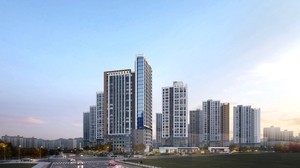
Hanwha Forena Jije Station to offer 1,098 units amid GTX extension hopes
Close commute to Samsung Electronics' Pyeongtaek campus; model home opens next month, move-in set for September 2029 Hanwha Corporation's construction division will launch pre-sales in October for Hanwha Forena Jije Station, a large-scale residential complex of more than 1,000 units in Segyeo-dong, Pyeongtaek, Gyeonggi Province. Situated within the Pyeongtaek Jije Station lifestyle zone — where residents can use Seoul Metropolitan Subway Line 1 and high-speed rail — the complex is also expected to benefit from expanded regional transit links, including a planned GTX extension. According to Hanwha Corporation's construction division Monday, Hanwha Forena Jije Station will rise on a site at 725 Segyeo-dong, Pyeongtaek, comprising 12 buildings with two below-ground and up to 27 above-ground floors, for a total of 1,098 units. The unit breakdown by exclusive use area is: 452 units of 84 square meters (Type A), 208 units of 84 square meters (Type B), 168 units of 84 square meters (Type C), 122 units of 84 square meters (Type D) and 148 units of 116 square meters (Type A). The 84-square-meter units account for more than 80 percent of the total supply. The complex sits along the corridor connecting central Pyeongtaek, Godeok International New Town and Brain City. Samsung Electronics' Pyeongtaek campus is also within roughly 5 kilometers of the complex, making it well-positioned to attract demand from employees seeking a short commute. Regional transit links centered on Pyeongtaek Jije Station continue to expand. The station currently offers access to Seoul Metropolitan Subway Line 1 and high-speed rail. The government is pursuing an extension of the GTX-A line from Dongtan Station to Pyeongtaek Jije Station — a project that conditionally cleared a central investment review by the Ministry of Interior and Safety last year and is now moving through follow-up procedures. An extension of the GTX-C line through Hwaseong, Osan and Pyeongtaek to Cheonan and Asan is also under consideration. Pyeongtaek Jije Station was also selected as the top site in a pilot program for future-oriented transit hubs that the Ministry of Land, Infrastructure and Transport launched in 2023. As plans advance to create a transfer hub integrating the existing rail network with GTX and other transport modes, the station is expected to grow into a major transit center connecting southern Pyeongtaek and southern Gyeonggi Province over the medium to long term. Road access is also strong. Via interchanges including Songtan IC and Anseong JC, residents can reach the Pyeongtaek-Jecheon Expressway and the Gyeongbu Expressway, providing connections to key destinations across the Greater Seoul area and the Chungcheong region. Everyday amenities are close at hand. E-mart Pyeongtaek, Costco Pyeongtaek, Traders Wholesale Club and Starfield Anseong are all accessible by vehicle. The Bijeon-dong commercial district and medical facilities are within the lifestyle zone, and schools including Jije Elementary School and Segyeo Middle School are nearby. All units are oriented primarily to face south, and the buildings are spaced to maximize distance between them. Landscaped areas will include a central plaza, a pet park, a children's playground and residents' fitness facilities. Planned community amenities include a fitness center, a group exercise room, a Pilates room, a golf practice range, a screen golf facility, a daycare and childcare center, a small library and a reading room. The unit layouts feature a circular floor plan to optimize interior circulation and storage. The 84-square-meter Type A units — the most numerous in the complex — are designed in a four-bay flat-slab configuration and will include a dressing room and a circular pantry. The complex will also feature a ceiling-mounted electric vehicle charging system called EV Air Station, developed by Hanwha Corporation's construction division, along with an elevator design selected for the 2026 Good Design Award. "Hanwha Forena Jije Station is a large complex where residents can enjoy everything the Jije Station lifestyle zone has to offer," said Jang Young-gi, pre-sales director at Hanwha Corporation's construction division. "We expect strong interest not only from Pyeongtaek but also from buyers in Dongtan, Suwon and Osan." The model home is scheduled to open next month, with move-in set for September 2029.
Sept. 14, 2026
-
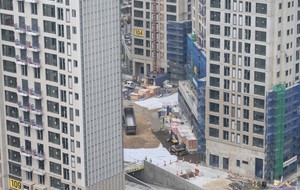
Hyundai E&C leads Seoul redevelopment ground-breakings, topping 10,000 units
6 of 25 active sites, 10,183 units — most among all contractors Project management capacity emerges as key differentiator Seoul aims to break ground on 310,000 units by 2031 Hyundai Engineering & Construction has the largest share of ground-breaking activity among contractors in Seoul's redevelopment and reconstruction pipeline this year, accounting for roughly one in three units under the city's active management. According to the Seoul Metropolitan Government, as of August, 25 redevelopment and reconstruction sites totaling 31,188 units had either broken ground or were actively pursuing ground-breaking. Of those, Hyundai E&C serves as contractor at six sites covering 10,183 units — the highest count by both number of sites and number of units among all contractors. Even after a contractor is selected for a redevelopment project, the path to ground-breaking requires clearing a series of hurdles: permits and approvals, management and disposal plans, resident relocation and demolition, and construction-cost negotiations. The larger the project, the more coordination is needed among the residents' association, local government and contractor, making the ability to shepherd a project from contract award through to actual construction a critical capability. As a result, the urban redevelopment market is increasingly judging contractors not only by annual contract wins or the scale of new orders, but by how reliably they convert secured projects into actual ground-breakings. Project management capacity is growing in importance, as prolonged delays raise the financial burden on association members and disrupt housing supply timelines. The Seoul Metropolitan Government is also stepping up oversight of the ground-breaking stage to accelerate housing supply through redevelopment projects. In August, the city reviewed progress at 11 redevelopment sites across eight districts targeting second-half ground-breakings, examining project-specific bottlenecks including permitting delays and relocation and demolition issues. Seoul plans to break ground on 310,000 units through redevelopment and reconstruction projects by 2031, while cutting the average project timeline — currently around 18 years — to a maximum of 12 years. The goal is to speed up the redevelopment process and bring forward housing supply. Against this backdrop, Hyundai E&C is pushing ahead with follow-on procedures at its existing project sites alongside pursuing new contracts. The company says it is drawing on experience accumulated at major Seoul redevelopment projects to manage permitting, relocation and demolition, and other stage-specific issues, with the aim of converting key projects into actual ground-breakings. "Redevelopment projects are long-term undertakings that require extensive coordination among stakeholders and multiple procedural steps — including permits, relocation and demolition — even after a contractor is selected," a Hyundai E&C official said. "We will leverage our accumulated redevelopment experience and project management capabilities to advance follow-on procedures at key sites without disruption, and contribute to a stable supply of housing."
Sept. 14, 2026
-
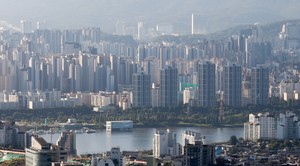
Seoul apartment land-transaction permit applications hit post-citywide-designation low in August
Down 66.1% from April peak of 8,896 cases Owner-occupancy waiver requests account for 4.5% of total The number of land-transaction permit applications for Seoul apartments fell into the 3,000-case range last month, marking the lowest monthly total since the citywide land-transaction permit zone designation took effect. Even as transaction activity continued to contract, the prices cited in permit applications kept rising, led by the northern Seoul districts and the Han River belt. The Seoul Metropolitan Government said Monday that 3,012 new land-transaction permit applications were filed for Seoul apartments in August — the lowest monthly figure since the city designated all of Seoul as a land-transaction permit zone in October last year. The August tally was down 1,606 cases, or 34.8 percent, from 4,618 in July. Compared with the year's peak of 8,896 in April, applications fell by 5,884 cases, or 66.1 percent. After peaking in April, monthly applications declined for four consecutive months: 6,011 in May, 5,277 in June, 4,618 in July and 3,012 in August. Since the citywide land-transaction permit system took effect in October last year through the end of August this year, cumulative applications totaled 55,990, of which 54,670, or 97.6 percent, have been processed. Analysts attributed the drop in applications to a combination of factors: the expiration of the capital-gains tax surcharge deferral for multi-home owners, rising financing costs following benchmark interest rate increases in July and August, and continued lending restrictions. The Aug. 3 tax reform package has yet to complete final legislative steps, including National Assembly review, deepening a wait-and-see mood among prospective buyers and further dampening transactions. Since May, the government has been progressively expanding the scope of owner-occupancy requirement waivers for homes with existing tenants, aiming to bring more listings to market and stimulate transactions. With applications continuing to fall, however, the transaction-boosting effect has so far fallen short of initial expectations. Owner-occupancy waiver requests in August totaled 135 cases, accounting for 4.5 percent of all applications — unchanged from the previous month's share. Applications declined across all districts. The seven Han River belt districts dropped 38.6 percent, from 1,023 cases in July to 628 in August, and the four southwestern Seoul districts fell by the same margin, from 913 to 561. The three Gangnam districts and Yongsan-gu declined 34.6 percent, while the 10 northern Seoul districts fell 31.4 percent. Northern Seoul's share of total applications rose to 48.8 percent from 46.4 percent the previous month, a gain of 2.4 percentage points. The Seoul Metropolitan Government said the northern districts did not see an increase in absolute terms, but their decline was smaller than in other areas, reflecting continued end-user demand in relatively more affordable neighborhoods. Even as transaction applications fell, prices continued to rise in some areas. The city-wide average price cited in Seoul apartment land-transaction permit applications rose 0.17 percent from the previous month in August, a sharp slowdown from the 1.41 percent gain recorded in July. By district group, the 10 northern Seoul districts rose 0.61 percent and the seven Han River belt districts gained 0.52 percent. In contrast, the three Gangnam districts and Yongsan-gu fell 0.34 percent, and the four southwestern districts dropped 0.99 percent. The Seoul Metropolitan Government said the decline in the Gangnam districts and Yongsan-gu reflected price corrections in some high-end homes amid concerns over a heavier tax burden, while the southwestern districts were weighed down by the strain of recent short-term price gains. The price-change rate for land-transaction permit applications published by the Seoul Metropolitan Government is calculated using Bayesian estimation applied to the declared transaction prices in permit applications filed during the month. It may differ from the Korea Real Estate Board's actual transaction price index, which is based on contract dates recorded in transaction reports.
Sept. 14, 2026
-
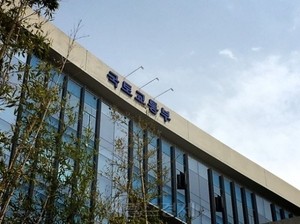
Ministry of Land holds 6th Digital Cadastre Day
Event highlights use of AI and new technologies The Ministry of Land, Infrastructure and Transport announced Monday that it will hold the "6th Digital Cadastre Day" ceremony Wednesday at the National Land Information Education Institute in Gongju, South Chungcheong Province, together with LX Korea Land and Geospatial Informatix Corp. About 300 people from the cadastral surveying industry and local governments are expected to attend. Digital Cadastre Day is an annual event held to mark the anniversary of the enactment of the Special Act on Cadastral Resurvey, review progress on the project and strengthen cooperation. The cadastral resurvey project is a core national infrastructure initiative aimed at correcting errors in paper cadastral maps drawn up during the Japanese colonial period and converting the entire country's land records into precise digital coordinates. At the ceremony, LX Korea Land and Geospatial Informatix Corp. will be redesignated as the "responsible implementing agency" for cadastral resurvey operations and presented with its designation certificate. Since the system was introduced in September 2021, the private cadastral surveying industry's participation rate in the project has expanded sharply from 5.9 percent to 51.0 percent, while the average project duration has been cut from about two years to between one year and one year and five months. AI technology has recently been applied in earnest to the cadastral resurvey, further boosting efficiency. Since last year, AI has been used to automatically extract surveying reference points, reducing administrative workload and costs. A "Cadastral Resurvey AI Short-form Contest" exploring the future of digital cadastre through new technologies will also be held that day. Jung Eui-kyung, director general of the Land and Urban Affairs Bureau at the ministry, said the government would "actively integrate new technologies such as AI and digital twins into the cadastral resurvey to better protect citizens' land property rights." Jung added that the ministry would "do its utmost to complete a digital land foundation that serves as a solid base for future mobility and smart cities."
Sept. 14, 2026
-

Seoul-Land Ministry talks on pause as Yongsan Park housing plan drifts
Third meeting between Oh Se-hoon and Kim Yun-deok shrouded in uncertainty Ministerial change adds new variable, pushing schedule back Decontamination costs, timeline and procedures remain unresolved Efforts to reach an agreement on housing supply at Yongsan Park have stalled after a planned third meeting between Ministry of Land, Infrastructure and Transport Minister Kim Yun-deok and Seoul Mayor Oh Se-hoon fell through — and a looming ministerial change is making a near-term compromise even harder to envision. The two sides met twice last month to discuss using the Yongsan Park site for housing. Since then, talks have been effectively frozen. The Land Ministry has signaled willingness to consider housing on park land, including the children's garden area, but Seoul City Hall has held firm in its opposition, citing the importance of green space and the site's historical significance. Despite the clear gap in positions, discussions had appeared to be gaining traction after Seoul proposed several alternative sites: the Tancheon Water Reclamation Center site in Gangnam-gu (about 393,000 square meters), the Capital Finance Command site near Gyeongidan (17,925 square meters), a Bank of Korea residential facility site (4,377 square meters) and a Ministry of Foreign Affairs parking lot site (3,979 square meters). With both sides agreeing on the need to increase housing supply, attention had been focused on whether they could reach a deal on volume and location. A new complication emerged when Hong Ji-seon, the Land Ministry's second vice minister, was nominated as the incoming minister on Aug. 30, throwing the prospects of a third meeting — which had been expected in early September — into doubt. The day after his nomination, Hong told reporters on his way into Government Complex Sejong that he would "consult sufficiently with Seoul City Hall in advance so that policy works on the ground." The remarks raised the possibility that any further meeting will be pushed back until after he is confirmed and takes office. His confirmation hearing, scheduled for Wednesday, is expected to draw scrutiny over his stance on housing supply at Yongsan Park. It is not only the bilateral meeting that has been delayed. A bill to amend the Special Act on the Creation of Yongsan Park, which had been set for a plenary vote on Sept. 3, was also postponed because consultations between Kim and Oh had not concluded. The bill centers on adjusting the green-space ratio for scattered parcels to be developed for mixed use, separate from the main park body, and has been put on hold. A National Assembly petition opposing the bill and calling for a halt to housing development at Yongsan Park had drawn more than 55,000 signatures as of Friday. With opposition mounting from Yongsan-gu, civic groups and Seoul City Hall alike, even the ruling party faces pressure against pushing the legislation through unilaterally. Concerns about the decontamination process at the Yongsan Park site present yet another challenge for the Land Ministry. Data obtained by the office of People Power Party lawmaker Seong Il-jong, a member of the National Assembly's National Defense Committee, from the Ministry of National Defense show that the Defense Ministry spent 576.2 billion won ($431 million) decontaminating 42 returned USFK bases from 2008 through the end of last month. Among them, Camp Kim — whose cleanup is set to be completed this month — stands as a cautionary example: the discovery of cultural artifacts during decontamination drove up both the duration and cost of the project, with total expenses reaching 30.6 billion won. Because the extent, degree and nature of contamination at Yongsan Park parcels have not been fully assessed, converting the land for residential use could trigger unexpected cost and time overruns. After their second meeting, Kim told reporters that Yongsan would not be included in the 73,000 additional housing units the government had already announced for delivery this year, suggesting the Land Ministry is unlikely to push aggressively on the Yongsan Park housing plan. Seoul City Hall, for its part, has indicated it may consider limited greenbelt use — but only if the government drops its plan to build housing at Yongsan Park — leaving open the possibility that the two sides could yet arrive at a third-way compromise.
Sept. 13, 2026
-
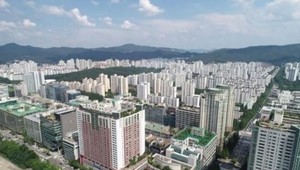
Bundang apartment prices surge 29.5% in a year as reconstruction hopes and new builds cross W2b mark
Apartment prices in Bundang-gu, Seongnam, Gyeonggi Province — once celebrated as the premier residential district in the greater Seoul area — are climbing sharply again. Older complexes are posting transaction prices hundreds of millions of won higher than a year ago on reconstruction expectations, while newer developments in the Pangyo area are setting record highs. According to Newsis and the Ministry of Land, Infrastructure and Transport's actual transaction price system, an 84-square-meter unit at Mujigae 2 Danji LG in Gumi-dong, Bundang-gu, sold last month for 1.53 billion won ($1.15 million) on the 10th floor. That marks a 420 million won increase from September last year, when the same floor area traded at 1.11 billion won on the fourth floor. An 84-square-meter unit at Hyojachon Hyundai in Seokhyeon-dong changed hands in February for 1.8 billion won on the eighth floor, then sold again last month for 1.95 billion won — a jump of more than 150 million won in just six months. Bundang is a first-generation new town built in the 1990s, and many of its complexes have passed the 30-year mark since move-in. As the government's aging planned-city redevelopment program gains momentum, analysts say expectations for improved living conditions through reconstruction and higher floor-area ratios are feeding into prices. Beyond reconstruction, some areas are also pursuing remodeling projects, and interest in redevelopment has spread across Bundang as a whole. The broader rally that began in Seoul and spread to key residential areas of Gyeonggi Province has also fueled Bundang's rise. As prices in major Seoul neighborhoods have climbed rapidly, buyers have shifted their attention to Bundang, which offers relatively lower price points while still providing easy access to Gangnam, strong school districts and well-developed lifestyle infrastructure. The recent price gains are not confined to older apartments slated for reconstruction. Comparatively newer complexes in the Pangyo area have also recorded price increases of hundreds of millions of won this year. An 84-square-meter unit at The Sharp Pangyo Forest 12 Danji in Daejang-dong sold in July for 1.45 billion won on the 15th floor, up 250 million won from 1.2 billion won on the third floor in January — a gain of roughly half a year. Also in Daejang-dong, an 84-square-meter unit at Pangyo Punggyeongchae Urbanity 5 Danji sold last month for 1.55 billion won, which is 147 million won above the 1.4 billion won paid for the same floor in January. At The Sharp Pangyo First Park in Baekhyeon-dong, an 84-square-meter unit on the ninth floor sold last month for 2.05 billion won ($1.53 million), crossing the 2 billion won threshold. That is 170 million won above the 1.88 billion won paid for a 13th-floor unit in January. Bundang's price surge stands out even on a national scale. Real estate platform Zigbang analyzed apartment market prices nationwide from September last year through August this year and found that Bundang-gu posted the highest gain of any city, county or district in the country, rising 29.5% over the 12-month period. That compares with a 10.6% increase in the preceding year, representing a sharp acceleration. Bundang was followed by Gwangmyeong in Gyeonggi Province at 28.4%, Dongjak-gu in Seoul at 25.3% and Suji-gu in Yongin, Gyeonggi Province at 24.8%, underscoring the strength of key metropolitan-area markets with good access to Seoul. Analysts say the rally, which began in Seoul's Gangnam corridor, is now spreading beyond Gangnam to non-Gangnam districts and key Gyeonggi areas. "Bundang has traditionally been one of the most sought-after areas among the first-generation new towns," said Yoon Ji-hae, head of the research lab at Real Estate R114. "Demand that has spilled over from Seoul is now focusing on Bundang." "The key trend is that the price rally that started in Seoul has spread to core areas of Gyeonggi Province," Yoon added. "When prices rise on the outskirts of Seoul, housing prices in key Gyeonggi areas tend to follow." Bundang's reconstruction fever is expected to remain a major variable in housing prices for now. When Seongnam solicited preliminary applications this year for the designation of special redevelopment zones under its aging planned-city program — with a target of 12,000 households — 50 zones comprising 66,037 households applied, roughly 5.5 times the planned capacity. Whether reconstruction expectations translate into actual project progress, the financial burden on buyers after a rapid price surge, and potential policy changes related to lending and redevelopment are all factors that will shape the direction of Bundang's housing market going forward.
Sept. 13, 2026
-
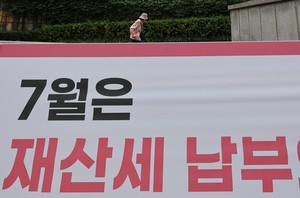
Over half of Seoul's property tax increase came from 3 Gangnam districts; Han River belt sees 43% jump in high-value homes
Three Gangnam districts account for 57% of Seoul's housing property tax increase 98% of homes with assessed value above 1.2 billion won concentrated in Han River belt Seoul's housing property tax revenue rose by more than 500 billion won ($374 million) this year, with more than half of the increase coming from the three Gangnam districts — Gangnam-gu, Seocho-gu and Songpa-gu. Apartment prices along the Han River belt also surged sharply, pushing the number of homes with an assessed value above 1.2 billion won up more than 40 percent from last year. Three Gangnam districts drive housing property tax surge Data submitted Sunday by the Seoul Metropolitan Government's tax division to the office of People Power Party lawmaker Kim Sang-hoon of the National Assembly's Finance and Economy Planning Committee showed that total housing property tax revenue in Seoul this year — including the property tax, urban area levy, local resource facility tax and local education tax — reached 3.9 trillion won, up 511.9 billion won, or 15.1 percent, from 3.38 trillion won last year. The three Gangnam districts stood out in particular. Property tax billed to the three districts this year totaled 1.72 trillion won, accounting for 44.1 percent of the city's total. The three districts saw a combined increase of 292 billion won, or 20.5 percent, from 1.43 trillion won the previous year — representing 57 percent of the city's overall tax increase. Breaking down the figures by district, Gangnam-gu collected 734.5 billion won in housing property tax this year, Seocho-gu 520.4 billion won and Songpa-gu 463.2 billion won — up 101.7 billion won, 101.3 billion won and 89 billion won, respectively, from the previous year. While some ultra-luxury apartments in the Gangnam area have seen distressed sales at prices around 1 billion won below recent highs, most properties still command prices far above last year's levels. An 85-square-meter unit at DH Firstier Ipark in Gaepo-dong, Gangnam-gu, set a new high of 3.835 billion won in April — surpassing the previous record of about 3.5 billion won set in March last year. An 84-square-meter unit at Ricenz in Jamsil-dong, Songpa-gu, similarly broke its own record, trading at 3.695 billion won in July, up from 3.6 billion won in November last year. Han River belt accounts for 97% of homes with assessed value above 1.2 billion won Homes with an assessed value above 1.2 billion won — the threshold for the comprehensive real estate tax for single-homeowner households — have spread well beyond the three Gangnam districts to encompass the entire Han River belt. That threshold is the basic deduction standard for the comprehensive real estate tax for single-homeowner households; applying this year's public housing price realization rate of 69 percent, it corresponds to a market price of about 1.74 billion won. The number of homes in Seoul with an assessed value of at least 1.2 billion won jumped from 465,663 last year to 670,308 this year, an increase of 204,645 units, or 43.9 percent. Of those, 648,593 — or 96.8 percent of the total — were located in the 11 Han River belt districts: Yongsan, Seongdong-gu, Gwangjin-gu, Mapo, Yangcheon, Yeongdeungpo, Dongjak-gu, Seocho-gu, Gangnam-gu, Songpa-gu and Gangdong-gu. The number of homes in the Han River belt with an assessed value of at least 1.2 billion won stood at 453,162 last year but jumped by 195,431 units, or 43.1 percent, in just one year. Analysts attribute the surge to a "price alignment" effect, as buyers push home values up to the maximum level eligible for mortgage loans under the government's tightened regulations — which cap total mortgage lending at 600 million won, with further restrictions of 400 million won for homes priced between 1.5 billion and 2.5 billion won and 200 million won for those above 2.5 billion won. By district, Dongjak-gu recorded the steepest rise among Han River belt districts, with the number of qualifying homes jumping from 5,949 to 18,434 — an increase of 12,485 units, or 210 percent. Seongdong-gu saw 21,988 more units, rising from 14,877 to 36,865, a gain of 148 percent. Gangdong-gu climbed 137 percent, from 18,081 to 42,893, while Gwangjin-gu jumped 108 percent, from 9,348 to 19,429. In Dongjak-gu's Heukseok-dong, a 66-square-meter unit at Hangang Hyundai traded at 1.65 billion won as recently as early last year, with some deals still below 1.7 billion won, but the unit set a new high of 2.25 billion won in January this year. In Seongdong-gu's Hawangsimnidong, a 59-square-meter unit at Centras traded at 1.6 billion won as recently as August last year but hit a new record of 2.1 billion won in June this year.
Sept. 13, 2026
-

South Korea's largest infrastructure diplomacy forum opens Tuesday
Ministry of Land, Infrastructure and Transport and Overseas Construction Association to host Global Infrastructure Cooperation Conference South Korea's largest infrastructure diplomacy forum, the Global Infrastructure Cooperation Conference (GICC) 2026, will open Tuesday for a three-day run at the Conrad Seoul hotel in Yeouido. Hosted by the Ministry of Land, Infrastructure and Transport and organized by the Overseas Construction Association of Korea, the GICC has been held annually since 2013 to foster infrastructure cooperation among the government, major overseas project owners, multilateral development banks, and construction and engineering firms, and to support Korean companies in expanding into overseas markets. Since its launch, the conference has drawn participants from 590 organizations across 90 countries and has facilitated roughly 450 international project partnerships. This year's conference is expected to draw about 500 participants, including ministers, vice ministers and chief executives from 32 countries — among them Kazakhstan, Bangladesh, Tajikistan, Thailand and Turkey — as well as domestic and international public institutions and construction and engineering firms. Under the main theme "Global Infrastructure Project Cooperation in the Age of AI," the conference will focus on how AI is reshaping the future of construction and transportation infrastructure and on practical avenues for cooperation. The event is being held in conjunction with the first Korea-Central Asia Summit and will include in-depth discussions on cooperation in transportation and infrastructure with key Central Asian nations. MOUs will also be signed to produce concrete follow-up outcomes across land, urban development and transportation sectors. The opening ceremony on the first day will lay out a vision for the future of the global construction industry driven by AI. Opening remarks by Han Man-hee, chairman of the Overseas Construction Association of Korea, and a welcoming address by Land, Infrastructure and Transport Minister Kim Yun-deok will be followed by two keynote presentations: one on how AI and technological innovation are transforming the global construction market and strategies for the future, by Jeff Rubenstone, deputy editor of Engineering News-Record; and another on the convergence of AI and global infrastructure and the direction of cross-industry cooperation, by Hwang Tae-hwan, executive vice president of Samsung Electronics. Ministers from participating countries will discuss strategic cooperation frameworks, while an AI and energy infrastructure seminar will explore strategies for building AI data centers and managing large-scale energy transitions. Major South Korean institutions taking part include Korea National Railway, Korail, Korea Expressway Corporation, Incheon International Airport Corporation, Korea Land and Housing Corporation and Korea Overseas Infrastructure and Urban Development Corporation. Multilateral development banks attending to support overseas investment and development projects include the World Bank, the Asian Development Bank, the Inter-American Development Bank, the Central American Bank for Economic Integration, the European Bank for Reconstruction and Development and the Asian Infrastructure Investment Bank. "The spread of AI technology is ushering in a shift in the global infrastructure market toward infrastructure that integrates advanced technology and services," Minister Kim said. "I hope that through this GICC, Korea — which has built up technology and experience in smart cities, intelligent transportation systems and other fields on the strength of its world-class ICT capabilities — can establish itself as a global partner that meets each country's infrastructure needs."
Sept. 13, 2026
-
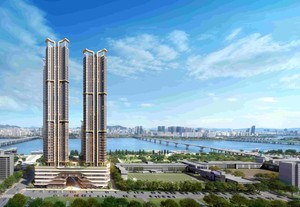
Samsung C&T wins W512.2b Yeouido Mokhwa apartment reconstruction contract, proposes 'Raemian Y'nity'
Community facility of 3,746 square meters and landscaped space of 2,640 square meters planned Samsung C&T's construction division has won the contract to rebuild the Mokhwa apartment complex in Yeouido, Yeongdeungpo-gu, Seoul, in a project valued at about 512.2 billion won ($383 million). Samsung C&T announced Sunday that it had been selected as the contractor for the Yeouido Mokhwa apartment reconstruction project. The reconstruction association held a general meeting Saturday and passed a resolution naming Samsung C&T as the contractor. The project will redevelop a site at 30 Yeouido-dong, Yeongdeungpo-gu, Seoul, into a complex of three buildings with 49 above-ground floors and seven below-ground floors, comprising 420 units and ancillary facilities. The construction cost stands at about 512.2 billion won. Samsung C&T has proposed naming the new complex "Raemian Y'nity," combining "Y" for Yeouido, "Dignity" to evoke prestige, and "Infinity" to suggest limitless value. All 420 units are designed to offer Han River views. Individual units will feature two- or three-sided open floor plans as well as panoramic layouts. The community facility will span 3,746 square meters and include a lounge and a riverside terrace overlooking the Han River. A residents-only landscaped area of about 2,640 square meters, connected to Han River Park, will also be created using the podium rooftop and pilotis spaces on each building. "The Yeouido Mokhwa site is a rare development that captures the value of both the Han River and Yeouido," a Samsung C&T official said. "We will bring together our differentiated design capabilities and supertall-building technology to create a residential masterpiece that grows more brilliant with time." Meanwhile, Samsung C&T first entered Yeouido's redevelopment market last year when it won the contract for the Daegyo apartment reconstruction project. Securing the Mokhwa contract further expands the Raemian brand's footprint in the area. The company is also pursuing the Shibum apartment project — Yeouido's largest reconstruction site — having been the sole bidder in last month's contractor selection tender.
Sept. 13, 2026
-
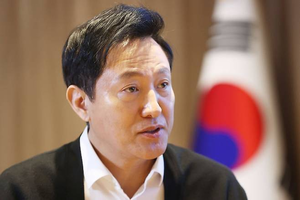
Seoul mayor calls for full overhaul of real estate policy as apartment prices mark record 86-week rise
Cumulative gain of 14.73% surpasses Moon, Roh governments; outer-district prices lead surge Seoul Mayor Oh Se-hoon called Sunday for a sweeping review of the government's real estate policy, saying Seoul apartment prices have risen for 86 consecutive weeks — surpassing the longest streak recorded under the Moon Jae-in administration. Oh made the remarks on his Facebook page, saying Seoul apartment prices had climbed for 86 straight weeks, breaking the previous record of 85 weeks set under the Moon government. "What is even more serious is the intensity of the rise," he said. He said the cumulative monthly increase in Seoul apartment sale prices during the first year of the Lee Jae Myung administration stood at 14.73 percent, far exceeding the 11.68 percent recorded under the Roh Moo-hyun government and the 9.41 percent under Moon. "The duration of the rise is the longest on record, and the pace of price increases in the early days of this administration has already surpassed those of past governments," he said. Oh said the surge was particularly pronounced in non-Gangnam areas and outer districts, beyond the traditional strongholds of Gangnam, Seocho and Songpa-gu. He said Seoul apartment sale prices rose an average of 3.5 percent between June and August, but Dongdaemun-gu climbed 5.8 percent, Geumcheon-gu 5.4 percent, Dobong, Gangseo and Gangdong-gu 4.7 percent, and Nowon-gu 4.3 percent. "A so-called 'price-leveling' phenomenon is becoming increasingly visible, centered on non-Gangnam and outer areas of Seoul," he said. Oh said jeonse prices followed a similar pattern. While the Seoul average rose 3.5 percent over the same period, Seongbuk-gu climbed 6.0 percent, Jungnang-gu 5.5 percent, Nowon-gu and Guro-gu 5.0 percent, Gangbuk-gu 4.8 percent, and Seodaemun-gu 4.7 percent. "Even jeonse prices are far outpacing the Seoul average in areas where working-class residents and younger generations tend to live," he said. Oh attributed the trend to loan regulations and tax policy. He said tightening lending rules had suppressed demand in central areas, pushing it toward lower-priced outer districts and ultimately driving up both sale and jeonse prices there at the same time. He criticized the government's approach as one fixated on owner-occupancy and tax-based controls, saying the policies had failed to rein in prices and instead lifted the price floor across all of Seoul by one notch. Oh said newlyweds and young people who had hoped to buy their first home in more affordable outer parts of Seoul were "facing frustration once again before a broken housing ladder," while retirees who had spent decades in their neighborhoods were worried they might have to leave because of the tax burden. He warned that the government would be making a serious mistake if it focused only on signs that price growth in parts of Gangnam had slowed. "We need to look at the full picture — whether young people are being priced out of Seoul, whether families raising children can stay in their neighborhoods, and whether retired parents are being forced out of homes they have lived in their whole lives because of taxes," he said. "You cannot claim to have stabilized housing prices while pushing people out of their homes," Oh said, calling on the government to conduct a full review of real estate policy across all three pillars: supply, lending and taxation.
Sept. 13, 2026
-
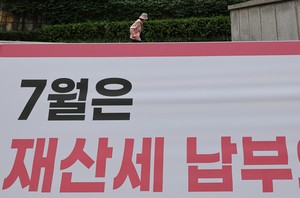
Seoul homeowners paid W500b more in property taxes this year as high-end levies jump 42%
Seoul housing property tax reaches 3.9 trillion won, up 15% Tax on homes valued below 900 million won falls 11% Rising prices push heavier burden onto high-end properties Seoul homeowners paid more than 500 billion won ($374 million) more in property taxes this year, with the bulk of the increase concentrated among homes with a publicly assessed value exceeding 1.2 billion won. Tax revenue from that high-end segment jumped more than 40 percent in a single year, while collections from lower-valued properties actually declined — a shift driven by a sharp rise in apartment assessed values following last year's surge in Seoul home prices. Data submitted by the Seoul Metropolitan Government's tax division to People Power Party lawmaker Kim Sang-hoon of the National Assembly's Finance and Economy Planning Committee showed that total housing property tax revenue in Seoul reached 3.9 trillion won this year, up 511.9 billion won, or 15.1 percent, from 3.38 trillion won last year. The figure combines the base property tax, the urban area levy, the local resource facility tax and the local education tax. Of those, the base property tax alone rose 319.3 billion won, or 17.6 percent, from 1.82 trillion won last year to 2.14 trillion won this year. High-end homes with a publicly assessed value above 1.2 billion won accounted for a disproportionate share of the increase. Tax collected from that segment rose 668.8 billion won, or 42.2 percent, from 1.59 trillion won last year to 2.25 trillion won this year. The 1.2 billion won threshold is the standard basic deduction for the comprehensive real estate holding tax for single-home households; applying this year's apartment assessment realization rate of 69 percent, it corresponds to a market price of roughly 1.74 billion won. By contrast, tax collected from homes assessed at 1.2 billion won or below fell 156.9 billion won, or 8.7 percent, from 1.8 trillion won to 1.64 trillion won over the same period. The share of total tax revenue attributable to properties above the 1.2 billion won threshold also rose 11.0 percentage points, from 46.8 percent last year to 57.9 percent this year. The same pattern appeared in the number of taxable cases. The total number of Seoul housing property tax assessments edged up just 56,554 cases, or 1.5 percent, from about 3.87 million last year to about 3.93 million this year. Assessments on properties above 1.2 billion won, however, jumped 204,645 cases, or 43.9 percent, from 465,663 to 670,308. The share of all assessments accounted for by properties above 1.2 billion won climbed from 12.0 percent to 17.1 percent. Conversely, assessments on properties at or below 1.2 billion won fell 148,091 cases, or 4.3 percent, from about 3.41 million to about 3.26 million. The shift reflects the rise in publicly assessed values that followed last year's climb in Seoul apartment prices. The Ministry of Land, Infrastructure and Transport finalized and published official assessed values for apartments nationwide in April, showing an average increase of 9.13 percent, with Seoul posting the steepest gain among all cities and provinces at 18.60 percent. The three Gangnam-area districts of Gangnam, Seocho and Songpa recorded an average assessed-value increase of 24.7 percent. Eight Han River-adjacent districts — Seongdong, Yangcheon-gu, Yongsan, Dongjak, Gangdong, Gwangjin, Mapo and Yeongdeungpo — rose an average of 23.13 percent. Analysts say the surge pushed a significant number of homes previously assessed below 1.2 billion won into the higher bracket, swelling the count of high-end taxable properties. "Last year, ultra-high-end homes in Gangnam and Seocho saw the biggest price gains, while mid- and lower-priced homes on the outskirts of Seoul rose comparatively little," said Woo Byung-tak, a senior specialist at Shinhan Premier Pathfinder. "With a progressive tax-rate structure on top of that, the assessed-value increases for high-end homes stood out sharply in this year's property tax revenue." Property tax is levied each year on homeowners as of June 1. The tax base is calculated by applying a fair market value ratio to the publicly assessed price, and the applicable rate is then determined by the tax-base bracket. This year's fair market value ratio is 60 percent for general housing; single-home households receive a ratio of 43 to 45 percent depending on their assessed value. Single-home households are also eligible for a separate preferential tax rate. Under current local tax law, homes assessed at 900 million won or below receive a rate 0.05 percentage point lower than the standard rate in each bracket. Homes assessed above 900 million won are excluded from that preferential rate. The reduced fair market value ratio benefit is separate, however, meaning single-home households with an assessed value above 900 million won still receive the 45 percent ratio. Adding up the figures for properties assessed at 900 million won or below, tax revenue in that segment fell 146.8 billion won, or 10.8 percent, from 1.36 trillion won last year to 1.22 trillion won this year. The number of assessments in that bracket also dropped 177,299 cases, or 5.6 percent, from about 3.14 million to about 2.96 million. Some analysts expect the pattern to shift next year as this year's Seoul price gains have spread to outlying areas and mid- to lower-priced neighborhoods. "High-end homes will still carry a heavier tax burden next year, but rather than being as heavily concentrated at the top as this year, mid- and lower-priced homes are likely to account for a larger share of the property tax increase," Woo said.
Sept. 13, 2026
-
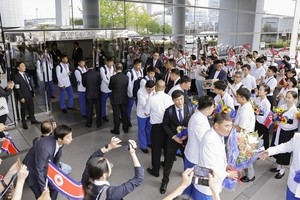
North Korea asked South Korean official to lend boats ahead of Asian Games
North Korea's Olympic Committee reached out directly to a South Korean official to borrow competition boats ahead of the canoe events at the 2026 Aichi-Nagoya Asian Games, according to sources. According to Yonhap, a North Korean Olympic Committee official recently sent an email in English to Kim Eun-seok, secretary-general of the Korea Canoe Federation who also serves as secretary-general of the Asian Canoe Federation, asking to borrow two boats for canoe sprint events. Countries competing in canoe events at the Asian Games typically rent equipment through the local organizing committee to avoid the hassle of transporting boats. North Korea, however, contacted Kim directly rather than going through official organizing committee channels. As a member of the Asian Canoe Federation, North Korea had been paying membership dues and was aware of Kim's South Korean nationality. Analysts say the outreach reflects ties the two Koreas' canoe communities built on the international stage. Kim led the formation of the inter-Korean unified canoe team on the ground at the 2018 Jakarta-Palembang Asian Games. That team won gold in the women's 500-meter dragon boat event — the first time a unified Korean team had claimed a gold medal at an international multi-sport competition. North Korean women's athletes Cha Eun-young and Jeong Ye-seong, both registered for this year's Games, were key members of that gold-medal squad. North Korea is also competing in a summer Asian Games held in Japan for the first time, a factor analysts cite as background. North Korea either did not participate or was ineligible to send a delegation to the 1958 Tokyo and 1994 Hiroshima games. With no established communication channel to the local organizing committee, Pyongyang turned to a past connection to resolve the practical matter. However, South Korean law prohibits unauthorized contact with North Korean nationals, so Kim did not reply directly. Instead, acting in his capacity as a senior Asian Canoe Federation official, he forwarded North Korea's request to the Aichi-Nagoya Asian Games organizing committee. The organizing committee accepted the request and agreed to lend North Korea two Plastex sprint canoes.
Sept. 12, 2026
-

Forced auction sales of Greater Seoul homes surpass last year's full total through August
10,580 cases in Greater Seoul through August, surpassing last year's annual total 8 in 10 forced-auction transfers nationwide concentrated in Greater Seoul Trend most pronounced in villa-dense areas such as Gangseo-gu and Michuhol-gu The number of collective residential buildings — apartments, row houses, officetels and similar properties — sold through forced auctions and transferred to new owners in the Greater Seoul area has surged this year, driven by landlords' debt problems. The tally through August has already surpassed last year's full-year total, reflecting the delayed fallout from the "villa king" scandals of 2022, in which tenants who lost their jeonse deposits pursued auction proceedings that have only now resulted in completed sales and ownership transfers. According to court registry statistics, 10,580 collective buildings in the Greater Seoul area had ownership-transfer registrations filed after forced auction sales in the first eight months of this year — already exceeding last year's full-year figure of 10,328. Nationwide, 13,224 such filings were recorded over the same period, approaching last year's total of 13,445. A forced auction is typically initiated when a tenant who has not received their jeonse deposit back obtains a court ruling and puts the landlord's property up for auction. Once the property is sold through the auction process, a registration transferring ownership to the winning bidder is filed. Forced auction registration filings were heavily concentrated in the Greater Seoul area, which accounted for 80 percent of the national total in the first eight months of this year. The breakdown by region was Seoul with 4,144 cases, Incheon with 3,302 and Gyeonggi Province with 3,134. In 2025, Incheon and Gyeonggi Province recorded 2,862 and 3,067 cases, respectively, for the full year — figures that both regions have already surpassed in just eight months this year. Seoul is also on pace to exceed its 2025 annual total in the near term. Analysts attribute the surge to the delayed consequences of underwater jeonse contracts that proliferated during the real estate boom. In 2021 and 2022, jeonse deposits soared alongside sale prices, leading to a large number of contracts — particularly for villas — where the deposit-to-price ratio was dangerously high. When interest rate hikes and a real estate downturn sent home prices sharply lower, the "jeonse fraud" problem emerged: landlords could not return deposits even after selling their properties. The 2022 "villa king" scandal compounded the problem, causing the volume of distressed properties to snowball. The villa kings exploited a zero-equity gap-investment scheme — simultaneously signing lease and sale contracts — to acquire hundreds or even thousands of villas without any capital of their own, effectively pocketing tenants' jeonse deposits. Yang Ji-young, a senior adviser at Shinhan Premier Pathfinder, said forced auctions take a long time to show up in the data because they follow a lengthy chain of events — lease expiration, failure to return the deposit and a court order to register the tenancy. "Not all of these cases can be attributed to jeonse fraud, but the indicators are now appearing with a lag in Greater Seoul areas with high concentrations of row houses and multi-family homes," she said. Another contributing factor is the Korea Housing and Urban Guarantee Corporation's more active role in resolving properties affected by jeonse fraud, which has accelerated the clearing of distressed inventory. At the district level, 194 ownership-transfer registrations were filed in Seoul's Gangseo-gu in August alone. Other villa-dense areas also recorded high numbers, including 137 in Incheon's Michuhol-gu and 80 in Bucheon's Wonmi-gu. The Greater Seoul area's share of the national total has also grown. While the nationwide figure rose from 4,917 cases in 2021 to 13,445 in 2025, the Greater Seoul area's count climbed steeply from 2,314 to 10,328 over the same period. This year, 10,580 of the 13,224 national cases were in Greater Seoul. The Greater Seoul area's share dipped slightly from 52.06 percent in 2022 to 51.69 percent in 2023, then jumped to 67.84 percent in 2024. It rose further to 76.81 percent in 2025 and has reached 80 percent on a cumulative basis through August this year. Lee Ju-hyun, a senior researcher at GG Auction, said the concentration reflects both the sheer volume of listings in Greater Seoul and the fact that ownership transfers have been relatively less smooth outside the region due to weaker buyer demand. The number of collective buildings with forced-auction commencement registrations — a leading indicator of future ownership transfers — also remains high. Such a registration marks the court's formal initiation of auction proceedings on a property; if a sale is completed, ownership passes to the winning bidder. The nationwide count of these filings rose from 23,681 in 2022 to 38,525 in 2025, while the Greater Seoul area's figure nearly doubled over the same period, from 13,803 to 26,929. Experts expect the fallout from jeonse market instability to persist, with prolonged high interest rates adding further pressure. Yang said that if high rates continue for an extended period, landlords' rising interest burdens could increase the likelihood of defaults. Lee also noted that, as in the past, a rise in interest rates inevitably leads to more auction cases.
Sept. 12, 2026
-

'Stop sitting on land, start building' — developers to get levy waiver for breaking ground by end of next year
Ruling party files bill to amend development-profit recovery law Levy exemption part of Aug. 13 housing supply package Experts warn supply impact may fall short The government and ruling party are pushing to exempt developers from development-profit levies if they break ground on residential projects by 2027. The measure is designed to accelerate housing supply and is expected to prompt developers to rush construction starts in a bid to maximize returns. Some analysts, however, doubt the policy will deliver a meaningful direct boost to supply. Full levy waiver for residential ground-breakings through next year; 50% cut through 2028 Eighteen lawmakers of the Democratic Party of Korea filed an amendment to the Development Profit Recovery Act on Friday, the National Assembly said. Under the bill, development levies would be waived entirely for residential projects that break ground by 2027, while projects beginning construction by 2028 would receive a 50% reduction — both as temporary relief measures. The bill is part of the government's Aug. 13 housing supply package, under which the Ministry of Land, Infrastructure and Transport pledged a range of incentives to help developers accelerate construction starts. The development levy, introduced in 1990 to recapture land-value gains, has been subject to periodic temporary reductions depending on housing supply conditions. With ground-breakings now deemed critically insufficient, the relief measures are set to take effect from next year. Under the Development Profit Recovery Act, the types of projects subject to the levy include residential land development — including housing complex development — industrial complex development, tourism complex development, urban development and regional development as well as urban environment improvement projects, transportation and logistics facility site development, and sports facility site development. Of these, the exemption applies to projects building detached houses, apartment buildings and quasi-residential units under the Housing Act. Redevelopment and reconstruction projects under the Act on the Maintenance and Improvement of Urban Areas and Dwelling Conditions are not included, though some redevelopment projects classified as urban environment improvement projects may still qualify. The bill's broader aim is to lower the levy burden across housing projects and speed up construction starts. "The target is private-sector sites where land has been prepared for apartment development but construction has not started," a Ministry of Land, Infrastructure and Transport official said. "The intent is to stimulate supply on idle land that is just sitting there." Experts say ground-breaking threshold may limit supply impact While the government and ruling party plan to push the bill through to accelerate housing supply, industry observers say levy relief alone has inherent limits as a supply driver. They point out that the main causes of delayed construction starts in the private sector — rising construction costs and difficulty securing project financing — would not be addressed by development levy cuts alone. Seong Jung-tak, a professor at Kyungpook National University School of Law, said the measure "is expected to have a positive effect in bringing forward ground-breakings for private projects that are on the borderline of viability." He added, however, that "development levies are in principle assessed and imposed after a project is completed, so this is not a policy that lowers the immediate costs of land acquisition, project financing or construction." Under the current law, the levy rate is set at either 20 percent or 25 percent of development profit, depending on the type of project. If the bill passes, developers who break ground next year would be exempt from the levy entirely, while those starting construction in 2028 would see their rate cut to 10 percent or 12.5 percent. Some observers also raise concerns that using ground-breaking as the qualifying threshold could lead to token construction starts that never translate into actual housing supply. Questions about post-project oversight — including whether levies could be reimposed on projects that suspend construction for extended periods or revise their plans after receiving the reduction — have also emerged as key issues. "There is no guarantee that the savings from the levy reduction will be passed on through lower pre-sale prices or expanded supply," Professor Seong said. "In areas with constrained supply, the anticipated benefit may be priced into land values in advance, with the gains going to landowners rather than buyers."
Sept. 12, 2026
-

'I knew the place was headed for auction — and moved in anyway': How losing W10m made one man a W1.7b homeowner
From North Gyeongsang Province to Seoul, starting out in a studio in Eunpyeong-gu Delayed residency registration cost him his entire deposit in a foreclosure Years of studio-hopping ended when he met a girlfriend who saved nearly everything she earned For 15 years I bounced around studios and one-and-a-half-room flats in Seoul. It felt completely hopeless. You want to know how I finally found a way out? Kang Jae-hyuk (a pseudonym), a deputy manager living in an apartment in Seoul's Seongdong-gu, moved to the capital 20 years ago after graduating from high school in North Gyeongsang Province to attend university. He began his Seoul life in a studio on the city's outskirts and, two years ago, finally bought a home of his own, where he now lives with his wife and son. How did a young man who arrived in Seoul alone manage to purchase an apartment now worth around 1.7 billion won ($1.27 million)? When Kang enrolled in university in 2006, his first home was a studio near Nokbeon Station in Eunpyeong-gu — a 10 million won deposit with 250,000 won in monthly rent. Despite being in a transit-oriented area, the place was cheap for a reason: it was under foreclosure proceedings. Kang's father, who had a keen interest in real estate, knew this and deliberately had his son sign the lease — on the condition that Kang register his residency without fail. Absorbed in university life, Kang kept putting it off, telling himself he could always do it later. "My parents scraped together the deposit and monthly rent for me, and I was still completely careless about it," he said. "In the end, it blew up in my face." A 20-year-old college student who skipped residency registration — and lost everything A winning bidder eventually emerged from the foreclosure auction. "You'll need to vacate the unit." As a tenant, Kang had no choice but to leave. Under Korea's Housing Lease Protection Act, a tenant who meets both the occupancy and residency-registration requirements can protect their deposit. Kang had never registered his residency, which meant he lacked the legal standing to assert his rights against the new owner. He was also ineligible for the small-tenant priority repayment scheme — a protection that allows tenants to reclaim their deposit ahead of creditors such as banks — and so lost the 10 million won his parents had struggled to put together. It was, by his own account, the worst scolding of his life. Along with the reprimand, his father left him with a piece of advice he would never forget: "You have to understand the rules to protect what you have." "Son. From what I've seen, you have no sense of money. If you can't develop that yourself, you need to keep someone by your side who does. Don't forget that." Kang moved out and into another studio, this time in Jongno-gu — a 10 million won deposit and 400,000 won a month. It was a quiet, 26-square-meter space near Gyeongbokgung Palace. After living there for about a year, he completed his military service and had to find a new place again. His younger brother happened to be moving to Seoul around the same time, so in 2010 the two moved together into a two-room villa in Gwanak-gu on an 80 million won jeonse. Their parents helped out once more. The living conditions left much to be desired — the walls were so thin that the neighbors' arguments came through as if broadcast live. Having grown up in relative comfort in an apartment back home, Kang missed that kind of life more with every passing year in studios and villas. But the reality was unforgiving. His best option was to focus on his studies and hold onto the hope that landing a job after graduation would finally let him live somewhere bigger and more comfortable. Jongno, Mapo, Yeongdeungpo — the studio years go on In 2014, Kang landed his first job and moved into an officetel in Mapo-gu — a 20 million won deposit and 600,000 won a month in rent. He had chosen a transit-oriented location to cut down on his commute, and the price reflected it. For the first time, he was paying his own rent. His starting salary was about 2.8 million won a month. With management fees on top of rent eating up nearly 30 percent of his income, saving more than 1 million won a month was a stretch. "This isn't working. I need to switch to jeonse." When his Mapo officetel lease expired in 2016, Kang found a 120 million won jeonse studio in Yeongdeungpo-gu and moved in. He used the 40 million won his parents had contributed during his university years and took out an additional 80 million won loan to cover the deposit. His housing costs fell by nearly half, but Kang was still spending close to 70 percent of his paycheck. "The cost of living in Seoul is just so high, and I was never the type to scrimp," he recalled. "I couldn't even imagine a life without a credit card. Bitcoin was all the rage at the time, so I tried all sorts of investments — but nothing ever accumulated in my account." The turning point came in 2019, with the onset of COVID-19. In March 2020, the Bank of Korea slashed its benchmark interest rate in response to the pandemic, ushering in what became known as the near-zero-rate era. Borrowing 400 million won cost as little as 250,000 won a month in interest — cheaper than renting a studio — and suddenly it was possible to live in a brand-new apartment on jeonse for less than the price of a one-room rental. People around Kang began making the move to jeonse in newly built apartments. "I can't keep living in studios. I want to live in an apartment too." But having once lost a deposit, Kang approached the situation differently from those around him. He had been through a foreclosure, a lease expiry and five moves. What mattered to him more than cutting his immediate housing costs was finding a lease that would let him stay put for at least four years. "I started studying systems like apartment subscriptions and came across publicly supported private rental apartments — where rent increases are capped at 5 percent and you can stay for up to eight years," Kang said. "People around me told me I was crazy to pay monthly rent when interest rates were basically zero, but I believed that if you use the right systems well, you eventually get the chance to build real assets." Armed with that knowledge, Kang applied for a publicly supported private rental unit at Gochuk Ipark in Guro-gu — a 64-square-meter apartment — and was selected. The complex, built by Ipark Hyundai Development on the former site of Seoul Southgate Detention Center, rises up to 45 stories and contains 2,205 units. The special supply quota for young applicants — just nine units of the 64-square-meter Type A — drew a competition ratio of 29.89 to 1. In October 2022, Kang moved in under a contract requiring a 227 million won deposit and 420,000 won in monthly rent. He put together the funds using 40 million won from his parents, about 70 million won he had saved over seven years of working, and a jeonse loan at around 2 percent interest for the remainder. "I've got a place to live for eight years!" Even at that point, Kang had no intention of buying a home. "After paying housing costs, living expenses, transportation and all the other fixed costs, I couldn't save more than 30 percent of my income," he said. "I was just so happy that 15 years of studio living was finally over — I was basically in 'YOLO' mode, buying expensive appliances and getting ready to settle in." Kang's plan to stay in the private rental apartment for nearly eight years would change about two years later. He met someone who would alter the course of his life: the woman who is now his wife, Park Bo-ram (a pseudonym). Park was living with her family and had been channeling more than 70 percent of her income into savings and investments. "My girlfriend at the time said, 'Performance bonuses are just irregular savings,' and it hit me like a truck. When I got a bonus, I'd go shopping or take a trip abroad — she was living a life that was the complete opposite of mine." "When I suggested we go to a pool villa, she would talk me into a cheaper, more sensible place to stay," Kang said. "She was my ideal type in terms of looks, but she also fit my father's advice to a T — find someone with a solid sense of money." The following year, Kang proposed to Park. She accepted with a smile — and then said something he had not expected. "Oppa, bring me a sheet of A4 paper and a pen. There are some things we need to go over." It was the moment Kang's life changed once again. Kang, who once did not even know when his Netflix subscription renewed, found himself dreaming of marriage after meeting a girlfriend with an iron grip on her finances. Kang, who leaned heavily on loans, and Park Bo-ram, a dedicated saver, would divide up their roles and set their sights on buying a home together — to be continued in Part 2.
Sept. 12, 2026
MOST READ
- 1Hyundai Motor unveils all-new Tucson with bigger body, smarter tech after 6-year wait
- 2Flat sneakers are back: Why Nike is reviving a 55-year-old running shoe
- 3Pope Leo XIV declines French honors and banquet, accepts only private meeting with Macron
- 428 illegal sports streaming sites found operating freely despite repeated blocks
- 5What was Rachmaninoff's performance fee? A 1928 price list tells all
- 6Lee Jung-woo, 18, wins George Enescu Competition, sweeps 5 special prizes
-
WORLD

US warns of punishment for anyone enabling Iran's Strait of Hormuz toll scheme
-
INDUSTRY
Toyota union puts productivity first; Hyundai Motor union demands bigger share of profits
-
FINANCE

National Growth Fund to invest $531M in FuriosaAI, which rebuffed Meta's $800M takeover bid
-
INDUSTRY
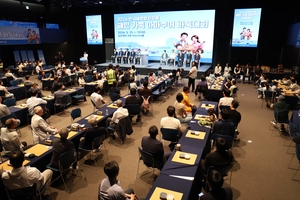
Korea Shipowners' Association holds amateur baduk tournament for Maritime Day