Nike holds 'Version 0: Prototype' exhibition featuring the Moon Shoe, collaborating with 8 artist teams
The starting point of Nike running shoes — a sole inspired by a waffle iron
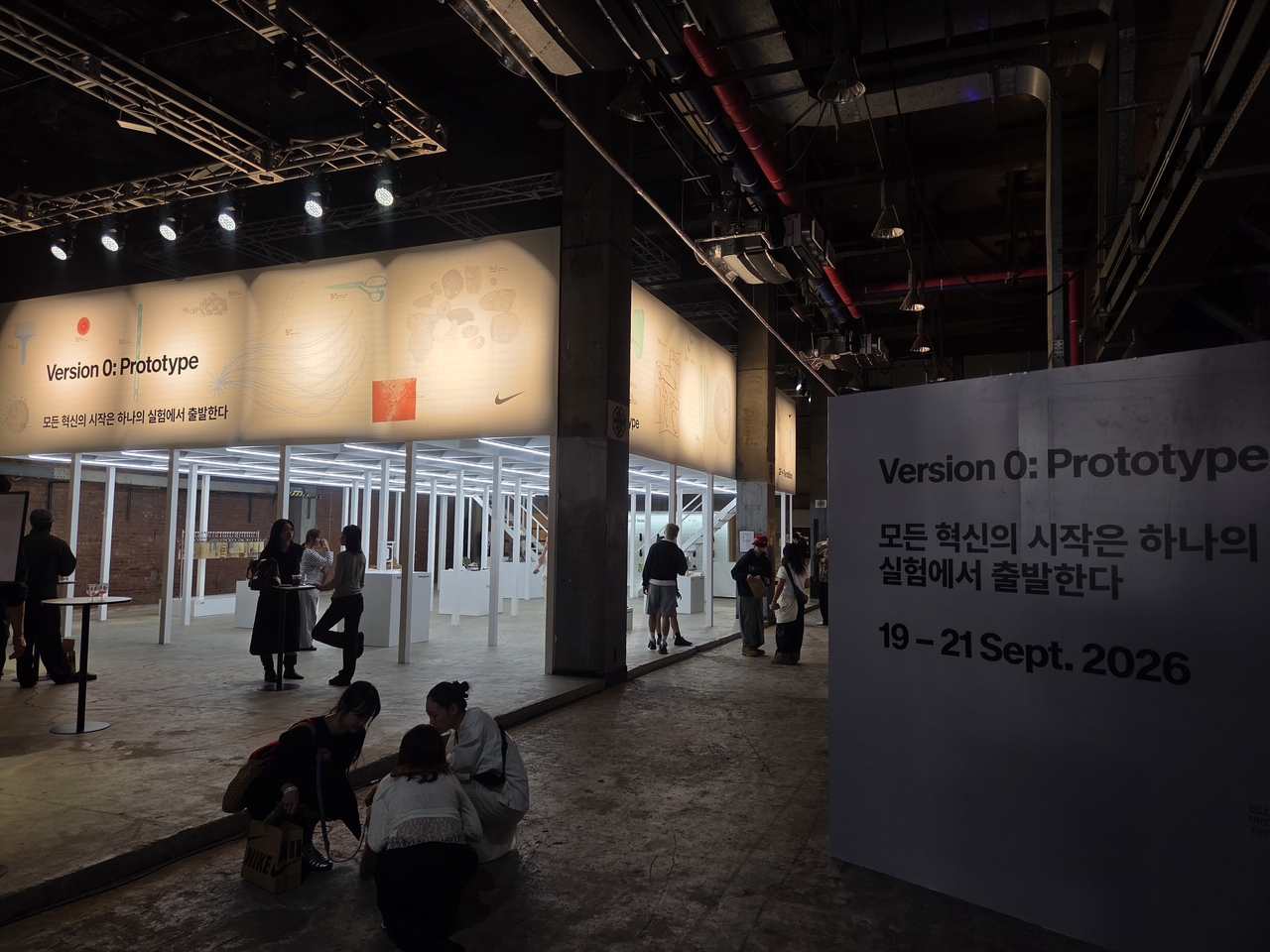
Stepping inside what looks like an abandoned industrial building, visitors are greeted by a sprawling two-floor exhibition space. While the first floor is open and airy, the second floor is harder to read from the outside.
The first floor displays the "process" — sketches, samples and other materials that artists produced while creating their works, offering few clues as to what the finished pieces would look like. Climbing the stairs to the second floor, the completed works finally come into view.
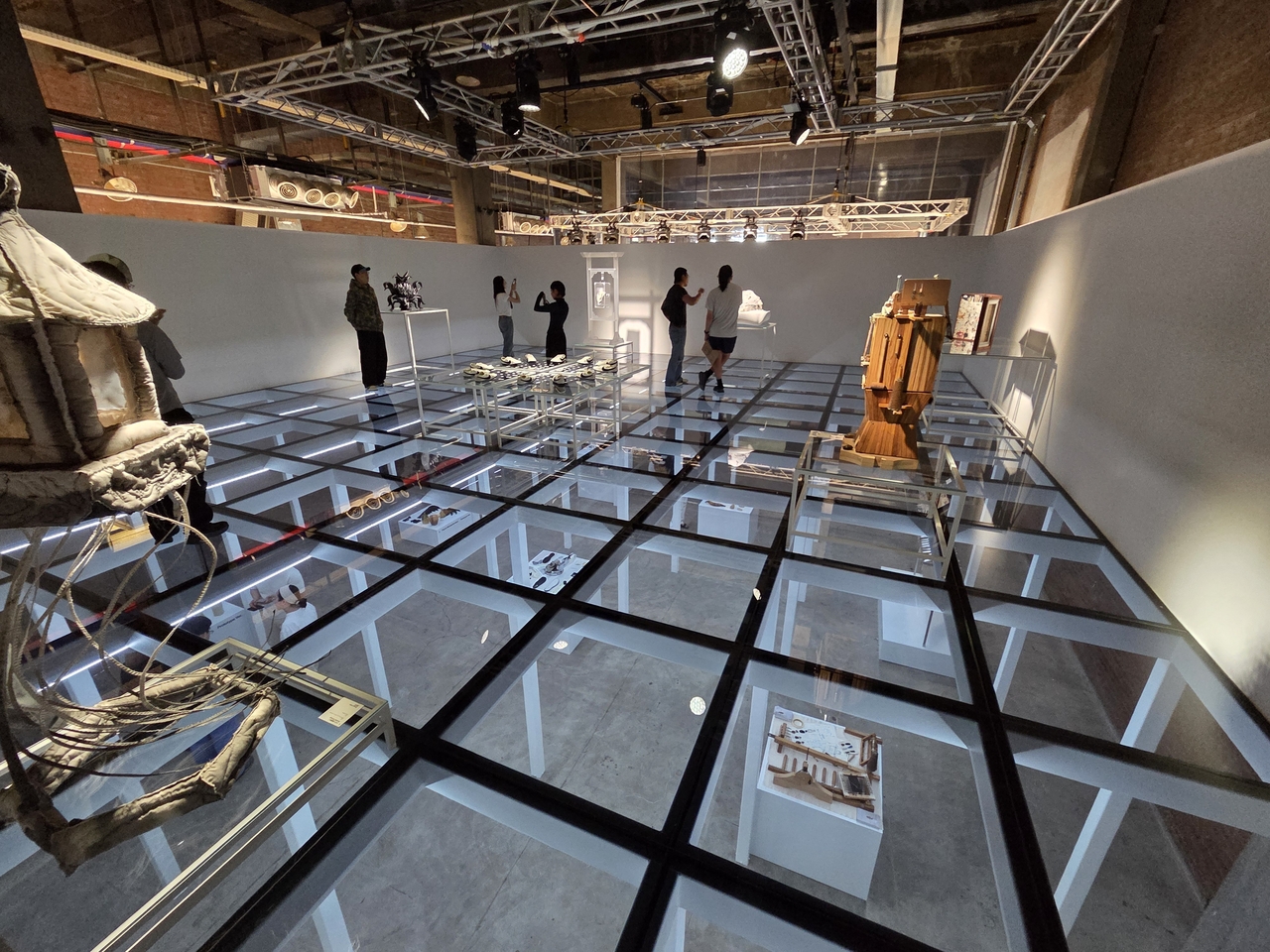
The second floor is fitted with specially treated reinforced glass panels underfoot. The panels allow those above to see down, but not the other way around — a deliberate design choice that mirrors the exhibition's central theme. On the first floor, visitors are immersed in the middle of experimentation, with no view of the outcome; from the second floor, they can look down through the glass and trace the process that gave rise to each finished work.
Amid renewed consumer interest in low-profile sneakers — slim, flat silhouettes with thin soles — Nike has reached back 55 years to one of its earliest running shoes. The centerpiece is the Moon Shoe, a prototype model widely regarded as the starting point of Nike's running footwear lineage.
Nike Korea is holding the "Version 0: Prototype" exhibition at Seoul National University's No. 1 Power Plant in Gwanak-gu, Seoul, from Saturday through Monday. Eight artist teams working across fashion, furniture design, fine art and craft are taking part.
The Moon Shoe itself was never commercially released — it remained a prototype. The ideas it embodied, however, evolved into the Waffle Trainer, Nike's first blockbuster success. The shoe drew fresh attention again in 2025, when Nike collaborator Jacquemus reinterpreted it on the runway.
The exhibition venue — Seoul National University's No. 1 Power Plant — supplied heat and electricity to the campus for more than four decades and now serves primarily as a cultural and arts space. A Nike spokesperson said the university setting was itself part of the concept. "A university is not a place that proves what has already been achieved — it is a place where failure is part of the process and unverified ideas first take shape," the spokesperson said. "We saw the venue as a prototype in its own right, a space for experimentation before stepping out into the real world."
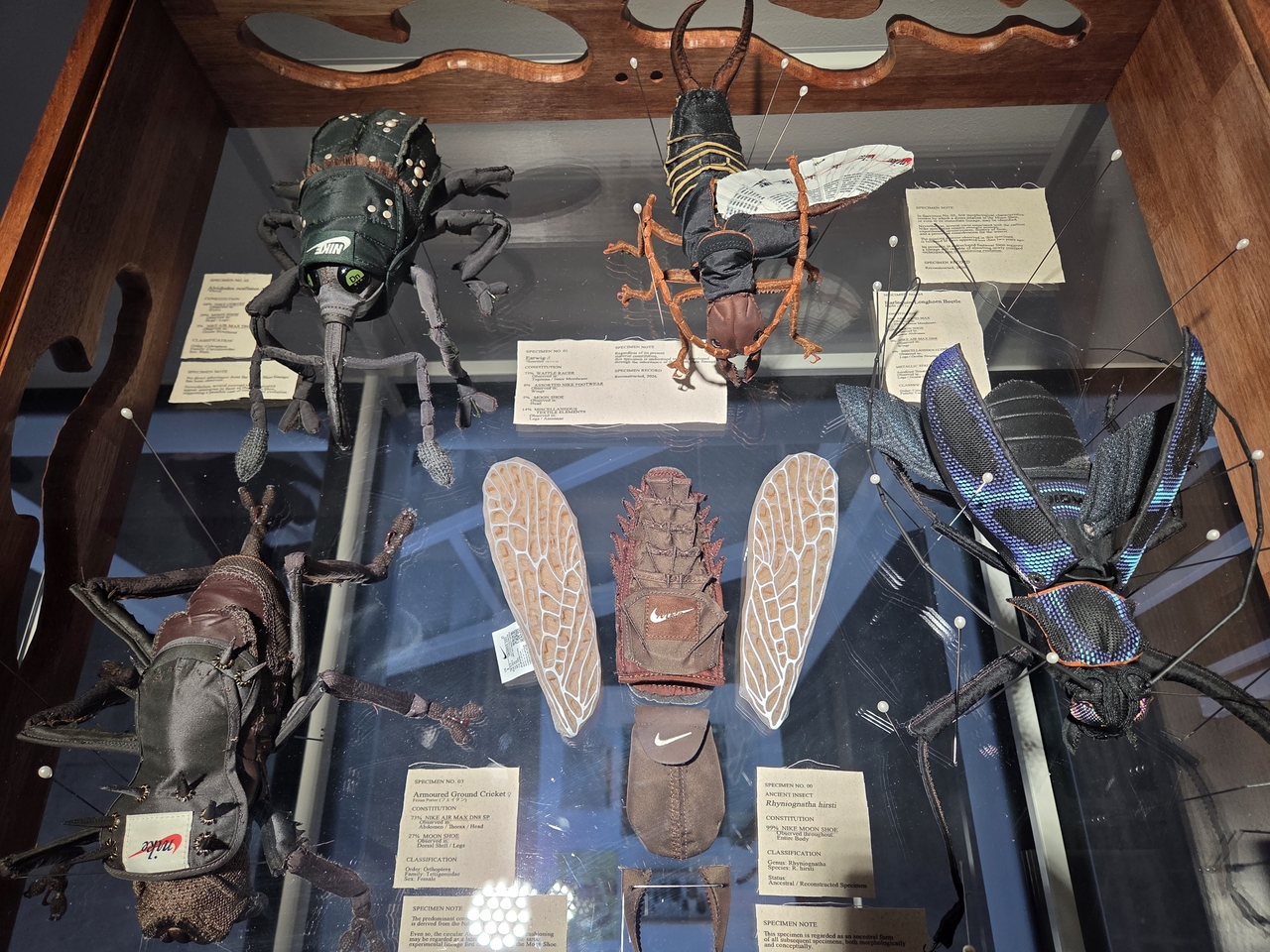
True to its title, the exhibition focuses on how the spirit of experimentation sparked by a single prototype has evolved over decades. The philosophy embodied by the Moon Shoe — experimentation within constraints, process over perfection — is interpreted through each participating artist's own medium and visual language.
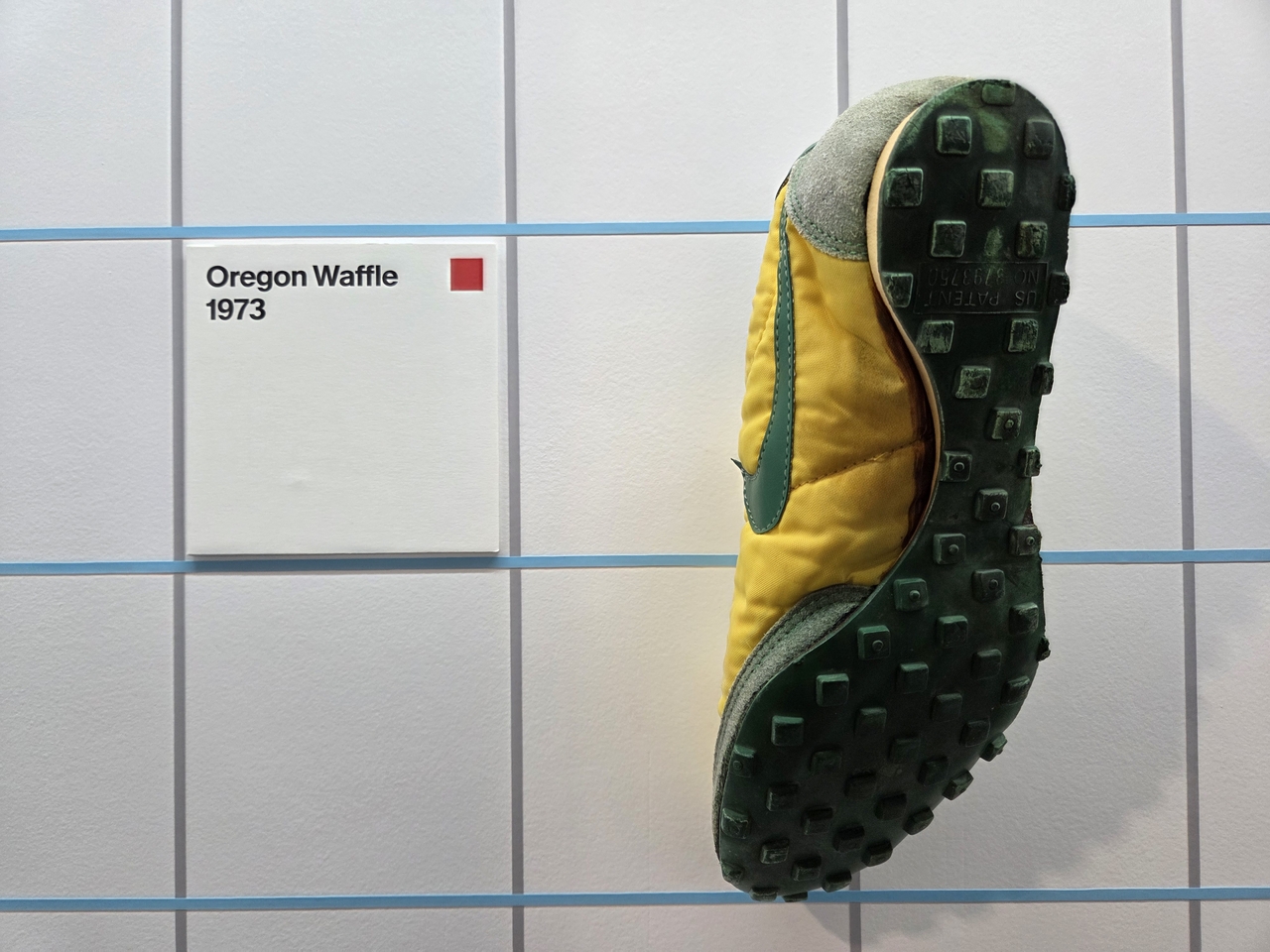
Visitors can also explore Nike's archive, tracing the expansion of the waffle sole concept across the years. On display are original posters and archival materials alongside early physical products: the Oregon Waffle (1973), the Astrograbber (1974) and the Waffle Trainer (1975). An interactive space inspired by the workshop of Nike co-founder Bill Bowerman has also been set up, where visitors can use a vacuum-forming machine to mold their own custom sole.
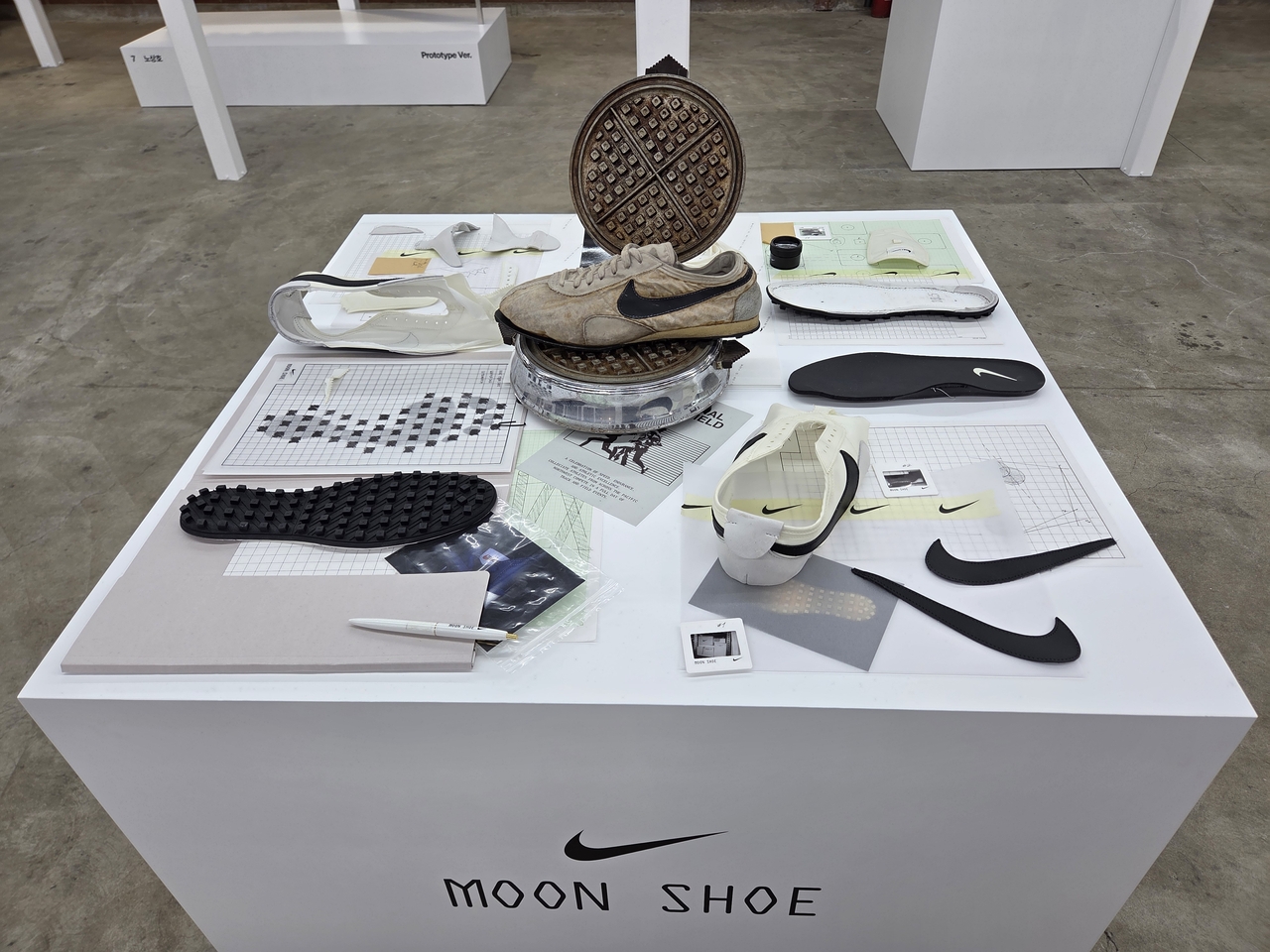
The Moon Shoe's story begins in 1971. Bill Bowerman, then coaching the University of Oregon track team and a co-founder of Nike, was searching for a way to address the injuries athletes were sustaining on urethane tracks. The answer came not from a laboratory but from a kitchen. Looking at the grid pattern on his wife's waffle iron — a wedding gift — Bowerman conceived the idea of creating a lightweight, grippy sole by applying that same pattern to a shoe.
He ran repeated trials with the waffle iron, experimenting with different molds and materials. The process eventually yielded a sole studded with grid-shaped nubs — the origin of the "waffle sole" that would come to define early Nike running shoes. The shoe earned its name because the imprint the sole left on the ground resembled the footprints an astronaut leaves on the surface of the moon.
Nike's decision to revive the Moon Shoe reflects a broader shift in the sneaker market. Consumer attention has been moving away from chunky, high-volume silhouettes toward low-profile designs — flat, streamlined shoes with thin soles.
Thomasine Hamerstone, Nike's senior director of energy footwear, said the trend prompted the brand to reconsider its own heritage. "As we saw consumer interest tilting toward low-profile silhouettes, we started asking what that means for Nike and how we could play an authentic role in that space," she said. "Instead of creating a new shape, we chose to bring out one we already had."
korean@heraldcorp.com