
- HOME
- REAL ESTATE
-

Lotte Engineering & Construction unveils 'Sorbonne Project' in bid for Mokdong reconstruction contracts
Lotte E&C reveals Mokdong reconstruction bid strategy Mokdong's education, nature linked to Parisian intellect and art Sixth-generation high-end residential concept centered on lifestyle culture Nature is another of Mokdong's great assets, not just education. It is a city of forests, where wide pedestrian paths, green spaces, tree-lined streets and parks all come together. Education and forest — those are the first starting points of the Sorbonne Project. 권동혁 롯데건설 도시정비팀 그룹장 As competition heats up for contracts in the Mokdong New Town reconstruction project — the largest such project in Seoul's southwestern corridor, with a total project value of 30 trillion won ($22.3 billion) — Lotte Engineering & Construction has unveiled its differentiated bid strategy: the Sorbonne Project. The builder aims to combine three elements in its design — the symbolic status of South Korea's premier school district, a pleasant natural environment and artistic value — to create a premium residential community. A visit to the Mokdong Le-El Gallery near Omokgyo Station in Yangcheon-gu, Seoul, on Monday revealed interiors that weave together the area's identity as an education hub with nature and art. Set to officially open in October, the gallery operates as two venues: L'est, near Omokgyo Station, and L'ouest, near the hagwon district in Sinjeong-dong. Stepping into the L'est gallery, visitors are greeted by the soft strains of a live classical ensemble alongside media art that reinterprets masterworks by Vincent van Gogh, Claude Monet and other great painters through Le-El's own aesthetic sensibility. A corridor connecting the gallery's spaces — named the "Allée" — is designed as a walking path inspired by the deep forests of France. Lotte Engineering & Construction presented media art inside the gallery depicting the flow of the Anyangcheon, while a subtle forest fragrance diffused throughout the space organically links nature with the residential concept. Beyond the corridor, the main lounge features works by celebrated Korean artists Kim Tschang-yeul and Kim Whanki, giving the space the feel of a fine art museum. The decision to design the entire gallery as a cultural and artistic space was deliberate: the company wanted to convey intuitively the core philosophy behind the Sorbonne Project. The vision goes beyond simply building apartments — it seeks to infuse the intellectual depth and artistic sensibility of the Sorbonne, the world-renowned university in Paris, into the broader residential culture. Mokdong already has a Paris Park, established in 1986 to mark the centenary of diplomatic relations between South Korea and France. Kwon Dong-hyeok, head of Lotte Engineering & Construction's urban renewal team, said the Paris connection was not invented for the project. "We did not suddenly import the image of Paris," he said. "We are again linking Mokdong's longstanding ties with Paris to its identity as an education city." Lotte Engineering & Construction drew inspiration from the Latin Quarter in Paris — the Quartier Latin — where intellect and art coexist, and from its distinctive academic character and cultural richness. The company plans to extend the residential paradigm beyond the shared attributes of education and natural environment — exemplified by the 23-hectare Luxembourg Gardens and the Sorbonne university at the heart of the Latin Quarter — into the realm of culture and art. Kwon said "Sorbonne" would not become an official complex name or pet name for Mokdong projects. "What we want to bring is not the name, but the intellectual values the Sorbonne represents," he said. "The core of the Sorbonne Project is combining Mokdong's education and credentials with the intellect and art of Paris." Lotte Engineering & Construction plans to apply the Sorbonne Project's residential philosophy to all complexes it bids for in Mokdong. To that end, the company is working with internationally renowned architecture firms on specialized designs for each complex it is targeting — including complexes 2, 7, 11 and 14. The Sorbonne Project will be built around four pillars: developing Mokdong's identity into a forest of the future, making art part of everyday apartment life, making knowledge part of everyday residential life, and extending high-end residential living through service and operations. The company plans to actively incorporate classical music curation and contemporary media art into residential services and community spaces, so residents can experience a high-end lifestyle enriched by culture and art in their daily lives. Forest and garden landscaping will be connected throughout the complex, while a book cafe, a large-scale library and educational care facilities will elevate education from an amenity to a core residential value of the complex. "In one sentence, it is 'the tree of knowledge becomes the forest of Mokdong,'" Kwon said. "It is not about adding more landscaping to the complex — it is about applying biophilic design that connects forests and gardens so that it becomes part of everyday life." Through the Sorbonne Project in Mokdong, Lotte Engineering & Construction aims to break the mold of conventional high-end residential development and set a new standard for what it calls "sixth-generation high-end housing" — a concept in which education, nature and art are organically integrated. The strategy is to complete in Mokdong a residential paradigm that goes beyond cutting-edge facilities or visual differentiation to address residents' quality of life and their intellectual and cultural fulfillment. "We see apartment development in six stages. If the fifth generation was the existing high-end complex, the sixth generation is a high-end complex that incorporates the experience of lifestyle culture," Kwon said. "We are planning to incorporate Lotte's unique strengths — Lotte Hotel, the Lotte Culture Foundation and other group affiliates — into the project and tailor the design to each complex."
Sept. 16, 2026
-
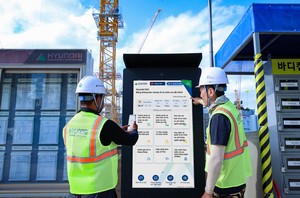
70% of Hyundai E&C staff now use AI as builder overhauls how it works
AI deployed across design, construction, quality, safety and operations Contract review, customer service among areas seeing rapid AI adoption Hyundai Engineering & Construction is overhauling the way its employees work by building an AI-powered environment accessible to all staff. More than 70 percent of its workforce already uses AI systems on the job, and the company says its artificial intelligence transformation — known internally as AX — is delivering measurable gains in productivity, safety and quality management. AI reviews contracts, flags risks automatically — and handles pre-sale inquiries Hyundai E&C recently introduced an AI-based contract review system that automatically detects unfair or irregular clauses and helps prevent fair-trade risks before they arise, according to the construction industry Wednesday. Given the construction sector's vast project-specific data and abundance of unstructured documents, the company says having AI conduct fast, accurate reviews upfront significantly boosts productivity and precision. A flagship example is the overseas contract comparison and review agent — an AI system that analyzes large volumes of contracts and automatically identifies risks. It can simultaneously search and analyze more than 1,300 documents, including the company's standard English contracts, MOUs, non-disclosure agreements and project files. Drawing on preprocessed information covering relevant regulations, comparable contract cases and review expertise, the system sharply cuts the time needed for document analysis while screening out potential legal risks in advance. The company's AI pre-sale consultant, an active customer service tool powered by generative AI, has also seen strong uptake. Unlike conventional scenario-based chatbots, it uses GPT technology to handle a wide range of inquiries in natural, everyday language without preset constraints. Customers who previously could only reach a call center during weekday business hours can now get responses around the clock, reducing consultant workload while improving customer satisfaction at the same time. At construction sites, the company is also rolling out smart safety electronic display boards. The boards let workers check key site safety information not only at kiosks but also on personal mobile devices. An AI safety assistant built into the system offers multilingual support and a conversational question-and-answer function, delivering tailored information to individual workers. Hyundai E&C is also upgrading existing platforms with AI to strengthen site monitoring and safety and quality management — including HiBoard, a smart construction management platform, and Q-Pocket, a mobile and web-based integrated inspection system. An AI-generated character called Zero Beaver leads online quality education sessions, and as employees' AI capabilities have grown, the range of tasks to which they apply AI has expanded accordingly. Employees also use AI tools the company developed in-house. HAI, a conversational AI work-support system, lets staff choose from different AI services depending on the nature of their tasks. Built on retrieval-augmented generation, it connects to internal databases — including company guidelines, regulations, site data and construction materials — to organize knowledge sharing and deliver optimized information. HAI offers a range of AI models, including GPT, Gemini, Claude and Perplexity, so employees can select the one best suited to their work, while a robust security framework prevents sensitive internal information from leaking. M365 Copilot is an AI service employees can deploy immediately for document-based tasks using work data. All staff actively use it for drafting meeting minutes and reports, translation and a variety of other tasks. Recently, more general employees have been using M365 Copilot for vibe coding to build their own work tools. Based on figures compiled in July, about 70 percent of all employees — spanning site support, research and general office roles — use HAI and M365 Copilot, and power users who log more than 100 sessions a month have surpassed 30 percent of the total user base and continue to grow, the company said. Building an AI-first culture — with rewards to match To foster an AI-centered organizational culture, Hyundai E&C is selecting in-house AI champions, expanding institutional support through shared platforms, training and rewards, and accelerating its shift in working practices. The company has in particular been designating internal AI change-management specialists called ACEs to drive cultural transformation. ACEs focus on four areas: identifying and standardizing AI use cases applicable to their own work, introducing outstanding departmental AI applications, running division-wide rollout programs, and sharing information within the ACE community — all aimed at creating a work environment where employees can readily apply AI to their day-to-day tasks. The company is also restructuring its organizational makeup, simultaneously pursuing software innovation centered on people and culture alongside hardware innovation centered on technology and platforms, with dedicated teams overseeing each. The AI Design Lab handles the spread of an AI organizational culture, while the AX Platform Team is responsible for upgrading AI platforms. The AI Design Lab, set up earlier this year with the goal of embedding new ways of working across the company, identifies and promotes AI strategies and initiatives so all employees can use AI freely. It runs company-wide AI adoption activities, including the ACE program. The AX Platform Team builds and operates the internal and external AI service environment — including HAI, the smart construction management platform and the AI pre-sale consultant. Programs that let employees exchange diverse AI experiences are also underway. Playground, an experience-driven AI community where staff can accumulate hands-on experience across areas from content creation to task automation, and Play Day, a platform where employees can try out key AI features in everyday settings and share their work with colleagues, are both designed to deepen familiarity with AI across the workforce. The company has also distributed internally produced vibe coding course materials and incorporated related coursework into its new-employee orientation program as part of ongoing AX education. A separate AI leadership program runs for executives, and the company plans to expand it into an advanced course in the second half of the year to raise AI adoption among decision-makers. "We plan to keep driving work innovation through data and AI — backed by institutional support such as rewards for AI performance — and to focus on fully internalizing and advancing AX," a Hyundai E&C official said.
Sept. 16, 2026
-
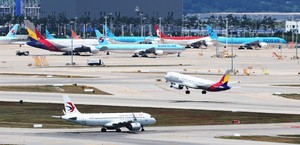
South Korea expands international air routes, adding China direct flights and Czech Republic service
New direct China routes from regional airports Yangyang, Muan airports also gain new connections South Korea is set to open new direct flights from regional airports to China and expand low-cost carrier access on major routes out of Incheon, broadening the country's international air network. The Ministry of Land, Infrastructure and Transport said Wednesday it had allocated traffic rights for 25 international air routes to 10 domestic airlines following a review by the Aviation Traffic Deliberation Committee. The allocation focused on recovering South Korea-China passenger demand, revitalizing regional airports and widening consumer choice. New China routes from regional airports were the most prominent feature of the distribution. Direct flights will connect Busan, Cheongju and Daegu to major Chinese cities including Chengdu, Harbin, Dalian and Xiamen. Key allocations include Busan to Chengdu (four times weekly) and Harbin (four times weekly), Busan to Hangzhou (twice weekly), Cheongju to Dalian (three times weekly), and Daegu to Beijing and Xiamen (three times weekly each). Yangyang Airport, set to resume international service for the first time in more than four years by year's end, received routes to Shanghai and Hangzhou, each operating three times a week. Muan Airport also secured traffic rights for routes to Beijing, Shanghai, Yanji and Zhangjiajie. At Incheon Airport, traffic rights on major routes to Beijing, Shanghai and Guangzhou — previously dominated by full-service carriers — were opened to low-cost carriers and other new entrants to encourage price and service competition and expand options for travelers. Newly secured traffic rights for the Czech Republic will also allow the launch of Central European service. Routes to major Chinese cargo hubs including Tianjin and Ezhou were also allocated, which the ministry said would help strengthen air logistics supply chains for South Korean exporters and importers. "The efforts we have made to secure traffic rights with a focus on revitalizing regional airports and matching supply to demand are now bearing fruit in the form of actual new routes launching this year," said Jung Chae-gyo, director general for aviation policy at the Ministry of Land, Infrastructure and Transport. "Although high fuel costs stemming from Middle East tensions have increased the burden on airlines, we will support carriers in launching these routes without disruption so that the public can feel the benefits of an expanded air network." Meanwhile, South Korea's aviation industry invested a combined 13.31 trillion won ($9.89 billion) in safety last year, up 115.5 percent from 6.18 trillion won the previous year, according to ministry data. However, the sharp increase largely reflects a methodological change: costs for acquiring new aircraft and hiring flight and cabin crew were newly included in the definition of safety investment.
Sept. 16, 2026
-
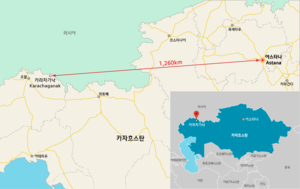
Hyundai Engineering signs implementation agreement with Kazakhstan state gas firm for Karachaganak processing facility
Project continuity secured from early design through full EPC Entry into all three major Central Asian energy markets Hyundai Engineering announced Tuesday that it has signed a project implementation agreement with Kazakhstan's state gas company QazaqGaz to advance the Karachaganak gas processing facility project. The agreement was designed to confirm the mutual interests of the parties and to define the direction and principles of cooperation for the successful execution of the Karachaganak gas processing facility, which will handle 5 billion cubic meters of raw gas annually. The signing further solidifies the partnership between Hyundai Engineering and QazaqGaz for the large-scale project. The signing ceremony took place during the Korea-Kazakhstan Business Roundtable, held on the sidelines of the first Korea-Central Asia Summit, with Prime Minister Han Seong-sook in attendance. Kazakhstan President Kassym-Jomart Tokayev presided over the ceremony, which was attended by Hyundai Engineering CEO Joo Woo-jung, QazaqGaz Chairman Alibek Zhamauov and other senior officials from both companies, who reaffirmed their commitment to the project's successful execution. The project will be carried out by a consortium of Hyundai Engineering and the Kazakhstan subsidiary of Italian engineering, procurement and construction firm SICIM. As the consortium leader, Hyundai Engineering will handle design and procurement, while construction and commissioning will be conducted in cooperation with SICIM's local entity. The two companies plan to maintain close collaboration from the project development stage through to the signing of the final EPC contract. The agreement is particularly significant in that it reaffirmed QazaqGaz's commitment to the project while being concluded in the presence of senior government and business officials from both countries, securing a foundation of sustained government-level support and trust. Hyundai Engineering received a letter of award from QazaqGaz for the project in May. The implementation agreement is expected to give fresh momentum to negotiations toward the final contract by securing continuity from the early design phase through to the full EPC agreement. The achievement reflects Hyundai Engineering's world-class technical expertise and project execution capabilities in the gas processing plant sector. The company has built a strong track record in large-scale plant projects across Central Asia, including in Uzbekistan and Turkmenistan. With this project, Hyundai Engineering has now established a presence in all three of Central Asia's major energy-resource countries — Uzbekistan, Turkmenistan and Kazakhstan. The company plans to consolidate its position as a leading plant partner in the region and pursue additional opportunities in the Central Asian energy infrastructure market. "The signing of this project implementation agreement marks an important milestone in the full-scale advancement of Kazakhstan's gas infrastructure development," a Hyundai Engineering official said. "We will draw on our extensive experience and technical capabilities accumulated across Central Asia to successfully execute this project and further expand our presence in the global energy infrastructure market." According to global market research firm Fortune Business Insights, the global gas processing facility market is valued at approximately $6.09 billion this year and is projected to grow at a compound annual rate of 7.1 percent to reach approximately $10.55 billion by 2034, driven by rising demand for clean energy.
Sept. 15, 2026
-
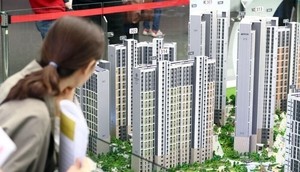
Gov't extends housing subscription account conversion period amid fund depletion fears
Conversion window for legacy apartment subscription accounts extended by one year Rising cancellations shrink key funding source for Housing and Urban Fund Move aims to shore up finances ahead of expanded public housing supply The government will extend by one year the deadline for holders of legacy housing subscription accounts — including apartment subscription deposits, installment savings accounts and public housing savings accounts — to convert them into the all-in-one housing subscription savings account. The move comes as a surge in account cancellations, driven by rising pre-sale prices and higher interest rates, has eroded the balance of housing subscription savings accounts, a key funding source for the Housing and Urban Fund. One more year to convert to all-in-one housing subscription account According to government sources Tuesday, Korea Housing and Urban Guarantee Corporation recently asked the Ministry of Land, Infrastructure and Transport to approve an amendment to its operational guidelines that would extend the conversion window by one year. Housing subscription accounts used when applying for apartment pre-sales fall into four main categories: the apartment subscription deposit account, the installment savings account, the public housing savings account and the all-in-one housing subscription savings account. The deposit and installment accounts can only be used to apply for privately built housing, with the installment account further restricted to units of 85 square meters or smaller. The public housing savings account is limited to public housing applications. The all-in-one housing subscription savings account, by contrast, allows holders to apply for both public and private housing, giving subscribers a broader range of options. The Ministry of Land, Infrastructure and Transport had previously raised housing subscription account interest rates in September 2024 and, at the same time, allowed holders of the older account types to convert them into the all-in-one account. The initial conversion window was set to run through September 2025 but was extended by one year, meaning the deadline is now approaching at the end of this month. "The intent is to encourage conversion to the all-in-one account and expand subscription opportunities for prospective buyers," a housing finance industry official said. Warning signs for Housing and Urban Fund ahead of public housing push The government's decision to extend the conversion deadline is rooted in the need to shore up the Housing and Urban Fund. While apartment subscription deposit and installment accounts are held at commercial banks, converting them into the all-in-one account channels those funds into the Housing and Urban Fund. The public housing savings account has long served as a core funding source for the Housing and Urban Fund, but a sharp drop in new subscribers and a rise in cancellations have set off alarm bells. A shrinking fund would leave the government with less financial capacity to build public rental housing, offer low-interest home loans and provide financing for housing developers — all key pillars of housing stability for lower-income households. Data submitted by Korea Housing and Urban Guarantee Corporation to the office of Democratic Party lawmaker Yun Jong-gun, a member of the National Assembly's Land, Infrastructure and Transport Committee, showed that as of July, housing subscription accounts held 8.4 trillion won ($6.24 billion) in deposits, but 8.2 trillion won had been withdrawn through cancellations, leaving a net increase of just 200 billion won. That is a sharp decline compared with net increases of 2.2 trillion won in 2024 and 4.1 trillion won in 2025. The contribution of subscription account deposits to the Housing and Urban Fund has also been shrinking. Data obtained through Korea Housing and Urban Guarantee Corporation by the office of Democratic Party lawmaker Jang Jong-tae showed that in 2025, subscription account deposits contributed approximately 15.2 trillion won to the fund — only 400 billion won more than the previous year's 14.8 trillion won. Compared with 2020, when contributions reached 21.2 trillion won, the figure has fallen by 6 trillion won, or 28.3 percent. The government appears to be seeking to draw in subscription account holders who have yet to convert in order to bolster the Housing and Urban Fund. With the government signaling its commitment to breaking ground on large-scale public housing projects and strengthening the residential safety net, the move is an effort to secure the necessary funding in advance. For account holders, converting to the all-in-one account would not only open up eligibility for all housing types but also bring a higher interest rate, income deduction benefits and the ability to combine a spouse's account tenure — advantages the government has highlighted to encourage the switch. However, some have noted that even with expanded subscription eligibility, the incentive to convert may be diminished because subscription credits for newly eligible housing types are counted only from payments made after conversion. For example, a holder who made 240 months of payments into a public housing savings account and then converted and made 12 additional payments would have all 252 months of payments and amounts recognized for public housing applications, but only the 12 post-conversion months counted for private housing applications. Park Ji-min, head of Wolyong Apartment Subscription Research Institute, said the government's primary goal is to increase public pre-sales on new residential land including third-generation new towns, so prospective buyers looking to improve their chances of winning a subscription lottery would be better off converting to the all-in-one account. "However, in speculative overheating zones, applicants need to have held a subscription account for at least two years to qualify for first-priority status," Park said. "So those targeting Seoul subscriptions would be better off keeping their existing deposit or installment account."
Sept. 15, 2026
-
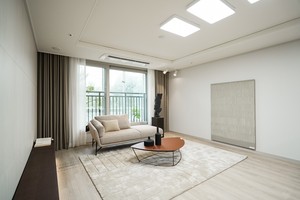
Kolon Global unveils immersive showroom blending scent and interior design
Signature fragrance 'SKY AT DUSK' introduced Hanssem furniture and pre-survey findings incorporated Kolon Global has unveiled an experiential showroom designed to engage all five senses, going beyond a simple viewing experience. The company said Tuesday it launched brand collaboration content at the Jeonju Samcheon Haneulchae Laviel showroom, combining fragrance, furniture and spatial design. The showroom is conceived as a multi-faceted cultural experience space where visitors can experience residential living and envision their own daily lives. The most striking element is "space branding" through scent. Kolon Global partnered with lifestyle brand ONCE32 to create an exclusive signature fragrance called SKY AT DUSK, inspired by the warm glow of sunsets seen through Haneulchae windows. The scent opens with soft coconut notes, transitions through jasmine and violet, and settles into a lingering base of cedarwood and sandalwood, lending the space a calm, restful atmosphere. Inside each residential unit, furniture from home interior company Hanssem has been arranged to maximize livability. Moving beyond simple prop displays, the showroom adopts a "lifestyle space consulting" concept that encompasses actual furniture placement, traffic flow and space utilization, allowing visitors to intuitively sense what everyday life there would feel like. The spatial design drew heavily on findings from pre-launch consumer interviews. By identifying the lifestyle patterns and preferences of real customers and applying them to the unit staging, the company aimed to position visitors not merely as passive observers but as "co-planners" who help shape the residential space. "Through collaboration with various brands, we are proposing new residential experiences and continuing to build branding that takes into account customers' tastes and sensibilities," a Kolon Global official said. "We will keep presenting differentiated content that allows customers to experience and remember Haneulchae in their everyday lives, beyond the showroom itself." Meanwhile, Kolon Global recently won a contract worth 104.6 billion won ($77.8 million) for a street-unit housing redevelopment project in Myeongmok-dong, Jungnang-gu, Seoul.
Sept. 15, 2026
-
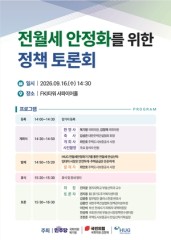
HUG moves to institutionalize jeonse fraud-prevention trust scheme with cross-party support
Forum co-hosted by lawmakers from Democratic Party, People Power Party Academics, legal experts, civic groups to gather Wednesday The Korea Housing and Urban Guarantee Corporation is joining forces with ruling and opposition lawmakers to hold a policy forum aimed at institutionalizing a new jeonse and monthly rent trust scheme designed to stamp out jeonse fraud and stabilize the housing market. HUG announced Tuesday that it will co-host a policy forum titled "Policy Forum for Jeonse and Monthly Rent Stabilization" at the FKI Tower in Yeouido, Seoul, at 2:30 p.m. Wednesday, together with Rep. Bok Gi-wang of the Democratic Party of Korea and Rep. Kim Jeong-jae of the People Power Party. The forum carries weight as a bipartisan effort by ruling and opposition parties to find solutions for a policy project led by a public institution. HUG officials, lawmakers from both parties, and representatives from academia, the legal community, civic groups and the housing industry are expected to attend and share their views. The so-called "safe trust" scheme is a new lease model designed to provide tenants with secure jeonse arrangements, offer landlords a stable monthly income stream, and channel the pooled funds into housing supply. At the heart of the model is how jeonse deposits are managed. Under the proposed structure, HUG — rather than the landlord — would directly hold and manage a tenant's jeonse deposit, returning it at the end of the contract. The arrangement aims to eliminate jeonse fraud at the source, curb the rapid shift toward monthly rent arrangements, and put pooled deposits to work financing new housing supply, promoting residential stability and a virtuous market cycle. The scheme would apply not only to individual landlords but also to corporate and public-sector landlords. At the main forum session, HUG President Choi will present the corporation's plans for advancing the scheme under the theme "Jeonse and Monthly Rent Safe Trust Through HUG's Jeonse and Monthly Rent Stabilization Body." A comprehensive discussion will follow, moderated by Jin Mi-yun, a professor at Myongji University's Graduate School of Real Estate. Panelists are expected to discuss a range of issues, including building the legal and institutional foundations for the safe trust scheme, creating incentives for landlords to participate voluntarily, and exploring ways to manage jeonse deposits stably while linking them to housing supply. "This forum will be a meaningful occasion for ruling and opposition parties and experts from all sectors to come together under the shared goal of securing stable housing for the public," Choi said. "We will faithfully reflect the opinions raised and prepare to ensure the jeonse and monthly rent safe trust scheme takes root stably in the market." According to HUG's own estimates of potential housing cost savings under the scheme, a tenant renting a row house or multi-unit dwelling in Seoul with a sale price of 300 million won ($223,000) and a jeonse value of 200 million won currently pays monthly rent of 740,000 won — based on a deposit of 10 million won and an assumed jeonse-to-monthly-rent conversion rate of 4.7 percent. Under the safe trust scheme, that cost would fall to 530,000 won, assuming the tenant borrows up to 80 percent of the jeonse value through a jeonse loan at an interest rate of 3.97 percent.
Sept. 15, 2026
-
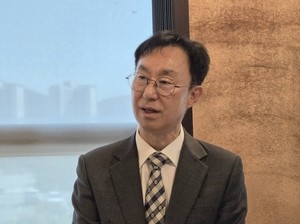
Korea Research Institute head says Greater Seoul housing push contradicts balanced development goals
Im Jae-man shares candid views at press briefing Tuesday "If we just build and build because there aren't enough homes in the Greater Seoul area, aren't we essentially telling people in the regions to come live in Seoul? That could well be the case. These things are deeply contradictory." Im Jae-man, president of the Korea Research Institute for Human Settlements, shared those candid views Tuesday at a press briefing with reporters covering the Ministry of Land, Infrastructure and Transport. Since taking office, Im said, he has been carefully examining the institute's founding charter, which calls for balanced national development and improving the quality of life for citizens. He suggested that the current push to maximize housing supply — sometimes described as "just build, no excuses" — does not sit well with the policy goal of balanced regional development. He went on to say there are multiple ways to define housing stability — whether as price stability, affordability or security of tenure — and that there is no shortage of difficult questions to work through. "I think tenure security, affordability and adequacy of living conditions are three concepts that must be part of housing stability," Im said. "The top priority is balanced national development, and housing stability must be pursued by supplementing and refining that policy." Im added that after years of thinking about how to stabilize the housing market, he had one day realized that microeconomic policies alone could never do it. "That is why I place such importance on balanced national development," he said. He noted that even with large-scale homebuilding, it was unclear whether supply could keep pace with demand as long as resources kept concentrating in the Greater Seoul area. "Competition in education is fierce, and there are people paying absurd jeonse prices in Daechi-dong just because of schooling," he said. "Housing prices are high wherever hagwon clusters form. Unless those structural problems are reformed, housing stability will remain out of reach — that is why I keep coming back to balanced national development." On the government's five-hub, three-special-zone regional development policy, Im said the institute is studying how to connect hub cities, intermediate centers and rural and fishing communities within a 60-minute travel radius. He also said research is underway on a second round of public institution relocations — identifying candidate agencies and determining which destinations would best complement existing industrial bases and maximize the impact of the moves. He added, however, that the institute is not discussing where any specific institution should go. Im also said government support for the institute has expanded starting this year, easing financial pressures, and that he plans to run the organization with a focus on raising research quality and producing work with strong policy applications. "In the two and a half months since I took office, I have met broadly with institute staff," Im said. "I intend to operate under a completely revamped system to raise research quality." He said research findings must reach both policymakers and the public if the institute is to maximize its policy impact, and pledged to concentrate on four priorities: strengthening institutional capacity, overhauling the evaluation system, improving quality and broadening the dissemination of research results.
Sept. 15, 2026
-
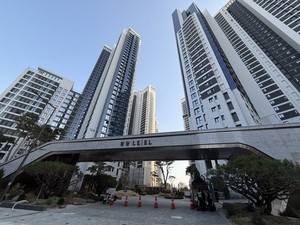
Cheongdam Le El penthouse reserve units fail to sell for 10th time as asking price drops to W20.33b
Price cut of 2.26 billion won in two months; 7 units including penthouses head to 10th auction Similar discounts seen at One Bailey, Gaepoja; Apgujeong projects plan ultra-large penthouses topping 20 billion won Cheongdam Le El in Cheongdam-dong, Gangnam-gu, Seoul is putting its reserve units back on the market at reduced prices after seven units — including penthouses — again failed to find buyers even after benchmark prices were lowered in a previous auction. The asking price for the largest penthouse has fallen more than 2 billion won in just over two months. According to the reconstruction industry, the Cheongdam Samik Apartment Housing Reconstruction and Improvement Project Association is holding a new auction for seven Cheongdam Le El reserve units through Thursday. The units on offer are three 84-square-meter units and four penthouses that went unsold in the ninth auction. The benchmark prices for the four penthouses have been set as follows: the 218-square-meter unit in Building 102, Unit 3503, at 20.33 billion won ($15.1 million); the 202-square-meter unit in Building 108, Unit 3502, at 19.5 billion won; the 200-square-meter unit in Building 108, Unit 3401, at 17.72 billion won; and the 172-square-meter unit in Building 107, Unit 3503, at 16.1 billion won. When the units were first offered for sale in June, the benchmark prices were 22.59 billion won for the 218-square-meter unit, 21.07 billion won for the 202-square-meter unit, 19.68 billion won for the 200-square-meter unit, and 17.8 billion won for the 172-square-meter unit. The largest unit, at 218 square meters, has seen its benchmark price fall from 22.59 billion won in June to 21.46 billion won in the ninth auction earlier this month, and now to 20.33 billion won — a drop of 2.26 billion won, or about 10 percent, in roughly two months. The association had already cut the penthouse benchmark prices by around 5 percent ahead of the ninth auction, but that reduction also failed to produce a sale. The other penthouses have also seen their benchmark prices fall compared with June: the 172-square-meter unit by about 1.7 billion won, the 200-square-meter unit by 1.96 billion won, and the 202-square-meter unit by about 1.57 billion won. Even in Gangnam's new-build market, where penthouse supply is rare, price tags in the 16 billion to 20 billion won range are making it difficult to find buyers. The benchmark prices for the three 84-square-meter units have also been lowered: Unit 804 in Building 105 to 5.22 billion won, Unit 605 in Building 106 to 5.17 billion won, and Unit 505 in Building 107 to 5.19 billion won. In the ninth auction, the benchmark prices for these units had been around 5.5 billion won each. The payment structure unique to reserve units — which requires buyers to raise large sums in a short period — is also cited as a barrier to sale. Bidders must submit a deposit equal to 10 percent of the benchmark price to participate. After winning, the buyer must pay 20 percent of the winning bid as a down payment, with the remaining 80 percent due by Jan. 16 next year. If the 218-square-meter unit were to sell at its benchmark price of 20.33 billion won, the bidder would need to put up 2.03 billion won just to enter the auction. The down payment would come to 4.07 billion won, and the buyer would then need to arrange the remaining balance of 16.26 billion won within roughly four months. Reserve units are inventory that reconstruction and redevelopment associations set aside — rather than offering through general pre-sale — to cover potential changes in member eligibility or litigation during the project. Unlike standard apartment subscriptions, they are typically sold through open competitive bidding without the use of a housing subscription account. Penthouse reserve units being discounted after failing to sell is not without precedent. When Raemian One Bailey in Banpo-dong, Seocho-gu, Seoul opened for move-in in 2023, the association set the initial benchmark price for its 185-square-meter penthouse reserve unit at 12.6 billion won. After repeated failed auctions, the benchmark price had fallen to 10.1 billion won by the third sale attempt in November of that year — 2.5 billion won, or about 20 percent, below the original asking price. Gaepo Xi Prestige, rebuilt on the former Gaepo Jugong 4 complex, also listed two 185-square-meter penthouse reserve units but failed to find buyers in the initial auction. The 34th-floor unit was offered at a minimum bid of 9.5 billion won and the 21st-floor unit at 8.5 billion won, but both were passed over. They were eventually sold for 8.5 billion won and 7 billion won, respectively. The 21st-floor unit in particular sold for 1.5 billion won — about 17.6 percent — below its original asking price. The supply of ultra-large penthouses from reconstruction projects is expected to grow further. Particularly in the Apgujeong area, widely regarded as the biggest prize in the domestic reconstruction market, developers are planning unit sizes rarely seen in existing apartment stock. The association for Apgujeong District 2 has proposed a 300-square-meter penthouse in its preferred unit-size survey, with an estimated pre-sale price for association members of 21.07 billion won. In a similar survey conducted last year, 13 members expressed interest in that penthouse unit. In Apgujeong District 4, a 290-square-meter penthouse has been proposed with an estimated member pre-sale price of 21.09 billion won. In Apgujeong District 3, the alternative design submitted by contractor Hyundai Engineering & Construction includes 54 penthouse units, two of which are proposed as 405-square-meter "triplex" super-penthouses spanning three floors — equivalent to 604 square meters of supply area. However, the specific supply method and pricing for these ultra-large units may change as the projects progress. Industry sources say options under discussion include selling them to association members or setting them aside as reserve units for later sale. Industry analysts say the ultra-high-end penthouse market is still in its early stages, and that price alone does not tell the full story — tax burdens and the nature of the buyer pool must also be considered. Kim Je-gyeong, director of Toomi Real Estate Consulting, said the repeated failed auctions for the Cheongdam Le El penthouse reserve units appear to reflect buyers' wariness about property-holding tax burdens under the recently proposed tax reform. "The fact that penthouses priced above 20 billion won are appearing in reconstruction projects at all is itself a relatively recent development," he said. He added that demand for such ultra-high-end penthouses should be seen as a new buyer segment rather than simply as competition with existing luxury housing — one that values residential comfort and the amenities and management convenience of a large complex, but does not require the level of privacy that a standalone house would provide.
Sept. 15, 2026
-
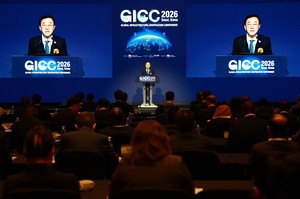
S. Korea 'most prepared global infrastructure partner,' minister says as officials from 32 nations gather for K-construction forum
Global Infrastructure Cooperation Conference 2026 AI, data centers among topics at global infrastructure forum 'Korea has experience building and operating new towns in a short time' Minister of Land, Infrastructure and Transport Kim Yun-deok said Tuesday that South Korea is "the most prepared partner that the rapidly reshaping global infrastructure market is looking for," speaking before ministers, vice ministers and industry officials from 32 countries at the Global Infrastructure Cooperation Conference. The opening ceremony of GICC 2026 was held Tuesday morning at the Conrad Seoul hotel in Yeouido, Yeongdeungpo-gu. Now in its 14th year, the conference has been held since 2013 to support cooperation in infrastructure among the government, major overseas project owners, multilateral development banks, and construction and engineering firms. More than 500 people attended this year's conference, including ministers and vice ministers, CEOs, and officials from domestic and international public institutions and construction and engineering companies. The halls and corridors were packed with attendees from around the world as early as 30 minutes before the event began, and the Grand Ballroom — with roughly 500 seats — filled up quickly. This year's GICC was organized around the theme "Opening Global Infrastructure Cooperation with AI," reflecting rapidly shifting trends in the global infrastructure market. Over three days of seminars, forums and multilateral meetings, participants are set to discuss how AI will reshape construction and transportation infrastructure and explore concrete avenues for cooperation. In his welcome address, Kim said he has witnessed firsthand how quickly the global infrastructure market is changing. "Visiting diplomatic posts and meeting counterparts in various countries while serving as minister, I have come to feel just how rapidly the global infrastructure market is being reshaped," he said. "What struck me most was that the way the market looks at infrastructure construction projects has fundamentally changed." Kim said the market is now seeking more than contractors. "Rather than companies that simply build well, the market is looking for partners who will think through projects together, arrange financing and handle operations," he said. "South Korea has the experience of having built and operated roads, railways, airports and new towns in a short period of time." He also highlighted the track record of Korean companies. "Korean companies have been active on job sites around the world, achieving the remarkable milestone of $1 trillion in cumulative overseas construction orders in 2024," Kim said. "Drawing on that experience and advanced technological capabilities, South Korea will be a reliable partner throughout the entire project cycle — from conception and design to construction, long-term operations and maintenance." In his opening remarks, Han Man-hee, chairman of the Overseas Construction Association of Korea, said AI is both advancing the sophistication of infrastructure construction and management and generating new construction demand in the form of data centers, power and energy infrastructure. "Korean companies have participated in urban infrastructure development projects around the world, accumulating broad experience spanning planning, design, construction and project operations," he said. Han described the conference as a venue for countries to share policies and development plans and for overseas project owners and Korean companies to discuss cooperation. "I hope the discussions that begin at GICC will lead to new projects, investment and sustained cooperation," he said. The keynote addresses were delivered by Jeff Rubenstone, deputy editor of the American construction and engineering trade publication Engineering News-Record, and Hwang Tae-hwan, executive vice president at Samsung Electronics. "In the past, the infrastructure industry was defined by who built what," Hwang said. "The next 100 years will depend on how AI is applied, built and operated." He added that Samsung Electronics would be a strong partner in building AI infrastructure, noting the growing importance of combining construction, manufacturing and IT technology. GICC is one of the largest international events of its kind in South Korea, having drawn participants from 90 countries and 590 organizations over its history, and has given rise to roughly 450 international projects. A multilateral meeting held immediately after the opening ceremony brought together six senior ministers from overseas project-owning countries to discuss global infrastructure development plans and strategic cooperation. The conference also features transportation cooperation seminars, a global cooperation forum, project briefings and one-on-one business meetings, where overseas project owners and Korean companies share project information and discuss areas of mutual interest. The event will also support Korean companies' participation in overseas investment and development projects as well as multilateral development bank-funded projects.
Sept. 15, 2026
-

Suspicious foreign real estate deals in Seoul double in a year
National audit data submitted to People Power Party lawmaker Kim Jong-yang's office shows foreigners exploiting lending curbs to buy high-end Seoul properties; Chinese nationals account for 48 percent of flagged cases, and Chinese-owned land is up 33 percent The number of suspicious foreign real estate transactions in Seoul referred to authorities for suspected violations more than doubled in a single year, with high-end properties at the center of the surge. As tightened lending rules have made it harder for South Koreans to buy homes, foreigners appear to have taken advantage of a tax regime that treats them nearly the same as citizens — tapping overseas financing, illegally moving funds into the country, and using roundabout gift arrangements to go on a Seoul property shopping spree. According to national audit data the Ministry of Land, Infrastructure and Transport submitted Tuesday to People Power Party lawmaker Kim Jong-yang's office on the National Assembly's land and transport committee, the number of flagged foreign real estate transactions in Seoul rose from 64 in 2024 to 135 last year. The increase was especially pronounced in high-value deals. Referrals involving transactions of 3 billion won ($2.23 million) or more more than doubled, from 29 to 62 cases over the same period, while deals in the 1 billion-to-3 billion won range grew from 18 to 28 cases. By nationality, Chinese nationals topped the list. Of the 383 referrals recorded by nationality last year, Chinese nationals accounted for 184 cases, or 48 percent — nearly half — followed by Americans at 107 cases. The ministry selectively investigates transactions that show signs of irregularities in payment or financing. When an investigation finds grounds to suspect violations — such as illegal transfer of overseas funds, roundabout gift arrangements, or false reporting — the case is referred to the relevant authorities. Foreign ownership of land in South Korea has also been rising steadily. The number of land parcels held by foreigners grew 18.6 percent from 167,725 at the end of 2021 to the end of last year. The officially assessed value of that land climbed 6.5 percent over the same period, from 32.06 trillion won to 34.14 trillion won. Chinese nationals drove much of the increase: the number of parcels they held rose 32.8 percent, from 64,171 to 85,237, while the assessed value of their holdings jumped 31.0 percent, from 3.28 trillion won to 4.3 trillion won. As domestic lending restrictions have been sharply tightened in recent years, concerns about an uneven playing field between South Korean and foreign buyers have been raised consistently. Financing plans filed for Seoul home purchases from February through April this year show that 52.2 percent of foreign buyers left the bank loan field blank, compared with 38.4 percent of South Korean buyers — a significant gap. "While the government keeps its monitoring framework unchanged and squeezes citizens with loan limits and taxes, high-priced purchases by foreigners are in effect being left unchecked," Kim said.
Sept. 15, 2026
-
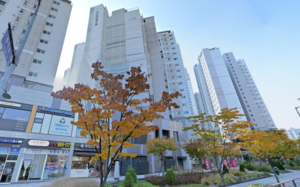
Seoul's outer districts rise as Gangnam slips — Seongbuk-gu leads gains in August
Korea Real Estate Board's August nationwide housing price survey Seoul's housing price gains slowed in August as high-end apartments in Gangnam-gu and Seocho-gu edged down, but outer districts such as Seongbuk-gu, Nowon-gu and Jungnang-gu — where development expectations remain high — continued to rise, keeping the overall pace of appreciation above May levels. According to the Korea Real Estate Board's August nationwide housing price survey released Tuesday, the average sale price of all housing types in Seoul — apartments, row houses and detached homes — rose 0.97 percent from the previous month, down 0.12 percentage points from July's 1.09 percent gain. The narrowing is attributed to a wave of distressed listings in the Gangnam area following the government's announcement of its 2026 tax reform package. By district, Gangnam-gu fell 0.18 percent, led by mid- to large-sized units in Apgujeong-dong and Daechi-dong, while Seocho-gu edged down 0.01 percent, centered on major complexes in Jamwon-dong and Banpo-dong. Outer Seoul, however, continued to climb. Seongbuk-gu posted the sharpest gain at 1.83 percent, driven by large complexes in Donam-dong and Jongam-dong. Nowon-gu rose 1.77 percent on development expectations in Sanggye-dong and Wolgye-dong, Seodaemun-gu gained 1.64 percent led by Namgajwa-dong and Hongjae-dong, and Jungnang-gu advanced 1.53 percent on well-established complexes in Sinnae-dong and Myeonmok-dong. Gwanak-gu rose 1.15 percent, centered on Sillim-dong and Bongcheon-dong, while Gangseo-gu gained 1.10 percent on large complexes in Deungchon-dong and Banghwa-dong. Gyeonggi Province rose 0.58 percent, led by Gwangmyeong and the Bundang area of Seongnam and Yeongtong-gu in Suwon, while Incheon fell 0.03 percent, with declines concentrated in Michuhol-gu, Namdong-gu and Seogu. Meanwhile, Seoul apartment prices rose 1.05 percent from the previous month and row house prices gained 0.93 percent, though both figures represented a narrowing from the prior month's increases. Worsening loan conditions — including a benchmark interest rate hike — are seen as having modestly dampened buyer demand. A Korea Real Estate Board official said prices continued to rise centered on Seoul and the greater metropolitan area, with demand consistently strong in preferred residential areas, even as some districts saw price corrections. "In the sales market, locally discounted listings led to downward transactions in some areas, while upward contracts were signed in large complexes, transit-oriented areas and small- to mid-sized units where demand remained high, pushing the national average above the previous month," the official said. Jeonse and monthly rent prices also continued to rise. The nationwide jeonse price index for all housing types rose 0.83 percent in May from the previous month — down 0.2 percentage points from April's 1.03 percent gain but still above April's 0.66 percent increase. Nowon-gu led with a 1.58 percent gain on large complexes in Sanggye-dong and Junggye-dong, followed by Seongbuk-gu at 1.38 percent on major complexes in Gireum-dong and Jeongneung-dong, Seodaemun-gu at 1.16 percent on small- to mid-sized units in Bukgajwa-dong and Namgajwa-dong, and Geumcheon-gu at 1.15 percent on large complexes in Siheung-dong and Doksan-dong. Gangbuk-gu rose 1.13 percent, led by Mia-dong and Beon-dong, Dobong-gu gained 1.06 percent in Chang-dong and Ssangmun-dong, and Gangdong-gu advanced 1.03 percent in Amsa-dong and Dunchon-dong. Gyeonggi Province rose 0.49 percent, driven by large complexes in Giheung-gu, Yongin and Gwangmyeong. Seoul's overall monthly rent increase rate came in at 0.82 percent, easing slightly from the previous month's 0.94 percent.
Sept. 15, 2026
-
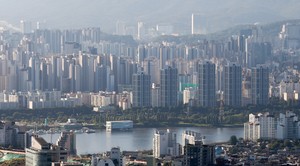
Seoul home prices rise for 83rd straight week as developer sentiment diverges between capital region and rest of country
Housing Business Conditions Outlook Index for September: Greater Seoul up 3.1 points, non-metropolitan areas down 11.2 points Housing developers have grown more optimistic about the Greater Seoul market, buoyed by rising home prices and government supply measures, but sentiment in non-metropolitan areas has moved in the opposite direction. A survey of housing developers released Tuesday by the Korea Housing Industry Research Institute showed the September Housing Business Conditions Outlook Index for the Greater Seoul area rose 3.1 points from the previous month to 89.2. A reading above the baseline of 100 indicates that more companies expect conditions to improve than to worsen. Seoul posted a reading of 97.2, up 4.4 points, while Gyeonggi Province climbed 7.4 points to 91.1. Incheon bucked the trend, falling 2.5 points to 79.3, highlighting regional disparities within the metropolitan area. "Sale prices have continued to rise, particularly in areas of Seoul with concentrations of mid- to low-priced housing such as Nowon and Jungnang, and in southern Gyeonggi Province, where the semiconductor industry's strong performance has widened the upswing," an institute official said. "Expectations for improved supply conditions and business environments stemming from the Aug. 13 measures also contributed to the modest gain in the Greater Seoul index." Several factors continue to cap any improvement in the outlook, including the ongoing financial burden from mortgage lending regulations and rising market interest rates, as well as a decline in home transaction volumes in the Greater Seoul area. The index for non-metropolitan areas fell 11.2 points to 77.9, a sharp contrast to the capital region. Jeju dropped 32.8 points to 60.0, Ulsan fell 25.0 points to 75.0, and North Chungcheong Province declined 25.0 points to 62.5. The institute attributed the declines to the announcement of a heavier tax burden on multi-home owners, a buildup of unsold units, and persistently weak demand — factors that have weighed on sentiment after several months of gains driven by hopes that the Greater Seoul rally would spread nationwide. The national index fell 8.7 points to 79.9. The September financing index rose 2.0 points from the previous month to 75.4. The institute said the improvement in the financing index reflected expectations of better funding conditions, as the Aug. 13 measures included steps to strengthen financial support for housing supply projects — among them expanded project financing guarantees, broader capital provision, and lower guarantee fees. The materials supply index fell 6.6 points to 88.7, weighed down by fading hopes for an end to the war involving Iran, rising construction costs, and continued price pressure on key building materials such as rebar. Meanwhile, Seoul's home prices show no sign of cooling, driven by continued transactions in mid- to low-priced apartment areas. Although the Gangnam area has softened amid a heavier tax burden on high-value properties, demand has shifted to outer districts, pushing weekly sale prices higher for 83 consecutive weeks from the first week of February last year through the first week of this month. If the streak extends two more weeks, it will match the 85-week record set during the Moon Jae-in administration.
Sept. 15, 2026
-
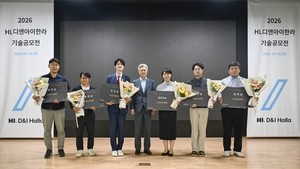
HL D&I Halla holds tech competition with 69 partner firms; 3D defect inspection, AI moving solution wins top prize
Competition seeks innovative technologies in AI, robotics and carbon neutrality HL D&I Halla has joined forces with its partner companies to identify innovative technologies as the construction industry adapts to advances in AI, robotics and carbon neutrality. The company announced Tuesday that it held its seventh annual technology competition at the HL Human Resources Development Institute in Giheung, Yongin, Gyeonggi Province. Now in its seventh year, the competition was designed to help the company respond to shifting technology paradigms in the construction sector and secure future competitiveness by identifying standout technologies. President Hong Seok-hwa, employee judges and representatives from partner firms attended the event. A total of 69 partner companies participated, submitting 85 technology proposals. Six entries advanced to the final round after two rounds of preliminary evaluation by working-level staff. Judges assessed each proposal on criteria including technological improvement, scalability, completeness, effort, originality and ESG considerations, ultimately selecting one top prize winner, two excellence award winners and three encouragement award winners. The top prize went to Pyeonghaeong Gonggan for its "3D defect inspection and AI moving-arrangement solution." The excellence award was shared by iParking for its "AI roofless parking control system" and Taekhan for its "auto-disconnect PHC pile lifting system." The three encouragement awards went to Jungwon Engineering for its "dual water-flow detection alarm valve," GL E&C for its "lift AI safety system" and Yuhyeon Construction for its "vibration-free rock-breaking excavation method and device." "We will continue to identify outstanding technologies through communication and collaboration with partner companies and a wide range of stakeholders," an HL D&I Halla official said. "We aim to boost productivity at construction sites, develop differentiated residential products and strengthen the brand competitiveness of Efete." Meanwhile, HL D&I Halla plans to continue new supply in key areas of Seoul and the greater metropolitan area in the second half of this year, including a mixed-use development project in Donuimun Zone 2 in Seodaemun-gu, Seoul. The company said it intends to reinforce the Efete brand's competitiveness at prime locations going forward.
Sept. 15, 2026
-
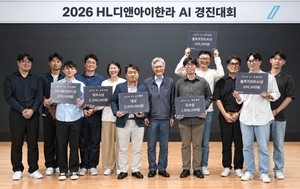
HL D&I Halla holds AI competition with 47 teams
'HL-CMP' automated drawing inspection system takes top prize HL D&I Halla held an in-house AI competition aimed at applying artificial intelligence to real work processes and boosting productivity across the company. The company announced Tuesday that the competition ran for 17 weeks beginning in May, drawing participation from 47 teams. Entries spanned a wide range of business functions — from construction tasks such as automated design drawing reviews and on-site work management, to back-office operations including accounting, finance and human resources. HL D&I Halla evaluated submissions on practical applicability, operational improvement, level of AI use and innovation, ultimately selecting seven winning entries. The top prize went to HL-CMP (Construction Management Platform), an automated system for generating drawing inspection reports. Judges gave it high marks for laying out the overall architecture of a construction data management platform and for developing a concrete inspection module as the first component to be built out. HL D&I Halla is also applying AI to the residential sector. Centered on its AI-based smart home platform Touch HL, the company is integrating residential spaces with mobility and community services, and developing related home solutions such as an AI-powered low-noise range hood that detects real-time air quality and operates automatically. "We will continue developing AI-based residential technology while expanding AI use across all areas of our business operations, raising work productivity and accelerating digital-driven innovation," a company official said. Meanwhile, HL D&I Halla has been securing a string of public infrastructure contracts. In March, it won a 52.8 billion won ($39.2 million) contract to extend a breakwater at Saemangeum New Port, and in July it signed a 155 billion won deal with Korea Expressway Corporation for the first section of a highway construction project between Jecheon and Yeongwol.
Sept. 15, 2026
-

South Korea stages joint cyber drill as vehicle hacking threats surge
Ministry of Land, Infrastructure and Transport, Korean National Police Agency and Hyundai Motor test response chain from incident report to resolution Imagine a nightmare scenario: your steering wheel suddenly moves on its own while you are driving. As cybersecurity threats targeting vehicles rise sharply, the government and automakers are joining forces to drill for exactly that kind of attack. The Ministry of Land, Infrastructure and Transport said Tuesday it held a joint public-private automotive cybersecurity incident-response drill at Hyundai Motor's Pangyo AVP headquarters, together with the Korea Transportation Safety Authority's Automotive Safety Research Institute, the Korea Internet & Security Agency, the Korean National Police Agency and Hyundai Motor. The exercise was designed to verify that incident-response procedures and inter-agency coordination work smoothly in real-world conditions, following the government's introduction of a Cybersecurity Management System for vehicles in response to the rapid growth of connected cars and a surge in automotive cybersecurity incidents. The number of such incidents grew at an average annual rate of about 68.8 percent over the six years through 2025. The CSMS is a regime for systematically managing cyber threats across a vehicle's entire life cycle, from development through disposal. South Korea began applying it to new vehicle models in August 2025, and certification will expand to all vehicle models from August next year. The drill was conducted as a tabletop exercise: rather than hacking actual vehicles or systems, organizers presented simulated incident scenarios in stages, and each agency carried out reporting, escalation and response procedures exactly as it would in a real emergency. The exercise traced the full coordination chain — starting with Hyundai Motor detecting an anomalous signal and filing an incident report, followed by the Automotive Safety Research Institute's technical review and a report to the Ministry of Land, Infrastructure and Transport, the Korea Internet & Security Agency's analysis of the breach, and the Korean National Police Agency's tracking and investigation of the suspected attacker. Participants then worked through the subsequent phases in accordance with actual procedures: halting software distribution, deploying a patched update to restore affected vehicles, tracking vehicles that had not yet received the fix, and reinforcing vehicle defense layers and supplier security — covering the full arc from containing the spread of an incident to preventing recurrence and formally closing the case. Park Jun-hyung, director general for mobility and automobiles at the Ministry of Land, Infrastructure and Transport, said automotive cybersecurity incidents differ from ordinary cybersecurity breaches because they directly affect people's lives and safety. "With cyberattacks growing more sophisticated and frequent — including AI-assisted infiltration of automakers' supply chains — we will use this joint drill as an opportunity to continuously strengthen the roles and coordination mechanisms among relevant agencies, and build an automotive cybersecurity environment that puts national security and public safety first," Park said.
Sept. 15, 2026
-
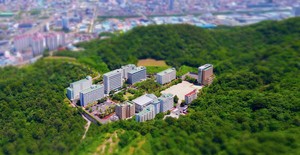
Changshin University tops South Gyeongsang private university admissions competition for 2027
Average competition ratio of 5.85 to 1 recorded within enrollment quota Booyoung Group announced Tuesday that Changshin University recorded the highest admissions competition ratio among private universities in South Gyeongsang Province in the early admissions round for the 2027 academic year. Changshin University received 3,885 applications for 669 spots in the 2027 early admissions round, yielding an average competition ratio of 5.85 to 1 within the enrollment quota. "Despite challenging admissions conditions — including an increase in enrollment capacity and a declining school-age population — many applicants chose Changshin University," a university official said. "We recorded the highest competition ratio among private universities in South Gyeongsang Province." The university will reorganize into five colleges starting in 2027 and has added AI-focused departments, including the AI Convergence Management Department, the AI Robot Industry Department and the Defense AI Convergence Department. The university plans to strengthen the practical dimension of major-specific education and expand curricula linked to future industries such as AI, digital healthcare, AI management, AI robotics and defense. Changshin University will conduct interviews and practical examinations for early admissions applicants and plans to announce final results according to its official admissions schedule. Booyoung Group has provided extensive support to Changshin University since joining as a financial contributor in 2019, guided by Chairman Lee Joong-keun's philosophy that "education is a century-long foundation for designing the nation's future." All incoming students receive full scholarships for their first year, with the exception of nursing majors, who receive 50 percent. The group also operates the "Booyoung Track," a field training program linked to its business sites. Booyoung Group has donated a cumulative total of more than 1.22 trillion won ($907 million) through various social contribution activities, including history preservation, veterans' affairs and scholarship programs. The group received the top residential welfare service award at the "Home I Want to Live In 2026" event held this month.
Sept. 15, 2026
-
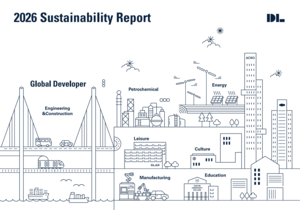
DL publishes 2026 group sustainability report with focus on climate response
Report analyzes climate risks and opportunities Covers governance and compliance management improvements DL has published its 2026 integrated group sustainability report, outlining DL Group's environmental, social and governance (ESG) management strategy and key performance results. This marks the fourth consecutive year DL has released a group-wide integrated sustainability report. The report covers domestic operations at major affiliates including holding company DL, DL Chemical, DL E&C, DL Energy, Glad Hotel & Resort, DL Construction and Pocheon Power. The report introduces a strengthened climate response framework, including a group-wide integrated climate scenario analysis. DL assessed the risks and opportunities that climate change could pose to each affiliate's business. The findings were reviewed by each affiliate's ESG committee and board of directors, and will be used to shape management and future business strategies. The group is working to turn climate change response into new business opportunities. In the petrochemical segment, it is upgrading its portfolio around high-value specialty products and eco-friendly materials. In construction, it has launched what it describes as South Korea's first standardized small modular reactor (SMR) design project. DL Group is also strengthening its governance, ethics and compliance management frameworks. DL continues to pursue board-centered accountability grounded in board independence and expertise, while regularly reviewing its internal controls and compliance systems. Meanwhile, DL Group has drawn attention as one of the domestic construction companies linked to investment in US nuclear power and energy infrastructure, following the National Assembly's passage of the Special Act on Investment in the United States.
Sept. 15, 2026
-
Seoul's 'Sintong' housing plan adds only 87,000 units net, lawmaker says
Data from Democratic Party lawmaker Oh Ki-hyung's office 55.5% of ground-breakings under plan concentrated in 2030–2031 One Sintong project site in Seongbuk-gu currently has 509 units, but the planned unit count after completion is only 191 — a net reduction of 318 units, or 62.5%. Another Sintong site in Nowon-gu currently has 864 units, but the planned count after its 2030 completion falls to 355 — a decrease of 509 units, or 58.9%. Seoul Mayor Oh Se-hoon's "Sintong" fast-track urban planning initiative is unlikely to resolve the city's near-term housing supply crunch, a lawmaker said Tuesday. Because most units delivered through the program are expected to take at least seven to eight years to reach actual move-in, the ruling party argues that short-term supply measures are urgently needed. According to a "2031 Housing Supply Plan" document that Oh Ki-hyung, a Democratic Party of Korea lawmaker on the National Assembly's Finance and Economy Planning Committee, obtained from the Seoul Metropolitan Government, the city is pursuing roughly 310,000 units of housing through the Sintong initiative by 2031 — but the actual net increase in Seoul's housing stock is estimated at only about 87,000 units. An analysis of 253 Sintong project sites found that the areas currently contain a combined 222,126 units, while the planned unit count after redevelopment is 309,500. That means the projects would add a net 87,374 units — far fewer than the roughly 310,000 figure the city promotes. If the public interprets the "310,000 units" as entirely new housing added to Seoul's stock, the actual supply impact would fall significantly short of that impression, Oh said. Particularly notable is that 30 of the 253 Sintong sites are projected to end up with fewer units than they currently have. One site in Yongsan-gu is set to shrink from 8,373 units to 5,970 — a loss of 2,403 — while a site in Seodaemun-gu would drop from 3,735 to 2,320, a reduction of 1,415 units. The timing of supply poses an even greater concern. Breaking down the city's ground-breaking targets by year, the plan calls for 28,776 units to break ground in 2026, 24,142 in 2027 and 18,413 in 2028. Those numbers then surge to 53,505 in 2030 and 69,755 in 2031 — meaning 55.5% of all planned ground-breakings are concentrated in the final two years of Mayor Oh's term. The Seoul Metropolitan Government assumes a roughly four-year gap between ground-breaking and completion. Under that timeline, units breaking ground in 2026 would be completed in 2030, those starting in 2027 in 2031, and those starting in 2031 not until 2035. Even if the plan proceeds on schedule, a large share of the units concentrated in the 2030–2031 ground-breaking surge would not be ready for move-in until 2034–2035. The ruling party argues that while the Sintong figures represent the potential scale of future redevelopment, they fall short as a short-term supply remedy for the housing shortage Seoul could face as early as 2026. "I agree with the overall direction of accelerating redevelopment and reconstruction to expand Seoul's housing supply," Oh said. "But what matters to residents is how many additional homes will actually be built, and when they can move in." He added that of the roughly 310,000 units the city highlights, subtracting the existing 222,000-plus units leaves a net increase of only about 87,000. "With more than half of the ground-breaking plan pushed to 2030 and beyond, simply emphasizing the '310,000 units' figure cannot solve the supply problem that Seoul residents are actually feeling," he said. Concerns about housing demolition also surfaced. Under the plan, existing homes totaling about 123,260 units — 53,505 in 2030 and 69,755 in 2031 — would be cleared for construction within just two years, triggering large-scale demolitions and resident relocations. If displacement demand becomes this concentrated in such a short window, it could destabilize Seoul's jeonse and monthly rent markets and push up housing costs. Oh called on the city to go beyond simply announcing a ground-breaking target of 310,000 units and to promptly release a comprehensive relocation and rental stabilization plan — one that covers the scale of housing demolitions by year and by district, the number of households to be displaced and their relocation timeline, the volume of new move-ins and available jeonse and monthly rent supply in Seoul over the same period, a schedule for coordinating relocation timing across large project sites, absorption measures such as public rental and long-term jeonse housing, and a metropolitan-wide relocation strategy linked to housing supply across the greater Seoul area.
Sept. 15, 2026
-
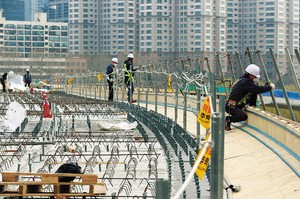
Land ministry to handle serious illegal subcontracting cases directly, halve penalties for self-reporting
Enforcement Decree of Construction Industry Basic Act cleared by Cabinet Saemangeum project opens more opportunities for construction engineering firms The Ministry of Land, Infrastructure and Transport will directly impose administrative penalties on serious illegal subcontracting violations at construction sites and cut those penalties by up to half for companies that voluntarily report the violations. The Cabinet on Tuesday approved partial amendments to the enforcement decrees of the Construction Industry Basic Act and the Saemangeum Project Act containing these measures, the ministry said. The amended Construction Industry Basic Act decree takes effect four months after promulgation. Under the previous system, penalties for detected illegal subcontracting were required to be imposed within six months, but enforcement authority rested entirely with local governments. Even when the ministry detected a violation, the process was frequently delayed by local authorities conducting their own reinvestigations before a final ruling could be issued. Going forward, the ministry will directly impose administrative penalties in cases designated by ministerial notice, taking into account factors such as the detecting authority, the subcontracting amount, the type of work, the construction progress rate and the jurisdiction involved. Local governments will retain authority only over general cases not covered by those criteria. The amendments also introduce a new provision reducing penalties for voluntary self-reporting. Illegal subcontracting at construction sites can lead to safety accidents and unpaid wages, making it important to convert such arrangements into lawful contracts quickly — yet until now there were few incentives to encourage self-reporting beyond on-site inspections. Under the new rules, a company that voluntarily reports an illegal subcontracting arrangement within a period set by the minister and completes corrective action before a final penalty is issued may have its business suspension or surcharge reduced by up to one-half. The amended Saemangeum Project Act decree, also approved Tuesday, takes effect immediately upon promulgation. The revision adds construction engineering service contracts under the Construction Technology Promotion Act to the list of contracts in which Saemangeum project operators may give preference to local firms. The change is expected to significantly expand opportunities for construction engineering companies with their principal offices in North Jeolla Province to participate in Saemangeum projects. The amendments also improve how land developed in the Saemangeum zone is supplied. A new provision allows land to be supplied through negotiated contracts to parties selected through procedures and methods set by the Saemangeum Development Authority. This is expected to enable mixed-use development through project proposals or design competitions, allowing the government to more actively accommodate diverse corporate investment needs. Meanwhile, the ministry conducted intensive on-site inspections of 75 sites suspected of illegal subcontracting last June, detecting violations at 18 sites involving 26 companies in 29 cases. It also resolved 11 cases of unpaid construction equipment rental fees totaling 125.8 million won ($93,500).
Sept. 15, 2026
MOST READ
- 1Hyundai Motor unveils all-new Tucson with bigger body, smarter tech after 6-year wait
- 2Flat sneakers are back: Why Nike is reviving a 55-year-old running shoe
- 3Pope Leo XIV declines French honors and banquet, accepts only private meeting with Macron
- 428 illegal sports streaming sites found operating freely despite repeated blocks
- 5What was Rachmaninoff's performance fee? A 1928 price list tells all
- 6Samsung Biologics union's show of force backfires at the bargaining table
-
WORLD

US warns of punishment for anyone enabling Iran's Strait of Hormuz toll scheme
-
INDUSTRY
Toyota union puts productivity first; Hyundai Motor union demands bigger share of profits
-
FINANCE
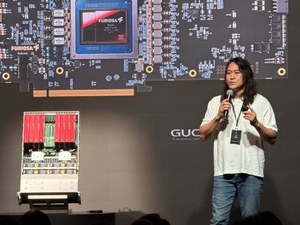
National Growth Fund to invest $531M in FuriosaAI, which rebuffed Meta's $800M takeover bid
-
INDUSTRY
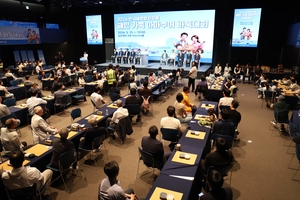
Korea Shipowners' Association holds amateur baduk tournament for Maritime Day