
- HOME
- IT·SCIENCE
-
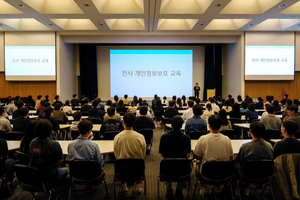
Tving holds company-wide privacy training after massive data breach
Yoon Jong-su of law firm Gwangjang leads company-wide session Practical steps for stronger personal data handling shared Privacy protection set as core operating principle for all staff Tving, the streaming platform caught up in a massive personal data breach, has conducted a company-wide privacy training session for all employees as part of efforts to embed a security-first culture and make data protection a fundamental operating principle. Tving said Tuesday it held the company-wide personal data protection training on Monday. Yoon Jong-su, a partner attorney at law firm Gwangjang and a serving board member of the Korea Association of Personal Information Professionals, led the session on the theme of "Growing risks of personal data breaches, the shifting regulatory paradigm, and response strategies." The session covered changes in the personal data protection landscape, the importance of building proactive prevention systems, the direction of data protection in the AI era, and key points employees should keep in mind when handling personal data in their day-to-day work. According to Tving, Yoon stressed the importance of data lifecycle management — overseeing personal data from the point of creation and collection through to use, storage and disposal. He also shared practical measures based on improvements to related systems and processes, including steps to strengthen data management standards such as reviewing retention periods and processing purposes, and ensuring timely disposal of unnecessary personal data. Yoon also addressed "privacy by design" — the principle of incorporating data protection from the earliest stages of service planning and development, ensuring that privacy considerations are built into every phase of a service rather than addressed after the fact. "Personal data protection is not something to be dealt with after a service launches — it is a fundamental principle that must be considered from the planning stage," Yoon said. "It is important to put in place a system that ensures personal data handling is reviewed and protective measures are applied throughout the entire service lifecycle." Tving said it plans to strengthen its personal data protection programs following the training. The company will review its management systems covering the entire data processing cycle, improve related procedures, and establish data protection as a working principle practiced by every member of the organization. "Personal data protection is a fundamental principle that every member of the organization must practice with individual accountability," said Ko Min-seok, Tving's executive vice president of human resources. "Alongside training, we will review the relevant standards and procedures so that employees can apply an understanding of the importance and responsibility of personal data handling to their work, and we will make improvements where needed." Meanwhile, on Sept. 3, a joint public-private investigation team under the Ministry of Science and ICT announced the findings of its probe into the Tving data breach. The team said personal data from about 39.54 million accounts, including duplicate accounts, had been leaked. The breach extended beyond user information to include 361 development projects containing source code used for personalized content recommendations, search algorithms, payment management and paid service operations.
Sept. 15, 2026
-
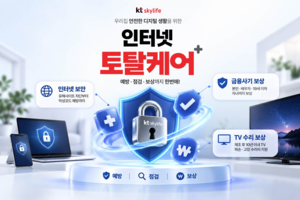
KT SkyLife launches 'Sky Internet Total Care' covering fraud losses, TV repairs
Financial fraud coverage up to 3 million won per year TV repair support up to 500,000 won annually KT SkyLife has launched a new add-on service covering internet security, financial fraud losses and TV repairs under a single subscription. The company announced Monday that it had launched Sky Internet Total Care, a bundled protection service tied to its internet plans that covers prevention, inspection and compensation. The service automatically blocks harmful websites and malware. Subscribers can run self-checks for phishing and hacking risks through the company's website or smartphone app, and if a security issue arises, a dedicated engineer is available for one-on-one remote diagnostics. If a subscriber suffers financial fraud — including voice phishing and hacking — that qualifies for compensation under the service terms, KT SkyLife will cover losses of up to 3 million won ($2,230) per year. Coverage extends to the subscriber, their legal spouse and dependent children aged 19 or under. There is no deductible. The plan also covers TV repair costs from physical damage or mechanical failure. TVs manufactured within the past 10 years are eligible; subscribers pay a 20,000 won deductible per claim and can receive up to 500,000 won in annual reimbursements with no cap on the number of claims. Through a single add-on, subscribers can access internet security management, financial fraud compensation and TV repair support in one package. Sky Internet Total Care is available for an additional 2,200 won per month on top of an existing Sky Internet plan. The same benefits apply regardless of the subscribed internet tier, which ranges from 100 Mbps to 1 Gbps. KT SkyLife said it plans to expand its coverage of everyday risks — including internet security, financial fraud and home appliance protection — and strengthen its integrated care offering to span prevention, inspection and compensation. Meanwhile, KT SkyLife's internet subscriber base surpassed 660,000 as of the end of June. Its IPTV service "ipit TV," launched last July, also crossed 240,000 subscribers within its first year.
Sept. 15, 2026
-

Samsung Electronics, Verizon successfully demonstrate AI-based ISAC, a key 6G technology
AI-based communication and sensing technology analyzes crowd density at large events Aims to improve event management efficiency and enhance audience safety ISAC implemented via software without changing existing network equipment Samsung Electronics has successfully demonstrated integrated sensing and communication technology — a core component of 6G — in a real-world setting alongside US carrier Verizon. The AI-based ISAC technology is expected to enable crowd density analysis at large events while improving operational efficiency and audience safety. The two companies announced Tuesday that they had validated Samsung Electronics' AI-based ISAC technology, built on its virtualized network solution, at a global sporting event held in Texas in July. A virtualized network solution implements network functions through software running on general-purpose servers, rather than on dedicated hardware. Because it makes it easier to leverage CPUs and GPUs for AI workloads, the approach allows new AI services and AI-driven network capabilities to be deployed and scaled rapidly. ISAC is a key 6G technology that turns communication equipment into high-precision sensors. By analyzing the reflection patterns of radio signals collected at base stations, it can determine the location, speed and direction of objects — all without requiring separate sensing hardware or modifications to existing communication infrastructure. The technology works even in blind spots or low-light environments where conventional sensing methods struggle, making it applicable across a wide range of fields including safety and security, transportation and industrial operations. At the event, the two companies used ISAC to detect crowd movement and density in real time, processed the data through AI, and successfully visualized the results as heat maps — color-coded representations of data intensity and distribution. The technology allows organizers at large gatherings such as sporting events and concerts to monitor crowd conditions in real time. Armed with that information, event organizers can manage congested areas and take preventive action against safety incidents. The technology also makes it easier to guide attendees toward less crowded amenities or alternative routes. The demonstration used Samsung Electronics' latest AI radio access network solution, NIS (Network in a Server). NIS implements network functions — including AI, base stations and core — in software, and integrates high-performance computing resources such as CPUs and GPUs into a single platform, serving as an edge AI platform. NIS can run a wide range of network functions through software on a single hardware platform. A key advantage is that new technologies such as ISAC can be deployed without replacing existing network equipment or adding separate hardware. Verizon Chief Technology Officer Yago Tenorio said the successful demonstration of AI-based ISAC with Samsung Electronics "is a meaningful achievement that gives concrete shape to the blueprint for the 6G era," adding that the company would "continue to validate and advance future technologies combining AI across diverse domains, from everyday life infrastructure to industrial ecosystems."
Sept. 15, 2026
-
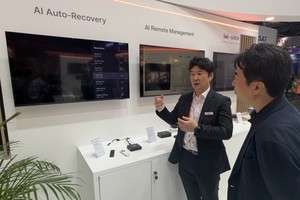
LG Uplus unveils next-generation home media devices at IBC 2026
Products displayed at Marcys, Kaon Group and Amlogic booths Carrier seeks partnerships with operators in Europe, Asia, Latin America LG Uplus unveiled a lineup of next-generation home media devices, including an ultra-compact IPTV set-top box, at IBC 2026, the global media and broadcast technology exhibition. The company said Tuesday it participated in IBC 2026, held Friday through Monday at the RAI Convention Centre in Amsterdam, the Netherlands, and showcased new home media products there. IBC brings together telecom and broadcast operators, content and platform companies, and equipment manufacturers from around the world to share the latest technology and industry trends. This year's event focused on next-generation media technologies and services, including AI, OTT, cloud and connected home. LG Uplus presented its products through the booths of Amlogic, Kaon Group and Marcys, displaying an ultra-compact IPTV set-top box, a portable monitor and a camera-based golf putting simulator. Hands-on demonstrations allowed visitors to try the products directly. While LG Uplus has previously demonstrated jointly developed technologies at IBC, this marks the first time the company has publicly exhibited pre-launch products at the show. The ultra-compact IPTV set-top box was the smallest of its kind on display at the exhibition. The portable monitor was designed to let users watch media content in a variety of indoor and outdoor settings, while the camera-based golf putting simulator invited visitors to take part in a putting game themselves. The exhibition went beyond a simple product reveal, leading to business meetings with overseas telecom and broadcast operators and partner companies. During the event, LG Uplus held business meetings with telecom operators, broadcasters and equipment manufacturers from Europe, Asia and Latin America. The company plans to continue using international exhibitions to track the latest trends in AI, OTT, home connectivity and media platforms, and to identify new business opportunities. "This exhibition was meaningful in that we introduced to the global market an ultra-compact set-top box and new device experiences developed on the basis of the technology and customer experience we have accumulated operating our domestic IPTV service," said Park Chan-seung, executive vice president and head of LG Uplus's home business group. Meanwhile, LG Uplus posted IPTV revenue of 337.7 billion won ($251 million) in the second quarter of this year, up 2.1 percent from the same period a year earlier. IPTV subscribers totaled about 5.776 million over the same period, a 1.3 percent increase. Revenue from the smart home segment, which includes high-speed internet, rose 4.3 percent year-on-year to 663.8 billion won.
Sept. 15, 2026
-
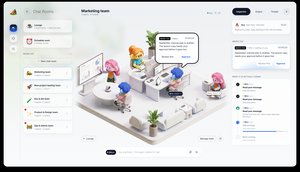
Hancom launches 'Nomadian,' billed as world's first AI workforce platform, targeting US solo entrepreneurs
Agentic OS powers 3D office with AI employees Beta launch in US set for December; commercial rollout planned for 2027 30 million-plus no-employee US firms in the crosshairs Hancom is set to launch Nomadian, what it calls the world's first AI workforce platform, designed to let users collaborate with AI agents as if they were members of the same team. The company is targeting the solo-entrepreneur market with the product. Hancom announced Tuesday that it would unveil Nomadian, an AI workforce platform that builds a three-dimensional workspace on top of the company's proprietary agentic operating system. Nomadian is a global agentic OS product aimed squarely at the US solo-startup market. It will be offered as software-as-a-service, accessible directly through a web browser with no installation required. Hancom plans to release a beta version in the United States in December before launching a paid subscription service starting next year. To support the effort, Hancom said it has assembled a dedicated task force and is running what it calls the "Nomadian Project." Hancom highlighted three defining features of Nomadian: an AI team organized by job function, a 3D office that makes the work process visible, and a final approval mechanism that keeps humans in control. Users can hire AI agents on Nomadian as they would employees, selecting roles such as data analyst, content marketer or email marketer, with each role automatically connected to the tools that job requires. If no agent exists for a desired role, users can build one themselves. When a user assigns a task, Nomadian breaks it down and distributes the work among the AI team members. The AI agents' work unfolds inside a 3D virtual office called a "room," where each agent is represented as a character. Users can see at a glance who is working on what, which tools they are using, how far along they are, and to whom they have handed off results. Hancom said this differentiates Nomadian from chat-based AI tools that only deliver final outputs. The room also retains brand guidelines and work rules, so users do not need to re-enter instructions every time. A safeguard ensures humans retain final approval over tasks. Before any irreversible action — such as sending an email or applying a digital signature — the AI agent requests the user's sign-off. For example, an online-shop owner who hands off promotional content and a restock notification email to the AI team before leaving for the night can simply review the drafts the next morning and hit approve. Nomadian is being developed on Hancom's agentic OS, a platform that creates, runs and controls multiple AI agents from a single interface. Hancom said it commercialized AI agents drawing on 36 years of document-software expertise, then advanced that work into an agentic OS capable of coordinating and controlling multiple agents. The company said Nomadian is the first AI workforce platform to group output-generating agents into a team and render them inside a 3D space. Hancom aims to use the Nomadian launch as a springboard into the US solo-entrepreneur market. According to the US Census Bureau, more than 30.4 million businesses in the United States operate without any employees, generating annual sales of $1.8 trillion. In addition, according to Carta, a startup equity management platform, the share of new startups founded by a single person rose from 23.7 percent in 2019 to 36.3 percent in the first half of 2025. Hancom said it is in talks with local companies on market-entry and commercialization strategies. During the beta period, the company plans to validate the product with users and incorporate feedback on its pricing model, retail channels and local regulatory requirements. After the US launch, Hancom intends to expand into South Korea, Europe and other markets. "Nomadian is not just a work tool — it is a platform that provides AI employees and a team to work alongside you, and it exists because we have 36 years of core document technology and our own agentic OS," Hancom Chief Executive Kim Yeon-su said. "We will open a market where individuals become enterprises and set the standard for the global AI workforce market."
Sept. 15, 2026
-
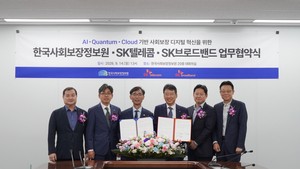
SK Broadband, social security agency sign MOU to advance AI-powered welfare services
Collaboration to cover AI technology, quantum security and cloud-based innovation Partners to pilot AI autonomous security system using post-quantum cryptography Digital infrastructure to drive improvements citizens can feel SK Broadband and the Korea Social Security Information Service are joining forces to transform digital welfare services by integrating AI and security technology, with the goal of building welfare services that citizens can tangibly experience through digital infrastructure. SK Broadband announced Monday that it had signed an MOU with SK Telecom and the Korea Social Security Information Service at the agency's main conference room in Gwangjin-gu, Seoul, to advance digital innovation in the social security sector. As demand for AI- and data-driven service innovation grows across the public sector, the need for cutting-edge technology and advanced security capabilities to reliably underpin welfare services has also increased. SK Broadband and SK Telecom will support the Korea Social Security Information Service's digital transformation using AI, quantum security and cloud technology, enabling citizens to access welfare services more safely and conveniently. To that end, the three organizations will form a joint operating committee and draw up a concrete plan to upgrade welfare services. Specific initiatives include piloting an AI autonomous security operating system based on post-quantum cryptography (PQC), using telecommunications data to proactively identify households at welfare risk and providing AI-based counseling technology support, strengthening security through PQC and supporting the application of quantum communications — both wired and wireless — and providing technical support for building and operating hardware, software and security systems within the cloud. "This agreement will serve as an important opportunity to enhance the digital competitiveness of welfare services that citizens can feel," said Kim Gu-young, head of SK Broadband's Enterprise Business Division. "We will contribute to the digital transformation of public services by leveraging SK Broadband and SK Telecom's capabilities in AI, quantum security and cloud."
Sept. 15, 2026
-
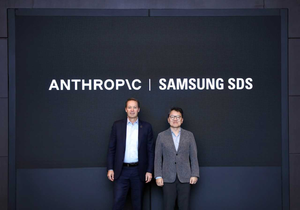
Samsung SDS becomes Korea's first Anthropic 'Select Tier' partner, eyes Claude-based AI expansion
Select Tier follows July partnership agreement Claude supply, operations bolster integrated AI framework 'Client Zero' experience to feed AX strategy Samsung SDS has become the first company in South Korea to earn Select Tier status in Anthropic's Claude Partner Network. Samsung SDS announced Tuesday that it had secured the Select Tier designation, following a strategic partnership it signed with Anthropic at an AI summit held in San Francisco in July. The Select Tier is reserved for partners that hold Anthropic-certified technical personnel and can demonstrate hands-on experience building and deploying Claude for joint customers in live production environments. Samsung SDS already holds authorized reseller status allowing it to supply Claude through Amazon Web Services' generative AI platform Amazon Bedrock and to support its implementation and operation. With the addition of the Claude Partner Network Select Tier, the company plans to offer an end-to-end AI framework covering Claude adoption consulting, Claude supply through Amazon Bedrock, service development and operations, and technical support. Samsung SDS plans to combine Anthropic's AI technology with its own accumulated AI transformation (AX) experience across multiple industries to expand the development of Claude-based AI services and AI agents. The two companies began collaborating to grow Claude-based enterprise AI business in the Korean market following the strategic partnership signed in July. Their current cooperation spans joint identification of new business opportunities in the Korean market, co-marketing and proof-of-concept projects, joint business expansion, and the training of applied AI engineers. Samsung SDS will in particular train applied AI engineers — field specialists who help customers deploy and operate Claude — to strengthen the AI service capabilities of its client companies. Samsung SDS has also introduced Claude Enterprise for internal use under its "Client Zero" strategy, which calls for applying new technologies in-house before rolling them out to customers. The company currently provides Claude Enterprise to employees at 20 Samsung affiliates, reaching approximately 70,000 staff members. Samsung SDS intends to draw on its large-scale internal and affiliate deployment experience to build a body of real-world enterprise use cases for Claude, then extend those insights into AX projects for its clients. "Samsung SDS is a partner with the technical capabilities and industry expertise to apply AI to real business operations in enterprise environments," said Chris Chaury, head of international go-to-market at Anthropic. "Through this Select Tier designation in the Claude Partner Network, we will deepen our collaboration and support Korean companies in maximizing productivity with Claude." Lee Jun-hee, CEO of Samsung SDS, said the company would "combine Anthropic's frontier AI technology with Samsung SDS's industry-specific digital transformation experience to accelerate AI adoption among Korean businesses and help them create business value." He added that Samsung SDS would "integrate global AI technologies, including Claude, with our multi-dimensional AI full stack to support customers' AX journeys."
Sept. 15, 2026
-

KAIST develops 'universal biomaterial' that sticks to wounds and spreads water instantly
- Professor Lee Haeshin's team develops 'CHI-B' using chitosan and biomass - Combines adhesion and superhydrophilicity in one material, manufactured in 30 minutes at room temperature A new biomaterial that rapidly adheres to wounds to stop bleeding and, when applied as a coating on glass or plastic, causes water to spread instantly rather than bead up has been developed by researchers at KAIST. KAIST announced Tuesday that a research team led by Professor Lee Haeshin of the Department of Chemistry had developed "CHI-B," a polyphenol bio-adhesive material combining strong adhesion with superhydrophilic surface treatment. The material uses the natural polymer chitosan and a biomass-derived compound called 1,2,4-benzenetriol (BTO). CHI-B's defining feature is that it delivers two distinct functions within a single material. When applied to a wound, it adheres quickly to the bleeding site and seals it; when used as a coating on glass, plastic or similar surfaces, it creates a superhydrophilic surface on which water spreads immediately upon contact. The research team successfully applied a uniform CHI-B coating to materials with widely differing properties, including glass, PTFE (commonly known as Teflon), PET used in plastic bottles, PS used in packaging, and titanium dioxide (TiO₂). Adding just 10 parts per million of urea was sufficient to achieve the superhydrophilic surface effect. The material also proved highly durable. Surfaces treated with CHI-B remained stable after more than a month of washing and continued to spread water effectively even after a year. The team also confirmed CHI-B's potential as a medical hemostatic material. When a CHI-B sponge was applied to a liver wound in mice, blood loss was significantly lower than in the control group. The material adheres rapidly to the bleeding site and physically seals the wound to aid hemostasis. It also demonstrated high biocompatibility in cytotoxicity tests. The team also dramatically simplified the manufacturing process. Conventional chitosan-based bio-adhesives require expensive coupling agents for chemical bonding, followed by multiple purification steps and lengthy dialysis. The researchers took advantage of BTO's natural tendency to oxidize when exposed to oxygen in the air. As oxidized BTO transforms into a highly reactive structure, it bonds rapidly with chitosan — eliminating the need for separate chemical coupling agents or heating, and allowing production at room temperature in under 30 minutes. The team scaled production up to tens of liters in the laboratory, confirming the material's potential for mass manufacturing. Freeze-dried CHI-B sponges dissolved completely in water in about 15 seconds and maintained high solubility in neutral environments similar to the human body. The team plans to expand the material's applications to include antifouling coatings, surface treatment for biosensors and medical devices, industrial functional coatings, and medical adhesive and hemostatic materials. It will conduct further verification of performance, stability and long-term storage for each application, and pursue commercialization through corporate partnerships and technology transfer. "We have achieved both strong adhesion and superhydrophilic surface properties — the ability to spread water rapidly — within a single biomaterial," Lee said. "The manufacturing process is simple and we have confirmed the potential to scale up production, so we expect it to find applications across a wide range of fields, from hemostatic materials to medical devices, biosensors and functional surface treatments." The findings were published in the international academic journal Materials Horizons.
Sept. 15, 2026
-
LG Innotek shares down 60% from peak, outpacing Samsung Electronics and SK hynix declines
"Margin calls are about to flood in." — LG Innotek retail investor "We're all going to get wiped out." — LG Innotek retail investor LG Innotek, once counted among Korea's so-called "emperor stocks" with a share price above 1 million won ($743), is in a steep decline. Shares that climbed above 1.8 million won earlier this year on expectations of record earnings and improved profitability have collapsed to the 500,000-won range — a drop of roughly 60 percent in just three months — leaving investors in an uproar. On Monday, LG Innotek shares fell more than 5 percent from the previous session to close at 514,000 won. After surging through the first half of the year, the stock reversed sharply in June. The stock shed 20.44 percent in the first week of June alone, then slid to the 740,000-won range in late July, the 650,000-won range in mid-August, and the 500,000-won range in September. Analysts say the decline reflects a combination of factors: a broad valuation contraction across global semiconductor stocks, elevated expectations following the first-half rally, and concerns about component price cuts driven by rising memory chip prices. LG Innotek posted second-quarter sales of 5.53 trillion won and operating profit of 245.8 billion won ($183 million). Operating profit surged 2,057 percent from a year earlier, beating the market consensus of around 180 billion won by more than 30 percent in what analysts called an earnings surprise. The scale of LG Innotek's decline has far outpaced that of Samsung Electronics and SK hynix, inflicting heavy losses on shareholders. A significant number of investors are believed to be stuck holding shares purchased in the 1-million-won range. Despite the strong earnings, some brokerages have begun cutting their price targets. NH Investment & Securities recently lowered its target for LG Innotek from 1.2 million won to 1 million won — a reduction of 16.7 percent — citing a broad valuation decline across global IT components. The brokerage pointed to concerns about smartphone component price cuts stemming from rising memory chip prices as a key driver of the stock's recent weakness. "We adjusted the target to reflect the recent decline in peer-group multiples," said Hwang Ji-hyeon, an analyst at NH Investment & Securities. "Given solid earnings growth and a valuation already below the sector average for substrates, the investment case remains compelling." Hyundai Motor Securities also cut its target, lowering it 29 percent from 1.45 million won to 1.03 million won. Some analysts, however, see the selloff as a buying opportunity. "The recent share price decline is a chance to add exposure," said Jo Dae-hyeong, an analyst at DS Investment & Securities. "We expect investment appeal to rise as earnings hold up better than feared and orders for high-value substrates begin to ramp up in earnest." Jo set a price target of 1.3 million won.
Sept. 14, 2026
-

Does owning a pet really make you less lonely? A study of 2,328 people found a surprising answer
It has become conventional wisdom that owning a pet is good for your health. Dog owners walk more, people living alone feel less lonely, and trips to the doctor become less frequent — a phenomenon academics have even given a name: the "pet effect." Some research has found that dog owners have a 24 percent lower mortality rate than non-owners. Other studies have linked pet ownership to reduced cardiovascular risk and better sleep. During the COVID-19 pandemic, a wave of reports suggested that pets helped ease depression and loneliness during periods of isolation. Yet other studies have found no link between dog ownership and mortality. Some longitudinal surveys have found no difference in loneliness or depression between people who recently acquired a pet and those who did not. There have even been reports of elderly people suffering fractures after falling because of their pets, and of pet owners taking pain medication more frequently and facing a higher risk of depression. A research team led by Rahel Marti and Karin Hediger of the University of Basel in Switzerland recently published findings in the international journal PLOS One based on an analysis of a nationally representative survey. Among 2,328 Swiss adults studied, there was no difference between pet owners and non-owners in loneliness, life satisfaction, or the number of doctor visits. Pet ownership did not translate to better health Of the 2,328 respondents the research team examined, 1,105 lived with a pet or kept one outside the home, while the remaining 1,223 did not own any. Those who lived with animals visited a doctor the same number of times over the past year as those who did not. Loneliness and life satisfaction were also no different. The hypothesis that walking a dog leads to conversations with neighbors and new social connections was also not borne out. Pet owners actually scored slightly lower on self-rated health and smoked an average of 0.19 more cigarettes per day — roughly 70 more over the course of a year. According to the research team, earlier studies that concluded pet ownership leads to longer life were skewed because the groups being compared were not equivalent to begin with. In general, people who own pets and those who do not are not in the same circumstances. In this survey, pet owners were on average four years younger, more likely to be employed or in school, and more likely to live with family. Non-owners, by contrast, tended to be older and retired. People who are younger, employed and living with family tend to be healthier and less lonely — for reasons that have nothing to do with animals. When that underlying difference is left unaccounted for, the benefit appears to come from the pet. As for why pet owners in this study scored lower on self-rated health, the research team pointed to a different explanation. The team suggested that people in poor health or under significant stress may have acquired a pet seeking comfort. In other words, it was not that owning a pet caused lower health scores — rather, people with lower health scores were more likely to own pets in the first place. Treating pets like family made no difference either The research team also examined the nature of the relationship between owners and their pets. Even among pet owners, some simply provide a place to sleep while others spend the entire day with their animals, and the degree of closeness varies considerably. The team measured attachment strength by asking whether owners thought about their pet when it was not around, whether they considered it a member of the family, and whether they felt very close to it. The team expected that stronger attachment would correlate with better health and less loneliness, but the results told a different story. People who reported a strong bond with their pet were no healthier and no less lonely than those who did not. Life satisfaction showed the same pattern. How deeply someone cherishes their pet, the findings suggest, is not determined by factors such as health status or loneliness. However, the research team acknowledged as a limitation that health, loneliness and life satisfaction were each measured with only a single question. The questions were also simple, which may have made them insufficient for capturing complex psychological states. The team also said researchers need to move beyond simply asking whether someone owns a pet with a yes-or-no question. Understanding how a person actually lives with their pet, they said, must be part of the picture. Reference DOI: 10.1371/journal.pone.0352778 R. Marti, K. Hediger, E. Pauli, & J. Hattendorf, Factors of pet ownership associated with human health: A representative cross-sectional survey of Switzerland, PLoS One 21 (2026) e0352778.
Sept. 14, 2026
-

AI golf commentator debuts at New Mexico Open, drawing mixed reactions
As AI continues to expand its reach into sports, a new kind of broadcaster has arrived: an AI commentator capable of interacting with human analysts in real time. Viewer reactions have been starkly divided. While some said "everyone will surely love this," others warned the experiment would become "a target of mockery and backlash." According to Sports Video Group, a US trade publication covering sports broadcasting technology, an AI commentator named Duff Forman will appear in Tuesday's broadcast of the New Mexico Open golf tournament. Duff Forman is an autonomous AI character developed by digital media production company Gopher Hall Productions. It analyzes player strategy — including club selection and shot direction — as well as swing mechanics. Unlike earlier technologies, Duff operates without a script and communicates with human commentators in real time. The system combines Gopher Hall Productions' AI platform with voice technology from ElevenLabs and Nvidia's Audio2Face. ElevenLabs renders a Scottish-accented voice, while the character's facial expressions and lip movements sync accordingly. A separate inference system developed by Gopher Hall Productions determines what Duff actually says. Gopher Hall Productions said golf involves many interesting decisions and judgments that are not readily apparent to viewers, and that Duff is designed to help audiences better understand the strategy behind the game. Former professional golfer Notah Begay III, who will co-commentate the broadcast, added that Duff "will be able to analyze strategy and swing, monitor weather and course conditions, and answer questions in real time." This is not the first time AI has been used in sports. The technology has primarily been applied to officiating and play-reading. A prominent example is Hawk-Eye Live in tennis: last year, Wimbledon fully adopted an electronic line-calling system that uses high-speed cameras installed around the courts to track the ball's movement and trajectory and automatically determine whether shots are in or out. Soccer has its own semi-automated offside detection technology, in which numerous cameras positioned around the stadium track players' positions in real time and automatically flag offside violations. Companies are also moving into AI-driven sports applications. IBM used generative AI at the 2023 Masters Tournament to automatically generate audio commentary for more than 20,000 match video clips. In South Korea, KT Wiz used an AI voice to replicate the sound of its in-stadium announcer, training the system on the real announcer's vocal tone and intonation to deliver player introductions and in-game announcements. The AI voice filled in during the announcer's maternity leave. Fan reactions to the introduction of AI commentary remain divided. A comment reading "Everyone will surely love this" drew a large number of likes online. On Reddit, however, users called it "the most absurd idea ever" and questioned why companies pursue such projects. Fox News also noted a stream of negative responses predicting that exchanges between Duff and human commentators would become "a target of mockery and backlash" rather than a source of entertainment.
Sept. 14, 2026
-

World's top light-measurement scientists converge on Jeju for NEWRAD 2026
KRISS hosts international conference with more than 140 experts from 30 countries Leading global experts in optical radiation measurement — a field that underpins the reliability of cutting-edge science from climate monitoring to space exploration and quantum technology — are gathering in Jeju this week. The Korea Research Institute of Standards and Science (KRISS) announced it is co-hosting NEWRAD 2026, an international conference on optical radiation measurement, with the Korean National Committee of the International Commission on Illumination, from Monday through Thursday at the KAL Hotel in Seogwipo, Jeju. NEWRAD is an international academic conference where researchers share the latest findings and applied technologies in optical radiation measurement — the precise measurement of the intensity and spectral characteristics of light across ultraviolet, visible and infrared wavelengths. The conference was launched in the United States in 1985 and is held roughly every three years. This marks the first time South Korea has hosted the event since 2008, an 18-year gap. South Korea was the first Asian host nation when it held the conference that year, and by hosting it again, the country becomes only the fourth in the world — after the United States, the United Kingdom and Switzerland — to have hosted NEWRAD twice. The applications of optical radiation measurement technology have expanded significantly. While the field once focused primarily on fundamental measurement standards and detector and light-source technologies, it has grown into critical measurement infrastructure for ensuring the accuracy and reliability of climate science, Earth observation, space research, quantum technology and advanced industries. The conference is organized into 10 oral sessions and three poster sessions covering topics including solar, stellar and lunar radiometry and Earth observation; detector- and source-based radiometry; quantum optics; optical materials and components; and AI and digital transformation. More than 140 specialists from national metrology institutes, universities and research institutions across 30 countries are attending, and a total of 132 papers have been submitted, including invited presentations. Key agenda items include satellite calibration and measurement uncertainty for Earth observation from the Laboratory for Atmospheric and Space Physics in the United States, quantum-technology-based radiometry from Japan's National Metrology Institute of Japan, and the digital transformation of photometry and radiometry from Brazil's National Institute of Metrology, Quality and Technology. Discussions on international measurement standards and standardization will run alongside the main program. The Consultative Committee for Photometry and Radiometry under the International Committee for Weights and Measures will address international comparisons of measurement results across countries and approaches to measuring and verifying new technologies. After the conference concludes, the International Commission on Illumination is set to take up issues including measurement uncertainty and the international standardization of photometric measurement methods. Lim Seon-do, head of the KRISS Photometry Group and the overall organizer of the conference, has been named the next chair of the NEWRAD Scientific Committee — the first Korean to hold the position. Following the close of this year's conference, Lim will oversee the long-term operation of NEWRAD, including selecting the next host venue, shaping the academic program and choosing invited speakers. "As climate, space and quantum technologies grow more precise, what you measure and how accurately you measure it determines the reliability of the technology itself," KRISS President Lee Ho-seong said. "We will further expand KRISS's international role in shaping future optical radiation measurement standards."
Sept. 14, 2026
-
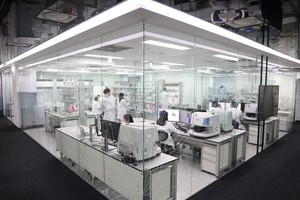
Cesco Foreign Body Analysis Center expands KOLAS accreditation scope for microplastics in water
Certified test reports now issued under international standard ISO 16094-2 200nm-level analysis capability developed through Horizon Europe joint research The Cesco Foreign Body Analysis Center has expanded its accreditation scope under the Korea Laboratory Accreditation Scheme, or KOLAS, to cover microplastic analysis in water. Cesco said Monday that the center has extended its KOLAS-accredited testing scope for microplastics in water based on ISO 16094-2, an international standard for water quality. The expansion allows the center to analyze microplastics in water in accordance with the international standard test method and issue certified test reports. ISO 16094-2 is an international standard for analyzing the size, count and chemical composition of microplastics in water with low suspended-solid content — such as drinking water — using microscopy and vibrational spectroscopy. The center has also independently developed technology capable of analyzing particles as small as 200 nanometers. It has been working with the Ministry of Food and Drug Safety and the National Institute of Environmental Research to develop and validate test methods for detecting microplastics in water and food. Beyond simple detection, the center conducts precision analysis based on sample characteristics — including particle size, material and shape — and is researching the root causes of microplastic generation by comparing results across different manufacturing and processing stages. The center is also engaged in international collaborative research. This year, it was selected as a participating institution in Horizon Europe, the EU's research and innovation program, and is conducting joint research with 19 institutions across 10 countries, including the United Kingdom, France and Spain. The project aims to identify the pathways through which micro- and nanoplastics are generated during food and beverage manufacturing processes over the next four years, and to develop technologies to monitor and control them. Building on the expanded accreditation, Cesco plans to continue research into the characteristics and causes of microplastic generation across a wider range of samples and processes — including food, beverages, and containers and packaging materials, in addition to water. "We will use this expansion of our KOLAS accreditation scope as an opportunity to strengthen our certified testing capabilities based on international standards, and to continuously advance our micro- and nanoplastic analysis technology through national and international collaborative research," a center official said. Meanwhile, the Cesco Foreign Body Analysis Center was established in 2014 and received KOLAS accreditation as a certified testing institution in March 2016. It has since expanded its accreditation scope and renewed its KOLAS certification following a reassessment in 2024.
Sept. 14, 2026
-
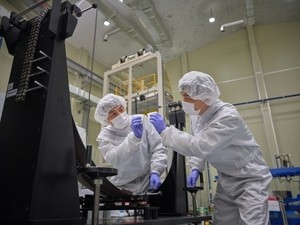
NST to hire 100 shared-services staff to cut admin burden on researchers
- Recruitment covers five fields: hiring, public relations, grievance handling, auditing and information security - First round of 64 hires followed by second round of 36; individual institute admin work to be consolidated under NST Common administrative functions at government-funded research institutes — including recruitment, public relations and auditing — will be consolidated under the National Research Council of Science and Technology (NST), which plans to hire 100 new specialists to support the overhaul. The move is intended to reduce the administrative burden on researchers and sharpen their focus on research, coming alongside a broader restructuring of the research and development system at government-funded institutes following the abolition of the project-based salary system. NST announced Monday it will conduct a phased open recruitment of 100 entry-level and experienced staff across five fields — hiring, public relations, grievance handling, auditing and information security — as part of a full-scale push to professionalize shared administrative services at government-funded institutes. The first round will fill 64 positions: 24 in recruitment, 10 in public relations, 10 in grievance handling and 20 in auditing. Applications will be accepted from Monday through Sept. 29. A second round, scheduled for October or later, will add 36 more hires — 20 in auditing and 16 in information security. The central aim of the recruitment drive is to consolidate and professionalize administrative functions that individual institutes have until now handled on their own, bringing them under NST's umbrella. The recruitment team will take over the full hiring pipeline for non-regular and trainee positions at government-funded institutes, covering everything from job postings and screening to appointment. The public relations team will handle cross-institute communications, including global outreach, joint exhibitions and content production. The grievance handling team will manage the entire process for workplace complaints — including harassment, sexual harassment and sexual violence — from intake through investigation, deliberation and follow-up. The auditing team will centralize conduct audits previously delegated to individual institutes under NST's audit committee, covering comprehensive, targeted and conduct audits. The information security team will be responsible for protecting the information assets of government-funded institutes and building a shared cybersecurity framework, including joint use of secure networks. NST plans to develop entry-level hires into administrative specialists at government-funded institutes over time, while also bringing in experienced professionals who can contribute immediately. NST finalized its basic plan for professionalizing shared administrative services at a board meeting in May, after which it held 26 rounds of consultations with individual institutes, labor unions and the Federation of Korean Science and Technology Organizations to define the scope of duties and operational procedures for each role. Particularly as the abolition of the project-based salary system shifts government-funded institutes toward mission-oriented research and development, NST said it intends to reform the research administration framework in tandem. The plan is to professionalize shared functions under NST to improve the quality and speed of administrative services, freeing researchers to focus on national missions and research rather than paperwork. "The essence of professionalizing shared administration is to specialize in the administrative demands common across government-funded institutes, so we can deliver more expert and stable administrative services," NST Chairman Kim Young-sik said. "We will work to reduce the administrative burden on these institutes and create an environment where researchers can immerse themselves more fully in their work."
Sept. 14, 2026
-
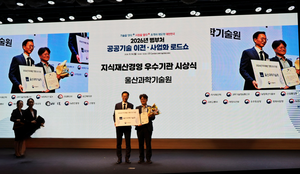
'No dormant patents': UNIST named top intellectual property management institution
University recognized for systematically assessing patent value and converting research into technology transfers and commercialization The Ulsan National Institute of Science and Technology has been recognized for securing strong research outcomes as competitive patents and successfully channeling them into technology transfers and commercialization. UNIST announced Monday that it received a commendation from the Commissioner of the Korean Intellectual Property Office in the patent portfolio assessment category at the 2026 Intellectual Property Management Excellence Awards. The awards program, run by the Korean Intellectual Property Office and the Korea Institute of Patent Information, evaluates universities and public research institutions on their capacity to create and utilize intellectual property over the preceding three years. This year, 12 institutions were named as top performers. Recognized institutions receive the commissioner's commendation along with intellectual property points — credits that can be applied toward patent filing fees, examination request fees and registration fees. UNIST earned high marks for its record in intellectual property creation and utilization, domestic and international patent management, and technology transfer. The university was particularly praised for building a management system that consistently assesses the competitiveness and practical value of its patent portfolio and connects high-quality patents to technology transfers and commercialization. The recognition reflects the university's efforts to raise the "qualitative competitiveness" of patents held by universities and public research institutions — ensuring they are put to use in actual industrial settings rather than simply sitting on the shelf. "This is the result of our consistent efforts to secure outstanding research outcomes as competitive intellectual property and connect them to technology transfers and commercialization," UNIST President Park Jong-rae said. "Going forward, we will continue to strengthen the qualitative competitiveness of our patent portfolio and further advance our intellectual property management and utilization systems so that research outcomes translate into industrial value."
Sept. 14, 2026
-

G-Star reveals second G-CON 2026 lineup featuring game, film and webtoon creators
Shift Up CEO Kim Hyung-tae, Mikami Shinji set for joint talk Film directors Jang Hang-jun, Lee Byung-hun also join lineup The G-Star Organizing Committee has unveiled the second lineup for G-CON 2026. The committee said Monday it would present the second lineup and detailed program information in line with the conference's two main themes — narrative and AI. The event aims to bring together creators from gaming, film, drama series and webtoon to share their visions for the future of the industry. Among the confirmed participants are creators behind "Ghost of Yotei," which sold more than 3.3 million copies worldwide within a month of its release and received eight nominations at the 2026 BAFTA Games Awards, winning in the music and technical achievement categories. Lead writer Ariadna Martinez and Art Director Joanna Wang, who shaped the game's narrative and visuals, will take part in a joint discussion. Writer Lee Jong-beom will also join the session. Artists behind some of the industry's most celebrated titles will also gather on one stage — among them creators from "God of War," winner of The Game Awards' Game of the Year; "Marvel's Spider-Man," which has sold more than 33 million copies worldwide; "Control," winner of The Game Awards' Best Art Direction; "Team Fortress 2"; "League of Legends"; and "Valorant." Moby Franck, Gavin Goulden, Bruno Velasquez and Elmeri Raitanen will each introduce their creative process, focusing on their respective works and areas of expertise. Cecil Kim, studio art director at thatgamecompany, will serve as moderator. Team Ninja will also be in attendance. The studio is known for the "Nioh" series, which has sold more than 10 million copies worldwide, as well as "Wo Long: Fallen Dynasty" and the "Ninja Gaiden" series. Hirayama Masakazu and Shibata Kohei will participate and discuss the development process behind high-difficulty action role-playing games. Shift Up CEO Kim Hyung-tae will also take the stage. Kim is credited with demonstrating that Korean game content can compete in the global market through "Goddess of Victory: Nikke" and "Stellar Blade." He will be joined by Japanese game creator Mikami Shinji. The discussion will be moderated by Jungnyeon Gamer Kim Siljang, a gaming-focused YouTube channel. In addition, Cho Yong-hee, director of Capcom's new IP "Pragmata," which sold more than 2.5 million copies worldwide in its first quarter on sale, will meet with Park In-je, director of "Moving," which topped Disney+'s global local original content rankings in 2023. Writer Lee Jong-beom will join their conversation as well. The film industry is also represented in the lineup. Director Jang Hang-jun of "The King's Warden" and director Lee Byung-hun of "Extreme Job" will sit down for a joint discussion. Webtoon creators will round out the program. Lee Dong-gun, the writer behind "Yumi's Cells," which has accumulated about 3.5 billion views and approximately 5 million comments, will appear alongside Kim Hye-suk, a senior animator on "Inside Out 2," which earned $1.7 billion worldwide. Ryan Green and Amy Green, creators of "That Dragon, Cancer," which won The Game Awards' Games for Impact award in 2016, and Lee Nak-jun, the writer of "Trauma Center," have also been added to the lineup. "Trauma Center" reached 11.9 million views within 10 days of its release, topping Netflix's non-English TV global chart. Ryan Green and Amy Green, who turned their own lives into a game, will meet Lee Nak-jun — a physician-turned-writer who transformed experiences from the medical field into a web novel and drama series. G-CON 2026 will be held over two days, Nov. 19 to 20, on the third floor of the Convention Hall at Bexco in Busan. Additional session schedules and timetables are set to be released in September. Pre-registration for the conference is currently open, and those wishing to attend can register through the G-Star official website until Nov. 15. A conference ticket grants access to all G-CON sessions as well as four days of entry to the BTC exhibition.
Sept. 14, 2026
-

Wemade set to gain Kingnet as largest shareholder after decade-long IP dispute
Ten years of 'Mir's Legend' IP dispute ends with Kingnet as top shareholder Consortium to hold 40.25% stake; balance due by Oct. 30 Kingnet, the Chinese game company locked in a decade-long legal dispute with Wemade over intellectual property rights to "Mir's Legend," is set to become Wemade's largest shareholder. Upon completion of the deal, the investor consortium will hold a 40.25% stake in Wemade. Wemade said Monday that it expects to complete the change-of-largest-shareholder process by Oct. 30 with an investor consortium comprising Chinese investment firm Neopulse and global game company Kingnet, among others. According to a disclosure filed with the Shenzhen Stock Exchange, Kingnet will acquire a 49% stake in Neosphere through its Hong Kong subsidiary Cypress Technology HK. Kingnet's planned investment totals $298 million. On June 30, the consortium signed a share purchase agreement to acquire the entire stake (39.33%) held by Wemade Chairman Park Kwan-ho for approximately 920 billion won ($683 million). Once the deal closes, the consortium's stake in Wemade will reach 40.25%. Wemade and the investor consortium are working through the remaining procedures needed to close the deal by Oct. 30, including payment of the balance and regulatory approval. According to a Wemade disclosure, the remaining balance the consortium must pay stands at 828 billion won. After becoming the largest shareholder, the consortium plans to expand business opportunities in global and Chinese markets, including publishing and core IP licensing. It also intends to build a strategic framework to manage business risks, drawing on its experience and understanding of the Chinese market and industry. Wemade said it will work with the consortium to complete the relevant procedures without disruption and will continue its key ongoing projects and organizational operations in line with existing plans.
Sept. 14, 2026
-
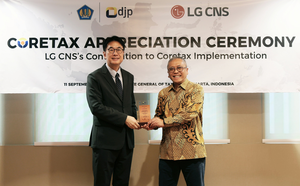
LG CNS receives commendation from Indonesia's tax authority, eyes AI upgrade for Coretax
Coretax credited with boosting tax compliance, streamlining administration LG CNS has received a commendation from Indonesia's tax authority in recognition of its contributions to the agency's technology and operational support. The South Korean IT company plans to lead Indonesia's digital transformation by building on its work developing Coretax, the country's next-generation tax administration system. LG CNS said Monday that a commendation ceremony was held Friday (local time) at the Directorate General of Taxes in Jakarta. The event was attended by Kim Hong-geun, head of LG CNS's Digital Business Division, Bimo Wijayanto, director general of Indonesia's tax authority, and Iwan Djuniardi, special adviser to the finance minister. Coretax is a next-generation tax administration system developed under Indonesia's Directorate General of Taxes, which operates under the Finance Ministry. Its core purpose is to consolidate previously fragmented functions — taxpayer registration, filing, payment, refunds, audits and collection — into a single platform, shifting tax administration onto a digital foundation. The Indonesian government is using Coretax to improve administrative efficiency, enhance taxpayer convenience and build a data-driven tax management framework. LG CNS completed the system in December 2024 as part of a consortium with Qualysoft, an Austrian IT firm. The company then worked with the tax authority through March to support system operations and stabilization. Since April, when the tax authority took over day-to-day operations, LG CNS has continued providing technical support through a maintenance contract covering core infrastructure. LG CNS said Coretax is already delivering concrete results. According to Indonesia's Finance Ministry and the Directorate General of Taxes, tax revenue in the first half of this year reached 1,035.7 trillion rupiah ($59.1 billion), a roughly 24.6 percent increase from the same period last year. Growth was particularly pronounced across major tax categories, including corporate income tax, personal income tax and value-added tax. The tax authority said stronger tax administration through Coretax and improved taxpayer compliance underpinned the revenue gains. LG CNS said it is in discussions with the tax authority on incorporating AI technology into Coretax. The company plans to use AI-driven task automation and data analytics to improve the efficiency of tax administration. LG CNS has carried out e-government projects for major Indonesian public institutions over the past two decades, including work for the national police agency, the Finance Ministry and the tax authority. Since last year, the company has also been executing a 100 billion won ($74.7 million) project to build AI data center infrastructure in Jakarta. "We are grateful for LG CNS's technical expertise and dedication throughout the Coretax development process," Bimo said. "We hope the partnership between the tax authority and LG CNS will continue, grounded in mutual respect and professionalism." "This commendation recognizes not only the construction of Coretax but also the collaborative efforts we made with the tax authority," Kim said. "We will continue to contribute to Indonesia's digital government innovation through our digital transformation capabilities and AI technology."
Sept. 14, 2026
-

Cafe24 to host Cheongju conference on digital transformation for manufacturers
Conference set for Oct. 21 in Cheongju Event to share strategies on expanding online sales channels and building brand storefronts Cafe24 announced Monday it will hold a conference titled "Make Your Brand! From Manufacturing to Brand, From Startup to Growth" at the OSCO Grand Ballroom Hall in Cheongju, North Chungcheong Province, on Oct. 21, sharing practical strategies for manufacturers looking to expand their online sales channels. The event is part of Cafe24's "K-Manufacturing Smart E-commerce Innovation Project," aimed at helping manufacturers shift to direct-to-consumer sales and grow their brands through proprietary online storefronts. The conference will cover practical approaches manufacturers need at each stage of growth, including digital transformation on the factory floor, building and operating brand storefronts, logistics, and customer acquisition and management. Sessions will also address branding, data-driven marketing, global sales and customer service — equipping manufacturers with the operational strategies needed to strengthen their online business capabilities. Presentations from affiliated organizations will examine shifts in the manufacturing landscape and business environment. The South Chungcheong Economic Promotion Agency is set to outline changes in the manufacturing sector and the key challenges facing regional manufacturers. The Smart Manufacturing Innovation Association and Korea Post will also introduce various aspects of the digital transformation environment. Case studies from manufacturers that have built storefront-centered sales structures will be shared as well. Premium cheese brand Antour Soleil said that after partnering with Cafe24, a fifth-anniversary campaign drove a 90 percent increase in visitors, a 92 percent rise in orders and an 83 percent jump in first-time customers. Consultation booths will also be on hand to guide participants through available support programs. Cafe24 and the Smart Manufacturing Innovation Association will offer the first 50 participating manufacturers access to a smart factory capability assessment program on a first-come, first-served basis. Korea Post will inform participating companies that operate their own storefronts about special discounts on domestic and international delivery, as well as benefits related to logistics, financial services and customer service operations. The Innobiz Association will introduce youth hiring support programs. The South Chungcheong Economic Promotion Agency and the North Chungcheong Business Promotion Agency will each share region-based support policies covering market development, employment and startup support, and business stabilization. "We will help manufacturers grow their brands by building up their online sales and customer management capabilities, even as they stay focused on production," Cafe24 CEO Lee Jae-seok said. Meanwhile, Cafe24 is strengthening its direct-to-consumer platform services ahead of the AI era. A notable example is the company's integration of generative engine optimization, or GEO, technology, which helps generative AI accurately understand and recommend storefront and product information. An analysis of traffic data from D2C storefronts on its platform found that visits via major generative AI tools reached approximately 850,000 in the second quarter of 2026, up 72 percent from the same period a year earlier.
Sept. 14, 2026
-

SK Telecom hosts 'Adventure Day' for 3,000 long-term customers at Lotte World
11 popular attractions, hands-on events offered Exclusive showing of musical 'Chicago' planned for December SK Telecom exclusively rented out the entire indoor section of Lotte World Adventure for a late-night event, inviting 3,000 long-term customers and their guests. The company said Monday it held the "T Long-term Customer Program Adventure Day" from 11 p.m. Saturday through 5 a.m. Sunday. The event was part of SK Telecom's "T Long-term Customer Program," which the company expanded and revamped this year. Customers who have subscribed for 10 or more years were eligible to attend, along with guests of their choosing. Participants had access to 11 of Lotte World's popular indoor attractions and took part in hands-on events including "T Bingo," "National Long-term Customer Talent Show," a "Time Capsule Shop" and a "T Mobile Payment Booth." Through the program, SK Telecom offers seasonal benefits tailored to customers' tastes and lifestyles. This year's lineup has included "Forest Stay Day" in spring, "Table Day" and "Concert Day" in summer, and "Adventure Day" in autumn. At the talent show, Kim Tae-jin took the top prize for a performance titled "Running Across the Sky." "I am grateful that SK Telecom created such a meaningful occasion for its customers," Kim said. "I will continue to stay with SKT for a long time to come." SK Telecom plans to hold a "Musical Day" in December, reserving an exclusive showing of the musical "Chicago" for long-term customers. "We prepared Adventure Day so that customers who have been with SKT for a long time could create happy memories with the people who matter most to them," an SK Telecom official said. "We will continue to develop a wide range of programs that make our customers feel proud to be with SKT." Meanwhile, SK Telecom aims to pursue quality growth centered on customer lifetime value through efforts to attract new customer segments and run differentiated campaigns. In July, the company overhauled its overall pricing structure with the launch of an integrated 5G and LTE rate plan, and has been working to enhance customer value by improving the user experience and service accessibility.
Sept. 14, 2026
MOST READ
- 1Pope Leo XIV declines French honors and banquet, accepts only private meeting with Macron
- 2KAIST develops high-performance bio-based adhesive using E. coli instead of petroleum
- 3Daimler Truck unveils next-generation transport solutions at IAA 2026
- 4What was Rachmaninoff's performance fee? A 1928 price list tells all
- 5Samsung Biologics union's show of force backfires at the bargaining table
- 6APR says hair-loss treatment research published in international journal
-
WORLD

US warns of punishment for anyone enabling Iran's Strait of Hormuz toll scheme
-
INDUSTRY

Toyota union puts productivity first; Hyundai Motor union demands bigger share of profits
-
FINANCE
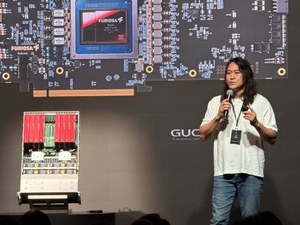
National Growth Fund to invest $531M in FuriosaAI, which rebuffed Meta's $800M takeover bid
-
INDUSTRY

Korea Shipowners' Association holds amateur baduk tournament for Maritime Day