
- HOME
- IT·SCIENCE
-

SK AX wins minister's award for AI talent development program
Generative AI education and certification programs 'AI Literacy' and 'AI Bootcamp' recognized Government endorsement follows corporate qualification approval, with wider industry adoption expected Management framework and ethics guidelines established to ensure certification fairness and reliability SK AX's AI talent development program has earned recognition from the Ministry of Employment and Labor, following the company's efforts to boost employee productivity and corporate competitiveness through its in-house AI education and certification programs. SK AX announced Monday that it received the minister's award at the Government Recognition Excellence Case Presentation Contest for Corporate Qualifications, held under the auspices of the Ministry of Employment and Labor at a human resources development conference at COEX Magok in Seoul on Friday. The award reflects official government recognition of SK AX's generative AI competency certification program. As a verified program that can be applied immediately in the workplace, the company expects it to spread to other businesses and across the broader industry. The government recognition system for corporate qualifications is a system under which the government officially endorses outstanding in-house qualification programs that companies operate to improve workers' job skills. SK AX had its two in-house generative AI education and certification programs — AI Literacy and AI Bootcamp — recognized as Level 2 and Level 1 qualifications, respectively, for generative AI proficiency. The company said this marks the first and only instance in South Korea of a government-recognized certification in the AI competency field. AI Literacy aims to equip all employees, regardless of job function, with a foundational understanding of AI. The program builds and assesses the generative AI skills needed for everyday work tasks, including document writing, data structuring, spreadsheet use and basic programming. AI Bootcamp is a training program for specialist AI talent. It develops AI professionals ready for immediate deployment in the field, including by building customized AI agents that connect to internal company data and autonomously carry out tasks. SK AX has also put in place a management framework to strengthen the fairness and reliability of its certification results. Reflecting the safety, reliability and transparency principles of the AI Basic Act, which took effect in January, the company has worked to minimize bias in test question design and evaluation, with humans reviewing and overseeing final results. It is also rolling out guidance to all employees on disclosing generative AI outputs and complying with ethics guidelines. SK AX, which operates the SK AI Competency Model — its internal AI qualification system — plans to expand its AI competency certification framework to general businesses and educational institutions. "This award recognizes the credibility and practical value of the AI competency certification platform that SK AX proactively built," said Kim Min-hwan, head of SK AX's HRX promotion division. "We will continue to develop it into an AI competency certification system that is trusted and used across industry."
Sept. 14, 2026
-
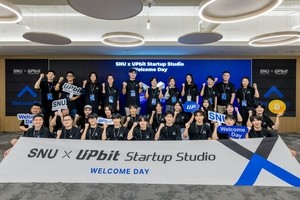
Dunamu opens startup studio with Seoul National University to support young entrepreneurs
SNU business school, Dunamu team up to build startup ecosystem Seven early-stage startups move in; infrastructure provided free of charge Dunamu has opened a youth startup support space in partnership with Seoul National University's business school, marking a formal push to cultivate the startup ecosystem. Dunamu Chairman Song Chi-hyung attended a move-in welcome ceremony and pledged to support the sustainable growth of early-stage companies. Dunamu announced Monday that it had launched the SNU x Upbit Startup Studio. A "Welcome Day" event was held Thursday to mark the occasion. The event brought together the founders and executives of seven startups that had moved in on Sept. 1, along with Song and other Dunamu executives and faculty from SNU's business school. The seven companies selected for the studio are Breadcrumb, Stillcut, Iruri Labs, Belly Labs, Theta One Korea, Pion and Lead Axis. Dunamu said the selected companies were recognized for their growth potential across a range of fields, including deepfake detection, medical AI, insomnia treatment and AI transformation solutions for education. Song also took time to engage with aspiring and early-stage founders as a fellow entrepreneur and sunbae. After listening to each company's business pitch, he fielded questions submitted in advance as well as those raised on the spot. Dunamu said Song showed genuine empathy for the challenges early-stage startups face, drawing on his own experience building Upbit into a leading digital asset exchange. Dunamu said it plans to provide free infrastructure support to the resident teams in collaboration with SNU, in line with "youth" — a core keyword in the company's environmental, social and governance strategy. Resident companies will receive dedicated office and shared spaces, as well as work equipment, for up to two years. To help boost company value, Dunamu will also offer a tailored "Value UP" program that includes expert mentoring sessions — covering legal, financial, accounting, security and marketing — and a CEO roundtable. "In the early days of a startup, you face uncertainty that is hard to predict," Song said in his welcoming remarks. "But the process of weathering successes and failures — big and small — and turning them into results is itself one of the greatest assets an early-stage startup can have. I will share the experience I gained firsthand and do my best to serve as a pacemaker for the startups that will lead innovation in Korea, helping them achieve sustainable growth." Park So-jung, a professor and head of the venture management interdisciplinary program at SNU's business school, offered words of encouragement. "This support space is a model of collaboration that combines the university's strong research capabilities and the potential of young people with corporate support," she said. "We are grateful to Dunamu for its generous support in building a startup ecosystem for young entrepreneurs."
Sept. 14, 2026
-
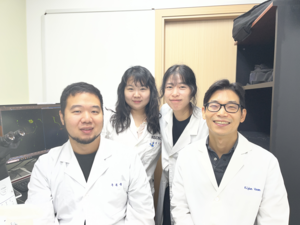
KAIST cracks the code of RNA delivery in brain cells, opening new path for neurological treatment
- Chemical tag m6A acts as a 'delivery label,' guiding RNA to the far ends of neurons - Study reveals new transport function of YTHDF2, previously known only as an RNA-degrading protein - Findings expected to shed light on RNA delivery errors behind neurodevelopmental and degenerative brain diseases Scientists have uncovered the workings of a previously unknown RNA delivery system in neurons — one that selects specific RNA molecules and transports them precisely to the far ends of brain cells. KAIST announced Monday that a research team led by Professor Yoon Ki-jun of the Department of Biological Sciences has identified a key mechanism by which m6A, a chemical tag attached to RNA, plays a central role in carrying certain RNA molecules all the way to the tip of the axon — the long, slender channel neurons use to transmit signals. Unlike most cells, neurons have a uniquely elongated structure. The axon serves as the conduit through which signals are sent to other neurons. RNA produced at the cell's center may be needed at a distant axon terminal, making the selective transport of the right RNA to the right destination critical for normal neuronal growth and function. The research team found that m6A acts as a kind of "delivery label" in this process. When the team analyzed mice engineered so that the methylation enzyme responsible for attaching m6A to RNA could not function properly, neurite growth — the elongation of projections from neurons — was significantly impaired. The team then used a technology called m6A-SAC-seq to build a high-resolution map of where m6A modifications appear on RNA in mouse brains, down to the level of individual nucleotides. The analysis confirmed that m6A tags are also present on specific RNA molecules required for axon growth. The key to the system lies in the protein that reads this "delivery label." The team found that the protein YTHDF2 recognizes m6A-tagged RNA and works together with FMRP and KIF5C to move that RNA to the ends of neurons. In this analogy, m6A is the shipping label on a parcel, YTHDF2 is the reader that identifies it, and FMRP and KIF5C form the transport system that carries it to its destination. Particularly notable is the newly discovered role of YTHDF2. The protein had previously been known primarily as a promoter of RNA degradation — breaking down unnecessary RNA. This study reveals that it also transports needed RNA to its destination, a function not previously attributed to it. Research showed that a complex formed by YTHDF2 and FMRP links m6A-tagged RNA to microtubules and motor proteins, enabling it to travel to neurite terminals. The team is now building similar m6A maps in human neurons, patient-derived induced pluripotent stem cells and brain organoids, with plans to compare how RNA regulation and transport differ between normal neurodevelopment and disease states. The next goal is to confirm whether the RNA transport system identified in this study operates the same way in human neurons, and to determine what changes occur in neurodevelopmental and degenerative brain diseases. If the findings can be developed into a technology that selectively controls the transport of specific RNA molecules, they could lead to new treatment strategies for brain diseases. "This will serve as a foundation for understanding why RNA fails to reach where it is needed in brain diseases, and for exploring new treatment possibilities," Yoon said. The findings were published in Nature Communications.
Sept. 14, 2026
-

Chinese dramas shed their bad reputation — and OTT platforms are taking notice
"I thought Chinese dramas were doomed to fail." Chinese drama series, long dismissed for stiff performances and low production quality, are surging in South Korea's OTT market. The rise comes as domestic drama production has slowed under the weight of soaring costs — lead actors now command 300 million to 500 million won ($374,000) per episode — leaving a gap that Chinese titles are moving quickly to fill. Once met with skepticism — "Who watches Chinese dramas these days?" and "They'll flop, guaranteed" — Chinese series have staged a remarkable turnaround in recent years, with a string of high-quality productions now posing a genuine challenge to K-content. According to OTT industry sources, the Chinese series "Zhao Chun Qing Lang," released on Netflix on Aug. 26, ranked sixth on Netflix's top 10 series chart in South Korea on Sunday. The show first broke into the domestic top 10 on Netflix's official tracking site Tudum during the first week of September (Aug. 31–Sept. 6) and has since climbed steadily in daily rankings. During the same period, it also reached second place in the global non-English shows category, drawing attention worldwide. Based on a web novel of the same name, "Zhao Chun Qing Lang" is an office romance set in Beijing that follows the relationship between a prickly boss and a warm-hearted new employee, drawing praise for its grounded, realistic portrayal. "Seeking the Jade," a romance Sageuk drama released on Netflix in March, also made waves, landing in the domestic top 10 series chart for four consecutive weeks on the strength of its lavish visuals and distinctive storytelling. Chinese titles are gaining ground on Tving as well. Six Chinese series — including "Zhe Yi Chao Guo Hua," "Jia Ye," "Jia Wu Qian Cheng" and "Zuo Gu" — have placed in the top 20 of Tving's real-time drama rankings. "Zhe Yi Chao Guo Hua," a romance set during the Republic of China era, also broke into the top 10 on Tving's weekly chart for the first week of September. Tving has responded by creating a dedicated Chinese drama section within its app. Meanwhile, Chinese-backed short-drama platforms swept the top spots for new app installations in South Korea's entertainment category last month. Short dramas are series made up of brief episodes running roughly one to three minutes each, designed to hook viewers fast — conflicts escalate from the opening scenes, and dramatic twists and cliffhangers are stacked in quick succession to drive viewers to the next episode. According to Mobile Index, Chinese-backed short-drama platforms claimed all three top spots for new entertainment app installations in South Korea in August. DramaWave led with 840,000 installs, followed by NetShort with 800,000 and DramaBox with 740,000. In just three months, the platforms had overtaken domestic OTT services such as Tving and Coupang Play in the rankings. "Among Chinese drama fans, there's a saying that once you fall for Chinese dramas, you never go back to anything else — the fandom and loyalty are that strong," an OTT platform official said. "Chinese dramas are expanding so rapidly that the domestic content industry should be genuinely alarmed."
Sept. 13, 2026
-

Samsung fires back after Rosé poses with iPhone 18 following Galaxy deal
"Maybe just skip the idol marketing?" Samsung Electronics' official account fired a pointed jab after Blackpink member Rosé — a former Galaxy brand ambassador — appeared on social media holding Apple's latest smartphone. On Wednesday, Rosé posted a mirror selfie with an iPhone 18 Pro on her SNS and on Apple's official account, adding the caption: "iPhone, new trick, watch this, watch this ahhhh!!!!" Rosé is set to release a new collaboration track with Apple, "New Trick," on Sept. 18. Samsung Electronics Canada's official account replied to Rosé's post on Saturday: "If you needed a real phone you could have just asked us." The comment drew more than 180,000 likes. Rosé previously served as a Galaxy brand ambassador alongside fellow Blackpink members Jisoo, Jennie and Lisa. Earlier, a post titled "No mercy once the contract ends" went viral showing all four Blackpink members switching to iPhones after their Galaxy deal expired, putting Samsung in an awkward spot. The pattern has become a recurring embarrassment for Samsung. Celebrities and influencers who use Galaxy phones during marketing partnerships have repeatedly switched to iPhones the moment their contracts expire. Idol group Boy Next Door sparked controversy when its members were photographed flaunting iPhones at an airport almost immediately after their Samsung deal ended. Posts circulated reading: "Boy Next Door got sponsored by Galaxy, used Galaxy, and the second the contract ended, they switched to iPhones and showed them off in front of fans." Reactions were mixed. Some defended the artists — "What does it matter?" and "Switching phones after a contract ends is a personal choice" — while others expressed disappointment, with comments such as "That's careless" and "Doing this right after the contract ends just doesn't seem right." Lee Hyo-ri, once dubbed the eternal face of Samsung's Anycall brand after years as its advertising model, now uses an iPhone as well.
Sept. 13, 2026
-
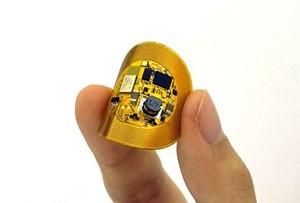
'Don't swallow it — wear it': Korean researchers develop smartphone-controlled electronic pain patch
- KAIST and Korea Institute of Oriental Medicine develop wearable electroceutical platform based on microneedle technology - Device can be remotely controlled by smartphone and automatically delivers electrical stimulation based on the body's condition "Every time pain flares up, you can deal with it just by sticking something on your skin — no need to take a painkiller." Korean researchers have developed a wearable electroceutical patch that can be operated remotely via smartphone and automatically delivers electrical stimulation when it detects changes in the body's condition. Once validated through clinical trials, the technology could allow chronic pain patients to receive personalized pain management without visiting a hospital. KAIST announced Sunday that a joint research team led by Professor Jeong Jae-woong of the Department of Electrical Engineering and Lee Sang-hoon of the Korea Institute of Oriental Medicine had developed a wearable electroceutical platform combining wireless microneedle technology with Internet of Things remote-control capabilities. Painkillers are widely used to treat chronic pain, but long-term use carries risks of side effects and dependency. Opioid painkillers used for conditions such as cancer pain pose growing risks of tolerance and misuse the longer they are taken. As a result, electroceuticals — devices that modulate nerves through electrical stimulation rather than medication — are drawing attention as a new alternative. Existing electroceuticals, however, have their own limitations. Implantable devices require surgery and carry risks of infection and complications. Skin-adhesive devices can deliver unstable electrical stimulation depending on skin conditions such as sweat, sebum and dead skin cells. When current concentrates in a specific area, there is also a risk of overheating or burns. To address these problems, the research team developed temperature-responsive conductive and adhesive microneedle electrodes that penetrate the stratum corneum, the outermost layer of skin. The tiny needles pass through the stratum corneum — which has high electrical resistance — to deliver stable electrical stimulation regardless of changes in skin condition. The electrodes are coated with a conductive hydrogel so that current spreads evenly rather than concentrating at the needle tips. A safety mechanism was also built in: if skin temperature rises abnormally, the electrode's adhesion weakens and it detaches from the skin on its own. The team also connected the device to a smartphone and cloud server. Patients can operate it themselves, and medical staff can control the timing and activation of electrical stimulation in real time or on a scheduled basis from a remote location. The team confirmed that remote operation works even across long distances, such as between South Korea and the United States. The device also incorporates a self-monitoring function. A photoplethysmography sensor analyzes changes in pulse and blood flow to detect stress states associated with pain, then automatically applies electrical stimulation. The research demonstrates the potential for automated, personalized pain management without requiring the user to manually switch the device on or adjust stimulation intensity each time. In animal experiments, the device delivered current more effectively than conventional gel electrodes and showed a pain-relieving effect. A small-scale preliminary study in healthy adults also confirmed that skin sensation and pain thresholds changed after remotely scheduled electrical stimulation was applied. However, the treatment's effectiveness in actual pain patients has not yet been established. The human study was a preliminary validation conducted on healthy adults, and further clinical research is needed to confirm therapeutic effects and long-term safety in chronic pain patients. "There is potential for use in cases requiring repeated management, such as peripheral neuropathy pain following cancer treatment or musculoskeletal pain in older adults," said KAIST Professor Jeong Jae-woong. "It could also be applied to non-drug treatment of other conditions where nerve modulation through electrical stimulation is beneficial, as well as digital healthcare and home medical care settings that require remote management by medical staff." Lee Sang-hoon of the Korea Institute of Oriental Medicine said he hoped the research would eventually merge with wearable acupuncture technology to advance a new non-pharmacological pain management approach that stimulates acupoints through electrical stimulation. The findings were published in Nature Communications.
Sept. 13, 2026
-
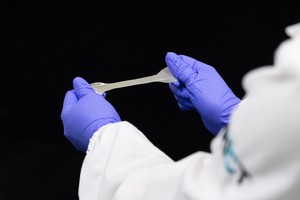
Hemp stem waste boosts biodegradable plastic strength by 26%
- Korea Research Institute of Chemical Technology develops cellulose reinforcement from hemp hurd waste - Standard oven drying replaces costly freeze-drying, raising film tensile strength by 26.2% Hemp stems left over from fiber production are being transformed into a high-value material that strengthens eco-friendly plastics. The Korea Research Institute of Chemical Technology said Sunday that a research team led by Kim Ho-yong of its Precision Bio-Chemical Research Division has developed a technology to extract cellulose from the inner core of industrial hemp stems and dry it while preserving its microfiber structure. Industrial hemp yields fiber from its outer bark, but the inner core — known as the hurd — accounts for about 70 percent of the stem's weight and has largely had no practical use, with much of it discarded. The research team focused on repurposing the hurd as a reinforcing material to address the weak mechanical properties of biodegradable plastics. Biodegradable films made from a blend of thermoplastic starch and PBAT break down in soil and can be used in eco-friendly packaging and agricultural mulching films, but they tear easily and perform poorly in humid conditions. Mixing in cellulose microfibers can improve strength, but the fibers tend to clump together during drying, reducing the reinforcing effect. Freeze-drying and spray-drying can prevent fiber clumping, but both methods require significant energy and equipment investment, limiting their viability for mass production. The research team found a way to keep cellulose microfibers from clumping while using ordinary heat drying. The key was controlling moisture content and treating the fiber surface. The team precisely identified the "fiber saturation point" — the critical moisture threshold at which the properties of hemp hurd fiber change significantly — and processed the fibers while maintaining the appropriate moisture level. They also treated the fiber surface with alkyl ketene dimer to further suppress fiber-to-fiber adhesion. Combining the two techniques allowed the team to preserve the microfiber structure using only a standard oven, without the need for costly freeze-drying. The performance gains were significant. Adding 10 percent of the hemp hurd cellulose to a starch-PBAT film raised tensile strength by 26.2 percent compared with the base film — a stark contrast to the 1.5 percent improvement seen when microfibers dried by conventional methods were used instead. Water vapor and oxygen permeability also fell by 17 percent and 9 percent, respectively, improving the moisture and air barrier properties needed for packaging applications. The research team expects the technology to find use as a reinforcing material in food and household product packaging films, biodegradable bags, agricultural mulching films, and molded bioplastic products such as containers and trays. It could also be applied beyond hemp to convert other agricultural byproducts generated in large volumes — such as soybean stalks and rice straw — into high-value cellulose materials. "The significance lies in being able to turn discarded agricultural byproducts into high-value materials," Kim said. The findings were published in Chemical Engineering Journal, an international peer-reviewed journal in the field of chemical engineering.
Sept. 13, 2026
-

AI benchmark for sports highlights handles videos 60 times longer than existing tools
- UNIST builds 'SVHighlights' covering 8 sports and 320 videos - Official broadcaster highlights used to generate ground-truth labels automatically A new benchmark has emerged to rigorously test how accurately AI can identify decisive moments in sports — a last-minute winning goal in soccer, a come-from-behind home run in baseball. The key advance is its use of real broadcast footage up to 60 times longer than what existing benchmarks employ, enabling evaluation of an AI model's ability to understand video over extended durations. The Ulsan National Institute of Science and Technology (UNIST) announced Sunday that a research team led by Professor Kim Tae-hwan of its AI Graduate School has developed SVHighlights (Sport Video Highlights), a large-scale benchmark for evaluating AI models that extract highlights from sports footage. An AI benchmark functions as a standardized test that compares the performance of multiple AI models under identical conditions. It requires not only the problems the AI must solve but also precise ground-truth answers against which performance can be judged. The problem with existing sports video benchmarks is that most have been limited to short clips averaging two to four minutes. Human annotators had to watch footage from start to finish and manually mark every highlight segment, meaning longer videos demanded enormous amounts of time and money. SVHighlights covers eight sports — soccer, baseball, basketball, volleyball, American football, ice hockey, rugby and racing — and comprises 320 videos totaling 640.18 hours. Each video averages about two hours in length, making it 30 to 60 times longer than clips used in previous benchmarks and allowing AI performance to be evaluated in conditions that closely resemble actual sports broadcasts. The key to building such a large dataset was the use of official highlights already produced and published by broadcasters. Scenes selected by professional editors served as the ground-truth answers for AI evaluation. The research team also developed a matching algorithm that automatically locates, down to the minute and second, where each scene from an official highlight reel appears in the full-game footage. The algorithm compares frames from the original broadcast and the highlight video at the pixel level to find the most visually similar moments. The team also accounted for a characteristic of sports broadcasts in which scoring plays and other key moments are replayed multiple times. Beyond visual similarity, the algorithm analyzes the chronological order of scenes to reduce errors in which a replay — identical in appearance to the original — is mistakenly selected instead of the actual live moment. Human involvement was reduced to marking the start and end points of each match and verifying the automatically matched frames. A quality check found that incorrectly matched frames accounted for just 0.18 percent of the total. Using the benchmark, the team also developed an AI model called TF-SELECTOR that automatically identifies highlights in long-form video. TF-SELECTOR combines scene segmentation, speech recognition, a vision-language model and an LLM. It divides footage based on scene transitions, converts commentary audio into text, then assesses the importance of each segment by synthesizing the visual content, commentary and audio volume. Evaluated using SVHighlights, TF-SELECTOR outperformed the next-best model by 2.50 percentage points on HIT@1 — which measures whether the single most important predicted segment is an actual highlight — and by 4.04 percentage points on HIT@K, which reflects how many real highlights the model successfully retrieved. Its intersection over union (IoU) score, indicating how closely predicted segments align with actual highlight segments, was also 2.95 points higher. The technology is expected to find applications beyond automated sports highlight production, potentially extending to film and drama series summarization, meeting transcription, and the identification of key moments in long-duration surveillance footage. "We replaced the ground-truth labeling work that used to take humans several hours per video by leveraging highlights that broadcasters had already produced," Kim said. "Because the dataset can be continuously expanded, it will help objectively evaluate long-form video analysis AI and support the development of even better models."
Sept. 13, 2026
-
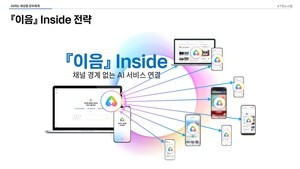
KT unveils 'Eum Inside' strategy to connect 60 million users through AI
Telecom giant builds open AI ecosystem to embed intelligence across partner services Token Factory boosts efficiency; more consortium partners expected New user acquisition, security and monetization remain key challenges KT Corp, selected as the operator of the government's "AI for All" project, is moving to usher in a "hyper-connected" era in which about 60 million users are linked through AI. The telecom company plans to embed and expand AI across a wide range of services through its "Eum Inside" strategy while building an open AI ecosystem. The broader goal is to connect people's daily lives by expanding the number of companies participating in that ecosystem. At an online briefing for the AI for All project held Friday, KT AX Business Division Head Lee Jin-hyung said the company would "connect the daily lives of the public by building an open AI ecosystem through Eum Inside." KT intends to establish its AI for All app as the central AI platform for the general public, applying its features across all services offered by consortium partners — including the portal site Daum — through the Eum Inside strategy. The KT consortium includes 17 companies, among them Daum, Musinsa, Zigbang, EBS, BC Card, NC AI and Rebellions. Those companies' services collectively reach more than 60 million users, and Eum Inside will serve as the vehicle for spreading and connecting AI across them. While conventional AI agents have been limited to linking external services, Eum Inside embeds AI functionality directly within each service, allowing users to access AI features without leaving the platform. On Musinsa, Danawa and Zigbang, for example, users will be able to request AI-powered product comparisons, recommendations and real estate listing searches. In the general-service segment, KT will combine search-based real-time information retrieval with domestic AI models to deliver personalized AI services. Through Eum Inside integrated into Zigbang, for instance, users can receive alerts about new actual transaction prices for apartments they have previously viewed, or listings priced below market. In the public-service segment, the platform will go beyond simple question-and-answer interactions to offer proactive notifications and tailored benefits through AI agent services adapted to each user's situation. All of these services will run on KT's AI operations platform, Token Factory. The platform improves tokens-per-minute throughput by about 31 percent through optimized resource allocation and reduces input tokens by up to 80 percent using prompt-compression technology, boosting overall GPU utilization. KT also plans to continue expanding its AI ecosystem. The company said it would pursue a standalone service approach for attracting new users to the AI for All app, rather than relying on existing platforms. On ecosystem expansion, Lee said the company is "planning to sign or pursue MOUs with individual companies" and that it is "open to a wide range of partners — not just financial groups, but also hotel reservations, restaurant reservations and information services." Lee drew a clear distinction between the AI for All app and the model represented by KakaoTalk, which serves as the hub for a broad array of services built around its roughly 50 million users. KT will offer a separate, standalone service rather than replicating that approach. "The government's position is to avoid a service like Kakao's, so we will follow that and provide it as a separate service," Lee said. "We will absorb the accounts and portal from Daum as they are, and pursue a strategy of broadening touchpoints by bringing in services that many people already use through Eum Inside." Because AI for All will handle public services, KT said it will also devote significant effort to protecting personal information. Lee said the company plans to "form and operate a task force with the Personal Information Protection Commission and other consortium members," adding that "KT has a process in place — including establishing a security organization within the AI business division — to take responsibility for past incidents."
Sept. 13, 2026
-
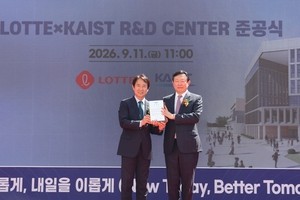
Lotte, KAIST open joint R&D center with W10b investment
- Joint research to target carbon neutrality, biotech and future food technologies - Collaboration to span basic research through prototyping and commercialization Lotte Group and KAIST have joined forces to pursue research and development in key future technologies, including carbon neutrality, biotechnology and next-generation food. KAIST announced Sunday that it has completed the Lotte×KAIST R&D Center, an industry-academia research hub, at its main campus in Daejeon. A completion ceremony was held Friday, attended by Lotte Group Chairman Shin Dong-bin, other Lotte Group officials, KAIST President Bae Choong-sik and faculty from the Department of Biological and Chemical Engineering. The center was built using a 10 billion won ($7.47 million) construction donation from Lotte Group along with funds from KAIST's Department of Biological and Chemical Engineering. The facility spans approximately 4,298 square meters across one below-ground floor and six above-ground floors, and features open research and collaboration spaces designed to encourage joint work across disciplines and institutional boundaries. The center will focus on three core research areas: bio-sustainability, carbon-neutral energy, materials and processes, and advanced food and healthcare. In bio-sustainability, researchers will apply systems metabolic engineering to develop biofuels and bioplastics as alternatives to fossil-based resources. The carbon neutrality track will pursue key technologies in green hydrogen, renewable energy and batteries. The advanced food and healthcare area will concentrate on future food and healthcare-related technologies. AI will also be integrated across all research activities. The center plans to use AI to identify new materials and technology candidates, boosting the speed and efficiency of R&D. The center is designed to go beyond conventional joint research by combining KAIST's fundamental research capabilities with Lotte's industrial and commercialization expertise. The aim is to build an industry-academia framework that takes technologies developed in university laboratories through testing and prototyping and connects them to real industrial applications and commercial ventures. The partnership between KAIST and Lotte stretches back more than a decade. The two sides have operated a graduate degree program for Lotte employees since 2012 and have since expanded their collaboration to include technology transfers and personnel exchanges with Lotte Chemical. In 2022, they established the Lotte Chemical-KAIST Carbon Neutrality Research Center to secure core carbon-neutral technologies and train specialists in the field. The completion of the new R&D center marks an expansion of that existing collaboration — from talent development and joint research into future technology development and commercialization. "I hope the R&D center will become a hub for industry-academia cooperation that transcends the boundaries between academia and business, creating greater possibilities," Shin said. "Lotte will stand as a steadfast partner so that faculty and students can research and take on challenges freely, without fear of failure." KAIST President Bae said the center would bridge the gap between laboratory ideas and real-world industrial value. "We will combine KAIST's research capabilities with Lotte's industrial and commercialization strengths to turn ideas and technologies from the lab into tangible value on the factory floor," Bae said. "Together, we will create new growth engines for Korea and find solutions for a sustainable future."
Sept. 13, 2026
-

Apple's first foldable iPhone case costs $149 — and customers aren't happy
"200,000 won for just a case — way too expensive." Apple's first foldable phone, the iPhone Duo, has already drawn attention for its steep starting price of 3.29 million won ($2,460), and now its dedicated cases are adding to the sticker shock, with prices reaching the 200,000-won range. That is roughly double the price of an official case for Samsung Electronics' Galaxy Z Fold8. According to Apple, the iPhone Duo kickstand case is priced at 199,000 won in South Korea. The standard iPhone Duo case without a kickstand costs 119,000 won. News that the cases alone cost close to 200,000 won has sparked a wave of customer complaints about Apple's pricing policy. "It's tacky — I wouldn't take it even for free," one user wrote, while another asked, "Is there really anyone who would pay that much for a case?" Apple's earlier eco-friendly iPhone case — made from a fine-woven material — also drew harsh criticism, with reviewers calling it "the worst product failure" after it proved prone to scratching and other durability issues despite its price of around 90,000 won. The iPhone Duo case prices look even steeper next to Samsung Electronics' foldable lineup. Official Galaxy Z Fold8 cases start at 44,000 won, while a model with a stand function costs 110,000 won — 89,000 won less than the comparable iPhone Duo case. The iPhone Duo's domestic launch prices are 3.29 million won for the 256-gigabyte model, 3.59 million won for 512GB, 4.19 million won for 1 terabyte and 5.09 million won for 2TB — roughly 1 million won more than Samsung Electronics' Galaxy Z Fold8 across the board. The iPhone Duo is also heavier and thicker than the Galaxy Z Fold8. It weighs 254 grams with a folded thickness of 5.2 millimeters, while the Galaxy Z Fold8 is no more than 201 grams and 4.5 millimeters thin. Screen sizes are comparable — the iPhone Duo measures 5.2 inches folded and 7.6 inches unfolded, similar to the Galaxy Z Fold8 — but Apple has not matched Samsung in hardware weight reduction, and priced the device around 1 million won higher. Meanwhile, Apple launched pre-orders in South Korea on Saturday for its new iPhone 18 Pro and iPhone 18 Pro Max. The iPhone Duo will follow about a month later, with pre-orders opening Oct. 16 and the official release set for Oct. 23.
Sept. 13, 2026
-

'All in' on SK hynix: Can retail investors' averaging-down strategy pay off?
"From the 280th floor down to the 239th — I'm holding on by averaging down." (Lawyer and broadcaster Seo Dong-joo) "Every time the share price dropped, I bought more." (Travel content creator Kwak Tube) When SK hynix shares, which had once climbed to 3 million won ($2,240), went into a sharp decline, many retail investors began averaging down their positions. Seo Dong-joo, a lawyer and broadcaster, is among them — she has been consistently buying additional shares to reduce her average cost and recently shared an update on where things stand. She has brought her average purchase price down from the 2.8 million won range to the 2.39 million won range through repeated averaging down. On Friday, Seo posted a video to her YouTube channel titled "Stock update: Seo Dong-joo, who entered at the 280th floor and now has a 'companion hynix.'" In the video, "floor" refers to her average purchase price for SK hynix shares, expressed as an analogy to apartment floor numbers. "Companion hynix" is a play on the Korean word for pet, implying she has ended up holding the stock for the long haul, much like a lifelong companion animal. In the video, filmed on Aug. 26, Seo revealed her brokerage account and disclosed a return of negative 27.89 percent. "At the peak, I got in somewhere around the 280-something floor," she said. "Since then I've been steadily averaging down. Yesterday the price dropped to the 1.5 million won range, so I bought more again." Travel content creator Kwak Tube also revealed that he had put nearly all of his investment funds into SK hynix and is now sitting on a double-digit loss. "I put almost all my stock money into SK hynix — basically threw in everything I had," he said. He has been buying more shares each time the price falls, he added, and his current return stands at negative 14 percent. He signaled he intends to keep buying. Whether these retail investors' averaging-down bets will ultimately pay off remains to be seen, though the brokerage community is broadly optimistic about SK hynix's share price outlook. Mirae Asset Securities raised its target price for SK hynix to 3.1 million won on Monday, citing expectations of stronger earnings as the volume and price of high-bandwidth memory chips — the HBM used in AI semiconductors — continue to rise. JPMorgan set a target price of $245 for SK hynix's American depositary receipts, equivalent to around 3.3 million won. Investment industry sources said JPMorgan recently initiated coverage of SK hynix ADRs with an "overweight" rating and the $245 target. The bank cited a structural shift in AI infrastructure investment as the central rationale. With global big-tech companies ramping up server capacity in what JPMorgan calls the era of "agentic AI," the bank projects that the resulting surge in memory chip demand will not be a short-lived boom but a structural, long-term upcycle lasting at least five years.
Sept. 12, 2026
-

Samsung Electronics shares set to rebound Monday as Wall Street rally lifts sentiment
"I sold for nothing out of Friday fear." — a retail Samsung Electronics investor "I plan to pass Samsung Electronics on to my children. I'm going to tell them never to sell before it hits 400,000 won ($299)." — economic YouTuber Shuka Markets had sold off ahead of the US consumer price index release, but the data triggered a relief rally on Wall Street instead. With US stocks bouncing back, expectations are rising again that Samsung Electronics and SK hynix shares will follow suit. The prevailing view in brokerage circles is that now is not the time to sell either Samsung Electronics or SK hynix. New York stocks rebounded Friday for the first time in five sessions, lifted by falling crude oil prices and a CPI reading that came in broadly in line with forecasts. The Dow Jones Industrial Average closed up 509.19 points, or 0.98 percent, at 52,573.29. The S&P 500 rose 65.28 points, or 0.86 percent, to 7,656.98, while the tech-heavy NASDAQ Composite gained 251.31 points, or 0.96 percent, to close at 26,333.04. August CPI, which had been the focus of market attention, rose 0.4 percent from the previous month and 3.4 percent from a year earlier — matching consensus forecasts and sparing markets any additional shock. Markets are now pricing in a near-certain Federal Reserve rate hike next week, yet stocks climbed anyway. The positive mood on Wall Street bodes well for domestic markets Monday. Brokerages have issued a bold forecast that Samsung Electronics can accelerate its growth trajectory through HBM market share gains and improved foundry yields, even as its share price has lagged. Kim Dong-won, head of research at KB Securities, said Samsung's HBM4 sales in the third quarter are expected to more than triple quarter-on-quarter, with HBM4 accounting for more than 60 percent of total HBM revenue in the second half of the year. KB Securities set a target price of 600,000 won for Samsung Electronics, saying the stock has significant room to rise given the steep growth momentum in its core business, along with the prospect of additional shareholder returns — including a share buyback and cancellation and cash dividends — before year-end. At the same time, concerns are growing over a potential supply vacuum after Samsung Electronics and SK hynix bought back roughly half their planned repurchase amount — 25 trillion won — within just three weeks of launching their buyback programs. The two chipmakers had been in effect the sole buyers propping up the Kospi amid sustained selling by retail and foreign investors, with the buybacks serving as a buffer against sharp share price declines. The programs are expected to wind down in early October. Park Se-ik, chief executive of Chessley Investment Advisory, said in a YouTube appearance that he expects both Samsung Electronics and SK hynix to trade in a range-bound pattern going forward. "I'd suggest range trading for the next year," he said.
Sept. 12, 2026
-

'You could have just asked us': Samsung crashes Rosé's iPhone post
A cheeky comment from Samsung Electronics on a social media post featuring Blackpink's Rosé holding a new Apple iPhone has gone viral. Rosé and Apple unveiled a photo on their official Instagram accounts Tuesday showing the singer holding the new iPhone 18 Pro. The caption read: "iPhone, new trick, watch this." The post is part of a global collaboration campaign tied to Rosé's new single "New Trick," set for release Wednesday. The music video was reportedly shot using Apple's latest smartphone, the iPhone 18 Pro. The post drew even more attention after Samsung Electronics weighed in with a surprise comment. Samsung Electronics Canada's official Instagram account left a comment Friday reading, "If you needed a real phone you could have just asked us," and users quickly responded to the rival's wit. Within a day, Samsung's comment had drawn more than 260,000 likes and around 2,400 replies. The comment drew particular interest given that Rosé and Samsung Electronics share a history of collaboration. In April 2019, Samsung Electronics named all four Blackpink members global ambassadors for its Galaxy A series at the "A Galaxy Event" held in Bangkok, Thailand. The group took part in global promotional campaigns for the Galaxy A70 and A80, helping Samsung target younger consumers. It became one of the company's most prominent celebrity marketing efforts, leveraging Blackpink's global reach and influence. Meanwhile, Apple CEO John Ternus unveiled the iPhone Duo and the iPhone 18 Pro series Thursday (local time) at Apple Park, the company's headquarters in Cupertino, California. The iPhone Duo marks Apple's first departure from a flat, bar-style design. The screen measures 5.4 inches when folded and expands to 7.6 inches when open. When unfolded, the device supports multitasking, allowing different apps to run simultaneously on each half of the display. The iPhone 18 Pro series features a variable aperture and adjustable shutter speed, with improved camera capabilities as its headline upgrade. The iPhone 18 Pro starts at $1,199, while the Pro Max starts at $1,299.
Sept. 12, 2026
-

Blizzard's first BlizzCon in 3 years raises hopes for new StarCraft title
BlizzCon runs Saturday through Sunday Nexon named as development partner Le Sserafim to perform at closing ceremony Anticipation is building ahead of BlizzCon 2026, Blizzard Entertainment's fan festival, with many hoping the event will bring the first reveal of a new StarCraft title or spin-off. Blizzard is holding BlizzCon 2026 — a combined game-announcement showcase and fan event — at the Anaheim Convention Center in Anaheim, California, from Saturday through Sunday (local time). The company had used BlizzCon annually to unveil games in development and share updates with fans worldwide, but stopped holding the event after 2023 following its acquisition by Microsoft. The biggest question surrounding this year's BlizzCon, the first in three years, is whether Blizzard will reveal a new entry or spin-off in the StarCraft franchise. Multiple foreign outlets have reported that Blizzard plans to unveil a new StarCraft IP title being developed in partnership with another studio. The developer is believed to be South Korean game company Nexon. According to industry sources, Nexon has continued discussions with Blizzard about developing a game using the StarCraft IP since signing a domestic publishing agreement for Overwatch last year. Speculation points to either a real-time strategy game in the vein of the original or a shooter set in the StarCraft universe. Plans for a follow-up to another Blizzard flagship, World of Warcraft, are also expected to be announced. Details — including a trailer — for "The Last Titan," the next expansion following the current WoW expansion "Midnight," are widely expected to be revealed. Excitement is also growing over the possibility of a new expansion for Diablo IV or a new story DLC for Diablo II. Alongside the game announcements, the event will feature a range of performances and esports competitions. K-pop girl group Le Sserafim is set to perform at the closing ceremony of this year's BlizzCon, according to Blizzard. Le Sserafim also took the stage at BlizzCon in 2023. On the esports side, the Overwatch World Cup — marking the 10th anniversary of Overwatch esports — will be held at the venue, along with competitions based on other Blizzard titles including WoW, Hearthstone, StarCraft Remastered, StarCraft II, Heroes of the Storm and Warcraft III.
Sept. 12, 2026
-

Samsung Electronics eyes 40% HBM market share in Q4 as semiconductor comeback gains steam
Samsung Electronics is expected to stage a simultaneous recovery in both its high-bandwidth memory and foundry businesses, analysts say, as sales of sixth-generation HBM4 chips ramp up and yields at its leading-edge foundry processes improve. The company's "turnkey" capability — offering memory, foundry and advanced packaging under one roof — is drawing renewed attention from customers. KB Securities said Friday that Samsung Electronics' global HBM market share, which stood at 33 percent in the second quarter, is on track to approach 40 percent in the fourth quarter. Samsung's HBM share jumped 12 percentage points from 21 percent in the first quarter to 33 percent in the second, rapidly narrowing the gap with market leader SK hynix. Analysts say further share gains are possible as HBM4 shipments pick up in earnest in the second half of the year. Samsung has projected that its HBM4 revenue will more than triple in the third quarter from the previous quarter, and that HBM4 will account for more than 60 percent of total HBM revenue in the second half. The company's next-generation product roadmap is also taking shape. Following the start of HBM4 mass production, Samsung has begun supplying HBM4E samples to key customers, with plans to extend its lineup to HBM5 and zHBM, a next-generation three-dimensional architecture. Competing in next-generation HBM, however, requires more than producing high-quality DRAM. The growing importance of the base die — the component at the bottom of an HBM stack that handles data input/output and control — means advanced foundry and packaging capabilities are increasingly essential. That is precisely why Samsung's ownership of both memory and foundry operations is a competitive advantage. The company can handle everything from HBM DRAM and base die production to advanced packaging within a single supply chain, making it easier to tailor products to individual customer specifications. Not just HBM: foundry yields improving too Samsung's foundry business, long cited as a weak point in its semiconductor operations, is also entering a recovery phase. KB Securities said Samsung's 4-nanometer foundry process yield has stabilized above 80 percent, while yields on its 2-nanometer gate-all-around process are improving rapidly. Yield — the proportion of functional chips produced from a single wafer — is a key metric that determines the productivity and profitability of a foundry operation. Higher yields mean more sellable chips from the same wafer, lowering unit costs. Demonstrating stable mass-production capability is also critical to winning large customers. In the second half, Samsung is expanding production of AI inference LPUs on its 4-nanometer process. The company is also accelerating efforts to secure mobile and AI/high-performance computing customers for its 2-nanometer node, with the goal of raising utilization rates across its leading-edge processes. Analysts expect that if 4-nanometer utilization continues to rise and yields remain stable, the foundry business could lay the groundwork for a return to profitability as early as the second half of this year. Improvements to the 2-nanometer process carry implications beyond the foundry business alone. If finer logic processes are applied to HBM base dies going forward, Samsung's foundry technology could translate directly into performance and power-efficiency advantages in its HBM products. Memory + foundry + packaging: Samsung's play for the turnkey market As the AI semiconductor market expands, HBM is shifting rapidly from commodity products toward customer-specific designs. The market for "custom HBM" — chips engineered to match the capacity, speed and power characteristics of specific GPUs or AI accelerators — is growing fast. In this environment, customers must design not just memory but also logic semiconductors and packaging together. For Samsung, it opens a market where the company can leverage its integrated structure as a comprehensive semiconductor maker, rather than competing on memory chips alone. KB Securities said that as the share of customized products grows after HBM4, HBM makers' pricing power could also increase. The key question for Samsung's semiconductor business going forward is not simply how much it can grow HBM and foundry individually, but how effectively it can integrate the two. If Samsung recovers market share with HBM4 and stabilizes its 2-nanometer leading-edge process, its turnkey strategy — bundling memory, foundry and packaging — stands to gain considerably more traction.
Sept. 11, 2026
-

Babies born to mothers with mild anemia during pregnancy had smaller brains at age 2, study finds
Babies born to mothers who had anemia during pregnancy had smaller brains around age 2 compared with their peers, a new study has found — even though most cases involved only mild anemia. A research team led by Jessica Ringshaw and Kirsten Donald at the University of Cape Town in South Africa recently published findings in the international journal Brain Communications, based on repeated brain scans of hundreds of South African infants tracked from birth to 24 months. Anemia is a condition in which the blood lacks sufficient hemoglobin to carry oxygen. When a pregnant woman develops anemia, less oxygen reaches the fetus — and the brain, the organ that consumes the most oxygen, is the first to be affected. In a report last year, the World Health Organization (WHO) said anemia among women of reproductive age had not declined in 20 years. It added that an international target to halve the rate by 2030 would be difficult to meet at the current pace. Some brain regions up to 6% smaller by age 2 The research team recruited 394 mother-infant pairs from a community on the outskirts of Cape Town, South Africa, and scanned each infant's brain five times between 3 and 24 months of age. Babies born to mothers who had anemia during pregnancy had a total intracranial volume 3.77 percent smaller than those born to mothers without anemia. Among specific brain regions, the corpus callosum showed the largest difference. This bundle of nerve fibers connects the left and right hemispheres and serves as the main channel through which the two sides of the brain exchange information. It was 4.39 percent smaller around 12 months, and the gap widened to 6.27 percent by 24 months. The putamen, which is involved in movement and learning, was 3.32 percent smaller. The caudate nucleus, which helps form habits and regulate behavior, was 3.70 percent smaller at 18 months and 4.29 percent smaller at 24 months. Brain scans taken at 3 and 6 months showed no meaningful difference in volume between the two groups. Differences began to emerge around 12 months and grew larger as the infants aged. The research team offered two hypotheses to explain why the gap did not appear until after the first year. According to the team, the first year of life is when the brain grows most rapidly, with different regions expanding at different rates. During this period, the overall pace of growth may be large enough to mask small differences. Once growth slows and stabilizes after 12 months, pre-existing gaps may become more apparent, the researchers said. The team also raised the possibility that iron stores accumulated by the fetus in the womb may have served as a buffer. Breast milk contains highly absorbable iron, which could help offset any deficit during the first year. The researchers suggested that once those reserves ran out around the first birthday, the differences may have become visible. However, neither hypothesis was confirmed by this study. Iron deficiency alone does not explain the findings The most common cause of anemia is iron deficiency, and about half of the anemia cases among pregnant women in this study were attributed to it. Yet when the researchers compared infants born to mothers with iron-deficiency anemia against those born to mothers without it, no difference in brain volume was found. This suggests the brain size differences were linked to anemia caused by other factors, not iron deficiency itself. The research team noted that the high prevalence of chronic infectious disease among pregnant women in the study region could be a contributing factor. Prolonged inflammation prevents stored iron from being mobilized, meaning iron supplements alone may not resolve anemia in such cases. The total iron needed throughout pregnancy is about 1 gram — roughly half goes toward building the mother's blood supply, and the other half is directed to the placenta and fetus. In South Korea, anemia screening is conducted early in pregnancy once it is confirmed, with a follow-up check around weeks 28 to 30. All pregnant women are advised to take iron supplements from 20 weeks onward as a preventive measure. The research team said managing anemia properly throughout pregnancy matters more than simply taking iron supplements. They added that the underlying cause of anemia should be investigated alongside any supplementation. The findings are consistent with earlier research. Previous studies tracking other groups of children also found that those born to mothers with anemia during pregnancy had smaller brain regions. At ages 2 to 3, the corpus callosum was 7 to 8 percent smaller and the caudate nucleus 5 to 6 percent smaller, with the differences persisting through ages 6 to 7. However, the research team acknowledged a key limitation: the study compared groups with and without anemia during pregnancy and cannot establish that anemia directly caused the differences in brain size. Reference DOI: 10.1093/braincomms/fcag318 Paper information: Jessica E Ringshaw, Michal R Zieff, Niall J Bourke, Chiara Casella, Layla E Bradford, Simone R Williams, Donna Herr, Marlie Miles, Carly Bennallick, Khula South Africa Data Collection Team, Sean Deoni, Jonathan O'Muircheartaigh, Dan J Stein, Daniel C Alexander, Derek K Jones, Steven C R Williams, Kirsten A Donald, Antenatal maternal anaemia and infant brain structure: high-field (3 T) and ultra-low-field (64 mT) MRI findings from South Africa, Brain Communications, Volume 8, Issue 5, 2026, fcag318.
Sept. 11, 2026
-

South Korea moves to ease research grant paperwork for universities
- National Research Foundation holds talks with university industry-academic cooperation councils - Simplification of materials documentation and changes to meeting expense rules under way South Korea is set to significantly streamline the complex administrative procedures that have long burdened university researchers. Small research projects worth less than 50 million won ($37,400) will be subject to sample-based settlement, while documentation requirements for research materials and standards for meeting expenses will also be eased. The National Research Foundation of Korea held a meeting Friday with the National Council of University Industry-Academic Cooperation Foundations and Research Office Directors to discuss ways to reduce the administrative burden on researchers and improve their focus on research. The meeting was attended by Kim Tae-geun, chair of the council, along with regional vice chairs, and directors of industry-academic cooperation foundations and research offices from universities across the country. The foundation briefed university representatives on key research funding system improvements being implemented this year. The measures cover simplifying documentation for research materials expenditures, allocating integrated construction and operating costs for research facilities and equipment, sample-based settlement for projects under 50 million won, revised standards for meal expenses at meetings, relaxed software contract period requirements, a shift to a negative regulation system for indirect costs, and the introduction of a new research innovation fund. Particular attention was paid to ensuring the newly introduced research innovation fund, launched this year, takes stable root in university research settings, with participants sharing views on anticipated challenges and directions for improvement in the system's operation. The foundation said it plans to refine the research innovation fund system by reviewing feedback from the field and operational results gathered during the pilot program. The focus will be on reducing unnecessary administrative burdens on researchers while maintaining transparency in research fund management. "The voices of industry-academic cooperation foundation directors and research office directors are paramount if national research and development projects and systems are to provide genuine help on the ground," said Hong Won-hwa, president of the National Research Foundation of Korea. "We will faithfully serve as a bridge connecting government policy and the research scene, creating an environment where researchers can focus more deeply on their work."
Sept. 11, 2026
-

Slow lorises are having their teeth ripped out — and social media is to blame
Is any photo really worth this? A palm-sized endangered animal is held down, its mouth forced open, and its teeth pulled out — without anesthesia. Every moment of that pain belongs to the small creature alone. One of the forces driving this cruelty is social media. A video of someone tickling the animal went viral worldwide, triggering a wave of responses from people saying they wanted one as a pet. When it emerged that the animals could deliver venom through a bite during illegal trading, sellers began pulling and cutting out their teeth without hesitation. These are the animals losing their teeth — alive — because of social media. Once their teeth are gone, they struggle to find food, and many die from bleeding or infection caused by the removal itself. The animal at the center of this crisis is the slow loris, a primate known for its large eyes, round face and unhurried movements. Its endearing appearance once made it an internet sensation. But that very popularity has led many individuals to a brutal end. 'I want one too': how social media sparked a wave of animal abuse International Animal Rescue (IAR) released the findings of a long-term investigation into the illegal slow loris trade in Indonesia this past April, conducted by its local partner YIARI. The results showed that at least 4,100 slow lorises were offered for sale online over the 10-year period from 2012. One of the key reasons slow lorises became so sought after was a social media video. Posted online in 2009, the clip — widely known as the "Tickling Slow Loris" video — became a global sensation. In the video, a slow loris raises both arms above its head as a person touches it, appearing to enjoy being tickled. The clip's popularity exploded, with views on the main upload approaching 10 million. As the video spread, demand for slow lorises as pets emerged around the world and the number of sellers grew. In the illegal trade that followed, dealers began removing the animals' teeth without anesthesia, using pliers and similar tools. The teeth are removed because of the animal's venom. Slow lorises mix a secretion from glands on the inside of their arms with saliva, then deliver it through a bite with their sharp teeth. Sellers remove the teeth in advance to reduce the risk of injury to humans during trading and handling. A slow loris's front teeth serve not only as a means of delivering venom but also as an essential survival tool for finding food. In the wild, the animals bore into trees to feed on sap and other plant secretions. Individuals that have had their teeth removed during the trade struggle to eat normally and, even after being rescued, are rarely able to return to the wild. A frightened animal — and people laughing at how 'cute' it looks The famous viral video is directly connected to this problem. In the clip that made slow lorises a sensation, the animal appeared to be enjoying the tickling. But raising its arms above its head is in fact a well-documented defensive posture — a response to feeling threatened. The position makes it easier for the animal to bring its mouth to the venom glands on the inside of its arms. What looked like delight to human viewers may actually have been the slow loris trying to defend itself. The most serious concern is that slow lorises are endangered animals protected under international law. Since 2007, all species have been listed under Appendix I of the Convention on International Trade in Endangered Species of Wild Fauna and Flora (CITES), which imposes the strictest limits on international trade — effectively prohibiting the commercial export of wild-caught individuals. Yet the popularity fueled by social media stoked demand for them as pets, and illegal international trade continued. That demand was not confined to countries near their natural habitat. Japan has been identified as one of the leading consumer nations. A study published in the Asian Primates Journal in 2015 documented a survey of the slow loris trade in Japan conducted over roughly two months in 2014. The researchers identified 114 slow lorises appearing to be kept as pets across 93 Japanese online videos. A further 74 were found on sale at 20 pet shops. Prices reached as high as 10 million won ($7,470), placing them firmly in the category of high-end "pets." South Korea has not been immune. In 2016, the Busan Metropolitan Police Agency caught 15 individuals — including dealers — who had smuggled slow lorises and other internationally protected endangered species into the country for sale or commercial use. The animals had been brought in illegally from Thailand and other countries and were reportedly sold to animal cafes and private zoos. They were even used in so-called "rare animal experience classes" that traveled to kindergartens and daycare centers. Operators reportedly charged 200,000 won per hour to let children handle the wild animals directly. The demand for social media 'proof shots' goes on — and animals pay the price The situation is not entirely without hope. Sustained enforcement, rescue operations and public education campaigns in Indonesia have significantly reduced the open trading of slow lorises compared with the past. In their report released this year, IAR and YIARI said the decline in illegal trade was "the result of combining law enforcement, the operation of rescue centers, and ongoing public education." But the lives of animals already harmed have not been restored. According to YIARI's conservation report, 91 slow lorises were being cared for at rehabilitation facilities in 2024. Of those, 81 could not be returned to the wild due to health problems, including tooth removal. The very act of pulling out their teeth to make them sellable has become the barrier preventing their return to the wild even after rescue. While open trading has declined, online trade persists in increasingly covert forms. Monitoring data from Indonesian wildlife group Garda Animalia showed that online sale listings for five threatened animal groups — including slow lorises — increased between 2020 and 2025. The use of slow lorises as props for tourist photo opportunities has not disappeared either. Thai wildlife protection group Wildlife Friends Foundation Thailand (WFFT) said that in late 2024, cases of slow lorises being used for tourist photos in Phuket and other locations surged again. Primates as pets go viral — 'don't hit like' The broader problem is that the consumption of wild animals as "cute pets" on social media does not stop with slow lorises. In the United States, videos presenting primates as pets have been gaining traction on social media platforms, leading to actual sales. A report released in May by the World Wildlife Fund (WWF), the International Fund for Animal Welfare (IFAW) and other organizations found that a six-week survey of Facebook, Instagram, TikTok and YouTube in the United States in 2025 identified 1,614 live primates offered for sale across 1,131 posts. The researchers said social media does more than simply provide a marketplace for buying and selling wild animals — it can make them appear to be normal pets, actively generating demand. The report cited the "Tickling Slow Loris" video as a prime example, explaining that content showing wild primates living alongside humans can stoke the desire to own one. WWF and IFAW urged the public not to buy primates as pets, and not to like or share social media posts featuring them as pets. Such actions, they warned, amplify the reach of those posts and risk normalizing the consumption of wild animals such as slow lorises.
Sept. 11, 2026
-

Baidu follows Waymo in setting up Korean unit as robotaxi race heats up
Baidu Apollo Korea established in Gangnam VP Yang Nan, who oversees Apollo Go's overseas operations, listed as director Move follows Waymo and Google's high-precision map approval Competition with domestic platforms such as Kakao intensifies Baidu, China's largest search portal, has established a Korean subsidiary to pursue its driverless robotaxi business in South Korea. The move comes after Google's Waymo — widely regarded as the world's top robotaxi operator — set up its own Korean unit in July, deepening the battle between global technology companies and domestic platform firms for control of South Korea's autonomous driving market, a contest that has intensified since restrictions on the use of high-precision maps were eased. According to the IT industry on Friday, Baidu registered the entity under the name "Baidu Apollo Korea" at an address in Gaepo-dong, Gangnam, Seoul, on April 30. The company's stated business purposes include autonomous driving and mobility technology research, development and services; automobile import, export, sales, retail and leasing; mobility service operations covering ride-hailing, carpooling and shuttle services; and the collection, production, processing and sale of high-precision digital map data. "Apollo," which appears in the subsidiary's name, is the brand representing Baidu's autonomous driving business. Baidu operates a driverless robotaxi service called Apollo Go and has been expanding the business overseas. Users hail a vehicle through a dedicated app, and a driverless autonomous vehicle then transports them to their destination. Baidu is considered one of the global leaders in the robotaxi market alongside Waymo. As of the second quarter, Apollo Go operated in 28 cities outside China. Its cumulative autonomous driving distance has surpassed 350 million kilometers. The company also runs the Apollo RT6, a fully driverless electric vehicle with no steering wheel. Yang Nan, a Baidu vice president, has been named director of the Korean subsidiary. Yang oversees the international operations division of Baidu's intelligent driving business group. She joined Baidu in January and is responsible for Apollo Go's business outside mainland China. The industry is paying close attention to the fact that Baidu has established a standalone Korean entity even as it is reportedly pursuing a joint venture with domestic firm HIM. HIM was formed through the merger of Unmanned Solution, a first-generation South Korean autonomous driving company, and Biotr Korea, a subsidiary of auto parts maker Hyorim Precision. Industry observers interpret this as a dual-track structure in which Baidu Apollo Korea serves as the local base for Baidu's headquarters operations while the joint venture handles service delivery. Under this arrangement, the wholly owned subsidiary would manage government licensing for autonomous driving and handle technology cooperation with domestic partners, while actual services would be rolled out jointly with local operators. South Korea's robotaxi competition has taken on a global dimension since the government approved the export of Google's high-precision map data in February. Waymo established its Korean subsidiary in July and is currently working with Hyundai Motor Company to verify fully driverless commercial operations using the Ioniq 5. Competition between global players and domestic platforms is expected to intensify further. Kakao Mobility has been running an autonomous taxi service using its own self-driving technology in the Gangnam area of Seoul since March, and expanded its fleet from two vehicles at launch to six last month. A consortium of Hyundai Motor and T-money Mobility was recently selected as an operator for Seoul's autonomous taxi service and is participating in domestic pilot operations.
Sept. 11, 2026
MOST READ
- 1KAIST develops high-performance bio-based adhesive using E. coli instead of petroleum
- 2Pope Leo XIV declines French honors and banquet, accepts only private meeting with Macron
- 3Daimler Truck unveils next-generation transport solutions at IAA 2026
- 4What was Rachmaninoff's performance fee? A 1928 price list tells all
- 5Samsung Biologics union's show of force backfires at the bargaining table
- 6APR says hair-loss treatment research published in international journal
-
WORLD

US warns of punishment for anyone enabling Iran's Strait of Hormuz toll scheme
-
INDUSTRY
Toyota union puts productivity first; Hyundai Motor union demands bigger share of profits
-
FINANCE
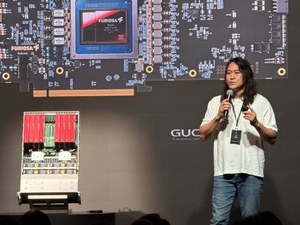
National Growth Fund to invest $531M in FuriosaAI, which rebuffed Meta's $800M takeover bid
-
INDUSTRY
Korea Shipowners' Association holds amateur baduk tournament for Maritime Day