- KASA logs stratospheric solar drone flight record
- Hybrid vertical take-off and landing aircraft targeted for 2032
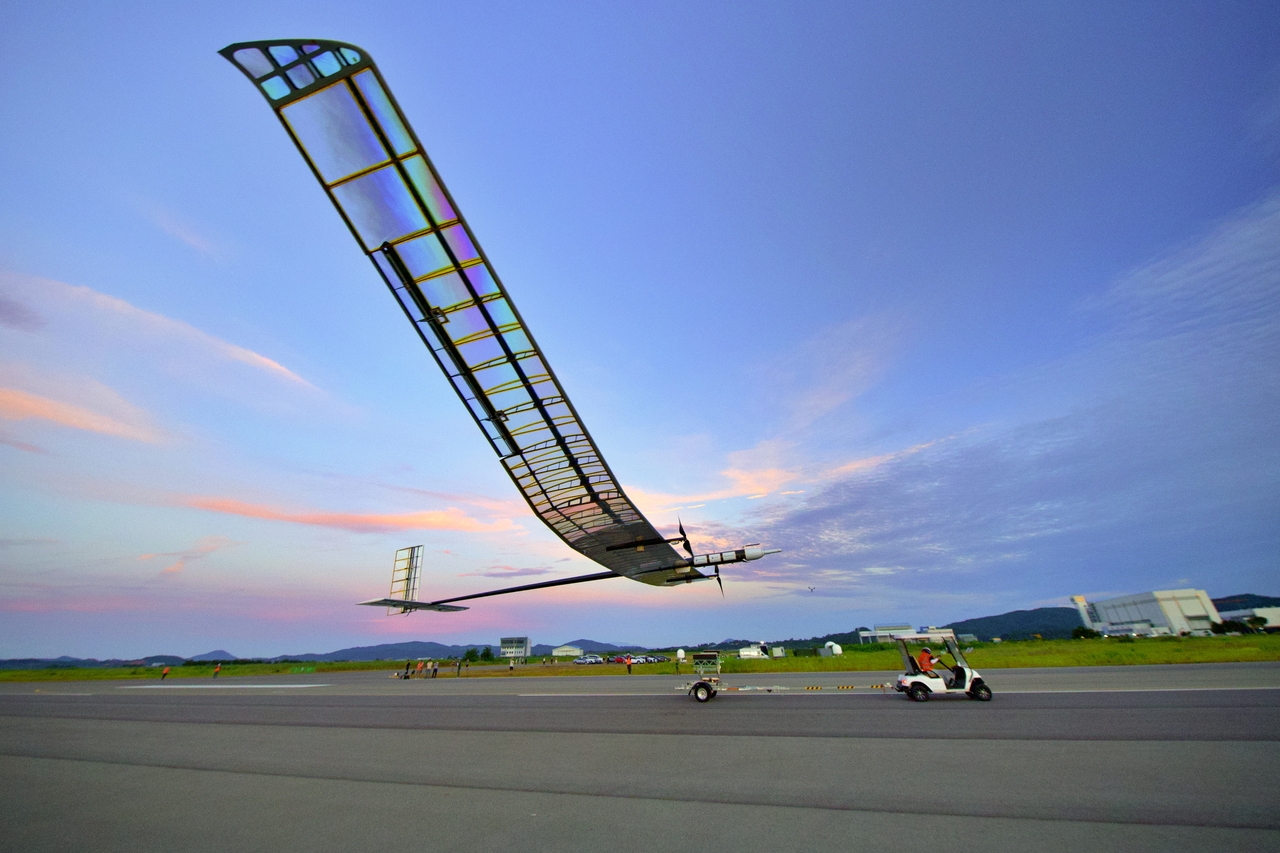
A domestically developed solar-powered drone flew continuously for more than seven days, setting a world No. 2 record for uninterrupted flight. The government plans to build on the technology to expand stratospheric drone development for real-time disaster monitoring — including wildfires — and has launched a separate program to develop a next-generation aircraft capable of taking off and landing without a runway.
Korea AeroSpace Administration said its stratospheric solar drone EAV-4 completed 170 hours and 5 minutes of continuous flight, and announced it would pursue a hybrid vertical take-off and landing (VTOL) aircraft development project.
EAV-4 achieved the record during a flight test conducted from Aug. 18 to Aug. 25, surpassing the previous domestic record of 53 hours set by EAV-3 in 2020 by more than three times.
According to KASA, the record ranks second in the world, behind only Airbus's stratospheric drone Zephyr.
The test also included a live wildfire-monitoring demonstration. Electro-optical and infrared cameras mounted on the drone detected the ignition point of a simulated wildfire within seconds and tracked and predicted the direction of smoke spread and the movement of embers.
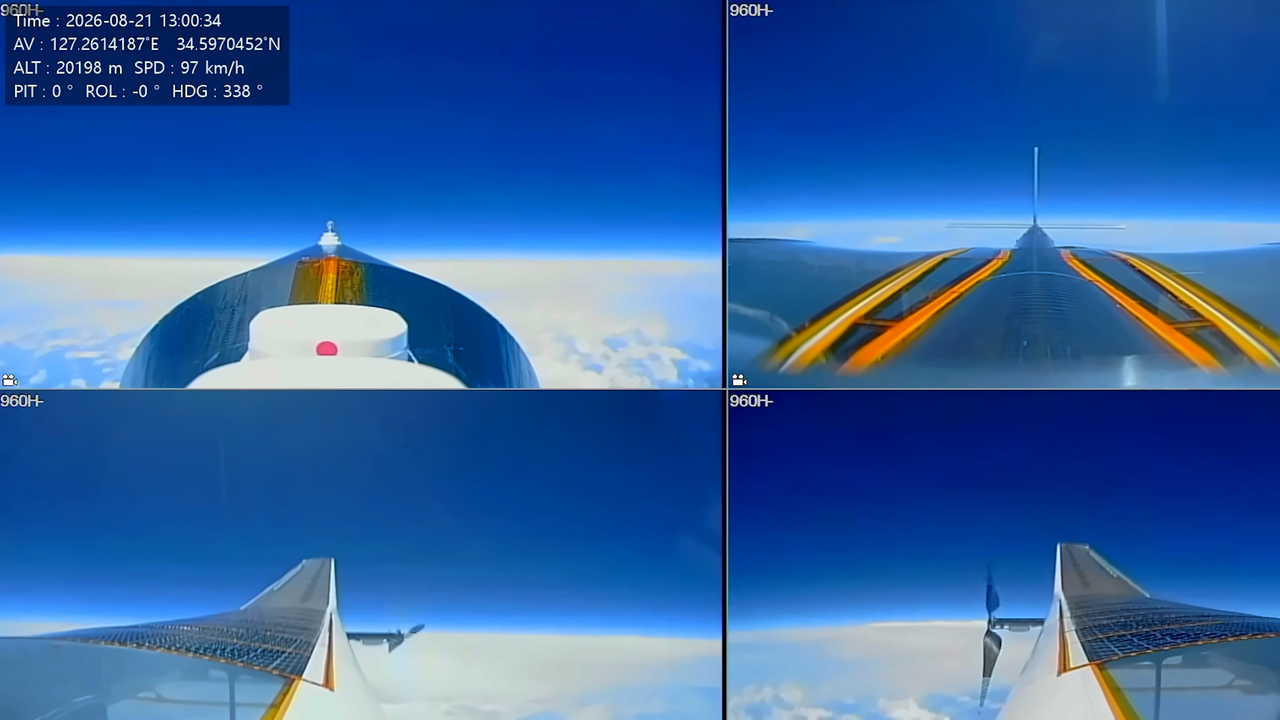
Stratospheric drones are a next-generation aviation platform capable of flying at altitudes of about 20 kilometers above ground for extended periods to observe wide areas. Operating at higher altitudes than conventional aircraft, they are relatively less affected by weather and can carry out long-duration missions.
Unlike satellites, they can continuously monitor a specific region and, beyond disaster surveillance, can serve as airborne base stations for remote islands and mountainous areas with limited communications infrastructure.
KASA said it plans to move early to capture market share through proprietary technology, given that the stratospheric drone market is still in the early stages of commercialization.
To that end, the agency will pursue development and demonstration of core technologies — including disaster monitoring and observation, communications relay, and verification of domestically produced solar cells — led by private companies through 2030. The ultimate goal is to secure the technology needed to build a permanent stratospheric surveillance network.

KASA is also launching development of a hybrid VTOL aircraft capable of taking off and landing vertically without a runway.
The hybrid VTOL is a next-generation aircraft that uses both an engine and a battery. Unlike urban air mobility vehicles that run on battery alone, it can carry more passengers and cargo over longer distances.
It also offers a safety advantage by maintaining reserve power to respond to emergency situations.
The aircraft is expected to serve a wide range of uses — emergency cargo transport and medical evacuation in remote islands and mountainous areas where runways are difficult to build, as well as inter-regional air taxi services.
The government will conduct research and development over five years from 2028 to 2032. Plans call for domesticating key components including the hybrid propulsion system, engine, battery and motor, alongside phased aircraft development and technology verification.
The program aims to strengthen South Korea's technological competitiveness in the future aviation market, currently dominated by foreign companies, and to improve self-sufficiency in the aviation parts supply chain.
KASA Administrator Oh Tae-seok said the long-endurance flight of the stratospheric solar drone "is a meaningful achievement that demonstrates the potential of South Korea's aviation technology," adding that the hybrid VTOL development program is "a new challenge to lead the future aviation market."
Oh said the agency would work to ensure that industry, academia and research institutions join forces to secure core technologies directly, and that the effort translates into tangible growth of the aviation industry and benefits for the public.
nbgkoo@heraldcorp.com