
- HOME
- IT·SCIENCE
-
KT Corp, KISTI launch Korea's first 400Gbps Korea-US national science research network
Bandwidth four times wider than existing 100Gbps line Daejeon–Chicago link to support research data processing KT Corp and the Korea Institute of Science and Technology Information (KISTI) have launched the country's first 400Gbps Korea-US dedicated international line for the national science and technology research network, the company announced Wednesday. The line serves as the international backbone of KISTI's national science and technology research network, connecting KISTI's headquarters in Daejeon to Chicago — a hub for North American and European research networks. The bandwidth on the Korea-US segment is four times the previous 100Gbps capacity. The upgrade will allow large-scale research data needed for global collaborative projects to be handled more reliably. It is also expected to meet growing demand for cross-border data exchange driven by the expansion of data-intensive fields such as AI, large-scale science and astronomy. Beyond high-speed transmission of large research datasets, the new line is expected to strengthen the global connectivity of the national research network and expand support for international joint research. KT Corp and KISTI jointly resolved the technical challenges of securing stable 400Gbps transmission over the long transoceanic Korea-US route. The two organizations completed construction and stability verification of the submarine cable segment and established the interconnection environment through to Chicago. KT Corp currently operates five submarine cable systems — three in Asia and two in North America — including APG, APCN-2, NCP, TPE and KJCN, accounting for more than half of all submarine cables in operation in South Korea. The new research network line was added to the NCP submarine cable, which directly connects South Korea and the United States without intermediate routing. This minimizes latency and transit risk on the international segment. KT Corp operates dual cable landing stations — in Busan and Geoje, South Gyeongsang Province — where submarine cables meet the terrestrial network. If a network problem occurs on a specific segment, international traffic can be continuously rerouted through an alternative path. KT Corp plans to gradually expand submarine cable capacity and diversify its landing stations to meet rising traffic demand driven by the spread of AI services and increasing global data exchange. "Building Korea's first 400G Korea-US national science and technology research network is an important milestone that raises the competitiveness of the country's R&D infrastructure to the next level," said Jeon Myeong-jun, executive vice president and head of the Enterprise Service Division at KT Corp's Enterprise Business Unit. "KT will continue to support the strengthening of the national research network's global competitiveness and digital innovation through cooperation with KISTI, drawing on our capabilities in operating international submarine cables and global backbone networks." Meanwhile, KT Corp announced in July that it plans to invest a total of 6 trillion won ($4.46 billion) in AI infrastructure, including AI data centers and submarine cables. Of that amount, 1 trillion won will go toward submarine cables, with plans to add more than 90Tbps of supply capacity.
Sept. 16, 2026
-
ETRI spinoff Blue Tile Lab eyes Kosdaq listing after rapid growth from lab idea to W9.7b in investment
- Blue Tile Lab combines AI machine vision with ETRI femtosecond laser technology - Sales doubled from 2.7 billion to 5.6 billion won; headcount tripled from 15 to 47 - ETRI startup support and special zone foundation backing form a 'growth ladder' A startup born from a government researcher's idea has secured nearly 10 billion won ($7.43 million) in investment and is now preparing to list on the Kosdaq. The case is being cited as a model of how core technologies held by public research institutions, combined with commercialization and demonstration support from a special research and development zone, can drive company growth. The Electronics and Telecommunications Research Institute (ETRI) and the Innopolis Foundation said Wednesday that Blue Tile Lab, an ETRI spinoff, is expanding into the biotech sector after establishing itself in semiconductors, secondary batteries and displays — driven by AI machine vision and ultrashort-pulse laser technology. Blue Tile Lab was founded in 2016 by Kim Hyung-woo, a former ETRI researcher. The company entered the field of AI machine vision inspection solutions for semiconductor back-end processes, developing technology that uses AI to detect microscopic defects in products and classify their types. By applying its own machine vision system and deep learning technology, it cut inspection time on mass production lines from eight weeks to two. It later extended its technology to secondary batteries and displays. A new growth engine came from ETRI's core laser technology. ETRI contributed ultrashort-pulse laser technology to Blue Tile Lab through initiatives including its commercialization division's Unicorn Project, and supported follow-on commercialization efforts. It also dispatched three researchers to the company and backed prototype development, testing, certification and market development through a joint commercialization lab called 1-TEAM LAB. Through this collaboration, Blue Tile Lab became the first company in South Korea to develop a semiconductor light-emitting device-based near-infrared 920-nanometer femtosecond laser. A femtosecond laser generates extremely short pulses of light on the scale of one quadrillionth of a second, enabling highly precise material processing with minimal heat impact — making it useful in semiconductors, displays and secondary batteries. While ETRI supported the startup's founding and acquisition of core technology, the Innopolis Foundation took over for subsequent growth. Building on the ultrashort-pulse laser technology it received from ETRI, Blue Tile Lab registered as a research institute company in 2022. A research institute company is a public technology commercialization vehicle unique to special R&D zones, established within those zones to directly commercialize technologies from public research institutions. Companies with this status can receive a range of project support and tax benefits from the Innopolis Foundation. The foundation supported technology advancement and productization through technology commercialization (R&BD) projects in 2023 and 2024. Since 2025, it has been supporting multiphoton microscope demonstration, AI technology development and safety verification through its large-scale demonstration scale-up program and AI big-tech R&BD initiative. The results show up in sales and hiring. Blue Tile Lab's revenue more than doubled from 2.7 billion won in 2023 to 5.6 billion won in 2024, while its workforce grew more than threefold, from 15 employees in 2022 to 47 as of July this year. The company has also accelerated its fundraising. It secured 1.7 billion won through ETRI Holdings, a wholly owned subsidiary of ETRI, then raised 5 billion won in a Series A round and 3 billion won in a Series B round, bringing total investment to 9.7 billion won. Blue Tile Lab currently supplies AI inspection solutions and laser sources to production lines at major large companies and is in the final stages of a pre-IPO equity investment round. It plans to pursue a technology-exception listing on the Kosdaq next year. Jeong Hee-kwon, chairman of the Innopolis Foundation, said translating excellent public research technologies into company growth requires coordinated collaboration linking researcher discovery, startup formation, technology advancement and demonstration. "We will further strengthen the virtuous-cycle ecosystem in which public technologies grow in the market and lead to new innovation by connecting the capabilities of innovators within the special zones," he said.
Sept. 16, 2026
-
KAIST cracks electrical bottleneck in ultrathin semiconductors
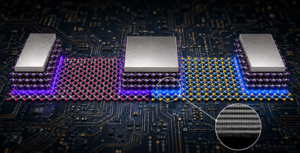
- Team develops universal van der Waals tunneling injector - Single material supplies charge to both n- and p-type semiconductors Researchers have developed a new technology that can efficiently supply electricity to ultrathin semiconductors just a few atoms thick — a potential breakthrough for building smaller, denser next-generation low-power AI chips. KAIST announced Wednesday that a research team led by Professor Seo Jun-ki of the Department of Chemical and Biomolecular Engineering developed a "universal van der Waals tunneling injector" using tin diselenide (SnSe₂), in collaboration with researchers from Yonsei University, the Beijing Computational Science Research Center in China, the Korea Institute of Science and Technology, Ulsan National Institute of Science and Technology (UNIST), and Samsung Electronics. Transistors are microscopic switches that control the flow of electricity. They come in two types: n-type, in which electrons carry the current, and p-type, in which positively charged "holes" — spaces left by missing electrons — do the work. Real semiconductor chips widely use a structure called CMOS, or complementary metal-oxide-semiconductor, which combines both types. Two-dimensional semiconductors, which are only a few atoms thick, have drawn growing attention as a way to overcome the physical limits of miniaturization. Their extreme thinness allows them to be stacked in multiple layers, enabling more transistors to be packed into the same surface area. Supplying electricity smoothly to these ultrathin semiconductors, however, has been a persistent challenge. Direct contact with conventional metal electrodes can damage the semiconductor or create barriers that impede the movement of electrons and holes. Compounding the problem, n-type and p-type semiconductors require different conditions for charge injection, meaning separate electrodes had to be used for each. The research team solved this problem with a single material: tin diselenide. Rather than forming strong chemical bonds with other semiconductors, tin diselenide binds through weak "van der Waals forces" between atoms, minimizing damage to the ultrathin semiconductor while creating a smooth contact interface. The material also spontaneously forms favorable pathways for electrons or holes depending on the type of semiconductor it is connected to. In a p-type WSe₂ transistor using tin diselenide, the maximum drive current increased more than 1,000 times compared with a device using conventional nickel electrodes. An n-type MoS₂ transistor also achieved an on/off current ratio — a measure of how effectively a transistor switches between conducting and non-conducting states — exceeding 1 billion. The team also fabricated a CMOS inverter by combining the two transistors and confirmed that it operated stably under repeated electrical signals. If large-area manufacturing and integration processes are added to the technology, researchers expect it could enable three-dimensional semiconductors in which multiple layers of atom-thick two-dimensional materials are stacked. That, in turn, could lead to next-generation AI semiconductors that pack more transistors into the same area, boosting performance while cutting power consumption. "This work demonstrates that the most demanding gateway for charge to enter and exit a monolayer two-dimensional semiconductor can be addressed with a single type of material," Professor Seo said. "When combined with direct-growth and large-area process technology, it could accelerate the practical realization of low-power two-dimensional CMOS integrated circuits." He added that the goal of follow-up research is to develop a low-power, high-density three-dimensional logic platform that combines the advantages of monolayer semiconductors with the maturity of existing silicon process technology. The findings were published in the international journal Advanced Materials.
Sept. 16, 2026
-

Apple's South Korea iPhone growth leads the world
Apple's iPhone shipments in South Korea grew faster in the second quarter than in any other major market worldwide, market data showed Tuesday. The momentum is set to intensify next month when Apple launches its first foldable phone, the iPhone Duo, in Korea — putting it on a direct collision course with Samsung Electronics. For years, South Korean parents complained that their children pestered them for iPhones, reflecting a pronounced tilt toward Apple among teenagers and young adults. That enthusiasm appeared to cool as Samsung's foldable lineup gained ground, yet iPhone's market growth has shown no sign of slowing. According to market research firm Counterpoint Research, iPhone shipments in South Korea rose 35 percent year-on-year in the second quarter — the highest growth rate among Apple's key markets over the same period. The firm attributed the result to iPhone sales outpacing the broader domestic smartphone market between April and May. Domestic sales of the iPhone 17 series in the first quarter were roughly triple those of the iPhone 16 series in the same period a year earlier — a strong run that continued even as Samsung released its new Galaxy 26 series in the first half of this year. Riding that momentum, Apple is rolling out a string of new products in Korea this month. Pre-orders for the iPhone 18 series began Saturday, with the official launch set for Friday. Apple's first foldable, the iPhone Duo, will open for pre-orders on Oct. 16 before going on sale Oct. 23. Industry attention is fixed on the iPhone Duo. With Samsung having dominated the domestic and global foldable market, the key question is whether the Duo can push Apple's growth in Korea to a new level. Samsung has led the foldable segment since introducing the Galaxy Fold in 2019, now spanning eight generations of devices. The Galaxy Z Fold 8 series, released Aug. 7, drew about 1.44 million pre-orders in Korea alone — the highest pre-order figure ever recorded for a Samsung smartphone. The industry does, however, see the Duo's steep price as a potential obstacle to Apple's push in the Korean market. The Duo's domestic retail price has been set at 3.29 million won ($2,450) for the 256-gigabyte model — about 1.01 million won more than the 2.28 million won price of Samsung's comparable Galaxy Z Fold 8 in the same storage tier. "The domestic foldable market is one where Samsung has built a strong user base and product competitiveness over the past seven years," an industry official said. "How well the iPhone Duo can capture upgrade demand from existing iPhone users, and how consumers respond to a price barrier of over 3 million won, will determine its early commercial success."
Sept. 15, 2026
-
'Don't open the windows!' Mosquitoes surge as autumn arrives — and disease risks rise with them
"Barely saw them all summer — and now they're everywhere." September has arrived with a welcome break from a record-shattering heat wave, bringing cooler temperatures and the feel of early autumn. But the season has also brought an unwelcome guest. Mosquitoes are back. While many Koreans spent August losing sleep to the oppressive heat, a growing number now find themselves kept awake by the familiar high-pitched whine buzzing past their ears the moment the lights go out. Data show that as the heat broke, domestic mosquito activity nearly doubled almost overnight. The bigger concern is that this year's mosquito surge is only just beginning. Climate change is transforming autumn into an ideal breeding environment for the insects. Milder winters are extending their active season further into the year, widening the window during which mosquitoes can transmit life-threatening infectious diseases. If winters continue to warm as climate projections suggest, experts warn that mosquito-borne illness could become a year-round problem — interrupted only during the most extreme summer heat. According to the Seoul Metropolitan Government, the city's mosquito activity index stood at 44.3 on Tuesday — up roughly 10 points from 33.4 recorded just two days earlier on Sunday. The reading pushed the mosquito alert to Level 2 "Attention (High)," at which point residents are advised to use window screens and avoid opening windows late at night for ventilation. The index had climbed even higher the previous Wednesday and Thursday, surpassing 50 and reaching Level 3 "Caution." At that level, authorities recommend refraining from opening doors and windows for ventilation altogether. Having largely disappeared during the peak summer heat, mosquitoes are surging back now that temperatures have eased. Real-time surveillance data from the Korea Disease Control and Prevention Agency's AI-based monitoring system make the shift even more striking. During the week of Aug. 17–23, the average total mosquito index stood at 53 individuals. The following week it jumped to 100.9 — a near-doubling of almost 48 individuals in just seven days. The index remained elevated at 104.7 during the week of Aug. 30 to Sept. 5. Mosquitoes have long been considered a quintessential summer insect that thrives in hot weather. But a clear trend is emerging: their activity now peaks in spring and autumn rather than summer. Summers have grown so hot that even mosquitoes struggle to cope, while spring and autumn temperatures have become increasingly mild and hospitable. According to the Korea Meteorological Administration, the national average temperature this summer was 25.4 degrees Celsius — 1.7 degrees above the historical norm and the third highest on record since a nationwide weather observation network was established in 1973. The past three years have ranked first, second and third on that all-time list, marking three consecutive summers of record-breaking heat. Mosquitoes grow and reproduce more actively in warm conditions, but hotter is not always better for them. They are generally most active at temperatures in the upper 20s Celsius, and extreme heat can suppress both their activity and reproduction — though the threshold varies by species and environment. That does not mean fewer mosquitoes overall — it means their range is expanding. According to a spring climate report the Korea Meteorological Administration released in June, the national average temperature this spring was 13.3 degrees Celsius, a full 1.4 degrees above the historical norm of 11.9 degrees and the second highest on record since 1973. The trend has grown more pronounced of late. Seven of the past 10 years rank among the 10 warmest springs ever recorded. Last year's autumn told a similar story: the national average temperature was 16.1 degrees Celsius, 2 degrees above the norm and the second warmest autumn on record. The result is a lengthening window of mosquito-friendly weather — arriving earlier in spring and lingering later into autumn with each passing year. The greatest concern goes well beyond lost sleep. The longer mosquitoes remain active, the more time they have to transmit pathogens to humans. The WHO has noted that changes in temperature and rainfall are expanding both the seasons and the geographic areas in which disease-carrying vectors can operate. The threat is already materializing. According to data the KDCA released Wednesday, South Korea confirmed its first domestic Japanese encephalitis patient this year — a woman in her 60s who visited a medical facility on Aug. 15 with symptoms including high fever, chills and vomiting. Last year's first case was confirmed on Oct. 14, meaning this year's case arrived about five weeks earlier. This is not an isolated development. Over the past decade, as the national average temperature rose by about 1.4 degrees Celsius, the date on which the Japanese encephalitis advisory is issued moved roughly 16 days earlier. The active season for disease vectors has been expanding steadily, stretching from spring through late autumn. The coming weeks are particularly dangerous. The KDCA says most domestic Japanese encephalitis cases occur between August and November, with about 80 percent concentrated in September and October. An extended mosquito season like this year's raises the risk of other mosquito-borne diseases as well, including dengue fever, malaria and Japanese encephalitis. According to the Korea Institute for Health and Social Affairs, every 1-degree Celsius rise in temperature is associated with a 4.27 percent increase in the average incidence of major infectious diseases, including scrub typhus and malaria. Beyond human health, livestock diseases such as lumpy skin disease are also emerging as a growing concern. As climate change amplifies infectious disease risks, the KDCA plans to expand its regional vector surveillance network from 16 sites to more than 30 by 2029 and build a "smart surveillance system" using AI-based mosquito monitoring equipment. The WHO has also warned that climate change is altering the very epidemiology of infectious diseases, stressing that countries must have "the means to monitor and track risks, the capacity to respond to outbreaks, and access to countermeasures such as vaccines and treatments."
Sept. 15, 2026
-
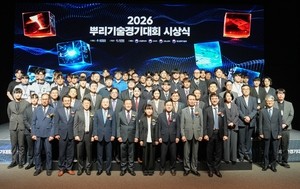
Veteran know-how goes digital as Korea's foundational industries embrace AI
- Korea Institute of Industrial Technology hosts 2026 Root Technology Competition - 1,065 competitors across 6 fields; Yeongpung Heat Treatment wins presidential award South Korea has staged a showcase for the best practitioners of "root technology" — the foundational manufacturing skills underpinning the country's automotive, shipbuilding and semiconductor industries. For the first time, the event also unveiled a plan to digitize the accumulated know-how of veteran craftspeople and pass it on to the next generation through AI. The National Root Industry Promotion Center under the Korea Institute of Industrial Technology held the awards ceremony for the 2026 Root Technology Competition on Tuesday at Texpa Hall of the Korea Federation of Textile Industries in Seoul. The competition began in 1991 as a plating contest and marked its 34th edition this year. It is the country's premier root-technology contest, dedicated to identifying skilled workers on the factory floor and cultivating the next generation of technical talent. This year, 1,065 participants competed across six fields — casting, molding, plastic forming, welding, surface treatment and heat treatment — over five months from April through August. Companies were evaluated on process technology and product quality, while students and employed workers were assessed on hands-on skills in areas such as design, machining, welding and heat treatment. The top honor, the presidential award, went to Yeongpung Heat Treatment in the carburizing heat treatment category. Carburizing heat treatment infuses carbon into the surface of high-wear components such as gears and bearings, hardening the exterior while preserving the core's resistance to impact. Yeongpung Heat Treatment earned high marks for surface hardness, effective case depth, microstructural analysis and process documentation. The prime minister's award went to four companies: IS (casting), Hyundai Steel (welding), Sewon Metal (surface treatment) and Dream Heat Treatment (heat treatment). IS presented a turbocharger turbine casing for high-heat-resistant marine engines, while Hyundai Steel showcased an ultra-high-pressure vessel produced using CO₂ arc welding. Sewon Metal was recognized for its eco-friendly trivalent chromate process, and Dream Heat Treatment for its quenching and tempering heat treatment control technology. In the individual category, 46 people received government commendations, including employees at root-industry companies and students and teachers from Korea Polytechnics and Pohang Iron and Steel Technical High School. Award recipients will be offered job placement assistance at root-industry firms and opportunities to obtain technician certifications. A highlight of this year's event was the first introduction of a method for digitally transferring the "tacit knowledge" — the experience and intuition of skilled technicians — built up across the root industries. Quality in root-industry processes often hinges on the judgment of experienced workers, but concerns are growing over a potential break in the chain of expertise as the workforce ages and labor shortages deepen. The Korea Institute of Industrial Technology shared case studies in which veteran technicians' experience and judgment had been compiled as digital assets and integrated with AI. The initiative aims to convert the hands-on skills that risk disappearing when seasoned workers retire into data that future generations can draw on. "The Root Technology Competition has served to identify skilled workers who have quietly honed their craft on the factory floor, as well as future technical talent," said Choi Tae-hun, director of the institute's Intelligent Root Technology Research Center. "We will work hard to raise awareness of the value of root technology."
Sept. 15, 2026
-
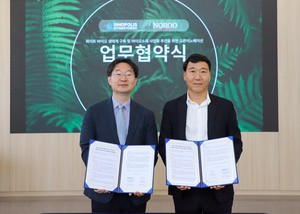
Noroo partners with three Daedeok special zone firms to commercialize bio-materials technology
- Special zone foundation, Noroo sign MOU - Partnership to cover joint R&D, pilot testing and investment linkage Noroo Group is joining forces with innovative companies in the Daedeok Research and Development Special Zone to build eco-friendly bio-materials into a core future business. The Korea Research Institute of Special-Purpose Local Public Enterprises signed an MOU with Noroo Holdings on Tuesday at the Daejeon Science Complex, covering the discovery and commercialization of bio-materials technology and companies. The agreement aims to connect eco-friendly bio-materials technologies that Noroo Group needs with promising technologies and companies in the special zone, advancing through joint research, pilot testing and full commercialization. The two organizations will identify joint research projects and partner companies based on Noroo Group's technology needs in the biotech sector. Selected special-zone companies will receive support through the foundation's research institute company regime, its R&D special zone development project and investment linkage programs. Noroo Group will provide its infrastructure and testing facilities to support real-world application and commercialization of the technologies. Before signing the agreement, the two organizations conducted an open innovation process and selected three special-zone companies as final partners: Ecoshine, Myoffer and Limerick. Ecoshine proposed a high-purity purification process for 3-hydroxypropionic acid (3-HP) derivatives, which can be used as bio-based chemical materials. Myoffer presented a biopolymer-based biodegradable microneedle technology, while Limerick offered an AI-powered system for predicting polymer properties and optimizing formulations — each as a potential collaboration model with Noroo Group. Noroo Holdings and the foundation plan to verify the real-world applicability of these companies' technologies and pursue follow-on commercialization, including joint R&D and pilot testing. "We will translate the technologies and companies we identified through this open innovation process into joint research and validation, and turn them into tangible business results," said Kim Yong-seong, president of Noroo Holdings. Foundation Chairman Jung Hee-kwon said the organization would "continue to expand the collaborative ecosystem for joint R&D and pilot testing so that outstanding public technologies and innovative startups can establish themselves as growth partners for large and mid-sized companies at home and abroad."
Sept. 15, 2026
-
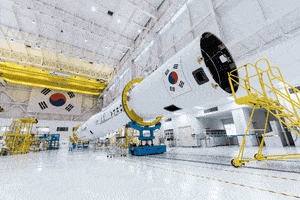
Nuri rocket to carry 15 satellites into orbit, ushering in South Korea's constellation era
- South Korea's homegrown Nuri rocket set for launch at 12:23 p.m. on Oct. 7 - Five ultra-small cluster satellites to be deployed simultaneously, a record payload - Full 10-satellite constellation to be completed in 2027, enabling three or more daily passes over the Korean Peninsula South Korea's homegrown Nuri rocket will lift off on Oct. 7 carrying 15 satellites, marking what officials say will be a pivotal shift in the country's space program — from operating individual satellites to running a coordinated constellation. For the first time, five ultra-small satellites will be deployed simultaneously into orbit. The Korea AeroSpace Administration and the Korea Aerospace Research Institute held a press briefing Tuesday on the fifth Nuri launch, disclosing the payloads' missions and the current state of launch preparations. The fifth Nuri mission will carry a total of 15 satellites: five units (Nos. 2 through 6) of the primary payload NeonSat, an ultra-small cluster satellite series, along with 10 CubeSats as secondary payloads. It is the largest satellite payload ever carried by Nuri and the first time the rocket has flown with multiple primary payloads. The mission's central objective is to deploy all five NeonSat units sequentially into sun-synchronous orbit. Each satellite weighs less than 100 kilograms and carries an electro-optical camera capable of 1-meter-resolution black-and-white imagery and 4-meter-resolution color imagery. The constellation is designed to support national security as well as disaster response — including wildfires and floods — through high-frequency, high-precision Earth observation. Deploying multiple satellites in succession required new engineering solutions. Nuri will use a low-shock satellite separation device to reduce the impact forces generated during release. The five NeonSat units will be ejected at 35-to-40-second intervals in different directions to prevent in-orbit collisions. A dedicated separation sequence will also control the attitude of the rocket's upper stage throughout the process. After all satellites — including the CubeSats — have been released, the upper stage will perform an avoidance maneuver to prevent any collision with the deployed payloads. NeonSat is ultimately planned as a 10-satellite constellation distributed across two orbital planes. The five first-batch production units going up on this fifth launch will be joined by five more second-batch units via the sixth Nuri launch in 2027. Once the full constellation is in place, it will image the Korean Peninsula at least three times a day and revisit any given point within 24 hours. Ten CubeSats will also ride along. They were developed by 10 research and development organizations spanning universities, local governments and domestic companies. The CubeSats will carry out a range of public-interest missions: verifying the performance of domestically produced components and parts in the space environment (the Korea Aerospace Research Institute's domestic space-verification platform No. 2), surveying the low-Earth-orbit space environment (GBISat, KAIST), monitoring ocean debris currents around Jeju Island (PURSAT-02, Quaternion), and analyzing fine-dust trends and sources (Ulysses, the Unmanned Exploration Research Institute). Each developing organization plans to validate its own technologies, components and parts in actual space conditions and apply the results to future development and applications. "This fifth launch is the first to carry multiple primary payloads and the largest satellite payload Nuri has ever flown," said Park Jae-seong, head of the space transportation division at KASA. "If the satellites operate successfully, it will mark an important turning point in which South Korea's satellite development leaps into mass production and constellation operations." Final assembly of Nuri 5 at the Naro Space Center in Goheung, South Jeolla Province — which began June 29 — is now in its closing stages. All 15 satellites have been loaded onto the rocket's upper stage, and full vehicle assembly is expected to be completed by the end of this month. After a final inspection on Oct. 5, the rocket will be transferred to the launch pad on Oct. 6 if no issues are found. The scheduled launch date is Oct. 7. The exact launch time will be confirmed on the day by the launch management committee. "The fifth Nuri launch is South Korea's first constellation satellite launch and an important turning point in the country's leap toward mass production and constellation operations," said Oh Tae-seok, administrator of KASA. "We will spare no effort in our preparations until the very last moment to ensure a successful launch."
Sept. 15, 2026
-
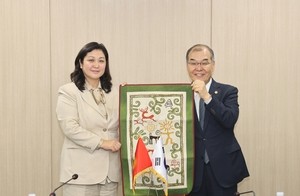
South Korea, Kyrgyzstan join hands on ICT and science talent development
Korea Research Foundation president meets Kyrgyz minister of science, higher education and innovation South Korea and Kyrgyzstan have agreed to expand cooperation in ICT talent development and higher education, with plans to support local educational and research capacity and digital transformation through partnerships between Korean and Kyrgyz universities. The Korea Research Foundation said President Hong Won-hwa met Tuesday with Gulzat Isamatova, Kyrgyzstan's minister of science, higher education and innovation, to discuss expanding higher education cooperation and official development assistance. The meeting was arranged on the sidelines of the first Korea-Central Asia Summit. Both sides reviewed progress in education and research cooperation and discussed ways to broaden the scope of future collaboration. Particular attention was given to the outcomes of the Leading University Support Project for International Cooperation, a higher education ODA initiative supported by the Korea Research Foundation, and to plans for its sustainable development. Korean universities are currently working with Kyrgyz counterparts in areas including nursing, computer science and information and innovation technology. Through these partnerships, the two sides have supported the establishment of health care and ICT departments, the development of educational infrastructure, and the strengthening of teaching and research capacity at local universities. The two sides also agreed to deepen ICT education cooperation to support Kyrgyzstan's digital transformation. They plan to develop and operate new ICT curricula and expand faculty and student exchanges, while also discussing ways to strengthen teaching capacity in Korean language and Korean studies, areas of growing demand in the country. Minister Isamatova said cooperation with South Korea "has contributed greatly to strengthening higher education and research capacity in Kyrgyzstan," and called for continued collaboration on expanding ICT infrastructure and developing skilled talent. Hong said Kyrgyzstan is "a key cooperation partner in Central Asia," adding that he hopes "to build on the higher education cooperation model to achieve tangible results in ICT, science and technology, and academic exchange, further deepening the trust between our two countries."
Sept. 15, 2026
-
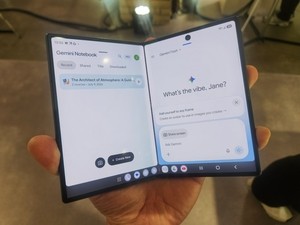
Samsung's Galaxy Z Fold8 Ultra, Galaxy S26 Ultra top Consumer Reports rankings
Z Fold8 Ultra takes No. 1 in foldables category S26 Ultra leads all smartphones with overall score of 88 Galaxy Z Flip8, Galaxy Z Fold8 also earn high marks Samsung Electronics' Galaxy Z Fold8 Ultra has topped the foldable phone category in the latest Consumer Reports rankings, while the Galaxy S26 Ultra claimed the No. 1 spot among all smartphones. According to Consumer Reports ratings published Tuesday, the Galaxy Z Fold8 Ultra ranked first among foldable phones. The Galaxy Z Flip8 and Galaxy Z Fold8, the other members of the Z8 lineup, also received strong marks. Consumer Reports publishes evaluations of automobiles, home appliances and electronics based on its own expert testing and surveys of actual buyers. The Galaxy Z Fold8 Ultra earned perfect scores of 5 out of 5 across all assessed categories — display, performance, ease of use, and every camera test, including rear photo, rear video and front selfie. The Galaxy Z Flip8 and Galaxy Z Fold8 also received perfect scores in performance and ease of use. All three models scored 91 out of 100 in the predicted reliability category. Meanwhile, the Galaxy S26 Ultra, which launched in March, held the No. 1 overall smartphone ranking in September as it did in April, with a composite score of 88 points combining performance, reliability and owner satisfaction. The Galaxy S26 Ultra earned perfect scores in seven of the 10 performance categories — display, rear camera image quality, battery, durability and ease of use. In the battery category, it was the only device among the top 30 smartphones evaluated to receive a perfect score. Consumer Reports said that despite its large screen, the Galaxy S26 Ultra recorded the longest battery life of any device tested, at 51 hours and 30 minutes.
Sept. 15, 2026
-
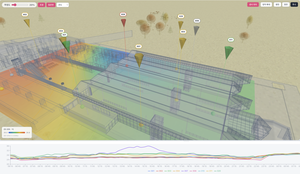
Rail research institute cuts Suseo Station's electricity costs by 20% with digital twin
Korea Railroad Research Institute develops digital twin to boost energy efficiency at rail stations A technology that predicts a railway station's electricity consumption within seconds in a virtual environment — and lets operators assess the energy savings of new equipment such as an ESS before installation — has been developed by South Korean researchers. When applied to Suseo Station, the system showed that annual peak electricity demand could be cut by about 20 percent. The Korea Railroad Research Institute announced Tuesday that it had developed an "energy digital twin" model that replicates the structure and facilities of Suseo high-speed rail station in a virtual space to forecast power consumption. Under the previous approach, a station's total electricity use was tallied after the fact using Korea Electric Power Corporation meter readings, making it difficult to determine how much energy individual pieces of equipment were consuming. The newly developed technology recreates a station's physical layout and equipment in a virtual environment and links it to data measured on-site. The model is calibrated using a full year of actual power consumption figures, allowing operators to see how energy use would change under different equipment configurations or operating conditions before committing to any investment. The institute built digital models of 10 zones at Suseo Station, including the main concourse, transfer corridors and lounges. Three of those zones have been fitted with sensors measuring temperature, humidity, carbon dioxide and fine dust levels, with real-time indoor environment monitoring under way since late May. The model can also calculate projected annual energy consumption in a matter of seconds whenever equipment or operating conditions are adjusted. A comparison of the model's monthly electricity figures against actual Korea Electric Power Corporation meter readings found the annual margin of error was limited to around 2 percent. The system also meets international standards for building energy model validation. The model also confirmed tangible energy savings. An analysis of solar power and ESS operation based on a full year of measured power load data at Suseo Station found that deploying a 250-kilowatt-hour ESS could reduce annual peak demand — the benchmark used to calculate the fixed electricity charge — by about 20 percent. The research also identified a key factor behind the low electrical efficiency of below-ground stations: ventilation fans account for about 46 percent of total electricity consumption. Optimizing ventilation system operations could yield additional energy savings. The institute is reviewing plans with Korail to systematize the energy efficiency gains achieved at Suseo Station and expand the approach to the Samsung Station multimodal transit hub being built beneath Yeongdong-daero in Seoul. The Samsung Station complex spans about 210,000 square meters, connects five rail lines and is targeted for completion in 2029. "The key is being able to test equipment investment and operational alternatives in advance using a validated model," said Shin Seung-kwon, a senior researcher at the institute. "We will expand the sensor network and energy model validated at Suseo Station to large-scale transfer stations."
Sept. 15, 2026
-

Brain's 'cleanup cells' awakened by low doses of toxic compound to clear Alzheimer's protein
- KIST identifies for first time how low-concentration quinolinic acid activates microglia's waste-clearing function - Amyloid beta reduced and neural connections restored in Alzheimer's mice, raising hopes for new treatment A brain metabolite long regarded as a toxin that worsens dementia has been found, at low concentrations, to do the opposite — awakening the brain's "cleanup cells" and prompting them to clear the proteins responsible for Alzheimer's disease. The Korea Institute of Science and Technology said Tuesday that a research team led by principal researchers Ryu Hun and Lee Hyun-bum, working with a team led by Professor Lee Jung-hee at Boston University School of Medicine, had identified a new pathway that enhances the waste-clearing capacity of microglia, the brain's immune cells. Ryu is based at KIST's Brain Disease Research Center and Lee Hyun-bum at its Biomolecular Recognition Research Center. Alzheimer's disease is a degenerative brain disorder in which toxic proteins such as amyloid beta accumulate in the brain and damage nerve cells. The brain's natural ability to clear waste declines with age, and that deterioration is widely considered one of the key factors making the disease so difficult to treat. The research team focused on quinolinic acid (QA), a metabolite found in the brain. At high concentrations, quinolinic acid is neurotoxic. The team became the first in the world to confirm, however, that at low concentrations it actually enhances microglia's ability to remove waste. When low-concentration quinolinic acid stimulates microglia, it activates a key enzyme involved in producing phospholipids, which make up the cell membrane. The phospholipids generated through this process make the cell membrane more flexible and bind with an autophagy-related protein called GABARAP, helping microglia capture and break down toxic proteins more effectively. The phenomenon — in which a small amount of a harmful substance boosts the body's defenses — is known as the "hormesis" effect. The team named the newly discovered cleanup pathway GAP, for GABARAP-Associated Phagocytosis. Animal experiments confirmed the effect. When low-concentration quinolinic acid was administered locally to the brains of mice with Alzheimer's disease, amyloid beta plaques in the hippocampus — the region responsible for memory — decreased significantly within days. Damaged neural connections were restored, and both short- and long-term memory improved to levels comparable to those of healthy mice. Rather than using quinolinic acid itself as a treatment given its toxicity, the team believes it will be possible to develop a therapy that selectively activates only the brain's cleanup system that quinolinic acid triggers. The researchers said the approach could also apply to other degenerative brain diseases caused by the accumulation of toxic proteins, including Parkinson's disease and Huntington's disease. "We confirmed that a metabolite known only as a substance that worsens dementia can, at low concentrations, act as a signal that enhances the resilience of the brain's immune cells," Ryu said. "We have proposed a new treatment strategy for dementia that leverages the metabolic and waste-clearing functions of those immune cells." He added that bringing a treatment to practical use would require safety validation and clinical trials in humans, building on the amyloid beta clearance and cognitive recovery results demonstrated in genetically modified mouse models. The findings were published in the latest issue of the international journal Signal Transduction and Targeted Therapy.
Sept. 15, 2026
-
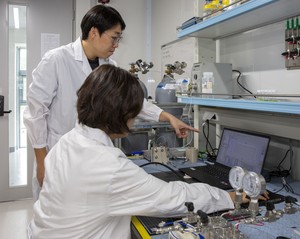
Korean researchers synthesize green ammonia using water instead of hydrogen gas
Palladium membrane found to selectively transport hydrogen ions from water, eliminating crossover problem South Korean researchers have succeeded in electrochemically synthesizing ammonia using water as the hydrogen source, bypassing the need for hydrogen gas. The Korea Institute of Energy Research said Tuesday that a research team led by Kim Jae-hyung of its Clean Fuel Research Laboratory had demonstrated that a palladium membrane can selectively transport hydrogen ions from water, and applied the finding to a green ammonia synthesis process. In electrochemical devices, membranes keep reactants, products and solvents separated while allowing the necessary ions to pass through. Conventional devices have relied mainly on polymer-based membranes, such as ion-exchange membranes. Polymer membranes contain narrow channels through which water flows, and ions travel along those channels. The problem is a phenomenon known as "crossover," in which unwanted molecules such as water pass through alongside the ions, degrading the performance and stability of the electrochemical device. Conventional membranes face an inherent trade-off: reducing crossover also slows ion transport, making it impossible to improve both properties at once. The research team addressed the crossover problem by replacing the polymer membrane with a palladium membrane, which absorbs hydrogen atoms. Because palladium has virtually no gaps, it absorbs only hydrogen and carries it to the other side of the membrane, blocking everything else. When an electric field is applied, hydrogen ions on one surface of the palladium membrane are converted into hydrogen atoms and absorbed into the metal. They then migrate through the palladium and emerge on the opposite side, where they revert to hydrogen ions and enter the solution. Throughout this process, the solvents, reactants and products on either side of the membrane remain fully separated, blocked by the palladium itself. The team applied the palladium membrane to an electrochemical ammonia synthesis process through a joint study with a research group led by Professor Hwang Yun-jeong at Seoul National University. Electrochemical ammonia synthesis is a green technology that draws hydrogen ions — the raw material for synthesis — from water rather than fossil fuels, and uses renewable energy to power the process, reducing carbon emissions. Experiments yielded a Faradaic efficiency of 51 percent for ammonia synthesis, and the team confirmed that the type of lithium salt anion dissolved in the organic solvent electrolyte significantly affects synthesis efficiency. The water crossover problem that had plagued conventional ion-exchange membranes did not occur with the palladium membrane, allowing the system to maintain a stable Faradaic efficiency of around 50 percent over 12 hours. "This result overcomes the longstanding limitation of polymer membranes, which struggled to simultaneously improve hydrogen ion transport and material blocking," Kim said. "Beyond ammonia synthesis, the technology can be applied to a wide range of electrochemical devices that require strict material separation, contributing to broader applicability." The research, supported by the National Research Council of Science and Technology's Global TOP Strategic Research Institute program, was published in the June issue of the international journal Advanced Science.
Sept. 15, 2026
-
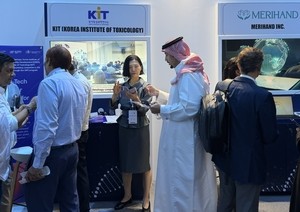
Korean biotech startups set sights on Middle East through Saudi summit
- KIT operates promotional pavilion at Saudi Arabia's RGMBS 2026 - Initiative links Korean firms with local pharma companies and investors for IR pitching and commercialization support Promising South Korean biotech startups are making a concerted push into the Middle East and North Africa, with Saudi Arabia as their primary entry point. The Korea Institute of Toxicology announced Tuesday that it is participating in the 4th Riyadh Global Medical Biotechnology Summit (RGMBS 2026), held in Saudi Arabia from Monday through Thursday, to help domestic biotech startups expand into the local market and attract investment. RGMBS is an international event that brings together government officials, global pharmaceutical companies, research institutions, startups and investors from across the biotech and medical sectors. KIT serves as the lead organization for the bio-health track of the Deep-Tech Startup Initiative Project (DIPS), supported by the Ministry of SMEs and Startups. Through the summit, KIT aims to showcase the technology of domestic biotech startups and expand their opportunities to enter the Saudi Arabian and broader MENA markets. At the venue, KIT is operating a joint "K-Bio Promotional Pavilion" to highlight the technology and competitiveness of Korean companies. It is also facilitating business networking between domestic startups and local pharmaceutical companies, biotech firms and investors. KIT is also taking part in "Korea Night" and a biotechnology investment forum to support investor relations pitching by Korean companies and identify local investors and potential business partners. The goal is to move beyond simple technology promotion and translate participation into tangible commercialization outcomes, including investment deals and joint ventures. KIT has led the DIPS bio-health track since 2022, supporting the global expansion of domestic biotech startups. Its services include new drug candidate analysis, toxicity testing, global regulatory consulting, domestic and international mentoring, and overseas commercialization support. "We hope this will be an opportunity to introduce the outstanding technology of promising Korean biotech companies to the Middle Eastern market and uncover new avenues for cooperation," KIT Director Heo Jeong-du said. "We will strengthen our local network-building and commercialization support to help generate real business results in the global market."
Sept. 15, 2026
-
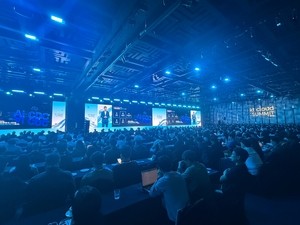
KT Cloud to expand AI data center capacity to 1GW, CEO says
KT Cloud shares AIDC and cloud technology strategy at annual summit Company to expand customer-tailored infrastructure and strengthen technical competitiveness CEO pledges to combine technology and operational capabilities to support customer business outcomes KT Cloud plans to expand its AI data center capacity to 1 gigawatt, positioning itself as an "AX infrastructure partner" that supports enterprise customers through every stage of their AI transformation. KT Cloud CEO Kim Bong-gyun unveiled the company's AI transformation support roadmap Tuesday at the KT Cloud Summit 2026, held at the Grand InterContinental Seoul Parnas in Gangnam-gu. KT Cloud said it will supply more than 1GW of infrastructure across approximately 20 sites by 2031. On the cloud side, the company will consolidate multi- and hybrid cloud operating environments around its proprietary kt cloud PLATFORM, with plans to extend further into "Composite AI" — a framework that connects data, computing resources, AI models and applications into a single execution layer. Kim said KT Cloud, as the provider of core AX infrastructure including cloud and AI data centers, will support customers in executing their AI transformation. In the cloud segment, the company will use its in-house kt cloud platform to help customers migrate to cloud environments suited to their specific needs and workflows. Technology and operational expertise validated in the public sector will be extended to private-sector clients, with the platform evolving to cover disaster recovery and AI workloads. In the AI data center segment, KT Cloud will draw on its data center construction and operational experience to reliably handle large-scale AI workloads. The company plans to scale AIDC supply to 1GW and offer flexible configurations in terms of size and location to meet individual customer requirements. The company also unveiled a "Composite Cloud" strategy for multi- and hybrid cloud environments, allowing customers to select and combine resources — spanning security, performance, cost and data — according to their needs. The Composite Cloud approach will expand into Composite AI, linking data, computing resources such as GPUs and NPUs, AI models, and applications and agents into a unified execution framework. Alongside the capacity expansion, KT Cloud shared its broader AIDC strategy covering technology, networking and partnerships. The company plans to build customer-tailored AI data centers in the Greater Seoul area and globally connected facilities outside the metropolitan region. Both will incorporate next-generation technologies including liquid cooling, ultra-high-density power systems and AI-driven intelligent operations. Digital twins, robots and Open Compute Project open standards will also be deployed to improve stability and operational efficiency. A network strategy was also presented, using an ultra-low-latency backbone to connect geographically distributed AI data centers as a single unified infrastructure. KT Cloud additionally outlined plans to co-develop modular AI data centers by combining power and energy infrastructure with its own AIDC design, construction and operational capabilities. KT Cloud introduced a range of technical topics at the summit, including direct-to-chip cooling, AIDC construction and operations strategy, kt cloud platform architecture, high-availability infrastructure and disaster recovery, and Kubernetes deployment. Rebellions, Ravel Up, Didim, Dell Technologies and Etech System, and EP Korea also showcased AX-related technologies and solutions. "We will combine our accumulated cloud and AIDC technology and operational experience with the core AX infrastructure of the KT Group and the specialized expertise of our partners," Kim said. "We will work alongside customers from strategy planning through infrastructure construction, operations and optimization, ensuring that AI transformation translates into tangible business results."
Sept. 15, 2026
-
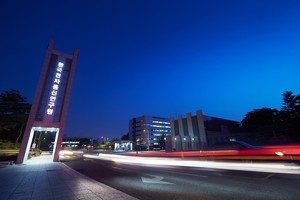
ETRI named top IP management institution for third consecutive time as patent royalties hit record high
- Strategic IP management competitiveness proven - Annual technology royalty target set at 100 billion won The Electronics and Telecommunications Research Institute earned a record 51.5 billion won ($38.3 million) in patent royalties last year. ETRI is now targeting annual patent royalties of 100 billion won, anchoring its strategy on "high-value patents" — monetizing core and standard patents in global markets. ETRI announced Tuesday that it had been named an "outstanding intellectual property management institution" by the Korea Intellectual Property Office at the "2026 Cross-Ministry Public Technology Transfer and Commercialization Road Show" held the previous day. It is the third time ETRI has received the designation, following selections in 2020 and 2023. The outstanding IP management institution designation is awarded to universities and public research institutes based on a comprehensive evaluation of their intellectual property management systems and performance over the preceding three years. ETRI was the first government-funded research institute to adopt an institute-wide patent strategy, doing so in 2004. Since then it has moved beyond simply increasing the number of patent applications, focusing instead on identifying core and foundational patents from the research and development stage and securing standard patents linked to international standards. Starting this year, ETRI is elevating its approach to "high-value patent-centered IP management." Under its sixth patent strategy (2026–2030), the institute aims to strengthen competitiveness across the full patent lifecycle — from creation and protection to utilization and monetization. The plan calls for building a patent portfolio centered on core and standard patents with strong market potential and commercialization prospects, generating revenue in global markets. Patent monetization results also reached an all-time high. Last year, ETRI recorded 51.5 billion won in annual patent royalties through patent litigation related to HEVC, a high-efficiency video compression technology, and licensing of international standard patents including LTE and WiFi. ETRI has been converting research outcomes into revenue by licensing core patents in wireless communications — including LTE and WiFi — and video codec technologies such as HEVC and VVC to global companies. Going forward, the institute plans to expand patent litigation, global licensing, license-based IP contracts and collaboration with specialized agencies, while also increasing its royalty share in international patent pools. Beyond monetizing its own patents, ETRI also plans to expand joint IP projects with universities and government-funded research institutes. The institute intends to share its expertise in securing standard patents and global licensing with technology licensing offices at universities and research institutes, and to broaden cooperation to include overseas patent litigation and monetization using jointly held patents — building what it calls a "collaborative IP business model." "We have turned outstanding research results into strong patents and connected them to real value in global markets," said Shin Jeong-hyeok, head of ETRI's commercialization division. "We will share ETRI's accumulated global IP business experience with universities and government-funded research institutes to raise the intellectual property competitiveness of public research institutions as a whole."
Sept. 15, 2026
-
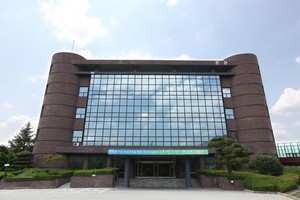
Science ministry to merge research, commercialization agencies in public institution overhaul
- Ministry of Science and ICT moves to consolidate overlapping functions among affiliated public institutions - Four regional national science museums to be unified under single foundation South Korea's Ministry of Science and ICT is launching a sweeping overhaul to consolidate overlapping functions among its affiliated public institutions. The Korea Research Foundation will absorb the Korea Technology and Information Promotion Agency for SMEs, the Korea Data Agency will be folded into the National Information Society Agency, and four regional national science museums will be brought under a single legal entity. The ministry announced Tuesday that it will pursue the reforms in line with the government's "Public Institution Function Reform Plan," unveiled Sept. 3, with the aim of streamlining duplicated functions and strengthening coordination among agencies. Under the plan, the Korea Technology and Information Promotion Agency for SMEs will be incorporated as an affiliate of the Korea Research Foundation. Combining the foundation's support for basic and original R&D with the commercialization agency's expertise, the ministry aims to strengthen end-to-end R&D linkages — from research planning through results identification to technology transfer and commercialization. The merged organization will also channel public and private technology demand, drawing on the commercialization agency's networks, into the planning of new research projects. The Korea Data Agency will be integrated as an affiliate of the National Information Society Agency. The plan combines NIA's data policy support capabilities with the Korea Data Agency's more than 30 years of accumulated expertise in data industry promotion, utilization and distribution, boosting the government's ability to execute data policy in response to the spread of AI. Four regional national science museums — the National Daegu Science Museum, National Gwangju Science Museum, National Busan Science Museum and National Gangwon Science Museum — currently operating as separate legal entities, will be merged into a single body to be called the National Science Museum Foundation, a working title. The functions of Innopolis FNS, a subsidiary of the Korea Research and Development Special Zone Promotion Foundation, will also be separated and transferred. Facility management and cleaning operations will move to the Korea Science and Technology Facility Management Corporation, while security and information services will go to the Korea Science and Technology Security Management Corporation. The special zone foundation will shed the burden of managing the subsidiary and focus its resources on fostering research and development special zones, including regional autonomous R&D and deep tech startups. The Special Post Office Pension Management Unit, which has 12 employees, will be merged into the Post Office Facility Management Corporation. A dedicated special post office pension management center will be established within that body to maintain pension administration expertise while consolidating shared organizational functions. The ministry said it will pursue the legislative amendments needed to carry out the institutional mergers and will draw up a detailed roadmap. During the integration process, it plans to guarantee the continued employment and existing terms of staff, and will gather input from related ministries, local governments and labor unions.
Sept. 15, 2026
-

South Korea races to close AI gap as global tech giants tap the brakes
SK Telecom, LG Group and Upstage push for sovereign AI ahead of final two-team selection early next year Big tech calls for slower AI development pace 'For Korea, this is an opportunity to close the gap fast' Even as global AI giants call for a slowdown in the pace of artificial intelligence development, South Korea is pressing harder than ever to build its own sovereign AI capabilities. The three contenders leading the country's independent foundation model project — SK Telecom, LG AI Research and Upstage — are pouring resources into securing homegrown technology and reducing reliance on foreign AI, with a final evaluation early next year set to cut the field to two teams. Some in the industry argue that the very moment big tech pulls back could give South Korea a rare opening to close the technology gap at speed. According to industry sources Tuesday, the three teams that passed the project's second evaluation are making a final push to sharpen their proprietary AI technology before the last assessment. The government-backed initiative aims to develop an independent AI model built on domestic technology; after the final evaluation, two of the three remaining teams will be selected early next year. SK Telecom has emerged as the standout performer, winning consecutive selections for national AI projects this year, including the foundation model initiative. The company drew particular attention after it was belatedly revealed that its team had ranked first in the project's second evaluation. According to the Ministry of Science and ICT, SK Telecom's team topped the second-stage assessment with a composite score of 70.6 points. Upstage followed with 69.9 points, LG AI Research scored 69.0 and Motif came in at 65.8. SK Telecom also led the expert user evaluation — in which 49 heads of AI startups participated — scoring 11.6 points. It ranked first as well in the National Information Society Agency (NIA) benchmark, which covers seven categories including Korean-language performance and reliability, recording 13.4 points. Industry observers say that at this rate, SK Telecom is well positioned to maintain its technological edge when the final two teams are chosen early next year. SK Telecom was also selected on Aug. 28 for the "AI for All" project, a government initiative to build chatbots and other tools that give the public free access to AI. The company plans to roll out AI agent services free of charge across sectors including education, finance, small businesses, public services and healthcare, social welfare, investment and venture, AI technology and security, and lifestyle. The public-facing service is expected to accelerate the expansion of an ecosystem built on the company's own technology. LG AI Research, meanwhile, is focused on maximizing the performance of its model toward a globally competitive superintelligent AI in a bid to secure one of the two final spots. The lab has particularly underscored AI technology that can be applied directly to specific industries — manufacturing, finance and science among them — to solve real-world problems on the ground. Lim Woo-hyung, co-director of LG AI Research, expressed confidence at the "LG AI Talk Concert 2026" held Monday at LG Science Park in Magok, Gangseo-gu, Seoul. "We have solved more than 100 cumulative problems at industrial sites," he said. "We have published 368 papers at top global academic conferences and filed more than 1,000 domestic patents. This is world-class AI capability." LG is also eyeing the development of an artificial general intelligence model, a direction several global AI firms have recently pursued. "Exaone also aims to be an AGI model," Lim said. "We will develop AI that raises the performance of a general-purpose model while also achieving specialized intelligence that surpasses general AGI in specific domains." Upstage, for its part, is channeling its competitive energy into expanding real-world usage of its technology. Its proprietary model Solar 4 ranked 10th globally in daily token usage on the open-source developer platform OpenRouter as of Aug. 20, reflecting rapid growth in actual deployment. In the ICT industry, some observers see the global calls for a slower AI development pace as an opportunity for South Korea, coming as the foundation model project nears its finish line. "There is talk that AI technology is evolving too fast and needs to slow down, but South Korea still needs to push the accelerator to the floor," an industry official said. "We should treat this as a chance to close the gap with the world's top-tier models as quickly as possible."
Sept. 15, 2026
-
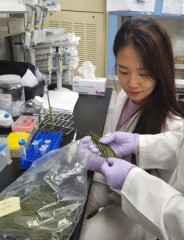
Discarded pine needles could be key to fighting muscle fatigue, study finds
- Korea Institute of Oriental Medicine identifies anti-fatigue properties in Korean pine needle extract - Human application trial completed after mice show recovery in grip strength and endurance Pine needles from the Korean pine tree — long discarded after the nuts are harvested — may find new life as a functional ingredient that restores muscle energy metabolism and reduces fatigue. The Korea Institute of Oriental Medicine said Monday that a research team led by Lee Mi-young of its Korean Medicine Convergence Research Division confirmed that an extract from Korean pine needles can improve fatigue by restoring muscle energy metabolism and mitochondrial function. While the tree's nuts are widely used, its needles have had little commercial application and are mostly discarded. The needles, however, contain a range of beneficial compounds, including polyphenols and terpenoids. The research team applied the pine needle extract and its key marker compound, lambertianate acid (LA), to muscle cells and to fatigue-induced mice, then analyzed the anti-fatigue effects. The team also examined the underlying mechanisms through computational approaches, including network pharmacology and molecular docking. When muscle cells subjected to oxidative stress were treated with the pine needle extract, levels of reactive oxygen species fell and damage to the cells and their mitochondria was reduced. Similar effects were observed with lambertianate acid. The extract also showed results in fatigued mice. After receiving the pine needle extract and lambertianate acid, the animals recovered grip strength that had declined. In a forced swim test, the time the mice spent immobile decreased, and other endurance-related indicators also improved. Particularly notable was the recovery of muscle energy metabolism. Fatigue-induced mice showed roughly a 70 percent drop in muscle glycogen, along with reduced levels of ATP, the cell's primary energy source. After treatment with the pine needle extract and lambertianate acid, both markers recovered to near-normal levels. The research team suggested that a PI3K-related signaling pathway may be involved in these effects. PI3K is a key signaling enzyme that regulates cellular metabolism, growth and survival. The pine needle extract appears to reduce oxidative stress and regulate mitochondrial biogenesis through this pathway, the team said. The research remains at the preclinical stage, based primarily on cell and animal experiments. However, co-research partner Huons N has manufactured a GMP-based standardized extract and completed a human application trial. The institute has since applied to the Ministry of Food and Drug Safety for registration of the extract as an individually recognized functional ingredient for health functional foods. "We have presented scientific evidence that Korean pine needles — previously of little use — could serve as a functional ingredient for relieving muscle fatigue and be transformed into a high-value anti-fatigue material," Lee Mi-young said. "We will continue follow-up research and commercialization efforts to develop it into a health functional food ingredient that helps alleviate fatigue." The findings were published in the international journal Applied Biological Chemistry.
Sept. 15, 2026
-
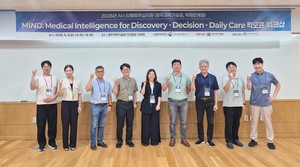
GIST launches W11b medical AI project to detect and treat cancer, brain diseases
- Scientist, clinician and personal health AI to be unified in single platform - Clinical validation to involve Samsung Medical Center, Vuno and Neurophet South Korea is pushing to develop a next-generation medical AI platform that unifies three distinct systems: a "scientist AI" that identifies the causes of disease, a "clinician AI" that supports diagnosis and treatment, and a "personal physician AI" that monitors health in everyday life. The Gwangju Institute of Science and Technology announced Tuesday it had been selected for an interdisciplinary project under the Ministry of Science and ICT and the Institute for Information and Communications Technology Planning and Evaluation's 2026 AI Top-Tier Early-Career Researcher Support Program. The project will receive 11 billion won ($8.17 million) in government research and development funding over five and a half years through 2031. GIST will lead the project, with Sungkyunkwan University participating as a joint research and development institution. Lee Hyun-ju, a professor in GIST's Department of AI, will serve as principal investigator. At the heart of the effort is the development of core technology called MIND — Medical INtelligence for Discovery, Diagnosis, and Daily care — which aims to connect disease detection, clinical decision-making and everyday health management in a single system. The research team is developing three distinct AI components. The scientist AI will analyze omics data — including genomics and protein data — alongside medical imaging and single-cell data to uncover the mechanisms behind cancer and brain diseases, and to identify new biomarkers and therapeutic targets. The clinician AI is designed to operate reliably across different hospitals, patients, medical devices and testing methods, predicting diagnoses, prognoses and treatment responses. Rather than simply presenting results, it will also provide the reasoning behind its conclusions and flag areas of uncertainty. The personal physician AI will analyze long-term lifestyle data — including sleep, physical activity and behavioral patterns — gathered through wearables and home sensors to detect early signs of health deterioration. The team plans to integrate all three AI systems into a unified medical AI platform covering the full cycle of care, from identifying disease causes through diagnosis and treatment to daily health management. Validation for real-world clinical use will proceed in parallel. The team will collaborate with Samsung Medical Center, Vuno and Neurophet to conduct multi-institutional clinical trials and develop prototypes. The project also focuses on nurturing early-career researchers in next-generation medical AI. Rather than treating them as mere participants, the program will have them lead independent projects as project leaders, with support including GPU infrastructure, clinical data access, hospital networks and opportunities for international collaborative research. "We will bridge medical AI research with real clinical settings and everyday life, and create an environment where early-career researchers can take the lead and fully develop their research capabilities," Lee said.
Sept. 15, 2026
MOST READ
- 1Pope Leo XIV declines French honors and banquet, accepts only private meeting with Macron
- 2KAIST develops high-performance bio-based adhesive using E. coli instead of petroleum
- 3Daimler Truck unveils next-generation transport solutions at IAA 2026
- 4What was Rachmaninoff's performance fee? A 1928 price list tells all
- 5Samsung Biologics union's show of force backfires at the bargaining table
- 6APR says hair-loss treatment research published in international journal
-
WORLD

US warns of punishment for anyone enabling Iran's Strait of Hormuz toll scheme
-
INDUSTRY
Toyota union puts productivity first; Hyundai Motor union demands bigger share of profits
-
FINANCE
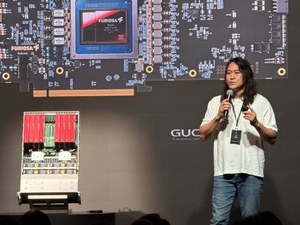
National Growth Fund to invest $531M in FuriosaAI, which rebuffed Meta's $800M takeover bid
-
INDUSTRY
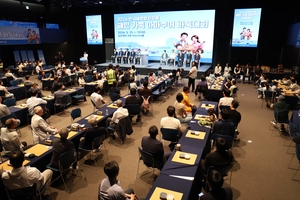
Korea Shipowners' Association holds amateur baduk tournament for Maritime Day