
- HOME
- IT·SCIENCE
-
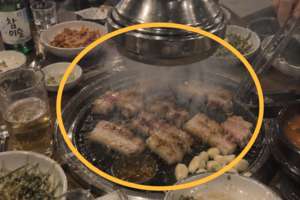
Grilling samgyeopsal produces pollution on par with car exhaust, research shows
Samgyeopsal is notorious for the thick smoke it produces — but the problem may be far worse than most diners realize. Place a slab of samgyeopsal on a scorching grill and it hisses to life, sending up a haze of smoke along with the savory aroma that makes mouths water. Most people know that cooking smoke is not good for the body. What fewer realize is how far that harm extends. Beyond personal health, the smoke billowing off a grill turns out to have a significant impact on air quality itself. The reason: the vast majority of smoke produced during cooking consists of ultrafine particulate matter. Researchers have also found that the chemical compounds in that smoke contribute to the formation of other air pollutants. Some analyses suggest the contribution is comparable to that of vehicle exhaust — a finding that has prompted calls to treat cooking smoke as a major source of air pollution and to step up efforts to reduce it. According to a cooking-smoke management guidebook released last year by the Korea Environment Corporation, more than 95 percent of the smoke generated when grilling meat consists of ultrafine particles with a diameter of 2.5 micrometers or less — classified as PM2.5. PM2.5 particles are so small that they can remain suspended in the air for extended periods and penetrate deep into the respiratory tract when inhaled, making them one of the most recognized air pollutants. That means the smoke rising off a grill actively contributes to air pollution. Among the meats commonly grilled in Korea, samgyeopsal — a national staple — was found to generate particularly large amounts of smoke. Per kilogram of meat grilled, samgyeopsal produced an average of 0.34 grams of smoke. Beef sirloin came in at 0.32 grams, lamb ribs at 0.31 grams, and pork neck at 0.24 grams. Smoke generation peaked when the meat was flipped on the grill, and the amounts also varied depending on the type of grill and the intensity of the charcoal heat. The problem does not stop at particulate matter. Cooking smoke from grilling contains a cocktail of chemical compounds. A paper published last year in the Journal of Korean Society for Atmospheric Environment, authored by researchers including those from the Chungnam Research Institute, found that open-flame grilling releases not only PM2.5 but also carbon monoxide, nitrogen oxides and volatile organic compounds. The scale of the impact is substantial. According to the California Air Resources Board, commercial cooking accounts for about 11 percent of all directly emitted PM2.5 in California. The agency notes the effect on air quality could be even greater in dense urban areas where restaurants are concentrated. The concern goes further still. The invisible chemical compounds released alongside PM2.5 during cooking do not simply disperse — once outside, they react with other substances to generate an additional pollutant: ground-level ozone. Ozone is not inherently harmful. In the stratosphere, the ozone layer shields the Earth from the sun's damaging ultraviolet radiation. But ozone that forms near the ground, where people live and breathe, is a harmful air pollutant. At elevated concentrations, ground-level ozone irritates the eyes and respiratory tract and can worsen conditions such as asthma. The formation process is straightforward. Nitrogen oxides emitted by vehicles and factories combine with volatile organic compounds from sources such as cooking, and when sunlight hits the mixture, a chemical reaction produces ozone. Volatile organic compounds are a broad category of organic chemicals that evaporate readily into the air. They are released not only from gasoline and paint but also from the high-heat cooking of meat and oils. Cooking smoke, in effect, combines with other pollutants and sunlight to generate new air pollutants. The magnitude of that contribution is far from trivial. Research published in March last year by the National Oceanic and Atmospheric Administration analyzed the atmosphere over Los Angeles and found that cooking accounted for 26 percent of the ozone produced by volatile organic compounds from human activity. The fossil fuel sector — covering road and off-road engines such as vehicles and construction equipment — accounted for 29 percent, just 3 percentage points more. Urban air pollution has long been associated primarily with vehicle exhaust and factory emissions. But the findings confirm that cooking smoke from restaurants, a byproduct of everyday life, can have a comparably significant effect. As tighter vehicle emissions regulations and the growing adoption of electric vehicles reduce output from conventional pollution sources, the importance of overlooked "hidden emitters" — such as restaurants and household products — is likely to grow. The challenge is that domestic management of cooking smoke remains at an early stage compared with regulations on vehicles and factories. Pollutants generated by cooking at restaurants, institutional cafeterias and food processing facilities in South Korea are still not adequately captured in official statistics. Vehicles are required to carry particulate filters, and emissions from factory smokestacks are measured and regulated. Open-flame grilling restaurants, by contrast, have long been identified as a significant source of everyday air pollution, yet they are not managed as ordinary workplaces required to install pollution-control equipment — a gap that critics have called a regulatory blind spot. Kim Jong-beom, a senior researcher at the Chungnam Research Institute, and colleagues recommended in a related report that authorities "consider classifying restaurants as air-pollutant-emitting workplaces based on their size and emission levels, and establish appropriate standards and management criteria."
Sept. 17, 2026
-
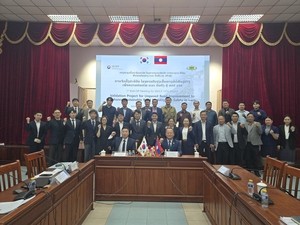
Korea exports road technology to Laos in W10.8b project
Road improvement techniques to be applied locally through 2030 South Korea's road construction and management technology is set to be deployed in improving unpaved roads in Laos. The Korea Institute of Civil Engineering and Building Technology announced Thursday that it has secured a second phase of the Laos Road Construction and Management Capacity Building project, worth 5.4 billion won ($3.95 million), following the completion of the first phase. The total project cost, including the first phase, comes to 10.8 billion won. The institute plans to expand the local application of unpaved road improvement techniques and strengthen Laos's road construction and management capabilities over four years through 2030. During the first phase, the institute helped revise and establish national road construction standards tailored to local conditions in Laos, and supplied construction material production equipment as well as construction and quality testing tools. Particularly notable was the overhaul of national construction standards — previously available only in English — into a bilingual system operating in both English and Lao, making them more accessible to local engineers. The institute also aligned the standards with Korean Industrial Standards, laying the technical groundwork for South Korean construction companies seeking to enter the Laos market. The second phase will diversify unpaved road improvement methods and expand the pilot area beyond Vientiane Prefecture to outlying hub cities. Construction methods suited to the road and climate conditions of each region will be verified, and the results compiled into a database. The data will then be used to enhance the climate resilience of roads against extreme weather events such as heavy rainfall. Support for local technological self-reliance will also be strengthened. The institute will provide technology transfers and hands-on training to Lao state-owned enterprises, and will work with the National University of Laos to develop next-generation road technology specialists. It also plans to identify follow-on projects linked to multilateral development banks to sustain and broaden the impact of its Official Development Assistance work. "We will work to help Laos build a sustainable foundation for improving and managing its own roads, and to contribute to the country's economic growth through better road infrastructure," said Park Seon-gyu, president of the institute.
Sept. 17, 2026
-

Naver decides against acquiring stake in Baemin
Naver has decided against acquiring a stake in Baemin, the online food delivery platform. In a regulatory filing Thursday, Naver said it had reviewed the possibility of acquiring a stake in Baemin but decided not to proceed "due to changes in the business environment and other factors." Earlier, Naver had reportedly joined a consortium with Uber to participate in a preliminary bid for Baemin. The situation shifted dramatically, however, after Uber announced its intention to acquire Delivery Hero — the parent company of Baemin operator Woowa Brothers — for approximately $13.7 billion. Under that deal, Delivery Hero would become a subsidiary of Uber and Woowa Brothers a second-tier subsidiary. At the time, Uber Chief Executive Dara Khosrowshahi said the integration of the Uber and Delivery Hero platforms would bring delivery services to hundreds of millions of people worldwide. He added that the company would double the number of markets where it offers mobility and delivery services and expand its proven platform to create value for both customers and shareholders.
Sept. 17, 2026
-
Personal data of 140 customers leaked from Kakao Games
Personal data belonging to 140 Kakao Games customers has been leaked. The company is investigating the hacking incident, and the scope of the damage could expand depending on the findings. Kakao Games announced on its website that it detected unauthorized access to its Partners and RINK services at 10:44 p.m. on Saturday and confirmed Monday that the personal information of 140 customers of those services had been leaked. The compromised data includes third-party identification codes or IDs used for external linkage through the Partners service, as well as the company's own identification codes and, in some cases, country codes. Kakao Games said the identification codes for external linkage, its own identification codes and country codes "are personal information with a low risk of misuse, as they make it difficult to identify specific individuals." It added that even in cases where external-linkage IDs were leaked, passwords were not compromised. The company said it has taken a series of response measures: blocking the unauthorized external access route and related accounts; blocking further access to the affected systems and strengthening security; securing logs and evidence related to the incident; inspecting and patching vulnerabilities; investigating whether additional personal data was leaked; enhancing monitoring for anomalies in related systems; reporting the incident to the Personal Information Protection Commission and relevant authorities; and conducting an investigation into the cause and scope of the incident with an external cybersecurity firm. As the hacking investigation is still ongoing, the possibility that the scope of damage could expand cannot be ruled out. Kakao Games said an investigation into whether additional personal data was leaked is underway as part of its response measures, adding that it is "conducting an investigation into the cause of the incident and the precise scope of the damage."
Sept. 17, 2026
-
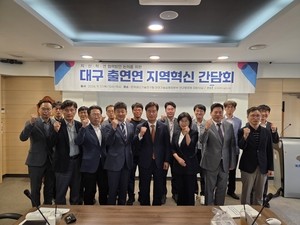
Five Daegu research institutes to boost cooperation on future mobility, robots and semiconductors
NST holds regional innovation forum with Daegu-based government research institutes Five government-funded research institutes based in Daegu will expand cooperation to strengthen the technological competitiveness of the region's key industries, including future mobility, robotics and system semiconductors. The National Research Council of Science and Technology (NST) said Thursday it held the "Daegu Government-Funded Research Institutes Regional Innovation Forum" at the Korea Institute of Industrial Technology's Daegyeong Technology Commercialization Headquarters, bringing together representatives from local research institutes and regional innovation bodies. The forum was organized to share research outcomes from regional branches of government-funded institutes and to build a locally driven research and development innovation ecosystem by linking regional industry needs with the institutes' research capabilities. The gathering drew representatives from five institutes' regional organizations — the Korea Institute of Science and Technology Information, the Korea Institute of Oriental Medicine, the Korea Institute of Industrial Technology, the Electronics and Telecommunications Research Institute (ETRI) and the Korea Institute of Machinery and Materials — along with officials from the Daegu city government, Daegu Technopark and the Daegu Gyeongbuk Institute of Science and Technology. Lim Jong-hee, director of the Science and Technology Promotion Center at Daegu Technopark, introduced a regional issue-solving R&D planning platform and said joint research projects must be identified and cooperation expanded among local governments, industry, academia and research institutes. Lee Su-ung, head of the Korea Institute of Industrial Technology's Daegyeong Technology Commercialization Headquarters, said the region must strengthen its foundation for locally driven technological self-reliance, focusing on key industries such as future mobility, robotics and system semiconductors — the core growth engines of the Daegu-North Gyeongsang Province area — in line with the government's regional innovation policy. Participants discussed ways to connect the research capabilities of the institutes' regional branches with the needs of local companies and universities, and to raise regional industrial competitiveness by identifying joint R&D projects. NST Chairman Kim Young-sik said linking regional demand with the research capabilities of government-funded institutes is essential to addressing local challenges. He added that NST would actively support the institutes' regional branches in establishing themselves as key hubs connecting local governments, industry, academia and research institutes to lead regional innovation. NST said it plans to develop support measures to strengthen the cooperative functions of the institutes' regional branches, based on feedback gathered at the forum.
Sept. 17, 2026
-

Uber, Google forge navigation alliance to crack South Korea's mobility market
Uber set to tap Google navigation the moment it launches in Korea Google speeds up nav development after map export approval; dedicated team formed Tmap partnership faces new uncertainty as US tech giants tighten grip Google and Uber are deepening their alliance to break into South Korea's mobility market. As Google prepares to launch a navigation service in South Korea, Uber has already laid the groundwork to adopt it the moment it goes live. The arrangement would establish in South Korea the same ecosystem seen elsewhere — Google providing navigation while Uber integrates it into its ride-hailing service. The coordinated push by the two US companies, spanning maps, navigation and mobility, is intensifying. Uber and Google have adjusted their contract so that Uber can immediately use Google's navigation service in South Korea as soon as it launches, according to IT industry sources Thursday. The two companies had previously designated South Korea as a region where use of Google navigation was restricted, a clause that survived multiple rounds of contract revisions. This year, for the first time, a condition was added that would automatically lift the restriction the moment Google launches its navigation service in the country. Google's navigation service covers real-time turn-by-turn directions for drivers, traffic information and alternative route guidance. Once Google begins offering the service domestically, Uber would be free to deploy the technology across its South Korean mobility operations. Industry observers interpret the move as Google's strategy to expand its ecosystem in South Korea through Uber, as the tech giant accelerates preparations for a domestic navigation service following the government's decision to allow high-precision map exports. The government conditionally approved the export of high-precision maps in February, after which Google began stepping up development of a domestic navigation service. One concrete sign of that push: Google began recruiting map-related staff in August for Seoul-based positions. The hiring is aimed at securing engineers to develop navigation technology, including real-time turn-by-turn directions for vehicles, sources said. Industry sources believe Google is targeting a first-quarter 2027 launch of its navigation service and has been completing the necessary groundwork. The company recently blurred satellite and aerial imagery of some military and security facilities in South Korea on Google Maps and Google Earth — a security measure the government required as a condition for approving the map export. Google's map export approval is seen as the catalyst for a sharper US big-tech offensive in South Korea's domestic mobility market, with competition set to intensify against local players such as Naver, Kakao and Tmap that have long dominated the space. Tmap, which has an existing partnership with Uber, faces particular uncertainty. Uber currently runs its South Korean service using Tmap's mapping technology and map and traffic data. Even after Uber and Tmap Mobility unwound their joint-venture equity relationship in 2024, the two companies have continued to collaborate on mapping technology, data and application programming interfaces. That arrangement could now be called into question.
Sept. 17, 2026
-
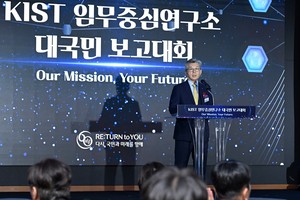
KIST targets 1,000x semiconductor performance, $1/kg hydrogen in national R&D push
- Institute unveils two-year results of mission-driven R&D overhaul - Plans advance for humanoid robot upgrades, Alzheimer's drug development The Korea Institute of Science and Technology is moving ahead with seven major research and development missions aimed at solving pressing national challenges in semiconductors, AI, humanoid robots, clean hydrogen and Alzheimer's drug development. KIST held a public briefing Thursday at its main campus in Seongbuk-gu, Seoul to present the initiative, titled "Our Mission, Your Future." About 100 people attended, including officials from the Ministry of Science and ICT, the K-Moonshot task force under the National Research Council of Science and Technology, venture capital firms, and representatives from industry, academia and research institutions. KIST introduced its mission-centered research framework in 2024, with the goal of pursuing research "that KIST must do and only KIST can do." The overhaul included adopting a project manager system and shifting from individual researcher-led work to team-based research focused on national priorities. KIST Deputy President Jang Jun-yeon presented the key objectives of the institute's seven mission-centered research organizations alongside a review of progress over the past two years. The Next-Generation Semiconductor Research Center is developing a Random Processing Unit, or RPU, designed to deliver computing performance 1,000 times greater than conventional processors while cutting power consumption to one-hundredth of current levels. The center has already achieved high-performance chip design and implemented route-optimization algorithms for retail logistics and autonomous driving, with technology demonstration planned next. On the quantum front, KIST is working to secure core technologies for large-scale quantum computers, building on advances in ultra-fast, high-efficiency quantum simulators. The AI and Robot Research Center is working to advance humanoid robot technology for use alongside humans in industrial and everyday settings by 2030, drawing on "KAPEX" technology transferred to LG Electronics. The goal is technological self-reliance in humanoid robots as the foundation of physical AI. The Climate and Environment Research Center has developed an AI-based climate prediction model to strengthen South Korea's capacity to respond to climate disasters. A carbon-capture material developed in-house is on track to reach mass-production capability by 2030 and enter commercialization. The Clean Hydrogen Convergence Research Center has already brought hydrogen production costs down to around $5 per kilogram and demonstrated a system that simultaneously produces hydrogen and electricity from ammonia. The center plans to scale up the technology and expand demonstrations to meet surging power demand from AI data centers and other sources, with a target of reducing production costs to $1 per kilogram by 2033. Research in the biotech sector is also accelerating to address the challenges of a super-aged society. The Brain Science Research Center is pursuing final regulatory approval for an Alzheimer's drug, building on 500 billion won ($365 million) in global technology transfer deals. It also plans to expand the clinical pipeline for new treatment candidates and push for commercialization of early-diagnosis technology. The Natural Products Drug Development Center, following a technology transfer of an eye-drop candidate for macular degeneration treatment, is upgrading an AI-powered drug development platform and targeting entry into the global market for age-related disease treatments. The Space Composite Materials Research Center, launched in January, is developing ultra-lightweight, high-shielding and high-insulation composite materials capable of withstanding the extreme conditions of space. The effort aims to reduce dependence on foreign technology and build a foundation for domestic self-reliance in the space industry. Alongside this, KIST plans to further strengthen its mission-centered R&D framework through expanded global joint research, commercialization of research outcomes and AI-driven innovation in scientific research. "The past two years have been a process of shifting from individual researcher-led work to team-based research for national missions, while simultaneously reforming how we conduct research and the systems that support it," KIST President Oh Sang-rok said. "We hope that by sharing not only our achievements but also our trial and error and the challenges we faced, KIST's experience can help government-funded research institutes across the country make their own transition to mission-centered R&D."
Sept. 17, 2026
-
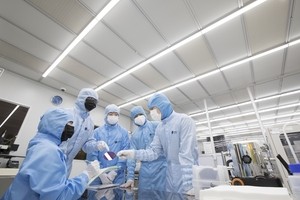
Applications to Korea's four science and technology institutes hit record high, with semiconductor program drawing 113-to-1 odds
- KAIST receives 8,394 applications, up 20.1% from last year, at 9.70-to-1 ratio - UNIST tops 10,000 applicants for first time, up 41.6%; semiconductor engineering program draws 112.57-to-1 ratio - DGIST also sets record with 9,208 applicants despite adding 100 seats, averaging 28.6-to-1 - Student interest in science and technology universities focused on AI and semiconductors continues to grow Even as a frenzy to enter medical school has swept South Korea, top students are flocking to KAIST and the country's other three science and technology institutes. Total early-admissions applications to the four institutes for the 2027 academic year reached a record 33,349 — a sharp jump from about 24,000 last year. The surge runs counter to widespread concern that an expansion of medical school enrollment quotas would deepen a flight from science and engineering, compounded by a shrinking school-age population. Student interest in science and technology universities has been rising, particularly in cutting-edge fields such as AI and semiconductors. According to KAIST, 8,394 students applied for roughly 865 undergraduate spots in the 2027 academic year admissions cycle, yielding a competition ratio of 9.70-to-1. Applications grew at an even faster pace than the expansion of available seats. KAIST's undergraduate intake rose from 815 in the 2025 academic year to 825 in 2026 and roughly 865 in 2027, yet the overall competition ratio climbed consistently — from 8.0-to-1 to 8.5-to-1 and now to 9.70-to-1. In the semiconductor systems talent track, 185 students applied for 40 seats, producing a ratio of 4.63-to-1. "What stands out in this admissions cycle is not simply that competition has intensified, but that more students are applying to KAIST who refuse to confine their potential to a single field and instead want to pursue science and technology in all its dimensions — without limits," said Kim Yong-hyun, KAIST's dean of admissions. UNIST drew 11,211 applicants for 565 early-admissions undergraduate seats in the 2027 academic year, a ratio of 19.84-to-1. Applications surged 41.6 percent from 7,919 last year, marking the first time the university has exceeded 10,000 applicants since its founding. Compared with 5,359 applicants in the 2022 academic year, the figure has more than doubled in five years. The semiconductor engineering program — a contract department operated in partnership with Samsung Electronics — drew the most intense competition. Some 3,940 students applied for just 35 seats, producing a ratio of 112.57-to-1, a sharp jump from 70.51-to-1 last year. "In the age of AI, universities must become places that help students develop the strength to ask their own questions, endure failure, and find answers," UNIST President Park Jong-rae said. "We will nurture future talent equipped with creative insight and the ability to connect across disciplines." DGIST also set a new application record. A total of 9,208 students applied for 322 seats, yielding a ratio of 28.60-to-1. The result is particularly striking given that DGIST expanded its intake by 100 seats — from 222 last year to 322 this year — yet the competition ratio still edged up from 27.85-to-1 to 28.60-to-1. The number of applicants rose by 3,026, or about 49 percent, from 6,182 last year. The AI College, which admitted its first undergraduate class this year, also attracted strong demand. Some 1,521 students applied for 100 seats, a ratio of 15.21-to-1. "We will continue to strengthen our education and research capabilities in future science and technology fields, including AI and semiconductors," said Cho Yong-cheol, DGIST's dean of admissions and student affairs. GIST received 4,536 applications for 315 early-admissions undergraduate seats in the 2027 academic year, an average ratio of 14.40-to-1. Last year, 3,331 students applied for 215 seats, producing a ratio of 15.49-to-1. The semiconductor engineering contract program posted the sharpest gain. Some 289 students applied for 25 seats, a ratio of 11.56-to-1 — up roughly 80.6 percent from 6.4-to-1 last year. GIST also expanded the weight of interviews to 50 percent in its major admissions tracks starting this year. "Our policy is to conduct interviews with all document-screened applicants before the College Scholastic Ability Test, assessing each candidate's competencies and fit with the university's vision for talent," said Lee Su-jeong, GIST's dean of admissions and student affairs.
Sept. 17, 2026
-
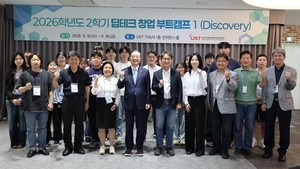
'Startup instead of thesis': UST to train deep tech founders using AI
- Student-professor co-founding supported; 5 teams to receive 50 million won in startup project funding - Practical training covers AI-driven technology-market matching and business model design Graduate students pursuing startups built on core technologies from national research institutes will use AI to uncover the market value of their technologies and verify commercialization potential. Students who successfully launch a company may earn a doctoral degree based on their startup results rather than a traditional thesis. The University of Science and Technology (UST) announced Thursday that it is running a deep tech startup boot camp from Wednesday through Friday at the UST dormitory conference hall. The program is part of UST's "national research institute deep tech student-professor co-founding" model, which centers on students and their academic advisers launching startups together and translating research outcomes from national institutes into real businesses. UST selected five school teams through a startup track evaluation in June. Each selected team receives 50 million won ($36,500) in startup project funding, tailored mentoring and flexible degree requirements. Five pre-selected teams are also receiving training to give them a chance to reapply. The boot camp provides hands-on training in applying AI throughout the entire startup process. The first day focuses on AI-assisted analysis of public data and academic papers; the second covers business model design, accounting, finance and patent education. On the final day, participants use AI-based technology-market matching to identify markets where the technologies developed in their labs could find real-world applications. Six startup experts serve as instructors, including Lee Yong-gwan, CEO of Bluepoint Partners, along with accelerator managers, accountants and patent attorneys. At the close of the program, teams that have converted to the startup track will present their business models and receive expert evaluations and feedback. UST applies separate degree requirements for students on the startup track. Doctoral candidates who use technology from a government-funded research institute to establish a company and pass review by UST's startup operations committee can substitute that achievement for the standard requirement of publishing at least one first-author paper in an SCIE-level academic journal. Master's students may likewise submit a startup report in place of a thesis. Students and their faculty advisers can also negotiate how to divide management and technology development roles within the startup. A professor may serve as CEO while the student takes the role of chief technology officer, or the arrangement can be reversed. "Success in deep tech startups requires more than having good technology — founders must prove for themselves what value that technology can create and in which market," UST President Kang Dae-im said. "We will continue to refine our systematic practical training and support framework to accelerate the development of a national research university where student entrepreneurship thrives."
Sept. 17, 2026
-

Melon launches running playlists tied to 'Kakao Friends Run 2026'
Four Kakao characters, four pace levels set the beat Kakao Entertainment's music platform Melon is running an event that pairs pace-based playlist recommendations with AI coaching for runners across the country. Melon said Thursday it will offer curated music playlists and running coaching ahead of Kakao Friends Run 2026, scheduled for Oct. 10. Users can obtain a "Kakao Friends Run Coaching Card" through ChatGPT for Kakao, built into KakaoTalk, to receive personalized running coaching. They can also listen to Melon playlists matched to their running level. The Melon playlists are organized around four Kakao Friends characters, each corresponding to a different pace level — beginner running (Bok-shimi), 5K (Apeach), 10K (Chunsik) and performance running (Ryan). Each playlist reflects the BPM and running goals appropriate for that level, with roughly 20 songs per playlist selected from tracks recommended by runners nationwide during an earlier event, Melon said. The event runs through Oct. 1. Participants can enter by choosing their running level from the four options, liking and listening to the corresponding playlist, and leaving a comment on Melon Magazine. Prizes include AirPods Pro 3, Oakley eyewear, an Alexjono cap and a Fullio massage device. Melon held a first-round event from Aug. 25 to Sept. 7, collecting song recommendations suited to various running situations alongside Kakao Friends characters. All playlists in the current second-round event were curated by Melon using the songs submitted by users in that first round. "We hope runners will use the playlists — built from user-recommended tracks — to find music and coaching that match their own pace," a Melon official said.
Sept. 17, 2026
-

Samsung Galaxy Z Fold 8 sales rise despite Apple's first foldable reveal
3.29 million won vs. 2.28 million won — Apple priced over 1 million won higher than Samsung iPhone Duo also heavier and thicker than its rival Sales of Samsung Electronics' Galaxy Z Fold 8 have increased even after Apple unveiled its first foldable smartphone, the iPhone Duo, industry sources said. Analysts attributed the trend to the iPhone Duo's higher price and greater weight compared with the Galaxy Z Fold 8, factors they said are weighing on consumers' purchase decisions. Domestic sales of the Galaxy Z Fold 8 rose about 10 percent over the past week compared with the previous week, according to the telecommunications industry Thursday. The gain came despite Apple opening pre-orders for its iPhone 18 series on Saturday and announcing that pre-orders for the iPhone Duo — its first foldable — would begin Oct. 16. Industry observers said consumer demand appeared to shift toward Samsung's product after Apple revealed its new lineup, rather than away from it. Price is the primary factor. The iPhone Duo's domestic launch price starts at 3.29 million won ($2,400) for the 256-gigabyte model — more than 1 million won above the Galaxy Z Fold 8's 2.28 million won for the same storage tier. The top-spec 2-terabyte iPhone Duo reaches 5.09 million won. The pricing gap has also prompted concerns about discrimination against domestic consumers. In the United States, the price difference between the iPhone Duo and the Galaxy Z Fold 8 amounts to roughly 130,000 won at current exchange rates — far narrower than the more than 1 million won gap in South Korea, suggesting Apple priced the device more aggressively in the domestic market than abroad. The two foldables also differ in weight and thickness. The iPhone Duo weighs 254 grams and measures 11.3 millimeters when folded — 53 grams heavier and 0.7 millimeters thicker than the Galaxy Z Fold 8 in the same configuration. "The core value of a foldable phone is the ability to carry a large screen in a compact, folded form," an industry official said. "Lighter hardware and portability are important criteria in consumer choices." The Galaxy Z Fold 8 also draws favorable reviews for software versatility. While the iPhone Duo offers a fixed two-app split-screen mode, the Galaxy Z Fold 8 supports up to three simultaneous app windows. The iPhone Duo's domestic release is expected in mid-October, meaning buyers would wait more than a month to receive the device — another factor analysts said is steering consumers toward Samsung. Meanwhile, industry observers said Apple's entry into the foldable segment is likely to expand the global foldable phone market overall. "The more competitors enter the foldable phone market, the larger the market can grow and the broader the choices available to consumers," an industry official said.
Sept. 17, 2026
-
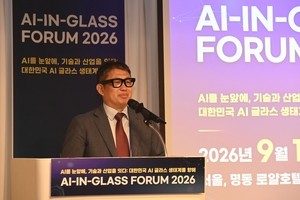
ETRI moves to build domestic AI smart glasses ecosystem
- Components, display, spatial intelligence and AI service firms join forces for technology independence and commercialization - Collaboration to span joint R&D, field demonstration and commercialization in next-generation wearable AI market South Korean research institutions and companies have joined forces to build an industrial ecosystem spanning core components, displays, spatial intelligence and AI services, aiming to secure an early lead in the next-generation wearable AI market. The Electronics and Telecommunications Research Institute (ETRI) said Thursday it hosted the AI-In-Glass Forum 2026 on Tuesday at the Royal Hotel Seoul in Myeong-dong, where participants discussed ways to strengthen domestic AI glasses technology and industrial competitiveness. The forum was organized as part of the "AI In-Glass Technology Development for Personal AI Agents" project, supported by the Ministry of Science and ICT. Participants came from industry, academia, research institutions and government, representing fields including core components, displays, devices, spatial intelligence, AI agents and application services. AI glasses are next-generation personal AI devices that recognize the user's surrounding environment and deliver relevant information and services in real time. As device miniaturization, low-power technology, high-efficiency displays, spatial computing and generative AI continue to advance, the technology is expected to find growing use in industrial field support, remote collaboration, education and training. Combining spatial intelligence — which interprets a user's location, gaze, nearby objects and surroundings — with AI agents could allow the technology to evolve into an intelligence platform that delivers context-appropriate information without requiring explicit commands. ETRI has set this as the core direction of its AI-In-Glass initiative and is actively developing related technologies. At the forum, KAIST professor Woo Wontack presented on the future of AI glasses under the theme "Symbiotic Augmented Intelligence." Kim Hyeon-bae, chief executive of Deepfine, spoke on AI glasses services and spatial intelligence, while Lee Myeong-hui, chief executive of Sapien Semiconductors, presented on display technology and its future. Jeong Il-gwon, head of ETRI's AI In-Glass Strategy Research Center, unveiled the institute's research and development strategy, focusing on spatial intelligence, user and environment understanding, collaborative spatial information, AI agents and displays. He also outlined directions for technology development and field demonstration tied to industrial applications. The central goal is to move beyond individual technology development and build a collaborative framework connecting everything from components to finished products and AI services. ETRI plans to pursue a collaboration model that links lightweight and low-power technologies from core component and display companies with product development at device firms, while integrating software from spatial intelligence and AI companies. The institute also aims to connect foundational research from universities and research institutions with demonstration environments at demand-side organizations to improve commercialization prospects. A panel discussion brought together representatives from ETRI, LIG, Phenecia, Kwangwoon University, Virnect and the Seoul XR Demonstration Center to discuss securing domestic core technologies, commercialization strategies, linkages with demand industries and ways to expand field demonstrations. ETRI said it plans to use the forum as a springboard to expand its cooperative network among participating organizations and build a framework running from joint research and development through interoperability verification, field demonstration and commercialization. Through follow-up discussions, the institute will identify new collaborative projects and support the domestic AI glasses industry's push for technology independence and entry into global markets. "For AI glasses to grow into a new industrial platform, core components, displays, devices, spatial intelligence and AI services must all advance together," said Lee Jeong-ik, director of ETRI's Spatial Media Research Laboratory. "We will develop this forum into a venue for substantive technology and business collaboration led by industry, and work to strengthen the competitiveness of South Korea's AI glasses ecosystem."
Sept. 17, 2026
-
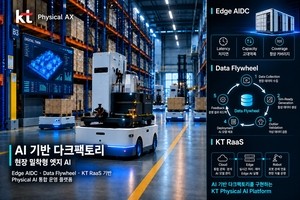
KT Corp to build dark factory infrastructure in North Jeolla Province under government project
Ministry of Science and ICT launches AI dark factory development project Modular edge AI data center among key infrastructure targets Industry-specific physical AI solutions to be commercialized KT Corp will build the infrastructure for a dark factory — an unmanned, fully automated manufacturing facility — near North Jeolla Province's innovation city. The company plans to develop AI agent technology capable of stable operation on actual factory floors and eventually commercialize it as industry-specific physical AI solutions. KT Corp said Thursday it has joined the Ministry of Science and ICT's "AI-based dark factory design and construction solution development" project as a co-research institution. The project is a sub-task of the ministry's broader initiative to foster a research and development ecosystem for collaborative intelligent physical AI-based software platforms. Its core objective is to build a dark factory near North Jeolla Province's innovation city. In addition to KT Corp, the research consortium includes KAIST, LG Energy Solution, Harim Industries, Shinsung E&G and the Korea Productivity Center (KPC). KT Corp's role in the project focuses on developing a "modular edge AI data center (AIDC) infrastructure-based sim-ready synthetic data generation and verification system and integrated agent operation environment." Through the research, KT Corp aims to eliminate errors that can arise when AI agents trained in simulated environments are deployed on actual industrial sites. The company will also build capabilities in the operational environments and control systems needed for dark factory settings. KT Corp plans to conduct field demonstrations of an integrated platform for dark factory operations at the actual manufacturing sites of participating companies. The platform will include a modular edge AIDC and a data flywheel. Capabilities accumulated through the demonstrations will be commercialized as industry-tailored physical AI solutions. KT Corp said it intends to leverage the experience and partnerships gained through the project as a springboard for entering the global manufacturing AI market. "Starting with this physical AI project, which has brought together key government, local government and academic-industry-research institutions, we will accelerate the development of infrastructure and an operating platform for dark factory commercialization," said Park Jae-hyung, head of KT Corp's AX Future Technology Institute. "Backed by KT's technological capabilities, we will lead the way in driving productivity innovation in Korea's manufacturing sector and building a physical AI industry ecosystem."
Sept. 17, 2026
-
CJ ENM launches second-half recruitment drive with live-commerce info session, short drama
Applications open for 12 roles through Sept. 30 CJ ENM is conducting its second-half new hire recruitment for 2026, expanding its outreach to applicants through a range of programs, including a job fair modeled on a live-commerce broadcast. The company announced Thursday that the recruitment drive is divided into two tracks: a general track and a military officer track. The general track covers a total of 12 roles across CJ ENM and its streaming service Tving. CJ ENM positions include content planning and programming, content marketing, data engineer, ad sales partnership, global content sales, and human resources. Tving positions include AI product and content builder, product manager, content operations and management, and front-end and back-end engineer. The military officer track covers two CJ ENM roles: ad sales partnership and global content sales. The hiring process proceeds in four stages — application submission, a written test, a first-round interview and a second-round interview. Successful candidates are set to join the company in January 2027. Applications are accepted on the CJ Group recruitment website from Wednesday through Sept. 30. Final hires will complete an orientation program before officially starting work. CJ ENM highlighted its use of in-house content production capabilities as a defining feature of this recruitment cycle, saying the approach was designed to broaden its touchpoints with applicants. On Tuesday, a live-commerce-style recruitment information session will be broadcast live on the CJ OnStyle app. The session will present job roles and company information in the format of a product showcase, with recruiters appearing on air to answer applicants' questions in real time. The company has also released an interactive short drama, "One Day, a New Employee Gets 7 Sunbae?!", on Tving and the CJ Careers YouTube channel. CJ ENM's Media Solution BU planned the production, which was made in collaboration with Shortnaps, an in-house venture of CJ Group. Meanwhile, CJ ENM said it introduced a pre-employment program earlier this year under its "Be the First" recruitment track, targeting candidates secured in advance. The program allows prospective hires to experience CJ ENM's content and production environment firsthand before their official start date.
Sept. 17, 2026
-

Socar's parking platform launches AI voice service for buying parking passes
Users can search and purchase parking passes through conversation while on the move AI microphone recognizes destination, duration and price information AI handles everything up to payment, keeping personal data secure Socar's parking platform Modoo Parking has launched what it says is South Korea's first AI-powered voice service for purchasing parking passes. Where drivers previously struggled to search for parking and complete payment while on the move, the new feature lets users buy a parking pass through conversation rather than manual screen navigation. However, the AI handles only the search and price-checking stages — payment itself is excluded from AI involvement. The company said this design is intended to protect personal data and guard against security risks that could arise during transactions. Modoo Parking announced the service Thursday. When a user tells the Modoo Parking app their destination and how long they need to park, the AI recommends a shortlist of nearby parking lots, guides them through to payment and connects them to turn-by-turn navigation. The service was conceived after the company noticed that many users buy parking passes while already in transit. Modoo Parking data show that about 62 percent of parking pass buyers enter a lot within one hour of completing payment, suggesting most purchases happen en route to a destination. In response, Modoo Parking designed a voice-only interface that lets users move from searching for a parking lot all the way to the payment screen without ever looking at the display. The experience closely resembles a standard AI conversation. Tapping the "AI Mic" button at the top of the app's main screen activates voice recognition. On first use, the app asks for microphone permission, consent to AI terms of service, and confirmation of a registered payment card and vehicle. While the user speaks, the AI displays what it is picking up in real time on screen. For example, a user can tap the AI Mic button on the app's home search bar and say "Find me a parking lot near Gangnam Station" or "That parking lot I paid for last time," and the AI will guide them to their preferred spot through conversation. At the final step, a "Pay" button completes the purchase. Throughout the process, the AI leads with the lowest-priced parking lot within a reasonable walking distance of the destination. Users can refine results by saying things like "somewhere cheaper," "I only need one hour," or "show me other options," and the AI reads out a revised list in order. Users can then select a lot by saying "the first one" or "that last parking lot" to proceed to payment. Modoo Parking deliberately kept the payment step outside the AI's control, routing it instead through a button tap processed directly by the platform's own system. The final amount is recalculated and verified once more before the transaction goes through. If the confirmed amount differs from what the AI quoted, the payment is halted and the user is presented with the corrected figure. To protect personal data, the platform's servers replace a user's actual vehicle registration number and card details with anonymized tokens — such as "Vehicle 1" and "Card 1" — before passing any information to the AI. The AI works only with these tokens to understand the user's intent and is blocked from accessing real personal data directly. All conversation data are deleted immediately when a session ends. "This service is one of the outcomes of our internal AI Pilot Program, which challenges teams to solve business problems using AI through an open competition," said Noh Hyeon-cheol, head of Modoo Parking. "After this beta launch, we will continuously refine the service based on real usage data to improve the experience for our users."
Sept. 17, 2026
-
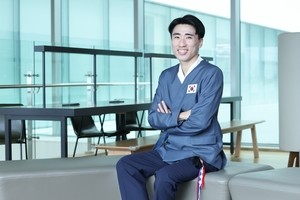
LG Uplus tech lead to direct S. Korea's cloud computing team at WorldSkills Shanghai 2026
Third WorldSkills appearance in cloud computing First silver medal in 2024; also served as chief judge at Asian competition Bae Ju-hyeok, a technology lead at LG Uplus, will participate in his third international WorldSkills Competition as director of South Korea's national cloud computing team. LG Uplus said Thursday that Bae, a member of its UCube DAX team, will serve as an international expert delegate for the cloud computing category at the 48th WorldSkills Competition, which opens in Shanghai, China, on Monday. Held every two years, WorldSkills is the world's largest skills competition. This year's event runs from Monday through Saturday at the National Exhibition and Convention Center in Shanghai, drawing about 1,400 participants — including competitors and expert delegates — from more than 70 countries and regions, who will compete across 64 categories spanning information and communications technology, manufacturing and construction. The cloud computing category tests contestants' ability to design, build and operate IT infrastructure in a cloud environment within a set time limit. It was added as an official WorldSkills category in 2019, reflecting the growing adoption of cloud technology across industries and the rising demand for skilled professionals in the field. Competitors represent their countries over four days of competition, completing a different task each day, with final standings determined by judging results. Seventeen countries will compete this year, including South Korea, China, Japan, Canada, Brazil, Australia, Switzerland and South Africa. Bae has served as director of South Korea's cloud computing national team at every WorldSkills Competition since 2022. He contributed to the team's first-ever silver medal in the cloud computing category at the 2024 competition in Lyon, France. At last year's WorldSkills Asia competition, he became the first South Korean to serve as chief judge for the cloud computing category — the top official responsible for designing the competition format and overseeing all aspects of the event. South Korea has won the overall championship 19 times since first competing at WorldSkills in 1967. At the 2024 Lyon competition, it finished second overall behind China, and the team is now aiming for a 20th overall title in Shanghai. "WorldSkills is a stage where young skilled talents from around the world compete," Bae said. "I will do my best to help South Korean competitors perform at their highest level and to showcase the competitiveness of Korea's cloud technology to the world." Meanwhile, LG Uplus last month registered Amazon Web Services' cloud infrastructure-as-a-service brokerage on the government's Digital Service Procurement Support System. The company plans to combine AWS's cloud infrastructure with its own network and security operations capabilities to support public institutions in adopting and managing cloud services.
Sept. 17, 2026
-

LG Uplus, Hyundai Elevator team up to upgrade AI-based remote monitoring system
LG Uplus M2M technology to be applied to Hyundai's smart platform, boosting safety and convenience Companies to pilot AI voice solution for elevator emergency call systems Collaboration to expand into security, building future elevator ecosystem LG Uplus has joined forces with Hyundai Elevator to accelerate the development of an AI-based remote monitoring system. The two companies also plan to expand cooperation in the security sector and work together to build a next-generation elevator service ecosystem. LG Uplus announced Thursday that it signed an MOU with Hyundai Elevator on Tuesday at Hyundai Group Building in Jongno-gu, Seoul, to cooperate on wireless services and AI and security for a smart remote monitoring platform. Under the agreement, the two companies will apply LG Uplus's machine-to-machine (M2M) service to communications between Hyundai Elevator's smart remote monitoring platform, MIRI, and its elevators, with the aim of improving the stability of remote monitoring operations. The companies will also pilot an elevator emergency call service model incorporating AI voice recognition technology to enhance passenger safety. Under the plan, AI will handle an initial analysis of emergency calls, managing routine inquiries and malfunctions, while staff will respond immediately to genuine emergencies. The move comes amid concerns that elevator emergency call devices — critical equipment during entrapment or other urgent situations — can delay responses to real emergencies due to malfunctions, prank calls and routine inquiries. In addition, the two companies are reviewing plans to expand security cooperation by applying LG Uplus's security monitoring service and its cloud-based network and integrated security platform, U+SASE, to Hyundai Elevator's MIRI system. The two companies previously co-developed MIRI View, a service that uses AI-powered CCTV inside elevators to detect abnormal situations — such as screaming, falls or prolonged stays — and relay alerts to a monitoring center. They plan to continue working together to build a future-oriented elevator service ecosystem that improves safety and convenience for customers. "We have innovated the elevator remote monitoring system by combining AI and security capabilities on the foundation of stable wireless communications," said Lim Jang-hyeok, head of LG Uplus's enterprise customer group. "We will work closely with Hyundai Elevator to identify a range of innovative initiatives that can enhance customer safety and convenience."
Sept. 17, 2026
-
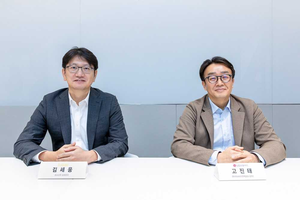
Kakao to unveil 'AI for All' chatbot next month, eyes surpassing ChatGPT's domestic users by 2029
Beta chatbot next month, public AI agent by year-end Web-based platform to link KakaoTalk and phone services MAU target: 5 million by year-end, 30 million by 2030 Kakao, selected as the operator of the "AI for All" project, is moving to build a task-completing AI capable of handling real-life needs from start to finish. The company plans to roll out a general-purpose AI chatbot next month, followed by a public-sector AI agent by year-end. It has also set its sights on surpassing ChatGPT's monthly active users in South Korea by 2029. Kakao Vice President Kim Se-ung said Tuesday that the company plans to release a basic chatbot as a beta service for "AI for All" next month, with the goal of building an agent platform through continuous upgrades. Ko Jin-tae, LG Uplus's enterprise strategy head and a member of the Kakao consortium, also attended the interview. The Kakao consortium plans to launch a beta service centered on a general-purpose chatbot next month. The official release, scheduled for December, will sequentially unveil specialized AI agents covering public services, health and medical care, and senior care. On the public services side, the platform will support everyday administrative tasks such as document issuance, submission and pension inquiries. Kim said public services are among the areas where the platform can demonstrate the highest level of task completion from the outset, noting that Kakao is already working with the Ministry of Interior and Safety on an AI citizen assistant service. "This puts us at an advantage over other operators," he said, adding that some health, medical and senior-care AI agents will be unveiled by year-end. The platform will also offer payment services leveraging existing mobile payment functions. Kim said the company envisions AI going beyond simply finding products to actually completing purchases. "However, a 'payment agent' that independently decides whether to make a payment is difficult to implement, so we will first integrate easy-payment services such as Kakao Pay and Shinhan Bank's Sol Pay," he said. Kakao aims to reach 5 million monthly active users by December, shortly after launch. It then plans to grow to 10 million by the end of 2027 and 30 million by 2030, surpassing ChatGPT's domestic MAU — currently about 17 million — around 2029. Kim said 5 million is an achievable target given the pace at which existing KakaoTalk-based services such as Kakao Pay have built their user bases. The Kakao consortium is positioning its "task-completing" capability — handling real-life needs from start to finish — as its key competitive edge. Kim said domestic and foreign AI agents have largely achieved this in professional and workplace settings but not in everyday life. "We will differentiate ourselves from foreign AI by building an agent platform that achieves full task completion in daily life, starting with the public sector that citizens use every day," he said. Ko also said the consortium aims to establish AI as an everyday infrastructure for the public. "We will create a customer experience where AI can be used in daily life as readily as running water or electricity," he said. He added that an internal survey found about 26 percent of respondents did not normally use AI, but that group showed strong interest in using it for healthcare, financial assets and employment. The Kakao consortium has identified the web as the core hub for its AI service. Given that the platform is being built for the entire population, the company said it must adopt the most accessible system possible. Kim said KakaoTalk and phone calls are merely entry points for the service, with the web at its core. "Because it is template-based, it can be conveniently integrated into a wide range of services and devices in the future — from Government24 to LG Electronics' web OS-based home appliances," he said. The service will be built primarily around domestic AI models — 51 percent from Kakao's Kanana series and 49 percent from LG AI Research's Exaone series — to construct a large language model. Kim said the company plans to select the model that shows the best performance for each service.
Sept. 17, 2026
-

SK Broadband's B tv Adot tops 21 million monthly conversations in 2 years
Usage analysis marks second anniversary of B tv Adot MAU reaches 1.7 million; monthly conversations exceed 21 million 55% of customers who chat with B tv Adot choose content based on AI responses SK Broadband's B tv Adot has surpassed 1.7 million monthly active users and 21 million monthly conversations within two years of its launch. SK Broadband released a usage and customer behavior analysis Thursday to mark the second anniversary of B tv Adot. B tv Adot is a generative AI service for B tv that allows customers to search for a wide range of content — including video on demand, streaming platform titles and live broadcasts — through natural-language conversation. According to data released by SK Broadband, 55 percent of customers who held media-related conversations with B tv Adot went on to select content directly from the AI's responses. The company said this shows that AI is meaningfully reducing "content-choice fatigue" — the tendency for viewers to give up browsing without deciding what to watch. The AI-driven discovery experience is also changing how customers use the service. Customers who used B tv Adot for five consecutive months logged 1.7 times more days of use per month, 1.8 times more conversations and 1.6 times more VOD viewing hours than those who did not use the service or used it for less than a month. The streaming usage rate among B tv Adot users stood at 80.4 percent — 3.3 times higher than the 24.1 percent recorded among non-users. The VOD purchase rate among B tv Adot users was also 5 percentage points higher than among B tv customers overall. SK Broadband said these AI-driven results are being amplified through synergies with its media content lineup. A recent example is the launch of B tv+ max, an all-in-one subscription product that adds content from the three major terrestrial broadcasters. SK Broadband plans to expand B tv into a smart media hub by combining AI-based content discovery with subscription offerings. "Going forward, we will develop a more sophisticated AI media experience that encompasses content recommendations, benefits and purchasing — all grounded in a deeper understanding of each customer's tastes and circumstances," said Yoo Chang-min, head of B tv service planning at SK Broadband. Meanwhile, B tv Adot launched in September 2024 as a combination of SK Telecom's AI assistant Adot and the B tv platform. Its defining feature is the use of SK Telecom's generative AI technology to accurately understand customer intent and context. SK Broadband is running a promotional event to mark the second anniversary and the upcoming Chuseok holiday. The event runs from Friday through Sept. 27. The first 40,000 customers who chat with B tv Adot during the event period will receive up to 50,000 B Cash points redeemable on B tv.
Sept. 17, 2026
-

SK Telecom runs referral and install event for Chating+ PC with W20m in prizes
83.7% of users satisfied with service Referral and install event runs through Oct. 16 SK Telecom is offering prizes worth a total of 20 million won ($14,800) to customers of its Chating+ (Chating Plus) PC version, a service that lets users send and receive text messages on a computer using their existing mobile phone number. SK Telecom said Thursday it will run a month-long referral and install event for Chating+ PC from Thursday through Oct. 16. Chating+ PC is a text messaging service for computers co-developed by SK Telecom and Samsung Electronics. SK Telecom customers using a Samsung Galaxy smartphone with One UI 6.0 or later can send and receive text messages on their PC using their existing mobile number, regardless of whether the other party has signed up for the service. A survey of about 500 users conducted in June found that 83.7 percent of respondents were satisfied with the service, while 82.9 percent said they use it five or more days a week on average. Users cited the convenience of typing messages with a keyboard, seamless synchronization with their smartphones, and the ability to multitask alongside other work on their PC as the service's main advantages. To expand its user base, SK Telecom is running both a referral event and an install event for new customers. The referral event offers prizes based on referral performance, including a Galaxy Z Fold 8, a Galaxy Watch Ultra 2, and Naver Pay point mobile coupons. Participants selected through draws by referral count will also receive gift vouchers for CJ Olive Young and GS25, as well as mobile cash coupons for Mega MGC Coffee. First-time Chating+ PC users can enter the install event by registering, then completing the PC program installation and linking it to their mobile phone. Draw prizes include a Galaxy Book 6 16-inch laptop, a 500,000 won Shinsegae department store gift voucher, and CJ Olive Young and GS25 mobile gift vouchers. Referral credit is recognized only after the newly referred customer enters the install event and completes both the PC program installation and mobile phone linking. Participants who meet the conditions for both events are eligible to win prizes from each. SK Telecom also plans to expand Chating+ PC's features. As early as the end of this month, it will add a "scheduled message" function that lets users send messages at a chosen time, along with a "text style" feature supporting formatting options such as bold and italic. Both features will be available when the Samsung Galaxy smartphone linked to the PC version runs One UI 9.0 or later. "Chating+ PC is a service that naturally extends the familiar text messaging experience customers already know to the PC," said Kim Ji-hyung, head of SK Telecom's digital platform business. "We will continue to strengthen the convenience and value that customers can feel in their daily lives." SK Telecom officially launched Chating+ PC in December 2023. The Chating+ service is built on the global standard RCS (Rich Communication Services) protocol and supports features including large file transfers, group chats, read receipts, emoji reactions and message recall.
Sept. 17, 2026
MOST READ
- 1KAIST develops high-performance bio-based adhesive using E. coli instead of petroleum
- 2Pope Leo XIV declines French honors and banquet, accepts only private meeting with Macron
- 3Daimler Truck unveils next-generation transport solutions at IAA 2026
- 4What was Rachmaninoff's performance fee? A 1928 price list tells all
- 5Samsung Biologics union's show of force backfires at the bargaining table
- 6APR says hair-loss treatment research published in international journal
-
WORLD

US warns of punishment for anyone enabling Iran's Strait of Hormuz toll scheme
-
INDUSTRY
Toyota union puts productivity first; Hyundai Motor union demands bigger share of profits
-
FINANCE
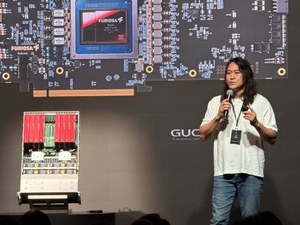
National Growth Fund to invest $531M in FuriosaAI, which rebuffed Meta's $800M takeover bid
-
INDUSTRY
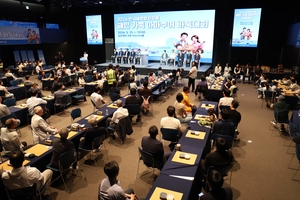
Korea Shipowners' Association holds amateur baduk tournament for Maritime Day