Korea Institute of Toxicology and Ajou University team builds nanobiosensor platform that detects antibodies even in high-ionic-strength environments such as blood serum
Korean researchers have developed a new technology that overcomes a longstanding limitation of biosensors — their inability to reliably detect antibodies in blood.
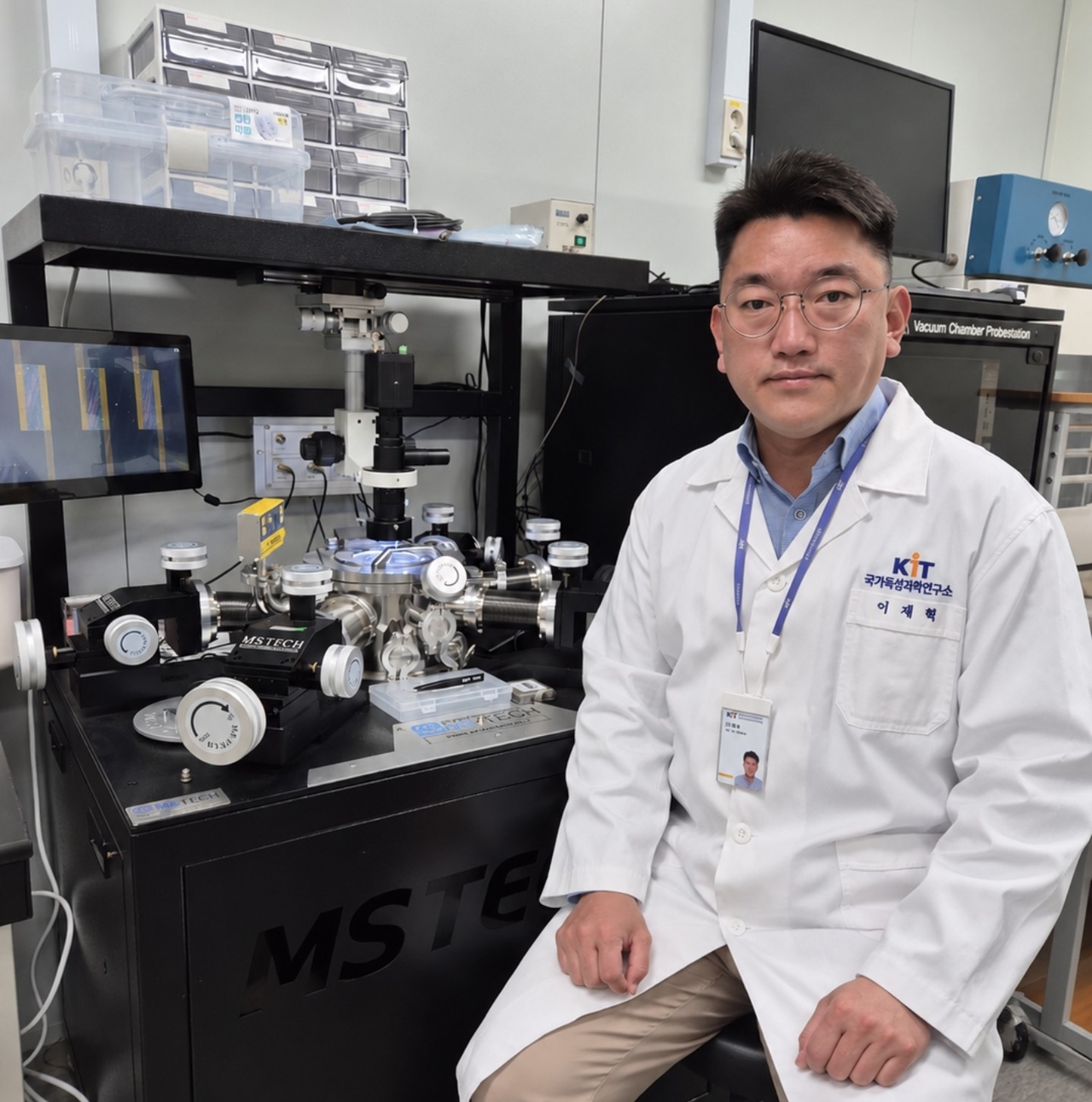
The Korea Institute of Toxicology (KIT) announced Wednesday that a joint research team led by Senior Researcher Lee Jae-hyuk of its Environmental Safety Research Center, in collaboration with Ajou University, has developed a nanobiosensor platform capable of detecting antibodies even in high-ionic-strength environments.
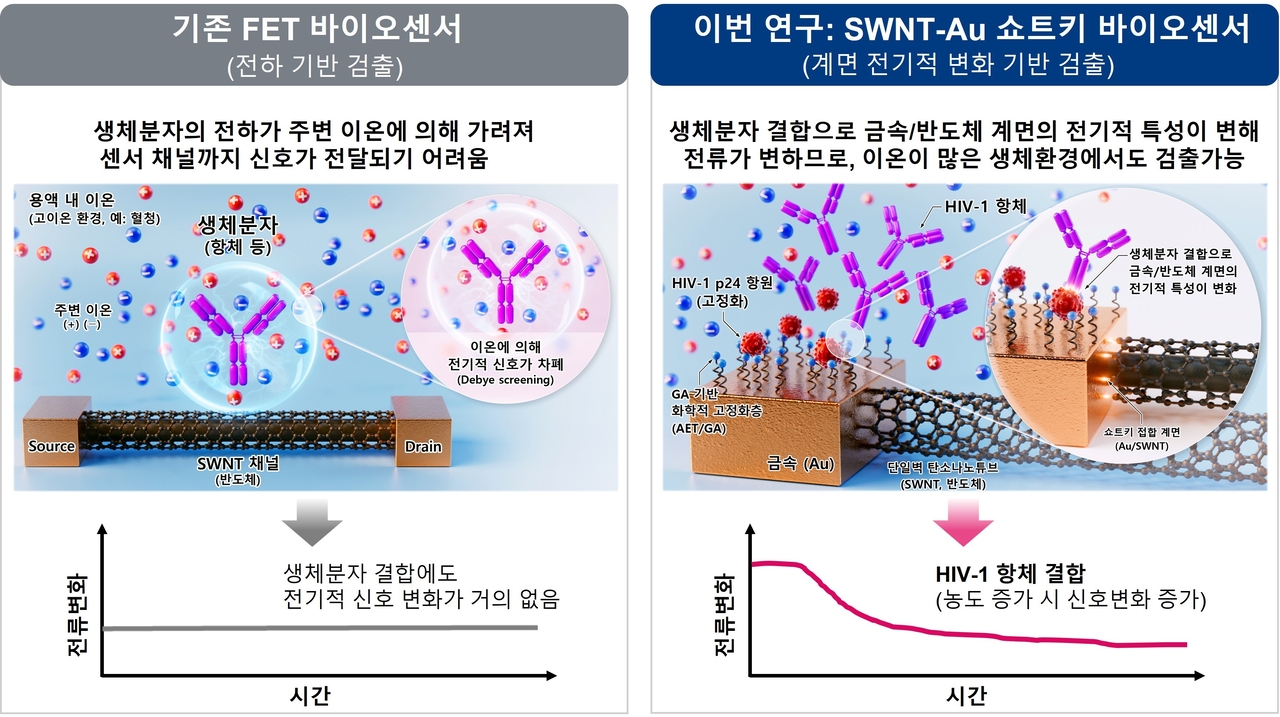
Conventional carbon nanotube-based biosensors offer high sensitivity but lose detection performance in environments with elevated ion concentrations, such as blood or blood serum.
To address this problem, the research team focused on the junction where carbon nanotubes meet gold electrodes.
Single-walled carbon nanotubes (SWNTs), in which carbon atoms are arranged in a cylindrical structure, are prized as a material for ultra-sensitive sensors because of their exceptional electrical properties. The team developed a new detection method that exploits electrical changes at the Schottky junction formed where SWNTs contact gold electrodes.
This approach allowed the sensor to capture signals generated by antibody binding even in high-ionic-strength conditions.
To validate the sensor's performance, the research team used antibodies against human immunodeficiency virus (HIV-1) as the detection target.
As a result, the team successfully detected the electrical signals produced when antibodies bound to the sensor under high-ionic-strength conditions comparable to those of blood serum.
The team also found that the electrical signal varied with antibody concentration. This suggests the technology could advance beyond simply confirming the presence of an antibody to enabling quantitative analysis that measures its concentration.
Although the operating principle was verified using HIV-1 antibodies, the sensor can be adapted to detect a wide range of antibodies, proteins and biomarkers by swapping out the recognition molecules on its surface.
The research team plans to pursue further work integrating the nanobiosensor with three-dimensional cell cultures and organoids derived from human stem cells.
The goal is to expand the technology into a platform capable of measuring in real time how cells and tissues respond to drugs or hazardous environmental substances, enabling more precise analysis of toxic reactions in the human body.
"This research does not simply sidestep the electrical signal shielding that poses problems in actual biological environments," Lee said. "Instead, it presents a new approach that detects signals by exploiting electrical changes at the junction between carbon nanotubes and gold electrodes."
Lee added that the team intends to "develop this into a human-mimicking biosensing platform by integrating it with three-dimensional human-derived stem cells and organoids, enabling real-time measurement of responses in living cells and tissues and precise evaluation of the effects of toxic substances."
The findings were published online in the international journal Biosensors and Bioelectronics on Sept. 4.
nbgkoo@heraldcorp.com