
- HOME
- IT·SCIENCE

Less dust in the air is not good news — it may be speeding up global warming
Atmospheric dust fell 10% over 20 years Less dust means more sunlight reaching Earth's surface, potentially accelerating warming East Asian yellow dust also declining, but researchers urge caution Every spring, complaints about yellow dust intensify. News about expanding deserts has become routine. Yet new research finds that the amount of dust floating in Earth's atmosphere has actually declined in the 21st century — falling by about 10% between 2003 and 2023. The findings were published in volume 12, issue 38 of the international journal Science Advances by a research team led by Ashok Kumar Gupta of Vanderbilt University and Jasper Kok of UCLA. Rather than conducting new observations, the team compiled existing satellite data and ground-based measurements to recalculate global dust levels over the past two decades. A 10% drop in dust over two decades Dust is the most abundant natural material suspended in Earth's atmosphere. It blocks sunlight, helping to cool the planet, and acts as a seed around which water droplets form when clouds develop. The research team assembled a comprehensive dataset by combining four satellite-based dust observation records spanning 20 years with three computer-modeled datasets covering areas where direct observation was unavailable. Satellites can survey large areas at once but struggle to distinguish dust over bright terrain such as deserts. The team cross-referenced their satellite data against readings from ground-based instruments installed near deserts around the world to determine which satellite records most closely matched actual conditions. Measurements of how much sunlight dust was blocking showed a decline of 5% per decade. Over 20 years, that amounts to 10%. The total mass of airborne dust and the volume of fresh dust lofted from deserts fell by a similar margin. By region, dust dropped 10% in North Africa and 10% in Asia — two areas that together account for 80 to 90 percent of all dust on Earth. The Sahara Desert in North Africa alone generates between 1.8 billion and 2.2 billion tons of new dust each year. The downward trend appeared across all seven datasets the team examined, lending credibility to the overall finding — though the magnitude of the decline varied considerably. Some datasets showed dust falling by 2% per decade, while others indicated a drop of as much as 30%. As dust levels fall, less sunlight is blocked, allowing more solar heat to reach Earth's surface. The team calculated that the two-decade decline in dust has likely contributed to planetary warming. However, the estimated effect was small and came with a wide margin of error, leading the researchers to conclude that while declining dust is accelerating global warming, its impact remains limited. Atmospheric dust was also unusually scarce during 2023 and 2024, years that set heat records. Pollution from factories and vehicles also decreased over the same period. Pollutants, like dust, block sunlight and help cool the planet — the key difference being that they are harmful to human health. The research team said the simultaneous decline in both dust and pollutants may have amplified the sharp acceleration in warming seen in recent years. Less dust does bring some benefits. In areas frequently hit by yellow dust, air quality improves. On the other hand, reduced dust means less iron and phosphorus being carried through the atmosphere — nutrients that phytoplankton depend on to absorb carbon dioxide. A sustained decline in dust could therefore weaken the ocean's capacity to absorb CO2. The research team acknowledged, however, that they were unable to determine why global dust levels are falling. They raised the possibility of weakening winds and the spread of vegetation along desert margins, but neither explanation has been confirmed. The team said dust also appeared to have declined in East Asia, but cautioned that the margin of error was too large to draw firm conclusions. Reference DOI: 10.1126/sciadv.aef5691 A.K. Gupta, J.F. Kok, V. Amiridis, A. Gkikas, K. Rizos, E. Proestakis, S.-A. Logothetis, E. Marinou, & C. Pérez García-Pando, A global decline in atmospheric dust during the 21st century, Sci. Adv. 12 (2026) eaef5691.
Jang Yun-woo Sept. 18, 2026
-

As drama actor fees hit W500m per episode, a digital alternative emerges
With per-episode fees for lead drama actors surging to as much as 500 million won ($362,000), driving up production costs dramatically, an alternative has emerged that could cut those expenses significantly — commercializing digitized versions of actors' likenesses. The approach also offers protection for actors' digital intellectual property against generative AI and deepfake technology. The digital IP project has already drawn nearly 100 actors, underscoring growing interest in the field. According to industry sources Friday, the Korea Digital DNA Center (KDDC) is developing a digital DNA system to record and manage actors' digital information. Digital DNA is an asset framework that captures an actor's facial features, body, expressions and movements in high-resolution 3D and volumetric formats — with the actor's prior consent and participation. Volumetric technology captures the full three-dimensional spatial information of a person or object in real time and renders it as computer-generated stereoscopic imagery. In practice, KDDC scans and digitizes actors using 40 cameras and equipment capable of capturing up to 270-degree angles. The resulting data forms the foundation for using an actor's digital IP in AI and digital content production. KDDC sells actors' digital IP to production companies and collects fees from them in return. Actors are not charged any storage or scanning fees. Nearly 100 actors — including two widely recognized performers identified only as A and B — have already registered their digital IP with the center. The digital IP model could also rein in on-set costs at a time when per-episode drama production budgets have soared to 2 billion won — up from 300 million to 400 million won just a few years ago. Savings could extend beyond actor fees to cover staffing, camera equipment and location costs for advertising shoots, as well as hair and makeup expenses. "In the AI era, an actor's face, voice and movements are not mere images or data — they are a vital part of that person's digital identity and assets," a KDDC official said. "We will build an environment where actors' rights are protected first, while also enabling them to participate safely in the new AI content market on the basis of informed consent and proper contracts."
Sept. 18, 2026
-
Personnel: Ministry of Science and ICT
Secondment (director-general level) Kim Kyung-man, head of the National AI Strategy Committee Support Team Promotion (director-general level) Eom Yeol, director general for AI policy Promotion (director level) Choi Moon-ki, research performance innovation officer; Kim Bo-yeol, head of the exhibition, education and research division at the National Science Museum Transfer (division chief level) Nam Hyeok-mo, head of the operations support division; Kim Hyeon-ok, head of the future strategic technology policy division; Do Woo-dong, head of the nuclear energy research and development division Lee Ji-eun, head of the science and technology safety infrastructure team; Lee Ga-yeong, head of the science and technology strategy division; Jeong Jun-uk, head of the radio resource planning division at the National Radio Research Agency; Kang Seon-suk, head of the radio environment safety division at the National Radio Research Agency; Kim Sun-gwon, head of the technical standards division at the National Radio Research Agency; Kim Seon-geun, head of the broadcasting and telecommunications service division at the Seoul Radio Management Office under the Central Radio Management Service; Sang Eun-hye, head of the digital inclusion policy team
Sept. 18, 2026
-
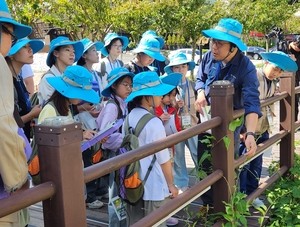
Children hunt for medicinal herbs at Gyeryongsan in Korean medicine program
33 families from across the country, 80 participants in total, explore medicinal plants alongside herbal medicine experts Young science enthusiasts and their families ventured into nature Friday to search for medicinal plants and learn about their properties and uses at a hands-on science program. The Korea Institute of Oriental Medicine held the Children's Herbal Exploration Corps event at Donghaksa in Gyeryongsan National Park, open to elementary school families from across the country. Launched in 2012, the program is a family-oriented science and culture initiative designed to help children observe medicinal plants in their natural habitat and deepen their understanding of and interest in Korean traditional medicine. This year's event drew 33 families totaling 80 participants nationwide. Online registration on a first-come, first-served basis closed early. Participants received a safety briefing at the institute's main campus before heading into Gyeryongsan National Park for the exploration. Guided by institute herbal medicine experts assigned to each group, they observed medicinal plants along the trails and learned about their properties and uses. A custom-made illustrated herbal guide pitched to children's level was also used throughout the activity. After the outdoor exploration, participants toured the institute's Museum of Korean Medicine History, the Korean Medicine Science Hall and the Medicinal Herb Specimen Gallery to build foundational knowledge of traditional medicine. They then reviewed what they had learned through quizzes and recreational activities. Marking the program's 15th anniversary this year, the institute is launching a new public participation initiative called "Making a Herbal Map Together," an online project in which members of the public can share the locations and details of medicinal plants they spot nearby. The collected data will be used in the institute's promotional materials. Following the event, a contest will be held in which children can document their exploration experiences through video, drawings or writing. Eight outstanding entries will be selected to receive the Korea Institute of Oriental Medicine director's award and cultural gift certificates, and the winning works will be posted on the institute's official social media channels. Korea Institute of Oriental Medicine Director Ko Seong-gyu said it was meaningful that the Children's Herbal Exploration Corps had consistently been well-received over the past 15 years and had established itself as the institute's flagship science and culture program. "We will continue to draw on our expertise in medicinal herb resources to develop a wide range of science and culture programs for future generations," he said.
Sept. 18, 2026
-
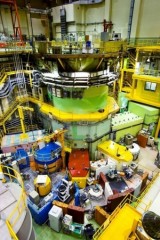
South Korea's sole multipurpose research reactor Hanaro cleared for restart after 6-month shutdown
South Korea's only multipurpose research reactor, Hanaro, is set to resume operation after a roughly six-month shutdown. With Hanaro returning to normal operation, production of radioisotopes used in cancer treatment — along with various other research and testing activities that had been suspended — is expected to resume. The Nuclear Safety and Security Commission concluded its investigation into the automatic shutdown of Hanaro, operated by the Korea Atomic Energy Research Institute, on March 12 and approved the reactor's restart Friday. According to the commission's investigation, the shutdown was caused by a malfunction in a radiation detector used to monitor the reactor's output. Repairing the instrument — including cause analysis and parts replacement carried out through the overseas manufacturer — took approximately six months. The commission confirmed that the repaired detector had been properly reinstalled and that performance checks on it and similar instruments had been conducted appropriately. It also determined that a comprehensive set of measures to prevent a recurrence had been established, including improvements to the detector integrity management system. The commission said it plans to continue monitoring the Korea Atomic Energy Research Institute's implementation of those preventive measures after Hanaro resumes operation.
Sept. 18, 2026
-
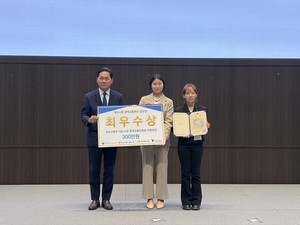
Rail research institute picks best public ideas for fixing metro transit woes with big data
Ajou University's 'trip failure prediction and diagnosis system' wins top prize Public ideas for using big data to analyze and address commuter inconveniences on metropolitan buses and rail lines have been identified through a national competition. The Korea Railroad Research Institute announced Friday that it had selected and honored four teams for outstanding ideas submitted to the 2026 Fourth Metropolitan Area Transit Innovation Competition. The competition was organized to gather creative proposals for solving transportation problems in major metropolitan areas, including insufficient public transit supply and commuter inconvenience. The submission period ran from June 1 to June 18, drawing more than 10 entries. Participating teams used data from TRIPS, a transit card big data analysis system developed by the institute, and from a metropolitan demand-responsive transport policy support system jointly developed by the institute and the Korea Transport Institute, to propose improvements and new services for metropolitan transit. The institute provided participating teams with free TRIPS licenses and supplied operational data from metropolitan call-bus pilot runs so they could verify the feasibility of their ideas. Metropolitan transit experts evaluated the submissions on originality and policy applicability through written and presentation reviews. The top prize — the Metropolitan Area Transport Commission chairman's award — went to the "Yeonghon Talchul" team from Ajou University. The team proposed building a metropolitan transit safety net based on a Trip Failure Index, linking TRIPS and demand-responsive transport data to predict the likelihood of trip failures, diagnose problems and derive solutions. The institute president's award went to Ajou University's "Muhanyeolcha" team, the Korea Transport Institute president's award to Dankook University's "Flow Shift" team, and the Korean Society of Transportation president's award to Yonsei University's "Lunch Menu Recommendation Committee" team. Korea Railroad Research Institute President Sa Gong-myeong said the competition was an opportunity to identify creative proposals that could drive a paradigm shift in metropolitan transit. "We will do our utmost to ensure the ideas discovered go through scientific verification and active research and development so they can be realized as faster, more convenient public transit services," he said.
Sept. 18, 2026
-
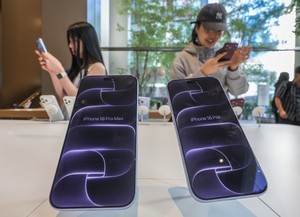
iPhone 18 series lands in South Korea
Customers browse the iPhone 18 Pro and iPhone 18 Pro Max at the Apple Store in Myeong-dong, Jung-gu, Seoul, on Friday morning, the official launch day of the iPhone 18 series.
Sept. 18, 2026
-
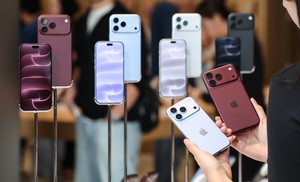
Colorful iPhone 18 series hits shelves
Customers browsed the iPhone 18 Pro and iPhone 18 Pro Max at the Apple Store in Myeong-dong, Jung-gu, Seoul, on Friday, the official launch day of the iPhone 18 series.
Sept. 18, 2026
-
![[Herald pic] iPhone 18 series goes on sale](https://wimg.heraldcorp.com/news/cms/2026/09/18/news-p.v1.20260918.185334d4b53147b1bdf64801d867d0c7_T1.jpg?type=h&h=240)
[Herald pic] iPhone 18 series goes on sale
Customers browse iPhone 18 Pro models at the Apple Store in Myeong-dong, Jung-gu, Seoul, on Friday morning, the official launch day of the iPhone 18 series.
Sept. 18, 2026
-

Apple iPhone 18 series goes on sale
Customers browsed the iPhone 18 Pro and iPhone 18 Pro Max at the Apple Store in Myeong-dong, Jung-gu, Seoul, on Friday morning, the official launch day of the iPhone 18 series.
Sept. 18, 2026
-
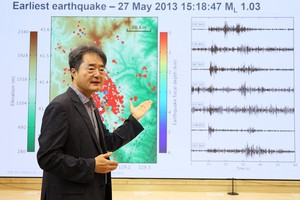
North Korea's 6th nuclear test awakened dormant faults, study finds
- Pusan National University and Chinese research team identify reactivation of two existing faults near Mantap Mountain - Seismic activity increased for years after the 2017 test; findings published in Science North Korea's sixth nuclear test in 2017 reactivated dormant faults around Mantap Mountain near the Punggye-ri test site, a new study has found. Pusan National University said Friday that a research team led by Kim Gwang-hee, a professor in the Department of Geological and Environmental Sciences, worked with researchers from Chengdu University of Technology, the Chinese Academy of Sciences, the China Earthquake Administration and Shandong University to document long-term seismic activity around Mantap Mountain and trace the reactivation of pre-existing faults in the area. The findings were published in the international journal Science. North Korea conducted six underground nuclear tests at Punggye-ri between 2006 and 2017. Small earthquakes and underground collapses typically follow such tests immediately, but at sites including the Nevada Test Site in the United States and the former Soviet Semipalatinsk test site, that activity is known to subside within days to weeks. The research team analyzed 17 years of continuous seismic waveform data recorded in South Korea and northeastern China. The data showed that seismic activity increased for years after the sixth test in 2017, with earthquakes clustering along two previously quiet fault zones oriented in a north-northwest direction. Over time, the locations of those earthquakes became increasingly concentrated along the fault lines. The team interpreted this as the cumulative effect of repeated nuclear tests fracturing and damaging underground rock while altering the surrounding stress state. As stress within the crust slowly redistributed following each explosion, it promoted movement along existing faults that were already primed to slip. The findings show that seismic activity can persist long after a nuclear explosion ends, driven by residual damage to underground rock and ongoing stress redistribution. The study is significant because it challenges the assumption that post-test seismic activity is a short-term phenomenon. Accurately identifying the causes of earthquakes that occur years after a nuclear test requires comprehensive analysis of long-term observational data, fault distribution and stress changes, the researchers said. The team said the findings are expected to inform not only monitoring systems designed to verify compliance with the Comprehensive Nuclear-Test-Ban Treaty, but also risk assessments for induced seismicity linked to human activities such as underground development and energy extraction. "What we found particularly striking was that seismic activity did not die down quickly after the 2017 test," Kim said. "The earthquakes continued for years, and over time they became increasingly concentrated along pre-existing faults." He added that continuous seismic monitoring and the sustained accumulation and preservation of observational data are essential even after nuclear explosions cease. "Safety assessments for underground spaces must extend from before development begins through operations and beyond decommissioning," he said. Kim's team previously published research in Science in 2018 suggesting that the Pohang earthquake was most likely triggered by fluids injected during geothermal energy development.
Sept. 18, 2026
-
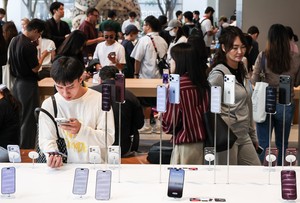
iPhone 18 launches in South Korea as pre-order enthusiasm cools
Waiting line shrinks from about 100 last year to roughly 70 this year iPhone Duo, higher prices, Galaxy Z Fold8 among factors cited iPhone 18 Pro in silver tops pre-order choices among loyal fans Three carriers roll out AI subscriptions, AirPods Pro 3 and shopping perks "I got here at 7 a.m. on Thursday," said Lee Young-ju, 32, the first customer in line at the Apple Store in Myeong-dong. "Getting an iPhone on launch day was on my bucket list." About 70 loyal customers had lined up outside the Myeong-dong Apple Store in Jung-gu, Seoul, on Friday to buy the iPhone 18 series — a mix of local shoppers and foreign tourists visiting Korea. Lee had staked out her spot the previous day and stayed through the night without sleep. Inside the store, staff greeted customers with repeated cries of "Welcome!" and "Congratulations!" Shoppers turned the new handsets over in their hands, deliberated over cases, and listened to product explanations from employees. Yet the buzz fell short of previous years, when more than 100 people had gathered for the launch. Apple officially launched the iPhone 18 series in South Korea on Friday. As in previous years, Korea was included in the first wave of release markets, but enthusiasm was noticeably more muted than last year. Several factors weighed on demand: the iPhone Duo, Apple's first foldable phone in seven years of smartphone releases; higher prices driven by rising costs including memory chips; and competition from Samsung's Galaxy Z Fold8 series. Pre-order figures compiled by the three major carriers were either on par with, or fell short of, those for the predecessor iPhone 17 series. Loyal customers, however, remained committed. During the pre-order period, their preference concentrated on the iPhone 18 Pro within the lineup. Silver was the most popular color choice, followed by black, Glacier (sky blue) and burgundy. For the iPhone 18 Pro Max, black led color preferences, followed by silver, burgundy and Glacier. South Korea's three major carriers have launched full-scale campaigns to attract iPhone users. SK Telecom will offer customers who purchase and activate an iPhone 18 series device by Oct. 18 a two-month subscription to Google AI Plus (400 gigabytes) through its T Universe platform, along with a four-month subscription to Tving's ad-supported standard plan. Google AI Plus is a bundled package that includes usage limits twice as high as the free version of Gemini, an AI image-generation and editing model called Nano Banana, NotebookLM Pro for research and document organization, and 400 gigabytes of Google Drive storage. KT Corp will run a promotion through the end of this month offering free AirPods Pro 3 — based on a 24-month installment plan, with a 5.9 percent fee applied separately — to customers who sign up for its Choice Double Device plan and select the earbuds as their device option. Customers who activate through KT Direct Shop can receive a combined discount of up to 32 percent, combining the standard 25 percent optional contract discount with an additional 7 percent store-exclusive discount. LG Uplus will give customers who trade in their current handset at its official online store 50,000 won ($37) in Naver Pay on top of the trade-in value of their used device. Customers who choose the shopping coupon pack will also receive shopping benefits worth up to 180,000 won over two years. The carrier's "Reward Pass" service allows customers who upgrade to a new iPhone two years after purchasing an iPhone 18 to receive up to 50 percent of the original purchase price back when they return the old device. The monthly fee is 5,000 won. Customers who sign up for the "iPhone Reward Pass Plus Plan 105" or higher by Dec. 31 will receive a full waiver of the monthly fee.
Sept. 18, 2026
-
Women scientists lead South Korea's tech innovation
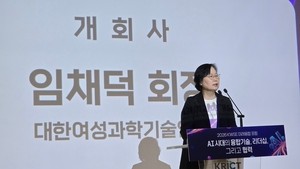
- Korean Women in Science and Engineering holds Future Convergence Forum - Sessions cover AI convergence technology, industry-academia-research cooperation and leadership Women scientists and engineers from across South Korea gathered to explore future technology innovation and ways to strengthen cooperation among industry, academia and research institutions. The Korean Women in Science and Engineering (KWSE) held its 2026 KWSE Future Convergence Forum on Thursday at Didimol Plaza of the Korea Research Institute of Chemical Technology in Daejeon, under the theme "Convergence Technology, Leadership and Cooperation in the Age of AI." The forum was organized in conjunction with a "Members' Day" event — the first since the 16th executive board took office. It brought together women scientists and engineers nationwide to discuss how to respond to AI-driven technological change and to chart directions for multidisciplinary convergence and future-oriented leadership. The event was structured around three sessions covering industry-academia-research cooperation, convergence technology and leadership. The opening ceremony featured the third Cosmax Women in Science and Engineering Award, followed by a keynote address by Park Young-sun, head of the Korea Women's Political Caucus, on the theme "Three AI Superpowers — A Future We Build Ourselves." The first session, on industry-academia-research cooperation, focused on "AI-Based Digital Healthcare Innovation Across the Female Life Cycle," covering topics including microplastic exposure in mothers and child development, the use of distributed health data, and intellectual property strategies for AI and biotech convergence. Experts discussed ways to connect clinical demand with advanced technology and explored prospects for validation and commercialization. The convergence technology session presented a vision for the future of science shaped by AI. Participants shared trends and convergence possibilities across fields including AI-based space data analysis and exploration, artificial intelligence that reads brain activity and behavior, and carbon-free power and AI mega-grids. The leadership session focused on the growth of women in science and engineering and the sharing of experiences. Discussions centered on a member-driven leadership program as well as work-life balance, career development and leadership. KWSE plans to use the Members' Day as an opportunity to invigorate its subcommittee activities and expand member participation in academic exchange, policy proposals, industry-academia-research cooperation and science outreach. Founded in 1993, KWSE is South Korea's first organization for women in science and engineering and currently has about 2,500 members. "The 16th executive board aims to communicate with members and pursue new growth, with connection, participation and sustainability at the center of everything we do," KWSE President Im Chae-deok said. "We will serve as a solid platform so that each member's participation can lead to new forms of cooperation and become a driving force for a sustainable ecosystem for women in science and engineering."
Sept. 18, 2026
-
KT Corp to run intensive network management over Chuseok holiday
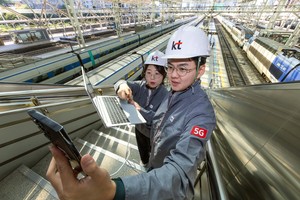
Telecom quality optimized for holiday travel rush; base stations under round-the-clock monitoring KT Corp will implement special communications measures to ensure stable network service throughout the Chuseok holiday. The company said Friday it has designated the period from Wednesday through the last day of the Chuseok holiday as an "intensive network management period" and has prepared a special response plan. KT Corp said it set up network and cybersecurity response systems in advance to handle the expected surge in mobile data usage during the holiday. The preparations specifically target increased traffic from holiday travel, seasonal greetings, video calls and OTT streaming. The company has already conducted communications quality checks at major transportation hubs — including key expressways, KTX and SRT railway stations, airports and bus terminals — and has completed base station capacity optimization work. In addition, KT Corp will monitor 5G and LTE base stations around the clock in major resort areas and locations expected to draw large numbers of family visitors during the holiday. The company will also step up security monitoring to guard against smishing messages disguised as holiday gift notifications and other cyberattacks. KT Corp is also working to minimize the risk of damage to infrastructure. The company has inspected the mounting and fastening conditions of outdoor base station antennas and brackets, as well as telecommunications buildings, utility poles, steel towers, supports and guy wires, to reduce risks from strong winds and heavy rain. The company has also prepared for potential power outages. It has checked the operational status of emergency power equipment — including mobile generator vehicles and portable generators — and pre-positioned them at key locations nationwide. Jeong Seon-il, head of KT Corp's network operations innovation division, said the company has completed advance inspections and quality optimization of its telecommunications facilities "so that people can communicate with family and relatives without any inconvenience during the Chuseok holiday." He added that KT Corp will "provide stable communications services by operating a real-time emergency recovery system capable of responding to weather-related disasters such as autumn typhoons."
Sept. 18, 2026
-
SK Telecom activates Chuseok response plan, pays W131.8b early to partners
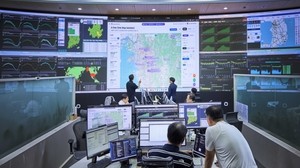
Special communications system, AI network operations activated Free video calls; international roaming, security monitoring reinforced Early payment to partners aims to ease financial burden SK Telecom said it will activate a special communications response system to handle the surge in traffic expected during the Chuseok holiday period. The company will also make an early payment of 131.8 billion won ($96.3 million) to its partners as part of a mutual-growth initiative. SK Telecom said Friday it will operate a special communications plan from Wednesday through Sunday, centered on a main situation room linked to regional control centers across the country. The company will also run a parallel monitoring system during the 2026 Aichi-Nagoya Asian Games, which run from Saturday through Oct. 4. During the holiday period, SK Telecom plans to deploy a cumulative total of 3,625 personnel from affiliates including SK Broadband, SK O&S and Home & Service, as well as operations and maintenance partners, to monitor the national telecommunications network around the clock. The company also plans to deploy AI-based network management solutions. Its in-house wireless network AI management system, A-One, will analyze traffic and equipment conditions across the national network in real time, while the core network AI integrated control system, Spider, will continuously monitor for anomalies. SK Telecom expects peak hourly data usage on Chuseok day, Thursday, to rise 10.3 percent compared with normal periods. Reflecting the trend of traffic concentrating at tourism destinations, the company has completed pre-inspections and capacity upgrades to 5G and LTE base stations in high-traffic areas including highways, national roads, ancestral grave sites, and tourism and resort facilities. SK Telecom will also offer free video calling from Wednesday through Sunday. Major services including T map, Aidot and PASS will each operate situation rooms to respond to traffic fluctuations. The company is also reinforcing its international roaming framework. SK Telecom expects the number of international roaming users to increase by as much as 25 percent compared with normal periods. It plans to strengthen cooperation with overseas carriers and operate a 24-hour security monitoring system through its integrated security control center. In addition, SK Telecom and SK Broadband will make an early payment of 131.8 billion won to more than 200 partner companies and more than 250 retail networks responsible for network construction, maintenance and service operations ahead of the Chuseok holiday. SK Telecom said it has made early payments ahead of the Lunar New Year and Chuseok holidays each year to ease the financial burden on its partners. Including this payment, the total amount paid early ahead of this year's holidays comes to 243.8 billion won.
Sept. 18, 2026
-
LG Uplus readies Chuseok network plan using AI platform
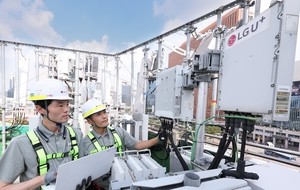
Emergency operations set for holiday traffic surge AI platform AION to handle real-time traffic response Free video calls for all customers Sept. 24–27 LG Uplus has drawn up a special communications plan to handle the surge in call volume and data traffic expected during the Chuseok holiday, the company said Friday. It will deploy AION, its AI-based autonomous network management platform, to ensure stable service throughout the period. The company said it has activated an emergency operations framework for the holiday to keep customers connected on both data and voice services. LG Uplus said it has completed preemptive inspections and quality optimization of 5G and LTE base stations at expressways, rest stops, KTX and SRT stations, bus terminals and airports nationwide. It also scaled up cache server capacity to prepare for increased demand on its U+tv service and OTT platforms. The company also analyzed holiday call and data usage patterns to deploy field crews at key locations. Personnel will be stationed at major expressway toll gates and congestion-prone rest areas, ready to respond immediately to any unexpected issues during the holiday. LG Uplus plans to run a central operations center at its Magok headquarters in Seoul, maintaining round-the-clock monitoring throughout the holiday. AION will handle real-time traffic fluctuations and maintain stable network quality. Meanwhile, LG Uplus will offer free video calls to all customers — including mobile virtual network operator subscribers — from Sept. 24 through Sept. 27 so they can reach family and friends during the Chuseok holiday. Prepaid phone users and those making video calls over mobile data via apps such as KakaoTalk and FaceTime are excluded from the offer.
Sept. 18, 2026
-
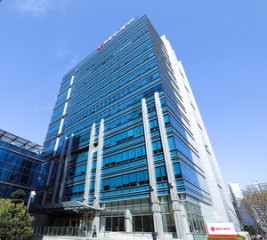
Lotte Innovate targets 30% revenue share from data center DBO business by 2028
Cumulative orders reach 130 billion won, managed capacity hits 110MW IBK Securities sees company as beneficiary of AI data center market expansion Lotte Innovate is expanding its design-build-operate (DBO) business in step with the growing AI data center market. With cumulative orders of about 130 billion won ($95 million) and managed capacity of 110MW secured, the company aims to grow its DBO business to 30 percent of total sales by 2028. IBK Securities Research Head Lee Seung-hoon said in a report published Thursday that Lotte Innovate's data center business "is expected to sustain solid growth momentum, supported by accumulated operational expertise and market expansion." IBK Securities maintained its buy rating and target share price of 30,000 won. IBK Securities cited Lotte Innovate's roughly two decades of experience building and operating four data centers as a key competitive advantage in its DBO business. Unlike colocation, which leases existing infrastructure, the DBO model covers the entire lifecycle of a customer-owned data center — from design and construction through post-completion operations. Lotte Innovate has built and operated four data centers in Seoul, Yongin and Daejeon. The company plans to expand its DBO and outsourced operations services for external customers and broaden its project portfolio to cover a range of scales and purposes, from edge data centers to AI and hyperscale facilities. IBK Securities projected that demand for turnkey DBO services — combining design, construction and operations capabilities — will grow rapidly as investment in domestic AI data centers accelerates. The brokerage also viewed the growing participation of financial investors, including asset managers and private equity funds, in data center development as a favorable environment for Lotte Innovate's business expansion. Lotte Innovate won a contract in December last year to operate the Cam Square data center, followed by a DBO contract for an IGIS Asset Management edge data center in February. Last month, it secured an additional outsourced operations contract for IGIS Asset Management's Ansan data center, which has a power intake capacity of 40MW. Cumulative orders for its data center business now stand at about 130 billion won, with managed capacity at 110MW. IBK Securities also gave a positive assessment of earnings improvement at Lotte Innovate's subsidiaries. EVSIS, its electric vehicle charging unit, secured new orders from South Korea's public sector in June and from the United States in July. The brokerage expects revenue recognition from those orders to drive an earnings rebound in the second half of the year. It particularly forecast that EVSIS's US subsidiary will roughly double its sales this year compared with last year. Overall earnings growth is also expected to continue. IBK Securities estimated Lotte Innovate's consolidated operating profit will rise from about 45 billion won this year to about 56 billion won in 2027 and about 67 billion won in 2028. Return on equity is projected to improve from 6.4 percent to around 10.0 percent over the same period. Meanwhile, Lotte Innovate in July unveiled more than 10 AI agents developed to address real-world challenges across its food, retail, chemicals and infrastructure businesses. The company plans to further develop these into agentic AI systems integrated with enterprise platforms such as groupware and ERP to raise the level of workplace automation.
Sept. 18, 2026
-
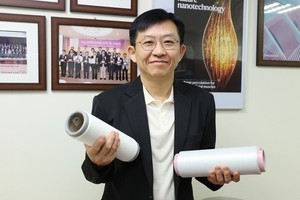
From toothbrushes to space: KAIST's graphene technology keeps evolving
- Graphene oxide liquid crystal first discovered worldwide in 2011 - Research expands into high-strength, high-thermal-conductivity fibers A homegrown graphene technology already used in toothbrushes and sportswear is advancing into cutting-edge materials research for electric vehicles and aerospace applications. A graphene oxide liquid crystal technology that KAIST first discovered 15 years ago has evolved — through follow-up research around the world — into a manufacturing process for high-performance graphene fibers that are light, strong and highly thermally conductive. KAIST announced Friday that a research team led by Professor Kim Sang-uk of the Department of Materials Science and Engineering had published a commentary in the "News & Views" section of the international journal Nature Materials, analyzing the development and academic significance of high-performance graphene fiber research based on graphene oxide liquid crystals. Graphene is an ultrathin material in which carbon atoms are arranged in a honeycomb lattice. It offers high strength and excellent electrical and thermal conductivity, but its poor dispersibility in water makes it difficult to process. Graphene oxide, produced by bonding oxygen to graphene, disperses easily in water and can be processed into a wide range of forms, including inks, coatings and fibers. In 2011, Kim's team became the first in the world to discover that graphene oxide forms a liquid crystal state — in which thin, plate-like sheets align in a single direction — once its concentration in water exceeds a certain threshold. This property allows graphene oxide to be drawn out into long, thread-like fibers with a consistent orientation. Researchers around the world subsequently entered the graphene fiber manufacturing race, but struggled to improve both strength and thermal conductivity simultaneously, as the spinning process often caused the solution to break or left internal voids and defects in the fibers. Researchers at Zhejiang University in China recently overcame these limitations by dispersing graphene oxide in high-viscosity glycerol. Applying an ultra-high-draw-ratio spinning technique — which stretches the solution intensely to form fibers — they improved the alignment of graphene sheets and reduced internal defects. Adding high-temperature heat treatment further densified the graphene structure, boosting both strength and thermal conductivity at the same time. Graphene fibers developed in subsequent research achieved a tensile strength of up to 5.9 gigapascals (GPa) and a thermal conductivity of up to 1,720 watts per meter-kelvin (W/m·K), demonstrating that a high-performance fiber capable of resisting breakage while rapidly transferring heat had been successfully realized. KAIST's foundational technology has also led to the commercialization of consumer products. A graphene antibacterial toothbrush incorporating technology from Sojaechanjo — a faculty startup founded by Kim — has sold more than 14 million units since its 2023 launch. Functional fibers using Graphentex materials were used in the uniforms of the taekwondo demonstration team at the 2024 Paris Olympics, and their applications are expanding into golf wear, sportswear and bedding. High-performance graphene fibers are expected to find future use in thermal management materials for controlling heat in electronic devices, lightweight components for electric vehicles and aerospace, and wearable electronics and smart clothing. "The graphene oxide liquid crystal we discovered in 2011 has now advanced, through follow-up research by teams around the world, into high-performance graphene fibers with exceptional strength and thermal conductivity," Kim said. "It is significant that a single piece of basic research is expanding its reach — from everyday consumer products to advanced materials for electronics, mobility and aerospace."
Sept. 18, 2026
-
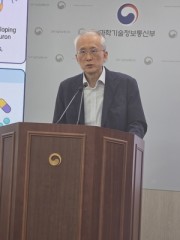
Korean researchers identify common molecular patterns across more than 1,200 autism-linked genes in world first
IBS and KISTI analyze 17 autism-risk genes, find two shared molecular patterns; results open door to personalized treatment; study published in Science Korean researchers have found a new clue to unraveling the complex mechanisms behind autism spectrum disorder, a condition linked to more than 1,200 causal genes. For the first time, they have shown that mutations across different autism-risk genes ultimately converge on two common molecular patterns — a finding that could lay the groundwork for personalized autism treatments, as drug responses appear to differ depending on which pattern is present. The Ministry of Science and ICT announced Friday that a joint research team — led by Kim Eun-joon, director of the Institute for Basic Science's Center for Synaptic Brain Dysfunctions and a professor in the Department of Biological Sciences at KAIST, together with the Digital Bio-Computing Research Division of the Korea Institute of Science and Technology Information — conducted a large-scale analysis of mouse models carrying mutations in autism-risk genes. The team found that diverse genetic mutations converge on one of two opposing transcriptomic states, or patterns of gene activity. The findings were published Friday in Science, one of the world's most prestigious academic journals. Autism spectrum disorder is a neurodevelopmental condition characterized by difficulties in social communication and interaction, as well as restricted and repetitive behaviors. Diagnoses have risen sharply — more than fourfold — over the past two decades. While more than 1,200 risk genes have been identified to date, the varying functions of those genes have made it difficult to pinpoint a shared mechanism underlying the disorder. The research team selected 17 autism-risk genes involved in synaptic function, gene expression regulation and intracellular signaling, then built mouse models carrying mutations in each. They analyzed 1,008 RNA sequencing datasets obtained from the prefrontal cortex to compare gene expression patterns across the models. The analysis revealed that mice with different genetic mutations fell into two distinct and opposing transcriptomic states. The transcriptome — the complete set of RNA produced by a cell or tissue — serves as an indicator of how actively genes are being expressed. In the first group, expression of synaptic genes responsible for signaling between neurons was reduced, while genes related to gene expression regulation and RNA processing were activated. The second group showed the opposite pattern: synaptic gene expression increased, while genes involved in regulation and RNA processing were suppressed. In other words, although the risk genes driving autism vary widely, the molecular changes they produce in the brain can be organized into two common patterns. The two groups also showed markedly different responses to drug treatment. When the research team administered the antidepressant fluoxetine and the mood stabilizer lithium, the first group showed consistent recovery in the abnormal expression of multiple genes. In the second group, however, responses varied from gene to gene, making it difficult to identify any clear pattern of recovery. This suggests that even when the same drug is used, treatment responses can differ depending on a patient's underlying molecular characteristics. However, the findings reflect molecular-level changes observed in mouse models and do not constitute proof of therapeutic efficacy in human autism patients. The team further validated the results using single-nucleus RNA sequencing — which analyzed about 1 million individual cell nuclei — along with gene co-expression analysis. Similar molecular patterns were observed not only in other autism mouse models but also in transcriptomic data from the brains of actual autism patients. The study is significant in that it shifts the focus away from individual risk genes and instead establishes a research framework for understanding autism through shared molecular characteristics. "Because autism involves such a wide variety of causal genes, studying them one by one has limited our ability to understand the common mechanisms behind the disorder," Kim said. "Now that a new research framework has been proposed — one that interprets diverse genetic causes through shared molecular features — this will serve as an opportunity to broaden the horizons of autism research."
Sept. 18, 2026
-
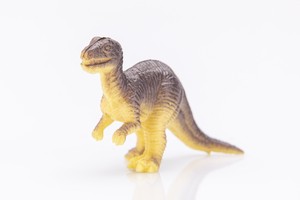
T. rex was as warm as an elephant, tooth analysis reveals
When people think of dinosaurs, they tend to picture reptiles — creatures like lizards or crocodiles that bask in the sun to warm up and retreat to the shade to cool down. T. rex was long assumed to regulate its body temperature in much the same way. New research suggests otherwise. A study analyzing chemical traces preserved in T. rex teeth has calculated the dinosaur's body temperature at 36.3 degrees Celsius — roughly as warm as a modern elephant. Whether dinosaurs were cold-blooded ectotherms or warm-blooded endotherms capable of generating their own body heat has been debated for decades. Studies examining bone growth patterns and the energy demands of locomotion have pointed toward endothermy, though some researchers have argued that not all dinosaurs fit that profile. T. rex, despite being the most extensively studied dinosaur, remained an open question when it came to body temperature. A research team led by Landon Flores and Robert Eagle at UCLA published findings in Science Advances, Vol. 12, No. 38, reporting a calculated body temperature for T. rex based on analysis of the dinosaur's teeth. T. rex body temperature: 36.3 degrees Celsius The method centered on examining tooth enamel, the hard outer layer of a tooth. Enamel contains carbonate minerals, and within them, the rate at which heavy carbon and heavy oxygen bond together as neighbors varies with the temperature at which the tooth formed. The lower the temperature, the more frequently the two elements bond. By measuring that bonding ratio, the researchers were able to work backward and calculate the temperature. The analysis used three T. rex teeth recovered from the Hell Creek Formation in Montana. Two came from a young adult nicknamed "Thomas," an individual estimated to have weighed more than 3 metric tons when alive. The third tooth belonged to a separate specimen. The average temperature calculated across all three teeth was 36.3 C — a figure reflecting body temperature at the time the teeth were forming, not the present day. For comparison, Indian elephants average 36.0 C and African elephants 36.2 C. Ostriches and emus range between 37 C and 39 C. The figure was lower than the 41.6 C average recorded in small flying birds. For comparison, the team applied the same method to five crocodilian teeth recovered from the same geological formation. The crocodiles averaged 30.9 C, with individual readings ranging widely from 27.7 C to 38.2 C. The team also estimated the ambient temperature of the environment T. rex inhabited. Shell samples from the same formation yielded an average environmental temperature of 25.9 C, while climate model simulations placed Late Cretaceous summer temperatures between 24.9 C and 33.4 C, depending on the assumed concentration of atmospheric carbon dioxide. That T. rex's body temperature exceeded the ambient environment suggests the animal was most likely an endotherm rather than an ectotherm — heat from its surroundings alone would not have been sufficient to produce such a reading. Could have survived even in frigid Alaska Using the calculated body temperature as a baseline, the team modeled how far across the continent T. rex could have ranged. Drawing on the thermal tolerances of living animals, the researchers set a comfort zone of 34.7 C to 37.3 C and defined survival limits spanning minus 13 C to 43.6 C. They then overlaid those parameters onto a climate model of Late Cretaceous North America. The results showed that most of the North American continent would have been habitable for T. rex — a finding consistent with the actual fossil record. Bones from juvenile tyrannosaurs have been found in northern Alaska, a region that would have corresponded to roughly 85 degrees latitude at the time and experienced below-freezing winters. Surviving year-round in such conditions would have required a body capable of tolerating significant cold. However, the team acknowledged limitations: only three teeth were analyzed, two of them from the same individual. Samples were also taken only from areas of the teeth least likely to have suffered damage, meaning the measurements may reflect enamel that formed during a specific season rather than across the full year. The team also cautioned that a high body temperature does not automatically indicate a high metabolic rate. In large-bodied animals, heat dissipates slowly, meaning body temperature can remain elevated even with a relatively low metabolism. Reference DOI: 10.1126/sciadv.aeb7653 R.J. Flores, R.A. Eagle, R.B. Trayler, G. Larocca Conte, S.L. Kim, A.A. Chiarenza, A. Farnsworth, P.J. Valdes, L. Chiappe, & A. Tripati, "The body temperature of Tyrannosaurus rex," Sci. Adv. 12 (2026) eaeb7653.
Sept. 17, 2026
MOST READ
- 1KAIST develops high-performance bio-based adhesive using E. coli instead of petroleum
- 2Pope Leo XIV declines French honors and banquet, accepts only private meeting with Macron
- 3Daimler Truck unveils next-generation transport solutions at IAA 2026
- 4What was Rachmaninoff's performance fee? A 1928 price list tells all
- 5Samsung Biologics union's show of force backfires at the bargaining table
- 6APR says hair-loss treatment research published in international journal
-
WORLD

US warns of punishment for anyone enabling Iran's Strait of Hormuz toll scheme
-
INDUSTRY
Toyota union puts productivity first; Hyundai Motor union demands bigger share of profits
-
FINANCE
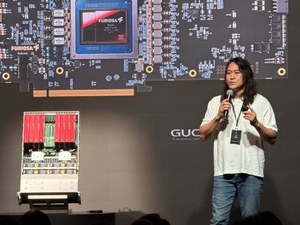
National Growth Fund to invest $531M in FuriosaAI, which rebuffed Meta's $800M takeover bid
-
INDUSTRY
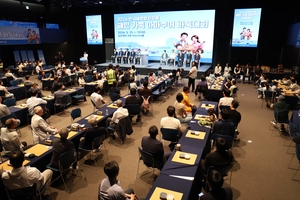
Korea Shipowners' Association holds amateur baduk tournament for Maritime Day