Six specimens of Janggunite, South Korea's first internationally recognized new mineral, have been registered as nationally important science and technology materials.
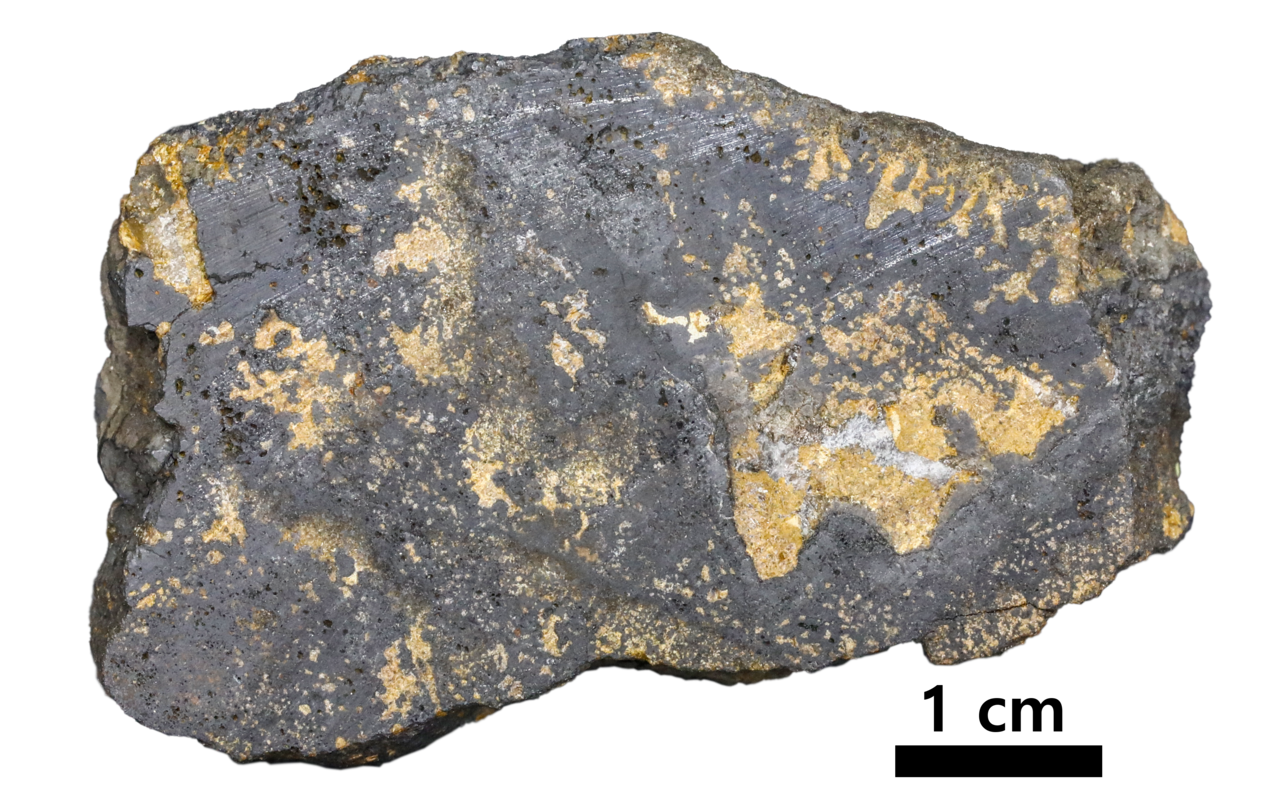
Janggunite, the first new mineral discovered in South Korea and recognized internationally, has been designated a national science and technology heritage.
The Korea Institute of Geoscience and Mineral Resources (KIGAM) announced Wednesday that six Janggunite specimens held at its Geological Museum have been registered as nationally important science and technology materials.
KIGAM received the registration certificate and plaque at a ceremony held Tuesday at the National Science Museum, which marked both the issuance of new registrations and the opening of a special exhibition commemorating the program's 100th registered item.
The newly registered materials comprise five ore specimens and one research sample. They were recognized as significant scientific heritage reflecting the development of Korean mineralogy, as Janggunite is the first new mineral both discovered by a Korean researcher and officially recognized by an international body.
Janggunite was discovered by the late Kim Su-jin, an emeritus professor at Seoul National University, at the Janggun Mine in Bonghwa-gun, North Gyeongsang Province.
In the late 1960s, when research equipment and analytical infrastructure were scarce, Kim was studying manganese ore at the Janggun Mine when he noticed properties that differed from those of known minerals.
Through repeated sampling and analysis — including X-ray diffraction and chemical analysis — Kim determined the mineral's crystal structure and chemical composition. As a result, he established that it was an entirely new mineral previously unknown to science.
The mineral was named after the Janggun Mine where it was found. In 1975, the International Mineralogical Association (IMA) formally approved it as a new mineral species, marking a milestone in Korean mineralogy research.
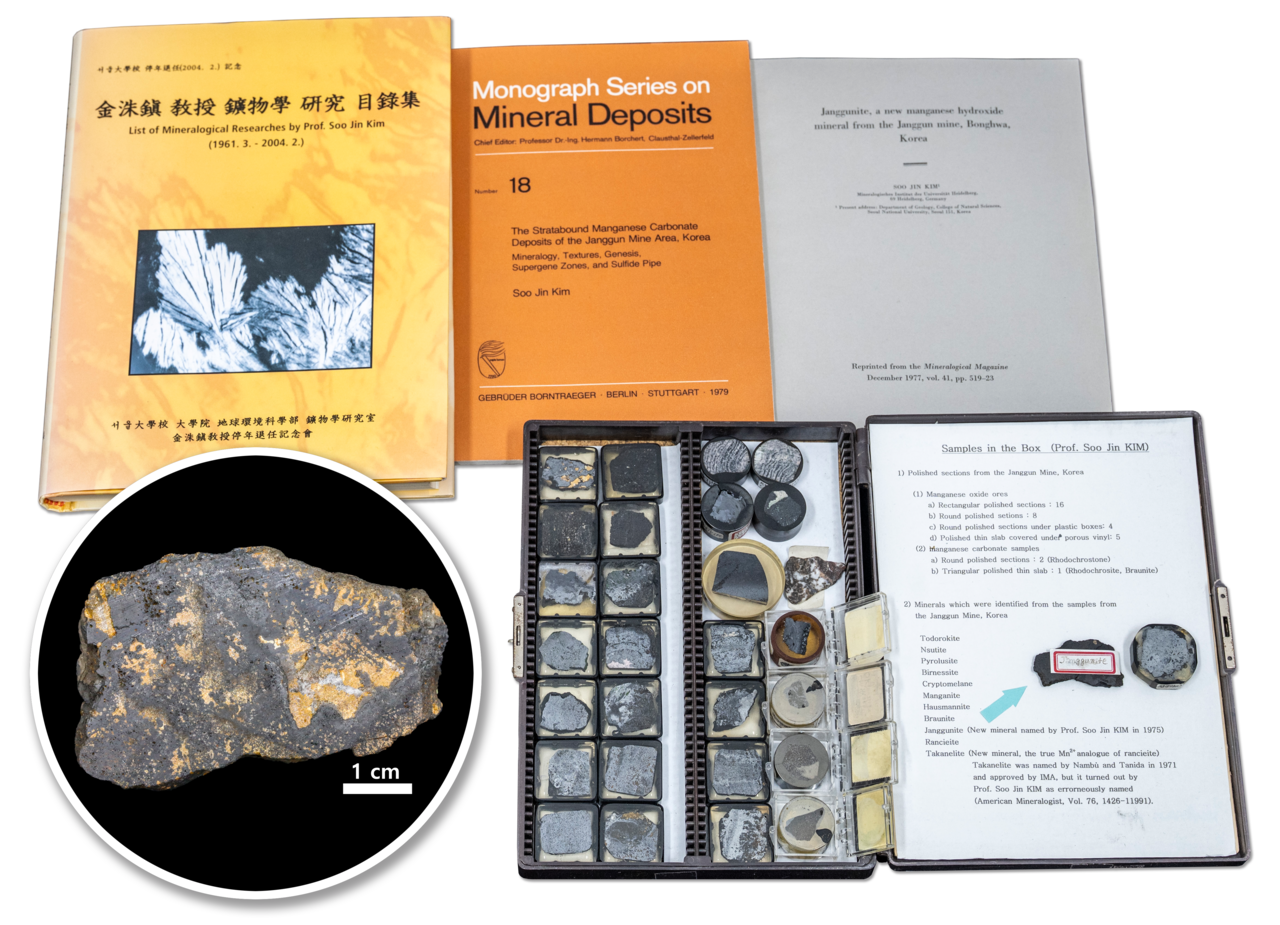
The Janggunite specimens and research sample have been preserved and displayed at the Geological Museum since being donated in 2010. Last year marked both the 50th anniversary of Janggunite's international recognition and the death of Kim, its discoverer, lending this registration added significance as a way of passing his research legacy on to future generations.
The specimens serve not only as display items but also as foundational materials for new research.
Physical specimens such as minerals and rocks play an important role in revalidating existing findings and uncovering new scientific facts through the application of new analytical techniques. Preserving records of the collection site, analytical process and research history alongside the specimens particularly helps strengthen the reliability of follow-on studies.
The Geological Museum opened in 2001, growing out of a geological specimen center established in 1992. It currently holds more than 7,600 physical geological specimens, of which about 900 are on display.
The museum plans to strengthen the preservation and research of important geological specimens, including Janggunite, and to make greater use of them in exhibitions and educational programs for students and the general public.
"This registration is meaningful in that it recognizes both the historic achievement of Korean mineralogy and the academic role the Geological Museum has played in preserving it," KIGAM President Kwon Yi-kyun said. "We will support efforts to ensure these valuable research materials serve as a foundation for future studies and convey the value of scientific inquiry to the next generation."
nbgkoo@heraldcorp.com